US Data Center Rack Market

US Data Center Rack Market by Rack Type (Open Frame, Enclosed), Type (Server Racks, Network Racks), Rack Height (42U & Below, 43U up to 52U), Rack Width (19 Inch, 23 Inch), Data Center Type (Enterprise, Colocation, Hyperscale) - Forecast to 2032




OVERVIEW
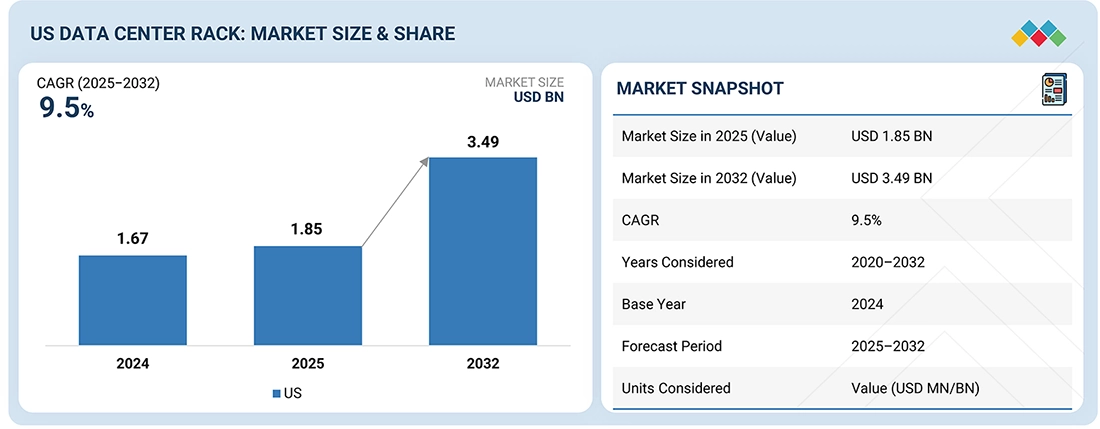
Source: Secondary Research, Interviews with Experts, MarketsandMarkets Analysis
The US data center rack market is expected to grow from USD 1.85 billion in 2025 to USD 3.49 billion by 2032, registering a CAGR of 9.5%. Growth is supported by expansion of hyperscale facilities, rising cloud adoption and the rapid increase in AI workloads. While traditional deployments operated at around 5–10 kW per rack, new installations exceed 30 kW as operators deploy GPU-based servers and high-performance computing systems. This shift is increasing the demand for racks that handle higher power density, heavier equipment, and advanced cooling. Enterprises and cloud providers across the US are upgrading to rack systems with better airflow, liquid-cooling readiness, and higher-capacity power distribution. At the same time, edge computing and distributed architectures are creating demand for modular and compact rack formats. Sustainability targets are also influencing purchasing decisions, with operators choosing energy-efficient designs wherever possible. Smart racks with monitoring features and DCIM integration are becoming more common, helping teams manage higher IT loads, reduce downtime, and improve day-to-day operations.
KEY TAKEAWAYS
-
BY OFFERINGThe solution segment is expected to hold the largest market share of 73.7% in 2025.
-
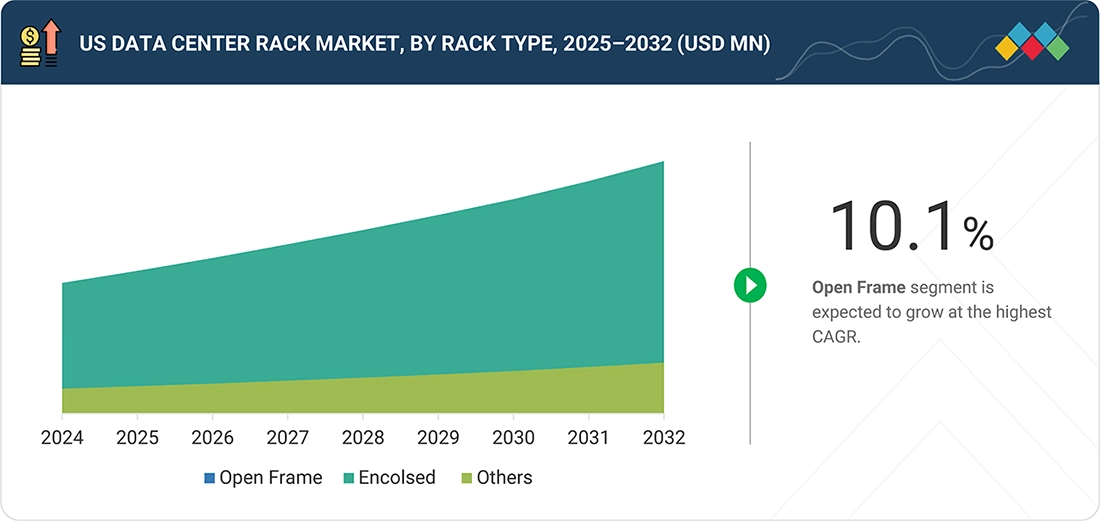
BY RACK TYPEThe open frame rack is expected to grow at the highest CAGR of 10.1% during the forecast period.
-
BY DATA CENTER SIZEThe large data centers segment is expected to hold the largest market share in 2025.
-
BY ON-PREMISES/ENTERPRISE VERTICALThe healthcare segment is expected to grow at highest CAGR during the forecast period.
-
COMPETITIVE LANDSCAPE: KEY PLAYERSMajor players in the US data center rack market include Schneider Electric, which leads with integrated and energy-efficient rack solutions; HPE, offering tightly integrated racks optimized for hybrid IT environments; and IBM, providing enterprise-grade infrastructure and rack systems with strong service capabilities. Eaton strengthens the market with high-density enclosures and advanced power distribution, while Rittal remains a key competitor with customizable, thermally efficient rack designs suited for hyperscale and colocation facilities.
-
COMPETITIVE LANDSCAPE: STARTUPS/SMESStartup/SME players in the US data center rack market include CommScope, Belden, Panduit, Oracle, and Black Box, each offering modular, connectivity-focused rack solutions. These companies compete by offering agile, cost-effective enclosures with robust cable management and edge-ready designs, catering to enterprises seeking flexible, scalable infrastructure solutions.
The data center rack market in the US is expanding as operators upgrade to support rising power densities, AI hardware, and large-scale cloud infrastructure. The growing construction of hyperscale campuses and the need for efficient, secure, and easily scalable rack systems are further accelerating demand. Increased emphasis on automation and energy-efficient designs is also shaping stronger market growth nationwide.
TRENDS & DISRUPTIONS IMPACTING CUSTOMERS' CUSTOMERS
Several clear trends are reshaping the US rack market. Operators are moving away from standard configurations toward high-density racks designed specifically for AI workloads, GPU clusters, and liquid cooling. Smart racks equipped with sensors, remote management tools, and DCIM connectivity are increasingly treated as standard infrastructure rather than optional upgrades, as data center teams focus more on automation and predictive maintenance. Edge computing is another important factor, driving demand for smaller, rugged racks that can be deployed outside traditional data centers. Sustainability requirements further influence rack design, with growing interest in systems that improve airflow efficiency and support liquid cooling. Further, hyperscale expansion is increasing demand for modular rack platforms that can be installed easily. Together, these changes are reshaping how racks are specified, deployed, and managed across US facilities.
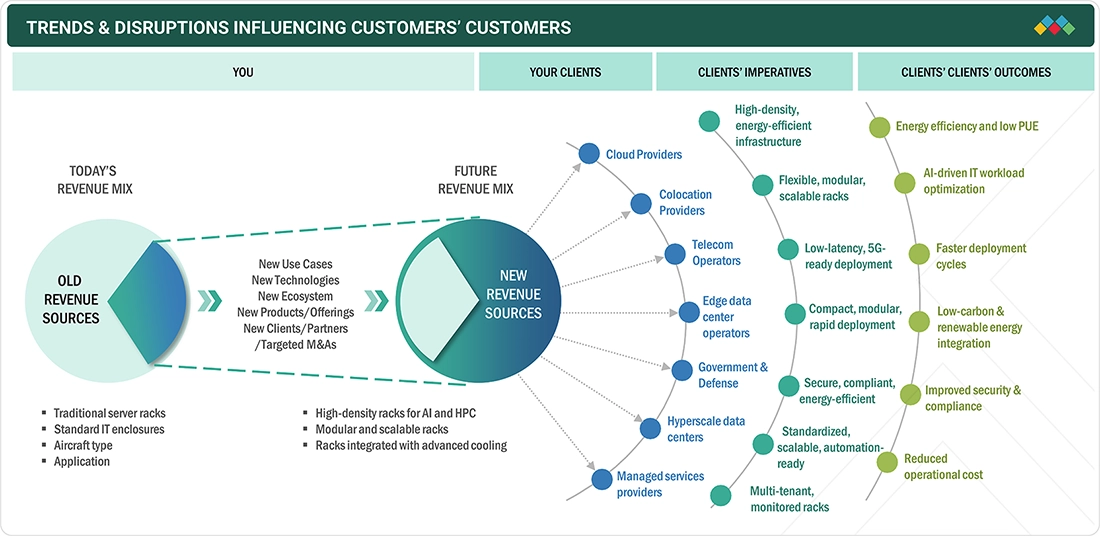
Source: Secondary Research, Interviews with Experts, MarketsandMarkets Analysis
MARKET DYNAMICS

Level
-
Growing GPU deployments are increasing demand for high-density racks to support AI workloads.

-
Major hyperscale data center projects are leading to higher-volume rack deployments


Level
-
Limitations in legacy data centers

-
High initial setup cost associated with advanced rack infrastructure


Level
-
Integrated cooling compatibility supports large-scale rack replacement

-
Smart rack adoption creates demand for sensor-integrated infrastructure


Level
-
Shortage of trained technicians for complex rack deployments

-
Ensuring physical security and compliance with data protection regulations

Source: Secondary Research, Interviews with Experts, MarketsandMarkets Analysis
Driver: Growing GPU deployments are increasing demand for high-density racks to support AI workloads.
The rapid adoption of generative AI is changing how data centers are built in the US. AI and machine learning workloads rely on GPU-based systems, which consume significantly more power than conventional servers. To support this shift, operators are moving toward high-density racks rated at 30–100 kW and above, along with stronger power infrastructure and more advanced cooling. Major cloud providers such as Microsoft and Google are now designing most new data center capacity around AI workloads. Today’s AI racks typically contain 8–16 GPUs per server, which increases both heat output and equipment weight. As a result, operators are moving away from standard 42U racks toward deeper, reinforced designs with higher load capacity. These changes are increasing demand for advanced rack systems capable of supporting high-performance computing environments safely and reliably.
Restraint: Limitations in legacy data centers
Many existing US data centers were built for lower-density workloads and are not suited to today’s AI-driven power and cooling requirements. Common challenges include limited floor load capacity, restricted ceiling height, and outdated cooling infrastructure. Upgrading these facilities often requires structural reinforcement, electrical redesign, and HVAC improvements, which add cost and extend project timelines. Power availability is another constraint, particularly in older sites. Because of these issues, retrofitting legacy facilities can be slow and expensive. In many cases, operators find it more practical to build new sites instead of upgrading existing ones. This limits how quickly modern rack systems can be adopted in older data centers.
Opportunity: Integrated cooling compatibility supports large-scale rack replacement
Rising computing requirements are pushing data centers to adopt racks that support liquid cooling and higher equipment density. Many facilities across the US are upgrading their existing infrastructure, creating opportunities for vendors to supply retrofit-friendly racks alongside systems for new data center builds. Updated rack designs help handle increased heat while improving energy efficiency and floor space utilization. As operators look ahead, they are choosing rack solutions that can scale as capacity needs grow. This supports continued demand for equipment, upgrades, and integration services. Vendors that provide end-to-end offerings, including cooling compatibility and power management, are in a stronger position to capture this demand.
Challenge: Shortage of trained technicians for complex rack deployments
Deploying modern, high-power, liquid-cooled racks requires specialized technical expertise, which remains in short supply across the US. Installation teams must manage complex electrical connections, cooling systems, and equipment validation, going well beyond traditional rack installation. Many facilities also require coordinated upgrades to power and cooling infrastructure, further complicating matters. Shortages of trained technicians can delay projects and increase labor costs. This skills gap affects deployment timelines and creates operational challenges for both data center operators and rack suppliers.
US DATA CENTER RACK MARKET: COMMERCIAL USE CASES ACROSS INDUSTRIES
| COMPANY | USE CASE DESCRIPTION | BENEFITS |
|---|---|---|
 |
AWC Inc., a control systems integrator, partnered with Rittal to provide flexible IT enclosures for a disposable tissue manufacturer, enhancing server security, cooling efficiency, and adaptability to evolving industrial IT needs. | The collaboration delivered turnkey, scalable “plug-and-play” solutions, streamlined procurement through a broad product line, and ensured reliable integrated performance with future-proof, reconfigurable IT infrastructure. |
 |
Riot Games partnered with Cisco to upgrade its global esports infrastructure using Cisco UCS servers and Cisco Nexus switching, all deployed within standardized, high-performance Cisco rack systems designed to support “The Realm” game servers and broadcast workloads across worldwide events. | The Cisco rack-integrated solution delivered a 200% boost in server performance, ensured reliable zero-packet-loss data flow during major tournaments, and enabled consistent, scalable deployment of game and broadcast systems across global esports venues. |
Logos and trademarks shown above are the property of their respective owners. Their use here is for informational and illustrative purposes only.
MARKET ECOSYSTEM
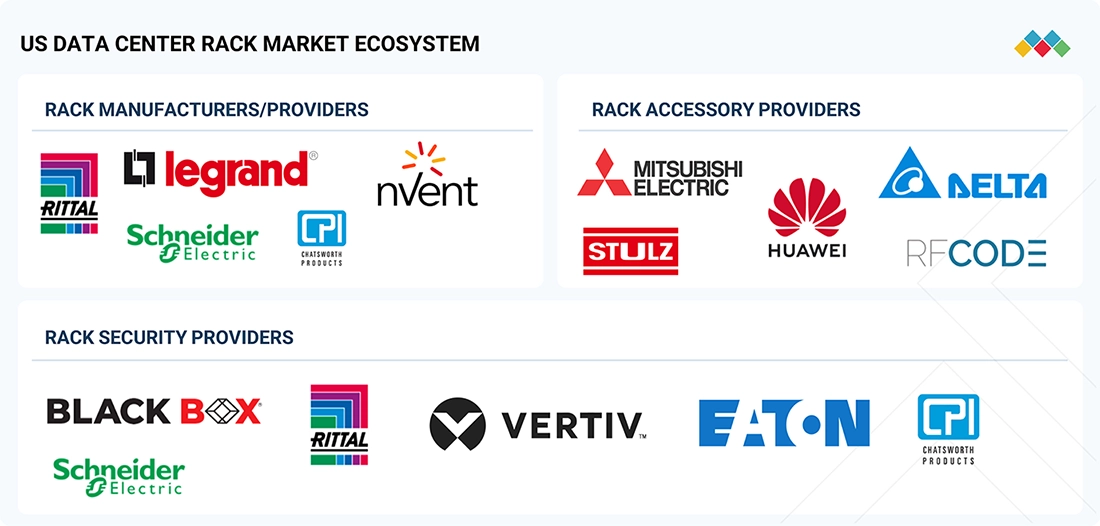
The US data center rack market covers the design, manufacturing, and deployment of racks, cabinets, and enclosures used to house servers, storage systems, and networking equipment. Vendors also provide rack-level solutions for power distribution, cooling, security, and monitoring. As data centers expand to support cloud computing, AI, and big data workloads, demand for scalable, secure rack systems continues to grow. Market growth is supported by hyperscale development, colocation services, and rising infrastructure security requirements.
Logos and trademarks shown above are the property of their respective owners. Their use here is for informational and illustrative purposes only.
MARKET SEGMENTS
Source: Secondary Research, Interviews with Experts, MarketsandMarkets Analysis
Data Center Rack Market, By Offering
The solution segment leads the US data center rack market as organizations prioritize advanced rack infrastructure to support rising compute loads, integration with power and cooling systems, and higher-density deployments. US data centers are increasingly investing in robust cabinets, open-frame systems, and containment systems to enhance efficiency and align with modernization goals. The need for scalable, standardized rack ecosystems that support cloud, AI, and virtualization workloads further strengthens solution-based spending. Additionally, operators prefer comprehensive rack systems that simplify configuration and deployment across distributed facilities. As digital transformation accelerates, full-fledged rack solutions remain the core investment area for US data center operators.
Data Center Rack Market, By Rack Type
Open frame racks are growing at the highest CAGR in the US due to their cost-effectiveness and suitability for non-critical IT spaces such as network rooms and edge sites. They offer easy access for cable routing and equipment installation, making them ideal for environments focused on speed and simplicity. The rise of lightweight networking gear and distributed infrastructure also boosts their adoption. With increasing demand for flexible racks to support rapid expansion in SMBs and telecom edge nodes, open-frame systems offer significant operational advantages. Their airflow-friendly design further supports efficient cooling without the need for enclosed structures.
Data Center Rack Market, By Service
Installation & deployment services dominate the US market as data centers need expert support to configure racks for high-density power, structured cabling, and cooling alignment. The complexity of modern IT layouts, especially in hyperscale and colocation facilities, drives reliance on professional installation to ensure optimal performance from day one. These services help reduce setup time, minimize integration errors, and streamline capacity planning. US operators also prioritize precision installation to meet compliance, safety, and redundancy requirements. As new builds and expansions accelerate nationwide, installation & deployment remain the most heavily utilized service category.
Data Center Rack Market, By Type
Server racks are expanding at the highest CAGR in the US as enterprises and cloud providers deploy more compute-intensive workloads requiring dense server configurations. Growth in AI training clusters, virtualization platforms, and cloud-native applications is driving demand for racks engineered for high-weight loads and stronger airflow control. Server racks also support structured cable pathways and power distribution layouts, which are essential for reliable operations. Their compatibility with a wide range of server models makes them the preferred choice for large and multi-tenant facilities. As data centers scale processing capacity, server racks continue to see accelerated adoption.
Data Center Rack Market, By Rack Height
The 42U and below rack segment leads the US market because it aligns with standard data center footprints and is widely used across enterprise, colocation, and government facilities. These racks offer the optimal height for ergonomic access, installation safety, and efficient equipment layout. Their flexibility supports both mid-density and growing modular deployments, making them suitable for most US IT environments. Operators prefer this size to maintain consistency across facilities and simplify inventory management. As modernization continues, 42U racks remain the dominant choice for balancing capacity with operational convenience.
Data Center Rack Market, By Rack Width
The 23-inch rack width segment is expanding rapidly in the US as telecom operators, network-intensive enterprises, and edge deployments adopt wider racks to support specialized networking and broadband equipment. The wider format allows improved cable organization and accommodates devices that exceed the standard 19-inch footprint. As the US scales fiber rollouts, 5G infrastructure, and high-bandwidth transport networks, demand for 23-inch racks continues to rise. These racks also support efficient airflow patterns for communication hardware. Their suitability for carrier-grade and networking-dense environments drives strong market growth.
Data Center Rack Market, By Data Center Size
Large data centers dominate the US market as hyperscale operators, major cloud providers, and large enterprises expand capacity to meet surging digital demand. These facilities require thousands of racks supporting high-density compute, storage, and networking equipment, driving significant rack procurement. Their emphasis on energy efficiency, thermal optimization, and standardized layouts boosts adoption of advanced cabinet systems. Large data centers also invest heavily in modular expansion, increasing the volume of rack deployments across new and existing campuses. Their scale and continuous expansion make this segment the leading revenue contributor.
Data Center Rack Market, By Data Center Type
The hyperscale segment is growing at the fastest rate in the US as cloud giants and AI compute providers build massive new campuses to support demand. These facilities deploy extremely dense rack configurations designed for powerful servers, accelerators, and storage arrays. Hyperscale operators prioritize high-efficiency, automation-ready rack ecosystems with integrated cable, cooling, and power pathways. Their rapid construction cycles require modular, fast-deployable racks that streamline installation. With AI, cloud, and content delivery workloads expanding aggressively, hyperscale operators drive the strongest demand for advanced rack systems.
Data Center Rack Market, By On-premises/Enterprise Vertical
The BFSI sector holds the largest share of on-premises rack deployments in the US due to strict regulatory requirements, mission-critical applications, and the need for secure in-house data processing. Financial institutions rely on robust rack infrastructure to support transaction systems, fraud analytics, and high-speed trading platforms. The sector prioritizes physically secure, well-organized rack environments to meet compliance and risk-management standards. Growth in digital banking and real-time payment systems further strengthens rack demand. As BFSI organizations modernize legacy infrastructure, they continue to invest heavily in reliable, high-availability rack systems.
US DATA CENTER RACK MARKET: COMPANY EVALUATION MATRIX
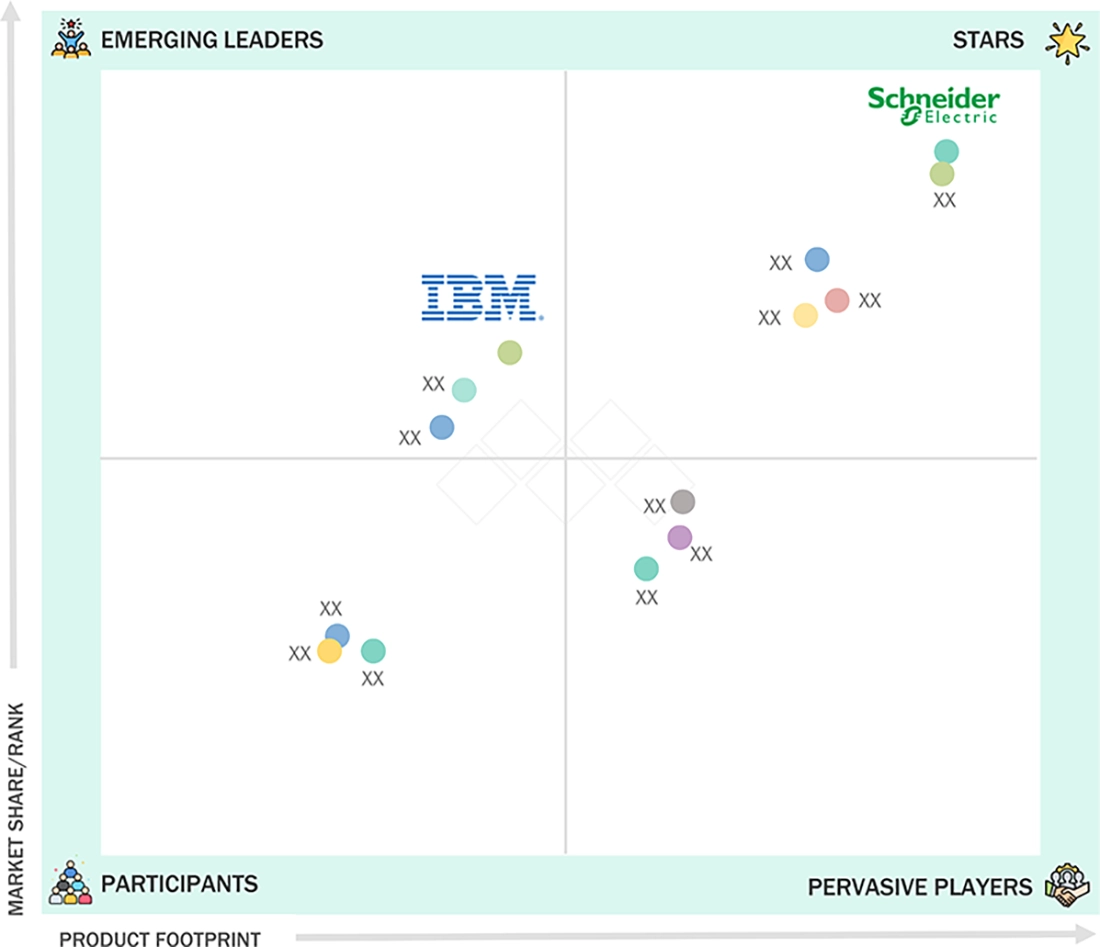
In the US data center rack market, Schneider Electric was identified as a star player due to its comprehensive portfolio of high-density, energy-efficient, and modular rack solutions, its strong presence, and its continuous innovation in power and thermal management. IBM (Emerging Leader) is gaining traction with scalable, AI-ready rack systems and enterprise-focused solutions, while steadily expanding its capabilities in hybrid and cloud data center environments.
Source: Secondary Research, Interviews with Experts, MarketsandMarkets Analysis
KEY MARKET PLAYERS
- Schneider Electric
- HPE
- Rittal
- Eaton
- Vertiv
- Dell Technologies
- Fujitsu
- IBM
- Legrand
- Commscope
- Oracle
- Belden
- Panduit
- Black Rock
- AGC Network
MARKET SCOPE
| REPORT METRIC | DETAILS |
|---|---|
| Market Size in 2024 (Value) | USD 1.85 BN |
| Market Size in 2032 (Value) | USD 3.49 BN |
| Growth Rate | 9.5% |
| Years Considered | 2020–2032 |
| Base Year | 2024 |
| Forecast Period | 2025–2032 |
| Units Considered | Value (USD MN/BN) |
| Report Coverage | Revenue forecast, company ranking, competitive landscape, growth factors, and trends. |
| Segments Covered |
|
| Countries Covered | US |
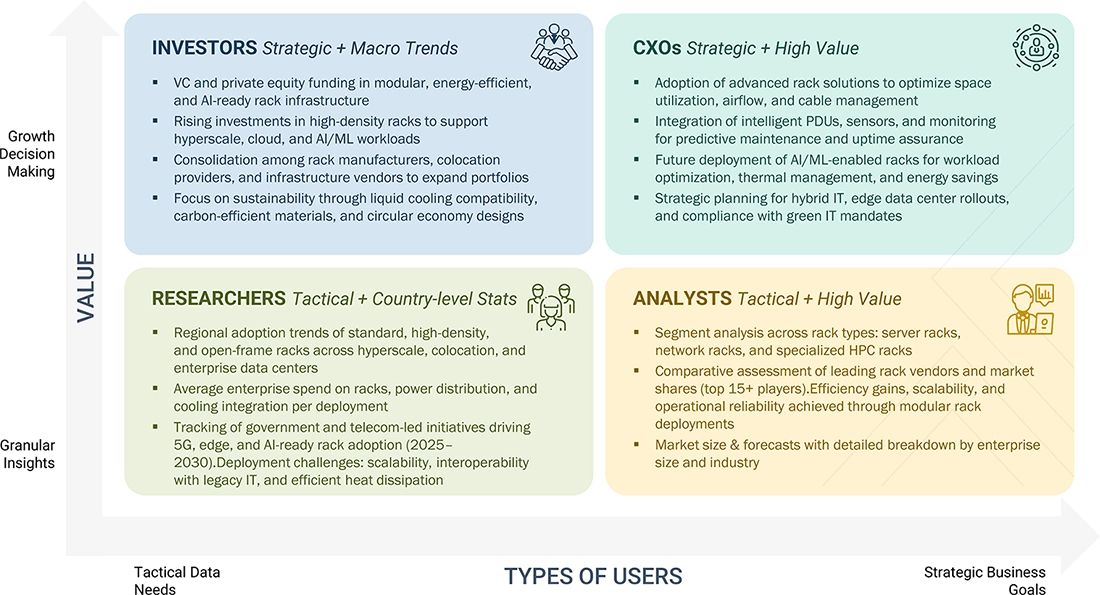
WHAT IS IN IT FOR YOU: US DATA CENTER RACK MARKET REPORT CONTENT GUIDE
DELIVERED CUSTOMIZATIONS
We have successfully delivered the following deep-dive customizations:
| CLIENT REQUEST | CUSTOMIZATION DELIVERED | VALUE ADDS |
|---|---|---|
| Cloud Service Provider |
|
|
| Telecom Operator |
|
|
| Enterprise |
|
|
RECENT DEVELOPMENTS
- April 2025 : Legrand acquired Computer Room Solutions, a Sydney-based vendor with nearly 20 years of experience in server racks, security caging, and uninterruptible power supplies (UPS). It strengthened Legrand’s data center hardware portfolio and regional footprint in Asia Pacific, enhancing its ability to serve edge, colocation, and enterprise deployments.
- March 2025 : A three-way partnership between Schneider Electric, ETAP, and NVIDIA integrates digital twin technology with NVIDIA Omniverse to enable chip-level dynamic power modeling (up to 132kW rack densities), and improve real-time operational efficiency for AI factories and high-density environments. Builds on Schneider’s liquid-cooled reference design (Dec 2024) and the launch of its microgrid + data center R&D lab in Massachusetts (Mar 2025), reinforcing its leadership in AI-optimized, sustainable infrastructure.
- March 2025 : Eaton announced the acquisition of Fiberbond Corporation, a specialist in pre-integrated modular power enclosures for multi-tenant data centers. It is expected to close in Q3 2025, and is projected to generate USD 110M in adjusted EBITDA for 2025. It enhances Eaton’s capabilities in modular power delivery, reducing deployment time and costs, and expanding its presence in the colocation and hyperscale segments.
- January 2025 : Fujitsu, in collaboration with Supermicro and Nidec, launched a subscription-based service to improve data center energy efficiency. It combines liquid-cooling control software, GPU servers, and advanced cooling systems. Its initial deployment was at Tatebayashi Data Center and was commercially launched in Japan (Q1 FY2025). It targets lower PUE and reduced environmental impact, while supporting AI/GPU-intensive workloads under a service-based model.
Table of Contents
 Exclusive indicates content/data unique to MarketsandMarkets and not available with any competitors.
Methodology
This research study on the US Data Center Rack Market involved extensive secondary sources, directories, several journals, and databases, such as D&B Hoovers, Bloomberg Businessweek, and Factiva, to identify and collect information useful for this technical, market-oriented, and commercial study of the US Data Center Rack Market. Primary sources were industry experts from core and related industries, preferred system developers, service providers, resellers, partners, and organizations related to the various segments of the industry’s value chain. In-depth interviews were conducted with different primary respondents, including key industry participants and subject-matter experts, to obtain and verify critical qualitative and quantitative information and assess the market’s prospects.
These included key industry participants, subject-matter experts, C-level executives of key companies, and industry consultants. Primary sources were mainly industry experts from the core and related industries, preferred Data center rack providers, third-party service providers, consulting service providers, end users, and other commercial enterprises. In-depth interviews were conducted with various primary respondents, including key industry participants and subject matter experts, to obtain and verify critical qualitative and quantitative information and assess growth prospects. The following figure highlights the market research methodology applied to make the US Data Center Rack Market report.
Secondary Research
The market size of companies offering data center rack solutions and services was determined based on secondary data available through paid and unpaid sources. It was also evaluated by analyzing the product portfolios of major companies and rating the companies based on their performance and quality.
Various sources were considered in the secondary process to identify and collect information for this study. Secondary sources included annual reports, press releases, and investor presentations of companies; white papers, journals, and certified publications; and articles from recognized authors, directories, and databases. The data was also collected from other secondary sources, such as journals and related magazines. Data center rack spending of various countries was extracted from the respective sources. Secondary research was mainly used to obtain the key information related to the industry’s value chain and supply chain to identify key players, market classification, and segmentation according to offerings of major players and key developments from market and technology-oriented perspectives.
Primary Research
In the primary research process, various sources from the supply and demand sides were interviewed to obtain qualitative and quantitative information for the report. The primary sources from the supply side included industry experts, such as Chief Executive Officers (CEOs), Vice Presidents (VPs), marketing directors, technology and innovation directors, and related key executives from various key companies and organizations providing data center rack solutions and services. The primary sources from the demand side included end users, such as Chief Information Officers (CIOs), consultants, service professionals, technicians and technologists, and managers at public and investor-owned utilities.
In the market engineering process, top-down and bottom-up approaches were extensively used, along with several data triangulation methods, to perform market estimation and market forecasting for the overall market segments and subsegments listed in the report. Extensive qualitative and quantitative analyses were performed on the complete market engineering process to list key information/insights throughout the report.
After the complete market engineering (including calculations for market statistics, market breakup, market size estimations, market forecasting, and data triangulation), extensive primary research was conducted to gather information and identify the segmentation, industry trends, key players, competitive landscape, and key market dynamics, such as drivers, restraints, opportunities, challenges, industry trends, and key strategies.
Market Size Estimation
Multiple approaches were adopted to estimate and forecast the US Data Center Rack Market. The first approach involved estimating the market size by the summation of the companies’ revenue generated through the sale of services.
The research methodology used to estimate the market size included the following.
- Primary and secondary research was conducted to assess the revenue contributions of major market participants in each country, with secondary research identifying these participants.
- Critical insights were obtained by conducting in-depth interviews with industry professionals, including directors, CEOs, VPs, and marketing executives, and by reading the annual and financial reports of the top firms in the market.
- Primary sources were used to verify all percentage splits and breakups, calculated using secondary sources.
Data Triangulation
Once the overall market size was determined, the market was divided into segments and subsegments using the previously described market size estimation procedures. When required, market breakdown and data triangulation procedures were employed to complete the market engineering process and specify the exact figures for every market segment and subsegment. The data was triangulated by examining several variables and patterns from the government entities’ supply and demand sides.
Market Definition
Considering the views of various sources and associations, MarketsandMarkets defines “a data center rack as a steel and electronic framework designed to house servers, networking devices, cables, and other data center computing equipment. This physical structure provides equipment placement and orchestration within a data center facility.”
Stakeholders
- Rack Manufacturers
- Colocation Providers
- Telecom Operators
- IT Infrastructure Providers
- System Integrators
- Network Operators
- Component Providers
- Consultants & Data Center Designers
- Data Center Operators
- Channel Partners & Distributors
- Internet Service Providers (ISPs)
- Regulatory Bodies / Standards Organizations
Report Objectives
- To define, describe, and forecast the US Data Center Rack Market in terms of value
- To provide detailed information regarding drivers, restraints, opportunities, and challenges influencing the growth of the market
- To forecast the market by offering (solutions, services), type, rack height, rack width, data center size, data center type, on-premises/enterprise verticals, and region
- To forecast the market size of segments for five main regions: North America, Europe, Asia Pacific, the Middle East & Africa, and Latin America
- To analyze opportunities in the market and provide details of the competitive landscape for stakeholders and market leaders
- To profile the key market players, including top vendors and startups; provide a comparative analysis based on business overviews, regional presence, product offerings, business strategies, and key financials; and provide a detailed competitive landscape of the market
- To analyze competitive developments, such as mergers & acquisitions (M&A), product launches/enhancements, agreements, partnerships, collaborations, expansions, and R&D activities, in the market
Available Customizations
MarketsandMarkets provides customizations based on the company’s unique requirements using market data. The following customization options are available for the report.
Product Analysis
- The product matrix provides a detailed comparison of each company’s portfolio.
Geographic Analysis as per Feasibility
- Further breakup of the US Data Center Rack Market
Company Information
- Detailed analysis and profiling of five additional market players
Key Questions Addressed by the Report
What is driving the growth of the US Data Center Rack Market?
The US Data Center Rack Market is driven by increasing investments in hyperscale data centers, growing cloud adoption, AI and high-performance computing (HPC) workloads, edge computing deployments, and enterprise demand for scalable, high-density IT infrastructure.
Why are organizations investing in data center rack solutions in the US?
Organizations are investing in data center rack solutions to maximize server density, improve infrastructure scalability, optimize space utilization, enhance cooling efficiency, support AI-ready environments, and strengthen operational reliability across modern data centers.
Which technologies are shaping the US Data Center Rack Market?
Key technologies include high-density rack systems, intelligent rack power distribution units (PDUs), AI-driven infrastructure monitoring, liquid cooling, modular rack architectures, edge computing infrastructure, automation, and Data Center Infrastructure Management (DCIM) solutions.
What are the latest trends in the US Data Center Rack Market?
Major trends include deployment of AI-ready racks, adoption of liquid cooling technologies, modular data center expansion, sustainable rack designs, intelligent power management, higher rack densities, and increased investments in hyperscale and edge data centers.
What is the outlook for the US Data Center Rack Market?
The market outlook remains positive as enterprises, cloud service providers, and colocation operators continue investing in advanced data center infrastructure to support AI, cloud computing, digital transformation, and expanding enterprise workloads.
Which industries are creating significant opportunities in the US Data Center Rack Market?
Significant opportunities exist across cloud service providers, colocation operators, financial services, healthcare, government, telecommunications, manufacturing, retail, and technology companies requiring high-performance, scalable data center infrastructure.
What should buyers evaluate before selecting data center rack solutions?
Buyers should assess rack capacity, load-bearing capability, scalability, cooling compatibility, cable management, security features, power distribution options, compliance with industry standards, and support for high-density server deployments.
How do data center rack solutions improve business performance?
Data center rack solutions improve business performance by optimizing space utilization, enhancing airflow and cooling efficiency, increasing infrastructure reliability, simplifying maintenance, reducing operational costs, and enabling efficient deployment of compute-intensive workloads.
What challenges are influencing the US Data Center Rack Market?
Key challenges include increasing power density requirements, energy efficiency goals, cooling demands for AI workloads, supply chain constraints, infrastructure modernization, sustainability requirements, and managing operational costs in high-density environments.
Why is the US Data Center Rack Market attracting long-term investment?
The US Data Center Rack Market continues to attract long-term investment due to sustained growth in cloud computing, AI adoption, hyperscale data center expansion, edge computing deployments, and enterprise digital transformation, creating ongoing demand for advanced, scalable, and energy-efficient rack infrastructure.


Personalize This Research
- Triangulate with your Own Data
- Get Data as per your Format and Definition
- Gain a Deeper Dive on a Specific Application, Geography, Customer or Competitor
- Any level of Personalization
Let Us Help You
- What are the Known and Unknown Adjacencies Impacting the US Data Center Rack Market
- What will your New Revenue Sources be?
- Who will be your Top Customer; what will make them switch?
- Defend your Market Share or Win Competitors
- Get a Scorecard for Target Partners

Custom Market Research Services
We Will Customise The Research For You, In Case The Report Listed Above Does Not Meet With Your Requirements
Get 10% Free CustomisationTESTIMONIALS






Growth opportunities and latent adjacency in US Data Center Rack Market