US Hydrogen Generation Market

US Hydrogen Generation Market by Source (Blue, Green, Gray), Application (Refinery, Ammonia, Methanol, Transportation, Power Generation) - Forecast to 2030




OVERVIEW
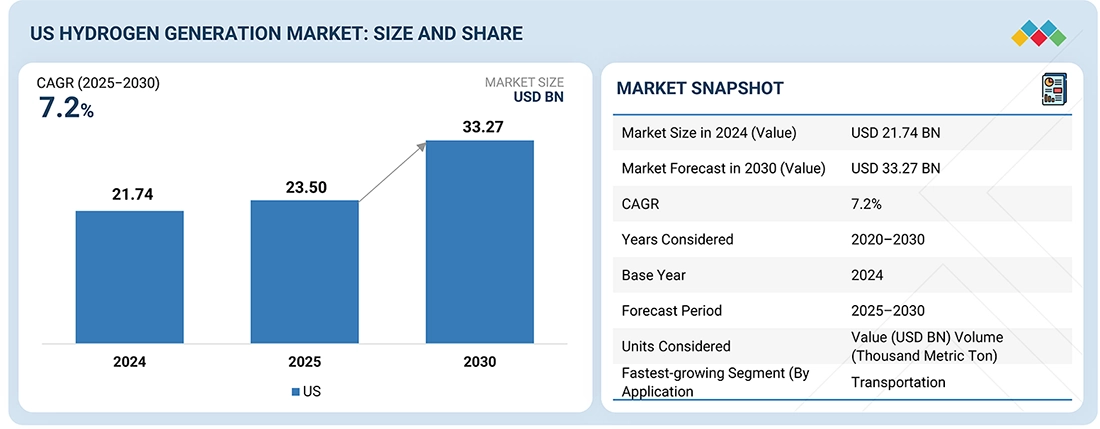
Source: Secondary Research, Interviews with Experts, MarketsandMarkets Analysis
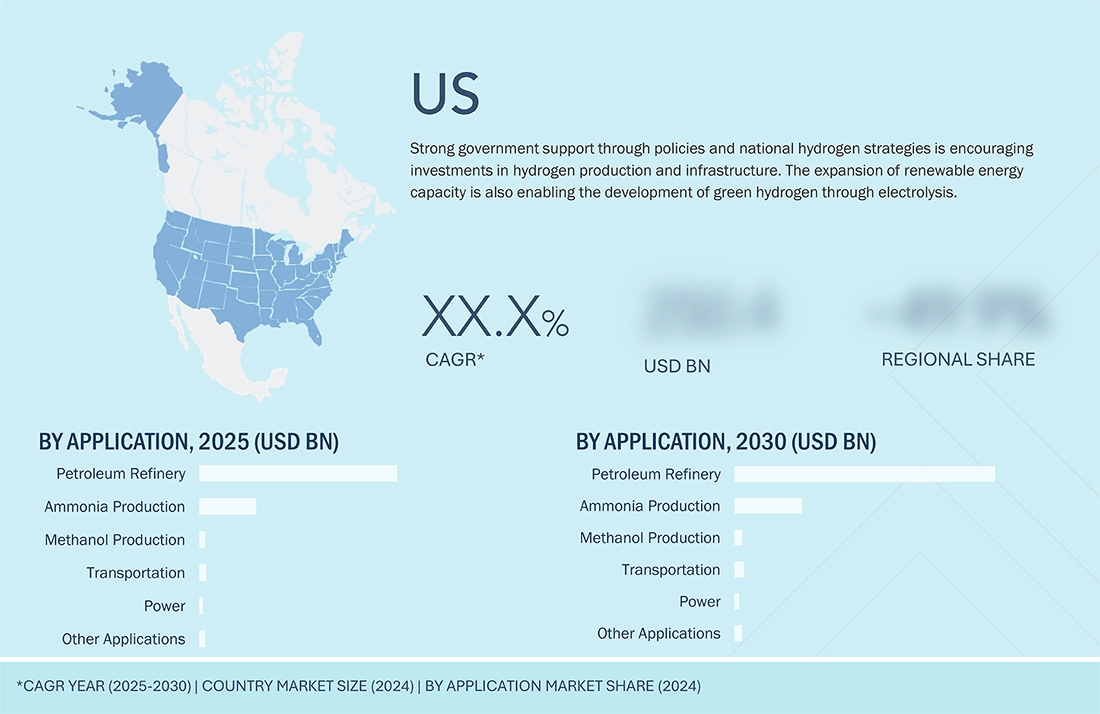
The hydrogen generation market in the US was valued at USD 21.74 billion in 2024 and is projected to reach USD 33.27 billion by 2030. The market is expected to grow at a compound annual growth rate (CAGR) 7.2% over this period. Many federal and state government initiatives are driving the growth of hydrogen generation; the increasing emphasis on energy transition/decarbonizing industry and emission reduction is promoting demand for hydrogen as a means of achieving lower carbon intensity across refining, chemicals, steel-making, and transportation sectors. Numerous federal tax credits, funding programs at state and national levels, and clean energy-based state and federal policies help promote the adoption of hydrogen as a means of reducing overall carbon emissions across these sectors. In addition, many industrial sectors are likely to experience robust activity and energy demand, both of which will continue to create demand for hydrogen in many varying applications. With significant investments in renewable energy sources (i.e., solar & wind) accelerating development of "green hydrogen" via electrolysis, ample advanced infrastructure and technological capabilities will support the scaling of hydrogen production/deployment.
KEY TAKEAWAYS
-
BY SOURCEGray hydrogen segment accounted for the largest market share of 90.0% in the US hydrogen generation market, in 2024.
-
By APPLICATIONThe transportation segment is likely to record the highest CAGR of 8.5% during the forecast period.
-
COMPETITIVE LANDSCAPE - KEY PLAYERSKey players such as Linde PLC (Ireland), Air Liquide (France), Air Products and Chemicals, Inc. (US), Chevron Corporation (US), and Exxon Mobil Corporation (US) have formed strategic collaborations and project-based partnerships to explore hydrogen generation methods.
-
COMPETITIVE LANDSCAPE - STARTUPS/SMESUniper SE (Germany) and HyGear (Netherlands) emerge as startups/SMEs in the US hydrogen generation market, driven by their focus on innovative and low-carbon hydrogen solutions.
The expansion of hydrogen use in the US is being driven by increasing energy demands and a focus on decarbonization across various industries, including refining, chemicals, steel, and transportation. As a result, there are challenges of scaling hydrogen production capacity, being cost-competitive, and integrating low-carbon sources of energy into hydrogen production. Hydrogen generation solutions are being implemented to address these three issues through large-scale integration of technologies (e.g., electrolysis and conventional methods combined with carbon capture).
TRENDS & DISRUPTIONS IMPACTING CUSTOMERS' CUSTOMERS
With the growing emphasis on reducing carbon emissions, hydrogen generation companies have been shifting their focus toward producing low-carbon or zero-carbon hydrogen from conventional hydrogen fuel to reduce their carbon footprint. Hydrogen generation companies increasingly adopt electrolysis technology or technologies such as steam methane reforming, partial oxidation, and auto thermal reforming with carbon capture to produce green hydrogen. The companies diversify their business portfolio from traditional power generation to power generation through renewables. The hydrogen generation market is undergoing a significant transformation driven by the rapid shift toward low-carbon and renewable hydrogen production methods, particularly electrolysis powered by solar and wind. Declining renewable energy costs, government incentives, and global net-zero targets accelerate this transition. Traditional methods, including steam methane reforming (SMR), face growing pressure due to carbon emissions, while emerging technologies, such as methane pyrolysis and biomass gasification, are gaining traction.
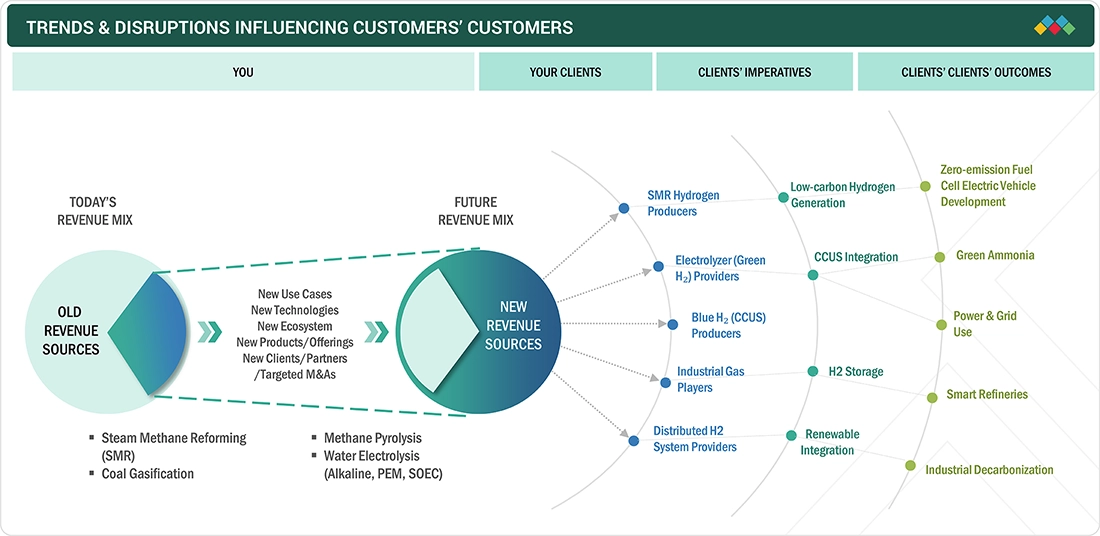
Source: Secondary Research, Interviews with Experts, MarketsandMarkets Analysis
MARKET DYNAMICS

Level
-
Government initiatives for developing hydrogen economy

-
Growing demand for ammonia in agriculture sector


Level
-
Energy loss during hydrogen production

-
Limited hydrogen infrastructure


Level
-
Rising emphasis on achieving net-zero carbon emission targets

-
Increasing investment in low-emission fuels


Level
-
High costs associated with renewable hydrogen production

Source: Secondary Research, Interviews with Experts, MarketsandMarkets Analysis
Driver: Enforcement of stringent regulations to curb greenhouse gas emissions
Greenhouse gases (GHGs) absorb infrared radiation (heat energy) emitted from the Earth’s surface and re-radiate it, contributing to global warming. The continued rise in global GHG emissions is largely driven by rapid industrialization and heavy dependence on fossil fuels. According to the International Energy Agency (IEA), total energy-related CO2 emissions increased by 0.8% in 2024, reaching a record high of 37.8 gigatons (Gt). This contributed to atmospheric CO2 concentrations rising to 422.5 parts per million (ppm), which is approximately 3 ppm higher than in 2023 and 50% above pre-industrial levels.
Restraint: Energy loss during hydrogen production
Hydrogen is a synthetic energy carrier. It transports energy produced by various other processes. Water electrolysis converts electrical energy into hydrogen. However, in addition to producing hydrogen, high-grade electrical energy is also utilized to compress, liquefy, transport, transfer, or store the medium. Energy is needed for hydrogen production. The energy input should ideally match the energy level of the synthetic gas. Any method of producing hydrogen, such as electrolysis and reforming, involves energy transformation. The chemical energy of hydrogen is converted from electrical energy or the chemical energy of hydrocarbons. Unfortunately, energy losses are always a part of the creation of hydrogen.
Opportunity:Rising emphasis on achieving net-zero carbon emission targets
Hydrogen production goes through an unprecedented revolution under the net-zero emissions scenario. When the global output reaches 200 Mt H2 in 2030, low-carbon technologies will account for 70% of that production (electrolysis). By 2050, the amount of hydrogen produced will increase to about 500 Mt H2, almost entirely due to the implementation of low-carbon technology policies. Different technologies will be needed to alter the energy system to achieve net-zero emissions by 2050. Energy efficiency, behavioral modification, electrification, renewable energy, hydrogen and hydrogen-based fuels, and carbon capture, utilization, and storage (CCUS) are likely to play major roles in decarbonizing the energy system globally.
Challenges:High costs associated with renewable hydrogen production
Green hydrogen, produced using renewable energy sources or other low-carbon power, is increasingly recognized as a cornerstone for achieving deep decarbonization across energy-intensive and hard-to-abate sectors. Industries such as steel, cement, chemicals, heavy-duty transportation, shipping, and aviation can leverage green hydrogen to reduce carbon footprints and align with global net-zero targets significantly. Despite its environmental benefits, the commercial viability of green hydrogen remains a major challenge. Green hydrogen costs approximately two to four times higher than gray hydrogen, which is derived from fossil fuels without carbon capture. Several factors contribute to this disparity, including the high capital expenditure required for electrolyzer systems, the limited and uneven availability of low-cost renewable electricity, and the underdeveloped infrastructure for hydrogen production, storage, and distribution. These economic and logistical hurdles continue to hinder the widespread adoption of green hydrogen and restrict its contribution to the global energy transition.
US HYDROGEN GENERATION MARKET: COMMERCIAL USE CASES ACROSS INDUSTRIES
| COMPANY | USE CASE DESCRIPTION | BENEFITS |
|---|---|---|
 |
The steel industry is one of the most carbon-intensive sectors, contributing around 7–9% of global CO2 emissions. Traditional steel manufacturing uses coal-based blast furnaces. SSAB, a leading Swedish steelmaker, aimed to decarbonize its operations but faced challenges sourcing reliable, large-scale green hydrogen for hydrogen-based Direct Reduced Iron (DRI) technology. | SSAB, in collaboration with Vattenfall and LKAB, initiated the HYBRIT (Hydrogen Breakthrough Ironmaking Technology) project to revolutionize steel manufacturing by replacing coal with green hydrogen. The initiative features a 4.5 MW pilot electrolyzer powered by renewable electricity to produce fossil-free hydrogen for use in the iron and steelmaking process. The pilot plant successfully demonstrated the feasibility of fossil-free steel production and is progressing toward full-scale commercial deployment. Upon completion, the HYBRIT technology can potentially reduce Sweden’s total CO2 emissions by approximately 10%, representing a significant step toward decarbonizing one of the country’s most emission-intensive industries. |
 |
Energy utility company, RWE (Germany), set the goal to produce large-scale hydrogen for its Lingen site in Lower Saxony, Germany. As part of the TansHyDE project, GET H2 Nucleus, RWE tested various electrolysis technologies, including Sunfire’s (Germany) highly efficient high-temperature electrolysis. | Initially, Sunfire delivered a 250 kW (kilowatt) system to Lingen. This high-temperature electrolyzer system will generate green hydrogen directly into RWE’s test pipeline at the power plant. As an additional pilot plant, Sunfire installed a 10 MW pressurized alkaline electrolyzer at RWE’s site in Lingen. The commercial project provides valuable insights into green hydrogen production on an industrial scale for both partners. |
Logos and trademarks shown above are the property of their respective owners. Their use here is for informational and illustrative purposes only.
MARKET ECOSYSTEM
The US hydrogen generation market ecosystem is well-established, comprising a mix of technology providers, EPC players, suppliers, and end users. Technology companies such as LindePLC, Plug Power Inc., and Nel ASA are driving innovation in hydrogen production technologies. Engineering and project execution are supported by EPC firms like Technip Energies, ANDRITZ AG, and Black & Veatch. The supply landscape is dominated by industrial gas leaders such as Air Liquide, Air Products and Chemicals, Inc., and Messer SE & Co. KGaA. Meanwhile, end users including ElringKlinger, TotalEnergies SE, and Doosan Corporation are driving demand, collectively shaping a robust and integrated hydrogen market ecosystem in the US.
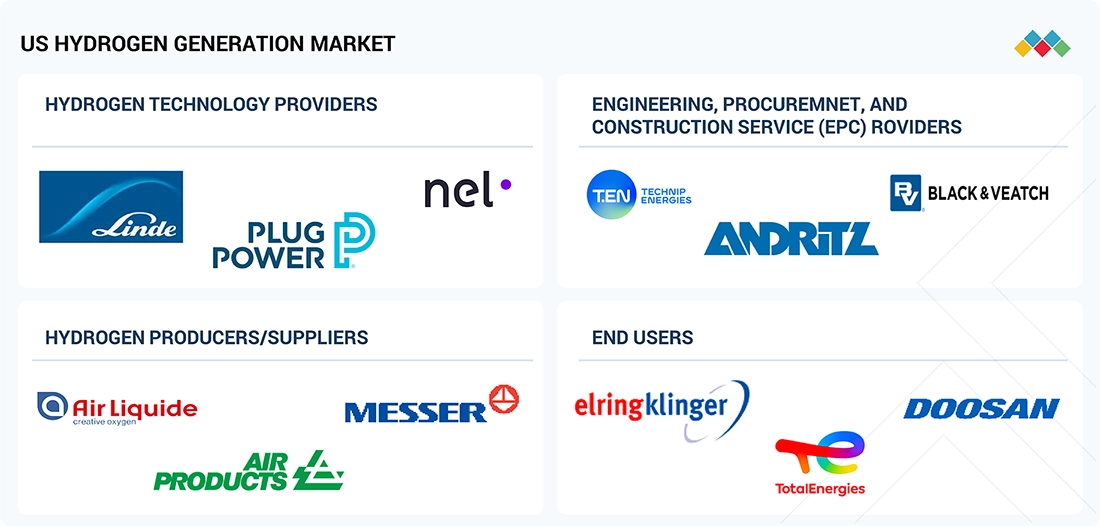
Logos and trademarks shown above are the property of their respective owners. Their use here is for informational and illustrative purposes only.
MARKET SEGMENTS
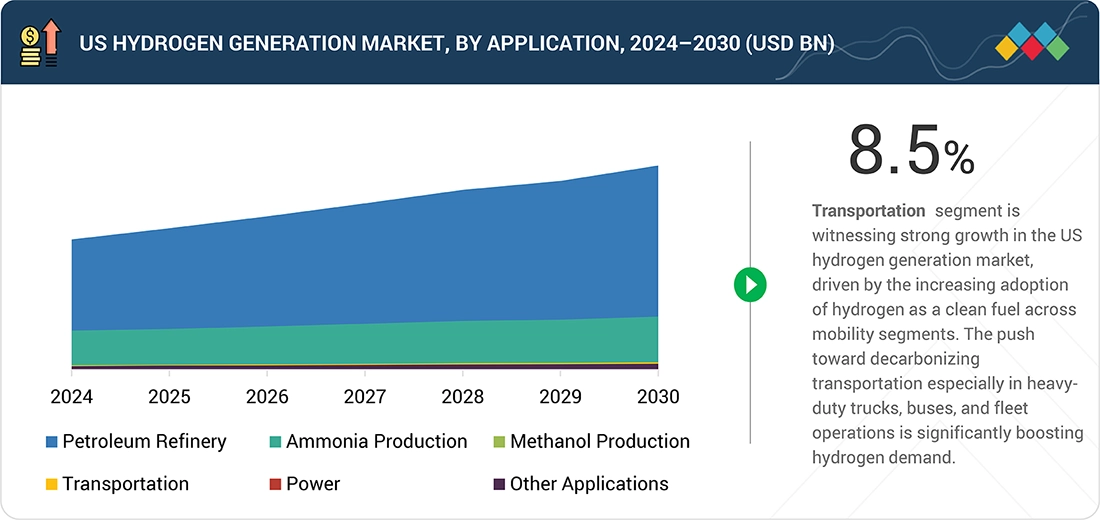
Source: Secondary Research, Interviews with Experts, MarketsandMarkets Analysis
US Hydrogen Generation Market, By Source
By source, the US hydrogen generation market is segmented into blue, gray, and green hydrogen. Green hydrogen, by source, is expected to register the highest CAGR in the US hydrogen generation market, driven by strong policy support, tax incentives, and increasing investments in renewable energy integration. The growing focus on decarbonization and expansion of electrolyzer capacity is further accelerating its adoption across industries.
US Hydrogen Generation market, By Application
By application, the US hydrogen generation market is segmented into petroleum refinery, ammonia production, methanol production, transportation, power generation, and other applications. Transportation, by application, is expected to register the highest CAGR in the US hydrogen generation market, driven by the increasing adoption of hydrogen fuel cell vehicles across segments such as heavy-duty trucks, buses, and material handling equipment. Growing investments in hydrogen refueling infrastructure and supportive government policies promoting clean mobility are accelerating demand. Additionally, the push toward zero-emission transportation and advancements in fuel cell technologies are further boosting hydrogen adoption in this segment.
REGION
US hydrogen generation market driven by strong policy support and increasing federal incentives promoting clean hydrogen adoption
The US hydrogen generation market is growing due to strong policy support and increasing federal incentives promoting clean hydrogen adoption, along with rising investments in renewable energy and electrolyzer capacity. The presence of a well-established industrial base, particularly in refining and chemicals, continues to drive steady hydrogen demand, while initiatives such as regional hydrogen hubs are strengthening infrastructure development across the country. Additionally, the growing focus on decarbonization in sectors suchas transportation and power generation is boosting low-carbon hydrogen uptake, supported further by advancements in carbon capture technologies enabling cleaner production pathways.
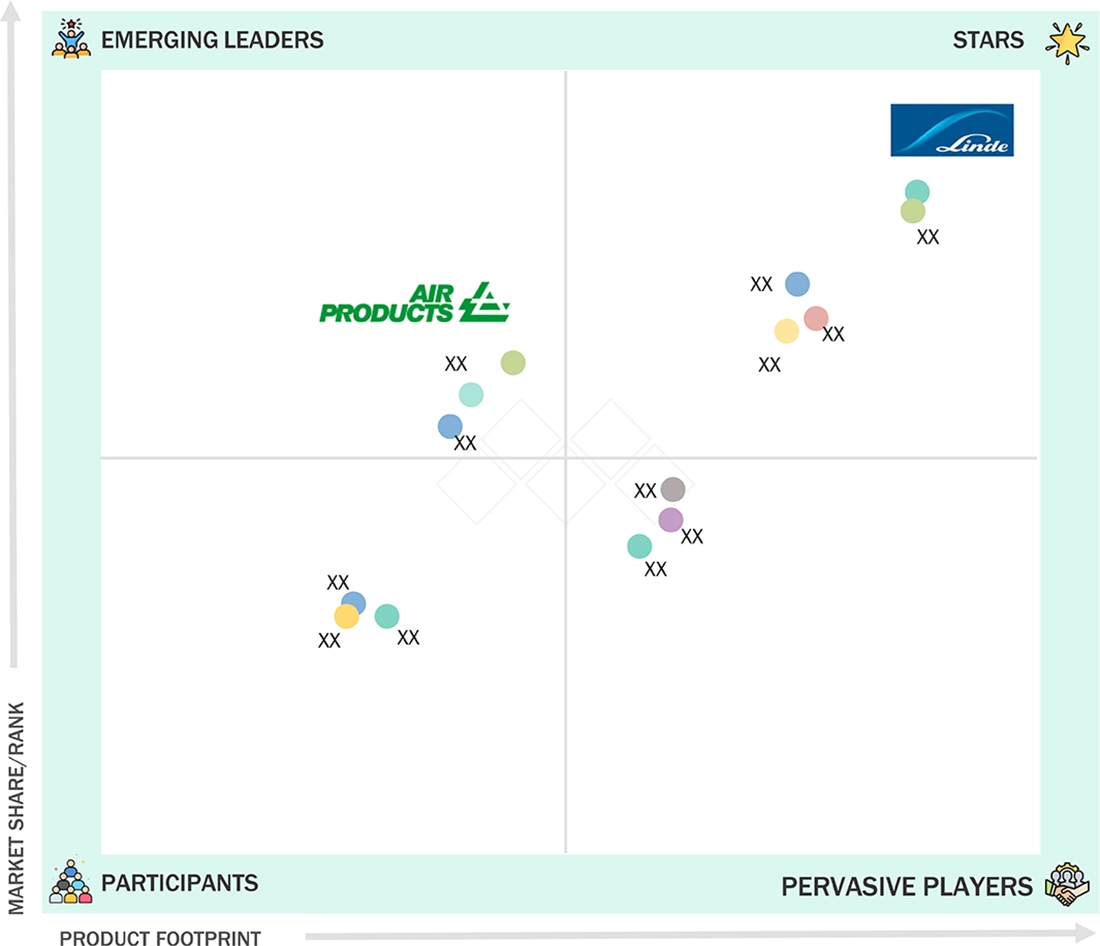
US HYDROGEN GENERATION MARKET: COMPANY EVALUATION MATRIX
Linde PLC emerges as a star player in the US hydrogen generation market due to its strong technological expertise, extensive production capabilities, and well-established industrial gas network. Air Products and Chemicals, Inc. is an emerging player in the US hydrogen generation market, driven by its strong presence in hydrogen supply chains and focus on hydrogen mobility solutions.
Source: Secondary Research, Interviews with Experts, MarketsandMarkets Analysis
KEY MARKET PLAYERS
- 1. Linde PLC (Ireland)
- 2. Air Liquide (France)
- 4. Air Products and Chemicals, Inc. (US)
- 5. Shell plc (UK)
- 6. ENGIE (France)
- 7. Chevron Corporation (US)
- 8. Ørsted A/S (Denmark)
- 9. Messer SE & Co. KGaA (Germany)
- 10. Equinor ASA (Norway)
- 11. Uniper SE (Germany)
- 12. Exxon Mobil Corporation (US)
- 13. BP p.l.c. (UK)
- 14. Iwatani Corporation (Japan)
- 16. Iberdrola, S.A. (Spain)
- 17. Plug Power Inc. (US)
- 18. Repsol (Spain)
- 19. Aker ASA (Norway)
- 20. Reliance Industries Limited (India)
- 21. MATHESON TRI-GAS, INC. (US)
- 22. Lhyfe (France)
- 24. BayoTech (US)
MARKET SCOPE
| REPORT METRIC | DETAILS |
|---|---|
| Market Size in 2024 (Value) | USD 21.74 BN |
| Market Forecast in 2030 (Value) | USD 33.27 BN |
| Growth Rate | CAGR of 7.2% from 2025-2030 |
| Years Considered | 2020-2030 |
| Base Year | 2024 |
| Forecast Period | 2025-2030 |
| Units Considered | Value (USD BN) Volume (Thousand Metric Ton) |
| Report Coverage | Revenue Forecast, Company Ranking, Competitive Landscape, Growth Factors, and Trends |
| Segments Covered | By Source (Blue, Gray, and Green), By Application (Petroleum Refinery, Ammonia Production, Methanol Production, Transportation, Power Generation, and Other Applications) |
| Countries Covered | US |
WHAT IS IN IT FOR YOU: US HYDROGEN GENERATION MARKET REPORT CONTENT GUIDE
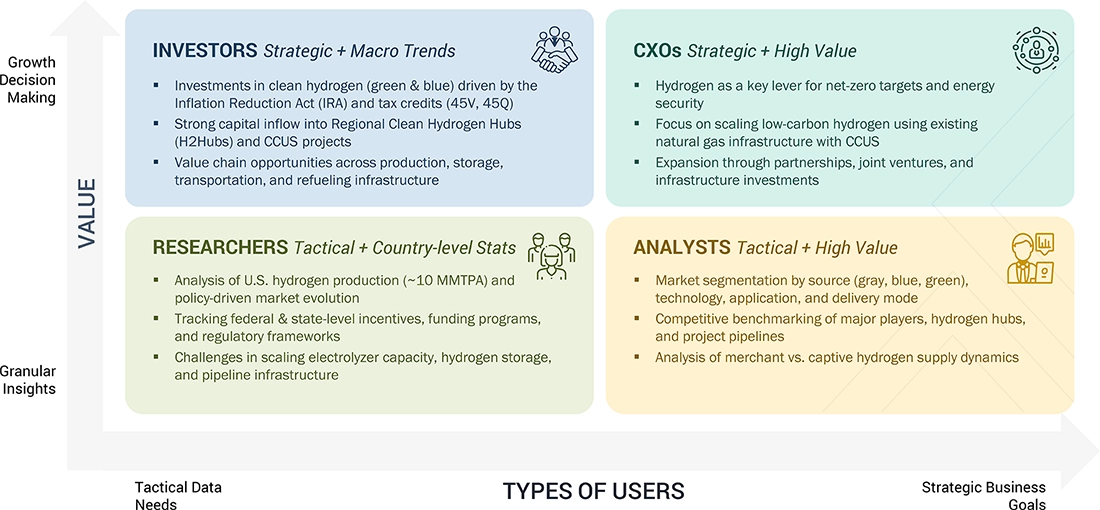
RECENT DEVELOPMENTS
- February 2025 : Air Liquide partnered with TotalEnergies to develop two large-scale green hydrogen projects in the Netherlands with a total investment exceeding USD 1 billion. Air Liquide will build and operate the 200 MW ELYgator electrolyzer in Maasvlakte, expected to supply up to 23,000 tons of renewable hydrogen annually by 2027. The companies also formed a 50/50 joint venture to develop a 250 MW electrolyzer near the Zeeland refinery, scheduled for launch in 2029 and projected to reduce CO2 emissions by up to 450,000 tons annually across Zeeland and Antwerp operations.
- December 2024 : Saudi Arabian Oil Co. entered a shareholders’ agreement with Linde PLC and SLB to develop one of the world’s largest carbon capture and storage (CCS) hubs in Jubail, Saudi Arabia. In this deal, Aramco will hold a 60% stake, while Linde and SLB will each hold 20%. The project aims to capture and store up to 9 million tons of CO2 annually by 2027 through a network of pipelines and underground storage in a saline aquifer. This CCS hub is also designed to support Aramco’s blue hydrogen and ammonia programs by providing the carbon capture infrastructure needed to produce low-carbon fuels.
- November 2024 : ENGIE entered a strategic partnership with Morocco’s OCP Group to accelerate the production of green hydrogen and green ammonia, alongside renewable energy, storage, electrical infrastructure, desalination, and R&D efforts. The deal commits both parties to co-develop large-scale projects—feasibility studies for e-methanol and sustainable aviation fuel—supporting Morocco’s industrial decarbonization ambitions and clean energy transition.
- January 2024 : Air Products and Chemicals, Inc. entered a 15-year agreement with TotalEnergies to supply 70,000 tons of green hydrogen annually to TotalEnergies’ refineries and biorefineries in Northern Europe starting in 2030. This supply will help TotalEnergies replace fossil-based hydrogen, enabling a reduction of approximately 700,000 tons of CO2 emissions per year. The deal supports TotalEnergies’ goal of cutting Scope 1 and 2 emissions by 40% by 2030 (vs. 2015 levels).
- May 2021 : Orsted A/S, recognized as the most sustainable energy company globally, and POSCO Group, one of Korea’s largest conglomerates, signed an MoU to enhance their partnership in the fields of offshore wind and renewable hydrogen in Korea.
Table of Contents
 Exclusive indicates content/data unique to MarketsandMarkets and not available with any competitors.
Methodology
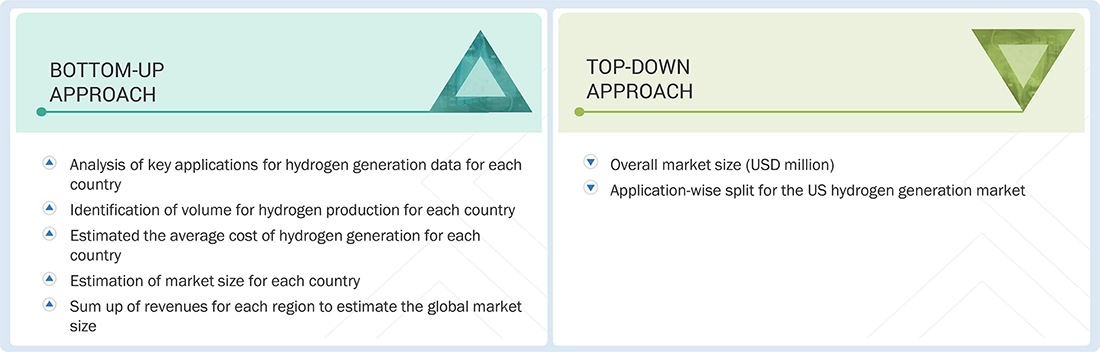
The study involved major activities in estimating the current size of the US Hydrogen Generation Market. Exhaustive secondary research was done to collect information on the peer and parent markets. The next step was to validate these findings, assumptions, and sizing with industry experts across the value chain through primary research. Both top-down and bottom-up approaches were employed to estimate the complete market size. Thereafter, market breakdown and data triangulation were used to estimate the market size of the segments and subsegments.
Secondary Research
The secondary sources referred to for this research study include annual reports, press releases, investor presentations of companies, white papers, certified publications, articles from recognized authors, and databases of various companies and associations. Secondary research was mainly used to obtain key information about the industry’s supply chain, the market’s monetary chain, the total pool of key players, market classification and segmentation according to industry trends to the bottom-most level, regional markets, and key developments from market- and technology-oriented perspectives.
Primary Research
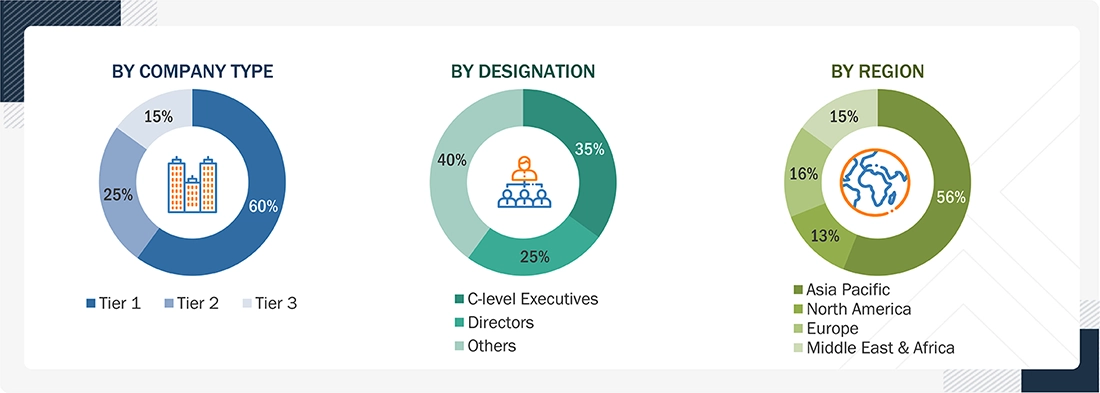
In the primary research process, various primary sources from the supply and demand sides were interviewed to obtain qualitative and quantitative information for this report. Primary sources from the supply side include industry experts, such as CEOs, vice presidents, marketing directors, technology & innovation directors, and related key executives from various companies and organizations operating in the US Hydrogen Generation Market.
In the complete market engineering process, the top-down and bottom-up approaches and several data triangulation methods were extensively used to perform market estimation and market forecasts for the overall market segments and subsegments listed in this report. Extensive qualitative and quantitative analysis was conducted on the complete market engineering process to list key information/insights throughout the report.
To know about the assumptions considered for the study, download the pdf brochure
Market Size Estimation
The top-down and bottom-up approaches were used to estimate and validate the size of the US Hydrogen Generation Market and to evaluate the sizes of various other dependent submarkets. Key players in the market were identified through secondary research, and their shares in the respective regions were determined through primary and secondary research. This entire procedure included the study of annual and financial reports of top market players and extensive interviews for key insights with industry leaders, such as CEOs, VPs, directors, and marketing executives. All percentage shares, splits, and breakdowns were determined using secondary sources and verified through primary sources. All possible parameters that affect the markets covered in this research study were accounted for, viewed in extensive detail, verified through primary research, and analyzed to get the final quantitative and qualitative data.
Data Triangulation
After arriving at the overall market size from the estimation process explained below, the total market was split into several segments and subsegments. The data triangulation and market breakdown procedures were employed, wherever applicable, to complete the overall market engineering process and arrive at the exact statistics for all the segments and subsegments. The data was triangulated by studying various factors and trends from the demand and supply sides.
Market Definition
Hydrogen is the lightest and most abundant element in the universe, widely valued for its exceptional energy-carrying capacity. It can be produced either as a primary product or as a by-product from diverse energy sources, including renewables (wind and solar), fossil fuels (coal and natural gas), and nuclear power. Due to its high energy content per unit mass, hydrogen serves as a highly versatile energy carrier. It is critical in various industrial processes, chemical manufacturing, and emerging clean energy applications. The US Hydrogen Generation Market is defined as the sum of the revenue generated by companies producing hydrogen through various technologies, such as electrolysis, steam methane reforming (SMR), auto thermal reforming (ATR), partial oxidation (POX), and coal gasification.
Stakeholders
- Fuel cell electric vehicle (FCEV) manufacturers
- Government organizations
- Hydrogen charging station owners
- Hydrogen fuel pump developers and operators
- Hydrogen generation equipment manufacturers and suppliers
- Hydrogen generation infrastructure developers
- Institutional investors
- Merchant hydrogen producers
- Methanol producers
- Refinery operators
- Research institutes
Report Objectives
- To describe and forecast the US Hydrogen Generation Market, by technology, generation and delivery mode, application, source, and region, in terms of value
- To describe and forecast the US Hydrogen Generation Market, by technology, generation and delivery mode, application, source, and region, in terms of volume
- To forecast the market size across four key regions: North America, Europe, Asia Pacific, the Middle East, Africa, and South America, along with country-level analysis, in terms of value and volume
- To provide detailed information regarding key drivers, restraints, opportunities, and challenges influencing the growth of the US Hydrogen Generation Market
- To provide the supply chain analysis, trends/disruptions impacting customer business, ecosystem analysis, regulatory landscape, patent analysis, case study analysis, technology analysis, key conferences & events, the impact of AI/Gen AI, pricing analysis, porter’s five forces analysis, regulatory analysis, and the impact of 2025 US tariff on the US Hydrogen Generation Market
- To analyze opportunities for stakeholders and provide a detailed competitive landscape of the market leaders
- To strategically analyze micromarkets with respect to individual growth trends, prospects, and contributions to the overall market size
- To benchmark players within the market using the company evaluation matrix, which analyzes market players based on several parameters within the broad categories of business and product strategies
- To compare key market players with respect to product specifications and applications
- To strategically profile key players and comprehensively analyze their market rankings and core competencies
- To analyze competitive developments, such as contracts, agreements, expansions, investments, acquisitions, partnerships, collaborations, and joint ventures, in the US Hydrogen Generation Market
Available Customizations
MarketsandMarkets offers customizations according to the specific needs of the companies using the given market data.
The following customization options are available for the report:
Product Analysis
- Product matrix, which gives a detailed comparison of the product portfolio of each company
Geographic Analysis as per Feasibility
- Further breakdown of the US Hydrogen Generation Market, by country for the Europe, Asia Pacific, North America, Middle East, Africa, and South America regions
Company Information
- Detailed analysis and profiling of additional market players (up to five)


Personalize This Research
- Triangulate with your Own Data
- Get Data as per your Format and Definition
- Gain a Deeper Dive on a Specific Application, Geography, Customer or Competitor
- Any level of Personalization
Let Us Help You
- What are the Known and Unknown Adjacencies Impacting the US Hydrogen Generation Market
- What will your New Revenue Sources be?
- Who will be your Top Customer; what will make them switch?
- Defend your Market Share or Win Competitors
- Get a Scorecard for Target Partners

Custom Market Research Services
We Will Customise The Research For You, In Case The Report Listed Above Does Not Meet With Your Requirements
Get 10% Free CustomisationTESTIMONIALS

Kimberly Murphy
GLOBAL MARKETING DIRECTOR
Bently Nevada,
Leading Condition Monitoring & Asset Protectionwww.bakerhughesds.com/bently-nevada

MarketsandMarkets™ showed consistent rigor for success and relentlessly worked with Bently Nevada stakeholders to positively impact go-to-market strategy. Their proactiveness and flexibility has been instrumental in achieving the objectives to grow our sales pipeline in key industrial markets.

DARRICK HUEBER
Business Development Leader
Nexus Controls LLC,
Leading Manufacturer of Automation System & Electrical Panelswww.bakerhughesds.com/nexus-controls

We partnered with MarketsandMarkets to expand our business further by tapping into new industrial segments. It was critical for us to gather crucial business insights about specific markets to achieve this goal. MarketsandMarkets engagement model and client services helped us provide those insights, it was really impressive and valuable for my business. The team was extremely flexible and helpful.

Mike Schoff
Global Industrial Commercial Strategy Leader
Nexus Controls LLC
Leading Manufacturer of Automation System & Electrical Panelswww.bakerhughesds.com/nexus-controls
We consulted MarketsandMarkets for potential Partner Identification. Overall, it was a good experience. The insights provided through interviews conducted by the team helped us put together the questionnaire required for discussion with the selected partners. Their ability to provide insights through interviews with customers in a timely manner was quite impressive.






Growth opportunities and latent adjacency in US Hydrogen Generation Market