Veterinary Ophthalmology Equipment Market

Veterinary Ophthalmology Equipment Market by Product (Ophthalmoscope, Retinoscope, Fundus Camera, Slit Lamp), Animal Type (Canine, Feline, Livestock), Application (Treatment, Surgery, Diagnosis, Monitoring), End User, Region - Global Forecast to 2031



VETERINARY OPHTHALMOLOGY EQUIPMENT MARKET SIZE, SHARE & GROWTH SNAPSHOT
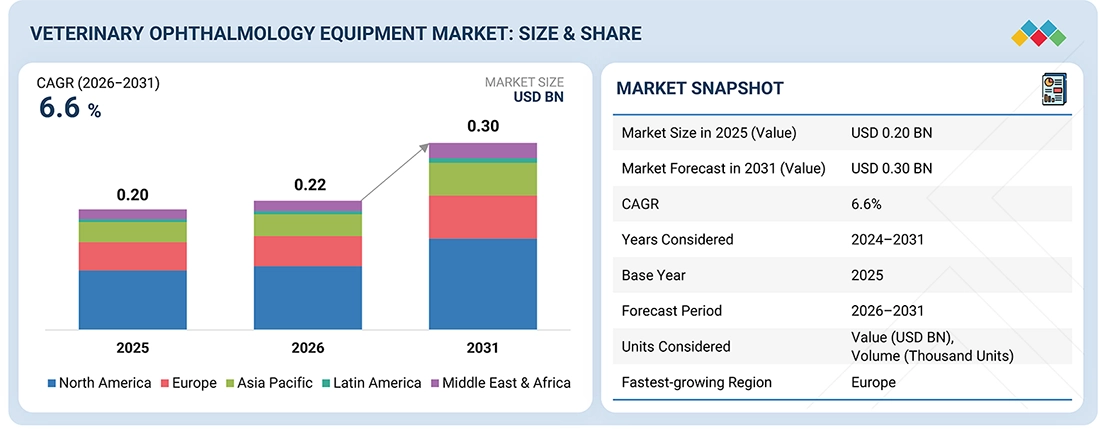
Source: Secondary Research, Interviews with Experts, MarketsandMarkets Analysis
The global veterinary ophthalmology equipment market is projected to grow from USD 0.22 billion in 2026 to USD 0.30 billion by 2031, at a CAGR of 6.6% during the forecast period. The market was valued at USD 0.20 billion in 2025. Growth in the demand for early and precise diagnosis of ocular disorders among companion animals, rising adoption of advanced ophthalmic technologies such as digital slit lamps, optical coherence tomography (OCT), electroretinography (ERG), and tonometry systems, and growing focus on routine and preventive eye health examination of pets are some of the key factors driving this market. In addition, the increasing incidence of chronic, age-related, and infectious eye diseases, such as cataracts, glaucoma, retinal degeneration, and corneal ulcers, has been compelling veterinary clinics and specialty hospitals to invest in high-precision, high-performance ophthalmology equipment for reliable diagnosis, monitoring, and treatment planning.
KEY TAKEAWAYS
-
MARKET SNAPSHOT:
Base Year Market Size (2025): USD 0.20 Billion
Current Market Size (2026): USD 0.22 Billion
Forecast Market Size (2031): USD 0.30 Billion
CAGR (2026–2031): 6.6% -
SEGMENT LEADERSHIP:
Regional Leader: North America accounted for the largest share of 43.3% in 2025.
Product Leader: Surgical equipment, disposables, and implants are expected to register the highest CAGR of 7.0%.
Animal Type Leader: Canine is expected to dominate the market with a 48.5% share in 2025.
Application Leader: Surgical procedures are expected to register the highest CAGR during the forecast period.
End User Leader: Veterinary specialty clinics are projected to register the highest CAGR during the forecast period. -
MARKET OUTLOOK & COMPETITIVE LANDSCAPE:
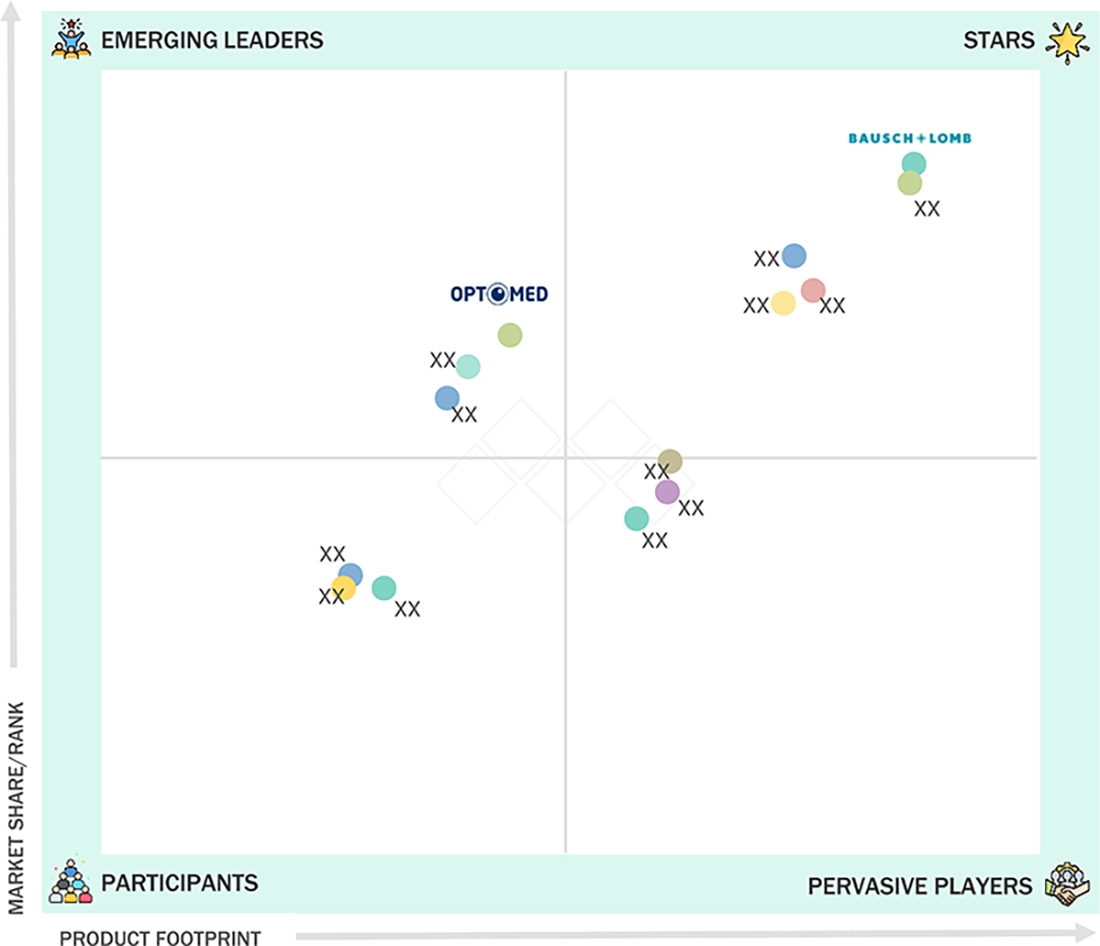
Bausch + Lomb, Revenio Group Oyj, and Keeler Ltd were identified as some of the star players in the veterinary ophthalmology equipment market, given their extensive global reach and comprehensive product portfolios.
Companies such as AJL Ophthalmic S.A. and GerVetUSA, among others, have distinguished themselves among startups and SMEs due to their specialized veterinary expertise and focused product capabilities.
The veterinary ophthalmology equipment market is witnessing steady growth due to increasing expenditure on specialty eye care in companion animals, rising interest in enhanced early diagnosis of eye ailments, and rising adoption of advanced technologies in veterinary practices. New-age technologies such as AI-based eye image evaluation, digital as well as portable eye imaging tools, and tele-ophthalmology solutions are gradually establishing themselves in the market. Also, rising partnerships among equipment manufacturers, veterinary centers, and research organizations are favoring the development of equipment as well as market development.
TRENDS & DISRUPTIONS IMPACTING CUSTOMERS' CUSTOMERS
The impact on consumer businesses within the veterinary ophthalmology equipment market is based on factors like the increasing requirement for specialized eye care services for companion animals, increasing complexities of eye diseases, and rapid innovations in eye testing and visualization tools. The increasing dependence of veterinary practices like animal hospitals, specialty animal practices, and referral practices on advanced equipment for performing eye tests, such as digital image systems, tonometer devices, and electrodiagnostic devices to enable faster and precise treatment options, represents another key element that is driving the effect of consumer businesses in the mentioned market space. The increasing demand for delivering precise and data-driven preventive ocular treatments and transforming practice workflows into a tele-ophthalmology platform also impact the market.
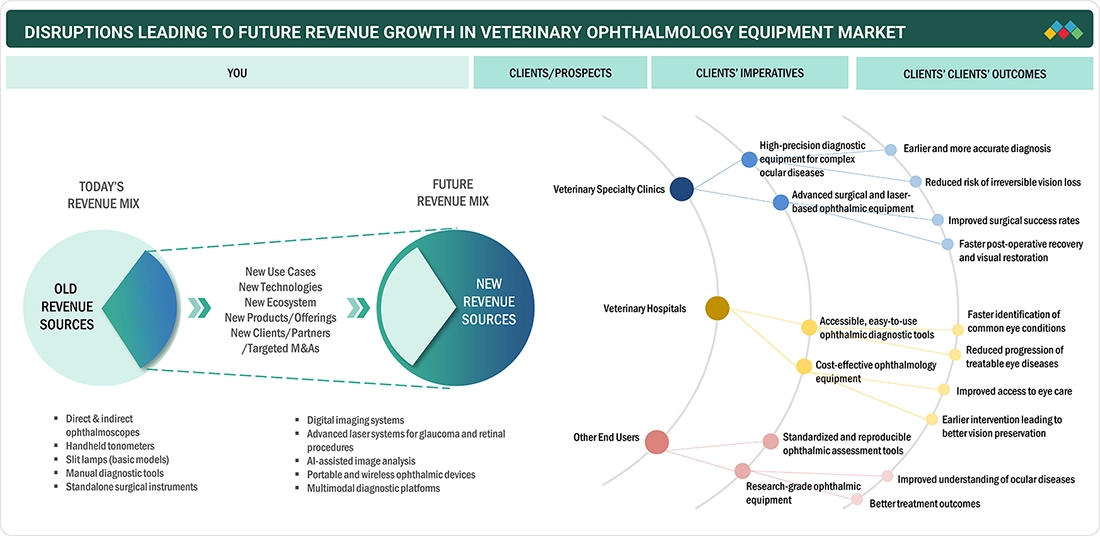
Source: Secondary Research, Interviews with Experts, MarketsandMarkets Analysis
MARKET DYNAMICS

Level
-
Rising pet ownership and pet care expenditure

-
Increased prevalence of ocular diseases among animals


Level
-
High cost of veterinary care


Level
-
Growing opportunities in emerging markets

-
Strategic developments by market players creating an opportunity for growth


Level
-
Limited availability of trained personnel

Source: Secondary Research, Interviews with Experts, MarketsandMarkets Analysis
Driver: Rising pet ownership and pet care expenditure
The rising number of pet ownership, especially companion animals, and an increase in spending on their healthcare are key contributors to the growing veterinary ophthalmology equipment market. With an increase in the perception of pets being an essential part of families, their healthcare, especially ophthalmic healthcare, will be highly sought after. This trend will lead to an increase in the spending of animal healthcare facilities, including veterinary clinics, on advanced ophthalmic diagnostic tools, thereby boosting the veterinary ophthalmology equipment market.
Restraint: High cost of veterinary care
The relatively high cost involved in veterinary ophthalmology facilities and expensive equipment is currently proving to be one of the major factors hampering the growth of this market. Highly advanced equipment like digital slit lamps, fundus cameras, tonometers, and electrodiagnostic instruments is a prerequisite for veterinary practices worldwide. Such equipment oriented towards capital expenditures might act as a barrier for smaller veterinary practices. In fact, the cost involved in all kinds of ophthalmic procedures may prove to be a hindrance to pet owners seeking further consultations.
Opportunity: Growing opportunities in emerging markets
With improving veterinary infrastructure, increasing pet adoption, and rising awareness regarding companion animal health, emerging markets pose a strong growth opportunity for the veterinary ophthalmology equipment market. Growing urban populations coupled with higher disposable incomes spur demand for advanced veterinary services, including ophthalmic diagnostics and treatment. Additionally, specialty clinics and referral centers have established themselves only gradually in these regions, hence creating demand for ophthalmology equipment that is moderately priced, portable, and easy to use.
Challenge: Limited availability of trained personnel
The limited availability of trained veterinary ophthalmologists and qualified supporting personnel is an issue that may impede the adoption of advanced equipment for veterinary ophthalmology. Many advanced diagnostic equipment may necessitate training on how to operate them. In places where trained personnel are not available, the equipment may not be fully utilized or may be improperly operated, thus diminishing their benefits. This issue may result in a slowed adoption process for advanced veterinary ophthalmology equipment.
VETERINARY OPHTHALMOLOGY EQUIPMENT MARKET: COMMERCIAL USE CASES ACROSS INDUSTRIES
| COMPANY | USE CASE DESCRIPTION | BENEFITS |
|---|---|---|
 |
Provides veterinary-usable ophthalmic instruments, including surgical tools, lenses, and microsurgical equipment used in cataract extraction, corneal procedures, and general ophthalmic surgery in animals. | Supports high-precision eye surgery, improves surgical outcomes, and enables advanced treatment options for companion animals. |
 |
Offers veterinary rebound tonometers (TONOVET Plus, TONOVET Pro, TONOVET Pet) designed for accurate intraocular pressure measurement in dogs, cats, rabbits, and horses. | Enables fast, accurate glaucoma screening without anesthesia; improves early disease detection and routine IOP monitoring in veterinary practices. |
 |
Provides the Tono-Vera Vet tonometer, a veterinary-specific handheld device for objective IOP measurement with automated alignment for companion animals. | Improves reliability and consistency of IOP assessments; enhances clinical efficiency for glaucoma diagnostics in animals. |
 |
Manufactures veterinary binocular indirect ophthalmoscopes (Vantage Plus), slit lamps (KSL-H range), and handheld ophthalmoscopes specifically used by veterinary ophthalmologists. | Enables detailed retinal and anterior segment evaluation, improving diagnostic accuracy and comprehensive eye examinations. |
 |
Supplies handheld fundus cameras (e.g., Aurora IQ, Smartscope) adapted for veterinary eye imaging, allowing retinal, optic nerve, and anterior segment documentation in animals. | Facilitates high-quality imaging in general and specialty practices; supports tele-ophthalmology and early detection of retinal disease. |
Logos and trademarks shown above are the property of their respective owners. Their use here is for informational and illustrative purposes only.
MARKET ECOSYSTEM
The ecosystem for the veterinary ophthalmology equipment market includes interdependent entities that promote the advancement, delivery, and application of ophthalmology solutions in the field of veterinary care. The central players in this market include the manufacturers of diagnostic and imaging equipment for the management of eye disease in companion animals, along with the support of distribution and service entities for the delivery of these solutions. The major end users of these products are the veterinary clinics, specialty ophthalmology practices, and referral hospitals. The other entities that help contribute towards the growth of the market include the technology companies that provide solutions for imaging and the regulatory authorities that ensure the safety and compliance of veterinary ophthalmology equipment.
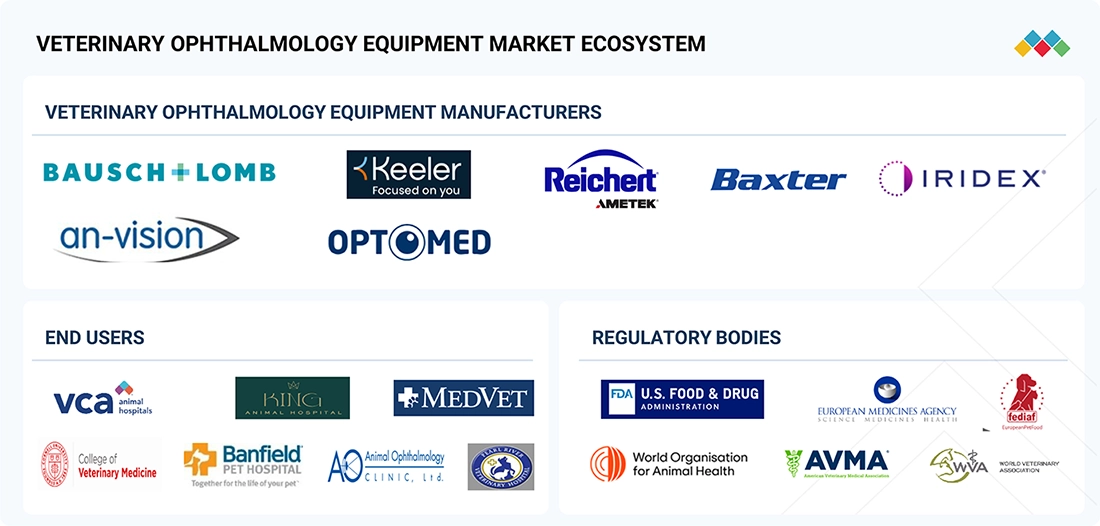
Logos and trademarks shown above are the property of their respective owners. Their use here is for informational and illustrative purposes only.
MARKET SEGMENTS
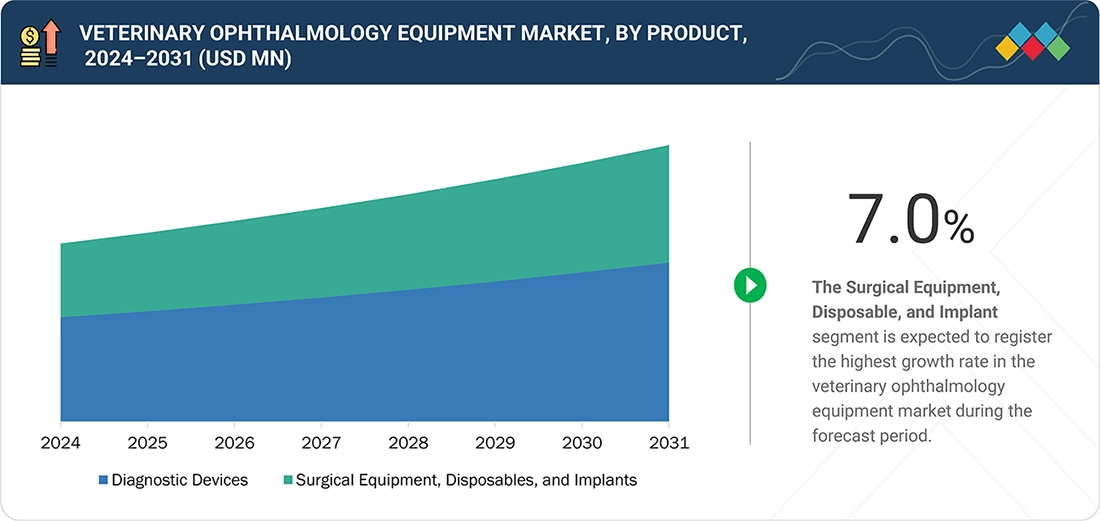
Source: Secondary Research, Interviews with Experts, MarketsandMarkets Analysis
Veterinary Ophthalmology Equipment Market, By Product
The surgical equipment, disposables, and implants segment is projected to witness the highest growth rate in the veterinary ophthalmology equipment market during the forecast period due to the rising number of ophthalmic surgeries performed in companion animals. Common conditions such as cataracts, glaucoma, corneal injuries, and eyelid abnormalities frequently require surgical intervention, driving demand for advanced surgical instruments, consumables, and implants. In addition, disposables and implants require repeated usage and replacement for each procedure, further supporting segment growth. Increasing availability of advanced veterinary ophthalmic surgical procedures, along with growing willingness among pet owners to opt for corrective eye surgeries, is accelerating the expansion of this segment.
Veterinary Ophthalmology Equipment Market, By Animal Type
In 2025, canines dominated the veterinary ophthalmology equipment market as they have the highest world population, and in addition, they suffer from eye diseases more frequently than other pets. A number of studies have shown that canine eye problems include cataracts, glaucoma, progressive retinal atrophy, corneal ulcers, and even breed-specific hereditary eye diseases that require the pets to be regularly screened, diagnosed, and probably operated on. Besides that, dogs are the animals brought most frequently to veterinary clinics for specialty eye care, and therefore, pet owners tend to be more willing to pay for advanced diagnostic and surgical treatments in the case of canines, which leads to a higher use of veterinary ophthalmology equipment.
Veterinary Ophthalmology Equipment Market, By Application
The surgical procedures segment is expected to witness the highest growth rate in the veterinary ophthalmology equipment market during the forecast period due to the increasing number of eye surgeries performed in companion animals. Rising prevalence of cataracts, glaucoma, corneal disorders, and retinal diseases, along with growing availability of advanced veterinary ophthalmic surgical treatments, is driving demand for surgical procedures. In addition, increasing pet healthcare spending and greater willingness among pet owners to opt for corrective and vision-restoring surgeries are further supporting the rapid growth of this segment.
Companion Animal Diagnostics Market, By End User
The veterinary specialty clinics segment is expected to register higher growth in the veterinary ophthalmology equipment market because they are specialized in providing sophisticated eye care, as compared with general veterinary practices. Specialty clinics can be expected to handle referrals, which could be related to the treatment and management of persistent, inherited, or severe ocular disease, thereby requiring sophisticated equipment for diagnosis, imaging, and surgery. Furthermore, the availability of sophisticated veterinary ophthalmologists and the financial capacity to invest in equipment would be significantly better in the case of specialty clinics, thereby making this segment the leading sector in the veterinary ophthalmology equipment market.
REGION
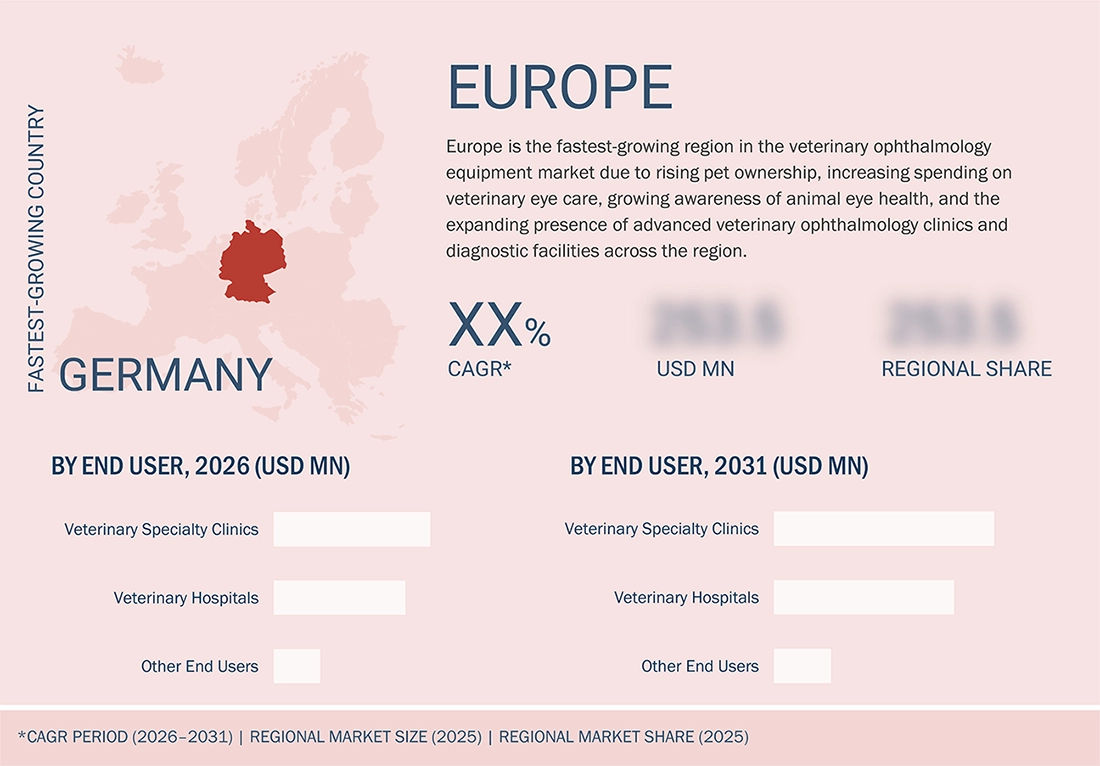
Europe to be fastest-growing region in global veterinary ophthalmology equipment market during forecast period
Europe is expected to witness the fastest growth rate in the veterinary ophthalmology equipment market during the forecast period. The growth is driven by increasing pet adoption, rising disposable income, and growing awareness regarding animal eye health and specialized veterinary care across the region. Expanding urbanization and higher spending on advanced veterinary treatments are supporting demand for ophthalmologic diagnostics and surgical procedures. In addition, the increasing number of specialty veterinary clinics, advancements in veterinary healthcare infrastructure, and greater availability of advanced ophthalmology equipment in countries such as Germany, the UK, France, and Italy are accelerating market growth. Supportive government initiatives, along with the presence of global and regional market players, are further contributing to the rapid expansion of the veterinary ophthalmology equipment market in Europe.
VETERINARY OPHTHALMOLOGY EQUIPMENT MARKET: COMPANY EVALUATION MATRIX
In the veterinary ophthalmology equipment market matrix, Bausch + Lomb (Star) leads the market due to its strong global presence and extensive ophthalmology portfolio, supported by its long-standing expertise in eye care solutions. Optomed Plc (Emerging Leader) is emerging in the market with its portable ophthalmic imaging solutions, strengthening its presence in veterinary eye diagnostics.
Source: Secondary Research, Interviews with Experts, MarketsandMarkets Analysis
KEY MARKET PLAYERS
- Bausch + Lomb (Canada)
- Revenio Group Oyj (Finland)
- Keeler Ltd (UK)
- Baxter (US)
- HEINE Optotechnik GmbH & Co. KG (Germany)
- Iridex Corporation (US)
- Optomed Plc (Finland)
- an-vision (Germany)
- Eidolon Optical, LLC (US)
- Kowa Company, Ltd. (Japan)
- Eidolon Optical LLC (US)
- I-MED Animal Health (Canada)
- Freedom Ophthalmic Pvt Ltd (France)
MARKET SCOPE
| REPORT METRIC | DETAILS |
|---|---|
| Market Size in 2025 (Value) | USD 0.22 BN |
| Market Forecast in 2031 (Value) | USD 0.30 BN |
| Growth Rate | CAGR of 6.6% during 2026-2031 |
| Years Considered | 2024-2031 |
| Base Year | 2025 |
| Forecast Period | 2026-2031 |
| Units Considered | Value (USD Billion), Volume (Thousand Units) |
| Report Coverage | Revenue forecast, company ranking, competitive landscape, growth factors, and trends |
| Segments Covered |
|
| Regions Covered | North America, Europe, Asia Pacific, Latin America, Middle East & Africa |
WHAT IS IN IT FOR YOU: VETERINARY OPHTHALMOLOGY EQUIPMENT MARKET REPORT CONTENT GUIDE
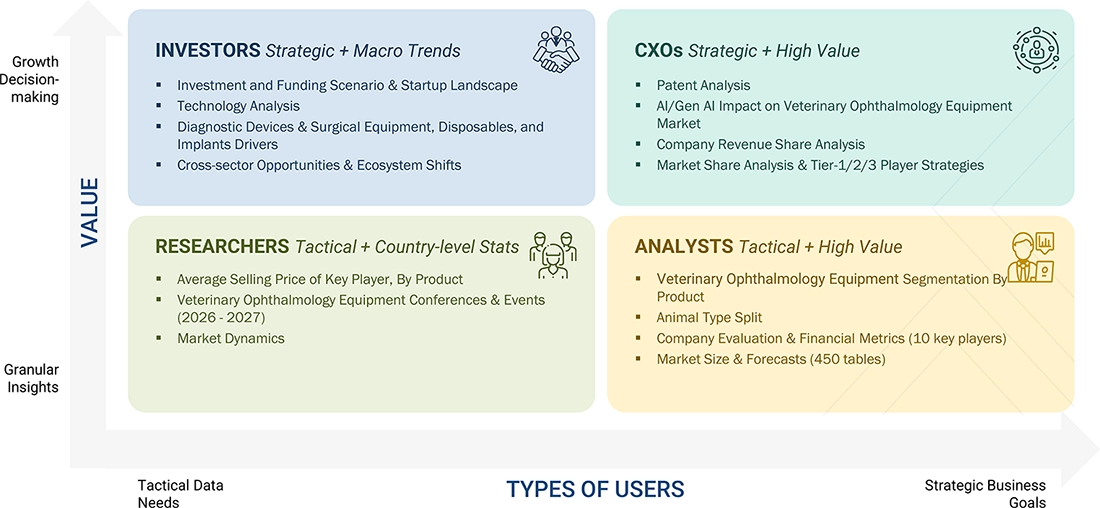
DELIVERED CUSTOMIZATIONS
We have successfully delivered the following deep-dive customizations:
| CLIENT REQUEST | CUSTOMIZATION DELIVERED | VALUE ADDS |
|---|---|---|
| Product Analysis | Assessed key ophthalmic devices, ophthalmoscopes, slit lamps, tonometers, fundus cameras, ERG systems, surgical tools, and implants. Compared technology features, pricing, and adoption trends across major manufacturers. | Helped identify technology shifts, unmet clinical needs, and opportunities for product positioning and portfolio expansion. |
| Company Information | Profiled leading players (Bausch + Lomb,Keeler, Reichert, Optomed, LKC Technologies). Analyzed portfolios, market presence, and competitive strategies. | Provided clarity on competitive strengths, differentiation areas, and partnership opportunities in the veterinary ophthalmology landscape. |
| Geographic Analysis | Provided detailed regional analysis of veterinary ophthalmology equipment demand across the Rest of APAC, focusing on pet ownership trends, availability of specialty veterinary eye care, clinic infrastructure, and adoption of advanced ophthalmic equipment. | Supported regional strategy planning by identifying high-growth markets, localization opportunities, and expansion priorities for veterinary ophthalmology equipment manufacturers. |
RECENT DEVELOPMENTS
- May 2025 : Revenio Group Oyj highlighted improved accuracy of its TONOVET Plus and TONOVET Pro tonometers for veterinary intraocular pressure measurement, strengthening their use in animal glaucoma assessment.
- February 2025 : Keeler Ltd has started local production in Shanghai of its main product, the binocular indirect ophthalmoscope and slit lamps, which would help in the distribution of BIO, the Vantage Plus, and the KSL-H slit lamp series in China while continuing operations in the UK.
- May 2024 : Reichert Technologies, part of AMETEK, Inc., announced the U.S. availability of the Tono-Vera Tonometer with ActiView™ Positioning System. This handheld device uses rebound tonometry to deliver fast, automated, and reliable intraocular pressure (IOP) measurements without requiring topical anesthetic.
Table of Contents
 Exclusive indicates content/data unique to MarketsandMarkets and not available with any competitors.
Methodology
This research study extensively utilized both primary and secondary sources. It involved analyzing various factors influencing the industry to identify segmentation types, industry trends, key players, the competitive landscape, key market dynamics, and strategies employed by key players.
Secondary Research
This research study utilized a variety of comprehensive secondary sources, including directories, databases such as Bloomberg Business, Factiva, and Dun & Bradstreet, white papers, annual reports, company house documents, investor presentations, and SEC filings from various companies. Secondary research was employed to gather information crucial for an in-depth, technical, market-oriented, and commercial analysis of the veterinary ophthalmology equipment market. This approach also helped identify key players in the industry and allowed for classification and segmentation based on emerging trends at the most detailed level. Furthermore, significant developments pertaining to both market and technological perspectives were documented. A database of primary industry leaders was created as part of this secondary research.
Primary Research
In the primary research process, we interviewed a range of sources from both the supply and demand sides to gather qualitative and quantitative information for this report. Primary sources from the supply side include project/sales/marketing/business development managers, presidents, CEOs, vice presidents, chairpersons, chief operating officers, chief strategy officers, directors, chief information officers, and chief medical information officers related to the veterinary ophthalmology equipment market. Primary sources from the demand side include veterinary ophthalmologists and general veterinary clinicians, R&D and product development teams, managers of specialty and referral veterinary clinics, and procurement teams in veterinary practices and hospitals.
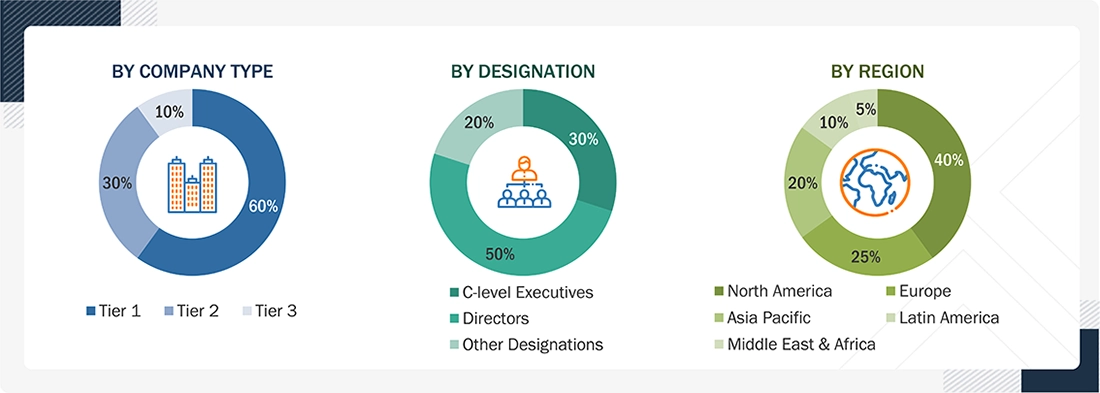
Note 1: C-level executives include CEOs, COOs, CTOs, and VPs.
Note 2: Other designations include sales, marketing, and product managers.
Note 3: Tiers are defined based on a company’s total revenue. As of 2025: Tier 1 = >USD 1 billion, Tier 2 = USD 500 million to USD 1 billion, and Tier 3 = <USD 500 million.
To know about the assumptions considered for the study, download the pdf brochure
Market Size Estimation
The total size of the veterinary ophthalmology equipment market was determined after data triangulation from three approaches, as mentioned below. After each approach, the weighted average of the three approaches was taken based on the level of assumptions used in each approach.
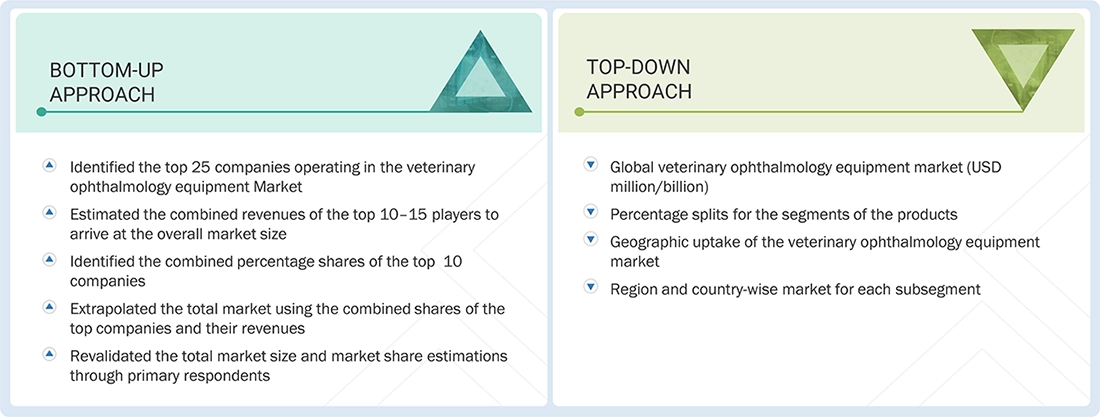
Data Triangulation
After arriving at the market size, the total market was divided into several segments and subsegments. Data triangulation and market breakdown procedures were employed wherever applicable to complete the overall market engineering process and arrive at the exact statistics for all segments and subsegments.
Market Definition
Veterinary ophthalmology equipment refers to specialized tools, instruments, and devices used by veterinarians and veterinary ophthalmologists to diagnose, treat, and manage eye related conditions in animals. This equipment facilitates various aspects of ophthalmic care for animals, ranging from routine eye examinations to advanced surgical procedures. Veterinary ophthalmology equipment may include diagnostic tools such as ophthalmoscopes, tonometers, slit lamps, and ocular ultrasound machines, which enable veterinarians to assess the health of the eye, diagnose diseases, and monitor treatment progress.
Key Stakeholders
- Manufacturers of veterinary ophthalmology equipment
- Veterinary ophthalmology equipment suppliers & distributors
- Original equipment manufacturers (OEMs)
- Veterinary hospitals & clinics
- Distributors of veterinary ophthalmology equipment
- Contract research organizations (CROs)
- Medical device research & consulting firms
- Academic & research institutes
- Veterinary research institutes
- Veterinary diagnostic laboratories
- Animal health research & development (R&D) companies
- Government associations
- Venture capitalists & investors
Report Objectives
- To define, describe, segment, and forecast the veterinary ophthalmology equipment market by product, animal type, application, end user, and region
- To provide detailed information about the factors influencing market growth (such as drivers, restraints, opportunities, and challenges)
- To analyze micromarkets with respect to individual growth trends, prospects, and contributions to the overall veterinary ophthalmology equipment market
- To analyze market opportunities for stakeholders and provide details of the competitive landscape for key players
- To forecast the size of the veterinary ophthalmology equipment market in five main regions (along with their respective key countries): North America, Europe, the Asia Pacific, Latin America, and the Middle East & Africa
- To profile the key players in the veterinary ophthalmology equipment market and comprehensively analyze their core competencies and market shares
- To track and analyze competitive developments such as acquisitions, product launches, expansions, collaborations, agreements, and partnerships
Available customizations:
With the given market data, MarketsandMarkets offers customizations to meet your company’s specific needs. The following customization options are available for the report:
Company Information
Geographic Analysis
-
Detailed analysis and profiling of additional market players (up to 5)
- Further breakdown of the Rest of European veterinary ophthalmology equipment market into Austria, Finland, Switzerland, and other countries
- Further breakdown of the Rest of Latin American veterinary ophthalmology equipment market into Colombia, Chile, and other countries
-
Competitive Landscape Assessment
- Market share analysis for North American and European markets, which provides market shares of the top 3–5 key players in the veterinary ophthalmology equipment market
- Competitive leadership mapping for established players in the US


Personalize This Research
- Triangulate with your Own Data
- Get Data as per your Format and Definition
- Gain a Deeper Dive on a Specific Application, Geography, Customer or Competitor
- Any level of Personalization
Let Us Help You
- What are the Known and Unknown Adjacencies Impacting the Veterinary Ophthalmology Equipment Market
- What will your New Revenue Sources be?
- Who will be your Top Customer; what will make them switch?
- Defend your Market Share or Win Competitors
- Get a Scorecard for Target Partners

Custom Market Research Services
We Will Customise The Research For You, In Case The Report Listed Above Does Not Meet With Your Requirements
Get 10% Free CustomisationTESTIMONIALS

JAYANT RAJPUROHIT
Director of Market Insights, Data and Analytics
SFI Health,
Leading Pharmaceutical Companywww.sfihealth.com/

We at SFI Health approached MarketsandMarkets for an Opportunity Assessment on "Incidence and Prevalence of Focus Indications" as we wanted to know the most attractive HCPs like Physician, Functional MD, Naturopath and Pharmacist. The project was critical for us to ensure our focus on the right target which would enable sustainable growth and profitability for SFI Health. The business insights provided exceeded our expectations and we were extremely impressed. The team at MarketsandMarkets is highly professional and detail oriented and very well understood our business needs. MarketsandMarkets offers a unique combination of expertise and dedicated engagement model. We identified 2 new products to be launched in coming months, based on the research findings provided by MarketsandMarkets. We are happy with the services and would strongly recommend MarketsandMarkets to my peers in the industry.

BEATRIZ DE LA CALLE
Head of Commercial Analytics
Qualicaps,
Leading Pharmaceutical Companywww.qualicaps.com/

We partnered with MarketsandMarkets for an assessment study on hard empty capsules. The team was extremely professional in understanding our business requirements and we received timely responses to all our queries. The market intelligence and the recommendations has met our business requirements. We were extremely impressed to see the final study results; it really exceeded our expectations. The market intelligence offered by MarketsandMarkets, and clarity on next steps will help us achieve our business objective for the Year 2021. We are happy with the services and would strongly recommend MarketsandMarkets to my peers in the industry.

Bob Williams,
Senior Director Business Development & Innovation
Bracco Diagnostics Inc.,
Italian Multinational in life sciences sector and a World Leader in imaging diagnosticsimaging.bracco.com/us-en
We were pleased with targeted insights that MarketsandMarkets identified from a custom study on the 'Radiation Dose Management Solutions Market'. Your team identified and characterized the market participants as well as underlying trends accurately. This study was useful to Bracco in formulating business strategies for our dose monitoring product lines and we thank MarketsandMarkets for the job well done.
Cody Coonradt,
Market Development and Strategy Manager
3M Health Information Systems,
Leader in Health care Coding, Payment & Analytics Solutions.www.3m.com/3M/en_US/health-information-systems-us
The value for our organization comes from three things: depth of research, specificity of segments and being easy to work with. As important as the first two are, the third can't be underestimated. MarketsandMarkets, maybe more than any other research vendor, wants to know what is top of mind for our team and what big questions we are grappling to answer.
Their customer first approach and high value engagement model, have given us great analysis and excellent value for money
- US Veterinary Ophthalmology Equipment Market
- Canada Veterinary Ophthalmology Equipment Market
- Germany Veterinary Ophthalmology Equipment Market
- UK Veterinary Ophthalmology Equipment Market
- France Veterinary Ophthalmology Equipment Market
- Italy Veterinary Ophthalmology Equipment Market
- Spain Veterinary Ophthalmology Equipment Market
- Netherlands Veterinary Ophthalmology Equipment Market
- China Veterinary Ophthalmology Equipment Market
- Japan Veterinary Ophthalmology Equipment Market
- India Veterinary Ophthalmology Equipment Market
- Australia Veterinary Ophthalmology Equipment Market
- South Korea Veterinary Ophthalmology Equipment Market
- New Zealand Veterinary Ophthalmology Equipment Market
- Brazil Veterinary Ophthalmology Equipment Market
- Mexico Veterinary Ophthalmology Equipment Market
- UAE Veterinary Ophthalmology Equipment Market
- Irelands Veterinary Ophthalmology Equipment Market
- Rest Of Europe Veterinary Ophthalmology Equipment Market






Growth opportunities and latent adjacency in Veterinary Ophthalmology Equipment Market