X Ray Machine Market

X Ray Machine Market for Tire Inspection By System Type (Stationary and Mobile), Technology (2D and 3D), Use Case (Tier 1, OEM, and Aftermarket), Application ( Tire Inspection, Tread Inspection, Sidewall Inspection, Bead Inspection), and Region – Global Forecast to 2032




OVERVIEW
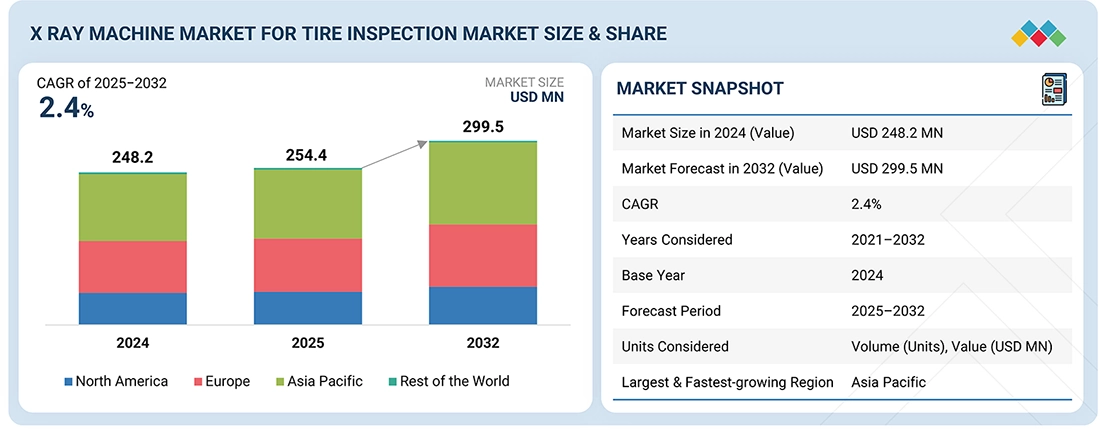
Source: Secondary Research, Interviews with Experts, MarketsandMarkets Analysis
The Tire X-Ray Machine market is projected to grow from USD 254.4 billion in 2025 to USD 299.5 billion by 2032, at a CAGR of 2.4% during the forecast period. The demand for X ray tire inspection is increasing as machine manufacturers are expanding their portfolios to cover a wider range of vehicle types, from passenger cars and trucks to off-the-road and specialty tires. This expansion, combined with stricter safety and regulatory standards, is pressuring tire producers to ensure structural reliability, long-term durability, and consistent performance across high-volume production. Advanced X ray inspection systems detect internal defects such as belt misalignment, air pockets, and cord irregularities while enabling enhanced features like smart tire monitoring and detailed quality analytics. Leading manufacturers, including Michelin and Bridgestone, are adopting these technologies to reduce recall risks, meet evolving compliance requirements, and support performance improvements across diverse tire categories.
X Ray Machine Market Size and Forecast:
- Market Size Value in 2024: USD 248.2 Million
- Market Size Value in 2025: USD 254.4 Million
- Revenue Forecast in 2032: USD 299.5 Million
- Growth Rate: CAGR of 2.4% from 2025 to 2032
- Data available from 2022 to 2033
- Base year: 2024
- Forecast period: 2025–2032
- Largest Growing Region: Asia Pacific
- Units Considered: Value (USD Billion), Volume (Units)
Key X Ray Machine Market Trends and Insights
- X Ray Machine Market Growth: Growth is driven by increasing demand for non-destructive testing and quality inspection across automotive manufacturing, rising focus on product safety, and stricter quality control standards.
-
Technology Impact: Advanced X-ray inspection systems enable real-time defect detection, enhanced imaging accuracy, automated inspection processes, and improved manufacturing quality assurance.
- Growing Trends: The X Ray Machine market is witnessing increased adoption of 3D computed tomography (CT) systems, AI-powered image analysis, automated inspection solutions, digital X-ray technologies, and high-resolution imaging systems.
- Growth Opportunities: Opportunities are driven by growing automotive production, expansion of electric vehicle manufacturing, increasing demand for battery inspection systems, and advancements in industrial imaging technologies.
KEY TAKEAWAYS
-
By RegionThe Asia Pacific is projected to be the fastest-growing and largest region during the forecast period.
-
By System TypeThe stationary segment is expected to lead the X ray machine market for tire inspection during the forecast period. It is projected to grow from USD 242.1 million in 2025 to USD 289.5 million by 2032.
-
By TechnologyThe 3D segment is expected to lead the X ray machine market for tire inspection during the forecast period. This segment is projected to grow from USD 64.6 million in 2025 to USD 81.7 million by 2032, at a CAGR of 3.4% from 2025 to 2032.
-
By Use CaseThe above Tier 1 segment is expected to be the largest segment during the forecast period. It is projected to grow from USD 225.6 million in 2025 to USD 262.4 million by 2032.
-
Competitive LandscapeThe X ray machine market for tire inspection is dominated by global players, such as AMETEK Micro-Poise (US), Technip Energies N.V. (France), Comet (Germany), MESNAC (China), and Nikon Corporation Industrial Solutions (Japan).
-
Competitive LandscapeDandong Aolong Radiative Instrument Group (China), Tekna Automazione (Italy), North Star Imaging (US), and Metrix NDT (UK) are the leading progressive companies in the X ray machine market for tire inspection.
Growing tire complexity and stricter quality standards are accelerating the adoption of advanced X ray inspection systems. Modern machines offer high-speed 3D imaging for detailed evaluation of internal structures, while AI-assisted defect detection enhances accuracy and reduces manual oversight. Integration with production systems enables real-time monitoring and process optimization, supporting faster throughput to meet rising vehicle numbers and frequent tire replacement cycles.
TRENDS & DISRUPTIONS IMPACTING CUSTOMERS' CUSTOMERS
The X ray machine market for tire inspection is transitioning from a hardware-centric sales model toward integrated inspection platforms and data-driven quality ecosystems. Historically, revenue was generated through standalone X-ray tire inspection machines, offline or batch inspection systems, and one-time capital equipment sales supported by basic annual maintenance contracts. The future revenue mix is increasingly shaped by inline high-speed inspection systems, AI-enabled defect detection upgrades, software licensing and analytics modules, data-driven quality monitoring platforms, and remote diagnostics with predictive maintenance services. Tire manufacturers are prioritizing zero-defect manufacturing, process optimization, and scrap reduction, as well as compliance with global safety standards. OEMs are focused on supplier quality consistency, reduced field failure risk, and regulatory compliance assurance. These imperatives translate into improved structural integrity of tires, lower recall probability, better margin protection through scrap reduction, reduced manual inspection dependency, lower lifecycle inspection cost, and stronger brand trust. As tire production becomes more automated and quality expectations tighten, X-ray inspection systems are evolving into critical enablers of plant-level quality control and long-term risk mitigation.
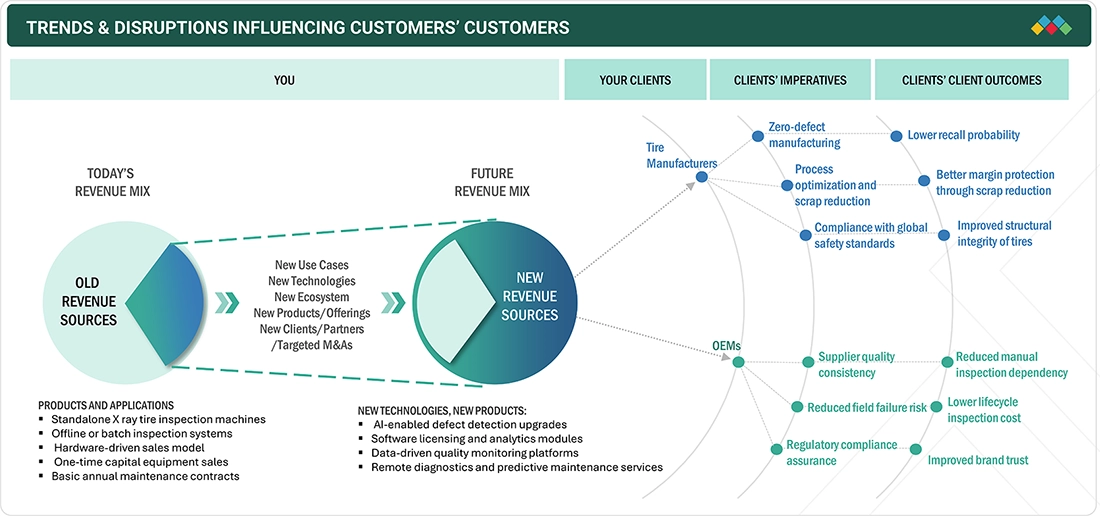
Source: Secondary Research, Interviews with Experts, MarketsandMarkets Analysis
MARKET DYNAMICS

Level
-
Increasing internal inspection practices

-
Advanced 3D imaging capabilities increasing demand


Level
-
High capital investment per inspection line

-
Higher installation and service complexity


Level
-
AI-driven automated defect classification

-
Integration of X-ray inspection with manufacturing execution system


Level
-
Balancing image resolution with tire production speed

Source: Secondary Research, Interviews with Experts, MarketsandMarkets Analysis
Driver: Increasing internal inspection practices
Internal inspection practices in tire manufacturing are transitioning from selective sampling toward broader structural validation coverage. It is evolving into a continuous process control mechanism embedded within production lines. This transition is driven by stricter OEM acceptance criteria, rising export compliance requirements, and heightened recall sensitivity across global automotive supply chains. Automotive OEMs are embedding stricter traceability and validation clauses into supplier contracts, holding tire manufacturers accountable for internal structural conformity at shipment. Hence, internal inspection is no longer confined to end-of-line quality control.
Restraint: Higher installation and service complexity
X ray machines for tire inspection involve high installation and service complexity due to radiation shielding requirements, plant layout customization, heavy system integration with curing and finishing lines, and strict regulatory compliance for industrial radiography. Commissioning requires precise calibration of tubes, detectors, motion systems, and safety interlocks to match tire dimensions and takt time, while integration with MES and quality platforms adds software configuration complexity. Ongoing service demands specialized technicians for tube replacement, detector alignment, cooling systems, and periodic radiation audits, increasing lifecycle cost and dependence on OEM support, particularly in high-throughput inline environments.
Opportunity: AI-driven automated defect classification
In conventional setups, X ray inspection results remain isolated and are limited to accept or reject decisions; when integrated with MES, inspection data links with curing parameters, material batches, and machine settings, enabling early defect pattern detection, root cause isolation within specific process windows, lower scrap, reduced recall exposure, faster corrective action, and a shift toward predictive quality control as tire complexity increases.
Challenge: Balancing image resolution with tire production speed
Balancing image resolution with production speed is a central engineering challenge in the X ray machine market for tire inspection, as higher resolution requires longer exposure, greater data processing, higher radiation output, and more advanced detector configurations, which can disrupt takt time in high-throughput passenger and truck tire lines. Advanced 2D and 3D systems from suppliers such as Comet, Yxlon, and Nikon Metrology enable the detection of minute internal defects, but real-time reconstruction demands significant computing power, and processing delays can turn inspection into a bottleneck. Hardware limits, energy consumption, tube life, and maintenance frequency further constrain performance, while acceptable resolution varies by segment, with premium tires allowing slower, higher detail inspection and mass segments prioritizing throughput, driving demand for scalable systems that balance diagnostic depth, cost efficiency, equipment longevity, and manufacturing economics.
X RAY MACHINE MARKET: COMMERCIAL USE CASES ACROSS INDUSTRIES
| COMPANY | USE CASE DESCRIPTION | BENEFITS |
|---|---|---|
 |
Providing integrated X ray tire inspection systems within uniformity and balance lines for high-volume tire manufacturing | Enabling inline defect detection, reducing scrap rates, and improving tire structural consistency |
 |
Supplying customized industrial X ray systems for internal defect inspection in passenger, TBR, and specialty tires | Supporting cost-effective quality control with adaptable configurations for varied tire sizes |
 |
Delivering high resolution 2D and CT-based X ray systems for detailed internal structure analysis of complex tire architectures | Providing high penetration imaging, precise defect localization, and suitability for advanced EV tires |
 |
Offering fully automated X ray inspection machines integrated with smart tire production lines | Improving throughput efficiency, enabling digital traceability, and reducing manual inspection dependency |
 |
Providing high-precision X ray and CT systems for R and D validation and failure analysis of tire components | Delivering superior image clarity for root cause analysis and material characterization in advanced tire designs |
Logos and trademarks shown above are the property of their respective owners. Their use here is for informational and illustrative purposes only.
MARKET ECOSYSTEM
The X ray tire inspection ecosystem functions through a layered value chain, where component suppliers such as Varex Imaging Corporation, Canon Electron Tubes & Devices, and Teledyne DALSA provide tubes and detectors; subsystem and platform providers such as Hamamatsu Photonics, GE, and Waygate Technologies develop integrated radiography modules and software firms such as Cognex Corporation, Siemens, and Keyence Corporation enable defect detection and line integration. X ray machine manufacturers for tire inspection, including Micro-Poise Measurement Systems and Comet Group, deliver complete systems deployed by tire manufacturers such as Bridgestone, Goodyear, and Michelin, as well as OEMs like Toyota Motor Corporation, reflecting a structured technology flow from imaging components to fully integrated plant-level inspection solutions.
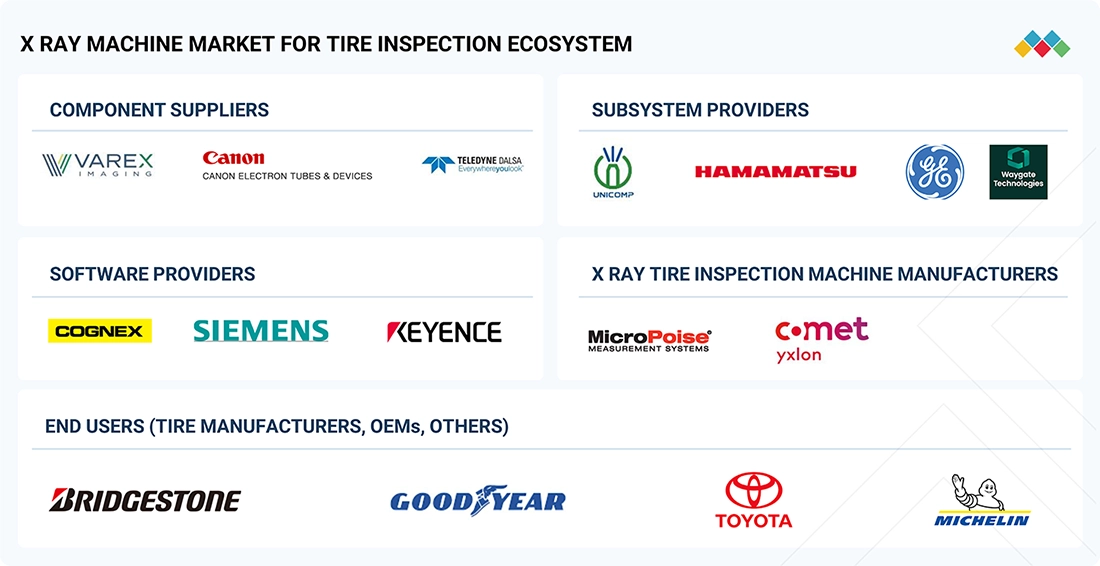
Logos and trademarks shown above are the property of their respective owners. Their use here is for informational and illustrative purposes only.
MARKET SEGMENTS
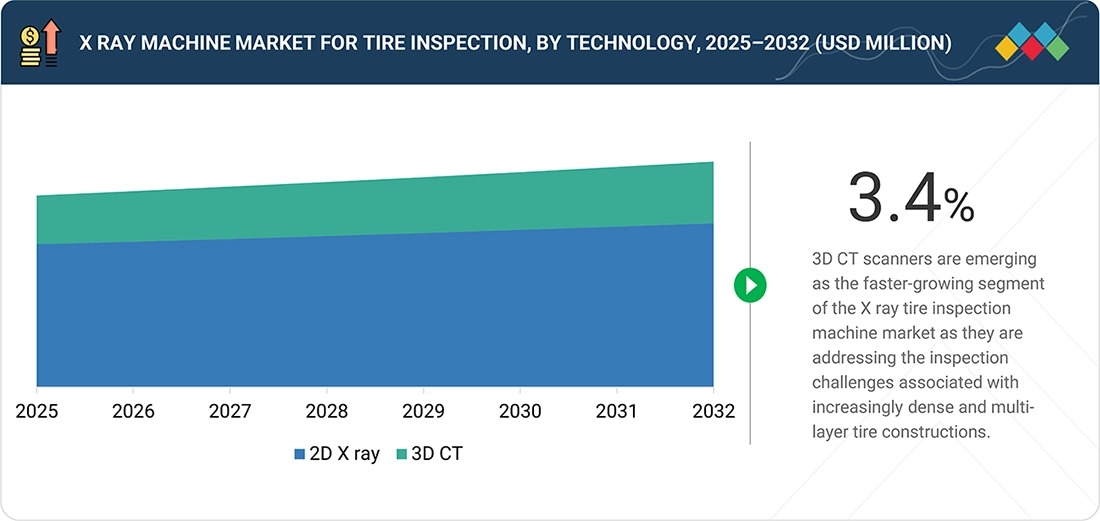
Source: Secondary Research, Interviews with Experts, MarketsandMarkets Analysis
X-ray Machine Market for Tire Inspection, By System Type
Stationary X ray machines for tire inspection are representing the largest share within the X ray machine market for tire inspection, as they are forming the backbone of quality assurance infrastructure in high-volume tire manufacturing facilities. The requirement for in-line and offline inspection of each tire manufactured, particularly for OEM supply, truck and bus radial tires, and premium passenger car tires, is driving demand for stationary systems due to their throughput capability, automation compatibility, and integration with MES platforms for traceability and digital archiving.
X-ray Machine Market for Tire Inspection, Use Case
In the X ray machine market for tire inspection, Tier 1 tire manufacturers have the largest market share due to their scale of operations, strict compliance obligations, and deep integration with global automotive OEM supply chains. These manufacturers are operating high-volume, automated production lines where each tire is undergoing structural validation before dispatch, particularly across passenger car radial, truck, and bus radial. Global OEMs are enforcing zero defect policies and traceability standards under frameworks such as IATF 16949, requiring Tier 1 suppliers to validate internal belt alignment, bead integrity, ply overlap, and internal foreign inclusions through non-destructive inspection systems.
X-ray Machine Market for Tire Inspection, Technology
3D CT scanners are emerging as the faster-growing segment due to structural changes in tire design, higher quality control requirements, and increasing automation across manufacturing facilities. Conventional 2D radiography generates projection images where overlapping structures limit accurate defect detection, while 3D CT systems reconstruct volumetric data that enables the precise localization of separations, voids, cord misalignment, and material distribution inconsistencies.
X-ray Machine Market for Tire Inspection, Application
X ray inspection across tire, tread, sidewall, bead, and specialty applications is supporting manufacturers in validating internal structural integrity, material consistency, and safety-critical geometry as tire designs are becoming more complex. Full tire and bead inspection remains strategically important due to its impact on performance and regulatory compliance, while tread and sidewall inspection focuses on durability and uniformity, positioning advanced X-ray systems as core quality control tools in modern tire manufacturing.
REGION
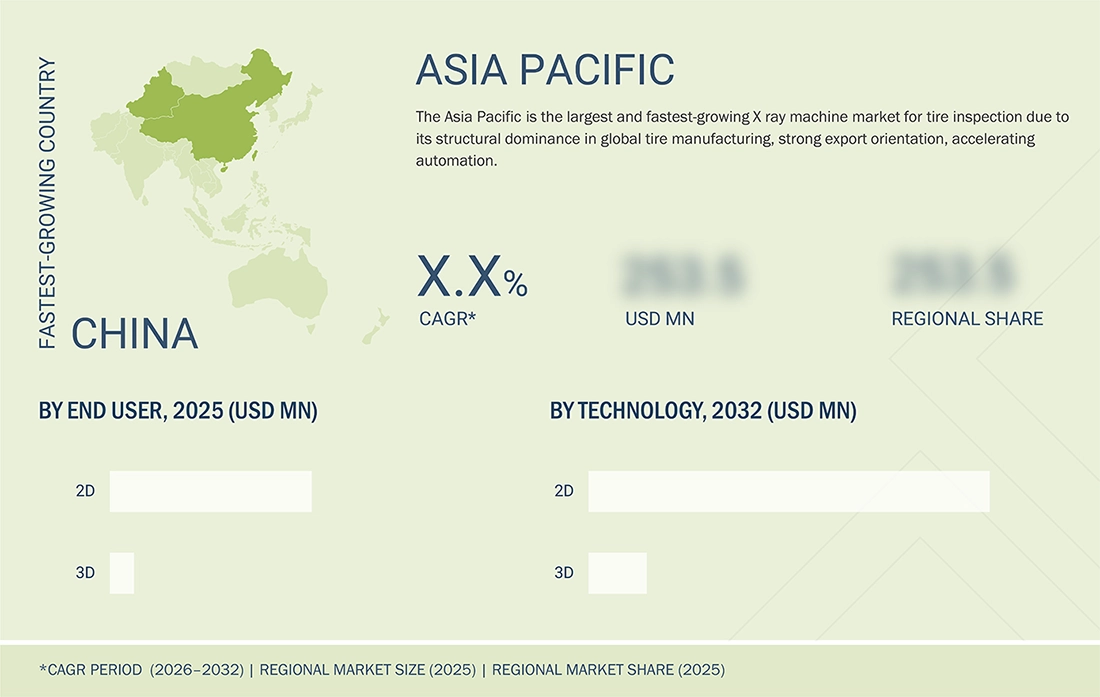
Asia Pacific to be largest and fastest-growing region in global X ray machine market for tire inspection during forecast period
The Asia Pacific is the largest and fastest-growing X ray machine market for tire inspection due to its structural dominance in global tire manufacturing, strong export orientation, and accelerating automation. Countries such as China, India, Japan, South Korea, and Thailand are hosting a significant concentration of global tire production capacity, with major manufacturers including Bridgestone, Michelin, Goodyear, Continental, and Apollo Tyres operating multiple plants across the region. The region is serving as a major export hub to Europe and North America, where compliance with UNECE and FMVSS standards requires stringent internal structural inspection, thereby increasing the adoption of advanced 2D and 3D X ray systems. At the same time, industrial upgrading initiatives such as Made in China 2025 and Make in India are supporting the integration of automation and intelligent quality control across tire plants.
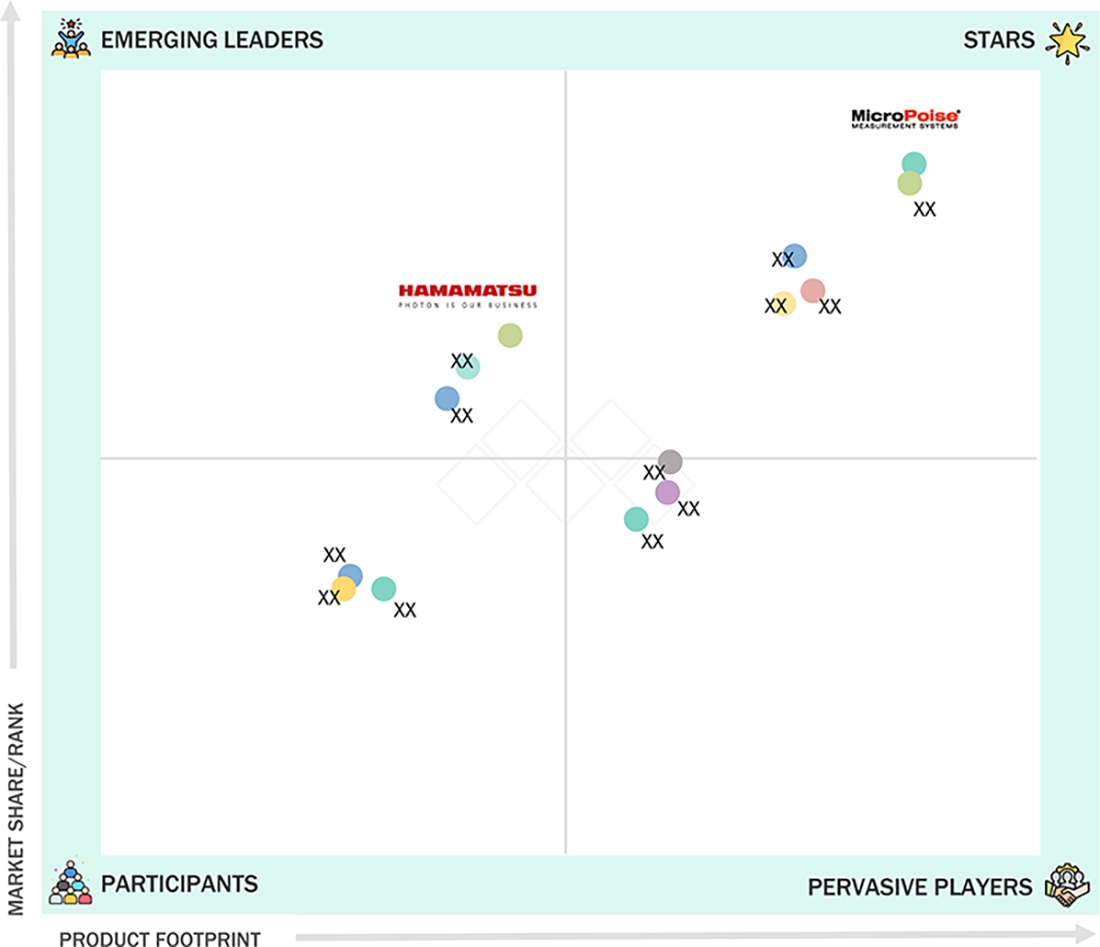
X RAY MACHINE MARKET: COMPANY EVALUATION MATRIX
AMETEK Micro-Poise is categorized as a Star player as the company has deep specialization in tire uniformity, balance, and force variation measurement, supporting consistent defect detection at production line speeds, and the systems are designed for seamless integration into high throughput tire plants, enabling closed loop quality control and reduced process variability. Hamatsu Photonics is categorized as an Emerging Leader, operating globally across light sources, optical sensors, imaging devices, and photonic measurement systems for industrial and automotive applications. In the industrial X ray and non-destructive inspection, the company is supplying X ray sources, microfocus X ray tubes, flat panel detectors, line scan detectors, and imaging sensors.
Source: Secondary Research, Interviews with Experts, MarketsandMarkets Analysis
KEY MARKET PLAYERS
- AMETEK Micro-Poise
- Technip Energies
- Comet
- MESNAC
- Nikon Corporation
- X-Scan
- TMSI
- Detection Technology
- Blue Star Engineering and Electronics
- Alfamation
- Hamamatsu Photonics
- Parth Systems
MARKET SCOPE
| REPORT METRIC | DETAILS |
|---|---|
| Market Size in 2025 (Value) | USD 254.4 Million |
| Market Forecast in 2032 (Value) | USD 299.5 Million |
| Growth Rate | CAGR of 2.4% from 2025 to 2032 |
| Years Considered | 2021–2032 |
| Base Year | 2024 |
| Forecast Period | 2025–2032 |
| Units Considered | Volume (Units), Value (USD Million) |
| Report Coverage | Revenue Forecast, Competitive Landscape, Company Share, Growth Factors and Trends |
| Segments Covered | System Type (Stationary (In-Line and Off-Line), Mobile), Technology (2D X Ray and 3D CT), Use Case (Tier 1, OEM, and Aftermarket), Application (Tire Inspection, Tread Inspection, Sidewall Inspection, Bead Inspection, and Others) |
| Regional Scope | Asia Pacific, North America, Europe, and Rest of the World |
WHAT IS IN IT FOR YOU: X RAY MACHINE MARKET REPORT CONTENT GUIDE
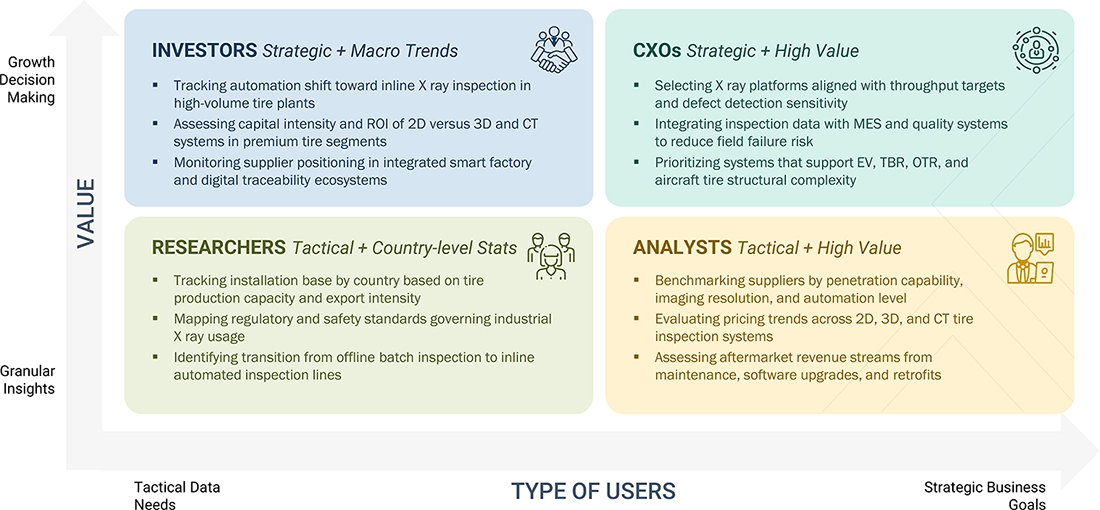
DELIVERED CUSTOMIZATIONS
We have successfully delivered the following deep-dive customizations:
| CLIENT REQUEST | CUSTOMIZATION DELIVERED | VALUE ADDS |
|---|---|---|
| Coverage of inspection capabilities for larger OTR and specialty tires | Incorporated analysis of extended scanning chambers, higher power X ray tubes, and reinforced handling systems | Provides insight into market solutions for oversized tire inspection without throughput loss |
| Deeper analysis on detection of subtle belt and bead defects | Included evaluation of high-resolution detector upgrades with optimized exposure control | Highlights technological trends improving sensitivity to internal separations and cord misalignment |
| Integration aspects with MES and traceability systems | Covered market offerings with custom software interfaces and ERP/MES connectivity | Demonstrates industry movement toward closed loop quality control and real time defect analytics |
| Insights on cycle time reduction in high volume PCR lines | Analyzed inline automated loading systems and high-speed image reconstruction solutions | Shows market strategies for maintaining production efficiency while ensuring defect detection accuracy |
| Coverage of maintenance and downtime reduction | Included modular tube designs and predictive maintenance monitoring features | Emphasizes solutions reducing unplanned stoppages and improving equipment availability |
RECENT DEVELOPMENTS
- December 2025 : Nikon introduced a set of improvements to its XT V Series industrial X ray and CT systems to increase image quality, support inspection of heavier and larger samples, and enhance protection for sensitive components from electrostatic discharge and radiation exposure. The updates include a new image filtering software, a reinforced sample tray, a diamond window for higher contrast, a low-dose collimator for sensitive parts, electrostatic discharge safety features, and a high magnification CT arm for finer detail in small samples.
- October 2025 : MESNAC expanded its manufacturing base in Cambodia to strengthen production capacity and improve service coverage for global tire industry customers, marking the groundbreaking ceremony for the new facility.
- June 2025 : MESNAC and NETZSCH signed a strategic cooperation agreement, marking the beginning of in-depth collaboration in areas such as technological R&D and global market expansion. The agreement aims to combine NETZSCH's advanced technology in high-end equipment manufacturing with Zhejiang MESNAC's expertise in intelligent turnkey solutions to jointly drive industrial innovation.
- April 2025 : Nikon launched the VOXLS 20 C 225 X ray and CT system, an industrial inspection platform designed for non-destructive testing and dimensional measurement of complex and dense components across automotive, electronics, and industrial manufacturing. The system is integrating a 225 kV microfocus X ray source with a compact footprint, enabling high resolution internal inspection, metrology grade CT analysis, and improved throughput for production and laboratory environments.
- April 2025 : AMETEK opened a new Customer Solutions Center in Beijing, China, designed to provide localized testing capabilities, interactive product demonstrations, and a collaborative environment for engaging with technical experts and advancing solutions across applications such as renewable energy, semiconductors, optics and photonics, and industrial measurement technologies.
- February 2025 : Technip Energies announced of T. EN Marseille, a strategic merger of its French subsidiaries Cybernetix and CyXplus, combining decades of expertise in cutting-edge inspection, monitoring, and robotics solutions.
Table of Contents
 Exclusive indicates content/data unique to MarketsandMarkets and not available with any competitors.
Methodology
The study involved four major activities in estimating the current size of the X ray machine market for tire inspection. Exhaustive secondary research was done to collect information on the market, the peer market, and the parent market. The next step was to validate these findings, assumptions, and sizing with the industry experts across value chains through primary research. The top-down approach was employed to estimate the complete market size. Thereafter, market breakdown and data triangulation processes were used to estimate the market size of segments and subsegments.
Secondary Research
In the secondary research process, various secondary sources such as company annual reports/presentations, press releases, industry association publications [for instance, publications of X ray machine manufacturers for tire inspection, American Society for Non-destructive Testing, International Committee for Non Destructive Testing, European Federation for Non Destructive Testing, ASTM International, International Organization for Standardization, International Electrotechnical Commission, Tire Industry Association, U.S. Tire Manufacturers Association, European Tyre and Rubber Manufacturers Association, China Rubber Industry Association, Japan Automobile Tyre Manufacturers Association, All India Rubber Industries Association, and Society of Automotive Engineers)], X ray machine related magazine articles, directories, technical handbooks, World Economic Outlook, trade websites, government organizations websites, and technical articles, company websites, whitepapers, databases, and articles from recognized associations and government publishing sources. The secondary data was collected and analyzed to arrive at the overall market size, which was further validated by primary research for an extensive commercial study of the X-ray machine market for tire inspection..
Primary Research
Extensive primary research was conducted after acquiring an understanding of this market scenario through secondary research. Several primary interviews were conducted with market experts from the demand- and supply-side OEMs (in terms of component supply, country-level government associations, and trade associations) and component manufacturers across four major regions: Asia Pacific, Europe, North America, and Rest of the World. Approximately 50% of primary interviews were conducted from the demand side and the supply side each. Primary data was collected through questionnaires, emails, LinkedIn, and telephonic interviews. In the canvassing of primaries, various departments within organizations, such as sales, operations, and administration, were covered to provide a holistic viewpoint in the report.
Brief sessions with highly experienced independent consultants were conducted to reinforce findings from primaries after interacting with industry experts. This, along with the in-house subject matter experts’ opinions, led to the findings described in the remainder of this report.
In the primary research process, various primary sources from the supply and demand sides were interviewed to obtain qualitative and quantitative information for the report. The primary sources from the supply side included industry experts, such as Vice Presidents (VPs), marketing directors, technology and innovation directors, and related key executives from various key companies and organizations. The primary sources from the demand side included end users, such as Chief Information Officers (CIOs), consultants, service professionals, technicians and technologists, and managers at public and investor-owned utilities.
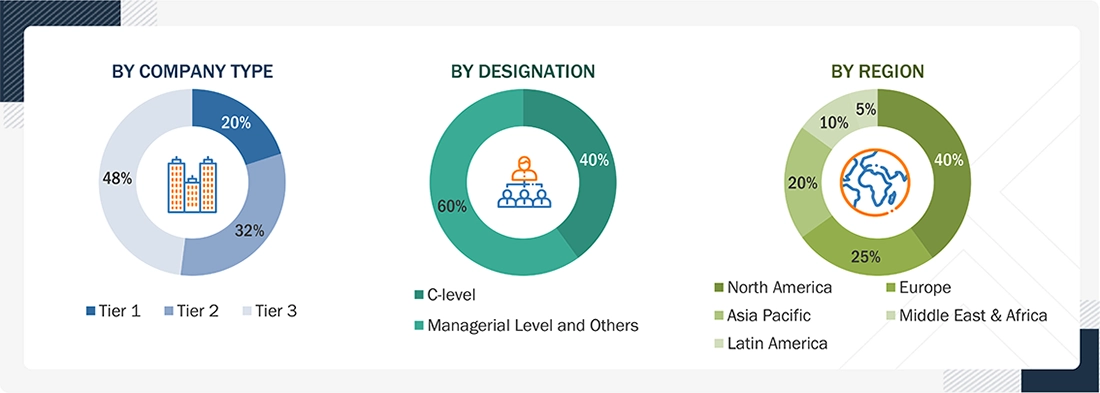
Note: Others include purchase and sales managers, marketing managers, and product managers.
To know about the assumptions considered for the study, download the pdf brochure
Market Size Estimation
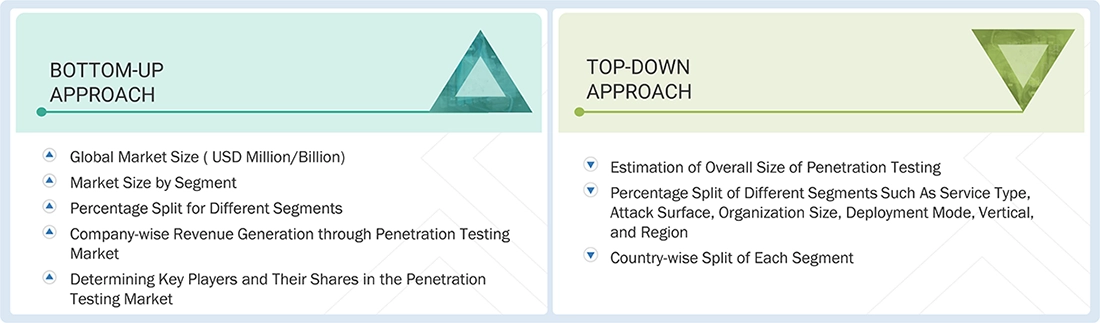
The top-down methodology was followed to estimate the size of the X ray machine market for tire inspection by technology. More than 30 companies were covered, and their X ray machine for tire inspection revenue was mapped after discussing with industry experts. Supply-side analysis was done, by technology, for understanding the revenue size of 2D and 3D CT. Revenue share breakdown for each of these segments was mapped by considering the revenue share of respective companies, mapped & verified by industry experts. Market penetration was mapped at the regional level for technology through secondary research, and insights were verified from industry experts. Segmentation for technology was determined by multiplying the market size by the penetration rate. Similarly, it was done for the system type and use case.
X Ray Machine Market : Top-Down and Bottom-Up Approach
Data Triangulation
After arriving at the overall market size using the market size estimation processes as explained above, the market was split into several segments and subsegments. To complete the overall market engineering process and arrive at the exact statistics of each market segment and subsegment, data triangulation and market breakdown procedures were employed, wherever applicable. The data was triangulated by studying various factors and trends from both the demand and supply sides.
Market Definition
A tire X ray inspection machine is a specialized industrial non-destructive testing (NDT) system that uses X-ray technology to visualize the internal structure of tires. It identifies hidden defects such as cord separations, bubbles, steel belt misalignment, and foreign objects by producing high-resolution 2D/3D images. These systems are essential for quality control in manufacturing and R&D.
Report Objectives
- To segment and forecast the X ray machine market for tire inspection in terms of volume (units) and value (USD million)
- To define, describe, and forecast the market based on system type, technology, use case, application, and region
- To analyze regional markets for growth trends, prospects, and their contribution to the overall market
- To define, describe, and forecast the size of the market with respect to growth trends and prospects, and determine the contribution of the segments to the total market
- To segment the market and forecast its size, by volume and value, based on region (Asia Pacific, Europe, North America, and Rest of the World)
- To segment and forecast the market size by volume and value, based on system type (stationary (in-line and off-line), mobile)
- To segment and forecast the market size, by volume and value, based on technology (2D X ray and 3D CT)
- To segment and forecast the market size by value, based on use case (Tier 1, OEM, and aftermarket)
- To segment qualitatively, based on application (tire inspection, tread inspection, sidewall inspection, bead inspection, and others)
- To provide detailed information regarding the major factors (drivers, challenges, restraints, and opportunities) influencing market growth
- To strategically analyze markets with respect to individual growth trends, prospects, and contribution to the total market
- To analyze opportunities for stakeholders and the competitive landscape for market leaders
-
To study the following with respect to the market -
- Supply chain analysis
- Ecosystem analysis
- Technology analysis
- HS code
- Case study analysis
- Patent analysis
- Regulatory landscape
- Key stakeholders and buying criteria
- Funding by application
- Key conferences & events
- To strategically profile key players and comprehensively analyze their market share and core competencies
- To analyze the impact of AI on the market
- To track and analyze competitive developments such as deals (mergers & acquisitions, partnerships, collaborations), product developments, and other activities carried out by key industry participants
Customization Options
With the given market data, MarketsandMarkets offers customizations in line with company-specific needs.
- X ray machine market for tire inspection, by machine size, at the regional level (for regions covered in the report)
- X ray machine market for tire inspection, by vehicle type, at the regional level (for the regions covered in the report)
Company information
- Profiling of additional market players (up to 5)
Key Questions Addressed by the Report
What is the current market size of the X Ray Machine Industry for Tire Inspection, and how is it expected to grow?
The X Ray Machine Industry for Tire Inspection is projected to grow from USD 254.4 million in 2025 to USD 299.5 million by 2032, at a CAGR of 2.4% during the forecast period.
What are the key factors driving the growth of the X Ray Machine Industry for Tire Inspection?
The market is driven by increasing demand for high-quality tire inspection, stringent safety standards, growing tire production, and the adoption of automated X-ray inspection systems.
Which region is expected to dominate the X Ray Machine Industry for Tire Inspection during the forecast period?
Asia Pacific is expected to dominate the market due to its strong tire manufacturing base, expanding automotive production, and increasing investments in advanced quality inspection technologies.
What are the latest trends shaping the X Ray Machine Industry for Tire Inspection?
Key trends include AI-powered defect detection, 3D X-ray imaging, automated tire inspection systems, and integration of smart quality control technologies in tire manufacturing.
Who are the leading companies in the X Ray Machine Industry for Tire Inspection, and what strategies are they adopting?
Leading companies are focusing on product innovation, AI-enabled inspection systems, strategic partnerships, and advanced imaging technologies to improve tire quality and manufacturing efficiency.


Personalize This Research
- Triangulate with your Own Data
- Get Data as per your Format and Definition
- Gain a Deeper Dive on a Specific Application, Geography, Customer or Competitor
- Any level of Personalization
Let Us Help You
- What are the Known and Unknown Adjacencies Impacting the X Ray Machine Market
- What will your New Revenue Sources be?
- Who will be your Top Customer; what will make them switch?
- Defend your Market Share or Win Competitors
- Get a Scorecard for Target Partners

Custom Market Research Services
We Will Customise The Research For You, In Case The Report Listed Above Does Not Meet With Your Requirements
Get 10% Free CustomisationTESTIMONIALS

JIM NAAS
PRODUCT DIRECTOR, WEASLER
Weasler Engineering, a CentroMotion organization
Global Provider of Industrial Actuation & Control Solutionswww.weasler.com
Our organization was interested in learning more about the attractiveness of a particular market space. We contacted MarketsandMarkets to help us based on previous positive experiences we had with them. The results did not disappoint! We discussed our objectives with them, and the team at MarketsandMarkets developed and executed a proposal that met our needs precisely. We were very impressed by their level of expertise, the quality of the analysis and their insightful recommendations. We would not hesitate in working with them again in the future.

Matt Kardel,
Vice President
Aptiv,
A global technology company that develops safer, greener and more connected solutions.www.aptiv.com
We contracted with
MarketsandMarkets to evaluate the value chain and potential go-to-market partners related to our
interest in the Fleet Management space. The team successfully completed the work on time and at the
pricing agreed. MarketsandMarkets listened and understood our objectives and collaborated well with
us to help us get the visibility we needed to make an investment.
We have subsequently used
MarketsandMarkets again related to Smart Cities to good results.
- China X Ray Machine Market
- India X Ray Machine Market
- Japan X Ray Machine Market
- South Korea X Ray Machine Market
- Germany X Ray Machine Market
- France X Ray Machine Market
- Italy X Ray Machine Market
- Spain X Ray Machine Market
- UK X Ray Machine Market
- Canada X Ray Machine Market
- Mexico X Ray Machine Market
- US X Ray Machine Market
- UAE X Ray Machine Market
- Saudi Arabia X Ray Machine Market
- Rest Of Europe X Ray Machine Market
- Rest Of Asia Pacific X Ray Machine Market






Growth opportunities and latent adjacency in X Ray Machine Market