
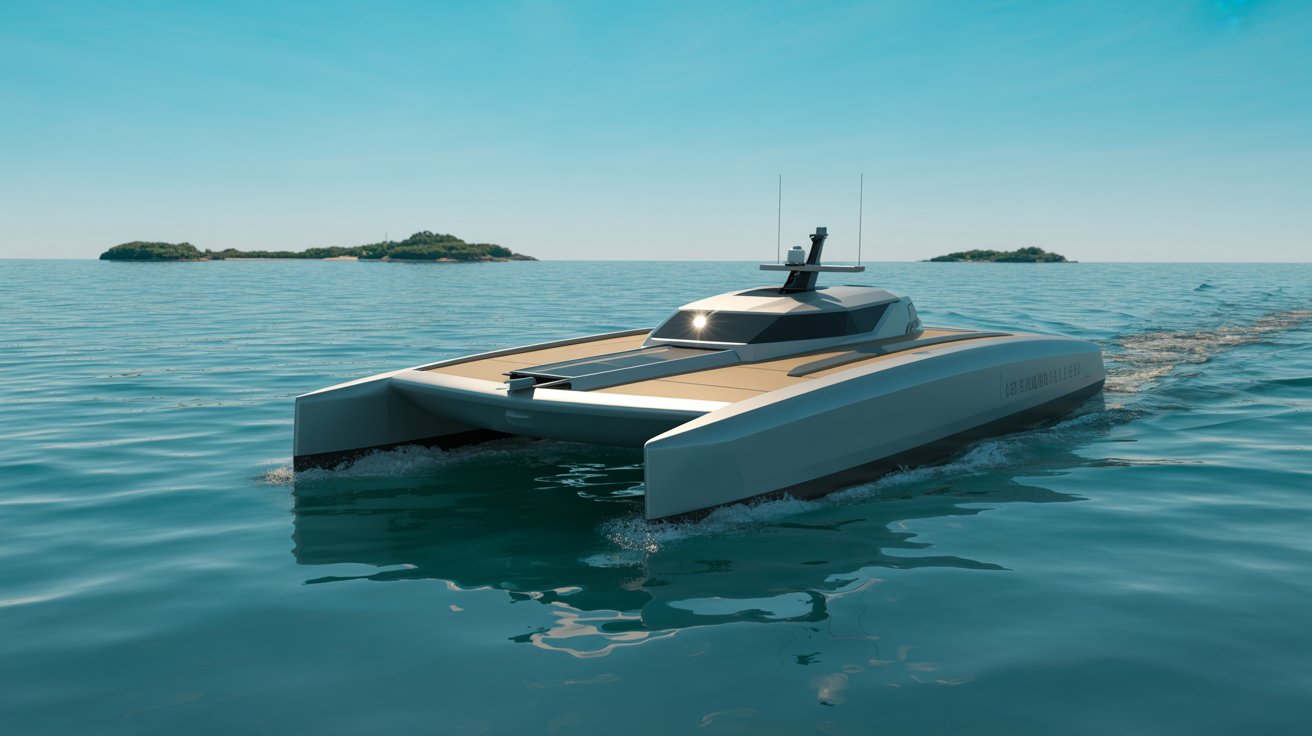
Future of Unmanned Surface Vehicles (USVs) in Naval Warfare
Authored by MarketsandMarkets, 26 Aug 2025
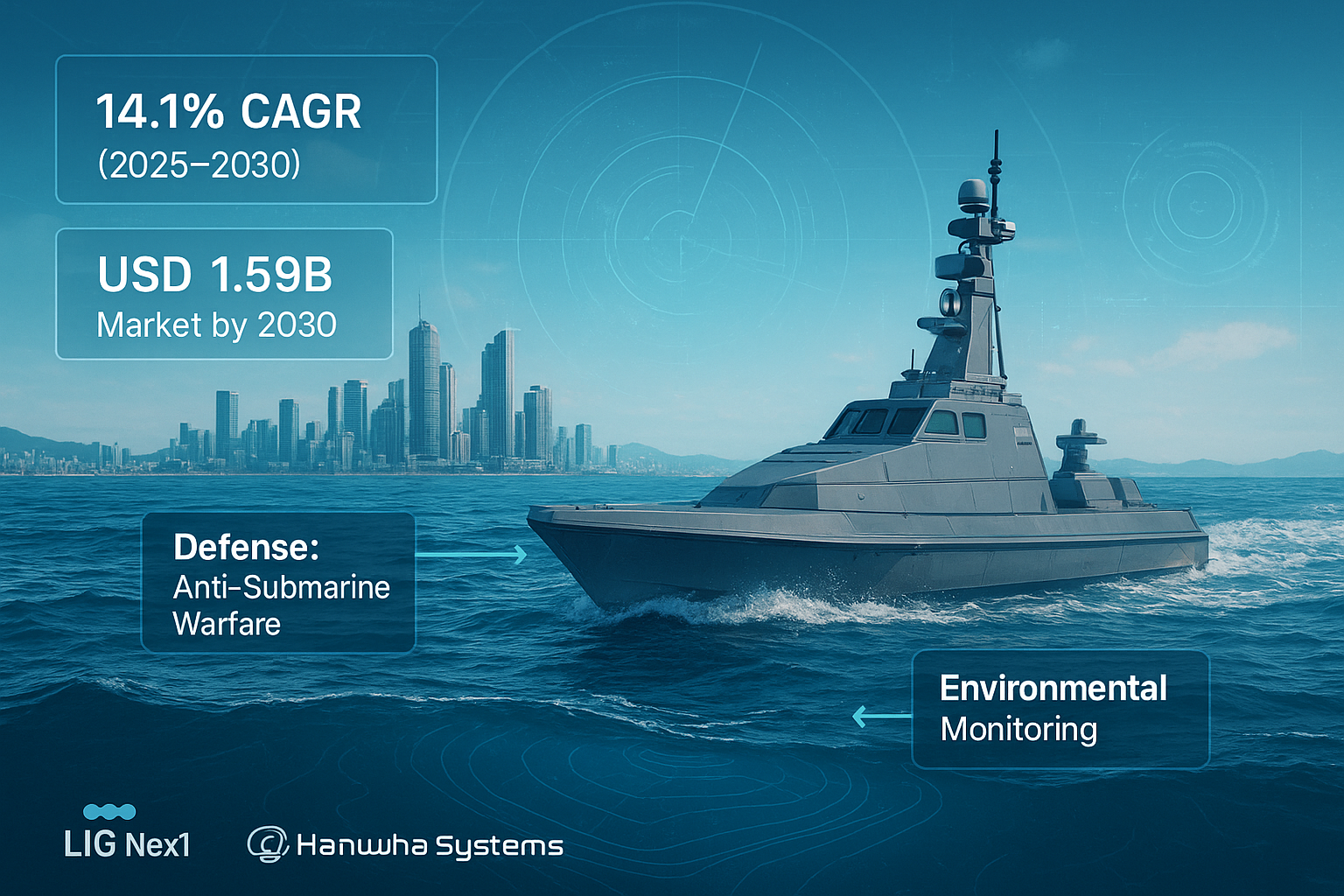
Unmanned Surface Vehicles (USVs) are moving from experimental demonstrations to operational force multipliers across multiple naval missions — persistent maritime domain awareness (MDA), mine countermeasures (MCM), anti-submarine warfare (ASW), high-speed patrol and attritable strike/swarm concepts. Market forecasts put the global USV market at roughly USD 0.82 billion in 2025, growing to USD 1.59 billion by 2030 (CAGR at 14.1%), driven by defense demand, environmental/commercial applications, and increased offshore industrial use.
Market snapshot & demand drivers
Market size & growth: USD 0.82B (2025) to 1.59B (2030) at 14.1% CAGR. This reflects rapid investment by navies and commercial users across ISR, MCM, ASW and offshore inspection.
Segment dynamics highlighted in current market research:
Small USVs are the fastest-growing size class (affordable, launchable from small platforms, suited for port/coastal security and MCM).
High speed (>30 knots) platforms dominate demand for defense/emergency response operations because they enable fast interception, patrol and tactical maneuvering.
Geography: North America leads adoption (defense budgets, suppliers, commercial R&D).
Drivers: rising asymmetric maritime threats (swarm boats, mining and clandestine undersea operations), cost pressure on large fleets, emphasis on distributed operations, and maturation of autonomy, sensors and datalinks.
How navies are using — tactical & operational roles
USVs are already being employed or trialed in the following mission areas; each has a clear technology and doctrine implication.
Persistent ISR / Maritime Domain Awareness (MDA)
Long-endurance USVs provide persistent coastal and choke-point surveillance, feeding fused data into a common operating picture without the lifecycle cost of crewed vessels. (Examples: Saildrone Voyager deployments for surveillance/monitoring).
Anti-Submarine Warfare (ASW)
New integrations (e.g., towed array sonar on long-range USVs) enable distributed ASW sensing without risking crewed assets; industry collaborations (Saildrone + Thales) show this capability moving into field trials. This transforms ASW from platform-centric to distributed sensor fields.
Mine Countermeasures (MCM)
Small, expendable USVs can sweep shallow waters with sonar and neutralization systems, removing sailors from direct danger and increasing area throughput.
High-speed patrol / interdiction
Fast (>30 kt) USVs are being fielded for boarding support, maritime interdiction and quick reaction tasks where speed and low signature matter.
Swarm / attritable tactics and strike
Low-cost, semi-autonomous USVs can be used as massed sensors or as attritable attack nodes (saturation attacks, decoys). Recent conflicts and exercise planning have accelerated interest in swarm concepts.
Logistics, counter-insurgency & infrastructure protection
USVs are cost-effective for resupply to littoral forces, protection of undersea cables and offshore platforms (recent Danish trials for undersea cable protection).
Technology enablers & trends
The shift from prototypes to operational units depends on a cluster of technologies:
Autonomy & AI: reliable autonomy stacks (perception, navigation, behavior arbitration, formation control), human-on-the-loop control modes and robust object classification. The U.S. Ghost Fleet / Overlord initiatives and multiple industry contracts illustrate heavy investment in autonomy for both small and large USVs.
Sensing suites: compact towed arrays, hull-mount sonars, synthetic aperture radar (SAR), EO/IR, AIS fusion and passive acoustic sensors — enabling ASW, MCM and high-fidelity ISR. (See Saildrone/Thales integration for towed array use on USVs.)
Communications & data fusion: resilient multi-path datalinks (satcom, HF, tactical radios, line-of-sight relay via motherships/drones), with edge processing to reduce bandwidth needs.
Propulsion & endurance: hybrid architectures, low-signature diesels, electric drive and energy-harvesting designs for long-endurance platforms.
Modularity & payload containers: “plug-and-play” payloads (sensors, weapons, decoys, logistics modules) accelerate mission re-role and procurement reuse (demonstrated in Overlord containerized payload tests).
Swarm control frameworks & distributed C2: secure, low-latency coordination algorithms and doctrine for massed USV employment.
Programs, prototypes & real-world adoption (examples)
Sea Hunter / ACTUV (DARPA → ONR prototype) demonstrated large autonomous ASW tracking and sparked USV experimentation across navies.
Ghost Fleet Overlord / Overlord (US): transferred to Navy PEO USC for operational testing of large unmanned ships and modular payloads. These programs are the clearest indicator the U.S. Navy is integrating USVs into fleet architecture.
Saildrone + Thales integration for towed arrays shows industry movement toward autonomous ASW sensors on USVs.
European & allied trials: Denmark and other states have begun operational trials and deployments for surveillance and infrastructure protection (Baltic deployments).
Operational risks, lessons & limitations
Software & safety risks: recent high-profile test incidents (collisions, software failures) underline the immaturity of fully autonomous, tightly coupled multi-vessel operations and the need for rigorous testing, human oversight and robust safety architectures.
Cyber & data security: growing concerns about foreign supply chains and third-party access to sensor data (raised in European deployments) mean navies must harden comms, encrypt data, and control sensitive payloads.
Rules of engagement & legal frameworks: use of lethal/kinetic payloads on unmanned vessels raises compliance, escalation and ROE questions that doctrine must address.
Logistics & sustainment: even expendable platforms require maintenance, spare parts, and secure basing — changing logistics chains and supply planning.
Electromagnetic / anti-USV countermeasures: jamming, spoofing, and directed-energy threats will shape design (hardened sensors, graceful degradation).
Industry landscape & competitors
Major defense and commercial players are actively shaping supply chains and capability sets (list derived from the market literature and public sources): L3Harris, Teledyne, Textron, Exail, Elbit Systems, MARTAC, Thales, LIG Nex1, Atlas Elektronik, Saildrone, Seafloor Systems, BAE Systems, KONGSBERG, Israel Aerospace Industries, Bharat Electronics (BEL), SEA-KIT and others. Partnerships between traditional prime contractors and specialist USV startups are common as navies demand both systems-level integration and rapid innovation.
Strategic implications for navies
Distributed lethality - distributed sensing: USVs will be central to distributed sensor grids (for ASW, maritime domain awareness, and layered defenses).
Cost tradeoffs: USVs can reshape fleet economics: many persistent ISR and risk-acceptant missions can move to unmanned platforms, freeing crewed hulls for high-value tasks.
Doctrine & training: navies must develop doctrine for human-on-the-loop control, red-team swarm defense, and combined manned-unmanned tasking.
Allied interoperability: common data models, standards and secure comms will be required for coalition use of USVs in combined operations.
Industrial policy & sovereign supply chains: states will need domestic capabilities or trusted partnerships to avoid dependencies in sensitive sensing/weapons.
Recommendations (for navies and industry)
Adopt modular open architectures (payload containers, standardized interfaces) to accelerate upgrades and cross-platform payload sharing.
Invest in safe autonomy: layered simulation, operator training, and human-in/over-the-loop concepts to reduce software-related mishaps. Recent test incidents show this is critical.
Harden communications & supply chains to address data sovereignty and cyber risks (especially for deployments in contested regions).
Prioritize interoperable doctrine and coalition exercises to validate combined manned/unmanned employment (wargames, RIMPAC, Sea Air Space style events).
Balance attritable & high-end designs: invest in low-cost swarms for saturation/decoy tasks and a smaller set of capable long-endurance USVs for ASW and precision missions.
Outlook to 2030 and beyond
By 2030, expect widespread operational use of small USVs for coastal MDA and MCM, increasing deployments of high-end long-endurance USVs with ASW payloads, and continued experimentation with swarm tactics. The market growth and industrial momentum support significant capacity expansion through 2030.
Beyond 2030, the key inflection points will be: robust, trusted autonomy (lowering human supervision), mature swarm tactics joined to precision fires, and legal/policy frameworks for armed unmanned surface systems. Program outcomes (e.g., Ghost Fleet/Overlord) and real-world trials will determine pace.
About
80% of the Forbes Global 2000 B2B companies rely on MarketsandMarkets to identify growth opportunities in emerging technologies and use cases that will have a positive revenue impact.
RECENT POST
- Food Packaging Market Size Set for Strong Growth Through 2030 Amid Rising Demand for Convenience Foods
- Mulch Films Market: Driving Sustainable Agriculture Through Innovation
- Agricultural Adjuvants Market Analysis, Trends, and Growth Outlook (2026–2031)
- Crop Protection Chemical Market Size, Share & Growth Forecast (2025–2030)
- Japan Enterprise Asset Management Market Growth: AI and Smart Infrastructure Drive Demand


