

Smart Glasses Innovation Accelerates as AI, AR, and Lightweight Designs Reshape the Market
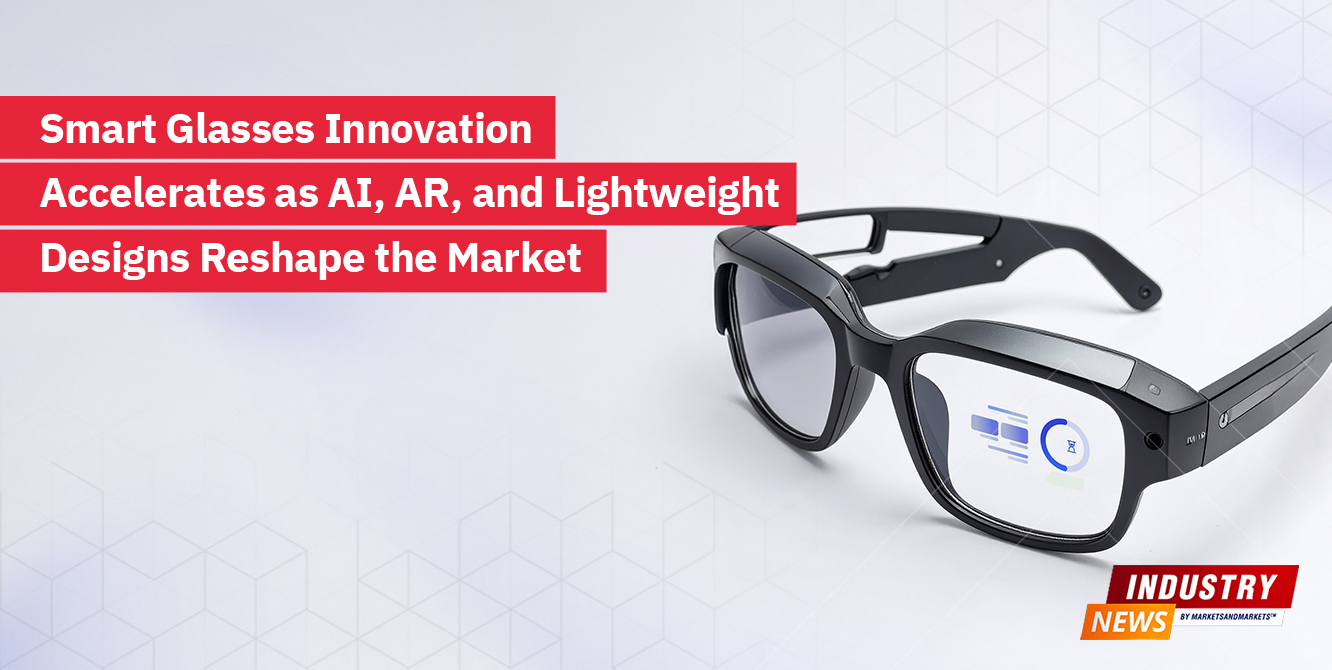
Rokid has unveiled the world’s lightest full-function AI-AR glasses, weighing just 49 grams, without compromising on capability. At its New York launch, supported by a Times Square pop-up that went viral, Rokid Glasses pulled in over a million dollars in Kickstarter pledges in just four days. That’s not hype. That’s people voting with their wallets. These glasses translate languages in real time, transcribe speech instantly, overlay AR navigation, act as AI teleprompters, take notes, and capture video with a 12 MP HDR-stabilized camera. All of that fits on your face.
Here’s the thing: this isn’t sci-fi nostalgia. At CES, Rokid showed a green monochrome heads-up display that floats in view. It translates text, controls the camera, and navigates apps without getting in the way. One reviewer even compared it to Ray-Ban Meta smart glasses—but with a full, usable display. Lightweight, functional, and subtle—it’s the kind of device you forget you’re wearing until you need it.
The timing couldn’t be better. According to MarketsandMarkets, the global smart glasses market is on the rise, projected to grow from $1,223.7 million in 2025 to $4129.3 million by 2030. Asia-Pacific is leading the charge, driven by its manufacturing strength and strong demand across industrial and healthcare applications. At the same time, AR, mixed reality, advanced sensors, and high-speed networks are unlocking new possibilities for both consumers and enterprises.
What this really means is people are ready for something that works, not something experimental. Rokid’s launch hits the market as users are looking for devices that are light, stylish, and genuinely useful. The glasses start at 599 dollars, or 698 with a case. That undercuts the rumored 800-dollar Meta model. Consumers and businesses want smart glasses that don’t feel like toys. Rokid delivers.
And it’s not just about specs. The combination of AI and AR makes these glasses ready for full-day use. You can stream content, take notes, get notifications, and navigate without holding anything. It’s less intrusive than a phone and more capable than a smartwatch. Rokid has taken wearable computing out of the realm of novelty and made it practical.
Here’s a quick reality check: AR and mixed reality tools are becoming standard in workplaces, hospitals, and warehouses. Sensor tech and AI are improving fast. People want hands-free solutions, and devices like these are making that possible.
Here’s what’s really interesting: the excitement isn’t just coming from tech enthusiasts. A million dollars in Kickstarter pledges in four days shows there’s real demand. On top of that, the open platform encourages developers to experiment and create apps that keep the glasses fresh long after purchase. It’s one thing to launch a product, it’s another to build an ecosystem that grows over time.
Let’s be honest, there are challenges. Packing all this technology into something this light isn’t easy. Battery life, comfort, and privacy are all considerations. But Rokid is showing it can be done while still delivering a device people want to wear.
The bigger picture is clear. Smart glasses are moving from curiosity to necessity. The technology is maturing, the market is expanding, and products like Rokid’s are proving the potential. People are ready to wear their computers instead of holding them. That changes the way we work, communicate, and interact with the world.
Rokid Glasses show what happens when design, timing, and technology line up. They’re a sign of what’s coming and a reminder that the next wave of wearable computing isn’t far off. It’s already on Kickstarter, and people are grabbing it.
MarketsandMarkets Industry News Desk
 Letter to Editor
GET AHEAD
Top Research Reports to Fuel Your Industry KnowledgeEditor's Pick

Healthcare
Cellevate’s Nanofiber Revolution 13× Higher Vaccine Yields, 85% Lower Costs.jpg)
Chemical and Materials
Semiconductor and IC Packaging Materials Gains Momentum as Amkor Invests $7B in Arizona
Information and Communication Technology
AI-Driven Data Center Expansion is Accelerating Innovation in Power Infrastructure WorldwidePODCASTS

Sustainable Digital Transformation & Industry 4.0
Sanjay Kaul, President-Asia Pacific & Japan, Cisco, and host Aashish Mehra, Chief Research Officer, MarketsandMarkets, in conversation on unraveling 'Sustainable Digital Transformation and Industry 4.0'
11 July 2023|S2E12|Listen Now

Generative AI
Prasad Joshi, Senior Vice President-Emerging Technology Solutions, Infosys, and host, Vinod Chikkareddy, CCO, MarketsandMarkets, in exploring the recent advances in AI and the generative AI space.
7 Nov 2023|S2E13|Listen Now


Global Smart Glasses Market to Reach $4.1293B by 2030


Rokid’s Launch Signals a Turning Point for Wearables
Smart glasses are no longer a futuristic experiment—they’re becoming practical tools for work, healthcare, and daily life. Rokid’s launch shows how AI and AR can merge into lightweight, stylish devices that people actually want to wear.
The Evolution of Smart Glasses: From Concept to Reality
Over the past decade, advances in AR, AI, sensors, and lightweight design have transformed the category. What once felt experimental is now becoming essential, with applications spanning healthcare, logistics, retail, and everyday consumer use. Today’s models, like Rokid’s 49g AI-AR glasses, prove that smart glasses can finally balance style, function, and comfort—marking a shift from futuristic concept to real-world necessity.



