



Membranes Market
Report Code
CH 2635
Published in
Aug, 2026, By MarketsandMarkets™
Membranes Market by Material (Polymeric, Ceramic), Technology (Reverse Osmosis, Ultrafiltration, Microfiltration, Nanofiltration), Application (Water & Wastewater Treatment, Industrial Processing), and Region - Global Forecast to 2031

USD 12.74 BN
MARKET SIZE, 2031

CAGR 8.5%
(2026-2031)

255
REPORT PAGES

230
MARKET TABLES
OVERVIEW
Source: Secondary Research, Interviews with Experts, MarketsandMarkets Analysis
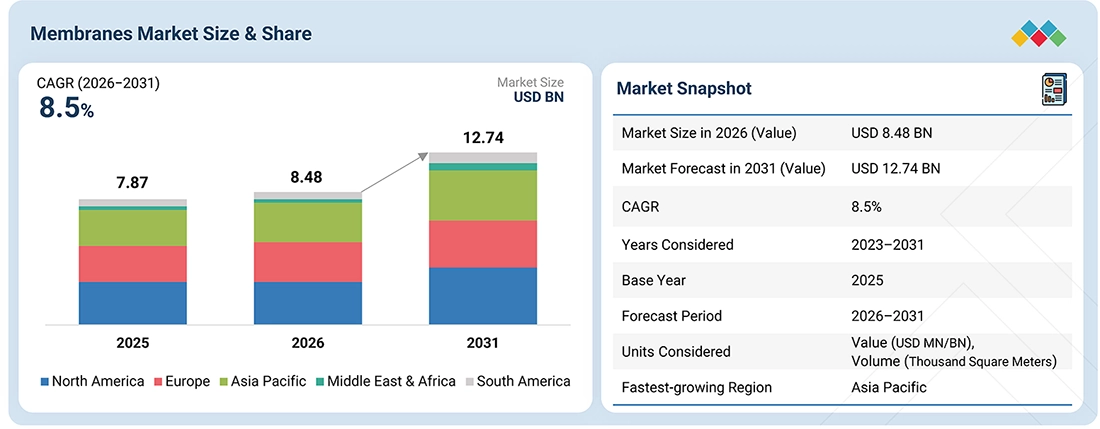
The global membranes market is expected to reach USD 12.74 billion in 2031, up from USD 8.48 billion in 2026, at a CAGR of 8.5% during the forecast period. Rising demand for clean drinking water, increasing water scarcity, expanding industrialization, strict environmental regulations, technological advancements, and growing applications in the pharmaceuticals, food and beverage, and chemical & petrochemical industries are driving the market’s expansion. The segments benefiting from this growth include both material and technology.
KEY TAKEAWAYS
-
By RegionBy region, Asia Pacific accounted for a 45.3% share of the membranes market in 2025, driven by rapid growth compared to other parts of the world. With rapid urbanization and industrialization happening in China, India, Japan, and South Korea, there is an increasing demand for clean water and wastewater treatment solutions.
-
By MaterialBy material, the polymeric is estimated to grow at an 8.4% CAGR between 2026 and 2031, owing to its porous and semi-permeable, and their use depends on the application. Most industrial and municipal water treatment applications employ polymeric membranes.
-
By TechnologyBy technology, the nanofiltration segment is estimated to grow at a 9.1% CAGR between 2026 and 2031, owing to its outstanding ability to remove dissolved salts, contaminants, and impurities, producing clean and safe drinking water from various sources.
-
By ApplicationBy application, the industrial processing segment is anticipated to record a CAGR of 8.9% during the forecast period, driven by the increasing adoption of membrane technologies for efficient separation, purification, concentration, and recovery of valuable products across industrial processes.
-
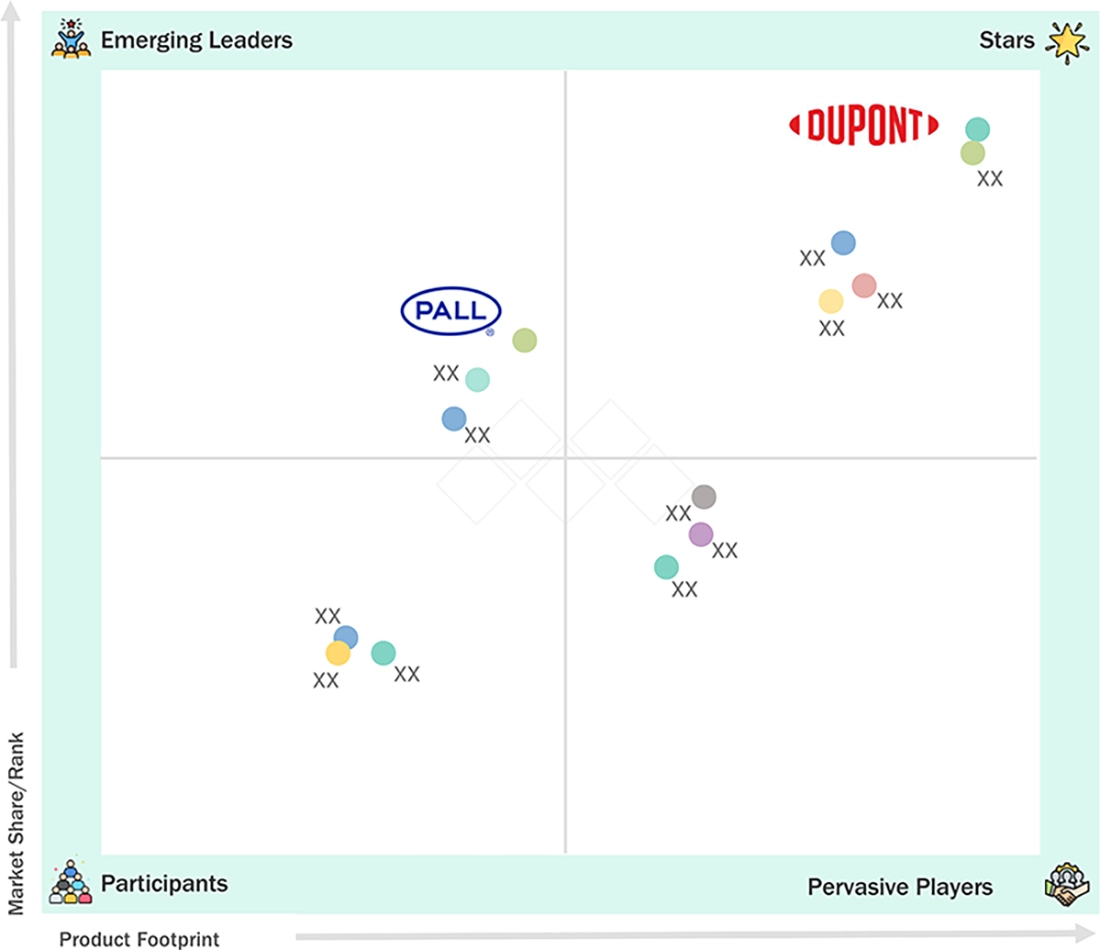
Competitive Landscape - Key PlayersDupont, Toray Industries Inc, and Hydranautics (Nitto Denko Group Company) were identified as some of the star players in the membranes market, given their strong share and product footprint.
-
Competitive Landscape - Startups/SMEsALSYS, Applied Membranes, Inc. and Aquaporin, among others, have distinguished themselves among startups and SMEs by securing strong footholds in specialized niche areas, underscoring their potential as emerging market leaders.
The global membranes market is growing due to increasing demand for water and wastewater treatment, rising industrialization, and growing adoption of membrane-based separation technologies. North America is witnessing strong demand, supported by stringent environmental regulations, investments in water infrastructure, and increasing adoption of advanced membrane technologies across municipal and industrial applications. Europe is supported by strict water quality and environmental regulations, growing emphasis on water reuse and resource efficiency, and investments in sustainable treatment technologies. Asia Pacific is the fastest-growing market, driven by rapid industrialization, expanding water and wastewater treatment infrastructure, increasing water scarcity, and rising investments across China, India, Japan, South Korea, and Southeast Asia. Meanwhile, South America and the Middle East & Africa are experiencing gradual growth, supported by increasing water stress, improving water infrastructure, government investments in desalination and wastewater treatment, and growing adoption of advanced membrane technologies.
TRENDS & DISRUPTIONS IMPACTING CUSTOMERS' CUSTOMERS
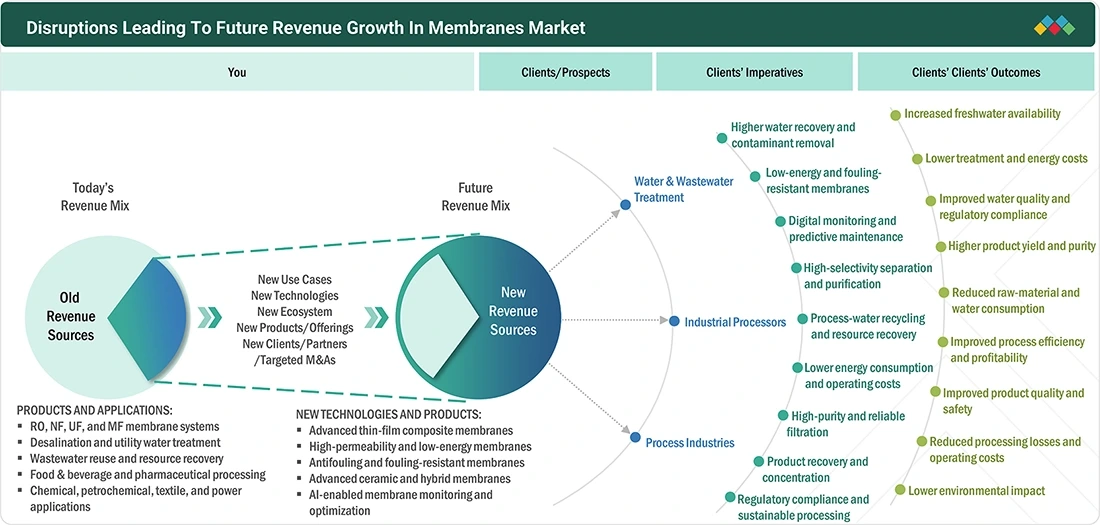
Growing concerns over water scarcity, stringent environmental regulations, and the increasing need for efficient resource recovery are driving significant advancements in membrane technologies across water treatment, pharmaceuticals, biotechnology, food & beverage, and industrial processing. Greater emphasis is being placed on wastewater reuse, desalination, minimal liquid discharge (MLD), zero liquid discharge (ZLD), selective separation, and energy-efficient filtration. The transition from conventional filtration technologies toward advanced polymeric, ceramic, thin-film composite, and high-performance membranes with improved selectivity, fouling resistance, durability, and lower energy requirements is influencing the competitive landscape.
Source: Secondary Research, Interviews with Experts, MarketsandMarkets Analysis
MARKET DYNAMICS

Drivers
Impact
Level
Level
-
Increasing awareness about water & wastewater treatment

-
Stringent wastewater regulations


RESTRAINTS
Impact
Level
Level
-
Fouling and scaling reducing membrane performance

-
High capital costs


OPPORTUNITIES
Impact
Level
Level
-
Rising demand for water treatment in developing countries

-
Increasing water scarcity


CHALLENGES
Impact
Level
Level
-
Discharge of brine as waste from RO membranes

-
Issue related to lifespan and efficiency of membranes

Source: Secondary Research, Interviews with Experts, MarketsandMarkets Analysis
Driver: Increasing awareness about water & wastewater treatment
Rising awareness about water and wastewater treatment technology is key to the membranes market. There is growing concern worldwide over water scarcity, pollution, and sustainability. The rapid growth of urbanization and industrialization has increased the demand for safe, clean water, prompting municipalities and industries to adopt new treatment technologies to deliver pure water and meet stricter environmental regulations. Technologies such as reverse osmosis, nanofiltration, ultrafiltration, and microfiltration have made membrane filtration widely accepted in water treatment due to their ability to selectively remove contaminants, pathogens, and dissolved solids, providing potable water and enabling wastewater reuse. There is a strong awareness of the health risks associated with poor water quality, particularly issues related to heavy metals, pesticides, pharmaceuticals, and biological contaminants. This awareness continues to drive investments in next-generation membranes, which are more efficient, reliable, and scalable for municipal and industrial use. Moreover, sustainability is more than just a trend; it supports water reuse and recycling improvements through advanced membrane technologies. The global shortage of freshwater, driven by population growth and climate change, is pushing governments and regulators worldwide to strengthen water quality and discharge standards.
Restraint: Fouling and scaling reducing membrane performance
Fouling and scaling are key issues in the membranes sector because they directly affect the efficiency, lifespan, and sustainability of membrane-based filtration systems. Fouling occurs when organic matter, microorganisms, colloidal particles, and suspended solids accumulate on the membrane surface or enter through the pores. This buildup reduces permeate flux, increases differential pressure, and degrades membrane permeability, which lowers output and water quality while raising operational costs due to more frequent cleaning and maintenance. Similarly, scaling involves the deposition of inorganic salts (such as calcium carbonate, silica, and magnesium salts) that precipitate when their solubility limits are exceeded, forming a hard, crystalline layer on the membrane surface. Both fouling and scaling increase energy consumption by making it harder to maintain flow rates or requiring operators to raise system pressure, increasing electricity usage and operational expenses. Over time, both issues lead to premature membrane replacement, shorter membrane lifespans, higher costs for anti-scaling or anti-fouling chemicals, and more complex pretreatment procedures.
Opportunity: Rising demand for water treatment in developing countries
As the demand for water treatment in developing countries rises due to rapid urbanization, growing industrialization, and increased concerns over water availability and pollution, new opportunities for the membranes market emerge. In regions like Asia-Pacific, Latin America, the Middle East, and Africa, increasing population, migration to urban areas, and expanding manufacturing bases have strained water infrastructure. For municipal and other interested industries, finding solutions to maintain a clean water supply and manage treated wastewater has become crucial. Recognizing that traditional water sources are becoming scarcer and more polluted in developing economies, municipalities in these regions have heavily invested in advanced treatment technologies, especially membrane filtration, to provide safe drinking water, meet regulatory standards, and support sustainable growth. These membranes offer higher efficiencies in removing contaminants, pathogens, and trace industrial chemicals, supporting the water supply for potable water production and targeted treated water reuse systems, such as reclaim. Developing countries like China, India, Indonesia, and Vietnam are working on significant infrastructure improvements and rapidly installing new technologies supported by partnerships and strengthened public-private relationships. Contributing to this rapid deployment of advanced treatment technologies are government programs or international financial aid that specifically support unique treatment processes (for example, desalination, zero-liquid discharge systems) and the use of membranes in municipal and industrial water treatment.
Challenge: Discharge of brine as waste from RO membranes
The release of brine as waste from reverse osmosis (RO) membranes will remain a difficult issue for the membranes sector and industry; future improvements in desalination and water reclamation projects will likely worsen the problem globally. For each RO membrane cycle, 40-60% of the input water is turned into fresh water, while the rest exits as brine – a concentrated saline effluent containing high levels of salt, residual chemicals, antiscalants, and sometimes heavy metals. Discharging RO brine into natural water bodies, especially oceans and coastal zones, alters local salinity, temperature, and chemical balance, which can be harmful to marine environments, as brine tends to cause osmotic stress, affect habitat quality, and be lethal to benthic organisms that may not be able to escape multi-saline zones during discharge. Furthermore, the brine can carry toxicants that may harm aquatic life, and high nutrient levels can also contribute to habitat degradation through eutrophication. Negative impacts from brine discharge have led to calls for tighter regulations and more effective solutions—such as advanced brine discharge management and treatment options like deep brine discharge, brine recycling for mineral extraction, and the use of constructed wetlands for further treatment of brine or hypersaline concentrations. However, implementing these solutions often introduces additional operational complexities and costs, creating greater challenges for both new and established membrane facility operators.
MEMBRANES MARKET: COMMERCIAL USE CASES ACROSS INDUSTRIES
| COMPANY | USE CASE DESCRIPTION | BENEFITS |
|---|---|---|
 |
DuPont provides FilmTec reverse osmosis (RO) and nanofiltration (NF) membrane elements for municipal and industrial water treatment, seawater and brackish-water desalination, ultrapure water production, and food & beverage processing. Its membranes are also used in applications such as wastewater treatment and resource recovery. | High salt and contaminant rejection | Low-energy operation | Fouling resistance | Long service life | Consistent permeate quality | Supports water reuse and resource recovery |
 |
Toray develops and commercializes RO, NF, UF, and MF membranes and membrane modules for seawater desalination, municipal and industrial water treatment, wastewater reuse, and membrane bioreactors (MBRs). The company is also developing membrane technologies for resource recovery, energy, food, and bio-related applications. | High water permeability | High separation performance | Fouling resistance | Durable membrane structures | Energy-efficient water treatment | Supports desalination and wastewater reuse |
 |
Hydranautics, a Nitto Denko Group company, provides polymeric separation membranes, particularly RO membrane products, for seawater and brackish-water desalination, wastewater treatment and reuse, ultrapure water production, and industrial water applications. Its membrane portfolio includes CPA, ESPA, SWC, and LFC series. | High salt rejection | Low-pressure operation | High water productivity | Low fouling | Reliable desalination performance | Supports ultrapure-water and wastewater-recovery applications |
 |
Kovalus offers polymeric and ceramic membrane technologies across MF, UF, NF, and RO, with hollow-fiber, spiral, tubular, and ceramic configurations. These membranes are used in food, dairy, beverage, life sciences, water and wastewater, chemical, automotive, pulp & paper, and general industrial applications for separation, concentration, purification, and desalination. | Broad pore-size selection | High selectivity | Low energy consumption | High fouling resistance | Compact membrane configurations | Supports separation, concentration, and purification across diverse process streams |
Logos and trademarks shown above are the property of their respective owners. Their use here is for informational and illustrative purposes only.
MARKET ECOSYSTEM
The membranes market ecosystem includes manufacturers, distributors, and end-users. The supply chain extends to wholesalers and retailers. Manufacturers focus on specific products and membrane types (microfiltration, ultrafiltration, nanofiltration, and reverse osmosis) and produce a broad range of offerings. Advances in materials, system designs, and fouling mitigation strategies to enhance performance and efficiency and thus lower operational costs for end-users are essential factors. End-users influence the supply chain through their increasing demand for water purification, wastewater recycling and treatment, and adherence to government and environmental regulations worldwide, especially in developing countries experiencing rapid urbanization and industrial growth.
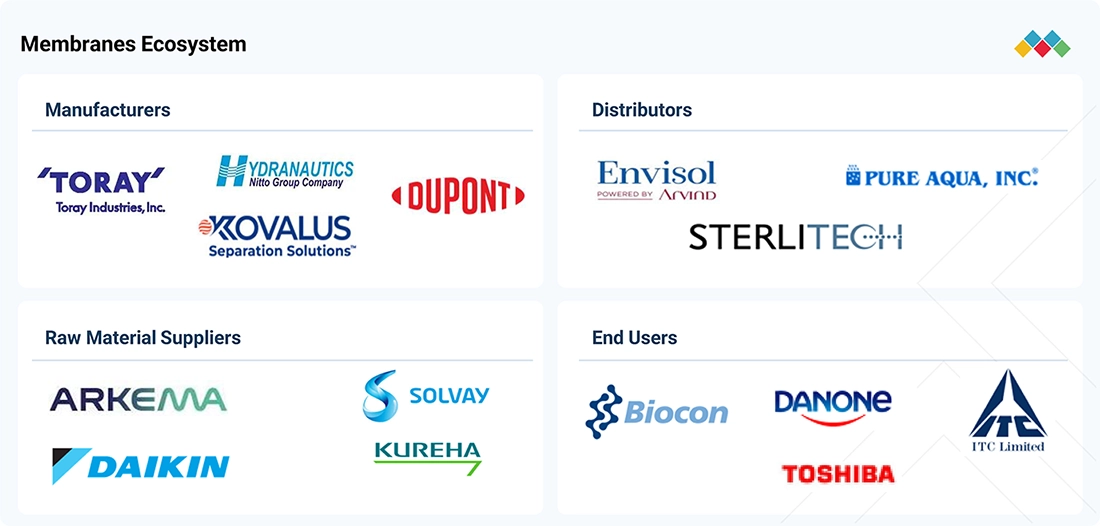
Logos and trademarks shown above are the property of their respective owners. Their use here is for informational and illustrative purposes only.
MARKET SEGMENTS
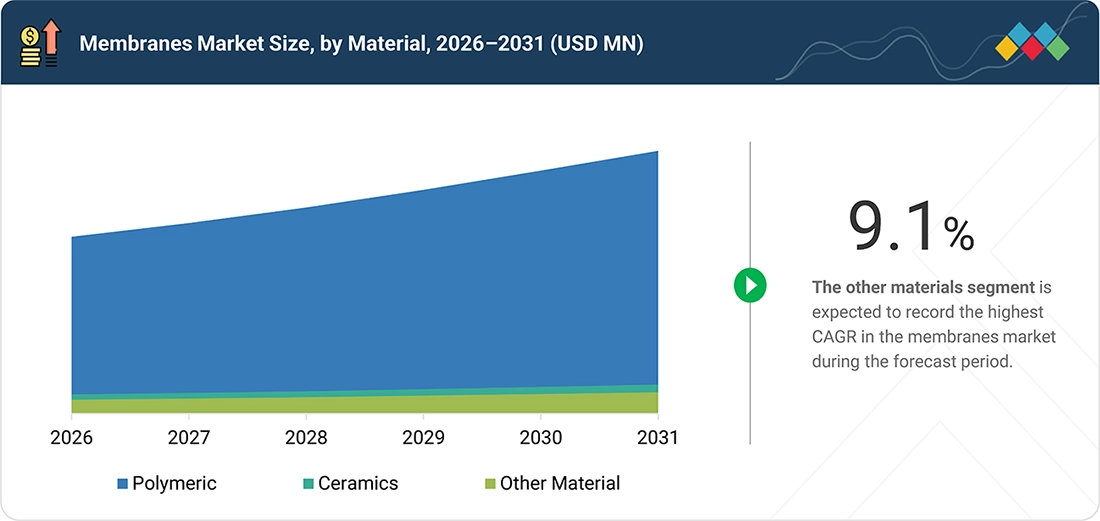
Source: Secondary Research, Interviews with Experts, MarketsandMarkets Analysis
Membranes Market, By Material
Polymeric membranes hold the largest share of the membranes market within the material category because of their versatility, cost-effectiveness, and broad applicability across various separation processes. Polymeric membranes are widely used in reverse osmosis (RO), ultrafiltration (UF), nanofiltration (NF), and microfiltration (MF) applications for water and wastewater treatment, desalination, food & beverage processing, pharmaceuticals, biotechnology, and industrial separations. Materials such as polyamide, polysulfone, polyethersulfone, polyvinylidene fluoride (PVDF), and cellulose-based polymers offer a combination of high selectivity, permeability, mechanical strength, and chemical resistance, enabling membrane manufacturers to tailor performance according to specific separation requirements.
Membranes Market, By Technology
Reverse osmosis (RO) membranes hold the largest share of the membranes market within the technology category because of their outstanding ability to remove dissolved salts, contaminants, and impurities, producing clean and safe drinking water from various sources. RO membranes are used in almost all residential, commercial, municipal, and industrial applications for desalination, wastewater treatment, and purification. This helps address global water scarcity and pollution issues. RO membranes can reject a broad range of contaminant classes, making them a dependable option that meets international water quality standards. Moreover, RO processes have become more energy-efficient, and membranes more versatile, durable, and affordable. These technological advancements encourage further adoption, especially as full or partial desalination projects increase globally, mainly in water-stressed regions of Asia Pacific and the Middle East that rely on RO. Additionally, ongoing innovations, such as IoT technology for real-time monitoring and the development of “personalized membranes” tailored to specific water quality challenges, will boost RO’s appeal. All these factors will keep RO membranes leading the market share in the technology category and are expected to drive growth in response to the growing global demand for water treatment and sustainable water management. In addition, established manufacturing processes, availability of diverse polymer formulations, and comparatively lower production costs than ceramic and other advanced membrane materials support their widespread adoption. Ongoing advancements in thin-film composite structures, surface modification, antifouling coatings, and high-performance polymers are further improving permeability, selectivity, durability, and resistance to fouling.
Membranes Market, By Application
The membranes market for applications is led by water and wastewater treatment, which holds the largest market share. This growth is primarily driven by the global demand for clean and safe water due to urbanization, industrialization, and stricter environmental regulations. Water and wastewater treatment networks have increasingly relied on membrane technologies such as membrane-based reverse osmosis (RO), ultrafiltration (UF), nanofiltration (NF), and microfiltration (MF). These methods significantly simplify the removal of contaminants, pathogens, and dissolved solids from water and wastewater. As authorities and industries place greater emphasis on water purification and effluent recycling to address global water scarcity, pollution, and sustainability issues, the acceptance of membrane filtration systems has grown in both municipal and industrial sectors. Advances in membrane technology are leading to longer-lasting membranes that consume less energy, reduce operational costs, and promote higher market acceptance and growth. Furthermore, strict regulations regarding water discharge standards and environmental safety measures require on-site wastewater treatment solutions using membrane-based technologies, further boosting this market segment. The COVID-19 pandemic has also heightened awareness around water safety and prompted increased investments in water treatment infrastructure worldwide, especially in drinking water systems. Consequently, water and wastewater treatment continue to be the dominant forces driving growth in the membranes market and are expected to remain so in the foreseeable future. In this pandemic-affected context, addressing access to clean water and environmental concerns is crucial to sustaining a growing environment with purpose.
REGION
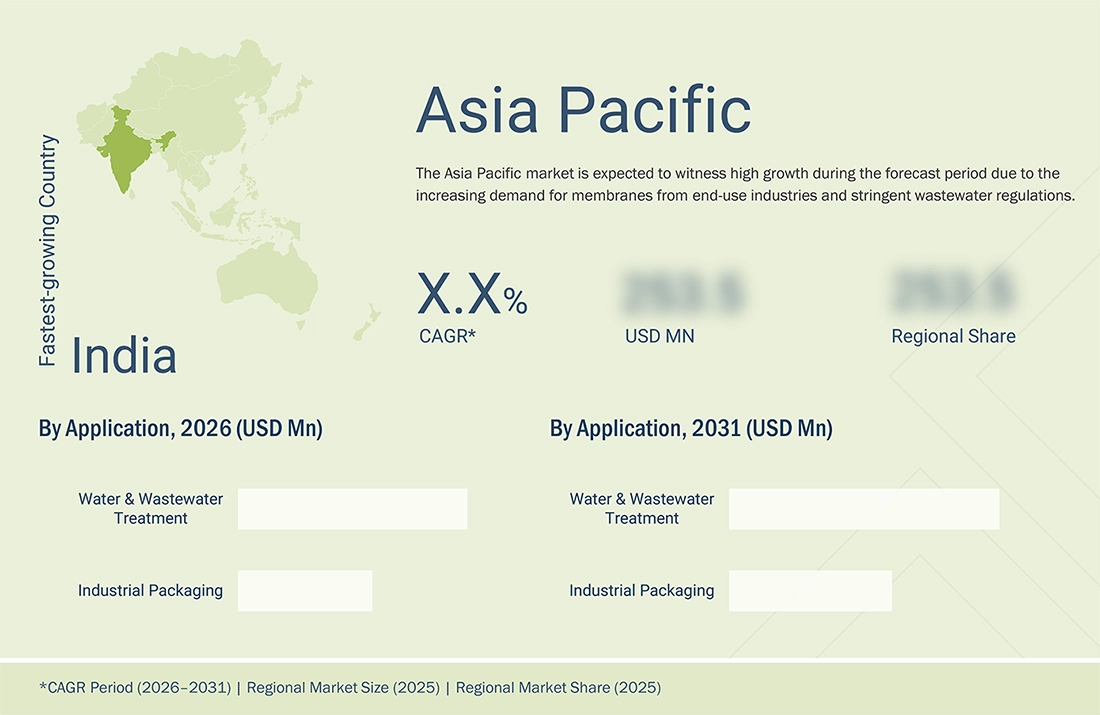
Asia Pacific to be fastest-growing region in membranes market during forecast period
The membranes market in the Asia Pacific region is experiencing rapid growth compared to other parts of the world. With rapid urbanization and industrialization happening in China, India, Japan, and South Korea, there is an increasing demand for clean water and wastewater treatment solutions. The quick growth in the population of Asia Pacific and the middle class is also driving the demand for technologically advanced water purification technologies. Outside of Australia and New Zealand, governments in the rest of the region are investing heavily in infrastructure development, including desalination, municipal water treatment, and wastewater recycling, where membranes are gaining market traction. Various regulatory frameworks are now being adopted regionally to support sustainable water management and reduce water contamination, which accelerates the adoption of membranes.
MEMBRANES MARKET: COMPANY EVALUATION MATRIX
DuPont (Star), a US-based company in the membranes market, has emerged as one of the market leaders due to its strong FilmTec portfolio of reverse osmosis (RO) and nanofiltration (NF) membrane technologies used across municipal, industrial, commercial, desalination, ultrapure water, and wastewater treatment applications. The company's membrane technologies offer high salt and contaminant rejection, low-energy operation, fouling resistance, durability, and consistent performance. Pall Corporation (Emerging Leader) is strengthening its position in the membranes market through its Membralox ceramic membrane portfolio, which provides microfiltration and ultrafiltration solutions for food & beverage processing, fermentation, biological molecule recovery, process-water treatment, and industrial wastewater applications. The company's Membralox GP-IC technology combines gradient permeability and intermingled-channel designs to improve filtration capacity, yield, and process efficiency while reducing system footprint and operating costs.
Source: Secondary Research, Interviews with Experts, MarketsandMarkets Analysis
KEY MARKET PLAYERS
- Dupont (US)
- Toray Industries Inc (Japan)
- Hydranautics (Nitto Denko Group Company) (US)
- Kovalus Separation Solutions (US)
- Pall Corporation (US)
- Veolia (France)
- Pentair (US)
- Asahi Kasei Corporation (Japan)
- LG Chem (South Korea)
- Mann+Hummel (Germany)
MARKET SCOPE
| REPORT METRIC | DETAILS |
|---|---|
| Market Size in 2025 (Value) | USD 7.87 Billion |
| Market Size in 2026 (Value) | USD 8.48 Billion |
| Market Forecast in 2031 (Value) | USD 12.74 Billion |
| Growth Rate | CAGR of 8.5% from 2026-2031 |
| Years Considered | 2023-2031 |
| Base Year | 2025 |
| Forecast Period | 2026-2031 |
| Units Considered | Value (USD Million/Billion), Volume (Thousand Square Meters) |
| Report Coverage | Revenue forecast, company ranking, competitive landscape, growth factors, and trends |
| Segments Covered |
|
| Regions Covered | North America, Asia Pacific, Europe, South America, and the Middle East & Africa |
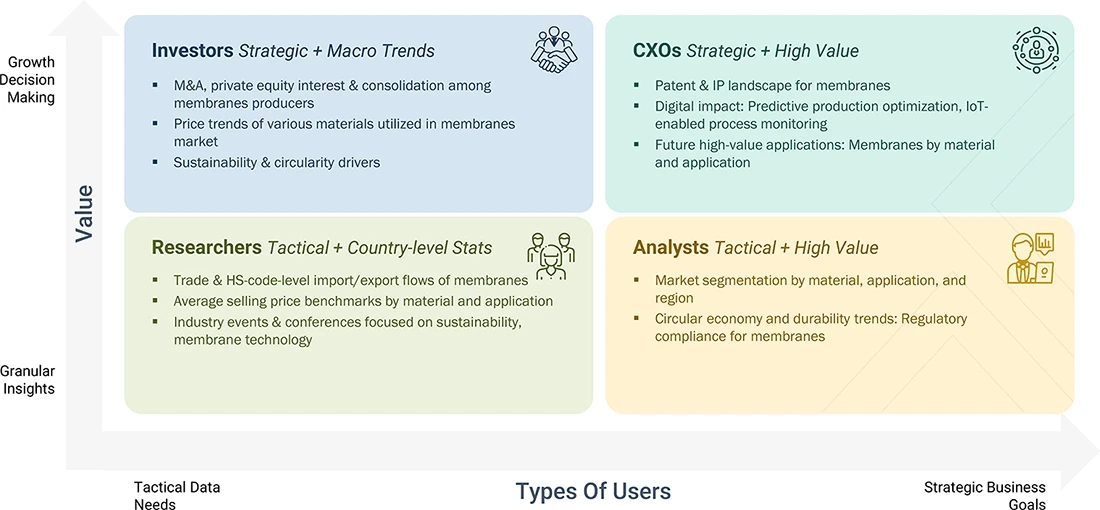
WHAT IS IN IT FOR YOU: MEMBRANES MARKET REPORT CONTENT GUIDE
DELIVERED CUSTOMIZATIONS
We have successfully delivered the following deep-dive customizations:
| CLIENT REQUEST | CUSTOMIZATION DELIVERED | VALUE ADDS |
|---|---|---|
| Leading Membrane Supplier |
|
Supported go-to-market strategy and competitive positioning |
| Country-level insights for high-growth regions |
|
Helped the client identify regional growth hotspots and investment opportunities |
| Identify emerging membrane technologies | Conducted technology scouting and feasibility analysis for advanced polymeric and ceramic membranes, antifouling membranes, low-energy RO membranes, and AI-enabled membrane monitoring | Supported investment decisions and innovation roadmaps for clients |
| Evaluate regulatory compliance for new market entry | Compiled country-level water quality, wastewater discharge, desalination, and environmental regulations and standards relevant to membrane-based treatment systems | Ensured smoother market entry and minimized regulatory and compliance risks |
RECENT DEVELOPMENTS
- September 2026: Hydranautics (Nitto Denko Group Company) (US) launched the PRO-XR1-X-LD fouling-resistant reverse osmosis membrane element for challenging industrial wastewater reuse in semiconductor, mining, and manufacturing applications. The new membrane uses Nitto’s surface-coating technology and optimized flow-channel structure to reduce fouling while maintaining high impurity rejection, supporting longer operating cycles, reduced cleaning requirements, and more stable water recovery.
- April 2026: DuPont (US) launched two new FilmTec™ Fortilife™ reverse osmosis membrane elements—XC-Max UHP and XC220—for advanced Zero Liquid Discharge and Minimal Liquid Discharge applications. The low-salt-rejection RO elements are designed to enable higher brine concentration and improved water recovery, extending DuPont’s membrane portfolio for industrial water treatment and resource-recovery applications
- November 2025: Toray Industries Inc (Japan) launched the TLF-400ULD reverse osmosis membrane for industrial wastewater reuse and sewage treatment. Developed using Toray’s membrane manufacturing technology and flow-channel design, the membrane combines high salt rejection with improved permeability and chemical resistance, while its clog-resistant structure reduces fouling and chemical-cleaning requirements.
- July 2025 : Asahi Kasei Life Science, a division of the global diversified manufacturer Asahi Kasei, announced plans to build a new spinning plant in Nobeoka City, Miyazaki, Japan, dedicated to its Planova virus removal filters.
- January 2025 : Toray Industries, Inc. introduced a high-efficiency separation membrane module designed for biopharmaceutical manufacturing.
Table of Contents
 Exclusive indicates content/data unique to MarketsandMarkets and not available with any competitors.
TITLE
PAGE NO
1
INTRODUCTION
15
2
EXECUTIVE SUMMARY
3
PREMIUM INSIGHTS
4
MARKET OVERVIEW
Highlights the market structure, growth drivers, restraints, and near-term inflection points influencing performance.
4.1
INTRODUCTION
4.2
MARKET DYNAMICS
4.2.1
DRIVERS
4.2.1.1
INCREASING AWARENESS OF WATER & WASTEWATER TREATMENT
4.2.1.2
STRINGENT WASTEWATER REGULATIONS
4.2.1.3
SHIFT FROM CHEMICAL TO PHYSICAL TREATMENT OF WATER
4.2.1.4
INCREASING DEMAND FROM END-USE INDUSTRIES
4.2.2
RESTRAINTS
4.2.2.1
FOULING AND SCALING REDUCING MEMBRANE PERFORMANCE
4.2.2.2
HIGH CAPITAL COSTS
4.2.2.3
LIMITED COMPATIBILITY AND HIGH ENERGY CONSUMPTION
4.2.3
OPPORTUNITIES
4.2.3.1
RISING DEMAND FOR WATER TREATMENT IN DEVELOPING COUNTRIES
4.2.3.2
INCREASING WATER SCARCITY
4.2.3.3
CIRCULAR ECONOMY INITIATIVES
4.2.4
CHALLENGES
4.2.4.1
ISSUES RELATED TO LIFESPAN AND EFFICIENCY OF MEMBRANES
4.2.4.2
DISCHARGE OF BRINE AS WASTE FROM RO MEMBRANES
4.2.4.3
HIGH INITIAL COSTS
4.3
UNMET NEEDS AND WHITE SPACES
4.4
INTERCONNECTED MARKETS AND CROSS-SECTOR OPPORTUNITIES
4.5
STRATEGIC MOVES BY TIER-1/2/3 PLAYERS
5
INDUSTRY TRENDS
Covers the key developments, trend analysis, and actionable insights to support strategic planning and positioning.
5.1
PORTER’S FIVE FORCES ANALYSIS
5.2
MACROECONOMIC OUTLOOK
5.2.1
INTRODUCTION
5.2.2
GDP TRENDS AND FORECAST
5.2.3
TRENDS IN THE APPLICATIONS
5.3
SUPPLY CHAIN ANALYSIS
5.4
VALUE CHAIN ANALYSIS
5.5
ECOSYSTEM ANALYSIS
5.6
PRICING ANALYSIS
5.6.1
AVERAGE SELLING PRICE TREND OF MEMBRANES, BY KEY PLAYERS,
5.6.2
AVERAGE SELLING PRICE TREND OF MEMBRANES, BY APPLICATION (2022-2025)
5.6.3
AVERAGE SELLING PRICE TREND OF MEMBRANES, BY REGION (2022-2025)
5.7
TRADE ANALYSIS
5.7.1
IMPORT SCENARIO (HS CODE 842129)
5.7.2
EXPORT SCENARIO (HS CODE 842129)
5.8
KEY CONFERENCES AND EVENTS, 2026–2027
5.9
TRENDS/DISRUPTIONS IMPACTING CUSTOMER BUSINESS
5.10
INVESTMENT AND FUNDING SCENARIO
5.11
CASE STUDY ANALYSIS
5.12
IMPACT OF 2025 US TARIFF – MEMBRANES MARKET
5.12.1
INTRODUCTION
5.12.2
KEY TARIFF RATES
5.12.3
PRICE IMPACT ANALYSIS
5.12.4
IMPACT ON COUNTRIES/REGIONS
5.12.4.1
US
5.12.4.2
CANADA
5.12.4.3
MEXICO
5.12.5
IMPACT ON END-USE INDUSTRIES
6
TECHNOLOGICAL ADVANCEMENTS, AI-DRIVEN IMPACT, PATENTS, INNOVATIONS, AND FUTURE APPLICATIONS
6.1
KEY EMERGING TECHNOLOGIES
6.1.1
BLOCK COPOLYMER MEMBRANES
6.1.2
FLUX ENHANCEMENT TECHNOLOGY
6.2
COMPLEMENTARY TECHNOLOGIES
6.2.1
COMBINES CRYSTALLIZATIONS & DIFFUSION
6.2.2
MEMBRANE DISTILLATION
6.3
ADJACENT TECHNOLOGIES
6.3.1
MEMBRANE CONTACTOR
6.3.2
PERVAPORATION FOR HYDROCARBON SEPARATION
6.3.3
FORWARD OSMOSIS, DIRECT CONTACT MEMBRANE DISTILLATION, AND
6.3.4
INTEGRATED FO-DCMD
6.4
TECHNOLOGY/PRODUCT ROADMAP
6.5
PATENT ANALYSIS
6.6
FUTURE APPLICATIONS
6.7
IMPACT OF AI/GEN AI ON MEMBRANES MARKET
6.7.1
TOP USE CASES AND MARKET POTENTIAL
6.7.2
BEST PRACTICES IN MEMBRANES
6.7.3
CASE STUDIES OF AI IMPLEMENTATION IN THE MEMBRANES MARKET
6.7.4
INTERCONNECTED ADJACENT ECOSYSTEM AND IMPACT ON MARKET PLAYERS
6.7.5
CLIENTS’ READINESS TO ADOPT GENERATIVE AI IN MEMBRANES MARKET
7
SUSTAINABILITY AND REGULATORY LANDSCAPE
7.1
REGIONAL REGULATIONS AND COMPLIANCE
7.1.1
REGULATORY BODIES, GOVERNMENT AGENCIES, AND OTHER ORGANIZATIONS
7.1.2
INDUSTRY STANDARDS
7.2
SUSTAINABILITY INITIATIVES
7.2.1
CARBON IMPACT AND ECO-APPLICATIONS OF MEMBRANES
7.3
SUSTAINABILITY IMPACT AND REGULATORY POLICY INITIATIVES
7.4
CERTIFICATIONS, LABELING, ECO-STANDARDS
8
CUSTOMER LANDSCAPE & BUYER BEHAVIOR
8.1
DECISION-MAKING PROCESS
8.2
BUYER STAKEHOLDERS AND BUYING EVALUATION CRITERIA
8.3
ADOPTION BARRIERS & INTERNAL CHALLENGES
8.4
UNMET NEEDS FROM VARIOUS APPLICATIONS
8.5
MARKET PROFITABILITY
9
MEMBRANES MARKET, BY MATERIAL (MARKET SIZE & FORECAST TO 2030 – IN VALUE, USD MILLION & VOLUME, THOUSAND SQUARE METERS)
MATERIAL-WISE DEMAND POTENTIAL AND GROWTH PATHWAYS SHAPING MEMBRANE ADOPTION
9.1
INTRODUCTION
9.2
POLYMERIC
9.2.1
POLYAMIDE
9.2.2
POLYSULFONE & POLYETHERSULFONE
9.2.3
FLUOROPOLYMERS
9.2.4
OTHER POLYMERIC MEMBRANES
9.3
CERAMIC
9.3.1
ALUMINA
9.3.2
TITANIA
9.3.3
ZIRCONIA
9.3.4
OTHER CERAMIC MEMBRANES
9.4
OTHER MATERIALS
10
MEMBRANES MARKET, BY TECHNOLOGY (MARKET SIZE & FORECAST TO 2030 – IN VALUE, USD MILLION & VOLUME, THOUSAND SQUARE METERS)
MATERIAL-WISE DEMAND POTENTIAL AND GROWTH PATHWAYS SHAPING MEMBRANES ADOPTION
10.1
INTRODUCTION
10.2
REVERSE OSMOSIS
10.3
ULTRAFILTRATION
10.4
MICROFILTRATION
10.5
NANOFILTRATION
10.6
OTHER TECHNOLOGIES
11
MEMBRANES MARKET, BY APPLICATION (MARKET SIZE & FORECAST TO 2030 – IN VALUE, USD MILLION & VOLUME, THOUSAND SQUARE METERS)
STRUCTURE-WISE DEMAND POTENTIAL AND GROWTH PATHWAYS SHAPING MEMBRANE ADOPTION
11.1
INTRODUCTION
11.2
WATER & WASTEWATER TREATMENT
11.2.1
DESALINATION
11.2.2
UTILITY WATER TREATMENT
11.2.3
WASTEWATER REUSE
11.3
INDUSTRIAL PROCESSING
11.3.1
FOOD & BEVERAGE
11.3.2
CHEMICAL & PETROCHEMICAL
11.3.3
PHARMACEUTICAL & MEDICAL
11.3.4
TEXTILE
11.3.5
POWER
11.3.6
PULP & PAPER
11.3.7
OTHER APPLICATIONS
12
MEMBRANES MARKET, BY REGION (MARKET SIZE & FORECAST TO 2030 – IN VALUE, USD MILLION & VOLUME, THOUSAND SQUARE METERS)
ASSESSING GROWTH PATTERNS, INDUSTRY FORCES, REGULATORY LANDSCAPE, AND MARKET POTENTIAL ACROSS KEY REGIONS & COUNTRIES
12.1
INTRODUCTION
12.2
NORTH AMERICA
12.2.1
US
12.2.2
CANADA
12.2.3
MEXICO
12.3
ASIA PACIFIC
12.3.1
CHINA
12.3.2
JAPAN
12.3.3
INDIA
12.3.4
SOUTH KOREA
12.3.5
REST OF ASIA PACIFIC
12.4
EUROPE
12.4.1
GERMANY
12.4.2
UK
12.4.3
FRANCE
12.4.4
ITALY
12.4.5
SPAIN
12.4.6
REST OF EUROPE
12.5
MIDDLE EAST & AFRICA
12.5.1
GCC
12.5.1.1
SAUDI ARABIA
12.5.1.2
UAE
12.5.1.3
REST OF GCC
12.5.2
SOUTH AFRICA
12.5.3
REST OF MIDDLE EAST & AFRICA
12.6
SOUTH AMERICA
12.6.1
BRAZIL
12.6.2
ARGENTINA
12.6.3
REST OF SOUTH AMERICA
13
COMPETITIVE LANDSCAPE
STRATEGIC ASSESSMENT OF LEADING PLAYERS, MARKET SHARE, REVENUE ANALYSIS, COMPANY POSITIONING, AND COMPETITIVE BENCHMARKS INFLUENCING MARKET POTENTIAL
13.1
OVERVIEW
13.2
KEY PLAYER STRATEGIES/RIGHT TO WIN
13.3
REVENUE ANALYSIS
13.4
MARKET SHARE ANALYSIS
13.5
PRODUCT COMPARISON
13.6
COMPANY EVALUATION MATRIX: KEY PLAYERS,
13.6.1
STARS
13.6.2
EMERGING LEADERS
13.6.3
PERVASIVE PLAYERS
13.6.4
PARTICIPANTS
13.6.5
COMPANY FOOTPRINT: KEY PLAYERS,
13.6.5.1
COMPANY FOOTPRINT
13.6.5.2
REGION FOOTPRINT
13.6.5.3
MATERIAL FOOTPRINT
13.6.5.4
TECHNOLOGY FOOTPRINT
13.6.5.5
APPLICATION FOOTPRINT
13.7
COMPANY EVALUATION MATRIX: STARTUPS/SMES,
13.7.1
PROGRESSIVE COMPANIES
13.7.2
RESPONSIVE COMPANIES
13.7.3
DYNAMIC COMPANIES
13.7.4
STARTING BLOCKS
13.7.5
COMPETITIVE BENCHMARKING: STARTUPS/SMES,
13.7.5.1
DETAILED LIST OF KEY STARTUPS/SMES
13.7.5.2
COMPETITIVE BENCHMARKING OF KEY STARTUPS/SMES
13.8
COMPANY VALUATION AND FINANCIAL METRICS
13.9
COMPETITIVE SCENARIO
13.9.1
PRODUCT LAUNCHES
13.9.2
DEALS
14
COMPANY PROFILES
IN-DEPTH REVIEW OF COMPANIES, PRODUCTS, SERVICES, RECENT INITIATIVES, AND POSITIONING STRATEGIES IN THE MEMBRANES MARKET LANDSCAPE
14.1
KEY PLAYERS
14.1.1
DUPONT
13.1.2.1
BUSINESS OVERVIEW
13.1.2.2
PRODUCTS/SOLUTIONS/SERVICES OFFERED
13.1.2.3
RECENT DEVELOPMENTS
13.1.2.3.1
PRODUCT LAUNCHES
13.1.2.3.2
DEALS
13.1.2.3.3
EXPANSIONS
13.1.2.4
MNM VIEW
13.1.2.4.1
KEY STRENGTHS/RIGHT TO WIN
13.1.2.4.2
STRATEGIC CHOICES
13.1.2.4.3
WEAKNESSES/COMPETITIVE THREATS
14.2
TORAY INDUSTRIES, INC
14.3
HYDRANAUTICS
14.4
KOVALUS SEPARATION SOLUTIONS
14.5
PALL CORPORATION
14.6
VEOLIA
14.7
PENTAIR
14.8
ASAHI KASEI CORPORATION
14.9
LG CHEM
14.10
MANN+HUMMEL
14.11
OTHER PLAYERS
15
RESEARCH METHODOLOGY
15.1
RESEARCH DATA
15.1.1
SECONDARY DATA
15.1.1.1
KEY DATA FROM SECONDARY SOURCES
15.1.2
PRIMARY DATA
15.1.2.1
KEY DATA FROM PRIMARY SOURCES
15.1.2.2
KEY PRIMARY PARTICIPANTS
15.1.2.3
BREAKDOWN OF PRIMARY INTERVIEWS
15.1.2.4
KEY INDUSTRY INSIGHTS
15.2
MARKET SIZE ESTIMATION
15.2.1
BOTTOM-UP APPROACH
15.2.2
TOP-DOWN APPROACH
15.2.3
BASE NUMBER CALCULATION
15.3
MARKET FORECAST APPROACH
15.3.1
SUPPLY SIDE
15.3.2
DEMAND SIDE
15.4
DATA TRIANGULATION
15.5
FACTOR ANALYSIS
15.6
RESEARCH ASSUMPTIONS
15.7
RESEARCH LIMITATIONS AND RISK ASSESSMENT
16
APPENDIX
16.1
DISCUSSION GUIDE
16.2
KNOWLEDGE STORE: MARKETSANDMARKETS SUBSCRIPTION PORTAL
16.3
CUSTOMIZATION OPTIONS
16.4
RELATED REPORTS
16.5
AUTHOR DETAILS
Methodology
The study involved four main activities in estimating the market size of the membranes market. Extensive secondary research was conducted to gather information on the market, peer markets, and parent markets. The next step was to validate these findings, assumptions, and sizing with industry experts across the value chain through primary research. Both top-down and bottom-up approaches were used to estimate the total market size. Then, market breakdown and data triangulation procedures were applied to estimate the sizes of segments and subsegments.
Secondary Research
In the secondary research process, various sources were referred to for gathering information for this study. These sources include annual reports, press releases, investor presentations, white papers, certified publications, trade directories, articles by recognized authors, reputable websites, and databases. Secondary research helped gather key details about the industry’s value chain, monetary chain, the number of key players, market classification, and segmentation based on industry trends down to the regional level. It was also used to find important market developments from a market-focused perspective.
Primary Research
The membranes market includes various stakeholders in the value chain, such as manufacturers and end users. Key sources from the supply and demand sides of the market were interviewed to gather qualitative and quantitative information. Demand-side interviewees include notable industry leaders in various sectors. Supply-side sources include manufacturers, associations, and organizations involved in the membranes industry. These primary interviews provided insights into market statistics, revenue data, market segmentation, size estimates, forecasts, and data validation. The research also clarified trends related to materials, technologies, applications, and regions. Stakeholders from the demand side, like CIOs, CTOs, and CSOs, were interviewed to understand their perspective on suppliers, products, current membrane use, and their business outlook, which influences the overall market.
The breakdown of profiles of the primary interviewees is illustrated in the figure below:
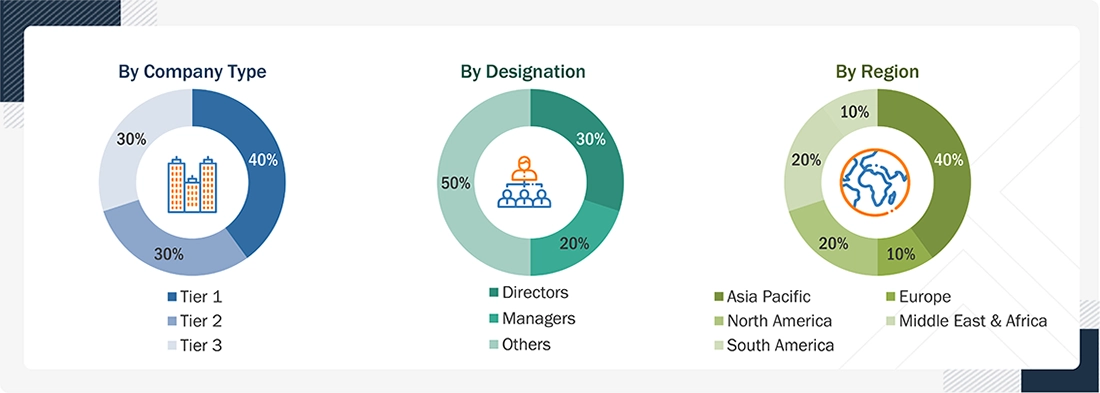
Note: Tier 1, Tier 2, and Tier 3 companies are classified based on their market revenue in 2025, available in the public domain, product portfolios, and geographical presence.
Other designations include consultants and sales, marketing, and procurement managers.
To know about the assumptions considered for the study, download the pdf brochure
Market Size Estimation
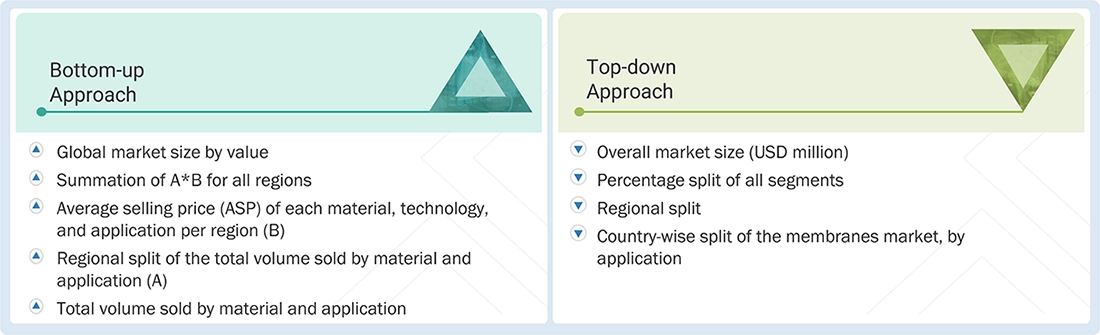
The top-down and bottom-up approaches have been used to estimate and validate the size of the membranes market.
- The key players in the industry have been identified through extensive secondary research.
- The supply chain of the industry has been mapped out through both primary and secondary research.
- All percentage shares, splits, and breakdowns have been determined using secondary sources and confirmed through primary sources.
- All relevant parameters affecting the markets covered in this study have been thoroughly considered, examined in detail, verified through primary research, and analyzed to produce the final quantitative and qualitative data.
- The research includes the analysis of reports, reviews, and newsletters from key market players, along with comprehensive interviews with leaders such as directors and marketing executives.
Membranes Market : Top-Down and Bottom-Up Approach
Data Triangulation
After estimating the total market size, the market has been divided into several segments and sub-segments. Data triangulation and market breakdown methods have been used where applicable to finalize the overall market analysis and determine precise statistics for all segments and sub-segments. The data was triangulated by examining various factors and trends from both demand and supply sides. Additionally, the market size was validated using both top-down and bottom-up approaches, along with primary interviews. Therefore, each data segment was supported by three sources—the top-down approach, bottom-up approach, and expert interviews. The data was considered accurate when the values from the three sources matched.
Market Definition
Membranes are thin, selective barrier materials that separate particles, microorganisms, and dissolved solids in liquids or gases. Membrane processes are widely used in water and wastewater treatment, industrial processes, and healthcare, employing microfiltration, ultrafiltration, nanofiltration, and reverse osmosis. The demand for clean water, environmental regulations, and advancements in high-performance, long-lasting membrane materials and manufacturing techniques drives the growing membranes market.
Key Stakeholders
- Senior management
- End users
- Finance/Procurement department
- R&D department
- Manufacturers
- Raw material suppliers
Report Objectives
- To define, describe, and forecast the size of the membranes market, in terms of value and volume
- To provide detailed information regarding the major factors (drivers, opportunities, restraints, and challenges) influencing the growth of the market
- To estimate and forecast the market size based on material, technology, application, and region
- To forecast the size of the market with respect to Europe, North America, Asia Pacific, the Middle East & Africa, and South America, along with their key countries
- To strategically analyze micro-markets with respect to individual growth trends, prospects, and their contribution to the overall market
- To analyze opportunities in the market for stakeholders and provide a competitive landscape of market leaders
- To track and analyze recent developments such as expansions, new product launches, partnerships & agreements, and acquisitions in the market
- To strategically profile key market players and comprehensively analyze their core competencies
Available customizations:
Along with the given market data, MarketsandMarkets offers customizations according to the company’s specific needs. The following customization options are available for the report:
Regional Analysis
-
Further breakdown of a region with respect to a particular country or additional application
Company Information
-
Detailed analysis and profiles of additional market players
Tariff & Regulations
-
Regulations and impact on the membranes market
Key Questions Addressed by the Report
What is the current size of the global membranes market?
The membranes market is estimated to reach USD 11.70 billion by 2030 from USD 7.87 billion in 2025, at a CAGR of 8.2% during the forecast period.
Who are the key players in the global membranes market?
Dupont (US), Toray Industries Inc (Japan), Hydranautics (Nitto Denko Group Company) (US), Kovalus Separation Solutions (US), Pall Corporation (US), Veolia (France), Pentair (US), Asahi Kasei Corporation (Japan), LG Chem (South Korea), and Mann+Hummel (Germany).
What are some of the drivers for market growth?
Increasing awareness about water & wastewater treatment and stringent wastewater regulations.
What are the different materials used in membranes?
Polymeric, ceramic, and other materials are widely used in this market.
What are the major applications in the membranes market?
Water & wastewater treatment, industrial processing, and other applications.
Fact checked
Personalize This Research
- Triangulate with your Own Data
- Get Data as per your Format and Definition
- Gain a Deeper Dive on a Specific Application, Geography, Customer or Competitor
- Any level of Personalization
Let Us Help You
- What are the Known and Unknown Adjacencies Impacting the Membranes Market
- What will your New Revenue Sources be?
- Who will be your Top Customer; what will make them switch?
- Defend your Market Share or Win Competitors
- Get a Scorecard for Target Partners

Custom Market Research Services
We Will Customise The Research For You, In Case The Report Listed Above Does Not Meet With Your Requirements
Get 10% Free CustomisationTESTIMONIALS
We at Nissan Chemicals Corporation have been clients of MarketsandMarkets for more than a year now. We recently consulted MarketsandMarkets for a study, the team at MarketsandMarkets was extremely professional and organized. The business insights were very detailed and aligned well with our expectations that really helped us formulate the Business Plans and device new strategies for development themes. MarketsandMarkets offers a unique combination of expertise and dedicated engagement model. Their research findings have helped us in designing our Pricing Strategy which will make it easier for us to predict the future sales and profits for the next ten years. We look forward to working with MarketsandMarkets in the future.
VP of Strategy & New Business Development
Leading Specialty Chemical Company
The MarketsandMarkets Engagement Model, composed of both the Knowledge Store and advisory custom research, has greatly helped us in understanding our markets and making strategic decisions. The Knowledge Store is a fast way to allow everyone in our organization to understand more about most any market they are interested in. The ability to then get custom research done and get answers to specific strategic questions and market insight has been spectacular. The Markets and Markets team feel more like colleagues than vendors and their services have helped us change our culture where statements of things like growth opportunities and competitive position are always backed by industry research.

Rich Gibson,
Director, Corporate Strategy
Milliken & Company,
Leading Industrial Manufacturer of specialty chemical, floor covering, performance and protective textile materials, and healthcaremilliken.com
MarketsandMarkets is a trusted resource that helps us to better understand markets that are near-adjacencies-whether its technology, value chain or geography. Their Knowledge Store platform provides a dashboard of markets and their characteristics which is easy to use and saves us time.
Adam Shaw,
Market Development and Strategy Manager
AdvanSix Inc. USA,
An American Leader in Chemicalswww.advansix.com
The Knowledge Store from MarketsandMarkets is a valuable tool which has helped my team acquire greater insight in to the end markets that our business serves. This has enabled us to help our company build stronger strategies throughout our planning process.
TOSHIO KINOSHITA
Senior Chif Consultion Research & Consulting Division
Mitsubishi Chemical Research Corporation,
Leading Manufacturer of Chemical Productswww.mitsubishichem-res.co.jp/en/

We recently engaged with MarketsandMarkets for a study, the team not only clearly understood our business objectives but was also extremely professional in the way they handled the entire project. The study was efficiently conducted in a phase-wise manner, and the engagement model furnished us with high-quality business insights that far exceeded our expectations at each phase. We were especially happy that MarketsandMarkets could provide us with both, an English as well as a Japanese version of the study. A special thanks to the Analyst Team and Client Services Team, whose fluency in Japanese enhanced our comfort level, as we could converse with them in our preferred language.
Independent entrepreneurs
Arrow Precision
We approached MarketsandMarkets for study on Proppants Market, and their work exceeded our expectations. The study conducted was comprehensive and enabled us to view the market through the various dimensions. In addition, the team was extraordinarily responsive throughout the process and resolved our queries on time. I strongly recommend MarketsandMarkets and will certainly consider them for additional market assessments we will need in the future.
Global engineering company, Japan
Deputy Manager,
Strategic Planning OfficeThe high-quality insights shared by the MarketsandMarkets team helped us understand the pharmaceutical plant designers in a specific geography. It also captured the risks that we may likely face in communicating with our potential partners. The study would enable us identify partners, which would impact our future growth.
- China Membranes Market
- Japan Membranes Market
- India Membranes Market
- South Korea Membranes Market
- Australia Membranes Market
- Canada Membranes Market
- Mexico Membranes Market
- US Membranes Market
- Spain Membranes Market
- Germany Membranes Market
- France Membranes Market
- UK Membranes Market
- Italy Membranes Market
- South Africa Membranes Market
- Brazil Membranes Market
- Argentina Membranes Market
- Rest Of Europe Membranes Market
- Rest Of Asia Pacific Membranes Market
- GCC Membranes Market
- –Rest Of GCC Membranes Market
- Rest Of South America Membranes Market






Growth opportunities and latent adjacency in Membranes Market