AI Server Market Size, Share and Trends 2025 to 2030

AI Server Market by Processor Type (GPU, FPGA, ASIC), Function (Training, Inference), Form Factor (Rack-Mounted Server, Blade Server, Tower Server), Cooling Technology (Air Cooling, Liquid Cooling, Hybrid Cooling) – Global Forecast to 2030




OVERVIEW
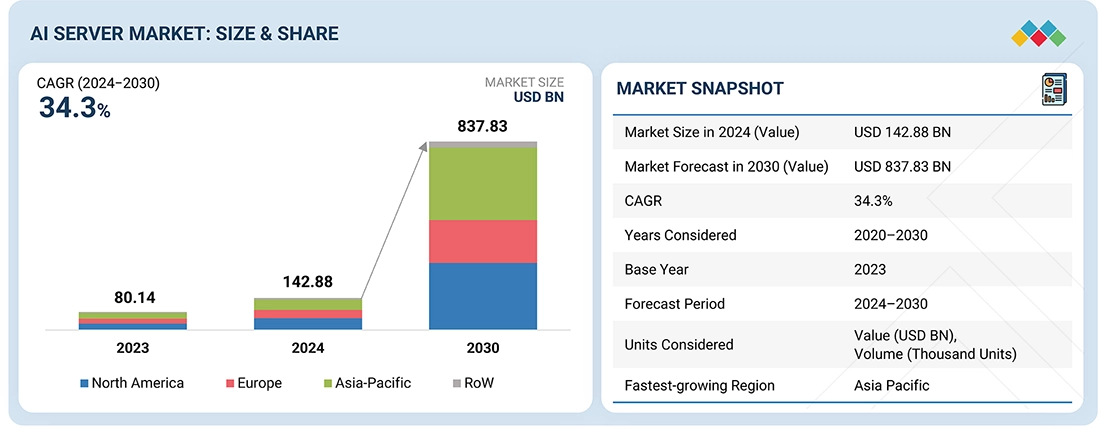
Source: Secondary Research, Interviews with Experts, MarketsandMarkets Analysis
The AI server market is projected to reach USD 837.83 billion by 2030 from USD 142.88 billion in 2024, at a CAGR of 34.3% from 2024 to 2030. The growth of the AI server market is driven by the increase in data traffic and need for high computing power.
KEY TAKEAWAYS
-
By RegionThe North America AI server market accounted for a 36.7% revenue share in 2024.
-
By Processor TypeBy processor type, the ASIC-based servers segment is expected to register the highest CAGR of 38.5%.
-
By FunctionBy function, the training segment is projected to grow at the fastest rate from 2024 to 2030.
-
By DeploymentBy deployment, the cloud segment is expected to dominate the market.
-
By End UserBy end user, the enterprises segment will grow the fastest during the forecast period.
-
By Form FactorBy form factor, the rack-mounted server segment is expected to dominate the market, growing at the highest CAGR of 36.2%.
-
By Cooling TechnologyBy cooling technology, the liquid cooling segment is expected to dominate the market, growing at the highest CAGR of 39.1%.
-
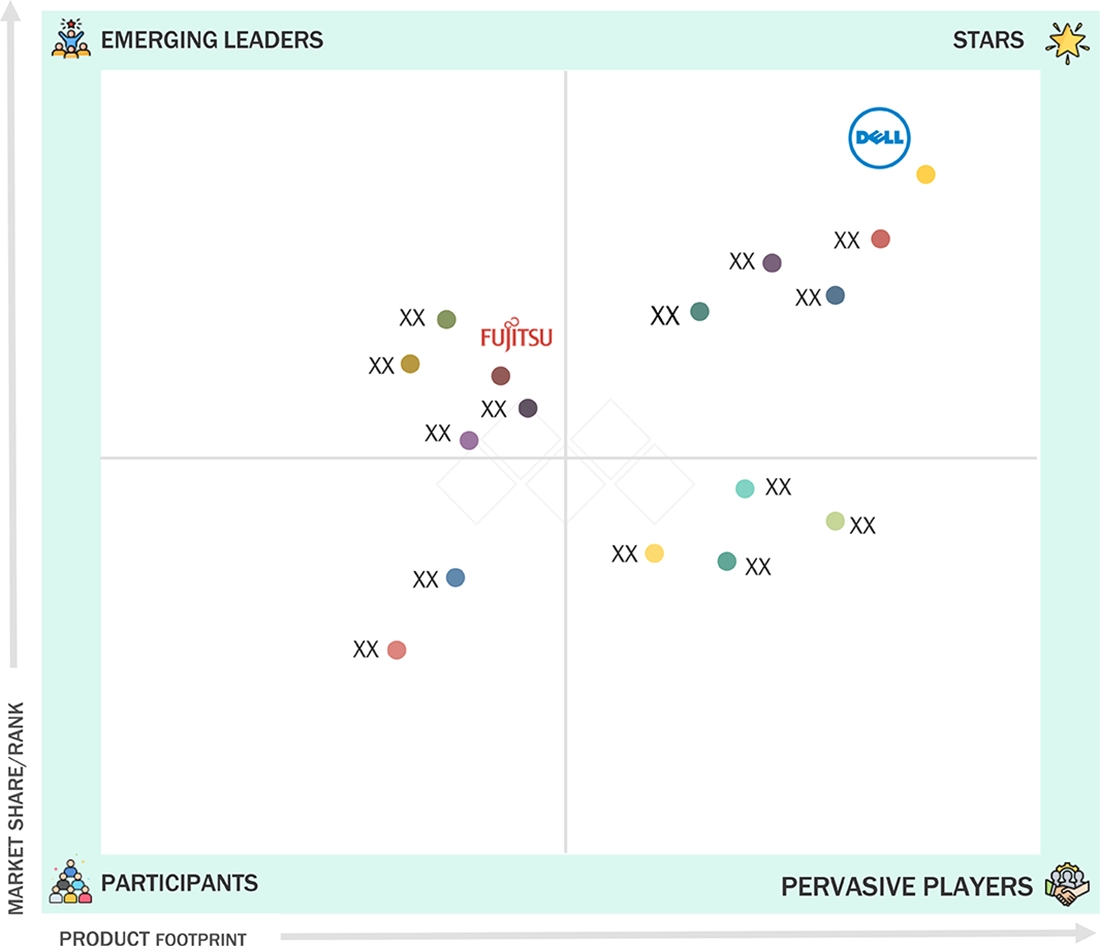
Competitive LandscapeDell Inc., HPE, Huawei Technologies Co., Ltd., Lenovo, and IBM were identified as some of the star players in the AI sserver market (global), given their strong market share and product footprint.
-
Competitive LandscapeGraphcore, MiTAC, and ADLINK, among others, have distinguished themselves among startups and SMEs by securing strong footholds in specialized niche areas, underscoring their potential as emerging market leaders
The AI server market is experiencing rapid expansion, driven by rising demand from cloud providers to support hyperscale environments and generative AI workloads. Advancements in GPUs, ASICs, and machine learning technologies are further accelerating adoption. As AI applications become more compute-intensive, enterprises are increasingly prioritizing robust and scalable server infrastructure to support their growing computational needs.
TRENDS & DISRUPTIONS IMPACTING CUSTOMERS' CUSTOMERS
The AI server market is undergoing a major revenue shift as enterprises, CSPs, and government organizations accelerate adoption of GPU-, FPGA-, and ASIC-based AI servers. Traditional revenue streams from general-purpose compute are giving way to new opportunities driven by generative AI, machine learning, NLP, and computer vision workloads. This transition is expanding demand for high-performance, scalable AI infrastructure, creating strong growth pockets for specialized AI servers and reshaping the future revenue mix across all major end-user segments.
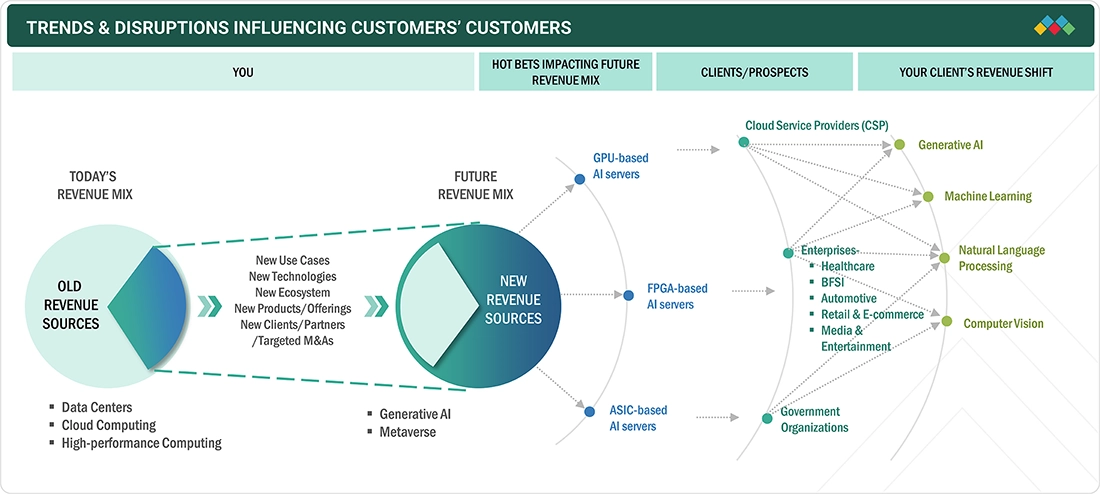
Source: Secondary Research, Interviews with Experts, MarketsandMarkets Analysis
MARKET DYNAMICS

Level
-
Increase in data traffic and need for high computing power

-
Increasing adoption of machine learning and deep learning algorithms


Level
-
High initial costs of AI server hardware and infrastructure

-
Shortage of AI hardware experts and skilled workforce


Level
-
Growing potential of AI in healthcare sector

-
Increasing investments in data centers by cloud service providers


Level
-
Data security and privacy concerns

-
Supply chain disruptions

Source: Secondary Research, Interviews with Experts, MarketsandMarkets Analysis
Driver: Increase in data traffic and need for high computing power
The exponential growth in data from IoT devices and digital interactions will drive high demand for advanced computing resources to handle processing and analysis. Over time, improvements in data management may stabilize this demand to a moderate level.
Restraint: High initial costs of AI server hardware and infrastructure
High upfront costs may deter investment, particularly from smaller businesses. However, as technology advances and production scales increase, costs are expected to decrease, leading to broader accessibility in the long term.
Opportunity: Growing potential of AI in healthcare sector
The healthcare sector is expected to increasingly adopt AI for diagnostics and patient care, driving significant demand for specialized AI servers as technologies become mainstream.
Challenge: Data security and privacy concerns
Concerns over data security and privacy will have a high impact due to stringent regulations and the increasing need for secure data handling in AI servers. Over time, as companies adopt stronger security measures and technologies evolve, the impact will lessen but remain significant due to ongoing threats and regulatory changes.
AI SERVER MARKET SIZE, SHARE AND TRENDS 2025 TO 2030: COMMERCIAL USE CASES ACROSS INDUSTRIES
| COMPANY | USE CASE DESCRIPTION | BENEFITS |
|---|---|---|
 |
DGX H100 AI servers deployed by Meta for Llama training clusters. | DGX H100 AI servers deployed by Meta for Llama training clusters. |
 |
Liquid-cooled GPU servers used by Oracle Cloud for cloud-scale AI training. | Liquid-cooled GPU servers used by Oracle Cloud for cloud-scale AI training. |
 |
XE9680 AI servers used in healthcare for imaging diagnostics and radiology AI. | XE9680 AI servers used in healthcare for imaging diagnostics and radiology AI. |
 |
Cray AI servers deployed at NASA for climate simulation and deep learning workloads. | Cray AI servers deployed at NASA for climate simulation and deep learning workloads. |
 |
AI servers running edge inference models for smart manufacturing plants (Foxconn case). | Real-time defect detection, higher productivity, reduced downtime. |
Logos and trademarks shown above are the property of their respective owners. Their use here is for informational and illustrative purposes only.
MARKET ECOSYSTEM
The AI server ecosystem comprises a tightly integrated value chain spanning AI chip and memory suppliers, component vendors, server manufacturers, and global end users. Leading chipmakers such as NVIDIA, AMD, and Intel provide the compute backbone, while Samsung, SK Hynix, and Micron supply high-performance memory. PSU, PMIC, cooling, and chassis vendors enable efficient system design, supporting manufacturers like Dell, HPE, IBM, Supermicro, Huawei, and Cisco. These AI servers ultimately power workloads for enterprises, CSPs, and hyperscalers including AWS, Microsoft, Google, Meta, Tencent, and Alibaba Cloud.
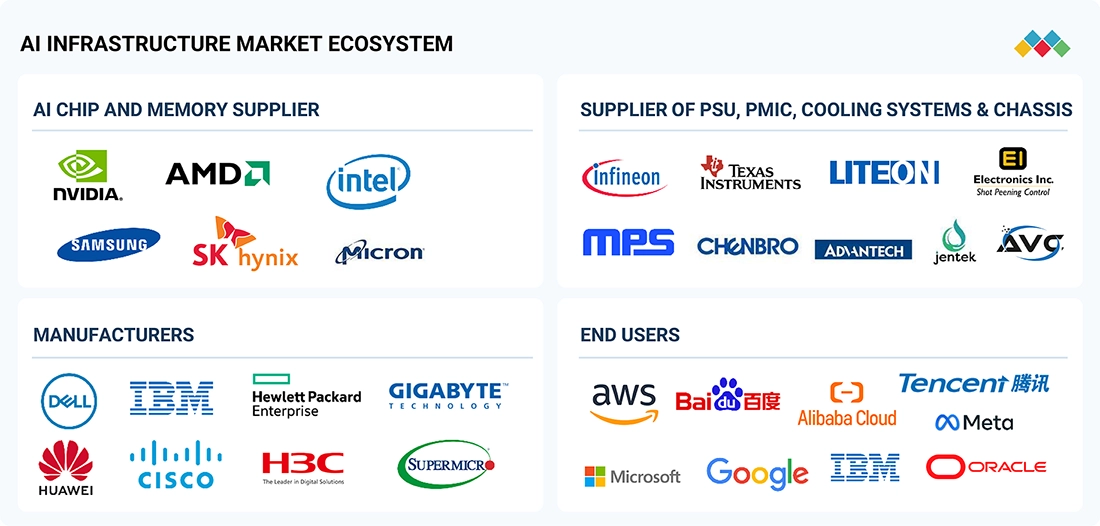
Logos and trademarks shown above are the property of their respective owners. Their use here is for informational and illustrative purposes only.
MARKET SEGMENTS
Source: Secondary Research, Interviews with Experts, MarketsandMarkets Analysis
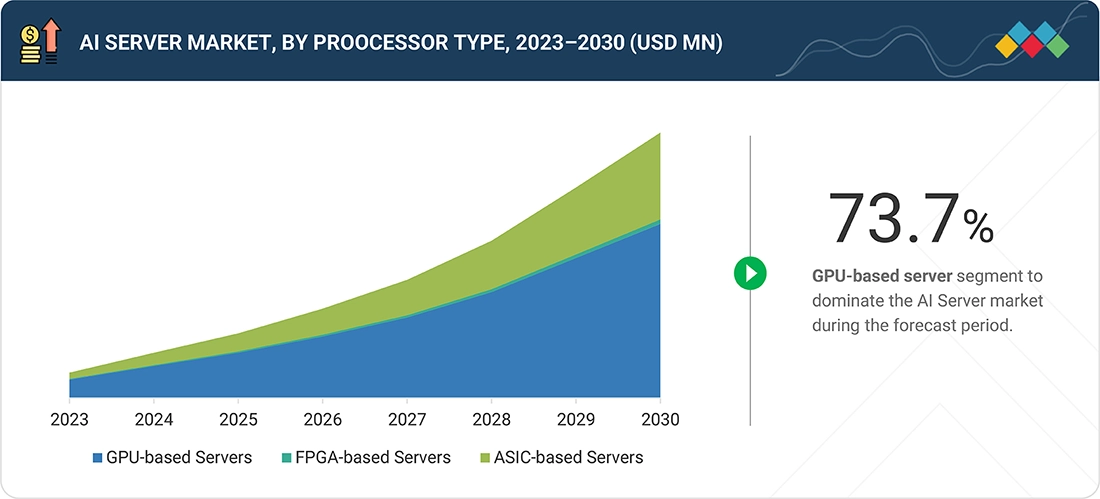
AI Server Market, By Processor Type
As of 2024, GPU-based servers held the largest share of the AI server market and will continue dominating through 2030 due to their superior parallel processing capabilities essential for training large AI and deep learning models. GPUs enable high computational throughput, making them the preferred choice for hyperscalers and AI-intensive enterprises. Growing adoption of generative AI, LLMs, and accelerated computing further strengthens the demand for GPU-driven infrastructure. Their scalability, strong ecosystem support, and rapid innovation cycles ensure continued leadership in next-generation AI workloads.
AI Server Market, By Function
Training accounted for the largest share of the AI server market in 2024, fueled by rapid growth in generative AI, foundation models, autonomous systems, and NLP applications. Training workloads require massive computational resources, high-performance GPUs, and optimized memory and networking architectures. Enterprises and cloud providers increasingly invest in specialized training clusters to accelerate model development cycles and improve accuracy. As AI models expand in size and complexity, the demand for scalable, high-throughput training servers will continue to rise, positioning training as the core driver of AI infrastructure spending.
AI Server Market, By Cooling Technology
In 2024, liquid cooling emerged as the fastest-growing technology in the AI server market, driven by rising power densities and thermal challenges associated with advanced GPUs and accelerators. Liquid-cooled systems offer superior heat dissipation, energy efficiency, and operational stability compared to traditional air-cooling. As generative AI, LLM training, and HPC workloads scale, enterprises and CSPs are increasingly adopting cold plates, immersion cooling, and direct-to-chip solutions. This transition is essential for reducing operational costs, improving performance, and supporting densely packed AI server clusters with minimal thermal bottlenecks.
AI Server Market, By Form Factor
Rack-Mounted Servers dominated the AI server market in 2024 and will maintain their lead due to their scalability, modularity, and suitability for high-density AI deployments. These servers support multi-GPU configurations, advanced liquid cooling, and high-bandwidth interconnects essential for AI and HPC workloads. Hyperscalers and large enterprises prefer rack-based architectures for efficient capacity expansion and optimized space utilization. Their compatibility with existing data-center infrastructure and ability to host powerful accelerators make them the backbone of modern AI computing environments.
AI Server Market, By End User
Cloud Service Providers (CSPs) represented the largest end-user segment of the AI server market in 2024, driven by explosive demand for generative AI, AI-as-a-service platforms, and scalable GPU/accelerator infrastructure. CSPs such as AWS, Microsoft, Google, and Alibaba continue to expand AI-optimized data centers to support training and inference workloads across industries. Their need for massive compute clusters, energy-efficient cooling, and flexible deployment models positions them as the primary investors in next-generation AI servers. CSP-led innovation will continue shaping global AI infrastructure growth through 2030.
REGION
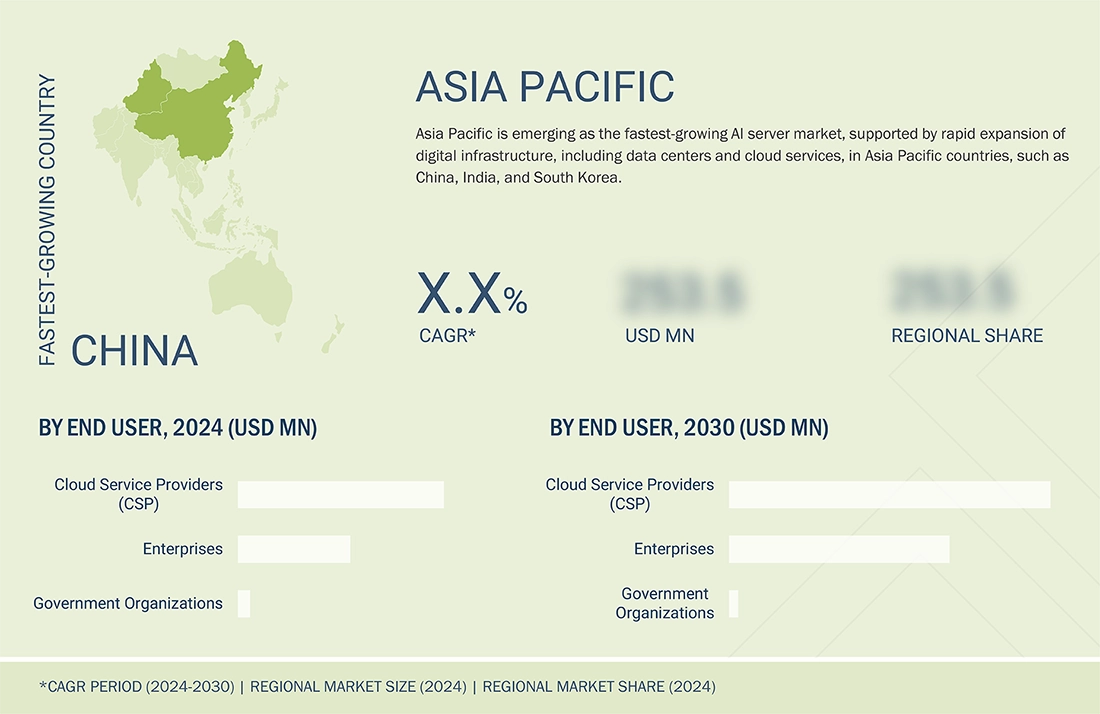
Asia Pacific to be fastest-growing region in global AI server market during forecast period
Asia Pacific is the fastest-growing region in the AI server market, driven by rapid digitalization, strong government support for AI adoption, and expanding data-center investments across China, Japan, South Korea, and India. Growing deployment of generative AI, cloud services, and edge computing is accelerating demand for GPU-, FPGA-, and ASIC-based AI servers. Major hyperscalers and telecom providers are scaling AI infrastructure to support autonomous systems, smart manufacturing, fintech, and healthcare applications. Rising AI-driven workloads and increasing local chip and server production further fuel the region’s strong growth trajectory.
AI SERVER MARKET SIZE, SHARE AND TRENDS 2025 TO 2030: COMPANY EVALUATION MATRIX
In the AI server market matrix, Dell (Star) leads with a strong market share and extensive product footprint, driven by its advanced composites and high-performance AI server widely adopted by CSPss. Fujitsu (Emerging Leader) is gaining visibility with its ability to delivering high-performance AI servers optimized for advanced GPU workloads, accelerating enterprise AI training and inference applications.
Source: Secondary Research, Interviews with Experts, MarketsandMarkets Analysis
KEY MARKET PLAYERS
- Dell Inc.
- HPE
- Lenovo
- Huawei Technologies Co., Ltd.
- IBM
- H3C
- Cisco Systems, Inc.
- Super Micro Computer, Inc.
- FUJITSU
- Inspur Co., Ltd.
- NVIDIA Corporation
- ADLINK Technology Inc.
- Advanced Micro Devices, Inc.
- Quanta Computers
- Wistron Corporation
MARKET SCOPE
| REPORT METRIC | DETAILS |
|---|---|
| Market Size in 2024 (Value) | USD 142.88 Billion |
| Market Forecast in 2030 (Value) | USD 837.83 Billion |
| Growth Rate | CAGR of 34.3% from 2024-2030 |
| Years Considered | 2020-2030 |
| Base Year | 2023 |
| Forecast Period | 2024-2030 |
| Units Considered | Value (USD Million/Billion), Volume (Thousand Units) |
| Report Coverage | Revenue forecast, company ranking, competitive landscape, growth factors, and trends |
| Segments Covered |
|
| Regions Covered | North America, Asia Pacific, Europe, RoW |
WHAT IS IN IT FOR YOU: AI SERVER MARKET SIZE, SHARE AND TRENDS 2025 TO 2030 REPORT CONTENT GUIDE
DELIVERED CUSTOMIZATIONS
We have successfully delivered the following deep-dive customizations:
| CLIENT REQUEST | CUSTOMIZATION DELIVERED | VALUE ADDS |
|---|---|---|
| Cloud Service Provider (CSP) |
|
|
| Enterprise (Healthcare, BFSI, Retail, Automotive) |
|
|
| Government Organizations |
|
|
| AI Server Manufacturers (Dell, HPE, Supermicro, Lenovo) |
|
|
| Component Suppliers (Cooling, PSU, PMIC, Chassis) |
|
|
RECENT DEVELOPMENTS
- October 2024 : Super Micro launched its H14 server series, featuring AMD EPYC 9005 CPUs and AMD Instinct MI325X GPUs, tailored for AI, cloud, and edge workloads. The new systems, including Hyper and FlexTwin, enhance performance with up to 192 cores per CPU, AVX-512 support, and efficient cooling options, achieving 2.44X faster processing than prior models, enabling AI-ready, power-efficient, and compact data center upgrades.
- Sep-24 : The HPE ProLiant DL145 Gen11 server, part of the Gen11 edge server portfolio, delivers high performance for diverse edge workloads. It supports applications such as inventory management, point of sale, and AI/ML workloads. The server is optimized for edge-specific solutions, with a growing ecosystem of ISV partners offering tailored solutions for retail, manufacturing, and others.
- August 2024 : Lenovo introduced three new high-performance AI servers: ThinkSystem SR680a V3, SR685a V3, and SR780a V3. These systems support eight GPUs, offering massive computational power for AI and high-performance computing (HPC) workloads. The servers feature Intel and AMD processors, air or hybrid cooling, and support for NVIDIA and AMD GPUs, enhancing performance for demanding AI, graphical, and simulation tasks.
Table of Contents
 Exclusive indicates content/data unique to MarketsandMarkets and not available with any competitors.
Methodology
The research process for this technical, market-oriented, and commercial study of the AI server market included the systematic gathering, recording, and analysis of data about companies operating in the market. It involved the extensive use of secondary sources, directories, and databases (Factiva, Oanda, and OneSource) to identify and collect relevant information. In-depth interviews were conducted with various primary respondents, including experts from core and related industries and preferred manufacturers, to obtain and verify critical qualitative and quantitative information as well as to assess the growth prospects of the market. Key players in the AI server market were identified through secondary research, and their market rankings were determined through primary and secondary research. This included studying annual reports of top players and interviewing key industry experts, such as CEOs, directors, and marketing executives.
Secondary Research
In the secondary research process, various secondary sources were used to identify and collect information for this study. These include annual reports, press releases, and investor presentations of companies, whitepapers, certified publications, and articles from recognized associations and government publishing sources. Research reports from a few consortiums and councils were also consulted to structure qualitative content. Secondary sources included corporate filings (such as annual reports, investor presentations, and financial statements); trade, business, and professional associations; white papers; Journals and certified publications; articles by recognized authors; gold-standard and silver-standard websites; directories; and databases. Data was also collected from secondary sources, such as the International Trade Centre (ITC) (Switzerland), and the International Monetary Fund (IMF).
List of key secondary sources
|
Source |
Web Link |
|
Generative AI Association (GENAIA) |
https://www.generativeaiassociation.org/ |
|
Association for Machine Learning and Application (AMLA) |
https://www.icmla-conference.org/ |
|
Association for the Advancement of Artificial Intelligence |
https://aaai.org/ |
|
European Association for Artificial Intelligence |
https://eurai.org/ |
|
International Monetary Fund |
https://www.imf.org/en/home |
|
Institute of Electrical and Electronics Engineers (IEEE) |
https://ieeexplore.ieee.org/ |
Primary Research
Extensive primary research was accomplished after understanding and analyzing the AI server market scenario through secondary research. Several primary interviews were conducted with key opinion leaders from both demand- and supply-side vendors across four major regions—North America, Europe, Asia Pacific, and RoW. Approximately 30% of the primary interviews were conducted with the demand side, and 70% with the supply side. Primary data was collected through questionnaires, emails, and telephonic interviews. Various departments within organizations, such as sales, operations, and administration, were contacted to provide a holistic viewpoint in the report.
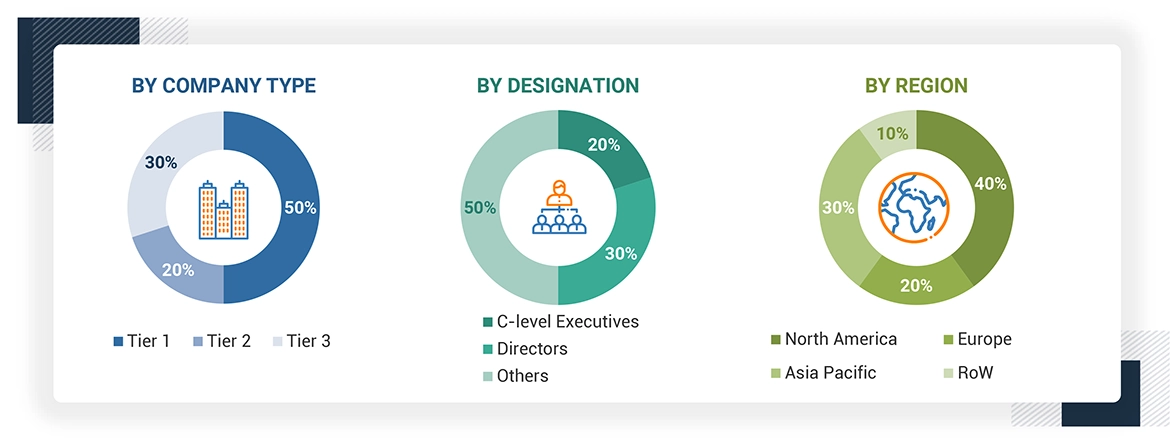
Note: Other designations include technology heads, media analysts, sales managers, marketing managers, and product managers.
The three tiers of the companies are based on their total revenues as of 2023 ? Tier 1: >USD 1 billion, Tier 2: USD 500 million–1 billion, and Tier 3: USD 500 million.
To know about the assumptions considered for the study, download the pdf brochure
Market Size Estimation
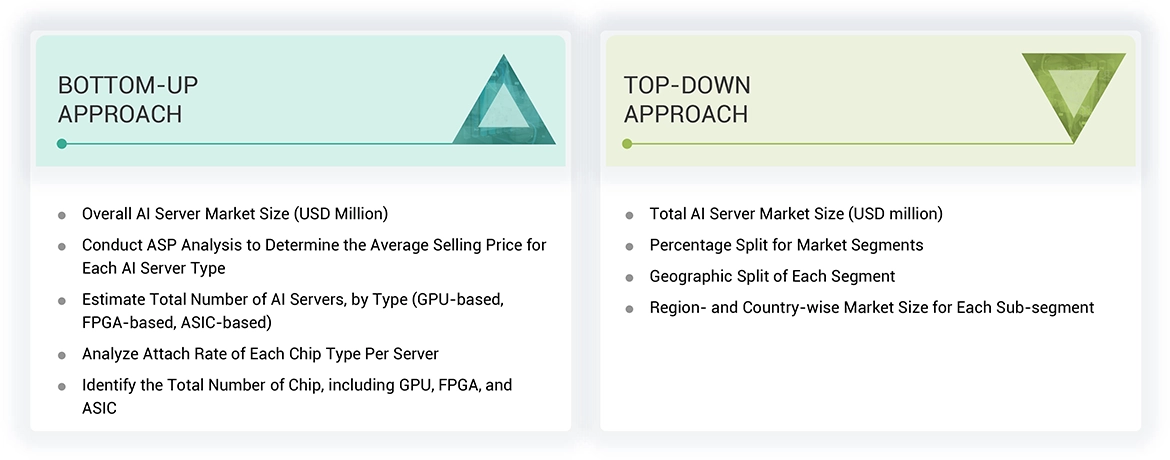
In the complete market engineering process, both top-down and bottom-up approaches were used, along with several data triangulation methods, to estimate and forecast the size of the market and its segments and subsegments listed in the report. Extensive qualitative and quantitative analyses were carried out on the complete market engineering process to list the key information/insights pertaining to AI server market.
The key players in the market were identified through secondary research, and their rankings in the respective regions determined through primary and secondary research. This entire procedure involved the study of the annual and financial reports of top players, and interviews with industry experts such as chief executive officers, vice presidents, directors, and marketing executives for quantitative and qualitative key insights. All percentage shares, splits, and breakdowns were determined using secondary sources and verified through primary sources. All parameters that affect the markets covered in this research study were accounted for, viewed in extensive detail, verified through primary research, and analyzed to obtain the final quantitative and qualitative data. This data was consolidated, supplemented with detailed inputs and analysis from MarketsandMarkets, and presented in this report.
Bottom-Up Approach
- Initially, the companies offering AI servers were identified. Their products were mapped based on processor/AI chip type including GPU, FPGA, and ASIC
- After identifying AI servers, the market is segmented based on the processor type used in AI servers i.e., GPU-based, FPGA-based, and ASIC-based AI Servers
- Assigned an attach rate for each processor type based on server configurations
- Estimating the total number of AI servers by type (GPU-based, FPGA-based, ASIC-based)
- Determining the Average Selling Price (ASP) for each AI server type by analyzing the pricing based on configurations, including number of processors and additional components like memory, storage, and cooling systems
- ASP data is collected from secondary sources such as vendor price lists, market reports, and validated through primary interviews.
- Estimating the AI server market revenue by type (GPU-based, FPGA-based, ASIC-based)
- Carrying out multiple discussions with key opinion leaders to understand the type of AI server products designed and developed vertically, helping analyze the breakdown of the scope of work carried out by each major company in the AI server market
- Arriving at the market estimates by analyzing AI server companies as per their countries and subsequently combining this information to arrive at the market estimates by region
- Verifying and cross-checking the estimates at every level through discussions with key opinion leaders, including CXOs, directors, and operations managers, and finally with domain experts at MarketsandMarkets
- Studying various paid and unpaid sources of information, such as annual reports, press releases, white papers, and databases
Top-Down Approach
- Focusing on top-line investments and expenditures being made in the ecosystems of various end user industry
- Building and developing the information related to the market revenue generated by key AI server manufacturers
- Conducting multiple on-field discussions with the key opinion leaders involved in the development of AI server products in various end user industries
- Estimating geographic splits using secondary sources based on various factors, such as the number of players in a specific country and region, the processor type, and the level of solutions offered in end user industries
AI Server Market : Top-Down and Bottom-Up Approach
Data Triangulation
After arriving at the overall market size from the market size estimation process explained above, the total market was split into several segments and sub-segments. Where applicable, data triangulation and market breakdown procedures were employed to complete the overall market engineering process and arrive at the exact statistics for all segments and sub-segments. The data was triangulated by studying various factors and trends from the demand and supply sides. The market size was also validated using top-down and bottom-up approaches.
Market Definition
AI servers are high-performance computing systems specifically designed to handle the intensive workloads required by artificial intelligence applications. These servers are equipped with powerful processors such as GPUs (Graphics Processing Units), FPGAs (Field Programmable Gate Arrays), and ASICs (Application-Specific Integrated Circuits), which accelerate complex computations involved in AI tasks like machine learning, deep learning, and data analytics. AI servers optimize parallel processing, large-scale data handling, and real-time analytics, making them essential for training and running AI models in fields like natural language processing, computer vision, and autonomous systems.
Key Stakeholders
- Government and financial institutions and investment communities
- Analysts and strategic business planners
- Semiconductor product designers and fabricators
- Application providers
- AI solution providers
- AI platform providers
- Business providers
- Professional service/solution providers
- Research organizations
- Technology standard organizations, forums, alliances, and associations
- Technology investors
Report Objectives
- To define, describe, segment, and forecast the AI server market size, by processor type, function, cooling technology, form factor, deployment, application, and end user, in terms of value
- To forecast the market based on processor type and function, in terms of volume
- To forecast the market size of four key regions, namely, North America, Europe, Asia Pacific, and the Rest of the World, in terms of value
- To present detailed information regarding the major factors influencing the growth of the market (drivers, restraints, opportunities, and challenges)
- To provide an ecosystem analysis, investment and funding analysis, case study analysis, patent analysis, technology analysis, key conferences and events, ASP analysis, Porter’s Five Forces analysis, key stakeholders and buying criteria, and regulations pertaining to the market
- To offer a comprehensive overview of the value chain of the AI server market ecosystem
- To critically analyze micromarkets1 with respect to individual growth trends, prospects, and contributions to the total market
- To strategically profile the key players and comprehensively analyze their market shares and core competencies2
- To assess the opportunities in the market for stakeholders and describe the competitive landscape of the market
- To analyze competitive developments in the market, such as collaborations, partnerships, product developments, and research and development (R&D)
- To analyze the impacts of macroeconomic factors, such as inflation rates, GDP growth, employment trends, and economic policies, on the market
Available Customizations
With the given market data, MarketsandMarkets offers customizations according to the company’s specific needs. The following customization options are available for the report:
Company Information
- Detailed analysis and profiling of additional market players (up to 7)
Key Questions Addressed by the Report
What are the major driving factors and opportunities for the AI server market?
The major driving factors for the AI server market include an increase in data traffic, the need for high computing power, and the increasing adoption of machine learning and deep learning algorithms. The growth of the healthcare sector and increasing investments in data centers by cloud service providers are key opportunities in the market.
Which region is expected to hold the largest market share?
North America holds the largest share of the AI server market. Rising government investments and the presence of major market players in the region are driving the demand for AI servers in North America.
Who are the leading players in the global AI server market?
Leading players operating in the AI server market are Dell Inc. (US), Hewlett Packard Enterprise Development LP (US), Lenovo (Hong Kong), Huawei Technologies Co., Ltd. (China), and IBM (US).
What are some of the technological advancements in the market?
High-performance Computing (HPC), High Bandwidth Memory (HBM), and Quantum AI are major technological advancements. Edge computing is another advancement that is expected to drive the market growth.
What is the size of the global AI server market?
The global AI server market is estimated to be valued at USD 142.88 billion in 2024 and is projected to reach USD 837.83 billion by 2030, at a CAGR of 34.3% from 2024 to 2030.


Personalize This Research
- Triangulate with your Own Data
- Get Data as per your Format and Definition
- Gain a Deeper Dive on a Specific Application, Geography, Customer or Competitor
- Any level of Personalization
Let Us Help You
- What are the Known and Unknown Adjacencies Impacting the AI Server Market
- What will your New Revenue Sources be?
- Who will be your Top Customer; what will make them switch?
- Defend your Market Share or Win Competitors
- Get a Scorecard for Target Partners

Custom Market Research Services
We Will Customise The Research For You, In Case The Report Listed Above Does Not Meet With Your Requirements
Get 10% Free CustomisationTESTIMONIALS

Tetsuya Ohhira
Business Development Manager-Technology Business
Nikon Corporation,
Leading Japanese MNC specializing in optics and imaging productswww.nikon.com
MarketsandMarkets™ response
is quick. Their attitude is flexible and positive. Analyst Insights are globally considered and
significant. Client Services quickly respond to our inquiry and demand. Their wide range of global
surveys help us make our strategic plan.
We hope Knowledge Store will be easier to search
for a report.
VP - Marketing & Business Development
Leading Provider of Process Control Solutions
We engaged with MarketsandMarkets on a study to perform an analysis and recommend a Go-To-Market strategy for metrology and process control in the semiconductor market. The study was tailored to our targets and needs with well-defined milestones. Our overall experience with the MarketsandMarkets team was very good throughout the project in all aspects including the analysis methodologies used, the quality and depth of primary and secondary data sets, the professionalism and flexibility of the team and the ability to meet the target schedule and milestones. We want to thank MarketsandMarkets team for a job well done.
- Canada AI Server Market
- Mexico AI Server Market
- US AI Server Market
- UK AI Server Market
- Germany AI Server Market
- France AI Server Market
- Italy AI Server Market
- Spain AI Server Market
- China AI Server Market
- Japan AI Server Market
- South Korea AI Server Market
- India AI Server Market
- Rest Of Europe AI Server Market
- Rest Of Asia Pacific AI Server Market






Growth opportunities and latent adjacency in AI Server Market