Air-Insulated Switchgear Market

Air-Insulated Switchgear Market by Installation (Indoor, Outdoor), Voltage (Low, Medium, High), Application (Transmission & Distribution, Industrial, Commercial & Residential, Transportation) and Region - Global Forecast to 2031




OVERVIEW
Source: Secondary Research, Interviews with Experts, MarketsandMarkets Analysis
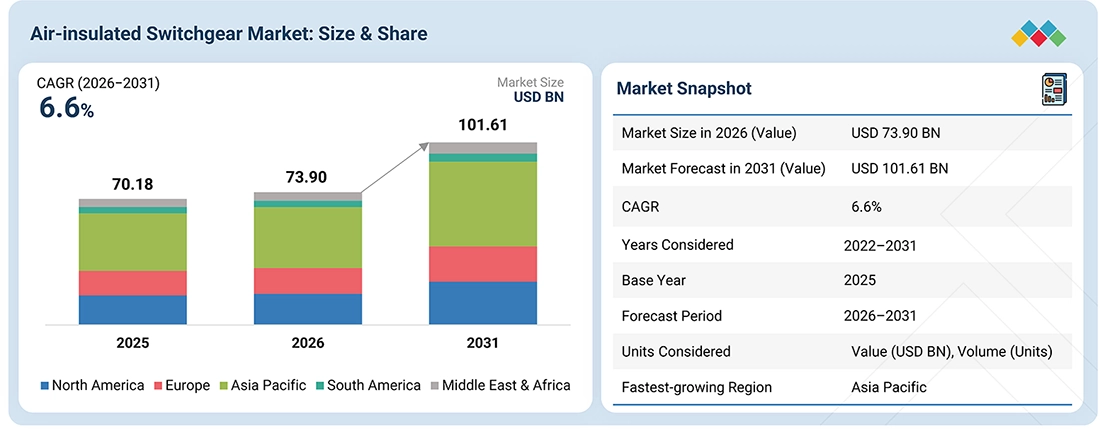
The air-insulated switchgear market is valued at USD 70.18 billion in 2025, estimated to be USD 73.90 billion in 2026, and is projected to reach USD 101.61 billion by 2031, growing at a CAGR of 6.6% during the forecast period of 2026-2031. This steady climb is underpinned by a convergence of structural forces reshaping how power infrastructure is built and financed worldwide. Utilities across mature and emerging economies alike are locked into a generational replacement cycle, retiring switchgear fleets installed decades ago even as they simultaneously expand capacity to absorb rising electricity demand from industrial electrification, data center growth, and transport electrification. This dual mandate, replace the old while building for the new, is amplified by the pace of renewable energy integration, where every gigawatt of solar and wind capacity coming online requires a corresponding substation to evacuate that power onto the grid, and AIS remains the default choice wherever land isn't the binding constraint given its lower installed cost relative to gas-insulated alternatives. Government-backed grid modernization programs, from state-led transmission expansion in Asia to distribution reinforcement schemes in emerging markets, are compounding this momentum by directing sustained public capital toward the medium- and high-voltage infrastructure at the core of AIS demand.
KEY TAKEAWAYS
-
BY REGIONThe Asia Pacific will be the fastest-growing region in the air-insulated switchgear market, registering a CAGR of 6.9% during 2026-2031.
-
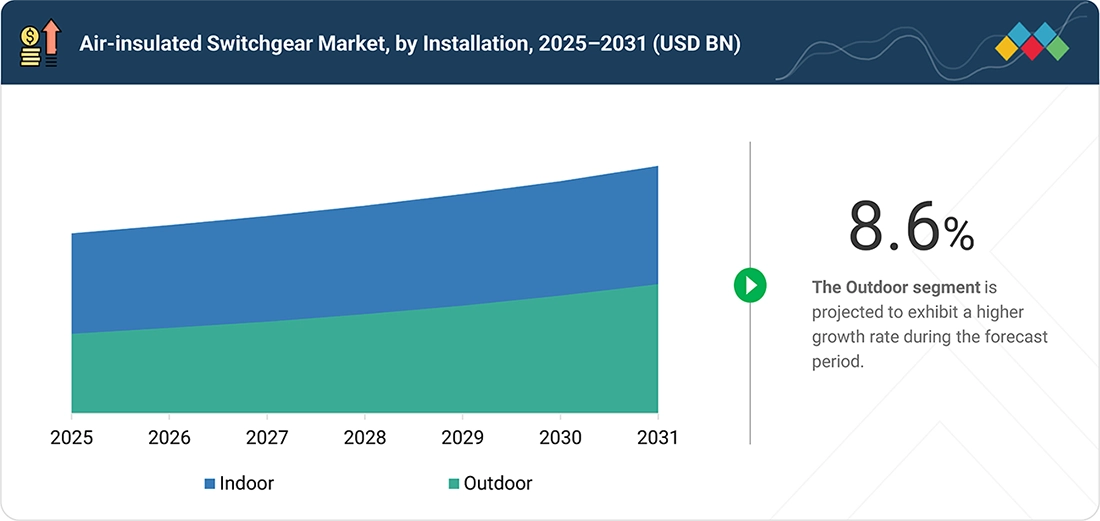
BY INSTALLATIONOutdoor installations are likely to record a higher CAGR of 8.6% during the forecast period.
-
BY VOLTAGEHigh (above 36 kV) segment in the air-insulated switchgear market held largest market share in 2025.
-
BY APPLICATIONBased on application, transmission & distribution dominated the market, capturing largest market share in 2025.
-
COMPETITIVE LANDSCAPEKey players in the switchgear market are ABB (Switzerland), Eaton (Ireland), Schneider Electric (France), Hitachi Energy Ltd (Switzerland), and Siemens Energy (Germany), which have employed various strategies to increase their shares in the air-insulated switchgear market.
-
COMPETITIVE LANDSCAPEThe strong product ecosystem and market penetration of JST Power Equipment (US) and Zhejiang Usune Electric Co., Ltd. (China) have made them influential startups/SMEs/ leaders in the market.
The market itself is quietly being redefined by a set of technological and regulatory shifts that are changing what AIS actually is. The phased restriction of SF6 gas across Europe and North America is pushing manufacturers to reengineer switchgear around vacuum interrupters and clean-air insulation, turning what was once a legacy technology into the compliant, forward-looking choice at select voltage classes. Parallel to this, digitalization is moving from pilot projects to standard specification, with condition monitoring sensors, partial discharge detection, and IoT-enabled asset management increasingly bundled into new installations and retrofitted onto aging fleets, transforming switchgear from passive infrastructure into a data-generating grid asset. Compact and modular AIS designs are also gaining traction as utilities look to bring the technology's cost advantage into space-constrained urban and industrial settings that have traditionally favored gas-insulated alternatives, while the broader supply base is diversifying as regional manufacturers in Asia and the Middle East scale up to meet localization mandates tied to national infrastructure programs.
TRENDS & DISRUPTIONS IMPACTING CUSTOMERS' CUSTOMERS
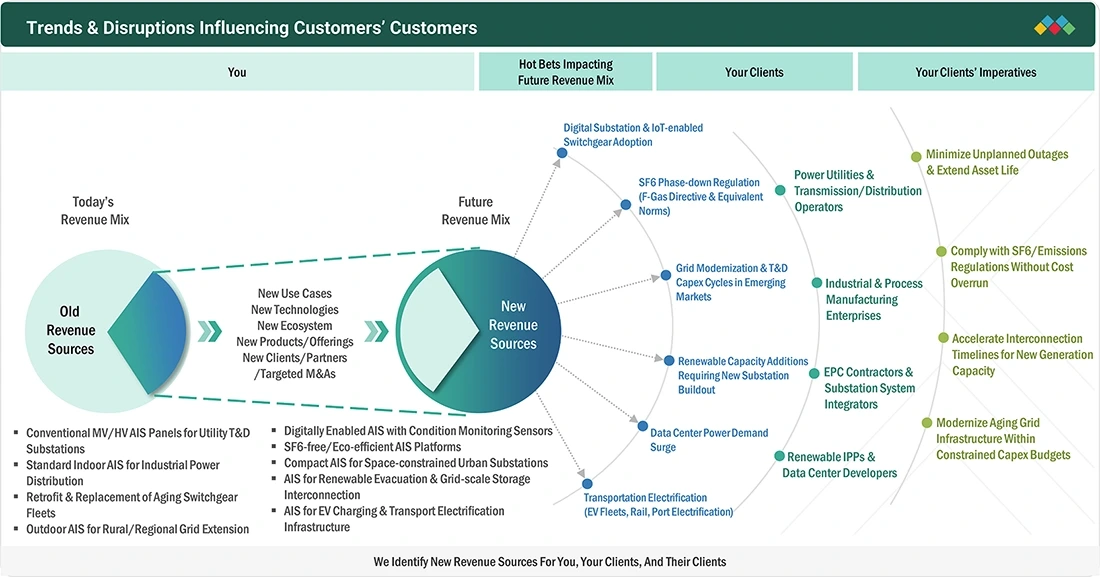
Customer economics in the air-insulated switchgear space are shifting due to multiple forces operating on different time horizons but affecting the same buyers. Regulatory pressure, especially phased SF6 restrictions under the EU's F-Gas Regulation and similar frameworks elsewhere, is the most immediate factor, prompting utilities and industrial buyers to requalify switchgear with vacuum interrupters and clean-air insulation, turning compliance into a capital planning issue. Alongside this is a capacity challenge: grids in mature and emerging economies are managing load growth from industrial electrification, urbanization, renewable generation, and data centers, often faster than planned. Transportation demands, such as EV charging, rail electrification, and port shore-power, add new switchgear needs. As a result, buyers now consider outage risk, emissions, interconnection speed, and capex, favoring digitally monitored, SF6-free, space-efficient AIS platforms. This broadens the buyer base to EPC contractors, renewable developers, and data center operators, beyond traditional utilities.
Source: Secondary Research, Interviews with Experts, MarketsandMarkets Analysis
MARKET DYNAMICS

Level
-
Rapid expansion of renewable energy capacity

-
Accelerating grid modernization and T&D infrastructure investment


Level
-
Volatility in prices of copper, aluminum, steel, and electrical-grade insulating materials


Level
-
Replacement and refurbishment of aging switchgear and substation infrastructure

-
Expansion of electrified railways, metro systems, ports, and transportation infrastructure


Level
-
Competition from gas-insulated switchgear in high-density urban and high-voltage applications

-
Supply-chain constraints for critical electrical components and raw materials

Source: Secondary Research, Interviews with Experts, MarketsandMarkets Analysis
Rapid Expansion of Renewable Energy Capacity
The worldwide scale-up of solar and wind capacity is becoming one of the strongest drivers of new demand for air-insulated switchgear. Every new renewable project, whether a solar park or a wind farm, needs a substation to connect its power safely to the grid, and AIS is often the natural fit because it costs less to install and is easier to maintain than gas-insulated alternatives, especially where land isn't tightly constrained. As governments and private developers continue to add renewable capacity at a record pace to meet clean energy targets, this is translating into a steady, multi-year pipeline of new substation projects, giving AIS manufacturers a reliable, expanding demand base well into the next decade.
Volatility in Prices of Copper, Aluminum, Steel, and Electrical-Grade Insulating Materials
The profitability of AIS manufacturing is closely tied to the cost of the raw materials that go into it, and these costs have become increasingly unpredictable in recent years. Copper and aluminum in particular are essential to switchgear components like busbars and windings, and their prices can swing sharply due to global supply constraints, geopolitical disruptions, or shifts in industrial demand. Because many switchgear contracts with utilities are agreed at fixed prices well in advance of delivery, manufacturers often have little room to pass on sudden cost increases, which puts direct pressure on margins and makes long-term project planning more difficult.
Replacement and Refurbishment of Aging Switchgear and Substation Infrastructure
A significant share of the switchgear installed across utility and industrial networks decades ago is now nearing the end of its working life, creating a substantial opportunity for manufacturers beyond simply selling new equipment. Rather than replacing entire substations, many utilities are choosing to refurbish existing AIS installations with upgraded components, modern circuit breakers, or added monitoring capabilities, extending asset life while deferring larger capital outlays. This shift is opening up a steady stream of service and retrofit revenue that runs alongside new installations, giving manufacturers a second, more resilient growth channel tied to the sheer size of the equipment already in the ground.
Competition from Gas-Insulated Switchgear in High-Density Urban and High-Voltage Applications
As cities grow denser and land becomes more expensive, gas-insulated switchgear is increasingly winning out over AIS in exactly the projects where space is most limited. GIS occupies a fraction of the footprint that AIS requires for the same voltage rating, making it the practical choice for substations in crowded metropolitan areas or at higher voltage levels where safety clearances become harder to manage with air insulation alone. This isn't simply a matter of preference; in many of these settings, the physical space constraints leave AIS unable to compete at all, meaning manufacturers focused on AIS need to be clear-eyed about which project types they can realistically win as urbanization continues to reshape where new substations get built.
AIR-INSULATED SWITCHGEAR MARKET: COMMERCIAL USE CASES ACROSS INDUSTRIES
| COMPANY | USE CASE DESCRIPTION | BENEFITS |
|---|---|---|
 |
NCC was awarded a contract by Energinet to construct a 400 kV air-insulated switchgear (AIS) substation at Ringsbjerg in Zealand, Denmark, along with an expansion of the existing Bjäverskov substation. The project includes new 400 kV cable connections and is scheduled for completion in 2029. | Expands high-voltage transmission capacity in Zealand | Supports the integration and transmission of increasing renewable electricity generation | Strengthens the regional electricity grid to meet rising electrification requirements | Provides infrastructure that can be expanded to accommodate future power demand |
 |
Bajel Projects was awarded an EPC contract by Maharashtra State Electricity Transmission Company Limited (MSETCL) to develop a 400/220 kV AIS substation at Saswad, Maharashtra, India. The greenfield substation will include two 500 MVA transformers, a 125 MVAr bus reactor, and associated 400 kV and 220 kV transmission infrastructure. The project is scheduled for execution within 23 months. | Increases power transmission and evacuation capacity in the Pune region | Strengthens Maharashtra's high-voltage transmission infrastructure | Improves grid connectivity and reliability | Supports increasing electricity demand from industrial and urban development | Provides capacity for future expansion of the transmission network |
 |
Linxon was selected by Svenska kraftnät to develop a 10-bay, 400 kV AIS substation at Degerträsk, Sweden. The project forms part of Sweden's Fossil-Free Upper Norrland initiative and will provide grid infrastructure for H2 Green Steel's planned green steel facility near Boden. The substation is designed to support the large electricity requirements of the energy-intensive steel production facility. | Enables grid connection for large-scale green steel production | Supports industrial electrification and the transition toward fossil-free manufacturing | Provides high-voltage infrastructure for electricity-intensive industrial loads | Strengthens the transmission network in northern Sweden | Supports the development of Sweden's low-carbon industrial ecosystem |
Logos and trademarks shown above are the property of their respective owners. Their use here is for informational and illustrative purposes only.
MARKET ECOSYSTEM
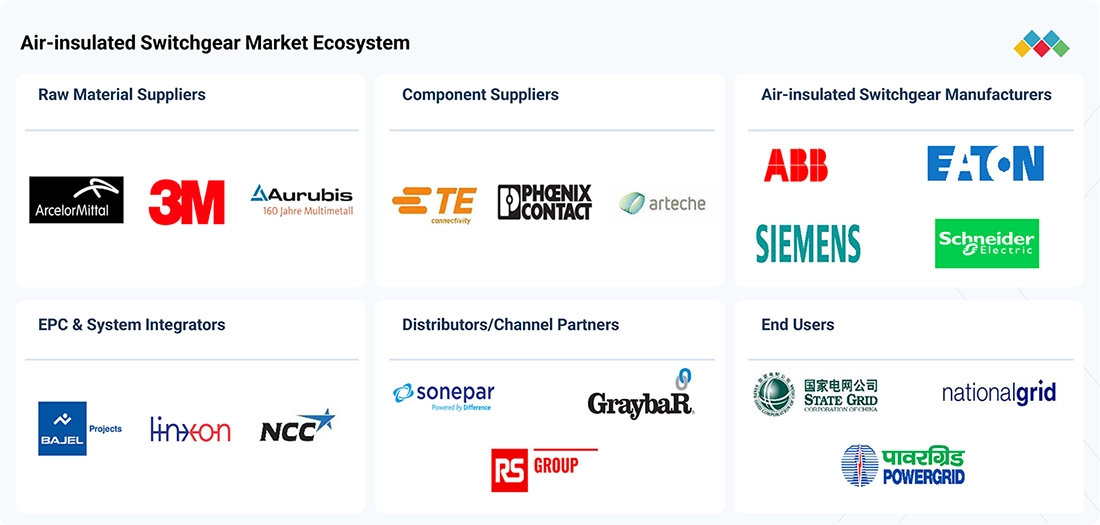
The air-insulated switchgear value chain runs from raw material extraction through to the utilities and grid operators who ultimately energize the equipment. At the base sit raw material suppliers such as 3M (US) and Aurubis (Germany), who provide the metals, alloys, and specialty materials that go into switchgear components. These feed into component suppliers like TE Connectivity (Switzerland) and Phoenix Contact (Germany), which manufacture the connectors, relays, and control components integrated into finished panels. A concentrated group of global manufacturers produces the switchgear itself, led by names such as ABB (Switzerland) and Siemens (Germany), who compete on technology depth, digital capability, and global service reach. From there, EPC and system integrators including Larsen & Toubro (India) and Linxon (Switzerland) handle the engineering, procurement, and construction work that brings switchgear into live substation projects, while distributors and channel partners such as Rexel (France) and WESCO (US) manage the logistics of getting equipment into the hands of smaller buyers and regional contractors. At the end of this chain sit the end users, power utilities and grid operators like State Grid Corporation of China (China) and National Grid (UK), whose capital investment programs ultimately determine the pace and direction of demand across every tier of this ecosystem.
Logos and trademarks shown above are the property of their respective owners. Their use here is for informational and illustrative purposes only.
MARKET SEGMENTS
Source: Secondary Research, Interviews with Experts, MarketsandMarkets Analysis
Switchgear market, By Installation
The indoor installation segment holds the largest share of the air-insulated switchgear market in 2025, reflecting a clear preference among utilities and industrial buyers for equipment that operates within a controlled environment. Housing switchgear indoors shields it from pollution, humidity, coastal salinity, and temperature extremes, all of which can accelerate insulation wear and drive up maintenance costs when equipment is left exposed outdoors. This is particularly valuable in urban substations, industrial facilities, and commercial buildings, where indoor AIS installations also benefit from tighter security, easier access for maintenance crews, and better integration with building infrastructure. As utilities continue to prioritize asset longevity and lower lifecycle costs, indoor AIS has become the default choice across a wide range of applications where space allows, cementing its lead over outdoor installations in the current market.
Switchgear market, By Voltage
The high-voltage segment, covering ratings above 36 kV, holds the largest share of the air-insulated switchgear market in 2025, driven by its central role in transmission-level infrastructure and large-scale power evacuation. High-voltage AIS is the backbone of bulk power transfer, connecting generation sources, including new renewable energy capacity, into the wider grid, and supporting the substations that move electricity across long distances before it reaches distribution networks. The sheer scale of transmission infrastructure investment worldwide, from grid reinforcement programs in mature economies to new network build-out in emerging markets, naturally channels more capital toward high-voltage equipment than toward medium- and low-voltage alternatives. This segment's dominance also reflects the higher unit value of high-voltage switchgear itself, where even a modest number of installations can represent a substantial share of overall market revenue.
Switchgear market, By Application
Transmission & distribution holds the largest share of the air-insulated switchgear market in 2025, underscoring the fact that utilities remain the single largest buyer group for this equipment. T&D networks depend on AIS at nearly every stage, from substations that step voltage up for long-distance transmission to distribution points that bring power into homes, businesses, and industrial facilities, making this application the natural core of overall market demand. This dominance is reinforced by the scale of ongoing grid modernization and expansion programs worldwide, where aging infrastructure replacement and new capacity additions are both funneled through utility-led T&D investment. With renewable energy integration and rising electricity demand adding further pressure on grid infrastructure, T&D is likely to remain the anchor application for AIS demand, even as other segments such as industrial and transportation applications continue to grow.
REGION
Asia Pacific to dominate air-insulated switchgear market during forecast period with highest CAGR
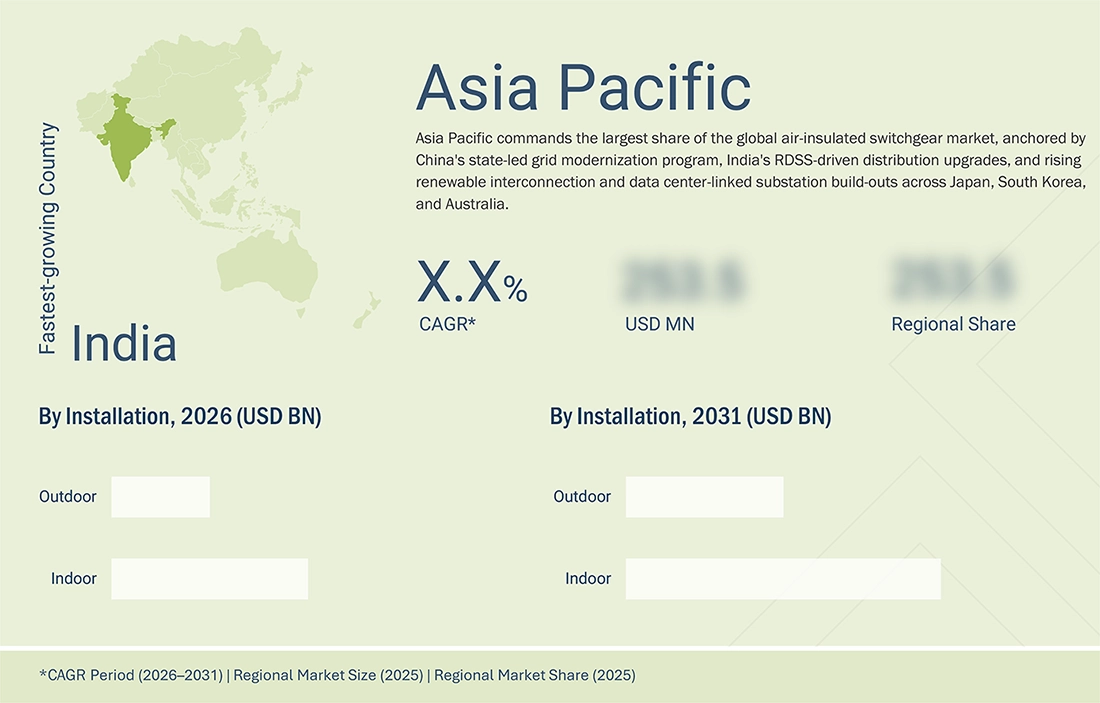
Asia Pacific’s air-insulated switchgear (AIS) market is valued at USD 32.08 billion in 2025, estimated at USD 33.86 billion, and projected to reach USD 47.16 billion by 2031, growing at a 6.9% CAGR from 2026 to 2031. Its market leadership reflects major grid investments in China and India, where transmission expansion and distribution modernization are funding new and replacement substations. China is deploying medium-voltage AIS bays for rooftop solar integration and urban grid upgrades; India's distribution reforms are spurring substation construction to cut technical losses and extend reliable electricity access. Japan, South Korea, and Australia add demand through data center growth and offshore wind projects requiring grid connections. Urbanization and industrial electrification are also raising electricity demand and the need for supporting transmission and distribution infrastructure. These factors make Asia Pacific both the largest regional market and the fastest-growing through 2031, with grid investment expected to remain strong.
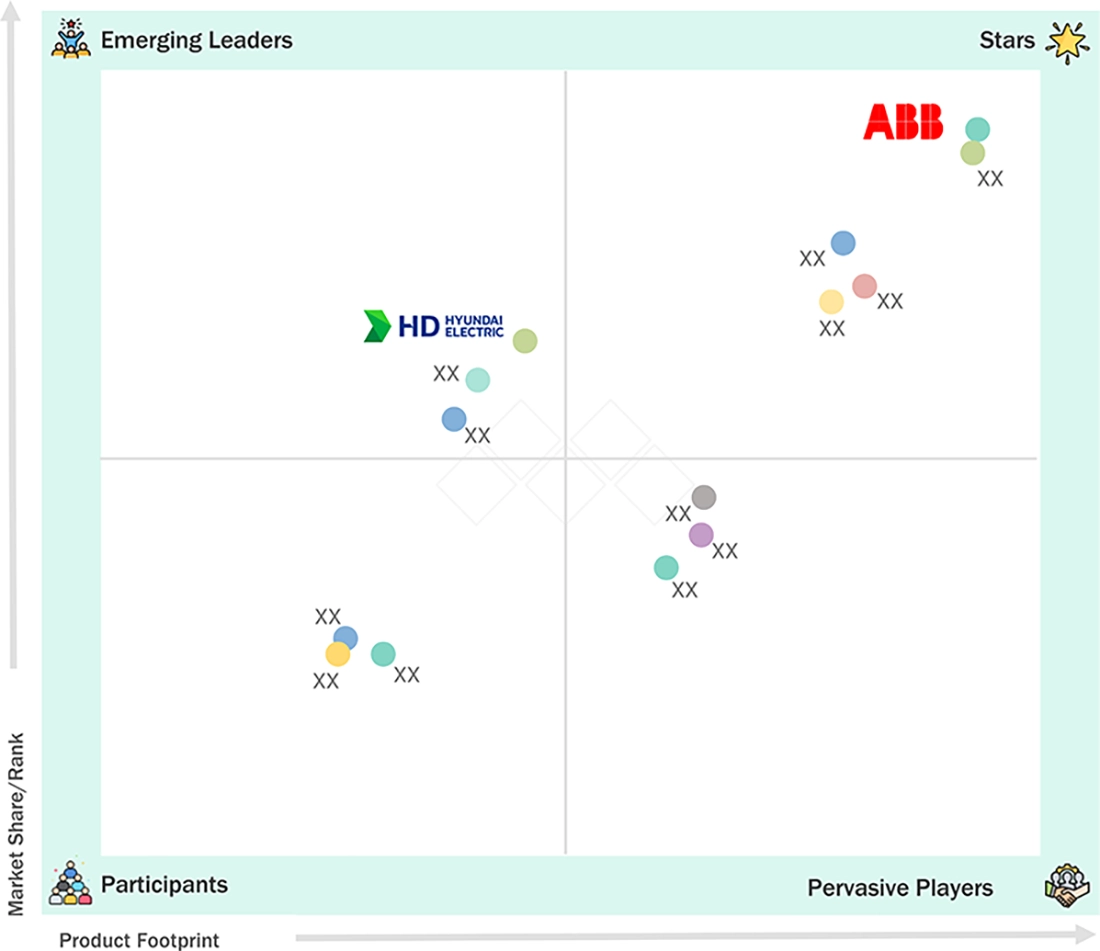
AIR-INSULATED SWITCHGEAR MARKET: COMPANY EVALUATION MATRIX
ABB (Switzerland) stands out as the star player in the air-insulated switchgear market, backed by its deep technology portfolio, global manufacturing footprint, and long-standing relationships with utilities across every major region. HD Hyundai Electric (South Korea) is emerging as a notable challenger, gaining ground through competitive pricing and expanding export activity, particularly as Asian and Middle Eastern buyers diversify their supplier base beyond traditional Western and Japanese manufacturers.
Source: Secondary Research, Interviews with Experts, MarketsandMarkets Analysis
KEY MARKET PLAYERS
- ABB (Switzerland)
- Schneider Electric (France)
- Eaton (Ireland)
- Siemens (Germany)
- GE Vernova (US)
- Mitsubishi Electric Corporation (Japan)
- TOSHIBA CORPORATION (Japan)
- Siemens Energy (Germany)
- Hitachi Energy Ltd. (Switzerland)
- WEG (Brazil)
- CHINT Group (China)
- CG Power and Industrial Solutions Limted (India)
- HD Hyundai Electric Co., Ltd (South Korea)
- HYUSONG HEAVY INDUSTRIES (South Korea)
- Fuji Electric Co., Ltd (Japan)
- LS ELECTRIC Co., Ltd (South Korea)
- Armtek Elektrik (Turkey)
- Hubbell (US)
- Orecco (China)
- MEIDENSHA CORPORATION (Japan)
- TGOOD Global Ltd (China)
- S&C Electric Company (US)
- G&W Electric (US)
- Sieyuan Electric Co., Ltd (China)
- SGC SwitchGear Company (Belgium)
MARKET SCOPE
| REPORT METRIC | DETAILS |
|---|---|
| Market Size in 2025 (Value) | USD 70.18 Billion |
| Market Size in 2026 (Value) | USD 73.90 Billion |
| Market Forecast in 2031 (Value) | USD 101.61 Billion |
| Growth Rate | 6.6% |
| Years Considered | 2022–2031 |
| Base Year | 2025 |
| Forecast Period | 2026–2031 |
| Units Considered | Value (USD Billion), Volume (Units) |
| Report Coverage | Revenue forecast, company ranking, competitive landscape, growth factors, and trends |
| Segments Covered |
|
| Regions Covered | North America, Europe, Asia Pacific, Middle East & Africa, South America |
WHAT IS IN IT FOR YOU: AIR-INSULATED SWITCHGEAR MARKET REPORT CONTENT GUIDE
DELIVERED CUSTOMIZATIONS
We have successfully delivered the following deep-dive customizations:
| CLIENT REQUEST | CUSTOMIZATION DELIVERED | VALUE ADDS |
|---|---|---|
| Air-insulated switchgear Market scope with profiling of key players | Profiled 25 air-insulated switchgear market players | Provides a comprehensive competitive landscape and benchmarking of key market participants |
RECENT DEVELOPMENTS
- August 2026 : Siemens invested USD 200 million in U.S. manufacturing to expand electrical infrastructure production and create more than 1,500 jobs. The program includes a new USD 185 million facility in Pendergrass, Georgia, for low-voltage electrical products and a USD 19 million facility in Grand Prairie, Texas, that will expand the capacity of Siemens' nearby switchgear factory.
- May 2026 : ABB invested USD 100 million in a new manufacturing facility in Dalmine, Italy, to expand production of air-insulated and environmentally friendly SF6-free medium-voltage switchgear and circuit breakers. The investment will strengthen grid modernization efforts, support renewable energy integration, and meet rising electricity demand across Europe
- April 2026 : Eaton invested USD 30 million to expand U.S. production of medium-voltage switchgear through a new 370,000-square-foot manufacturing facility in Bellevue, Nebraska, near Omaha. Expected to begin production in 2027, the facility will manufacture air-insulated and gas-insulated switchgear for data centers, utilities, and industrial customers, helping address rising power infrastructure demand driven by AI and digitalization
Table of Contents
 Exclusive indicates content/data unique to MarketsandMarkets and not available with any competitors.
Methodology
The research process for this technical, market-oriented, and commercial study of the air-insulated switchgear market involved systematically gathering, recording, and analyzing data on companies operating in the market. It involved the extensive use of secondary sources, directories, and databases (Factiva, OANDA) to identify and collect relevant information. In-depth interviews were conducted with various primary respondents, including experts from core and related industries and preferred manufacturers, to obtain and verify critical qualitative and quantitative information, as well as to assess the growth prospects of the market. Key players in the air-insulated switchgear market were identified through secondary research, and their market rankings were determined through primary and secondary research. This included studying annual reports of top players and interviewing key industry experts, such as CEOs, directors, and marketing executives.
Secondary Research
In the secondary research process, various secondary sources were referred to for identifying and collecting information relevant to this study. Secondary sources include annual reports, press releases, and investor presentations of companies; white papers, certified publications, and articles from recognized authors; directories; and databases. Secondary research mainly focused on gathering key information about industry supply, the total pool of key players, and market segmentation by industry trends, geographic markets, and key developments from market- and technology-oriented perspectives.
Primary Research
During the primary research phase, various key sources from the demand side and supply side have been interviewed to gather qualitative and quantitative data for this report. Throughout the market engineering process, a combination of top-down and bottom-up approaches, along with multiple data triangulation methods, has been used to estimate market sizes and forecast all segments and subsegments outlined in this report. Extensive qualitative and quantitative analyses have been undertaken to ensure the integrity of the market engineering process, providing key insights throughout the report. Following completion of the market engineering process, which involved calculations of market statistics, breakdowns, size estimates, forecasts, and data triangulation, thorough primary research has been conducted to gather, verify, and validate critical data points. Primary research has also been conducted to identify market segments, industry trends, and the competitive landscape in the air-insulated switchgear market.
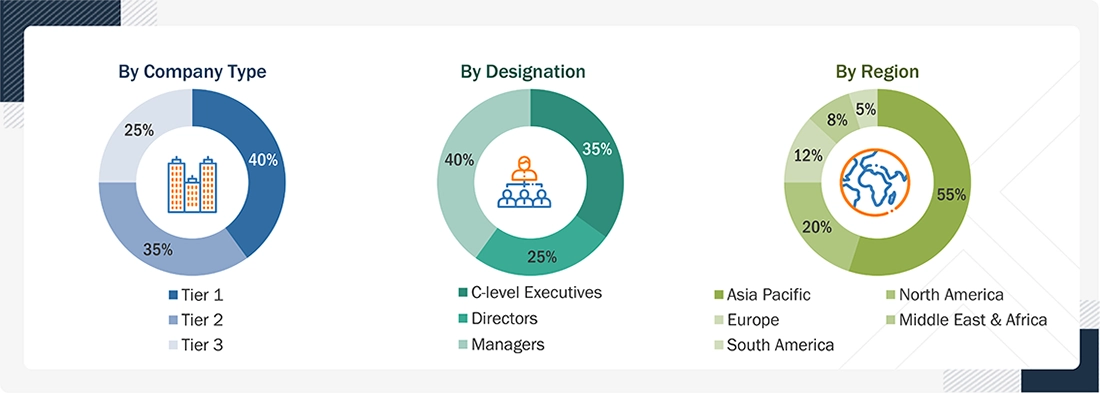
Note: Managers include sales managers, production managers, and regional managers.
Tier 1 company: revenue >USD 5 billion; tier 2 company: revenue between USD 1 and USD 5 billion; and tier 3 company: revenue <USD 1 billion in 2025
To know about the assumptions considered for the study, download the pdf brochure
Market Size Estimation
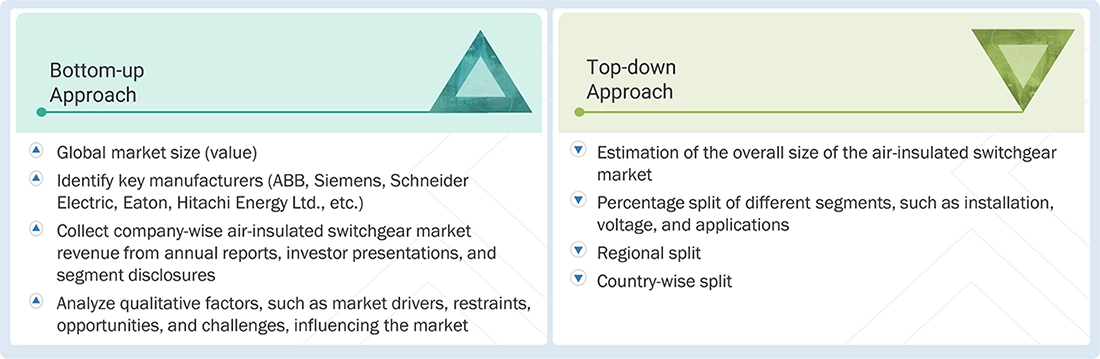
The estimation and validation of the air-insulated switchgear market size were conducted using bottom-up and top-down approaches. These approaches were used to determine the size of multiple subsegments within the market. The research process comprises the following key stages.
Bottom-up Approach
- Determining the overall value of the air-insulated switchgear market
- Mapping leading players in the industry, such as Siemens, Schneider Electric, ABB, Eaton, Mitsubishi Electric, and TOSHIBA CORPORATION
- Gathering segment-specific revenue data for these companies from annual reports, investor presentations, and public disclosures
- Considering key qualitative inputs, including market drivers, restraints, opportunities, and challenges, in the forecasting process
Top-down Approach
- Assessing the total size of the air-insulated switchgear market
- Breaking this down by segment, covering installation, voltage, and applications
- Allocating market share across regions
- Further refining figures down to individual country-level estimates
Air-Insulated Switchgear Market: Top-Down and Bottom-Up Approach
Data Triangulation
The process of determining the overall market size involved the methodologies described earlier, followed by segmenting the market into multiple segments and subsegments. To finalize the comprehensive market analysis and obtain precise statistics for each market segment and subsegment, data triangulation and market segmentation techniques were applied, as appropriate. Data triangulation was accomplished by examining factors and trends from both the demand and supply perspectives within the air-insulated switchgear market ecosystem.
Market Definition
Air-insulated switchgear is a category of electrical switching and protection equipment that uses ambient air, rather than a pressurized gas such as SF6, as the primary medium to insulate and isolate live conductors within a substation or distribution network. Comprising circuit breakers, disconnectors, busbars, current and voltage transformers, and associated protective relays, AIS is engineered to safely control the flow of electricity, interrupt fault currents, and isolate sections of a network for maintenance or emergency response, all while relying on the natural insulating properties of open air combined with carefully calculated clearance distances between components. This reliance on air, rather than an enclosed gas medium, gives AIS a larger physical footprint than its gas-insulated counterpart, but it also makes the equipment simpler to manufacture, easier to maintain using conventional tools and techniques, and considerably lower in upfront installed cost, which has sustained its position as the standard choice across utility, industrial, and commercial power infrastructure for well over a century.
This report examines the global air-insulated switchgear market through a structure designed to capture how demand actually forms and moves across the industry. By voltage, the market is segmented into low voltage (up to 1 kV), medium voltage (2–36 kV), and high voltage (above 36 kV), reflecting the distinct engineering requirements and buyer bases that separate distribution-level equipment from bulk transmission infrastructure. By installation, the analysis distinguishes indoor from outdoor deployments, a divide that speaks directly to how environmental exposure and space availability shape purchasing decisions. The application segmentation spans transmission and distribution, industrial, commercial and residential, transportation, and other end users, including marine and offshore installations, capturing the full breadth of settings in which AIS is specified today. Geographically, the study covers North America, Europe, Asia Pacific, South America, and the Middle East and Africa, allowing the analysis to reflect how regulatory pressure, grid investment cycles, and industrialization patterns vary meaningfully from one region to the next. Together, this framework provides a complete and commercially useful picture of where AIS demand originates, how it is evolving, and which parts of the market are positioned to grow fastest through the forecast period.
Key Stakeholders
- Raw Material Suppliers
- Component Manufacturers
- Switchgear Manufacturers / OEMs
- EPC Contractors
- System Integrators / Panel Builders
- Distributors / Electrical Wholesalers
- Transmission & Distribution Utilities
- Renewable Energy Developers
- Power Generation Companies
- Industrial End Users
- Data Center Operators
- Commercial & Residential Users
- Water & Wastewater Operators
- Transportation Sector
- Marine & Offshore Operators
- Standards Organizations
- Testing & Certification Bodies
- Government & Regulatory Authorities
- Environmental Regulators
- Engineering & Technical Consultants
- Digital & Automation Technology Providers
- Service & Maintenance Providers
- Retrofit & Modernization Providers
- Logistics Providers
- Financial Institutions & Project Financiers
- Insurance & Risk Assessment Companies
- Recycling & End-of-Life Providers
- Industry Associations
Report Objectives
- To define, describe, analyze, and forecast the air-insulated switchgear market based on installation, voltage, application, and region
- To describe and forecast the market for five key regions: North America, Europe, Asia Pacific, South America, and the Middle East & Africa, along with their country-level market sizes, in terms of value and volume
- To forecast the air-insulated switchgear market, by region, in terms of volume
- To provide comprehensive details on the main factors, obstacles, opportunities, and sector-specific challenges affecting the expansion of the air-insulated switchgear market
- To systematically examine the market for air-insulated switchgear in terms of each segment's contributions to the market, growth trends, and prospects
- To provide value chain analysis, trends/disruptions impacting customer business, market maps, ecosystem analysis, sustainability and regulatory landscape, pricing analysis, patent analysis, case study analysis, technology analysis, key conferences and events, Porter’s five forces analysis, macroeconomic outlook, customer landscape & buyer behavior, regulatory analysis, and AI/Gen AI impact on the market
- To conduct a strategic analysis of micromarkets1 concerning their respective growth trends, planned expansions, and market share contributions
- To sketch the competitive environment for market participants and assess opportunities for stakeholders in the air-insulated switchgear business
- To benchmark players in the market using the company evaluation quadrant, which analyzes market players across various parameters within broad categories of business and product strategies
- To strategically profile key players and comprehensively analyze their market ranking and core competencies
- To track and analyze competitive developments in the air-insulated switchgear market, such as contracts, agreements, investments, expansions, product launches, partnerships, and acquisitions
Available customizations:
With the given market data, MarketsandMarkets offers customizations based on the company’s specific needs. The following customization options are available for the report:
Product Analysis
- Product Matrix, which provides a detailed comparison of the product portfolio of each company
Company Information
-
Detailed analyses and profiling of additional market players (up to 5)
Country Information
-
Additional country-level analysis of the dermatology devices market


Personalize This Research
- Triangulate with your Own Data
- Get Data as per your Format and Definition
- Gain a Deeper Dive on a Specific Application, Geography, Customer or Competitor
- Any level of Personalization
Let Us Help You
- What are the Known and Unknown Adjacencies Impacting the Air-Insulated Switchgear Market
- What will your New Revenue Sources be?
- Who will be your Top Customer; what will make them switch?
- Defend your Market Share or Win Competitors
- Get a Scorecard for Target Partners

Custom Market Research Services
We Will Customise The Research For You, In Case The Report Listed Above Does Not Meet With Your Requirements
Get 10% Free CustomisationTESTIMONIALS

Kimberly Murphy
GLOBAL MARKETING DIRECTOR
Bently Nevada,
Leading Condition Monitoring & Asset Protectionwww.bakerhughesds.com/bently-nevada

MarketsandMarkets™ showed consistent rigor for success and relentlessly worked with Bently Nevada stakeholders to positively impact go-to-market strategy. Their proactiveness and flexibility has been instrumental in achieving the objectives to grow our sales pipeline in key industrial markets.

DARRICK HUEBER
Business Development Leader
Nexus Controls LLC,
Leading Manufacturer of Automation System & Electrical Panelswww.bakerhughesds.com/nexus-controls

We partnered with MarketsandMarkets to expand our business further by tapping into new industrial segments. It was critical for us to gather crucial business insights about specific markets to achieve this goal. MarketsandMarkets engagement model and client services helped us provide those insights, it was really impressive and valuable for my business. The team was extremely flexible and helpful.

Mike Schoff
Global Industrial Commercial Strategy Leader
Nexus Controls LLC
Leading Manufacturer of Automation System & Electrical Panelswww.bakerhughesds.com/nexus-controls
We consulted MarketsandMarkets for potential Partner Identification. Overall, it was a good experience. The insights provided through interviews conducted by the team helped us put together the questionnaire required for discussion with the selected partners. Their ability to provide insights through interviews with customers in a timely manner was quite impressive.
- China Air Insulated Switchgear Market
- India Air Insulated Switchgear Market
- Japan Air Insulated Switchgear Market
- Australia Air Insulated Switchgear Market
- Germany Air Insulated Switchgear Market
- UK Air Insulated Switchgear Market
- Italy Air Insulated Switchgear Market
- France Air Insulated Switchgear Market
- Spain Air Insulated Switchgear Market
- Canada Air Insulated Switchgear Market
- Mexico Air Insulated Switchgear Market
- US Air Insulated Switchgear Market
- South Africa Air Insulated Switchgear Market
- Brazil Air Insulated Switchgear Market
- Argentina Air Insulated Switchgear Market
- Rest Of Europe Air Insulated Switchgear Market
- Rest Of Asia Pacific Air Insulated Switchgear Market
- GCC Countries Air Insulated Switchgear Market
- Rest Of South America Air Insulated Switchgear Market




Growth opportunities and latent adjacency in Air-Insulated Switchgear Market