Fleet Management Software Market for AGV & AMR Size, Share & Trends

Fleet Management Software Market for AGV & AMR Size, Share & Trends (Cloud & On-premises Fleet Management Platform), AMR (Picking, Sorting, Transportation, Collaborative), AGV (Tow, Tugger, Unit Load, Pallet Truck, Assembly Line), Platform (Single, Multi-Vendor, Mixed-Robot Fleet Management) - Global Forecast to 2032




FLEET MANAGEMENT SOFTWARE MARKET SIZE, SHARE & TRENDS
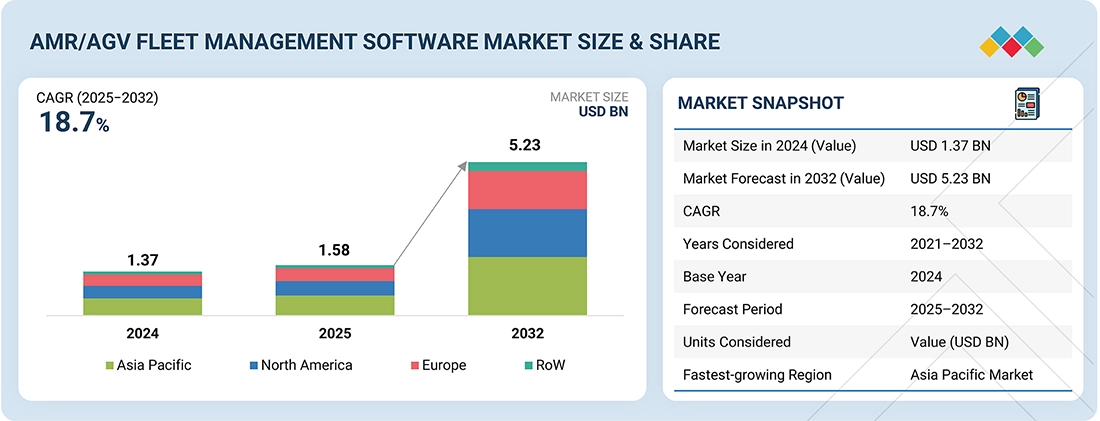
According to Marketsandmarkets,, the global AMR/AGV fleet management software market size was valued at USD 1.58 billion in 2025 and is projected to reach USD 5.23 billion by 2032, growing at a CAGR of 18.7% from 2025 to 2032. Market expansion is driven by the rising deployment of mobile robots across warehouses, manufacturing plants, logistics hubs, and e-commerce fulfillment centers. The integration of AI-based orchestration, real-time traffic control, predictive maintenance, and cloud-enabled optimization is improving fleet utilization, workflow accuracy, and operational cost efficiency. In addition, strong investment in automation programs and national initiatives supporting digital transformation are accelerating the adoption of advanced fleet management platforms across Asia Pacific, Europe, and North America.
MARKET SNAPSHOT TABLE
| REPORT METRIC | DETAILS |
|---|---|
| Market Size in 2024 (Value) | USD 1.37 Billion |
| Market Forecast in 2032 (Value) | USD 5.23 Billion |
| Growth Rate | CAGR of 18.7% from 2025-2032 |
| Years Considered | 2021-2032 |
| Base Year | 2024 |
| Forecast Period | 2025–2032 |
| Units Considered | Value (USD Billion) |
| Report Coverage | Revenue forecast, company ranking, competitive landscape, growth factors, and trends. |
| Top Companies |
|
| Growth Driver |
|
| Segments Covered |
|
| Regions Covered | North America, Asia Pacific, Europe & RoW |
Market Size & Forecast
• 2025 Market Size: USD 1.58 Billion
• 2032 Projected Market Size: USD 5.23 Billion
• CAGR (2025-2032): 18.7%
• Multi-vendor Fleet Platforms: Highest CAGR
• Asia Pacific: Largest Market Share
KEY TAKEAWAYS
-
BY REGIONAsia Pacific leads the AMR/AGV Fleet Management Software Market share in 2024 with a market share of 39.3%.
-
BY FLEET TYPEThe Autnomous Mobile Robots (AMRs) is projected to grow at the highest CAGR of 20.5% from 2025 to 2032
-
BY PLATFORM TYPEMulti-vendor Fleet Platforms are expected to grow at the highest CAGR of 20.9% driven by increasing adoption of mixed AMR and AGV fleets and the need for unified fleet control.
-
COMPETITIVE LANDSCAPEKUKA, ABB, and Omron Corporation were identified as some of the star players in the AMR/AGV Fleet Management Software Market (global), given their strong market share and extensive product footprint.
The AMR/AGV fleet management software market trends is set for strong expansion as companies increase the use of mobile robots across warehouses, factories, logistics hubs, and ecommerce fulfillment centers. Rising demand for faster and more accurate material handling is driving adoption of software platforms that coordinate routing, traffic flow, task allocation, and real time fleet visibility. Advances in AI driven optimization, predictive maintenance, and cloud based control are improving efficiency, scalability, and overall fleet performance. With industries accelerating automation to reduce costs and increase throughput, fleet management software is becoming a key enabler of connected, high productivity robotic operations.
Source: Secondary Research, Interviews with Experts, MarketsandMarkets Analysis
TRENDS & DISRUPTIONS IMPACTING CUSTOMERS' CUSTOMERS
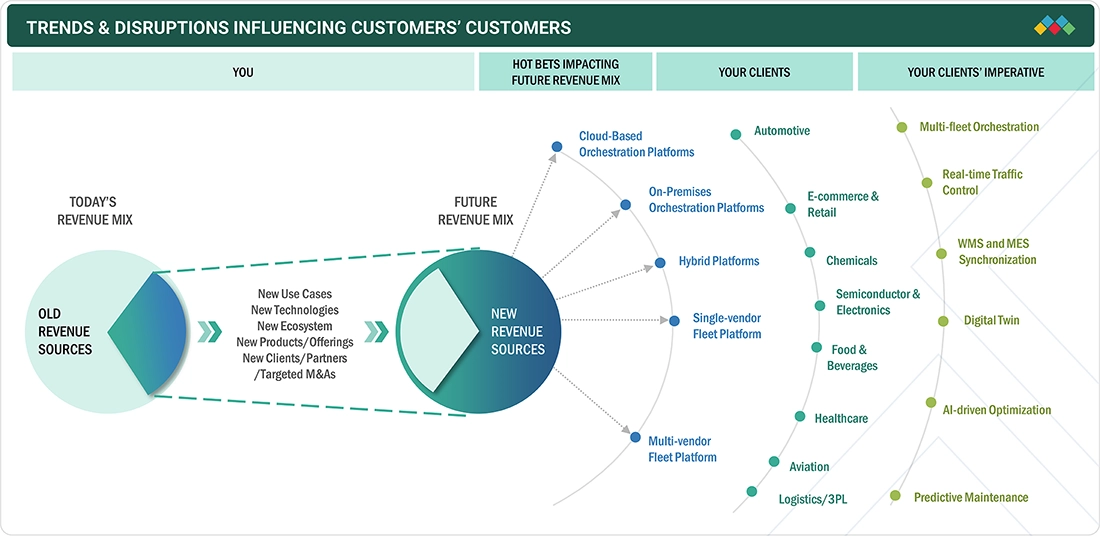
The impact on customers’ business in the AMR/AGV fleet management software industry is driven by the growing need for efficient, scalable, and real-time coordinated mobile robot operations. End users across warehouses, manufacturing facilities, ecommerce fulfillment centers, and logistics hubs are investing in advanced fleet management platforms to improve throughput, accuracy, and workflow reliability. The integration of AI-driven routing, traffic coordination, digital twins, and predictive maintenance is transforming operational efficiency, reducing downtime, and improving resource utilization. These advancements are accelerating the adoption of next-generation fleet orchestration systems that support multi-robot environments and enable continuous, high-performance automation, shaping the market’s long-term growth trajectory.
Source: Secondary Research, Interviews with Experts, MarketsandMarkets Analysis
MARKET DYNAMICS

Level
-
Rising adoption of warehouse and factory automation supported by rapid deployment of AMRs and AGVs

-
Growing demand for centralized fleet orchestration


Level
-
High complexity of integrating fleet software with existing WMS, MES, ERP, and OT systems


Level
-
Rising shift toward multi-vendor robotic fleets that require unified and vendor neutral fleet platforms for coordination and real time control

-
Increasing shift toward Robotics as a Service models which drives demand for subscription based and cloud managed fleet software platforms


Level
-
Difficulty in standardizing communication protocols across robots from different vendors

Source: Secondary Research, Interviews with Experts, MarketsandMarkets Analysis
Driver: Rising adoption of warehouse and factory automation supported by rapid deployment of AMRs and AGVs
Growing demand for faster order fulfillment, reduced manual labor, and scalable intralogistics is accelerating the adoption of AMRs and AGVs, pushing enterprises to rely on fleet management software for coordinated, real time operations.
Restraint: Growing demand for centralized fleet orchestration
Legacy infrastructure, incompatible protocols, and multi vendor environments make integration challenging, increasing deployment timelines and requiring additional customization and engineering support.
Opportunity:Rising shift toward multi vendor robotic fleets requiring unified and vendor neutral fleet platforms
As warehouses adopt diverse robots for picking, sorting, and transport, the need for centralized, interoperability focused fleet platforms is creating strong demand for advanced orchestration software.
Challenge: Difficulty in standardizing communication protocols across robots from different vendors
Lack of universal standards for navigation, traffic rules, and messaging limits seamless coordination, creating barriers for multi vendor fleet deployments and increasing reliance on custom integration layers.
amr-agv-fleet-management-software-market: COMMERCIAL USE CASES ACROSS INDUSTRIES
| COMPANY | USE CASE DESCRIPTION | BENEFITS |
|---|---|---|
 |
KUKA’s fleet management software enables coordinated control of AMRs and AGVs across manufacturing, assembly, and intralogistics environments. The platform provides real-time routing, traffic control, task assignment, battery monitoring, and seamless integration with MES, ERP, and warehouse automation systems. | Enhances operational efficiency with optimized multi robot routing and traffic control. Improves safety and workflow continuity. Maximizes asset utilization and uptime through predictive charging and centralized orchestration. |
 |
ABB delivers enterprise-level fleet management systems for automated material movement, production line support, and facility-wide logistics automation. Its software enables task scheduling, dynamic path planning, collision avoidance, and integration with robotics, conveyors, and control systems. | Improves productivity through synchronized AGV and AMR operations. Reduces manual handling and downtime with automated job assignment. Enables scalable automation adoption through modular and interoperable fleet control. |
 |
Omron’s fleet management platform provides autonomous navigation, multi-robot coordination, load handoff automation, and real-time workflow optimization. The system integrates with Omron controllers, vision systems, and safety solutions to support end-to-end industrial automation. | Strengthens throughput with efficient robot to robot communication. Increases safety with dynamic zoning and intelligent traffic rules. Ensures reliable operations through predictive maintenance and full fleet visibility. |
 |
Geekplus offers cloud-based fleet management software built for high volume e-commerce, retail fulfillment, and warehouse automation. It coordinates large fleets of AMRs with intelligent task prioritization, zone routing, high speed picking workflows, and performance analytics. | Boosts order fulfillment speed and accuracy in large warehouses. Supports rapid scalability using cloud fleet control. Reduces operating costs through optimized paths, energy management, and real time data analytics. |
 |
Addverb’s fleet management solution supports AMRs, AGVs, and sorting systems with real-time orchestration, dynamic task allocation, traffic balancing, and IoT-enabled workflow optimization. It integrates with WMS, WES, and enterprise automation platforms. | Improves logistics efficiency with synchronized fleet behavior. Reduces delays and errors using data driven routing. Enables flexible, scalable operations for dynamic warehouse and manufacturing needs. |
Logos and trademarks shown above are the property of their respective owners. Their use here is for informational and illustrative purposes only.
MARKET ECOSYSTEM
The AMR/AGV fleet management software market growth ecosystem comprises a coordinated network of fleet software providers, robotics manufacturers, and automation-driven end users, enabling scalable warehouse and factory automation. Key fleet management software and robotics solution providers include KUKA, ABB, Omron, Geekplus, Addverb, and Locus Robotics, offering advanced platforms for multi-robot coordination, traffic control, task scheduling, and real-time monitoring. Leading end users such as Amazon, DHL, FedEx, UPS, JD Logistics, Maersk, Walmart, and major 3PL operators play a crucial role in driving demand for intelligent fleet orchestration as they scale high-volume warehouse fulfillment, last-mile logistics, and manufacturing operations. Their growing need for high throughput, efficient navigation, and fully automated intralogistics continues to accelerate the adoption of AMR/AGV fleet management software across global supply chains.
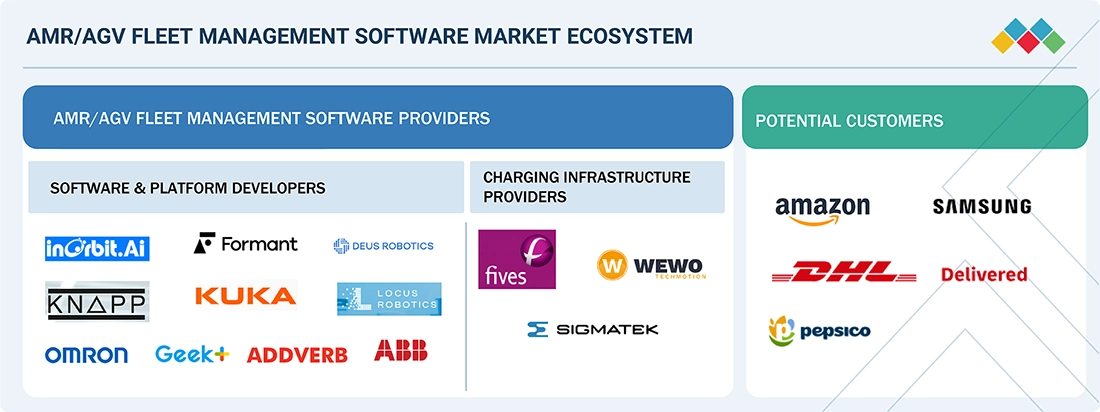
Logos and trademarks shown above are the property of their respective owners. Their use here is for informational and illustrative purposes only.
MARKET SEGMENTS
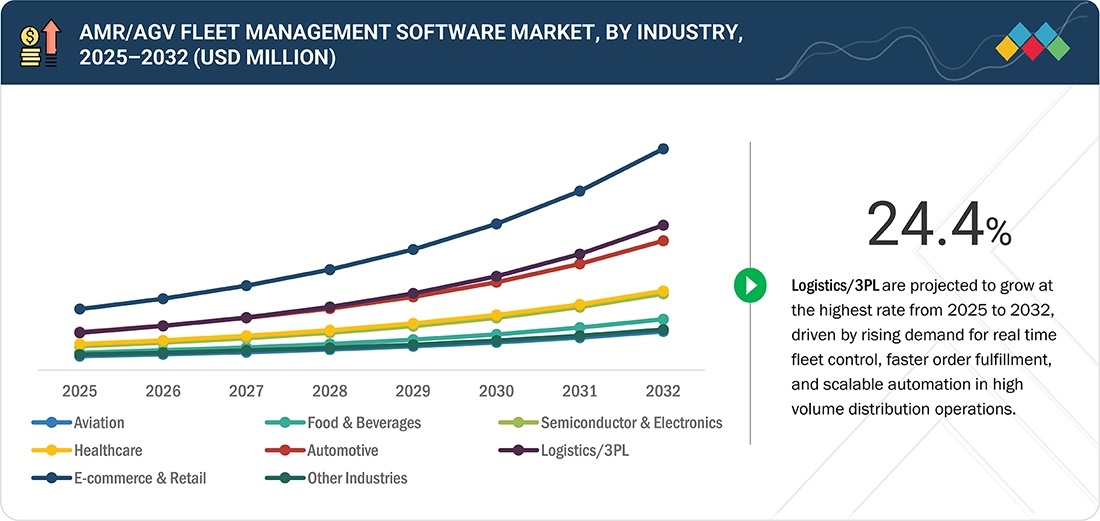
Source: Secondary Research, Interviews with Experts, MarketsandMarkets Analysis
AMR/AGV Fleet Management Software Market, By Industry
Logistics/3PL are expected to grow at the highest CAGR in the AMR/AGV Fleet Management Software Market, driven by their critical need for real-time fleet orchestration, high-speed order fulfillment, and coordinated operation of large robotic fleets. Rapid warehouse automation, rising e-commerce volumes, and the shift toward multi-robot environments are further boosting demand for advanced fleet management platforms that enhance accuracy, reliability, and throughput across modern distribution and fulfillment centers.
AMR/AGV Fleet Management Software Market, By Fleet Type
AMRs are expected to hold the highest market share in the AMR/AGV Fleet Management Software Market during the forecast period, supported by their flexibility, ease of deployment, and strong suitability for dynamic warehousing and manufacturing environments. Their ability to navigate autonomously, adapt to real-time workflow changes, and integrate seamlessly with fleet management platforms continues to reinforce their dominant position across modern intralogistics operations.
AMR/AGV Fleet Management Software Market, By Offering
Software is projected to grow with the highest CAGR in the AMR/AGV Fleet Management Software Market, driven by rising demand for real time fleet orchestration, intelligent traffic control, task automation, and data driven optimization across large scale robotic operations.
FLEET MANAGEMENT SOFTWARE MARKET BY REGION
Asia Pacific to be fastest-growing region in global AMR/AGV Fleet Management Software Market during forecast period
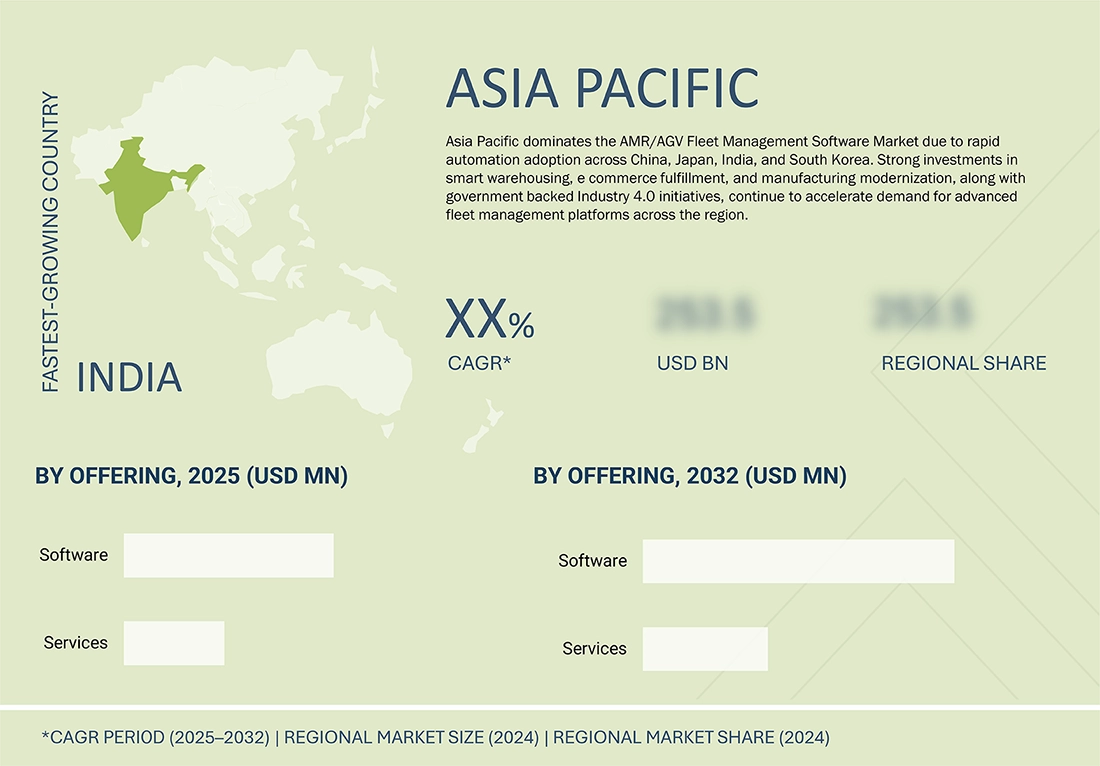
Asia Pacific is projected to grow at the highest CAGR in the AMR/AGV fleet management software market during the forecast period, driven by rapid adoption of warehouse automation, expansion of large-scale e-commerce fulfillment centers, and strong government-backed Industry 4.0 initiatives. Countries such as China, Japan, South Korea, and India are accelerating investments in smart factories, digital logistics, and robotics deployment, creating strong demand for advanced fleet orchestration platforms. The region’s significant presence of leading AMR and AGV manufacturers, along with increasing integration of AI-driven navigation, cloud-based fleet control, and real-time optimization tools, reinforces its leadership in this market. With rising throughput demands, growing 3PL operations, and expanding retail and manufacturing ecosystems, Asia Pacific continues to emerge as the hub for next-generation AMR/AGV fleet management software innovation and large-scale automation adoption.
amr-agv-fleet-management-software-market: COMPANY EVALUATION MATRIX
In the AMR/AGV fleet management software companies matrix, KUKA AG (Star) leads with an integrated automation ecosystem combining advanced fleet orchestration, real-time traffic control, and seamless interoperability across mixed robotic fleets, supported by AI-driven navigation and scalable warehouse automation software. Its strong system integration capabilities and global partnerships position it as a key enabler of high-throughput, precision-focused intralogistics. Locus Robotics (Emerging Leader) is expanding rapidly through strategic collaborations and continuous enhancements to its cloud-native fleet management platform, driving the adoption of adaptive routing, data-driven labor optimization, and high-efficiency multi-robot coordination, thereby strengthening its position in the leaders’ quadrant of this evolving software market.
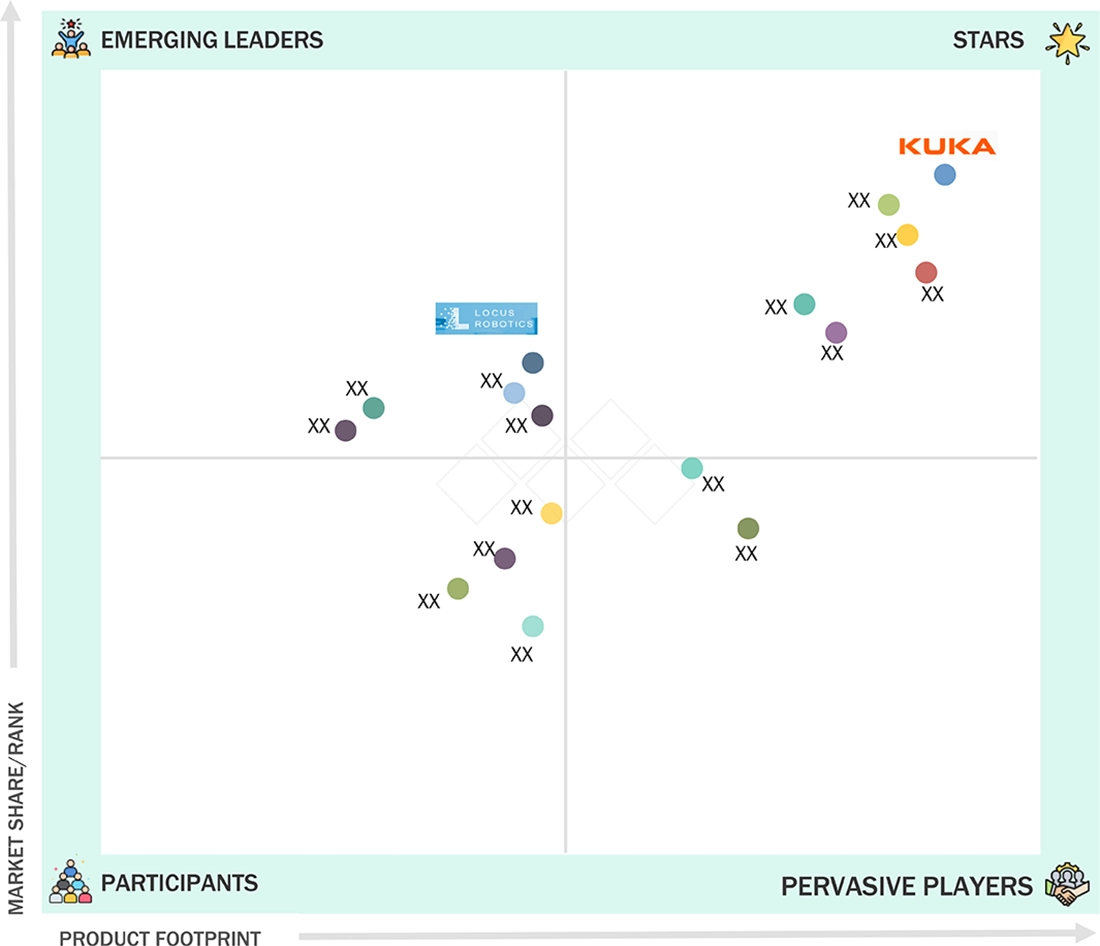
Source: Secondary Research, Interviews with Experts, MarketsandMarkets Analysis
KEY MARKET PLAYERS
- KUKA SE & Co. KGaA (Germany)
- ABB (Switzerland)
- OMRON Corporation (Japan)
- Geekplus Technology Co., Ltd. (China)
- Addverb Technologies Limited (India)
- Siemens (Germany)
- Ocado Group plc (UK)
- MITSUBISHI LOGISNEXT CO., LTD. (Japan)
- Fives (France)
- Mobile Industrial Robots (Denmark)
WHAT IS IN IT FOR YOU: amr-agv-fleet-management-software-market REPORT CONTENT GUIDE
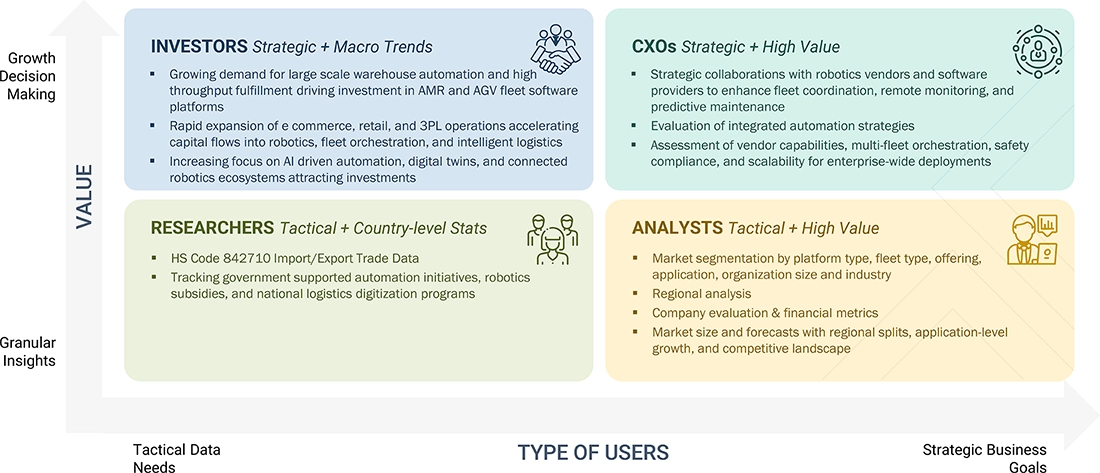
DELIVERED CUSTOMIZATIONS
We have successfully delivered the following deep-dive customizations:
| CLIENT REQUEST | CUSTOMIZATION DELIVERED | VALUE ADDS |
|---|---|---|
| Warehouse & Logistics Provider |
|
|
| Manufacturing Enterprise |
|
|
| Software Vendor / System Integrator |
|
|
RECENT DEVELOPMENTS
- October 2024 : MiR launched MiR Fleet Enterprise, a software platform for managing autonomous mobile robots. The platform enhances scalability, security, and efficiency for internal logistics and material handling.
- March 2024 : Addverb Technologies Limited announced a strategic partnership with DHL Supply Chain to deploy 52 sorting robots (Zippy) and its enterprise software platform, including Fleet Management Software (FMS), at DHL’s Columbus, Ohio distribution facility. The collaboration enhances throughput, scalability, and operational efficiency across DHL’s warehouse operations in North America.
- November 2023 : Symbotic Inc. entered a strategic agreement with Southern Glazer’s Wine & Spirits to deploy its AI-powered robotic automation system across select distribution centers. The deployment aims to enhance fill rates, improve order accuracy, extend facility capacity, and build mixed-case pallets for efficient route-stop delivery.
Table of Contents
 Exclusive indicates content/data unique to MarketsandMarkets and not available with any competitors.
Methodology
The study involved four major activities in estimating the current size of the AMR/AGV fleet management software market. Exhaustive secondary research has been conducted to gather information on the market, adjacent markets, and the overall AMR/AGV fleet management software landscape. These findings, along with assumptions and projections, were validated through primary research involving interviews with industry experts and key stakeholders across the value chain. Both top-down and bottom-up approaches were utilized to estimate the overall market size. Subsequently, market breakdown and data triangulation techniques were applied to determine the sizes of various segments and subsegments. Two key sources, secondary and primary, were leveraged to conduct a comprehensive technical and commercial assessment of the AMR/AGV fleet management software market.
Secondary Research
Various secondary sources have been referred to in the secondary research process to identify and collect important information for this study. The secondary sources include annual reports, press releases, and investor presentations of companies; white papers; journals and certified publications; and articles from recognized authors, websites, directories, and databases. Secondary research has been conducted to obtain key information about the industry’s supply chain, the market’s value chain, the total pool of key players, market segmentation according to the industry trends (to the bottom-most level), regional markets, and key developments from market- and technology-oriented perspectives. The secondary data has been collected and analyzed to determine the overall market size, further validated by primary research.
Primary Research
Extensive primary research was conducted after gaining knowledge about the current scenario of the AMR/AGV fleet management software market through secondary research. Several primary interviews were conducted with experts from the demand and supply sides across four major regions—North America, Europe, Asia Pacific, and RoW. This primary data was collected through questionnaires, emails, and telephonic interviews.
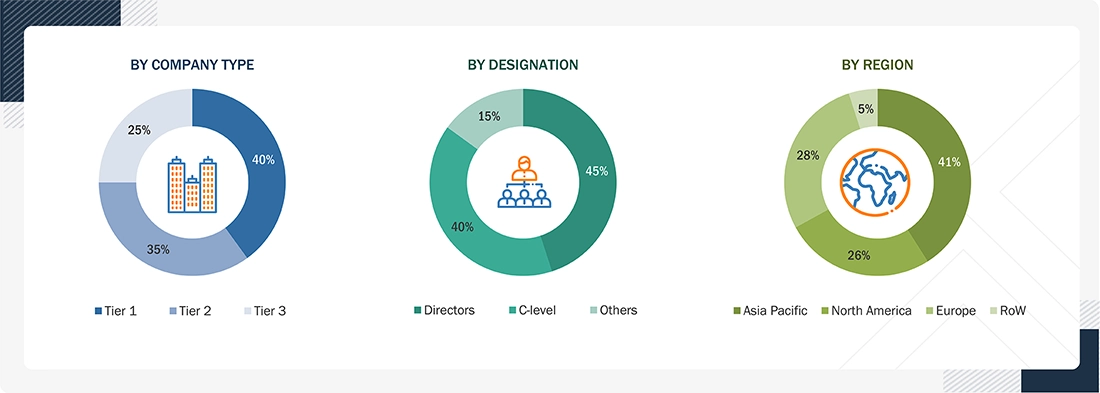
Note: The RoW region includes the Middle East, Africa, and South America. Other designations include product, sales, and marketing managers. Three tiers of companies have been defined based on their total revenue as of 2024: Tier 3, with revenue less than USD 300 million; Tier 2, with revenue between USD 300 million and USD 1 billion; and Tier 1, with revenue more than USD 1 billion.
To know about the assumptions considered for the study, download the pdf brochure
Market Size Estimation
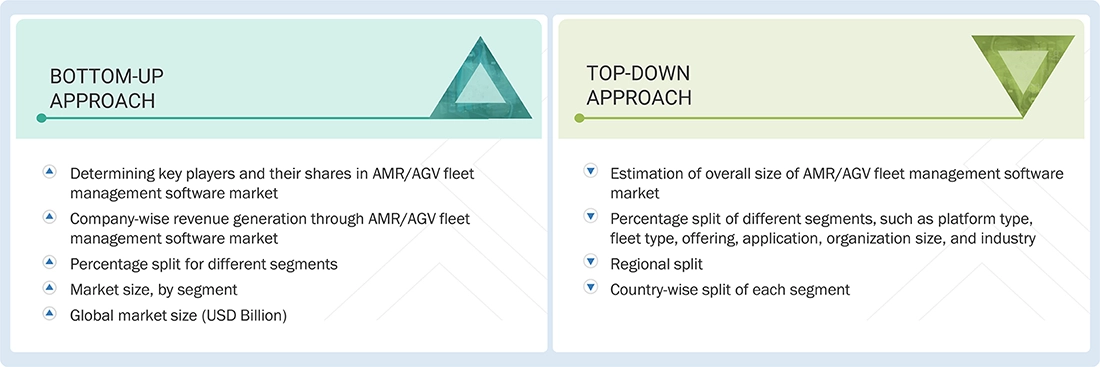
Both top-down and bottom-up approaches have been used to estimate and validate the total size of the AMR/AGV fleet management software market. These methods have also been used extensively to estimate the size of various subsegments in the market. The following research methodology has been used to estimate the market size:
- Major players in the industry and markets have been identified through extensive secondary research.
- The industry’s value chain and market size (in terms of value) have been determined through primary and secondary research processes.
- All percentage shares, splits, and breakdowns have been determined using secondary sources and verified through primary sources.
Fleet Management Software Market : Top-Down and Bottom-Up Approach
Data Triangulation
After arriving at the overall size of the AMR/AGV fleet management software market from the market size estimation process explained above, the total market has been split into several segments and subsegments. Data triangulation and market breakdown procedures have been employed, wherever applicable, to complete the overall market engineering process and arrive at the exact statistics for all segments and subsegments of the market. The data has been triangulated by studying various factors and trends from both the demand and supply sides. Along with this, the market size has been validated using both top-down and bottom-up approaches.
Market Definition
AMR/AGV fleet management software market refers to the market for software platforms that enable centralized monitoring, control, and optimization of fleets of Autonomous Mobile Robots (AMRs) and Automated Guided Vehicles (AGVs) operating in warehouses, factories, logistics hubs, hospitals, and other facilities. This includes solutions that manage traffic and routing, task allocation and scheduling, battery and charging, collision avoidance, and real-time tracking, while integrating with WMS, MES, ERP, and other automation systems. The market encompasses revenues generated from software licenses, subscriptions, and associated services (such as configuration, customization, analytics, and support) offered by technology vendors to end-users and system integrators deploying AMR/AGV fleets. The scope encompasses both proprietary software provided by robot manufacturers for their own fleets and third-party solutions that can manage heterogeneous fleets from multiple manufacturers.
Key Stakeholders
- AMR and AGV Manufacturers
- Fleet Management Software Providers
- Warehouse Management System (WMS), MES, and ERP Solution Providers
- System Integrators Specializing in Warehouse & Factory Automation
- Technology Providers (AI, IoT, Edge Computing, Sensors, Cloud Platforms)
- Semiconductor & High-Tech Manufacturing Facilities
- Consulting Firms Specializing in Automation & Digital Transformation
- Government Bodies, Regulatory Agencies, and Warehouse Safety Authorities
- Venture Capitalists, Private Equity Firms, and Automation-Focused Investors
- Research Organizations, Robotics Labs, and Industrial Consortia
- Cloud Service Providers and Industrial Networking Providers
Report Objectives
- To define, describe, and forecast the AMR/AGV fleet management software market, in terms of platform type, fleet type, offering, application, organization size, industry, and region.
- To describe and forecast the market, in terms of value, with regard to four main regions: North America, Europe, Asia Pacific, and Rest of the World (RoW), along with their respective countries.
- To provide detailed information regarding major factors influencing market growth (drivers, restraints, opportunities, and challenges)
- To offer a detailed overview of the value chain of the AMR/AGV fleet management software market.
- To strategically analyze micromarkets with respect to individual growth trends, prospects, and contributions to the AMR/AGV fleet management software market
- To analyze opportunities in the market for stakeholders by identifying high-growth segments of the AMR/AGV fleet management software market.
- To strategically profile key players and comprehensively analyze their market position in terms of ranking and core competencies, along with detailing the competitive landscape for market leaders
- To analyze competitive strategies, such as product launches, expansions, mergers, and acquisitions, adopted by key market players in the AMR/AGV fleet management software market.
Available Customizations
With the given market data, MarketsandMarkets offers customizations according to the company’s specific needs. The following customization options are available for the report:
Company Information:
- Detailed analysis and profiling of additional market players (up to 5)
Key Questions Addressed by the Report
What is the market size of the AMR/AGV Fleet Management Software market?
The market is valued at USD 1.58 billion in 2025 and is projected to reach USD 5.23 billion by 2032.
What is the expected CAGR of the market?
The market is expected to grow at a CAGR of 18.7% (2025–2032).
What are the key growth drivers of the market?
Key drivers include rising adoption of AMRs/AGVs, e-commerce expansion, demand for real-time fleet optimization, AI-driven automation, and integration of IoT and cloud platforms.
Which industries are driving demand?
Major industries include e-commerce & retail, automotive, logistics/3PL, semiconductor & electronics, healthcare, and food & beverages.
Which region dominates the market?
Asia Pacific holds the largest share (~39.3%), driven by strong manufacturing and e-commerce growth.
What are the key technology trends?
Key trends include AI-based fleet orchestration, cloud-based fleet management, predictive maintenance, IoT-enabled tracking, and multi-vendor fleet integration.
Which companies are leading the market?
Key players include KUKA, ABB, Omron Corporation, Geekplus Technology, and Addverb Technologies.
What is driving AMR adoption in fleet management software?
AMRs are preferred due to flexible navigation, scalability, reduced infrastructure dependency, and efficiency in dynamic warehouse environments.
What are the main applications of fleet management software?
Applications include intralogistics, order fulfillment, picking, sorting, palletizing, cross-docking, and fleet coordination.
What is the future outlook of the market?
The market is expected to expand strongly due to rapid warehouse automation, rising labor costs, and increasing demand for scalable robotics fleet orchestration systems.


Personalize This Research
- Triangulate with your Own Data
- Get Data as per your Format and Definition
- Gain a Deeper Dive on a Specific Application, Geography, Customer or Competitor
- Any level of Personalization
Let Us Help You
- What are the Known and Unknown Adjacencies Impacting the Fleet Management Software Market
- What will your New Revenue Sources be?
- Who will be your Top Customer; what will make them switch?
- Defend your Market Share or Win Competitors
- Get a Scorecard for Target Partners

Custom Market Research Services
We Will Customise The Research For You, In Case The Report Listed Above Does Not Meet With Your Requirements
Get 10% Free CustomisationTESTIMONIALS

Tetsuya Ohhira
Business Development Manager-Technology Business
Nikon Corporation,
Leading Japanese MNC specializing in optics and imaging productswww.nikon.com
MarketsandMarkets™ response
is quick. Their attitude is flexible and positive. Analyst Insights are globally considered and
significant. Client Services quickly respond to our inquiry and demand. Their wide range of global
surveys help us make our strategic plan.
We hope Knowledge Store will be easier to search
for a report.
VP - Marketing & Business Development
Leading Provider of Process Control Solutions
We engaged with MarketsandMarkets on a study to perform an analysis and recommend a Go-To-Market strategy for metrology and process control in the semiconductor market. The study was tailored to our targets and needs with well-defined milestones. Our overall experience with the MarketsandMarkets team was very good throughout the project in all aspects including the analysis methodologies used, the quality and depth of primary and secondary data sets, the professionalism and flexibility of the team and the ability to meet the target schedule and milestones. We want to thank MarketsandMarkets team for a job well done.
- US Fleet Management Software Market
- Canada Fleet Management Software Market
- Mexico Fleet Management Software Market
- Germany Fleet Management Software Market
- UK Fleet Management Software Market
- France Fleet Management Software Market
- Italy Fleet Management Software Market
- Rest Of Europe Fleet Management Software Market
- China Fleet Management Software Market
- Japan Fleet Management Software Market
- India Fleet Management Software Market
- South Korea Fleet Management Software Market
- Australia Fleet Management Software Market
- Rest Of Asia Pacific Fleet Management Software Market






Growth opportunities and latent adjacency in Fleet Management Software Market