Asia Pacific Anti-Drone Market

Asia Pacific Anti-Drone Market by Electronic System, Kinetic System, Laser System, Hybrid System, Ground-based, Handheld, UAV-based, Detection, Detection & Disruption, Military & Defense, Commercial, and Homeland Security - Forecast to 2030




OVERVIEW
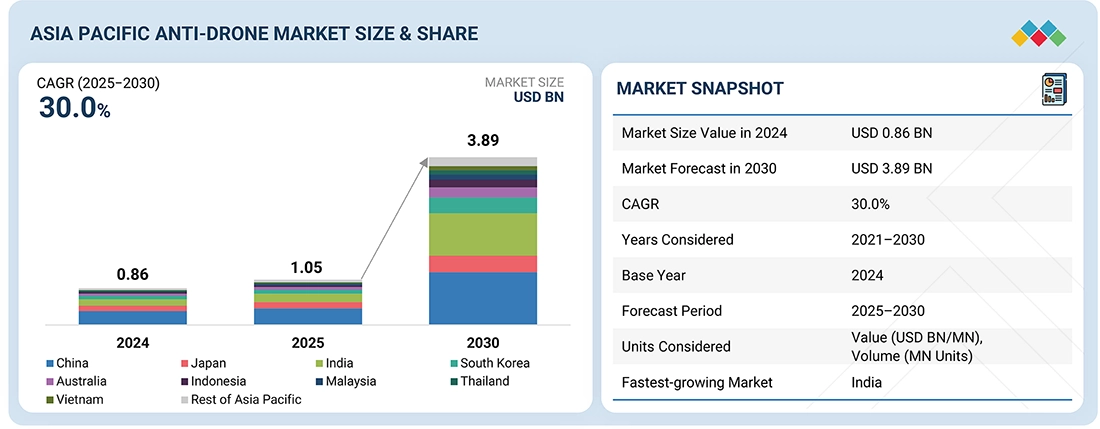
Source: Secondary Research, Interviews with Experts, MarketsandMarkets Analysis
The Asia Pacific anti-drone market is projected to reach USD 3.89 billion by 2030 from USD 1.05 billion in 2025, at a CAGR of 30.0% from 2025 to 2030. The regional market is projected to witness rapid expansion, driven by escalating unauthorized drone activity around international borders, airports, energy facilities, military bases, and high-density urban zones. The market is expected to grow strongly through 2030 as governments, defense forces, and homeland security agencies accelerate investments in advanced counter-UAS solutions. Rising cross-border drone smuggling, espionage attempts, and airspace violations are prompting large-scale adoption of radar, RF-based detection, EO/IR tracking, and AI-enabled mitigation systems. National modernization programs, including India’s defense procurement initiatives, Japan’s civil-airspace safety upgrades, China’s critical-infrastructure protection efforts, and Australia’s airport and seaport security enhancements, further boost demand.
Market Size & Forecast
KEY TAKEAWAYS
-
BY COUNTRYBy country, China led the market with a share of ~37.5% in 2024.
-
BY SYSTEM TYPEBy system type, the laser systems segment is expected to register the highest CAGR during the forecast period.
-
BY PLATFORM TYPEBy platform type, the ground-based segment captured a market share of ~65-75% in 2024.
-
BY VERTICALBy vertical, the commercial segment is expected to grow with the fastest CAGR of 35.4% during the forecast period.
-
COMPETITIVE LANDSCAPE - KEY PLAYERSIsrael Aerospace Industries, Rafael Advanced Defense Systems, and China Electronic Technology Group Corporation (CETC) were identified as key players in the Asia Pacific anti-drone market, given their strong market share and extensive product footprint.
-
COMPETITIVE LANDSCAPE - STARTUPS/SMESBharat Electronics Limited and DroneShield, among others, have distinguished themselves among SMEs by securing strong footholds in specialized niche areas, underscoring their potential as emerging market leaders.
The Asia Pacific anti-drone market is being propelled by a sharp rise in unauthorized drone activities near borders, airports, defense installations, government facilities, and critical infrastructure, driving the deployment of multi-layered counter-UAS systems across the region. China, India, Japan, South Korea, and Australia are strengthening border surveillance, expanding military modernization programs, and responding to increasing drone incursions linked to smuggling, espionage, and hostile reconnaissance—particularly along high-tension border zones. Growing incidents of drone misuse around energy facilities, seaports, correctional institutions, and urban security zones further boost the demand for advanced detection, jamming, and defeat technologies. As commercial drone usage surges in logistics, agriculture, and industrial monitoring, governments and security agencies in Asia Pacific are rapidly procuring integrated counter-UAS solutions to safeguard national assets and enhance situational awareness across civilian and defense environments.
TRENDS & DISRUPTIONS IMPACTING CUSTOMERS' CUSTOMERS
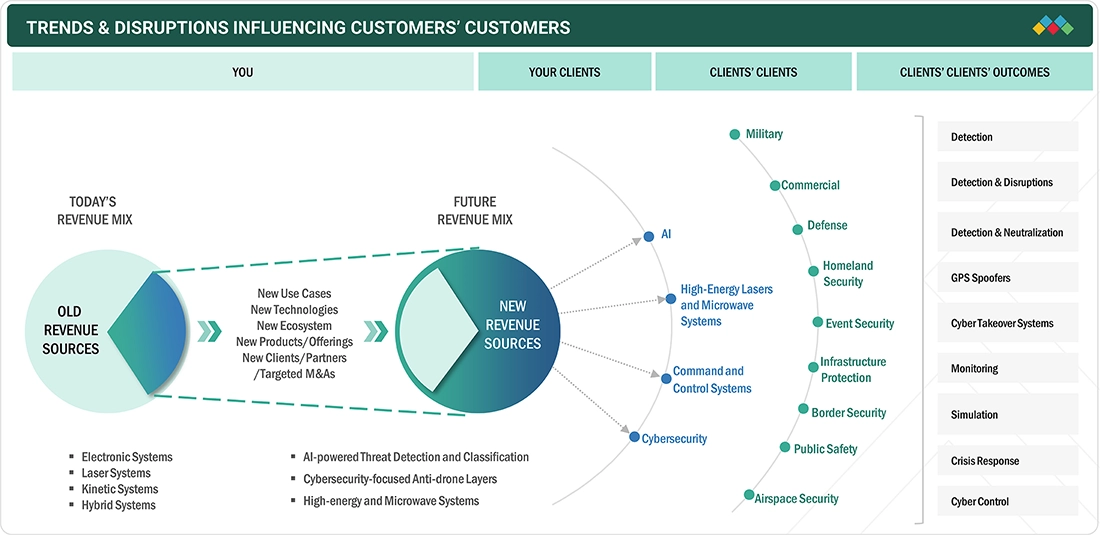
The Asia Pacific anti-drone market is rapidly evolving from conventional RF-, radar-, and electro-optical systems toward more integrated AI-driven detection, electronic-warfare (EW)–grade disruption, and cybersecurity-oriented counter-UAS frameworks. Growth is propelled by the increasing drone intrusions across sensitive border zones, expanding use of drones for smuggling and illicit armed activities, and rising threats to airports, defense bases, oil & gas sites, ports, and dense urban centers. China, India, Japan, South Korea, and Australia are accelerating investments in automated, multi-sensor, layered C-UAS architectures to safeguard critical infrastructure and major public events. Additionally, the fast-growing commercial drone adoption—across logistics, agriculture, and surveillance—has intensified the need for more precise threat classification, AI-enabled situational awareness, and scalable countermeasure systems capable of addressing diverse drone types and swarm-based attacks.
Source: Secondary Research, Interviews with Experts, MarketsandMarkets Analysis
MARKET DYNAMICS

Level
-
Rising UAV-related security incidents across borders and critical infrastructure

-
Strong defense, modernization, and homeland security spending


Level
-
High acquisition and integration costs for advanced C-UAS technologies

-
Fragmented regulatory landscape and inconsistent enforcement


Level
-
Expansion of smart-city surveillance and critical-infrastructure protection

-
Growing demand for mobile, portable, and battlefield-ready C-UAS systems


Level
-
Rapid evolution of drone capabilities and swarm-based threats

-
Proliferation of commercially available, low-cost drones

Source: Secondary Research, Interviews with Experts, MarketsandMarkets Analysis
Driver: Strong defense, modernization, and homeland security spending
Countries across the Asia Pacific—particularly China, India, Australia, South Korea, and Japan—are undergoing accelerated defense modernization, with counter-drone systems becoming a critical component of air-defense and border-protection strategies. Growing procurement budgets, rising geopolitical tensions, and the need to secure maritime boundaries and strategic military installations are driving the adoption of AI-enabled C-UAS solutions, directed-energy systems, and advanced sensor fusion technologies.
Restraint: High acquisition and integration costs for advanced C-UAS technologies
Asia Pacific nations struggle with high costs associated with acquiring, deploying, and maintaining complex multi-sensor counter-UAS systems. Technologies such as electronic warfare modules, directed-energy weapons, AI-enabled threat engines, and long-range radars require significant capital expenditure and specialized operational expertise. Budget constraints in emerging Southeast Asian economies limit adoption, restraining market penetration outside major economies, such as China, Japan, and Australia.
Opportunity: Growing demand for mobile, portable, and battlefield-ready C-UAS systems
Military and paramilitary forces in Asia Pacific increasingly require mobile, vehicle-mounted, and soldier-portable counter-drone technologies for border patrol, rapid-response missions, and conflict zones. Rising geopolitical tensions—particularly in the Indo-Pacific maritime region—are driving demand for rugged, tactical anti-drone solutions that can operate in harsh environments and provide real-time battlefield intelligence. This market shift opens strong opportunities for vendors specializing in lightweight electronic-warfare systems, RF jammers, and compact sensor fusion modules.
Challenge: Rapid evolution of drone capabilities and swarm-based threats
The pace at which commercial and military drones are evolving—especially in China and other technology-intensive markets—poses a significant challenge to counter-drone systems. Stealthier UAVs with low-RCS profiles, encrypted communication links, autonomous navigation, and multi-drone swarm tactics can easily overwhelm traditional detection and neutralization layers. This constant evolution forces vendors to invest heavily in R&D just to keep pace, raising operational risks.
Asia Pacific Anti-Drone Market: COMMERCIAL USE CASES ACROSS INDUSTRIES
| COMPANY | USE CASE DESCRIPTION | BENEFITS |
|---|---|---|
 |
DroneShield deployed its DroneSentry and DroneGun Tactical systems for defense forces, police agencies, and critical infrastructure operators across Australia, India, Vietnam, and the Philippines. The deployments supported base protection, VIP security, counter-smuggling operations, and maritime patrol missions. | Rapid tactical response, portable countermeasure capability, and effective mitigation for commercial and improvised drones | Improved interdiction along remote borders and coastal zones | Reliability in hot, humid, and rugged terrain |
 |
BEL deployed its RF-based and EO/IR hybrid anti-drone system across Indian military installations, international borders, public events, and airport zones. The system incorporates jamming modules, GNSS spoof detection, and automated target tracking optimized for high-temperature and dust-heavy regions. | Border protection | Improved event-security preparedness | Enhanced response speed while enabling indigenous, low-cost deployment across large geographic areas |
 |
Rafael deployed its Drone Dome counter-UAS system across India, Singapore, and Israel’s extended Asia Pacific defense partnerships. The system was integrated into military airbases, border-surveillance corridors, and high-security government zones. Deployments featured all-weather electro-optical sensors, RF analyzers, and laser-based hard-kill interceptors capable of neutralizing Class-1 and Class-2 drones used in cross-border infiltration attempts. | Real-time threat interception | Precise laser neutralization | Reliable classification performance in dusty, humid, and high-heat conditions | Military protection around border regions | Reduced drone-borne smuggling and ISR threats | Enhanced tactical response capability for static and mobile units |
Logos and trademarks shown above are the property of their respective owners. Their use here is for informational and illustrative purposes only.
MARKET ECOSYSTEM
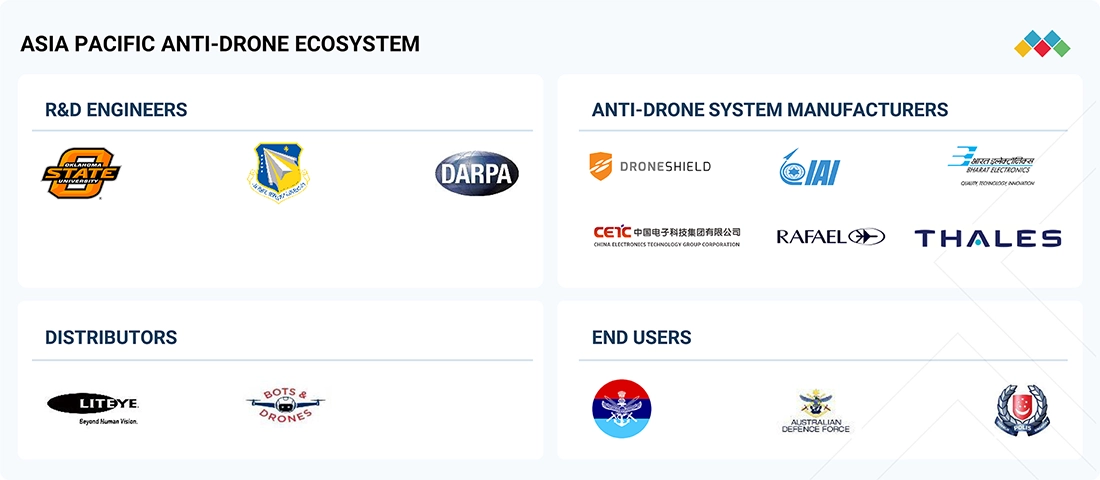
The Asia Pacific anti-drone ecosystem is being shaped by rapid defense modernization programs, rising geopolitical tensions, and strong national R&D investments led by defense ministries, technology institutes, and state-backed electronics manufacturers across India, China, Japan, and South Korea. The region’s ecosystem is supported by a mix of established defense primes, emerging electronic-warfare innovators, and advanced AI/analytics firms that are expanding indigenous counter-UAS production capabilities. Specialized system integrators and certified partners enable large-scale deployment across military bases, border regions, airports, seaports, power plants, and critical infrastructure—ensuring alignment with national airspace safety regulations and counter-UAS operational standards. Demand is fueled by armed forces, homeland-security agencies, coastal-policing units, and law-enforcement bodies seeking multi-layered protection against escalating drone incursions, cross-border UAV surveillance, and the proliferation of commercial and military-grade drones across the region.
Logos and trademarks shown above are the property of their respective owners. Their use here is for informational and illustrative purposes only.
MARKET SEGMENTS
Source: Secondary Research, Interviews with Experts, MarketsandMarkets Analysis
Asia Pacific Anti-Drone Market, By System Type
Directed-energy laser systems are expected to witness the fastest CAGR in the Asia Pacific anti-drone market, driven by accelerating defense modernization efforts across India, China, Japan, South Korea, and Australia. Governments are increasingly prioritizing high-precision, low-collateral, cost-efficient neutralization systems to counter rising drone incursions near borders, military installations, airports, and critical infrastructure. As drone swarms and low-altitude autonomous UAVs become more common, countries are rapidly investing in next-generation laser-based interceptors that offer rapid response, silent operation, and high accuracy. Strong regional emphasis on indigenous directed-energy technologies—particularly in India and China—is further boosting market expansion.
Asia Pacific Anti-Drone Market, By Platform Type
The UAV-based platform segment is projected to grow at the highest CAGR in Asia Pacific as airborne counter-UAS systems gain traction for border surveillance, coastal monitoring, island protection, and rapid-response operations. Defense and homeland-security agencies across India, Japan, and Southeast Asia are increasingly deploying UAV-based interceptors to complement static radar, electro-optical, RF analysis, and jamming systems. These mobile airborne platforms enable faster response in geographically complex terrains, such as mountainous regions (India), maritime zones (Japan, Indonesia), and dense urban corridors (Singapore). Their ability to provide extended coverage, agile tracking, and autonomous interception is significantly strengthening regional counter-UAS effectiveness.
Asia Pacific Anti-Drone Market, By Application
The detection & disruption application is expected to dominate the Asia Pacific anti-drone market as governments, defense forces, and security agencies increasingly require end-to-end counter-UAS capabilities to address escalating UAV-related espionage, border infiltration, smuggling, and threats to critical infrastructure. Airports, seaports, oil & gas facilities, defense installations, and high-density urban zones are rapidly deploying integrated systems that combine multi-sensor detection—radar, RF analyzers, EO/IR cameras, and AI-enabled analytics—with active disruption technologies, including RF jamming, GNSS spoofing, high-power microwave (HPM) systems, and directed-energy solutions. National airspace-security modernization programs across India, China, Japan, and Australia accelerate the adoption of these layered platforms, with combined detection-and-disruption suites becoming essential for real-time threat neutralization and comprehensive airspace protection.
Asia Pacific Anti-Drone Market, By Vertical
The military & defense vertical is anticipated to dominate the Asia Pacific anti-drone market, supported by rising defense budgets, active border disputes, and frequent UAV-based surveillance incidents. Armed forces across India, China, Japan, and South Korea are adopting multi-layered counter-UAS architectures that integrate radar-based detection, AI-enabled classification, jamming modules, and kinetic or directed-energy interceptors. Rapid procurement initiatives, combined with the need to protect forward-deployed units, airbases, ammunition depots, and naval assets, reinforce the dominance of the defense vertical.
REGION
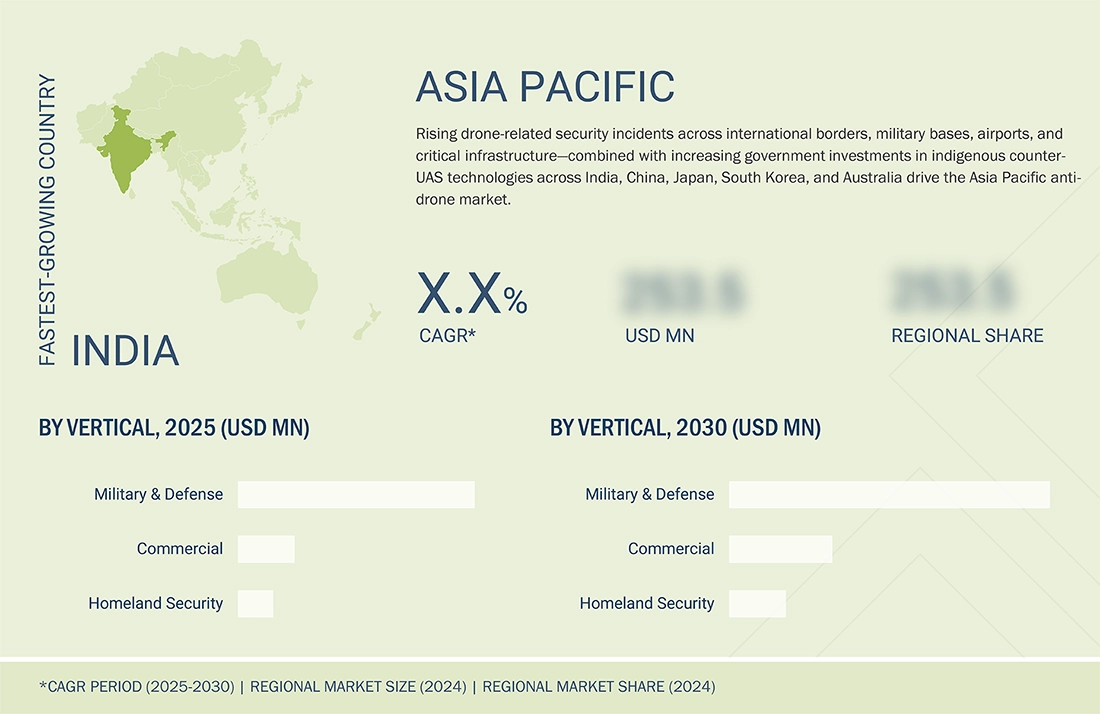
India to be fastest-growing country in Asia Pacific anti-drone market during forecast period
India is expected to record the fastest growth in the Asia Pacific anti-drone market during the forecast period, driven by a sharp rise in unauthorized drone activities near military bases, border regions, airports, and critical infrastructure sites. The country is rapidly accelerating the deployment of counter-UAS technologies across defense, homeland security, and law-enforcement agencies as part of its national airspace protection, counter-terrorism, and border-management modernization programs. Major investments in advanced radar systems, RF-based detection tools, AI-enabled classification engines, and automated drone-interception platforms are significantly expanding India’s counter-UAS capability landscape. Additionally, India’s increasing focus on safeguarding strategic assets—airports, power plants, defense research facilities, and government establishments—combined with active trials of next-generation technologies, such as laser-based directed-energy systems and autonomous hard-kill interceptors, further accelerate the market adoption. Strong collaboration with global security partners, combined with sustained government funding for indigenous counter-UAS development under “Make in India,” is positioning India as the fastest-growing market in the region.
Asia Pacific Anti-Drone Market: COMPANY EVALUATION MATRIX
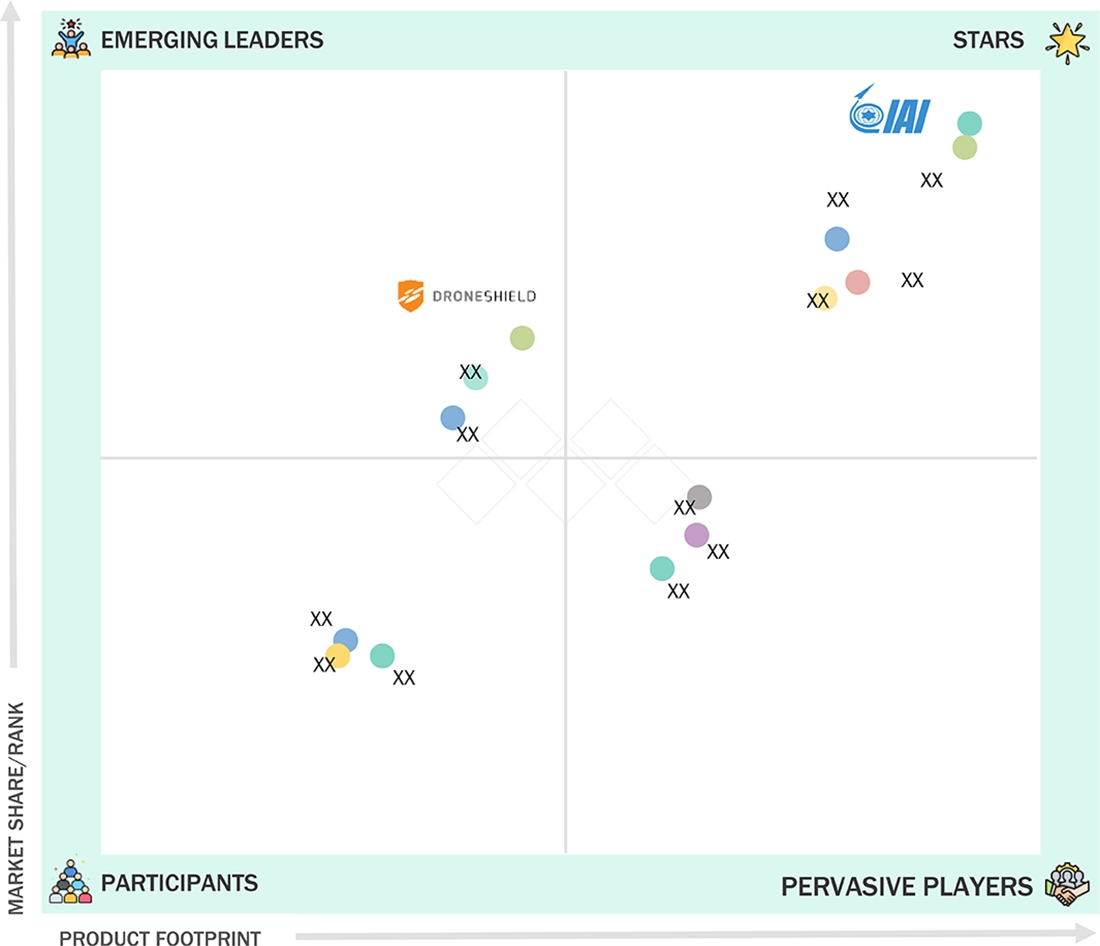
In the Asia Pacific anti-drone market, Israel Aerospace Industries (IAI) emerges as the Stars, leveraging its deep defense heritage and advanced, combat-proven counter-UAS portfolio that integrates radar, electro-optical systems, RF detection, jamming modules, and AI-enabled threat-classification engines. IAI’s strong regional footprint, reinforced by long-standing partnerships with defense ministries, homeland security agencies, and large system integrators across India, Japan, South Korea, Australia, and Southeast Asia, positions it as a dominant force driving large-scale adoption of multi-layered counter-drone architectures. Meanwhile, DroneShield (Emerging Leaders) is rapidly gaining traction with innovative RF-cyber detection platforms, handheld and fixed-site jammers, and AI-powered situational-awareness software.
Source: Secondary Research, Interviews with Experts, MarketsandMarkets Analysis
KEY MARKET PLAYERS
- Israel Aerospace Industries (IAI) (Israel)
- Rafael Advanced Defense Systems (Israel)
- DroneShield Ltd (Australia)
- China Electronic Technology Group Corporation (CETC) (China)
- Bharat Electronics Limited (BEL) (India)
- Raytheon Technologies (RTX) (US)
- Lockheed Martin Corporation (US)
- Thales Group (France)
- Leonardo S.p.A. (Italy)
- Zen Technologies Limited (India)
MARKET SCOPE
| REPORT METRIC | DETAILS |
|---|---|
| Market Size in 2024 (Value) | USD 0.86 Billion |
| Market Forecast in 2030 (Value) | USD 3.89 Billion |
| Growth Rate | CAGR of 30.0% from 2025–2030 |
| Years Considered | 2021–2030 |
| Base Year | 2024 |
| Forecast Period | 2025–2030 |
| Units Considered | Value (USD Billion/Million) and Volume (Million Units) |
| Report Coverage | Revenue forecast, company ranking, competitive landscape, growth factors, and trends |
| Segments Covered |
|
| Countries Covered | China, Japan, India, South Korea, Australia, Indonesia, Malaysia, Thailand, Vietnam, and Rest of Asia Pacific |
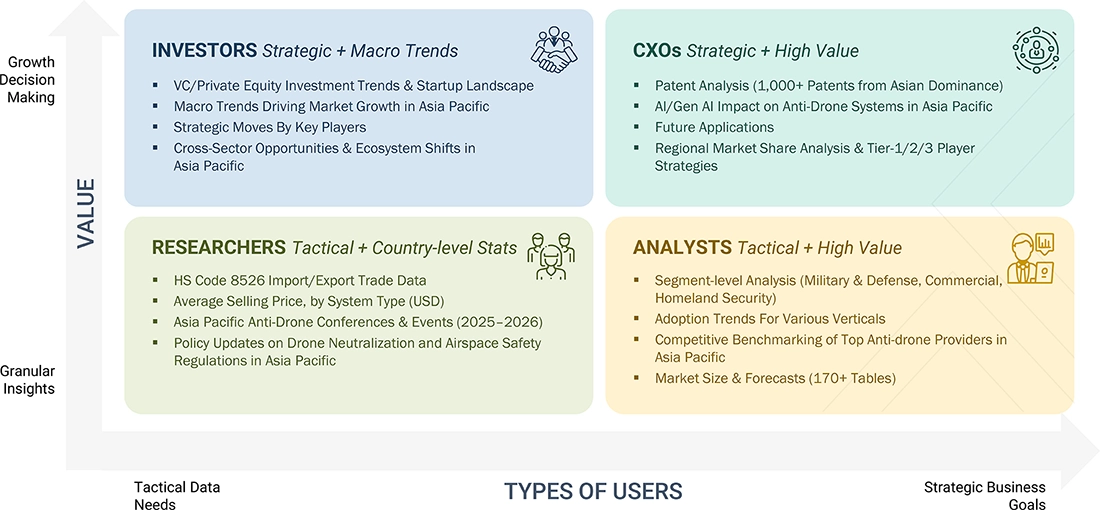
WHAT IS IN IT FOR YOU: Asia Pacific Anti-Drone Market REPORT CONTENT GUIDE
DELIVERED CUSTOMIZATIONS
We have successfully delivered the following deep-dive customizations:
| CLIENT REQUEST | CUSTOMIZATION DELIVERED | VALUE ADDS |
|---|---|---|
| Asia Pacific Defense OEM | Comprehensive benchmarking of Asia Pacific counter-UAS technologies—covering RF detection, radar-based tracking, EO/IR imaging, directed-energy neutralization, GNSS spoofing protection, and AI-enabled autonomous interdiction systems. Evaluation included leading APAC vendors (e.g., DRDO-affiliated integrators, Korea Aerospace Industries) and US/European imports deployed in Asia Pacific. The study also assessed interoperability with Quad and ASEAN defense frameworks, as well as the impact of dense urban electromagnetic environments common in Asia Pacific megacities. |
|
| Asia Pacific Homeland Security & Critical Infrastructure Agencies | Assessment of counter-UAS deployment models for airports, energy plants, ports, smart-city corridors, and high-density public venues, with compliance mapping to CAAS (Singapore), CASA (Australia), and DGCA (India). Delivered scenario-based evaluation of RF-resilient sensors, low-altitude swarm detection tools, and geo-fenced safe-airspace enforcement solutions suitable for both civilian and commercial airspace. Included threat modeling for illicit drone activity, cross-border smuggling, and unauthorized aerial surveillance common in the Asia Pacific. |
|
| Asia Pacific System Integrator | Performance benchmarking of AI/ML-based threat detection pipelines optimized for dense telecom networks, 5G/6G environments, and urban RF clutter typical to Asia Pacific megacities. Included multi-sensor fusion testing (RF + radar + EO/IR), automated classification of small-UAV swarms, and custom C2 workflows for campus-wide monitoring. Stress-tested systems for high humidity, maritime conditions, and electromagnetic interference found in coastal Asia Pacific regions. |
|
RECENT DEVELOPMENTS
- April 2025 : DroneShield Ltd secured five defense contracts totaling USD 32.2 million with a military customer in Asia Pacific. Facilitated through a global reseller, the deal includes the delivery of vehicle-mounted and fixed counter-UxS platforms for detecting, tracking, and neutralizing hostile drones.
- April 2025 : The Defence Science and Technology Agency (DSTA) and Thales established a joint laboratory to develop AI-driven technologies to enhance the Singapore Armed Forces’ counter-drone capabilities. The collaboration focuses on machine-learning software that enhances the performance of radar sensors, enabling faster and more accurate detection of drones, while reducing false alarms and improving situational awareness.
- March 2025 : DroneShield unveiled a major upgrade and global expansion of its DroneSentry C-UAS solution at the Avalon Australian International Airshow. The advanced system integrates AI-enabled multi-sensor detection and tracking, featuring SensorFusionAI, as well as third-party radar and optical technologies, to offer configurable, layered protection for military, critical infrastructure, and civilian use cases.
Table of Contents
 Exclusive indicates content/data unique to MarketsandMarkets and not available with any competitors.
Methodology
The study involved major activities in estimating the current market size for the Asia Pacific anti-drone market. Exhaustive secondary research was done to collect information on the market. The next step was to validate these findings, assumptions, and sizing with industry experts across the value chain using primary research. Different approaches, such as top-down and bottom-up, were employed to estimate the total market size. After that, the market breakup and data triangulation procedures were used to estimate the market size of the segments and subsegments of the Asia Pacific anti-drone market.
Secondary Research
The secondary research for this study involved gathering information from various credible sources. These included company annual reports, investor presentations, press releases, whitepapers, certified publications, and articles from reputable associations and government publications. Additional data was obtained from corporate filings, professional and trade associations, journals, and industry-recognized authors. Research from consortia, councils, and gold- and silver-standard websites, directories, and databases also contributed to the qualitative framework. Key global sources, such as the International Trade Centre (ITC) and the International Monetary Fund (IMF), were consulted to support and validate the market analysis.
Primary Research
Extensive primary research was conducted after understanding and analyzing the Asia Pacific anti-drone market scenario through secondary research. Primary data was collected through questionnaires, e-mails, and telephonic interviews. Various departments within organizations, such as sales, operations, and administration, were contacted to provide a holistic viewpoint in the report..
To know about the assumptions considered for the study, download the pdf brochure
Market Size Estimation
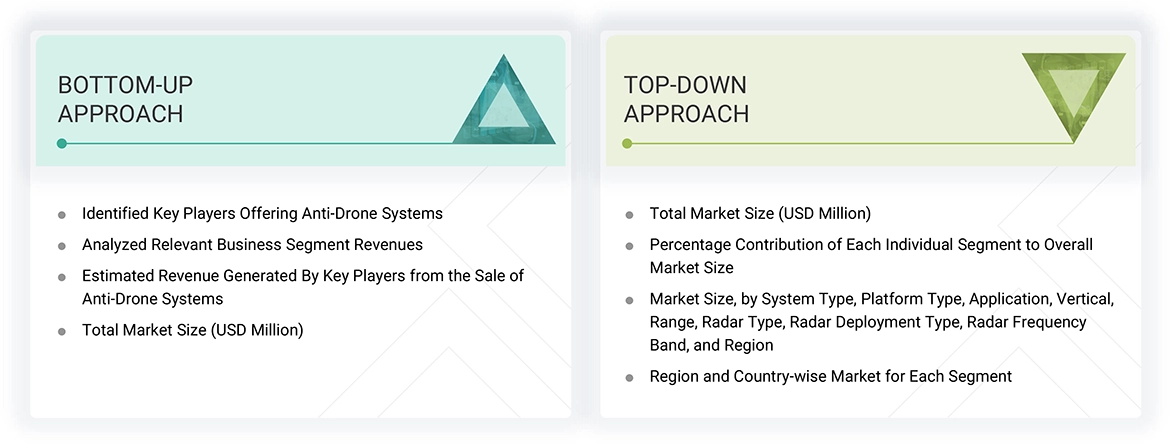
Both top-down and bottom-up approaches were used to estimate and validate the total size of the Asia Pacific anti-drone market. These methods were also used extensively to estimate the size of various subsegments in the market. The research methodology used to estimate the market size includes the following:
Asia Pacific Anti-Drone Market : Top-Down and Bottom-Up Approach
Data Triangulation
After arriving at the overall size of the Asia Pacific anti-drone market through the process explained above, the overall market has been split into several segments. Data triangulation procedures have been employed to complete the overall market engineering process and arrive at the exact statistics for all the segments, wherever applicable. The data has been triangulated by studying various factors and trends from the demand and supply sides. The market has also been validated using top-down and bottom-up approaches.
Market Definition
An anti-drone system refers to a comprehensive set of technologies and solutions designed to detect, monitor, identify, and mitigate threats posed by unauthorized or hostile drones. These systems are increasingly essential as the use of drones grows across various sectors, raising concerns over security, privacy, and safety. Anti-drone technologies employ a combination of sensors such as radar, radio frequency (RF) detectors, electro-optical and infrared cameras, and acoustic sensors to detect and track drones in real time accurately. Once detected, these systems can neutralize the threat through various disruption methods, including RF jamming, GPS spoofing, directed energy weapons such as lasers, or physical interception. Anti-drone solutions safeguard critical infrastructure, military installations, airports, public gatherings, and sensitive government or commercial sites from potential risks, such as espionage, smuggling, sabotage, or attacks.
Key Stakeholders
- Brand Product Manufacturers/Original Equipment Manufacturers (OEMs)/Original Device Manufacturers (ODMs)
- Anti-drones Product Manufacturers
- Anti-Drone Material and Component Suppliers
- Manufacturing Equipment Suppliers
- System Integrators
- Technology/IP Developers
- Consulting and Market Research Service Providers
- Government and Military Agencies
- Anti-drones-related Associations, Organizations, Forums, and Alliances
- Venture Capitalists and Startups
- Research and Educational Institutes
- Distributors and Resellers
- End Users
Report Objectives
- To define, describe, and forecast the Asia Pacific anti-drone market size, by system type, platform type, application, vertical, range, radar type, radar deployment type, and radar frequency band, in terms of value
- To define, describe, and forecast the Asia Pacific anti-drone market size, by vertical, in terms of volume
- To provide detailed insights regarding drivers, restraints, opportunities, and challenges influencing the growth of the market
- To analyze emerging applications and standards in the Asia Pacific anti-drone market
- To examine manufacturers of anti-drone solutions, their strategies, production plans, and the overall value chain, including material and component suppliers
- To strategically analyze the micromarkets1 with respect to individual growth trends, prospects, and contributions to the overall market
- To analyze the market opportunities for stakeholders and provide a comprehensive competitive landscape analysis
- To provide a detailed overview of the anti-drone ecosystem
- To provide a detailed overview of the impact of AI/Gen AI, the macroeconomic outlook for all regions, and the 2025 US tariff impact on the Asia Pacific anti-drone market
- To provide information about the key technology trends, trade analysis, and patents related to the Asia Pacific anti-drone market
- To strategically analyze average selling price trends, trends impacting customer business, regulatory landscape, patent landscape, Porter’s five forces, import and export scenarios, trade landscape, and case studies pertaining to the market under study
- To benchmark the market players using the proprietary company evaluation matrix framework, which analyzes them on various parameters within the broad categories of market ranking/share and product portfolio
- To analyze competitive developments, such as partnerships, acquisitions, expansions, collaborations, and product launches, in the market
- To strategically profile key players and analyze their market share, ranking, and core competencies
Customization Options
With the market data given, MarketsandMarkets offers customizations according to the company’s specific needs. The following customization options are available for the report:
Company Information
- Detailed analysis and profiling of additional market players (up to 7)
Key Questions Addressed by the Report
What is the projected value of the Asia Pacific anti-drone market?
The Asia Pacific anti-drone market is projected to reach USD 3.89 billion by 2030 from USD 1.05 billion in 2025, growing at a CAGR of 30.0%.
Which country dominates the Asia Pacific anti-drone market?
China dominates the Asia Pacific anti-drone market, accounting for approximately 37.5% share in 2024.
Which system type segment is expected to grow the fastest in the market?
The laser systems segment is expected to register the highest CAGR during the forecast period due to increasing adoption of directed-energy technologies.
Which platform segment leads the Asia Pacific anti-drone market?
The ground-based segment holds the largest share, accounting for approximately 65–75% of the market in 2024.
Who are the key players in the Asia Pacific anti-drone market?
Key players include Israel Aerospace Industries, Rafael Advanced Defense Systems, DroneShield Ltd, China Electronics Technology Group Corporation (CETC), and Bharat Electronics Limited.


Personalize This Research
- Triangulate with your Own Data
- Get Data as per your Format and Definition
- Gain a Deeper Dive on a Specific Application, Geography, Customer or Competitor
- Any level of Personalization
Let Us Help You
- What are the Known and Unknown Adjacencies Impacting the Asia Pacific Anti-Drone Market
- What will your New Revenue Sources be?
- Who will be your Top Customer; what will make them switch?
- Defend your Market Share or Win Competitors
- Get a Scorecard for Target Partners

Custom Market Research Services
We Will Customise The Research For You, In Case The Report Listed Above Does Not Meet With Your Requirements
Get 10% Free CustomisationTESTIMONIALS

Tetsuya Ohhira
Business Development Manager-Technology Business
Nikon Corporation,
Leading Japanese MNC specializing in optics and imaging productswww.nikon.com
MarketsandMarkets™ response
is quick. Their attitude is flexible and positive. Analyst Insights are globally considered and
significant. Client Services quickly respond to our inquiry and demand. Their wide range of global
surveys help us make our strategic plan.
We hope Knowledge Store will be easier to search
for a report.
VP - Marketing & Business Development
Leading Provider of Process Control Solutions
We engaged with MarketsandMarkets on a study to perform an analysis and recommend a Go-To-Market strategy for metrology and process control in the semiconductor market. The study was tailored to our targets and needs with well-defined milestones. Our overall experience with the MarketsandMarkets team was very good throughout the project in all aspects including the analysis methodologies used, the quality and depth of primary and secondary data sets, the professionalism and flexibility of the team and the ability to meet the target schedule and milestones. We want to thank MarketsandMarkets team for a job well done.






Growth opportunities and latent adjacency in Asia Pacific Anti-Drone Market