Asia Pacific Fleet Management Market

Asia Pacific Fleet Management Market by Solution (Operation Management, Vehicle Maintenance & Diagnostics, Performance Management, Fleet Analytics & Reporting), Fleet Type (Passenger Cabs, Commercial Vehicles, Public Transport) - Forecast to 2030




OVERVIEW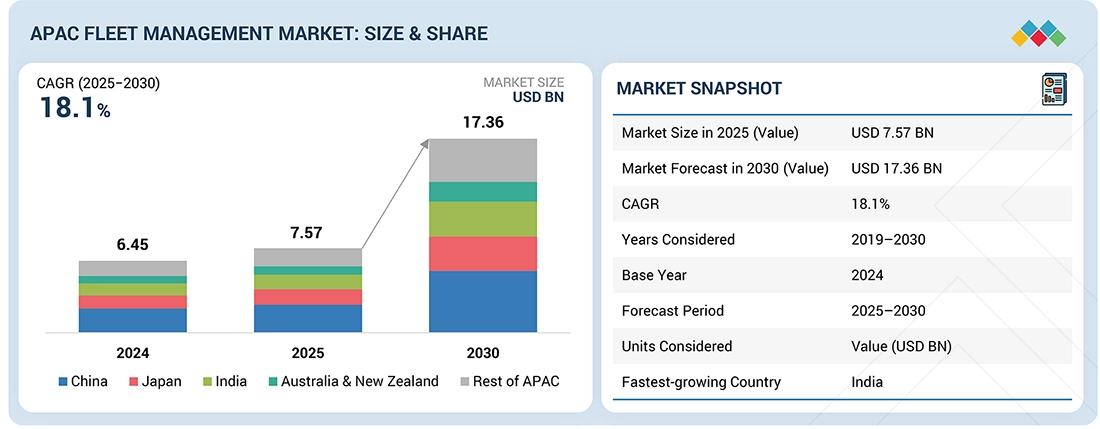
Source: Secondary Research, Interviews with Experts, MarketsandMarkets Analysis
The Asia Pacific fleet management market is projected to grow from USD 7.57 billion in 2025 to USD 17.36 billion by 2030, at a CAGR of 18.1%. Rapid urbanization and population growth in India and China are driving strong demand for logistics services across the Asia Pacific region. Expanding e-commerce activity is increasing the need for advanced last-mile delivery and fleet coordination solutions. Government investment in smart infrastructure and road networks is accelerating the adoption of telematics, while regional mandates supporting electric vehicle transitions are increasing demand for specialized fleet monitoring systems.
KEY TAKEAWAYS
-
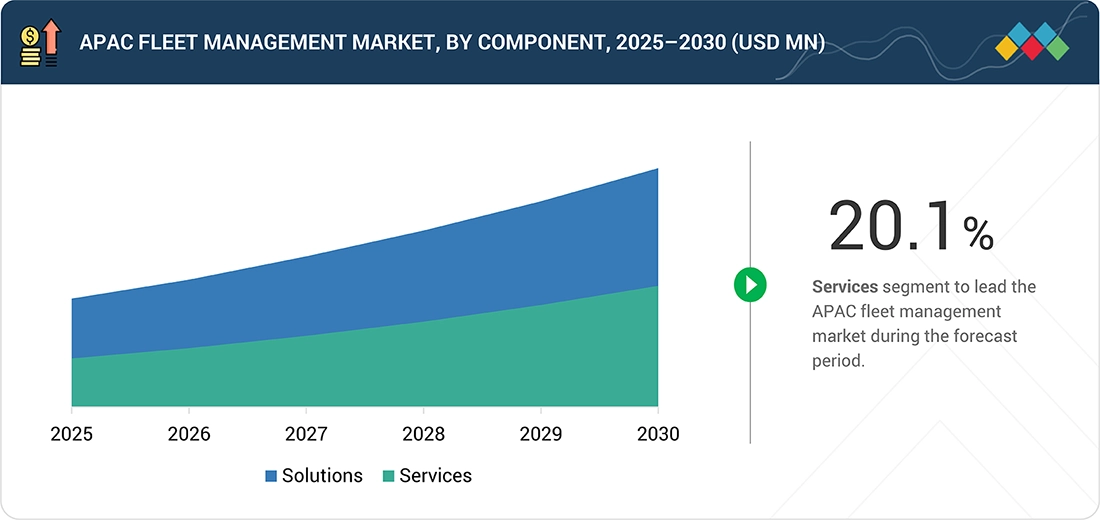
By ComponentBy component, the services segment is expected to register a higher CAGR of 20.1%.
-
By Fleet TypeBy fleet type, the commercial vehicles segment is projected to grow at the highest rate from 2025 to 2030.
-
By PowertrainBy powertrain, the internal combustion engine (ICE) segment is expected to dominate the market.
-
By VerticalBy vertical, the construction & mining segment is expected to exhibit the fastest growth during the forecast period.
-
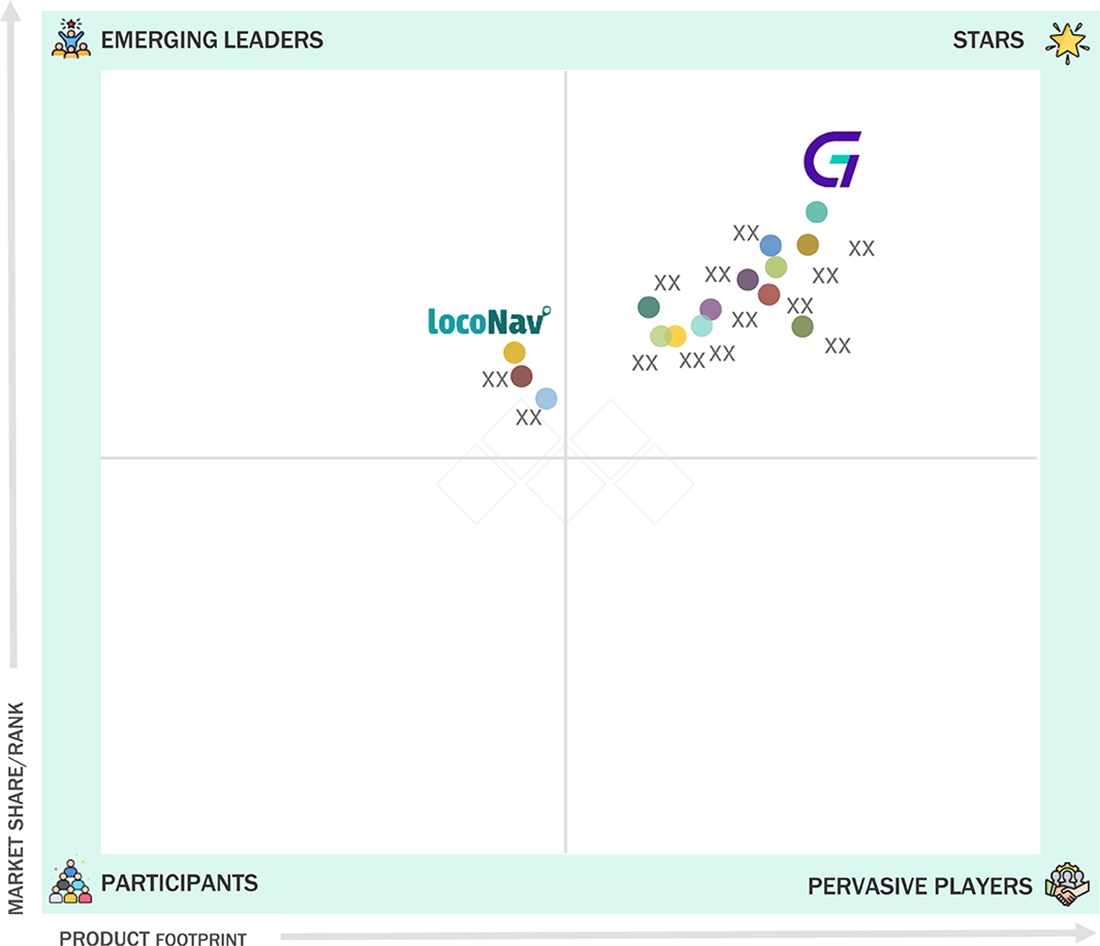
Competitive LandscapeG7 Connect, Verizon Connect, and EROAD were identified as star players in the Asia Pacific fleet management market, given their strong market share and product footprint.
The fleet management market in the Asia Pacific is expanding as automation integrates into core operations across China, India, and Japan. Infrastructure maturity levels remain uneven across Southeast Asia and South Korea, even as technology adoption continues to grow. Fleet operators face critical challenges in managing varied traffic conditions and rising expectations for predictive maintenance. As a result, data-driven fleet solutions are being widely adopted to improve regional operational planning accuracy, driven by government promotion of smart mobility and digital transport infrastructure.
TRENDS & DISRUPTIONS IMPACTING CUSTOMERS' CUSTOMERS
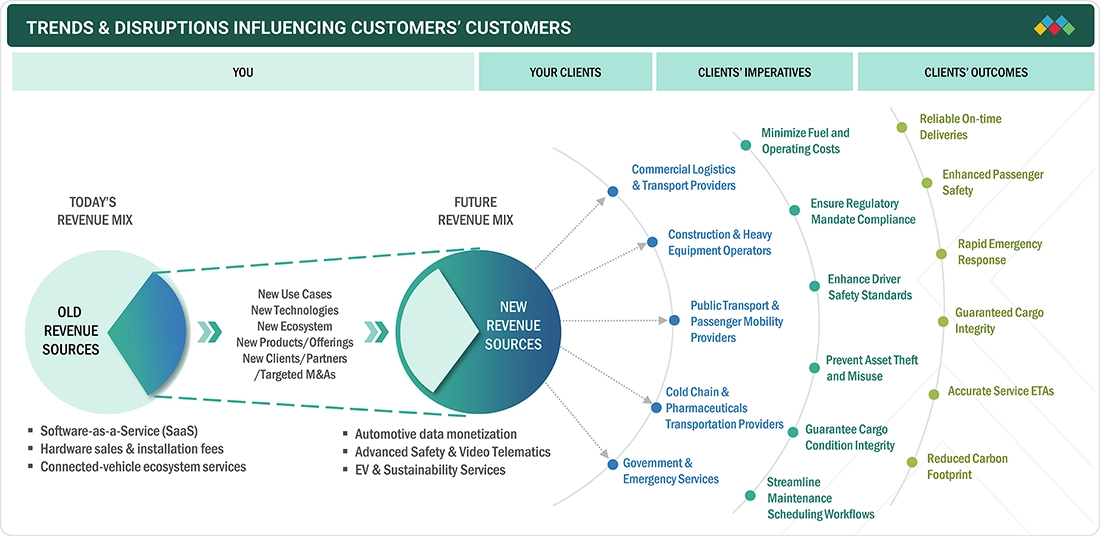
The Asia Pacific fleet management market increasingly determines customers’ business outcomes through evolving operational requirements, emerging technologies, and stricter regulatory standards. Key users include logistics operators, construction and heavy equipment fleets, public transport providers, cold chain distributors, and government emergency services. These integrated fleet management solutions are relied upon to improve service reliability, safety performance, and regulatory compliance. Rising pressure to cut costs, prevent asset misuse, improve driver behavior, and protect cargo is driving the adoption of telematics and data-driven platforms. Provider revenue is shifting from software subscriptions and hardware fees toward automotive data monetization, advanced safety and video telematics, and EV and sustainability services. Demand for next-generation systems and value-added services is expected to strengthen market growth.
Source: Secondary Research, Interviews with Experts, MarketsandMarkets Analysis
MARKET DYNAMICS

Level
-
Regulatory Compliance Mandates and Government Vehicle Tracking Requirements

-
Multi-modal Integration in High-density Urban Centers


Level
-
Uneven Connectivity Infrastructure and Fragmented Mobile Network Landscape

-
Data Sovereignty and Cross-border Regulatory Fragmentation


Level
-
Cross-border Regional Logistics Integration and Trade Corridor Development

-
Government-sponsored Smart City Initiatives and Connected Vehicle Ecosystems


Level
-
Delayed EV Charging Infrastructure Rollout and Grid Readiness Gaps in Developing Economies

-
Absence of Standardized Telematics Product Specifications Across Asia Pacific Markets

Source: Secondary Research, Interviews with Experts, MarketsandMarkets Analysis
Driver: Regulatory Compliance Mandates and Government Vehicle Systems
Regulatory compliance requirements are a primary driver of fleet management adoption across the Asia Pacific region. GPS-based tracking is increasingly being mandated for commercial and public vehicle fleets by governments in India, China, and Indonesia. In India, AIS 140 regulations require real-time tracking, emergency alert functions, and centralized monitoring for passenger transport operations. China mandates digital supervision of logistics and hazardous goods fleets through government-monitored telematics platforms. Electronic logging, safety reporting, and continuous location traceability are also required in Australia and several Southeast Asian markets. These regulatory frameworks require fleet operators to implement scalable fleet management systems. Compliance, operational transparency, and standardized reporting across diverse vehicle categories and operating environments are supported by such systems.
Restraint: Uneven Connectivity Infrastructure and Fragmented Mobile Network Landscape
Asia Pacific differs from other regions because it is a collection of independent countries, each with its own regulatory agencies and mobile network operators. Countries such as South Korea, Singapore, Japan, Hong Kong, and Taiwan have already deployed commercial 5G services. Deployment delays are being faced by other markets due to geographic challenges, high spectrum auction costs, and significant infrastructure investment requirements. Fleet telematics platforms must integrate with multiple carrier SIM management systems. Operational complexity, regional deployment, and operating expenses are increased by this requirement due to varying roaming charges.
Opportunity: Cross-border Regional Logistics Integration and Trade Corridor Development
Countries in the ASEAN region, like Indonesia, Malaysia, Vietnam, and the Philippines, are creating cross-border transport agreements that standardize customs, traffic rules, and logistics standards. These frameworks expand opportunities for regional freight operators and favor fleet management platforms that support operations across multiple countries, languages, and regulatory frameworks. Such platforms can unlock significant economies of scale for carriers operating across Southeast Asia by enabling unified route planning, customs pre-clearance, and standardized data exchange. Smart ports and logistics hubs are being developed across the region through simultaneous government investment. The demand for interoperable telematics systems is being driven by these investments, enabling end-to-end supply chain visibility and real-time coordination among ports, carriers, and customs authorities.
Challenge: Delayed EV Charging Infrastructure Rollout and Grid Readiness Gaps in Developing Economies
Significant gaps in public chargers and fast-charging corridors remain in rural and secondary urban areas, even as charging infrastructure expands in developed Asia Pacific markets. Most Asia Pacific electricity grids are not yet prepared to handle the mass charging demands of commercial EV fleets without major distribution upgrades and smart tariff implementation. High land acquisition costs and limited space in congested urban centers further delay public charger deployment, creating operational bottlenecks for logistics companies that rely on reliable charging availability for large commercial fleets. As a result, fleet operators may be forced to increase investment in on-site depot charging, accept route constraints, or face higher operating costs and scheduling complexity.
ASIA PACIFIC FLEET MANAGEMENT MARKET: COMMERCIAL USE CASES ACROSS INDUSTRIES
| COMPANY | USE CASE DESCRIPTION | BENEFITS |
|---|---|---|
 |
BC Sands deployed Geotab GO hardware and the MyGeotab platform across its Australian heavy vehicle and plant fleet. The rollout enabled continuous vehicle tracking, engine diagnostics, driver behavior monitoring, and automated maintenance alerts. The solution supported multi-site operations and provided real-time visibility across both on-road and off-road assets. | Following deployment, BC Sands gained clearer operational visibility and faster incident investigation. Proactive maintenance scheduling reduced unplanned downtime. Centralized fleet data improved dispatch decisions and driver coaching. Route analysis lowered fuel waste. Regulatory reporting for Australian operations became simpler and more consistent. |
 |
Medallion Translinks implemented LocoNav’s fleet management and AI-enabled video telematics across a 170-vehicle fleet in India. The solution addressed fuel theft, route deviations, and compliance gaps. It combined GPS tracking, fuel sensors, geofencing, trip management, and dual-channel dashcams with automated alerts designed for logistics use cases. | After adoption, Medallion Translinks reduced operating cost per vehicle and cut fuel losses. Penalties declined, and on-time delivery performance improved. Video evidence strengthened loss prevention. Better fleet visibility enabled faster vehicle turnaround and higher trip frequency. The platform supported expansion from captive logistics to a full-service logistics provider. |
 |
Star Cement integrated FleetX’s AI-driven fleet platform to gain end-to-end visibility of truck movements across its regional distribution network in India. The deployment enabled automated job assignment, real-time tracking, checkpoint validation, and site-level analytics to address idling and routing inefficiencies. | Post deployment, Star Cement increased completed deliveries and improved truck availability. Real-time monitoring reduced idling and unauthorized detours. Automated reports simplified back-office processes. Fleet utilization improved, supporting higher delivery throughput and stronger operational control across the company’s regional logistics operations. |
 |
Qube Logistics deployed EROAD Clarity dashcams across container hoists and terminal equipment in New Zealand. The deployment focused on capturing high-resolution video of operating events. It improved safety oversight across port and yard operations. The system also supported faster incident review at container handling locations. | Following implementation, Qube Logistics gained immediate visibility into equipment incidents and operator behavior. Incident investigations became faster and more accurate. Targeted coaching improved safety practices on-site. Video evidence reduced disputed claims and strengthened safety procedures. The solution contributed to measurable reductions in high-risk events and lower insurance-related friction. |
Logos and trademarks shown above are the property of their respective owners. Their use here is for informational and illustrative purposes only.
MARKET ECOSYSTEM
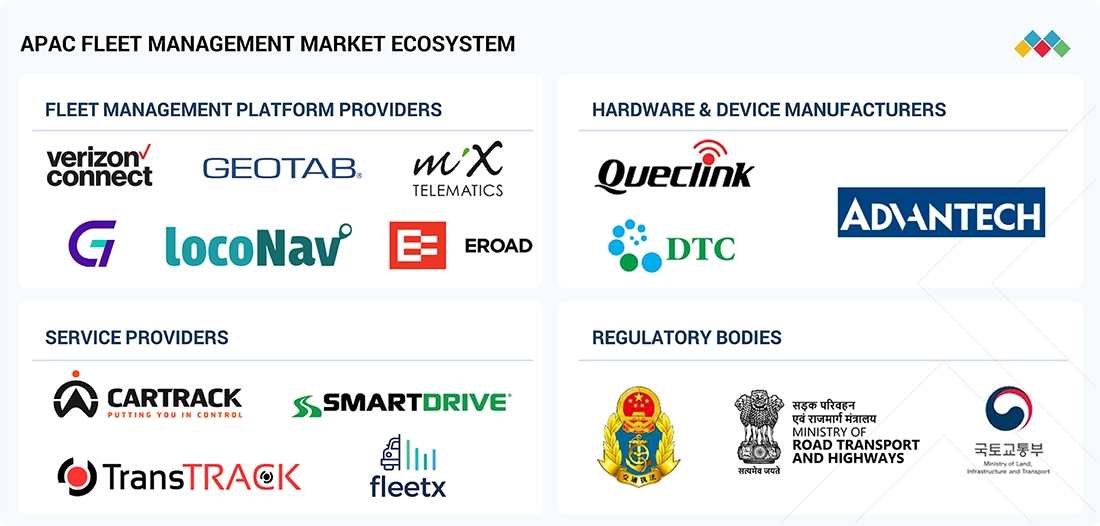
The Asia Pacific fleet management ecosystem is an interconnected network that enables end-to-end visibility, regulatory compliance, and operational optimization across the region. Fleet management platforms bring vehicle, driver, and operational data into one system for real-time monitoring, data-driven decisions, and improved efficiency. Hardware manufacturers supply telematics devices that capture location, performance, and safety data across diverse vehicle types. Implementation, integration, maintenance, and localized expertise are provided by service providers to adapt solutions to regional regulatory and operational requirements. Regulatory bodies set emissions standards, safety mandates, and cross-border transport rules that drive the adoption of advanced telematics and digital compliance tools. Together, these components help fleets improve productivity, lower operating costs, support electrification, and maintain compliance.
Logos and trademarks shown above are the property of their respective owners. Their use here is for informational and illustrative purposes only.
MARKET SEGMENTS
Source: Secondary Research, Interviews with Experts, MarketsandMarkets Analysis
Asia Pacific Fleet Management Market, By Component
By component, the solutions segment is expected to hold the largest market share. Fleet management operations across Asia Pacific are evolving rapidly as real-time tracking, geofencing, dynamic routing, and scheduling technologies become essential for logistics and transportation operators in diverse, fast-growing markets. GPS-enabled tracking delivers precise visibility of vehicle movements across India, China, Japan, and Southeast Asia, enabling faster decisions and more reliable deliveries despite complex cross-border routes. Virtual geofencing strengthens compliance and safety by generating alerts when vehicles enter or exit restricted or high-risk zones, a particular necessity in densely populated urban centers. Advanced routing and scheduling reduce congestion-related delays, lower fuel consumption, and improve asset utilization. These capabilities are key drivers of faster adoption of integrated fleet management platforms across the region.
Asia Pacific Fleet Management Market, By Fleet Type
The commercial vehicles segment is projected to record the fastest growth in the Asia Pacific fleet management market as rapid e-commerce expansion and rising last-mile delivery demand in India, China, Indonesia, and Japan drive large-scale deployment of vans and small trucks. This increases demand for telematics, route optimization tools, and driver assist solutions tailored to congested urban environments and frequent stop-and-go operations. At the same time, national clean mobility policies, subsidies, and city-level low-emission regulations are accelerating fleet electrification, creating a need for EV diagnostics, charger-aware routing, and real-time energy use analytics. Operational cost pressures and tighter urban restrictions are prompting operators to modernize fleets and adopt integrated fleet platforms.
Asia Pacific Fleet Management Market, By Powertrain
Electric vehicle powertrains are expected to experience the strongest growth within the Asia Pacific fleet management market as regional electrification initiatives expand demand for advanced telematics and energy management platforms. Fleet operators across China, India, Japan, South Korea, and Southeast Asia are deploying battery health monitoring, charger-aware routing, smart charging, and predictive maintenance to minimize downtime and control operating costs. Government incentives, including China’s NEV policies, India’s FAME program, and Japan’s green mobility initiatives, are accelerating the transition from internal combustion fleets to electric vehicles across logistics, public transport, and municipal services. Expanding charging infrastructure and rising sustainability expectations are further reinforcing demand for fleet-level energy optimization and EV-focused management solutions across the region.
Asia Pacific Fleet Management Market, By Vertical
Commercial logistics is expected to account for the largest share of the Asia Pacific fleet management market during the forecast period, supported by rapid e-commerce growth, expanding cross-border freight flows across ASEAN and China corridors, and the rise of omnichannel distribution models. These trends are creating large, high-utilization fleets that depend on advanced telematics, route optimization, load planning, and real-time visibility to maintain reliable operations. Logistics operators are adopting solutions that lower fuel and labor costs, improve asset utilization, and support fast last-mile delivery. At the same time, varied emissions policies, EV incentives, urban congestion, and sustained cost pressure are driving adoption of predictive maintenance and total cost of ownership analytics across the region.
REGION
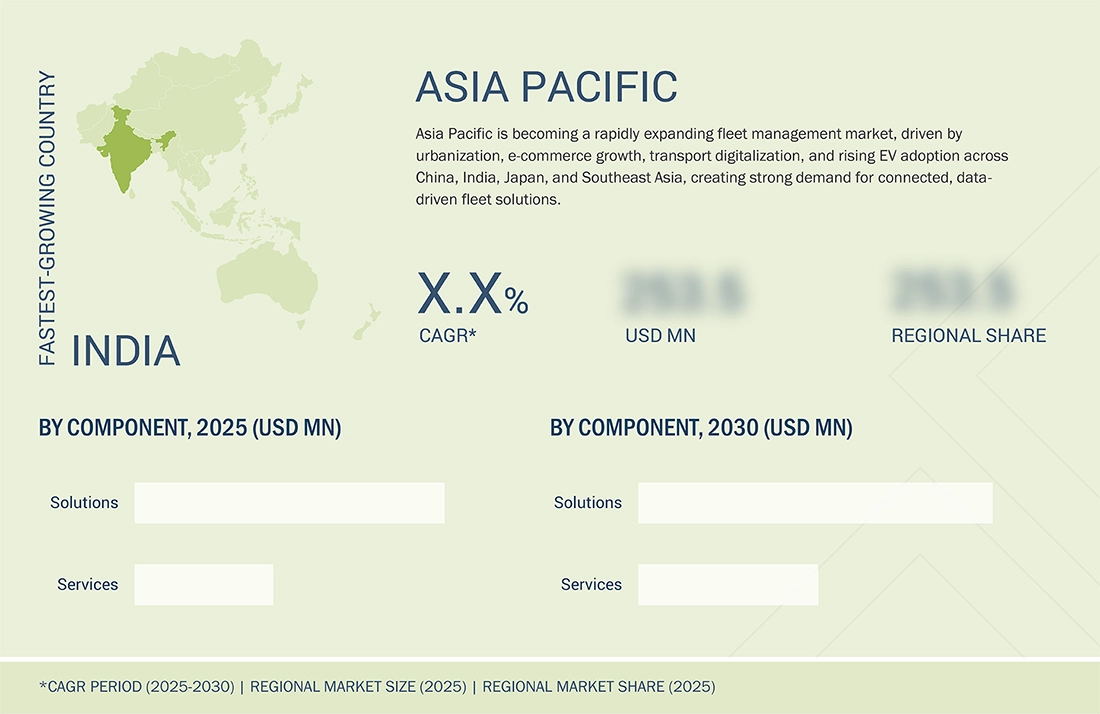
India is expected to be the fastest-growing country in the Asia Pacific fleet management market during the forecast period.
India is projected to record the highest CAGR in the Asia Pacific fleet management market, driven by regulatory, commercial, and technology-related factors. Stricter urban vehicle restrictions and the emergence of low-emission zones in major cities are prompting operators to modernize their fleets and deploy telematics for emissions monitoring and route compliance. Rapid growth in e-commerce and last-mile logistics across urban centers is driving increased demand for efficient routing, real-time visibility, and readiness for electrification. National programs such as FAME, along with state-level EV policies and rising investment in charging infrastructure, are strengthening demand for EV-capable fleet solutions. A large base of small and medium fleet operators is accelerating digital adoption, positioning India as the fastest-growing fleet management market in Asia Pacific.
ASIA PACIFIC FLEET MANAGEMENT MARKET: COMPANY EVALUATION MATRIX
In the Asia Pacific fleet management market, G7 Connect (Star Player) maintains a commanding position thanks to its broad product portfolio, robust telematics capabilities, and deep penetration across commercial logistics and multinational fleets operating within the region. LocaNav (Emerging Leader) is rapidly gaining traction by enhancing analytics-driven fleet optimization tools and expanding its presence among small and mid-sized operators that prioritize cost efficiency and regulatory compliance.
Source: Secondary Research, Interviews with Experts, MarketsandMarkets Analysis
KEY MARKET PLAYERS
- Verizon Connect (US)
- Trimble Inc. (US)
- Geotab (Canada)
- Samsara (US)
- MiX Telematics (South Africa)
- G7 (China)
- Queclink (China)
- LocoNav (India)
- Fleetx (India)
- Cartrack (South Africa)
- EROAD (New Zealand)
- TransTRACK (Indonesia)
- SmartDrive Inc. (Japan)
- Advantech (Taiwan)
- D.T.C. Enterprise (Thailand)
MARKET SCOPE
| REPORT METRIC | DETAILS |
|---|---|
| Market Size in 2025 (Value) | USD 7.57 Billion |
| Market Forecast in 2030 (Value) | USD 17.36 Billion |
| Growth Rate | CAGR of 18.1% during 2025-2030 |
| Years Considered | 2019-2030 |
| Base Year | 2024 |
| Forecast Period | 2025-2030 |
| Units Considered | Value (USD Billion) |
| Report Coverage | Revenue forecast, company ranking, competitive landscape, growth factors, and trends |
| Segments Covered |
|
| Countries Covered | China, Japan, India, Australia & New Zealand, Rest of Asia Pacific |
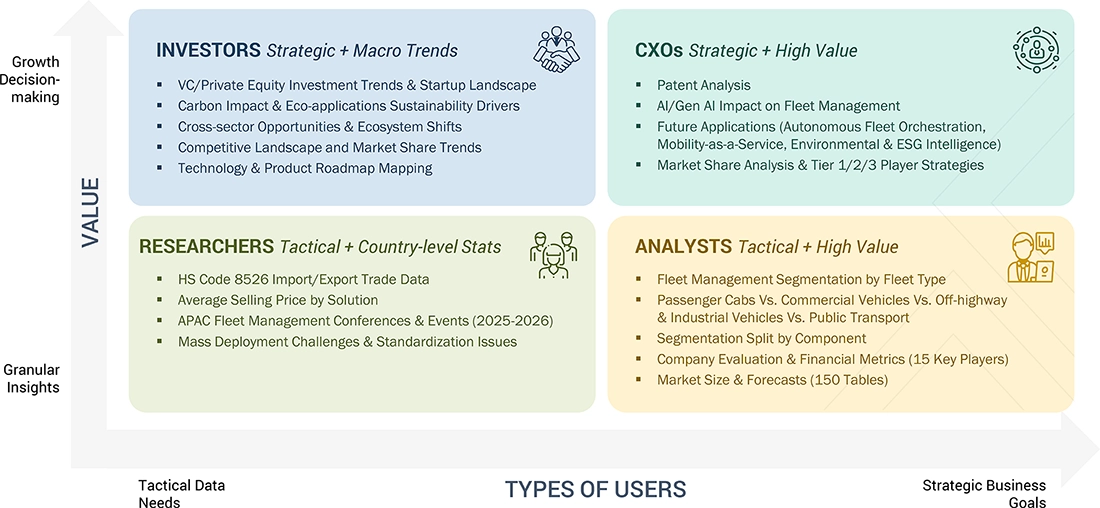
WHAT IS IN IT FOR YOU: ASIA PACIFIC FLEET MANAGEMENT MARKET REPORT CONTENT GUIDE
DELIVERED CUSTOMIZATIONS
We have successfully delivered the following deep-dive customizations:
| CLIENT REQUEST | CUSTOMIZATION DELIVERED | VALUE ADDS |
|---|---|---|
| EV Fleet Operator |
|
|
| Construction & Mining Operator |
|
|
| Commercial Logistics / Freight Carrier |
|
|
| Public Transport Authority |
|
|
| Ride-hailing / Passenger Cabs |
|
|
RECENT DEVELOPMENTS
- October 2025: Geotab acquired the commercial operations of Verizon Connect in Australia. The acquisition brought more than 400 local sales staff and customer relationships into Geotab’s business. This move strengthens Geotab’s regional presence and expands its ability to serve small and mid-sized fleets across Australia and New Zealand.
- April 2024: Powerfleet and MiX Telematics completed a business combination to form a larger global software provider. The deal brings together MiX Telematics’ customer base in the Asia Pacific with Powerfleet’s footprint in North America. The combined company expands product depth and partner reach across Australia and other Asia Pacific markets.
- October 2024: Geotab partnered with New Zealand-based EROAD to launch EROAD Locate for light commercial vehicles. The solution combines Geotab’s low-cost hardware with EROAD’s compliance-focused platform. The offering improves fleet accessibility and regulatory support across Australia and New Zealand.
- February 2024: Queclink launched QTrack Protocol Pro as a new device integration standard. The protocol improves device-to-cloud connectivity through stronger security and lower data usage. It supports MQTT and simplifies large-scale deployments. This benefits system integrators and partners deploying Queclink devices across Asia Pacific fleets.
Table of Contents
 Exclusive indicates content/data unique to MarketsandMarkets and not available with any competitors.
Methodology
This research study involved extensive secondary sources, directories, and databases, such as Dun & Bradstreet (D&B) Hoovers and Bloomberg BusinessWeek, to identify and collect information useful for a technical, market-oriented, and commercial study of the Asia Pacific Fleet Management Market. The primary sources have been mainly industry experts from the core and related industries and preferred suppliers, manufacturers, distributors, service providers, technology developers, alliances, and organizations related to all segments of the value chain of this market. In-depth interviews have been conducted with primary respondents, including key industry participants, subject matter experts, C-level executives of key market players, and industry consultants, to obtain and verify critical qualitative and quantitative information.
Secondary Research
The market for companies offering fleet management solutions and services to different verticals has been estimated and projected based on the secondary data made available through paid and unpaid sources, as well as by analyzing their product portfolios in the ecosystem of the Asia Pacific Fleet Management Market. It also involved rating company products based on their performance and quality. In the secondary research process, various sources such as the International Journal of Advanced Research (IJAR), EA Journals, and the International Journal of Technology, Innovation, and Management (IJTIM) have been referred to for identifying and collecting information for this study the Asia Pacific Fleet Management Market. The secondary sources included annual reports, press releases investor presentations of companies, white papers, journals, and certified publications and articles by recognized authors, directories, and databases. Secondary research has been mainly used to obtain critical information about the supply chain of the market, the total pool of key players, market classification, segmentation according to industry trends to the bottommost level, regional markets, and key developments from both market- and technology-oriented perspectives that primary sources have further validated.
Primary Research
In the primary research process, various primary sources from both the supply and demand sides were interviewed to obtain qualitative and quantitative information on the market. The primary sources from the supply side included various industry experts, including Chief Experience Officers (CXOs); Vice Presidents (VPs); directors from business development, marketing, and product development/innovation teams; related critical executives from fleet management solution vendors, SIs, professional service providers, and industry associations; and key opinion leaders. Primary interviews were conducted to gather insights, such as market statistics, revenue data collected from solutions and services, market breakups, market size estimations, market forecasts, and data triangulation. Primary research also helped understand various trends related to technologies, applications, deployments, and regions. Stakeholders from the demand side, such as Chief Information Officers (CIOs), Chief Technology Officers (CTOs), Chief Strategy Officers (CSOs), and end users using fleet management solutions, were interviewed to understand the buyer’s perspective on suppliers, products, service providers, and their current usage of fleet management solutions which would impact the overall Asia Pacific Fleet Management Market.
Market Size Estimation
Multiple approaches were adopted to estimate and forecast the size of the Asia Pacific Fleet Management Market. The first approach involves estimating market size by summing up the revenue generated by companies through the sale of fleet management offerings.
Both top-down and bottom-up approaches were used to estimate and validate the total size of the Asia Pacific Fleet Management Market. These methods were extensively used to estimate the size of various segments in the market. The research methodology used to estimate the market size includes the following:
- Key players in the market have been identified through extensive secondary research.
- Regarding value, the industry’s supply chain and market size have been determined through primary and secondary research processes.
- All percentage shares, splits, and breakups have been determined using secondary sources and verified through primary sources.
After arriving at the overall market size, the Asia Pacific Fleet Management Market was divided into several segments and subsegments. A data triangulation procedure was used to complete the overall market engineering process and arrive at the exact statistics for all segments and subsegments, wherever applicable. The data was triangulated by studying various factors and trends from the demand and supply sides. Along with data triangulation and market breakdown, the market size was validated by the top-down and bottom-up approaches.
Market Definition
Fleet management encompasses the activities necessary to maintain a fleet's optimal efficiency, punctuality, and financial adherence. It constitutes the systematic approach adopted by fleet managers for overseeing fleet operations, involving continuous monitoring of activities and strategic decision-making in areas such as asset management, dispatch, and routing, as well as the acquisition and disposal of vehicles.
Key Stakeholders
- Fleet Managers
- IT Departments
- Drivers
- Digital maps providers
- Automotive suppliers
- Government Agencies
- Investment Firms
- Fleet management Alliances/Groups
Report Objectives
- To determine, segment, and forecast the Asia Pacific Fleet Management Market by component, fleet type, vertical, and region in terms of value
- To provide detailed information about the major factors (drivers, restraints, opportunities, and challenges) influencing the growth of the market
- To study the complete value chain and related industry segments and perform a value chain analysis of the market landscape
- To strategically analyze the macro and micro-markets concerning individual growth trends, prospects, and contributions to the total market
- To analyze the industry trends, pricing data, patents, and innovations related to the market
- To analyze the opportunities for stakeholders by identifying the high-growth segments of the market
- To profile the key players in the market and comprehensively analyze their market share/ranking and core competencies
- To track and analyze competitive developments, such as mergers and acquisitions, product launches & developments, partnerships, agreements, collaborations, business expansions, and R&D activities
Available Customizations
With the given market data, MarketsandMarkets offers customizations as per the company’s specific needs. The following customization options are available for the report:
Country-wise information
- Analysis for additional countries (up to five)
Company Information
- Detailed analysis and profiling of additional market players (up to 5)
Key Questions Addressed by the Report
What is the projected size of the APAC Fleet Management Market by 2030?
The APAC Fleet Management Market is projected to grow from USD 7.57 billion in 2025 to USD 17.36 billion by 2030, at a CAGR of 18.1% during the forecast period.
What factors are driving the growth of the APAC Fleet Management Market?
The market is driven by rapid urbanization, e-commerce expansion, government investment in smart infrastructure, telematics adoption, and increasing demand for EV fleet management solutions.
Which component is expected to witness the highest growth in the APAC Fleet Management Market?
The services segment is projected to grow at the highest CAGR of 20.1% between 2025 and 2030, driven by increasing demand for implementation, integration, maintenance, and managed fleet services.
What are the key trends shaping the APAC Fleet Management Market?
Major trends include AI-powered fleet analytics, predictive maintenance, EV fleet management, battery health monitoring, smart charging, real-time vehicle tracking, and intelligent route optimization.
Who are the key players operating in the APAC Fleet Management Market?
List of Top Companies in APAC Fleet Management Market include Verizon Connect (US), Trimble Inc. (US), Geotab (Canada), Samsara (US), MiX Telematics (South Africa), G7 Connect (China), Queclink (China), LocoNav (India), Fleetx (India)


Personalize This Research
- Triangulate with your Own Data
- Get Data as per your Format and Definition
- Gain a Deeper Dive on a Specific Application, Geography, Customer or Competitor
- Any level of Personalization
Let Us Help You
- What are the Known and Unknown Adjacencies Impacting the Asia Pacific Fleet Management Market
- What will your New Revenue Sources be?
- Who will be your Top Customer; what will make them switch?
- Defend your Market Share or Win Competitors
- Get a Scorecard for Target Partners

Custom Market Research Services
We Will Customise The Research For You, In Case The Report Listed Above Does Not Meet With Your Requirements
Get 10% Free CustomisationTESTIMONIALS






Growth opportunities and latent adjacency in Asia Pacific Fleet Management Market