Asia Pacific Modular Construction Market

Asia Pacific Modular Construction Market By Type (Permanent, Relocatable), By Module, By Material (Concrete, Steel, Wood), By End-use Industry (Residential, Retail & Commercial, Healthcare, Education, Hospitality, Office) - Forecast to 2030




OVERVIEW
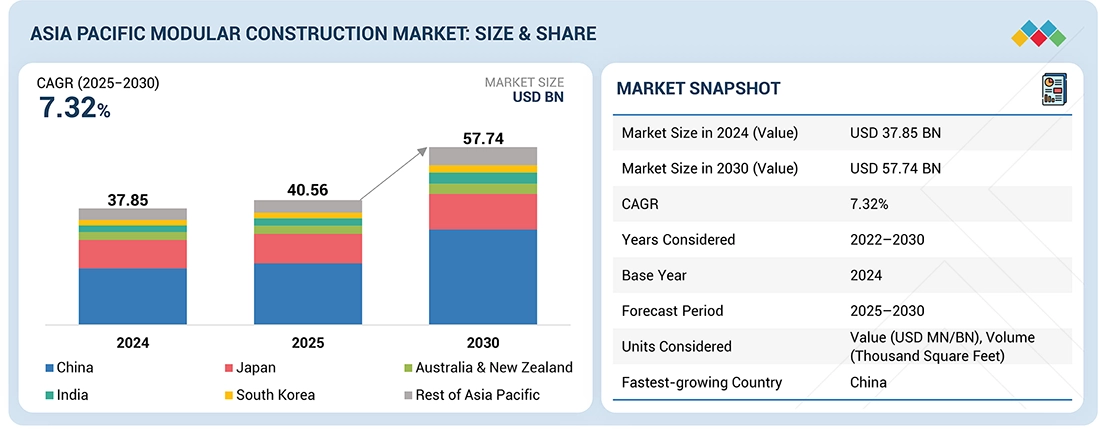
Source: Secondary Research, Interviews with Experts, MarketsandMarkets Analysis
The Asia Pacific modular construction market is projected to reach USD 57.74 billion by 2030 from USD 40.56 billion in 2025, at a CAGR of 7.32% from 2025 to 2030. The Asia Pacific modular construction market is on the rise due to increased urbanization and population density, which require quicker and more expansive construction techniques. Governments in the region, particularly China, India, Japan, Singapore, and Australia, are promoting prefabrication and industrialized building systems to reduce construction time and improve the quality of construction. On-site labor requirements are reduced to a minimum with Modular construction, a solution to the prevalent shortages of skilled labor in most countries in the Asia Pacific. Modular approaches are also being promoted through sustainability goals, which reduce material waste and help maintain low-carbon buildings.
KEY TAKEAWAYS
-
By CountryChina held the largest market share in 2024.
-
By MaterialBy material, wood accounted for the largest market share, at a CAGR of 54.9%, in terms of value.
-
By End-use IndustryBy end-use industry, healthcare is expected to grow at the fastest rate between 2025 and 2030.
-
Competitive Landscape-Key playersThe market is driven by strategic deals and expansions from leading players such as Sekisui House (Japan), Daiwa House Industry (Japan), China State Construction Engineering Corporation (China), Broad Group (China), and Lendlease (Australia). These companies are focusing on scaling modular manufacturing capacity.
-
Competitive Landscape-StartupsModscape Holdings Pty Ltd. (Australia), Panasonic Homes (Japan), AMODA (Indonesia), Modulex (India), and DigitalArchi (Japan), among others, are focusing on innovative designs and advanced off-site manufacturing.
An increase in investment in low-cost housing, health infrastructure, and learning institutions is driving demand for modular solutions. Modular approaches are becoming more favorable to private developers, ensuring the predictability of a project schedule and reducing inconveniences. The cost reduction and increased regional adoption are further driven by the expansion of manufacturing capacity in emerging markets, such as India, Vietnam, and Indonesia.
TRENDS & DISRUPTIONS IMPACTING CUSTOMERS' CUSTOMERS
The Asia Pacific modular construction market is shifting towards increased acceptance of industrialized building techniques due to the need to deliver projects more quickly, ensure cost-effectiveness, and enhance construction quality. Governments in the region are reinforcing policies that promote prefabrication, off-site manufacturing, and zero-waste building practices to address housing shortages and mitigate environmental impact.
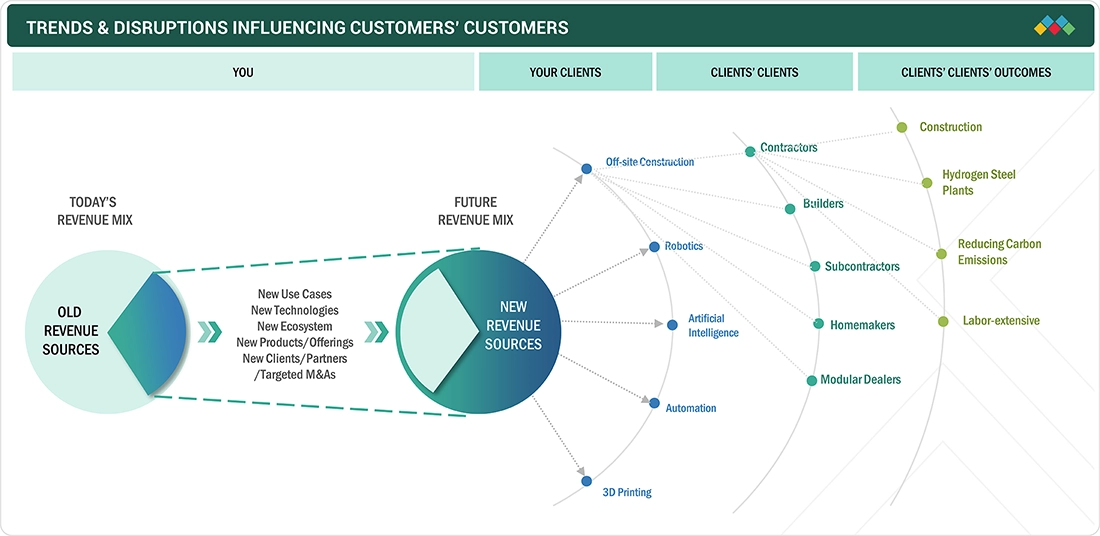
Source: Secondary Research, Interviews with Experts, MarketsandMarkets Analysis
MARKET DYNAMICS

Level
-
Rapid urbanization and population growth across major economies

-
Government initiatives promoting affordable housing, smart cities, and sustainable building practices


Level
-
High initial investment

-
Regulatory inconsistencies and varying building codes across countries


Level
-
Expansion of manufacturing capacities in emerging markets like India, Vietnam, and Indonesia

-
Growing adoption of modular construction in sectors such as residential, commercial, office, healthcare, and hospitality


Level
-
Logistical complexities in transporting large modules

-
Shortage of skilled labor familiar with modular systems, limiting widespread implementation

Source: Secondary Research, Interviews with Experts, MarketsandMarkets Analysis
Driver: Rapid urbanization and population growth across major economies
The high rate of population growth and increased urban migration in the Asia Pacific are generating a serious demand for housing, commercial buildings, and social infrastructures. The conventional forms of construction are unable to match the rate and magnitude of development required in these booming markets. The solution to the increasing demand for livable spaces is to turn to modular construction, which is faster, more predictable, and cost-efficient. The modular solutions are increasingly being resorted to by governments to achieve affordable housing targets and urban development goals.
Restraint: High initial investment
The modular construction requires significant upfront investments in established manufacturing plants, new and modern machinery, as well as automated production technologies. The start-up costs can be challenging for smaller developers to cover, particularly when they are uncertain about long-term project pipelines. Initial financial burdens are further increased by transportation, specialized labor, as well as quality-control systems. Although these investments are good in the long run, they tend to act as a hindrance to market entry and early adoption. Therefore, a significant number of firms are reluctant to move to modular approaches entirely, even though they are efficient in the long term.
Opportunity: Expansion of manufacturing capacities in emerging markets
The emerging economies in the Asia Pacific are rapidly expanding their modular production capacities to meet the increasing domestic construction demand. To minimize project delays, enhance the quality of these projects, and accommodate housing shortages, governments are promoting industrialized modes of construction. New modular factories are being established in India, Vietnam, and Indonesia, creating regional centers for prefabricated parts. These expansions cut the cost of production and enhance the efficiency of the supply chain, both in the domestic and export markets.
Challenge: Logistical complexities in transporting large modules
The logistical challenge of delivering volumetric modules over long distances is particularly significant in countries with poor road, rail, or port networks. Large-load restrictions, rough roads, and busy streets tend to slow down the movement of the modules, making the projects costly. Certain areas need dedicated transportation, convoy, and pathfinding, which makes transport operations more complicated. These problems can be compensated for by the time savings that modular construction would provide in the manufacturing process.
ASIA PACIFIC MODULAR CONSTRUCTION MARKET: COMMERCIAL USE CASES ACROSS INDUSTRIES
| COMPANY | USE CASE DESCRIPTION | BENEFITS |
|---|---|---|
 |
Ausco Modular delivered eight modular two- and three-bedroom homes for regional frontline workers, including police officers, nurses, and teachers, on behalf of the Queensland Government to support its response to Australia’s national housing shortage. Completed in mid-2023 and deployed across St George, Injune, and Mitchell in western Queensland, these homes were designed to ease pressure on regional housing availability. As part of modern construction methods, the modular approach enables faster delivery, reduces on-site time, and minimizes construction waste. This project marked the first housing collaboration between Ausco Modular and QBuild. Ausco’s Brisbane-based team completed the project on schedule and within budget through effective coordination with QBuild, contractors, and key stakeholders. The high-quality finish and smooth project execution earned Ausco strong positive feedback from the client. | Ensures rapid deployment of housing in remote regions, helping address critical shortages for essential frontline workers | Reduces construction waste and promotes sustainability through modern modular building methods | Minimizes onsite disruption and speeds up project timelines by shifting major construction activities off-site | Delivers cost control and schedule certainty, meeting government expectations for efficiency and reliability | Strengthens collaborative partnerships, resulting in improved project outcomes and client satisfaction |
Logos and trademarks shown above are the property of their respective owners. Their use here is for informational and illustrative purposes only.
MARKET ECOSYSTEM
The modular construction ecosystem within the Asia Pacific region works in a well-linked value chain. The suppliers of raw materials can provide materials such as engineered timber, steel frameworks, structural insulated panels (SIPs), concrete modules, and prefabricated building elements. Modular manufacturers convert these materials to volumetric units, panelized systems, and turnkey modular structures, which can be created off-site and with high precision and quality control. These modules are then transported and assembled specifically at the sites by distributors. As a result, end-users, including government housing agencies, private developers, infrastructure authorities, and hospitality operators, are turning to modular solutions to reduce labour requirements, achieve sustainability goals, and meet the growing housing needs in the region.
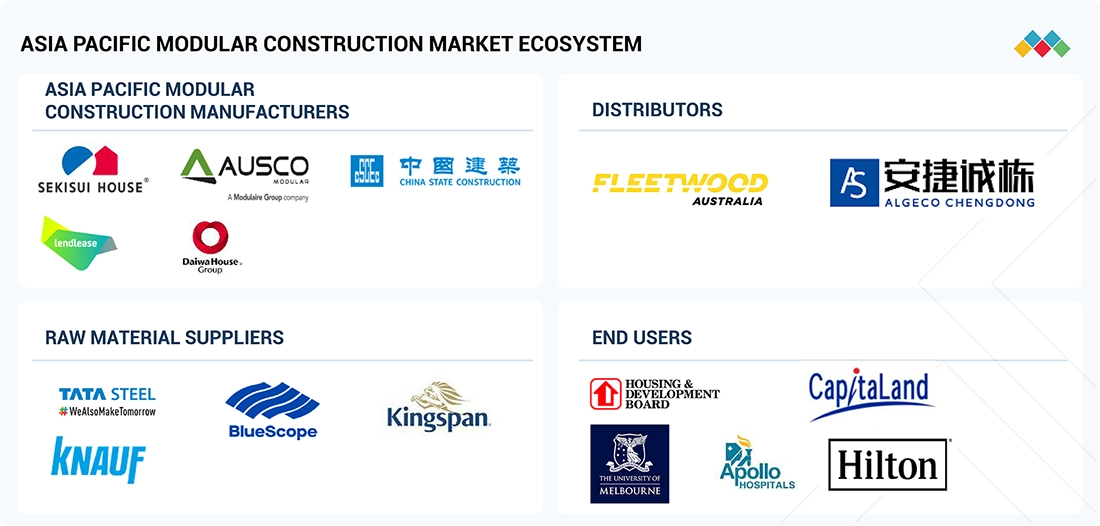
Logos and trademarks shown above are the property of their respective owners. Their use here is for informational and illustrative purposes only.
MARKET SEGMENTS
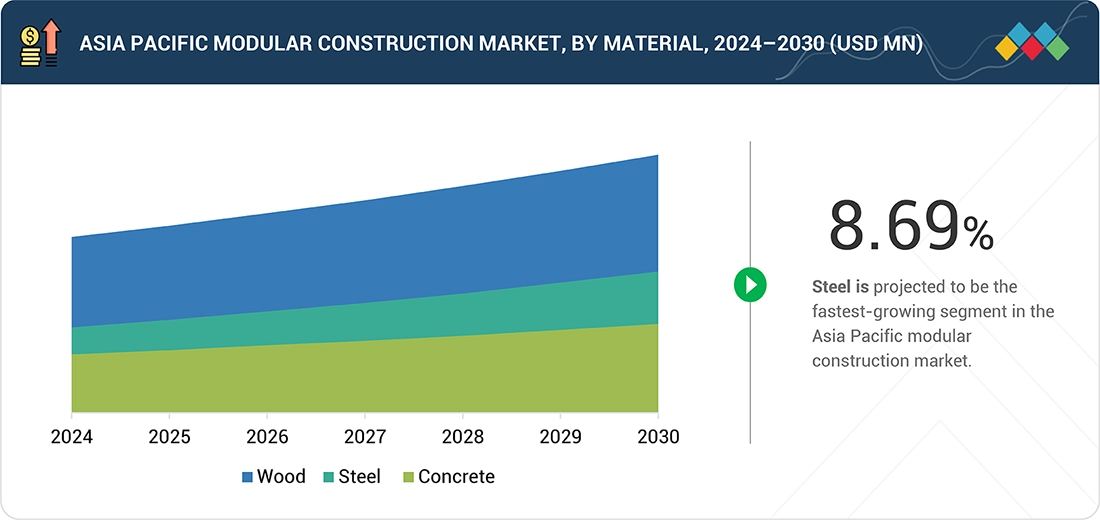
Source: Secondary Research, Interviews with Experts, MarketsandMarkets Analysis
Asia Pacific Modular Construction Market, By Material
The Asia Pacific modular construction market is dominated by wood, as it is lightweight, versatile, and can be transported and assembled more easily than steel or concrete modules. It is also advantageous in accelerating the manufacturing cycles and as such, ideal to use in volumetric construction in residential buildings and low- to mid-rise structures. The increasing sustainability concerns in Japan, Australia, and Southeast Asia also increase the demand for timber-based modular systems as they have lower carbon footprint.
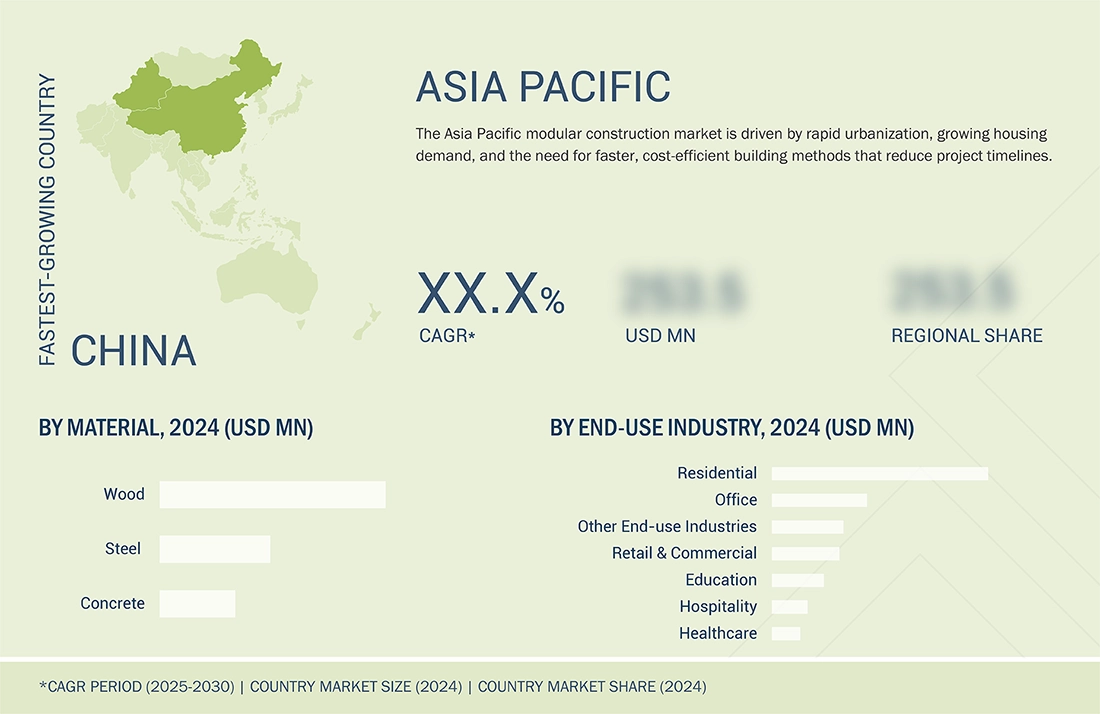
Asia Pacific Modular Construction Market, By End-use Industry
Residential business is the leading segment due to rapid urbanization and shortages of housing in China, India, Japan, and Australia, which have seen high demand in fast construction solutions that are scalable. Modular construction is much quicker to build as it is possible to deliver apartments, social houses, and mixed-use in a shorter time. Government schemes regarding inexpensive and efficient housing are increasingly leaning towards prefabricated and modular techniques. An increasing tendency of consumers to prefer customizable and environmentally friendly houses will only increase the uptake.
REGION
Asia Pacific to be fastest-growing region in global point-of-use water treatment systems market during forecast period
China is the fastest-growing nation in the Asia Pacific modular construction market, driven by government requirements that encourage prefabrication to enhance construction efficiency and reduce carbon emissions. The growing population of city dwellers, which is driving rapid urbanization and massive housing demands, is creating a high demand for fast and factory-made modular solutions. The country's manufacturing capacity is substantial, and there is an opportunity for scalable production of modular units at a low cost. Volumetric modular systems, intelligent construction, and automation are being adapted at rapid paces courtesy of technological innovations.
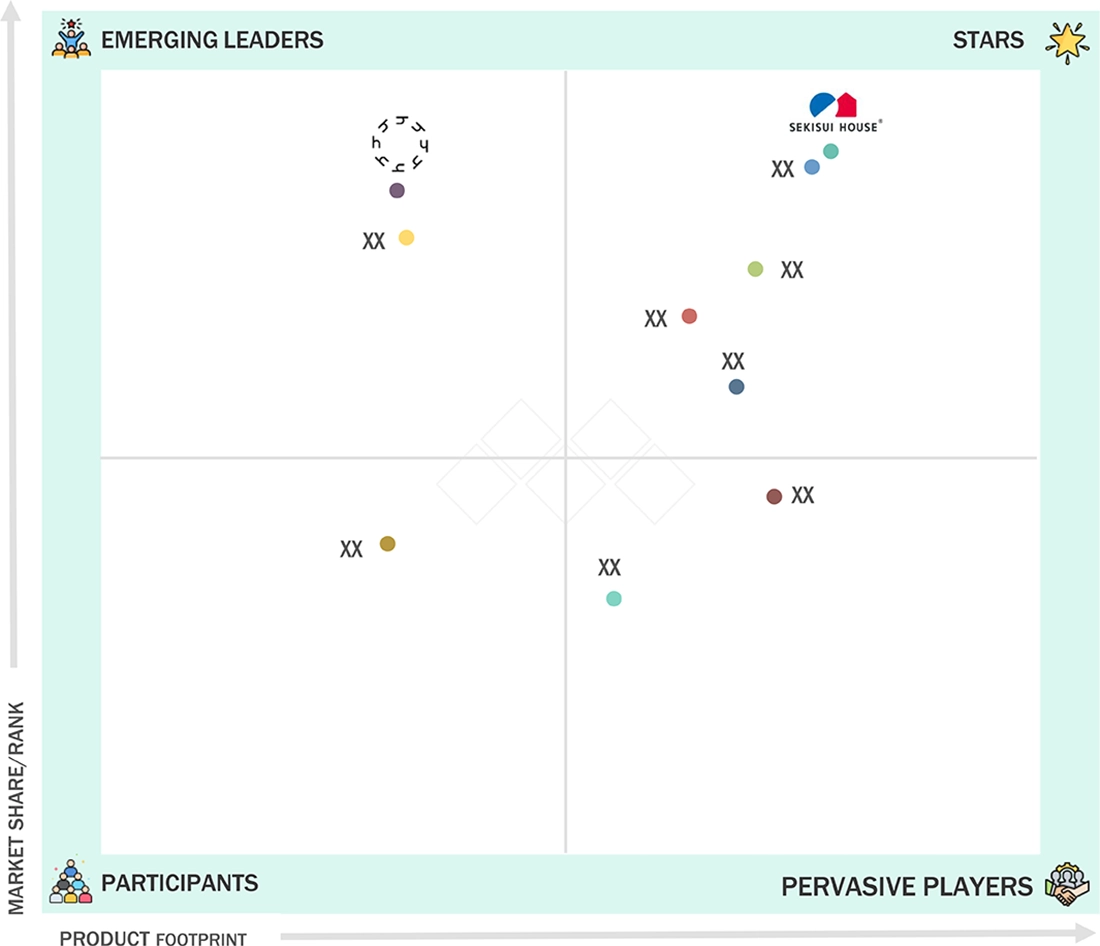
ASIA PACIFIC MODULAR CONSTRUCTION MARKET: COMPANY EVALUATION MATRIX
In the Asia Pacific modular construction market matrix, Sekisui House Ltd. (Star) leads with its large-scale production capacity, advanced modular technologies, and strong market penetration in the region. Hickory Group (Emerging Leader) is gaining traction through an innovative modular building system.
Source: Secondary Research, Interviews with Experts, MarketsandMarkets Analysis
KEY MARKET PLAYERS
- SEKISUI HOUSE, LTD. (Japan)
- DAIWA HOUSE INDUSTRY CO., LTD. (Japan)
- Lendlease Corporation (Australia)
- Ausco Modular (Australia)
- China State Construction Engineering Corporation Ltd. (China)
- Fleetwood Australia (Australia)
- BROAD Group (China)
- Hickory Group (Australia)
- MITEK AUSTRALIA (Australia)
- LAING O’ROURKE (Australia)
MARKET SCOPE
| REPORT METRIC | DETAILS |
|---|---|
| Market Size in 2024 (Value) | USD 37.85 Billion |
| Market Size in 2030 (Value) | USD 57.74 Billion |
| Growth Rate | CAGR of 7.32% from 2025 to 2030 |
| Years Considered | 2022–2030 |
| Base Year | 2024 |
| Forecast Period | 2025–2030 |
| Units Considered | Value (USD Million/Billion), Volume (Thousand Sqaure Feet) |
| Report Coverage | Revenue forecast, company ranking, competitive landscape, growth factors, and trends |
| Segments Covered |
|
| Countries Covered | China, Japan, India, South Korea, Australia & New Zealand, Rest of Asia Pacific |
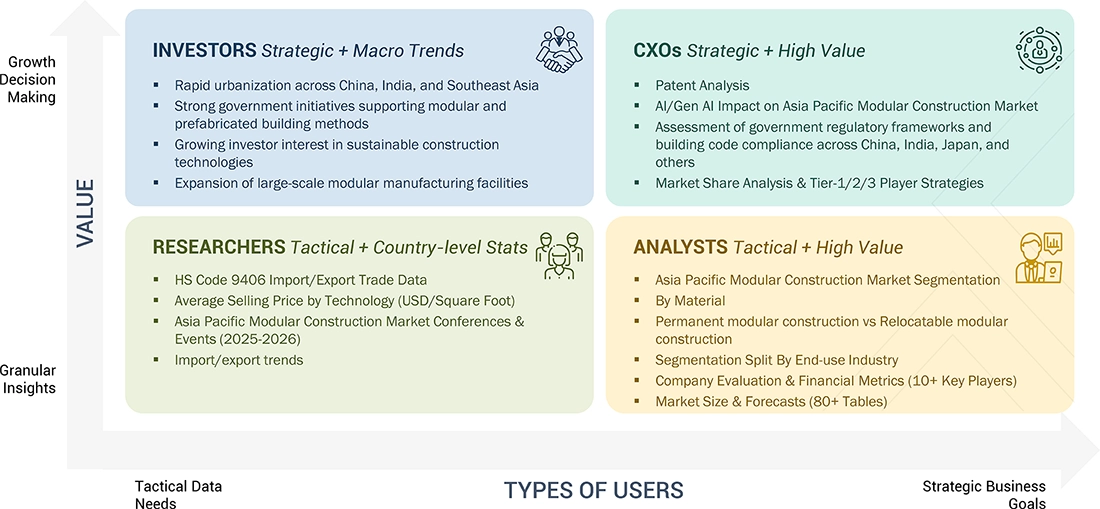
WHAT IS IN IT FOR YOU: ASIA PACIFIC MODULAR CONSTRUCTION MARKET REPORT CONTENT GUIDE
DELIVERED CUSTOMIZATIONS
We have successfully delivered the following deep-dive customizations:
| CLIENT REQUEST | CUSTOMIZATION DELIVERED | VALUE ADDS |
|---|---|---|
| Detailed study on North American Modular Construction Market | Study conducted on the US, Canada, and Mexico | Identified market opportunities in the region |
| Detailed study on European Modular Construction Market | Study conducted on Germany, France, UK, Italy, Russia, Spain, Austria, Poland, and Rest of Europe | Identified market opportunities in the region |
RECENT DEVELOPMENTS
- September 2023 : Daiwa House Industry Co., Ltd. opened a new modular construction plant in Germany, enabling the production of factory-built units that are later transported and assembled directly at the construction site.
Table of Contents
 Exclusive indicates content/data unique to MarketsandMarkets and not available with any competitors.
Methodology
The study involved four major activities for estimating the current size of the Asia Pacific Modular Construction Market. Exhaustive secondary research was conducted to gather information on the market, the peer market, and the parent market. The next step was to validate these findings, assumptions, and sizes with the industry experts across the value chain of modular construction through primary research. Both the top-down and bottom-up approaches were employed to estimate the overall size of the Asia Pacific Modular Construction Market. After that, market breakdown and data triangulation procedures were used to determine the size of different segments and sub-segments of the market.
Secondary Research
In the secondary research process, various secondary sources such as Hoovers, Factiva, Bloomberg BusinessWeek, and Dun & Bradstreet were referred to, to identify and collect information for this study on the Asia Pacific Modular Construction Market. These secondary sources included annual reports, press releases & investor presentations of companies, white papers, certified publications, articles by recognized authors, regulatory bodies, trade directories, and databases.
Primary Research
Various primary sources from both the supply and demand sides of the Asia Pacific Modular Construction Market were interviewed to obtain qualitative and quantitative information. The primary sources from the supply-side included industry experts, such as Chief Executive Officers (CEOs), vice presidents, marketing directors, sales professionals, and related key executives from various leading companies and organizations operating in the modular construction industry. The breakdown of the profiles of primary respondents is as follows:
Market Size Estimation
Both the top-down and bottom-up approaches were used to estimate and validate the size of the Asia Pacific Modular Construction Market. These approaches were also used extensively to estimate the size of various dependent segments of the market. The research methodology used to estimate the market size included the following details:
- The key players were identified through extensive secondary research.
- The industry’s supply chain and market size, in terms of value, were determined through primary and secondary research processes.
- All percentage shares, split, and breakdowns were determined using secondary sources and verified through primary sources.
- All possible parameters that affect the markets covered in this research study were accounted for, viewed in extensive detail, verified through primary research, and analysed to obtain the final quantitative and qualitative data.
- The research includes the study of reports, reviews, and newsletters of key industry players, along with extensive interviews with key officials, such as directors and marketing executives.
Data Triangulation
After arriving at the overall market size from the estimation process explained above, the total market was split into several segments and sub-segments. The data triangulation and market breakdown procedures were employed, wherever applicable, to complete the overall market engineering process and arrive at the exact statistics for all segments and sub-segments of the Asia Pacific Modular Construction Market. The data was triangulated by studying various factors and trends from both the demand- and supply-side. In addition, the market size was validated by using both the top-down and bottom-up approaches. Then, it was verified through primary interviews. Hence, for every data segment, there are three sources—top-down approach, bottom-up approach, and expert interviews. The data were assumed to be correct when the values arrived at from the three sources matched.
Market Definition
The Asia Pacific Modular Construction Market refers to the industry sector encompassing the design, fabrication, and assembly of building components in controlled factory environments for subsequent installation at construction sites. This approach to construction involves the prefabrication of standardized modules or components, which are then transported and assembled on-site to create structures ranging from residential homes and commercial buildings to industrial facilities and infrastructure projects.
Key Stakeholders
- Raw material suppliers
- Modular construction manufacturers
- Government & regulatory bodies
- Research organizations
- Associations and industry bodies
- Contractors, architects, and engineers
- End users
- Traders and distributors
Report Objectives
- To estimate and forecast the Asia Pacific Modular Construction Market, in terms of value and volume.
- To provide detailed information about the major factors (drivers, restraints, opportunities, and challenges) influencing the market growth.
- To define, describe, and forecast the market size, based on type, material, end-use industry, and region.
- To strategically analyze micromarkets, with respect to individual growth trends, prospects, and their contribution to the total market.
- To analyze growth opportunities in the market for stakeholders and provide details on the competitive landscape for market leaders.
- To strategically profile key players and comprehensively analyze their market shares and core competencies.
- To analyze competitive developments, such as merger & acquisition, expansion & investment, agreement, and new product development in the Asia Pacific Modular Construction Market.
Available Customizations
With the given market data, MarketsandMarkets offers customizations according to client-specific needs.
The following customization options are available for the modular construction report:
Product Analysis
- Product matrix, which offers a detailed comparison of the product portfolio of companies
Regional Analysis
- Further analysis of the Asia Pacific Modular Construction Market for additional countries
Company Information
- Detailed analysis and profiling of additional market players (up to five)


Personalize This Research
- Triangulate with your Own Data
- Get Data as per your Format and Definition
- Gain a Deeper Dive on a Specific Application, Geography, Customer or Competitor
- Any level of Personalization
Let Us Help You
- What are the Known and Unknown Adjacencies Impacting the Asia Pacific Modular Construction Market
- What will your New Revenue Sources be?
- Who will be your Top Customer; what will make them switch?
- Defend your Market Share or Win Competitors
- Get a Scorecard for Target Partners

Custom Market Research Services
We Will Customise The Research For You, In Case The Report Listed Above Does Not Meet With Your Requirements
Get 10% Free CustomisationTESTIMONIALS

We at Nissan Chemicals Corporation have been clients of MarketsandMarkets for more than a year now. We recently consulted MarketsandMarkets for a study, the team at MarketsandMarkets was extremely professional and organized. The business insights were very detailed and aligned well with our expectations that really helped us formulate the Business Plans and device new strategies for development themes. MarketsandMarkets offers a unique combination of expertise and dedicated engagement model. Their research findings have helped us in designing our Pricing Strategy which will make it easier for us to predict the future sales and profits for the next ten years. We look forward to working with MarketsandMarkets in the future.
VP of Strategy & New Business Development
Leading Specialty Chemical Company
The MarketsandMarkets Engagement Model, composed of both the Knowledge Store and advisory custom research, has greatly helped us in understanding our markets and making strategic decisions. The Knowledge Store is a fast way to allow everyone in our organization to understand more about most any market they are interested in. The ability to then get custom research done and get answers to specific strategic questions and market insight has been spectacular. The Markets and Markets team feel more like colleagues than vendors and their services have helped us change our culture where statements of things like growth opportunities and competitive position are always backed by industry research.

Rich Gibson,
Director, Corporate Strategy
Milliken & Company,
Leading Industrial Manufacturer of specialty chemical, floor covering, performance and protective textile materials, and healthcaremilliken.com
MarketsandMarkets is a trusted resource that helps us to better understand markets that are near-adjacencies-whether its technology, value chain or geography. Their Knowledge Store platform provides a dashboard of markets and their characteristics which is easy to use and saves us time.
Adam Shaw,
Market Development and Strategy Manager
AdvanSix Inc. USA,
An American Leader in Chemicalswww.advansix.com
The Knowledge Store from MarketsandMarkets is a valuable tool which has helped my team acquire greater insight in to the end markets that our business serves. This has enabled us to help our company build stronger strategies throughout our planning process.
TOSHIO KINOSHITA
Senior Chif Consultion Research & Consulting Division
Mitsubishi Chemical Research Corporation,
Leading Manufacturer of Chemical Productswww.mitsubishichem-res.co.jp/en/

We recently engaged with MarketsandMarkets for a study, the team not only clearly understood our business objectives but was also extremely professional in the way they handled the entire project. The study was efficiently conducted in a phase-wise manner, and the engagement model furnished us with high-quality business insights that far exceeded our expectations at each phase. We were especially happy that MarketsandMarkets could provide us with both, an English as well as a Japanese version of the study. A special thanks to the Analyst Team and Client Services Team, whose fluency in Japanese enhanced our comfort level, as we could converse with them in our preferred language.
Independent entrepreneurs
Arrow Precision
We approached MarketsandMarkets for study on Proppants Market, and their work exceeded our expectations. The study conducted was comprehensive and enabled us to view the market through the various dimensions. In addition, the team was extraordinarily responsive throughout the process and resolved our queries on time. I strongly recommend MarketsandMarkets and will certainly consider them for additional market assessments we will need in the future.
Global engineering company, Japan
Deputy Manager,
Strategic Planning OfficeThe high-quality insights shared by the MarketsandMarkets team helped us understand the pharmaceutical plant designers in a specific geography. It also captured the risks that we may likely face in communicating with our potential partners. The study would enable us identify partners, which would impact our future growth.






Growth opportunities and latent adjacency in Asia Pacific Modular Construction Market