Asia Pacific Video Surveillance Market Size. Share & Analysis, 2031

Asia Pacific Video Surveillance Market by Offering (Cameras, Monitors, Storage Devices, Accessories), Software (VMS, VAS), Camera (PTZ, Dome, Box & Bullet, Panoramic, Bodyworn, Fisheye) - Forecast to 2031




OVERVIEW
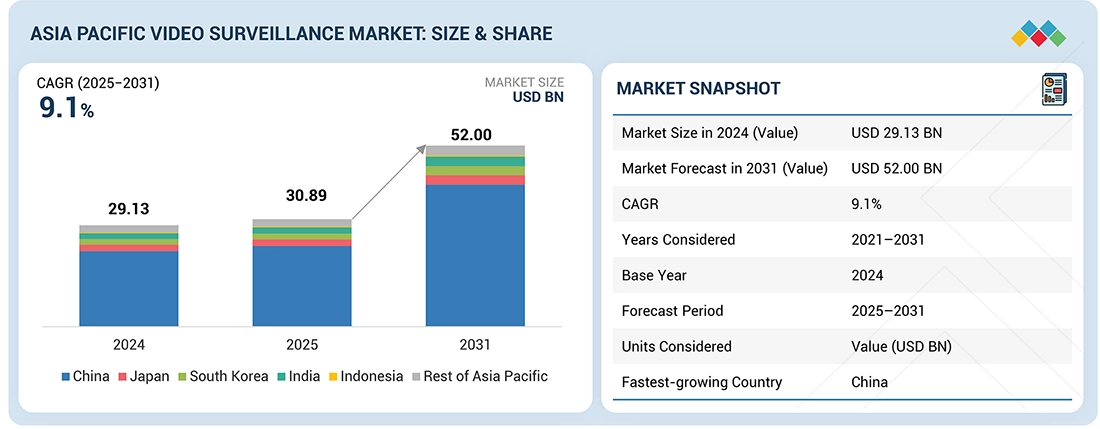
Source: Secondary Research, Interviews with Experts, MarketsandMarkets Analysis
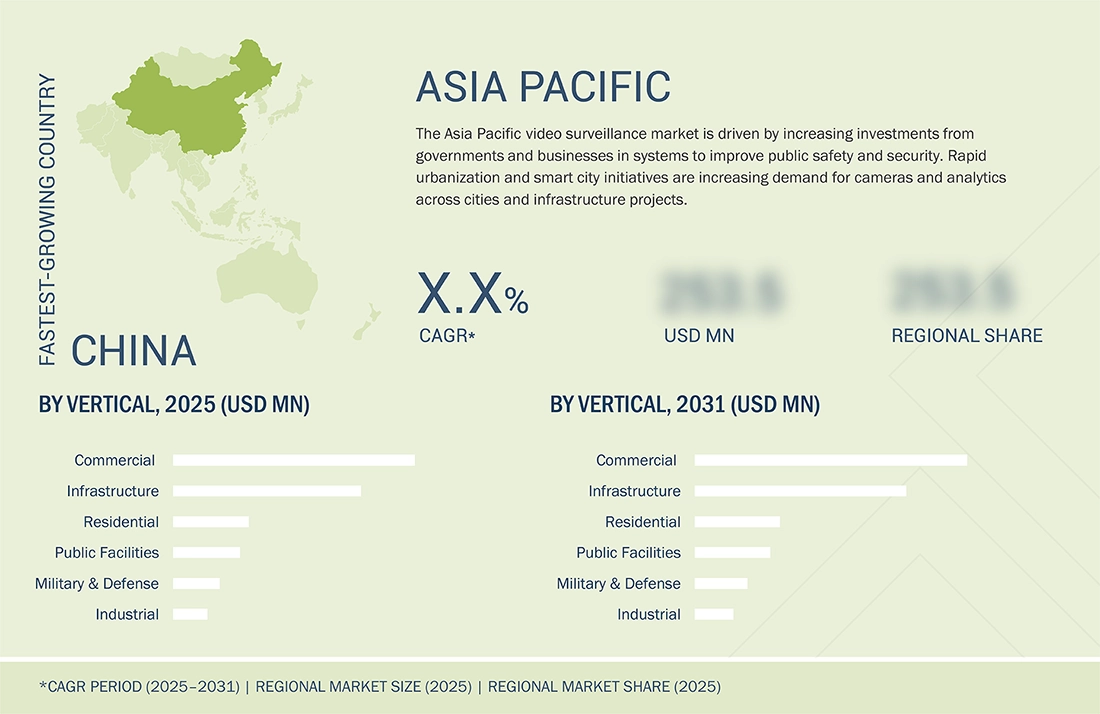
The Asia Pacific video surveillance market is projected to grow from USD 30.89 billion in 2025 to USD 52.00 billion by 2031, registering a CAGR of 9.1%. Market expansion is driven by rapid urbanization, smart city investments, and widespread adoption of AI-powered security technologies across public and commercial sectors.
Market Size & Forecast
• 2025 Market Size: USD 30.89 Billion
• 2031 Projected Market Size: USD 52.00 Billion
• CAGR (2025-2031): 9.1%
• Software Segment: Highest CAGR
• China: Largest Market Share
KEY TAKEAWAYS
-
BY COUNTRYChina led the Asia Pacific video surveillance market with a share of 74.4% in 2024.
-
BY OFFERINGThe software segment is projected to grow at the highest CAGR of 11.6% from 2025 to 2031.
-
BY VERTICALThe Infrastructure segment is projected to witness the highest CAGR during the forecast period.
-
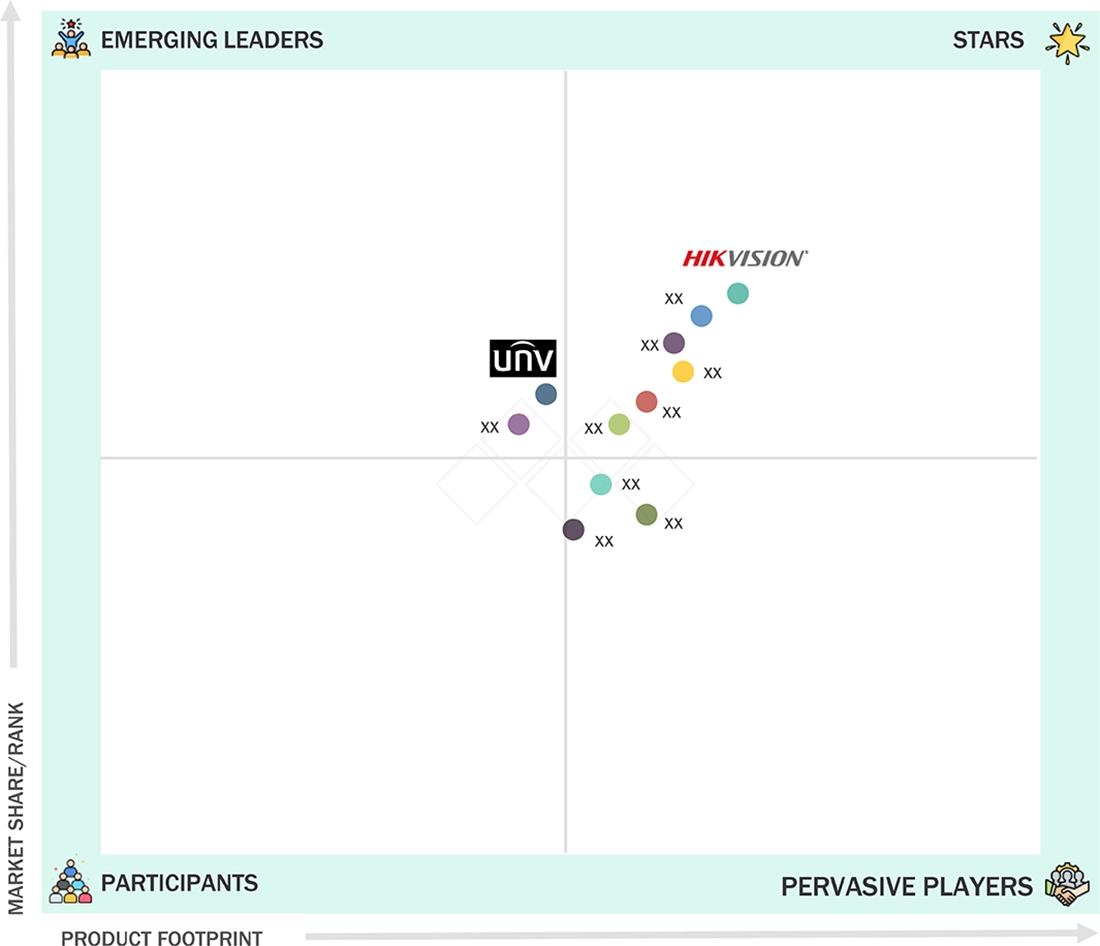
COMPETITIVE LANDSCAPEHangzhou Hikvision Digital Technology Co., Ltd. and Dahua Technology Co., Ltd. were identified as star players in the Asia Pacific video surveillance market, given their strong market share and extensive product portfolios.
The Asia Pacific video surveillance market is poised for strong growth, with the adoption of AI-based analytics, edge computing, and cloud-integrated platforms, combined with supportive regulatory policies and declining hardware costs, which is accelerating deployment across both public and private sectors.
TRENDS & DISRUPTIONS IMPACTING CUSTOMERS' CUSTOMERS
In the Asia Pacific video surveillance market, customer operations are evolving rapidly due to large-scale digitalization, the expansion of smart cities, and the widespread adoption of AI-, cloud-, and IoT-enabled security technologies. Governments and enterprises across various sectors, including transportation, commercial infrastructure, manufacturing, and public safety, are accelerating their shift toward IP-based cameras, AI-driven analytics, and centralized, cloud-managed platforms that deliver real-time monitoring and automated insights. IoT-connected devices and edge AI are enabling intelligent surveillance ecosystems capable of behavioral analysis, crowd monitoring, facial recognition, and predictive threat detection. As urbanization intensifies and security challenges become more complex, organizations increasingly adopt scalable solutions like VSaaS to ensure flexibility, remote accessibility, and seamless integration with integrated command and control systems. These advancements position intelligent, data-driven surveillance as a core enabler of modern security and operational efficiency across the region.
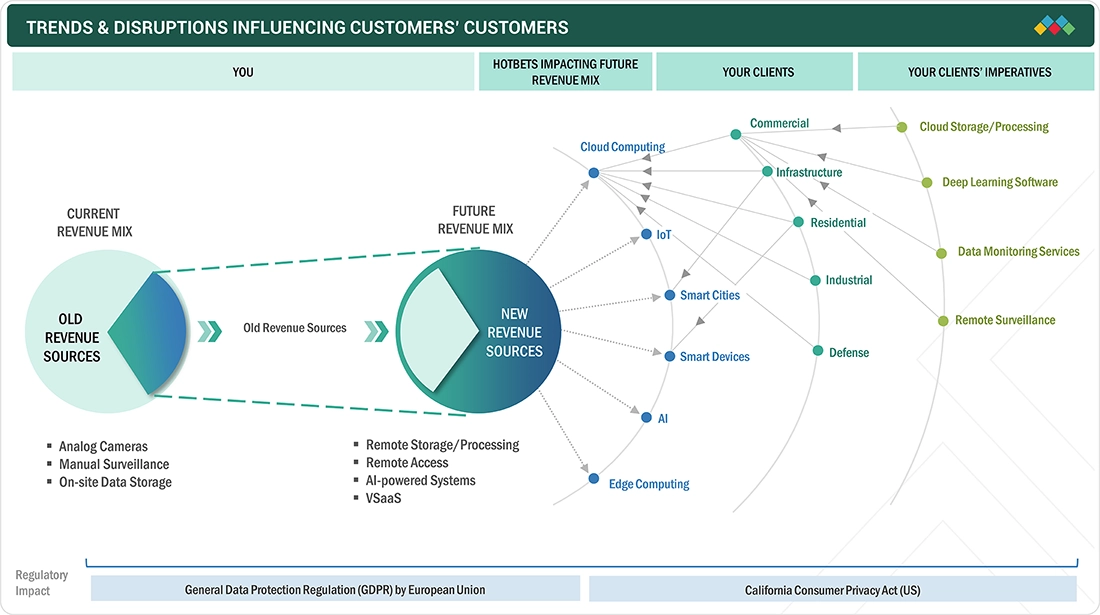
Source: Secondary Research, Interviews with Experts, MarketsandMarkets Analysis
MARKET DYNAMICS

Level
-
Rapid urbanization and expanding smart city projects accelerating investments in advanced video surveillance systems

-
Growing security concerns in densely populated regions driving adoption of AI-powered and IP-based surveillance technologies


Level
-
High infrastructure upgrade costs and interoperability issues limit seamless migration from legacy systems to modern surveillance networks


Level
-
Increasing rollout of cloud-based surveillance and VSaaS platforms opening new revenue avenues across SMEs and public infrastructure

-
Government-led digital transformation and public safety modernization initiatives creating large-scale deployment opportunities


Level
-
Stringent data privacy regulations and rising cybersecurity threats complicate large-scale deployment of connected surveillance ecosystems

Source: Secondary Research, Interviews with Experts, MarketsandMarkets Analysis
Driver: Rapid urbanization and expanding smart city projects accelerating investments in advanced video surveillance systems
Asia Pacific’s video surveillance market is strongly driven by rapid urbanization and the surge in smart city developments across China, India, Japan, South Korea, Singapore, and Southeast Asia. Governments are heavily investing in intelligent transportation, traffic monitoring, public safety, and digital infrastructure, all of which require scalable, high-resolution, and real-time surveillance systems. These large-scale projects increasingly incorporate AI analytics, facial recognition, and IoT-connected platforms, creating sustained demand for advanced hardware and software solutions across the region.
Restraint: High infrastructure upgrade costs and interoperability issues limit seamless migration from legacy systems to modern surveillance networks
High infrastructure upgrade costs, complex migration processes, and interoperability challenges between old analog systems and new digital, AI-enabled platforms remain major restraints for the Asia Pacific video surveillance market. Many regions, especially developing economies, face budget limitations, slow modernization cycles, and fragmented system architectures that make integrating cloud, AI, and IoT solutions difficult. These barriers delay large-scale deployments and increase reliance on hybrid systems, which further complicates maintenance and scalability for end users.
Opportunity: Increasing rollout of cloud-based surveillance and VSaaS platforms opening new revenue avenues across SMEs and public infrastructure
The growing adoption of cloud-based video surveillance and video surveillance as a service (VSaaS) presents a major opportunity in the Asia Pacific, particularly among SMEs, commercial buildings, and municipal authorities. Cloud platforms reduce upfront hardware costs, simplify remote monitoring, and enable scalable storage and AI analytics, making them highly attractive for cost-conscious markets. As digital transformation accelerates, service-based models offer recurring revenue potential and expand deployment across geographically dispersed sites such as retail chains, logistics hubs, and public infrastructure networks.
Challenge: Stringent data privacy regulations and rising cybersecurity threats complicate large-scale deployment of connected surveillance ecosystems
Asia Pacific faces a growing challenge related to data privacy regulations, cybersecurity risks, and compliance requirements associated with large-scale deployment of interconnected surveillance systems. As more cameras are linked to cloud platforms and AI engines, concerns around unauthorized access, data leaks, and cross-border data transfers are intensifying. Governments are tightening rules around biometric surveillance, storage practices, and AI usage, forcing vendors and end users to invest heavily in encryption, secure networks, and regulatory compliance raising both complexity and operational costs.
ASIA PACIFIC VIDEO SURVEILLANCE MARKET: COMMERCIAL USE CASES ACROSS INDUSTRIES
| COMPANY | USE CASE DESCRIPTION | BENEFITS |
|---|---|---|
 |
M Avenue, a 500-meter “Garden Avenue” in Marrakech featuring diverse facilities, faced security challenges due to its complex layout and the need for extensive coverage. Existing solutions were insufficient, leaving blind spots in monitoring and management. To address this, Uniview deployed over 165 advanced cameras, including PTZ, PRIME-1, 4K Starlight Multi-Lens Panoramic Network Cameras, along with Unicorn management systems, ensuring comprehensive coverage and high-quality footage. | The new Uniview system enhanced security across M Avenue by reducing incidents and improving visitor safety. Smart intrusion prevention and effective management tools streamlined operations, delivering greater efficiency and reliable monitoring throughout the complex. |
 |
Central Ayutthaya, a large mixed-use development in Thailand, faced challenges in securing its 75,200 m² property, which included shopping centers, hotels, residences, and conference halls. Milesight deployed 164 network cameras of various types, along with high-performance NVRs, to provide comprehensive, 24×7 surveillance and ensure no blind spots across the entire complex. | The integrated Milesight system enhanced safety for residents, visitors, and tenants by enabling real-time monitoring and quick incident response. It streamlined operations and provided reliable, centralized surveillance, improving overall security and peace of mind. |
 |
VyStar in the US needed to deter criminal activity across branch offices and remote locations while upgrading image quality, performance, and data capture processes to comply with state regulations. They implemented Hanwha Vision ALPR cameras through their integration partner, STANLEY Security, to enhance security, monitor transactions, and safeguard employees, members, and assets. | The Hanwha Vision solution improved image clarity and system performance, enabling VyStar to efficiently capture fraudulent activity and promptly share evidence with law enforcement. This strengthened overall security, streamlined monitoring, and enhanced protection for both employees and members. |
Logos and trademarks shown above are the property of their respective owners. Their use here is for informational and illustrative purposes only.
MARKET ECOSYSTEM
The Asia Pacific video surveillance market ecosystem consists of a broad and rapidly evolving network of hardware manufacturers, software developers, cloud service platforms, system integrators, and end users that collectively drive the region’s expanding security infrastructure. Global and regional vendors supply high-resolution IP cameras, edge AI devices, NVRs, and intelligent sensors tailored to diverse deployment needs in densely populated urban areas. Software and analytics providers deliver advanced capabilities, including facial recognition, crowd monitoring, traffic analytics, and real-time threat detection, addressing the region’s growing public safety and smart city requirements. Cloud and VMS platforms support scalable storage, remote command centers, and centralized monitoring, while integrators design and implement end-to-end solutions across various sectors, including commercial, government, industrial, and transportation. The ecosystem is further strengthened by cybersecurity specialists and IoT solution providers who ensure secure, large-scale, and interconnected surveillance operations in an increasingly digital Asia Pacific environment.
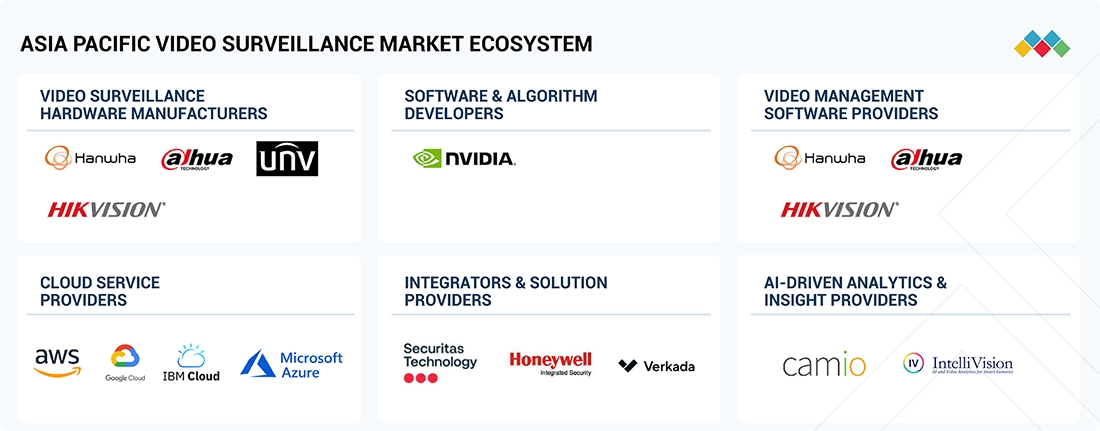
Logos and trademarks shown above are the property of their respective owners. Their use here is for informational and illustrative purposes only.
MARKET SEGMENTS
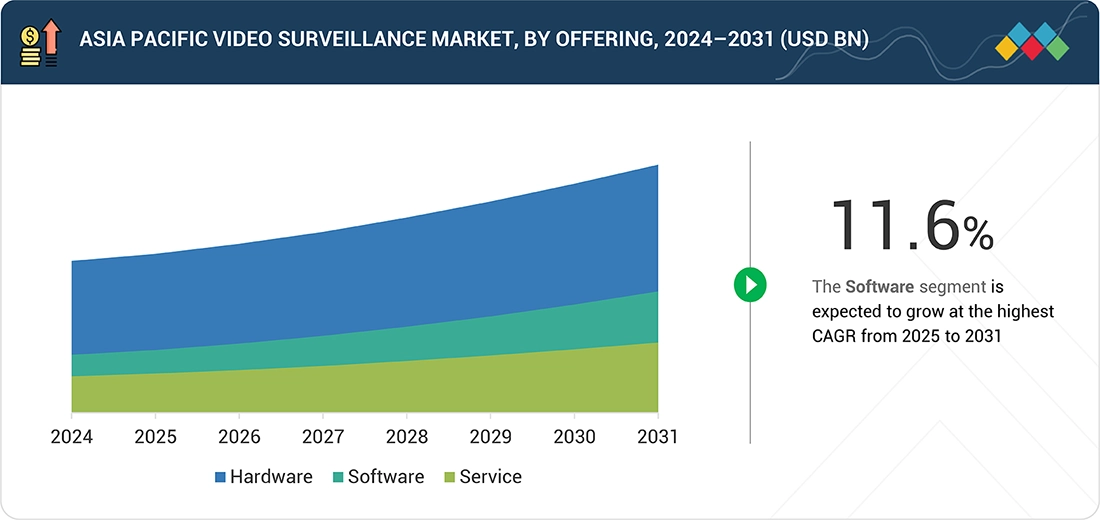
Source: Secondary Research, Interviews with Experts, MarketsandMarkets Analysis
Asia Pacific Video Surveillance Market, by Offering
The hardware category leads the Asia Pacific video surveillance market due extensive adoption of advanced cameras, sensors, and recording systems across public, commercial, and industrial sectors. Governments in China, India, Japan, and Southeast Asia are deploying millions of high-resolution IP cameras and thermal imaging devices as part of large-scale public safety, traffic management, and smart city programs. The region’s rapid urbanization and expansion of transportation networks, retail spaces, and commercial infrastructure continue to fuel demand for robust on-ground hardware.
Asia Pacific Video Surveillance Market, by Vertical
The infrastructure segment is expected to grow at a significant CAGR in the Asia Pacific video surveillance market, supported by massive investments in smart city programs, transportation modernization, and large-scale public infrastructure expansion across the region. Governments in China, India, Japan, and Southeast Asian countries are deploying advanced surveillance systems in airports, metro networks, highways, seaports, and public utilities to strengthen public safety, improve traffic flow, and support real-time incident management. The increasing integration of AI-driven analytics, IoT sensors, and high-resolution IP cameras within critical infrastructure is further accelerating adoption.
REGION
China is expected to hold the largest share of the Asia Pacific video surveillance market
China is expected to hold the largest share of the Asia Pacific video surveillance market due to rapid urbanization, expanding commercial infrastructure, and growing adoption of intelligent monitoring in retail, industrial, and residential sectors boost demand, while supportive policies and leadership in AI, IoT, and edge computing solidify China’s dominant position in the Asia Pacific video surveillance market
The video surveillance market in North America is projected to grow from USD 13.93 billion in 2025 to USD 21.19 billion by 2031, registering a CAGR of 7.2%. Market expansion is driven by the presence of leading technology vendors, and the early adoption of innovations such as edge computing, thermal imaging, and integrated security platforms continues to strengthen market growth across the US and Canada.
ASIA PACIFIC VIDEO SURVEILLANCE MARKET: COMPANY EVALUATION MATRIX
In the Asia Pacific video surveillance market matrix, Hangzhou Hikvision Digital Technology Co., Ltd. (Star) leads with a comprehensive portfolio of advanced security solutions, including high-resolution cameras, AI-powered video analytics, and integrated access control systems. Its extensive presence across government, commercial, and industrial sectors, coupled with continuous investments in AI- and IoT-enabled surveillance technologies, strengthens its market dominance. Hikvision’s focus on innovation, reliability, and scalable solutions ensures leadership in both traditional and next-generation video surveillance applications across the region, supporting growing demand for intelligent, connected, and software-driven security ecosystems.
Source: Secondary Research, Interviews with Experts, MarketsandMarkets Analysis
KEY MARKET PLAYERS
- Hangzhou Hikvision Digital Technology Co., Ltd.
- Dahua Technology Co., Ltd.
- VIVOTEK Inc.
- Zhejiang Uniview Technologies Co., Ltd.
- Hanwha Vision Co., Ltd.
- CP PLUS International
- Motorola Solutions, Inc.
- Teledyne Technologies Incorporated
- Honeywell International Inc.
- Robert Bosch GmbH
MARKET SCOPE
| REPORT METRIC | DETAILS |
|---|---|
| Market Size in 2024 (Value) | USD 29.13 Billion |
| Market Forecast in 2031 (Value) | USD 52.00 Billion |
| Growth Rate | CAGR of 9.1% from 2025–2031 |
| Years Considered | 2021–2031 |
| Base Year | 2024 |
| Forecast Period | 2025–2031 |
| Units Considered | Value (USD Billion) |
| Report Coverage | Revenue Forecast, Company Ranking, Competitive Landscape, Growth Factors, and Trends |
| Segments Covered |
|
| Countries Covered | China, Japan, India, South Korea, Indonesia, and the Rest of Asia Pacific |
WHAT IS IN IT FOR YOU: ASIA PACIFIC VIDEO SURVEILLANCE MARKET REPORT CONTENT GUIDE
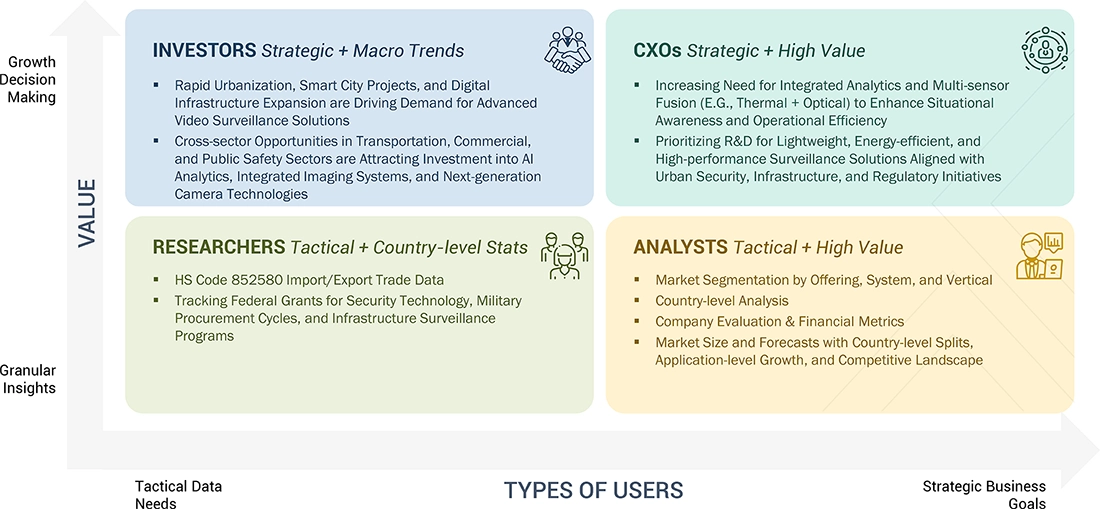
DELIVERED CUSTOMIZATIONS
We have successfully delivered the following deep-dive customizations:
| CLIENT REQUEST | CUSTOMIZATION DELIVERED | VALUE ADDS |
|---|---|---|
| Enhance Urban Surveillance |
|
|
| Protect Critical Infrastructure (Airports, Metro, Power Plants) |
|
|
| Retail and Commercial Asset Protection |
|
|
RECENT DEVELOPMENTS
- April 2025 : Zhejiang Uniview Technologies Co., Ltd. (China) has launched the OwlView Plus Series, which enhances low-light imaging with Wise-ISP technology. It delivers sharper night vision, improved color accuracy, and detailed detection capabilities.
- February 2025 : Hangzhou Hikvision Digital Technology Co., Ltd. (China) launched its latest Pro Series Network Cameras featuring ColorVu 3.0 technology. These cameras offer superior image quality, intelligent functionality, enhanced audio capabilities, and improved design, delivering a new level of performance and user experience in professional video security.
- June 2024 : Zhejiang Dahua Technology Co., Ltd. (China) partnered with Clear Digital. (New Zealand). This strategic partnership aims to enhance Dahua's market presence and provide superior IP surveillance hardware, video management software, and security products across the region.
Table of Contents
 Exclusive indicates content/data unique to MarketsandMarkets and not available with any competitors.
Methodology
The study employed four primary activities to determine the market size of the video surveillance industry. Exhaustive secondary research was conducted to gather information on the market, as well as its peer and parent markets. The next step was to validate these findings, assumptions, and sizing with industry experts across the value chain through primary research. Both top-down and bottom-up approaches were employed to estimate the total market size. Finally, market breakdown and data triangulation methods were utilized to estimate the market size for different segments and subsegments.
Secondary Research
The research methodology used to estimate and forecast the size of the Asia Pacific Video Surveillance Market began with the acquisition of data related to the revenues of key vendors in the market through secondary research. Various secondary sources were consulted during the secondary research process to identify and collect information for this study. Secondary sources include annual reports, press releases, and investor presentations of companies; white papers, journals, certified publications, and articles by recognized authors; websites; directories; and databases. Secondary research has primarily been utilized to gather key information about the value chain of the Asia Pacific Video Surveillance Market , including key players, market classification, and segmentation according to industry trends, as well as geographic markets and key developments from both market- and technology-oriented perspectives. The secondary research referred to for this research study involves various white papers, such as Video Analytics and Surveillance white paper by Hewlett Packard Enterprise Development LP., and other multiple sources Moreover, the study involved extensive use of secondary sources, directories, and databases, such as Hoovers, Bloomberg Businessweek, and Factiva, to identify and collect valuable information for a technical, market-oriented, and commercial study of the Asia Pacific Video Surveillance Market .
Primary Research
During the primary research process, various primary sources from both the supply and demand sides were interviewed to gather qualitative and quantitative information relevant to this report. Primary sources from the supply side include key industry participants, subject-matter experts (SMEs), and C-level executives and consultants from various key companies and organizations in the video surveillance ecosystem. After completing the market engineering process (including calculations for market statistics, market breakdown, market size estimations, market forecasting, and data triangulation), extensive primary research was conducted to verify and validate the critical market numbers obtained. Several primary interviews have been conducted with market experts from demand and supply-side players across key regions, including North America, Europe, the Asia Pacific, and the Rest of the World (comprising the Middle East, Africa, and South America).
Primary data has been collected through questionnaires, emails, and telephone interviews. During the canvassing of primaries, various departments within organizations, including sales, operations, and administration, were covered to provide a holistic perspective in our report. This, along with the opinions of in-house subject matter experts, has led us to the findings described in the remainder of this report.
Market Size Estimation
Both top-down and bottom-up approaches were utilized to estimate and validate the size of the Asia Pacific Video Surveillance Market and its submarkets. Secondary research was conducted to identify the key players in the market, and primary and secondary research were used to determine their market share in specific regions. The entire process involved studying the annual and financial reports of top players and conducting extensive interviews with industry leaders, including CEOs, VPs, directors, and marketing executives. Secondary sources were used to determine all percentage shares and breakdowns, which were verified through primary sources. All parameters that could impact the markets covered in this research study were accounted for, analyzed in detail, verified through primary research, and consolidated to obtain the final quantitative and qualitative data.
Asia Pacific Video Surveillance Market : Top-Down and Bottom-Up Approach
Data Triangulation
Once the overall size of the Asia Pacific Video Surveillance Market was determined using the methods described above, it was divided into multiple segments and subsegments. Market engineering was performed for each segment and subsegment using market breakdown and data triangulation methods, as applicable, to obtain accurate statistics. To triangulate the data, various factors and trends from the demand and supply sides were studied. The market was validated using both the top-down and bottom-up approaches.
Market Definition
Video surveillance systems utilize cameras to observe and record the behavior and activities of individuals, as well as to monitor specific areas, thereby enhancing safety and security. These systems help protect individuals, assets, and facilities cost-effectively. The Asia Pacific Video Surveillance Market involves the development, production, and distribution of technologies that capture, analyze, and manage visual data to support security and situational awareness. It includes products such as cameras, video management systems, analytics software, and storage solutions used across various sectors, including public safety, retail, and infrastructure. These systems provide real-time and recorded footage for incident prevention, detection, and investigation while also helping improve operational efficiency. Advances in AI analytics, high-resolution imaging, cloud-based storage, and smart device integration have enhanced system performance and automation. However, concerns around privacy, data protection, and ethical use of surveillance data highlight the need for clear regulations and responsible implementation practices.
Key Stakeholders
- Raw material vendors
- Component (image sensor, lens, and module) providers
- Software providers
- Video surveillance cameras and other hardware manufacturers
- Original equipment manufacturers (OEMs)
- Video surveillance system integrators
- Service providers
- Technology standards organizations, forums, alliances, and associations
- Governments, financial institutions, and investment communities
- Research organizations
- Analysts and strategic business planners
- Venture capitalists, private equity firms, and startup companies
- Distributors
- End users from different verticals, such as infrastructure, commercial, institutional, industrial, and residential
Report Objectives
- To describe and forecast the Asia Pacific Video Surveillance Market in terms of value based on offering, system type, and vertical
- To define and forecast the market size, in terms of value, with regard to four main regions: North America, Europe, Asia Pacific, and the RoW (Rest of the World)
- To describe and forecast the market size for video surveillance cameras in terms of volume
- To provide detailed information regarding drivers, restraints, opportunities, and challenges influencing the growth of the market
- To understand the impact of AI/GenAI on the market
- To provide a detailed overview of the supply chain of the video surveillance ecosystem
- To strategically analyze micromarkets with respect to individual growth trends, prospects, and contributions to the total market
- To analyze opportunities for various stakeholders by identifying high-growth segments of the market
- To benchmark players within the market using the proprietary competitive leadership mapping framework, which analyzes market players on different parameters within the broad categories of business strategy excellence and strength of product portfolio
- To strategically profile key players and comprehensively analyze their market position in terms of ranking and core competencies, along with detailing the competitive landscape of the market
- To analyze competitive developments, such as acquisitions, product launches, expansions, and partnerships, in the market
- To provide a detailed overview of the ecosystem analysis, case study analysis, patent analysis, trade analysis, technology analysis, average selling price (ASP) analysis, AI/gen AI impact analysis, Porter five forces analysis, macroeconomic outlook, regulations, and certifications
- To analyze the impact of the macroeconomic outlook on the Asia Pacific Video Surveillance Market
Available Customizations:
With the given market data, MarketsandMarkets offers customizations according to the specific requirements of companies. The following customization options are available for the report:
- Detailed analysis and profiling of additional market players (up to five)
- Additional country-level analysis of the Asia Pacific Video Surveillance Market
Product Analysis
- Product matrix, which provides a detailed comparison of each company's product portfolio in the Asia Pacific Video Surveillance Market .


Personalize This Research
- Triangulate with your Own Data
- Get Data as per your Format and Definition
- Gain a Deeper Dive on a Specific Application, Geography, Customer or Competitor
- Any level of Personalization
Let Us Help You
- What are the Known and Unknown Adjacencies Impacting the Asia Pacific Video Surveillance Market
- What will your New Revenue Sources be?
- Who will be your Top Customer; what will make them switch?
- Defend your Market Share or Win Competitors
- Get a Scorecard for Target Partners

Custom Market Research Services
We Will Customise The Research For You, In Case The Report Listed Above Does Not Meet With Your Requirements
Get 10% Free CustomisationTESTIMONIALS

Tetsuya Ohhira
Business Development Manager-Technology Business
Nikon Corporation,
Leading Japanese MNC specializing in optics and imaging productswww.nikon.com
MarketsandMarkets™ response
is quick. Their attitude is flexible and positive. Analyst Insights are globally considered and
significant. Client Services quickly respond to our inquiry and demand. Their wide range of global
surveys help us make our strategic plan.
We hope Knowledge Store will be easier to search
for a report.
VP - Marketing & Business Development
Leading Provider of Process Control Solutions
We engaged with MarketsandMarkets on a study to perform an analysis and recommend a Go-To-Market strategy for metrology and process control in the semiconductor market. The study was tailored to our targets and needs with well-defined milestones. Our overall experience with the MarketsandMarkets team was very good throughout the project in all aspects including the analysis methodologies used, the quality and depth of primary and secondary data sets, the professionalism and flexibility of the team and the ability to meet the target schedule and milestones. We want to thank MarketsandMarkets team for a job well done.






Growth opportunities and latent adjacency in Asia Pacific Video Surveillance Market