Asia Pacific Fire Protection System Market

Asia Pacific Fire Protection System Market by Product (Fire Suppression, Fire Sprinklers, Smoke Detectors, Ionization Detectors, Dual Sensor Detectors, Flame & Heat Detectors, Fire Analysis, Fire Response), Service, Vertical - Forecast to 2030




OVERVIEW
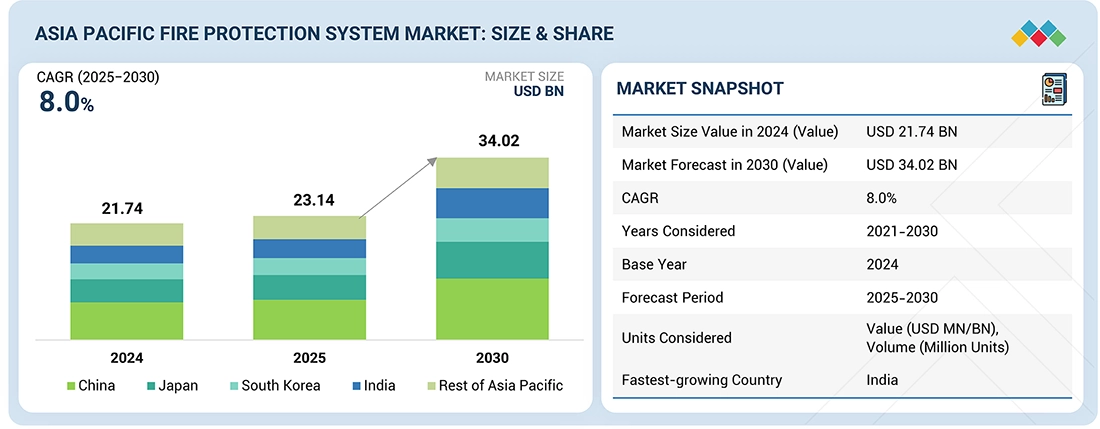
Source: Secondary Research, Interviews with Experts, MarketsandMarkets Analysis
The Asia Pacific fire protection system market is projected to reach USD 34.02 billion by 2030, from USD 23.14 billion in 2025, with a CAGR of 8.0%. The market is driven by rapid urbanization, large-scale infrastructure development, and increased construction of commercial, industrial, and high-density residential buildings across the region. Increasing focus on occupant safety, strengthening of fire safety regulations, and growing enforcement of building codes are supporting market expansion in both developed and emerging economies.
Market Size & Forecast
KEY TAKEAWAYS
-
BY COUNTRYIndia is projected to grow at a CAGR of 9.5% during the forecast period.
-
BY PRODUCT & SERVICEThe product segment held the largest market share of 59.6% in 2024.
-
BY VERTICALThe industrial segment held the largest market share of 63.0% in 2024.
-
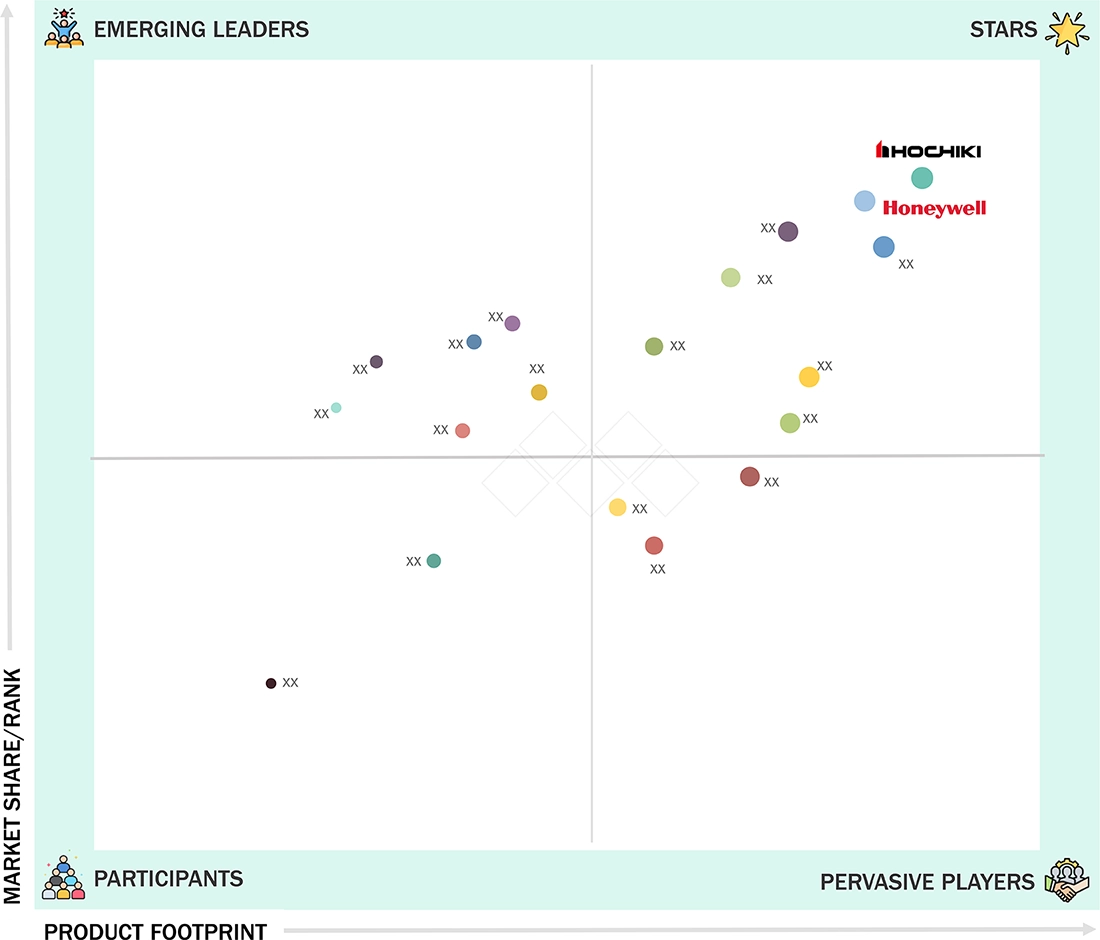
COMPETITIVE LANDSCAPEHochiki Corporation and Honeywell International Inc. were identified as the star players in the Asia Pacific fire protection system market, given their strong market share and product footprint.
-
COMPETITIVE LANDSCAPEShenzhen Orena Technology Co., Ltd. and Hanwei Electronics Group Corporation have distinguished themselves among start-ups and SMEs due to their strong product portfolio and business strategy.
The Asia Pacific fire protection system market is projected to grow steadily, supported by rapid urbanization, robust infrastructure development, and increased construction activity across commercial, industrial, and residential sectors. Growing awareness of life and asset protection, particularly in high-density urban areas, data centers, healthcare facilities, transportation hubs, and industrial sites, is driving wider system adoption. Meanwhile, increasing integration of IoT-enabled detection, intelligent monitoring, and advanced suppression technologies is modernizing fire safety systems, enabling faster response times, improved reliability, and stronger regulatory compliance across the region.
TRENDS & DISRUPTIONS IMPACTING CUSTOMERS' CUSTOMERS
Manufacturers in Asia Pacific are increasingly focusing on IoT-enabled fire detectors, AI-driven fire analysis software, wireless sensors, and predictive maintenance capabilities to improve real-time monitoring, system reliability, and emergency response. Technologies such as video analytics, cloud-based platforms, and smart building connectivity are supporting the development of integrated fire protection ecosystems that enhance compliance and operational resilience. Rising demand for networked fire alarms, clean-agent suppression systems, and advanced alert platforms is accelerating the transition from conventional fire safety solutions to intelligent and automated systems across the Asia Pacific market.
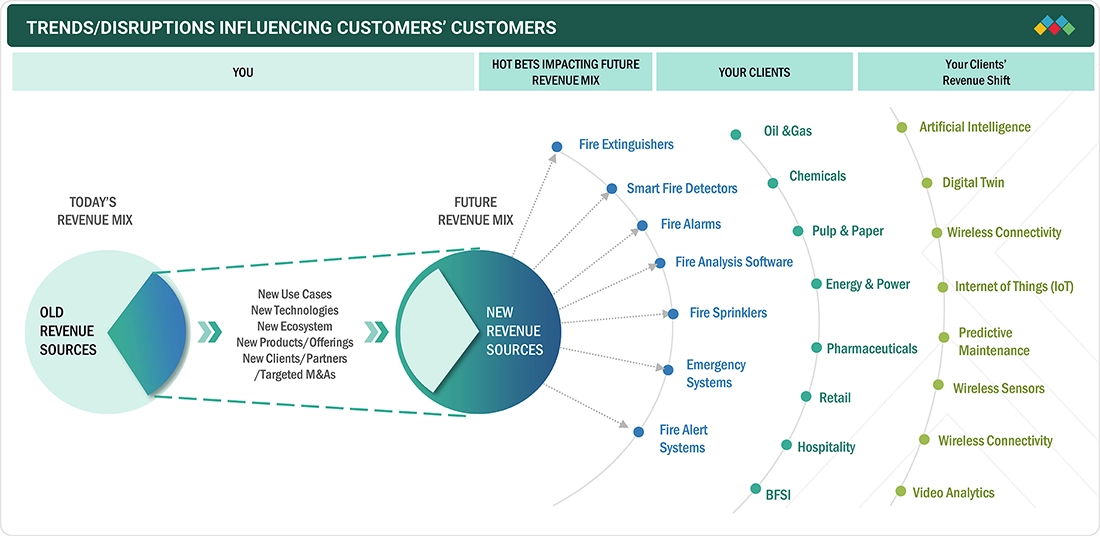
Source: Secondary Research, Interviews with Experts, MarketsandMarkets Analysis
MARKET DYNAMICS

Level
-
Rapid urbanization and large-scale infrastructure development across Asia Pacific

-
Strengthening fire safety regulations in developed and emerging economies


Level
-
High initial cost of advanced fire protection systems in price-sensitive markets

-
Uneven enforcement of fire safety standards across emerging economies


Level
-
Rising adoption of smart and IoT-enabled fire detection systems

-
Modernization of aging urban infrastructure and high-density residential buildings


Level
-
Fragmented regulatory frameworks

-
Integration complexity in large-scale and mixed-use developments

Source: Secondary Research, Interviews with Experts, MarketsandMarkets Analysis
Driver: Rapid urbanization and large-scale infrastructure development across Asia Pacific
Rapid urbanization and population growth across Asia Pacific are driving large-scale investments in commercial buildings, industrial facilities, transportation networks, and high-density residential projects. This expansion is significantly increasing the need for compliant and scalable fire detection, alarm, and suppression systems across both developed and emerging economies.
Restraint: High initial cost of advanced fire protection systems in price-sensitive markets
High installation and system integration costs continue to limit the adoption of advanced fire protection solutions in price-sensitive Asia Pacific markets. Budget constraints among small and mid-sized developers often lead to a preference for basic or phased fire safety installations, slowing penetration of intelligent and automated systems.
Opportunity: Rising adoption of smart and IoT-enabled fire detection systems
The growing deployment of smart buildings and digital infrastructure across Asia Pacific is creating strong demand for IoT-enabled fire detection and monitoring systems. These solutions support real-time alerts, predictive maintenance, and remote monitoring, making them increasingly attractive for modern commercial and industrial facilities.
Challenge: Fragmented regulatory frameworks
The Asia Pacific region faces regulatory complexity due to significant variation in fire safety codes, enforcement levels, and certification requirements across countries. Navigating these fragmented frameworks increases compliance costs and slows product standardization for manufacturers and system integrators operating across multiple markets.
ASIA PACIFIC FIRE PROTECTION SYSTEM MARKET: COMMERCIAL USE CASES ACROSS INDUSTRIES
| COMPANY | USE CASE DESCRIPTION | BENEFITS |
|---|---|---|
 |
Advanced fire detection, alarm, and integrated life-safety systems for commercial buildings, industrial facilities, data centers, and critical infrastructure across Asia Pacific. | Early fire detection, improved occupant safety, scalable deployments, enhanced monitoring capabilities, and compliance with regional fire safety regulations. |
 |
Fire detection and alarm systems for commercial buildings, healthcare facilities, transportation hubs, and industrial environments across Asia Pacific. | High detection accuracy, reliable system performance, reduced false alarms, and compliance with regional fire safety and certification standards. |
 |
Integrated fire suppression, alarm, and life-safety systems for large commercial buildings, data centers, logistics hubs, and high-rise residential facilities across Asia Pacific. | Reliable fire protection, scalable system architecture, improved business continuity, reduced insurance risk, and compliance with regional fire safety codes. |
Logos and trademarks shown above are the property of their respective owners. Their use here is for informational and illustrative purposes only.
MARKET ECOSYSTEM
The Asia Pacific fire protection system market is supported by a growing ecosystem of fire safety equipment manufacturers, technology providers, and system integrators, driven by rising regulatory focus and expanding engineering capabilities across the region. Market participants are increasingly integrating IoT, wireless technologies, and intelligent monitoring platforms to improve system accuracy, reliability, and response efficiency. Rapid urbanization, improved safety awareness, and gradual strengthening of fire safety regulations are accelerating the shift from conventional fire protection equipment to intelligent and digitally enabled fire safety solutions across Asia Pacific.
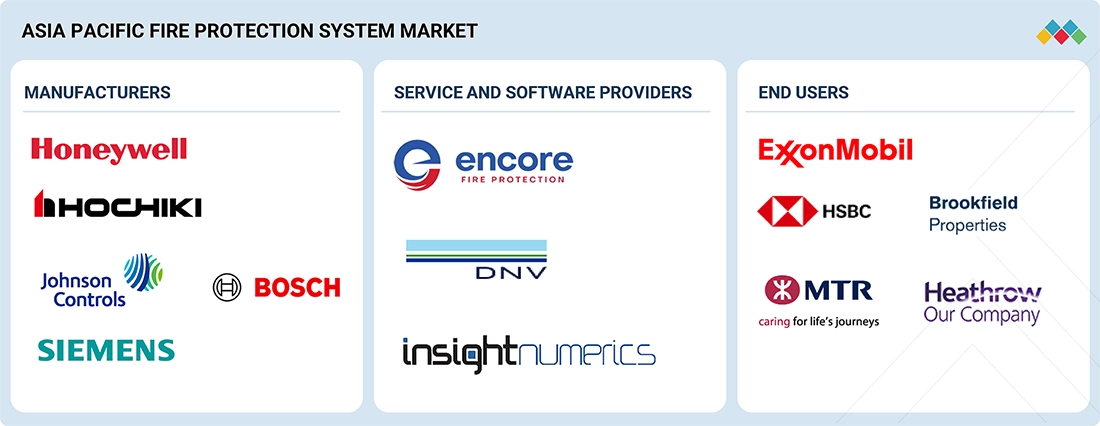
Logos and trademarks shown above are the property of their respective owners. Their use here is for informational and illustrative purposes only.
MARKET SEGMENTS
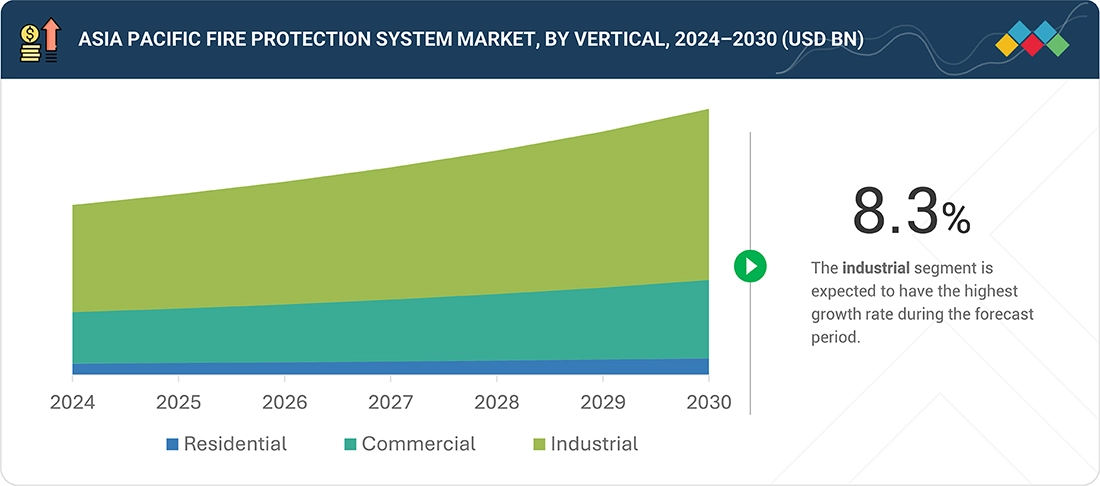
Source: Secondary Research, Interviews with Experts, MarketsandMarkets Analysis
Asia Pacific Fire Protection System Market, By Vertical
The industrial segment leads the Asia Pacific fire protection system market due to the elevated fire risks associated with manufacturing, chemicals, energy, oil & gas, and logistics facilities. Continuous operations, storage, and handling of flammable materials, as well as the presence of high-value equipment, increase the need for advanced fire detection, analysis, and suppression systems. Additionally, strengthening fire safety regulations, growing insurer requirements, and rising enforcement across developed and emerging Asia Pacific economies are reinforcing system adoption across industrial sites.
Asia Pacific Fire Protection System Market, By Product
The fire suppression segment holds the largest share of the Asia Pacific fire protection system market, supported by widespread deployment across industrial, commercial, and high-density residential buildings. Strong emphasis on minimizing fire-related losses, protecting critical assets, and ensuring operational continuity is driving demand for reliable suppression solutions. This has led to increased adoption of water-based, gaseous, foam-based, and clean-agent fire suppression systems, particularly in industrial facilities, data centers, healthcare buildings, and large commercial complexes across the region.
REGION
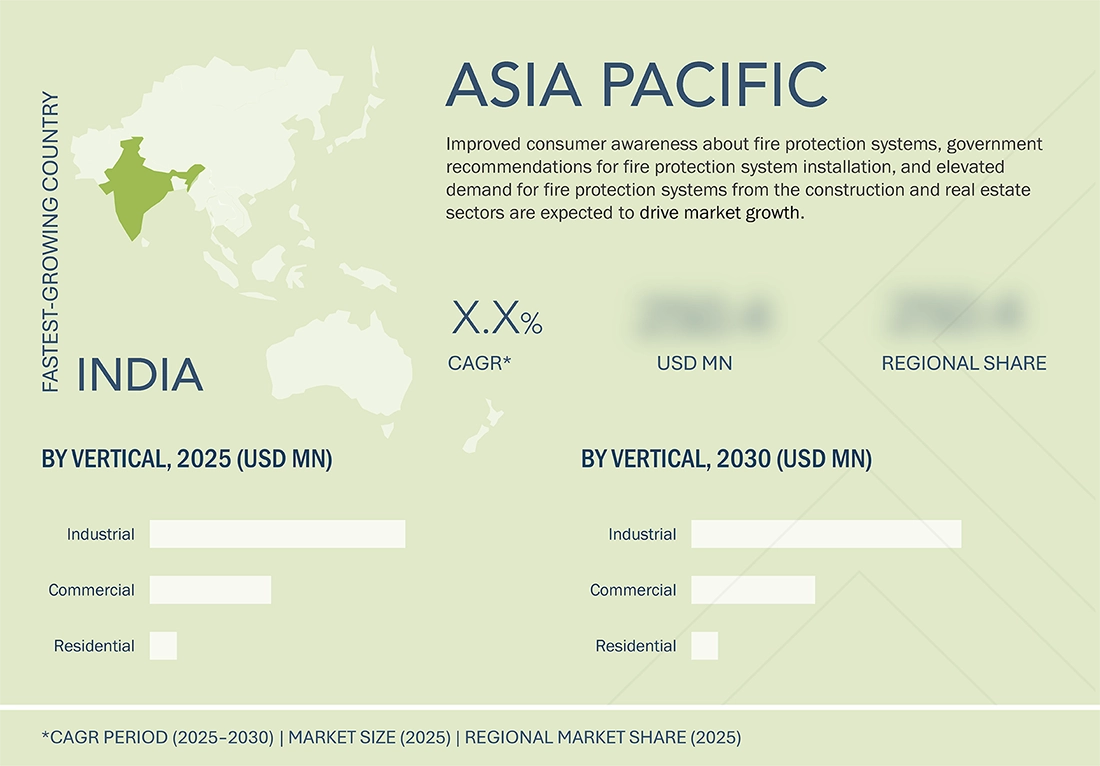
India is expected to be the fastest-growing country in Asia Pacific during the forecast period
India is the fastest-growing country in the Asia Pacific region, driven by rapid urbanization, infrastructure growth, and strict fire safety laws. Increasing construction of data centers, logistics hubs, healthcare facilities, and high-density residential buildings is boosting demand for advanced fire detection and suppression systems. Meanwhile, higher investments in manufacturing and building modernization are speeding up the adoption of IoT-enabled and automated fire protection solutions.
ASIA PACIFIC FIRE PROTECTION SYSTEM MARKET: COMPANY EVALUATION MATRIX
In the Asia Pacific fire protection system market, Honeywell and Hochiki hold strong positions, supported by their broad regional presence, reliable product portfolios, and continued focus on innovation. Their advanced fire detection, alarm, and life-safety solutions are widely adopted across commercial, industrial, and residential sectors, enabling large-scale deployment and compliance with diverse regional fire safety requirements.
Source: Secondary Research, Interviews with Experts, MarketsandMarkets Analysis
KEY MARKET PLAYERS
- HOCHIKI Corporation (Japan)
- Honeywell International Inc. (US)
- Johnson Controls (Ireland)
- Siemens (Germany)
- Robert Bosch GmbH (Germany)
- Eaton (Ireland)
- Teledyne Technologies Incorporated (US)
- Gentex Corporation (US)
- Halma plc (UK)
- MSA (US)
MARKET SCOPE
| REPORT METRIC | DETAILS |
|---|---|
| Market Size in 2024 (Value) | USD 21.74 BN |
| Market Forecast in 2030 (Value) | USD 34.02 BN |
| Growth Rate | 8.0% |
| Years Considered | 2021–2030 |
| Base Year | 2024 |
| Forecast Period | 2025–2030 |
| Units Considered | Value (USD MN/BN), Volume (Million Units) |
| Report Coverage | Revenue forecast, company ranking, competitive landscape, growth factors, and trends |
| Segments Covered |
|
| Regional Scope | China, Japan, South Korea, India, Rest of Asia Pacific |
WHAT IS IN IT FOR YOU: ASIA PACIFIC FIRE PROTECTION SYSTEM MARKET REPORT CONTENT GUIDE
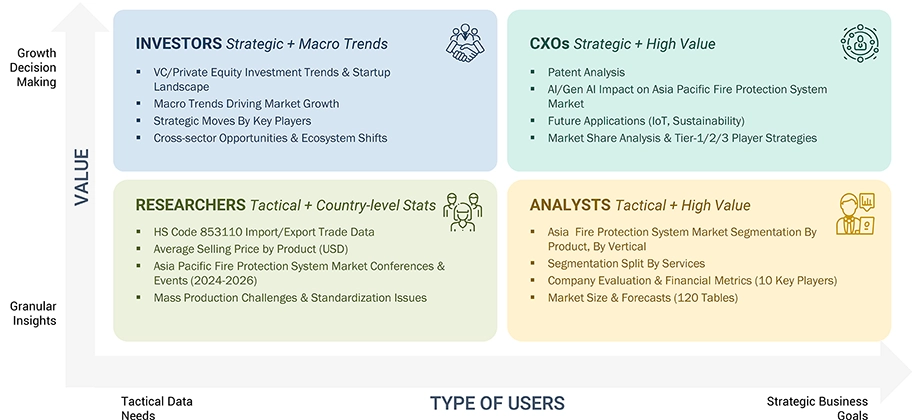
DELIVERED CUSTOMIZATIONS
We have successfully delivered the following deep-dive customizations:
| CLIENT REQUEST | CUSTOMIZATION DELIVERED | VALUE ADDS |
|---|---|---|
| Asia Pacific Industrial Manufacturing Client |
|
|
| Asia Pacific Data Centre & Critical Infrastructure Operator |
|
|
| Asia Pacific Commercial Real Estate Developer |
|
|
RECENT DEVELOPMENTS
- July 2025 : Honeywell International Inc. announced the acquisition of Li-ion Tamer, a leading off-gas detection solution for lithium-ion batteries, from Nexceris. This acquisition strengthens Honeywell’s fire life safety technologies within its Building Automation segment and supports safety solutions for energy storage and data centers.
- February 2025 : Teledyne Technologies Incorporated introduced the Spyglass Xtend triple-infrared flame detector, capable of simultaneously detecting both hydrogen and hydrocarbon fires. This innovation enhances safety in industrial environments where hydrogen flames may spread to nearby equipment and trigger hydrocarbon fuel fires, which are invisible to detectors designed only for hydrogen.
- September 2024 : Johnson Controls launched the Tyco ESFR-25 Dry-Type Pendent Sprinkler, FM Approved for efficient fire protection in commercial refrigerated and frozen storage areas. Designed for cold storage environments up to 50 ft (15.2 m) high with temperatures as low as -60°F (-51°C), the ceiling-only, lower-pressure sprinkler reduces the need for fire pumps and eliminates in-rack sprinklers for high-piled storage in box-in-box applications.
Table of Contents
 Exclusive indicates content/data unique to MarketsandMarkets and not available with any competitors.
Methodology
The research study involved four significant steps in estimating the fire protection system market size. Exhaustive secondary research has been done to collect important information about the market and peer markets. The next step has been to validate these findings and assumptions and size them with the help of primary research with industry experts across the value chain. Both top-down and bottom-up approaches have been used to estimate the market size. After this, the data triangulation approach has been adopted to estimate the market sizes of segments and subsegments.
Secondary Research
Various secondary sources have been referred to in the secondary research process to identify and collect the information required for this study. These sources include annual reports, press releases, investor presentations of companies, white papers, and articles from recognized authors. Secondary research has mainly been done to obtain key information about the market’s value chain, the pool of key market players, market segmentation according to industry trends, regional outlook, and developments from market and technology perspectives.
The fire protection system market report estimates the global market size using the top-down and bottom-up approaches, along with several other dependent submarkets. The major players in the market have been identified using extensive secondary research, and their presence in the market has been determined using secondary and primary research. All the percentage splits and breakdowns have been determined using secondary sources and verified through primary sources.
Primary Research
In the primary research process, several sources from the supply and demand sides have been interviewed to obtain qualitative and quantitative information for this report. The demand side included representatives from end-use industries such as commercial, industrial, residential, and government sectors, while the supply side comprised fire protection system manufacturers, component suppliers, and distributors. This primary data has been collected through questionnaires, emails, and telephonic interviews. Approximately 25% of the primary interviews have been conducted with the demand-side respondents and 75% with the supply-side respondents. This primary data has been collected mainly through telephonic interviews, which accounted for 80% of the total primary interviews.
After successful interaction with industry experts, brief sessions have been conducted with highly experienced independent consultants to reinforce the findings of our primary research. This, along with the in-house subject-matter experts’ opinions, led us to the findings described in the report. The breakdown of primary respondents is as follows:
Market Size Estimation
Top-down and bottom-up approaches have been used to estimate and validate the fire protection system market size and other dependent submarkets. The leading players in the market have been identified through secondary research, and their market shares in the key regions have been determined through primary and secondary research. This entire procedure includes the study of the annual and financial reports of the top players and extensive interviews with industry experts, such as chief executive officers, vice presidents, directors, and marketing executives, for key insights.
All percentage shares, splits, and breakdowns have been determined using secondary sources and verified through primary sources. All possible parameters affecting the markets covered in this study have been accounted for, viewed in detail, verified through primary research, and analyzed to get the final quantitative and qualitative data. This data has been consolidated and supplemented with detailed inputs and analysis from MarketsandMarkets and presented in this report. The three figures below represent this study’s overall market size estimation process.
Bottom-Up Approach
- Identifying industries that are either using or will use a fire protection system
- Tracking leading companies and system integrators operating across various industries
- Deriving the size of the fire protection system market through the data sanity method, analyzing revenues of more than 20 key providers through their annual reports and press releases, and summing them up to estimate the overall market size
- Conducting multiple discussions with key opinion leaders to understand the demand for fire protection systems, and analyzing the breakup of the scope of work carried out by each major company
- Carrying out the market trend analysis to obtain the CAGR of the fire protection system market by understanding the product penetration rate in each industry, and analyzing the demand and supply of fire protection system instruments in different applications
- Assigning a percentage to the overall revenue or, in a few cases, to segmental revenues of each company to derive their revenues from the sales of fire protection system instruments; the percentage for each company has been assigned based on their product portfolios
- Verifying and cross-checking estimates at every level through discussions with key opinion leaders, including CXOs, directors, and operation managers, and with domain experts at MarketsandMarkets
- Studying various paid and unpaid information sources, such as annual reports, press releases, white papers, and databases
- Tracking ongoing and identifying upcoming fire protection system product execution projects by companies, and forecasting the market size based on these developments and other critical parameters
Top-Down Approach
- MarketsandMarkets focuses on the top-line expenditures and investments made throughout the fire protection system ecosystem to manufacture new equipment/systems and retrofit the existing ones.
- The information related to revenues generated by key manufacturers of fire protection system instruments has been studied and analyzed.
- Multiple on-field discussions have been carried out with key opinion leaders of leading companies manufacturing fire protection system instruments.
- The geographical split has been estimated using secondary sources based on various factors, such as the number of players in a specific country or region and the fire protection system instruments provided by these players.
Data Triangulation
After arriving at the overall size of the fire protection system market from the market size estimation processes explained above, the total market has been split into several segments and subsegments. Where applicable, the market breakdown and data triangulation procedures have been employed to complete the overall market engineering process and arrive at the exact statistics for all segments and subsegments. The data has been triangulated by studying various factors and trends. Additionally, the market size has been validated using top-down and bottom-up approaches.
Market Definition
Fire protection systems are a set of connected devices or systems used to prevent fire accidents. These systems reduce the impact of uncontrolled fires, saving lives and property. They comprise fire detection, fire suppression, fire sprinkler, fire analysis, and fire response systems required during fire emergencies. The scope of this market includes products, software, and services, as mentioned in the table below. The services market covers various post-sales, installation, maintenance, and other services offered according to customer requirements and application areas.
Key Stakeholders
- Raw material suppliers
- Electronic design automation (EDA) and design tool vendors
- Government bodies, venture capitalists, and private equity firms
- Integrated device manufacturers (IDMs)
- Fire protection system technology platform developers
- Fire protection system component manufacturers
- Fire protection system original equipment manufacturers (OEMs)
- Assembly, testing, and packaging vendors
- System integrators
- Distributors and traders
- Research organizations
- Organizations, forums, alliances, and associations
- End users
Report Objectives
- To define, describe, and forecast the fire protection system market, by type, product, service, and vertical, in terms of value
- To forecast the market size for the product segment, in terms of volume
- To provide detailed information regarding drivers, restraints, opportunities, and challenges influencing the market growth
- To strategically analyze micromarkets with respect to individual growth trends, prospects, and contributions to the overall market size
- To study the complete value chain of the fire protection system market
- To analyze opportunities for stakeholders by identifying high-growth segments of the fire protection system market
- To strategically profile the key players and comprehensively analyze their market positions in terms of their ranking and core competencies
- To analyze competitive developments, such as product launches, acquisitions, agreements, and partnerships, in the fire protection system market
- To provide ecosystem analysis, case study analysis, patent analysis, technology analysis, impact of AI/Gen AI, Impact of 2025 US Tariff- machine control system market key conferences and events, Porter’s five forces analysis, and regulations pertaining to the market under study
- To provide a macroeconomic outlook for all the regions in the region chapter
Available Customizations:
With the given market data, MarketsandMarkets offers customizations according to the specific requirements of companies. The following customization options are available for the report:
- Detailed analysis and profiling of additional market players based on various blocks of the supply chain
Key Questions Addressed by the Report
What is the projected size of the Asia Pacific fire protection systems market?
The market is expected to reach USD 34.02 billion by 2030, growing at a CAGR of around 8%.
What are the key drivers of growth in this market?
Rapid urbanization, infrastructure development, and stricter fire safety regulations are major factors driving market expansion.
Which segment holds the largest market share?
The fire suppression systems segment dominates due to its widespread use across industrial, commercial, and residential sectors.
What are the major technological trends in the market?
Adoption of IoT-enabled detectors, AI-based fire analysis, and smart monitoring systems is transforming fire protection solutions.
Who are the key players in the Asia Pacific fire protection systems market?
Leading companies include Honeywell, Hochiki, Siemens, Johnson Controls, and Bosch, driven by strong product portfolios and innovation.


Personalize This Research
- Triangulate with your Own Data
- Get Data as per your Format and Definition
- Gain a Deeper Dive on a Specific Application, Geography, Customer or Competitor
- Any level of Personalization
Let Us Help You
- What are the Known and Unknown Adjacencies Impacting the Asia Pacific Fire Protection System Market
- What will your New Revenue Sources be?
- Who will be your Top Customer; what will make them switch?
- Defend your Market Share or Win Competitors
- Get a Scorecard for Target Partners

Custom Market Research Services
We Will Customise The Research For You, In Case The Report Listed Above Does Not Meet With Your Requirements
Get 10% Free CustomisationTESTIMONIALS

Tetsuya Ohhira
Business Development Manager-Technology Business
Nikon Corporation,
Leading Japanese MNC specializing in optics and imaging productswww.nikon.com
MarketsandMarkets™ response
is quick. Their attitude is flexible and positive. Analyst Insights are globally considered and
significant. Client Services quickly respond to our inquiry and demand. Their wide range of global
surveys help us make our strategic plan.
We hope Knowledge Store will be easier to search
for a report.
VP - Marketing & Business Development
Leading Provider of Process Control Solutions
We engaged with MarketsandMarkets on a study to perform an analysis and recommend a Go-To-Market strategy for metrology and process control in the semiconductor market. The study was tailored to our targets and needs with well-defined milestones. Our overall experience with the MarketsandMarkets team was very good throughout the project in all aspects including the analysis methodologies used, the quality and depth of primary and secondary data sets, the professionalism and flexibility of the team and the ability to meet the target schedule and milestones. We want to thank MarketsandMarkets team for a job well done.






Growth opportunities and latent adjacency in Asia Pacific Fire Protection System Market