Automotive Fasteners Market

Automotive Fasteners Market By Characteristic (Removable, Permanent, Semi-Permanent), Product (Threaded, Non-Threaded), Material (Steel, Plastic, Aluminum), Distribution (OE, Aftermarket), Application, Electric Vehicle, and Region - Global Forecast to 2032




OVERVIEW
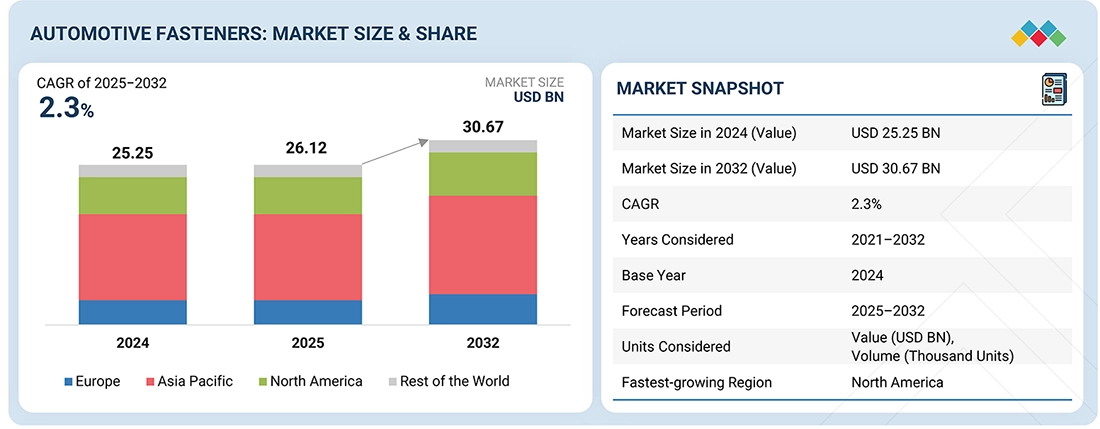
Source: Secondary Research, Interviews with Experts, MarketsandMarkets Analysis
The automotive fasteners market is projected to reach USD 30.67 billion by 2032, growing from USD 26.12 billion in 2025, at a compound annual growth rate (CAGR) of 2.3%. Market growth is driven by evolving vehicle architectures, where lightweight vehicle design, electrified powertrains, and modular platform development are propelling the demand for high-strength and application-specific fastening solutions. Additionally, the shift toward electric vehicles is accelerating the use of advanced fasteners designed to support battery enclosures, lightweight chassis components, and mixed-material assemblies that include aluminum and composites. Automakers are emphasizing the need for standardized and corrosion-resistant fasteners to enhance assembly efficiency, vehicle durability, and serviceability across global platforms. In Europe, stringent emission and lightweighting regulations are promoting the use of engineered fasteners for structural optimization. North America's growth is bolstered by the rising production of pickups and SUVs, which require heavy-duty fastening systems. Meanwhile, expansion in the Asia Pacific region is driven by high vehicle production volumes, cost-effective manufacturing ecosystems, and an increasing localization of electric vehicle component manufacturing. This positions automotive fasteners as an essential component that ensures structural integrity, safety, and scalable vehicle production worldwide.
KEY TAKEAWAYS
-
By RegionAsia Pacific is estimated to dominate the automotive fasteners market, with a share of 54%, in 2025.
-
By ProductBy product, the aerospace grade segment is projected to register the highest CAGR of 3.1% during the forecast period.
-
By CharacteristicBy characteristic, the semi-permanent segment is expected to grow at the highest rate from 2025 to 2032.
-
By ApplicationBy application, the engine segment is expected to dominate the market during the forecast period.
-
Competitive Landscape - Key PlayersITW Automotive (US), Stanley Black & Decker, Inc. (US), LISI GROUP (France), Wurth Group (Germany), SFS Group (Switzerland), and Nifco Inc (Japan) are advancing high-performance fastening solutions, including lightweight, corrosion-resistant, and high-strength fasteners, to enhance vehicle durability, structural integrity, and assembly efficiency. Their innovation efforts focus on supporting multi-material vehicle architectures, EV battery systems, chassis structures, and electronic module assemblies used in electric, connected, and next-generation vehicles. These developments enable weight reduction, improved vibration resistance, and enhanced safety performance while supporting automated manufacturing and scalable vehicle production across modern automotive platforms.
-
Competitive Landscape - Startups/SMEsPennEngineering (US), Boltun Corporation (Taiwan), and Sterling Tools Limited (India) among others, have distinguished themselves among startups and SMEs by securing strong footholds in specialized niche areas, underscoring their potential as emerging market leaders.
The global automotive fasteners market is evolving, as OEMs shift toward modular vehicle platforms, mixed-material body structures, and high durability requirements across powertrain, chassis, and interior assemblies.
TRENDS & DISRUPTIONS IMPACTING CUSTOMERS' CUSTOMERS
The automotive fasteners market generates revenue from conventional carbon steel bolts, screws, nuts, and washers used in the body, chassis, and powertrain assemblies of internal combustion engine (ICE) vehicles. In the future, revenue is expected to be driven by the demand for high-strength and lightweight fasteners designed for advanced high-strength steel (AHSS), ultra-high-strength steel (UHSS), and aluminum structures. Additionally, the market will see growth in corrosion-resistant and coated fasteners for electric vehicle (EV) and hybrid platforms, as well as precision fasteners tailored for battery packs, power electronics, and advanced driver-assistance systems (ADAS) modules. These components will require high fatigue resistance, thermal stability, and long-term reliability.
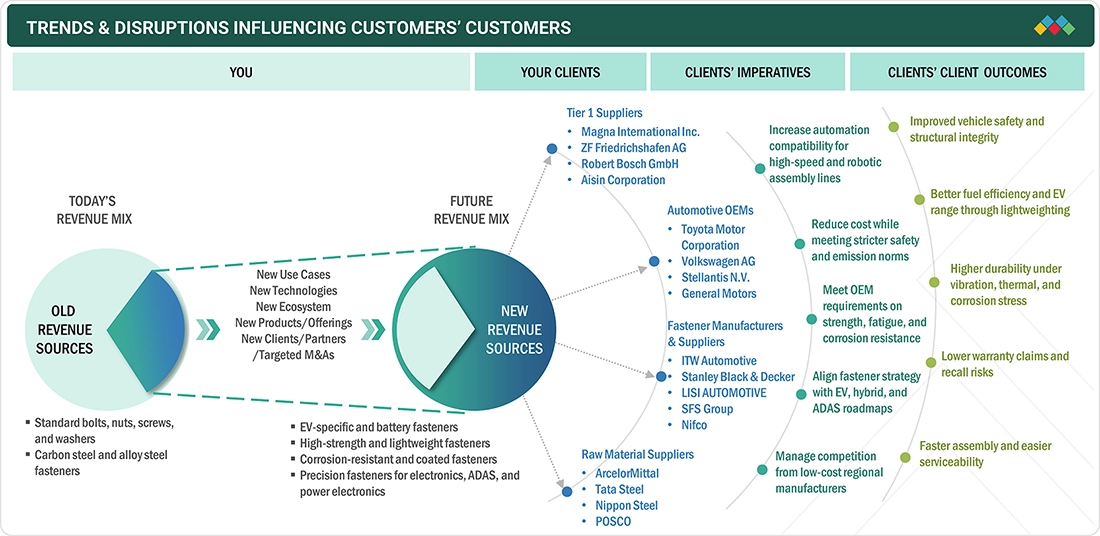
Source: Secondary Research, Interviews with Experts, MarketsandMarkets Analysis
MARKET DYNAMICS

Level
-
Stringent safety and emission regulations

-
Global rise in EV sales


Level
-
Emergence of alternative joining technologies


Level
-
Extensive use of lightweight materials

-
Innovations in powertrain and electronics


Level
-
High compliance complexity

-
Stiff competition from low-cost manufacturers in Asia Pacific

Source: Secondary Research, Interviews with Experts, MarketsandMarkets Analysis
Driver: Stringent safety and emission regulations
Stringent emission regulations, including India’s Corporate Average Fuel Efficiency (CAFE-III) and Constant Speed Fuel Consumption (CSFC) under the Bureau of Energy Efficiency (BEE), the United States Greenhouse Gas (GHG) and Corporate Average Fuel Economy (CAFE) standards (MY2024–2026) issued by the Environmental Protection Agency (EPA) and the National Highway Traffic Safety Administration (NHTSA), California Air Resources Board (CARB) emission rules, and European Union (EU) CO2 fleet-average targets, are compelling OEMs to reduce vehicle weight and improve structural efficiency. This is accelerating the adoption of advanced high-strength steel (AHSS), ultra-high-strength steel (UHSS), aluminum, and multi-material body structures, thereby driving the demand for high-strength and corrosion-protected fasteners. At the same time, rigorous crash and safety requirements under the Bharat New Car Assessment Program (BNCAP), the European New Car Assessment Programme (Euro NCAP), and the Federal Motor Vehicle Safety Standards (FMVSS) are raising load-bearing and fatigue performance specifications for critical joints. Compliance with global fastening standards such as ISO, DIN, ASTM, and British Standards (BS) is now mandatory across global vehicle platforms. Regulatory tightening is thus supporting value growth in the automotive fasteners market
Restraint: Emergence of alternative joining technologies
The increasing adoption of alternative joining technologies, such as structural adhesives, welding, and self-clinching solutions, is restraining the demand for conventional threaded fasteners in the automotive industry. These technologies enable efficient bonding of dissimilar materials, including aluminum, composites, and mixed-metal structures, reducing reliance on traditional bolts and screws. Continuous bonded or welded joints improve load distribution, stiffness, and NVH performance compared to point fastening in selected applications. High automation levels in welding and bonding processes also reduce part count and assembly steps in large-scale vehicle production. In EV designs, particularly battery housings and lightweight body structures, bonding and welding are increasingly combined, limiting fastener penetration in assemblies and moderating overall market growth.
Opportunity: Extensive use of lightweight materials
Tighter emission regulations and the shift toward EVs are accelerating the adoption of lightweight materials across vehicle platforms. To reduce overall vehicle mass, OEMs are increasingly using aluminum, magnesium, and titanium components, which require compatible lightweight fasteners designed for mixed-material assemblies. Advanced coatings are being deployed to improve corrosion resistance and reduce friction during installation, supporting durability in high-stress environments. Zinc-nickel and organic polymer coatings extend fastener service life, particularly in regions exposed to road salts and moisture. Additionally, the development of reusable, corrosion-resistant, and sealing fasteners aligns with sustainability targets and repair regulations, creating new application opportunities within the automotive fasteners market.
Challenge: High compliance complexity
The constantly evolving quality and safety regulations are driving compliance complexity for automotive fastener manufacturers. Stricter requirements under Federal Motor Vehicle Safety Standards (FMVSS), Euro NCAP (European New Car Assessment Program), Bharat New Car Assessment Program (BNCAP), and battery safety standards such as UN 38.3 and ISO 12405 are raising demands for testing, documentation, and traceability. Frequent updates related to electrification, lightweighting, and crash safety necessitate repeated validation of materials, coatings, and torque performance. This raises costs, extends approval cycles, and hampers volume growth, especially for suppliers serving multiple regions and OEM platforms.
AUTOMOTIVE FASTENERS MARKET: COMMERCIAL USE CASES ACROSS INDUSTRIES
| COMPANY | USE CASE DESCRIPTION | BENEFITS |
|---|---|---|
 |
Specification and validation of automotive fasteners for body-in-white, powertrain, chassis, battery packs, interiors, and electronic module assemblies across ICE, HEV, and BEV platforms | Improves vehicle structural integrity, crash performance, durability under vibration, thermal stress, and dynamic loads | Supports lightweight vehicle architectures and electrification requirements |
 |
Development and production of high-strength, corrosion-resistant, and lightweight fasteners, including bolts, screws, studs, and specialty fastening systems for multi-material vehicle structures and EV platforms | Enables weight reduction | Enhances joint reliability | Improves assembly efficiency | Ensures performance across high-load and high-temperature automotive environments |
 |
Integration of fastening solutions into subsystem assemblies, such as engines, chassis modules, seating systems, battery enclosures, and ADAS components, to meet OEM performance and lifecycle standards | Enhances component robustness | Simplifies modular assembly | Reduces vibration-related failures | Lowers warranty risks through standardized and validated fastening solutions |
 |
Supply of cold-heading quality (CHQ) steel, aluminum alloys, and surface coating materials optimized for high-strength fastening applications and automated manufacturing processes | Supports production of durable and corrosion-resistant fasteners | Enables lightweighting initiatives | Ensures material consistency | Strengthens long-term supply partnerships with OEMs and tier 1 suppliers |
Logos and trademarks shown above are the property of their respective owners. Their use here is for informational and illustrative purposes only.
MARKET ECOSYSTEM
The automotive fasteners ecosystem consists of raw material suppliers, tier 1 suppliers, fastener manufacturers, and original equipment manufacturers (OEMs). Key players in the automotive fasteners market include ITW Automotive (US), Wurth Group (Germany), Stanley Black & Decker, Inc. (US), LISI Group (France), SFS Group (Switzerland), and Nifco Inc. (Japan). OEMs are the primary drivers of demand in the automotive fasteners market, as they integrate fasteners across various components, including engines, chassis, transmissions, steering systems, battery packs, and body-in-white assemblies. Tier 1 suppliers serve as system integrators by embedding fasteners within chassis modules, powertrain systems, seating structures, steering assemblies, and electric vehicle (EV) battery enclosures that are delivered directly to OEMs. Raw material suppliers provide the steel, alloys, and other metals necessary for manufacturing automotive fasteners, ensuring that these materials meet the required strength and quality standards. Fastener manufacturers are tasked with designing, forging, heat-treating, coating, and validating threaded and non-threaded fastening solutions. Distributors and service providers play a crucial role in the automotive fasteners ecosystem by ensuring inventory availability, coordinating logistics, offering kitting services, and providing vendor-managed inventory (VMI) support for OEMs and tier 1 suppliers.
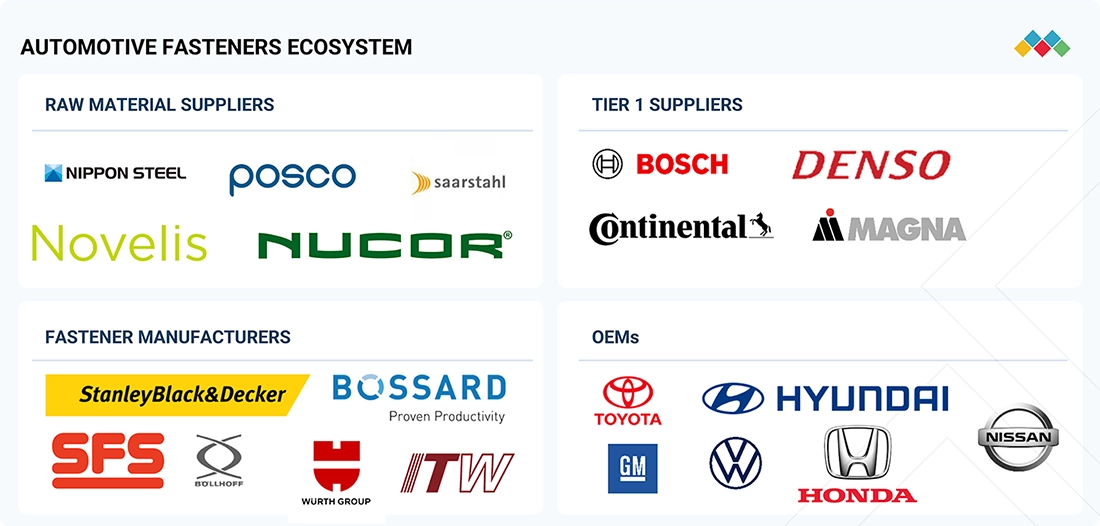
Logos and trademarks shown above are the property of their respective owners. Their use here is for informational and illustrative purposes only.
MARKET SEGMENTS
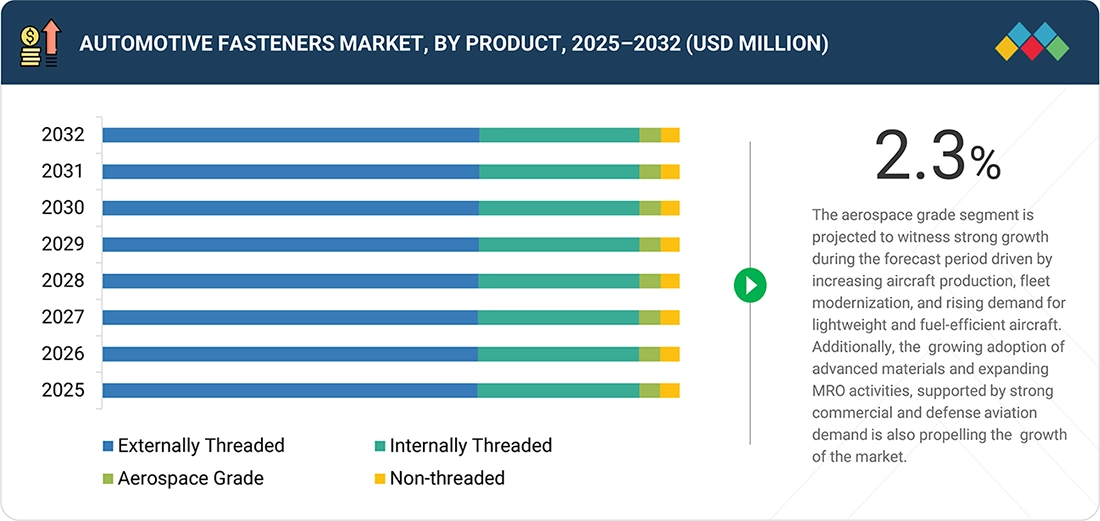
Source: Secondary Research, Interviews with Experts, MarketsandMarkets Analysis
Automotive Fasteners Market, By Product
The market for externally threaded fasteners is expected to lead during the forecast period. This is largely due to their widespread use in structural, powertrain, chassis, and body assembly applications. Components such as bolts, screws, and studs are essential for joining load-bearing automotive parts, providing mechanical strength, vibration resistance, and ease of assembly and disassembly during both vehicle manufacturing and servicing. Furthermore, modern vehicles increasingly utilize mixed-material structures, which include high-strength steel, aluminum, and composites. These mixed materials require reliable externally threaded fastening solutions to maintain joint integrity under dynamic loads and thermal expansion conditions. The shift toward electric vehicles also enhances the demand for these fasteners, as battery packs, electric drivetrains, and lightweight chassis systems rely heavily on high-performance bolts and screws for secure mounting and compliance with safety standards. Original Equipment Manufacturers (OEMs) prefer externally threaded fasteners because of their compatibility with automated assembly processes, standardized designs, and advantages in serviceability. This preference reinforces the dominance of externally threaded fasteners in both vehicle production and aftermarket maintenance applications.
Automotive Fasteners Market, By Characteristic
The removable segment is expected to lead the automotive fasteners market during the forecast period. This is due to the crucial role of removable fasteners in facilitating efficient vehicle assembly, maintenance, and component replacement throughout a vehicle's lifecycle. Fasteners such as bolts, screws, and nuts allow for repeated assembly and disassembly without damaging the components being joined, making them essential for applications in powertrain systems, chassis structures, interiors, and electronic modules. As vehicles become more complex with the integration of electrified powertrains, advanced electronics, and modular architectures, original equipment manufacturers (OEMs) are increasingly prioritizing removable fastening solutions. These solutions support better repairability, improved servicing efficiency, and platform standardization. The rising focus on vehicle maintenance, battery servicing in electric vehicles, and aftermarket repair activities further drives the demand for removable fasteners. Moreover, their compatibility with automated manufacturing processes and reduced downtime during repairs make removable fasteners the preferred choice over permanent joining methods, reinforcing their dominance in OEM production and automotive aftermarket applications.
Automotive Fasteners Market, By Vehicle Type
The passenger cars segment is expected to lead the automotive fasteners market during the forecast period. This is due to their significantly higher production volumes and increasing technological complexity compared to other vehicle categories. These vehicles require a substantial number of fasteners across various components, including body structures, interiors, powertrain systems, chassis, and electronic assemblies, to ensure structural integrity, safety, and durability. The rising consumer demand for lightweight, fuel-efficient, and electrically powered passenger cars is driving the adoption of advanced fastening solutions that are compatible with mixed-material vehicle architectures, such as aluminum, high-strength steel, and composites. Furthermore, the rapid growth of electric passenger vehicles contributes to market dominance, as battery packs, electric drivetrains, and electronic control systems depend heavily on high-performance fastening systems for secure mounting and vibration resistance. Additionally, high global ownership rates and frequent servicing needs reinforce the continued demand for automotive fasteners in passenger cars, in original equipment manufacturing (OEM) production and aftermarket applications.
Automotive Fasteners Market, By Application
The engine segment leads the automotive fasteners market during the forecast period. This is due to the essential role that fasteners play in maintaining structural stability and operational reliability under extreme mechanical and thermal conditions. Engine assemblies require a high concentration of specialized fasteners, such as bolts, studs, and screws, to securely join components like cylinder heads, crankshafts, manifolds, and transmission interfaces. These components are continually exposed to vibration, pressure, and high temperatures, so the fasteners must provide superior clamping force, fatigue resistance, and thermal durability to ensure long-term engine performance and safety. Despite the ongoing shift toward electric vehicles, internal combustion engine (ICE) vehicles still represent a significant share of the global vehicle population and production volumes, thus sustaining strong demand for engine-related fastening solutions. Additionally, regular engine maintenance and component replacement activities in the aftermarket further reinforce the significance of the engine application segment in the automotive fasteners market.
REGION
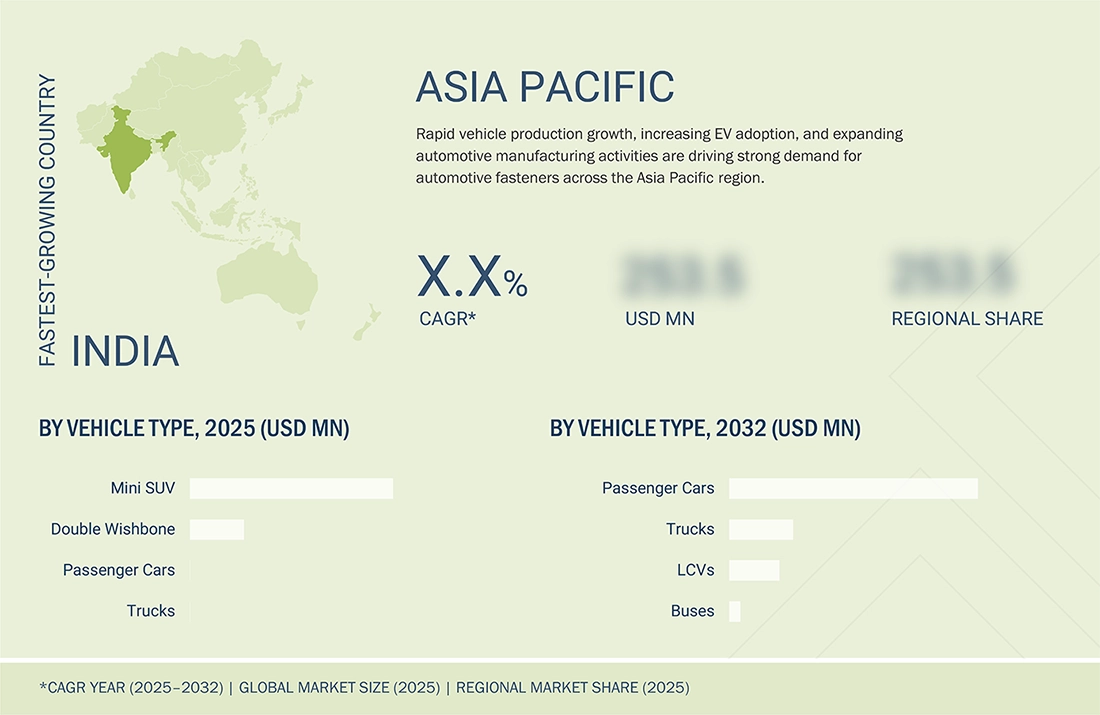
Asia Pacific is expected to be the largest market in the global automotive fasteners market during the forecast period.
Asia Pacific is expected to be the largest automotive fasteners market during the forecast period. This is due to its significant role in global vehicle production, especially in China, Japan, South Korea, and India. This region has the highest manufacturing volumes for passenger cars and electric vehicles, which directly drives the demand for structural, powertrain, and chassis fastening solutions for each vehicle. China is leading the regional growth through extensive automotive and electric vehicle production by original equipment manufacturers (OEMs) like BYD, SAIC, Geely, and Tesla. These manufacturers require high-strength and corrosion-resistant fasteners for lightweight vehicle platforms and battery pack assemblies to ensure structural integrity and safety. Japan and South Korea also contribute to this growth through their technologically advanced vehicle manufacturing, with major companies such as Toyota, Honda, Hyundai, and Kia. These manufacturers emphasize the use of precision-engineered fasteners to maintain durability, vibration resistance, and high-quality assembly standards. India is emerging as a high-growth market, driven by increasing passenger vehicle production, localization initiatives, and stricter safety and emission regulations. These factors are leading to a higher content of fasteners per vehicle. The presence of large OEM manufacturing hubs, the expansion of electric vehicle supply chains, and cost-efficient production ecosystems continue to enhance localized fastener manufacturing. This trend reinforces Asia Pacific’s leadership in the automotive fasteners market, projected to last through 2032.
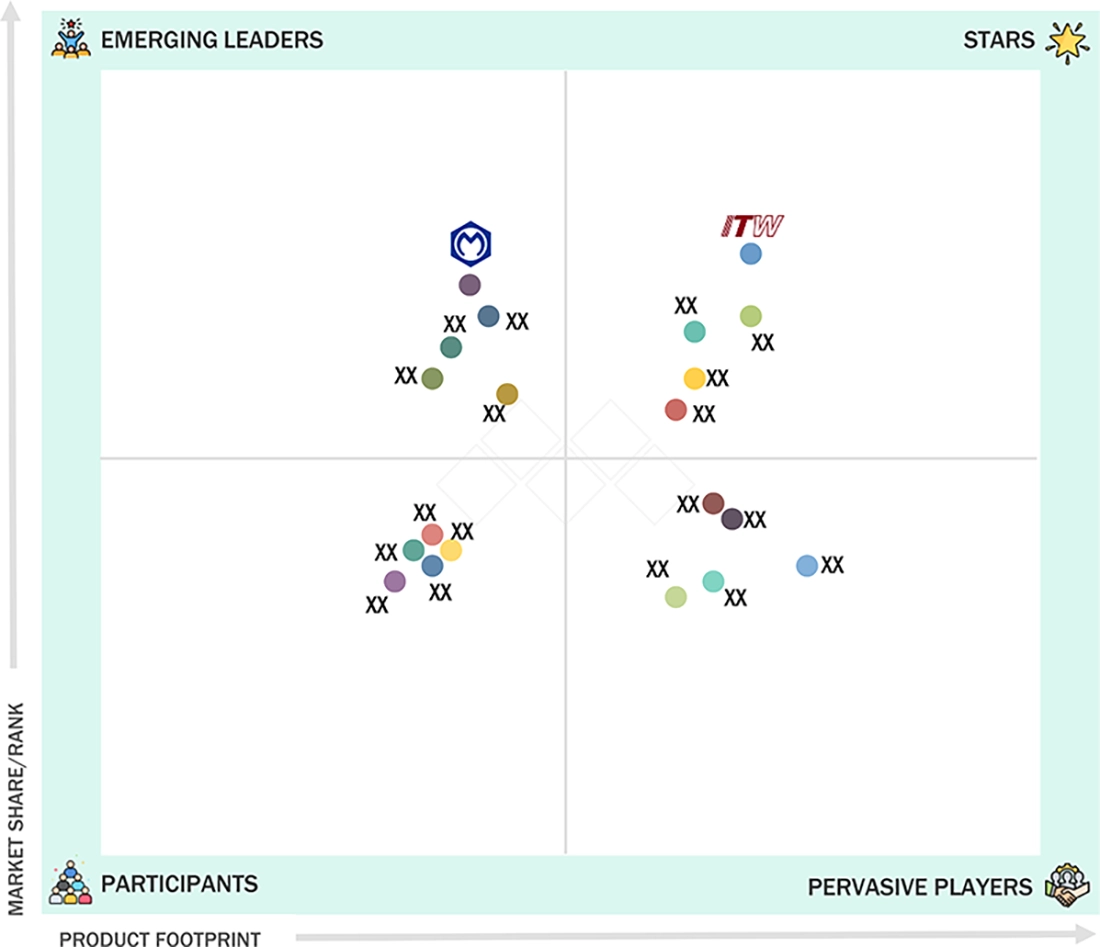
AUTOMOTIVE FASTENERS MARKET: COMPANY EVALUATION MATRIX
In the automotive fasteners market evaluation matrix, Illinois Tool Works (ITW), classified as a Star, leads the industry due to its robust global presence, advanced engineered fastening solutions, and deep integration with OEMs and Tier 1 suppliers across conventional and electric vehicle platforms. On the other hand, Meidoh Co., Ltd., designated as an Emerging Leader, is increasing its market share by providing precision automotive fasteners that support lightweight and electric vehicle applications. This growth is supported by strong relationships with Japanese OEMs and expanding global manufacturing capabilities.
Source: Secondary Research, Interviews with Experts, MarketsandMarkets Analysis
KEY MARKET PLAYERS
- ITW Automotive (US)
- Stanley Black & Decker Inc. (US)
- LISI Group (France)
- SFS Group (Switzerland)
- Nifco Inc (Japan)
- Wurth Group (Germany)
- Trifast Plc (UK)
- Sundaram Fasteners Limited (India)
- Bulten (Sweden)
- Shanghai Prime Machinery Company Limited (China)
MARKET SCOPE
| REPORT METRIC | DETAILS |
|---|---|
| Market Size in 2024 (Value) | 25.25 BN |
| Market Size in 2032 (Value) | 30.67 BN |
| Growth Rate | CAGR of 2.3% from 2025–2032 |
| Years Considered | 2021–2032 |
| Base Year | 2024 |
| Forecast Period | 2025–2032 |
| Units Considered | Value (USD BN), Volume (Thousand Units) |
| Report Coverage | Revenue forecast, company ranking, competitive landscape, growth factors, and trends |
| Segments Covered |
|
| Regional Scope | Asia Pacific, Europe, North America, Rest of the World |
WHAT IS IN IT FOR YOU: AUTOMOTIVE FASTENERS MARKET REPORT CONTENT GUIDE
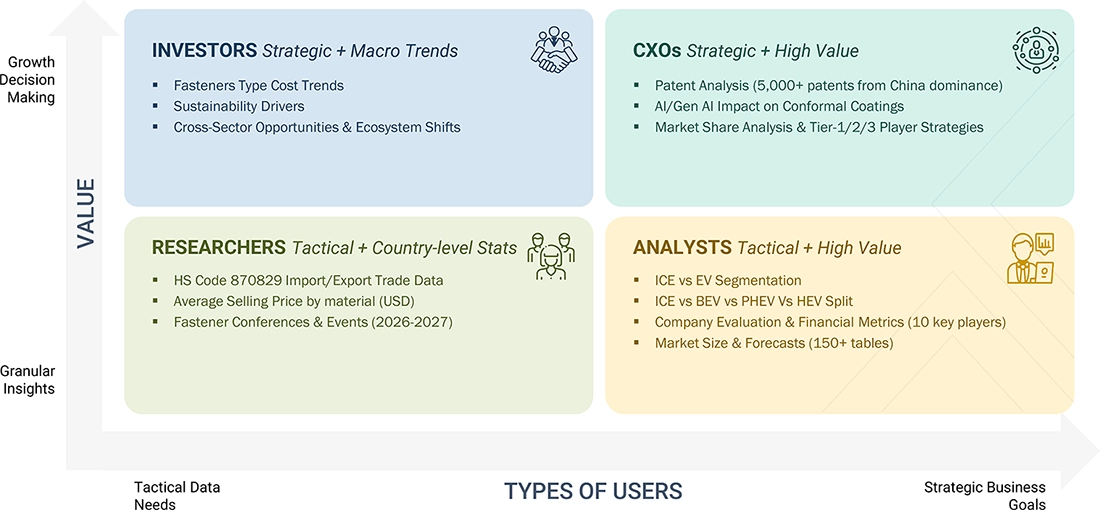
DELIVERED CUSTOMIZATIONS
We have successfully delivered the following deep-dive customizations:
| CLIENT REQUEST | CUSTOMIZATION DELIVERED | VALUE ADDS |
|---|---|---|
| Leading Automotive OEM | Component-level assessment of fastening requirements across body-in-white, chassis, powertrain, battery pack, and interior systems |
|
| Automotive Fastener Manufacturer | Benchmarking of externally threaded, internally threaded, and structural fasteners based on load capacity, fatigue resistance, corrosion protection, and thermal performance | Enhanced fastening reliability, supporting EV safety compliance and long-term structural integrity |
| Component Supplier | Evaluation of fastening technologies including thread-forming screws, lightweight fasteners, coated fasteners, and hybrid joining solutions |
|
RECENT DEVELOPMENTS
- 1/1/2026 12:00:00 AM : LISI AUTOMOTIVE, a division of LISI GROUP, introduced a Plastic U Nut designed for fast, tool-free assembly of housings and electronic enclosures onto studs. The solution enabled quick installation with high retention, easy disassembly, and immediate visual confirmation of proper engagement. By eliminating the need for nut tightening, the Plastic U Nut improved productivity while ensuring secure and reliable positioning of assemblies.
- 10/1/2025 12:00:00 AM : LISI AUTOMOTIVE, a division of LISI GROUP, completed the acquisition of Polysemble Hungary’s assets in Gyor, strengthening its plastic clip and assembly solutions portfolio. The transaction enhanced Lisi’s local manufacturing capabilities and enables closer support to OEMs and Tier suppliers across Central Europe.
- 8/1/2025 12:00:00 AM : TR Fastenings, a Trifast brand, reinforced its Central European operations, positioning TR Germany as a hub in the Group’s European expansion. The move followed sustained investment in warehouse capacity, local engineering capability, and experienced teams. It supported demand from the automotive, smart infrastructure, and medical equipment sectors.
- 7/1/2025 12:00:00 AM : ITW Automotive launched Dynamic 3D, a three-dimensional digital showroom showcasing its plastic fastener portfolio with real-time rotation, zoom, and interactive views. The launch allowed engineers to evaluate fit and function instantly without physical samples. The platform featured 20+ EV-ready fasteners, including valves, torsion clips, and blindhole fixations, designed for battery housings, interior assemblies, and harness routing.
- 5/1/2025 12:00:00 AM : LISI AUTOMOTIVE launched advanced sealing screws that ensure reliable, watertight assemblies such as battery packs. Key features include reusability, low torque sealing, high wear and corrosion resistance, and consistent performance across sizes M4–M16. With options from coated washers to advanced acrylic and plastic-based systems, the screws combined durability, safety, and efficiency for critical fastening applications.
Table of Contents
 Exclusive indicates content/data unique to MarketsandMarkets and not available with any competitors.
Methodology
The research study involved extensive use of secondary sources, such as company annual reports/presentations, industry association publications, magazines, directories, technical handbooks, World Economic Outlook, trade websites, technical articles, and databases to identify and collect information on the automotive fasteners market. In-depth interviews were conducted with various primary sources, including experts from related industry players, component suppliers, and automotive OEMs, to obtain and verify critical information and assess the growth prospects and market estimations.
Secondary Research
In the secondary research process, various secondary sources were used to identify and collect information on the automotive fasteners market for this study. The secondary sources referred to for this research study included automotive industry organizations (such as Organisation Internationale des Constructeurs d’Automobiles (OICA); CAAM, JAMA, ACEA, etc.); ASTM International; regulatory bodies; corporate filings (such as annual reports, investor presentations, and financial statements); and trade, business, and automotive associations. Secondary data was then collected and analyzed to arrive at the overall market size, which has been further validated through primary research.
Primary Research
Extensive primary research was conducted after acquiring an understanding of the automotive fasteners market scenario through secondary research. Several primary interviews were conducted with market experts from the demand-side (OEM) and supply-side (automotive fastener manufacturers and distributors) players across four major regions, namely North America, Europe, Asia Pacific, and the Rest of the World. Approximately 10% of primary interviews from the demand side and 90% from the supply side were conducted. Primary data was collected through questionnaires, mail, and telephonic interviews.
In our canvassing of primaries, we have strived to cover various departments within organizations, such as sales, operations, and administration, to provide a holistic viewpoint in our reports. After interacting with industry participants, we have also conducted brief sessions with highly experienced independent consultants to reinforce the findings from our primaries. This, along with the in-house subject-matter experts’ opinions, has led us to the findings as described in the remainder of this report.
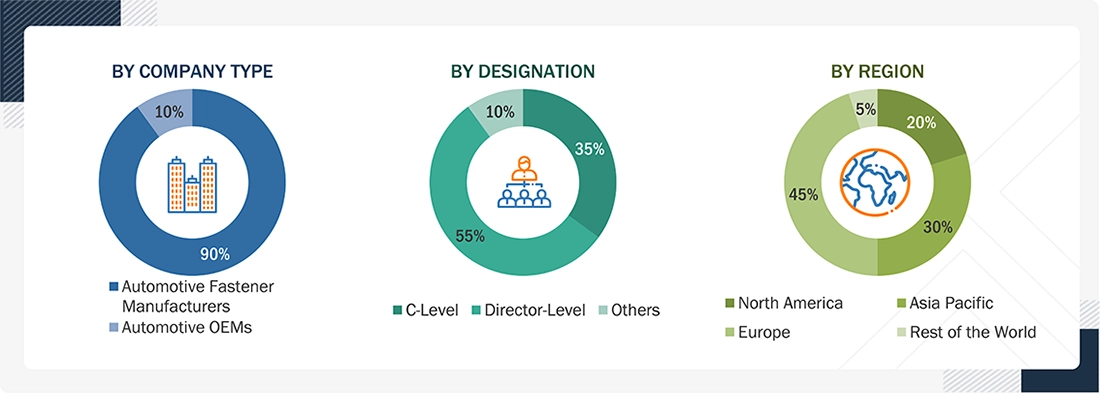
A detailed market estimation approach was followed to estimate and validate the size of the automotive fasteners market and other dependent submarkets, as mentioned below:
To know about the assumptions considered for the study, download the pdf brochure
Market Size Estimation
A detailed market estimation approach was followed to estimate and validate the size of the automotive fasteners market and other dependent submarkets, as mentioned below:
This approach included the following steps:
- Key players in the automotive fasteners market were identified through secondary research, and their global market shares were determined through primary and secondary research.
- The research methodology included the study of the annual and quarterly financial reports & regulatory filings of major market players, as well as interviews with industry experts for detailed market insights.
- All application-level penetration rates, percentage shares, splits, and breakdowns for the automotive fasteners market were determined by using secondary sources and verified through primary sources.
- All key macro indicators affecting the revenue growth of the market segments and subsegments have been accounted for, viewed in extensive detail, verified through primary research, and analyzed to get the validated and verified quantitative & qualitative data.
- All key macro indicators affecting the revenue growth of the market segments and subsegments were accounted for, viewed in extensive detail, verified through primary research, and analyzed to get the validated and verified quantitative & qualitative data.
- The gathered market data was consolidated and added with detailed inputs, analyzed, and presented in this report.
Automotive Fastner Market : Top-Down and Bottom-Up Approach
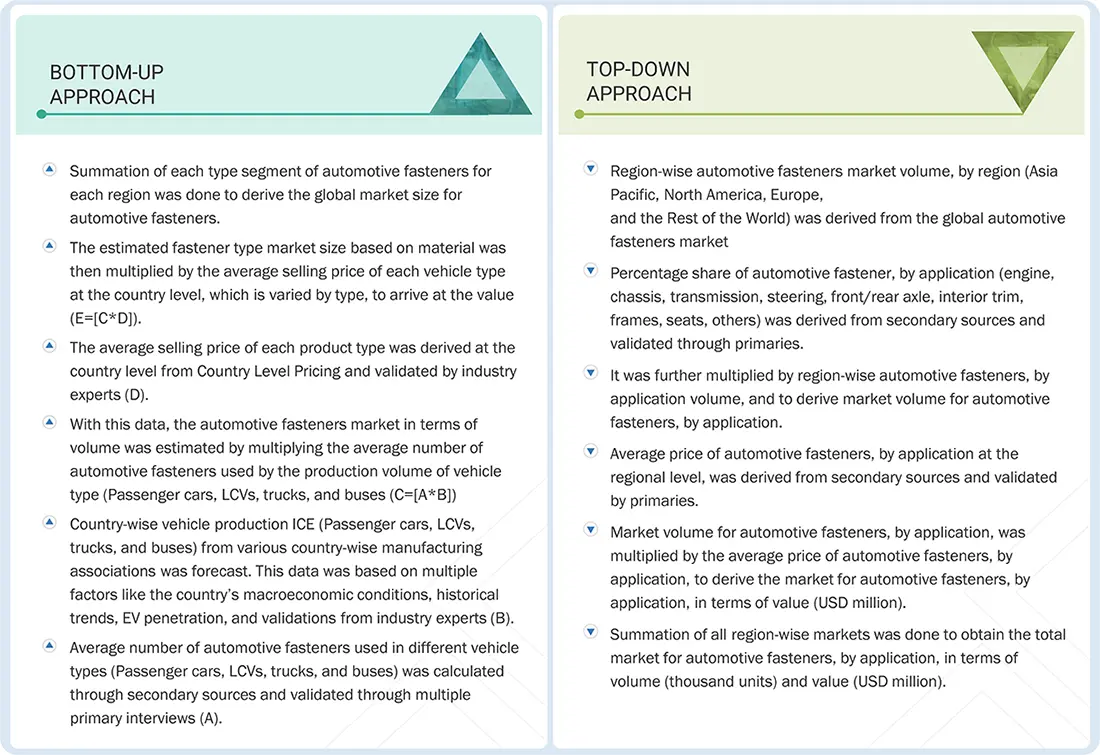
Data Triangulation
After arriving at the overall market size of the global market through the methodology mentioned above, this market was split into several segments and subsegments. The data triangulation and market breakdown procedures were employed, wherever applicable, to complete the overall market engineering process and arrive at the exact data for the market by value for the key segments and subsegments. The extrapolated market data was triangulated by studying various macro indicators and regional trends from both the demand and supply participants.
Market Definition
Automotive fasteners are mechanical components/hardware used to create non-permanent joints. They are used to clamp parts of the vehicle to prevent separation or wobbling and to prevent leakage at the joints. Fasteners used in the automotive sector are made of various materials, such as iron, brass, nickel, aluminum, stainless steel, and plastic. These fasteners are offered in various shapes, colors, and coatings.
Key Stakeholders
- Automotive Component Manufacturers
- Automotive Fastener Manufacturers
- Automotive Fastener Distributors and Suppliers
- Automotive OEMs
- EVAM Manufacturers
- Industry Associations and Experts
- Raw Material Manufacturers and Suppliers
Report Objectives
- To define, describe, segment, and forecast the size of the automotive fasteners market in terms of volume (thousand liters) and value (USD million/billion) from 2021 to 2032
- To segment and forecast the size of the automotive fasteners market based on vehicle type (Passenger Cars, LCVs, Buses, Trucks)
- To segment and forecast the size of the automotive fasteners market based on product (Externally Threaded, Internally Threaded, Aerospace Grade, Non-threaded)
- To segment and forecast the size of the automotive fasteners market based on the characteristic (Removable, Permanent, Semi-permanent)
- To segment and forecast the size of the automotive fasteners market based on application (Engine, Chassis, Transmission, Steering, Front/Rear Axle, Interior Trim, Frames, Seats, Others)
- To segment and forecast the size of the automotive fasteners market based on electric vehicle type (BEV, PHEV, HEV)
- To segment and forecast the size of the automotive fasteners market based on the distribution channel (Aftermarket, OE)
- To segment and forecast the size of the automotive fasteners market based on material type (Stainless Steel, Iron, Bronze, Nickel, Aluminum, Brass, Plastic)
- To define, describe, and forecast the size of the automotive fasteners market based on region (Asia Pacific, Europe, North America, Rest of the World)
- To understand the market dynamics (drivers, restraints, opportunities, and challenges) and conduct patent analysis, case study analysis, value chain analysis, regulatory analysis, and ecosystem analysis
- To strategically analyze markets with respect to individual growth trends, prospects, and contributions to the total market
- To strategically profile key players and comprehensively analyze their market share and core competencies
- To analyze recent developments, such as agreements/partnerships/collaborations, mergers and acquisitions, expansions, and product developments of key players in the automotive fasteners market
- To understand the dynamics of the key market players and distinguish them into stars, emerging leaders, pervasive players, and participants according to their product portfolio strength and business strategies
- To analyze the opportunities offered by various segments of the market to its stakeholders
-
To study the following with respect to the market:
- Supply Chain Analysis
- Ecosystem Analysis
- Technology Analysis
- HS Code Analysis
- Case Study Analysis
- Patent Analysis
- Regulatory Landscape
- Conferences and Events
- Key Stakeholders and Buying Criteria
- To analyze opportunities for stakeholders and the competitive landscape for market leaders
- To track and analyze competitive developments, such as product developments, deals, and others, undertaken by the key industry participants
Customization Options:
Along with the market data, MarketsandMarkets offers customizations in accordance with company-specific needs.
The following customization options are available for the report:
Country Information
- Application segment at the country level
Company Information
- Detailed analysis and profiling of additional market players (up to 5)


Personalize This Research
- Triangulate with your Own Data
- Get Data as per your Format and Definition
- Gain a Deeper Dive on a Specific Application, Geography, Customer or Competitor
- Any level of Personalization
Let Us Help You
- What are the Known and Unknown Adjacencies Impacting the Automotive Fasteners Market
- What will your New Revenue Sources be?
- Who will be your Top Customer; what will make them switch?
- Defend your Market Share or Win Competitors
- Get a Scorecard for Target Partners

Custom Market Research Services
We Will Customise The Research For You, In Case The Report Listed Above Does Not Meet With Your Requirements
Get 10% Free CustomisationTESTIMONIALS

JIM NAAS
PRODUCT DIRECTOR, WEASLER
Weasler Engineering, a CentroMotion organization
Global Provider of Industrial Actuation & Control Solutionswww.weasler.com
Our organization was interested in learning more about the attractiveness of a particular market space. We contacted MarketsandMarkets to help us based on previous positive experiences we had with them. The results did not disappoint! We discussed our objectives with them, and the team at MarketsandMarkets developed and executed a proposal that met our needs precisely. We were very impressed by their level of expertise, the quality of the analysis and their insightful recommendations. We would not hesitate in working with them again in the future.

Matt Kardel,
Vice President
Aptiv,
A global technology company that develops safer, greener and more connected solutions.www.aptiv.com
We contracted with
MarketsandMarkets to evaluate the value chain and potential go-to-market partners related to our
interest in the Fleet Management space. The team successfully completed the work on time and at the
pricing agreed. MarketsandMarkets listened and understood our objectives and collaborated well with
us to help us get the visibility we needed to make an investment.
We have subsequently used
MarketsandMarkets again related to Smart Cities to good results.






Growth opportunities and latent adjacency in Automotive Fasteners Market