Color Masterbatch Market

Color Masterbatch Market by Type (Standard Color, Specialty Color, Tailor-Made Colors), Polymer Type (PS, LDPE & LLDPE, HDPE), Application (Packaging, Consumer Goods, Building & Construction, Automotive, Agriculture), and Region - Global Forecast to 2031




OVERVIEW
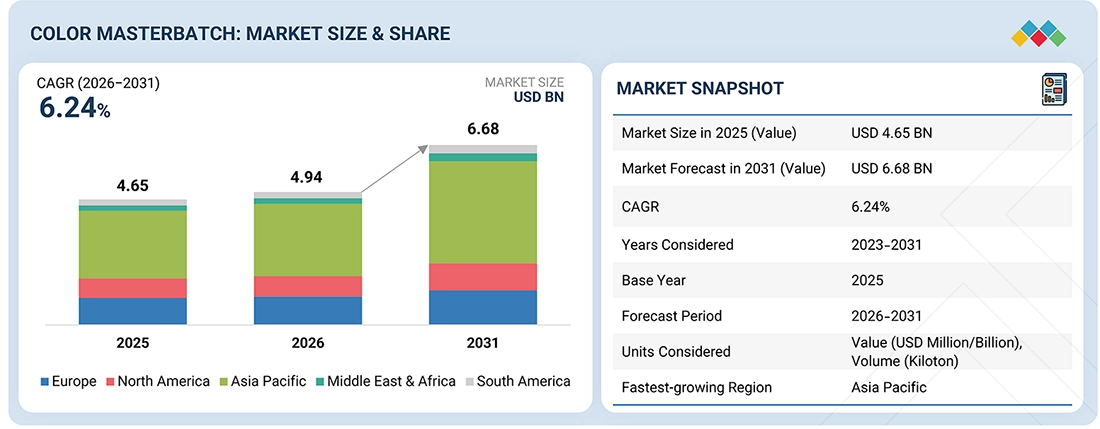
Source: Secondary Research, Interviews with Experts, MarketsandMarkets Analysis
The color masterbatch market is projected to grow from USD 4.94 billion in 2026 to USD 6.68 billion by 2031, at a CAGR of 6.24%. Color masterbatch is a concentrated mixture of pigments or dyes dispersed in a polymer carrier, used to impart consistent and customized colors to plastic products. It enables efficient coloring while improving production consistency, processing efficiency, and product aesthetics across diverse plastic applications. Market growth is fueled by rising demand across industries such as packaging, automotive, consumer goods, construction, and agriculture, along with increasing use of colored plastics and growing demand for customized and visually appealing products.
KEY TAKEAWAYS
-
BY REGIONAsia Pacific dominated the global color masterbatch market in 2025, accounting for a share of 53.8%, in terms of value.
-
BY TYPEBy type, the standard color segment dominated the overall color masterbatch market, accounting for a share of 52.1% in 2025.
-
BY POLYMER TYPEBy polymer type, the PP segment led the overall color masterbatch market, accounting for a share of 34.7% in 2025.
-
BY APPLICATIONThe packaging segment is projected to register the highest CAGR (6.82%) in terms of value, during the forecast period.
-
COMPETITIVE LANDSCAPE - KEY PLAYERSAvient Corporation, Ampacet Corporation, Tosaf Group, and Penn Color, Inc. are identified as key players in the global color masterbatch market. These companies have strong market presence and extensive product portfolios.
-
COMPETITIVE LANDSCAPE - STARTUPSTechmer PM, LLC, Chroma Color Corporation, and Sukano AG, among other emerging players, hold strong positions in specialized niche segments, underscoring their potential to become future market leaders in the color masterbatch market.
The color masterbatch market is projected to grow steadily over the next decade, supported by advancements in pigment dispersion technologies and the increasing demand for customized and high-quality plastic products. Plastic processors are increasingly adopting color masterbatch to achieve precise coloration, improve production efficiency, and maintain consistent product quality across large-scale manufacturing operations. Growing emphasis on recyclable plastics, sustainable formulations, and application-specific color solutions further strengthens the role of color masterbatch as an essential component of modern plastics processing, supporting broad industrial adoption.
TRENDS & DISRUPTIONS IMPACTING CUSTOMERS' CUSTOMERS
The impact on consumers’ business arises from evolving customer preferences and industry disruptions. Pigment and polymer suppliers, along with distribution partners, are closely linked with color masterbatch manufacturers, while plastic-processing applications represent the primary demand base for color masterbatch. Market shifts, including changes in packaging demand, consumer preferences, sustainability requirements, and plastic production levels, directly influence the revenues of plastic-processing industries. Changes in end-user demand subsequently affect procurement volumes across suppliers and distributors, which in turn impact the revenues of color masterbatch manufacturers throughout the value chain.
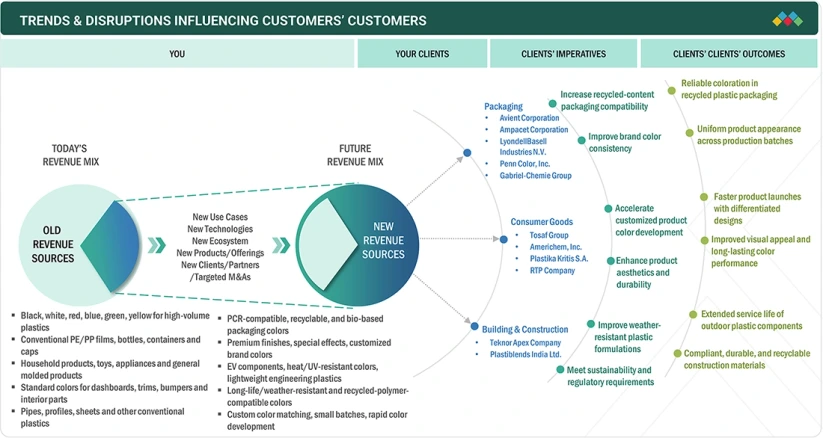
Source: Secondary Research, Interviews with Experts, MarketsandMarkets Analysis
MARKET DYNAMICS

Level
-
Accelerating global plastic production and expanding packaging end-use demand

-
Accelerating electric vehicle adoption and automotive lightweighting driving specialty polymer demand


Level
-
Intensifying regulatory burden on packaging plastics and pigment chemistry

-
Raw material price volatility and petrochemical feedstock dependency


Level
-
Growing demand for sustainable and recycled plastic packaging

-
Technological advancements in high-performance and specialty color masterbatches


Level
-
Managing increasing complexity in customer-specific customization

Source: Secondary Research, Interviews with Experts, MarketsandMarkets Analysis
Driver: Accelerating global plastic production and expanding packaging end-use demand
The color masterbatch market is benefiting from continued growth in global plastic production, particularly across packaging applications. Rising consumption of flexible films, rigid containers, bottles, closures, and other plastic packaging formats is increasing the need for consistent and visually appealing coloration. Color masterbatch provides controlled pigment dispersion while enabling processors to achieve uniform shades, opacity, and aesthetic effects at efficient dosing levels. The expansion of food and beverage, personal care, household, and consumer goods packaging is further supporting demand. Growing use of plastics in emerging manufacturing hubs is also creating additional opportunities for color masterbatch suppliers to expand volumes and develop application-specific formulations.
Restraint: Intensifying regulatory burden on packaging plastics and pigment chemistry
Increasing regulatory scrutiny surrounding packaging materials and pigment chemistry is creating additional complexity for the color masterbatch market. Manufacturers must increasingly evaluate pigment composition, heavy-metal content, chemical migration, and compatibility with food-contact applications. Restrictions on certain substances can require reformulation, replacement of established pigments, and additional testing before products can be commercialized. Requirements also vary across regions and end-use applications, increasing compliance costs and technical documentation requirements. These conditions can extend development timelines and increase the resources required to maintain compliant product portfolios. Smaller producers may face greater difficulty absorbing these costs, particularly when serving specialized packaging applications.
Opportunity: Growing demand for sustainable and recycled plastic packaging
The transition toward sustainable and recycled plastic packaging is creating new opportunities for color masterbatch manufacturers. Increasing use of post-consumer recycled (PCR) and post-industrial recycled plastics requires color solutions capable of compensating for variations in feedstock color, opacity, and composition. Suppliers are therefore developing masterbatches with improved dispersion and coloring efficiency that can deliver consistent visual results despite variable recycled inputs. Demand is also increasing for formulations compatible with mono-material packaging and recycling-oriented designs. Manufacturers that can provide color consistency while supporting recycled content targets can strengthen relationships with packaging converters and brand owners seeking to balance aesthetic requirements with circularity objectives.
Challenge: Managing increasing complexity in customer-specific customization
Customer-specific requirements are becoming increasingly complex in the color masterbatch market as packaging producers and brand owners demand precise shades, special effects, and application-specific performance. Different polymers, processing conditions, pigment concentrations, and recycled feedstocks can significantly influence final color appearance. Suppliers must therefore develop customized formulations while maintaining batch-to-batch consistency and meeting demanding production schedules. Frequent shade adjustments and relatively small customized orders can also increase formulation, testing, inventory, and production costs. Managing numerous product specifications across different customers requires strong technical capabilities and efficient color-matching systems, making customization a significant operational challenge for manufacturers.
COLOR MASTERBATCH MARKET: COMMERCIAL USE CASES ACROSS INDUSTRIES
| COMPANY | USE CASE DESCRIPTION | BENEFITS |
|---|---|---|
 |
Use of color masterbatch in plastic packaging for personal care, home care, and food products to achieve consistent brand colors. | Enhanced color consistency, improved packaging aesthetics, reliable processing performance, and stronger brand differentiation. |
 |
Incorporation of color masterbatch into automotive plastic components such as dashboards, trims, and interior panels. | Consistent component coloration, improved UV and heat resistance, reduced finishing requirements, and enhanced visual quality. |
 |
Application of color masterbatch in flexible films, containers, closures, and other plastic packaging products for customized coloration. | Uniform color dispersion, efficient production, reduced pigment handling, and improved product appearance across high-volume manufacturing. |
 |
Use of color masterbatch in polymer-based insulation boards, roofing products, and building components to provide durable coloration. | Improved color uniformity, enhanced weather resistance, simplified processing, and longer-lasting visual performance in building applications. |
Logos and trademarks shown above are the property of their respective owners. Their use here is for informational and illustrative purposes only.
MARKET ECOSYSTEM
The color masterbatch market ecosystem consists of raw material suppliers (Heubach Group, Borealis AG, ADEKA Corporation, and Songwon Industrial Co., Ltd.,), manufacturers (Avient Corporation, Ampacet Corporation, Tosaf Group, and Penn Color, Inc.), and end users (Berry Global Group, Inc.,Kingspan Group PLC, Unilever PLC, and Toyota Motor Corporation). Raw materials such as pigments, dyes, polymer carriers, dispersing agents, and specialty additives are processed into color masterbatch and customized formulations that provide consistent coloration, excellent pigment dispersion, opacity, transparency, and processing stability. End users in packaging, consumer goods, automotive, construction, agriculture, and electrical & electronics sectors drive demand for high-quality color solutions, while producers ensure consistent dispersion and application-specific performance. Collaboration across the value chain is crucial for advancing sustainable formulations, improving color consistency, increasing compatibility with recycled polymers, ensuring compliance with regulations, and driving the growth of color masterbatch solutions across diverse plastic applications.
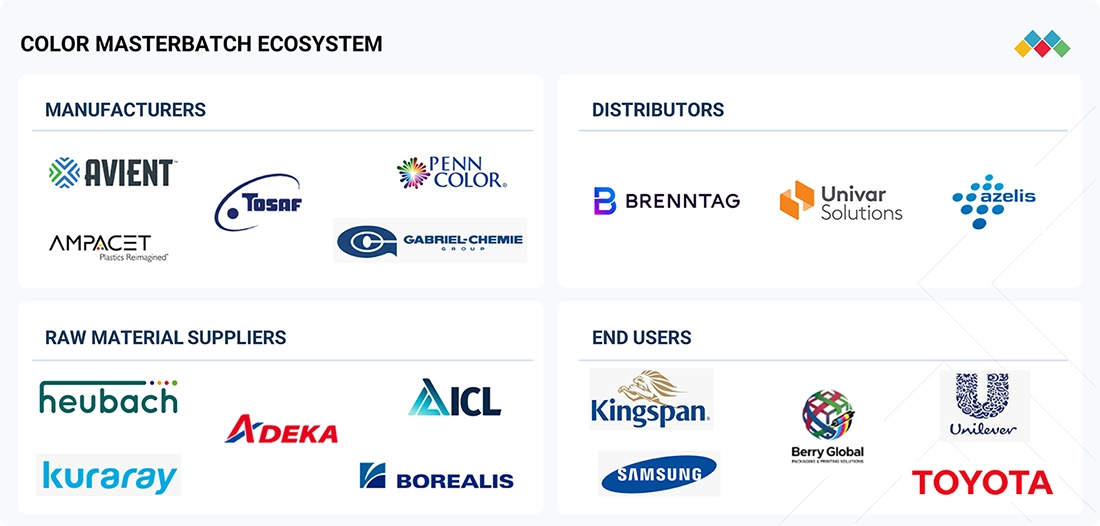
Logos and trademarks shown above are the property of their respective owners. Their use here is for informational and illustrative purposes only.
MARKET SEGMENTS
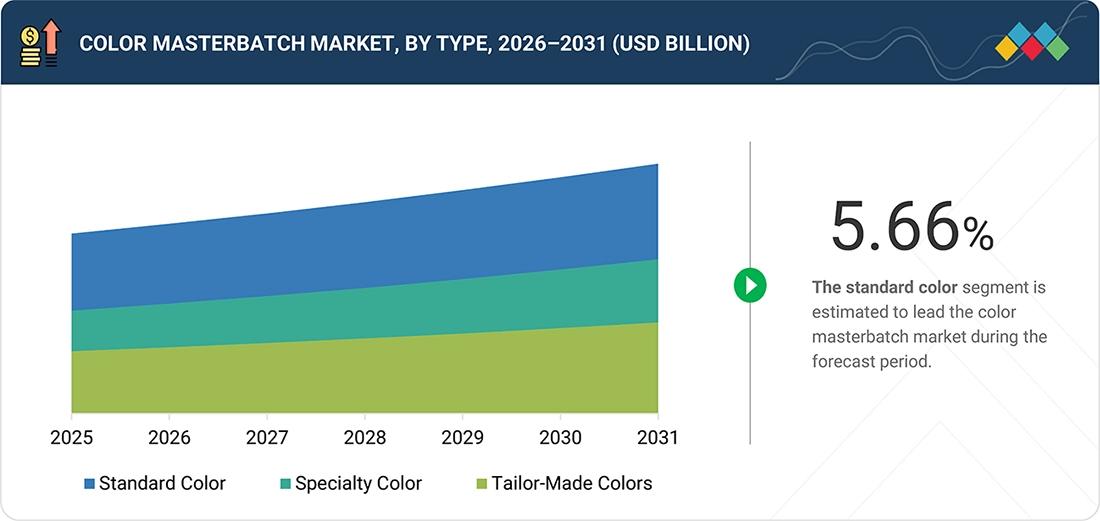
Source: Secondary Research, Interviews with Experts, MarketsandMarkets Analysis
Color Masterbatch Market, By Type
Standard color accounted for the largest share of the color masterbatch market, in terms of value, in 2025. Plastic manufacturers operating multiple production facilities require consistent color reproduction across different plants, processing equipment, and production batches. Standard masterbatch formulations provide a defined color reference that helps manufacturers maintain uniform product appearance across geographically separated operations. This is particularly important for companies supplying products under a single brand or product specification from several manufacturing locations. Suppliers also continue improving formulation control and quality testing to provide reliable shade consistency between production batches. As plastics companies expand manufacturing networks and centralize product specifications, the need for repeatable color performance is increasing. Standard color masterbatches therefore support greater production consistency and simplify quality control across distributed manufacturing operations.
Color Masterbatch Market, By Polymer Type
PP polymer type accounted for the largest share of the color masterbatch market, in terms of value, in 2025. High-volume PP processing requires reliable color consistency across large production runs, making masterbatch an important formulation tool for plastic converters. Variations in pigment dispersion, dosage, and processing conditions can influence the final shade, creating demand for masterbatch grades designed for stable color performance. Producers increasingly emphasize batch-to-batch uniformity because consistent appearance supports quality control and reduces production adjustments. Advanced dispersion technology enables pigment particles to distribute evenly throughout the PP melt, supporting repeatable coloration during continuous processing. As manufacturers increase quality standards and operate larger production runs, the importance of consistent color delivery continues to strengthen demand for PP color masterbatch.
Color Masterbatch Market, By Application
Packaging accounted for the largest share of the color masterbatch market, in terms of value, in 2025. Flexible packaging continues expanding across pouches, films, wraps, sachets, and bags because of its convenience, efficient material use, and broad product compatibility. Color masterbatch allows converters to achieve uniform and controlled coloration in thin plastic films while supporting high-speed extrusion processes. Manufacturers require precise pigment dispersion to maintain consistent appearance across large film rolls and different production batches. The growth of single-serve products, ready-to-use goods, and portable packaging formats is further supporting flexible plastic consumption across food, personal care, and household categories. As flexible packaging production increases, demand for color masterbatch suited to film processing is strengthening across the global packaging industry.
REGION
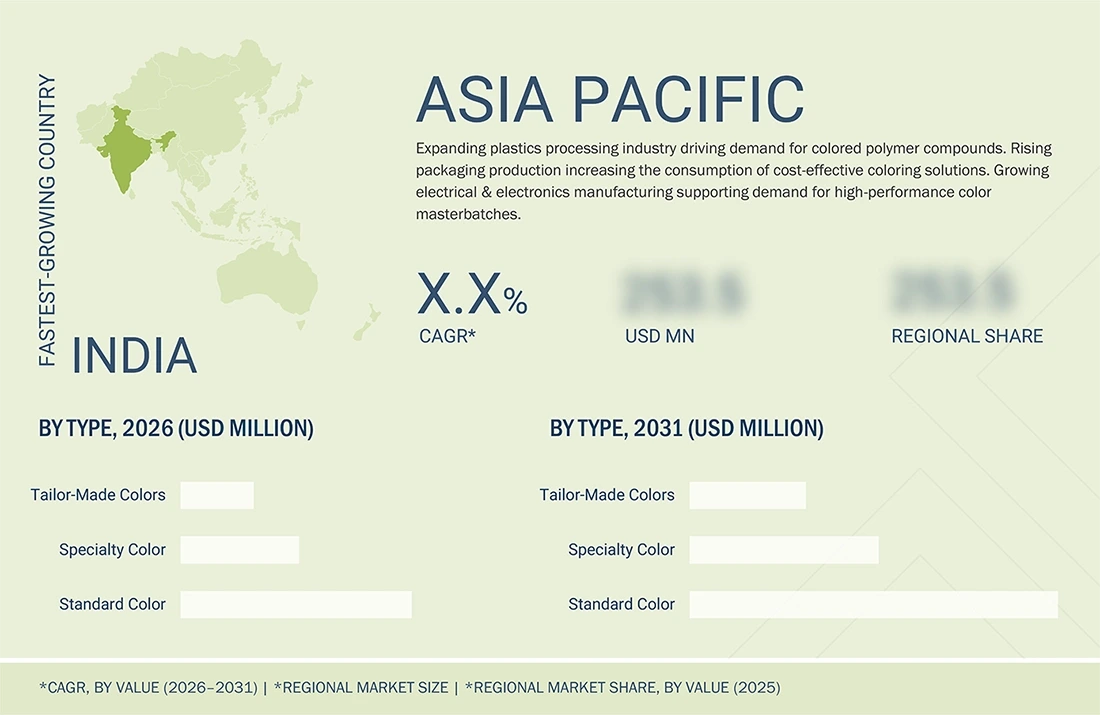
Asia Pacific to be fastest-growing region in global color masterbatch market during forecast period
Asia Pacific accounted for the largest share of the global color masterbatch market in 2025. The region is also projected to be the fastest-growing region during the forecast period. Rapid industrialization is increasing the overall volume of plastic conversion activities across the region, creating broader consumption opportunities for color masterbatch. Expanding production of molded components, plastic films, sheets, pipes, profiles, and household articles is raising the requirement for uniform coloration during polymer processing. Color masterbatch allows processors to introduce pigments directly into polymer streams while maintaining consistent appearance across high-volume production. The growth of manufacturing infrastructure is also increasing the number of plastic processing operations using extrusion, injection molding, blow molding, and film production techniques. Higher utilization of these processes is translating into greater consumption of colored polymer materials. This continued expansion of plastic processing activity is strengthening demand for color masterbatch across Asia Pacific.
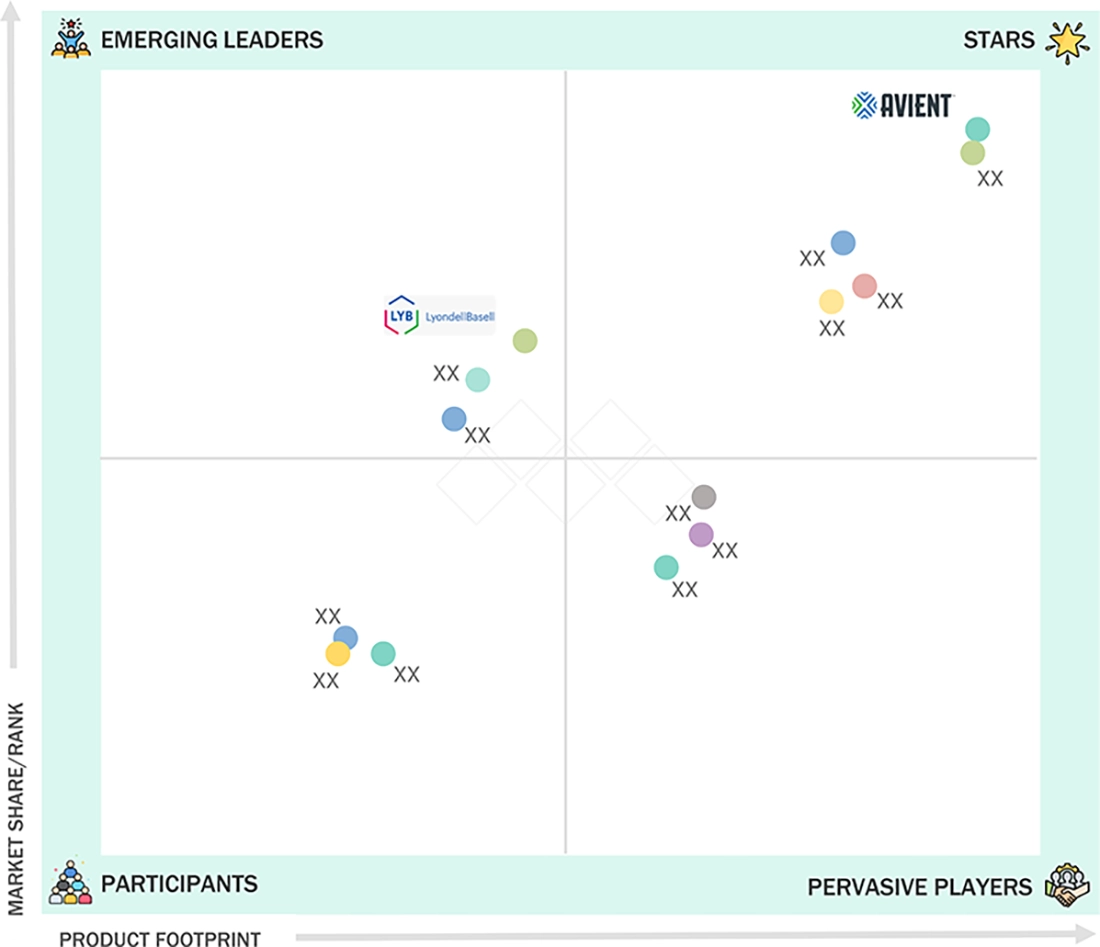
COLOR MASTERBATCH MARKET: COMPANY EVALUATION MATRIX
In the color masterbatch market matrix, Avient Corporation (Star) leads with a strong global market presence and a broad color masterbatch portfolio, driving large-scale adoption across packaging, consumer goods, automotive, and construction applications. LyondellBasell Industries N.V. (Emerging Leader) is gaining traction through its integrated polymer expertise and expanding range of color and additive solutions for high-volume plastics processing applications. While Avient dominates through extensive formulation capabilities, application support, and global customer reach, LyondellBasell demonstrates strong growth potential through polymer integration, manufacturing scale, and increasing development of customized and sustainable masterbatch solutions, positioning it to advance toward the leaders' quadrant.
Source: Secondary Research, Interviews with Experts, MarketsandMarkets Analysis
KEY MARKET PLAYERS
MARKET SCOPE
| REPORT METRIC | DETAILS |
|---|---|
| Market Size in 2025 (Value) | USD 4.65 Billion |
| Market Size in 2026 (Value) | USD 4.94 Billion |
| Market Forecast in 2031 (Value) | USD 6.68 Billion |
| Growth Rate | CAGR of 6.24% from 2026 to 2031 |
| Years Considered | 2023–2031 |
| Base Year | 2025 |
| Forecast Period | 2026–2031 |
| Units Considered | Value (USD Million/Billion) and Volume (Kiloton) |
| Report Coverage | Revenue forecast, company ranking, competitive landscape, growth factors, and trends |
| Segments Covered |
|
| Regional Scope | Asia Pacific, Europe, North America, Middle East & Africa, and South America |
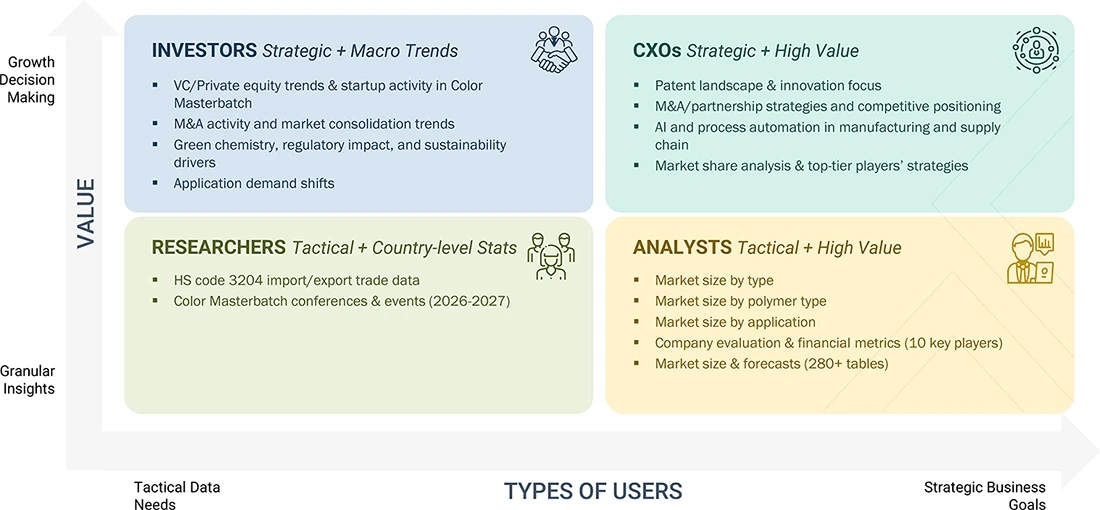
WHAT IS IN IT FOR YOU: COLOR MASTERBATCH MARKET REPORT CONTENT GUIDE
DELIVERED CUSTOMIZATIONS
We have successfully delivered the following deep-dive customizations:
| CLIENT REQUEST | CUSTOMIZATION DELIVERED | VALUE ADDS |
|---|---|---|
| Europe-based Color Masterbatch Manufacturer |
|
|
| Asia Pacific-based Color Masterbatch Manufacturer |
|
|
RECENT DEVELOPMENTS
- May 2026 : LyondellBasell Indutries N.V. signed an agreement with Interpolimeri to expand distribution of its masterbatches and custom performance colors into Germany and Austria starting in the first quarter of 2026.
- April 2026 : Tosaf Group established a new production site in Olkusz, Poland, scheduled to become operational in the second quarter of 2026 with initial capacity supporting regional needs.
- January 2026 : Ampacet Corporation introduced Natura Jet, a bio-based black masterbatch using naturally derived pigment that delivers superior jetness in injection-molded parts.
- October 2025 : Gabriel-Chemie Group completed a significant expansion of its Nyíregyháza site, increasing production area, warehouse, and office space while raising the number of extruder lines.
- January 2025 : Americhem, Inc. opened a new research and development center in Silvassa, India, focused on masterbatch color development for melt spinning and textile applications.
Table of Contents
 Exclusive indicates content/data unique to MarketsandMarkets and not available with any competitors.
Methodology
The study involved four major activities in estimating the market size for color masterbatch. Exhaustive secondary research was done to collect information on the market, the peer market, and the parent market. The next step was to validate these findings, assumptions, and sizing with industry experts across the value chain through primary research. Both top-down and bottom-up approaches were employed to estimate the complete market size. After that, the market breakdown and data triangulation procedures were used to estimate the market size of the segments and subsegments.
Secondary Research
Secondary sources used in this study included annual reports, press releases, and investor presentations of companies; white papers; certified publications; articles from recognized authors; and gold-standard and silver-standard websites, such as Factiva, ICIS, Bloomberg, and others. The findings of this study were verified through primary research, which involved conducting extensive interviews with key officials, including CEOs, VPs, directors, and other executives. The breakdown of profiles of the primary interviewees is illustrated in the figure below:
Primary Research
The color masterbatch market comprises several stakeholders, such as raw material suppliers, end-product manufacturers, and regulatory organizations in the supply chain. Various primary sources from both the supply and demand sides of the market were interviewed to obtain qualitative and quantitative information.
BREAKDOWN OF PRIMARY PARTICIPANTS
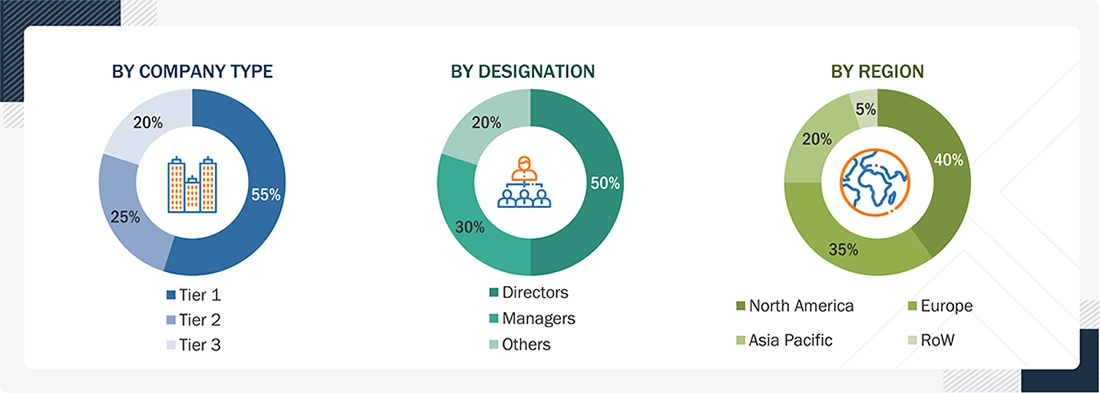
Notes: Tier 1, Tier 2, and Tier 3 companies are classified based on their market revenue in 2024/2025 available in the public domain, product portfolios, and geographical presence.
Other designations include consultants and sales, marketing, and procurement managers.
|
COMPANY NAME |
DESIGNATION |
|
Avient Corporation |
Senior Manager |
|
Ampacet Corporation |
Innovation Manager |
|
Tosaf Group |
Production Supervisor |
|
Penn Color, Inc. |
Sales Manager |
To know about the assumptions considered for the study, download the pdf brochure
Market Size Estimation
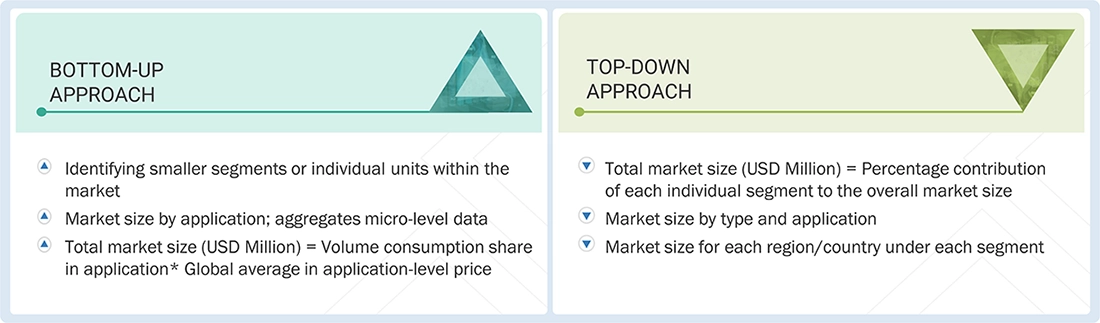
Both top-down and bottom-up approaches were used to estimate and validate the total size of the color masterbatch market. These methods were also used extensively to estimate the size of various subsegments in the market. The research methodology used to estimate the market size includes the following:
- The key players in the industry have been identified through extensive secondary research.
- The supply chain of the industry has been determined through primary and secondary research.
- All percentage shares, splits, and breakdowns have been determined using secondary sources and verified through primary sources.
- All possible parameters that affect the markets covered in this research study have been accounted for, viewed in extensive detail, verified through primary research, and analyzed to obtain the final quantitative and qualitative data.
Color Masterbatch Market : Top-Down and Bottom-Up Approach
Data Triangulation
After determining the overall market size using the market size estimation processes explained above, the market was divided into several segments and subsegments. To complete the overall market engineering process and determine the exact statistics for each market segment and subsegment, data triangulation and market breakdown procedures were employed, as applicable. The data was triangulated by studying various factors and trends from both the demand and supply sides in the color masterbatch industry.
Market Definition
According to the Society of Plastics Engineers (SPE), color masterbatches are concentrated mixtures of pigments or dyes uniformly dispersed in a polymer carrier resin and supplied in pellet form for coloring plastic materials during processing. They are designed to provide consistent color distribution, improved processing efficiency, and accurate dosing while maintaining the physical properties of the base polymer. Color masterbatches are widely used in packaging, automotive, consumer goods, construction, electrical, and household applications to achieve uniform appearance and product performance.
Key Stakeholders
- Color masterbatch manufacturers
- Color masterbatch distributors
- Raw material suppliers
- Government and research organizations
- Investment banks and private equity firms
Report Objectives
- To analyze and forecast the size of the global color masterbatch market in terms of value and volume
- To provide detailed information about the major drivers, restraints, challenges, and opportunities influencing the market growth
- To define, describe, and segment the market based on type, polymer type, application, and region
- To forecast the size of the market segments based on regions such as Asia Pacific, North America, Europe, the Middle East & Africa, and South America
- To strategically analyze micromarkets with respect to individual growth trends, prospects, and their contribution to the overall market
- To strategically analyze the segmented markets with respect to individual growth trends, prospects, and contributions to the overall market
- To identify and analyze opportunities for stakeholders in the market
- To analyze competitive developments such as expansions, partnerships, joint ventures, mergers & acquisitions, agreements, and product launches in the market
- To strategically profile the key companies and comprehensively analyze their core competencies
Available customizations:
Along with the given market data, MarketsandMarkets offers customizations according to the company’s specific needs. The following customization options are available for the report:
Regional Analysis
- Further breakdown of a region with respect to a particular country or additional application
Company Information
- Detailed analysis and profiles of additional market players (up to five)


Personalize This Research
- Triangulate with your Own Data
- Get Data as per your Format and Definition
- Gain a Deeper Dive on a Specific Application, Geography, Customer or Competitor
- Any level of Personalization
Let Us Help You
- What are the Known and Unknown Adjacencies Impacting the Color Masterbatch Market
- What will your New Revenue Sources be?
- Who will be your Top Customer; what will make them switch?
- Defend your Market Share or Win Competitors
- Get a Scorecard for Target Partners

Custom Market Research Services
We Will Customise The Research For You, In Case The Report Listed Above Does Not Meet With Your Requirements
Get 10% Free CustomisationTESTIMONIALS

We at Nissan Chemicals Corporation have been clients of MarketsandMarkets for more than a year now. We recently consulted MarketsandMarkets for a study, the team at MarketsandMarkets was extremely professional and organized. The business insights were very detailed and aligned well with our expectations that really helped us formulate the Business Plans and device new strategies for development themes. MarketsandMarkets offers a unique combination of expertise and dedicated engagement model. Their research findings have helped us in designing our Pricing Strategy which will make it easier for us to predict the future sales and profits for the next ten years. We look forward to working with MarketsandMarkets in the future.
VP of Strategy & New Business Development
Leading Specialty Chemical Company
The MarketsandMarkets Engagement Model, composed of both the Knowledge Store and advisory custom research, has greatly helped us in understanding our markets and making strategic decisions. The Knowledge Store is a fast way to allow everyone in our organization to understand more about most any market they are interested in. The ability to then get custom research done and get answers to specific strategic questions and market insight has been spectacular. The Markets and Markets team feel more like colleagues than vendors and their services have helped us change our culture where statements of things like growth opportunities and competitive position are always backed by industry research.

Rich Gibson,
Director, Corporate Strategy
Milliken & Company,
Leading Industrial Manufacturer of specialty chemical, floor covering, performance and protective textile materials, and healthcaremilliken.com
MarketsandMarkets is a trusted resource that helps us to better understand markets that are near-adjacencies-whether its technology, value chain or geography. Their Knowledge Store platform provides a dashboard of markets and their characteristics which is easy to use and saves us time.
Adam Shaw,
Market Development and Strategy Manager
AdvanSix Inc. USA,
An American Leader in Chemicalswww.advansix.com
The Knowledge Store from MarketsandMarkets is a valuable tool which has helped my team acquire greater insight in to the end markets that our business serves. This has enabled us to help our company build stronger strategies throughout our planning process.
TOSHIO KINOSHITA
Senior Chif Consultion Research & Consulting Division
Mitsubishi Chemical Research Corporation,
Leading Manufacturer of Chemical Productswww.mitsubishichem-res.co.jp/en/

We recently engaged with MarketsandMarkets for a study, the team not only clearly understood our business objectives but was also extremely professional in the way they handled the entire project. The study was efficiently conducted in a phase-wise manner, and the engagement model furnished us with high-quality business insights that far exceeded our expectations at each phase. We were especially happy that MarketsandMarkets could provide us with both, an English as well as a Japanese version of the study. A special thanks to the Analyst Team and Client Services Team, whose fluency in Japanese enhanced our comfort level, as we could converse with them in our preferred language.
Independent entrepreneurs
Arrow Precision
We approached MarketsandMarkets for study on Proppants Market, and their work exceeded our expectations. The study conducted was comprehensive and enabled us to view the market through the various dimensions. In addition, the team was extraordinarily responsive throughout the process and resolved our queries on time. I strongly recommend MarketsandMarkets and will certainly consider them for additional market assessments we will need in the future.
Global engineering company, Japan
Deputy Manager,
Strategic Planning OfficeThe high-quality insights shared by the MarketsandMarkets team helped us understand the pharmaceutical plant designers in a specific geography. It also captured the risks that we may likely face in communicating with our potential partners. The study would enable us identify partners, which would impact our future growth.
- China Color Masterbatch Market
- India Color Masterbatch Market
- Japan Color Masterbatch Market
- South Korea Color Masterbatch Market
- Canada Color Masterbatch Market
- Mexico Color Masterbatch Market
- US Color Masterbatch Market
- Germany Color Masterbatch Market
- France Color Masterbatch Market
- UK Color Masterbatch Market
- Italy Color Masterbatch Market
- Spain Color Masterbatch Market
- Saudi Arabia Color Masterbatch Market
- Iran Color Masterbatch Market
- Brazil Color Masterbatch Market
- Argentina Color Masterbatch Market
- Rest Of Europe Color Masterbatch Market
- Rest Of Asia Pacific Color Masterbatch Market
- Rest Of South America Color Masterbatch Market






Growth opportunities and latent adjacency in Color Masterbatch Market