Commercial Energy as a Service Market

Commercial Energy as a Service Market by Service Type (Energy Supply Services, Operational & Maintenance Services, Energy Efficiency & Optimization Services), Region (Asia Pacific, North America, Europe, South America, Middle East & Africa) - Forecast to 2030




COMMERCIAL ENERGY AS A SERVICE MARKET SIZE, SHARE & GROWTH SNAPSHOT
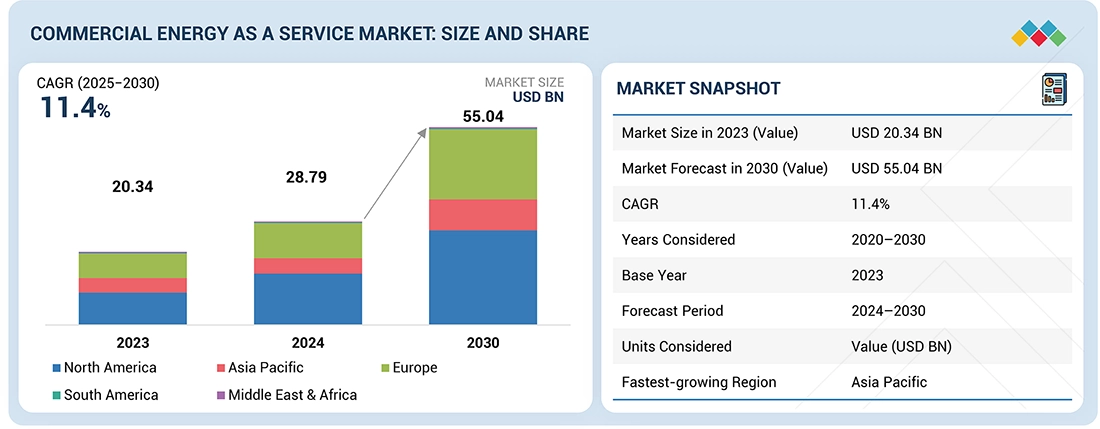
Source: Secondary Research, Interviews with Experts, MarketsandMarkets Analysis
According to MarketsandMarkets, the commercial energy as a service market is projected to reach USD 55.04 billion by 2030 from USD 28.79 billion in 2024, at a CAGR of 11.4%. Subscription-based service offerings in the said market provide businesses with access to energy solutions that require minimal upfront capital investment. Supported by clean energy and energy efficiency policies, these models are driving higher adoption across the sector and contributing to overall market growth.
KEY TAKEAWAYS
-
MARKET SNAPSHOT:
Current Market Size (2024): USD 28.79 Billion
Projected Market Size (2030): USD 55.04 Billion
CAGR (2024–2030): 11.4% -
SEGMENT LEADERSHIP:
Service Leader: Energy supply services held the largest share of 63.2% of the energy as a service market in 2024.
Largest Region: North America is expected to account for the largest share of 47.8% of the commercial energy as a service market in 2030. -
MARKET OUTLOOK & COMPETITIVE LANDSCAPE:
Siemens, Ameresco, Schneider Electric, ENGIE, Johnson Controls, Veolia, Ørsted A/S, Enel X S.r.l, and Centrical plc International have formed strategic collaborations and project-based partnerships to deliver integrated EaaS solutions that combine renewable energy generation, energy storage, and digital energy management platforms.
NextEra Energy Services; Wendel; Entegrity Energy Partners, LLC; Redaptive; and NORSECO have been identified as startups and small- to mid-sized enterprises, reflecting their growing market presence and expanding operational capabilities.
The commercial energy as a service solutions enable facilities to address evolving regulatory requirements, improve energy cost predictability, and manage peak demand more effectively. Through this model, offices, retail buildings, hospitals, universities, and data-intensive facilities can modernize their energy infrastructure with minimal or no upfront capital investment while accessing cleaner energy through predictable, service-based pricing arrangements.
TRENDS & DISRUPTIONS IMPACTING CUSTOMERS' CUSTOMERS
The rapid adoption of digital technologies such as the Internet of Things (IoT), artificial intelligence (AI), and machine learning (ML) is reshaping energy management by enabling real-time monitoring, predictive maintenance, and more efficient energy use. At the same time, the push for sustainability and decarbonization is increasing demand for renewable energy, energy storage, and energy-efficiency solutions. However, the market is also experiencing disruptions, particularly from rising cybersecurity risks, as companies must protect critical digital energy systems from growing threats. In response, energy as a service providers, including Siemens, Schneider Electric, and Ameresco, are expanding their offerings across the value chain and shifting from traditional operations to digital and technology-driven models. Additionally, growing demand for energy-efficient solutions is encouraging customers from the automotive, power generation, and healthcare sectors to adopt technologies that reduce overall energy consumption. Moreover, clients in the commercial energy as a service market seek to manage energy costs, reduce emissions, and improve operational reliability without upfront capital investment. They prioritise digital energy management, subscription-based renewable energy, EV charging infrastructure, and data-driven insights to optimize energy use.
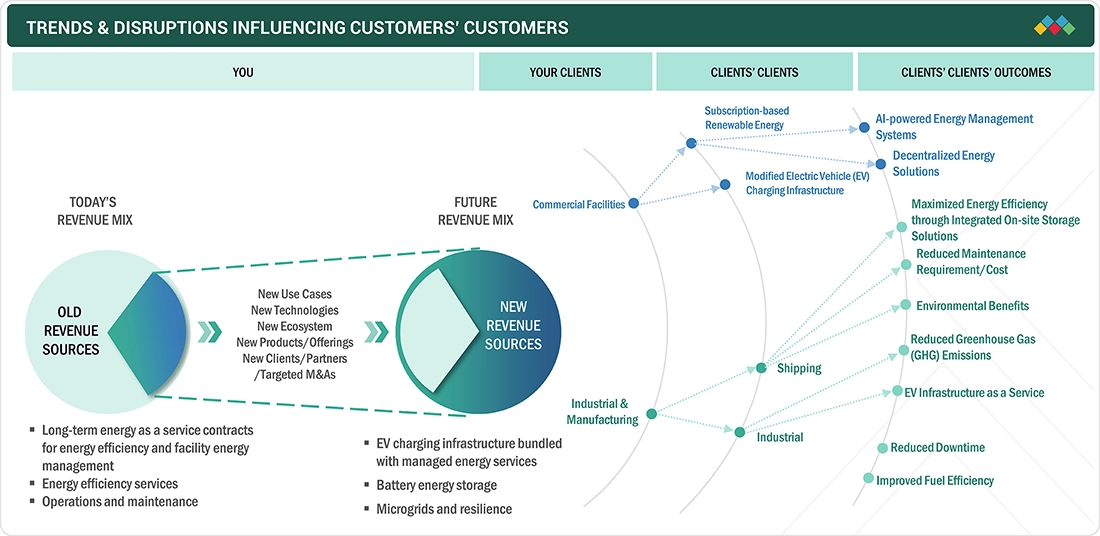
Source: Secondary Research, Interviews with Experts, MarketsandMarkets Analysis
MARKET DYNAMICS

Level
-
Shift of utilities toward service-oriented energy as a service providers

-
Growing emphasis on achieving net-zero emission targets


Level
-
High service charges and maintenance costs

-
Data security and privacy concerns


Level
-
Increasing demand for decentralized and renewable energy solutions

-
Strong focus on maximizing operational and maintenance savings


Level
-
Limited control over energy systems and operations

-
Potential long-term costs in commercial EaaS

Source: Secondary Research, Interviews with Experts, MarketsandMarkets Analysis
Driver: Shift of Utilities Toward Service-Oriented Energy-as-a-Service Providers
Utilities are increasingly offering integrated solutions that combine energy procurement, efficiency improvements, and load balancing to adapt to changing market needs. They also provide long-term agreements such as energy service performance contracts (ESPCs), utility energy savings contracts (USPCs), and power purchase agreements (PPAs), many of which operate on pay-for-service or performance-based models where costs are offset by energy savings. These contracts help utilities secure stable, long-term revenue streams. As a result, utilities are shifting from traditional energy supply roles to service-oriented energy as a service providers, using solar panels, battery storage systems, and energy management systems. This shift enhances customer engagement, creates new revenue opportunities, and strengthens utilities’ roles in the evolving energy ecosystem while supporting growing demand for electrification and sustainability.
Restraint: High service charges and maintenance costs
Although the energy as a service model offers operational efficiency, energy savings, and access to advanced technologies without upfront investment, the recurring service fees can become significant over the contract period. Costs typically include service charges, maintenance fees, and performance guarantees, with some agreements also incorporating escalation clauses or inflation-linked adjustments. For customers, particularly small- and medium-sized enterprises, it is important to fully understand pricing structures, including any hidden costs or early termination penalties, to ensure long-term affordability. In addition, long-term dependence on a single EaaS provider may limit flexibility to switch to more cost-competitive alternatives. Ongoing energy price volatility and regulatory changes further complicate the evaluation of long-term cost effectiveness.
Opportunity: Increasing demand for decentralized and and renewable energy solutions
EaaS is delivering technology-driven solutions that help balance energy demand and consumption while enabling greater use of renewable energy in the commercial sector, making it an attractive area for investment. For example, in 2023, Siemens entered the US distributed energy market through a joint venture to build, own, and operate solar panels, battery systems, and microgrids, offering EaaS solutions to commercial, industrial, and non-profit customers. These local energy systems are provided with no upfront capital cost and operate efficiently with advanced control, especially in areas where older grids struggle. EaaS is crucial today and will continue to play a vital role in the future by alleviating pressure on centralized energy assets. Technology-enabled demand response at the local level adds flexibility, helping to smooth energy demand and integrate variable renewable sources. According to the International Energy Agency (IEA), renewable energy use in power, heat, and transport is expected to grow nearly 60% between 2024 and 2030, with the share of renewables in electricity rising from 30% in 2023 to 46% in 2030, mostly driven by solar and wind. This rapid expansion also has a spillover effect, supporting the decarbonization of sectors that use electricity for industrial processes, building heating, and electric vehicle charging. The expansion of decentralized and renewable energy solutions will drive EaaS market growth by enhancing grid resilience, efficiency, and the integration of renewables. This will allow providers to offer flexible, cost-effective services, further supporting market growth and sustainability.
Challenge: Limited control over energy systems and operations due to dependency on third-party service providers
Outsourcing energy management to an EaaS provider can reduce a customer’s control over their energy systems. Customers who prefer hands-on management may find this approach less appealing. Relying heavily on a third-party provider can create dependency, reduce bargaining power, and potentially increase costs over time. This combination of limited control and reliance may make some customers hesitant to adopt EaaS solutions, slowing market growth. To address these concerns, providers should offer transparent pricing, flexible service options, and maintain strong customer engagement.
Commercial Energy as a Service Market: COMMERCIAL USE CASES ACROSS INDUSTRIES
| COMPANY | USE CASE DESCRIPTION | BENEFITS |
|---|---|---|
 |
University of Northwestern Ohio (UNOH) partnered with Centrica Business Solutions to implement a USD 3.1-million energy efficiency project across its 28-building, 200-acre campus, aimed at reducing energy costs, improving operational efficiency, and enhancing comfort without upfront capital investment. The initiative included LED lighting upgrades, HVAC replacements and motor enhancements, and water system improvements, all funded through energy performance savings. | UNOH achieved 1.9 million kWh in annual electricity savings, 1,393 tons of CO2 emission reductions, and significant water conservation while improving indoor comfort, air quality, and long-term infrastructure reliability, aligning with its sustainability and financial goals |
 |
A Centrica plc's client, a Fortune 100 company with ambitious energy efficiency goals, faced challenges in securing capital for large-scale implementation, forcing it to take a fragmented, project-by-project approach that led to inefficiencies and inconsistent results. To address this, the company partnered with a provider of energy solutions and adopted the EaaS model, which integrated financing, technology, construction, monitoring, and reporting under a unified framework. This model shifted all implementation costs and asset ownership to a third party, enabling enterprise-wide energy optimization without upfront investment. | Through the energy-as-a-service approach, the company achieved a scalable, consistent, and cost-efficient energy transformation | By removing the need for upfront capital investment, the initiative tripled the number of facilities upgraded each year, speeding up progress toward sustainability goals | The standardized approach improved operational efficiency, data transparency, and performance tracking while allowing internal teams to concentrate on core business activities | Overall, it delivered measurable energy savings, cut emissions, and created a strong foundation for long-term sustainable growth |
Logos and trademarks shown above are the property of their respective owners. Their use here is for informational and illustrative purposes only.
MARKET ECOSYSTEM
The energy as a service analysis reveals the interconnections/adjacencies that impact the energy as a service market by showcasing MnM coverage of the market under study. The section highlights the key industries and applications impacting the market under study. The energy as a service ecosystem involves key players operating across different levels. Companies such as First Solar, Vestas, Tesla, and SMA Solar Technology serve as leading equipment suppliers, providing critical components for the market. Major EaaS service providers, such as Schneider Electric, Siemens, Centrica plc, and Johnson Controls, offer energy as a service to industrial and commercial customers. Companies such as Duke Energy, Southern Company, and Xcel Energy Inc. are the energy producers and support EaaS providers in integrating renewable energy and optimizing grid distribution. End users like the University of Northwestern Ohio and BAE Systems plc depend on service providers for effective energy management in their operations. This interconnected network fosters innovation and growth within the energy as a service market.
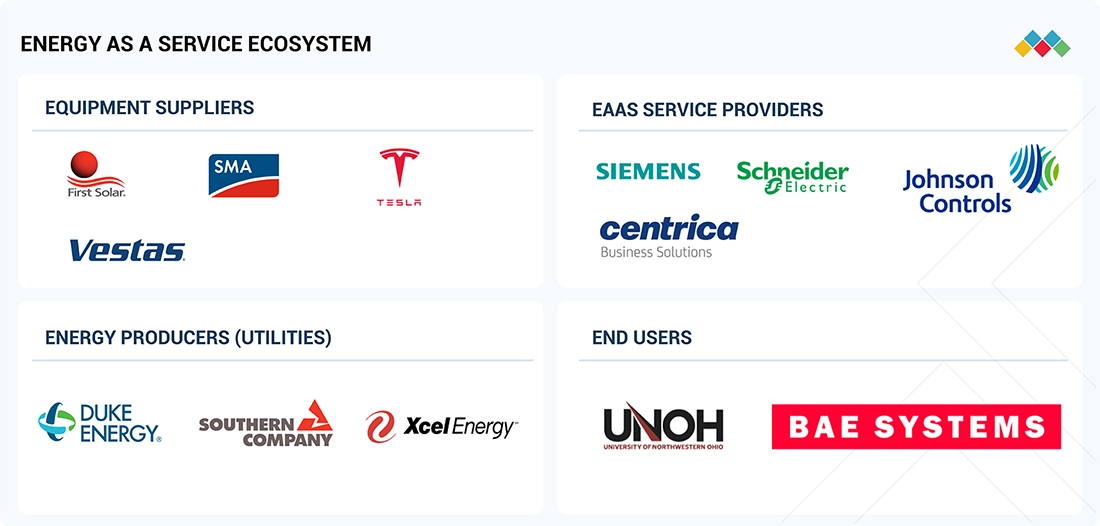
Logos and trademarks shown above are the property of their respective owners. Their use here is for informational and illustrative purposes only.
MARKET SEGMENTS
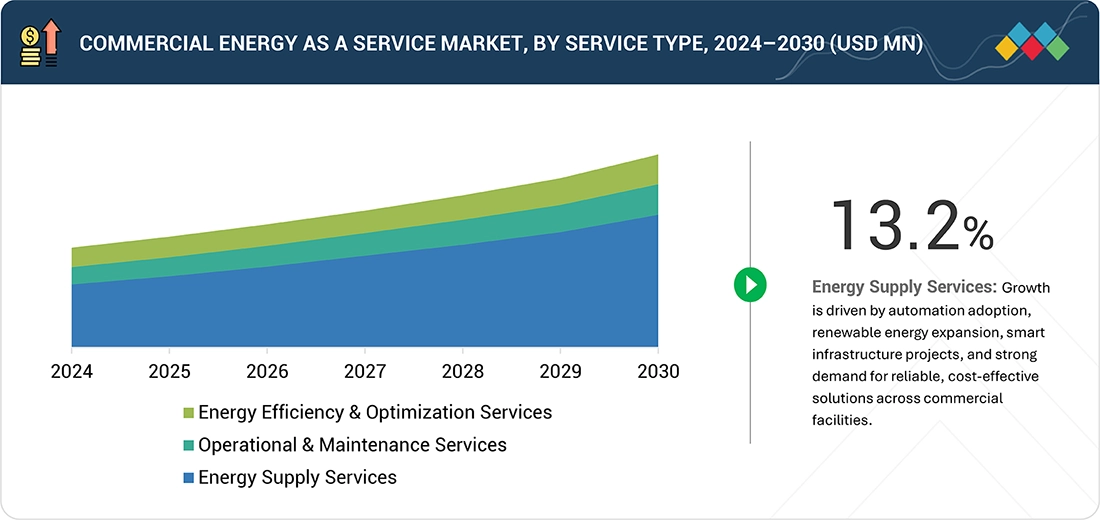
Source: Secondary Research, Interviews with Experts, MarketsandMarkets Analysis
Commercial Energy as a Servive Market, by Service Type
Energy supply services are leading the commercial energy as a service market. More businesses are adopting these services because they want reliable, flexible, and cost-effective energy solutions. Companies are shifting toward service-based energy procurement to mitigate operational risks, enhance power reliability, and avoid substantial capital expenditures. The increasing focus on automation, peak-load management, and carbon emission reduction is driving this trend. As commercial organizations require consistent, strong, and reliable energy, energy supply services will continue to be the leading and fastest-growing service type in the coming years.
REGION
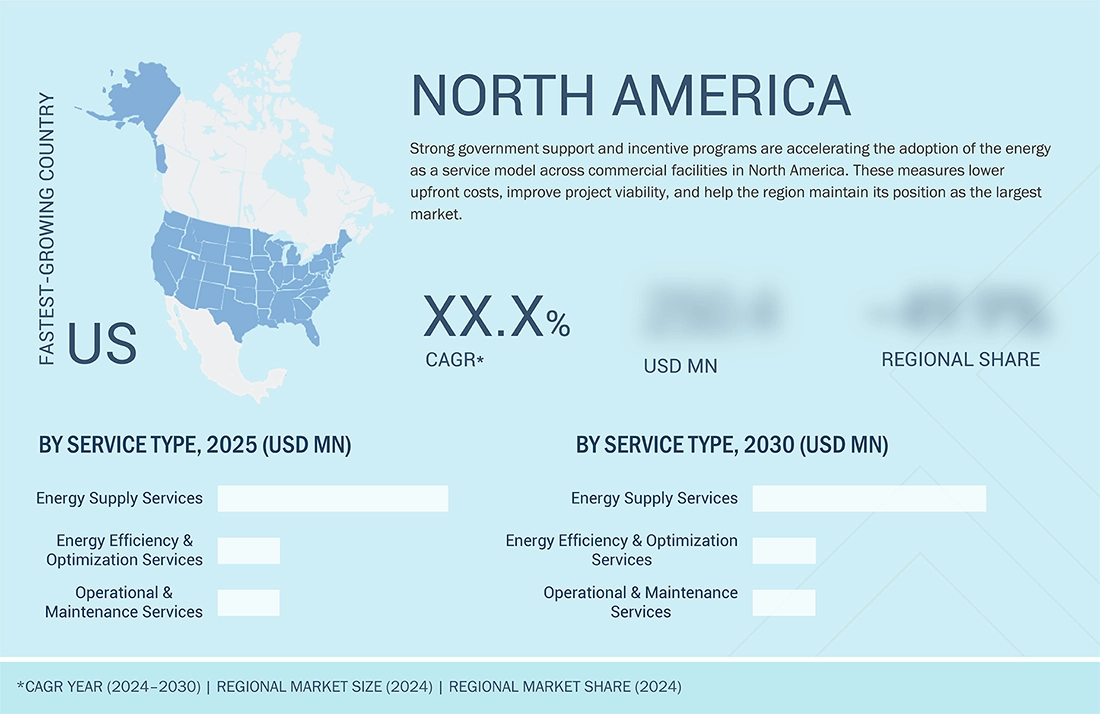
North America to be the largest market for commercial energy as a service model throughout forecast period
Strong government support for energy efficiency, clean energy deployment, and alternative financing models is a key driver of the commercial energy as a service (EaaS) market in North America. Widespread adoption of energy-efficient technologies across commercial buildings further strengthens market growth. Public policies such as tax credits, grants, rebates, and renewable energy standards reduce upfront costs and improve the financial viability of EaaS solutions for commercial users. Supported by these initiatives and sustained commercial energy demand, North America energy as a service market is expected to remain the largest market for commercial EaaS throughout the forecast period.
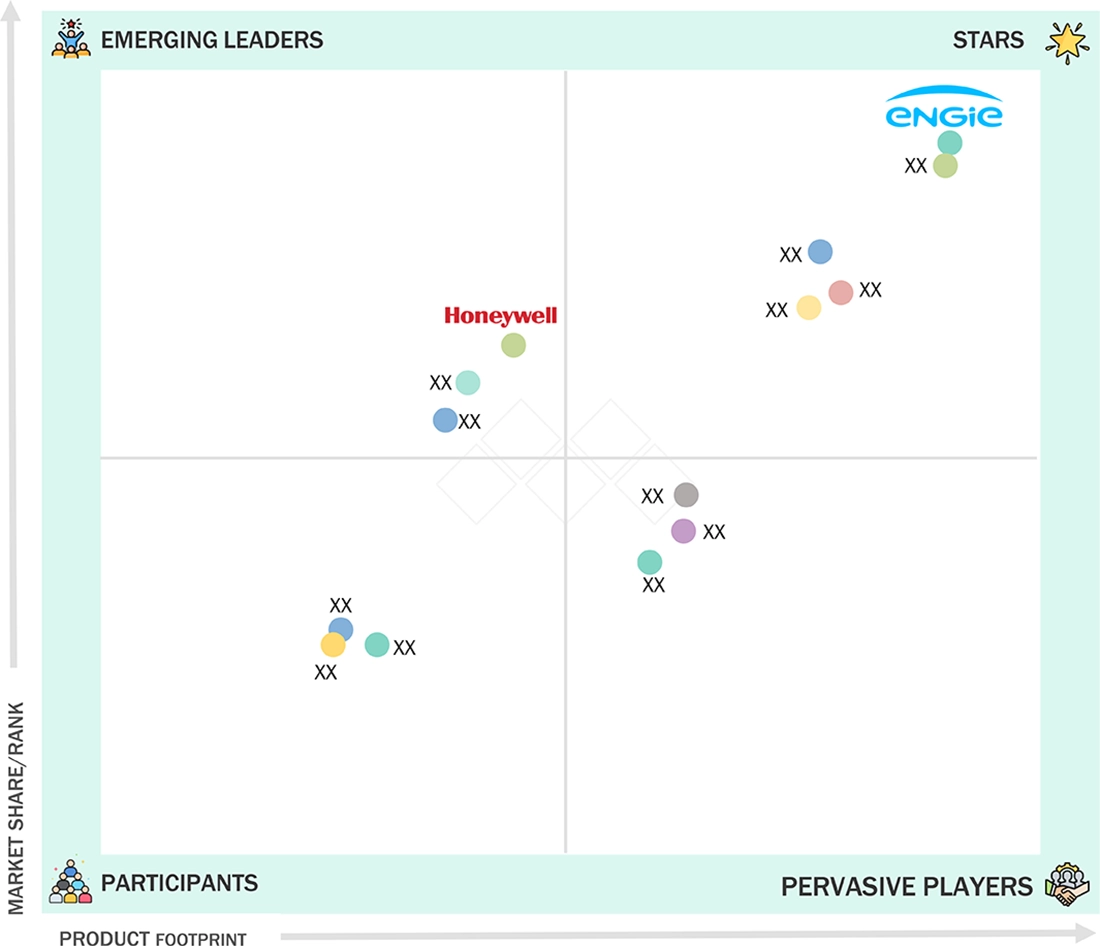
Commercial Energy as a Service Market: COMPANY EVALUATION MATRIX
ENGIE, one of the most influential and well-positioned leaders, is a "star" player in the commercial energy as a service (EaaS) market, driven by its deep expertise in integrated energy solutions and large portfolio of distributed renewable assets. The company excels in delivering turnkey, zero-capex EaaS offerings that combine on-site solar, energy storage, efficiency upgrades, microgrids, and advanced digital energy management under long-term service agreements. Honeywell International Inc., an emerging leader in the energy as a service market, is strengthening its position through advanced building automation, digital energy management platforms, and integrated efficiency solutions.
Source: Secondary Research, Interviews with Experts, MarketsandMarkets Analysis
KEY MARKET PLAYERS
- ENGIE (France)
- Schneider Electric (France)
- Ameresco (US)
- Siemens (France)
- Johnson Controls (Ireland)
- Enel X S.r.l (Italy)
- EDF Energy (US)
- Edison Internationalv (US)
- Veolia (France)
- Honeywell International Inc. (US)
- NextEra Energy Services (US)
- Bernhard (US)
- Entegrity Energy Partners, LLC (US)
- Enertika (Spain)
- Norseco (US)
- Wendel (US)
- Centrica plc (UK)
- Duke Energy Corporation (US)
- WGL Energy Services, Inc (US)
- rsted A/S (Denmark)
- Alpiq Holding AG (Switzerland)
- Southern Company (US)
- Adven (Finland)
- Redaptive (US)
MARKET SCOPE
| REPORT METRIC | DETAILS |
|---|---|
| Market Size in 2024 (Value) | USD 28.79 Billion |
| Market Forecast in 2030 (Value) | USD 55.04 Billion |
| Growth Rate | CAGR of 11.4% from 2024–2030 |
| Years Considered | 2020–2030 |
| Base Year | 2023 |
| Forecast Period | 2024–2030 |
| Units Considered | Value (USD Billion) |
| Report Coverage | Revenue Forecast, Company Ranking, Competitive Landscape, Growth Factors, and Trends |
| Segments Covered | By Service Type (Energy Efficiency & Optimization Services, Operational & Maintenance Services, and Energy Supply Services) |
| Regions Covered | North America, Asia Pacific, Europe, Middle East & Africa, and South America |
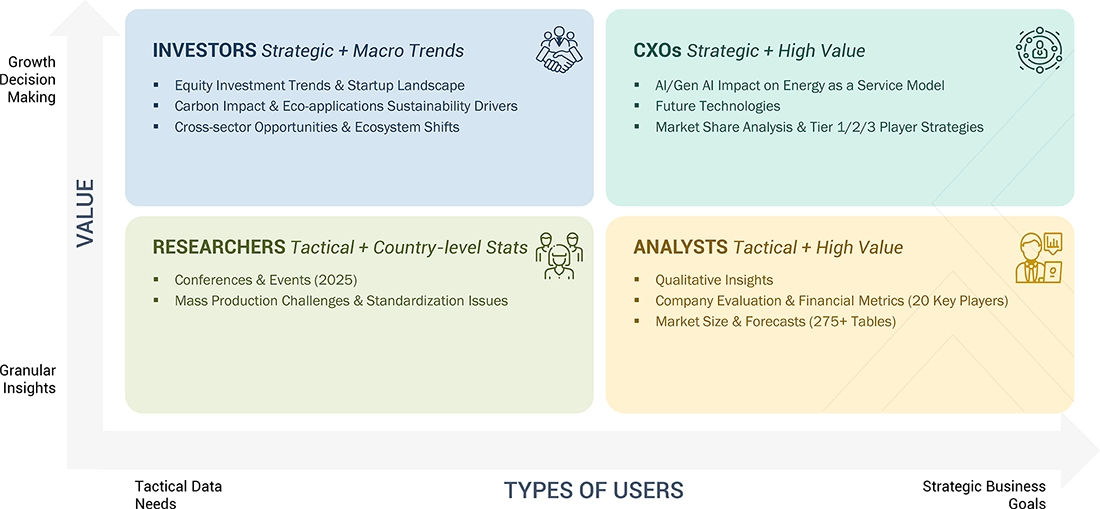
WHAT IS IN IT FOR YOU: Commercial Energy as a Service Market REPORT CONTENT GUIDE
DELIVERED CUSTOMIZATIONS
We have successfully delivered the following deep-dive customizations:
| CLIENT REQUEST | CUSTOMIZATION DELIVERED | VALUE ADDS |
|---|---|---|
| Company profiling | Competitive Landscape & Key Player Benchmarking Customization | Startup and ESCO mapping, utility-affiliated EaaS players, strategic partnerships and alliances, technology and solution positioning, M&A and investment activity tracking, competitive differentiation, and emerging business model identification. |
RECENT DEVELOPMENTS
- August 2026: Schneider Electric introduced a dedicated Energy-as-a-Service (EaaS) solution for greenfield sites, enabling manufacturers to build and operate critical energy infrastructure without upfront capital. The model combines turnkey project delivery, financing, and performance-risk ownership, allowing customers to preserve CapEx while obtaining energy infrastructure as a service.
- June 2026: Schneider Electric published its Energy P3 Playbook, explicitly positioning Energy-as-a-Service as one of three public-private-partnership models alongside ESPCs and PPAs. The EaaS model combines capacity and storage, resilience, decarbonization, and lifecycle operations and maintenance under integrated contracts, providing a defined framework for delivering energy infrastructure through service-based arrangements.
- June 2026: Ameresco continued expanding its integrated energy-infrastructure delivery model, including modernization work for the Mount Sinai School District. Ameresco’s EaaS model combines energy efficiency, distributed generation, storage, microgrids, energy supply management, operations and maintenance, and service-based financing; its 2026 project activity demonstrates continued deployment of the infrastructure and financing model underpinning its EaaS business.
- April 2026: Johnson Controls acquired Nantum AI to strengthen its OpenBlue platform with AI-driven energy optimization and control capabilities. Nantum’s algorithms enable real-time optimization of building HVAC systems and energy consumption, and Johnson Controls said the combined offering was being piloted. Given Johnson Controls’ EaaS model, which covers design, financing, operation, maintenance, and guaranteed energy-performance outcomes, the acquisition materially strengthens technology underpinning its EaaS capabilities.
- January 2026: EDF Energy / Dalkia announced that it would commercialize a new Energy-as-a-Service solution in 2026 following the success of its EaaS model with the UK National Health Service. The solution is part of Dalkia’s expanding energy-services business and is intended to provide customers with a service-based approach to energy infrastructure and decarbonization, making this a direct development for the EaaS market.
Table of Contents
 Exclusive indicates content/data unique to MarketsandMarkets and not available with any competitors.
Methodology
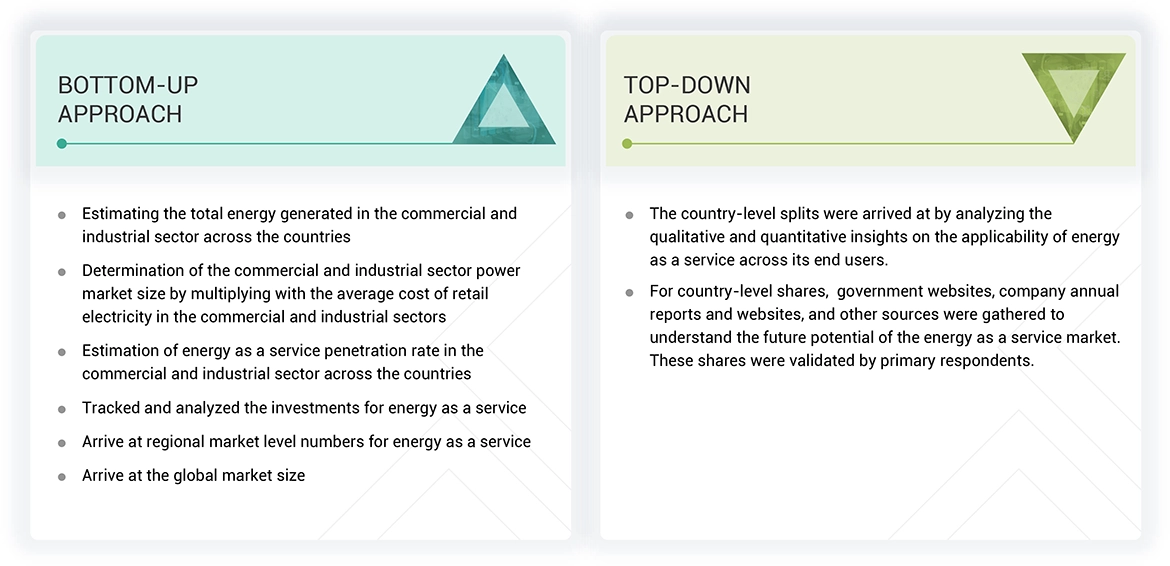
This study consisted of four major phases in estimating the current size of the commercial energy as a service market. Extensive secondary research was done to extract information from the market, peer markets, and parent markets. The next stage was the validation of these data from secondary findings, assumptions, and market sizing with industry experts across the value chain through primary research. Both top-down and bottom-up approaches were incorporated in estimating the entire size of the market. Then, the market break-down and data triangulation were done for estimating the market size of the segments and sub-segments.
Secondary Research
The research study on commercial energy as a service market included maximum utilization-or-indirect utilization-of directories, databases, and secondary sources, including Hoovers, Bloomberg, Businessweek, UN Comtrade Database, Factiva, International Energy Agency, International Monetary Fund, United Nations Conference on Trade and Development, US Energy Information Administration, BP Statistical Review of World Energy, US Energy Information Administration, European Committee of Electrical Installation Equipment Manufacturers, US Environmental Protection Agency, among others, to identify and gather relevant information helpful for preparing the technical, market-oriented and commercial study. Other secondary sources included white papers, articles by renowned authors, annual reports, press releases & investor presentations of companies, recognized publications, manufacturer associations, trade directories, and databases.and supply chain to identify key players based on products; services; market classification and segmentation according to offerings of major players; industry trends related to product types, deployment mode, architecture, end user and regions; and key developments from both market- and technology-oriented perspectives.
Primary Research
Amidst primary sources mentioned are various industry experts from core and allied industries, service providers, IoT, cloud-based solution providers, and utility provider in all segments of these industries' value chain. Several primary sources on both the supply side and demand sides of this market had been interviewed to gather qualitative and quantitative information. In the canvassing of primaries, several departments within organizations namely sales, engineering, operations, and managers were covered in order to provide an all-sided viewpoint in our report The primary respondents' breakdown is provided.
In the complete market engineering process, the top-down and bottom-up approaches and several data triangulation methods were extensively used to perform the market size estimations and forecasts for all segments and subsegments listed in this report. Extensive qualitative and quantitative analyses were conducted to complete the market engineering process and list key information/insights throughout the report.
To know about the assumptions considered for the study, download the pdf brochure
Market Size Estimation
Both the top-down and bottom-up approaches were used to estimate and validate the size of the commercial energy as a service market and its dependent submarkets. The key players in the market were identified through secondary research, and their market share in the respective regions was obtained through primary and secondary research. The research methodology includes the study of the annual and financial reports of top market players and interviews with industry experts, such as chief executive officers, vice presidents, directors, sales managers, and marketing executives, for key quantitative and qualitative insights related to the commercial energy as a service market.
Commercial Energy as a Service Market : Top-Down and Bottom-Up Approach
Data Triangulation
After arriving at the overall market size from the estimation process explained above, the total market has been split into several segments and sub-segments. Data triangulation and market breakdown procedures have been used wherever applicable to complete the overall market engineering process and to arrive at the exact statistics for all segments and sub-segments. The data has been triangulated by studying various factors and trends from both the demand and supply sides. The market has been validated using both the top-down and bottom-up approaches. Then, it was verified through primary interviews. Hence, for every data segment, there are three sources—the top-down approach, the bottom-up approach, and expert interviews. When the values arrived at from the three points matched, the data was assumed to be correct.
Market Definition
Commercial Energy as a Service (EaaS) is the process in which customers pay for energy services by means of subscription or pay-per-use, rather than installing a large piece of energy infrastructure. This in effect provides businesses and consumers access to energy solutions like renewable energy generation, energy efficiency upgrades, and energy management systems without the burden of ownership and maintenance. There are three key trends that define the EaaS market, viz., growing adoption of renewable energy sources, growing smart grid technologies, and the rise in reliance on data-driven decision making for energy management.
The EaaS market is rapidly evolving, driven by government initiatives and private sector investments, with a focus on various technologies such as AI, IoT, and energy management. The market for commercial energy as a service is defined as the sum of revenues generated by global companies through the services offered by them.
Stakeholders
- Analytics companies
- Combined Heat and Power (CHP) project developers
- Consulting companies in the power sector
- Distributed Energy Resources (DER) technology manufacturers
- End users with a heavy energy portfolio across industrial, commercial, military, and government sectors
- Energy management companies
- Energy service companies
- Financiers
- Microgrid developers
- Solar PV project developers and technology manufacturers
- Utilities
Report Objectives
- To define, characterize, segment, and forecast the commercial energy as a service market with respect to market size and volume, end-user, and region.
- To forecast the market size by value, for five regions- South America, North America, Europe, Asia Pacific, and Middle East & Africa, and their key countries.
- To strategically analyze each of the subsegments to understand individual growth trends, prospect, and contribution of segments to cumulative market size.
- To provide detailed information about the key drivers, restraints, opportunities, and challenges affecting the growth of the market
- To analyze the market opportunities for stakeholders and details of the competitive landscape for market leaders
- To analyze competitive developments, like sales contracts, agreements, investments, expansions, new product launches, mergers, partnerships, joint ventures, collaborations, and acquisitions in the commercial energy as a service market
- To benchmark market players using the company evaluation matrix, which analyzes market players on broad categories of business and product strategies adopted by them
- To compare key market players for the market share, product specifications, and applications.
- To strategically profile key players and comprehensively analyze their market ranking and core competencies.
Note: 1. Core competencies of companies are captured in terms of their key developments and product portfolios, as well as key strategies adopted to sustain their position in the commercial energy as a service market.
Available Customizations
MarketsandMarkets offers customizations according to the specific needs of the companies with the given market data.
The following customization options are available for the report:
Product Analysis
- Product matrix, which gives a detailed comparison of the product portfolio of each company
Geographic Analysis as per Feasibility
- Further breakdown of the commercial energy as a service market, by country
Company Information
- Detailed analysis and profiling of additional market players (up to five)


Personalize This Research
- Triangulate with your Own Data
- Get Data as per your Format and Definition
- Gain a Deeper Dive on a Specific Application, Geography, Customer or Competitor
- Any level of Personalization
Let Us Help You
- What are the Known and Unknown Adjacencies Impacting the Commercial Energy as a Service Market
- What will your New Revenue Sources be?
- Who will be your Top Customer; what will make them switch?
- Defend your Market Share or Win Competitors
- Get a Scorecard for Target Partners

Custom Market Research Services
We Will Customise The Research For You, In Case The Report Listed Above Does Not Meet With Your Requirements
Get 10% Free CustomisationTESTIMONIALS

Kimberly Murphy
GLOBAL MARKETING DIRECTOR
Bently Nevada,
Leading Condition Monitoring & Asset Protectionwww.bakerhughesds.com/bently-nevada

MarketsandMarkets™ showed consistent rigor for success and relentlessly worked with Bently Nevada stakeholders to positively impact go-to-market strategy. Their proactiveness and flexibility has been instrumental in achieving the objectives to grow our sales pipeline in key industrial markets.

DARRICK HUEBER
Business Development Leader
Nexus Controls LLC,
Leading Manufacturer of Automation System & Electrical Panelswww.bakerhughesds.com/nexus-controls

We partnered with MarketsandMarkets to expand our business further by tapping into new industrial segments. It was critical for us to gather crucial business insights about specific markets to achieve this goal. MarketsandMarkets engagement model and client services helped us provide those insights, it was really impressive and valuable for my business. The team was extremely flexible and helpful.

Mike Schoff
Global Industrial Commercial Strategy Leader
Nexus Controls LLC
Leading Manufacturer of Automation System & Electrical Panelswww.bakerhughesds.com/nexus-controls
We consulted MarketsandMarkets for potential Partner Identification. Overall, it was a good experience. The insights provided through interviews conducted by the team helped us put together the questionnaire required for discussion with the selected partners. Their ability to provide insights through interviews with customers in a timely manner was quite impressive.






Growth opportunities and latent adjacency in Commercial Energy as a Service Market