Compact Air Compression Systems Market

Compact Air Compression Systems Market By Product Type (Positive Displacement Blowers, Side Channel Blowers, Dry Vane Pumps, Claw Pumps), Pressure (0.1–0.4 bar(g), 0.4–0.8 bar(g)), End User (Wastewater Treatment), and Region - Global Forecast to 2030




OVERVIEW
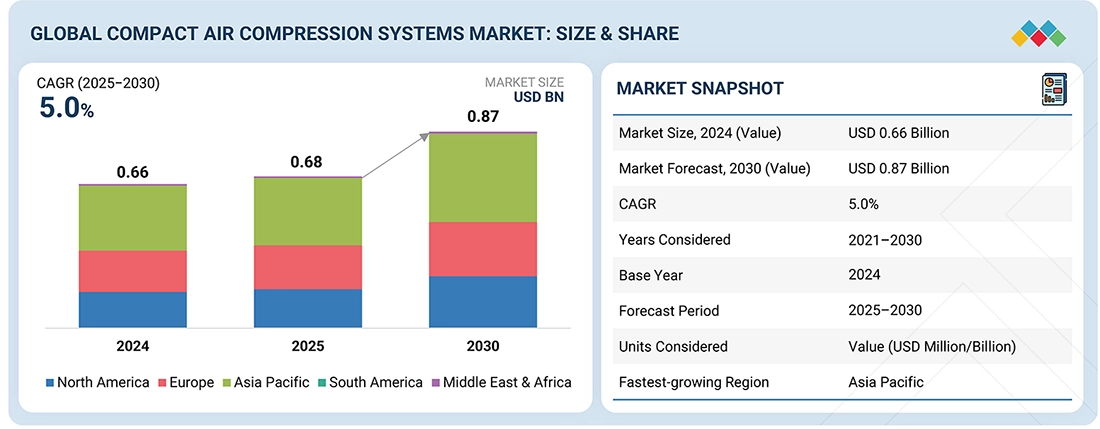
Source: Secondary Research, Interviews with Experts, MarketsandMarkets Analysis
The global compact air compression systems market is projected to reach USD 0.87 billion in 2030 from USD 0.68 billion in 2025, at a CAGR of 5.0%. The future prospects of the market are very strong, driven by rising energy costs and growing demand for efficient solutions in wastewater aeration and low-pressure operations.
Market Size and Forecast:
- 2025 Market Size: USD 0.68 Billion
- 2030 Projected Market Size: USD 0.87 Billion
- Growth Rate (2025-2030): CAGR of 5.0%
- Side channel blowers segment accounted for the largest market share of 56.0% in 2024
- 0.4–0.8 bar(g) pressure segment dominated the market with a 52.1% share in 2024
- Forecast period: 2025–2030
- Asia Pacific is projected to be the fastest-growing region with a CAGR of 5.4%
- Wastewater treatment remains the key end-user segment driving market demand
Key Market Trends and Insights:
- Growing adoption of energy-efficient air compression systems across industrial applications
- Rising investments in wastewater treatment infrastructure driving equipment demand
- Increasing preference for oil-free and low-maintenance compression technologies
- Side channel blowers remain the dominant product type due to their reliability and compact design
- Asia Pacific emerges as the fastest-growing regional market supported by rapid industrialization
- Expanding use of compact air compression systems in environmental and process industries
- Technological advancements focused on reducing operating costs and improving performance
KEY TAKEAWAYS
-
BY REGIONAsia Pacific is projected to be the fastest-growing region in the compact air compression systems market, registering a CAGR of 5.4% during the forecast period.
-
BY PRODUCT TYPEThe side channel blowers segment, by product type, accounted for 56.0% of the market in 2024.
-
BY PRESSUREThe 0.4–0.8 bar (g) segment dominated the market, registering 52.1% share in 2024.
-
COMPETITIVE LANDSCAPE - Key PlayersKey players in the globalcompact air compression systems market are Atlas Copco AB (Sweden), Ingersoll Rand Inc. (US), KAESER KOMPRESSOREN (Germany), KUBÍCEK VHS, s.r.o. (Czech Republic), and Busch Vacuum Solutions (Germany). They have employed various strategies to increase their market share in the global compact air compression systems market.
-
COMPETITIVE LANDSCAPE - StartupsThe strong product ecosystem and global market penetration of Rico Druckluftanlagenbau GmbH (Germany), Induvac (Netherlands), and SEKO S.p.A. (Italy) have made them influential startups/SMEs/emerging leaders in the market.
Drivers of the compact air compression systems market include drivers of the compact air compression systems market include energy cost reduction in wastewater aeration systems, growing adoption of blowers for low-pressure operations, and increasing demand for efficient, sustainable compressed air solutions, while challenges persist around the availability of low-quality and cheap products in the gray market, supply chain disruptions, and varying regional standards.
MARKET DYNAMICS

Level
-
Energy cost reduction in wastewater aeration systems

-
Growing adoption of blowers for low pressure operations


Level
-
Lack of recognized energy-efficiency certification and testing frameworks for low-pressure compact air compression systems


Level
-
Rising focus on developing systems with reduced noise and smaller footprint

-
Oil-free & clean air requirements in across sensitive industries


Level
-
Availability of low quality and cheap products in gray market

Source: Secondary Research, Interviews with Experts, MarketsandMarkets Analysis
Driver: Energy cost reduction in wastewater aeration systems
Wastewater treatment and drinking water plants rank among the biggest energy hogs in the US, accounting for 30–40% of municipal energy use, with aeration blowers driving most of that, responsible for about 2% of national energy and over 45 million tons of CO2 emissions yearly. In these facilities, low-pressure blowers (0.1–0.8 bar) top the energy consumption list. Take Arizona's Agua Nueva plant: optimizing blower setpoints cut power use by 10–20% and slashed CO2 by over 1,000 lbs, showing how efficient compact systems like positive displacement and side-channel blowers deliver precise control and big cost savings. This ties into UN Sustainable Development Goal 6.3, targeting cleaner water by 2030 through reduced pollution and better wastewater reuse—sparking huge investments in treatment infrastructure, the prime arena for low-pressure blowers and compact air compression.
Restraint: Lack of recognized energy-efficiency certification and testing frameworks for low-pressure compact air compression systems
Regulatory gaps create headaches for compact low-pressure blowers in the global market. EU's Commission Regulation 2014/425 on compressor energy labeling skips units under 1 bar(g) discharge pressure. Similarly, US DOE's 10 CFR Part 431 Subpart T tests only apply to compressors at ≥1.34 bar(g), leaving sub-threshold compact systems unregulated. The EU Pressure Equipment Directive 2014/68/EU targets gear above 0.5 bar(g) max allowable pressure, so many blowers maxing at ~0.8 bar(g) and ~120 m³/h dodge strict conformity checks. Without certified efficiency labels, OEMs struggle to win public-sector bids demanding verified classes—erecting real procurement walls.
Opportunity: Rising focus on developing systems with reduced noise and smaller footprint
Industries like pharmaceuticals, food & beverage, labs, and hospitals are snapping up low-noise, compact blowers and pumps to keep workspaces clean and comfy. Dereike notes their side-channel blowers with acoustic hoods can drop noise by up to 14 dB(A), boosting safety and satisfaction. Stricter rules, such as India's CPCB limits (75 dB(A) industrial, 70 dB(A) commercial), push demand for quiet systems that skip extra soundproofing. Amid booming urbanization, plants and wastewater sites cram into tight spots—compact units pumping 120 m³/h at 0.1–0.8 bar(g) fit right in, trimming install and upkeep costs. Side-channel designs deliver pulsing airflow that's quieter yet efficient, per Hong Kong's Fenglisheng Group. Manufacturers are pouring into sleeker impellers, anti-vibe mounts, and all-in-one motor setups to cut noise and shake while holding strong on performance. As automation and precision take over, expect demand for these low-noise compact air solutions to surge, opening doors for tech standouts and premium plays.
Challenge: Availability of low quality and cheap products in gray market
Many low-cost local manufacturers produce blowers without following defined design standards for the 0.1–0.8 bar(g) range, leading to poor efficiency and short service life, while certified industrial units designed and tested for pressures between 100 mbar and 1100 mbar maintain higher reliability and longer operational hours. Local manufacturers in cost-driven markets aggressively target low-pressure applications (≤ 1 bar(g)) with cheaper alternatives that often lack proper quality assurance or precision assembly, resulting in inconsistent air delivery in low-volume systems (up to 120 m³/h). Operating blowers near the upper limit of 0.8 bar(g) requires high-precision impellers, bearings, and seals, and units made with inferior materials or unbalanced impellers can suffer vibration, leakage, and pressure loss, reducing system efficiency. Major blower manufacturers report being undercut by gray-market suppliers that exploit local distribution networks and sell at unsustainably low prices, making it difficult for compliant manufacturers to compete despite superior performance in low-pressure applications, while the proliferation of gray-market products damages the reputation of local suppliers in export markets, where compliance with ISO 5389 and other performance standards is mandatory for blowers operating up to ~0.8 bar(g). As industries move toward automation and precision manufacturing, the demand for compact, low-noise air compressors, blowers, and pumps is expected to accelerate, creating opportunities for technology differentiation and premium product positioning.
MARKET ECOSYSTEM
The global compact air compression systems market involves several key stakeholders: raw material manufacturers supply the components needed for production, while assemblers combine these parts into finished products. Distributors and resellers market and sell these systems to various end users, who span industries like manufacturing and healthcare. End users influence market trends and drive innovation through their feedback, creating a vital ecosystem that supports industry growth and development.
Logos and trademarks shown above are the property of their respective owners. Their use here is for informational and illustrative purposes only.
MARKET SEGMENTS
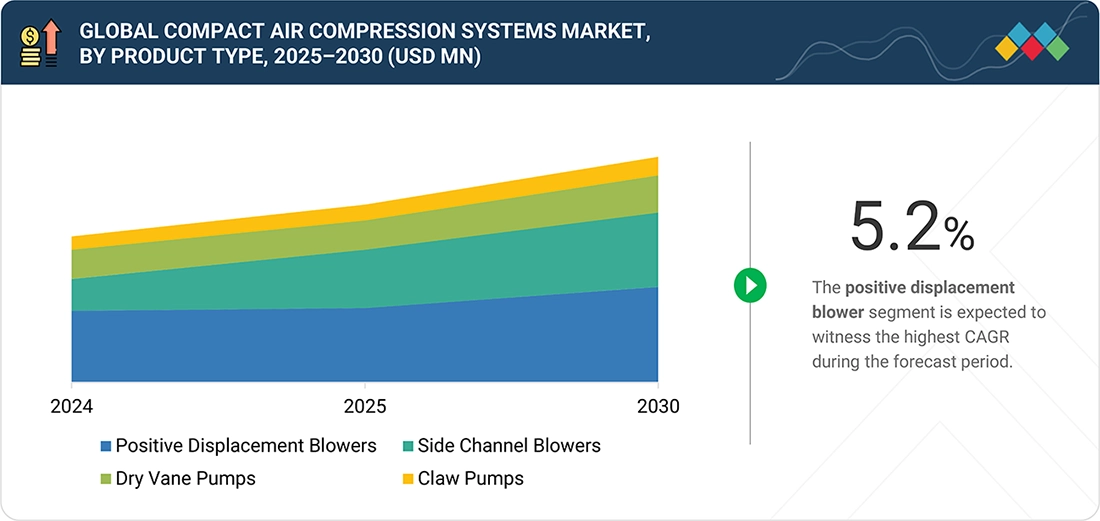
Source: Secondary Research, Interviews with Experts, MarketsandMarkets Analysis
Compact Air Compression Systems Market, by Product Type
In the product type segment of the compact air compression systems market, positive displacement (PD) blowers lead as the fastest-growing tech, due to their rock-solid versatility and reliability in low-pressure operations like aeration, pneumatic conveying, and industrial processes—they keep airflow steady no matter pressure swings, with energy-smart screw and claw versions speeding up the shift. Side-channel blowers dominate the largest share, prized for compact builds, quiet runs, and oil-free air that's perfect for small-scale, nonstop, or spread-out systems in OEMs, labs, and wastewater spots needing simple upkeep and pure output. Dry vane and claw pumps grow steadily but more modestly, offering compact, contamination-free air, though vane wear and pricier claw designs cap their appeal to niche, limited-duty uses.
Compact Air Compression Systems Market, by Pressure
In the by-pressure segment of the compact air compression systems market, the 0.1–0.4 bar(g) range holds the second largest share, powered by heavy use in wastewater treatment and aeration—key for steady low-pressure airflow in biological processes across sewage/fishponds, open ponds, and aquariums, building a huge installed base and reliable replacement needs. The 0.4–0.8 bar(g) band is set for the quickest growth, due to industrial automation ramp-ups and demand in pneumatic conveying, bulk handling, and process air for stability. Sectors like chemicals, plastics & packaging, food processing, electronics & semiconductors, and printing are expanding output, craving dependable mid-pressure flow to shuttle powders, resins, and materials smoothly.
Compact Air Compression Systems Market, by End User
Positive displacement blowers operating at up to 0.8 bar(g) and 120 m³/h are increasingly preferred for pneumatic conveying of fine and granular materials in food, pharmaceutical, plastics, and chemical industries. Their ability to maintain constant volumetric flow independent of pressure fluctuations ensures stable conveying and protects product quality in dense-phase and semi-dilute systems. In food processing, these blowers support powder transfer (flour, starch, sugar), ingredient dosing, and packaging-line air supply, delivering oil-free, contamination-free air crucial for hygiene. Their higher pressure capability (up to 0.8 bar(g)) enables efficient conveying through systems with multiple bends or filters, while ensuring smooth operation and reduced product degradation. In wastewater treatment, these blowers provide air for aeration tanks, sludge transfer, equalization basins, and filter backwashing, offering stable airflow at moderate pressure for diffusers and pressurized pipe networks. Their capability to generate higher discharge pressure than side-channel blowers makes them suitable for deeper tanks and long pipelines. In pharmaceutical and biotechnology applications, positive displacement blowers are widely used for powder handling, tablet transport, cleanroom air support, and drying processes, where their low pulsation, oil-free operation, and precise flow control maintain product sterility and integrity.
REGION
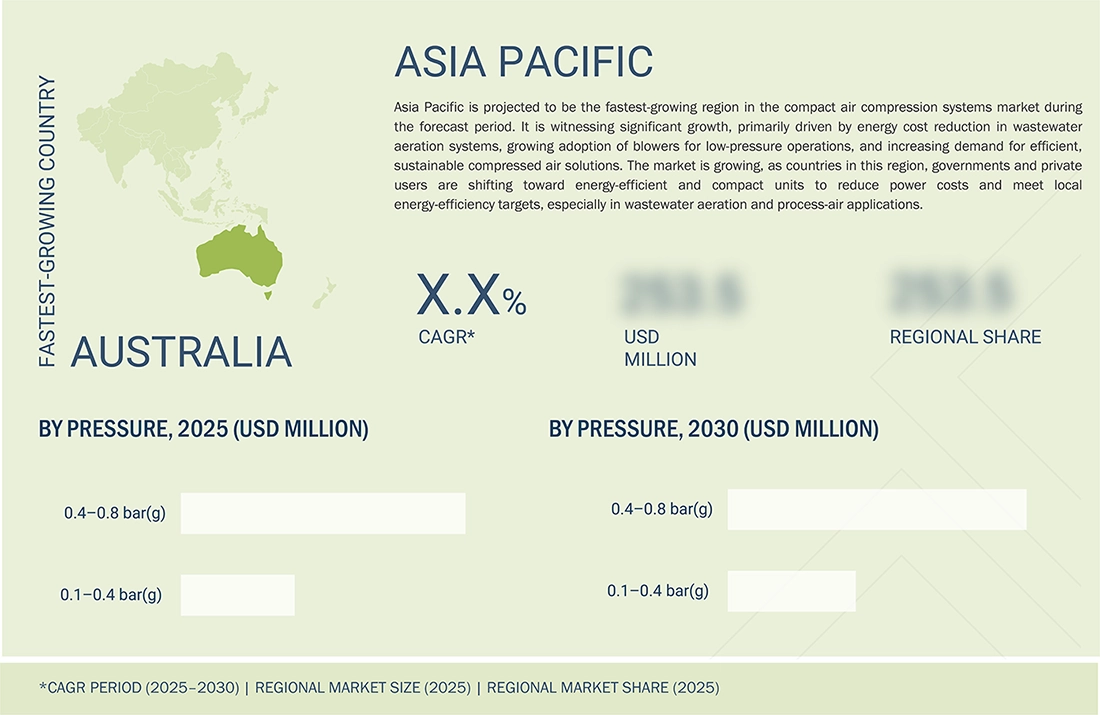
Asia Pacific is poised to dominate the market during the forecast period at the highest CAGR
Asia Pacific is projected to be the fastest-growing region in the compact air compression systems market during the forecast period. It is witnessing significant growth, primarily driven by energy cost reduction in wastewater aeration systems, growing adoption of blowers for low-pressure operations, and increasing demand for efficient, sustainable compressed air solutions. The market is growing, as countries in this region, governments and private users are shifting toward energy-efficient and compact units to reduce power costs and meet local energy-efficiency targets, especially in wastewater aeration and process-air applications.
KEY MARKET PLAYERS
- Atlas Copco AB (Sweden)
- Ingersoll Rand Inc. (US)
- KAESER KOMPRESSOREN (Germany)
- KUBÍCEK VHS, s.r.o. (Czech Republic)
- Busch Vacuum Solutions (Germany)
- Becker Pumps (Germany)
- Goorui (China)
- Usha Neuros Turbo LLP (India)
- Fans and Blowers (UK)
- Elektror (Germany)
- Rexblower (China)
- Rico Druckluftanlagenbau GmbH (Germany)
- Induvac (Netherlands)
- SEKO S.p.A. (Italy)
MARKET SCOPE
| REPORT METRIC | DETAILS |
|---|---|
| Market Size, 2024 (Value) | USD 0.68 Billion |
| Market Forecast, 2030 (Value) | USD 0.87 Billion |
| Growth Rate | 5.0% |
| Years Considered | 2025–2030 |
| Base Year | 2024 |
| Forecast Period | 2025–2030 |
| Units Considered | Value (USD Million/Billion) |
| Report Coverage | Revenue forecast, company overview, growth factors, and trends |
| Segments Covered |
|
| Regions Covered | Europe, Asia Pacific, North America, South America, Middle East & Africa |
WHAT IS IN IT FOR YOU: COMPACT AIR COMPRESSION SYSTEMS MARKET REPORT CONTENT GUIDE
DELIVERED CUSTOMIZATIONS
We have successfully delivered the following deep-dive customizations:
| CLIENT REQUEST | CUSTOMIZATION DELIVERED | VALUE ADDS |
|---|---|---|
| End-user focused analysis beyond standard segmentation | ||
| Competitive benchmarking of top players |
RECENT DEVELOPMENTS
- January 2025 : Atlas Copco acquired Trident Pneumatics, an Indian company established in 1988 and based in Coimbatore, which specializes in compressed air treatment and on-site gas generation. With this acquisition, Trident would join Atlas Copco under its Compressor Technique business division. This move strengthened Atlas Copco’s offering and market presence in India, especially among industries such as textile, railway, and food & beverage.
- January 2025 : Atlas Copco Group acquired Hamamcioglu Makina (HAMAK), a Turkish company majorly focused on sales and service of air compressor solutions in the Turkish market. This acquisition will allow Atlas Copco to strengthen its local presence and service capabilities across industries such as textile, iron & steel, automotive, chemicals, and food & beverage.
- January 2025 : Ingersoll Rand accelerated its value-creation strategy by acquiring Termomeccanica Industrial Compressors S.p.A. (“TMIC”) and its subsidiary Adicomp S.p.A. (“Adicomp”). The acquisition strengthened Ingersoll Rand’s core competencies, especially in air and gas compressors, and broadened its presence in high-growth end markets such as Brazil and India.
- February 2025 : Ingersoll Rand continued its inorganic growth momentum in 2025 by acquiring SSI Aeration, Inc. and its subsidiaries. Through this acquisition, Ingersoll Rand expanded its product portfolio to include SSI’s aeration offerings, such as fine bubble diffusers, coarse bubble diffusers, aeration systems and sought to combine them with its own low-pressure compressors to deliver end-to-end solutions in the wastewater treatment sector.
- July 2025 : Busch Vacuum Solutions launched the TYR PLUS rotary lobe blower, which is an intelligent, energy-saving addition to its TYR product line. The product was equipped with an integrated variable speed drive (VSD), it cuts energy use and operating costs. The blower offered both vacuum and overpressure versions and includes remote monitoring via software.
Table of Contents
 Exclusive indicates content/data unique to MarketsandMarkets and not available with any competitors.
Methodology
This study encompassed significant efforts to determine the current size of the compact air compression systems market. It commenced with a thorough secondary research process to gather data on the market, related markets, and the broader industry. Subsequently, these findings, assumptions, and market size calculations were rigorously validated by consulting industry experts across the entire supply chain through primary research. The total market size was assessed through analyses specific to each country. Following that, the market was further dissected, and the data was cross-referenced to estimate the size of various segments and sub-segments within the market.
Secondary Research
In this research study, a wide range of secondary sources were utilized, including directories, databases, and reputable references such as Hoover’s, Bloomberg BusinessWeek, Factiva, World Bank, International Monetary Fund (IMF), the US Department of Energy (DOE), and the International Energy Agency (IEA). These sources played a crucial role in gathering valuable data for a comprehensive analysis of the global compact air compression system market, covering technical, market-oriented, and commercial aspects. Additional secondary sources included annual reports, press releases, investor presentations, whitepapers, authoritative publications, articles authored by well-respected experts, information from industry associations, trade directories, and various database resources.
Primary Research
The compact air compression system market involves a range of stakeholders, including manufacturers, distributors, service providers, end users, and regulatory bodies. To gather qualitative and quantitative insights, various primary sources from both the supply and demand sides of the market were interviewed. The following breakdown presents the primary respondents involved in the research study.
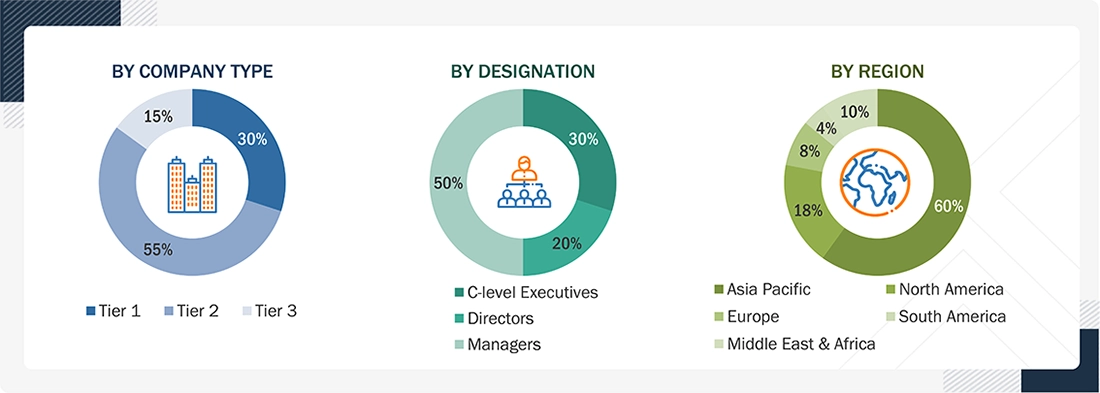
Note: “Others” include sales managers, engineers, and regional managers.
The companies are divided into tiers based on their 2021 total revenue: Tier 1: >USD 1 billion; Tier 2: USD 500 million–1 billion; and Tier 3: USD 500 million.
To know about the assumptions considered for the study, download the pdf brochure
Market Size Estimation
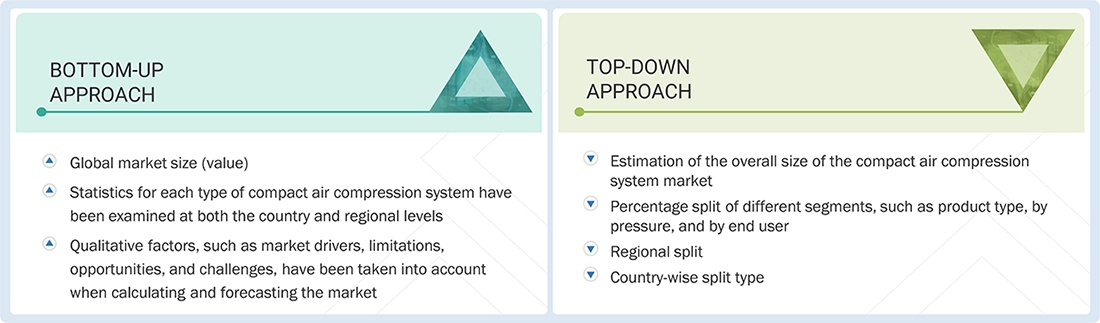
The estimation and validation of the compact air compression systems market size have been conducted using a bottom-up and top-down approach. This approach was rigorously employed to ascertain the dimensions of multiple subsegments within the market. The research process comprises the following key stages.
- In this method, the statistics for each type of diesel generator have been examined at both the country and regional levels.
- Thorough secondary and primary research has been conducted to gain a comprehensive understanding of the global market landscape for various segments of the diesel generator market.
- When calculating and forecasting the market size, qualitative factors such as market drivers, limitations, opportunities, and challenges have been taken into account.
Compact Air Compression Systems Market : Top-Down and Bottom-Up Approach
Data Triangulation
The process of determining the overall market size involved the methodologies described earlier, followed by segmenting the market into multiple segments and subsegments. To finalize the comprehensive market analysis and obtain precise statistics for each market segment and subsegment, data triangulation and market segmentation techniques were applied, as appropriate. Data triangulation was achieved by examining various factors and trends from both demand and supply perspectives within the compact air compression systems market.
Market Definition
The study evaluates the global compact air compression systems market, focusing on the application of low-pressure compressed air across industrial sectors. Compact air compression systems are defined as low-pressure, low-flow compressed-air solutions operating within a pressure range of 0.1–0.8 bar(g), and volume flows up to 120 m³/h. The study emphasizes key product types, including positive displacement blowers, side channel blowers, dry vane pumps, and claw pumps, and analyzes their utilization across diverse end-use industries such as wastewater treatment, food & beverage, pharmaceuticals & biotechnology, medical devices & laboratory equipment, electronics & semiconductors, plastics & paper, chemical industry, and others.
Key Stakeholders
- Government & research organizations
- Institutional investors
- Investors/shareholders
- Environmental research institutes
- Project developers
- State and national regulatory authorities
- Manufacturing industry
- Energy efficiency consultancies
- Certification bodies
Report Objectives
- To describe and forecast the compact air compression system market, in terms of value, by product type, by pressure, end user, and region
- To forecast the market for various segments, in terms of value, with regard to five regions: North America, South America, Europe, Asia Pacific, and the Middle East & Africa, along with their key countries
- To provide detailed information about the key factors, such as drivers, restraints, opportunities, and challenges, influencing the market’s growth
- To strategically analyze the subsegments with respect to individual growth trends, prospects, and contributions of each segment to the overall market size
- To study the complete supply chain and allied industry segments, and perform a value chain analysis of the compact air compression system landscape
- To analyze the opportunities in the market for various stakeholders by identifying the high-growth segments of the compact air compression system market
- To profile the key players and comprehensively analyze their market position in terms of ranking and core competencies, along with detailing the competitive landscape for the market leaders
- To analyze competitive developments such as agreements, partnerships, product launches, acquisitions, contracts, expansions, and investments in the compact air compression system market
Available customizations:
With the given market data, MarketsandMarkets offers customizations based on the company’s specific needs. The following customization options are available for the report:
Product Analysis
- Product Matrix, which provides a detailed comparison of the product portfolio of each company
Company Information
- Detailed analyses and profiling of additional market players (up to five)
Key Questions Addressed by the Report
What is the current market size of the Compact Air Compression Systems Market, and how is it expected to grow?
The market is projected to grow from USD 0.68 billion in 2025 to USD 0.87 billion by 2030, at a CAGR of 5.0%.
What are the key factors driving the Compact Air Compression Systems Market?
Growth is driven by rising energy costs, increasing demand for energy-efficient systems, and expanding wastewater treatment infrastructure.
Which segment holds the largest share of the Compact Air Compression Systems Market?
The side channel blowers segment holds the largest market share, accounting for 56.0% in 2024.
Which region is expected to witness the fastest growth in the Compact Air Compression Systems Market?
Asia Pacific is projected to be the fastest-growing region, driven by rapid industrialization and increasing investments in environmental infrastructure.
Who are the key players in the Compact Air Compression Systems Market?
Leading companies include Atlas Copco AB, Ingersoll Rand Inc., KAESER KOMPRESSOREN, KUBÍCEK VHS, s.r.o., and Busch Vacuum Solutions.


Personalize This Research
- Triangulate with your Own Data
- Get Data as per your Format and Definition
- Gain a Deeper Dive on a Specific Application, Geography, Customer or Competitor
- Any level of Personalization
Let Us Help You
- What are the Known and Unknown Adjacencies Impacting the Compact Air Compression Systems Market
- What will your New Revenue Sources be?
- Who will be your Top Customer; what will make them switch?
- Defend your Market Share or Win Competitors
- Get a Scorecard for Target Partners

Custom Market Research Services
We Will Customise The Research For You, In Case The Report Listed Above Does Not Meet With Your Requirements
Get 10% Free CustomisationTESTIMONIALS

Kimberly Murphy
GLOBAL MARKETING DIRECTOR
Bently Nevada,
Leading Condition Monitoring & Asset Protectionwww.bakerhughesds.com/bently-nevada

MarketsandMarkets™ showed consistent rigor for success and relentlessly worked with Bently Nevada stakeholders to positively impact go-to-market strategy. Their proactiveness and flexibility has been instrumental in achieving the objectives to grow our sales pipeline in key industrial markets.

DARRICK HUEBER
Business Development Leader
Nexus Controls LLC,
Leading Manufacturer of Automation System & Electrical Panelswww.bakerhughesds.com/nexus-controls

We partnered with MarketsandMarkets to expand our business further by tapping into new industrial segments. It was critical for us to gather crucial business insights about specific markets to achieve this goal. MarketsandMarkets engagement model and client services helped us provide those insights, it was really impressive and valuable for my business. The team was extremely flexible and helpful.

Mike Schoff
Global Industrial Commercial Strategy Leader
Nexus Controls LLC
Leading Manufacturer of Automation System & Electrical Panelswww.bakerhughesds.com/nexus-controls
We consulted MarketsandMarkets for potential Partner Identification. Overall, it was a good experience. The insights provided through interviews conducted by the team helped us put together the questionnaire required for discussion with the selected partners. Their ability to provide insights through interviews with customers in a timely manner was quite impressive.






Growth opportunities and latent adjacency in Compact Air Compression Systems Market