CRISPR Market: Growth, Size, Share, and Trends

CRISPR Market by Offering (Product (Kits, Enzymes, Libraries), Service (gRNA Synthesis, Cell Line Development, Screening, Validation)), Application (Drug Discovery, Development, Agriculture) Competitive Landscape, Company Profiles -Global Forecast to 2030




OVERVIEW
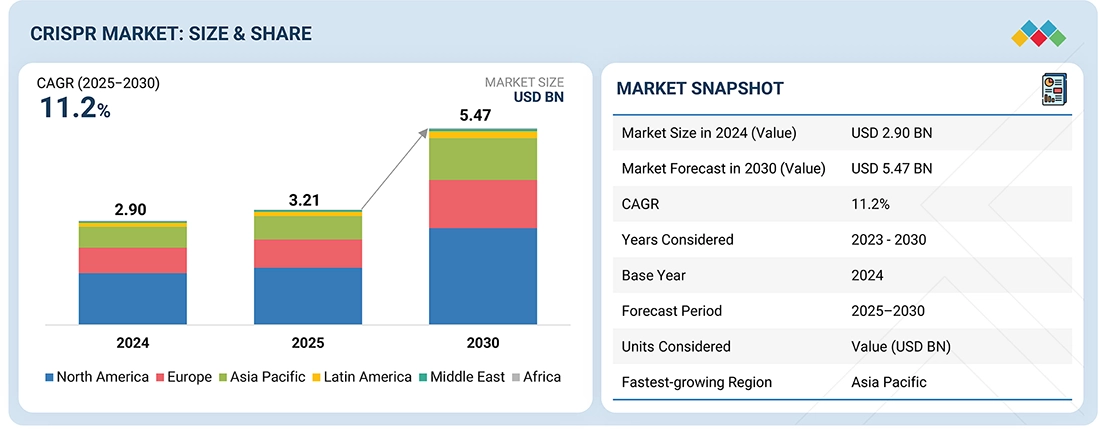
Source: Secondary Research, Interviews with Experts, MarketsandMarkets Analysis
The CRISPR market is projected to reach USD 5.47 billion in 2030 from USD 3.21 billion in 2025, at a CAGR of 11.2%. The major factors driving the growth of the CRISPR market are the growing demand for CRISPR-based gene therapies, advancements in CRISPR technology, and growing government and private investments and funding for CRISPR technology. Development of new vaccines and treatments for genetic diseases along with expanding industrial and agricultural applications of CRISPR are set to open new avenues of market expansion.
KEY TAKEAWAYS
-
By RegionThe North America CRISPR market accounted for a 49.8% revenue share in 2024.
-
By OfferingBy offering, the CRISPR products segment is expected to dominate the market throughout the forecast period.
-
By ApplicationBy application, the drug discovery & development segment is projected to grow at the fastest rate from 2025 to 2030.
-
By End UserBy end user, the pharma & biotech segment is expected to dominate the market throughout the forecast period.
-
Key PlayersCompanies like Thermo Fisher Scientific, Inc. (US), Merck KGaA (Germany), Agilent Technologies, Inc. (US) were identified as some of the star players in the CRISPR market (global), given their strong market share and product footprint.
-
SMEsCompanies like Creative Biogene (US), Hera BioLabs (US), Fujian SunyBiotech Co., Ltd. (China), among others, have distinguished themselves among startups and SMEs by securing strong footholds in specialized niche areas, underscoring their potential as emerging market leaders.
Gene therapies utilizing CRISPR technology offer the potential to address unmet medical needs by targeting the underlying genetic causes of diseases. Patients are opting for novel treatments that can provide potential cures or significant improvements in their conditions. Some of the major recent advancements in CRISPR technology are base editors and Cas9 variants. Base editors are a new type of CRISPR-Cas9 tool that can directly change individual nucleotides in DNA without the need for double-stranded breaks. The development of new vaccines and treatments for genetic diseases using CRISPR technology presents a transformative opportunity in the field of healthcare.
TRENDS & DISRUPTIONS IMPACTING CUSTOMERS' CUSTOMERS
The impact on customers’ business in the CRISPR market is being driven by the need for faster, safer, and more precise editing across research and translational programs. Core buyers—pharma/biotech, academic & core labs, CROs/CDMOs, and emerging diagnostics & agribio players are shifting spend from plasmid Cas9 and KO-only kits toward RNP-based workflows, high-fidelity nucleases, and next-gen libraries (CRISPRi/a, base/prime editing, single-cell/Perturb-seq–ready). Imperatives include raising on-target efficiency and specificity, solving delivery for hard-to-edit systems (iPSC, HSC, T/NK) with AAV/LNP/non-viral kits, and standardizing IND-grade QC (NGS off-target, long-read confirmation) with clear FTO/GMP supply. As users integrate design software + barcoded libraries + analytics into end-to-end bundles, vendors that package kits, enzymes, and informatics win share. For clients’ clients—patients, payers, and regulators—the result is more precise therapies, faster path to clinic, and lower late-stage attrition; in diagnostics and AgBio, it translates to quicker, sensitive assays and higher-performance traits. Overall, demand is migrating from commodity reagents to platformized CRISPR workflows that deliver edit success, regulatory-ready data, and scalability..
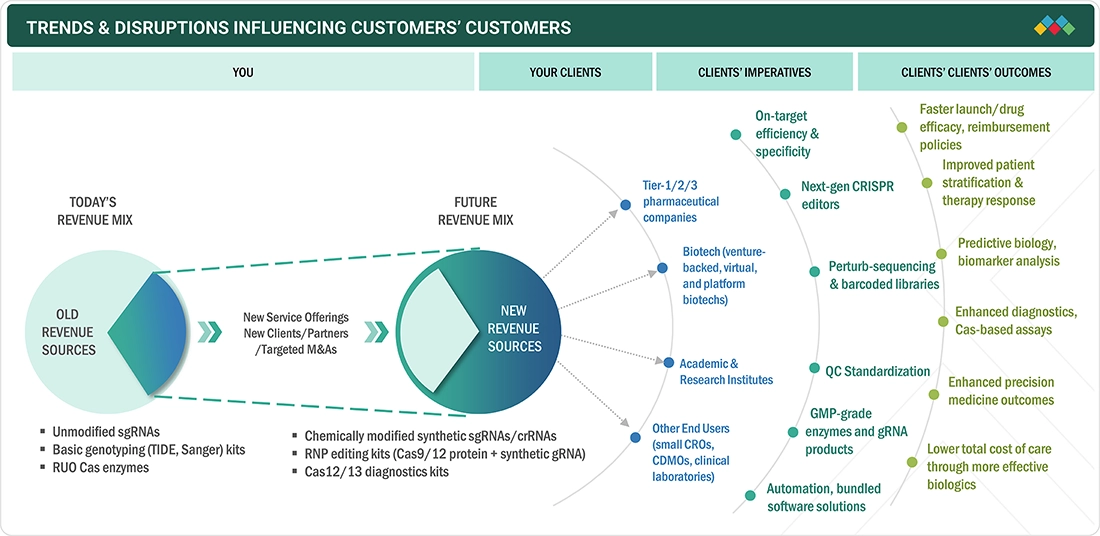
Source: Secondary Research, Interviews with Experts, MarketsandMarkets Analysis
MARKET DYNAMICS

Level
-
Growing demand for CRISPR-based gene therapies.

-
Advancements in CRISPR technology.


Level
-
Technical challenges associated with CRISPR technology.


Level
-
Development of new vaccines and treatments for genetic diseases.

-
Expanding industrial and agricultural applications of CRISPR.


Level
-
Regulatory hurdles for CRISPR advancements.

Source: Secondary Research, Interviews with Experts, MarketsandMarkets Analysis
Driver: Growing demand for CRISPR-based gene therapies.
Gene therapies utilizing CRISPR technology offer the potential to address unmet medical needs by targeting the underlying genetic causes of diseases. Patients are opting for novel treatments that can provide potential cures or significant improvements in their conditions. Clinical trials have shown promising results in various disease areas, including blood disorders, inherited retinal diseases, and certain types of cancer. A landmark study published in the New England Journal of Medicine in 2023 reported results from pivotal trials of exagamglogene autotemcel (exa-cel), a CRISPR–Cas9–based therapy for transfusion-dependent β-thalassemia (TDT) and sickle-cell disease (SCD).
Restraint: Technical challenges associated with CRISPR technology.
Technical challenges associated with CRISPR technology present a significant restraint in the field of gene editing. While CRISPR holds immense potential, certain obstacles hinder its widespread implementation. These challenges arise from the complexities involved in precise genome editing, off-target effects, and delivery efficiency. Addressing these technical hurdles is crucial for harnessing the full potential of CRISPR technology and realizing its transformative impact in various industries.
Opportunity: Development of new vaccines and treatments for genetic diseases.
The development of new vaccines and treatments for genetic diseases using CRISPR technology presents a transformative opportunity in the field of healthcare. CRISPR's precise gene editing capabilities hold immense potential in combating infectious diseases and addressing the underlying genetic causes of various disorders. For instance, Editas Medicine is conducting a phase 1/2 trial for individuals with severe sickle cell disease (SCD) but using a CRISPR system with a Cas12a protein rather than the more established Cas9 protein. Moreover, Vertex Pharmaceuticals and CRISPR Therapeutics are working together on beta-thalassemia. The clinical trial is in its second phase.
Challenge: Regulatory hurdles for CRISPR advancements.
Regulatory hurdles pose significant challenges in the field of CRISPR technology, impacting its widespread adoption and market growth. As a revolutionary gene editing tool, CRISPR holds immense potential but faces regulatory complexities due to ethical concerns, safety considerations, and the need for comprehensive guidelines. Addressing these regulatory challenges is crucial for fostering innovation, ensuring patient safety, and unlocking the full potential of CRISPR technology.
crispr-technology-market: COMMERCIAL USE CASES ACROSS INDUSTRIES
| COMPANY | USE CASE DESCRIPTION | BENEFITS |
|---|---|---|
 |
Partnership with Mammoth Biosciences to co-develop a hand-held, disposable CRISPR (DETECTR) diagnostic for COVID-19, aiming at over-the-counter use. | Demonstrates Cas12-based diagnostics at point-of-need: rapid time-to-result, instrument-light workflow, and scalability for other infectious targets beyond SARS-CoV-2. |
 |
Collaboration with Revvity to embed CRISPR gene-editing & screening services into AZ’s discovery platform/Functional Genomics Centre (FGC), supporting target ID/validation across oncology and other areas. | Shows pharma outsourcing to CRISPR service platforms: higher-throughput functional genomics, standardized libraries & analytics, and faster target-to-lead decisions with shared infrastructure. |
Logos and trademarks shown above are the property of their respective owners. Their use here is for informational and illustrative purposes only.
MARKET ECOSYSTEM
The ecosystem analysis of the CRISPR market provides a comprehensive overview of the interconnected network of stakeholders, resources, and interactions that shape the industry’s dynamics. Central to this ecosystem are various entities involved in the development, manufacturing, distribution, and utilization of CRISPR technologies. This includes technology developers, instrument manufacturers, service providers, and end users, such as research institutions, pharmaceutical companies, and biotechnology firms. Regulatory authorities and standards organizations also play crucial roles, influencing market trends, innovation, and the ethical use of genomic data.
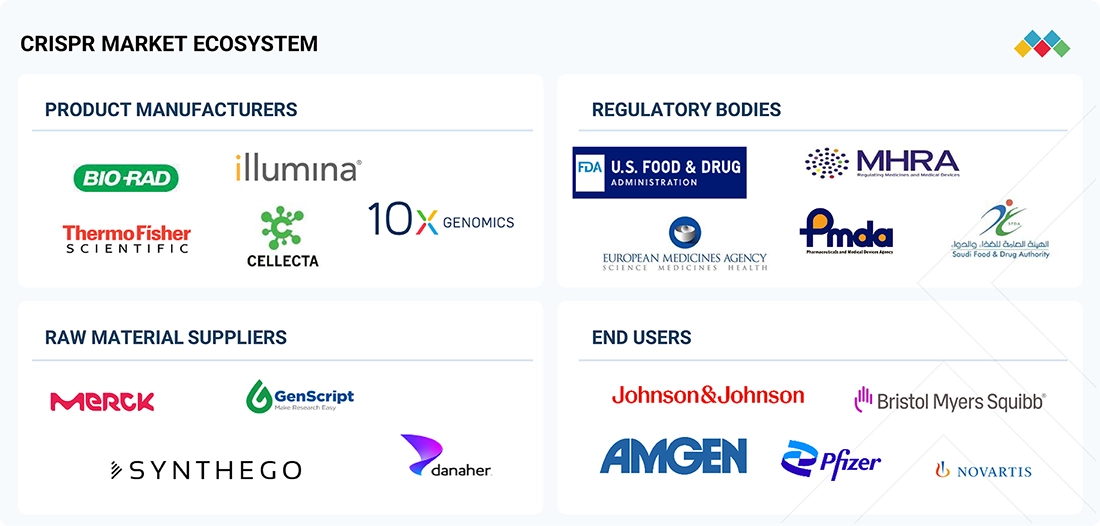
Logos and trademarks shown above are the property of their respective owners. Their use here is for informational and illustrative purposes only.
MARKET SEGMENTS
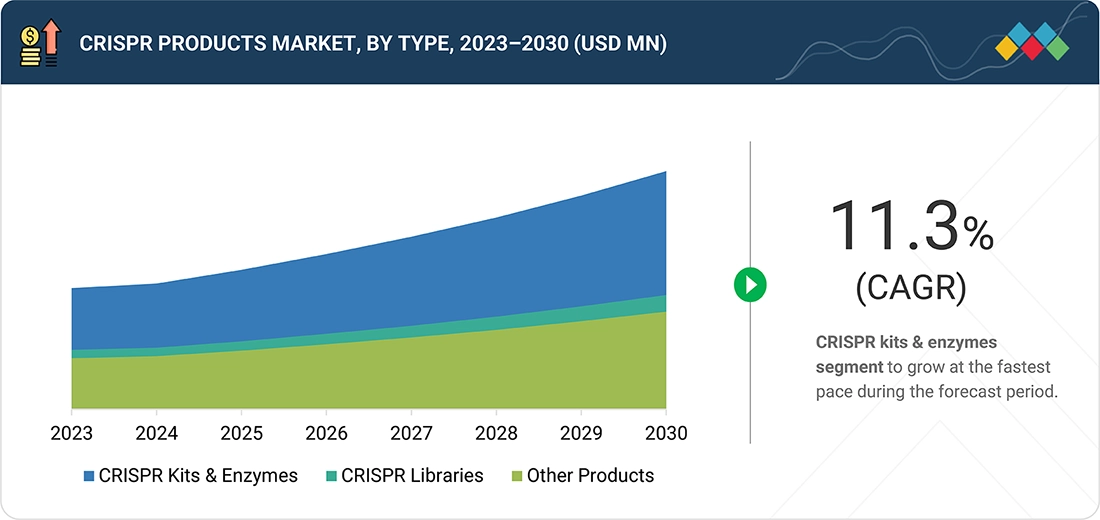
Source: Secondary Research, Interviews with Experts, MarketsandMarkets Analysis
CRISPR Market, By Offering
As of 2024, CRISPR kits & enzymes segment held the largest share of the CRISPR market and will continue leading the market through 2030. Growth in this market segment can be attributed to the increasing demand for CRISPR reagents & consumables in genome editing workflows. The CRISPR kits & enzymes segment includes products and tools utilized in genome editing based on CRISPR-Cas9 technology.
CRISPR Market, By Application
In 2024, drug discovery & development application segment is expected to grow at the fastest pace during the forecast period. Factors such as the rising expenditure for innovative drug development and the growing preference for personalized medicine are expected to support the growth of the drug discovery & development application segment.
CRISPR Market, By End User
The pharma & biotech companies segment is expected to dominate the CRISPR market through the forecast period. Factors such as increasing investments in innovative drug development and the rising demand for personalized medicine are expected to drive the growth of the pharmaceutical and biotechnology sectors.
REGION
Asia Pacific to be the fastest growing region in the CRISPR market during forecast period
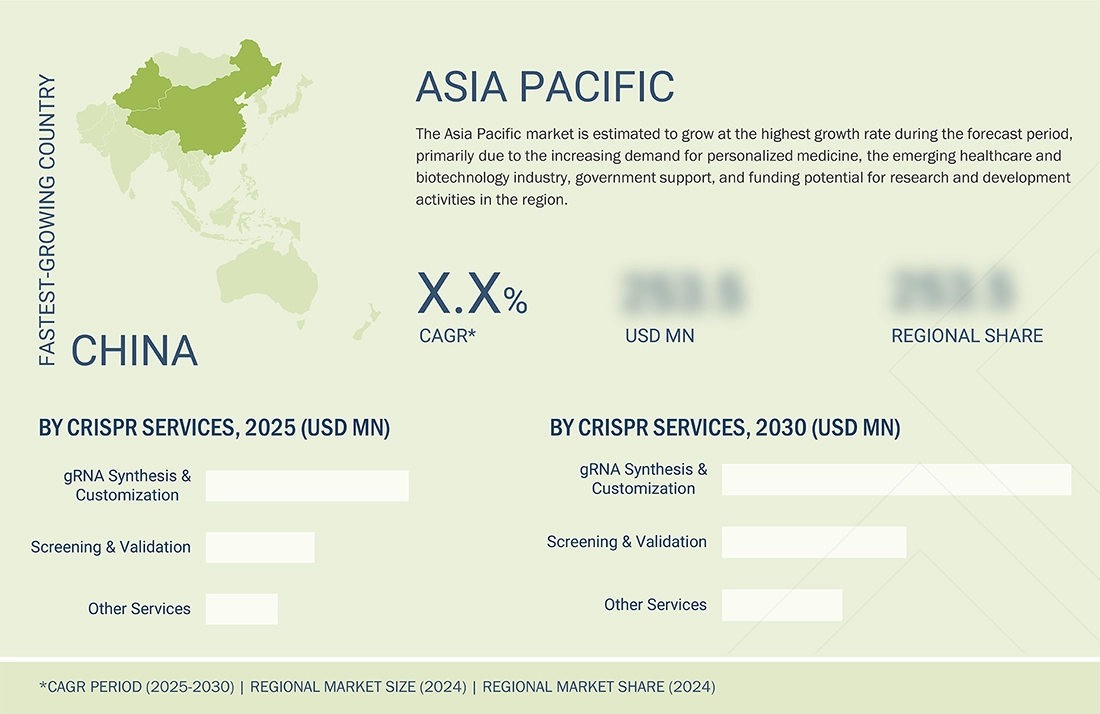
The Asia Pacific region is expected to be the fastest-growing market for CRISPR due to the increasing awareness of the importance of CRISPR-based therapies, rising demand for personalized medicine, and advancements in gene editing technologies. Another key driver for the Asia Pacific CRISPR market is the region's large and rapidly aging population. The development of high-throughput CRISPR-based technologies has made it possible to innovate new gene editing techniques.
crispr-technology-market: COMPANY EVALUATION MATRIX
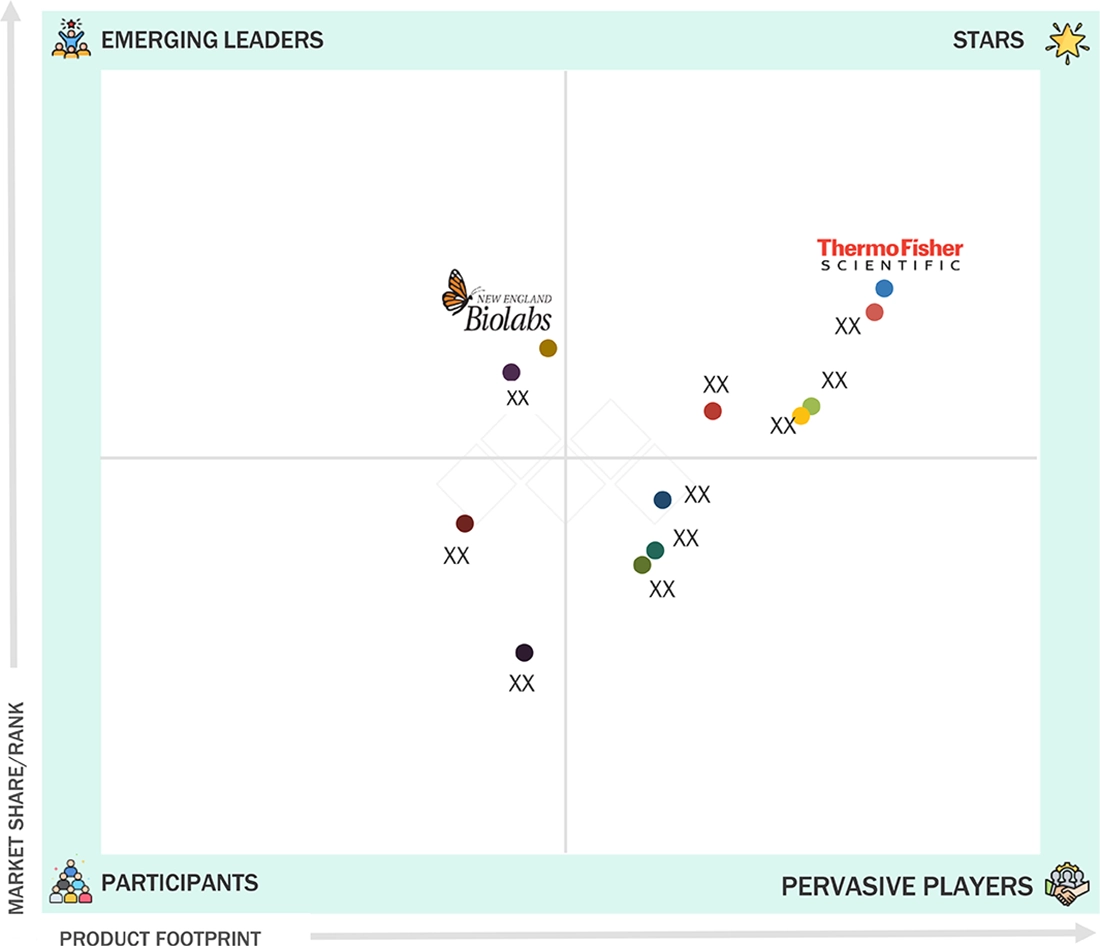
In the CRISPR key players market matrix, Thermo Fisher Scientific, Inc. (Star) leads with a strong market share and extensive product & service footprint. The company focuses on delivering products and services related to CRISPR technology to enhance its global presence, the company prioritizes investments in research and development. New England Biolabs (Emerging Leader) is gaining visibility with its specialized solutions and tailored solutions for CRISPR. The company's expanding its regional presence and caters to a comprehensive portfolio of service offerings, it also collaborates with industry partners to support the development of molecular diagnostics and nucleic acid vaccines.
Source: Secondary Research, Interviews with Experts, MarketsandMarkets Analysis
KEY MARKET PLAYERS
- Thermo Fisher Scientific Inc. (US)
- Merck KGaA (Germany)
- Agilent Technologies, Inc. (US)
- GenScript (US)
- Takara Bio (Japan)
- Creative Biogene (US)
- Fujian SunyBiotech Co., Ltd. (China)
- EditCo (US)
- Caribou Biosciences, Inc. (US)
- Lonza Group (Switzerland)
- Danaher Corporation (US)
- Revvity, Inc. (US)
- Hera Biolabs (US)
- OriGene Technologies, Inc. (US)
- Cellecta, Inc. (US)
MARKET SCOPE
| REPORT METRIC | DETAILS |
|---|---|
| Market Size in 2024 (Value) | USD 2.90 Billion |
| Market Forecast in 2030 (Value) | USD 5.47 Billion |
| Growth Rate | CAGR of 11.2% from 2025-2030 |
| Years Considered | 2023-2030 |
| Base Year | 2024 |
| Forecast Period | 2025-2030 |
| Units Considered | Value (USD Billion) |
| Report Coverage | Revenue forecast, company ranking, competitive landscape, growth factors, and trends |
| Segments Covered |
|
| Regions Covered | North America, Asia Pacific, Europe, Latin America, Middle East, and Africa |
WHAT IS IN IT FOR YOU: crispr-technology-market REPORT CONTENT GUIDE

DELIVERED CUSTOMIZATIONS
We have successfully delivered the following deep-dive customizations:
| CLIENT REQUEST | CUSTOMIZATION DELIVERED | VALUE ADDS |
|---|---|---|
| Competitive Landscape Analysis | Additional profiles of regional/local players, their market position/share, strategies, and service portfolios | Insights to uncover market gaps and refine differentiation strategies. |
| End User Market Assessment | Comprehensive list of end users typically engaged in discovery, development & manufacturing of biologics (cell therapy, gene therapy) across targeted regions/countries. | Insights on identifying potential customers of CRISPR services |
| Cross-segmental Analysis | Cross-segmental analysis between CRISPR products and applications | Insights on White Spaces & Unmet Needs, interconnections and supply chain opportunities. |
RECENT DEVELOPMENTS
- July 2024 : Agilent Technologies, Inc. (US) acquired BioVectra, Inc. (Canada), enhancing its biopharma solutions with BioVectra’s expertise in biologics and gene editing. The acquisition expanded Agilent’s capabilities in drug development and manufacturing..
- May 2024 : Merck KGaA acquired Mirus Bio, Inc. (US), integrating Mirus Bio's transfection technology with Merck's bioprocessing expertise. This acquisition enhanced Merck’s capabilities in viral vector manufacturing, advancing support for cell and gene therapies.
- March 2023 : Thermo Fisher Scientific set up a cGMP facility at the University of California, San Francisco's Mission Bay campus, to accelerate cell therapies for cancers and other hard-to-treat diseases. The facility focuses on advancing CAR-T and CRISPR technologies, offering comprehensive drug development and manufacturing services.
Table of Contents
 Exclusive indicates content/data unique to MarketsandMarkets and not available with any competitors.
Methodology
The research study utilized a range of secondary sources, directories, and databases to gather important information for analyzing the global CRISPR market. In addition, extensive interviews were conducted with various primary participants, including key industry members, subject-matter experts (SMEs), C-level executives from leading market players, and industry consultants. These interviews helped obtain and verify qualitative and quantitative information, allowing for a comprehensive evaluation of the market's growth scenarios. The global market size was estimated through secondary research, using both top-down and bottom-up approaches, followed by data triangulation that incorporated insights from industry experts to determine the final market size.
Secondary Research
Secondary research was primarily utilized to identify and gather information for the technical, market-oriented, and commercial analysis of the CRISPR market. The sources consulted for this study included the Broad Institute, Innovative Genomics Institute (IGI), National Institute of Food and Agriculture, International Chromosome and Genome Society (ICGS), National Human Genome Research Institute (NHGRI), Asia Pacific Society of Human Genetics (APSHG), Genetics Society of America (GSA), European Society of Human Genetics (ESHG), Centers for Common Disease Genomics (CDDG), Center for Cellular and Molecular Biology (CCMB) in India, and the Department of Biotechnology (DBT) in India.
Additional secondary sources comprised academic journals, company websites, corporate and regulatory filings such as annual reports, SEC filings, investor presentations, and financial statements; business magazines and research journals; press releases; and various trade, business, and professional associations. These sources were also instrumental in gathering essential information about key market players, market segmentation related to industry trends, developments at the regional and country levels, and technology prospects.
The secondary data collected was analyzed to determine the global CRISPR market size, which was subsequently validated through primary research.
Primary Research
Extensive primary research was conducted after gathering foundational knowledge about the global CRISPR market through secondary research. We carried out several primary interviews with market experts from both the demand and supply sides. On the demand side, we interviewed professionals from the pharmaceutical and biopharmaceutical industries, as well as from contract research organizations (CROs) and contract development and manufacturing organizations (CDMOs). On the supply side, we spoke with C-level and D-level executives, product managers, and marketing and sales managers from key manufacturers, distributors, and channel partners.
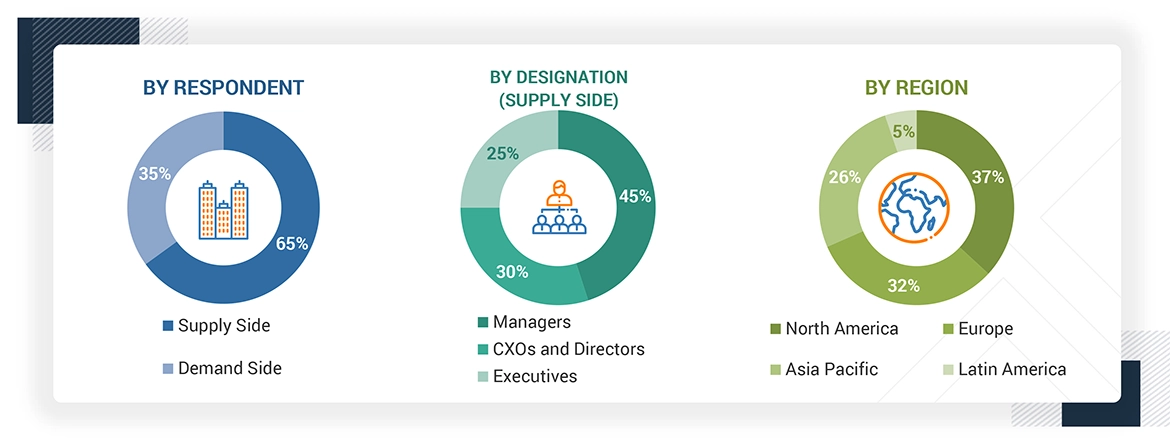
The primary interviews were conducted across six major regions: North America, Europe, Asia Pacific, Latin America, the Middle East, and Africa. Approximately 65% of the interviews involved supply-side participants, while 35% were with demand-side participants. This primary data was collected through questionnaires, emails, online surveys, personal interviews, and telephone interviews.
To know about the assumptions considered for the study, download the pdf brochure
Market Size Estimation
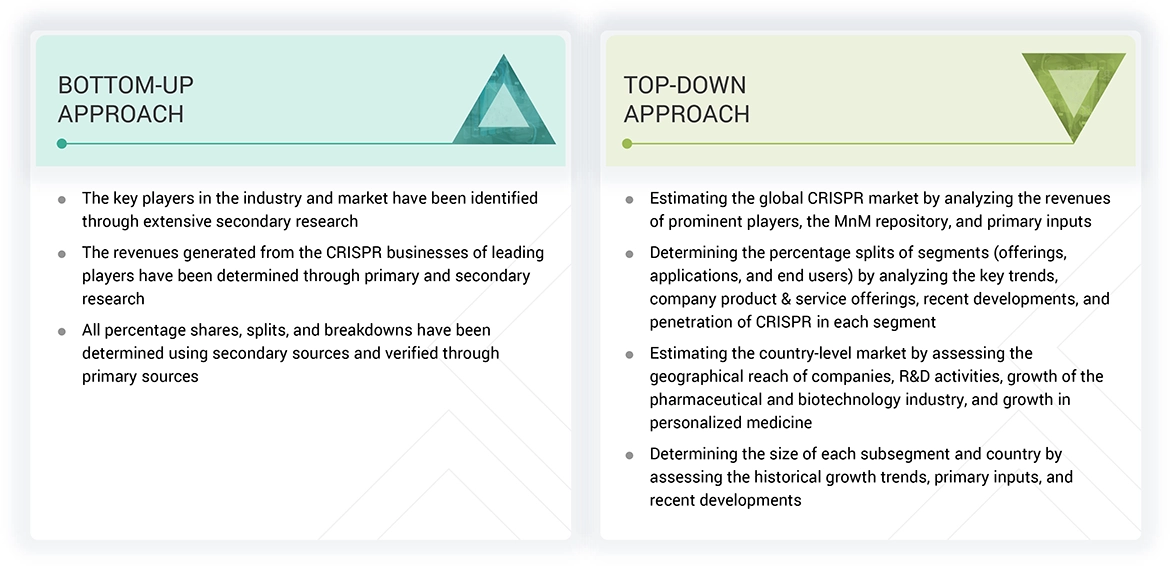
Both top-down and bottom-up approaches were utilized to estimate and validate the overall size of the CRISPR market. These methods were also extensively employed to assess the sizes of various subsegments within the market. The research methodology for estimating the market size includes the following steps:
CRISPR Market : Top-Down and Bottom-Up Approach
Data Triangulation
After arriving at the market size from the market size estimation process explained above, the total market was divided into several segments and subsegments. To complete the overall market engineering process and arrive at the exact statistics for all segments and subsegments, data triangulation and market breakdown procedures were employed, wherever applicable. The data was triangulated by studying various factors and trends from both the demand and supply sides.
Market Definition
Clustered Regularly Interspaced Short Palindromic Repeats (CRISPR) is a revolutionary tool used to edit genes in a way that resembles traditional GMO techniques. The use of the Cas9 enzymes differentiates CRISPR from other forms of genetic modification. CRISPR edits and rearranges genes by cutting out the damaged or unwanted part of the DNA, allowing the remaining DNA to be rearranged in a new way.
The report comprehensively analyzes the CRISPR market, covering a wide range of products & services such as CRISPR kits & enzymes, CRISPR libraries, gRNA synthesis, cell line development, and screening & validation.
Key Stakeholders
- Genome editing/genome engineering product manufacturers
- CRISPR editing/genome engineering product manufacturers
- Suppliers and distributors of genomic instruments/systems and consumables
- Contract manufacturing organizations
- Pharmaceutical and biotechnology companies
- Diagnostic centers and medical colleges
- Contract research organizations
- Government associations and research institutes
- Regulatory authorities
- Business research firms
Report Objectives
- To define, describe, and forecast the CRISPR market by offering, product, service, application, end user (products market), end user (services market), and region
- To provide detailed information regarding the major factors influencing the market growth (such as drivers, restraints, opportunities, and challenges)
- To analyze the micromarkets with respect to individual growth trends, prospects, and contributions to the overall CRISPR market
- To analyze the opportunities for stakeholders and provide details of the competitive landscape for market leaders
- To forecast the size of the market segments with respect to five regions: North America, Europe, the Asia Pacific, Latin America, and the Middle East & Africa
- To profile the key players and analyze their market shares and core competencies
- To track and analyze competitive developments, such as product/service launches, partnerships, agreements, collaborations, and expansions
- To benchmark players within the market using the proprietary “Company Evaluation Matrix” framework, which analyzes market players on various parameters within the broad categories of business and product excellence strategy
Available Customizations
With the given market data, MarketsandMarkets offers customizations as per the company’s specific needs. The following customization options are available for this report:
Portfolio Assessment
- Product Matrix, which gives a detailed comparison of the product/service portfolios of the top three companies.
Company Information
- Detailed analysis and profiling of additional market players (up to three).
Geographical Analysis
- A further breakdown of the Rest of Asia Pacific CRISPR market into countries
- A further breakdown of the Rest of Europe CRISPR market into countries
- A further breakdown of the Rest of Latin America CRISPR market into countries


Personalize This Research
- Triangulate with your Own Data
- Get Data as per your Format and Definition
- Gain a Deeper Dive on a Specific Application, Geography, Customer or Competitor
- Any level of Personalization
Let Us Help You
- What are the Known and Unknown Adjacencies Impacting the CRISPR Market
- What will your New Revenue Sources be?
- Who will be your Top Customer; what will make them switch?
- Defend your Market Share or Win Competitors
- Get a Scorecard for Target Partners

Custom Market Research Services
We Will Customise The Research For You, In Case The Report Listed Above Does Not Meet With Your Requirements
Get 10% Free CustomisationTESTIMONIALS

JAYANT RAJPUROHIT
Director of Market Insights, Data and Analytics
SFI Health,
Leading Pharmaceutical Companywww.sfihealth.com/

We at SFI Health approached MarketsandMarkets for an Opportunity Assessment on "Incidence and Prevalence of Focus Indications" as we wanted to know the most attractive HCPs like Physician, Functional MD, Naturopath and Pharmacist. The project was critical for us to ensure our focus on the right target which would enable sustainable growth and profitability for SFI Health. The business insights provided exceeded our expectations and we were extremely impressed. The team at MarketsandMarkets is highly professional and detail oriented and very well understood our business needs. MarketsandMarkets offers a unique combination of expertise and dedicated engagement model. We identified 2 new products to be launched in coming months, based on the research findings provided by MarketsandMarkets. We are happy with the services and would strongly recommend MarketsandMarkets to my peers in the industry.

BEATRIZ DE LA CALLE
Head of Commercial Analytics
Qualicaps,
Leading Pharmaceutical Companywww.qualicaps.com/

We partnered with MarketsandMarkets for an assessment study on hard empty capsules. The team was extremely professional in understanding our business requirements and we received timely responses to all our queries. The market intelligence and the recommendations has met our business requirements. We were extremely impressed to see the final study results; it really exceeded our expectations. The market intelligence offered by MarketsandMarkets, and clarity on next steps will help us achieve our business objective for the Year 2021. We are happy with the services and would strongly recommend MarketsandMarkets to my peers in the industry.

Bob Williams,
Senior Director Business Development & Innovation
Bracco Diagnostics Inc.,
Italian Multinational in life sciences sector and a World Leader in imaging diagnosticsimaging.bracco.com/us-en
We were pleased with targeted insights that MarketsandMarkets identified from a custom study on the 'Radiation Dose Management Solutions Market'. Your team identified and characterized the market participants as well as underlying trends accurately. This study was useful to Bracco in formulating business strategies for our dose monitoring product lines and we thank MarketsandMarkets for the job well done.
Cody Coonradt,
Market Development and Strategy Manager
3M Health Information Systems,
Leader in Health care Coding, Payment & Analytics Solutions.www.3m.com/3M/en_US/health-information-systems-us
The value for our organization comes from three things: depth of research, specificity of segments and being easy to work with. As important as the first two are, the third can't be underestimated. MarketsandMarkets, maybe more than any other research vendor, wants to know what is top of mind for our team and what big questions we are grappling to answer.
Their customer first approach and high value engagement model, have given us great analysis and excellent value for money
- US CRISPR Market
- Canada CRISPR Market
- Germany CRISPR Market
- UK CRISPR Market
- France CRISPR Market
- Italy CRISPR Market
- Spain CRISPR Market
- China CRISPR Market
- Japan CRISPR Market
- India CRISPR Market
- Brazil CRISPR Market
- Rest Of Europe CRISPR Market
- Rest Of Asia Pacific CRISPR Market
- Rest Of Latin America CRISPR Market






Growth opportunities and latent adjacency in CRISPR Market