Cyber Warfare Market by Solution/Offering (Offensive Cyber Capabilities, Defensive Cyber Capabilities, Cyber Command, Control & Situational Awareness Systems, Simulation, Training & Cyber Range Systems, and Consulting & Managed Security Services), Security Type (Network, Endpoint, Application, Cloud, and OT & ICS Security), Attack Vector/Operation Type (Cyber Espionage, Sabotage & Disruption, Disinformation & Psychological Operations, and Critical Infrastructure Attacks), Deployment Platform (Land-Based, Naval, Airborne, and Space-Based Systems), End User (Defense & Military, Government & Homeland Security, Energy & Utilities, BFSI, and IT & Telecommunications), Region – Global Forecast to 2032
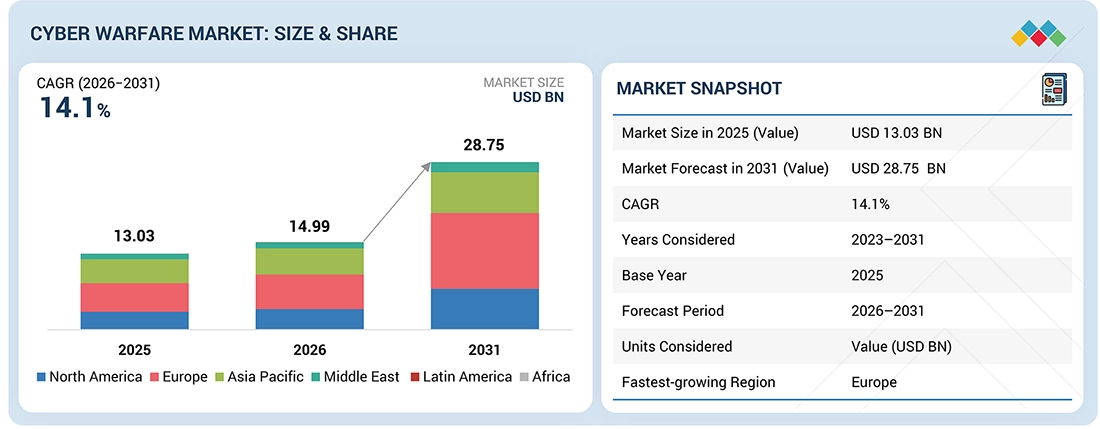
The global cyber warfare market stood at an estimated USD 48.0 billion in 2025 and is projected to reach USD 122.3 billion by 2032, expanding at a CAGR of 14.3% between 2026 and 2032, as nation-states escalate investment in offensive and defensive cyber capabilities alongside conventional military modernization. What was once a specialized, classified corner of defense spending has become a mainstream line item in national security budgets, and that shift is the central reason capital is flowing into cyber warfare capabilities at a pace that rivals traditional weapons programs.
Top 10 Key Takeaways
- North America remains the largest revenue base for cyber warfare capabilities, anchored by sustained US Department of Defense and intelligence community investment.
- Asia Pacific is the fastest-growing region, driven by rising military cyber spending in China, India, Japan, and South Korea amid escalating regional tensions.
- Defensive cyber capabilities remain the largest solution category, while AI-enabled offensive tools are the fastest-growing segment.
- Defense and military end users dominate spending, with critical infrastructure protection emerging as a fast-growing priority.
- Nation-state actors are increasingly targeting critical infrastructure, supply chains, and identity systems rather than relying solely on traditional network intrusion.
- Sovereign, national-level AI cyber defense platforms are emerging as a distinct and rapidly scaling category of capability.
- NATO's updated Cyber Defense Pledge and rising alliance-wide defense spending are elevating cyber readiness from a technical function to an alliance-level obligation.
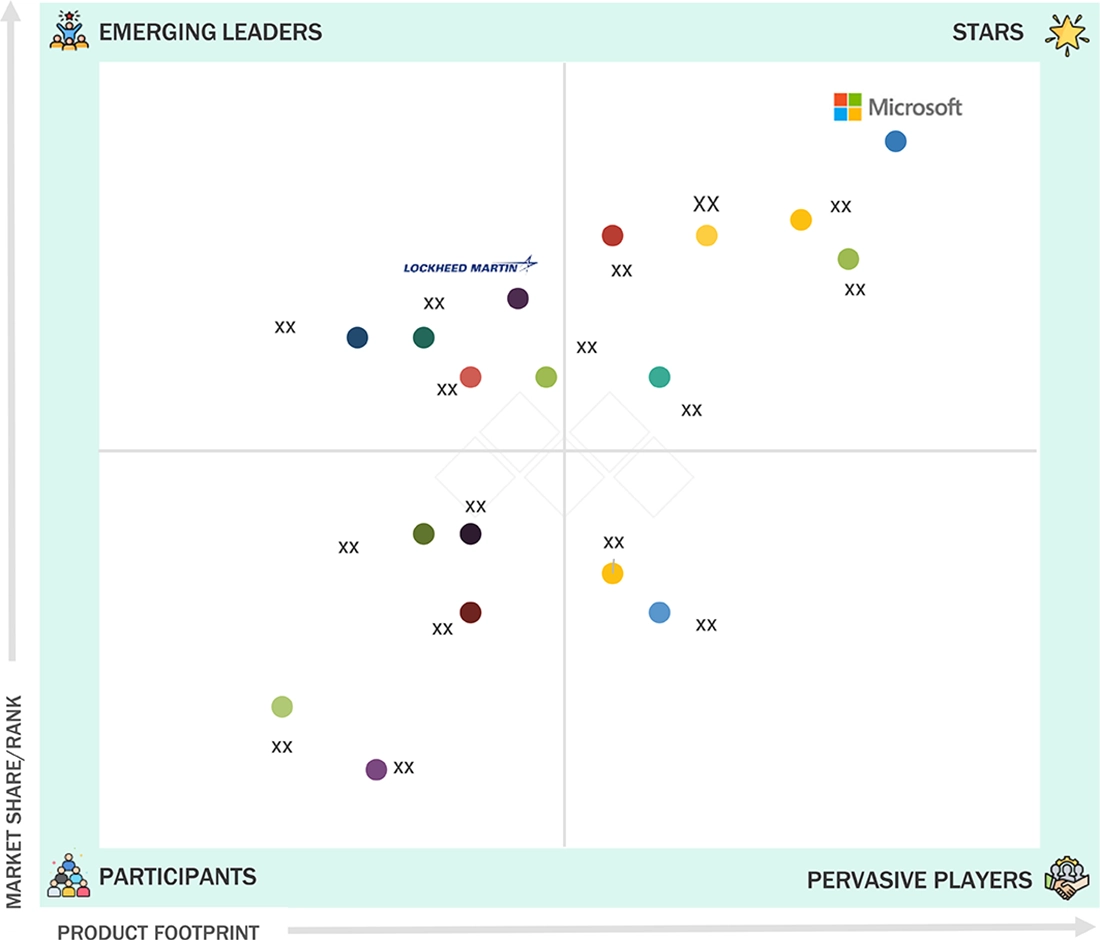
- Lockheed Martin, Northrop Grumman, RTX, BAE Systems, and L3Harris are shaping competitive dynamics through integrated cyber, space, and electronic warfare platforms.
- The near term opportunity lies in identity security and zero trust consolidation, as demonstrated by major platform acquisitions reshaping the competitive map.
- The near term risk is that AI is accelerating attacker capability faster than many defenders can adapt, compressing the time available to detect and respond to state-sponsored intrusions.
Why the Cyber Warfare Market Matters Now
Cyber warfare has moved from the margins of national security planning to its center. For years, cyber operations were treated as a supporting capability layered onto conventional military strategy. That framing no longer holds. Recent conflicts have shown cyber operations disrupting command, control, and sensor networks ahead of kinetic strikes, while state-sponsored groups conduct sustained espionage campaigns against government, defense, and critical infrastructure targets well outside any declared conflict. Cyber warfare readiness is no longer an adjunct to military strategy; in many scenarios, it is the opening move.
The market's momentum is inseparable from the broader acceleration of artificial intelligence. AI is compressing the time between reconnaissance and exploitation on the offensive side, while also enabling faster detection and automated response on the defensive side, and that dual-use dynamic is reshaping procurement priorities across every major military and intelligence organization. At the same time, alliance-level commitments, rising defense budgets, and an expanding regulatory landscape around critical infrastructure protection are reinforcing demand even in periods without active conflict. This is a market being pulled forward simultaneously by geopolitical competition, AI capability growth, and policy mandates, which helps explain why spending is accelerating as fast as it is.
For governments and defense primes evaluating where to allocate the next cycle of capability investment, the calculus increasingly starts with resilience: how quickly an organization can detect, attribute, and respond to a state-sponsored intrusion. That reordering of priorities touches adjacent categories closely tied to this one, including the Defense Cybersecurity market, the Space Cybersecurity market, and the Electronic Warfare market, all of which are being reshaped by the same threat environment.
Cyber Warfare Market Trends
The most consequential trend in the market right now is the rise of AI-enabled offensive and defensive operations. Nation-state groups are using machine learning to automate reconnaissance, craft more convincing social engineering lures, and identify exploitable vulnerabilities faster than manual analysis ever allowed, while defenders are deploying comparable AI tools to detect anomalous behavior and orchestrate response at machine speed. The result is a cyber conflict that increasingly plays out faster than human operators can fully supervise in real time.
Running alongside that is the emergence of sovereign, national-level cyber defense platforms purpose-built for governments and critical infrastructure operators rather than commercial enterprises. These platforms are being positioned explicitly as sovereign AI assets, reflecting a growing recognition among governments that dependence on foreign commercial security vendors carries its own strategic risk. This is a meaningfully different procurement model than the enterprise security software that has dominated cybersecurity spending for the past decade.
A parallel shift is the convergence of cyber, space, and electronic warfare into integrated mission systems. Missile tracking and warning satellite programs are increasingly designed with cyber-hardening and integrated threat-data sharing in mind from the outset, reflecting a recognition that space assets are now as much a cyber target as a kinetic one. This convergence is pushing defense primes to bundle cyber capability into space, air, and naval platforms rather than treating it as a separate acquisition track.
Identity and zero trust consolidation has also become a defining trend, driven by the recognition that stolen credentials and compromised identity systems remain the most common entry point for state-sponsored intrusions. Large platform acquisitions have reshaped the competitive map in a matter of months, as major cybersecurity vendors move to fold identity security directly into their core platforms rather than treating it as an adjacent category. Finally, cyber ranges and simulation platforms are seeing sustained demand, as military organizations recognize that realistic, large-scale exercises are essential to validating readiness against threats that evolve faster than any static training program can anticipate.
Cyber Warfare Market Drivers
The dominant driver is straightforward: state-sponsored cyber activity is escalating in both frequency and sophistication, and defense budgets are responding accordingly. Intelligence agencies across multiple alliances have documented sustained campaigns by state-linked groups targeting government, military, and critical infrastructure networks, and that steady drumbeat of confirmed intrusions is translating directly into higher cyber capability budgets.
Alliance-level policy commitments are reinforcing that spending rather than merely encouraging it. NATO's updated Cyber Defense Pledge introduced mandatory cybersecurity maturity assessments and standardized incident reporting requirements across member states, while the alliance's broader defense spending framework directs a growing share of GDP toward security- and cyber-related investment through the mid-2030s. Rather than treating cyber readiness as a voluntary best practice, member states are increasingly required to demonstrate it, which is accelerating procurement across the alliance.
Regulatory and compliance mandates within individual defense industrial bases are a driver in their own right. Expanding cybersecurity certification requirements for defense contractors are making demonstrable, auditable cyber controls a condition of doing business with government customers, a shift that is pushing significant new investment through the entire defense supply chain rather than concentrating it only among prime contractors. These are not incidental compliance footnotes; they are direct signals to solution vendors about where sustained, multi-year demand will land.
Active and recent regional conflicts continue to demonstrate, in real time, how central cyber operations have become to modern warfare, reinforcing procurement urgency well beyond the parties directly involved. Finally, the sheer scale of venture and strategic capital now flowing into cyber defense, including large platform acquisitions and growth-stage funding rounds for sovereign cyber defense companies, has de-risked capability development that would have struggled to attract serious investment only a few years ago, turning specialized national-security technology into a mainstream, well-capitalized category.
Cyber Warfare Market Challenges and Restraints
The most immediate restraint is the pace mismatch between attacker innovation and defender adaptation. AI is lowering the skill and cost threshold required to mount sophisticated intrusion campaigns, and defenders in many organizations, particularly outside the best-resourced military and intelligence agencies, are struggling to keep pace with adversaries who can iterate faster than traditional acquisition cycles allow. This has pushed more urgency onto automated defense, but that shift brings its own friction, since deploying AI-driven detection and response systems at classified or mission-critical scale is rarely as fast as procurement timelines demand.
Talent scarcity is compounding the problem. Specialized skills in offensive security research, threat intelligence, and classified systems engineering remain in persistently short supply relative to demand, and that scarcity is pushing up costs across both government and contractor workforces. Attribution complexity adds another layer of difficulty, since state-sponsored actors routinely use proxy infrastructure and false-flag techniques specifically designed to complicate response decisions, which slows the translation of technical findings into policy or military action.
Interoperability across allied nations remains a real challenge as well, since classified systems, differing national procurement rules, and inconsistent cybersecurity maturity levels across coalition partners complicate the kind of joint cyber operations that alliances increasingly want to conduct. Escalation risk is a distinct and growing concern, as offensive cyber operations against critical infrastructure carry the possibility of unintended consequences that spill beyond their intended targets, a tension that is shaping how aggressively governments are willing to authorize certain categories of capability. Finally, the classified nature of much of this market limits the transparency and competitive benchmarking that typically accelerate commercial technology adoption, meaning promising capabilities can take longer to scale than equivalent commercial security technologies would.
Industry and Application Growth in the Cyber Warfare Market
Demand for cyber warfare capabilities is not evenly distributed across end-user categories, and understanding where growth concentrates helps explain where vendors and governments are focusing capital. Defense and military organizations remain the largest consumers of cyber warfare capability by a wide margin, reflecting their structural role as both a target of state-sponsored operations and the primary developer of offensive and defensive cyber doctrine but the fastest incremental growth is increasingly coming from adjacent government and critical infrastructure categories.
Government and homeland security agencies are investing heavily in resilient cyber architectures as election systems, public records, and citizen services move further into digital channels, where intrusions carry outsized political and reputational consequences. Critical infrastructure operators in energy and utilities are following a similar path, with operational technology increasingly recognized as a prime target for state-sponsored disruption campaigns, raising both the criticality and the sophistication of the cyber defense infrastructure protecting them. BFSI buyers bring a distinct set of priorities, treating nation-state financial system disruption as a systemic risk rather than a routine cybercrime concern.
IT and telecommunications operators are scaling cyber warfare-grade defense investment given their position as both a target and a transit layer for state-sponsored campaigns targeting downstream government and enterprise customers. This vertical's centrality to national digital infrastructure is pushing telecom operators toward the same tier of threat intelligence and incident response capability once reserved almost exclusively for defense and intelligence agencies.
Cyber Warfare Market, By Solution/Offering
Defensive cyber capabilities remain the largest solution category, reflecting their foundational role in protecting government, military, and critical infrastructure networks against the sustained volume of state-sponsored intrusion attempts. Their dominance is less about novelty and more about necessity no government is willing to underinvest in the systems standing between a state-sponsored intrusion and a national security incident, which keeps defensive spending resilient even as capital shifts toward newer offensive and AI-enabled categories.
Offensive cyber capabilities, particularly AI-enabled tools, represent the fastest-growing solution category, a direct consequence of nation-states recognizing offensive cyber operations as a cost-effective complement to conventional military power. As more governments formalize doctrine around offensive cyber operations, capability development historically confined to a handful of advanced intelligence agencies is being extended to a broader set of national cyber commands, a meaningfully different scale of investment than the market has historically supported.
Cyber Warfare Market, By Security Type
Network security remains the leading security type by installed base, simply because the overwhelming majority of existing defense and government cyber infrastructure was built around perimeter and network-layer defense as the default architecture. Legacy systems, particularly within older government and defense networks, continue to rely on network security supplemented by newer layers, and that installed base will not disappear even as new investment increasingly diversifies across security types.
Operational technology and industrial control system security is the fastest-growing security type by a considerable margin. The driver is straightforward: critical infrastructure operators facing escalating state-sponsored targeting of energy grids, water systems, and industrial networks are investing in specialized OT and ICS security that general-purpose IT security tools were never designed to provide, reflecting how urgently governments now treat infrastructure resilience as a national security priority rather than an operational efficiency concern.
Cyber Warfare Market, By Attack Vector/Operation Type
Cyber espionage remains the leading operation type by volume, reflecting its role as the most persistent and lowest-risk form of state-sponsored cyber activity, conducted continuously against government, defense, and commercial targets regardless of the broader geopolitical climate. Its dominance is reinforced by the intelligence value of sustained, undetected access rather than the disruptive impact of a single incident.
Critical infrastructure attacks represent the fastest-growing operation type, as state-sponsored actors increasingly treat energy, water, and transportation systems as high-value targets capable of generating strategic leverage without a formal declaration of conflict. This shift is pushing defense budgets and vendor investment toward specialized detection and response capability tailored to the unique constraints of infrastructure environments.
Cyber Warfare Market, By Deployment Platform
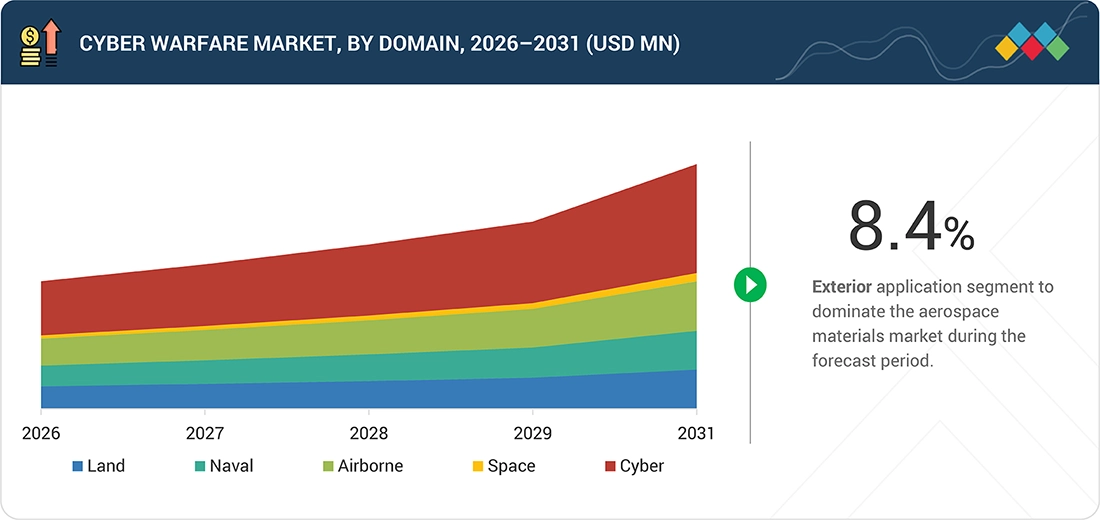
Land-based systems account for the largest share of deployment platforms, consistent with the concentration of national cyber command centers, data centers, and classified network infrastructure in fixed, land-based facilities. This installed base reflects decades of accumulated investment in terrestrial command and control infrastructure that remains central to national cyber operations.
Space-based systems represent the fastest-growing deployment platform, as military organizations increasingly recognize satellite constellations, particularly missile warning and tracking systems, as both a cyber attack surface and a cyber-enabled capability in their own right. This shift is pushing defense primes to embed cyber-hardening and secure communications directly into next-generation space programs from initial design rather than retrofitting protection after launch.
Key Segmentation Takeaways:
- Defensive cyber capabilities remain the largest solution category, while AI-enabled offensive tools are growing fastest.
- Network security still represents the largest installed base, but OT/ICS security is the fastest-growing security type.
- Cyber espionage leads by volume, while critical infrastructure attacks are the fastest-growing operation type.
- Land-based systems dominate deployment, while space-based systems are the fastest-growing platform category.
- Defense and military lead end user demand, with critical infrastructure operators emerging as a fast-growing vertical.
Cyber Warfare Market: Regional Analysis
North America
North America is anchored by sustained US Department of Defense, intelligence community, and homeland security investment in cyber capability, with cyber command structures, national laboratories, and a dense concentration of defense primes and cybersecurity vendors driving continuous capability development. Canada continues to expand its own cyber command and critical infrastructure protection programs in close coordination with US and Five Eyes partners, while Mexico's cyber investment is increasingly shaped by cross-border critical infrastructure and supply chain security concerns. Expanding certification requirements across the defense industrial base, alongside major identity security platform acquisitions, have become a defining feature of the US market specifically, as the boundary between commercial cybersecurity and national cyber warfare capability continues to blur. The North American cyber warfare market, valued at an estimated USD 19.2 billion in 2025, is projected to reach USD 43.8 billion by 2032, growing at a CAGR of 12.5%, supported by sustained defense budget growth and expanding compliance-driven investment across the contractor base.
Europe
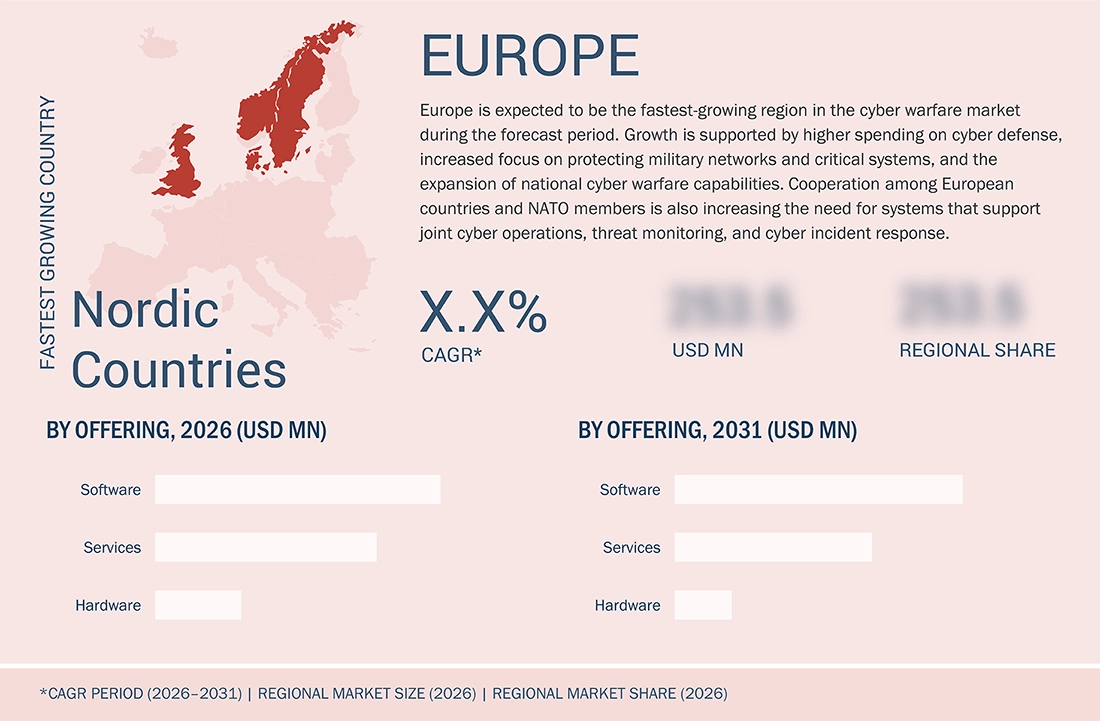
Europe's market is being reshaped by NATO's updated Cyber Defense Pledge and a broader alliance-wide commitment to raise security- and cyber-related spending as a share of GDP through the mid-2030s, with Germany, the United Kingdom, France, Italy, Spain, and the Nordic countries representing the region's most active cyber capability programs. Mandatory cybersecurity maturity assessments and standardized incident reporting requirements are pushing member states toward more consistent, auditable cyber readiness, even where individual national budgets remain more constrained than the US market. The Nordics and the United Kingdom continue to invest heavily in offensive and defensive cyber doctrine given their frontline exposure to state-sponsored activity from neighboring regions, while Germany and France anchor the region's largest defense-industrial cyber programs. Europe's cyber warfare market, valued at approximately USD 10.6 billion in 2025, is expected to reach USD 28.1 billion by 2032, at a CAGR of 15.0%, reflecting a market where alliance-level policy commitments are accelerating growth off a smaller historical base.
Asia Pacific
Asia Pacific is the market's clear growth engine, with China, Japan, India, South Korea, Australia, and Singapore each contributing distinct demand drivers shaped by regional tensions and rapid military modernization. China continues to expand both offensive and defensive cyber capability as part of its broader military modernization program, prompting proportionate investment responses from Japan, South Korea, and India. Australia's cyber capability development is closely coordinated with its AUKUS partners, while Singapore serves as a regional hub for cyber defense collaboration and talent development. The Asia Pacific cyber warfare market, sized at roughly USD 13.4 billion in 2025, is forecast to reach USD 38.0 billion by 2032, at a CAGR of 16.0%, the fastest of any region tracked in this study.
Rest of World
Rest of World demand is increasingly concentrated in the Middle East, where active regional conflict has placed cyber operations squarely at the center of national security strategy. Israel has emerged as a global leader in both offensive and defensive cyber capability development, supported by a dense ecosystem of specialized startups and defense technology firms, while Saudi Arabia and the United Arab Emirates continue to expand national cyber defense investment as part of broader security modernization programs. Brazil anchors Latin American demand, driven by growing concern over critical infrastructure resilience, while South Africa remains the primary anchor for cyber capability development across the African continent. The Rest of World cyber warfare market, valued at close to USD 4.8 billion in 2025, is projected to reach USD 12.4 billion by 2032, growing at a CAGR of 14.5%, reflecting the Middle East's outsized role in an otherwise diverse set of emerging demand pockets.
Key Regional Takeaways:
- North America holds the largest revenue base, driven by sustained US defense and intelligence community investment.
- Asia Pacific is the fastest-growing region, led by China, India, Japan, and South Korea.
- Europe's growth is accelerating off a smaller base, driven heavily by NATO's alliance-wide cyber spending commitments.
- Rest of World is anchored by the Middle East, where active conflict has elevated cyber investment sharply.
- All four regions show a common thread: alliance and coalition-level policy commitments are increasingly driving procurement alongside bilateral national programs.
Country-Specific Insights
The United States sits at the center of nearly every major development shaping this market, from large-scale identity security platform acquisitions to expanding certification requirements across its defense industrial base. Its combination of deep defense budgets, an extensive intelligence and cyber command apparatus, and a dense vendor ecosystem makes it the proving ground for most of the capability doctrine now spreading to allied nations.
Israel's cyber sector is scaling on the back of extraordinary innovation density, with sovereign AI cyber defense platforms and a deep bench of veteran-founded startups converging to build capability at a pace few other markets can match, a dynamic reinforced by the country's direct exposure to active regional conflict. China's approach is distinctly state-directed, with military modernization programs explicitly integrating cyber capability alongside space and conventional systems, a model that contrasts with the more vendor-driven procurement pattern seen in the United States.
Germany and the United Kingdom anchor European demand but are also where NATO's new compliance requirements are being most actively operationalized, with both countries expanding national cyber command structures to meet alliance-wide reporting obligations. Saudi Arabia and the United Arab Emirates are moving quickly to build sovereign cyber defense capability, pairing substantial capital with international partnerships to close a capability gap relative to more established cyber powers.
Key Country-Level Takeaways:
- The United States remains the epicenter of identity security consolidation and defense-industrial cyber compliance.
- Israel's innovation density in sovereign cyber defense is among the highest globally, reinforced by direct conflict exposure.
- China's cyber capability expansion is tightly integrated with its broader military modernization program.
- Germany and the UK are the most active in operationalizing NATO's new cyber compliance requirements.
- Saudi Arabia and the UAE are emerging as fast-moving sovereign cyber defense builders in the Middle East.
Key Company Insights
The competitive landscape spans established defense primes, systems integrators, and a newer cohort of commercial cybersecurity platforms that have moved from enterprise IT into national security procurement. Leading players shaping the cyber warfare market include:
- Lockheed Martin Corporation
- Northrop Grumman Corporation
- RTX Corporation
- BAE Systems
- L3Harris Technologies
- General Dynamics Corporation
- Leidos Holdings, Inc.
- Booz Allen Hamilton
- SAIC (Science Applications International Corporation)
- Thales Group
- Elbit Systems Ltd.
- Israel Aerospace Industries (IAI)
- Palo Alto Networks
- CrowdStrike Holdings
- IBM Corporation
Lockheed Martin, Northrop Grumman, RTX, and L3Harris continue to compete aggressively at the intersection of cyber, space, and electronic warfare, recognizing that these domains are converging as next-generation missile warning and tracking programs embed cyber-hardening from initial design. BAE Systems and General Dynamics are leaning on decades of defense-systems integration expertise to help government customers operationalize new compliance and reporting requirements, while Leidos, Booz Allen Hamilton, and SAIC continue to serve as the primary systems integrators translating classified capability requirements into deployable government solutions.
Thales, Elbit Systems, and Israel Aerospace Industries bring deep international defense-electronics expertise, with Elbit and IAI in particular benefiting from Israel's position at the forefront of applied cyber warfare innovation. Palo Alto Networks and CrowdStrike have emerged as the standout disruptors from the commercial side, converting platform consolidation strategies into major acquisitions that materially expanded their identity security and access management capabilities within a matter of months. IBM rounds out the competitive set with a long-standing government services and security research practice spanning both classified and commercial cybersecurity engagements.
Consolidation is reshaping the competitive set on the commercial side of the market. Established cybersecurity platforms are acquiring specialized identity and access management capability rather than building it from scratch, reflecting how urgently they want to close gaps against nation-state actors who increasingly target identity systems as their primary entry point.
Key Company Strategy Takeaways:
- Defense primes are converging cyber, space, and electronic warfare capability into integrated mission systems.
- Systems integrators remain essential for translating classified requirements into deployable government solutions.
- Commercial cybersecurity platforms are consolidating identity and access management through major acquisitions.
- Israeli defense-electronics and cyber firms are benefiting from the country's frontline innovation position.
- Strategic M&A and large-scale funding rounds are becoming as important as underlying technical capability.
Recent Developments
- In January 2026, CrowdStrike signed a definitive agreement to acquire SGNL, an identity security startup specializing in real-time access revocation, for approximately $740 million, to strengthen its Falcon platform against nation-state identity-based intrusions (M&A).
- In February 2026, Palo Alto Networks closed its $25 billion acquisition of CyberArk, consolidating identity security and privileged access management capabilities central to defending against state-sponsored attacks (M&A).
- In June 2026, Dream, an Israeli sovereign AI cyber defense company founded by former NSO Group CEO Shalev Hulio, raised $260 million at a $3 billion valuation to expand its national-level cyber defense platform for governments and critical infrastructure (Investment & Funding).
- Throughout 2026, cyberwarfare activity escalated during the Iran conflict that began on 28 February 2026, with Israel, the United States, and Iran conducting coordinated digital and information operations alongside kinetic strikes. Coordinated U.S.–Israeli cyber operations disrupted Iranian command, control, and sensor networks during the opening phase, while Iranian cyberattacks against Israel surged to approximately 4,800 incidents in June 2026 alone.
- In July 2026, more than 1,000 participants from 44 US states and territories and 23 partner nations conducted the Cyber Shield 2026 exercise in Little Rock, Arkansas, to strengthen joint military cyber defense readiness.
- In July 2026, NATO's updated Cyber Defense Pledge introduced mandatory cybersecurity maturity assessments and 24-hour incident reporting requirements for critical infrastructure across member states. Separately, at the June 2025 Hague Summit, the alliance had committed to raising total defense and security-related spending to 5% of GDP by 2035, with 1.5% earmarked for cyber defense, critical infrastructure, and resilience.
- Through 2026, Cybersecurity Maturity Model Certification (CMMC) enforcement expanded across US Department of Defense contracts under the FY2026 NDAA, requiring demonstrable, auditable cybersecurity controls across the defense industrial base.
Real-World Use Cases
In February 2026, Palo Alto Networks closed its $25 billion acquisition of CyberArk, one of the largest deals in cybersecurity history, to fold privileged access management and identity security directly into its core security platform. The move reflected Palo Alto Networks' assessment that identity systems, rather than network perimeters alone, had become the primary battleground for state-sponsored intrusions, and that owning identity security outright would let the company respond faster to that shift than a partnership model would allow. The acquisition followed a broader pattern of platform consolidation across the cybersecurity industry, with CrowdStrike signing its own $740 million agreement to acquire identity security startup SGNL just weeks earlier, signaling that identity-centric defense had moved decisively from a niche specialty to a core requirement for any vendor serving government and enterprise customers exposed to nation-state threats.
In June 2026, Dream, the Israeli sovereign AI cyber defense company founded by former NSO Group chief executive Shalev Hulio, raised $260 million at a $3 billion valuation to expand its national-level cyber defense platform. The round, completed roughly three years after the company's founding, reflected growing government demand for cyber defense platforms built explicitly for sovereign use rather than adapted from commercial enterprise security tools. Dream's approach addressed a strategic concern shared by a growing number of governments: that relying on foreign commercial security vendors for critical national defense functions carries its own risk, and that sovereign-grade AI cyber defense platforms represent an emerging asset class in their own right.
Cyber Warfare Market Segmentation
The cyber warfare market's segmentation reflects a broader shift in how governments think about cyber capability, treating it as an integrated portfolio spanning offense, defense, and situational awareness rather than a single procurement category. On the solution side, defensive capabilities remain the backbone of every national program, while offensive, AI-enabled tools are rapidly evolving from a capability reserved for a handful of advanced agencies into a broader national cyber command requirement. That evolution is closely tied to how security investment is allocated in the first place: network security still underpins the existing installed base, but OT and ICS security, spanning energy, water, and industrial systems, is capturing a growing share of new capacity commitments as infrastructure protection becomes a national security priority.
The operation-type segmentation tells a parallel story, with cyber espionage continuing to command the largest share of activity even as critical infrastructure attacks become the fastest-growing and most strategically significant operation type. Segmenting by deployment platform reveals where capital is concentrated: land-based systems absorb the bulk of current investment given the concentration of command infrastructure in fixed facilities, while space-based systems represent a fast-growing, if individually smaller, category driven by the convergence of cyber and space warfare. Finally, end user segmentation shows defense and military retaining their position as the largest vertical, with government, critical infrastructure, and BFSI each carving out increasingly meaningful shares as the threat environment broadens beyond traditional military targets.
Key Segmentation Conclusions:
- Solution segmentation is shifting as AI-enabled offensive tools move from niche to mainstream national capability.
- OT/ICS security is the fastest-growing layer of the security-type stack as infrastructure protection scales.
- Land-based systems dominate capital allocation, while space-based systems drive the fastest platform growth.
- Defense and military lead end user demand, with critical infrastructure as the fastest-growing vertical.
- Regional segmentation confirms Asia Pacific as the growth engine layered on top of North America's larger existing base.
Conclusion and Future Outlook
Artificial intelligence, alliance-level policy commitments, and the growing convergence of cyber, space, and electronic warfare will continue to be the defining forces shaping this market through 2032, pushing governments toward integrated capability portfolios that blend offense, defense, and situational awareness rather than relying on any single approach. The pace of change shows no sign of slowing: every major military power is now treating cyber capability as a core pillar of national defense strategy, and that prioritization is likely to deepen as AI continues to reshape both offensive and defensive playbooks.
For governments and defense contractors, the strategic stakes could not be clearer. Organizations that build resilient, adaptable cyber capability today are positioning themselves to maintain strategic advantage over the next decade, while those that delay risk finding themselves outpaced not by a lack of ambition, but by adversaries who are iterating faster than legacy acquisition and development cycles allow. In a market where cyber readiness has become a defining measure of national security posture, understanding its dynamics is no longer optional for anyone involved in long-term defense strategy.
Frequently Asked Questions
1. How big is the cyber warfare market?
The global cyber warfare market was valued at approximately USD 48.0 billion in 2025 and is projected to reach USD 122.3 billion by 2032, reflecting the scale of investment flowing into offensive and defensive cyber capability amid escalating nation-state activity.
2. What is the cyber warfare market growth rate?
The market is projected to grow at a CAGR of 14.3% between 2026 and 2032, driven primarily by rising nation-state cyber activity, AI-enabled capability development, and alliance-level policy commitments such as NATO's updated Cyber Defense Pledge.
3. Which segment leads the cyber warfare market?
Defense and military end users lead consumption and capital allocation, while defensive cyber capabilities remain the largest solution category and network security remains the largest security type by installed base, even as AI-enabled offensive tools and OT/ICS security grow fastest.
4. Who are the key players in the cyber warfare market?
Leading players include Lockheed Martin, Northrop Grumman, RTX, BAE Systems, L3Harris Technologies, General Dynamics, Leidos, Booz Allen Hamilton, SAIC, Thales, Elbit Systems, Israel Aerospace Industries, Palo Alto Networks, CrowdStrike, and IBM.
5. What are the factors driving the cyber warfare market?
Growth is driven by escalating state-sponsored cyber activity, AI-enabled offensive and defensive capability development, alliance-wide policy commitments including NATO's Cyber Defense Pledge, and expanding cybersecurity certification requirements across defense industrial bases.
Exclusive indicates content/data unique to MarketsandMarkets and not available with any competitors.
TABLE OF CONTENTS
-
INTRODUCTION
- STUDY OBJECTIVES
- MARKET DEFINITION
-
MARKET SCOPE
- MARKET SEGMENTATION AND REGIONAL SCOPE
- INCLUSION AND EXCLUSION
- YEARS CONSIDERED
- CURRENCY CONSIDERED
- UNIT CONSIDERED
- LIMITATIONS
- STAKEHOLDERS
-
EXECUTIVE SUMMARY
- KEY PLAYER’S RIGHT-TO-WIN
- WHERE-TO-PLAY (HIGH-GROWTH POTENTIAL SEGMENTS/REGIONS)
- TOP MACROECONOMIC/MICROECONOMIC INDICATORS/SIGNALS
- TOP TECHNOLOGY TRENDS/USE-CASES
- PREMIUM INSIGHTS
-
MARKET OVERVIEW
- INTRODUCTION
-
MARKET DYNAMICS
- DRIVERS
- RESTRAINTS
- OPPORTUNITIES
- CHALLENGES
- STRATEGIC MOVES BY TIER-1/2/3 PLAYERS
-
INDUSTRY TRENDS
- ECOSYSTEM Analysis
- VALUE CHAIN ANALYSIS
- Case Study ANALYSIS
- TRENDS/DISRUPTION IMPACTING CUSTOMER’S BUSINESS
- BUSINESS MODEL
- OPERATIONAL DATA (Program-level Insights)
-
Technological Advancements, AI-Driven Impact, Patents, Innovations, and Future Applications
- Key emerging technologies
- Complementary technologies
- ADJACENT technologies
- technology roadmap
- patent analysis
- FUTURE APPLICATIONS
- Impact of megatrends
-
impact of ai/gen ai on CYBER WARFARE market
- Top use cases and market potential
- BEST PRACTICES FOLLOWED BY MANUFACTURERS
- Case STUDIES OF AI IMPLEMENTATION IN THE CYBER WARFARE market
- INTERCONNECTED ADJACENT ECOSYSTEM AND IMPACT ON MARKET PLAYERS
- CLIENTS’ READINESS TO ADOPT AI-INTEGRATED CYBER WARFARE
- SUCCESS STORIES AND REAL-WORLD APPLICATIONS
-
REGULATORY FRAMEWORK
-
REGIONAL REGULATIONS AND COMPLIANCE
- REGULATORY BODIES, GOVERNMENT AGENCIES, AND OTHER ORGANIZATIONS
- Industry Standards
- Impact OF Regulatory Policies on Sustainability Initiatives
-
REGIONAL REGULATIONS AND COMPLIANCE
-
CUSTOMER LANDSCAPE & BUYER BEHAVIOR
- UNMET NEEDS & WHITE SPACES
- Budget, Investment & Funding Scenario by Customers
-
Customer Procurement Channels
- Direct
- INDIRECT
- Customer Concentration and Stage of Maturity By Region
-
Customer Groups Prioritization Matrix
- National Agencies
- Private Operators/System Integrators
- ADOPTION BARRIERS & INTERNAL CHALLENGES
-
CYBER WARFARE MARKET, BY TYPE (TYPE-SPECIFIC ADOPTION DRIVERS, DEMAND DYNAMICS AND MARKET POTENTIAL ACROSS MILITARY)
- INTRODUCTION
- DEFENSIVE CYBER OPERATIONS
- OFFENSIVE CYBER OPERATIONS
- CYBER RANGE AND TRAINING SERVICES
-
CYBER WARFARE MARKET, BY DEPLOYMENT
(DEPLOYMENT-WISE DEMAND POTENTIAL AND GROWTH PATHWAYS SHAPING CYBER WARFARE ADOPTION IN MILITARY)- introduction
- ON-PREMISE
- CLOUD
-
CYBER WARFARE MARKET, by OFFERING
(OFFERING-WISE DEMAND POTENTIAL AND GROWTH PATHWAYS SHAPING CYBER WARFARE ADOPTION IN MILITARY)- introduction
- HARDWARE
- SERVICE
- SOFTWARE
-
CYBER WARFARE MARKET, by SOLUTION
(SOLUTION-WISE DEMAND POTENTIAL AND GROWTH PATHWAYS SHAPING CYBER WARFARE ADOPTION IN MILITARY)- introduction
- Network Security
- Endpoint Security
- Application Security
- Cloud-based Security
- Data Security
- Cyber warfare solutions
-
CYBER WARFARE MARKET, by DOMAIN
(DOMAIN-WISE DEMAND POTENTIAL AND GROWTH PATHWAYS SHAPING CYBER WARFARE ADOPTION IN MILITARY)- introduction
- lAND
- NAVAL
- AIRBORNE
- SPACE
- CYBER
- CYBER WARFARE MARKET, REGIONAL ANALYSIS
-
(ASSESSING GROWTH PATTERNS, INDUSTRY FORCES, REGULATORY LANDSCAPE, AND MARKET POTENTIAL ACROSS KEY GEOGRAPHIES AND COUNTRIES)
- INTRODUCTION
-
NORTH AMERICA
- US
- CANADA
-
EUROPE
- UK
- Germany
- France
- Italy
- SPAIN
- POLAND
- russia
- nordic
- NATO AS AN ORGANIZATION
- Rest of Europe (UKRAINE, NETHERLANDS, BELGIUM, ROMANIA, GREECE, SWITZERLAND, CZECHIA, AUSTRIA)
-
ASIA Pacific
- CHINA
- SINGAPORE
- MALAYSIA
- JAPAN
- INDIA
- AUSTRALIA
- REST OF ASIA PACIFIC (TAIWAN, INDONESIA, VIETNAM, PAKISTAN, PHILIPPINES)
-
MIDDLE EAST
- SAUDI ARABIA
- UAE
- REST OF MIDDLE EAST (ISRAEL, TURKEY, KUWAIT, IRAN, IRAQ)
-
LATIN AMERICA
- BRAZIL
- ARGENTINA
- MEXICO
- REST OF LATIN AMERICA (COLOMBIA, CHILE, ECUADOR, PERU, URUGUAY)
-
AFRICA
- North Africa
- REST OF AFRICA (SOUTH AFRICA, KENYA, ANGOLA, UGANDA)
- COMPETITIVE LANDSCAPES
(Strategic assessment of leading players, market share, revenue analysis, company positioning, and competitive benchmarks influencing market potential)
-
- OVERVIEW
- Key Player competitive Strategies/Right to Win (August 2021 – JUNE 2026)
- MARKET SHARE ANALYSIS, 2025
- RANKING ANALYSIS, 2025
-
COMPANY EVALUATION MATRIX: KEY PLAYERS, 2025
- STARS
- EMERGING LEADERS
- PERVASIVE PLAYERS
- PARTICIPANTS
-
COMPANY FOOTPRINT: key players, 2025
- Company Footprint
- Type Footprint
- Offering Footprint
- Region Footprint
- COMPETITIVE SCENARIO
- PRODUCT LAUNCHES
- DEALS
- EXPANSIONS
- COMPANY PROFILES
(In-depth review of companies, products, services, recent initiatives, and positioning strategies in the CYBER WARFARE market landscape)
-
-
KEY PLAYERS
-
Booz Allen Hamilton Inc
- Business overview
- Products/Solutions/Services offered
- Recent developments
-
General Dynamics Corporation
- Business overview
- Products/Solutions/Services offered
- Recent developments
-
BAE Systems
- Business overview
- Products/Solutions/Services offered
- Recent developments
-
CACI International Inc
- Business overview
- Products/Solutions/Services offered
- Recent developments
-
Leidos
- Business overview
- Products/Solutions/Services offered
- Recent developments
-
Cisco Systems, Inc
- Business overview
- Products/Solutions/Services offered
- Recent developments
-
Microsoft
- Business overview
- Products/Solutions/Services offered
- Recent developments
-
Lockheed Martin Corporation
- Business overview
- Products/Solutions/Services offered
- Recent developments
-
Peraton
- Business overview
- Products/Solutions/Services offered
- Recent developments
-
Thales
- Business overview
- Products/Solutions/Services offered
- Recent developments
-
RTX
- Business overview
- Products/Solutions/Services offered
- Recent developments
-
MANTECH
- Business overview
- Products/Solutions/Services offered
- Recent developments
-
com, Inc
- Business overview
- Products/Solutions/Services offered
- Recent developments
-
Atos SE
- Business overview
- Products/Solutions/Services offered
- Recent developments
-
SAIC
- Business overview
- Products/Solutions/Services offered
- Recent developments
-
Booz Allen Hamilton Inc
-
OTHER PLAYERS
- Leonardo
- L3Harris Technologies
- HII Mission Technologies
- Parsons
- QinetiQ
- Airbus Defence and Space
- Israel Aerospace Industries
- Kratos Defense
- Rohde & Schwarz
- Elbit Systems Ltd
-
KEY PLAYERS
-
Research METHODOLOGY
-
Research data
-
SECONDARY DATA
- Key data from secondary sources
- List of key secondary sources
-
PRIMARY DATA
- Key data from primary sources
- Key primary participants
- Breakdown of primary interviews
- Key industry insights
-
SECONDARY DATA
-
MARKET size estimation
- Bottom-up approach
- Top-down approach
- market size calculation for base year
-
market forecast approach
- Supply side
- Demand side
- Data Triangulation
- Factor analysis
- Research ASSUMPTIONS
- Research limitations and risk assessment
-
Research data
-
Appendix
- discussion guide
- KnowledgeStore: MarketsandMarkets’ subscription portal
- CUSTOMIZATION options
- related reports
- AUTHOR DETAILS
Exhaustive secondary research was conducted to gather information on the cyber warfare market, its adjacent markets, and its parent market. The next step was to validate these findings, assumptions, and sizing industry experts across the value chain through primary research. Demand-side analyses were carried out to estimate the overall size of the market. Both top-down and bottom-up approaches were used to estimate the complete market size. Then, the size of different segments and subsegments was estimated through market breakdown combined with data triangulation.
Secondary Research
In the secondary research process, various secondary sources, such as D&B Hoovers, Bloomberg, BusinessWeek, and different magazines were referred to identify and collect information for this study. Secondary sources also included annual reports, press releases & investor presentations of companies, certified publications, articles by recognized authors, and component research papers.
Primary Research
Extensive primary research was conducted after acquiring information regarding the cyber warfare market scenario through secondary research. Primary research also helped in understanding the various trends related to end users, solutions, applications, and regions. Stakeholders from the demand side include cyber solution providers, manufacturing companies, and the defense industry, who are willing to adopt cyber warfare by participating in various trials. These interviews were conducted to gather insights such as market statistics, data on revenue collected from the products and services, market breakdowns, market size estimations, market size forecasting, and data triangulation. These interviews also helped analyze the end user, solution, and market application for five key regions.
Market Size Estimation
Both, the top-down and bottom-up approaches were used to estimate and validate the total size of the cyber warfare Market. These methods were also used extensively to estimate the size of various subsegments in the market. The research methodology used to estimate the market size includes the following:
- The key players in the industry and markets were identified through extensive secondary research.
- The industry’s supply chain and market size, in terms of value, were determined through primary and secondary research processes.
- All percentage shares, splits, and breakdowns were determined using secondary sources and verified through primary sources.
Data Triangulation
After arriving at the overall market size from the market size estimation process, the total market has been split into several segments and subsegments. To complete the overall market engineering process and arrive at the exact statistics for market segments and subsegments, the data triangulation procedure has been implemented, wherever applicable. The data has been triangulated by studying various factors and trends from both the demand and supply sides. Along with this, the market size has been validated using both top-down and bottom-up approaches.
Report Objectives
- To define, describe, segment, and forecast the size of the cyber warfare market based on end user, solution, application, and Region
- To forecast the size of different segments of the market with respect to five key regions, namely, North America, Europe, Asia Pacific, Middle East, Rest of the World, along with their key countries
- To identify and analyze the key drivers, restraints, opportunities, and challenges influencing the growth of the market
- To identify technology trends currently prevailing in the Cyber Warfare Market
- To analyze micromarkets with respect to individual growth trends, prospects, and their contribution to the overall market
- To analyze opportunities in the market for stakeholders by identifying the key market trends
- To profile the leading market players and comprehensively analyze their market share and core competencies
- To analyze the degree of competition in the market by identifying the key growth strategies, such as acquisitions, new product launches, contracts, and partnerships, adopted by the leading market players
- To identify detailed financial positions, key products, and unique selling points of the leading companies in the market
- To provide a detailed competitive landscape of the market, along with a ranking analysis, market share analysis, and revenue analysis of the key players
Scope Of The Report
|
Report Metric |
Details |
|
Market size available for years |
2020–2029 |
|
Base year considered |
2023 |
|
Forecast period |
2024-2029 |
|
Forecast units |
Value (USD Million) |
|
Segments covered |
By End User, By Solution, By Application, and By Region |
|
Geographies covered |
North America, Asia Pacific, Europe, the Middle East, and Rest of the World |
|
Companies covered |
BAE Systems (UK), Northrop Grumman Corporation (US), Lockheed Martin Corporation (US), Cisco Systems (US), Booz Allen Hamilton (US) Crowdstrike (US), IBM (US) and among others |
The study categorizes the Cyber Warfare Market based on segment like Solution, End User, Application, and Region
-
By End User
- Land
- Naval
- Airborne
- Space
-
By Solution
-
Threat Intelligence
- Threat Monitoring
- Threat Detection and Response
-
Data Protection
- Data Encryption
- Data Masking
-
Identity and Access Management
- Single Sign-On
- Multi-Factor Authentication
-
Managed Security Solution
- Log Management
- Incident Response
-
Security and Vulnerability Management
- Security Operations Center (SOC) as a Service
- Managed Detection and Response (MDR)
-
Resilience Solution
- Disaster Recovery
- Business Continuity Planning
- Incident Response and Recovery
- Backup and Restore Solutions
-
Threat Intelligence
-
By Application
-
Cyber Defense
- Network Security
- Endpoint Security
- Cloud Security
- Application Security
- Content Security
- Industrial Control System (ICS) Security
-
Cyber Resilience
- Detection and Response
- Recoverymeo
-
Cyber Defense
-
By Region
- North America
- Europe
- Asia Pacific
- Middle East
- Rest of the World

Growth opportunities and latent adjacency in Cyber Warfare Market