Data Acquisition System Market Size, Share, Growth & Trends by Offering (External Chassis, Plug-in Boards, Software), Speed (>100MS/S, 20MS/S-100MS/S, 1MS/S-20MS/S, 100KS/S-1MS/S), Use case (Flight & Space, NVH, Acoustics, Structural Health, Data Recording) - Global Forecast to 2032

icon1
USD 4.10 BN
MARKET SIZE, 2032
icon2
CAGR 5.7%
(2026-2032)
icon3
290
REPORT PAGES
icon4
150
MARKET TABLES

OVERVIEW

data-acquisition-system-market Overview

Source: Secondary Research, Interviews with Experts, MarketsandMarkets Analysis

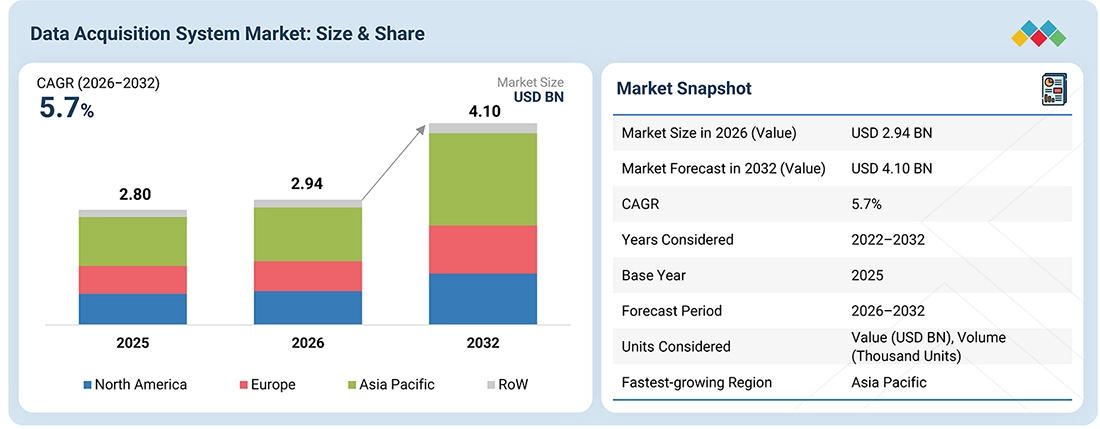
According to Marketsandmarkets, the global data acquisition system market size is projected to grow from USD 2.94 billion in 2026 to USD 4.10 billion by 2032, growing at a CAGR of 5.7% from 2026 to 2032. The market is witnessing steady growth as industries increase investments in industrial automation, smart manufacturing, advanced testing, electrification, and real-time monitoring across automotive & transportation, industrial manufacturing, aerospace & defense, energy & power, electronics, and healthcare applications. The growing demand for accurate and high-speed data capture, automated testing, remote monitoring, scalable measurement, and real-time analysis is accelerating the deployment of data acquisition systems. Additionally, advancements in modular, high-speed, wireless, software-enabled, and connected DAQ technologies are improving measurement flexibility, scalability, and system integration, supporting the expansion of data acquisition solutions across diverse applications.

KEY TAKEAWAYS

  • BY REGION
    By region, Asia Pacific led the data acquisition system market with a share of ~38.5%, in terms of value, in 2025.
  • BY OFFERING
    By offering, the software segment is expected to record the highest CAGR during the forecast period.
  • BY SPEED
    By speed, the ultra-high (>100 MS/S) segment is expected to register a CAGR of ~7.9% between 2026 and 2032.
  • BY APPLICATION
    By application, the testing segment is expected to exhibit a CAGR of ~6.1% during the forecast period.
  • BY VERTICAL
    By vertical, the wireless communication & infrastructure segment is expected to register a high growth rate during the forecast period.
  • COMPETITIVE LANDSCAPE (KEY PLAYERS)
    National Instruments (US), Keysight Technologies (US), Spectris, AMETEK Inc. (US), Spectris (UK), and Yokogawa Electric Corporation (Japan) are identified as key players in the data acquisition system market due to their strong market presence, extensive measurement and testing portfolios, and capabilities in data acquisition, data logging, signal conditioning, high-speed measurement, and automated testing. Their solutions support applications across automotive, industrial automation, aerospace & defense, energy & power, electronics, and manufacturing, with a focus on measurement accuracy, high-speed data capture, scalability, connectivity, real-time monitoring, and test automation.
  • COMPETITIVE LANDSCAPE (STARTUPS/SMES)
    StrainSensea (UK) and Logic Fruit Technologies (India) have established positions in specialized data acquisition and measurement applications, with capabilities spanning customized DAQ systems, sensor and instrumentation solutions, high-speed measurement, testing, monitoring, and real-time control.

The data acquisition system market is expected to grow significantly as industries increase investments in industrial automation, smart manufacturing, electrification, advanced testing, and connected monitoring across automotive, manufacturing, aerospace & defense, energy & power, healthcare, and electronics applications. The market is further driven by rising demand for real-time measurement, high-speed data capture, scalable channel configurations, remote monitoring, and automated testing. Product innovations and strategic developments by key players such as National Instruments, Keysight Technologies, Spectris, AMETEK, and Yokogawa Electric Corporation, including advancements in modular, wireless, high-speed, software-enabled, and cloud-connected data acquisition technologies, are further strengthening adoption across high-value testing, monitoring, and industrial applications.

TRENDS & DISRUPTIONS IMPACTING CUSTOMERS' CUSTOMERS

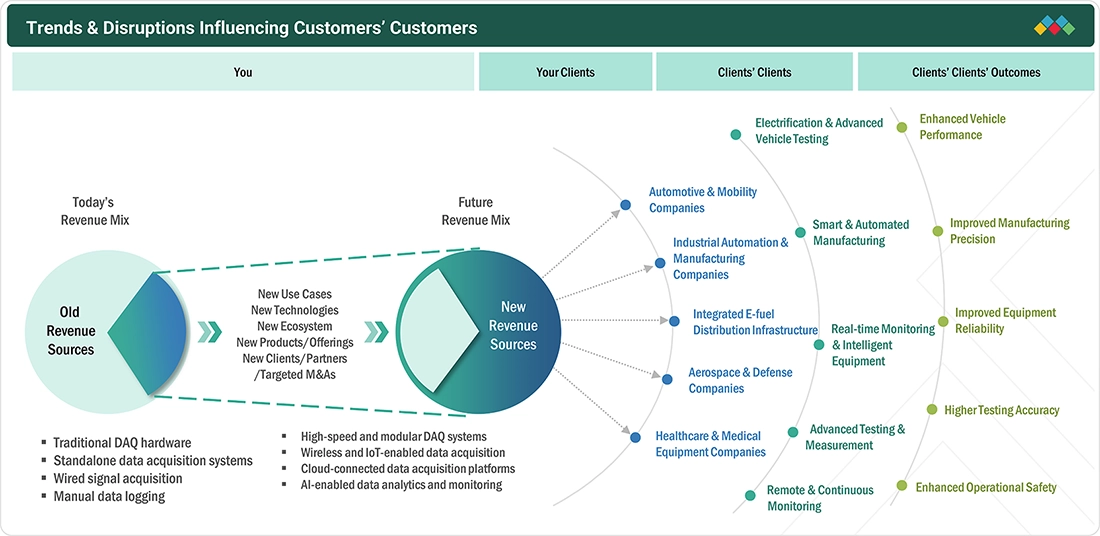
Advanced high-speed data acquisition systems, modular architectures, real-time measurement solutions, wireless connectivity solutions, and software-enabled data analytics are transforming automotive, industrial automation, manufacturing, aerospace & defense, energy & power, healthcare, and electronics applications. These innovations enable high-speed data capture, synchronized multi-channel measurement, automated testing, remote monitoring, and improved measurement accuracy. Advancements in modular I/O, high-channel-count systems, edge-based processing, wireless DAQ, and integrated analytics are improving scalability, flexibility, and connectivity with test and control systems. As automotive OEMs, industrial manufacturers, aerospace companies, and other end users increasingly adopt advanced data acquisition solutions for EV and battery testing, manufacturing test, equipment monitoring, predictive maintenance, and product validation, these technologies are supporting the shift toward connected, automated, and data-driven operations and sustained growth of the global data acquisition system market.
data-acquisition-system-market Disruptions

Source: Secondary Research, Interviews with Experts, MarketsandMarkets Analysis

MARKET DYNAMICS

Drivers
Impact
Level
  • Rising emphasis of end users on data monitoring
  • Increasing implementation of industry 5.0 across aerospace and automotive sectors
RESTRAINTS
Impact
Level
  • High computational requirements for real-time data processing
  • CAPEX cost and complexity of DAQ systems
OPPORTUNITIES
Impact
Level
  • Growing demand for automated DAQ systems
  • Surging demand for high-speed connectivity technologies such as 5G
CHALLENGES
Impact
Level
  • Highly competitive market
  • Cybersecurity threats

Source: Secondary Research, Interviews with Experts, MarketsandMarkets Analysis

Driver: Rising emphasis of end users on data monitoring

The rising emphasis on real-time data monitoring is driving demand for data acquisition systems, as end users increasingly require continuous measurement, accurate data collection, and real-time performance analysis. These systems enable industries to monitor equipment conditions, identify operational anomalies, improve process efficiency, and minimize downtime. The growing adoption of industrial automation, predictive maintenance, and data-driven decision-making further supports market growth.

Restraint: High computational requirements for real-time data processing

The increasing volume, velocity, and complexity of data generated by connected devices and industrial equipment require substantial computational power for real-time processing and analysis. Data acquisition systems may require advanced processors, memory, and supporting infrastructure to handle high-frequency data streams, increasing system costs and implementation complexity.

Opportunity: Surging demand for high-speed connectivity technologies such as 5G

The growing adoption of 5G across manufacturing, automotive, aerospace, and other industrial applications creates opportunities for data acquisition systems. High-speed connectivity and low latency enable faster data transmission from distributed sensors and connected equipment, supporting real-time monitoring, remote data collection, and responsive industrial control.

Challenge: Cybersecurity threats

Cyber attacks represent a significant threat to the deployment and development of data acquisition (DAQ) systems, particularly as DAQ systems themselves become more integrated and networked with enterprise networks, cloud computing, and IoT devices

DATA ACQUISITION SYSTEM MARKET SIZE, SHARE & TRENDS, 2025 TO 2030: COMMERCIAL USE CASES ACROSS INDUSTRIES

COMPANY USE CASE DESCRIPTION BENEFITS
company logo
National Instruments offers DAQ systems combining measurement hardware, sensors, and software for capturing and analyzing physical and electrical parameters such as voltage, current, temperature, pressure, and sound. Its DAQ platforms support applications across product development, research, manufacturing testing, and automated measurement. Enables accurate real-time data capture | Supports scalable measurement systems | Facilitates automated testing and analysis | Improves product development and testing efficiency
company logo
Keysight provides modular, USB, benchtop, and LXI DAQ systems for high-accuracy measurement of electrical and physical parameters, including voltage, current, temperature, pressure, and strain. Its DAQs are used for sensor validation, environmental monitoring, functional testing, and automated test applications across automotive, aerospace, energy, and electronics. Enables high-precision multipoint measurement | Supports automated testing | Improves measurement scalability | Accelerates data logging and analysis
company logo
Through HBK, Spectris provides sensing, testing, and data acquisition solutions that integrate DAQ hardware, software, sensors, and analysis tools. These solutions support physical and virtual testing, in-line and end-of-line manufacturing testing, and in-service monitoring across automotive, aerospace and defense, industrial manufacturing, and electronics. Accelerates product development | Improves testing and validation | Supports manufacturing quality and efficiency | Enhances asset and product performance monitoring
company logo
AMETEK provides data acquisition and control capabilities through its acquisition of United Electronic Industries (UEI). UEI develops high-performance test, measurement, simulation, and control solutions for aerospace, defense, energy, and semiconductor applications, including automated testing, flight simulation, and machine health monitoring. Enables high-performance data acquisition and control | Supports mission-critical testing | Improves machine health monitoring | Enables flexible and rugged measurement systems
company logo
Yokogawa offers data acquisition systems, data loggers, paperless recorders, portable DAQ systems, software, and wireless acquisition solutions for measuring parameters such as temperature, pressure, flow, voltage, current, strain, and humidity. Its solutions support industrial, laboratory, pharmaceutical, food, and aerospace applications, with network connectivity and scalable modular I/O. Enables reliable long-term data monitoring | Supports scalable multi-channel acquisition | Improves measurement accuracy and reliability | Facilitates remote and centralized monitoring

Logos and trademarks shown above are the property of their respective owners. Their use here is for informational and illustrative purposes only.

MARKET ECOSYSTEM

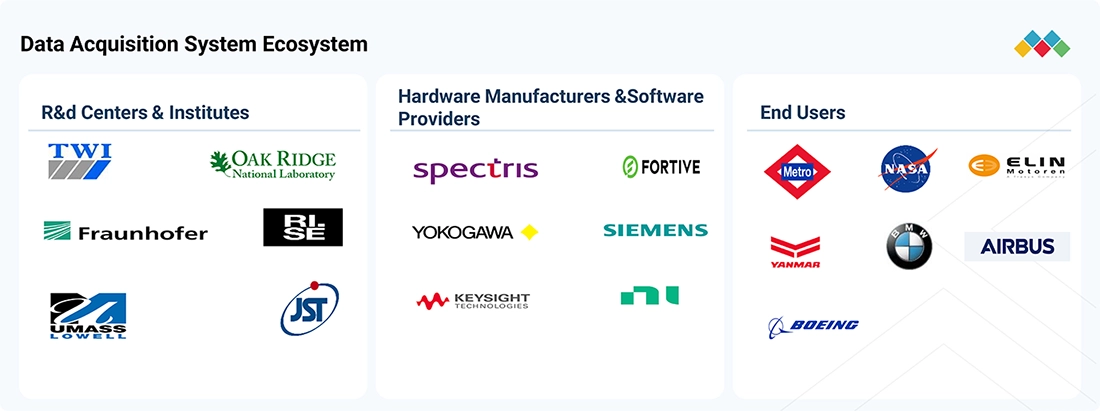
The data acquisition ecosystem comprises R&D centers, component suppliers, data acquisition system manufacturers and software/technology providers, system integrators, OEMs, and end users, forming an integrated value chain for measurement, data capture, testing, monitoring, and analysis. Component suppliers provide sensors and transducers, ADCs, signal-conditioning components, communication interfaces, connectors, and embedded processing technologies required for DAQ systems, while DAQ manufacturers develop modular, standalone, PC-based, wireless, high-speed, and software-enabled acquisition solutions for diverse applications. Manufacturers and suppliers such as National Instruments, Keysight Technologies, Spectris, AMETEK, and Yokogawa Electric Corporation support the development and deployment of advanced data acquisition solutions across automotive, industrial automation, aerospace & defense, energy & power, electronics, and healthcare applications. End users, including automotive OEMs, industrial manufacturers, aerospace & defense organizations, energy companies, electronics manufacturers, and research institutions, drive demand for DAQ systems for vehicle and battery testing, product validation, manufacturing testing, equipment monitoring, process measurement, and real-time data analysis.
data-acquisition-system-market Ecosystem

Logos and trademarks shown above are the property of their respective owners. Their use here is for informational and illustrative purposes only.

MARKET SEGMENTS
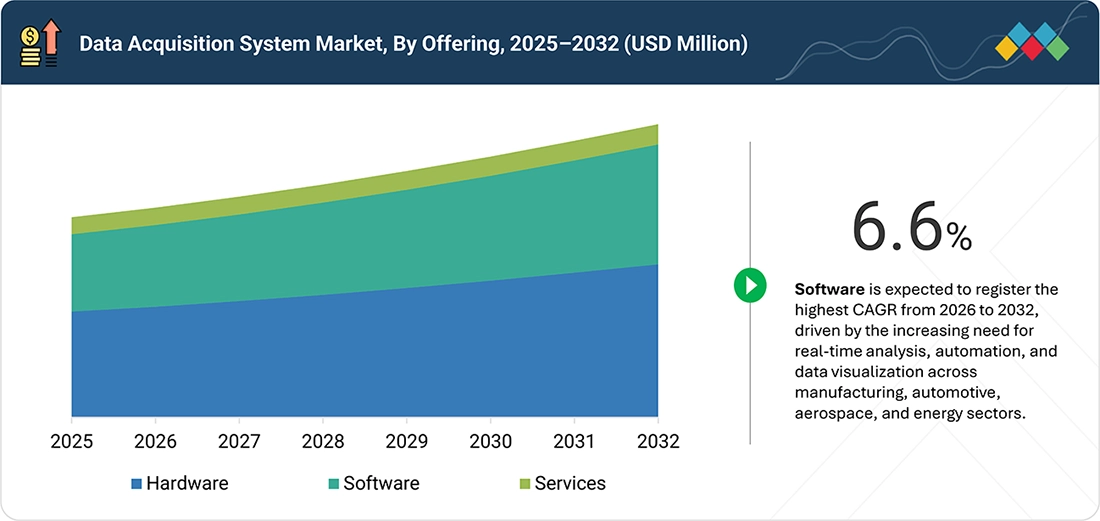
data-acquisition-system-market Segments

Source: Secondary Research, Interviews with Experts, MarketsandMarkets Analysis

Position Sensor Market, by Offering

Data acquisition software is expected to register the highest CAGR, driven by increasing adoption of advanced analytics and real-time processing platforms that provide precise measurement and automated signal analysis across complex testing environments. Its ability to deliver accurate, real-time data visualization and diagnostics is expanding its use across automotive, aerospace, energy, manufacturing, and other advanced industrial applications.

Position Sensor Market, by Speed

Low-speed data acquisition systems are expected to account for the largest market share, driven by their ability to provide reliable measurement and continuous monitoring for steady-state physical parameters. Their cost-effectiveness, channel scalability, and suitability for long-duration logging are supporting widespread adoption across industrial automation, energy and power, environmental testing, civil infrastructure, and process manufacturing applications.

Position Sensor Market, by Application

Testing is expected to account for a significant market share due to its high measurement accuracy, rapid sampling rates, and reliable data capture. Its easy integration with test benches, real-time analysis capabilities, and suitability for automated validation are driving adoption across automotive, aerospace, energy, and other end-use industries.

Position Sensor Market, by Vertical

The aerospace & defense segment is anticipated to maintain a prominent position in the data acquisition systems market due to increasing demand for accurate testing and measurement across aviation and defense systems. Rising adoption of modern aircraft, unmanned aerial systems, space launch vehicles, and defense equipment, along with growing demand for structural health monitoring, flight safety, and regulatory compliance, is supporting segmental growth.

REGION

Asia Pacific to be fastest-growing region in data acquisition systems market during forecast period

Asia Pacific is likely to be the fastest-growing market for data acquisition systems due to rapid industrial automation, expanding automotive and EV production, rising adoption of smart manufacturing, and increasing demand for real-time testing and monitoring across manufacturing and electronics. China, Japan, South Korea, and India are driving demand through strong manufacturing bases, smart-factory investments, and increasing deployment of advanced data acquisition hardware and software in automotive, industrial automation, electronics, and aerospace applications.
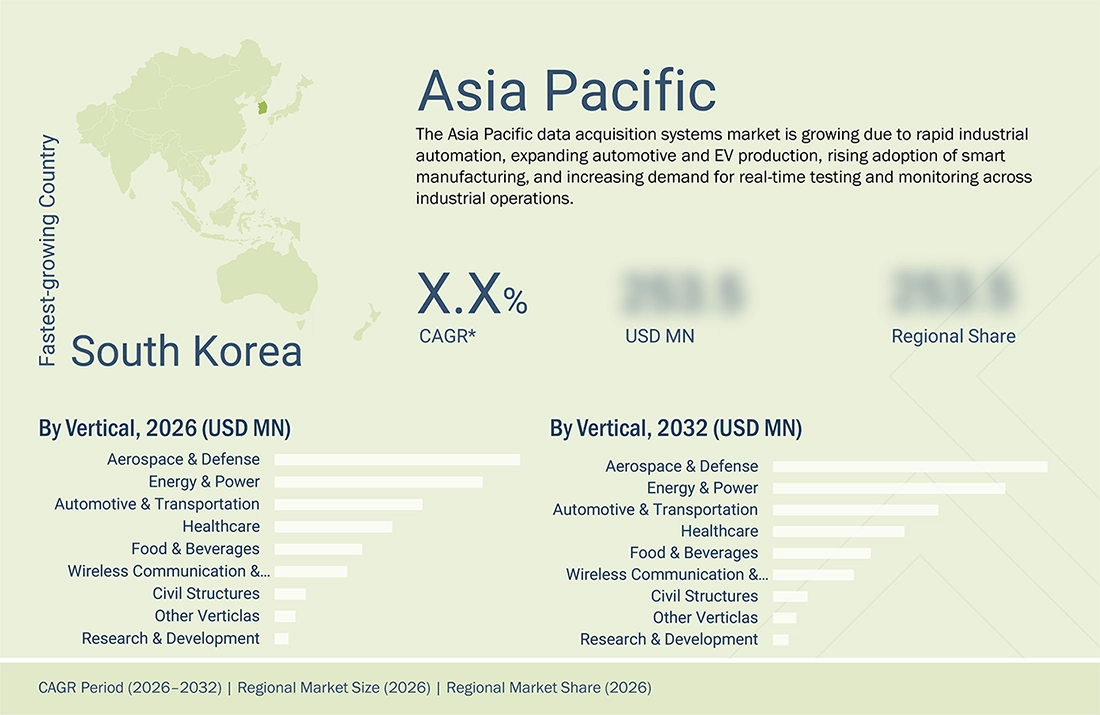
data-acquisition-system-market Region

DATA ACQUISITION SYSTEM MARKET SIZE, SHARE & TRENDS, 2025 TO 2030: COMPANY EVALUATION MATRIX

In the data acquisition market matrix, National Instruments (STAR) strengthens its position through its broad portfolio of data acquisition hardware, modular measurement systems, software, and automated test solutions, supporting high-speed, synchronized, and scalable measurement across automotive, industrial automation, aerospace & defense, electronics, and research applications. Its focus on modular architectures, software integration, real-time measurement, and automated testing supports applications requiring flexible data capture, test automation, and system scalability. Yokogawa Electric Corporation (Emerging Leader) is strengthening its position through its portfolio of high-speed and low-speed DAQ systems, data loggers, recorders, wireless acquisition, and data acquisition software. Its solutions support measurement, monitoring, testing, and analysis across automotive, aerospace, energy, manufacturing, pharmaceutical, and industrial applications, with capabilities including high-channel-count acquisition, signal conditioning, simultaneous sampling, remote monitoring, and scalable modular I/O.
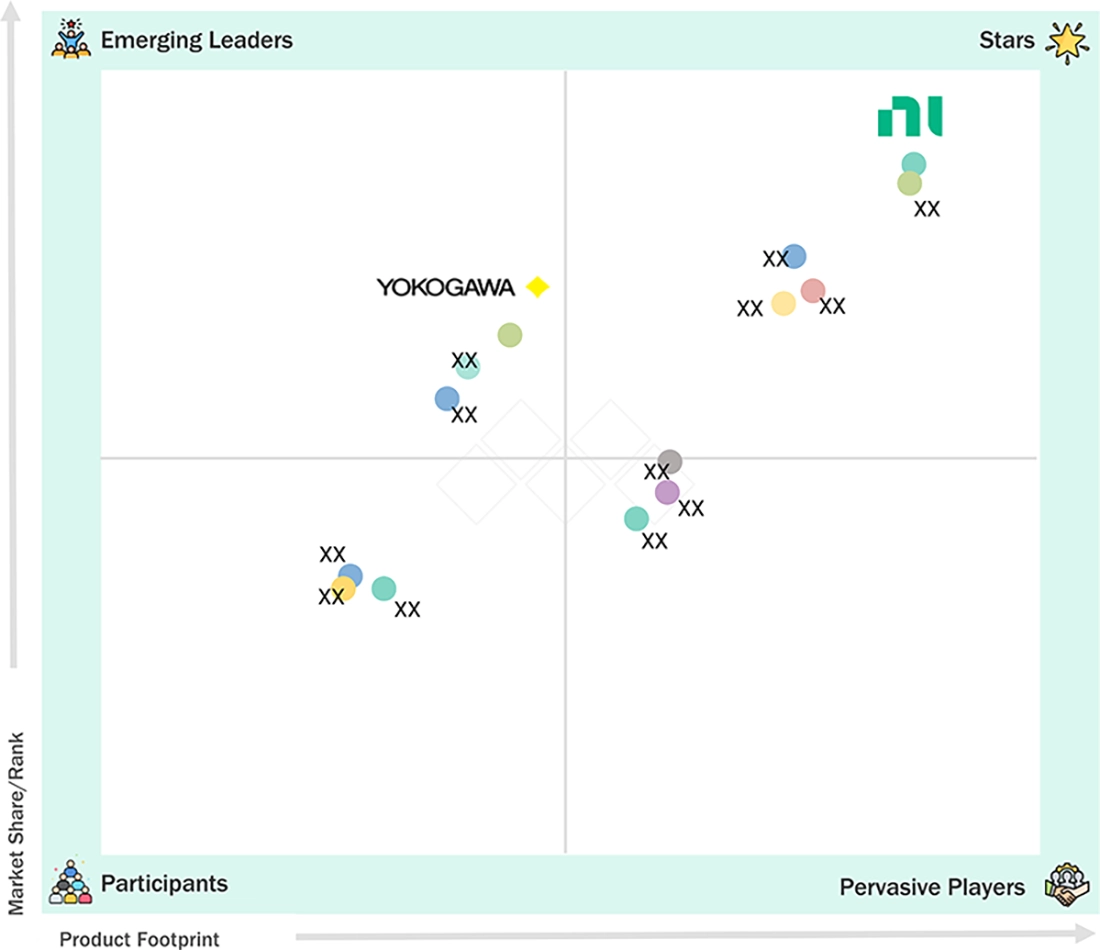
data-acquisition-system-market Evaluation Metrics

Source: Secondary Research, Interviews with Experts, MarketsandMarkets Analysis

KEY MARKET PLAYERS

MARKET SCOPE

REPORT METRIC DETAILS
Market Size in 2025 (Value) USD 2.80 Billion
Market Forecast in 2026 (Value) USD 2.94 Billion
Market Forecast in 2032 (Value) USD 4.10 Billion
Growth Rate CAGR of 5.7% from 2026–2032
Years Considered 2022–2032
Base Year 2025
Forecast Period 2026–2032
Units Considered Value (USD Billion), Volume (Thousand Units)
Report Coverage Revenue Forecast, Company Ranking, Competitive Landscape, Growth Factors, and Trends
Segments Covered
  • By Offering:
    • Hardware (External Chassis & Modules
    • Plug-In I/O Boards)
    • Software (Bundled
    • Third-party)
    • Services (Data Analytics & Reporting
    • Installation
    • Maintenance & Support)
  • By Speed:
    • Ultra-High (>100 MS/S)
    • High (20 MS/S–100 MS/S)
    • Medium (1 MS/S–20 MS/S)
    • Middle (100 KS/S–1 MS/S)
    • Low (<100 KS/S)
  • By Application:
    • Testing (Flight & Space Testing
    • NVH Testing
    • Electrical Power Testing
    • Machinery Testing
    • Other Testing Applications)
    • Monitoring (Acoustics
    • Data Recording
    • Geotechnical and Structural Health Monitoring
    • Other Monitoring Applications)
  • By Vertical:
    • Aerospace & Defense
    • Energy & Power
    • Automotive & Transportation
    • Healthcare
    • Food & Beverage
    • Wireless Communication &
    • Infrastructure
    • Civil Structures
    • Research & Development
    • Others Verticals
Regions Covered North America, Europe, Asia Pacific, and RoW

WHAT IS IN IT FOR YOU: DATA ACQUISITION SYSTEM MARKET REPORT CONTENT GUIDE
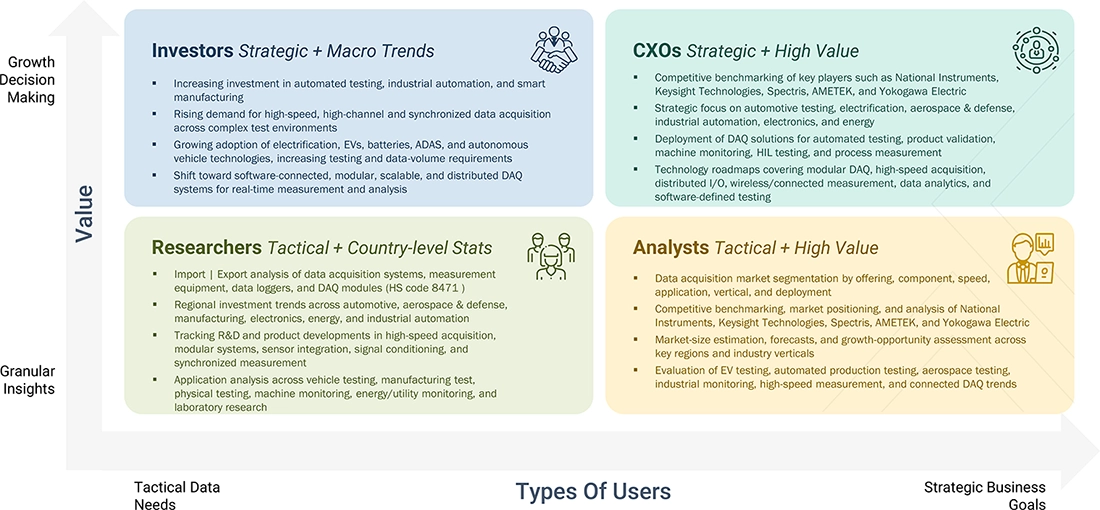
data-acquisition-system-market Content Guide

DELIVERED CUSTOMIZATIONS

We have successfully delivered the following deep-dive customizations:

CLIENT REQUEST CUSTOMIZATION DELIVERED VALUE ADDS
Data Acquisition System Manufacturer
  • Mapping DAQ system deployments across automotive, aerospace & defense, industrial manufacturing, energy & power, healthcare, and communications applications
  • Benchmarking modular, standalone, PC-based, and software-enabled DAQ systems
  • Assessment of channel density, sampling speed, accuracy, connectivity, and scalability
  • Identify high-growth application segments
  • Strengthen product positioning
  • Support product portfolio and go-to-market planning
Data Acquisition Technology Supplier
  • Competitive mapping of modular DAQ, plug-in boards, external chassis, signal conditioning, data logging, and DAQ software technologies
  • Benchmarking sampling rates, channel capacity, measurement accuracy, connectivity, and software integration
  • Tracking developments in high-speed, wireless, cloud-connected, and edge-enabled DAQ
  • Identify technology white-space opportunities
  • Prioritize OEM and system-integrator engagements
  • Support technology and product roadmap planning
Industrial Automation / System Integrator
  • Assessment of DAQ selection criteria across manufacturing, process automation, machine monitoring, and testing applications
  • Benchmarking integration with PLCs, SCADA, industrial networks, sensors, and control systems
  • Mapping deployment strategies across smart factories and Industry 4.0 environments
  • Strengthen competitive differentiation
  • Identify high-value monitoring and testing applications
  • Enable expansion into smart manufacturing and Industry 4.0
Automotive & Transportation Enterprise
  • Mapping DAQ procurement strategies and supplier landscape by region
  • Evaluation of DAQ applications across EVs, batteries, powertrain, ADAS, vehicle testing, and NVH testing
  • Benchmarking sampling speed, synchronization, channel density, accuracy, and real-time data-processing capabilities
  • Support informed procurement decisions
  • Enhance vehicle testing and validation efficiency
  • Identify advanced mobility and electrification opportunities
Private Equity / Investment Firm
  • Financial and competitive benchmarking of leading DAQ providers across North America, Europe, Asia Pacific, and RoW
  • M&A landscape mapping across measurement, testing, data logging, and industrial monitoring technologies
  • Growth-trend analysis by technology, application, end user, and region
  • Prioritize investment targets
  • Validate market sizing and growth opportunities
  • Identify attractive technology segments and mitigate investment risk

RECENT DEVELOPMENTS

  • July 2026 : National Instruments released NI-DAQmx 2026 Q3, providing updated support for NI data acquisition and signal-conditioning devices. The software supports DAQ configuration, programming, measurement-specific functions, analysis integrations, and optimized data transfer for faster measurements.
  • May 2026 : HBK (Spectris) introduced the Fusion MX next-generation DAQ system, designed for full-scale structural and fatigue testing in aerospace and defense. The system supports very high channel counts, automated test setup, data traceability, and integration with third-party systems through the openDAQ protocol.
  • March 2026 : Keysight introduced new 224G test solutions for 1.6T optical network validation, supporting electrical and optical testing from R&D through high-volume manufacturing. The solutions address high-speed signal integrity and validation requirements for next-generation AI data-center interconnects.
  • March 2026 : HBK expanded its Fusion-LN sound and vibration data acquisition platform with a 12-channel module, supporting aerospace & defense, telecommunications, industrial, automotive, and audio applications. The modular architecture enables users to expand existing LAN-XI systems while retaining previous investments.
  • May 2025 : Yokogawa Test & Measurement released the SL2000 High-Speed Data Acquisition Unit, combining mixed-signal oscilloscope and data-acquisition recorder capabilities. The modular system is designed for high-speed sampling, long-term data logging, R&D, validation, and troubleshooting in automotive, mechatronics, and power-electronics applications.


 

Table of Contents

checkmarkExclusive indicates content/data unique to MarketsandMarkets and not available with any competitors.

TITLE
PAGE NO
1
INTRODUCTION


15
2
EXECUTIVE SUMMARY


3
PREMIUM INSIGHTS


4
MARKET OVERVIEW
This section summarizes market dynamics, key shifts, and high-impact trends shaping demand outlook.


4.1
INTRODUCTION


4.2
MARKET DYNAMICS


4.2.1
DRIVERS


4.2.2
RESTRAINTS


4.2.3
OPPORTUNITIES


4.2.4
CHALLENGES


4.3
INTERCONNECTED MARKETS AND CROSS-SECTOR OPPORTUNITIES


4.4
STRATEGIC MOVES BY TIER 1/2/3 PLAYERS


5
INDUSTRY TRENDS
Presents a concise view of industry direction, strategic priorities, and key indicators influencing market momentum.


5.1
PORTER’S FIVE FORCES ANALYSIS


5.2
MACROECONOMIC OUTLOOK


5.2.1
INTRODUCTION


5.2.2
GDP TRENDS AND FORECAST


5.2.3
TRENDS IN GLOBAL MANUFACTURING INDUSTRY


5.2.4
TRENDS IN GLOBAL AUTOMOTIVE INDUSTRY


5.3
VALUE CHAIN ANALYSIS


5.4
ECOSYSTEM ANALYSIS


5.5
PRICING ANALYSIS


5.5.1
AVERAGE SELLING PRICE TREND OF DATA ACQUISITION SYSTEMS, BY OFFERING (2022–2025)


5.5.2
AVERAGE SELLING PRICE TREND OF DATA ACQUISITION SYSTEMS, BY REGION (2022–2025)


5.6
TRADE ANALYSIS


5.6.1
IMPORT SCENARIO (HS CODE 8471)


5.6.2
EXPORT SCENARIO (HS CODE 8471)


5.7
KEY CONFERENCES AND EVENTS, 2026–2027


5.8
TRENDS/DISRUPTIONS IMPACTING CUSTOMER BUSINESS


5.9
INVESTMENT AND FUNDING SCENARIO


5.10
CASE STUDY ANALYSIS


5.11
IMPACT OF 2025 US TARIFF – DATA ACQUISITION SYSTEM MARKET


5.11.1
INTRODUCTION


5.11.2
KEY TARIFF RATES


5.11.3
PRICE IMPACT ANALYSIS


5.11.4
IMPACT ON COUNTRIES/REGIONS


5.11.5
IMPACT ON VERTICALS
 
 
6
TECHNOLOGICAL ADVANCEMENTS, AI-DRIVEN IMPACT, PATENTS, AND INNOVATIONS


6.1
KEY EMERGING TECHNOLOGIES


6.2
COMPLEMENTARY TECHNOLOGIES


6.3
ADJACENT TECHNOLOGIES


6.4
TECHNOLOGY ROADMAP


6.5
PATENT ANALYSIS


6.6
IMPACT OF AI ON DATA ACQUISITION SYSTEM MARKET


6.6.1
TOP USE CASES AND MARKET POTENTIAL


6.6.2
BEST PRACTICES FOLLOWED BY PLAYERS IN DATA ACQUISITION SYSTEM MARKET


6.6.3
CASE STUDIES RELATED TO AI IMPLEMENTATION IN DATA ACQUISITION SYSTEM MARKET


6.6.4
INTERCONNECTED/ADJACENT ECOSYSTEM AND IMPACT ON MARKET PLAYERS


6.6.5
CLIENTS’ READINESS TO ADOPT AI IN DATA ACQUISITION SYSTEM MARKET
 
 
7
REGULATORY LANDSCAPE


7.1
REGIONAL REGULATIONS AND COMPLIANCE


7.1.1
REGULATORY BODIES, GOVERNMENT AGENCIES, AND OTHER ORGANIZATIONS


7.1.2
INDUSTRY STANDARDS
 
 
8
CUSTOMER LANDSCAPE AND BUYER BEHAVIOR


8.1
DECISION-MAKING PROCESS


8.2
KEY STAKEHOLDERS INVOLVED IN BUYING PROCESS AND THEIR EVALUATION CRITERIA


8.2.1
KEY STAKEHOLDERS IN BUYING PROCESS


8.2.2
BUYING CRITERIA


8.3
ADOPTION BARRIERS AND INTERNAL CHALLENGES


8.4
UNMET NEEDS OF VARIOUS VERTICALS


9
DATA ACQUISITION SYSTEM MARKET, BY OFFERING (MARKET SIZE & FORECAST TO 2032, USD MILLION AND MILLION UNITS)


9.1
INTRODUCTION


9.2
HARDWARE


9.2.1
EXTERNAL CHASSIS & MODULES


9.2.2
PLUG-IN I/O BOARDS


9.3
SOFTWARE


9.3.1
BUNDLED


9.3.2
THIRD-PARTY


9.4
SERVICES


9.4.1
DATA ANALYTICS & REPORTING


9.4.2
INSTALLATION, MAINTENANCE, & SUPPORT
 
 
10
DATA ACQUISITION SYSTEM MARKET, BY SPEED (MARKET SIZE & FORECAST TO 2032, USD MILLION)


10.1
INTRODUCTION


10.2
ULTRA-HIGH (>100 MS/S)


10.3
HIGH (20 MS/S–100 MS/S)


10.4
MEDIUM (1 MS/S–20 MS/S)


10.5
MIDDLE (100 KS/S–1 MS/S)


10.6
LOW (<100 KS/S)


11
DATA ACQUISITION SYSTEM MARKET, BY APPLICATION (MARKET SIZE & FORECAST TO 2032, USD MILLION)


11.1
INTRODUCTION


11.2
TESTING


11.2.1
FLIGHT & SPACE TESTING


11.2.2
NVH TESTING


11.2.3
ELECTRICAL POWER TESTING


11.2.4
MACHINERY TESTING


11.2.5
OTHER TESTING APPLICATIONS


11.3
MONITORING


11.3.1
ACOUSTICS


11.3.2
DATA RECORDING


11.3.3
GEOTECHNICAL AND STRUCTURAL HEALTH MONITORING


11.3.4
OTHER MONITORING APPLICATIONS
 
 
12
DATA ACQUISITION SYSTEM MARKET, BY VERTICAL (MARKET SIZE & FORECAST TO 2032, USD MILLION)


12.1
INTRODUCTION


12.2
AEROSPACE & DEFENSE


12.3
AUTOMOTIVE & TRANSPORTATION


12.4
ENERGY & POWER


12.5
HEALTHCARE


12.6
FOOD & BEVERAGES


12.7
RESEARCH & DEVELOPMENT


12.8
WIRELESS COMMUNICATION & INFRASTRUCTURE


12.9
CIVIL STRUCTURES


12.10
OTHER VERTICALS


13
DATA ACQUISITION SYSTEM MARKET, BY REGION (MARKET SIZE & FORECAST TO 2032, USD MILLION)


13.1
INTRODUCTION


13.2
NORTH AMERICA


13.2.1
US


13.2.2
CANADA


13.2.3
MEXICO


13.3
EUROPE


13.3.1
GERMANY


13.3.2
UK


13.3.3
FRANCE


13.3.4
SPAIN


13.3.5
ITALY


13.3.6
POLAND


13.3.7
NORDICS


13.3.8
REST OF EUROPE


13.4
ASIA PACIFIC


13.4.1
CHINA


13.4.2
JAPAN


13.4.3
INDIA


13.4.4
SOUTH KOREA


13.4.5
AUSTRALIA


13.4.6
INDONESIA


13.4.7
MALAYSIA


13.4.8
THAILAND


13.4.9
VIETNAM


13.4.10
REST OF ASIA PACIFIC


13.5
REST OF THE WORLD


13.5.1
MIDDLE EAST


13.5.1.1
BAHRAIN


13.5.1.2
KUWAIT


13.5.1.3
OMAN


13.5.1.4
QATAR


13.5.1.5
SAUDI ARABIA


13.5.1.6
UNITED ARAB EMIRATES (UAE)


13.5.1.7
REST OF MIDDLE EAST


13.5.2
AFRICA


13.5.2.1
SOUTH AFRICA


13.5.2.2
REST OF AFRICA
 
 
13.5.2.3.


13.5.3
SOUTH AMERICA
 
 
14
COMPETITIVE LANDSCAPE


14.1
OVERVIEW


14.2
KEY PLAYER COMPETITIVE STRATEGIES/RIGHT TO WIN, 2024-2026


14.3
REVENUE ANALYSIS, 2021–2025


14.4
MARKET SHARE ANALYSIS,


14.5
BRAND/PRODUCT COMPARISON


14.6
COMPANY EVALUATION MATRIX: KEY PLAYERS,


14.6.1
STARS


14.6.2
EMERGING LEADERS


14.6.3
PERVASIVE PLAYERS


14.6.4
PARTICIPANTS


14.6.5
COMPANY FOOTPRINT: KEY PLAYERS,


14.6.5.1
COMPANY FOOTPRINT


14.6.5.2
REGION FOOTPRINT


14.6.5.3
TYPE FOOTPRINT


14.6.5.4
APPLICATION FOOTPRINT


14.6.5.5
VERTICAL FOOTPRINT
 
 
14.7
COMPANY EVALUATION MATRIX: STARTUPS/SMES,


14.7.1
PROGRESSIVE COMPANIES


14.7.2
RESPONSIVE COMPANIES


14.7.3
DYNAMIC COMPANIES


14.7.4
STARTING BLOCKS


14.7.5
COMPETITIVE BENCHMARKING: STARTUPS/SMES,


14.7.5.1
DETAILED LIST OF KEY STARTUPS/SMES


14.7.5.2
COMPETITIVE BENCHMARKING OF KEY STARTUPS/SMES
 
 
14.8
COMPANY VALUATION AND FINANCIAL METRICS


14.9
COMPETITIVE SCENARIO


14.9.1
PRODUCT LAUNCHES


14.9.2
DEALS


14.9.3
EXPANSIONS
 
 
15
COMPANY PROFILES


15.1
INTRODUCTION


15.1.1
KEY PLAYERS


15.1.1.1
NATIONAL INSTRUMENTS CORP


15.1.1.2
KEYSIGHT TECHNOLOGIES


15.1.1.3
SPECTRIS


15.1.1.4
AVL


15.1.1.5
FLUKE CORPORATION


15.1.1.6
TEKTRONIX, INC.


15.1.1.7
AMETEK PROGRAMMABLE POWER INC.


15.1.1.8
DEWESOFT D.O.O.


15.1.1.9
ADLINK TECHNOLOGY INC.


15.1.1.10
TELEDYNE LECROY


15.1.2
OTHER KEY PLAYERS


15.1.2.1
ARBIN


15.1.2.2
ZES ZIMMER


15.1.2.3
SUITA INC.


15.1.2.4
CSM


15.1.2.5
NEWTONS4TH LTD.


15.1.2.6
AINUO


15.1.2.7
GOOD WILL INSTRUMENT CO., LTD.


15.1.2.8
HBK


15.1.2.9
GANTNER INSTRUMENTS


15.1.2.10
NAUGRA


15.1.2.11
IMC TEST & MEASUREMENT GMBH


15.1.2.12
COUNTRONICS


15.1.2.13
HIOKI


15.1.2.14
DIGILENT


15.1.2.15
ELSYS AG
 
16
RESEARCH METHODOLOGY


16.1
RESEARCH DATA


16.1.1
SECONDARY DATA


16.1.1.1
KEY DATA FROM SECONDARY SOURCES


16.1.1.2
LIST OF KEY SECONDARY SOURCES


16.1.2
PRIMARY DATA


16.1.2.1
KEY DATA FROM PRIMARY SOURCES


16.1.2.2
KEY PRIMARY PARTICIPANTS


16.1.2.3
BREAKDOWN OF PRIMARY INTERVIEWS


16.1.2.4
KEY INDUSTRY INSIGHTS
 
 
16.2
MARKET SIZE ESTIMATION


16.2.1
BOTTOM-UP APPROACH


16.2.2
TOP-DOWN APPROACH


16.2.3
MARKET SIZE CALCULATION FOR BASE YEAR


16.3
MARKET FORECAST APPROACH


16.3.1
SUPPLY SIDE


16.3.2
DEMAND SIDE


16.4
DATA TRIANGULATION


16.5
FACTOR ANALYSIS


16.6
RESEARCH ASSUMPTIONS


16.7
RESEARCH LIMITATIONS


16.8
RISK ASSESSMENT


17
APPENDIX


17.1
DISCUSSION GUIDE


17.2
KNOWLEDGE STORE: MARKETSANDMARKETS’ SUBSCRIPTION PORTAL


17.3
CUSTOMIZATION OPTIONS


17.4
RELATED REPORTS


17.5
AUTHOR DETAILS


Methodology

The study involved four major activities in estimating the current size of the global data acquisition system market. Extensive secondary research was conducted to gather information on the data acquisition ecosystem, including DAQ system manufacturers, technology providers, sensor and component suppliers, distributors, system integrators, OEMs, testing organizations, industrial automation companies, and end users. This was followed by primary research with industry stakeholders across the value chain, including DAQ manufacturers, technology developers, component suppliers, distributors, OEMs, system integrators, and end users, to validate assumptions and market sizing. Both top-down and bottom-up approaches were used to estimate the overall market size. Market breakdowns and data triangulation techniques were then applied to determine the size of individual segments and subsegments by offering, speed, application, vertical, and region. The analysis also considered demand for DAQ systems across testing, research & development, field measurement, manufacturing, automotive, aerospace & defense, energy & power, electronics, healthcare, and communication & infrastructure applications. Secondary and primary sources were jointly used to support a comprehensive technical, commercial, and competitive analysis of the global data acquisition system market.

Secondary Research

Various secondary sources were referred to during the secondary research process to identify and collect information relevant to the data acquisition system market. These sources included annual reports, company presentations, press releases, product catalogs, technical datasheets, patents, technical journals, industry publications, government publications, trade directories, and databases. Secondary research was conducted to obtain key insights into the market's supply chain, value chain, competitive landscape, and segmentation by offering, speed, application, vertical, and region. It also helped assess industry trends, adoption of DAQ systems across automotive & transportation, industrial manufacturing, aerospace & defense, energy & power, electronics, healthcare, and communication & infrastructure, as well as advancements in modular DAQ, high-speed acquisition, signal conditioning, wireless connectivity, software-enabled measurement, and automated testing. The collected information was further analyzed to estimate the overall market size and validate market assumptions, which were subsequently refined through primary research with industry experts and key stakeholders.

Primary Research

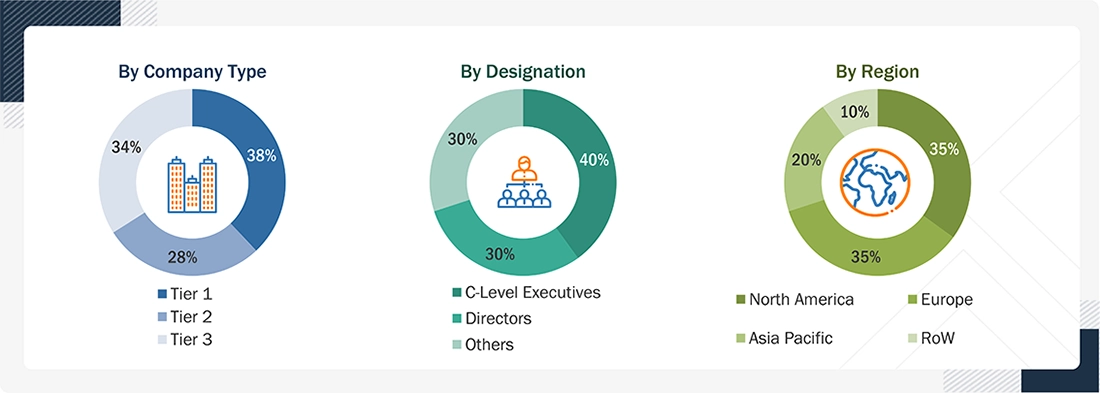
Extensive primary research was conducted after gaining knowledge about the current scenario of the data acquisition system market through secondary research. Several primary interviews were conducted with experts from the demand and supply sides across four major regions: North America, Europe, Asia Pacific, and RoW. This primary data was collected through questionnaires, emails, and telephonic interviews.

Data Acquisition System Market 
 Size, and Share

Note: The three tiers of the companies are defined based on their total revenue in 2025: Tier 1 - revenue greater than or equal to USD 1 billion; Tier 2 - revenue between USD 100 million and USD 1 billion; and Tier 3 revenue less than or equal to USD 100 million. Other designations include sales managers, marketing managers, and product managers.

To know about the assumptions considered for the study, download the pdf brochure

Market Size Estimation

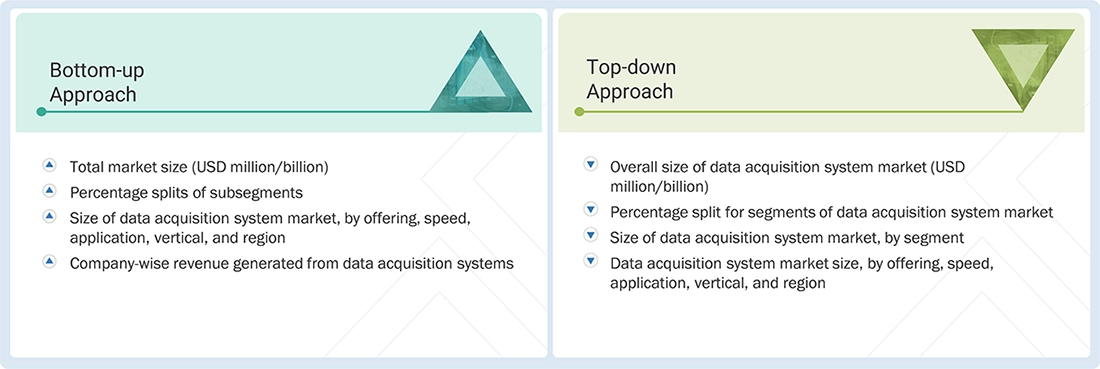
Both top-down and bottom-up approaches were used to estimate and validate the total size of the data acquisition system market. These methods were used extensively to estimate the size of various subsegments on the market. The following research methodology was used to estimate the market size:

  • Major players in the data acquisition system market and related markets were identified through extensive secondary research.
  • The industry’s value chain and market size in terms of value and volume were determined through primary and secondary research processes.
  • All percentage shares, splits, and segment-level breakdowns were determined using secondary sources and verified through primary research and data triangulation.

Data Acquisition System Market Top Down and Bottom Up Approach

Data Triangulation

After arriving at the overall size of the data acquisition system market through the market size estimation process, the total market was divided into relevant segments and subsegments. Data triangulation and market breakdown procedures were employed, wherever applicable, to complete the market engineering process and derive the statistics for each segment and subsegment. The data was triangulated by evaluating factors and trends from the demand and supply sides, including technology adoption, product offerings, measurement requirements, testing and monitoring applications, industrial automation, electrification, and regional trends. The analysis considered key data acquisition technologies and configurations such as modular and standalone DAQ systems, PC-based and portable systems, high-speed and high-channel-count acquisition, signal conditioning, wireless connectivity, and DAQ software. The analysis also considered applications across testing, monitoring, research and development, manufacturing, automotive, aerospace & defense, energy & power, electronics, and industrial automation. DAQ system requirements such as sampling rate, channel count, measurement accuracy, synchronization, connectivity, scalability, and software integration were evaluated to assess demand across different applications and end users. Along with this, the market size was validated using top-down and bottom-up approaches to ensure consistency across the overall market and individual segments.

Market Definition

Data acquisition (DAQ) systems refer to measurement solutions used to acquire, record, process, analyze, and present electrical and physical parameters from sensors and transducers. DAQ systems can measure parameters such as voltage, current, temperature, pressure, flow, strain, acceleration, vibration, sound, and power and convert these signals into usable digital data for monitoring, testing, control, and analysis. A typical DAQ system comprises sensors or transducers, signal-conditioning circuitry, data acquisition hardware, analog-to-digital converters, communication interfaces, and application or data-analysis software.

Data acquisition systems play a crucial role across automotive and transportation, industrial automation and manufacturing, aerospace & defense, energy & power, electronics and semiconductors, healthcare, and research & development. These solutions enable accurate measurement, automated testing, product validation, equipment monitoring, process analysis, and real-time data logging. DAQ systems are commonly integrated into test benches, manufacturing test systems, vehicle and battery testing equipment, aerospace test setups, industrial monitoring systems, and automated test equipment. A typical data acquisition solution may consist of sensors, signal conditioning, ADCs, DAQ modules or devices, communication buses, synchronization and triggering functions, and data acquisition or analysis software, with its configuration varying according to the measurement type, sampling rate, channel count, accuracy, connectivity, environmental conditions, and application requirements. Modern DAQ platforms include modular, PC-based, portable, ruggedized, wireless, and high-speed configurations, while software capabilities support data logging, visualization, analysis, reporting, and integration with automated testing environments.

Key Stakeholders

  • Raw Material Vendors
  • Component and Hardware Providers
  • Sensor Providers
  • DAQ Solution Providers
  • DAQ Software Providers
  • System Integrators
  • Original Equipment Manufacturers (OEMs)/Device Manufacturers
  • Technology Standard Organizations, Forums, Alliances, and Associations
  • Governments, Financial Institutions, and Investment Communities
  • Research Organizations
  • Analysts and Strategic Business Planners
  • Venture Capitalists, Private Equity Firms, and Startup Companies

Report Objectives

  • To describe and forecast the data acquisition system market size by offering, speed, application vertical, and region, in terms of value
  • To describe and forecast the market for various segments across four main regions, namely, North America, Europe, Asia Pacific, and RoW, in terms of value
  • To describe and forecast the market for data acquisition system offering, in terms of volume
  • To strategically analyze micromarkets regarding individual growth trends, prospects, and contribution to the market
  • To provide detailed information regarding drivers, restraints, opportunities, and challenges influencing market growth
  • To analyze opportunities for stakeholders by identifying high-growth segments in the market
  • To provide a detailed overview of the data acquisition system value chain
  • To strategically analyze key technologies, average selling price trends, trends impacting customer business, ecosystem, regulatory landscape, patent landscape, Porter’s five forces, import and export scenarios, trade landscape, and case studies pertaining to the market under study
  • To strategically profile key players in the data acquisition system market and comprehensively analyze their market share and core competencies
  • To analyze competitive developments such as partnerships, acquisitions, expansions, collaborations, and product launches, along with R&D in the data acquisition system market

Available customizations:

With the given market data, MarketsandMarkets offers customizations according to the company’s specific needs. The following customization options are available for the report:

Company Information:

  • Detailed analysis and profiling of additional market players (up to 5)


Key Questions Addressed by the Report

What is the current market size of the global Data Acquisition System (DAQ) market?

The global Data Acquisition System market is estimated to reach USD 2.80 billion in 2025. Increasing demand for real-time data monitoring, industrial automation, testing, and measurement solutions is driving market adoption. (MarketsandMarkets)

What is the forecasted size of the Data Acquisition System market by 2030?

The Data Acquisition System market is projected to reach USD 3.73 billion by 2030, growing from USD 2.80 billion in 2025. (MarketsandMarkets)

What is the expected CAGR of the Data Acquisition System market during 2025–2030?

The global Data Acquisition System market is expected to grow at a CAGR of 5.9% from 2025 to 2030 due to increasing demand for accurate measurement, testing, and automation systems. (MarketsandMarkets)

What are the major growth drivers for the Data Acquisition System industry?

Key growth drivers include increasing focus on industrial automation, predictive maintenance, real-time monitoring, Industry 5.0 adoption, connected devices, advanced testing requirements, and demand for accurate data analysis. (MarketsandMarkets)

What are the key trends shaping the Data Acquisition System market?

Major trends include AI and IoT integration, cloud-based data acquisition, wireless DAQ systems, high-speed connectivity, remote monitoring, digital transformation, and advanced analytics for real-time decision-making. (MarketsandMarkets)

Which companies are the leading players in the Data Acquisition System market?

Major companies operating in the market include National Instruments Corporation, Keysight Technologies, Yokogawa Electric Corporation, Spectris, Honeywell International, Siemens, Emerson Electric, Teledyne Technologies, and HBM (HBK). (MarketsandMarkets)

Which industries are driving demand for Data Acquisition Systems?

Major industries adopting DAQ systems include aerospace & defense, automotive, industrial manufacturing, energy & power, healthcare, telecommunications, electronics, and research & development sectors. (MarketsandMarkets)

Which offering segment is expected to grow fastest in the Data Acquisition System market?

The software segment is expected to register the highest growth rate, with a projected CAGR of 6.8% during 2025–2030, driven by demand for advanced analysis, simulation, and data management capabilities. (MarketsandMarkets)

Which application segment dominates the Data Acquisition System market?

The testing application segment is expected to dominate the market due to increasing requirements for product validation, performance testing, quality control, and compliance across industries such as automotive and aerospace. (MarketsandMarkets)

Which region is expected to lead the Data Acquisition System market?

North America is expected to hold the largest market share. The region accounted for approximately 38.4% of the market share in 2024, supported by strong adoption of advanced testing technologies, aerospace programs, industrial automation, and presence of

Personalize This Research

  • Triangulate with your Own Data
  • Get Data as per your Format and Definition
  • Gain a Deeper Dive on a Specific Application, Geography, Customer or Competitor
  • Any level of Personalization
Request A Free Customisation

Let Us Help You

  • What are the Known and Unknown Adjacencies Impacting the Data Acquisition System Market
  • What will your New Revenue Sources be?
  • Who will be your Top Customer; what will make them switch?
  • Defend your Market Share or Win Competitors
  • Get a Scorecard for Target Partners
Customized Workshop Request

Custom Market Research Services

We Will Customise The Research For You, In Case The Report Listed Above Does Not Meet With Your Requirements

Get 10% Free Customisation

TESTIMONIALS

Growth opportunities and latent adjacency in Data Acquisition System Market

avtar

Douglas

Apr, 2026

Is there a dedicated section on emerging technologies impacting the data acquisition system market?.

avtar

Richard

Apr, 2026

I appreciate the detailed regional segmentation it really helps in understanding market dynamics..

THIS REPORT TELLS YOU

How big the Data Acquisition System market is, and who leads it.

GROWTHIQ TELLS YOU NEW

Where your company should play next, and who is taking your share.

Get your company's view of this market. Free snapshot.

DMCA.com Protection Status
popup img