Dental Service Organization Market

Dental Service Organization Market by Service Type (Human Resources, Marketing and Branding, Accounting, Medical Supplies Procurement, and Other Services), by End User (Oral Surgeons, Endodontists, and Other Dental Specialists) - Global Forecast to 2031



DENTAL SERVICE ORGANIZATION MARKET SIZE, SHARE & GROWTH SNAPSHOT

Source: Secondary Research, Interviews with Experts, MarketsandMarkets Analysis
The dental service organization (DSO) market is projected to grow from USD 199.88 billion in 2026 to USD 303.32 billion by 2031, at a CAGR of 8.7% during the forecast period. The market was valued at USD 185.68 billion in 2025. Growth is driven by increased dentist affiliation with DSOs, who seek support with administration and operations. Rising administrative complexity and staffing challenges encourage practices to adopt centralized DSO services. Additionally, higher dental expenditure and market expansion offer growth opportunities. The adoption of digital tech, practice-management platforms, and support services boosts efficiency. DSOs also allow dental professionals to focus on clinical care by managing nonclinical functions like HR, accounting, marketing, procurement, and tech support, further fueling market growth.
KEY TAKEAWAYS
-
MARKET SNAPSHOT:
Base Year Market Size (2025): USD 185.68 Billion
Current Market Size (2026): USD 199.88 Billion
Forecast Market Size (2031): USD 303.32 Billion
CAGR (2026–2031): 8.7% -
SEGMENT LEADERSHIP:
Regional Leader: North America had the largest share in 2025, primarily driven by the well-established DSO ecosystem, high concentration of multi-location dental practices, and increasing affiliation of dentists with DSOs.
Type Leader: Human resources segment held a 24.1% share of the dental service organization market by type in 2025.
End User Leader: Oral surgeons segment accounted for the largest share of 65.2% in 2025, primarily due to the high resource requirements associated with oral and maxillofacial practices. -
MARKET OUTLOOK & COMPETITIVE LANDSCAPE:
Heartland Dental and The Aspen Group were recognized as star players in the dental service organization market, given their strong market share and service footprint.
Passion Dental Group has distinguished itself among startups and SMEs by securing strong footholds in specialized niche areas, underscoring its potential as an emerging market leader.
The global dental service organization market is rapidly growing due to more dentists affiliating with these organizations, rising administrative complexity, staff challenges, higher dental care spending, and expanding demand for preventive and restorative services. Consolidation of practices and the adoption of centralized services like HR, marketing, accounting, and practice management also drive growth. Advances in digital dentistry, AI, cloud software, and digital imaging improve efficiency, engagement, and coordination. Practices join dental service organizations to reduce administrative loads, gain economies of scale, address workforce shortages, and access specialized expertise and technology. Increased investment and continued industry consolidation further support market expansion.
TRENDS & DISRUPTIONS IMPACTING CUSTOMERS' CUSTOMERS
The dental service organization (DSO) market is shifting from fragmented, independent practices to larger, managed, tech-enabled, multi-specialty networks driven by practice growth, regulatory complexities, workforce issues, and efficiency needs. Investments include digital dentistry, AI diagnostics, cloud systems, teledentistry, and analytics to boost productivity. The market expands into specialty services like orthodontics and implants, with new business models such as doctor-partnerships and value-based care. Challenges include staff shortages, retention, clinical autonomy, practice integration, quality standardization, high valuations, reimbursement issues, cybersecurity, and regulatory scrutiny. Balancing network growth with patient experience, local identity, and quality remains crucial. Overall, consolidation, digital tech, specialty integration, and new partnerships are pushing DSOs toward scalable, data-driven, patient-focused, integrated dental care.

Source: Secondary Research, Interviews with Experts, MarketsandMarkets Analysis
MARKET DYNAMICS

Level
-
Increasing affiliation of dentists with dental service organizations

-
Rising administrative complexity and staffing challenges in dental practices


Level
-
Regulatory restrictions and state-level variations in DSO ownership

-
Concerns regarding clinical autonomy and dentist control


Level
-
Impact of DSOs on dental industry

-
Increasing adoption of AI and digital technologies


Level
-
Maintaining profitability amid rising labor costs, reimbursement pressure, and practice-level margin compression

Source: Secondary Research, Interviews with Experts, MarketsandMarkets Analysis
Driver: Increasing affiliation of dentists with dental service organizations
The market for dental service organizations (DSOs) is expanding, largely driven by increased adoption of DSO-supported practice models, especially in the US. In this country, dental practices are consolidating, with many dentists shifting away from traditional independent practices. DSOs handle non-clinical functions such as billing, HR, marketing, procurement, technology, and administrative tasks, enabling dentists to dedicate more time to patient care. According to the ADA Health Policy Institute, 16% of U.S. dentists were affiliated with a DSO in 2024, up from 13% in 2022, 10.4% in 2019, and 8.8% in 2017, reflecting a consistent increase. This trend is particularly noticeable among younger dentists. In 2024, over 25% of dentists who graduated within the past 10 years are affiliated with a DSO, a significant rise compared to more seasoned practitioners. The 2022 ADA report showed 27% of dentists who graduated within five years and 18% of those who graduated six to ten years earlier are involved with DSOs. This shift is creating a larger influx of dentists into the DSO environment and fostering the growth of multi-location dental groups. Furthermore, private practice ownership among dentists has been decreasing. ADA data reveal that practice ownership dropped from 84.7% in 2005 to 72.5% in 2023. Younger dentists are also taking longer to establish ownership, opening opportunities for DSOs to attract those who prefer employment, administrative support, mentorship, and less responsibility for non-clinical business tasks.
Restraint: Regulatory restrictions and state-level variations in DSO ownership
The growth of dental service organizations (DSOs) is constrained by regulations governing the ownership and operation of dental practices. In the US, corporate practice of dentistry (CPOD) rules vary by state, creating a fragmented regulatory environment in which DSOs must structure ownership, management-service agreements, and dentist relationships differently across jurisdictions. The ADA notes that state laws governing dental practice ownership vary and that DSO/DMO/DPO structures must account for these differences. Regulatory scrutiny can be particularly significant when business entities are perceived to influence clinical decision-making. In May 2026, the California Attorney General reached a settlement with Aspen Dental Management, alleging that the company exceeded its administrative-support role and interfered with the practice, ownership, and management of dentistry in California. Such regulatory actions can increase legal and compliance costs, delay geographic expansion, and require DSOs to modify ownership and operating structures. The ADA also highlights that business-service agreements with DSOs can involve regulatory, employment, compensation, control, and responsibility-related risks, requiring dentists to obtain specialized legal advice before entering into such agreements. This complexity can discourage independent dentists from affiliating with DSOs and can increase the cost and time required for DSO expansion.
Opportunity: Impact of DSOs on dental industry
Dental service organizations (DSOs) contract with dental practices to offer essential business management and support, including non-clinical activities. They enable dentists to focus on their clinical work while the DSO handles operations through professional office management. According to the American Dental Association (ADA), 7.4% of all dentists work at DSOs, but among emerging young dentists aged 21 to 34, almost 16% are employed there. The rise of DSOs has helped improve access to high-quality dental care, addressing some challenges despite nearly half of Americans still lacking adequate dental services. The Oral Health Workforce Research Center (OHWRC) reports that dentists associated with DSOs are mainly general practitioners, with 66.7% identified as associates or owners, and about 53.7% as employees. Most DSO-affiliated practices are staffed predominantly by general dentists, estimated at 61–100%. The growing adoption of DSOs is also expected to boost opportunities in the dental equipment market. In addition to financial benefits, DSO affiliation allows dentists to spend more time on clinical activities—around 90%—compared to solo practitioners, who spend roughly 60% of their time with patients.
Challenge: Maintaining profitability amid rising labor costs, reimbursement pressure, and practice-level margin compression
The key challenge for the dental service organization (DSO) market is maintaining profitability amid rising labor costs, stagnant reimbursement, and increasing practice operating expenses. Although the DSO model aims to achieve economies of scale through centralized procurement, staffing, billing, technology, and administration, these benefits can be offset by margin compression in individual dental practices. According to the ADA Health Policy Institute, dentist revenues grew only 1.4% over five years, while expenses rose 4.9%, creating a persistent "fiscal squeeze." In 2025, the average inflation-adjusted income for general-practice dentists was USD 215,320, with incomes remaining under pressure.
DENTAL SERVICE ORGANIZATION MARKET: COMMERCIAL USE CASES ACROSS INDUSTRIES
| COMPANY | USE CASE DESCRIPTION | BENEFITS |
|---|---|---|
 |
Heartland Dental operates a doctor-led dental support model, providing non-clinical administrative and business support to affiliated dental practices. Its platform supports operations, technology, procurement, marketing, HR, financial management, recruiting, and professional development, enabling supported doctors to focus on clinical care. Heartland supports 1,900+ practices and 3,100+ doctors across 39 states and continues to expand through affiliations and de novo practices. | Centralized support helps lower administrative workloads, boosts practice efficiency, and offers economies of scale for purchasing and business functions. Supported dentists benefit from access to advanced technology, training, operational expertise, and a broad professional network, while still being responsible for patient care. Heartland's extensive size also enables quicker practice growth and consistent operational standards. |
 |
The Aspen Group provides a shared support platform for independent healthcare practices, including the Aspen Dental and ClearChoice Dental Implant Center networks. TAG handles major business functions including marketing, HR, IT, finance and growth support, while affiliated clinicians concentrate on care delivery. Its shared infrastructure is designed to enable its brands and practices to scale through technology, operational expertise and workforce development. | The model provides centralized infrastructure, stronger brand recognition, and operating efficiencies, enabling dental practices to expand access and increase patient throughput. Shared marketing, technology, finance, and HR capabilities reduce duplication at the practice level, while TAG University and other development programs support clinician and workforce training. |
 |
PDS Health supports dentist-owned practices through business infrastructure, regional and national support teams, technology, and integrated specialty services. Its dental platform enables owner-dentists to retain leadership of clinical care while PDS provides operational support. It also helps practices bring specialties such as endodontics, periodontics, oral surgery, orthodontics, and pediatric dentistry into the practice, using integrated digital systems and advanced technologies to streamline care. | The model helps dentists focus on clinical decision-making while reducing the operational workload of managing a practice. Integrated specialties can limit external referrals and increase continuity of care, while shared technology, business systems and revenue-cycle capabilities can improve workflow efficiency, patient coordination and practice scalability.. |
 |
MB2 Dental follows a Dental Partnership Organization (DPO) model that allows dentists to retain ownership interests, practice identity, and substantial operating autonomy while gaining access to centralized support and growth resources. Its partnership model emphasizes doctor ownership, equity participation, collaboration, and shared support rather than a highly standardized corporate practice structure. | Dentists can access capital, business expertise, and scale benefits without fully giving up their practice identity or entrepreneurial role. Centralized support can improve operating efficiency and facilitate expansion into additional locations, while retained ownership and equity participation align economic incentives between MB2 and its doctor partners. |
 |
Colosseum Dental Group operates a pan-European network of dental clinics across 11 countries, combining local clinic operations with group-level clinical governance, professional development, and innovation capabilities. Clinical teams retain autonomy within national regulatory requirements and the Group's governance framework, while country organizations and central functions support clinics with resources, management infrastructure, and common clinical standards. | The model provides scale across multiple European markets while preserving local clinical decision-making. Group-wide governance can support consistent quality and patient-safety standards, while shared innovation, professional training, and administrative capabilities improve access to expertise and enable best practices to be transferred across the clinic network. |
Logos and trademarks shown above are the property of their respective owners. Their use here is for informational and illustrative purposes only.
MARKET ECOSYSTEM
The dental service organization (DSO) market ecosystem offers an overview of key stakeholders involved in delivering, supporting, and regulating dental care. These stakeholders are grouped into four main categories: manufacturers, distributors, DSOs, and regulatory or professional bodies. Manufacturers include leading companies in dental equipment, consumables, implants, orthodontics, and digital dentistry such as Dentsply Sirona, Solventum, Align Technology, Straumann Group, and Envista. Distributors like McKesson, Benco Dental, Henry Schein, and Safco Dental Supply dental equipment, consumables, instruments, and practice essentials to practices and DSOs. Major DSOs include Heartland Dental, The Aspen Group (TAG), Pacific Dental Services/PDS Health, MB2 Dental, and Colosseum Dental Group, providing administrative, operational, procurement, technology, marketing, and other support services to affiliated practices. Regulatory and professional bodies, including the FDA, OSHA, HHS, and ADA, influence the market through regulation of medical devices, workplace safety, healthcare compliance, and professional standards. Overall, this ecosystem highlights the interconnected roles of manufacturers, distributors, DSOs, and regulatory organizations in supporting procurement, delivery, standardization, growth, and quality in dental care services.

Logos and trademarks shown above are the property of their respective owners. Their use here is for informational and illustrative purposes only.
MARKET SEGMENTS
Source: Secondary Research, Interviews with Experts, MarketsandMarkets Analysis
Dental Service Organization Market, By Service Type
The human resource segment leads the dental service organization market by service type, driven by the increasing need to recruit, retain, train, and manage clinical and administrative staff across affiliated practices. Dental practices constantly face staffing demands, which enhances the value of centralized HR services provided by DSOs. These ongoing staffing needs make centralized services for recruitment, workforce planning, onboarding, and employee retention especially crucial for multi-practice DSO networks.
Dental Service Organization Market, By End User
By end user, the oral surgeon segment accounts for the largest share of the dental service organization market due to the specialized operating requirements of oral and maxillofacial surgery practices. These practices typically require greater coordination of surgical facilities, specialized equipment, trained support staff, scheduling, and practice administration. The DSO model enables surgeons to outsource these business functions and focus more on clinical activities. In addition, oral and maxillofacial surgeons have a relatively strong propensity to affiliate with DSOs, making the specialty particularly receptive to centralized practice-support models.
REGION
Asia Pacific to be fastest-growing region in global dental service organization market during forecast period
The Asia Pacific region is projected to be the fastest-growing market for dental service organizations, driven by expanding dental care infrastructure and greater access to organized dental services across emerging economies. Rising urbanization and disposable incomes are driving higher spending on preventive, restorative, and specialized dental care. The region is also seeing a larger dental workforce and a growing number of private dental clinics, creating opportunities for consolidation and DSO affiliation. In addition, dentists are increasingly adopting digital dentistry, practice-management software, and technology-enabled workflows, which are increasing the value of centralized DSO support. Growing awareness of oral health and rising demand for quality, convenient dental services are further supporting organized dental-care models. The expansion of dental tourism, particularly in countries such as Thailand, India, Malaysia, and Singapore, is also contributing to the development of larger, more professionally managed dental practices. Moreover, increasing acceptance of centralized services such as HR, accounting, procurement, marketing, and IT support is expected to encourage more dental practices to adopt the DSO model.

DENTAL SERVICE ORGANIZATION MARKET: COMPANY EVALUATION MATRIX
In the dental service organization market matrix, Heartland Dental (US) and The Aspen Group (US) lead with their strong global presence, brand recognition, and a wide range of products. Both companies are recognized as star players. Meanwhile, Colosseum Dental Group (Switzerland) is emerging as a leader with its versatile offerings in the dental service organization space, catering to various applications.

Source: Secondary Research, Interviews with Experts, MarketsandMarkets Analysis
KEY MARKET PLAYERS
- Heartland Dental (US)
- The Aspen Group – TAG (US)
- PDS Health (US)
- MB2 Dental (US)
- Smile Brands (US)
- Q and M Dental Group (Singapore)
- Colosseum Dental Group (Switzerland)
- Affordable Care (US)
- Dental Care Alliance (US)
MARKET SCOPE
| REPORT METRIC | DETAILS |
|---|---|
| Market Size in 2025 (Value) | USD 185.68 Billion |
| Market Size in 2026 (Value) | USD 199.88 Billion |
| Market Forecast in 2031 (Value) | USD 303.32 Billion |
| Growth Rate | CAGR of 8.7% from 2026–2031 |
| Years Considered | 2024–2031 |
| Base Year | 2025 |
| Forecast Period | 2026–2031 |
| Units Considered | Value (USD Million) |
| Report Coverage | Revenue Forecast, Company Ranking, Competitive Landscape, Growth Factors, and Trends |
| Segments Covered |
|
| Regions Covered | North America, Europe, Asia Pacific, Latin America, Middle East & Africa, GCC Countries |
WHAT IS IN IT FOR YOU: DENTAL SERVICE ORGANIZATION MARKET REPORT CONTENT GUIDE

DELIVERED CUSTOMIZATIONS
We have successfully delivered the following deep-dive customizations:
| CLIENT REQUEST | CUSTOMIZATION DELIVERED | VALUE ADDS |
|---|---|---|
| Volume Analysis | Market assessment by number of affiliated dental practices (units) for the dental service organization market |
|
| Product Analysis | Further breakdown of other applications in the market | Insights on other applications involved in the market |
| Company Information |
|
Insights on market share analysis by country |
| Geographic Analysis |
|
Country-level demand mapping for new product launches and localization strategy planning |
RECENT DEVELOPMENTS
- October 2025 : The Aspen Group partnered with Planmeca to deploy advanced imaging technology across 1,100+ Aspen Dental locations, including Viso and ProMax CBCT units, ProX/ProSensor intraoral imaging, Romexis software and Planmeca Insights
- September 2025 : Heartland Dental closed a transaction with Smile Design Dentistry, adding 60 supported practices across Central Florida and the Tampa Bay area. The transaction expanded Heartland's supported network to more than 1,880 locations and over 3,100 doctors at announcement.
Table of Contents
 Exclusive indicates content/data unique to MarketsandMarkets and not available with any competitors.
Methodology
The study involved four major activities to estimate the current size of the dental service organization market. Exhaustive secondary research was conducted to collect information on the market and its subsegments. The next step was to validate these findings, assumptions, and sizing with industry experts across the value chain through primary research. Both top-down and bottom-up approaches were employed to estimate the total market size. After that, market breakdown and data triangulation procedures were used to estimate the market size of the segments and subsegments.
Secondary Research
The secondary research process relied extensively on secondary sources, directories, databases (such as Bloomberg Businessweek, Factiva, and D&B Hoovers), white papers, annual reports, company house documents, investor presentations, and SEC filings. Secondary research was used to identify and collect information for an extensive, technical, market-oriented, and commercial study of the dental service organization market. It was also used to obtain important information on key players, market classification and segmentation aligned with industry trends down to the most granular level, and key developments from market and technology perspectives. A database of key industry leaders was also prepared using secondary research.
Primary Research
Primary interviews were conducted with both the demand side (independent dentists, dental practice owners, affiliated dentists, oral surgeons, endodontists, dental practice managers, and other dental professionals) and the supply side (dental service organizations, dental practice management organizations, and providers of administrative and business support services).
The following is a breakdown of the primary respondents:
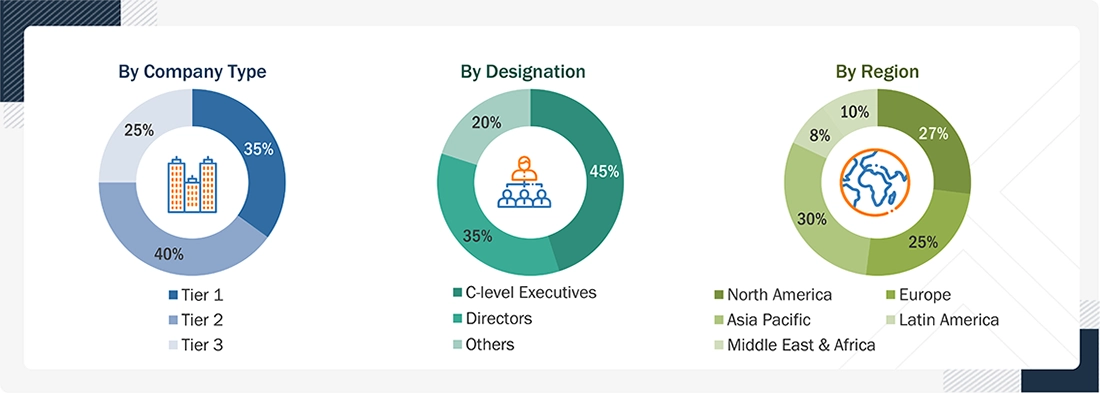
*Others include sales managers, marketing managers, and product managers.
Note 1: C-level executives include CEOs, CFOs, COOs, and VPs.
Note 2: Others include sales managers, marketing managers, business development managers, product managers, distributors, and suppliers.
Note 3: Companies are classified into tiers based on their total revenue. As of 2024, Tier 1 = >USD 10.00 billion, Tier 2 = USD 1.00 billion to USD 10.00 billion, and Tier 3 = <USD 1.00 billion.
Source: MarketsandMarkets Analysis
To know about the assumptions considered for the study, download the pdf brochure
Market Size Estimation
For the global market value, annual revenues were calculated based on revenue mapping of major product manufacturers and OEMs active in the global dental service organization market. All major product manufacturers were identified at the global and/or country/regional level. Revenue mapping for the respective business segments/subsegments was conducted for the major players. The global dental service organization market was also segmented into various segments and subsegments based on the:
- Identification of major dental service organizations operating at the regional and/or country level.
- Mapping of the service offerings provided by major dental service organizations at the regional and/or country level, including human resources, marketing and branding, accounting, medical supplies procurement, and other support services.
- Mapping of annual revenue generated by listed major dental service organizations from dental service organization-related operations or the nearest reported business unit/business segment.
- Revenue mapping of major dental service organizations covered in the market analysis.
- Extrapolation of the revenue mapping of the listed major dental service organizations to estimate the global market value of the respective service types and end-user segments.
- Summation of the market values of all service types and end-user segments to derive the global dental service organization market value.
The above-mentioned data was consolidated and enhanced with detailed inputs and analysis from MarketsandMarkets and presented in this report.
Dental Service Organization Market : Top-Down and Bottom-Up Approach

Data Triangulation
After determining the overall size of the global dental service organization market using the above-mentioned methodology, the market was segmented into several segments and subsegments. Data triangulation and market breakdown procedures were employed, wherever applicable, to complete the overall market engineering process and arrive at the exact market value data for the key segments and subsegments. The extrapolated market data was triangulated by analyzing various macroindicators and regional trends from both demand- and supply-side participants.
Market Definition
A dental service organization (DSO) is a business entity that provides non-clinical administrative and operational support to affiliated dental practices, enabling dentists to focus on delivering patient care. These organizations manage functions such as finance, human resources, marketing, procurement, information technology, regulatory compliance, and practice management, while clinical decisions and patient treatment remain the responsibility of licensed dental professionals. The DSO market comprises organizations that support single or multiple dental practices through centralized management, improving operational efficiency, scalability, cost-effectiveness, and access to advanced technologies.
Key Stakeholders
- Independent dental practices
- Affiliated dental practices
- Dentists and dental specialists
- Dental practice owners and practice managers
- Dental equipment manufacturers
- Dental consumables manufacturers
- Dental product distributors and suppliers
- Dental technology and software providers
- Dental laboratories
- Hospitals and dental clinics
- Dental insurance companies and benefit providers
- Patients and caregivers
- Government and regulatory bodies
- Private equity firms and institutional investors
- Academic and research institutions
- Market research and consulting firms
Report Objectives
- To define, describe, and forecast the global dental service organization market on the basis of service type, end user, and region
- To provide detailed information regarding the major factors influencing the growth of the market (drivers, opportunities, and challenges)
- To strategically analyze micromarkets with respect to individual growth trends, future prospects, and contributions to the overall market
- To analyze opportunities in the market for stakeholders and provide details of the competitive landscape for market leaders.
- To forecast the size of the dental service organization market with respect to four main regions (along with countries), namely, North America, Europe, Asia Pacific, and the Rest of the World
- To strategically profile the key players in the global dental service organization market and comprehensively analyze their core competencies and market shares.
- To track and analyze competitive developments such as partnerships, mergers & acquisitions, and new product launches of the leading players in the global dental service organization market.
Available customizations:
With the given market data, MarketsandMarkets offers customizations as per the company’s specific needs. The following customization options are available for the report:
Geographical Analysis
- Further breakdown of the Rest of Europe dental service organization market into Russia, Switzerland, Denmark, Austria, and others
- Further breakdown of the Rest of Asia Pacific dental service organization market into South Korea, Taiwan, and others
- Further breakdown of the Rest of Latin America dental service organization market into Argentina, Colombia, Chile, Ecuador, and others
- Further breakdown of the Southeast Asia dental service organization market into Malaysia, Singapore, New Zealand, and others
Competitive Landscape Assessment
- Market share analysis, by region (North America, Europe, Asia Pacific, Latin America, and the Middle East & Africa), which provides market shares of the top 3–5 key players in the dental service organization market.
- Competitive leadership mapping for established players in the US.


Personalize This Research
- Triangulate with your Own Data
- Get Data as per your Format and Definition
- Gain a Deeper Dive on a Specific Application, Geography, Customer or Competitor
- Any level of Personalization
Let Us Help You
- What are the Known and Unknown Adjacencies Impacting the Dental Service Organization Market
- What will your New Revenue Sources be?
- Who will be your Top Customer; what will make them switch?
- Defend your Market Share or Win Competitors
- Get a Scorecard for Target Partners

Custom Market Research Services
We Will Customise The Research For You, In Case The Report Listed Above Does Not Meet With Your Requirements
Get 10% Free CustomisationTESTIMONIALS

JAYANT RAJPUROHIT
Director of Market Insights, Data and Analytics
SFI Health,
Leading Pharmaceutical Companywww.sfihealth.com/

We at SFI Health approached MarketsandMarkets for an Opportunity Assessment on "Incidence and Prevalence of Focus Indications" as we wanted to know the most attractive HCPs like Physician, Functional MD, Naturopath and Pharmacist. The project was critical for us to ensure our focus on the right target which would enable sustainable growth and profitability for SFI Health. The business insights provided exceeded our expectations and we were extremely impressed. The team at MarketsandMarkets is highly professional and detail oriented and very well understood our business needs. MarketsandMarkets offers a unique combination of expertise and dedicated engagement model. We identified 2 new products to be launched in coming months, based on the research findings provided by MarketsandMarkets. We are happy with the services and would strongly recommend MarketsandMarkets to my peers in the industry.

BEATRIZ DE LA CALLE
Head of Commercial Analytics
Qualicaps,
Leading Pharmaceutical Companywww.qualicaps.com/

We partnered with MarketsandMarkets for an assessment study on hard empty capsules. The team was extremely professional in understanding our business requirements and we received timely responses to all our queries. The market intelligence and the recommendations has met our business requirements. We were extremely impressed to see the final study results; it really exceeded our expectations. The market intelligence offered by MarketsandMarkets, and clarity on next steps will help us achieve our business objective for the Year 2021. We are happy with the services and would strongly recommend MarketsandMarkets to my peers in the industry.

Bob Williams,
Senior Director Business Development & Innovation
Bracco Diagnostics Inc.,
Italian Multinational in life sciences sector and a World Leader in imaging diagnosticsimaging.bracco.com/us-en
We were pleased with targeted insights that MarketsandMarkets identified from a custom study on the 'Radiation Dose Management Solutions Market'. Your team identified and characterized the market participants as well as underlying trends accurately. This study was useful to Bracco in formulating business strategies for our dose monitoring product lines and we thank MarketsandMarkets for the job well done.
Cody Coonradt,
Market Development and Strategy Manager
3M Health Information Systems,
Leader in Health care Coding, Payment & Analytics Solutions.www.3m.com/3M/en_US/health-information-systems-us
The value for our organization comes from three things: depth of research, specificity of segments and being easy to work with. As important as the first two are, the third can't be underestimated. MarketsandMarkets, maybe more than any other research vendor, wants to know what is top of mind for our team and what big questions we are grappling to answer.
Their customer first approach and high value engagement model, have given us great analysis and excellent value for money






Growth opportunities and latent adjacency in Dental Service Organization Market