Laser Processing Market

Laser Processing Market by Laser Type (Solid Lasers, Gas Lasers, Liquid Lasers), Configuration (Fixed Beam, Moving Beam, Hybrid Beam), Application (Cutting, Welding, Drilling), End User, and Region - Global Forecast to 2033




OVERVIEW
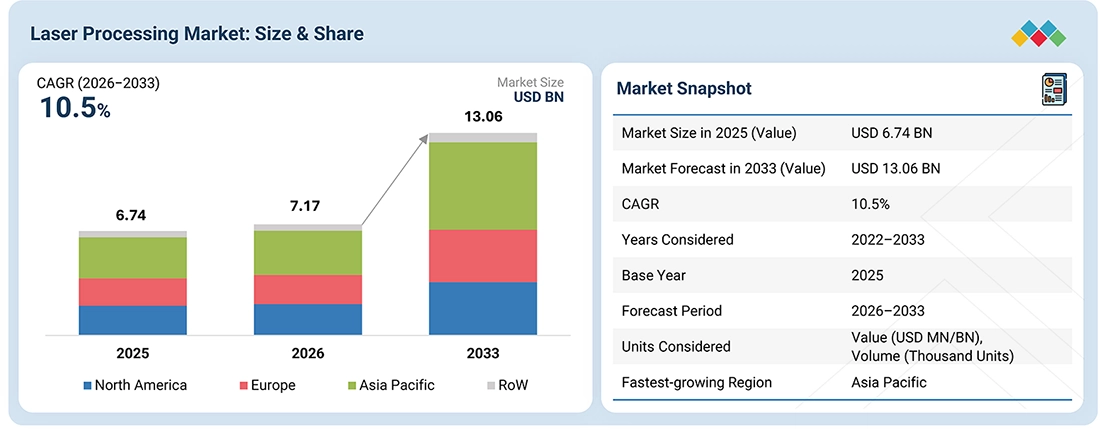
Source: Secondary Research, Interviews with Experts, MarketsandMarkets Analysis
The laser processing market is projected to reach USD 13.06 billion by 2033 from USD 7.17 billion in 2026, at a CAGR of 10.5% from 2026 to 2033. The market is driven by increasing demand for high-precision manufacturing, rising adoption of automation and robotics across industries, and advancements in laser technology supporting efficient and flexible material processing applications.
KEY TAKEAWAYS
-
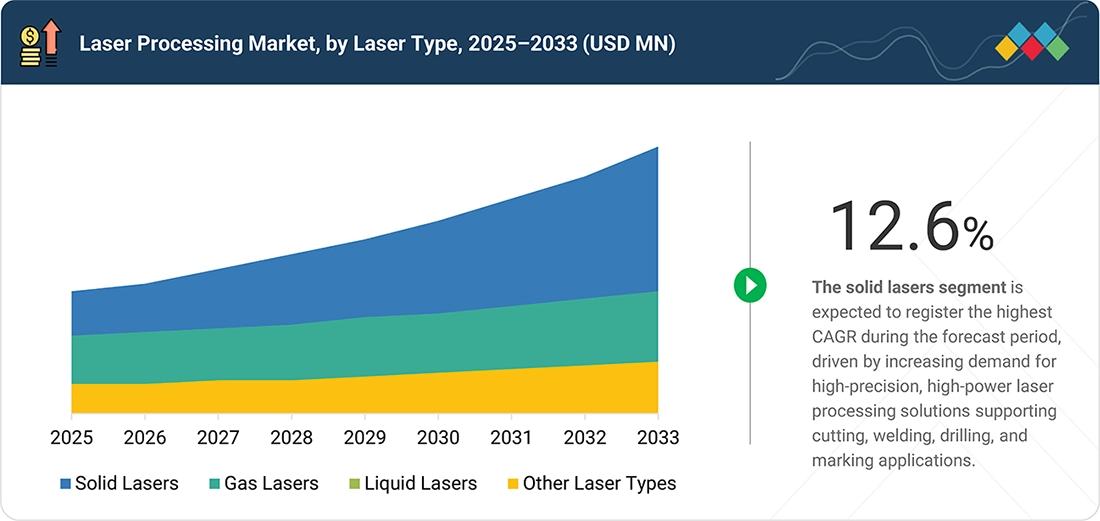
BY LASER TYPEBy laser type, the solid lasers segment is expected to account for the largest share of the laser processing market in 2033 due to their efficiency, reliability, high beam quality, and versatility across industrial applications.
-
BY CONFIGURATIONThe hybrid beam segment is expected to hold a 40.6% share of the laser processing market in 2026, driven by its ability to provide greater processing flexibility and support multiple laser-based operations.
-
BY APPLICATIONBy application, the cutting segment is expected to account for a market share of 30.1% in 2026, driven by its widespread use for high-precision and efficient material processing.
-
BY END-USE INDUSTRYBy end-use industry, the microelectronics & semiconductors segment accounts for the largest share of the laser processing market due to the increasing demand for precision manufacturing and miniaturization.
-
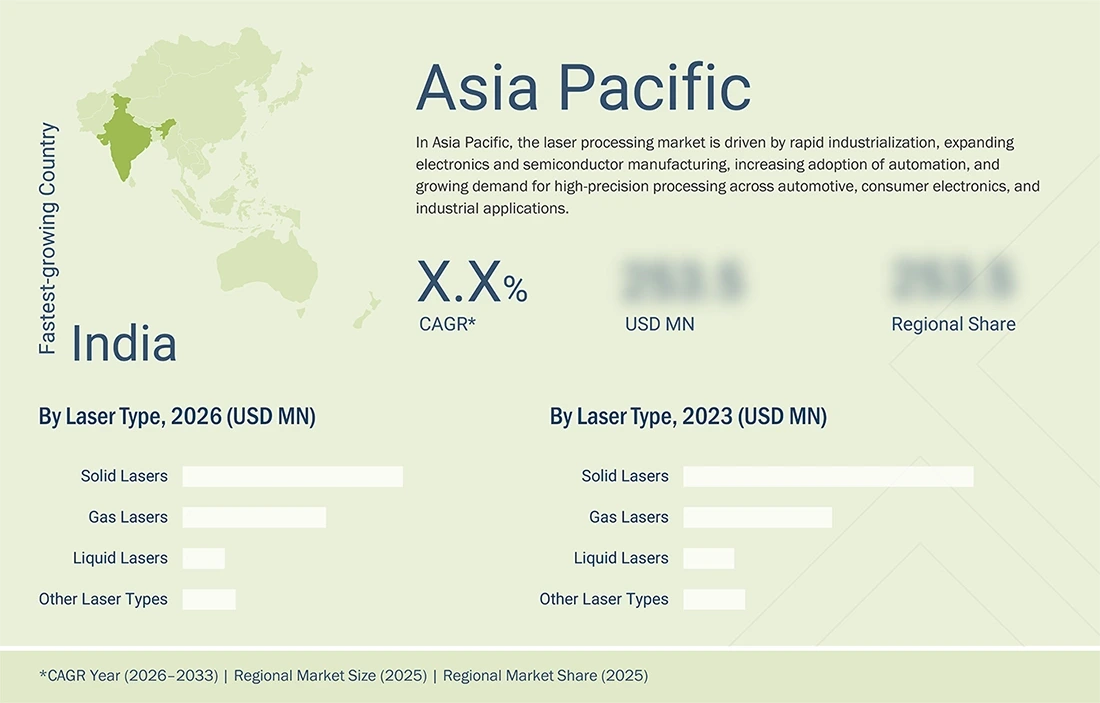
BY REGIONBy region, Asia Pacific is expected to record a CAGR of 12.0% in the laser processing market from 2026 to 2033.
-
COMPETITIVE LANDSCAPE - KEY PLAYERSThe laser processing market is characterized by the presence of established players with broad laser source, laser system, and photonics portfolios. Coherent Corp., TRUMPF, Han's Laser Technology Industry Group Co., Ltd., IPG Photonics Corporation, and JENOPTIK AG are among the key players, supported by strong technology capabilities, product innovation, geographic presence, and strategic partnerships, acquisitions, and product launches.
-
COMPETITIVE LANDSCAPE - STARTUPS/SMESThe laser processing market includes specialized and SME players focusing on niche laser sources, photonics technologies, laser processing equipment, and application-specific solutions. ALPHALAS GmbH, Applied Laser Technology, Inc., Arima Lasers Corp., Focuslight Technologies Inc., Inno Laser Technology Co., Ltd., Photonics Industries International, Inc., SFX, and TOPTICA Photonics AG are among the specialized players addressing targeted industrial, scientific, and high-precision laser processing applications.
The laser processing market is driven by rising demand for advanced manufacturing, miniaturized electronics, and industrial automation. Its applications span medical, automotive, and aerospace sectors for precision material processing. Technological innovations in laser systems and software continue to enhance efficiency and expand adoption across high-tech industries
TRENDS & DISRUPTIONS IMPACTING CUSTOMERS' CUSTOMERS
The laser processing market is undergoing a shift from traditional toward emerging technologies, driving a new revenue mix across industries. Advancements in solid, liquid, and gas lasers are fueling adoption in sectors such as microelectronics, automotive, aerospace, and medical devices. These innovations align with broader trends such as Industrial IoT (IIoT), AI, cloud computing, and predictive maintenance, which are transforming manufacturing efficiency and precision. As digitalization accelerates, emerging technologies are becoming central to clients’ strategic imperatives and long-term growth outcomes.
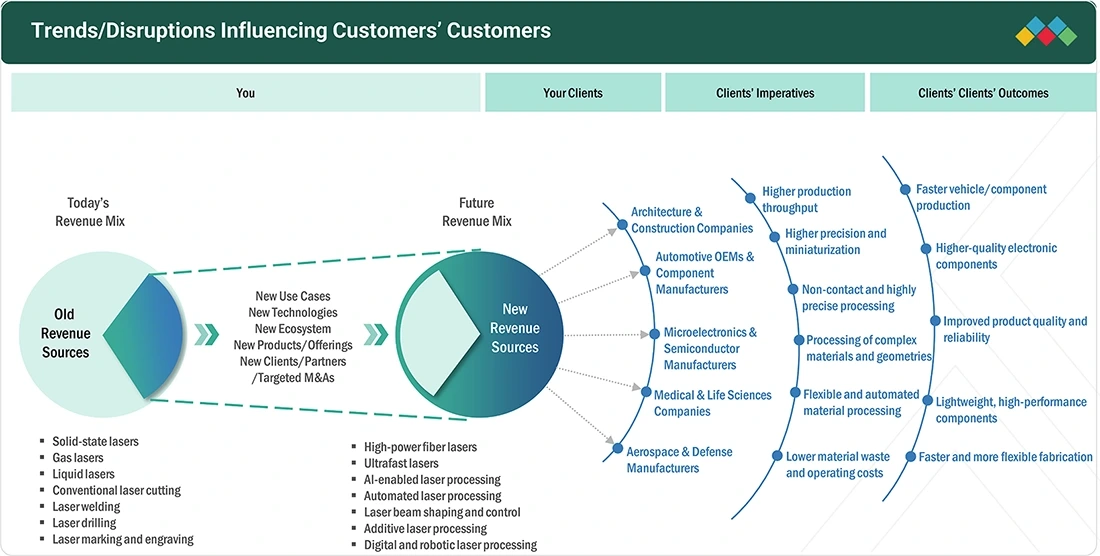
Source: Secondary Research, Interviews with Experts, MarketsandMarkets Analysis
MARKET DYNAMICS

Level
-
Rising integration of laser technologies in precision healthcare and tailored treatments

-
Rapid transition from traditional material processing methods to advanced laser-based solutions


Level
-
Significant R&D investment and initial deployment costs

-
Limited availability of skilled laser technicians


Level
-
Expanding use of laser technologies in automotive sector

-
Strong focus on enhancing design, functionality, and personalization of consumer goods


Level
-
Environmental concerns due to reliance on rare-earth elements

-
Technical limitations in high-power laser integration

Source: Secondary Research, Interviews with Experts, MarketsandMarkets Analysis
Driver: Rising integration of laser technologies in precision healthcare and tailored treatments
Laser processing is a highly valuable tool in the medical industry due to its precision, versatility, and minimally invasive nature. This technique is crucial in the medical industry for offering precise and minimally invasive solutions. Lasers have unique properties, such as focusing on specific tissues, high precision, and minimal collateral damage, making them perfect for medical procedures.
Restraint: Significant R&D investment and initial deployment costs
Research & development investments to advance laser technologies and ensure compliance with safety standards contribute to the high upfront costs. Quality assurance procedures, infrastructure requirements, and the need for customization to suit specific applications contribute to the overall financial commitment associated with deploying laser technology. The applications of lasers are increasing in various industries, such as automotive, semiconductor, industrial, medical, research, and defense.
Opportunity: Expanding use of laser technologies in automotive sector
Laser processing has become a fundamental technology in the automotive industry, improving manufacturing processes and product quality. One of the most crucial applications is laser welding, which allows for the precise and efficient joining of automotive components, including body panels and exhaust systems, resulting in strong and durable bonds. Laser cutting is pivotal in shaping metal sheets for body panels and other intricate parts with unparalleled precision and speed, reducing production time and material waste.
Challenge: Environmental concerns due to reliance on rare-earth elements
The use of rare earth elements (REEs) in laser processing is causing environmental concerns due to the potential negative impacts associated with their extraction, processing, and disposal. Rare earth elements, such as neodymium and dysprosium, are critical in producing certain types of lasers, particularly solid-state lasers used in various applications.
LASER PROCESSING MARKET SIZE, SHARE & TRENDS, 2025 TO 2032: COMMERCIAL USE CASES ACROSS INDUSTRIES
| COMPANY | USE CASE DESCRIPTION | BENEFITS |
|---|---|---|
 |
High-power fiber lasers for cutting and welding in automotive and electronics manufacturing | Precise material processing | Reduced thermal distortion | Increased throughput speeds | Lower operating costs |
 |
Laser systems for sheet metal fabrication and 3D printing (additive manufacturing) in industrial applications | High cutting speeds | Exceptional edge quality | Reduced material waste | Flexibility in complex geometries |
 |
UV laser marking and engraving systems for consumer electronics and semiconductor packaging | Ultra-fine precision marking | Minimal heat-affected zone | Permanent traceability | High-speed processing |
 |
High-power fiber lasers for metal cutting, welding, and additive manufacturing in aerospace and heavy industry | Superior beam quality | Energy efficiency up to 40% better than CO2 lasers | Reduced maintenance | Longer operational life |
 |
Laser material processing systems for micro-machining in medical device manufacturing and photonics | Extreme precision at microscale | Minimal material damage | Clean processing without contamination | High repeatability |
Logos and trademarks shown above are the property of their respective owners. Their use here is for informational and illustrative purposes only.
MARKET ECOSYSTEM
The laser processing ecosystem comprises raw material suppliers, laser processing system manufacturers, laser processing system distributors, and end-use industries. The ecosystem identifies end-use Industries, such as microelectronics & semiconductors, automotive, medical & life sciences, aerospace, and architecture & construction.
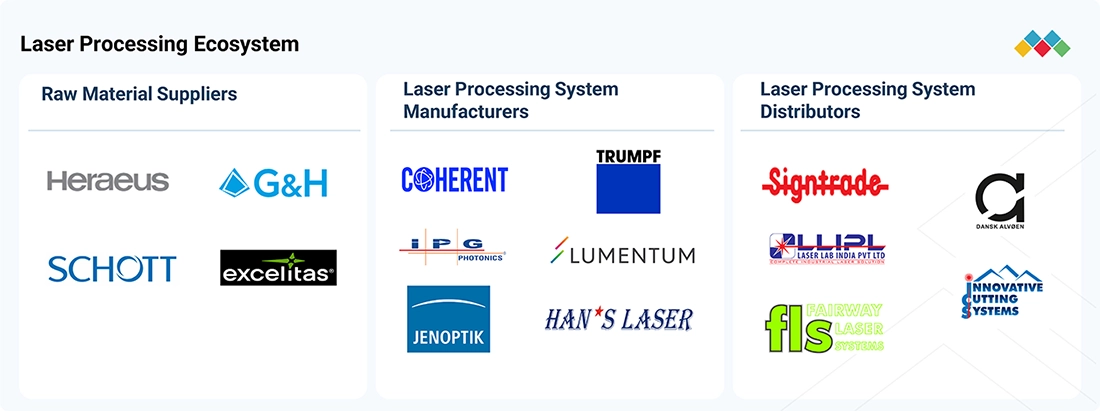
Logos and trademarks shown above are the property of their respective owners. Their use here is for informational and illustrative purposes only.
MARKET SEGMENTS
Source: Secondary Research, Interviews with Experts, MarketsandMarkets Analysis
Laser Processing Market, By Laser Type
The laser processing market encompasses a range of laser types, each tailored for specific industrial, medical, and research applications. This chapter provides a comprehensive overview of the key laser types, including solid lasers, gas lasers, liquid lasers, and other laser types. Solid lasers are further divided into fiber lasers, RUBY lasers, YAG lasers, semiconductor lasers, and thin-disk lasers. Gas lasers are further categorized into CO: lasers, excimer lasers, helium-neon lasers, argon lasers, and chemical lasers, which offer versatile capabilities for cutting, engraving, and medical treatments.
Laser Processing Market, By Configuration
Laser processing is widely used across various industries for applications such as welding, drilling, marking, engraving, and advanced material processing. These processes benefit from high precision, repeatability, and minimal material distortion. Depending on the motion and control of the laser beam relative to the material, laser systems are configured into three main types: fixed beams, moving beams, and hybrid beams. These setups are typically based on movements along the X-axis, Y-axis, and, in some cases, the Z-axis, especially in multi-axis CNC operations. The choice of configuration directly impacts processing speed, efficiency, and quality, making it essential to align the system setup with the specific requirements of the manufacturing process.
Laser Processing Market, By Application
Laser technology has become integral across various industrial applications due to its precision, speed, and versatility. Key applications include cutting, welding, drilling, marking & engraving, advanced processing, and other applications such as ablation, annealing, soldering, and microstructuring, Industries such as automotive, aerospace, electronics, medical devices, and manufacturing are increasingly adopting laser systems to enhance production efficiency, product quality, and customization capabilities. The market growth is driven by rising demand for miniaturized components, increasing automation across sectors, and advancements in laser technology, including ultrafast and fiber lasers.
Laser Processing Market, By End-use Industry
Laser processing has become a vital manufacturing tool across various industries for cutting, welding, engraving, marking, and drilling with high accuracy and minimal material waste. In the machine tools and microelectronics & semiconductors sectors, laser systems support high-speed fabrication and miniaturization. The automotive and medical & life sciences Industries benefit from precision welding and marking for safety and traceability. The aerospace and architecture & construction sectors use laser processing for advanced material handling and complex design implementations. Other end-use industries, such as defense, nuclear, consumer goods, and food & beverages, are increasingly integrating laser solutions for marking, packaging, and clean processing. Laser processing technologies are key in advancing production capabilities as these industries evolve.
REGION
Asia Pacific to register highest CAGR in laser processing market during forecast period.
Asia Pacific is projected to record the highest CAGR in the global laser processing market during the forecast period, driven by its strong manufacturing base in China, Japan, South Korea, and India. The growth is supported by expanding electronics, automotive, and semiconductor industries, along with government-backed automation and R&D initiatives. Emerging hubs such as Vietnam and Thailand are attracting global investments, while digital transformation and smart factory adoption further boost the demand for advanced laser systems.
LASER PROCESSING MARKET SIZE, SHARE & TRENDS, 2025 TO 2032: COMPANY EVALUATION MATRIX
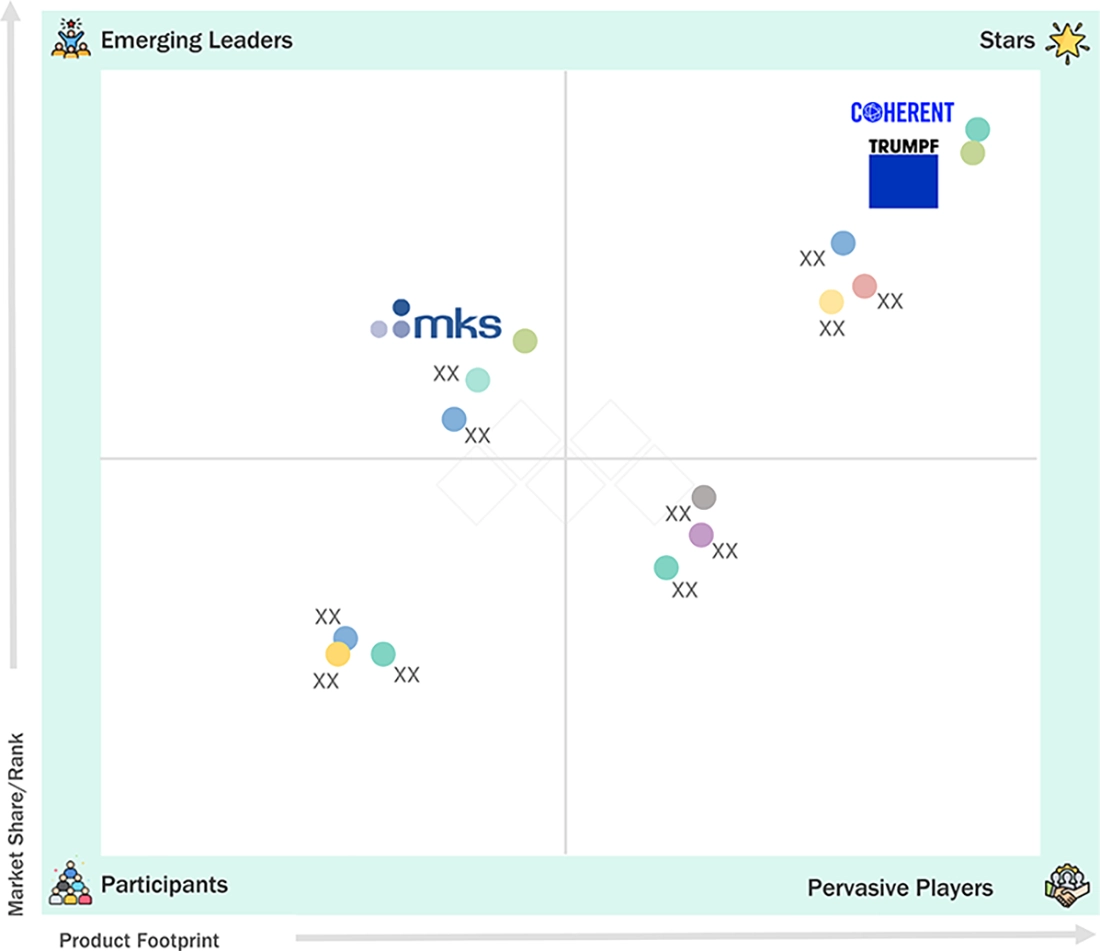
In the laser processing market, Coherent Corp. (US) and TRUMPF (Germany) are star players with strong portfolios, broad market reach, and strategic innovations driving global adoption. MKS Instruments (US) stands as an emerging leader, leveraging its focused, advanced laser technologies to enhance competitiveness despite a smaller market share.
Source: Secondary Research, Interviews with Experts, MarketsandMarkets Analysis
KEY MARKET PLAYERS
- Coherent Corp. (US)
- TRUMPF (Germany)
- Han's Laser Technology Industry Group Co., Ltd. (China)
- IPG Photonics Corporation (US)
- JENOPTIK AG (Germany)
- Fives (France)
- AXBIS (South Korea)
- Lumentum Operations LLC (US)
- Gravotech, Inc. (France)
- Laser Star Technologies (US)
MARKET SCOPE
| REPORT METRIC | DETAILS |
|---|---|
| Market Size in 2025 (Value) | USD 6.74 Billion |
| Market Forecast in 2026 (Value) | USD 7.17 Billion |
| Market Forecast in 2033 (Value) | USD 13.06 Billion |
| CAGR | 10.5% |
| Years Considered | 2022–2033 |
| Base Year | 2025 |
| Forecast Period | 2026–2033 |
| Units Considered | Value (USD Billion/Million), Volume (Thousand Units) |
| Report Coverage | Revenue Forecast, Company Ranking, Competitive Landscape, Growth Factors, and Trends |
| Segments Covered |
|
| Regions Covered | North America, Europe, Asia Pacific and RoW |
WHAT IS IN IT FOR YOU: LASER PROCESSING MARKET SIZE, SHARE & TRENDS, 2025 TO 2032 REPORT CONTENT GUIDE
DELIVERED CUSTOMIZATIONS
We have successfully delivered the following deep-dive customizations:
| CLIENT REQUEST | CUSTOMIZATION DELIVERED | VALUE ADDS |
|---|---|---|
| Laser Equipment OEM |
|
|
| Asia Pacific Laser Processing Startup |
|
|
| Laser Processing System Provider |
|
|
| Laser Processing System Integrator |
|
|
| US Based Solid State Laser Provider |
|
|
RECENT DEVELOPMENTS
- September 2026 : TRUMPF introduced the TruLaser Weld 3000, a compact robotic laser welding cell with artificial intelligence (AI)-supported programming. The system uses AI to accelerate programming, while compact welding optics enable access to difficult-to-reach areas. The solution is designed for flexible, automated welding applications and small-batch production.
- January 2026 : IPG Photonics Corporation showcased a novel 8 kW compact single-mode laser source with high beam quality at SPIE Photonics West 2026. The laser was subsequently recognized with the 2026 SPIE Prism Award in the Lasers category and is designed to deliver higher precision while enabling new industrial processing applications.
Table of Contents
 Exclusive indicates content/data unique to MarketsandMarkets and not available with any competitors.
Methodology
The research process for this technical, market-oriented, and commercial study of the laser processing market included systematic gathering, recording, and analysis of data about companies operating in the market. It involved the extensive use of secondary sources, directories, and databases to identify and collect relevant information. In-depth interviews were conducted with various primary respondents, including experts from core and related industries and preferred manufacturers, to obtain and verify critical qualitative and quantitative information as well as to assess the growth prospects of the market. Key players were identified through secondary research, and their market rankings were determined through primary and secondary research. This included studying annual reports of top players and interviewing key industry experts, such as CEOs, directors, and marketing executives.
Secondary Research
In the secondary research process, various secondary sources have been referred to for identifying and collecting information relevant to this study. Secondary sources include annual reports, press releases, and investor presentations of companies; white papers, certified publications, and articles from recognized authors; directories; and databases. Secondary research has been mainly conducted to obtain key information about the supply of the laser processing industry; a total pool of key players; segmentation of the market according to laser type, configuration, end users, geographic markets, and key developments from market- and technology-oriented perspectives.
Primary Research
In the primary research process, primary sources from the supply and demand sides have been interviewed to obtain qualitative and quantitative information for this report. Primary sources from the supply side include experts, such as CEOs, vice presidents, marketing directors, technology and innovation directors, subject-matter experts, consultants, and related key executives from major companies and organizations operating in the laser processing market.
After the complete market engineering process (market statistics calculations, market breakdown, market size estimations, market forecasting, and data triangulation), extensive primary research has been conducted to gather information and verify and validate the critical market numbers.
Several primary interviews have been conducted with experts from the demand and supply sides across four major regions - North America, Europe, Asia Pacific, and RoW. Approximately 25% of the primary interviews were conducted with the demand side and 75% with the supply side. This primary data has been collected through questionnaires, emails, and telephonic interviews.
Breakdown Of Primary Interview Participants
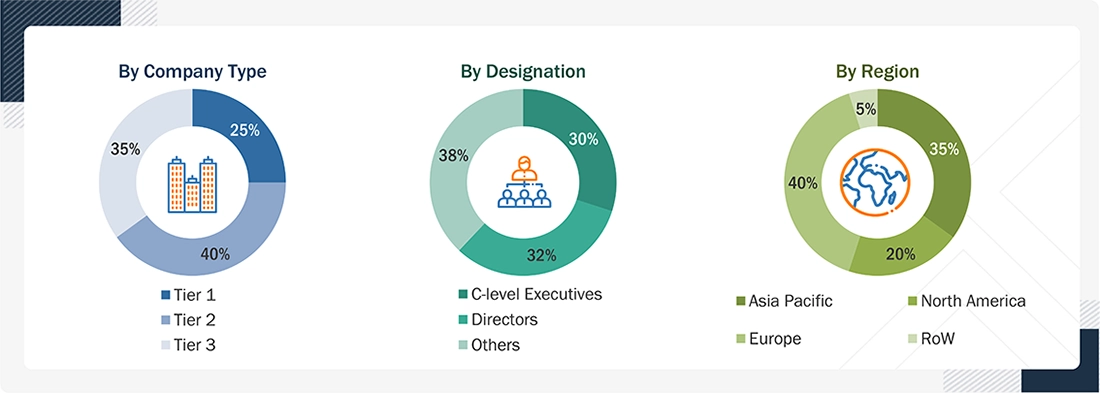
Note: Other designations include sales, marketing specialists, and product managers.
RoW mainly includes the Middle East & Africa and South America.
The 3 tiers of the companies have been defined based on their total revenue as of 2023; tier 1: revenue greater than USD 1 billion, tier 2: revenue between USD 500 million and USD 1 billion, and tier 3: revenue less than USD 500 million.
To know about the assumptions considered for the study, download the pdf brochure
Market Size Estimation
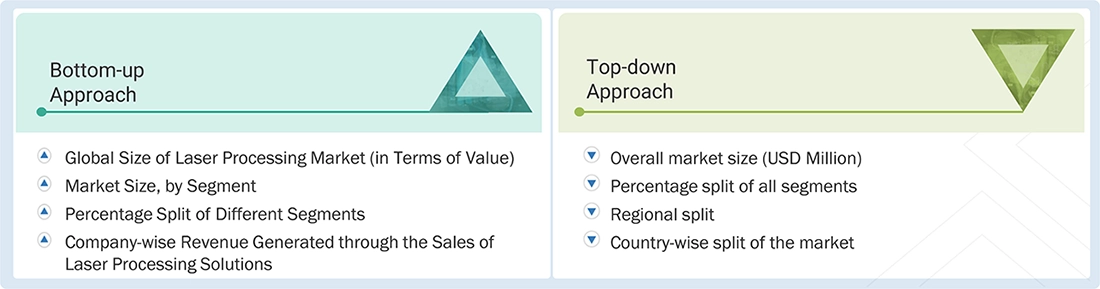
In the complete market estimation process, the top-down and bottom-up approaches have been used, along with several data triangulation methods, to estimate and forecast the size of the market and its segments and subsegments listed in the report. Extensive qualitative and quantitative analyses have been carried out on the complete market engineering process to list the key information/insights pertaining to the laser processing market.
Key players in the laser processing market have been identified through secondary research, and their rankings in the respective regions have been determined through primary and secondary research. This entire procedure involved the study of the annual and financial reports of top players and interviews with industry experts, such as chief executive officers, vice presidents, directors, and marketing executives, for quantitative and qualitative insights. All percentage shares, splits, and breakdowns have been determined using secondary sources and verified through primary sources. All parameters that affect the markets covered in this research study have been accounted for, viewed in extensive detail, verified through primary research, and analyzed to obtain the final quantitative and qualitative data. This data has been consolidated and enhanced with detailed inputs and analysis from MarketsandMarkets and presented in this report.
Bottom-Up Approach
- The first step involved identifying companies that offer laser processing solutions, followed by mapping their products according to various parameters, such as laser type, configuration, application, end-use industries, and region.
- The size of the laser processing market has been calculated based on the demand from various end users and the revenue generated by companies within the laser processing ecosystem.
- To confirm the global market size, primary interviews have been conducted with a few major players in the market.
- The market size has also been cross-checked using secondary sources, which included Springer Nature Limited, Laser Focus World, Spectrum Plastics Group, Universal Laser Systems, Inc., Resonetics, and the Journal of Laser Applications. Other secondary sources comprised company websites, press releases, and research journals.
- To determine the compound annual growth rate (CAGR) of the market, both historical and projected market trends have been analyzed by examining the industry’s penetration rate, as well as the supply and demand from various verticals.
- All estimates at each stage have been confirmed through discussions with key opinion leaders, including corporate executives (CXOs), directors, and sales heads, as well as industry experts from MarketsandMarkets.
- Several paid and unpaid information sources, such as annual reports, press releases, white papers, and databases, have also been reviewed during the research process.
Top-Down Approach
- To estimate the global size of the laser processing market, revenue information from leading manufacturers and providers of laser processing systems and solutions has been gathered and analyzed.
- The laser processing market is projected to exhibit a steady growth trend during the forecast period, reflecting its maturity and the presence of numerous well-established players across various sectors.
- The revenues, geographic footprints, key market sectors, and product offerings of all identified players in the laser processing market have been studied to estimate the percentage distribution of different market segments.
- Major players in each category (laser type, application, and end-use industry) within the laser processing market have been identified through secondary research, and information has been confirmed through brief discussions with industry experts.
- Several discussions with key opinion leaders from leading companies involved in developing laser processing systems have been conducted to validate the market segmentation based on laser type, configuration, application, end user, and region.
- The geographic segmentation has been done using secondary research, considering factors such as the presence and concentration of companies offering laser processing solutions across different countries and regions.
Laser Processing Market : Top-Down and Bottom-Up Approach
Data Triangulation
After arriving at the overall market size from the market size estimation process explained in the previous section, the total market was split into several segments and subsegments. Market breakdown and data triangulation procedures have been employed, wherever applicable, to complete the overall market engineering process and arrive at the exact statistics for all segments and subsegments. The data have been triangulated by studying various factors and trends from the demand and supply sides. Along with this, the laser processing market has been validated using both top-down and bottom-up approaches.
Market Definition
The laser processing market includes a range of systems used for precision cutting, welding, drilling, marking, and surface treatment. These systems are classified by laser type as solid lasers (fiber, ruby, YAG, semiconductor, thin-disk), gas lasers (CO2, excimer, helium-neon, argon, chemical), liquid lasers, and other laser types. Laser processing enables high-speed, contactless operations with superior accuracy and minimal material distortion, making it essential for applications requiring fine detail and high quality. It plays a critical role in industries such as microelectronics & semiconductors, automotive, medical and life sciences, aerospace, and architecture & construction.
The market is driven by the rising demand for advanced manufacturing solutions, miniaturized electronic components, and increased automation. In medical settings, lasers are used for surgical procedures and device fabrication. In the automotive and aerospace sectors, they support lightweight material processing and structural integrity. Ongoing innovations in laser sources, beam control, cooling systems, and integrated software have enhanced energy efficiency and precision, expanding their adoption. These advancements continue to open new opportunities for the adoption of laser processing in industrial and high-tech sectors.
Key Stakeholders
- Microelectronics manufacturers
- Aerospace companies
- Medical & life sciences companies
- Automotive companies
- Architecture firms
- Machine tool manufacturers
- Lasers and systems manufacturers
- Laser processing solution providers
- Engineering and manufacturing companies
- Technology providers
Report Objectives
- To estimate and forecast the size of the laser processing market, by laser type, configuration, application, end-use industry, and region, in terms of value
- To provide qualitative information about the components of laser processing
- To describe and forecast the market size for four major regions: North America, Europe, Asia Pacific, and RoW, in terms of value
- To provide detailed information regarding the major factors, such as drivers, restraints, opportunities, and challenges, influencing the market growth
- To provide a detailed overview of the laser processing value chain
- To strategically analyze micromarkets regarding individual market trends, growth prospects, and contributions to the total market
- To strategically profile key players and comprehensively analyze their market position in terms of ranking and core competencies, along with a detailed competitive landscape for the market leaders
- To analyze major growth strategies such as product launches/developments and acquisitions adopted by the key market players to enhance their market position
- To analyze the impact of the macroeconomic factors impacting the laser processing market.
Available customizations:
With the given market data, MarketsandMarkets offers customizations according to the company’s specific needs. The following customization options are available for the report:
Company Information
- Detailed analysis and profiling of up to five additional market players
Key Questions Addressed by the Report
Which are the major companies in the laser processing market? What are their significant strategies to strengthen their market presence?
The major companies in the laser processing market are Coherent Corp. (US), TRUMPF (Germany), Han's Laser Technology Industry Group Co., Ltd. (China), IPG Photonics Corporation (US), and JENOPTIK AG (Germany). These players adopt major strategies, including product launches and developments, collaborations, acquisitions, and expansions.
Which region is expected to dominate the laser processing market?
The Asia Pacific region is expected to dominate the laser processing market due to the growth in automation and smart manufacturing and increased adoption in renewable energy projects.
What are the opportunities for new market entrants?
There are significant opportunities for start-up companies in the laser processing market. These companies provide innovative and diverse product portfolios.
What are the drivers and opportunities for the laser processing market?
Expanding use of laser technologies in the automotive sector and growing adoption of laser processing for enhanced design, functionality, and personalization in consumer goods are fueling market growth.
What are the major laser processing technologies expected to drive the market's growth in the next five years?
Major laser processing technologies, such as fiber lasers, CO2 lasers, and diode lasers, are expected to drive market growth through their diverse applications in cutting, welding, and marking across industries.


Personalize This Research
- Triangulate with your Own Data
- Get Data as per your Format and Definition
- Gain a Deeper Dive on a Specific Application, Geography, Customer or Competitor
- Any level of Personalization
Let Us Help You
- What are the Known and Unknown Adjacencies Impacting the Laser Processing Market
- What will your New Revenue Sources be?
- Who will be your Top Customer; what will make them switch?
- Defend your Market Share or Win Competitors
- Get a Scorecard for Target Partners

Custom Market Research Services
We Will Customise The Research For You, In Case The Report Listed Above Does Not Meet With Your Requirements
Get 10% Free CustomisationTESTIMONIALS

Tetsuya Ohhira
Business Development Manager-Technology Business
Nikon Corporation,
Leading Japanese MNC specializing in optics and imaging productswww.nikon.com
MarketsandMarkets™ response
is quick. Their attitude is flexible and positive. Analyst Insights are globally considered and
significant. Client Services quickly respond to our inquiry and demand. Their wide range of global
surveys help us make our strategic plan.
We hope Knowledge Store will be easier to search
for a report.
VP - Marketing & Business Development
Leading Provider of Process Control Solutions
We engaged with MarketsandMarkets on a study to perform an analysis and recommend a Go-To-Market strategy for metrology and process control in the semiconductor market. The study was tailored to our targets and needs with well-defined milestones. Our overall experience with the MarketsandMarkets team was very good throughout the project in all aspects including the analysis methodologies used, the quality and depth of primary and secondary data sets, the professionalism and flexibility of the team and the ability to meet the target schedule and milestones. We want to thank MarketsandMarkets team for a job well done.
- Canada Laser Processing Market
- Mexico Laser Processing Market
- US Laser Processing Market
- UK Laser Processing Market
- Germany Laser Processing Market
- France Laser Processing Market
- Italy Laser Processing Market
- Spain Laser Processing Market
- Netherlands Laser Processing Market
- Switzerland Laser Processing Market
- Poland Laser Processing Market
- China Laser Processing Market
- Japan Laser Processing Market
- South Korea Laser Processing Market
- India Laser Processing Market
- Australia Laser Processing Market
- Indonesia Laser Processing Market
- Malaysia Laser Processing Market
- Thailand Laser Processing Market
- Vietnam Laser Processing Market
- Nordics Laser Processing Market
- Rest Of Europe Laser Processing Market
- Rest Of Asia Pacific Laser Processing Market
Growth opportunities and latent adjacency in Laser Processing Market






Kevin
Apr, 2015
How dot peen marking affect adoption of laser for marketing and engraving application?.
Sébastien
Jan, 2019
Dear Sir/Madam, I am working on a project involving femtosecond pulsed lasers for my master's thesis. The project focuses on laser microprocessing of silicon. Thus I would be really interested by having any information on the laser microprocessing market of silicon or the market of silicon in general. Unfortunately we don't have enough funding now to purchase your book without being sure we can find what we are looking for. This is why I am requesting a free sample report. .
Georg
Mar, 2014
Dear Market research Team, Before buying I would like to have a summary of the study..
Chiara
Jun, 2013
Hi, I am interested in evaluate the US laser processing market and their applications that best fit the using of small-medium Fiber laser machines, which have an high precision and can work for small/medium metal pieces. .
Mark
Sep, 2014
Currently selling Nitrogen Gas generators throughout Eastern Europe and CIS and would be interested in what this report has to say, in relation to Laser Cutting..
Naoki
Jan, 2015
Interested in each of the applications by the market size of Laser Diode, DPSSL, and Fiber Laser. We especially would like to make sure the application..
Jinan
Aug, 2015
Will increase in adoption of fiber laser will affect demand of CO2 laser?.
Joanna
Dec, 2018
I am a polish student and involved in some project about ultrafast lasers. I have found that they are commonly used in micromachining so I am also really interested in this market. Can you share the summary for this market study?.
chirag
Dec, 2014
I am specially interested in fiber laser latest developments. And market opportunity for high power cutting machine in South Asia and Middle East regions. .
Juan
Apr, 2019
Trying to understand the market for ultra-short pulse lasers for the processing of ultra-hard materials ..
Jack
Jul, 2015
Hard to tell what your definition of "Laser Processing Market" is - seems like this includes more than just annual system sales. Can you please define it a bit further - what the study covers in this $17.4 billion market by 2020?.
Mahesh
Dec, 2015
I need to know which companies you have considered for the study, are these companies produces laser machines or the user of the machines?.
John
Oct, 2014
Interested in laser marking and engraving applications as it relates to tooling and tube identification specifically in aerospace and automotive industry segments. .
Jensen
Oct, 2014
Can you provide the qualitative and quantitative data for laser marking and engraving applications particularly for growth in the fiber and decline in CO2 and other solid state lasers?.
Aaron
Jul, 2017
I'm one of the co-founders in a startup focused on distributed manufacturing. I've been struggling to find a decent total addressable market number, and I'm pretty sure you guys have some of the data I need in your report. We don't have the funds to buy the full report. I'm wondering if you would be willing to sell part of the data so I can build a market case for investors. We are focused specifically on the laser fabrication market for metals and non-metals. For the time being out customers are mainly prototyping parts. I appreciate any help or advice you can offer. .