Electric Vehicle Fleet Management Market

Electric Vehicle Fleet Management Market by Solution (Operations Management, Battery Maintenance & Diagnostics, Performance Management, Fleet Analytics & Reporting), Fleet Type (Passenger Cabs, Commercial, Public Transport) - Global Forecast to 2030




OVERVIEW
Source: Secondary Research, Interviews with Experts, MarketsandMarkets Analysis
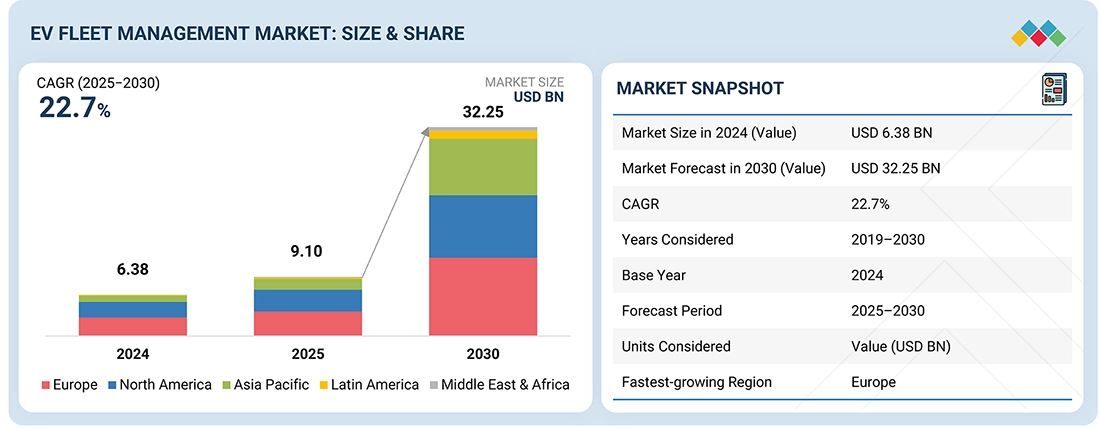
The electric vehicle fleet management market is projected to grow from USD 9.10 billion in 2025 to USD 32.25 billion by 2030, at a CAGR of 22.7% over the period. The EV fleet management market is expanding as electrification becomes a primary strategic pillar for global operators. Organizations are increasingly adopting electric vehicles to meet decarbonization targets and optimize fiscal efficiency. However, this transition introduces systemic operational complexities, particularly in range management and charging orchestration. EV-centric platforms provide essential data on battery health, energy consumption, and real-time vehicle availability. By deploying these systems, enterprises improve asset utilization and ensure operational continuity, collectively serving as a catalyst for accelerated long-term market growth.
KEY TAKEAWAYS
-
RegionBy region, Europe is projected to grow at the fastest rate from 2025 to 2030.
-
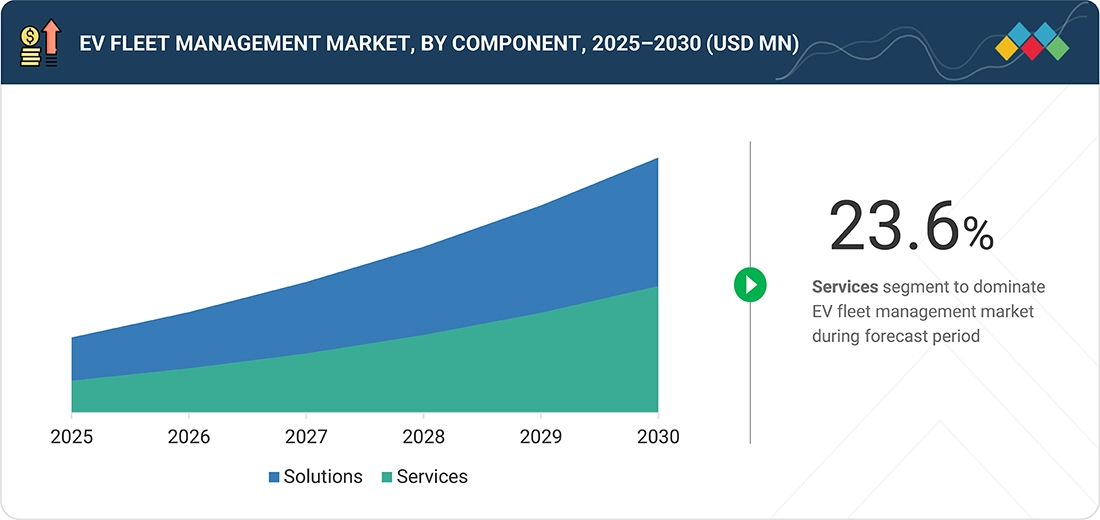
By ComponentBy component, the services segment is expected to register the highest CAGR of 23.6%.
-
By Fleet TypeBy fleet type, the commercial vehicles segment is projected to grow at the highest rate of 30.8% from 2025 to 2030.
-
By VerticalBy vertical, the transportation & logistics segment is expected to dominate with a share of 18.06% in 2025.
-
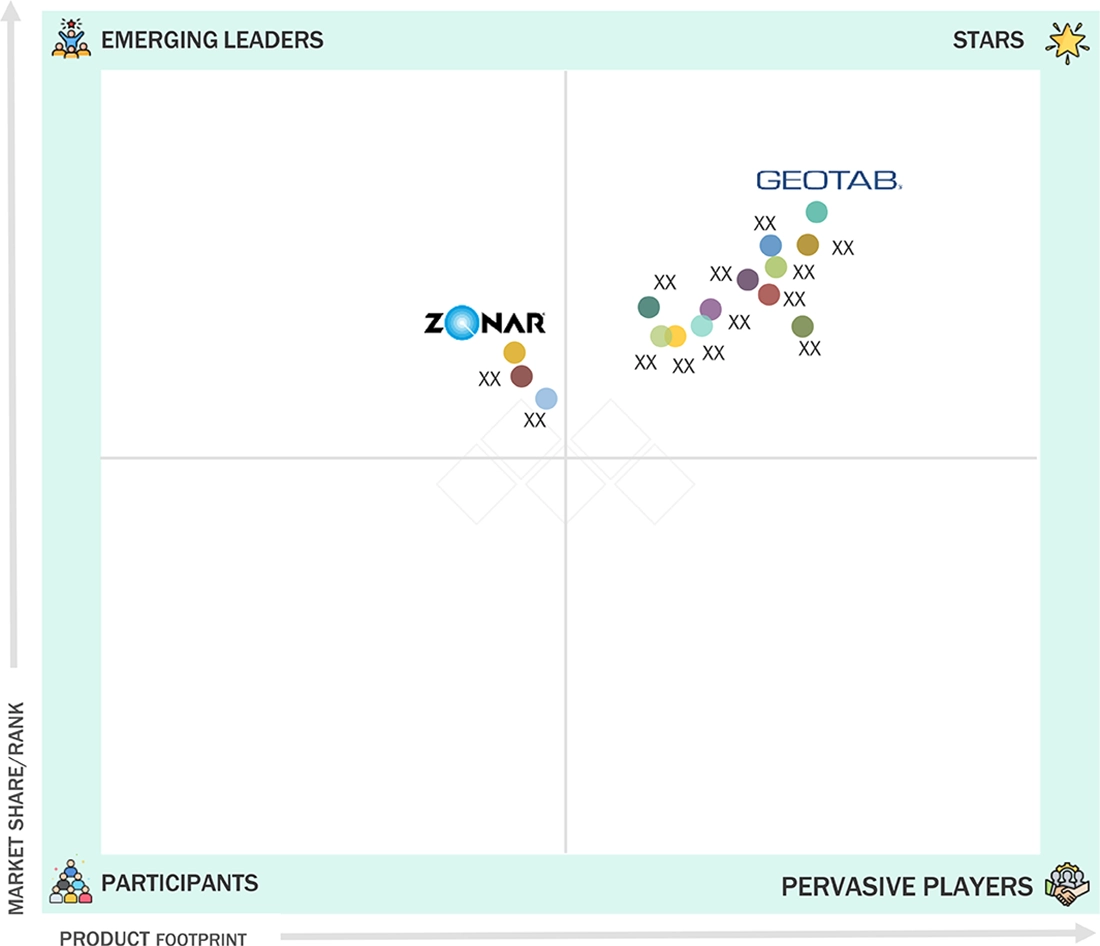
Competitive Landscape - Key PlayersGeotab, Samsara, Verizon Connect were identified as some of the star players in the EV fleet management market, given their strong market share and product footprint.
-
Competitive Landscape - Startups/SMEsCompanies such as Virta, Driivz, and Loconav, among others, have distinguished themselves among startups and SMEs by securing strong footholds in specialized niche areas, underscoring their potential as emerging market leaders
Strict emissions mandates and corporate decarbonization targets are accelerating the systemic transition toward electric-vehicle (EV) fleets. Improved vehicle affordability, falling battery costs, and strategic government incentives are lowering the total cost of ownership. Infrastructure expansion, particularly the growth of public networks and specialized depot charging, is mitigating operational range anxiety. Concurrently, the surge in e-commerce logistics is increasing demand for high-utilization delivery fleets and shorter asset replacement cycles. These factors are driving adoption of sophisticated management software for real-time performance monitoring, maintenance optimization, and flexible financing frameworks.
TRENDS & DISRUPTIONS IMPACTING CUSTOMERS' CUSTOMERS
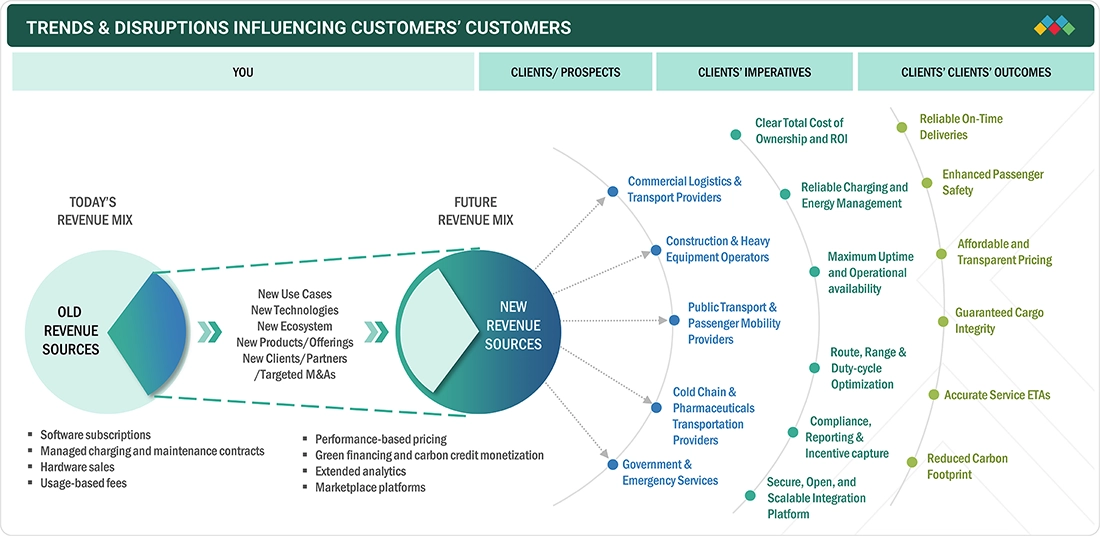
The electric vehicle (EV) fleet management sector is undergoing a structural transformation driven by the convergence of electrification, intelligent energy orchestration, and innovative commercial models. Operators are increasingly adopting integrated platforms that synchronize telematics, depot charging, and battery lifecycle monitoring. Across sectors such as logistics and public transit, demand is surging for solutions that guarantee vehicle availability through predictive maintenance and optimized duty cycles. Furthermore, rigorous regulatory mandates and incentive programs necessitate audit-ready emissions reporting and strategic incentive capture. Service providers are transitioning from traditional hardware sales toward recurring, outcome-oriented revenue streams including managed charging and data monetization. Supported by open API architectures and utility partnerships, these developments facilitate a shift toward modular platforms that deliver verifiable sustainability outcomes.
Source: Secondary Research, Interviews with Experts, MarketsandMarkets Analysis
MARKET DYNAMICS

Level
-
Regulatory Mandates and Environmental Compliance Requirements

-
Total Cost of Ownership Advantages and Long-Term Operational Savings


Level
-
Battery Degradation Concerns and Residual Value Uncertainty

-
Grid Stability and Infrastructure Upgrade Requirements


Level
-
Renewable Energy Integration and Sustainable Charging Ecosystems

-
Vehicle-to-Grid (V2G) and Smart Charging Integration


Level
-
Complex Grid Integration and Power Infrastructure Coordination Requirements

-
Limited Charging Infrastructure in Rural and Regional Areas

Source: Secondary Research, Interviews with Experts, MarketsandMarkets Analysis
Driver: Regulatory Mandates and Environmental Compliance Requirements
Regulatory mandates are a primary catalyst for the EV fleet management market as governments tighten emissions standards and enforce zero-emission targets. Operators are compelled to transition to electric alternatives through low-emission zones, carbon reporting obligations, and fleet-wide CO2 reduction targets. Compliance with these rigorous frameworks requires continuous monitoring of emissions, energy consumption, and asset utilization. EV-centric management platforms support this by enabling automated reporting, ensuring audit readiness, and promoting policy adherence. Consequently, these systems have become essential for organizations seeking to mitigate penalty risks while fulfilling complex sustainability and ESG commitments.
Restraint: Battery Degradation Concerns and Residual Value Uncertainty
EV fleet adoption remains constrained by battery degradation, creating fiscal uncertainty about long-term asset performance and residual value. Intensive utilization and frequent rapid charging accelerate cell wear, potentially compromising operational reliability and driving range. Furthermore, the absence of mature secondary markets complicates accurate resale-value forecasting, elevating the total cost of ownership risk. These valuation challenges often lead operators to delay large-scale electrification until standardized longevity models and warranty frameworks emerge. Consequently, stabilizing these risk variables is essential to facilitate the systemic transition toward electrified freight and logistics frameworks.
Opportunity: Renewable Energy Integration and Sustainable Charging Ecosystems
Integrating renewable energy presents a significant opportunity for the EV fleet management market by lowering charging costs and improving sustainability outcomes. Fleet operators are increasingly pairing depot charging with on-site solar generation, energy storage systems, and intelligent energy management software. This shift is enabled by EV fleet management platforms that optimize charging schedules based on energy availability, electricity pricing, and operational requirements. The result is a more resilient charging environment that reduces reliance on the grid and stabilizes energy expenses. These integrated approaches also support carbon neutrality targets, reinforcing the economic and strategic case for large-scale fleet electrification.
Challenge: Complex Grid Integration and Power Infrastructure Coordination Requirements
Large-scale fleet electrification places substantial strain on regional electricity grids as concurrent charging cycles intensify peak power demand. Capital-intensive infrastructure upgrades are often required because existing local transformers and distribution feeders frequently lack the capacity to support these concentrated loads, delaying project deployment. Furthermore, regional regulatory fragmentation and inconsistent vehicle-to-grid standards complicate systemic integration. Without synchronized planning between transport and utility regulators, unmanaged charging patterns risk destabilizing local networks. Addressing these structural bottlenecks through standardized connection protocols and managed charging strategies is essential. This approach helps ensure the long-term sustainability and resilience of electrified logistics.
ELECTRIC VEHICLE FLEET MANAGEMENT MARKET: COMMERCIAL USE CASES ACROSS INDUSTRIES
| COMPANY | USE CASE DESCRIPTION | BENEFITS |
|---|---|---|
 |
Use of advanced carbon fiber composites in 787 Dreamliner fuselage and wings. | 20% weight reduction compared to traditional aluminum, improved fuel efficiency, and reduced maintenance cost. |
 |
Titanium alloys in A350 aircraft structures and landing gears. | High strength-to-weight ratio, superior corrosion resistance, extended service life. |
 |
Ceramic matrix composites (CMCs) in jet engine components. | Withstands higher operating temperatures, improves engine efficiency by 10–15%, reduces fuel burn. |
 |
Advanced aluminum-lithium alloys in military aircraft structures. | Enhanced durability, lower structural weight, and improved payload capacity. |
 |
Composite materials in unmanned aerial vehicles (UAVs). | Lightweight design, higher endurance, improved stealth capabilities. |
Logos and trademarks shown above are the property of their respective owners. Their use here is for informational and illustrative purposes only.
MARKET ECOSYSTEM
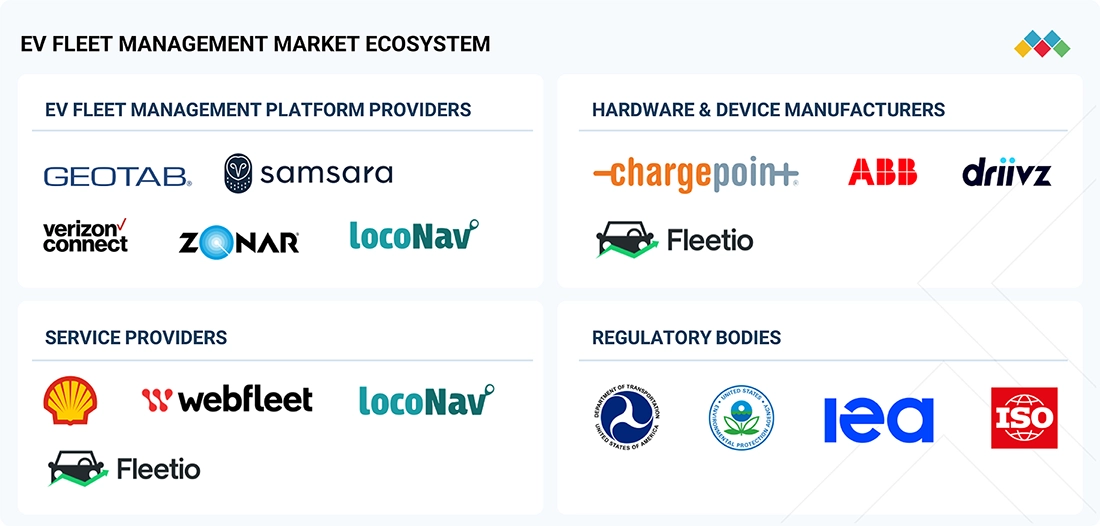
The electric vehicle (EV) fleet management ecosystem is a cohesive, connected network that enhances operational visibility and regulatory compliance. By consolidating technical capabilities, this architecture enables large-scale electrification through cloud-based platforms that synchronize telematics, route optimization, and intelligent charge scheduling. Hardware manufacturers ensure infrastructure reliability and battery health, while dedicated service providers manage installations, financing, and maintenance protocols. Energy specialists facilitate demand response and grid integration, while regulatory bodies establish essential safety and interoperability standards. Together, these stakeholders mitigate adoption barriers and optimize the total cost of ownership for modern electric fleets.
Logos and trademarks shown above are the property of their respective owners. Their use here is for informational and illustrative purposes only.
MARKET SEGMENTS
Source: Secondary Research, Interviews with Experts, MarketsandMarkets Analysis
EV Fleet Management Market, By Component
The electric vehicle (EV) fleet management services segment is projected to lead market growth as operators shift from hardware procurement to continuous operational support. Integrated offerings, including managed charging, battery health monitoring, and AI-powered predictive maintenance, enhance vehicle uptime while significantly lowering lifecycle costs. These service models generate recurring revenue through performance-based contracts and compliance analytics, aligning provider incentives with operational results. As organizations increasingly outsource the complexities of energy management and regulatory workflows, demand for comprehensive service portfolios is expected to rise, reinforcing the transition toward electrified freight networks.
EV Fleet Management Market, By Fleet Type
The commercial vehicles segment is projected to hold the largest share of the electric vehicle fleet management market. This is driven by its scale, high utilization, and rapid electrification across logistics, delivery, construction, and service fleets. Commercial operators use continuous monitoring of performance, charging, and driver behavior to safeguard asset productivity and optimize costs. High mileage and fixed routes facilitate the EV transition through specialized management platforms. Strict regulatory mandates and corporate decarbonization targets are accelerating electrification across commercial sectors, ensuring sustained and robust market demand for integrated digital solutions.
EV Fleet Management Market, By Vertical
The public transportation segment is projected to grow fastest within the electric vehicle (EV) fleet management market, driven by government-led electrification mandates and long-term sustainability objectives. Transit agencies are systematically replacing diesel-powered fleets with electric buses to reduce urban emissions and optimize operating costs. Managing expansive depots and high-capacity charging while maintaining strict route schedules requires advanced, EV-specific management platforms. Furthermore, public funding, combined with smart city initiatives and intensified regulatory reporting requirements, is accelerating adoption across municipal transit systems, ensuring sustained regional market expansion.
REGION
Asia Pacific to be fastest-growing region in electric vehicle fleet management market during forecast period
Asia Pacific is expected to register the fastest growth in the electric vehicle fleet management market over the forecast period. This expansion is driven by strong regulatory backing, rapid urbanization, and large-scale electrification programs. Governments in China, India, Japan, and Southeast Asia are enforcing emission targets and providing incentives that accelerate EV adoption in commercial and public fleets. Growth in e-commerce, urban logistics, and shared mobility is raising demand for real-time monitoring, route optimization, and charging management. Improving charging networks and rising digital adoption among cost-sensitive fleet operators further support sustained market growth across the region.

ELECTRIC VEHICLE FLEET MANAGEMENT MARKET: COMPANY EVALUATION MATRIX
Geotab (Star) remains a leading fleet management provider, supported by a broad product portfolio, advanced tracking capabilities, and strong adoption across transport, construction, and logistics fleets. Zonar Systems (Emerging Leader) is emerging as a notable player, gaining traction with affordable, analytics-driven solutions for small and mid-sized operators.
Source: Secondary Research, Interviews with Experts, MarketsandMarkets Analysis
KEY MARKET PLAYERS
- Geotab (Canada)
- Samsara (US)
- Verizon Connect (US)
- Webfleet (Netherlands)
- Mix Telematics (South Africa)
- Teletrac Navman (US)
- Powerfleet (US)
- Zonar Systems (US)
- ChargePoint (US)
- Virta (Finland)
- Driivz (US)
- Siemens (Germany)
- ABB (Switzerland)
- Shell (UK)
- LocoNav (India)
MARKET SCOPE
| REPORT METRIC | DETAILS |
|---|---|
| Market Size in 2024 (Value) | USD 6.38 Billion |
| Market Forecast in 2030 (Value) | USD 32.25 Billion |
| Growth Rate | CAGR of 22.7% from 2025-2030 |
| Years Considered | 2019-2030 |
| Base Year | 2024 |
| Forecast Period | 2025-2030 |
| Units Considered | Value (USD Billion) |
| Report Coverage | Revenue forecast, company ranking, competitive landscape, growth factors, and trends |
| Segments Covered |
|
| Regions Covered | North America, Europe, Asia Pacific, Middle East & Africa, Latin America |
WHAT IS IN IT FOR YOU: ELECTRIC VEHICLE FLEET MANAGEMENT MARKET REPORT CONTENT GUIDE
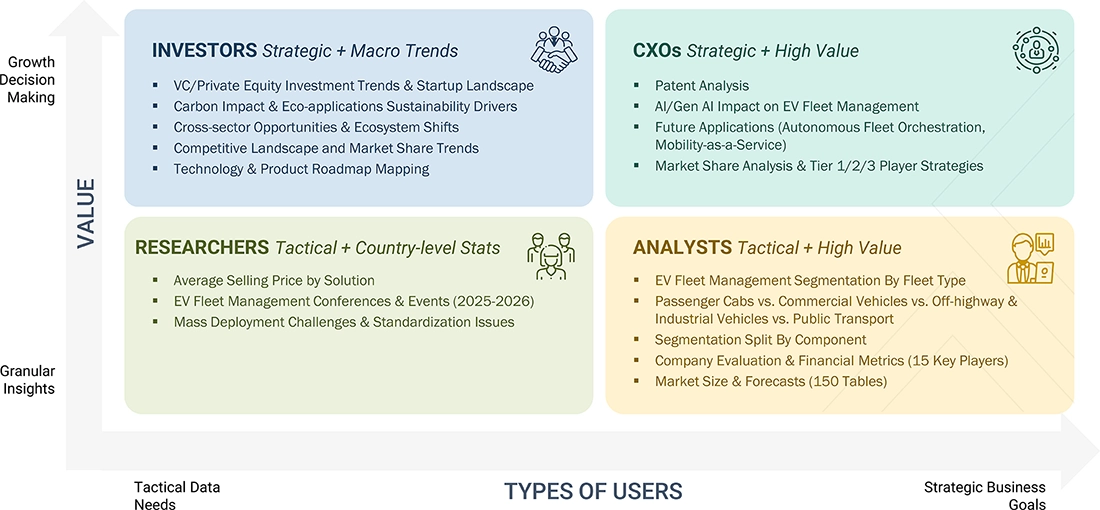
DELIVERED CUSTOMIZATIONS
We have successfully delivered the following deep-dive customizations:
| CLIENT REQUEST | CUSTOMIZATION DELIVERED | VALUE ADDS |
|---|---|---|
| EV Fleet Operator |
|
|
RECENT DEVELOPMENTS
- January 2025 : Geotab launched a unified fleet platform that supports data from 157 OEMs and nearly 15,000 vehicle makes and models. The platform improves access to vehicle data across manufacturers. Partnerships with Rivian, Volvo Cars, and Volkswagen Group further strengthen OEM data coverage. Fleets gain real-time insights, improved maintenance planning, and integrated EV management tools.
- May 2024 : Webfleet introduced an EV Transition Tool as part of its EV Services Platform. The tool helps fleets plan electrification in a structured way. It supports vehicle replacement analysis and long-term transition decisions. The platform connects fleets with mobility and energy partners that provide charging and advisory support.
- May 2024 : Teletrac Navman launched the Electric Vehicle Evaluator platform. The solution leverages telematics data and predictive analytics to support fleet decarbonization planning. It identifies vehicles suitable for electrification based on trip data. The platform also supports total cost analysis and charging infrastructure planning.
- COLUMN 'A' SHOULD BE IN TEXT FORMAT AND NOT DATE FORMAT :
- Apr-25 : Azuga launched upgraded AI dashcams and enhanced safety features for real-time driver monitoring. The update improves incident detection, risk scoring, and fleet safety visibility, supporting US operators seeking stronger proactive safety management.
- 2025 : Zonar Systems introduced its new Zonar Ignition operations platform after merging with GPS Trackit. The platform integrates workflows, diagnostics, and asset monitoring, improving operational visibility for fleet operators across logistics, construction, and service sectors.
- 2025 : Verra Mobility advanced its mobility and compliance solutions, expanding digital fleet services supporting EV charging, tolling automation, and safety programs. The company strengthened its role in simplifying on-road transactions and regulatory processes for US fleets.
- Mar-25 : Zebra Technologies completed its acquisition of Photoneo, enhancing its machine vision and automation capabilities. This strengthens Zebra’s role in connected fleet ecosystems through improved imaging, sensing, and real-time operational intelligence.
- 2025 : Tenna LLC secured its position in the 2025 Inc. 5000 rankings, reflecting strong adoption of its construction fleet asset management platform. The company continues expanding capabilities for equipment tracking, utilization, and operational efficiency.
- Feb-25 : Trimble finalized the sale of its transportation telematics division to Platform Science and became a strategic investor in the combined business. The move sharpens Trimble’s portfolio focus while expanding platform integration opportunities.
- 2025 : Samsara continued scaling AI-driven safety, automation, and asset intelligence features, strengthening its connected operations platform. Upgrades focused on predictive insights, equipment visibility, and improved compliance workflows for diverse US fleet operators.
- Dec-24 : Zebra Technologies announced its intent to acquire Photoneo, expanding toward advanced machine vision solutions. This move set the foundation for stronger automation and sensing capabilities addressing complex fleet and logistics environments.
- Oct-24 : Azuga introduced new equipment tracking capabilities designed for construction and field service fleets. The enhancements improve asset visibility, reduce loss, and support efficient equipment allocation on active job sites.
- Oct-24 : Teletrac Navman received industry recognition for innovation in fleet safety and telematics. The company’s solutions demonstrated improved visibility, compliance automation, and safety outcomes for US fleet operators.
- Jun-24 : Verra Mobility partnered with EV charging providers to simplify charging access and payments for US fleet operators. The collaboration strengthens EV readiness and supports fleets transitioning toward electrification.
- Dec-24 : Motive rolled out enhanced fraud-prevention controls for the Motive Card, reducing fuel theft and unauthorized spending. The feature strengthens cost control and operational oversight for fleet finance managers.
- Nov-24 : Motive showcased new AI-powered safety and productivity enhancements at its Vision conference, reinforcing its focus on predictive risk mitigation and connected fleet intelligence.
- Nov-24 : Wheels joined the United Nations Global Compact, strengthening its ESG commitments and aligning its mobility programs with global sustainability and governance principles.
- Nov-24 : Samsara announced major product and ecosystem updates centered on connected safety, compliance automation, and asset intelligence, expanding its influence across the US fleet operations market.
- Dec-24 : Zonar Systems announced its merger with GPS Trackit, combining capabilities to deliver more integrated telematics, workflow automation, and asset monitoring solutions across varied fleet categories.
- 2024–2025 : Solera expanded its claims, repair, and telematics platforms with new automation capabilities. The enhancements strengthen Solera’s end-to-end fleet lifecycle management solutions for operators seeking efficiency and digitalization.
- Sep-24 : Trimble announced the planned sale of its transportation telematics business to Platform Science, enabling greater focus on core technologies and accelerating open-platform collaboration opportunities.
- Mar-24 : Holman expanded its fleet and automotive service network by acquiring Leith Automotive. The move strengthens Holman’s vehicle lifecycle and service capabilities for large enterprise fleets.
- Mar-24 : Verizon Connect enhanced its Reveal EV platform with an EV Suitability Tool and new integrations, supporting faster electrification decisions and improved EV management for US commercial fleets.
- Jun-24 : Samsara expanded its smart trailer ecosystem through new sensor and data integrations with Continental, strengthening equipment visibility and maintenance intelligence for logistics fleets.
- 2024 : Verra Mobility expanded its digital tolling, compliance, and mobility solutions, enhancing automation for rental, commercial, and service fleets across the US.
- 2024 : Tenna LLC earned placement in the 2024 Inc. 5000 list, demonstrating strong market growth and increasing adoption of its construction equipment telematics solutions.
Table of Contents
 Exclusive indicates content/data unique to MarketsandMarkets and not available with any competitors.
Methodology
This research study relied on extensive secondary sources, including directories and databases such as Dun & Bradstreet (D&B), Hoovers, and Bloomberg BusinessWeek, to identify and collect information useful for a technical, market-oriented, and commercial study of the fleet management market. The primary sources were mainly industry experts from core and related industries, as well as preferred suppliers, manufacturers, distributors, service providers, technology developers, alliances, and organizations across all segments of the value chain of this market. In-depth interviews were conducted with primary respondents, including key industry participants, subject matter experts, C-level executives of key market players, and industry consultants, to obtain and verify critical qualitative and quantitative information.
Secondary Research
The market for companies offering fleet management solutions and services across different verticals has been estimated and projected using secondary data from paid and unpaid sources, along with analysis of their product portfolios within the fleet management ecosystem. The process also involved rating company products based on performance and quality. In the secondary research process, various sources such as the International Journal of Advanced Research (IJAR), EA Journals, and the International Journal of Technology, Innovation, and Management (IJTIM) were referred to for identifying and collecting information for this study of the fleet management market. The secondary sources included annual reports, press releases, investor presentations of companies, white papers, journals, certified publications, articles by recognized authors, directories, and databases. Secondary research was mainly used to obtain critical information about the market's supply chain, the total pool of key players, market classification, segmentation according to industry trends down to the bottommost level, regional markets, and key developments from both market- and technology-oriented perspectives, which primary sources have further validated.
Primary Research
In the primary research process, interviews were conducted with various primary sources from both the supply and demand sides to gather qualitative and quantitative information on the market. The supply-side sources included industry experts such as Chief Experience Officers (CXOs); Vice Presidents (VPs); directors from business development, marketing, and product development/innovation teams; critical executives from fleet management solution vendors, SIs, professional service providers, and industry associations; and key opinion leaders. Primary interviews were conducted to gather insights such as market statistics, revenue data from solutions and services, market breakdowns, market size estimates, market forecasts, and triangulated data. Primary research also helped understand trends related to technologies, applications, deployments, and regions. Stakeholders from the demand side, such as Chief Information Officers (CIOs), Chief Technology Officers (CTOs), Chief Strategy Officers (CSOs), and end users of fleet management solutions, were interviewed to understand the buyer’s perspective on suppliers, products, service providers, and their current usage of fleet management solutions, which would impact the overall fleet management market.
Market Size Estimation
Multiple approaches were used to estimate and forecast the size of the fleet management market. The first approach estimates market size by summing the revenue generated by companies from the sale of fleet management offerings.
The top-down and bottom-up approaches were used to estimate and validate the total size of the fleet management market. These methods were also used to estimate the size of various segments in the market. The research methodology used to estimate the market size includes the following:
- Key players in the market have been identified through extensive secondary research
- Regarding value, the industry’s supply chain and market size have been determined through primary and secondary research processes
- All percentage shares, splits, and breakups have been determined using secondary sources and verified through primary sources
Data Triangulation
After determining the overall market size, the fleet management market was segmented into several categories and subcategories. A data triangulation procedure was used to complete the overall market engineering process and arrive at the exact statistics for all segments and subsegments, wherever applicable. The data was triangulated by analyzing various factors and trends from the demand and supply sides. Along with data triangulation and market breakdown, the market size was validated using the top-down and bottom-up approaches.
Market Definition
Fleet management encompasses the activities necessary to maintain a fleet's optimal efficiency, punctuality, and financial adherence. It is the systematic approach fleet managers use to oversee fleet operations, involving continuous monitoring of activities and strategic decision-making in areas such as asset management, dispatch, and routing, as well as the acquisition and disposal of vehicles.
Key Stakeholders
- Fleet Managers
- IT Departments
- Drivers
- Digital Map Providers
- Automotive Suppliers
- Government Agencies
- Investment Firms
- Fleet Management Alliances/Groups
Report Objectives
- To determine, segment, and forecast the fleet management market by component, fleet type, powertrain, vertical, and region in terms of value
- To forecast the size of the market segments in 5 main regions: North America, Europe, Asia Pacific, Middle East Africa, and Latin America
- To provide detailed information about the major factors (drivers, restraints, opportunities, and challenges) influencing the growth of the market
- To study the complete value chain and related industry segments and perform a value chain analysis of the market landscape
- To strategically analyze the macro and micromarkets concerning individual growth trends, prospects, and contributions to the total market
- To analyze the industry trends, pricing data, patents, and innovations related to the market
- To analyze the opportunities for stakeholders by identifying the high-growth segments of the market
- To profile the key players in the market and comprehensively analyze their market share/ranking and core competencies
- To track and analyze competitive developments, such as mergers & acquisitions, product launches & developments, partnerships, agreements, collaborations, business expansions, and R&D activities
Available customizations:
With the given market data, MarketsandMarkets offers customizations as per the company’s specific needs. The following customization options are available for the report:
Country-wise Information
- Analysis for additional countries (up to five)
Company Information
- Detailed analysis and profiling of additional market players (up to 5)
Key Questions Addressed by the Report
What is the projected growth of the EV Fleet Management Market?
The EV Fleet Management Market is projected to grow from USD 9.10 billion in 2025 to USD 32.25 billion by 2030, at a CAGR of 22.7%.
What is driving the growth of the EV Fleet Management Market?
Growth is driven by rising EV adoption, government incentives, fleet electrification initiatives, and increasing demand for intelligent fleet monitoring and optimization.
Which fleet type is expected to witness the EV Fleet Management Market fastest growth?
The commercial fleet segment is expected to grow the fastest due to the increasing adoption of electric vehicles in logistics, delivery, and public transportation.
What are the key opportunities in the EV Fleet Management Market?
Key opportunities include AI-powered fleet analytics, smart charging management, battery health monitoring, and vehicle-to-grid (V2G) integration.
Who are the leading companies in the EV Fleet Management Market?
Leading players include Geotab, Verizon Connect, Samsara, Teletrac Navman, Webfleet, Trimble, ChargePoint, and AMPECO.


Personalize This Research
- Triangulate with your Own Data
- Get Data as per your Format and Definition
- Gain a Deeper Dive on a Specific Application, Geography, Customer or Competitor
- Any level of Personalization
Let Us Help You
- What are the Known and Unknown Adjacencies Impacting the Electric Vehicle Fleet Management Market
- What will your New Revenue Sources be?
- Who will be your Top Customer; what will make them switch?
- Defend your Market Share or Win Competitors
- Get a Scorecard for Target Partners

Custom Market Research Services
We Will Customise The Research For You, In Case The Report Listed Above Does Not Meet With Your Requirements
Get 10% Free CustomisationTESTIMONIALS






Growth opportunities and latent adjacency in Electric Vehicle Fleet Management Market