Enterprise Imaging IT Market

Enterprise Imaging IT Market by Function (VNA, PACS, Universal Viewer, Analytics), Modality (X-ray, MRI, CT, PET, SPECT, Mammo), Application (Diagnosis, Therapeutic, Theranostic), Therapy (Onco, Cardio, Neuro), End User, Region - Global Forecast to 2031


ENTERPRISE IMAGING IT MARKET SIZE, SHARE & GROWTH SNAPSHOT
Source: Secondary Research, Interviews with Experts, MarketsandMarkets Analysis
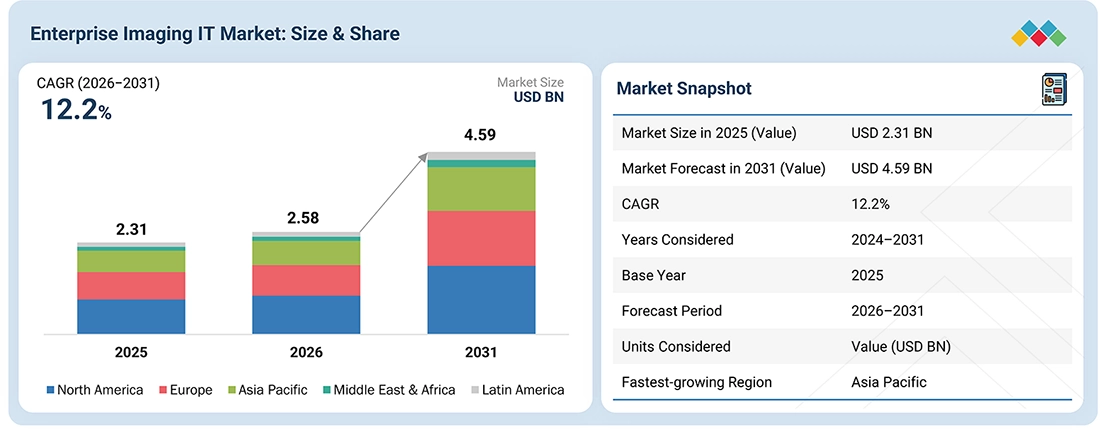
The global enterprise imaging IT market is projected to grow from USD 2.58 billion in 2026 to USD 4.59 billion by 2031, at a CAGR of 12.2% during the forecast period. The market was valued at USD 2.31 billion in 2025. The market is driven by the increasing adoption of enterprise-wide imaging platforms to consolidate, manage, and exchange growing volumes of medical imaging data across healthcare networks. The growing use of cloud-based imaging, vendor-neutral archives, AI-enabled imaging workflows, interoperability solutions, and advanced visualization, along with the need to improve image accessibility, streamline clinical workflows, and support cross-site collaboration, is accelerating the adoption of enterprise imaging IT solutions.
KEY TAKEAWAYS
-
MARKET SNAPSHOT:
Base Year Market Size (2025): USD 2.31 Billion
Current Market Size (2026): USD 2.58 Billion
Forecast Market Size (2031): USD 4.59 Billion
CAGR (2026–2031): 12.2% -
SEGMENT LEADERSHIP:
Regional Leader: North America dominated the enterprise imaging IT market, with a share of 38.1% in 2025.
Fastest-Growing Function: Vendor neutral archive (VNA) is projected to grow at a CAGR of 12.9% during the forecast period.
Modality Leader: X-ray held the largest share of 24.1% in 2025.
Application Leader: Diagnostics dominated the enterprise imaging IT market in 2025.
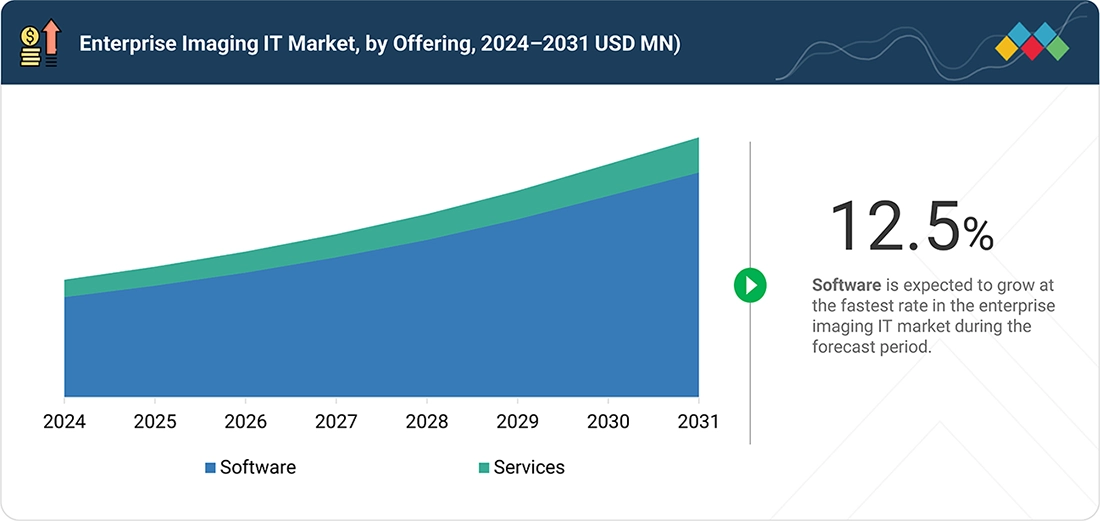
Fastest-Growing Offering: Software is expected to register the highest CAGR of 12.5% during the forecast period.
Deployment Mode Leader: On-premises dominated the market in 2025.
Fastest-Growing Therapeutic Area: Oncology is expected to register the highest CAGR during the forecast period.
End User Leader: Hospitals are expected to dominate the market. -
MARKET OUTLOOK & COMPETITIVE LANDSCAPE:
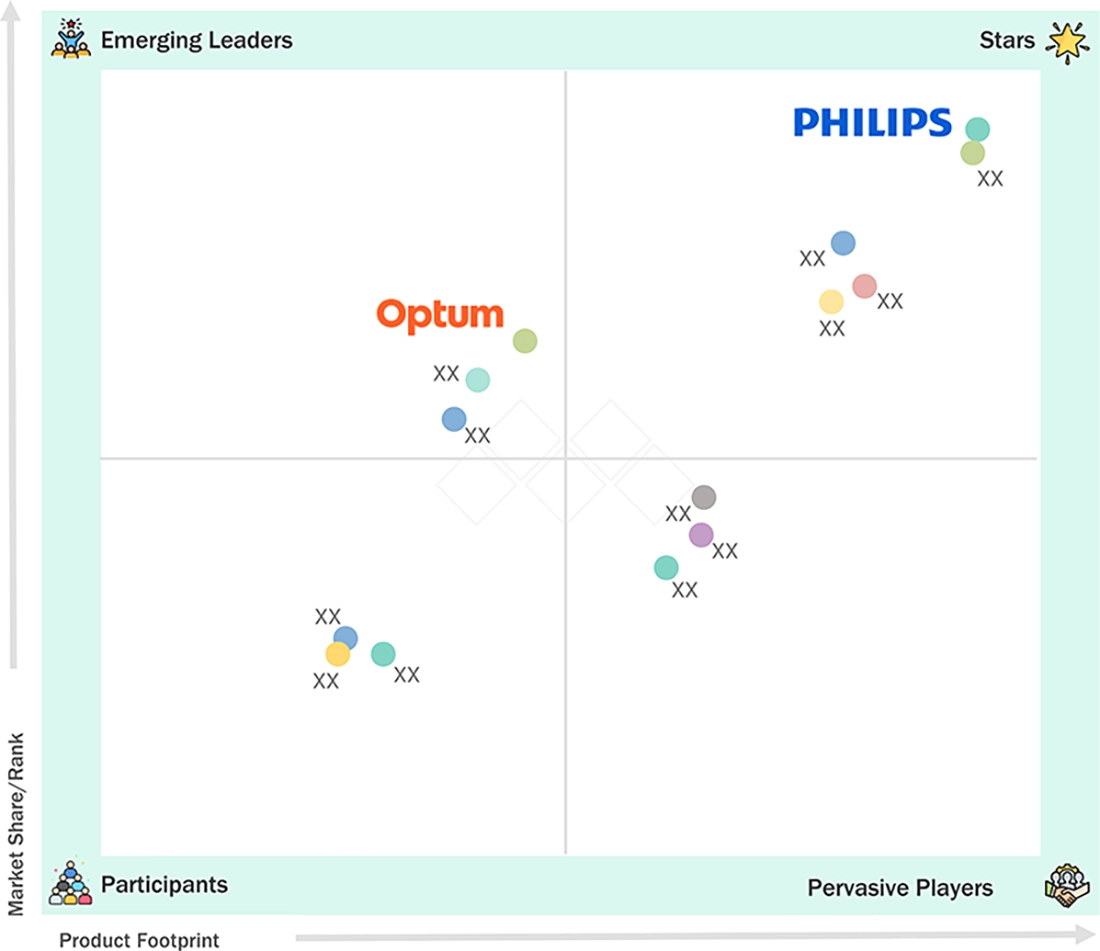
Agfa-Gevaert Group, FUJIFILM Corporation, and Merative were identified as star players in the enterprise imaging IT market, given their strong market share and product footprint.
Companies such as PostDICOM, Qaelum, and AdvaHealth Solutions have distinguished themselves among startups and SMEs by securing strong footholds in specialized niche areas, underscoring their potential as emerging market leaders.
The enterprise imaging IT market is fueled by the demand for efficient, secure, and scalable management of growing volumes of medical imaging data across healthcare organizations. The increasing adoption of cloud-based imaging, vendor-neutral archives, AI-enabled imaging workflows, interoperability solutions, and advanced visualization, combined with the growing complexity of multi-specialty imaging environments, is encouraging hospitals, diagnostic centers, and healthcare networks to implement enterprise imaging platforms to streamline image management, improve accessibility, support cross-site collaboration, and enhance clinical workflow efficiency.
TRENDS & DISRUPTIONS IMPACTING CUSTOMERS' CUSTOMERS
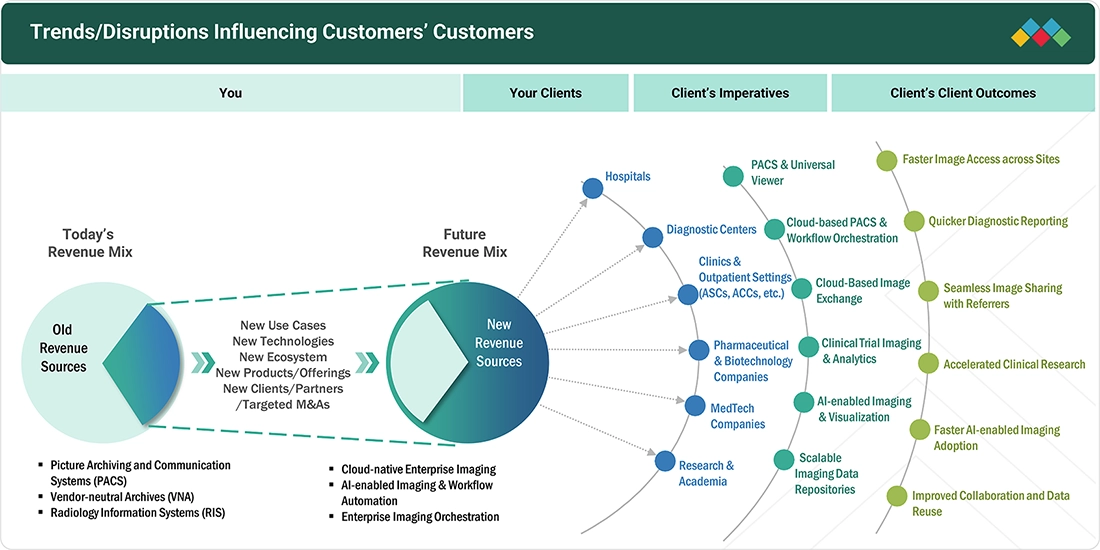
In the enterprise imaging IT market, the impact on consumer businesses stems from evolving customer trends and market disruptions. Key prospects include healthcare providers and enterprises adopting imaging IT solutions, with major applications spanning PACS, vendor-neutral archives (VNA), AI-based image analysis, workflow orchestration, and interoperability platforms. Trends such as AI adoption, cloud migration, regulatory changes, rising interoperability requirements, and the shift toward value-based care influence end users' revenues and technology investments, including those of hospitals, diagnostic centers, and outpatient clinics. Shifts in end-user spending and technology adoption subsequently affect the revenue potential of enterprise imaging IT vendors, including GE HealthCare, Philips, Sectra, FUJIFILM, and Agfa HealthCare.
Source: Secondary Research, Interviews with Experts, MarketsandMarkets Analysis
MARKET DYNAMICS

Level
-
Growing Volume of Medical Imaging Procedures

-
Increasing Demand for Scalable and Cost-effective Solutions


Level
-
Data Security and Privacy Concerns

-
Lack of Skilled Professionals for Deployment and Interpretation


Level
-
Growth of Vendor-neutral Archives (VNA) and Interoperability

-
Increasing Adoption of AI-enabled Imaging and Advanced Visualization


Level
-
Limited Adoption in Developing Regions

-
High Upfront Integration and Deployment Costs

Source: Secondary Research, Interviews with Experts, MarketsandMarkets Analysis
Driver: Growing Volume of Medical Imaging Procedures
The growing volume of medical imaging procedures is a key driver of the enterprise imaging IT market. Increasing use of CT, MRI, X-ray, ultrasound, mammography, and other imaging modalities is generating large and continuously expanding volumes of medical images that require efficient storage, management, retrieval, and sharing. Healthcare organizations are increasingly adopting enterprise imaging platforms to consolidate imaging data across departments and facilities, improve accessibility, and streamline clinical workflows. The expansion of multi-site healthcare networks and diagnostic services is further increasing the need for scalable imaging infrastructure, supporting demand for enterprise imaging IT solutions.
Restraint: Data Security and Privacy Concerns
Data security and privacy concerns are a major restraint on the enterprise imaging IT market. Enterprise imaging platforms manage large volumes of sensitive patient images and associated clinical information, making them prime targets for cyberattacks, unauthorized access, and data breaches. Healthcare organizations must comply with stringent data protection, privacy, and data residency requirements, which can increase the complexity and cost of implementing and managing imaging IT infrastructure. Concerns about cloud-based image storage, third-party access, and secure data exchange can also slow adoption, particularly among organizations with limited cybersecurity capabilities.
Opportunity: Growth of Vendor-Neutral Archives (VNA) and Interoperability
The growing adoption of vendor-neutral archives (VNAs) and interoperable imaging systems presents a significant opportunity for the enterprise imaging IT market. Healthcare organizations increasingly seek to consolidate imaging data from multiple modalities, departments, facilities, and vendors into centralized repositories accessible across clinical environments. VNAs support long-term image management, reduce dependence on proprietary storage systems, and facilitate data migration. Greater integration with EHRs, PACS, RIS, and other clinical applications is further driving demand for interoperable platforms that enable seamless image exchange and cross-enterprise access.
Challenge: Limited Adoption in Developing Regions
Limited adoption of enterprise imaging IT solutions in developing regions remains a key barrier to market expansion. Healthcare facilities in these regions often face constraints in IT infrastructure, healthcare spending, connectivity, skilled personnel, and access to advanced imaging technologies. Many providers still rely on fragmented or legacy imaging systems, limiting adoption of integrated enterprise imaging platforms. In addition, high implementation and maintenance costs can restrict investment among smaller healthcare facilities. These factors can delay the transition to cloud-based, interoperable, and AI-enabled imaging environments, particularly in resource-constrained healthcare systems.
ENTERPRISE IMAGING IT MARKET: COMMERCIAL USE CASES ACROSS INDUSTRIES
| COMPANY | USE CASE DESCRIPTION | BENEFITS |
|---|---|---|
 |
Deploy Centricity/VNA + Universal Viewer to unify radiology, cardiology and clinical images into a single patient timeline used for tumor boards and perioperative planning | Single patient timeline; faster MDT decisions; fewer repeat scans |
 |
Replace multiple PACS with Synapse Enterprise Imaging + Synapse 3D to give radiology and surgical teams one workflow for advanced visualization (oncology, vascular, neuro) | Streamlined pre-op planning; consistent 3D tools across sites; faster clinician adoption |
 |
Implement Sectra VNA and secure exchange to enable referral networks, second opinions and centralized reading | Secure sharing; faster referrals; reduced duplicate imaging |
 |
Consolidate imaging and apply Vitrea analytics (CT/MR quantification) for disease tracking (cardio/oncology) across the enterprise | Quantified follow-up metrics; consistent measurements; faster clinical decisions |
 |
IntelliSpace Enterprise Imaging consolidates studies across hospital networks and embeds analytics/quantification into the reading workflow | Standardized workflows; faster KPI tracking; embedded decision support |
Logos and trademarks shown above are the property of their respective owners. Their use here is for informational and illustrative purposes only.
MARKET ECOSYSTEM
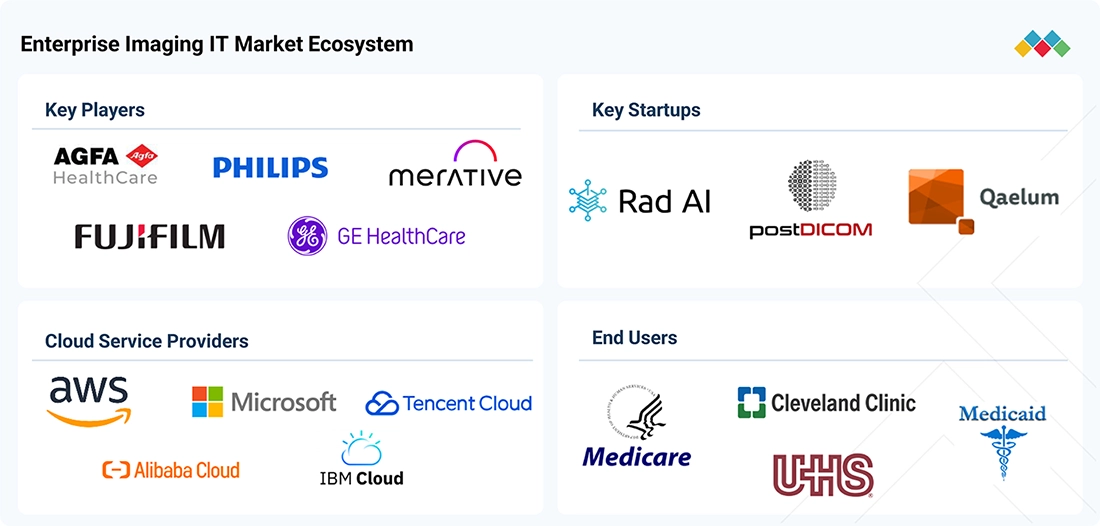
The enterprise imaging IT market ecosystem comprises leading providers such as GE HealthCare, Koninklijke Philips N.V., FUJIFILM Corporation, Agfa-Gevaert Group, Siemens Healthineers AG, Sectra AB, and Canon Medical Systems Corporation, which offer technologies including PACS, vendor-neutral archives, enterprise viewers, image exchange, AI-enabled imaging, workflow orchestration, and interoperability solutions. Emerging companies such as Pro Medicus, Mach7 Technologies, Novarad, INFINITT Healthcare, RamSoft, and Rad AI are advancing cloud-based imaging, AI-enabled workflows, enterprise image management, and specialized imaging solutions. Cloud and IT infrastructure providers such as AWS, Microsoft Azure, and Google Cloud support scalable storage, cloud-native imaging, data management, and AI computing environments. End users, including hospitals, health systems, diagnostic imaging centers, outpatient clinics, and academic medical centers, leverage these platforms to centralize imaging data, improve accessibility, streamline workflows, enable cross-site collaboration, and support clinical decision-making.
Logos and trademarks shown above are the property of their respective owners. Their use here is for informational and illustrative purposes only.
MARKET SEGMENTS
Source: Secondary Research, Interviews with Experts, MarketsandMarkets Analysis
Enterprise Imaging IT Market, By Function
In 2025, the vendor-neutral archive (VNA) segment accounted for the largest share of the enterprise imaging IT market by function. VNA solutions provide a centralized, vendor-independent infrastructure for storing, managing, and accessing medical images across healthcare organizations. These solutions enable healthcare providers to consolidate imaging data from multiple modalities, departments, facilities, and imaging systems, while supporting long-term archiving and seamless image retrieval. The growing volume of imaging data, increasing adoption of multi-site healthcare networks, and the need to reduce dependence on proprietary storage systems have further strengthened VNA adoption. Additionally, integration with PACS, EHRs, RIS, enterprise viewers, and other clinical applications is driving organizations to invest in VNA solutions to improve interoperability, facilitate image exchange, streamline data management, and enable secure access to imaging data across clinical environments.
Enterprise Imaging IT Market, By Modality
In 2025, the X-ray segment accounted for the largest share of the enterprise imaging IT market by modality, supported by the widespread use of X-ray imaging across hospitals, diagnostic centers, outpatient facilities, and emergency care settings. X-ray systems generate high volumes of imaging data across routine diagnostic examinations, trauma assessment, chest imaging, and other clinical applications, increasing the need for efficient image storage, management, and accessibility. The broad installed base of digital X-ray systems and their integration with PACS, enterprise viewers, EHRs, and other clinical systems have further supported adoption. Additionally, the growing demand for rapid image access, remote interpretation, interoperability, and centralized management of imaging data is encouraging healthcare organizations to deploy enterprise imaging IT solutions for X-ray workflows.
Enterprise Imaging IT Market, By Application
Diagnostics was the largest application segment of the enterprise imaging IT market in 2025, reflecting the widespread use of imaging technologies for disease detection, diagnosis, screening, and clinical assessment. Healthcare providers increasingly rely on enterprise imaging platforms to manage the large volumes of images generated by routine diagnostic procedures and to make them readily accessible across departments and care settings. The need for faster image retrieval, centralized management, and seamless integration with EHRs, PACS, RIS, and diagnostic workflows is further driving adoption. Moreover, the growing use of AI-assisted image analysis and advanced visualization in diagnostic workflows is prompting healthcare organizations to strengthen their imaging IT infrastructure, enabling more efficient interpretation, collaboration, and clinical decision-making.
Enterprise Imaging IT Market, By Offering
Software accounted for the largest share of the enterprise imaging IT market in 2025, driven by the growing need for integrated platforms that support image management, storage, visualization, exchange, and workflow optimization. Healthcare organizations are prioritizing software solutions that connect imaging data across multiple departments, facilities, modalities, and clinical systems, improving accessibility and operational efficiency. The growing adoption of PACS, vendor-neutral archives, enterprise viewers, image exchange platforms, and AI-enabled imaging applications is further supporting software demand. In addition, the increasing migration toward cloud-based and interoperable imaging environments is encouraging providers to modernize legacy systems and deploy scalable software platforms that support enterprise-wide image management and collaboration.
Enterprise Imaging IT Market, By Deployment Mode
On-premises deployment held the largest share of the enterprise imaging IT market in 2025, primarily because healthcare organizations continue to prefer direct control over imaging infrastructure, sensitive patient data, and system performance. Hospitals and large healthcare networks with established IT environments often retain on-premises platforms to integrate with existing PACS, RIS, EHR, and other clinical systems while meeting stringent security and data governance requirements. Existing investments in hardware and legacy imaging infrastructure also support the continued use of on-premises solutions. However, the growing need for scalability, remote access, centralized image management, and reduced infrastructure maintenance is encouraging healthcare providers to gradually adopt cloud and hybrid deployment models.
Enterprise Imaging IT Market, By Therapeutic Area
Cardiology accounted for the largest share of the enterprise imaging IT market by therapeutic area in 2025, supported by the extensive use of imaging for cardiovascular diagnosis, treatment planning, and disease monitoring. Cardiac imaging generates complex, high-volume datasets across modalities such as echocardiography, CT, MRI, and nuclear imaging, driving demand for efficient storage, visualization, and sharing. Healthcare providers are increasingly adopting enterprise imaging platforms to give cardiologists and multidisciplinary care teams centralized access to cardiac images and related clinical information. Integration with EHRs and other clinical systems, along with the growing use of AI-enabled cardiac image analysis and advanced visualization, is further supporting adoption of enterprise imaging solutions in cardiology.
Enterprise Imaging IT Market, By End User
Hospitals are the dominant end-user segment in the enterprise imaging IT market, driven by high imaging volumes, diverse clinical departments, and the need to manage imaging data across multiple facilities and specialties. Large hospitals and health systems increasingly require centralized platforms to store, retrieve, exchange, and visualize images from radiology, cardiology, oncology, and other diagnostic services. Enterprise imaging solutions also integrate with EHRs, PACS, RIS, and clinical applications, enabling physicians and care teams to access imaging data within broader patient workflows. Furthermore, the expansion of multi-site hospital networks and the growing adoption of AI-enabled imaging and cloud technologies are prompting hospitals to modernize their imaging infrastructure and improve operational and clinical efficiency.
REGION
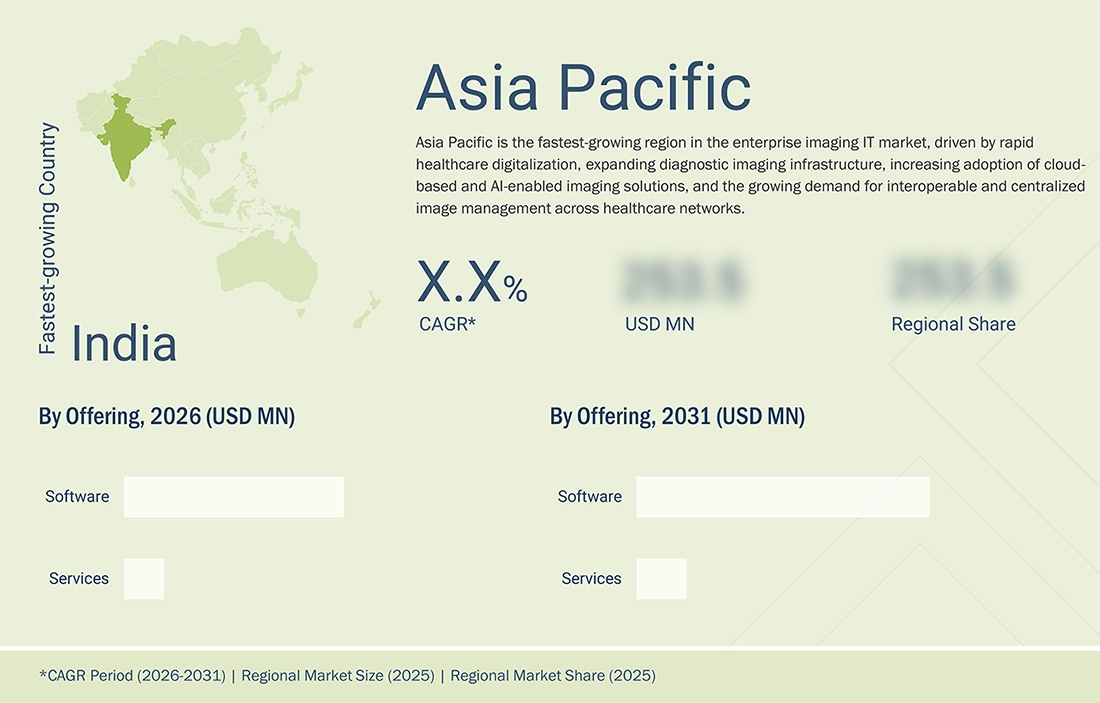
Asia Pacific will register the highest CAGR during the forecast period (2026-2031) in the enterprise imaging IT market
The Asia Pacific region is the fastest-growing market for enterprise imaging IT, supported by rapid healthcare digitalization, expanding diagnostic imaging infrastructure, and increasing adoption of cloud-based and AI-enabled imaging technologies. Growing investments in healthcare IT, the expansion of multi-site healthcare networks, and improvements in digital connectivity and interoperability are driving adoption of enterprise imaging platforms across the region. The need to centralize and securely manage growing volumes of medical imaging data, improve image accessibility, and enable collaboration across healthcare facilities is further contributing to market growth. In addition, the rising adoption of advanced imaging modalities and AI-assisted diagnostic workflows is encouraging healthcare providers to modernize imaging infrastructure and deploy scalable enterprise imaging solutions.
ENTERPRISE IMAGING IT MARKET: COMPANY EVALUATION MATRIX
Koninklijke Philips N.V. (Star) stands out for its strong market positioning and comprehensive enterprise imaging portfolio, supported by imaging informatics solutions, cloud-enabled platforms, and capabilities across radiology, cardiology, and other clinical specialties. Its broad offerings across PACS, enterprise imaging, image management, interoperability, and AI-enabled clinical workflows, combined with an established global healthcare presence, strengthen its position across the imaging management and clinical workflow ecosystem. Optum, Inc. (Emerging Leader) is strengthening its position through healthcare IT and imaging informatics capabilities, supported by expertise in healthcare data, interoperability, cloud technologies, and workflow solutions. While Koninklijke Philips N.V. leads through its established imaging portfolio, broad enterprise imaging capabilities, integrated solutions, and global customer base, Optum, Inc. demonstrates strong potential to move toward the leaders' quadrant as demand for interoperable, cloud-enabled, and AI-supported enterprise imaging solutions continues to grow.
Source: Secondary Research, Interviews with Experts, MarketsandMarkets Analysis
KEY MARKET PLAYERS
- Agfa-Gevaert Group (Belgium)
- FUJIFILM Corporation (Japan)
- Merative (US)
- Pro Medicus, Ltd. (Australia)
- Optum, Inc. (US)
- GE HealthCare (US)
- Sectra AB (Sweden)
- Canon Medical Systems Corporation (Japan)
- Hyland Software, Inc. (US)
- Koninklijke Philips N.V. (Netherlands)
- Siemens Healthineers AG (Germany)
- INFINITT Healthcare Co., Ltd. (South Korea)
- Novarad (US)
- Mach7 Technologies (US)
- HERMES Medical Solutions (Sweden)
- Konica Minolta, Inc. (Japan)
- BridgeHead Software Ltd. (UK)
- SCImage, Inc. (US)
- DICOM Systems, Inc. (US)
- RamSoft Inc. (Canada)
MARKET SCOPE
| REPORT METRIC | DETAILS |
|---|---|
| Market Size in 2025 (Value) | USD 2.31 BN |
| Market Size in 2026 (Value) | USD 2.58 BN |
| Market Forecast in 2031 (Value) | USD 4.59 BN |
| Growth Rate | CAGR of 12.2% from 2026 to 2031 |
| Years Considered | 2024–2031 |
| Base Year | 2025 |
| Forecast Period | 2026–2031 |
| Units Considered | Value (USD Million/Billion) |
| Report Coverage | Revenue forecast, company ranking, competitive landscape, growth factors, and trends |
| Segments Covered |
|
| Regions Covered | North America, Europe, Asia Pacific, Latin America, Middle East & Africa |
WHAT IS IN IT FOR YOU: ENTERPRISE IMAGING IT MARKET REPORT CONTENT GUIDE
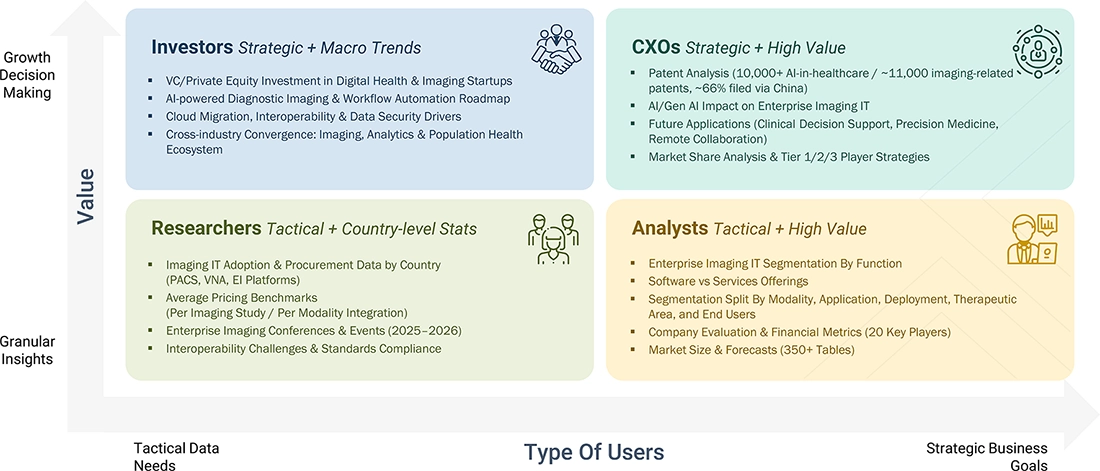
DELIVERED CUSTOMIZATIONS
We have successfully delivered the following deep-dive customizations:
| CLIENT REQUEST | CUSTOMIZATION DELIVERED | VALUE ADDS |
|---|---|---|
| Local Competitive Landscape | Profiling of leading enterprise imaging IT players covering PACS, VNA, enterprise viewers, image exchange, AI capabilities, interoperability, cloud offerings, and strategic developments | Enables competitive benchmarking, gap identification, and differentiation |
| Regional Market Entry Strategy | Assessment of healthcare infrastructure, imaging volumes, digitalization, cloud adoption, regulatory environment, interoperability, and healthcare IT spending across key regions | Supports market prioritization, localization, and investment decisions |
| Local Risk & Opportunity Assessment | Evaluation of data security requirements, interoperability challenges, legacy infrastructure, implementation barriers, cybersecurity risks, and growth opportunities across key markets | Supports risk mitigation and identification of growth opportunities |
| Technology Adoption | Mapping adoption of cloud-based imaging, VNA, AI-enabled image analysis, advanced visualization, workflow orchestration, image exchange, and enterprise interoperability solutions | Guides technology strategy, product development, and alignment with customer needs |
RECENT DEVELOPMENTS
- May 2026 : FUJIFILM partnered with Ardent Health to implement Synapse Enterprise Imaging across Ardent’s acute-care hospital footprint spanning six US states. The deployment covers radiology and cardiology and integrates Synapse PACS, VNA, mobility, and Epic connectivity to centralize imaging data and streamline workflows. Fujifilm
- February 2026 : AGFA HealthCare announced new US enterprise imaging wins, including an agreement with a multi-state radiology group operating across 11 sites in four states. The organization selected Enterprise Imaging Cloud Teleradiology to consolidate multiple PACS and dictation systems into a single cloud-based platform.
- November 2025 : Philips launched Image Management 15, the next generation of its Vue PACS, featuring a zero-footprint web-based diagnostic viewer. The solution provides radiologists with browser-based access to imaging and integrates AI and interactive reporting to support more flexible, efficient workflows.
Table of Contents
 Exclusive indicates content/data unique to MarketsandMarkets and not available with any competitors.
Methodology
This research study involved the extensive use of both primary and secondary sources. It analyzed various factors affecting the industry to identify segmentation types, industry trends, key players, the competitive landscape of market players, and key market dynamics such as drivers, opportunities, challenges, restraints, and key player strategies.
Secondary Research
This research study extensively used secondary sources, including directories, databases such as Dun & Bradstreet, Bloomberg Businessweek, and Factiva, as well as white papers, annual reports, and companies' house documents. The secondary research aimed to gather and analyze information for a comprehensive, commercially focused study of the enterprise imaging IT market, covering technical aspects and market dynamics. It also helped identify key players, market classifications, industry trends, geographic markets, and significant market developments. Additionally, a database of prominent industry leaders was compiled through secondary research.
Primary Research
In the primary research process, various supply-side and demand-side sources were interviewed to gather qualitative and quantitative information for this report. Primary sources from the supply side included industry experts such as CEOs, vice presidents, marketing and sales directors, technology and innovation directors, engineers, and other key executives from companies and organizations operating in the enterprise imaging IT market. Primary sources from the demand side included personnel from hospitals, diagnostic centers, clinics, and outpatient settings (ASCs, ACCs, etc.).
A breakdown of the primary respondents is provided below:
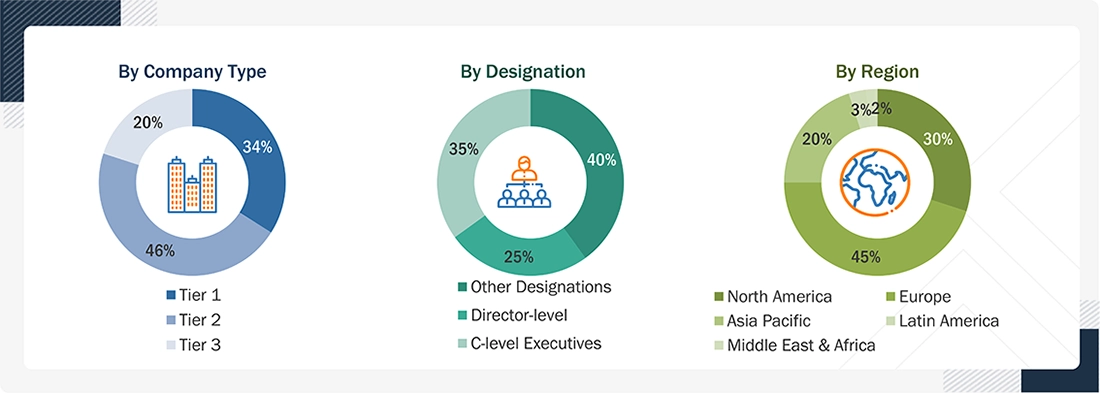
*Others include sales managers, marketing managers, and product managers.
Note: Tiers are defined based on a company’s total revenue, as of 2025: Tier 1 = >USD 1 billion, Tier 2 = USD 500 million to USD 1 billion, and Tier 3 = <USD 500 million.
To know about the assumptions considered for the study, download the pdf brochure
Market Size Estimation
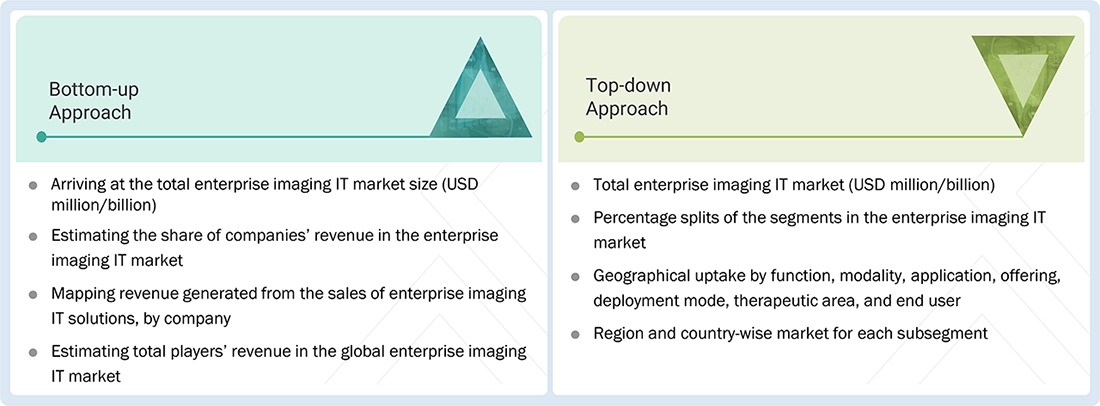
The total size of the enterprise imaging IT market was determined after data triangulation using the two approaches outlined below. After each approach was completed, the results were combined into a weighted average based on the level of assumptions used in each approach.
Enterprise Imaging IT Market: Top-Down and Bottom-Up Approach
Data Triangulation
The size of the enterprise imaging IT market was estimated through segmental extrapolation using the bottom-up approach. The methodology is outlined below.
- Revenue of individual companies was gathered from public sources and databases.
- Shares of leading players in the enterprise imaging IT market were obtained from secondary sources to the extent available. In certain cases, shares of enterprise imaging IT businesses have been ascertained after a detailed analysis of various parameters, including product portfolios, market positioning, selling price, and geographic reach and strength.
- Individual share or revenue estimates were validated through interviews with experts.
- The total revenue in the enterprise imaging IT market was determined by extrapolating the market share data of major companies.
Market Definition
The enterprise imaging IT market comprises software and IT infrastructure solutions that enable seamless management, integration, and sharing of medical images across departments and care settings. It supports unified imaging workflows, enhances clinical collaboration, and improves diagnostic efficiency. This market serves hospitals, diagnostic centers, and integrated delivery networks, with the goal of optimizing image-driven decision-making.
Key Stakeholders
- Vendor neutral archive (VNA) & PACS vendors
- Government bodies
- Healthcare service providers
- Clinical/Physician centers
- Healthcare professionals
- Health IT service providers
- Healthcare associations/institutes
- Ambulatory care centers
- Venture capitalists
- Distributors and resellers
- Maintenance and support service providers
- Integration service providers
- Advocacy groups
- Data security and privacy experts
- Investors and financial institutions
- Industry associations and trade groups
Report Objectives
- To define, describe, and forecast the enterprise imaging IT market by function, modality, application, offering, deployment mode, therapeutic area, end user, and region.
- To provide detailed information regarding the major drivers, restraints, opportunities, and challenges influencing market growth
- To strategically analyze micromarkets1 with respect to individual growth trends, prospects, and contributions to the overall enterprise imaging IT solutions market
- To analyze market opportunities for stakeholders and provide details of the competitive landscape for key players.
- To forecast the size of the enterprise imaging IT solutions market in five main regions (and their respective countries): North America, Europe, Asia Pacific, the Middle East & Africa, and Latin America
- To provide key industry insights, such as supply chain, regulatory, patent, and the Impact of the 2025 US tariff.
- To profile the key players in the market and comprehensively analyze their core competencies2
- To analyze competitive developments, such as solution launches, enhancements, & upgrades, collaborations, partnerships, acquisitions, agreements, and expansions of the leading players in the market
- To benchmark players within the market using the company evaluation matrix, which analyzes market players on various parameters within the broad categories of business strategy, market share, and product offerings.
Available customizations:
With the given market data, MarketsandMarkets offers customizations as per your company’s specific needs. The following customization options are available for the report:
- Company information
- Detailed analysis and profiling of additional market players (up to 5)
Geographic Analysis
- Further breakdown of the Rest of Asia Pacific enterprise imaging IT market into Taiwan, New Zealand, Thailand, Singapore, Malaysia, and other countries
- Further breakdown of the Rest of Europe enterprise imaging IT market into Russia, Austria, Finland, Sweden, Turkey, Norway, Poland, Portugal, Romania, Denmark, and other countries
Key Questions Addressed by the Report
Who are the leading industry players in the enterprise imaging IT market?
The prominent players in the enterprise imaging IT market include Agfa-Gevaert Group (Belgium), FUJIFILM Corporation (Japan), Merative (US), Pro Medicus, Ltd. (Australia), Optum, Inc. (US), GE HealthCare (US), Intelerad (Canada), Sectra AB (Sweden), CANON MEDICAL SYSTEMS CORPORATION (Japan), Hyland Software, Inc. (US), Koninklijke Philips N.V. (Netherlands), Siemens Healthineers AG (Germany), INFINITT Healthcare Co., Ltd. (South Korea), Novarad (US), Mach7 Technologies (US), Hermes Medical Solutions (Sweden), Konica Minolta, Inc. (Japan), BridgeHead Software Ltd. (England), Sclmage, Inc. (US), VISUS Health IT GmbH (Germany), Dicom Systems, Inc. (US), PostDICOM (Netherlands), Qaelum (Belgium), AdvaHealth Solutions (Singapore), PaxeraHealth (US), and Rad AI (US).
What offerings have been included in the enterprise imaging IT market report?
The enterprise imaging IT market report includes software and services as key offerings.
Which geographical region dominates the enterprise imaging IT market?
The enterprise imaging IT market is segmented into North America, Europe, the Asia Pacific, Latin America, and the Middle East & Africa. In 2024, North America accounted for the largest market share, while Asia Pacific is expected to register the highest growth during the forecast period.
Which end-user segments have been included in the enterprise imaging IT market report?
The report includes hospitals, diagnostic centers, clinics and outpatient settings, pharmaceutical and biotechnology companies, medtech companies, research and academia, and other end users as the primary segments.
What is the total CAGR expected to be recorded for the enterprise imaging IT market during 2025–2030?
The enterprise imaging IT market is expected to hold a CAGR of 12.2% during the forecast period from 2025 to 2030.


Personalize This Research
- Triangulate with your Own Data
- Get Data as per your Format and Definition
- Gain a Deeper Dive on a Specific Application, Geography, Customer or Competitor
- Any level of Personalization
Let Us Help You
- What are the Known and Unknown Adjacencies Impacting the Enterprise Imaging IT Market
- What will your New Revenue Sources be?
- Who will be your Top Customer; what will make them switch?
- Defend your Market Share or Win Competitors
- Get a Scorecard for Target Partners

Custom Market Research Services
We Will Customise The Research For You, In Case The Report Listed Above Does Not Meet With Your Requirements
Get 10% Free CustomisationTESTIMONIALS

JAYANT RAJPUROHIT
Director of Market Insights, Data and Analytics
SFI Health,
Leading Pharmaceutical Companywww.sfihealth.com/

We at SFI Health approached MarketsandMarkets for an Opportunity Assessment on "Incidence and Prevalence of Focus Indications" as we wanted to know the most attractive HCPs like Physician, Functional MD, Naturopath and Pharmacist. The project was critical for us to ensure our focus on the right target which would enable sustainable growth and profitability for SFI Health. The business insights provided exceeded our expectations and we were extremely impressed. The team at MarketsandMarkets is highly professional and detail oriented and very well understood our business needs. MarketsandMarkets offers a unique combination of expertise and dedicated engagement model. We identified 2 new products to be launched in coming months, based on the research findings provided by MarketsandMarkets. We are happy with the services and would strongly recommend MarketsandMarkets to my peers in the industry.

BEATRIZ DE LA CALLE
Head of Commercial Analytics
Qualicaps,
Leading Pharmaceutical Companywww.qualicaps.com/

We partnered with MarketsandMarkets for an assessment study on hard empty capsules. The team was extremely professional in understanding our business requirements and we received timely responses to all our queries. The market intelligence and the recommendations has met our business requirements. We were extremely impressed to see the final study results; it really exceeded our expectations. The market intelligence offered by MarketsandMarkets, and clarity on next steps will help us achieve our business objective for the Year 2021. We are happy with the services and would strongly recommend MarketsandMarkets to my peers in the industry.

Bob Williams,
Senior Director Business Development & Innovation
Bracco Diagnostics Inc.,
Italian Multinational in life sciences sector and a World Leader in imaging diagnosticsimaging.bracco.com/us-en
We were pleased with targeted insights that MarketsandMarkets identified from a custom study on the 'Radiation Dose Management Solutions Market'. Your team identified and characterized the market participants as well as underlying trends accurately. This study was useful to Bracco in formulating business strategies for our dose monitoring product lines and we thank MarketsandMarkets for the job well done.
Cody Coonradt,
Market Development and Strategy Manager
3M Health Information Systems,
Leader in Health care Coding, Payment & Analytics Solutions.www.3m.com/3M/en_US/health-information-systems-us
The value for our organization comes from three things: depth of research, specificity of segments and being easy to work with. As important as the first two are, the third can't be underestimated. MarketsandMarkets, maybe more than any other research vendor, wants to know what is top of mind for our team and what big questions we are grappling to answer.
Their customer first approach and high value engagement model, have given us great analysis and excellent value for money
- Canada Enterprise Imaging IT Market
- US Enterprise Imaging IT Market
- Germany Enterprise Imaging IT Market
- UK Enterprise Imaging IT Market
- France Enterprise Imaging IT Market
- Italy Enterprise Imaging IT Market
- Spain Enterprise Imaging IT Market
- China Enterprise Imaging IT Market
- Japan Enterprise Imaging IT Market
- India Enterprise Imaging IT Market
- Brazil Enterprise Imaging IT Market
- Mexico Enterprise Imaging IT Market
- Rest Of Europe Enterprise Imaging IT Market
- Rest Of Asia Pacific Enterprise Imaging IT Market
- Rest Of Latin America Enterprise Imaging IT Market



Growth opportunities and latent adjacency in Enterprise Imaging IT Market