Elemental Analysis Market

Elemental Analysis Market by Type [Heavy Metal (Lead, Arsenic, Mercury, Cadmium), Elemental (C, H, N, O, S), Organic], Technique (ICP-OES, ICP-MS, AAS, XRF), End User (Pharma-Biotech, Academia, Chemicals, F&B) - Global Forecast to 2030



OVERVIEW
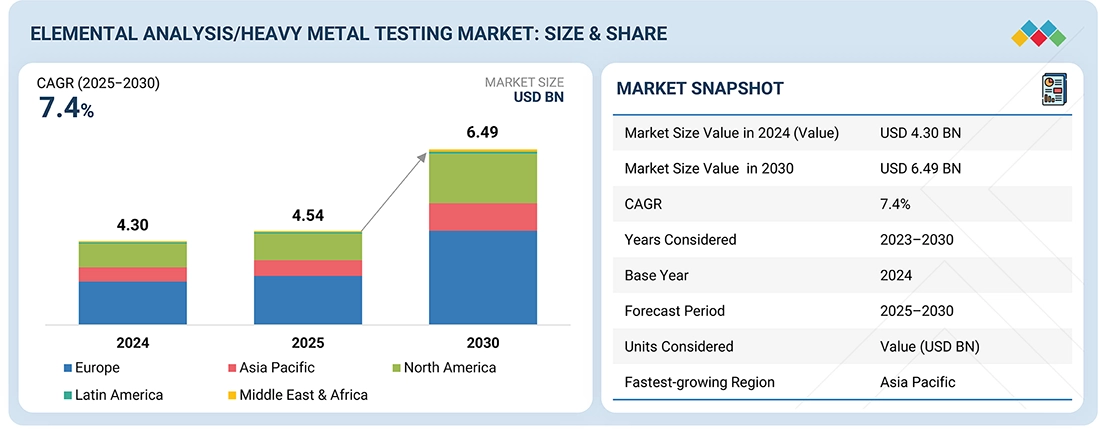
Source: Secondary Research, Interviews with Experts, MarketsandMarkets Analysis
The global Elemental Analysis market, valued at USD4.30 billion in 2024, stood at USD4.54 billion in 2025 and is projected to advance at a resilient CAGR of 7.4% from 2025 to 2030, culminating in a forecasted valuation of USD6.49 billion by the end of the period. The elemental analysis market is gaining traction due to stricter regulatory standards, rising awareness of health and environmental risks from toxic metals, and rapid industrialization. Advances in high-precision technologies like ICP-OES, ICP-MS, and automated elemental analyzers have made testing faster, more accurate, and cost-efficient. Additionally, the growing demand from the pharmaceutical, food, and environmental sectors for safe, contaminant-free products is driving the widespread adoption of these analytical solutions.
KEY TAKEAWAYS
-
MARKET SNAPSHOT:
Base Year Market Size (2024): USD 4.30 Billion
Current Market Size (2025): USD 4.54 Billion
Forecast Market Size (2030): USD 6.49 Billion
CAGR (2025–2030): 7.4% -
SEGMENT LEADERSHIP:
Regional Leader: North America accounted for a 40.8% share of the global elemental analysis/heavy metal testing market in 2024.
Technology Leader: ICP-OES accounted for the largest market share of 33.0% in 2024.
Type Leader: Elemental analyzers are expected to dominate the market, accounting for a 67.5% share in 2024.
End User Leader: Pharmaceutical & biopharmaceutical laboratories are projected to register the highest CAGR of 7.0% between 2025 and 2030. -
MARKET OUTLOOK & COMPETITIVE LANDSCAPE:
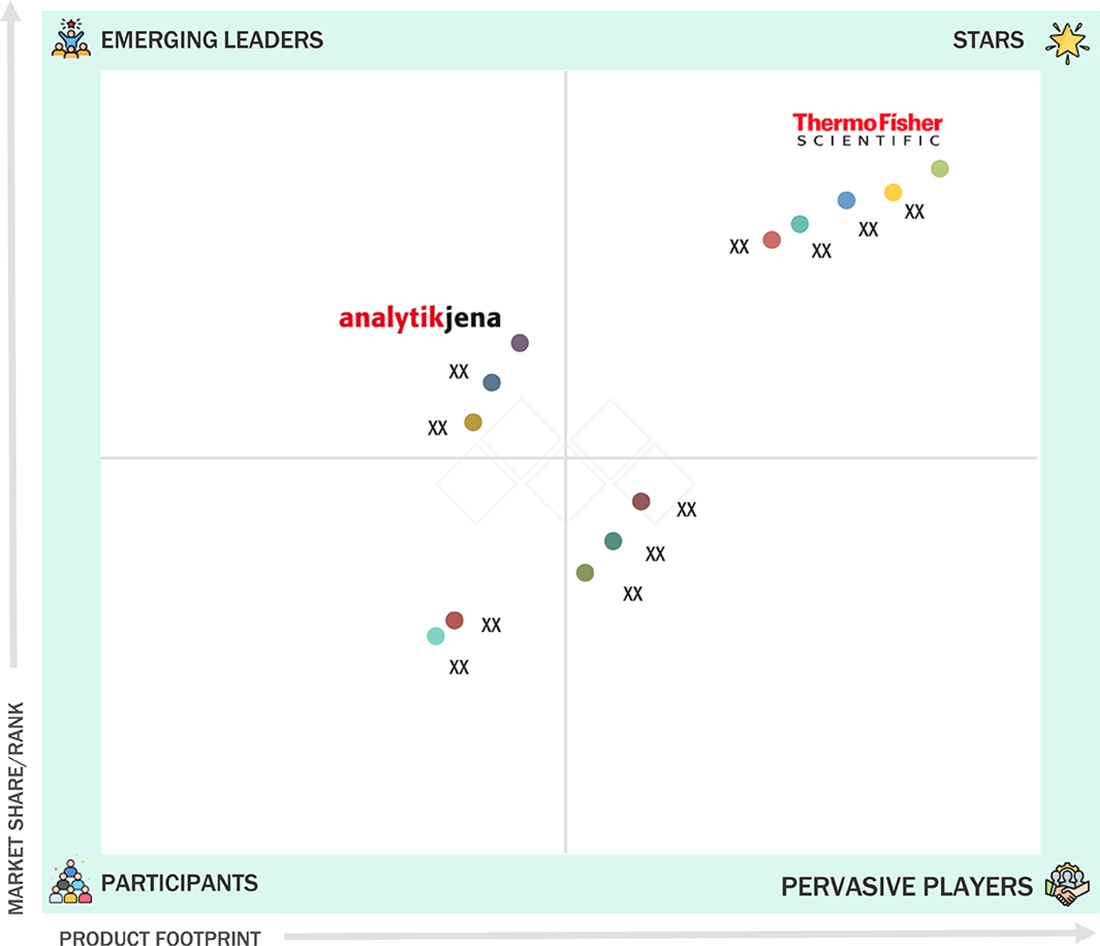
Thermo Fisher Scientific Inc., Agilent Technologies Inc., and PerkinElmer are identified as key players in the elemental analysis/heavy metal testing market, given their strong market share and extensive product footprint.
Horiba and Analytik Jena have distinguished themselves among startups and SMEs by securing strong footholds in specialized niche areas, underscoring their potential as emerging market leaders.
The elemental analysis market is gaining traction due to stricter regulatory standards, rising awareness of health and environmental risks from toxic metals, and rapid industrialization. Advances in high-precision technologies like ICP-OES, ICP-MS, and automated elemental analyzers have made testing faster, more accurate, and cost-efficient. Additionally, the growing demand from the pharmaceutical, food, and environmental sectors for safe, contaminant-free products is driving the widespread adoption of these analytical solutions.
TRENDS & DISRUPTIONS IMPACTING CUSTOMERS' CUSTOMERS
The elemental analysis market is increasingly driven by regulatory compliance, analytical precision, and safety assurance across industries. Pharma and biopharma companies focus on contamination control and batch validation to ensure therapeutic reliability, while research and academia prioritize method development and trace element accuracy for credible scientific outcomes. Environmental and food testing labs emphasize pollutants and heavy metal monitoring to protect public health and maintain consumer trust. Forensic, clinical, and chemical sectors rely on precise analysis and process monitoring to ensure legal certainty, patient safety, and product reliability. These trends underscore the market’s role as a critical enabler of quality, compliance, and end-user confidence.
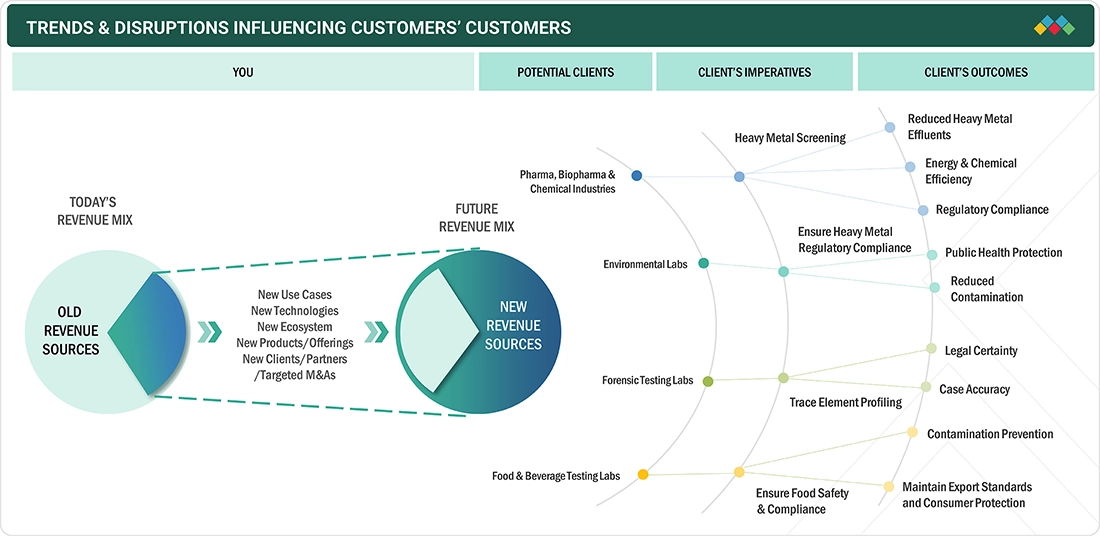
Source: Secondary Research, Interviews with Experts, MarketsandMarkets Analysis
MARKET DYNAMICS

Level
-
Tightening environmental and food safety regulations

-
Rising public health burden and contamination events


Level
-
High capital and operating costs

-
Shortage of skilled analytical workforce


Level
-
Expanding global water quality monitoring mandates

-
Emerging markets (APAC, LATAM, Parts of Africa)


Level
-
High cost of advanced analytical instruments

-
Regulatory complexity and variation

Source: Secondary Research, Interviews with Experts, MarketsandMarkets Analysis
Driver: Rising public health burden and contamination events
Contamination events translate directly into testing spikes and ongoing surveillance programs. The WHO attributes more than 1.5 million deaths globally (2021) to lead exposure, underscoring the public health severity that drives testing and remediation programs. Food safety notification datasets reinforce the operational impact: recent analyses of the EU Rapid Alert System for Food and Feed show thousands of heavy metal notifications over recent years, with mercury, cadmium, and lead among the most frequently reported contaminants (example dataset counts: mercury ~1,203; cadmium ~741; lead ~215 in compiled notifications). When a recall or alert occurs, buyers order both rapid field screening (handheld XRF or screen assays) and confirmatory lab tests (ICP-MS/ICP-OES), creating immediate demand for consumables, emergency lab capacity, and accredited reporting. As many public-health responses are government-funded, these events also unlock short-term procurement budgets for contract labs and equipment rentals. The measurable pattern is clear: higher incidence or visibility of contamination correlates with quantifiable upticks in sample submissions and rush-testing service revenues for accredited providers.
Restraint: High capital and operating costs
Elemental analysis platforms such as ICP-MS, ICP-OES, and high-resolution XRF carry price tags that can exceed USD 150,000–400,000 per unit, according to procurement data from public laboratories and academic purchasing disclosures. In addition, consumable high-purity argon gas, certified reference standards, and acid digestion supplies create recurring expenses. A single high-purity argon cylinder can cost USD 80–120 per day of continuous operation, while annual calibration-standard purchases for a mid-size lab routinely exceed USD 10,000, based on U.S. National Institute of Standards and Technology (NIST) reference material pricing. Utilities in low- and middle-income countries (LMICs) report that these combined costs can equal or surpass their annual operating budgets for water testing. The World Bank estimates that over 40% of municipal water utilities in low-income economies operate at a deficit, constraining their ability to finance capital upgrades. These economic factors slow adoption even when regulatory pressure is high, forcing many facilities to continue using older, less-sensitive techniques or to outsource samples to distant labs, which in turn lengthens turnaround times and increases per-sample costs.
Opportunity: Expanding global water quality monitoring mandates
The WHO/UNICEF Joint Monitoring Programme reports that 2 billion people still use drinking water containing at least one chemical contaminant above guideline limits, with arsenic exposure affecting ~140 million people across more than 70 countries (JMP 2023 update). Growing recognition of these risks is prompting national governments to broaden mandatory testing. For example, the U.S. Environmental Protection Agency (EPA) has ordered inventory and eventual replacement of 9.2 million lead service lines (EPA Lead and Copper Rule Improvements, 2023), requiring continuous sampling and confirmation testing for utilities. Similar arsenic-mitigation programs are underway in Bangladesh, Chile, and Mexico, each demanding accredited laboratory analysis and frequent monitoring cycles. These initiatives create a long-term, predictable demand curve for both high-volume contract laboratories and portable, field-deployable instruments, particularly in Asia Pacific and Latin America, where coverage gaps are widest.
Challenge: Regulatory complexity and variation
Heavy metal limits differ widely across jurisdictions and product categories, creating a patchwork of obligations for testing laboratories. For example, the U.S. FDA action level for inorganic arsenic in infant rice cereal is 100 ppb, while the European Food Safety Authority (EFSA) sets maximum cadmium levels in chocolate at 0.8 mg/kg, and India’s Bureau of Indian Standards (BIS) specifies 0.01 mg/L for lead in drinking water. Environmental limits also vary: the U.S. EPA’s Maximum Contaminant Level (MCL) for lead is 15 ppb, whereas the WHO guideline is 10 ppb. Each agency updates these limits periodically—EPA’s Lead and Copper Rule improvements in 2023, for instance, mandated new sampling protocols and service-line inventories. Laboratories serving global food, pharmaceutical, or electronics clients must therefore track dozens of evolving statutes, maintain separate method validations, and generate region-specific reports, all while ensuring ISO/IEC 17025 accreditation. Non-compliance can trigger fines, mandatory recalls, or shipment delays. This regulatory fragmentation raises operational costs, complicates staff training, and slows international expansion for service providers who must continually reconcile conflicting standards across their customer base.
ELEMENTAL ANALYSIS MARKET: COMMERCIAL USE CASES ACROSS INDUSTRIES
| COMPANY | USE CASE DESCRIPTION | BENEFITS |
|---|---|---|
 |
Nationwide laboratory network providing ICP-MS/ICP-OES analysis of drinking water, soil, and industrial effluents for metals such as lead, arsenic, cadmium, and mercury | Regulatory compliance with U.S. EPA/ISO standards | Consistent data quality across multiple states/countries | Rapid turnaround for municipal and industrial clients |
 |
Turnkey heavy metal testing for food, beverages, and consumer products—covering RoHS, REACH, and FDA limits | Ensures export compliance for global supply chains | Reduces product-recall risk | Supports brand reputation and consumer safety |
 |
Industrial onsite sampling & remote monitoring programs for mining, metallurgy, and wastewater plants using automated elemental analyzers | Continuous discharge monitoring to prevent fines | Real-time alerts for process optimization | Lower operational costs through predictive maintenance |
 |
Deployment of portable XRF and ICP instruments for field-based heavy metal screening in soils and construction sites | Faster site remediation decisions | Reduced need for repeated lab shipments | Higher data density for environmental assessments |
Logos and trademarks shown above are the property of their respective owners. Their use here is for informational and illustrative purposes only.
MARKET ECOSYSTEM
The elemental analysis market operates within a complex ecosystem that integrates analytical instrument manufacturers, contract testing laboratories, regulatory bodies, and end users across industries such as pharmaceuticals, food & beverages, environmental monitoring, and cosmetics. Key players supply advanced technologies like ICP-MS, ICP-OES, AAS, and XRF, while contract labs offer specialized testing services aligned with global standards. Regulatory authorities such as the FDA, EPA, USP, and European Pharmacopoeia define stringent testing requirements, driving demand for reliable and high-throughput solutions. The ecosystem is further shaped by collaborations between instrument vendors and labs, growing focus on cGMP compliance, and increasing customer expectations for rapid, accurate, and multi-element detection capabilities.
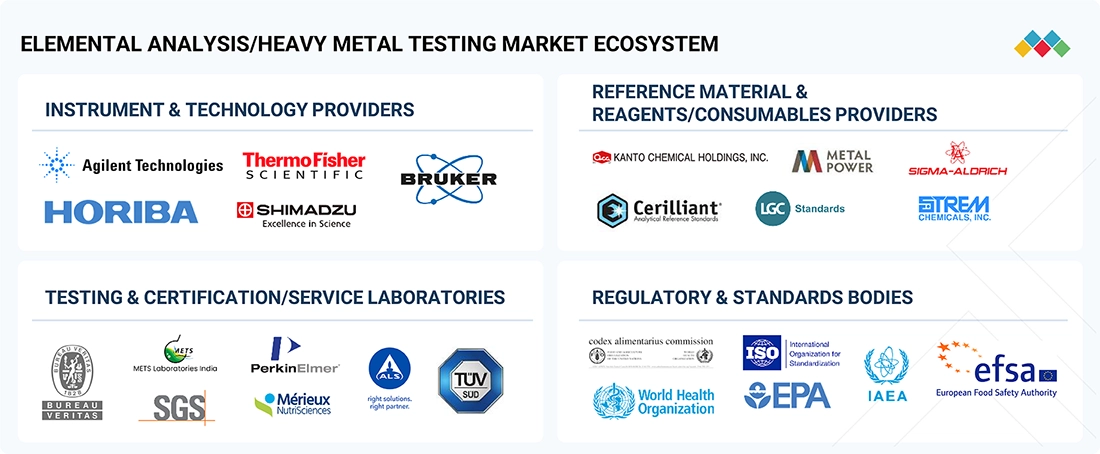
Logos and trademarks shown above are the property of their respective owners. Their use here is for informational and illustrative purposes only.
MARKET SEGMENTS
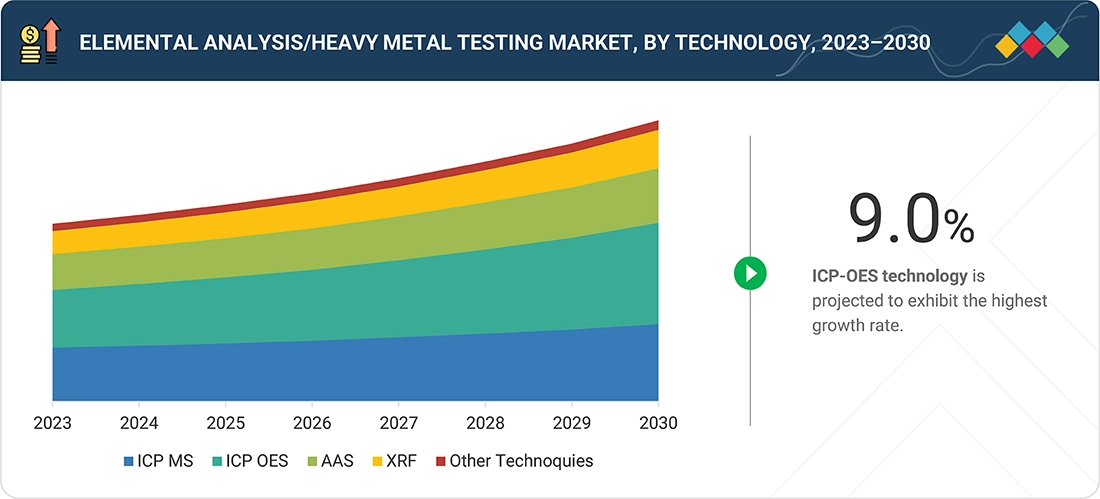
Source: Secondary Research, Interviews with Experts, MarketsandMarkets Analysis
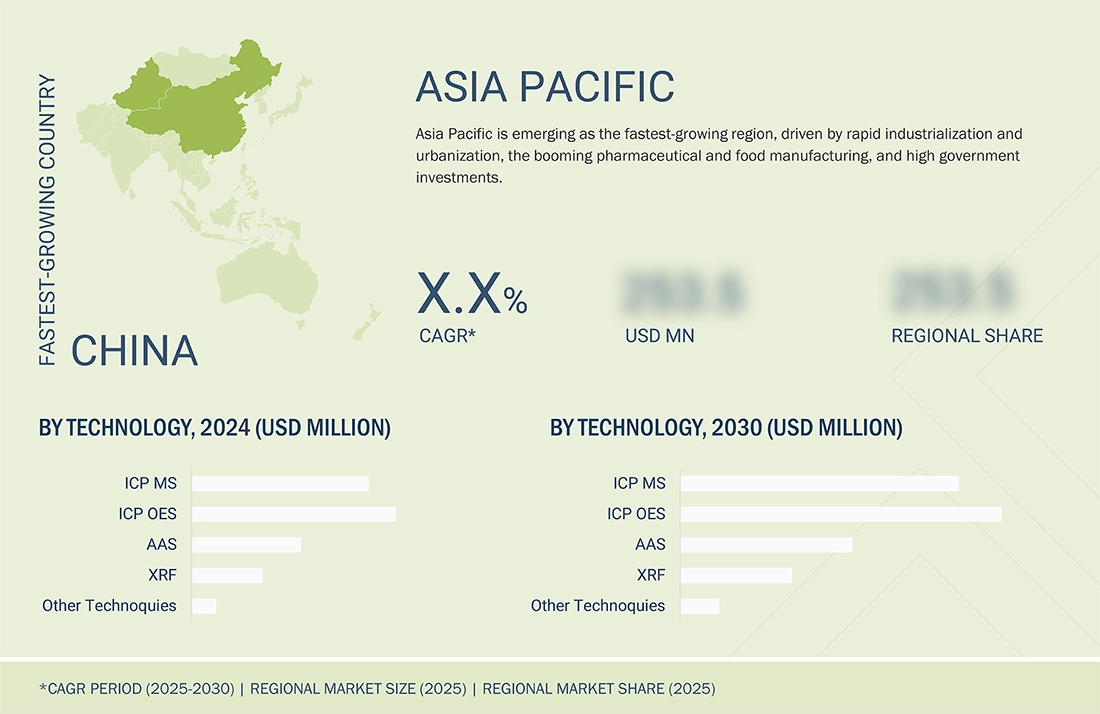
Elemental Analysis/Heavy Metal Testing Market, by Technology
ICP-OES holds the largest share in the elemental analysis market due to its ability to perform highly sensitive, accurate, and multi-element detection across a wide range of sample types. The technology allows simultaneous analysis of trace, minor, and major elements, reducing the need for multiple instruments or separate analytical methods. Its broad dynamic range enables laboratories to detect elements at both low and high concentrations, which is critical for applications in pharmaceuticals, environmental monitoring, food safety, and chemicals. Recent advancements in ICP-OES, including automation, enhanced software interfaces, and high-throughput capabilities, have improved laboratory efficiency and reduced operational errors. Regulatory recognition of ICP-OES methods by global pharmacopoeias and environmental authorities has further cemented its adoption, particularly in compliance-driven industries. Additionally, the scalability of ICP-OES—from compact benchtop units for routine testing to sophisticated research-grade systems—makes it versatile for laboratories of varying sizes. Collectively, these factors ensure that ICP-OES remains the preferred analytical technique and sustains its dominant market share globally.
Elemental Analysis/Heavy Metal Testing Market, by Type
Elemental analyzers hold the largest share in the overall market as they offer fast, precise, and cost-effective quantification of multiple elements simultaneously. Their versatility across industries—environmental, food, pharmaceuticals, and materials—combined with ease of operation and compliance with global standards, makes them the preferred choice over other techniques like ICP-MS, AAS, or XRF.
Elemental Analysis/Heavy Metal Testing Market, by End User
Pharmaceutical & biopharmaceutical companies dominate the elemental analysis market due to the critical importance of monitoring elemental impurities in drug products. Regulatory guidelines such as ICH Q3D and USP <232> set strict limits on toxic metals, including lead, arsenic, cadmium, and mercury, particularly for orally and parenterally administered medications. Biopharmaceuticals, including monoclonal antibodies, vaccines, and recombinant proteins, require comprehensive elemental profiling to maintain safety, efficacy, and batch-to-batch consistency. The increasing complexity of drug formulations, along with the rising trend of outsourcing testing to contract research organizations (CROs), further drives demand for high-precision elemental analysis instruments. Additionally, pharmaceutical manufacturers prioritize compliance with global standards to facilitate international distribution, reinforcing the adoption of ICP-OES, ICP-MS, and CHNS/O elemental analyzers. Consequently, the pharmaceutical & biopharmaceutical sector represents the largest application segment in the elemental analysis/heavy metal testing market, maintaining a strong and consistent share worldwide.
REGION
The US dominated the North America elemental analysis/heavy metal testing market in 2024.
The US dominates the North America elemental analysis market due to its mature pharmaceutical and biotech industries, well-established regulatory framework, and advanced laboratory infrastructure. Agencies such as the FDA and EPA enforce strict limits on elemental impurities in pharmaceuticals, food, and environmental samples, prompting widespread adoption of advanced analytical techniques. Laboratories across the US prioritize compliance, reliability, and precision, which has driven significant investment in ICP-OES, ICP-MS, and elemental analyzers. The country’s focus on research & development, particularly in life sciences, materials science, and environmental testing, further strengthens demand for high-performance analytical solutions. Additionally, the US serves as a hub for contract research organizations (CROs) and global pharmaceutical manufacturing, supporting routine and large-scale testing operations. High awareness of product quality, safety standards, and regulatory compliance among industries and consumers further reinforces market growth. These factors collectively ensure that the US maintains its dominant position in the North America elemental analysis/heavy metal testing market.
ELEMENTAL ANALYSIS MARKET: COMPANY EVALUATION MATRIX
The elemental analysis market’s company evaluation matrix visually categorizes companies based on their market share/rank and product footprint. Thermo Fisher Scientific is positioned as a Star, indicating a strong market position with a broad product footprint. Companies in the Participants and Pervasive Players categories have varying degrees of market influence and product range, with the latter group offering more widespread product availability but with lower market share. The matrix provides insights into the competitive landscape, highlighting key players and their strategic positioning in the market.
Source: Secondary Research, Interviews with Experts, MarketsandMarkets Analysis
KEY MARKET PLAYERS
- Agilent Technologies Inc. (US)
- Thermo Fisher Scientific Inc. (US)
- Bruker Corporation (US)
- PerkinElmer Inc. (US)
- Shimadzu Corporation (Japan)
- SPECTRO Analytical Instruments GmbH (Germany)
- HORIBA Ltd. (Japan)
- Analytik Jena AG (Germany)
- Elementar Analysensysteme GmbH (Germany)
- Skyray Instruments USA, Inc. (US)
- GBC Scientific (Australia)
- Malvern Panalytical Ltd. (UK)
- Rigaku Holdings Corporation (Japan)
- LECO Corporation (US)
- Advion Inc. (US)
- Teledyne Technologies Incorporated (US)
- Hitachi High-Tech Corporation (Japan)
- Alpha Measurement Solutions (US)
- Buck Scientific, Inc. (US)
- Jeol Ltd. (Japan)
- PG Instruments Ltd. (UK)
- Aurora Biomed Inc. (Canada)
MARKET SCOPE
| REPORT METRIC | DETAILS |
|---|---|
| Market Size in 2025 (Value) | USD 4.54 BN |
| Market Forecast in 2030 (Value) | USD 6.49 BN |
| Growth Rate | CAGR of 7.4% from 2025-2030 |
| Years Considered | 2023-2030 |
| Base Year | 2024 |
| Forecast Period | 2025-2030 |
| Units Considered | Value (USD Million/Billion) |
| Report Coverage | Revenue forecast, company ranking, competitive landscape, growth factors, and trends |
| Segments Covered | Technology (ICP-MS, ICP-OES, AAS, XRF, Other Technologies), Type (Elemental Analyzers, Organic Analyzers), End User (Pharmaceutical & Biopharmaceutical Laboratories, Environmental Testing Labs, Food & Beverage Industry, Chemical & Petrochemical Industries, Research & Academia, Hospitals & Clinical Labs, Forensic Testing Labs, Other End Users) |
| Regions Covered | North America, Europe, Asia Pacific, Latin America, and Middle East & Africa |
WHAT IS IN IT FOR YOU: ELEMENTAL ANALYSIS MARKET REPORT CONTENT GUIDE
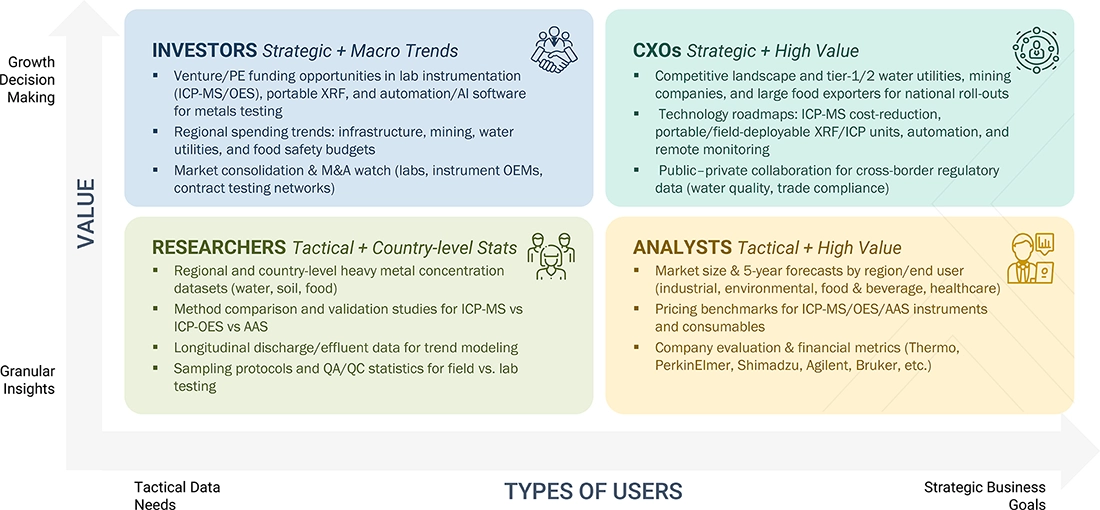
DELIVERED CUSTOMIZATIONS
We have successfully delivered the following deep-dive customizations:
| CLIENT REQUEST | CUSTOMIZATION DELIVERED | VALUE ADDS |
|---|---|---|
| Mapping regulatory requirements for heavy metal testing across geographies (FDA, EPA, EU, BIS) | Country-wise regulatory matrix covering permissible limits, test protocols, and documentation needs | Enabled global compliance strategy and reduced risk of audit failures |
| Pricing and procurement insights | Analysis of capex/opex models, instrument lifecycle cost, and service contract trend | Helped optimize pricing models and improve commercial negotiations |
| Identify lab automation opportunities |
|
Helped clients position analyzer solutions with integrated automation features, improving instrument utilization, reducing manual intervention, and accelerating decision-making for QC labs |
RECENT DEVELOPMENTS
- 1/1/2024 12:00:00 AM : Thermo Fisher Scientific launched the iCAP MX Series ICP-MS, offering single and triple quadrupole options for precise, interference-free trace elemental analysis in environmental, food, and industrial labs.
- 2/1/2025 12:00:00 AM : Shimadzu launched the ALTRACE Energy Dispersive X-Ray Fluorescence Spectrometer, its flagship EDX model offering industry-leading measurement sensitivity for trace inorganic elements.
- 6/1/2025 12:00:00 AM : SPECTRO launched the SPECTROGREEN MS, a high-performance quadrupole ICP-MS designed for routine trace-level elemental analysis across environmental, pharmaceutical, food, and industrial labs.
- 4/1/2025 12:00:00 AM : SPECTRO enhanced the xSORT handheld XRF analyzer for rapid, on-site elemental analysis across geology, mining, environmental screening, and compliance testing.
- 6/1/2025 12:00:00 AM : Analytik Jena launched PlasmaQuant 9200 ICP-OES series, which delivers high-resolution elemental analysis with exceptional matrix tolerance, ideal for complex samples. It supports applications from research and trace analysis to quality control across industries such as petrochemicals, battery production, and metal analysis.
Table of Contents
 Exclusive indicates content/data unique to MarketsandMarkets and not available with any competitors.
Methodology
The size of the global elemental analysis market was estimated using four primary research studies to ensure accuracy and reliability. Initial market data and related industry information were collected from 3 to 5 secondary sources. This information was then validated through primary research to confirm key assumptions and overall market sizing. Both top-down and bottom-up approaches were employed to determine the total market size, which was subsequently refined into segment and subsegment estimates. Finally, data triangulation was conducted to verify the accuracy and consistency of the findings.
Secondary Research
Secondary research sources included directories, Factiva, white papers, Bloomberg Business, annual reports, SEC filings, company filings, and investor presentations. These sources provided critical insights into market leaders, end-user segments, regional dynamics, and technological differences across various elemental analysis market segments.
Primary Research
Primary research consisted of both quantitative and qualitative insights obtained through interviews with key stakeholders. On the demand side, participants included regulatory authorities, environmental and industrial monitoring officers, laboratory managers, researchers, hospitals, and research institutions. On the supply side, interviews were conducted with CEOs, product managers, sales heads, and other top executives from relevant companies. These direct interactions helped validate secondary research findings, refine assumptions, and provide deeper insights into market trends, technology adoption, and end-user requirements.
A detailed breakdown of the primary respondents is provided below.
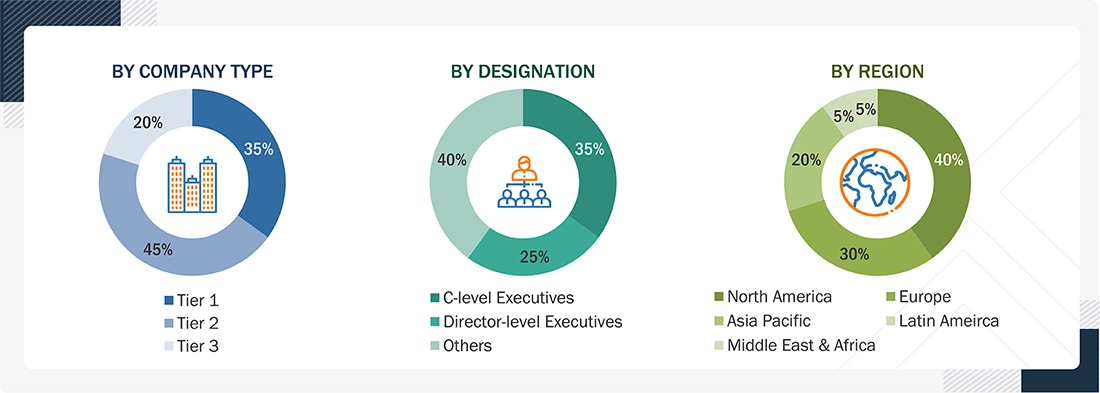
Note q: Others include sales managers, marketing managers, business development managers, product managers, distributors, and suppliers.
Note 2: Companies are classified into tiers based on their total revenue. As of 2024, Tier 1 = >USD 1 billion, Tier 2 = < USD 500 million, and Tier 3 = < USD 100 million.
To know about the assumptions considered for the study, download the pdf brochure
Market Size Estimation
This report utilized revenue share analysis of major companies to evaluate the size of the global elemental analysis market. The analysis involved identifying key market participants and estimating their revenue from elemental analysis market instruments using data collected during both primary and secondary research phases. Secondary research included reviewing annual and financial reports of leading market players, investor presentations, press releases, and business filings. Primary research consisted of detailed interviews with influential stakeholders, including directors, CEOs, product managers, and key marketing executives.
- To determine the overall market value, segmental revenue was calculated by mapping the revenue of leading instrument providers. The process involved the following steps:
- Compiling a list of leading global companies in the elemental analysis market instruments industry.
- Charting annual revenues generated by these companies from elemental analysis market (or the closest relevant business unit/product category).
- Mapping 2024 revenues of leading companies to cover a significant portion of the global market.
- Calculating the total global value of the elemental analysis market instruments market.
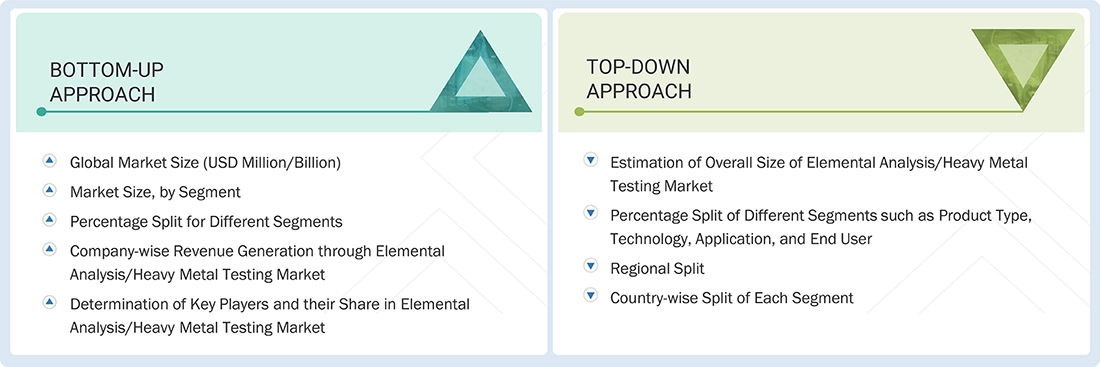
Global Elemental analysis Market: Bottom-Up and Top-Down Approach
Both bottom-up and top-down approaches were employed to ensure accurate market sizing. In the bottom-up approach, revenues of individual companies and product segments were aggregated to estimate the overall market size. In the top-down approach, global industry revenue estimates were broken down into segments and subsegments based on technology, analyzer type, and end-user adoption. Finally, data triangulation was performed to reconcile both approaches and validate the final market estimates.
Global Elemental analysis Market: Bottom-up and Top-down Approach
Data Triangulation
The elemental analysis market refers to the global industry involved in the detection, quantification, and monitoring of heavy metals in various matrices, including water, soil, air, food, pharmaceuticals, chemicals, and industrial products. Heavy metals such as lead (Pb), mercury (Hg), cadmium (Cd), arsenic (As), chromium (Cr), and nickel (Ni) are monitored due to their toxicological impact on human health, the environment, and industrial processes.
The market encompasses analytical instruments and analyzers used for elemental analysis market, including technologies such as Inductively Coupled Plasma Optical Emission Spectroscopy (ICP-OES), Inductively Coupled Plasma Mass Spectrometry (ICP-MS), Atomic Absorption Spectroscopy (AAS), X-ray Fluorescence (XRF) analyzers, and portable/handheld devices, as well as supporting sample preparation and data analysis systems. The market excludes service-based testing and focuses solely on the sale and adoption of instruments and analytical technologies.
Elemental analysis market is critical across industries for regulatory compliance, environmental protection, public health, quality assurance, and research purposes. The market is driven by increasing industrialization, stricter regulations, rising awareness of contamination risks, and the adoption of advanced analytical technologies that provide accurate, reproducible, and rapid detection of heavy metals in diverse sample matrices.
Market Definition
To ensure accurate data, elemental analysis was divided into various segments and subsegments. A data triangulation process that used both top-down and bottom-up approaches was applied. This involved analyzing factors and trends from both, the demand and supply sides to validate the findings for each segment. The combination of this segmentation with the triangulation process helps ensure that the market data is both accurate and reliable.
Stakeholders
- Instrument manufacturers
- Reagent and consumables suppliers
- Pharmaceutical and biopharmaceutical laboratories
- Chemical and petrochemical industries
- Environmental monitoring agencies
- Food and beverage laboratories
- Forensic testing laboratories
- Hospitals and clinics
- Academic and research institutions
- Distributors and channel partners
- Regulatory and standards organizations
Report Objectives
- To define, describe, and forecast the global elemental analysis market based on technology, product type, application, end user, and region
- To provide detailed information regarding the major factors influencing the growth of the market (drivers, restraints, opportunities, and industry-specific challenges)
- To strategically analyze micromarkets with respect to individual growth trends, prospects, and contributions to the total market
- To analyze opportunities in the market for stakeholders and provide details of the competitive landscape for market leaders
- To forecast the revenue of the market segments with respect to five regions: North America, Europe, the Asia Pacific, Latin America, and the Middle East & Africa
- To profile the key players and comprehensively analyze their market ranking and core competencies
- To benchmark players within the market using a proprietary Company Evaluation Matrix framework, which analyzes market players on various parameters within the broad categories of business strategy excellence and strength of product portfolio
- To analyze competitive developments such as product launches, agreements, expansions, collaborations, and acquisitions in the global elemental analysis market


Personalize This Research
- Triangulate with your Own Data
- Get Data as per your Format and Definition
- Gain a Deeper Dive on a Specific Application, Geography, Customer or Competitor
- Any level of Personalization
Let Us Help You
- What are the Known and Unknown Adjacencies Impacting the Elemental Analysis Market
- What will your New Revenue Sources be?
- Who will be your Top Customer; what will make them switch?
- Defend your Market Share or Win Competitors
- Get a Scorecard for Target Partners

Custom Market Research Services
We Will Customise The Research For You, In Case The Report Listed Above Does Not Meet With Your Requirements
Get 10% Free CustomisationTESTIMONIALS

JAYANT RAJPUROHIT
Director of Market Insights, Data and Analytics
SFI Health,
Leading Pharmaceutical Companywww.sfihealth.com/

We at SFI Health approached MarketsandMarkets for an Opportunity Assessment on "Incidence and Prevalence of Focus Indications" as we wanted to know the most attractive HCPs like Physician, Functional MD, Naturopath and Pharmacist. The project was critical for us to ensure our focus on the right target which would enable sustainable growth and profitability for SFI Health. The business insights provided exceeded our expectations and we were extremely impressed. The team at MarketsandMarkets is highly professional and detail oriented and very well understood our business needs. MarketsandMarkets offers a unique combination of expertise and dedicated engagement model. We identified 2 new products to be launched in coming months, based on the research findings provided by MarketsandMarkets. We are happy with the services and would strongly recommend MarketsandMarkets to my peers in the industry.

BEATRIZ DE LA CALLE
Head of Commercial Analytics
Qualicaps,
Leading Pharmaceutical Companywww.qualicaps.com/

We partnered with MarketsandMarkets for an assessment study on hard empty capsules. The team was extremely professional in understanding our business requirements and we received timely responses to all our queries. The market intelligence and the recommendations has met our business requirements. We were extremely impressed to see the final study results; it really exceeded our expectations. The market intelligence offered by MarketsandMarkets, and clarity on next steps will help us achieve our business objective for the Year 2021. We are happy with the services and would strongly recommend MarketsandMarkets to my peers in the industry.

Bob Williams,
Senior Director Business Development & Innovation
Bracco Diagnostics Inc.,
Italian Multinational in life sciences sector and a World Leader in imaging diagnosticsimaging.bracco.com/us-en
We were pleased with targeted insights that MarketsandMarkets identified from a custom study on the 'Radiation Dose Management Solutions Market'. Your team identified and characterized the market participants as well as underlying trends accurately. This study was useful to Bracco in formulating business strategies for our dose monitoring product lines and we thank MarketsandMarkets for the job well done.
Cody Coonradt,
Market Development and Strategy Manager
3M Health Information Systems,
Leader in Health care Coding, Payment & Analytics Solutions.www.3m.com/3M/en_US/health-information-systems-us
The value for our organization comes from three things: depth of research, specificity of segments and being easy to work with. As important as the first two are, the third can't be underestimated. MarketsandMarkets, maybe more than any other research vendor, wants to know what is top of mind for our team and what big questions we are grappling to answer.
Their customer first approach and high value engagement model, have given us great analysis and excellent value for money
- Rest Of Europe Elemental Analysis Market
- Rest Of Asia Pacific Elemental Analysis Market
- Rest Of Latin America Elemental Analysis Market
- Canada Elemental Analysis Market
- US Elemental Analysis Market
- Germany Elemental Analysis Market
- UK Elemental Analysis Market
- Italy Elemental Analysis Market
- France Elemental Analysis Market
- Spain Elemental Analysis Market
- Japan Elemental Analysis Market
- China Elemental Analysis Market
- Australia Elemental Analysis Market
- India Elemental Analysis Market
- South Korea Elemental Analysis Market
- Brazil Elemental Analysis Market
- Mexico Elemental Analysis Market






Growth opportunities and latent adjacency in Elemental Analysis Market