Employee Transport Fleet Management Market

Employee Transport Fleet Management Market by Solution (Operations Management, Vehicle Maintenance & Diagnostics, Performance Management, Compliance Management) & Fleet Type (Fixed-route, First- & Last-mile, Campus) - Global Forecast to 2030




OVERVIEW
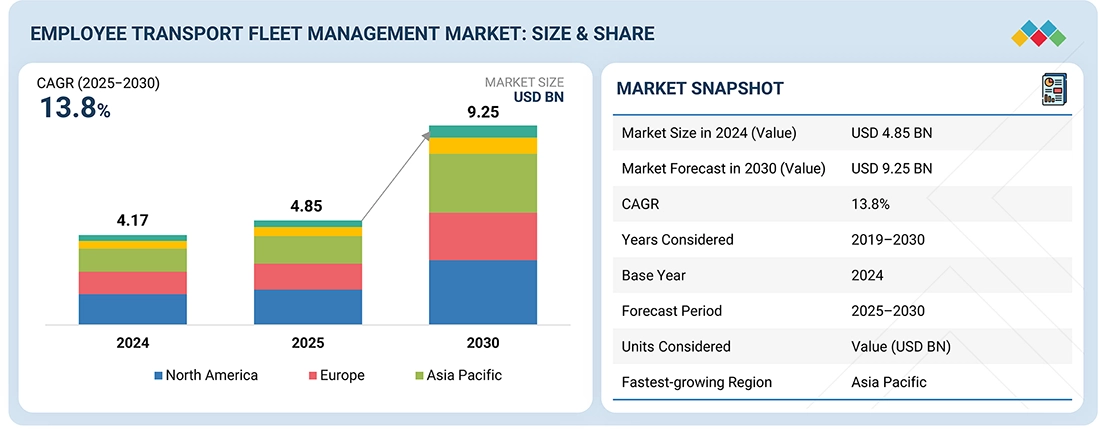
Source: Secondary Research, Interviews with Experts, MarketsandMarkets Analysis
The employee transport fleet management market is projected to increase from USD 4.85 billion in 2025 to USD 9.25 billion by 2030, at a CAGR of 13.8%. Growing corporate demand for reliable commuter shuttles and outsourced mobility reduces capital expenditure for employers and simplifies procurement. Improvements in telematics, IoT sensors, and predictive maintenance increase availability and reduce lifecycle costs for fleet operators. Electrification and depot charging management change scheduling and require new energy optimization practices for employer-run shuttle networks. Integration with HR, payroll, and booking systems enables eligibility verification, simpler reconciliation, and a smoother passenger experience. Regulatory emphasis on safety, data privacy, and driver hours drives adoption of in-cab monitoring and secure over-the-air updates. Altogether, these developments favor scalable SaaS platforms and managed services that provide measurable returns and operational resilience.
KEY TAKEAWAYS
-
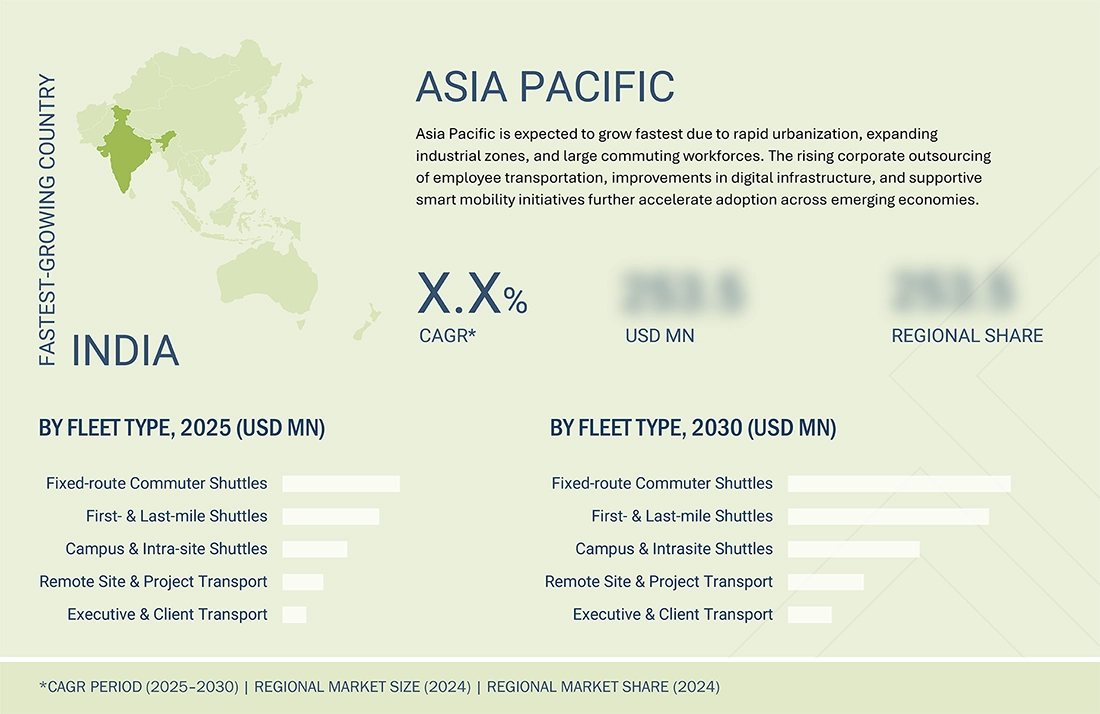
RegionBy region, the Asia Pacific region is projected to grow at a CAGR of 16.5% in the employee transport fleet management market from 2025 to 2030.
-
By OperationBy operation, the vehicle maintenance & diagnostics segment is expected to register the highest CAGR of 14.9%.
-
By Fleet TypeBy fleet type, the first- & last-mile shuttles segment is projected to grow at a CAGR of 15.1% during the forecast period.
-
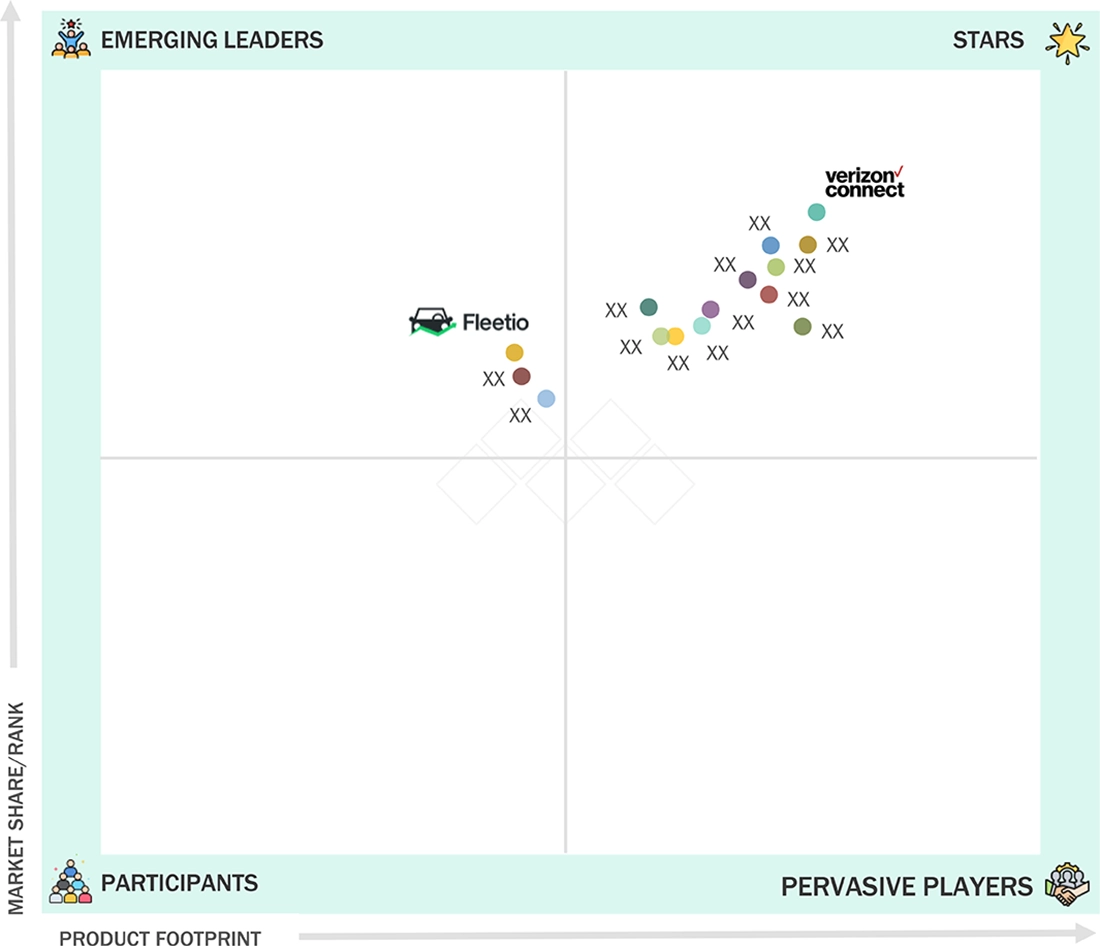
Competitive LandscapeVerizon Connect, Samsara, and Geotab were identified as some of the star players in the employee fleet management market, given their strong market share and product footprint.
-
Competitive LandscapeMoveInSync, Routematic, and VOLL are some of the progressive companies that stand out by offering specialized, industry-tailored fleet visibility and efficiency for employee transport.
Increasing urban congestion and longer commute times are encouraging employers to adopt structured employee transport programs. Organizations increasingly position dependable shuttle services as benefits that enhance retention, punctuality, and overall workforce productivity. Better telematics, improved routing, and simpler passenger apps enable efficient scheduling and lower per-trip operating costs. A stronger regulatory emphasis on safety and emissions is prompting investment in driver monitoring, vehicle upgrades, and cleaner buses. Linking HR, attendance, and payroll systems simplifies billing, route allocation, and compliance reporting for large employers. Flexible work patterns increase demand for adaptive routing and on-demand services that match changing schedules. Partnerships with EV charging firms, micromobility providers, and public transit expand service offerings and create steady new revenue. This improves rider experience and lowers total costs.
TRENDS & DISRUPTIONS IMPACTING CUSTOMERS' CUSTOMERS
The shift toward new revenue sources, such as Charging as a Service, data monetization, and Mobility as a Service, is reshaping the economics of employer transportation. Electrification and smart charging orchestration are forcing fleets to rethink schedules, depot operations, and total cost models. Standardized telematics APIs and platform integrations enable seamless workflows for HR, payroll, and booking, while unlocking new analytics and monetization streams. Edge AI and real-time demand forecasting permit dynamic routing, reducing empty miles and wait times. Stricter safety and data protection rules are driving investments in in-cab monitoring, secure OTA updates, and privacy-first architectures. Together, these trends deliver safer, more transparent, and more consistent daily commutes, thereby increasing employee satisfaction and reducing corporate transportation costs.
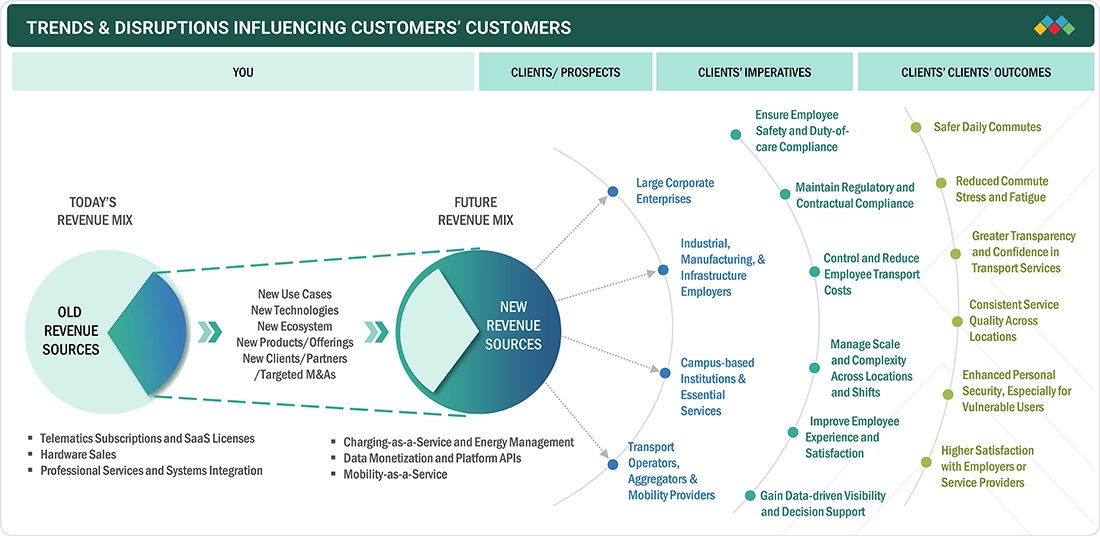
Source: Secondary Research, Interviews with Experts, MarketsandMarkets Analysis
MARKET DYNAMICS

Level
-
Corporate Sustainability Goals and Emission Reduction Mandates

-
Regulatory Mandates for Employee Safety and Compliance


Level
-
Regulatory Fragmentation Across Geographies and Jurisdictions

-
Escalating Operational and Capital Costs


Level
-
Urban Growth in Emerging Markets and Tier-2 City Expansion

-
Mobility-as-a-Service Platform Integration and Multimodal Solutions


Level
-
Substantial Capital Requirements and Infrastructure Investment

-
Driver Retention, Workforce Development, and Labor Market Challenges

Source: Secondary Research, Interviews with Experts, MarketsandMarkets Analysis
Driver: Corporate Sustainability Goals and Emission Reduction Mandates
Companies are under growing pressure to include Scope 3 emissions, such as employee commuting, in disclosures under frameworks like the CSRD, which recently changed reporting thresholds. Many organizations are shifting to lower-emission fleet options, including electric vehicles and Mobility-as-a-Service platforms, to meet ESG goals. More than 57% of fleet managers report some EV integration, supported by incentives such as India’s FAME II and corporate net-zero plans.
Restraint: Regulatory Fragmentation Across Geographies and Jurisdictions
Multinational employers must navigate varied regional rules. For example, Indian states set rules for night-shift transport, the Philippines' PEZA requires shuttle services, the UAE mandates commute provisions or cash allowances, and Saudi Arabia stipulates transport for female employees. This fragmented regulatory environment raises administrative work, training needs, and operational complexity for firms seeking uniform solutions.
Opportunity: Urban Growth in Emerging Markets and Tier-2 City Expansion
The Asia Pacific accounted for 39.05% of the corporate employee transport market and is forecasted to grow at a CAGR of 8.44% through 2031. Rapid urbanization in India and Southeast Asia, combined with inadequate public transportation, increases the demand for employer-provided commuting. Major Special Economic Zones (SEZs) in India, like Manyata Tech Park and Rajiv Gandhi Infotech Park, employ hundreds of thousands of people and require structured transportation. The expansion of Tier-2 cities and industrial zones presents new opportunities for fleet service providers. They also support broader sustainability goals and reporting.
Challenge: Substantial Capital Requirements and Infrastructure Investment
Rolling out Employee Transport Management Systems (ETMS) requires large upfront spending on vehicles, platform software, mobile apps, GPS tracking, telematics devices, and driver training. Moving to EVs adds extra capital needs for chargers, grid upgrades, and energy management. High capital requirements limit small and medium operators, especially in developing markets with scarce financing, slowing market access and competition.
EMPLOYEE TRANSPORT FLEET MANAGEMENT: COMMERCIAL USE CASES ACROSS INDUSTRIES
| COMPANY | USE CASE DESCRIPTION | BENEFITS |
|---|---|---|
 |
Global flooring manufacturer operating one million miles weekly across three distinct fleets (first mile, middle mile, and final mile) needed unified visibility into routing and driver behavior to optimize operations and improve profitability. | Reduced miles driven by 4.2 million saving USD 7.75M on routing optimization. Cut idling by 12% generating $600K fuel savings. Reduced admin work by 75%. AI Dashcams achieved 13% reduction in crashes with 54% reduction in speeding. |
 |
University transit system with 45 fixed-route vehicles and paratransit services needed to manage route changes during construction while maintaining accurate passenger information across digital platforms. | Successfully navigated construction-related disruptions without compromising service quality. Riders experienced minimal confusion from timely updates. Sustained ridership levels and improved confidence in transit system reliability. |
 |
UK specialist haulage company moving sculptures and military equipment needed integrated fleet management with TMS solution for improved productivity and customer communication with dynamic ETAs. | Achieved 15% productivity boost equivalent to gaining three extra working days monthly. Simplified compliance with automated tachograph downloads. Debunked USD 64.500 false rear-end collision claim with video evidence. Improved customer communication. |
Logos and trademarks shown above are the property of their respective owners. Their use here is for informational and illustrative purposes only.
MARKET ECOSYSTEM
The employee transport fleet management market ecosystem brings together solution providers, hardware makers, service operators, and regulators to deliver safe, reliable, and employee-centric commuting services. Software vendors supply integrated platforms for routing, dynamic scheduling, passenger booking, HR and payroll integrations, safety analytics, and real-time telematics to coordinate shuttle networks. Hardware manufacturers provide dashcams, vehicle gateways, passenger-count sensors, and charging interfaces that collect operational and energy telemetry. Service providers handle managed shuttle operations, driver training, vehicle upkeep, depot charging, and Mobility-as-a-Service packages to simplify employer procurement and scale. Regulators define rules for driver hours, vehicle safety, data protection, and emissions, shaping platform features and buying choices. Reliable connectivity, APIs, strong cybersecurity, and electrification readiness are essential enablers that boost punctuality, safety, cost efficiency, and overall commuter experience.
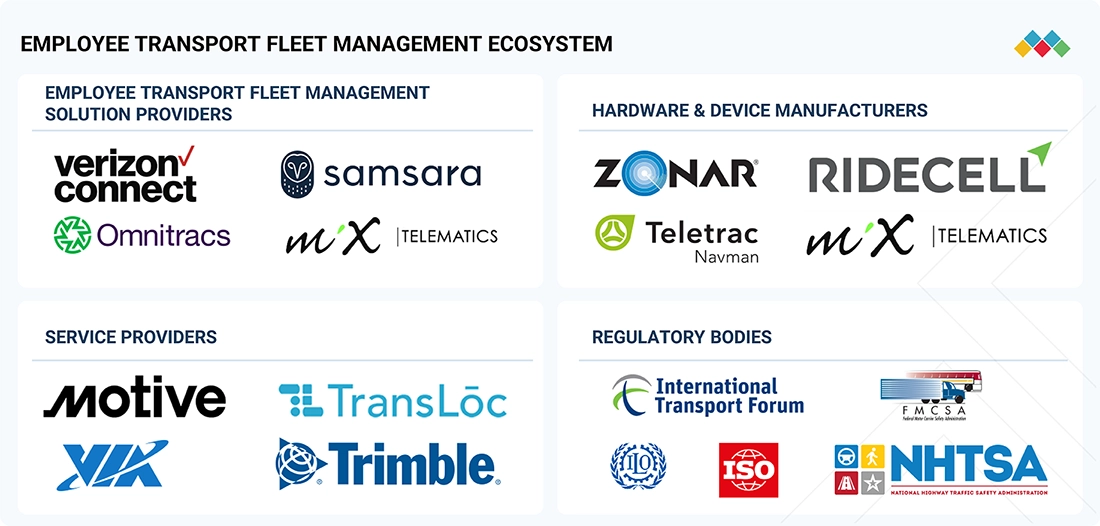
Logos and trademarks shown above are the property of their respective owners. Their use here is for informational and illustrative purposes only.
MARKET SEGMENTS
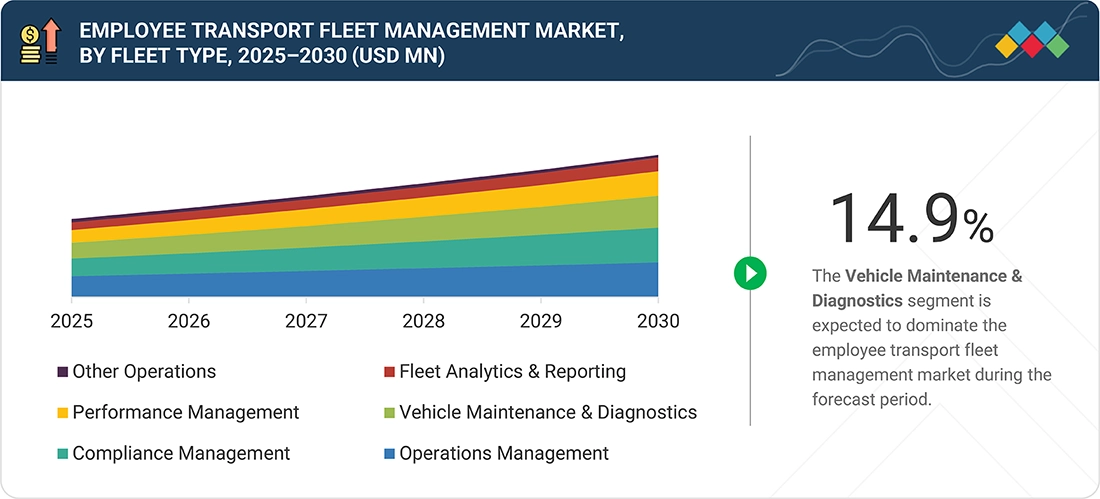
Source: Secondary Research, Interviews with Experts, MarketsandMarkets Analysis
Employee Transport Fleet Management Market, by Operation
The operations management segment is projected to hold the largest market share over the forecast period. This segment offers centralized scheduling, dispatch, and real-time tracking and reporting to reduce idle miles and increase vehicle utilization. Employers prefer platforms that link HR, payroll, eligibility checks, and passenger booking to simplify trip reconciliation and ensure compliance. Predictive maintenance and automated driver workflows reduce downtime and lower maintenance costs while keeping vehicles available. Dynamic routing, demand forecasting, and utilization analytics help right-size capacity across shifts, reducing empty return trips. Operations suites provide clear KPIs and ROI metrics, helping procurement and finance justify subscription and capital investments. Scalability across multi-site networks and regulatory support make operational offerings essential for large employer transportation programs.
Employee Transport Fleet Management Market, by Fleet Type
Fixed-route commuter shuttles perform where demand is consistent, enabling straightforward route design and vehicle use. Stable, recurring trips raise vehicle occupancy and improve unit economics, supporting investments in telematics and operations. Centralized schedules and automated dispatch cut empty runs and simplify compliance, payroll, and record keeping. Employers prefer fixed routes for clearer contracts, consistent budgeting, and uniform service agreements across multiple sites. Depot charging and planned maintenance schedules make vehicle electrification and condition-based upkeep simpler for route-based fleets. Linking fixed shuttles with last-mile options and corporate mobility portals boosts rider numbers and improves the commute. Lower fuel use, less labor waste, and improved punctuality make fixed-route systems the preferred procurement choice.
REGION
Asia Pacific to be fastest-growing region in employee transport fleet management market during forecast period
Rapid city growth and higher population density have increased the demand for employee shuttle services across Asia Pacific urban centers. New manufacturing hubs and large corporate campuses require dependable, scheduled transportation to recruit and retain critical staff. Companies are increasingly outsourcing mobility and opting for managed transport to reduce capital commitments in emerging markets. Better digital networks and connectivity support vehicle telematics, live tracking, and mobile booking at scale. Proactive government measures, including smart mobility, urban transport planning, and public-private partnerships, accelerate pilot programs and wider rollouts. A young, tech-savvy workforce familiar with apps raises utilization and significantly accelerates the adoption of employer-run transportation solutions.
EMPLOYEE TRANSPORT FLEET MANAGEMENT: COMPANY EVALUATION MATRIX
In the employee transport fleet management market, Verizon Connect (Star) remains a leading fleet management provider, supported by a broad product portfolio, advanced tracking capabilities, and strong adoption across transport fleets. Fleetio (Emerging Leader) is emerging as a notable player, gaining traction with affordable, analytics-driven solutions for small and mid-sized operators.
Source: Secondary Research, Interviews with Experts, MarketsandMarkets Analysis
KEY MARKET PLAYERS
- Samsara (US)
- Geotab (Canada)
- Verizon Connect (US)
- Teletrac Navman (US)
- MiX Telematics (South Africa)
- Motive (US)
- TransLoc (US)
- Via (US)
- Omnitracs (US)
- Webfleet (Netherlands)
- Azuga (US)
- Ridecell (US)
- Fleetio (US)
- Zonar Systems (US)
- Trimble (US)
MARKET SCOPE
| REPORT METRIC | DETAILS |
|---|---|
| Market Size in 2025 (Value) | USD 4.85 Billion |
| Market Forecast in 2030 (Value) | USD 9.25 Billion |
| Growth Rate | CAGR of 13.8% from 2025–2030 |
| Years Considered | 2019–2030 |
| Base Year | 2024 |
| Forecast Period | 2025–2030 |
| Units Considered | Value (USD Billion) |
| Report Coverage | Revenue Forecast, Company Ranking, Competitive Landscape, Growth Factors, and Trends |
| Segments Covered |
|
| Regions Covered | North America, Europe, Asia Pacific, Middle East & Africa, Latin America |
WHAT IS IN IT FOR YOU: EMPLOYEE TRANSPORT FLEET MANAGEMENT REPORT CONTENT GUIDE
DELIVERED CUSTOMIZATIONS
We have successfully delivered the following deep-dive customizations:
| CLIENT REQUEST | CUSTOMIZATION DELIVERED | VALUE ADDS |
|---|---|---|
| Employee Transport Aggregator |
|
|
RECENT DEVELOPMENTS
- December 2024 : Samsara added inward-facing AI to its dual-facing dashcam to detect distracted and drowsy driving, provide in-cab coaching, and feed safety reports. This enhances driver monitoring, incident exoneration, and compliance workflows for employer-run shuttle and employee transport operations.
- June 2024 : Through enhanced transit partnerships, especially an expanded agreement with Trinity Metro, Via aims to improve on-demand and paratransit services. This showcases Via’s transit technology operations model, which agencies and large employers can adopt for employee transportation and shift-work mobility needs.
- May 2024 : Motive announced expansion into Mexico, opening a Mexico City operation and signing local customers. The move extends Motive’s AI safety and fleet management offerings to support employer fleets and regional shuttle programs across Latin America.
- April 2024 : Teletrac Navman announced AI enhancements to its IQ Camera range, adding distracted driving, mobile phone use, and drowsiness detection. The update focuses on enhancing in-cab safety, automating event tagging, and reducing operational risks for corporate shuttle and employee transport fleets.
- February 2024 : Webfleet received Telematics Monitoring Application accreditation from Transport Certification Australia, strengthening regulatory compliance credentials and assuring employers in regionally regulated markets of Webfleet’s suitability for institutional shuttle and employee transport deployments.
Table of Contents
 Exclusive indicates content/data unique to MarketsandMarkets and not available with any competitors.
Methodology
This research study relied on extensive secondary sources, including directories and databases such as Dun & Bradstreet (D&B), Hoovers, and Bloomberg BusinessWeek, to identify and collect information useful for a technical, market-oriented, and commercial study of the Employee Transport Fleet Management. The primary sources were mainly industry experts from core and related industries, as well as preferred suppliers, manufacturers, distributors, service providers, technology developers, alliances, and organizations across all segments of the value chain of this market. In-depth interviews were conducted with primary respondents, including key industry participants, subject matter experts, C-level executives of key market players, and industry consultants, to obtain and verify critical qualitative and quantitative information.
Secondary Research
The market for companies offering fleet management solutions and services across different verticals has been estimated and projected using secondary data from paid and unpaid sources, along with analysis of their product portfolios within the fleet management ecosystem. The process also involved rating company products based on performance and quality. In the secondary research process, various sources such as the International Journal of Advanced Research (IJAR), EA Journals, and the International Journal of Technology, Innovation, and Management (IJTIM) were referred to for identifying and collecting information for this study of the Employee Transport Fleet Management. The secondary sources included annual reports, press releases, investor presentations of companies, white papers, journals, certified publications, articles by recognized authors, directories, and databases. Secondary research was mainly used to obtain critical information about the market's supply chain, the total pool of key players, market classification, segmentation according to industry trends down to the bottommost level, regional markets, and key developments from both market- and technology-oriented perspectives, which primary sources have further validated.
Primary Research
In the primary research process, interviews were conducted with various primary sources from both the supply and demand sides to gather qualitative and quantitative information on the market. The supply-side sources included industry experts such as Chief Experience Officers (CXOs); Vice Presidents (VPs); directors from business development, marketing, and product development/innovation teams; critical executives from fleet management solution vendors, SIs, professional service providers, and industry associations; and key opinion leaders. Primary interviews were conducted to gather insights such as market statistics, revenue data from solutions and services, market breakdowns, market size estimates, market forecasts, and triangulated data. Primary research also helped understand trends related to technologies, applications, deployments, and regions. Stakeholders from the demand side, such as Chief Information Officers (CIOs), Chief Technology Officers (CTOs), Chief Strategy Officers (CSOs), and end users of fleet management solutions, were interviewed to understand the buyer’s perspective on suppliers, products, service providers, and their current usage of fleet management solutions, which would impact the overall Employee Transport Fleet Management.
Market Size Estimation
Multiple approaches were used to estimate and forecast the size of the Employee Transport Fleet Management. The first approach estimates market size by summing the revenue generated by companies from the sale of fleet management offerings.
The top-down and bottom-up approaches were used to estimate and validate the total size of the Employee Transport Fleet Management. These methods were also used to estimate the size of various segments in the market. The research methodology used to estimate the market size includes the following:
- Key players in the market have been identified through extensive secondary research
- Regarding value, the industry’s supply chain and market size have been determined through primary and secondary research processes
- All percentage shares, splits, and breakups have been determined using secondary sources and verified through primary sources
Data Triangulation
After determining the overall market size, the Employee Transport Fleet Management was segmented into several categories and subcategories. A data triangulation procedure was used to complete the overall market engineering process and arrive at the exact statistics for all segments and subsegments, wherever applicable. The data was triangulated by analyzing various factors and trends from the demand and supply sides. Along with data triangulation and market breakdown, the market size was validated using the top-down and bottom-up approaches.
Market Definition
Fleet management encompasses the activities necessary to maintain a fleet's optimal efficiency, punctuality, and financial adherence. It is the systematic approach fleet managers use to oversee fleet operations, involving continuous monitoring of activities and strategic decision-making in areas such as asset management, dispatch, and routing, as well as the acquisition and disposal of vehicles.
Key Stakeholders
- Fleet Managers
- IT Departments
- Drivers
- Digital Map Providers
- Automotive Suppliers
- Government Agencies
- Investment Firms
- Fleet Management Alliances/Groups
Report Objectives
- To determine, segment, and forecast the Employee Transport Fleet Management by component, fleet type, powertrain, vertical, and region in terms of value
- To forecast the size of the market segments in 5 main regions: North America, Europe, Asia Pacific, Middle East Africa, and Latin America
- To provide detailed information about the major factors (drivers, restraints, opportunities, and challenges) influencing the growth of the market
- To study the complete value chain and related industry segments and perform a value chain analysis of the market landscape
- To strategically analyze the macro and micromarkets concerning individual growth trends, prospects, and contributions to the total market
- To analyze the industry trends, pricing data, patents, and innovations related to the market
- To analyze the opportunities for stakeholders by identifying the high-growth segments of the market
- To profile the key players in the market and comprehensively analyze their market share/ranking and core competencies
- To track and analyze competitive developments, such as mergers & acquisitions, product launches & developments, partnerships, agreements, collaborations, business expansions, and R&D activities
Available customizations:
With the given market data, MarketsandMarkets offers customizations as per the company’s specific needs. The following customization options are available for the report:
Country-wise Information
- Analysis for additional countries (up to five)
Company Information
- Detailed analysis and profiling of additional market players (up to 5)
Key Questions Addressed by the Report
What is the projected market size of the Employee Transport Fleet Management Market by 2030?
The Employee Transport Fleet Management Market is projected to grow from USD 4.85 billion in 2025 to USD 9.25 billion by 2030, at a CAGR of 13.8%.
What opportunities are emerging in the Employee Transport Fleet Management Market?
Key opportunities include urban expansion in emerging markets, Tier-2 city growth, and the integration of Mobility-as-a-Service (MaaS) and multimodal transportation solutions.
Which technologies are transforming the Employee Transport Fleet Management Market?
Technologies such as telematics, IoT sensors, predictive maintenance, AI-powered analytics, in-cab monitoring, and secure over-the-air updates are driving market innovation.
Who are the key players in the Employee Transport Fleet Management Market?
Key players include Samsara, Geotab, Verizon Connect, Teletrac Navman, MiX Telematics, Motive, TransLoc, Via, Omnitracs, Webfleet, Azuga, Ridecell, Fleetio, Zonar Systems, and Trimble.
Which operation segment holds the largest share in the Employee Transport Fleet Management Market?
The Operations Management segment is expected to hold the largest market share due to its centralized scheduling, dispatch, real-time tracking, and HR/payroll integration capabilities.


Personalize This Research
- Triangulate with your Own Data
- Get Data as per your Format and Definition
- Gain a Deeper Dive on a Specific Application, Geography, Customer or Competitor
- Any level of Personalization
Let Us Help You
- What are the Known and Unknown Adjacencies Impacting the Employee Transport Fleet Management Market
- What will your New Revenue Sources be?
- Who will be your Top Customer; what will make them switch?
- Defend your Market Share or Win Competitors
- Get a Scorecard for Target Partners

Custom Market Research Services
We Will Customise The Research For You, In Case The Report Listed Above Does Not Meet With Your Requirements
Get 10% Free CustomisationTESTIMONIALS






Growth opportunities and latent adjacency in Employee Transport Fleet Management Market