



Environmental Testing Market Size and Share
Report Code
FB 3377
Published in
Feb, 2025, By MarketsandMarkets™
Environmental Testing Market by Sample (Wastewater/Effluent, Soil & Sediments, Water, Air), Technology, Tested Material (Microbial Contamination, Organic Compounds, Inorganic Compounds, Residues, Solids), End User, and Region - Global Forecast to 2030

USD 9.32 BN
MARKET SIZE, 2030

CAGR 4.6%
(2025-2030)

250+
REPORT PAGES

60+
MARKET TABLES
OVERVIEW
Source: Secondary Research, Interviews with Experts, MarketsandMarkets Analysis
Environmental Testing Market Overview
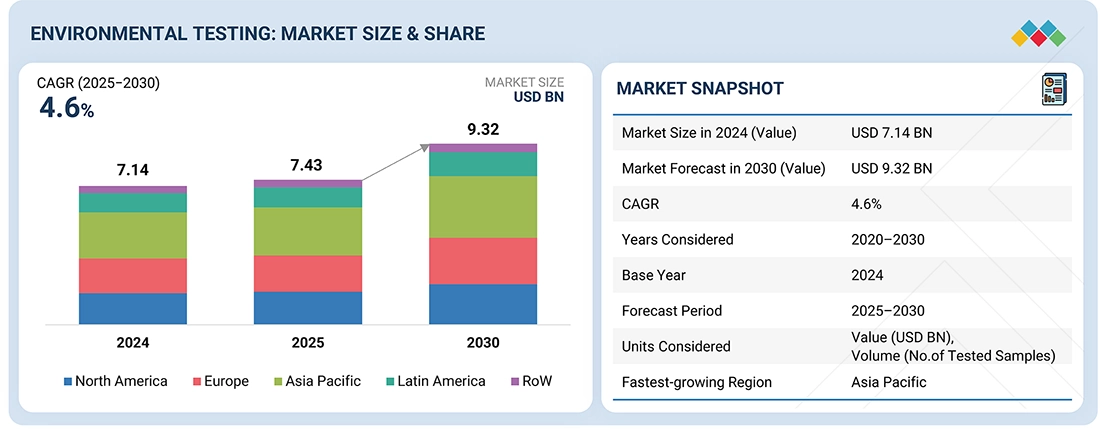
The environmental testing market is estimated to be valued at USD 7.43 billion in 2025 and is projected to reach USD 9.32 billion by 2030 at a CAGR of 4.6%. The environmental testing market is growing due to stricter regulations, rising pollution awareness, industrial expansion, and the emergence of new contaminants. Advances in rapid testing and sustainability reporting further drive demand, especially in developing regions.
Market Size and Forecast:
- Market Size Value in 2024: USD 7.14 Billion
- Market Size Value in 2025: USD 7.43 Billion
- Revenue Forecast in 2030: USD 9.32 Billion
- Growth Rate: CAGR of 4.6% from 2025 to 2030
- Base year: 2024
- Forecast period: 2025–2030
- North America accounted for a 33.8% share of the environmental testing market in 2024.
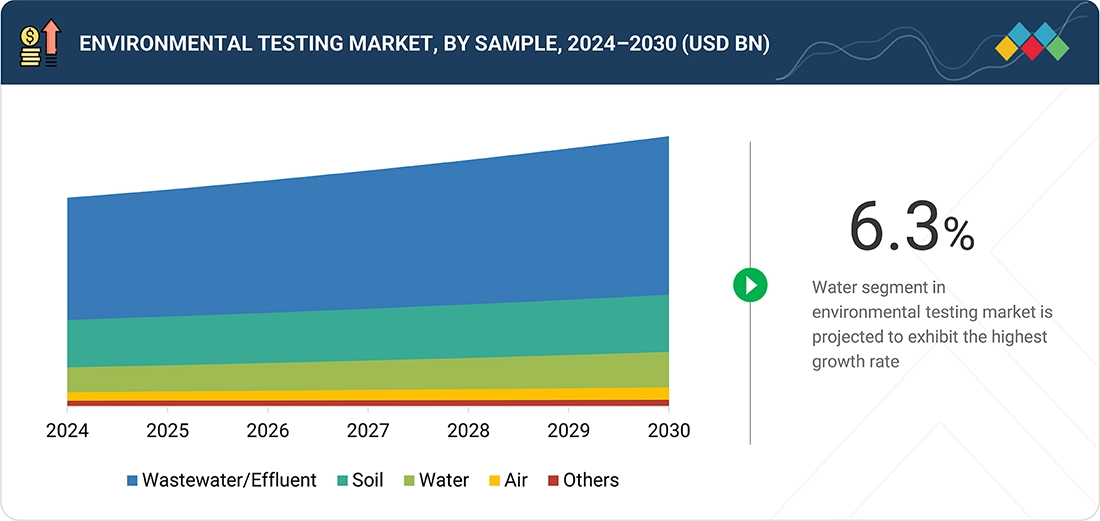
- Wastewater/effluent is the largest sample type in the environmental testing market with a share of 58.7% in 2025.
Key Market Trends and Insights
- By Sample: The Water segment holds a significant share of the environmental testing market, driven by increasing concerns regarding water quality, stringent environmental regulations, and the growing need for contamination monitoring across industrial and municipal applications.
- Regulatory Landscape: Governments and regulatory bodies worldwide are implementing stricter environmental monitoring standards, encouraging the adoption of advanced testing solutions for air, water, soil, and waste analysis.
- Market Dynamics: Rising industrialization, increasing environmental pollution, growing public awareness regarding health and safety, and expanding regulatory compliance requirements are supporting market growth.
- Future Outlook: Emerging opportunities are centered on rapid testing technologies, automated analytical instruments, real-time environmental monitoring systems, and advanced laboratory solutions that improve testing accuracy and operational efficiency.
KEY TAKEAWAYS
- According to MarketsandMarkets, North America accounted for a 33.8% share of the environmental testing market in 2024.
- Wastewater/effluent is the largest sample type in the environmental testing market with a share of 58.7% in 2025.
- By technology, the rapid testing segment is expected to dominate the market.
- By tested material, the organic compounds segment is expected to register the highest CAGR of 5.1%.
- By end user, the industrial sector is projected to grow at the fastest rate from 2025 to 2030.
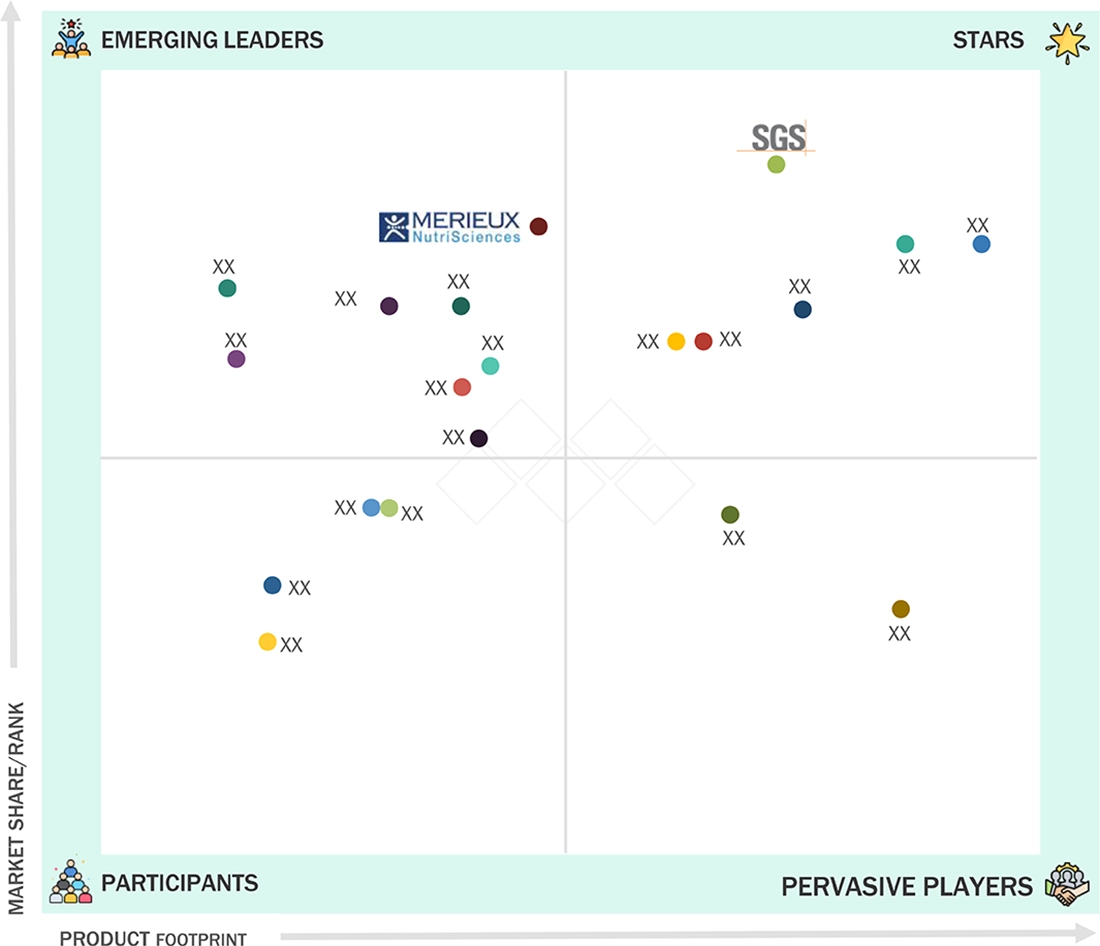
- Companies such as SGS SA, Bureau Veritas SA, Intertek Group PLC, and ALS Limited were identified as some of the star players in the environmental testing market, given their strong market share and product footprint.
- Trabede, RKCT Laboratory Pvt. Ltd., SPL, and Element Materials Technology, among others, have distinguished themselves among startups and SMEs by securing strong footholds in specialized niche areas, underscoring their potential as emerging market leaders.
The environmental testing market is growing rapidly due to stricter global regulations, rising sustainability and ESG reporting requirements, and advances in testing technologies. Industries are conducting more frequent and complex testing to meet compliance standards and demonstrate environmental responsibility. The expansion of manufacturing, urbanization, and renewable energy projects further drives demand for water, air, soil, and waste testing. At the same time, digital tools such as IoT sensors and AI analytics are enabling real-time and predictive monitoring. As companies increasingly outsource testing to specialized labs like Eurofins, SGS, and Intertek, environmental testing is evolving from a compliance function into a core enabler of sustainable and transparent industrial operations.
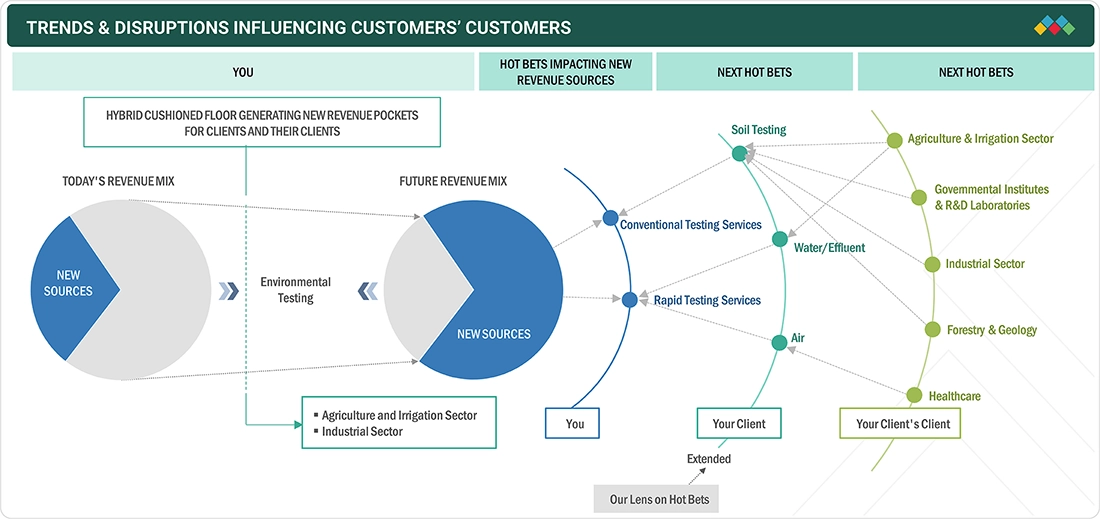
ENVIRONMENTAL TESTING MARKET TRENDS & DISRUPTIONS IMPACTING CUSTOMERS' CUSTOMERS
Environmental testing providers are shifting from routine compliance testing toward advanced, data-driven, and digital monitoring services that help industries, utilities, and regulators achieve sustainability, transparency, and ESG compliance.
Source: Secondary Research, Interviews with Experts, MarketsandMarkets Analysis
MARKET DYNAMICS

Drivers
Impact
Level
Level
-
Growing need of cost saving and time-effective customized testing services

-
Active participation of government and regulatory bodies to monitor environmental conditions


RESTRAINTS
Impact
Level
Level
-
High capital investment for accurate and sensitive analytical testing

-
High setup and maintenance cost


OPPORTUNITIES
Impact
Level
Level
-
Increase in industrial activities in emerging markets

-
Introduction of innovative technologies


CHALLENGES
Impact
Level
Level
-
Lack of basic supporting infrastructure

-
Shortage of skilled manpower

Source: Secondary Research, Interviews with Experts, MarketsandMarkets Analysis
Growing need of cost saving and time-effective customized testing services
Regulatory bodies demand regular testing of samples and inspection of the waste disposed of in the environment. Manufacturing industries and several organizations test these samples to safeguard the environment. Environmental testing is important for many different reasons. First of all, the company wants to know the longevity of its product and how to increase it to satisfy its customers fully. As a result, companies conduct regular third-party testing to stand by the regulatory requirements. Companies demand tests specific to their samples, meet their requirements, and provide time-efficient results. Hence, several analytical laboratories have identified the need for customized testing services and offer testing services per client requirements. This helps the companies manage their testing costs and save time. It also helps the clients obtain accurate data and analytical understandings, establishing a long-term relationship between analytical laboratories and companies. Environmental testing labs give manufacturers important information regarding their products and their performance in certain conditions. Considering these factors, the need for customized testing was observed in the market.
Restraint: High capital investment for accurate and sensitive analytical testing
Setting up any testing laboratory requires a lot of time and investment. Environmental testing is a highly regulated area, especially in the environmental testing lab; therefore, when setting up the lab, one must meet all the necessary government regulations defined by the local authorities. For example, to start and recognize water testing laboratories in India, the Central Pollution Control Board (CPCB) has set guidelines for the Recognition of Environmental Laboratories Under the Environment (Protection) Act 1986. Along with that, in terms of investment, several components need to be considered while setting up the lab. The major components are Infrastructural requirements, Laboratory Design and Furniture, and Laboratory equipment. While setting up the lab, a wide range of technologies needs to be considered, along with the requirement for skilled employees. All these components require an overall high investment.
Opportunity:Increase in industrial activities in emerging markets
Developing regions such as Africa and Asia have experienced increased industrialization in the past few years. Especially in Asia, China, Japan, and India have made considerable progress in industrial development. Hong Kong, Korea, and Taiwan have become major textiles and other goods exporters. To promote manufacturing growth, countries have initiated multiple campaigns, such as “Make in India” by the Indian government and “Made in China 2025” by the Chinese government. With the help of such initiatives, these countries were not only able to push their industrial growth but also create awareness about the importance of industrialization for economy among their citizens. These aggressive strategies led Asia to industrial development. In addition to the increase in industrialization in such regions, the government also tries to increase awareness among the people regarding environmental pollution and degradation. This has resulted in implementing numerous environmental protection acts, the key opportunity for the environmental testing market. Because of the increase in pollution and environmental contamination, several amendments and new environmental safety standards are expected to be set up mainly in developing economies, such as Asia Pacific, in the next five years. The progressive development of new testing methods for testing samples of contaminants such as pesticide residues, heavy metals, and organic chemicals is expected to play an important role in promoting the growth of the environmental testing market.
Challenge: Lack of basic supporting infrastructure
Testing & certification practices in several developing countries lack organization, sophistication, and technology. The lack of basic supporting infrastructure for setting up testing laboratories is a major challenge to the growth of the environmental testing market. Testing services in some developing regions also face the challenge of obtaining samples from manufacturing companies, as they are fragmented and dominated by small enterprises. Lack of funding (as well as the expansion of illegal/unplanned urban colonies) is a common cause of the inadequate provision of essential environmental services in urban India. While the infrastructure for providing environmental services is more than enough in developed nations, investing capital in developing countries like India is important to improve the infrastructure. According to an article published by the Indian Council for Research on International Economic Relations, the analysis of the gaps in India's environmental infrastructure services indicates that lack of capital is the biggest barrier to the provision of these services, followed by inadequate management systems (problem of attitude noted by Supreme Court Committee on Municipal Waste Management in India). To ensure the provision of the infrastructure and effective collection and management, international investment could be attracted (together with domestic private capital) to this sector.
Environmental Testing Market: COMMERCIAL USE CASES ACROSS INDUSTRIES
| COMPANY | USE CASE DESCRIPTION | BENEFITS |
|---|---|---|
 |
The company performs asbestos testing for services and other contaminants testing for soil using highly sensitive Scanning Electron Microscopy (SEM), Transmission Electron Microscopy (TEM), and Polarized Light Microscopy (PLM) instruments. | Provides precise, scientifically rigorous data about soil contamination, |
 |
Provides comprehensive air quality testing services, including ambient and industrial air monitoring, using both active and passive sampling methods | This testing helps detect an ultrarace level of hazardous compounds in various air. The samples can be tested for ambient air, metals, dust fall measurement, or soil vapor. |
 |
Physical, chemical, and microbiological testing are performed for samples like drinking water, groundwater, process water, cooling tower water, wastewater, etc. | Their services help in early pollution detection, assessing treatment efficiency, and evaluating water quality for various purposes, from industrial discharge to environmental protection. |
 |
The company supports testing for various types of water, such as marine potable water quality testing, cooling water conditioning and control, microbiology services, water content testing for the petroleum industry, sea water analysis, water activity testing, and drinking water quality testing. | Precise and accurate results, regulatory expertise, and comprehensive risk management. |
Logos and trademarks shown above are the property of their respective owners. Their use here is for informational and illustrative purposes only.
ENVIRONMENTAL TESTING MARKET ECOSYSTEM
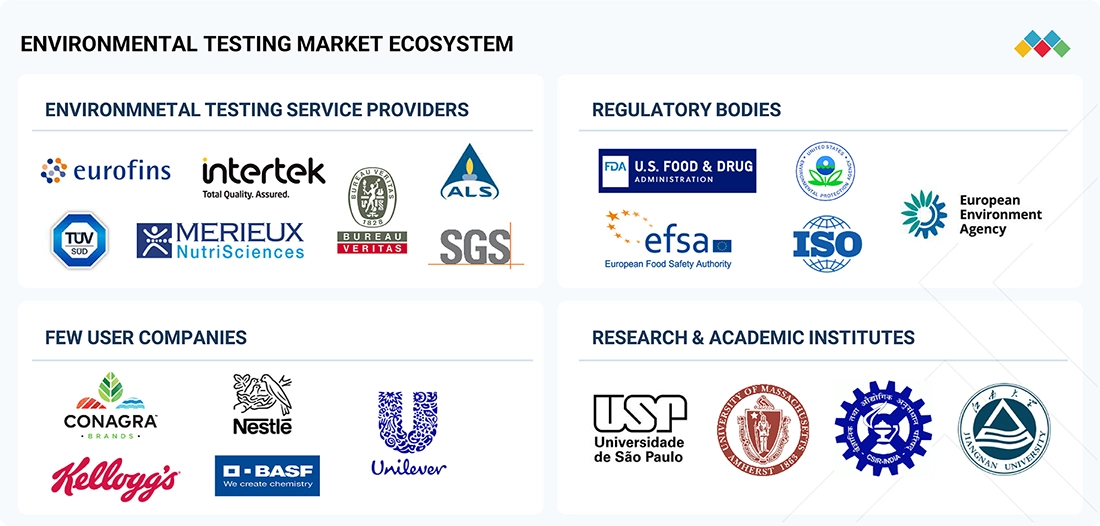
The environmental testing market ecosystem connects testing service providers, industrial end users, regulatory bodies, and research institutes in a highly interdependent and compliance-driven landscape. Leading service providers such as Eurofins, Intertek, TÜV SÜD, ALS, SGS, and Mérieux NutriSciences deliver comprehensive testing solutions across water, air, soil, and waste to ensure environmental safety and regulatory adherence. Major end-user companies including Conagra, Nestlé, Unilever, Kellogg’s, and BASF rely on these services to maintain sustainability standards, minimize environmental impact, and support ESG reporting. Oversight from regulatory authorities such as the EPA, ISO, EFSA, FDA, and the European Environment Agency ensures alignment with global environmental and safety standards. In parallel, research and academic institutes such as Universidade de São Paulo, University of Massachusetts, and Centre for Science and Environment (CSE) play a vital role in advancing testing technologies and environmental science. Together, these stakeholders drive innovation, regulatory compliance, and the development of sustainable testing frameworks that safeguard ecosystems and public health.
Logos and trademarks shown above are the property of their respective owners. Their use here is for informational and illustrative purposes only.
MARKET SEGMENTS
Source: Secondary Research, Interviews with Experts, MarketsandMarkets Analysis
Environmental Testing Market, By Sample
The market for environmental testing is dominated by the wastewater/effluent segment. The wastewater/effluent segment is growing because industrialization, urbanization, and stricter discharge regulations are increasing the need to monitor and treat wastewater before it enters the environment. Rising public health concerns, tighter government standards, and sustainability initiatives push industries to regularly test effluents for pollutants like heavy metals, organic compounds, and nutrients. Additionally, advances in rapid and automated wastewater testing technologies make monitoring more efficient, supporting the segment’s growth.
Environmental Testing Market, By End User
Industries dominate the environmental testing market because they are the largest generators of pollutants and are strictly regulated to monitor emissions, effluents, and waste. Manufacturing, chemical, energy, and food sectors must regularly test air, water, and soil to meet compliance standards and avoid penalties. Moreover, growing ESG commitments and sustainability goals drive companies to conduct frequent testing for transparency and certification. Their high testing volumes, continuous operations, and legal accountability make industries the leading end users in the market.
REGION
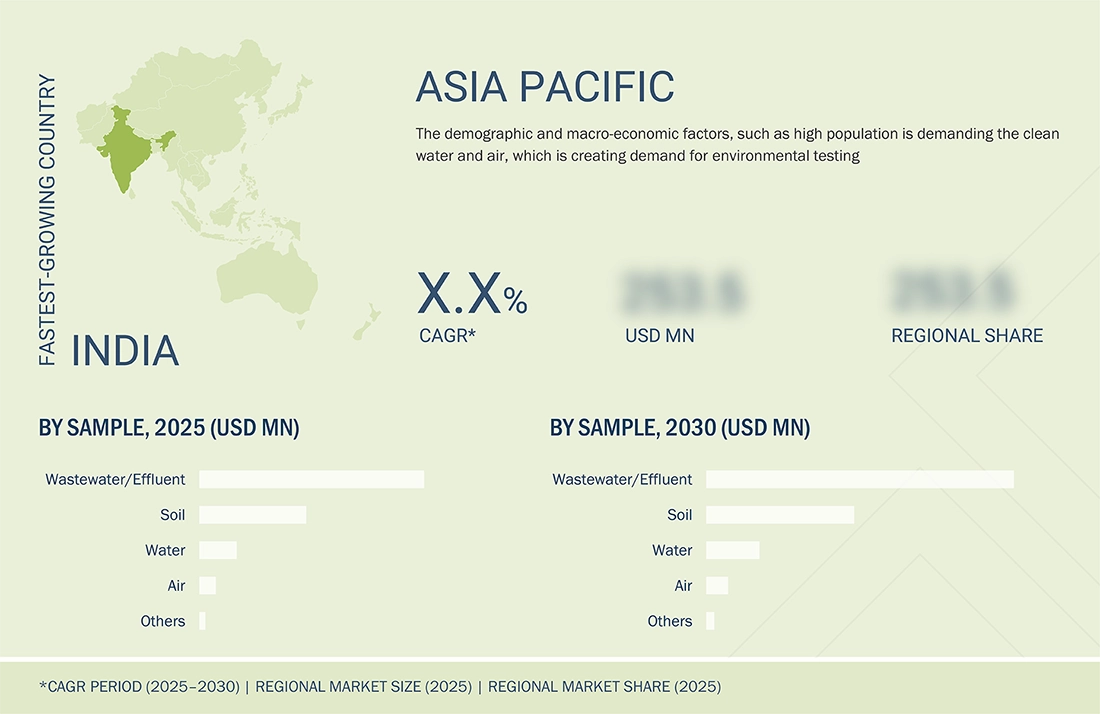
Asia Pacific is estimated to be the fastest region in environmental testing market
Infrastructure developments, such as construction and energy-related projects, industrial development, growth in awareness regarding environmental pollution, and sustainable transformation of environmental policies primarily drive the Asia Pacific market. Another factor could be the increasing death toll in the region due to the unhealthy environment in India and China. Countries like Japan are growing due to the increase in laws related to environmental concerns globally. Since it is important to test and certify the products before importing that they are abiding by the country’s law, these mandates of certification and testing are creating a high demand for environmental testing in Japan.Agriculture is one of the prime industrial sectors in several countries in the region, further driving the market growth. While many countries have successfully adopted farm mechanization techniques used for crop production, harvest, and post-harvest operations, such as packaging and marketing, to help improve product quality, many countries have yet to adopt such mechanized technologies in an all-inclusive manner. Although the region has successfully implemented positive changes in its agricultural methodologies, yields remain stunted, mainly due to the deteriorating soil and water quality, increased use of fertilizers to maintain increasing yields, and the extensive use of chemical pesticides. This drives the need to adopt quality analysis technologies.
Environmental Testing Market: COMPANY EVALUATION MATRIX
In the environmental testing market matrixSGS SA (Switzerland), is a global leader in environmental testing markeSGS SA provides comprehensive environmental testing services that cover a wide range of analyses, including quality control, safety testing, and compliance with regulatory standards. The company operates through the following business segments: connectivity & products, health & nutrition, industries & environment, natural resources and knowledge service. Under the subsegment industries & environment, the company offers sampling and testing services for air, soil, water, waste, sustainability services, hygiene solutions, and auditing solutions. SGS, with its vast network of over 2,700 offices across 119 countries and a workforce of nearly 100,000 employees, has been a trusted leader in testing, inspection, and certification for over 145 years. Mérieux NutriSciences (US) is an emerging player in the market.Mérieux NutriSciences is one of the global leaders specializing in food safety, quality, and sustainability. With over 100 accredited laboratories across 25 countries, the company offers tailored solutions such as laboratory testing, food safety management, environmental footprinting, packaging, and regulatory compliance. Mérieux NutriSciences also provides digital solutions, training, and consumer research. Recent initiatives include strategic acquisitions, such as the food testing business of Bureau Veritas, to strengthen its position globally.
Source: Secondary Research, Interviews with Experts, MarketsandMarkets Analysis
KEY ENVIRONMENTAL TESTING MARKET PLAYERS
MARKET SCOPE
| REPORT METRIC | DETAILS |
|---|---|
| Market Size Value in 2024 | USD 7.14 Billion |
| Revenue Forecast in 2030 | USD 9.32 Billion |
| Growth Rate | CAGR of 4.6% from 2025-2030 |
| Years Considered | 2020–2030 |
| Base year | 2024 |
| Forecast period | 2025–2030 |
| Units considered | Value (USD Billion), Volume (No.of Tested Samples) |
| Report Coverage | Revenue forecast, company ranking, competitive landscape, growth factors, and trends |
| Segments Covered | By sample : Wastewater/effluent, soil & sediment, water, air, others • By Technology :Rapid and Conventional • By Tested Material: Microbial contamination, Organic compounds, Inorganic compounds, Residues, Solids • By End-users: Industries, Agriculture and irrigation sector, Government institutes, Research and academic institution, Forestry and geology, Healthcare sector |
| Regions Covered | North America, Europe, Asia Pacific, South America, Row |
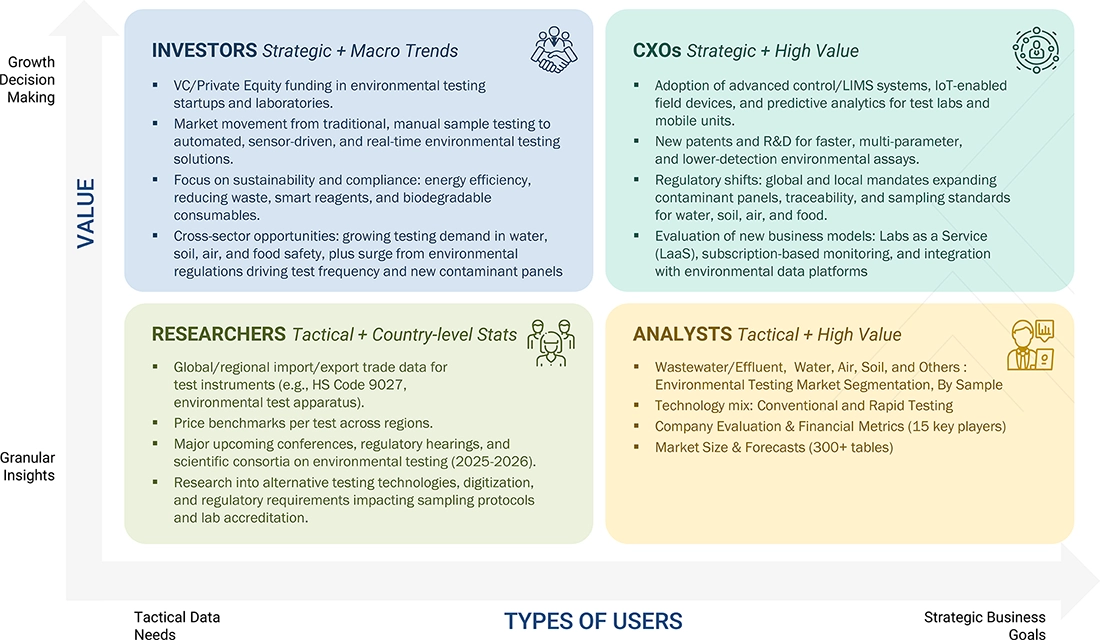
WHAT IS IN IT FOR YOU: Environmental Testing Market REPORT CONTENT GUIDE
DELIVERED CUSTOMIZATIONS
We have successfully delivered the following deep-dive customizations:
| CLIENT REQUEST | CUSTOMIZATION DELIVERED | VALUE ADDS |
|---|---|---|
| US-based Environmental testing service providers | · Competitive profiling of 20+ regional and global players (financials, product mix, pricing strategies) | · Identified white spaces for modular and cost-effective automation |
| Agro chemical input Manufacturers (End-Users of Environmental testing service providers) | Segmentation of environmental testing services by tested material (microbial contamination, organic compounds, inorganic compounds, residues, solids), | Identifies high-margin material types (organic compounds like PFAS command premiums) versus commodity testing (routine microbial screening) |
| Contract Environmental Service Providers | · Mapping of CMOs offering environmental service providers globally and regionally ( specialization, certifications). | · Benchmark industry players, identify gaps in scale and specialization. |
RECENT DEVELOPMENTS
- July 2026: Eurofins Scientific agreed to acquire Element Materials Technology’s North American Life Sciences Testing Services business for $400 million. The acquired network includes 27 laboratories and provides environmental testing alongside biopharma and food testing, expanding Eurofins’ environmental-testing footprint in key U.S. and Canadian markets. The transaction is subject to regulatory approval and is expected to close in Q4 2026.
- July 2026: SGS SA announced the acquisition of K Prime, a trace-analysis laboratory specializing in PFAS testing and air testing, including testing under California’s Safe Drinking Water and Toxic Enforcement Act (Proposition 65). The acquisition strengthens SGS’s environmental analytical-testing capabilities, particularly for emerging contaminants and air-quality analysis.
- July 2026: Intertek Group Plc launched Intertek Envirolab, a unified environmental and analytical-services brand created by bringing Envirolab’s regional expertise together with Intertek’s global operational-sustainability capabilities. The offering covers environmental, occupational-hygiene, hazardous-materials and analytical services and strengthens Intertek’s environmental-testing platform across Australia and internationally
- September 2025: Intertek acquired Envirolab, an Australian environmental testing and analysis provider, strengthening its environmental testing capabilities across the Asia-Pacific region. Envirolab provides testing services covering soil, water, air, materials, PFAS, and other chemical and biological substances, supported by more than 200 professionals across five laboratories in Australia and New Zealand. The acquisition, valued at approximately £126.5 million, expands Intertek’s capabilities in a market driven by increasing regulatory requirements, sustainability commitments, and environmental awareness.
- August 2025: Renishaw invested millions in a new environmental testing facility to strengthen product and packaging reliability. The facility includes accelerated life testing, EMC testing, temperature, humidity, pressure, and vibration equipment. Products can be tested at temperatures from -25°C to +70°C, while vibration testing simulates road, sea, and air transport conditions. The facility helps identify packaging and product issues before shipment, supporting consistent performance during demanding transportation conditions. The investment strengthens Renishaw’s quality assurance and product reliability capabilities.
Table of Contents
 Exclusive indicates content/data unique to MarketsandMarkets and not available with any competitors.
TITLE
PAGE NO
1
INTRODUCTION
41
2
RESEARCH METHODOLOGY
47
3
EXECUTIVE SUMMARY
59
4
PREMIUM INSIGHTS
64
5
MARKET OVERVIEW
Surging industrialization and AI-driven innovations propel the environmental testing market amidst rising pollution.
71
5.1
INTRODUCTION
5.2
MACROECONOMIC OUTLOOK
5.2.1
GROWING INDUSTRIALIZATION AND RAPID URBANIZATION TO FUEL DEMAND FOR ENVIRONMENTAL TESTING
5.2.2
WORLDWIDE INCREASING ENVIRONMENTAL POLLUTION
5.3
MARKET DYNAMICS
5.3.1
DRIVERS
5.3.1.1
GROWING NEED FOR COST-SAVING AND TIME-EFFECTIVE CUSTOMIZED TESTING SERVICES
5.3.1.2
ACTIVE PARTICIPATION OF GOVERNMENT AND REGULATORY BODIES TO MONITOR ENVIRONMENTAL CONDITIONS
5.3.1.3
PRIVATIZATION OF ENVIRONMENTAL TESTING SERVICES
5.3.1.4
RISING AWARENESS ABOUT ENVIRONMENTAL POLLUTION
5.3.1.5
GROWING NEED FOR EFFICIENT NATURAL RESOURCE MANAGEMENT (NRM)
5.3.2
RESTRAINTS
5.3.2.1
HIGH CAPITAL INVESTMENT FOR ACCURATE AND SENSITIVE ANALYTICAL TESTING
5.3.3
OPPORTUNITIES
5.3.3.1
INCREASE IN INDUSTRIAL ACTIVITIES IN EMERGING MARKETS
5.3.3.2
INTRODUCTION OF INNOVATIVE TECHNOLOGIES
5.3.3.3
DEVELOPMENT OF ENVIRONMENTAL-FRIENDLY INDUSTRIES
5.3.3.4
INTEGRATION OF TECHNOLOGIES THROUGH MERGERS, ACQUISITIONS, AND PARTNERSHIPS
5.3.4
CHALLENGES
5.3.4.1
LACK OF BASIC SUPPORTING INFRASTRUCTURE
5.3.4.2
SHORTAGE OF SKILLED MANPOWER
5.4
IMPACT OF AI/GEN AI ON ENVIRONMENTAL TESTING MARKET
5.4.1
INTRODUCTION
5.4.2
USE OF GEN AI IN AGRICULTURAL MICROBIALS
5.4.3
CASE STUDY ANALYSIS
5.4.3.1
BUREAU VERITAS REVOLUTIONIZED LABORATORY TESTING WITH AI PROGRAM CHARLES
5.4.3.2
FARMSPACE OFFERED LOW-COST AI-POWERED SOIL TESTING DEVICE
5.4.4
IMPACT ON ENVIRONMENTAL TESTING MARKET
5.4.5
ADJACENT ECOSYSTEM WORKING ON GENERATIVE AI
6
INDUSTRY TRENDS
Uncover how technology disruptions and pricing shifts redefine supply chains and market strategies.
87
6.1
INTRODUCTION
6.2
TRENDS/DISRUPTIONS IMPACTING CUSTOMER BUSINESS
6.3
PRICING ANALYSIS
6.3.1
AVERAGE PRICES CHARGED TREND, BY SAMPLE
6.3.2
AVERAGE SELLING PRICE TREND, BY REGION
6.4
SUPPLY CHAIN ANALYSIS
6.5
VALUE CHAIN ANALYSIS
6.5.1
RESEARCH & DEVELOPMENT
6.5.2
INPUT
6.5.3
ENVIRONMENTAL TESTING
6.5.4
DISTRIBUTION
6.5.5
MARKETING & SALES
6.5.6
POST SALES SERVICE
6.6
ECOSYSTEM
6.6.1
SUPPLY SIDE
6.6.2
DEMAND SIDE
6.7
TECHNOLOGY ANALYSIS
6.7.1
KEY TECHNOLOGIES
6.7.1.1
MICROARRAY
6.7.1.2
BIOCHIP
6.7.1.3
BIOSENSORS
6.7.2
COMPLEMENTARY TECHNOLOGIES
6.7.2.1
NMR
6.7.2.2
NIRS
6.7.3
ADJACENT TECHNOLOGIES
6.7.3.1
ICP
6.8
PATENT ANALYSIS
6.9
TRADE ANALYSIS
6.9.1
EXPORT SCENARIO OF HS CODE 9025 (2022–2023)
6.9.2
IMPORT SCENARIO OF HS CODE 9025 (2019–2023)
6.10
KEY CONFERENCES AND EVENTS, 2025
6.11
REGULATORY LANDSCAPE
6.11.1
REGULATORY BODIES, GOVERNMENT AGENCIES, AND OTHER ORGANIZATIONS
6.11.2
REGULATORY FRAMEWORK
6.11.2.1
INTRODUCTION
6.11.2.2
NORTH AMERICA
6.11.2.3
EUROPE
6.11.2.4
ASIA PACIFIC
6.11.2.5
SOUTH AMERICA
6.11.2.6
REST OF THE WORLD
6.12
PORTER’S FIVE FORCES ANALYSIS
6.12.1
INTENSITY OF COMPETITIVE RIVALRY
6.12.2
BARGAINING POWER OF BUYERS
6.12.3
BARGAINING POWER OF SUPPLIERS
6.12.4
THREAT OF SUBSTITUTES
6.12.5
THREAT OF NEW ENTRANTS
6.13
KEY STAKEHOLDERS AND BUYING CRITERIA
6.13.1
KEY STAKEHOLDERS IN BUYING PROCESS
6.13.2
BUYING CRITERIA
6.14
INVESTMENT AND FUNDING SCENARIO
6.15
CASE STUDY ANALYSIS
6.15.1
ANALYSIS OF FEDERAL PROJECT SITE IN MCCLELLAN, CALIFORNIA WAS CONDUCTED BY EMPLOYING MONTROSE
6.15.2
SOIL ANALYSIS BY MVA SCIENTIFIC CONSULTANTS WITH PLM AND TEM
7
ENVIRONMENTAL TESTING MARKET, BY TESTED MATERIAL
Market Size & Growth Rate Forecast Analysis to 2030 in USD Million | 39 Data Tables
121
7.1
INTRODUCTION
7.2
MICROBIAL CONTAMINATION
7.2.1
MICROBIAL CONTAMINATION OF WATER BODIES TO BOOST DEMAND FOR ENVIRONMENTAL TESTING SOLUTIONS
7.2.2
UNREGULATED MICROBIOLOGICAL CONTAMINANTS
7.2.3
BACTERIA
7.2.3.1
BACTERIAL TESTING TO BE CRUCIAL FOR DETECTING CONTAMINANTS AND ENSURING SAFETY TO BOLSTER MARKET GROWTH
7.2.4
VIRUSES
7.2.4.1
INCREASING FOCUS ON BIOSECURITY MEASURES TO PROPEL MARKET GROWTH
7.2.5
FUNGI & MOLDS
7.2.5.1
GROWING AWARENESS ON AIR, WATER, AND BUILDING MATERIALS QUALITY TO DRIVE MARKET
7.3
ORGANIC COMPOUNDS
7.3.1
NEED TO PREVENT HOUSEHOLDS AT HIGH RISK OF EXPOSURE TO ORGANIC COMPOUNDS TO DRIVE MARKET GROWTH
7.3.2
PESTICIDES
7.3.2.1
PESTICIDE CONTAMINATION IN FOOD, WATER, AND SOIL TO BOLSTER DEMAND FOR ADVANCED ENVIRONMENTAL TESTING
7.3.3
HERBICIDES
7.3.3.1
INCREASING FOCUS ON SUSTAINABLE PRACTICES TO ENHANCE MARKET GROWTH
7.3.4
POLY CHLORINATED BIPHENYLS (PCBS)
7.3.4.1
INCREASING CONTAMINATION AND HEALTH-RELATED RISKS OF PCBS TO ENFORCE DEMAND FOR ENVIRONMENTAL TESTING
7.3.5
POLYCYCLIC AROMATIC HYDROCARBONS (PAHS)
7.3.5.1
PERSISTENCE AND SPREAD OF PAHS TO PROPEL DEMAND FOR STRINGENT ENVIRONMENTAL TESTING
7.4
INORGANIC COMPOUNDS
7.4.1
RISING INDUSTRIAL DISCHARGE AND REGULATORY MANDATES TO FUEL DEMAND FOR ADVANCED INORGANIC COMPOUND TESTING
7.4.2
HEAVY METALS
7.4.2.1
RELEASE OF TOXIC HEAVY METALS FROM INDUSTRIAL ACTIVITIES TO FOSTER MARKET GROWTH
7.4.3
ASBESTOS
7.4.3.1
ASBESTOS TESTING TO DETECT AIRBORNE FIBERS TO ENSURE SAFETY AND REGULATORY COMPLIANCE
7.4.4
NITRATES & PHOSPHATES
7.4.4.1
EXCESSING NITRATES AND PHOSPHATES TO CAUSE EUTROPHICATION, HARMING AQUATIC LIFE AND REQUIRING STRICT MONITORING TO FUEL MARKET GROWTH
7.5
RESIDUES
7.5.1
RELEASE OF RESIDUES DUE TO AGRICULTURAL ACTIVITIES TO ACCELERATE MARKET GROWTH
7.6
SOLIDS
7.6.1
SOLIDS TO CAUSE LESS PERMANENT ENVIRONMENTAL DAMAGE
8
ENVIRONMENTAL TESTING MARKET, BY SAMPLE
Market Size & Growth Rate Forecast Analysis to 2030 in USD Million | 32 Data Tables
144
8.1
INTRODUCTION
8.2
WASTEWATER/EFFLUENT
8.2.1
WASTEWATER VOLUMES TO RISE FOR DEMANDING ADVANCED TREATMENT AND ANALYSIS SOLUTIONS
8.3
SOIL/SEDIMENT
8.3.1
STRINGENT SOIL POLLUTION REGULATIONS TO DRIVE MARKET
8.4
WATER
8.4.1
NECESSITY OF QUALITY CHECK OF WATER TO ACCELERATE MARKET GROWTH
8.5
AIR
8.5.1
RISE IN AIRBORNE DISEASES TO INCREASE TESTING OF AIR SAMPLES TO FUEL MARKET GROWTH
8.6
OTHER SAMPLES
9
ENVIRONMENTAL TESTING MARKET, BY TECHNOLOGY
Market Size & Growth Rate Forecast Analysis to 2030 in USD Million | 35 Data Tables
161
9.1
INTRODUCTION
9.2
CONVENTIONAL/TRADITIONAL METHODS
9.2.1
COST-EFFECTIVENESS AND GROWING DEMAND TO MONITOR ENVIRONMENTAL CHANGES TO DRIVE MARKET
9.2.2
CULTURE PLATE METHOD
9.2.2.1
CULTURE METHOD PROTOCOLS TO GLOBALLY BEING RECOGNIZED AS STANDARD PATHOGEN DETECTION METHODS BY ISO
9.2.3
DISSOLVED OXYGEN (DO) DEMAND
9.2.3.1
IMPORTANCE OF DISSOLVED OXYGEN IN WATER QUALITY ASSESSMENT TO FUEL MARKET GROWTH
9.2.4
BIOLOGICAL & CHEMICAL OXYGEN DEMAND
9.2.4.1
IMPLEMENTATION OF BOD AND COD FOR ASSESSING WATER POLLUTION AND QUALITY TO ACCELERATE MARKET GROWTH
9.3
RAPID TESTING
9.3.1
RAPID TESTS TO OFFER ACCURATE, EFFICIENT ENVIRONMENTAL ANALYSIS FOR BETTER POLLUTION MONITORING
9.3.2
MASS SPECTROMETER TESTING
9.3.2.1
MASS SPECTROMETRY TO BE HIGHLY SENSITIVE METHOD FOR DETECTING CONTAMINANTS IN WATER QUALITY TESTING TO FOSTER MARKET GROWTH
9.3.3
CHROMATOGRAPHY TESTING
9.3.3.1
INCREASING ENVIRONMENTAL CONSCIOUSNESS TO BOLSTER DEMAND FOR ADVANCED TESTING METHODS
9.3.4
MOLECULAR SPECTROSCOPY TESTING
9.3.4.1
MOLECULAR SPECTROSCOPY TO ENSURE PRECISE POLLUTANT DETECTION FOR ENVIRONMENTAL TESTING
9.3.5
PCR TESTING
9.3.5.1
PCR TO OFFER FASTER RESULTS THAN CONVENTIONAL TECHNIQUES
9.3.6
IMMUNOASSAY TESTING
9.3.6.1
IMMUNOASSAYS TO ENABLE COST-EFFECTIVE AND SPECIFIC CHEMICAL DETECTION ON-SITE
9.3.7
ACIDITY/ALKALINITY TESTING
9.3.7.1
NEED TO MAINTAIN ECOLOGICAL BALANCE AND WATER QUALITY TO PROPEL MARKET GROWTH
9.3.8
TURBIDITY TESTING
9.3.8.1
TURBIDITY TO INDICATE WATER CLARITY, CONTAMINATION, AND TREATMENT EFFICIENCY
9.3.9
OTHER TECHNOLOGIES
10
ENVIRONMENTAL TESTING MARKET, BY END USER
Market Size & Growth Rate Forecast Analysis to 2030 in USD Million | 22 Data Tables
186
10.1
INTRODUCTION
10.2
AGRICULTURE & IRRIGATION SECTOR
10.2.1
INCREASING SOIL SALINITY AND LAND DEGRADATION TO PROPEL MARKET GROWTH
10.3
GOVERNMENT INSTITUTES
10.3.1
INCREASING CONCERNS REGARDING QUALITY OF PRODUCTS TO FOSTER DEMAND FOR ENVIRONMENTAL TESTING
10.4
RESEARCH & ACADEMIC INSTITUTIONS
10.4.1
INCREASING SCIENTIFIC ADVANCEMENTS TO PROLIFERATE MARKET GROWTH
10.5
INDUSTRIES
10.5.1
STRINGENT GOVERNMENT NORMS TO PROPEL MARKET
10.5.2
ENERGY (RENEWABLE & NON-RENEWABLE)
10.5.2.1
ENERGY SECTOR TO RELY ON ENVIRONMENTAL TESTING FOR COMPLIANCE, SUSTAINABILITY, AND RISK MITIGATION
10.5.3
CHEMICALS & PETROCHEMICALS
10.5.3.1
INCREASING SCRUTINY ON SUSTAINABLE PRACTICES TO ACCELERATE MARKET GROWTH
10.5.4
AUTOMOTIVE
10.5.4.1
TRANSFORMATION TOWARD CLEANER MOBILITY TO PROPEL MARKET GROWTH
10.6
FORESTRY & GEOLOGY
10.6.1
NEED FOR SUSTAINABLE GROWTH TO BOOST DEMAND FOR ENVIRONMENTAL TESTING SERVICES
10.7
HEALTHCARE SECTOR
10.7.1
NEED FOR STRICT HYGIENE AND INFECTION CONTROL TO PROMOTE MARKET GROWTH
11
ENVIRONMENTAL TESTING MARKET, BY REGION
Comprehensive coverage of 7 Regions with country-level deep-dive of 16 Countries | 262 Data Tables.
200
11.1
INTRODUCTION
11.2
NORTH AMERICA
11.2.1
US
11.2.1.1
STRINGENT ENVIRONMENT PROTECTION LAWS TO UPLIFT MARKET GROWTH
11.2.2
CANADA
11.2.2.1
RISE IN DEMAND FOR GREEN TECHNOLOGY TO FUEL DEMAND FOR ENVIRONMENTAL TESTING
11.2.3
MEXICO
11.2.3.1
NEED FOR INFRASTRUCTURE OF WASTEWATER TREATMENT TO DRIVE MARKET
11.3
EUROPE
11.3.1
UK
11.3.1.1
ROLE OF INSTITUTIONS IN MONITORING ENVIRONMENTAL CONDITIONS TO FOSTER MARKET GROWTH
11.3.2
GERMANY
11.3.2.1
INCREASING CONCERN FOR SOIL AND WATER QUALITY TO BOOST MARKET GROWTH
11.3.3
FRANCE
11.3.3.1
ENVIRONMENTAL LEGISLATION & POLICY AND NEED FOR ENVIRONMENTAL SUSTAINABILITY TO BOLSTER MARKET GROWTH
11.3.4
ITALY
11.3.4.1
EXPLOITATION OF WATER RESOURCES AND GROWING ORGANIC FARMING PRACTICES TO FOSTER MARKET GROWTH
11.3.5
SPAIN
11.3.5.1
STRINGENT REGULATORY FRAMEWORKS BY MINISTRY OF ENVIRONMENT TO FUEL MARKET GROWTH
11.3.6
POLAND
11.3.6.1
HIGH POPULATION DENSITY AND ECONOMIC ACTIVITIES TO DRIVE MARKET
11.3.7
REST OF EUROPE
11.4
ASIA PACIFIC
11.4.1
CHINA
11.4.1.1
INVESTMENT IN POLLUTION CONTROL AND INTRODUCTION OF ENVIRONMENTAL LAW AND MINISTRY OF ENVIRONMENTAL PROTECTION TO DRIVE MARKET
11.4.2
INDIA
11.4.2.1
INCREASE IN DEMAND FOR DEVELOPMENT OF WASTE INFRASTRUCTURE AND GOVERNMENT INITIATIVES TO IMPROVE ENVIRONMENTAL PERFORMANCE TO PROPEL MARKET
11.4.3
JAPAN
11.4.3.1
PRO-ENVIRONMENTAL REGULATIONS AND ECONOMIC ASSISTANCE, GOVERNMENT SUBSIDIES, AND INCENTIVES TO INDUSTRY PLAYERS INITIATIVES TO DRIVE MARKET GROWTH
11.4.4
AUSTRALIA & NEW ZEALAND
11.4.4.1
PRESENCE OF REGULATORY BODIES TO ENSURE ENVIRONMENTAL SAFETY TO FUEL MARKET GROWTH
11.4.5
SOUTH KOREA
11.4.5.1
GROWTH OF INDUSTRIAL SECTOR AND INCREASE OF AIR POLLUTION-RELATED MORTALITY RATES TO ACCELERATE MARKET GROWTH
11.4.6
REST OF ASIA PACIFIC
11.5
SOUTH AMERICA
11.5.1
BRAZIL
11.5.1.1
VARIOUS GOVERNMENT STRATEGIES TO IMPROVE ENVIRONMENTAL PERFORMANCE AND WASTE MANAGEMENT TO DRIVE MARKET GROWTH
11.5.2
ARGENTINA
11.5.2.1
AGRICULTURAL & IRRIGATION SECTOR TO DRIVE DEMAND FOR ENVIRONMENTAL TESTING SERVICES
11.5.3
REST OF SOUTH AMERICA
11.6
REST OF THE WORLD
11.6.1
SOUTH AFRICA
11.6.1.1
LACK OF WATER INFRASTRUCTURE TO DRIVE DEMAND FOR MICROBIAL TESTING OF SAMPLES
11.6.2
MIDDLE EAST
11.6.2.1
INCREASING AIR POLLUTION TO INCREASE DEMAND FOR ENVIRONMENTAL TESTING SERVICES
11.6.3
REST OF AFRICA
12
COMPETITIVE LANDSCAPE
Discover strategic insights and market positioning of key players and emerging leaders.
306
12.1
OVERVIEW
12.2
KEY PLAYER STRATEGIES/RIGHT TO WIN
12.3
REVENUE ANALYSIS
12.4
MARKET SHARE ANALYSIS, 2024
12.4.1
MARKET RANKING ANALYSIS
12.5
COMPANY EVALUATION MATRIX: KEY PLAYERS, 2024
12.5.1
STARS
12.5.2
EMERGING LEADERS
12.5.3
PERVASIVE PLAYERS
12.5.4
PARTICIPANTS
12.5.5
COMPANY FOOTPRINT: KEY PLAYERS, 2024
12.5.5.1
COMPANY FOOTPRINT
12.5.5.2
REGIONAL FOOTPRINT
12.5.5.3
SAMPLE FOOTPRINT
12.5.5.4
TESTED MATERIAL FOOTPRINT
12.5.5.5
END-USER FOOTPRINT
12.6
COMPANY EVALUATION MATRIX: START-UPS/SMES, 2024
12.6.1
PROGRESSIVE COMPANIES
12.6.2
RESPONSIVE COMPANIES
12.6.3
DYNAMIC COMPANIES
12.6.4
STARTING BLOCKS
12.6.5
COMPETITIVE BENCHMARKING, START-UPS/SMES, 2023
12.6.5.1
DETAILED LIST OF KEY START-UPS/SMES
12.6.5.2
COMPETITIVE BENCHMARKING OF START-UPS/SMES
12.7
COMPANY VALUATION AND FINANCIAL METRICS, 2024
12.8
PRODUCT/BRAND COMPARISON
12.9
COMPETITIVE SCENARIO AND TRENDS
12.9.1
PRODUCT LAUNCHES
12.9.2
DEALS
12.9.3
EXPANSIONS
12.9.4
OTHERS
13
COMPANY PROFILES
In-depth Company Profiles of Leading Market Players with detailed Business Overview, Product and Service Portfolio, Recent Developments, and Unique Analyst Perspective (MnM View)
340
13.1
KEY PLAYERS
13.1.1
SGS SA
13.1.1.1
BUSINESS OVERVIEW
13.1.1.2
PRODUCTS/SOLUTIONS/SERVICES OFFERED
13.1.1.3
RECENT DEVELOPMENTS
13.1.1.4
MNM VIEW
13.1.2
BUREAU VERITAS
13.1.3
EUROFINS SCIENTIFIC
13.1.4
INTERTEK GROUP PLC.
13.1.5
TÜV SÜD
13.1.6
ALS LIMITED
13.1.7
ASUREQUALITY
13.1.8
MÉRIEUX NUTRISCIENCES CORPORATION
13.1.9
SYMBIO LABS
13.1.10
MICROBAC LABORATORIES, INC.
13.1.11
ENVIROLAB SERVICES PTY LTD
13.1.12
R J HILL LABORATORIES LIMITED
13.1.13
ALEX STEWART INTERNATIONAL
13.1.14
EMSL ANALYTICAL, INC.
13.1.15
F.B.A. LABORATORIES LTD.
13.1.16
ENVIROSURE, INC
13.1.17
SIGMA TEST AND RESEARCH CENTRE
13.1.18
MONTROSE ENVIRONMENTAL GROUP, INC.
13.1.19
ANACON LABORATORIES.
13.1.20
PACE ANALYTICAL
13.2
OTHER PLAYERS
13.2.1
SPL
13.2.2
SUBURBAN TESTING LABS
13.2.3
ELEMENT MATERIALS TECHNOLOGY
13.2.4
TRADEBE
13.2.5
RKCT LABORATORY PVT. LTD.
14
ADJACENT & RELATED MARKETS
408
14.1
INTRODUCTION
14.2
LIMITATIONS
14.3
FOOD SAFETY TESTING MARKET
14.3.1
MARKET DEFINITION
14.3.2
MARKET OVERVIEW
14.3.3
FOOD SAFETY TESTING MARKET, BY TARGET TESTED
14.3.3.1
INTRODUCTION
14.3.4
FOOD SAFETY TESTING MARKET, BY REGION
14.3.4.1
INTRODUCTION
14.4
AGRICULTURAL TESTING MARKET
14.4.1
MARKET DEFINITION
14.4.2
MARKET OVERVIEW
14.4.3
AGRICULTURAL TESTING MARKET, BY SAMPLE
14.4.3.1
INTRODUCTION
14.4.4
AGRICULTURAL TESTING MARKET, BY REGION
14.4.4.1
INTRODUCTION
15
APPENDIX
415
15.1
DISCUSSION GUIDE
15.2
KNOWLEDGESTORE: MARKETSANDMARKETS’ SUBSCRIPTION PORTAL
15.3
CUSTOMIZATION OPTIONS
15.4
RELATED REPORTS
15.5
AUTHOR DETAILS
LIST OF TABLES
TABLE 1
USD EXCHANGE RATES CONSIDERED FOR STUDY, 2020–2024
TABLE 2
ENVIRONMENTAL TESTING MARKET SNAPSHOT, 2025 VS. 2030
TABLE 3
REGULATORY BODIES FOR ENVIRONMENT PROTECTION AND MONITORING
TABLE 4
AVERAGE SELLING PRICE TREND, BY SAMPLE, 2020–2024 (USD/SAMPLE)
TABLE 5
AVERAGE SELLING PRICE TREND, BY REGION, 2020–2024 (USD/SAMPLE)
TABLE 6
ENVIRONMENTAL TESTING MARKET: ECOSYSTEM
TABLE 7
PATENTS PERTAINING TO ENVIRONMENTAL TESTING MARKET AND RELATED PATENTS, 2022–2024
TABLE 8
EXPORT VALUE OF HS CODE 9025, BY KEY COUNTRY, 2019–2023 (USD THOUSAND)
TABLE 9
EXPORT VALUE OF HS CODE 9025, BY KEY COUNTRY, 2019–2023 (UNITS)
TABLE 10
IMPORT VALUE OF HS CODE 9025, BY KEY COUNTRY, 2019–2023 (USD THOUSAND)
TABLE 11
IMPORT VOLUME OF HS CODE 9025, BY KEY COUNTRY, 2019–2023 (UNITS)
TABLE 12
ENVIRONMENTAL TESTING MARKET: DETAILED LIST OF KEY CONFERENCES AND EVENTS, 2025
TABLE 13
NORTH AMERICA: LIST OF REGULATORY BODIES, GOVERNMENT AGENCIES, AND OTHER ORGANIZATIONS
TABLE 14
EUROPE: LIST OF REGULATORY BODIES, GOVERNMENT AGENCIES, AND OTHER ORGANIZATIONS
TABLE 15
ASIA PACIFIC: LIST OF REGULATORY BODIES, GOVERNMENT AGENCIES, AND OTHER ORGANIZATIONS
TABLE 16
SOUTH AMERICA: LIST OF REGULATORY BODIES, GOVERNMENT AGENCIES, AND OTHER ORGANIZATIONS
TABLE 17
REST OF THE WORLD: LIST OF REGULATORY BODIES, GOVERNMENT AGENCIES, AND OTHER ORGANIZATIONS
TABLE 18
PORTER’S FIVE FORCES IMPACT ON ENVIRONMENTAL TESTING MARKET
TABLE 19
INFLUENCE OF STAKEHOLDERS IN BUYING PROCESS FOR TECHNOLOGIES (%)
TABLE 20
KEY CRITERIA FOR SELECTING SUPPLIER/VENDOR
TABLE 21
ENVIRONMENTAL TESTING MARKET, BY TESTED MATERIAL, 2020–2024 (USD MILLION)
TABLE 22
ENVIRONMENTAL TESTING MARKET, BY TESTED MATERIAL, 2025–2030 (USD MILLION)
TABLE 23
LIST OF UNREGULATED MICROBIOLOGICAL CONTAMINANTS
TABLE 24
ENVIRONMENTAL TESTING MARKET, BY MICROBIAL CONTAMINATION, 2020–2024 (USD MILLION)
TABLE 25
ENVIRONMENTAL TESTING MARKET, BY MICROBIAL CONTAMINATION, 2025–2030 (USD MILLION)
TABLE 26
MICROBIAL CONTAMINATION: ENVIRONMENTAL TESTING MARKET, BY REGION, 2020–2024 (USD MILLION)
TABLE 27
MICROBIAL CONTAMINATION: ENVIRONMENTAL TESTING MARKET, BY REGION, 2025–2030 (USD MILLION)
TABLE 28
BACTERIA: ENVIRONMENTAL TESTING MARKET, BY REGION, 2020–2024 (USD MILLION)
TABLE 29
BACTERIA: ENVIRONMENTAL TESTING MARKET, BY REGION, 2025–2030 (USD MILLION)
TABLE 30
VIRUSES: ENVIRONMENTAL TESTING MARKET, BY REGION, 2020–2024 (USD MILLION)
TABLE 31
VIRUSES: ENVIRONMENTAL TESTING MARKET, BY REGION, 2025–2030 (USD MILLION)
TABLE 32
FUNGI & MOLDS: ENVIRONMENTAL TESTING MARKET, BY REGION, 2020–2024 (USD MILLION)
TABLE 33
FUNGI & MOLDS: ENVIRONMENTAL TESTING MARKET, BY REGION, 2025–2030 (USD MILLION)
TABLE 34
ENVIRONMENTAL TESTING MARKET, BY ORGANIC COMPOUND, 2020–2024 (USD MILLION)
TABLE 35
ENVIRONMENTAL TESTING MARKET, BY ORGANIC COMPOUND, 2025–2030 (USD MILLION)
TABLE 36
ORGANIC COMPOUNDS: ENVIRONMENTAL TESTING MARKET, BY REGION, 2020–2024 (USD MILLION)
TABLE 37
ORGANIC COMPOUNDS: ENVIRONMENTAL TESTING MARKET, BY REGION, 2025–2030 (USD MILLION)
TABLE 38
PESTICIDES: ENVIRONMENTAL TESTING MARKET, BY REGION, 2020–2024 (USD MILLION)
TABLE 39
PESTICIDES: ENVIRONMENTAL TESTING MARKET, BY REGION, 2025–2030 (USD MILLION)
TABLE 40
HERBICIDES: ENVIRONMENTAL TESTING MARKET, BY REGION, 2020–2024 (USD MILLION)
TABLE 41
HERBICIDES: ENVIRONMENTAL TESTING MARKET, BY REGION, 2025–2030 (USD MILLION)
TABLE 42
POLYCHLORINATED BIPHENYLS (PCBS): ENVIRONMENTAL TESTING MARKET, BY REGION, 2020–2024 (USD MILLION)
TABLE 43
POLYCHLORINATED BIPHENYLS (PCBS): ENVIRONMENTAL TESTING MARKET, BY REGION, 2025–2030 (USD MILLION)
TABLE 44
POLYCYCLIC AROMATIC HYDROCARBONS (PAHS): ENVIRONMENTAL TESTING MARKET, BY REGION, 2020–2024 (USD MILLION)
TABLE 45
POLYCYCLIC AROMATIC HYDROCARBONS (PAHS): ENVIRONMENTAL TESTING MARKET, BY REGION, 2025–2030 (USD MILLION)
TABLE 46
ENVIRONMENTAL TESTING MARKET, BY INORGANIC COMPOUND, 2020–2024 (USD MILLION)
TABLE 47
ENVIRONMENTAL TESTING MARKET, BY INORGANIC COMPOUND, 2025–2030 (USD MILLION)
TABLE 48
INORGANIC COMPOUNDS: ENVIRONMENTAL TESTING MARKET, BY REGION, 2020–2024 (USD MILLION)
TABLE 49
INORGANIC COMPOUNDS: ENVIRONMENTAL TESTING MARKET, BY REGION, 2025–2030 (USD MILLION)
TABLE 50
HEAVY METALS: ENVIRONMENTAL TESTING MARKET, BY REGION, 2020–2024 (USD MILLION)
TABLE 51
HEAVY METALS: ENVIRONMENTAL TESTING MARKET, BY REGION, 2025–2030 (USD MILLION)
TABLE 52
ASBESTOS: ENVIRONMENTAL TESTING MARKET, BY REGION, 2020–2024 (USD MILLION)
TABLE 53
ASBESTOS: ENVIRONMENTAL TESTING MARKET, BY REGION, 2025–2030 (USD MILLION)
TABLE 54
NITRATES & PHOSPHATES: ENVIRONMENTAL TESTING MARKET, BY REGION, 2020–2024 (USD MILLION)
TABLE 55
NITRATES & PHOSPHATES: ENVIRONMENTAL TESTING MARKET, BY REGION, 2025–2030 (USD MILLION)
TABLE 56
RESIDUES: ENVIRONMENTAL TESTING MARKET, BY REGION, 2020–2024 (USD MILLION)
TABLE 57
RESIDUES: ENVIRONMENTAL TESTING MARKET, BY REGION, 2025–2030 (USD MILLION)
TABLE 58
SOLIDS: ENVIRONMENTAL TESTING MARKET, BY REGION, 2020–2024 (USD MILLION)
TABLE 59
SOLIDS: ENVIRONMENTAL TESTING MARKET, BY REGION, 2025–2030 (USD MILLION)
TABLE 60
ENVIRONMENTAL TESTING MARKET, BY SAMPLE, 2020–2024 (USD MILLION)
TABLE 61
ENVIRONMENTAL TESTING MARKET, BY SAMPLE, 2025–2030 (USD MILLION)
TABLE 62
ENVIRONMENTAL TESTING MARKET, BY SAMPLE, 2020–2024 (NUMBER OF TESTS)
TABLE 63
ENVIRONMENTAL TESTING MARKET, BY SAMPLE, 2025–2030 (NUMBER OF TESTS)
TABLE 64
WASTEWATER/EFFLUENT: ENVIRONMENTAL TESTING MARKET, BY REGION, 2020–2024 (USD MILLION)
TABLE 65
WASTEWATER/EFFLUENT: ENVIRONMENTAL TESTING MARKET, BY REGION, 2025–2030 (USD MILLION)
TABLE 66
WASTEWATER/EFFLUENT: ENVIRONMENTAL TESTING MARKET, BY REGION, 2020–2024 (NUMBER OF TESTS)
TABLE 67
WASTEWATER/EFFLUENT: ENVIRONMENTAL TESTING MARKET, BY REGION, 2025–2030 (NUMBER OF TESTS)
TABLE 68
WASTEWATER/EFFLUENT: ENVIRONMENTAL TESTING MARKET, BY TARGETS TESTED, 2020–2024 (USD MILLION)
TABLE 69
WASTEWATER/EFFLUENT: ENVIRONMENTAL TESTING MARKET, BY TARGETS TESTED, 2025–2030 (USD MILLION)
TABLE 70
SOIL/SEDIMENT: ENVIRONMENTAL TESTING MARKET, BY REGION, 2020–2024 (USD MILLION)
TABLE 71
SOIL/SEDIMENT: ENVIRONMENTAL TESTING MARKET, BY REGION, 2025–2030 (USD MILLION)
TABLE 72
SOIL/SEDIMENT: ENVIRONMENTAL TESTING MARKET, BY REGION, 2020–2024 (NUMBER OF TESTS)
TABLE 73
SOIL/SEDIMENT: ENVIRONMENTAL TESTING MARKET, BY REGION, 2025–2030 (NUMBER OF TESTS)
TABLE 74
SOIL/SEDIMENT: ENVIRONMENTAL TESTING MARKET, B Y TARGETS TESTED, 2020–2024 (USD MILLION)
TABLE 75
SOIL/SEDIMENT: ENVIRONMENTAL TESTING MARKET, BY TARGETS TESTED, 2025–2030 (USD MILLION)
TABLE 76
WATER: ENVIRONMENTAL TESTING MARKET, BY REGION, 2020–2024 (USD MILLION)
TABLE 77
WATER: ENVIRONMENTAL TESTING MARKET, BY REGION, 2025–2030 (USD MILLION)
TABLE 78
WATER: ENVIRONMENTAL TESTING MARKET, BY REGION, 2020–2024 (NUMBER OF TESTS)
TABLE 79
WATER: ENVIRONMENTAL TESTING MARKET, BY REGION, 2025–2030 (NUMBER OF TESTS)
TABLE 80
WATER: ENVIRONMENTAL TESTING MARKET, BY TARGETS TESTED, 2020–2024 (USD MILLION)
TABLE 81
WATER: ENVIRONMENTAL TESTING MARKET, BY TARGETS TESTED, 2025–2030 (USD MILLION)
TABLE 82
AIR: ENVIRONMENTAL TESTING MARKET, BY REGION, 2020–2024 (USD MILLION)
TABLE 83
AIR: ENVIRONMENTAL TESTING MARKET, BY REGION, 2025–2030 (USD MILLION)
TABLE 84
AIR: ENVIRONMENTAL TESTING MARKET, BY REGION, 2020–2024 (NUMBER OF TESTS)
TABLE 85
AIR: ENVIRONMENTAL TESTING MARKET, BY REGION, 2025–2030 (NUMBER OF TESTS)
TABLE 86
AIR: ENVIRONMENTAL TESTING MARKET, BY TARGETS TESTED, 2020–2024 (USD MILLION)
TABLE 87
AIR: ENVIRONMENTAL TESTING MARKET, BY TARGETS TESTED, 2025–2030 (USD MILLION)
TABLE 88
OTHER SAMPLES: ENVIRONMENTAL TESTING MARKET, BY REGION, 2020–2024 (USD MILLION)
TABLE 89
OTHER SAMPLES: ENVIRONMENTAL TESTING MARKET, BY REGION, 2025–2030 (USD MILLION)
TABLE 90
OTHER SAMPLES: ENVIRONMENTAL TESTING MARKET, BY REGION, 2020–2024 (NUMBER OF TESTS)
TABLE 91
OTHER SAMPLES: ENVIRONMENTAL TESTING MARKET, BY REGION, 2025–2030 (NUMBER OF TESTS)
TABLE 92
ENVIRONMENTAL TESTING MARKET, BY TECHNOLOGY, 2020–2024 (USD MILLION)
TABLE 93
ENVIRONMENTAL TESTING MARKET, BY TECHNOLOGY, 2025–2030 (USD MILLION)
TABLE 94
ENVIRONMENTAL TESTING MARKET, BY CONVENTIONAL/TRADITIONAL METHOD, 2020–2024 (USD MILLION)
TABLE 95
ENVIRONMENTAL TESTING MARKET, BY CONVENTIONAL/TRADITIONAL METHOD, 2025–2030 (USD MILLION)
TABLE 96
CONVENTIONAL/TRADITIONAL METHODS: ENVIRONMENTAL TESTING MARKET, BY REGION, 2020–2024 (USD MILLION)
TABLE 97
CONVENTIONAL/TRADITIONAL METHODS: ENVIRONMENTAL TESTING MARKET, BY REGION, 2025–2030 (USD MILLION)
TABLE 98
CULTURE PLATE METHOD: ENVIRONMENTAL TESTING MARKET, BY REGION, 2020–2024 (USD MILLION)
TABLE 99
CULTURE PLATE METHOD: ENVIRONMENTAL TESTING MARKET, BY REGION, 2025–2030 (USD MILLION)
TABLE 100
DISSOLVED OXYGEN DEMAND: ENVIRONMENTAL TESTING MARKET, BY REGION, 2020–2024 (USD MILLION)
TABLE 101
DISSOLVED OXYGEN DEMAND: ENVIRONMENTAL TESTING MARKET, BY REGION, 2025–2030 (USD MILLION)
TABLE 102
BIOLOGICAL & CHEMICAL OXYGEN DEMAND: ENVIRONMENTAL TESTING MARKET, BY REGION, 2020–2024 (USD MILLION)
TABLE 103
BIOLOGICAL & CHEMICAL OXYGEN DEMAND: ENVIRONMENTAL TESTING MARKET, BY REGION, 2025–2030 (USD MILLION)
TABLE 104
ENVIRONMENTAL TESTING MARKET, BY RAPID TESTING METHOD, 2020–2024 (USD MILLION)
TABLE 105
ENVIRONMENTAL TESTING MARKET, BY RAPID TESTING METHOD, 2025–2030 (USD MILLION)
TABLE 106
RAPID TESTING: ENVIRONMENTAL TESTING MARKET, BY REGION, 2020–2024 (USD MILLION)
TABLE 107
RAPID TESTING: ENVIRONMENTAL TESTING MARKET, BY REGION, 2025–2030 (USD MILLION)
TABLE 108
CHEMICAL CONTAMINANTS AND SPECTROSCOPY TECHNOLOGIES
TABLE 109
MASS SPECTROMETER TESTING: ENVIRONMENTAL TESTING MARKET, BY REGION, 2020–2024 (USD MILLION)
TABLE 110
MASS SPECTROMETER TESTING: ENVIRONMENTAL TESTING MARKET, BY REGION, 2025–2030 (USD MILLION)
TABLE 111
CHEMICAL CONTAMINANTS AND CHROMATOGRAPHY TECHNOLOGIES
TABLE 112
CHROMATOGRAPHY TESTING: ENVIRONMENTAL TESTING MARKET, BY REGION, 2020–2024 (USD MILLION)
TABLE 113
CHROMATOGRAPHY TESTING: ENVIRONMENTAL TESTING MARKET, BY REGION, 2025–2030 (USD MILLION)
TABLE 114
MOLECULAR SPECTROSCOPY TESTING: ENVIRONMENTAL TESTING MARKET, BY REGION, 2020–2024 (USD MILLION)
TABLE 115
MOLECULAR SPECTROSCOPY TESTING: ENVIRONMENTAL TESTING MARKET, BY REGION, 2025–2030 (USD MILLION)
TABLE 116
LABORATORY WORKFLOW FOR POLYMERASE CHAIN REACTION (PCR) METHOD
TABLE 117
PCR TESTING: ENVIRONMENTAL TESTING MARKET, BY REGION, 2020–2024 (USD MILLION)
TABLE 118
PCR TESTING: ENVIRONMENTAL TESTING MARKET, BY REGION, 2025–2030 (USD MILLION)
TABLE 119
IMMUNOASSAY TESTING: ENVIRONMENTAL TESTING MARKET, BY REGION, 2020–2024 (USD MILLION)
TABLE 120
IMMUNOASSAY TESTING: ENVIRONMENTAL TESTING MARKET, BY REGION, 2025–2030 (USD MILLION)
TABLE 121
ACIDITY/ALKALINITY TESTING: ENVIRONMENTAL TESTING MARKET, BY REGION, 2020–2024 (USD MILLION)
TABLE 122
ACIDITY/ALKALINITY TESTING: ENVIRONMENTAL TESTING MARKET, BY REGION, 2025–2030 (USD MILLION)
TABLE 123
TURBIDITY TESTING: ENVIRONMENTAL TESTING MARKET, BY REGION, 2020–2024 (USD MILLION)
TABLE 124
TURBIDITY TESTING: ENVIRONMENTAL TESTING MARKET, BY REGION, 2025–2030 (USD MILLION)
TABLE 125
OTHER TECHNOLOGIES: ENVIRONMENTAL TESTING MARKET, BY REGION, 2020–2024 (USD MILLION)
TABLE 126
OTHER TECHNOLOGIES: ENVIRONMENTAL TESTING MARKET, BY REGION, 2025–2030 (USD MILLION)
TABLE 127
ENVIRONMENTAL TESTING MARKET, BY END USER, 2020–2024 (USD MILLION)
TABLE 128
ENVIRONMENTAL TESTING MARKET, BY END USER, 2025–2030 (USD MILLION)
TABLE 129
AGRICULTURE & IRRIGATION SECTOR: ENVIRONMENTAL TESTING MARKET, BY REGION, 2020–2024 (USD MILLION)
TABLE 130
AGRICULTURE & IRRIGATION SECTOR: ENVIRONMENTAL TESTING MARKET, BY REGION, 2025–2030 (USD MILLION)
TABLE 131
GOVERNMENT INSTITUTES: ENVIRONMENTAL TESTING MARKET, BY REGION, 2020–2024 (USD MILLION)
TABLE 132
GOVERNMENT INSTITUTES: ENVIRONMENTAL TESTING MARKET, BY REGION, 2025–2030 (USD MILLION)
TABLE 133
RESEARCH & ACADEMIC INSTITUTIONS: ENVIRONMENTAL TESTING MARKET, BY REGION, 2020–2024 (USD MILLION)
TABLE 134
RESEARCH & ACADEMIC INSTITUTIONS: ENVIRONMENTAL TESTING MARKET, BY REGION, 2025–2030 (USD MILLION)
TABLE 135
ENVIRONMENTAL TESTING MARKET, BY INDUSTRY, 2020–2024 (USD MILLION)
TABLE 136
ENVIRONMENTAL TESTING MARKET, BY INDUSTRY, 2025–2030 (USD MILLION)
TABLE 137
INDUSTRIES: ENVIRONMENTAL TESTING MARKET, BY REGION, 2020–2024 (USD MILLION)
TABLE 138
INDUSTRIES: ENVIRONMENTAL TESTING MARKET, BY REGION, 2025–2030 (USD MILLION)
TABLE 139
ENERGY: ENVIRONMENTAL TESTING MARKET, BY REGION, 2020–2024 (USD MILLION)
TABLE 140
ENERGY: ENVIRONMENTAL TESTING MARKET, BY REGION, 2025–2030 (USD MILLION)
TABLE 141
CHEMICALS & PETROCHEMICALS: ENVIRONMENTAL TESTING MARKET, BY REGION, 2020–2024 (USD MILLION)
TABLE 142
CHEMICALS & PETROCHEMICALS: ENVIRONMENTAL TESTING MARKET, BY REGION, 2025–2030 (USD MILLION)
TABLE 143
AUTOMOTIVE: ENVIRONMENTAL TESTING MARKET, BY REGION, 2020–2024 (USD MILLION)
TABLE 144
AUTOMOTIVE: ENVIRONMENTAL TESTING MARKET, BY REGION, 2025–2030 (USD MILLION)
TABLE 145
FORESTRY & GEOLOGY: ENVIRONMENTAL TESTING MARKET, BY REGION, 2020–2024 (USD MILLION)
TABLE 146
FORESTRY & GEOLOGY: ENVIRONMENTAL TESTING MARKET, BY REGION, 2025–2030 (USD MILLION)
TABLE 147
HEALTHCARE SECTOR: ENVIRONMENTAL TESTING MARKET, BY REGION, 2020–2024 (USD MILLION)
TABLE 148
HEALTHCARE SECTOR: ENVIRONMENTAL TESTING MARKET, BY REGION, 2025–2030 (USD MILLION)
TABLE 149
ENVIRONMENTAL TESTING MARKET, BY REGION, 2020–2024 (USD MILLION)
TABLE 150
ENVIRONMENTAL TESTING MARKET, BY REGION, 2025–2030 (USD MILLION)
TABLE 151
ENVIRONMENTAL TESTING MARKET, BY REGION, 2020–2024 (NUMBER OF TESTS)
TABLE 152
ENVIRONMENTAL TESTING MARKET, BY REGION, 2025–2030 (NUMBER OF TESTS)
TABLE 153
NORTH AMERICA: ENVIRONMENTAL TESTING MARKET, BY COUNTRY, 2020–2024 (USD MILLION)
TABLE 154
NORTH AMERICA: ENVIRONMENTAL TESTING MARKET, BY COUNTRY, 2025–2030 (USD MILLION)
TABLE 155
NORTH AMERICA: ENVIRONMENTAL TESTING MARKET, BY SAMPLE, 2020–2024 (USD MILLION)
TABLE 156
NORTH AMERICA: ENVIRONMENTAL TESTING MARKET, BY SAMPLE, 2025–2030 (USD MILLION)
TABLE 157
NORTH AMERICA: ENVIRONMENTAL TESTING MARKET, BY SAMPLE, 2020–2024 (NUMBER OF TESTS)
TABLE 158
NORTH AMERICA: ENVIRONMENTAL TESTING MARKET, BY SAMPLE, 2025–2030 (NUMBER OF TESTS)
TABLE 159
NORTH AMERICA: ENVIRONMENTAL TESTING MARKET, BY TECHNOLOGY, 2020–2024 (USD MILLION)
TABLE 160
NORTH AMERICA: ENVIRONMENTAL TESTING MARKET, BY TECHNOLOGY, 2025–2030 (USD MILLION)
TABLE 161
NORTH AMERICA: ENVIRONMENTAL TESTING MARKET, BY CONVENTIONAL/TRADITIONAL METHOD, 2020–2024 (USD MILLION)
TABLE 162
NORTH AMERICA: ENVIRONMENTAL TESTING MARKET, BY CONVENTIONAL/TRADITIONAL METHOD, 2025–2030 (USD MILLION)
TABLE 163
NORTH AMERICA: ENVIRONMENTAL TESTING MARKET, BY RAPID TESTING, 2020–2024 (USD MILLION)
TABLE 164
NORTH AMERICA: ENVIRONMENTAL TESTING MARKET, BY RAPID TESTING, 2025–2030 (USD MILLION)
TABLE 165
NORTH AMERICA: ENVIRONMENTAL TESTING MARKET, BY TESTED MATERIAL, 2020–2024 (USD MILLION)
TABLE 166
NORTH AMERICA: ENVIRONMENTAL TESTING MARKET, BY TESTED MATERIAL, 2025–2030 (USD MILLION)
TABLE 167
NORTH AMERICA: ENVIRONMENTAL TESTING MARKET, BY MICROBIAL CONTAMINATION, 2020–2024 (USD MILLION)
TABLE 168
NORTH AMERICA: ENVIRONMENTAL TESTING MARKET, BY MICROBIAL CONTAMINATION, 2025–2030 (USD MILLION)
TABLE 169
NORTH AMERICA: ENVIRONMENTAL TESTING MARKET, BY ORGANIC COMPOUND, 2020–2024 (USD MILLION)
TABLE 170
NORTH AMERICA: ENVIRONMENTAL TESTING MARKET, BY ORGANIC COMPOUND, 2025–2030 (USD MILLION)
TABLE 171
NORTH AMERICA: ENVIRONMENTAL TESTING MARKET, BY INORGANIC COMPOUND, 2020–2024 (USD MILLION)
TABLE 172
NORTH AMERICA: ENVIRONMENTAL TESTING MARKET, BY INORGANIC COMPOUND, 2025–2030 (USD MILLION)
TABLE 173
NORTH AMERICA: ENVIRONMENTAL TESTING MARKET FOR WASTEWATER/EFFLUENT, BY TESTED MATERIAL, 2020–2024 (USD MILLION)
TABLE 174
NORTH AMERICA: ENVIRONMENTAL TESTING MARKET FOR WASTEWATER/EFFLUENT, BY TESTED MATERIAL, 2025–2030 (USD MILLION)
TABLE 175
NORTH AMERICA: ENVIRONMENTAL TESTING MARKET FOR SOIL, BY TESTED MATERIAL, 2020–2024 (USD MILLION)
TABLE 176
NORTH AMERICA: ENVIRONMENTAL TESTING MARKET FOR SOIL, BY TESTED MATERIAL, 2025–2030 (USD MILLION)
TABLE 177
NORTH AMERICA: ENVIRONMENTAL TESTING MARKET FOR WATER, BY TESTED MATERIAL, 2020–2024 (USD MILLION)
TABLE 178
NORTH AMERICA: ENVIRONMENTAL TESTING MARKET FOR WATER, TESTED MATERIAL, 2025–2030 (USD MILLION)
TABLE 179
NORTH AMERICA: ENVIRONMENTAL TESTING MARKET FOR AIR, BY TESTED MATERIAL, 2020–2024 (USD MILLION)
TABLE 180
NORTH AMERICA: ENVIRONMENTAL TESTING MARKET FOR AIR, BY TESTED MATERIAL, 2025–2030 (USD MILLION)
TABLE 181
NORTH AMERICA: ENVIRONMENTAL TESTING MARKET FOR OTHERS, BY TESTED MATERIAL, 2020–2024 (USD MILLION)
TABLE 182
NORTH AMERICA: ENVIRONMENTAL TESTING MARKET FOR OTHERS, BY TESTED MATERIAL, 2025–2030 (USD MILLION)
TABLE 183
NORTH AMERICA: ENVIRONMENTAL TESTING MARKET, BY END USER, 2020–2024 (USD MILLION)
TABLE 184
NORTH AMERICA: ENVIRONMENTAL TESTING MARKET, BY END USER, 2025–2030 (USD MILLION)
TABLE 185
NORTH AMERICA: ENVIRONMENTAL TESTING MARKET, BY INDUSTRY, 2020–2024 (USD MILLION)
TABLE 186
NORTH AMERICA: ENVIRONMENTAL TESTING MARKET, BY INDUSTRY, 2025–2030 (USD MILLION)
TABLE 187
US: ENVIRONMENTAL TESTING MARKET, BY SAMPLE, 2020–2024 (USD MILLION)
TABLE 188
US: ENVIRONMENTAL TESTING MARKET, BY SAMPLE, 2025–2030 (USD MILLION)
TABLE 189
US: ENVIRONMENTAL TESTING MARKET, BY TECHNOLOGY, 2020–2024 (USD MILLION)
TABLE 190
US: ENVIRONMENTAL TESTING MARKET, BY TECHNOLOGY, 2025–2030 (USD MILLION)
TABLE 191
CANADA: ENVIRONMENTAL TESTING MARKET, BY SAMPLE, 2020–2024 (USD MILLION)
TABLE 192
CANADA: ENVIRONMENTAL TESTING MARKET, BY SAMPLE, 2025–2030 (USD MILLION)
TABLE 193
CANADA: ENVIRONMENTAL TESTING MARKET, BY TECHNOLOGY, 2020–2024 (USD MILLION)
TABLE 194
CANADA: ENVIRONMENTAL TESTING MARKET, BY TECHNOLOGY, 2025–2030 (USD MILLION)
TABLE 195
MEXICO: ENVIRONMENTAL TESTING MARKET, BY SAMPLE, 2020–2024 (USD MILLION)
TABLE 196
MEXICO: ENVIRONMENTAL TESTING MARKET, BY SAMPLE, 2025–2030 (USD MILLION)
TABLE 197
MEXICO: ENVIRONMENTAL TESTING MARKET, BY TECHNOLOGY, 2020–2024 (USD MILLION)
TABLE 198
MEXICO: ENVIRONMENTAL TESTING MARKET, BY TECHNOLOGY, 2025–2030 (USD MILLION)
TABLE 199
EUROPE: ENVIRONMENTAL TESTING MARKET, BY COUNTRY, 2020–2024 (USD MILLION)
TABLE 200
EUROPE: ENVIRONMENTAL TESTING MARKET, BY COUNTRY, 2025–2030 (USD MILLION)
TABLE 201
EUROPE: ENVIRONMENTAL TESTING MARKET, BY SAMPLE, 2020–2024 (NUMBER OF TESTS)
TABLE 202
EUROPE: ENVIRONMENTAL TESTING MARKET, BY SAMPLE, 2025–2030 (NUMBER OF TESTS)
TABLE 203
EUROPE: ENVIRONMENTAL TESTING MARKET, BY SAMPLE, 2020–2024 (USD MILLION)
TABLE 204
EUROPE: ENVIRONMENTAL TESTING MARKET, BY SAMPLE, 2025–2030 (USD MILLION)
TABLE 205
EUROPE: ENVIRONMENTAL TESTING MARKET, BY TECHNOLOGY, 2020–2024 (USD MILLION)
TABLE 206
EUROPE: ENVIRONMENTAL TESTING MARKET, BY TECHNOLOGY, 2025–2030 (USD MILLION)
TABLE 207
EUROPE: ENVIRONMENTAL TESTING MARKET, BY CONVENTIONAL/TRADITIONAL METHOD, 2020–2024 (USD MILLION)
TABLE 208
EUROPE: ENVIRONMENTAL TESTING MARKET, BY CONVENTIONAL/TRADITIONAL METHOD, 2025–2030 (USD MILLION)
TABLE 209
EUROPE: ENVIRONMENTAL TESTING MARKET, BY RAPID TESTING, 2020–2024 (USD MILLION)
TABLE 210
EUROPE: ENVIRONMENTAL TESTING MARKET, BY RAPID TESTING, 2025–2030 (USD MILLION)
TABLE 211
EUROPE: ENVIRONMENTAL TESTING MARKET, BY TESTED MATERIAL, 2020–2024 (USD MILLION)
TABLE 212
EUROPE: ENVIRONMENTAL TESTING MARKET, BY TESTED MATERIAL, 2025–2030 (USD MILLION)
TABLE 213
EUROPE: ENVIRONMENTAL TESTING MARKET, BY MICROBIAL CONTAMINATION, 2020–2024 (USD MILLION)
TABLE 214
EUROPE: ENVIRONMENTAL TESTING MARKET, BY MICROBIAL CONTAMINATION, 2025–2030 (USD MILLION)
TABLE 215
EUROPE: ENVIRONMENTAL TESTING MARKET, BY ORGANIC COMPOUND, 2020–2024 (USD MILLION)
TABLE 216
EUROPE: ENVIRONMENTAL TESTING MARKET, BY ORGANIC COMPOUND, 2025–2030 (USD MILLION)
TABLE 217
EUROPE: ENVIRONMENTAL TESTING MARKET, BY INORGANIC COMPOUND, 2020–2024 (USD MILLION)
TABLE 218
EUROPE: ENVIRONMENTAL TESTING MARKET, BY INORGANIC COMPOUND, 2025–2030 (USD MILLION)
TABLE 219
EUROPE: ENVIRONMENTAL TESTING MARKET FOR WASTEWATER/EFFLUENT, BY TESTED MATERIAL, 2020–2024 (USD MILLION)
TABLE 220
EUROPE: ENVIRONMENTAL TESTING MARKET FOR WASTEWATER/EFFLUENT, BY TESTED MATERIAL, 2025–2030 (USD MILLION)
TABLE 221
EUROPE: ENVIRONMENTAL TESTING MARKET FOR SOIL, BY TESTED MATERIAL, 2020–2024 (USD MILLION)
TABLE 222
EUROPE: ENVIRONMENTAL TESTING MARKET FOR SOIL, BY TESTED MATERIAL, 2025–2030 (USD MILLION)
TABLE 223
EUROPE: ENVIRONMENTAL TESTING MARKET FOR WATER, BY TESTED MATERIAL, 2020–2024 (USD MILLION)
TABLE 224
EUROPE: ENVIRONMENTAL TESTING MARKET FOR WATER, BY TESTED MATERIAL, 2025–2030 (USD MILLION)
TABLE 225
EUROPE: ENVIRONMENTAL TESTING MARKET FOR AIR, BY TESTED MATERIAL, 2020–2024 (USD MILLION)
TABLE 226
EUROPE: ENVIRONMENTAL TESTING MARKET FOR AIR, BY TESTED MATERIAL, 2025–2030 (USD MILLION)
TABLE 227
EUROPE: ENVIRONMENTAL TESTING MARKET FOR OTHERS, BY TESTED MATERIAL, 2020–2024 (USD MILLION)
TABLE 228
EUROPE: ENVIRONMENTAL TESTING MARKET FOR OTHERS, BY TESTED MATERIAL, 2025–2030 (USD MILLION)
TABLE 229
EUROPE: ENVIRONMENTAL TESTING MARKET, BY END USER, 2020–2024 (USD MILLION)
TABLE 230
EUROPE: ENVIRONMENTAL TESTING MARKET, BY END USER, 2025–2030 (USD MILLION)
TABLE 231
EUROPE: ENVIRONMENTAL TESTING MARKET, BY INDUSTRY, 2020–2024 (USD MILLION)
TABLE 232
EUROPE: ENVIRONMENTAL TESTING MARKET, BY INDUSTRY, 2025–2030 (USD MILLION)
TABLE 233
UK: ENVIRONMENTAL TESTING MARKET, BY SAMPLE, 2020–2024 (USD MILLION)
TABLE 234
UK: ENVIRONMENTAL TESTING MARKET, BY SAMPLE, 2025–2030 (USD MILLION)
TABLE 235
UK: ENVIRONMENTAL TESTING MARKET, BY TECHNOLOGY, 2020–2024 (USD MILLION)
TABLE 236
UK: ENVIRONMENTAL TESTING MARKET, BY TECHNOLOGY, 2025–2030 (USD MILLION)
TABLE 237
GERMANY: ENVIRONMENTAL TESTING MARKET, BY SAMPLE, 2020–2024 (USD MILLION)
TABLE 238
GERMANY: ENVIRONMENTAL TESTING MARKET, BY SAMPLE, 2025–2030 (USD MILLION)
TABLE 239
GERMANY: ENVIRONMENTAL TESTING MARKET, BY TECHNOLOGY, 2020–2024 (USD MILLION)
TABLE 240
GERMANY: ENVIRONMENTAL TESTING MARKET, BY TECHNOLOGY, 2025–2030 (USD MILLION)
TABLE 241
FRANCE: ENVIRONMENTAL TESTING MARKET, BY SAMPLE, 2020–2024 (USD MILLION)
TABLE 242
FRANCE: ENVIRONMENTAL TESTING MARKET, BY SAMPLE, 2025–2030 (USD MILLION)
TABLE 243
FRANCE: ENVIRONMENTAL TESTING MARKET, BY TECHNOLOGY, 2020–2024 (USD MILLION)
TABLE 244
FRANCE: ENVIRONMENTAL TESTING MARKET, BY TECHNOLOGY, 2025–2030 (USD MILLION)
TABLE 245
ITALY: ENVIRONMENTAL TESTING MARKET, BY SAMPLE, 2020–2024 (USD MILLION)
TABLE 246
ITALY: ENVIRONMENTAL TESTING MARKET, BY SAMPLE, 2025–2030 (USD MILLION)
TABLE 247
ITALY: ENVIRONMENTAL TESTING MARKET, BY TECHNOLOGY, 2020–2024 (USD MILLION)
TABLE 248
ITALY: ENVIRONMENTAL TESTING MARKET, BY TECHNOLOGY, 2025–2030 (USD MILLION)
TABLE 249
SPAIN: ENVIRONMENTAL TESTING MARKET, BY SAMPLE, 2020–2024 (USD MILLION)
TABLE 250
SPAIN: ENVIRONMENTAL TESTING MARKET, BY SAMPLE, 2025–2030 (USD MILLION)
TABLE 251
SPAIN: ENVIRONMENTAL TESTING MARKET, BY TECHNOLOGY, 2020–2024 (USD MILLION)
TABLE 252
SPAIN: ENVIRONMENTAL TESTING MARKET, BY TECHNOLOGY, 2025–2030 (USD MILLION)
TABLE 253
POLAND: ENVIRONMENTAL TESTING MARKET, BY SAMPLE, 2020–2024 (USD MILLION)
TABLE 254
POLAND: ENVIRONMENTAL TESTING MARKET, BY SAMPLE, 2025–2030 (USD MILLION)
TABLE 255
POLAND: ENVIRONMENTAL TESTING MARKET, BY TECHNOLOGY, 2020–2024 (USD MILLION)
TABLE 256
POLAND: ENVIRONMENTAL TESTING MARKET, BY TECHNOLOGY, 2025–2030 (USD MILLION)
TABLE 257
REST OF EUROPE: ENVIRONMENTAL TESTING MARKET, BY SAMPLE, 2020–2024 (USD MILLION)
TABLE 258
REST OF EUROPE: ENVIRONMENTAL TESTING MARKET, BY SAMPLE, 2025–2030 (USD MILLION)
TABLE 259
REST OF EUROPE: ENVIRONMENTAL TESTING MARKET, BY TECHNOLOGY, 2020–2024 (USD MILLION)
TABLE 260
REST OF EUROPE: ENVIRONMENTAL TESTING MARKET, BY TECHNOLOGY, 2025–2030 (USD MILLION)
TABLE 261
ASIA PACIFIC: ENVIRONMENTAL TESTING MARKET, BY COUNTRY, 2020–2024 (USD MILLION)
TABLE 262
ASIA PACIFIC: ENVIRONMENTAL TESTING MARKET, BY COUNTRY, 2025–2030 (USD MILLION)
TABLE 263
ASIA PACIFIC: ENVIRONMENTAL TESTING MARKET, BY SAMPLE, 2020–2024 (NUMBER OF TESTS)
TABLE 264
ASIA PACIFIC: ENVIRONMENTAL TESTING MARKET, BY SAMPLE, 2025–2030 (NUMBER OF TESTS)
TABLE 265
ASIA PACIFIC: ENVIRONMENTAL TESTING MARKET, BY SAMPLE, 2020–2024 (USD MILLION)
TABLE 266
ASIA PACIFIC: ENVIRONMENTAL TESTING MARKET, BY SAMPLE, 2025–2030 (USD MILLION)
TABLE 267
ASIA PACIFIC: ENVIRONMENTAL TESTING MARKET, BY TECHNOLOGY, 2020–2024 (USD MILLION)
TABLE 268
ASIA PACIFIC: ENVIRONMENTAL TESTING MARKET, BY TECHNOLOGY, 2025–2030 (USD MILLION)
TABLE 269
ASIA PACIFIC: ENVIRONMENTAL TESTING MARKET, BY CONVENTIONAL/TRADITIONAL METHOD, 2020–2024 (USD MILLION)
TABLE 270
ASIA PACIFIC: ENVIRONMENTAL TESTING MARKET, BY CONVENTIONAL/TRADITIONAL METHOD, 2025–2030 (USD MILLION)
TABLE 271
ASIA PACIFIC: ENVIRONMENTAL TESTING MARKET, BY RAPID TESTING, 2020–2024 (USD MILLION)
TABLE 272
ASIA PACIFIC: ENVIRONMENTAL TESTING MARKET, BY RAPID TESTING, 2025–2030 (USD MILLION)
TABLE 273
ASIA PACIFIC: ENVIRONMENTAL TESTING MARKET, BY TESTED MATERIAL, 2020–2024 (USD MILLION)
TABLE 274
ASIA PACIFIC: ENVIRONMENTAL TESTING MARKET, BY TESTED MATERIAL, 2025–2030 (USD MILLION)
TABLE 275
ASIA PACIFIC: ENVIRONMENTAL TESTING MARKET, BY MICROBIAL CONTAMINATION, 2020–2024 (USD MILLION)
TABLE 276
ASIA PACIFIC: ENVIRONMENTAL TESTING MARKET, BY MICROBIAL CONTAMINATION, 2025–2030 (USD MILLION)
TABLE 277
ASIA PACIFIC: ENVIRONMENTAL TESTING MARKET, BY ORGANIC COMPOUND, 2020–2024 (USD MILLION)
TABLE 278
ASIA PACIFIC: ENVIRONMENTAL TESTING MARKET, BY ORGANIC COMPOUND, 2025–2030 (USD MILLION)
TABLE 279
ASIA PACIFIC: ENVIRONMENTAL TESTING MARKET, BY INORGANIC COMPOUND, 2020–2024 (USD MILLION)
TABLE 280
ASIA PACIFIC: ENVIRONMENTAL TESTING MARKET, BY INORGANIC COMPOUND, 2025–2030 (USD MILLION)
TABLE 281
ASIA PACIFIC: ENVIRONMENTAL TESTING MARKET FOR WASTEWATER/EFFLUENT, BY TESTED MATERIAL, 2020–2024 (USD MILLION)
TABLE 282
ASIA PACIFIC: ENVIRONMENTAL TESTING MARKET FOR WASTEWATER/EFFLUENT, BY TESTED MATERIAL, 2025–2030 (USD MILLION)
TABLE 283
ASIA PACIFIC: ENVIRONMENTAL TESTING MARKET FOR SOIL, BY TESTED MATERIAL, 2020–2024 (USD MILLION)
TABLE 284
ASIA PACIFIC: ENVIRONMENTAL TESTING MARKET FOR SOIL, TESTED MATERIAL, 2025–2030 (USD MILLION)
TABLE 285
ASIA PACIFIC: ENVIRONMENTAL TESTING MARKET FOR WATER, BY TESTED MATERIAL, 2020–2024 (USD MILLION)
TABLE 286
ASIA PACIFIC: ENVIRONMENTAL TESTING MARKET FOR WATER, TESTED MATERIAL, 2025–2030 (USD MILLION)
TABLE 287
ASIA PACIFIC: ENVIRONMENTAL TESTING MARKET FOR AIR, BY TESTED MATERIAL, 2020–2024 (USD MILLION)
TABLE 288
ASIA PACIFIC: ENVIRONMENTAL TESTING MARKET FOR AIR, BY TESTED MATERIAL, 2025–2030 (USD MILLION)
TABLE 289
ASIA PACIFIC: ENVIRONMENTAL TESTING MARKET FOR OTHERS, BY TESTED MATERIAL, 2020–2024 (USD MILLION)
TABLE 290
ASIA PACIFIC: ENVIRONMENTAL TESTING MARKET FOR OTHERS, TESTED MATERIAL, 2025–2030 (USD MILLION)
TABLE 291
ASIA PACIFIC: ENVIRONMENTAL TESTING MARKET, BY END USER, 2020–2024 (USD MILLION)
TABLE 292
ASIA PACIFIC: ENVIRONMENTAL TESTING MARKET, BY END USER, 2025–2030 (USD MILLION)
TABLE 293
ASIA PACIFIC: ENVIRONMENTAL TESTING MARKET, BY INDUSTRY, 2020–2024 (USD MILLION)
TABLE 294
ASIA PACIFIC: ENVIRONMENTAL TESTING MARKET, BY INDUSTRY, 2025–2030 (USD MILLION)
TABLE 295
CHINA: ENVIRONMENTAL TESTING MARKET, BY SAMPLE, 2020–2024 (USD MILLION)
TABLE 296
CHINA: ENVIRONMENTAL TESTING MARKET, BY SAMPLE, 2025–2030 (USD MILLION)
TABLE 297
CHINA: ENVIRONMENTAL TESTING MARKET, BY TECHNOLOGY, 2020–2024 (USD MILLION)
TABLE 298
CHINA: ENVIRONMENTAL TESTING MARKET, BY TECHNOLOGY, 2025–2030 (USD MILLION)
TABLE 299
INDIA: ENVIRONMENTAL TESTING MARKET, BY SAMPLE, 2020–2024 (USD MILLION)
TABLE 300
INDIA: ENVIRONMENTAL TESTING MARKET, BY SAMPLE, 2025–2030 (USD MILLION)
TABLE 301
INDIA: ENVIRONMENTAL TESTING MARKET, BY TECHNOLOGY, 2020–2024 (USD MILLION)
TABLE 302
INDIA: ENVIRONMENTAL TESTING MARKET, BY TECHNOLOGY, 2025–2030 (USD MILLION)
TABLE 303
JAPAN: ENVIRONMENTAL TESTING MARKET, BY SAMPLE, 2020–2024 (USD MILLION)
TABLE 304
JAPAN: ENVIRONMENTAL TESTING MARKET, BY SAMPLE, 2025–2030 (USD MILLION)
TABLE 305
JAPAN: ENVIRONMENTAL TESTING MARKET, BY TECHNOLOGY, 2020–2024 (USD MILLION)
TABLE 306
JAPAN: ENVIRONMENTAL TESTING MARKET, BY TECHNOLOGY, 2025–2030 (USD MILLION)
TABLE 307
AUSTRALIA & NEW ZEALAND: ENVIRONMENTAL TESTING MARKET, BY SAMPLE, 2020–2024 (USD MILLION)
TABLE 308
AUSTRALIA & NEW ZEALAND: ENVIRONMENTAL TESTING MARKET, BY SAMPLE, 2025–2030 (USD MILLION)
TABLE 309
AUSTRALIA & NEW ZEALAND: ENVIRONMENTAL TESTING MARKET, BY TECHNOLOGY, 2020–2024 (USD MILLION)
TABLE 310
AUSTRALIA & NEW ZEALAND: ENVIRONMENTAL TESTING MARKET, BY TECHNOLOGY, 2025–2030 (USD MILLION)
TABLE 311
SOUTH KOREA: ENVIRONMENTAL TESTING MARKET, BY SAMPLE, 2020–2024 (USD MILLION)
TABLE 312
SOUTH KOREA: ENVIRONMENTAL TESTING MARKET, BY SAMPLE, 2025–2030 (USD MILLION)
TABLE 313
SOUTH KOREA: ENVIRONMENTAL TESTING MARKET, BY TECHNOLOGY, 2020–2024 (USD MILLION)
TABLE 314
SOUTH KOREA: ENVIRONMENTAL TESTING MARKET, BY TECHNOLOGY, 2025–2030 (USD MILLION)
TABLE 315
REST OF ASIA PACIFIC: ENVIRONMENTAL TESTING MARKET, BY SAMPLE, 2020–2024 (USD MILLION)
TABLE 316
REST OF ASIA PACIFIC: ENVIRONMENTAL TESTING MARKET, BY SAMPLE, 2025–2030 (USD MILLION)
TABLE 317
REST OF ASIA PACIFIC: ENVIRONMENTAL TESTING MARKET, BY TECHNOLOGY, 2020–2024 (USD MILLION)
TABLE 318
REST OF ASIA PACIFIC: ENVIRONMENTAL TESTING MARKET, BY TECHNOLOGY, 2025–2030 (USD MILLION)
TABLE 319
SOUTH AMERICA: ENVIRONMENTAL TESTING MARKET, BY COUNTRY, 2020–2024 (USD MILLION)
TABLE 320
SOUTH AMERICA: ENVIRONMENTAL TESTING MARKET, BY COUNTRY, 2025–2030 (USD MILLION)
TABLE 321
SOUTH AMERICA: ENVIRONMENTAL TESTING MARKET, BY SAMPLE, 2020–2024 (NUMBER OF TESTS)
TABLE 322
SOUTH AMERICA: ENVIRONMENTAL TESTING MARKET, BY SAMPLE, 2025–2030 (NUMBER OF TESTS)
TABLE 323
SOUTH AMERICA: ENVIRONMENTAL TESTING MARKET, BY SAMPLE, 2020–2024 (USD MILLION)
TABLE 324
SOUTH AMERICA: ENVIRONMENTAL TESTING MARKET, BY SAMPLE, 2025–2030 (USD MILLION)
TABLE 325
SOUTH AMERICA: ENVIRONMENTAL TESTING MARKET, BY TECHNOLOGY, 2020–2024 (USD MILLION)
TABLE 326
SOUTH AMERICA: ENVIRONMENTAL TESTING MARKET, BY TECHNOLOGY, 2025–2030 (USD MILLION)
TABLE 327
SOUTH AMERICA: ENVIRONMENTAL TESTING MARKET, BY TECHNOLOGY, 2020–2024 (USD MILLION)
TABLE 328
SOUTH AMERICA: ENVIRONMENTAL TESTING MARKET, BY TECHNOLOGY, 2025–2030 (USD MILLION)
TABLE 329
SOUTH AMERICA: ENVIRONMENTAL TESTING MARKET, BY RAPID TESTING, 2020–2024 (USD MILLION)
TABLE 330
SOUTH AMERICA: ENVIRONMENTAL TESTING MARKET, BY RAPID TESTING, 2025–2030 (USD MILLION)
TABLE 331
SOUTH AMERICA: ENVIRONMENTAL TESTING MARKET, BY TESTED MATERIAL, 2020–2024 (USD MILLION)
TABLE 332
SOUTH AMERICA: ENVIRONMENTAL TESTING MARKET, BY TESTED MATERIAL, 2025–2030 (USD MILLION)
TABLE 333
SOUTH AMERICA: ENVIRONMENTAL TESTING MARKET, BY MICROBIAL CONTAMINATION, 2020–2024 (USD MILLION)
TABLE 334
SOUTH AMERICA: ENVIRONMENTAL TESTING MARKET, BY MICROBIAL CONTAMINATION, 2025–2030 (USD MILLION)
TABLE 335
SOUTH AMERICA: ENVIRONMENTAL TESTING MARKET, BY ORGANIC COMPOUND, 2020–2024 (USD MILLION)
TABLE 336
SOUTH AMERICA: ENVIRONMENTAL TESTING MARKET, BY ORGANIC COMPOUND, 2025–2030 (USD MILLION)
TABLE 337
SOUTH AMERICA: ENVIRONMENTAL TESTING MARKET, BY INORGANIC COMPOUND, 2020–2024 (USD MILLION)
TABLE 338
SOUTH AMERICA: ENVIRONMENTAL TESTING MARKET, BY INORGANIC COMPOUND, 2025–2030 (USD MILLION)
TABLE 339
SOUTH AMERICA: ENVIRONMENTAL TESTING MARKET FOR WASTEWATER/EFFLUENT, BY TARGETS TESTED, 2020–2024 (USD MILLION)
TABLE 340
SOUTH AMERICA: ENVIRONMENTAL TESTING MARKET FOR WASTEWATER/EFFLUENT, BY TARGETS TESTED, 2025–2030 (USD MILLION)
TABLE 341
SOUTH AMERICA: ENVIRONMENTAL TESTING MARKET FOR SOIL, BY TESTED MATERIAL, 2020–2024 (USD MILLION)
TABLE 342
SOUTH AMERICA: ENVIRONMENTAL TESTING MARKET FOR SOIL, BY TESTED MATERIAL, 2025–2030 (USD MILLION)
TABLE 343
SOUTH AMERICA: ENVIRONMENTAL TESTING MARKET FOR WATER, BY TESTED MATERIAL, 2020–2024 (USD MILLION)
TABLE 344
SOUTH AMERICA: ENVIRONMENTAL TESTING MARKET FOR WATER, TESTED MATERIAL, 2025–2030 (USD MILLION)
TABLE 345
SOUTH AMERICA: ENVIRONMENTAL TESTING MARKET FOR AIR, BY TESTED MATERIAL, 2020–2024 (USD MILLION)
TABLE 346
SOUTH AMERICA: ENVIRONMENTAL TESTING MARKET FOR AIR, BY TESTED MATERIAL, 2025–2030 (USD MILLION)
TABLE 347
SOUTH AMERICA: ENVIRONMENTAL TESTING MARKET FOR OTHERS, BY TESTED MATERIAL, 2020–2024 (USD MILLION)
TABLE 348
SOUTH AMERICA: ENVIRONMENTAL TESTING MARKET FOR OTHERS, BY TESTED MATERIAL, 2025–2030 (USD MILLION)
TABLE 349
SOUTH AMERICA: ENVIRONMENTAL TESTING MARKET, BY END USER, 2020–2024 (USD MILLION)
TABLE 350
SOUTH AMERICA: ENVIRONMENTAL TESTING MARKET, BY END USER, 2025–2030 (USD MILLION)
TABLE 351
SOUTH AMERICA: ENVIRONMENTAL TESTING MARKET, BY INDUSTRY, 2020–2024 (USD MILLION)
TABLE 352
SOUTH AMERICA: ENVIRONMENTAL TESTING MARKET, BY INDUSTRY, 2025–2030 (USD MILLION)
TABLE 353
BRAZIL: ENVIRONMENTAL TESTING MARKET, BY SAMPLE, 2020–2024 (USD MILLION)
TABLE 354
BRAZIL: ENVIRONMENTAL TESTING MARKET, BY SAMPLE, 2025–2030 (USD MILLION)
TABLE 355
BRAZIL: ENVIRONMENTAL TESTING MARKET, BY TECHNOLOGY, 2020–2024 (USD MILLION)
TABLE 356
BRAZIL: ENVIRONMENTAL TESTING MARKET, BY TECHNOLOGY, 2025–2030 (USD MILLION)
TABLE 357
ARGENTINA: ENVIRONMENTAL TESTING MARKET, BY SAMPLE, 2020–2024 (USD MILLION)
TABLE 358
ARGENTINA: ENVIRONMENTAL TESTING MARKET, BY SAMPLE, 2025–2030 (USD MILLION)
TABLE 359
ARGENTINA: ENVIRONMENTAL TESTING MARKET, BY TECHNOLOGY, 2020–2024 (USD MILLION)
TABLE 360
ARGENTINA: ENVIRONMENTAL TESTING MARKET, BY TECHNOLOGY, 2025–2030 (USD MILLION)
TABLE 361
REST OF SOUTH AMERICA: ENVIRONMENTAL TESTING MARKET, BY SAMPLE, 2020–2024 (USD MILLION)
TABLE 362
REST OF SOUTH AMERICA: ENVIRONMENTAL TESTING MARKET, BY SAMPLE, 2025–2030 (USD MILLION)
TABLE 363
REST OF SOUTH AMERICA: ENVIRONMENTAL TESTING MARKET, BY TECHNOLOGY, 2020–2024 (USD MILLION)
TABLE 364
REST OF SOUTH AMERICA: ENVIRONMENTAL TESTING MARKET, BY TECHNOLOGY, 2025–2030 (USD MILLION)
TABLE 365
REST OF THE WORLD: ENVIRONMENTAL TESTING MARKET, BY COUNTRY, 2020–2024 (USD MILLION)
TABLE 366
REST OF THE WORLD: ENVIRONMENTAL TESTING MARKET, BY COUNTRY, 2025–2030 (USD MILLION)
TABLE 367
REST OF THE WORLD: ENVIRONMENTAL TESTING MARKET, BY SAMPLE, 2020–2024 (NUMBER OF TESTS)
TABLE 368
REST OF THE WORLD: ENVIRONMENTAL TESTING MARKET, BY SAMPLE, 2025–2030 (NUMBER OF TESTS)
TABLE 369
REST OF THE WORLD: ENVIRONMENTAL TESTING MARKET, BY SAMPLE, 2020–2024 (USD MILLION)
TABLE 370
REST OF THE WORLD: ENVIRONMENTAL TESTING MARKET, BY SAMPLE, 2025–2030 (USD MILLION)
TABLE 371
REST OF THE WORLD: ENVIRONMENTAL TESTING MARKET, BY TECHNOLOGY, 2020–2024 (USD MILLION)
TABLE 372
REST OF THE WORLD: ENVIRONMENTAL TESTING MARKET, BY TECHNOLOGY, 2025–2030 (USD MILLION)
TABLE 373
REST OF THE WORLD: ENVIRONMENTAL TESTING MARKET, BY CONVENTIONAL/TRADITIONAL METHOD, 2020–2024 (USD MILLION)
TABLE 374
REST OF THE WORLD ENVIRONMENTAL TESTING MARKET, BY CONVENTIONAL/TRADITIONAL METHOD, 2025–2030 (USD MILLION)
TABLE 375
REST OF THE WORLD: ENVIRONMENTAL TESTING MARKET, BY RAPID TESTING, 2020–2024 (USD MILLION)
TABLE 376
REST OF THE WORLD: ENVIRONMENTAL TESTING MARKET, BY RAPID TESTING, 2025–2030 (USD MILLION)
TABLE 377
REST OF THE WORLD: ENVIRONMENTAL TESTING MARKET, BY TESTED MATERIAL, 2020–2024 (USD MILLION)
TABLE 378
REST OF THE WORLD: ENVIRONMENTAL TESTING MARKET, BY TESTED MATERIAL, 2025–2030 (USD MILLION)
TABLE 379
REST OF THE WORLD: ENVIRONMENTAL TESTING MARKET, BY MICROBIAL CONTAMINATION, 2020–2024 (USD MILLION)
TABLE 380
REST OF THE WORLD: ENVIRONMENTAL TESTING MARKET, BY MICROBIAL CONTAMINATION, 2025–2030 (USD MILLION)
TABLE 381
REST OF THE WORLD: ENVIRONMENTAL TESTING MARKET, BY ORGANIC COMPOUND, 2020–2024 (USD MILLION)
TABLE 382
REST OF THE WORLD: ENVIRONMENTAL TESTING MARKET, BY ORGANIC COMPOUND, 2025–2030 (USD MILLION)
TABLE 383
REST OF THE WORLD: ENVIRONMENTAL TESTING MARKET, BY INORGANIC COMPOUND, 2020–2024 (USD MILLION)
TABLE 384
REST OF THE WORLD: ENVIRONMENTAL TESTING MARKET, BY INORGANIC COMPOUND, 2025–2030 (USD MILLION)
TABLE 385
REST OF THE WORLD: ENVIRONMENTAL TESTING MARKET FOR WASTEWATER/EFFLUENT, BY TESTED MATERIAL, 2020–2024 (USD MILLION)
TABLE 386
REST OF THE WORLD: ENVIRONMENTAL TESTING MARKET FOR WASTEWATER/EFFLUENT, BY TESTED MATERIAL, 2025–2030 (USD MILLION)
TABLE 387
REST OF THE WORLD ENVIRONMENTAL TESTING MARKET FOR SOIL, BY TESTED MATERIAL, 2020–2024 (USD MILLION)
TABLE 388
REST OF THE WORLD: ENVIRONMENTAL TESTING MARKET FOR SOIL, BY TESTED MATERIAL, 2025–2030 (USD MILLION)
TABLE 389
REST OF THE WORLD: ENVIRONMENTAL TESTING MARKET FOR WATER, BY TESTED MATERIAL, 2020–2024 (USD MILLION)
TABLE 390
REST OF THE WORLD: ENVIRONMENTAL TESTING MARKET FOR WATER, BY TESTED MATERIAL, 2025–2030 (USD MILLION)
TABLE 391
REST OF THE WORLD: ENVIRONMENTAL TESTING MARKET FOR AIR, BY TESTED MATERIAL, 2020–2024 (USD MILLION)
TABLE 392
REST OF THE WORLD: ENVIRONMENTAL TESTING MARKET FOR AIR, BY TESTED MATERIAL, 2025–2030 (USD MILLION)
TABLE 393
REST OF THE WORLD: ENVIRONMENTAL TESTING MARKET FOR OTHERS, BY TESTED MATERIAL, 2020–2024 (USD MILLION)
TABLE 394
REST OF THE WORLD: ENVIRONMENTAL TESTING MARKET FOR OTHERS, BY TESTED MATERIAL, 2025–2030 (USD MILLION)
TABLE 395
REST OF THE WORLD: ENVIRONMENTAL TESTING MARKET, BY END USER, 2020–2024 (USD MILLION)
TABLE 396
REST OF THE WORLD: ENVIRONMENTAL TESTING MARKET, BY END USER, 2025–2030 (USD MILLION)
TABLE 397
REST OF THE WORLD: ENVIRONMENTAL TESTING MARKET, BY INDUSTRY, 2020–2024 (USD MILLION)
TABLE 398
REST OF THE WORLD: ENVIRONMENTAL TESTING MARKET, BY INDUSTRY, 2025–2030 (USD MILLION)
TABLE 399
SOUTH AFRICA: ENVIRONMENTAL TESTING MARKET, BY SAMPLE, 2020–2024 (USD MILLION)
TABLE 400
SOUTH AFRICA: ENVIRONMENTAL TESTING MARKET, BY SAMPLE, 2025–2030 (USD MILLION)
TABLE 401
SOUTH AFRICA: ENVIRONMENTAL TESTING MARKET, BY TECHNOLOGY, 2020–2024 (USD MILLION)
TABLE 402
SOUTH AFRICA: ENVIRONMENTAL TESTING MARKET, BY TECHNOLOGY, 2025–2030 (USD MILLION)
TABLE 403
MIDDLE EAST: ENVIRONMENTAL TESTING MARKET, BY SAMPLE, 2020–2024 (USD MILLION)
TABLE 404
MIDDLE EAST: ENVIRONMENTAL TESTING MARKET, BY SAMPLE, 2025–2030 (USD MILLION)
TABLE 405
MIDDLE EAST: ENVIRONMENTAL TESTING MARKET, BY TECHNOLOGY, 2020–2024 (USD MILLION)
TABLE 406
MIDDLE EAST: ENVIRONMENTAL TESTING MARKET, BY TECHNOLOGY, 2025–2030 (USD MILLION)
TABLE 407
REST OF AFRICA: ENVIRONMENTAL TESTING MARKET, BY SAMPLE, 2020–2024 (USD MILLION)
TABLE 408
REST OF AFRICA: ENVIRONMENTAL TESTING MARKET, BY SAMPLE, 2025–2030 (USD MILLION)
TABLE 409
REST OF AFRICA: ENVIRONMENTAL TESTING MARKET, BY TECHNOLOGY, 2020–2024 (USD MILLION)
TABLE 410
REST OF AFRICA: ENVIRONMENTAL TESTING MARKET, BY TECHNOLOGY, 2025–2030 (USD MILLION)
TABLE 411
OVERVIEW OF STRATEGIES DEPLOYED BY KEY MARKET PLAYERS
TABLE 412
ENVIRONMENTAL TESTING MARKET: DEGREE OF COMPETITION, 2024
TABLE 413
ENVIRONMENTAL TESTING MARKET: REGIONAL FOOTPRINT
TABLE 414
ENVIRONMENTAL TESTING MARKET: SAMPLE FOOTPRINT
TABLE 415
ENVIRONMENTAL TESTING MARKET: TESTED MATERIAL FOOTPRINT
TABLE 416
ENVIRONMENTAL TESTING MARKET: END-USER FOOTPRINT
TABLE 417
ENVIRONMENTAL TESTING MARKET: KEY START-UPS/SMES
TABLE 418
ENVIRONMENTAL TESTING MARKET: COMPETITIVE BENCHMARKING OF START-UPS/SMES, 2023
TABLE 419
ENVIRONMENTAL TESTING MARKET: PRODUCT LAUNCHES, JANUARY 2020–JANUARY 2025
TABLE 420
ENVIRONMENTAL TESTING MARKET: DEALS, JANUARY 2020–JANUARY 2025
TABLE 421
ENVIRONMENTAL TESTING MARKET: EXPANSIONS, JANUARY 2020–JANUARY 2025
TABLE 422
ENVIRONMENTAL TESTING MARKET: OTHERS, JANUARY 2020–JANUARY 2025
TABLE 423
SGS SA: COMPANY OVERVIEW
TABLE 424
SGS SA: PRODUCTS/SOLUTIONS/SERVICES OFFERED
TABLE 425
SGS SA: DEALS
TABLE 426
BUREAU VERITAS: COMPANY OVERVIEW
TABLE 427
BUREAU VERITAS: PRODUCTS/SOLUTIONS/SERVICES OFFERED
TABLE 428
BUREAU VERITAS: DEALS
TABLE 429
BUREAU VERITAS: OTHERS
TABLE 430
EUROFINS SCIENTIFIC: COMPANY OVERVIEW
TABLE 431
EUROFINS SCIENTIFIC: PRODUCTS/SOLUTIONS/SERVICES OFFERED
TABLE 432
EUROFINS SCIENTIFIC: PRODUCT LAUNCHES
TABLE 433
EUROFINS SCIENTIFIC: DEALS
TABLE 434
EUROFINS SCIENTIFIC: OTHER DEALS
TABLE 435
INTERTEK GROUP PLC.: COMPANY OVERVIEW
TABLE 436
INTERTEK GROUP PLC.: PRODUCTS/SOLUTIONS/SERVICES OFFERED
TABLE 437
INTERTEK GROUP PLC.: DEALS
TABLE 438
INTERTEK GROUP PLC.: EXPANSIONS
TABLE 439
INTERTEK GROUP PLC.: OTHERS
TABLE 440
TÜV SÜD: COMPANY OVERVIEW
TABLE 441
TÜV SÜD: PRODUCTS/SOLUTIONS/SERVICES OFFERED
TABLE 442
TÜV SÜD: DEALS
TABLE 443
ALS LIMITED: COMPANY OVERVIEW
TABLE 444
ALS LIMITED: PRODUCTS/SOLUTIONS/SERVICES OFFERED
TABLE 445
ALS LIMITED: DEALS
TABLE 446
ASUREQUALITY: COMPANY OVERVIEW
TABLE 447
ASUREQUALITY: PRODUCTS/SOLUTIONS/SERVICES OFFERED
TABLE 448
MÉRIEUX NUTRISCIENCES CORPORATION: COMPANY OVERVIEW
TABLE 449
MÉRIEUX NUTRISCIENCES CORPORATION: PRODUCTS/SOLUTIONS/ SERVICES OFFERED
TABLE 450
SYMBIO LABS: COMPANY OVERVIEW
TABLE 451
SYMBIO LABS: PRODUCTS/SOLUTIONS/SERVICES OFFERED
TABLE 452
MICROBAC LABORATORIES, INC.: COMPANY OVERVIEW
TABLE 453
MICROBAC LABORATORIES, INC: PRODUCTS/SOLUTIONS/SERVICES OFFERED
TABLE 454
ENVIROLAB SERVICES PTY LTD.: COMPANY OVERVIEW
TABLE 455
ENVIROLAB SERVICES PTY LTD: PRODUCTS/SOLUTIONS/SERVICES OFFERED
TABLE 456
R J HILL LABORATORIES LIMITED: COMPANY OVERVIEW
TABLE 457
R J HILL LABORATORIES LIMITED: PRODUCTS/SOLUTIONS/SERVICES OFFERED
TABLE 458
ALEX STEWART INTERNATIONAL: COMPANY OVERVIEW
TABLE 459
ALEX STEWART INTERNATIONAL: PRODUCTS/SOLUTIONS/SERVICES OFFERED
TABLE 460
EMSL ANALYTICAL, INC.: COMPANY OVERVIEW
TABLE 461
EMSL ANALYTICAL, INC.: PRODUCTS/SOLUTIONS/SERVICES OFFERED
TABLE 462
F.B.A. LABORATORIES LTD.: COMPANY OVERVIEW
TABLE 463
F.B.A. LABORATORIES LTD.: PRODUCTS/SOLUTIONS/SERVICES OFFERED
TABLE 464
ENVIROSURE, INC.: COMPANY OVERVIEW
TABLE 465
ENVIROSURE, INC.: PRODUCTS/SOLUTIONS/SERVICES OFFERED
TABLE 466
ENVIROSURE, INC.: DEALS
TABLE 467
SIGMA TEST AND RESEARCH CENTRE.: COMPANY OVERVIEW
TABLE 468
SIGMA TEST AND RESEARCH CENTRE.: PRODUCTS/SOLUTIONS/ SERVICES OFFERED
TABLE 469
MONTROSE ENVIRONMENTAL GROUP, INC: COMPANY OVERVIEW
TABLE 470
MONTROSE ENVIRONMENTAL GROUP, INC: PRODUCTS/SOLUTIONS/ SERVICES OFFERED
TABLE 471
MONTROSE ENVIRONMENTAL GROUP, INC: DEALS
TABLE 472
ANACON LABORATORIES.: COMPANY OVERVIEW
TABLE 473
ANACON LABORATORIES: PRODUCTS/SOLUTIONS/SERVICES OFFERED
TABLE 474
PACE ANALYTICAL: COMPANY OVERVIEW
TABLE 475
PACE ANALYTICAL: PRODUCTS/SOLUTIONS/SERVICES OFFERED
TABLE 476
PACE ANALYTICAL: PRODUCT/SERVICE LAUNCHES
TABLE 477
PACE ANALYTICAL: DEALS
TABLE 478
PACE ANALYTICAL: EXPANSIONS
TABLE 479
SPL: COMPANY OVERVIEW
TABLE 480
SUBURBAN TESTING LABS.: COMPANY OVERVIEW
TABLE 481
ELEMENT MATERIALS TECHNOLOGY: COMPANY OVERVIEW
TABLE 482
TRADEBE: COMPANY OVERVIEW
TABLE 483
RKCT LABORATORY PVT. LTD.: COMPANY OVERVIEW
TABLE 484
FOOD SAFETY TESTING MARKET, BY TARGETS TESTED, 2017–2021 (USD MILLION)
TABLE 485
FOOD SAFETY TESTING MARKET, BY TARGETS TESTED, 2022–2027 (USD MILLION)
TABLE 486
FOOD SAFETY TESTING MARKET, BY REGION, 2017–2021 (USD MILLION)
TABLE 487
FOOD SAFETY TESTING MARKET, BY REGION, 2022–2027 (USD MILLION)
TABLE 488
AGRICULTURAL TESTING MARKET, BY SAMPLE, 2018–2022 (USD MILLION)
TABLE 489
AGRICULTURAL TESTING MARKET, BY SAMPLE, 2023–2028 (USD MILLION)
TABLE 490
AGRICULTURAL TESTING MARKET, BY REGION, 2018–2022 (USD MILLION)
TABLE 491
AGRICULTURAL TESTING MARKET, BY REGION, 2023–2028 (USD MILLION)
LIST OF FIGURES
FIGURE 1
MARKET SEGMENTATION: ENVIRONMENTAL TESTING MARKET
FIGURE 2
YEARS CONSIDERED
FIGURE 3
ENVIRONMENTAL TESTING MARKET: RESEARCH DESIGN
FIGURE 4
ENVIRONMENTAL TESTING MARKET: BOTTOM-UP APPROACH
FIGURE 5
ENVIRONMENTAL TESTING MARKET: TOP-DOWN APPROACH
FIGURE 6
DATA TRIANGULATION: SUPPLY SIDE
FIGURE 7
DATA TRIANGULATION: DEMAND SIDE
FIGURE 8
DATA TRIANGULATION METHODOLOGY
FIGURE 9
ENVIRONMENTAL TESTING MARKET, BY SAMPLE, 2025 VS. 2030 (USD MILLION)
FIGURE 10
ENVIRONMENTAL TESTING MARKET, BY TECHNOLOGY, 2025 VS. 2030 (USD MILLION)
FIGURE 11
ENVIRONMENTAL TESTING MARKET, BY TESTED MATERIAL, 2025 VS. 2030 (USD MILLION)
FIGURE 12
ENVIRONMENTAL TESTING MARKET, BY END USER, 2025 VS. 2030 (USD MILLION)
FIGURE 13
ENVIRONMENTAL TESTING MARKET, BY REGION, 2025–2030
FIGURE 14
GROWING ENVIRONMENTAL NORMS AND NEED FOR WATER, AIR, AND SOIL QUALITY TO DRIVE MARKET
FIGURE 15
JAPAN AND WASTEWATER/EFFLUENT SEGMENT TO ACCOUNT FOR LARGEST SHARES IN TERMS OF SAMPLES IN 2024
FIGURE 16
INDIA TO GROW AT HIGHEST CAGR DURING FORECAST PERIOD
FIGURE 17
EUROPE TO ACCOUNT FOR LARGEST MARKET DURING FORECAST PERIOD
FIGURE 18
RAPID ENVIRONMENTAL TESTING SEGMENT TO GROW AT HIGHER CAGR DURING FORECAST PERIOD
FIGURE 19
ORGANIC COMPOUNDS SEGMENT TO GROW AT HIGHEST CAGR DURING FORECAST PERIOD
FIGURE 20
INDUSTRIAL SECTOR SEGMENT TO ACCOUNT FOR LARGEST MARKET DURING FORECAST PERIOD
FIGURE 21
POPULATION LIVING IN URBAN AREAS (%), 2020–2050
FIGURE 22
GLOBAL ANNUAL GROWTH RATE OF INDUSTRIES, 2017–2023
FIGURE 23
NUMBER OF DEATHS BY RISK FACTOR, WORLD, 2021
FIGURE 24
ENVIRONMENTAL TESTING MARKET: DRIVERS, RESTRAINTS, OPPORTUNITIES, AND CHALLENGES
FIGURE 25
ADOPTION OF GEN AI IN AGRICULTURAL MICROBIAL PRODUCTION PROCESS
FIGURE 26
TRENDS/DISRUPTIONS IMPACTING CUSTOMER BUSINESS
FIGURE 27
AVERAGE SELLING PRICE TREND, BY SAMPLE, 2020–2024 (USD/SAMPLE)
FIGURE 28
AVERAGE SELLING PRICE TREND, BY REGION, 2020–2024 (USD/SAMPLE)
FIGURE 29
SUPPLY CHAIN ANALYSIS: ENVIRONMENTAL TESTING MARKET
FIGURE 30
ENVIRONMENTAL TESTING MARKET: VALUE CHAIN ANALYSIS
FIGURE 31
KEY PLAYERS IN ENVIRONMENTAL TESTING MARKET ECOSYSTEM
FIGURE 32
NUMBER OF PATENTS GRANTED FOR ENVIRONMENTAL TESTING MARKET, 2014–2024
FIGURE 33
REGIONAL ANALYSIS OF PATENTS GRANTED FOR ENVIRONMENTAL TESTING MARKET, 2014–2024
FIGURE 34
EXPORT VALUE OF HS CODE 9025, BY KEY COUNTRY, 2019–2023 (USD THOUSAND)
FIGURE 35
IMPORT VALUE OF HS CODE 9025, BY KEY COUNTRY, 2019–2023 (USD THOUSAND)
FIGURE 36
PORTER’S FIVE FORCES ANALYSIS: ENVIRONMENTAL TESTING MARKET
FIGURE 37
INFLUENCE OF STAKEHOLDERS ON BUYING PROCESS FOR TWO TYPES
FIGURE 38
KEY CRITERIA FOR SELECTING SUPPLIER/VENDOR
FIGURE 39
INVESTMENT AND FUNDING SCENARIO, 2020–2024 (USD MILLION)
FIGURE 40
ENVIRONMENTAL TESTING MARKET, BY TESTED MATERIAL, 2025 VS. 2030 (USD MILLION)
FIGURE 41
ENVIRONMENTAL TESTING MARKET, BY SAMPLE, 2025 VS. 2030 (USD MILLION)
FIGURE 42
ENVIRONMENTAL TESTING MARKET, BY TECHNOLOGY, 2025 VS. 2030 (USD MILLION)
FIGURE 43
ENVIRONMENTAL TESTING MARKET, BY END USER, 2025 VS. 2030 (USD MILLION)
FIGURE 44
US TO HELD LARGEST MARKET SHARE IN 2024
FIGURE 45
NORTH AMERICA: MARKET SNAPSHOT
FIGURE 46
ASIA PACIFIC: MARKET SNAPSHOT
FIGURE 47
REVENUE ANALYSIS FOR KEY COMPANIES IN LAST 4 YEARS, 2020–2023 (USD MILLION)
FIGURE 48
SHARE OF LEADING PLAYERS IN ENVIRONMENTAL TESTING MARKET, 2024
FIGURE 49
RANKING OF TOP FIVE PLAYERS IN ENVIRONMENTAL TESTING MARKET, 2024
FIGURE 50
ENVIRONMENTAL TESTING MARKET: COMPANY EVALUATION MATRIX (KEY PLAYERS), 2024
FIGURE 51
ENVIRONMENTAL TESTING MARKET: COMPANY FOOTPRINT
FIGURE 52
ENVIRONMENTAL TESTING MARKET: COMPANY EVALUATION MATRIX (START-UPS/SMES), 2023
FIGURE 53
COMPANY VALUATION FOR MAJOR PLAYERS IN ENVIRONMENTAL TESTING MARKET
FIGURE 54
ENVIRONMENTAL TESTING MARKET: PRODUCT/BRAND COMPARISON
FIGURE 55
SGS SA: COMPANY SNAPSHOT
FIGURE 56
BUREAU VERITAS: COMPANY SNAPSHOT
FIGURE 57
EUROFINS SCIENTIFIC: COMPANY SNAPSHOT
FIGURE 58
INTERTEK GROUP PLC.: COMPANY SNAPSHOT
FIGURE 59
TÜV SÜD: COMPANY SNAPSHOT
FIGURE 60
ALS LIMITED: COMPANY SNAPSHOT
FIGURE 61
ASUREQUALITY: COMPANY SNAPSHOT
FIGURE 62
MONTROSE ENVIRONMENTAL GROUP, INC: COMPANY SNAPSHOT
Methodology
The study involved two major approaches in estimating the current size of the environment testing market. Exhaustive secondary research was done to collect information on the market, peer, and parent markets. The next step was to validate these findings, assumptions, and sizing with industry experts across the value chain through primary research. Both top-down and bottom-up approaches were employed to estimate the complete market size. After that, market breakdown and data triangulation were used to estimate the market size of segments and subsegments.
Secondary Research
This research study involved the extensive use of secondary sources—directories and databases such as Bloomberg Businessweek and Factiva—to identify and collect information useful for a technical, market-oriented, and commercial study of the market.
In the secondary research process, various sources such as annual reports, press releases & investor presentations of companies, white papers, food journals, certified publications, articles from recognized authors, directories, and databases were referred to identify and collect information.
Secondary research was mainly used to obtain key information about the industry’s supply chain, the total pool of key players, and market classification and segmentation as per the industry trends to the bottom-most level, regional markets, and key developments from both market- and technology-oriented perspectives.
Primary Research
Extensive primary research was conducted after obtaining information regarding the environmental testing market scenario through secondary research. Several primary interviews were conducted with market experts from both the demand and supply sides across major countries of North America, Europe, Asia Pacific, South America, and the Rest of the World. Primary data was collected through questionnaires, emails, and telephonic interviews. The primary sources from the supply side included various industry experts, such as Chief X Officers (CXOs), Vice Presidents (VPs), Directors from business development, marketing, research, and development teams, and related key executives from distributors and key opinion leaders. Primary interviews were conducted to gather insights such as market statistics, data on revenue collected from the products and services, market breakdowns, market size estimations, market forecasting, and data triangulation. Primary research also helped in understanding the various trends related to environmental testing samples, tested material, technology, end-users and region. Stakeholders from the demand side, such as food associations, dealers, distributors, and government agencies, were interviewed to understand the demand side perspective on the suppliers, products, and their current usage of environmental testing and the outlook of their business, which will affect the overall market.
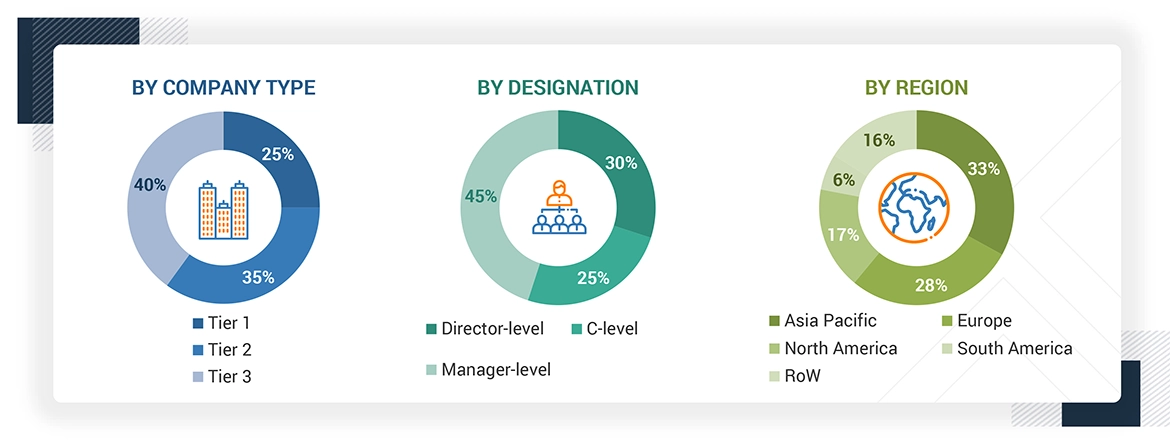
Note: The three tiers of the companies are defined based on their total revenues in 2022 or 2023, as per
the availability of financial data: Tier 1: Revenue > USD 1 billion; Tier 2: USD 100 million = Revenue = USD
1 billion; Tier 3: Revenue USD 100 million.
To know about the assumptions considered for the study, download the pdf brochure
|
COMPANY NAME |
DESIGNATION |
|
SGS SA (Switzerland) |
Regional Sales Manager |
|
Eurofins Scientific (Luxembourg) |
Senior Vice President |
|
TUV SUD (Germany) |
General Manager |
|
Intertek Group Plc (UK) |
Director of Business Development |
|
Bureau Veritas (France) |
Product Specialist |
Market Size Estimation
Both the top-down and bottom-up approaches were used to estimate and validate the total size of the environmental testing market. These approaches were also used extensively to determine the size of various subsegments in the market. The research methodology used to estimate the market size includes the following details:
- The key players in the industry and the overall markets were identified through extensive secondary research.
- All shares, splits, and breakdowns were determined using secondary sources and verified through primary sources.
- All possible parameters that affect the market covered in this research study were accounted for, viewed in extensive detail, verified through primary research, and analyzed to obtain final quantitative and qualitative data.
- The research included the study of reports, reviews, and newsletters of top market players, along with extensive interviews for opinions from leaders, such as CXOs, directors, and marketing executives.
Environmental Testing Market : Top-Down and Bottom-Up Approach
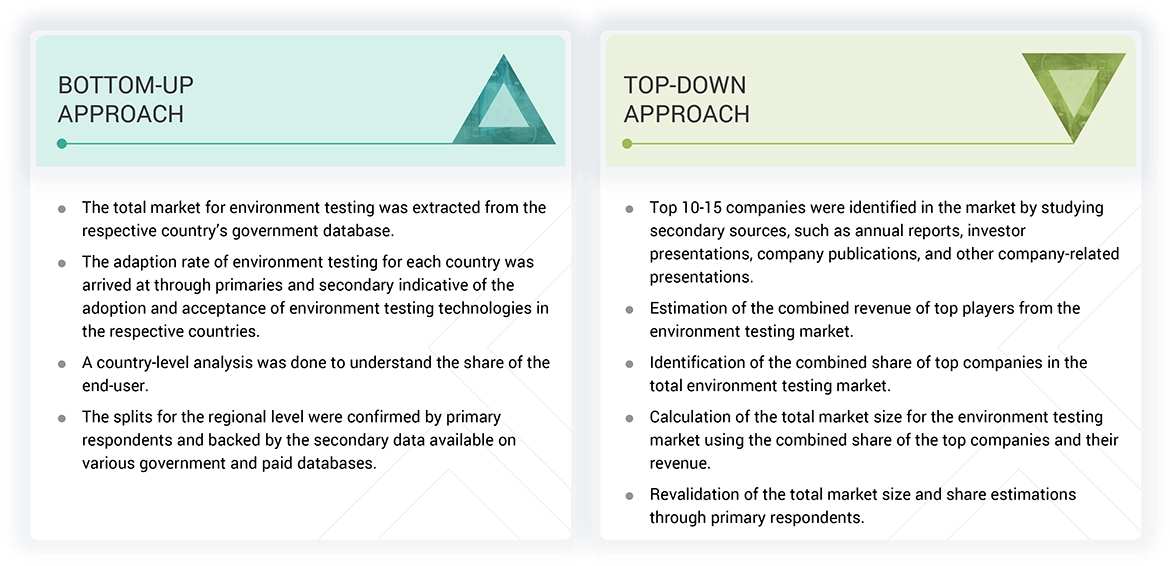
Data Triangulation
After arriving at the overall market size from the estimation process explained above, the total market was split into several segments and subsegments. Data triangulation and market breakdown procedures were employed, wherever applicable, to estimate the overall environmental testing market and arrive at the exact statistics for all segments and subsegments. The data was triangulated by studying various factors and trends from the demand and supply sides. Along with this, the market size was validated using both the top-down and bottom-up approaches.
Market Definition
The environmental testing market is focused on analyzing and monitoring environmental factors such as air, water, soil, and waste to detect pollutants, hazardous substances, and contaminants. It plays a critical role in ensuring environmental safety, public health, and compliance with environmental regulations. The market involves testing materials like water (drinking, wastewater, and groundwater), soil, air, and industrial waste for harmful substances such as heavy metals, chemicals, pathogens, and volatile organic compounds (VOCs). The demand for environmental testing is driven by the need for strict regulatory compliance, especially from agencies like the EPA, WHO, and EEA, and growing concerns about pollution, climate change, and environmental sustainability.
Stakeholders
- Supply side: Reagent manufacturers & suppliers, diagnostic instruments and kits manufacturers/suppliers, R&D institutes and laboratories, environmental testing service providers, third-party testing & certification laboratories, associations, regulatory bodies, and other industry-related bodies, importers, exporters, & traders, end users.
- Demand side: Industries, agriculture & irrigation sector, government institutes, research and academic institutions, forestry & geology, and healthcare sector that are actively involved in the R&D phase to innovate environmental testing methods.
- Regulatory side: Concerned government authorities, commercial research & development (R&D) institutions, and other regulatory bodies.
- Associations and industry bodies such as the United States Department of Agriculture (USDA), the International Organization for Standardization (ISO), the European Food Safety Authority (EFSA), the Food Safety and Standards Authority of India (FSSAI)
Report Objectives
MARKET INTELLIGENCE
- Determining and projecting the size of the environmental testing market based on sample, tested material, technology, end users, and region from 2025 to 2030
- Identifying the attractive opportunities in the market by determining the largest and fastest-growing segments across the key regions
- Analyzing the demand-side factors based on the following:
- Impact of macro and microeconomic factors on the market
- Shifts in demand patterns across different subsegments and regions
This research report categorizes the environmental testing market based on sample, tested material, technology, end users, and region.
Available Customizations
With the given market data, MarketsandMarkets offers customizations according to company-specific scientific needs.
The following customization options are available for the report:
Product Analysis
- Product Matrix, which gives a detailed comparison of the product portfolio of each company.
Geographic Analysis as per Feasibility
With the given market data, MarketsandMarkets offers customizations according to company-specific scientific needs.
- Further breakdown of the Rest of Europe environmental testing market into key countries.
- Further breakdown of the Rest of Asia Pacific environmental testing market into key countries.
- Further breakdown of the Rest of South America environmental testing market into key countries.
Company Information
- Detailed analyses and profiling of additional market players (up to five)
Key Questions Addressed by the Report
What is the current size of the environment testing market?
The environment testing market is estimated at USD 7.43 billion in 2025 and is projected to reach USD 9.32 billion by 2030, at a CAGR of 4.6%.
What are the key market players, and how intense is the competition?
The key market players include SGS SA (Switzerland), Bureau Veritas (France), Eurofins Scientific (Luxembourg), Intertek Group plc (UK), TÜV SÜD (Germany), AsureQuality (New Zealand), ALS Limited (Australia). The environment testing market is expanding rapidly, with increasing mergers, acquisitions, partnerships, and product launches. Companies in this sector are also heavily investing in research and development.
Which region is estimated to account for the largest share of environment testing in 2025?
The North America market is estimated to dominate the environment testing market in 2025. The increasing demand for environment testing in agriculture and industries accelerates the market growth in the region.
What kind of information is provided in the company profiles section?
The provided company profiles deliver crucial details, including a thorough business summary that covers different segments, financial results, geographic presence, revenue distribution, and business revenue breakdown. They also offer insights into product lines, key achievements, and expert analyst opinions to illustrate the company's potential better.
What are the factors driving the environment testing market?
The need for cost-saving and efficient customized testing services drives the environment testing market. Companies and regulatory agencies are seeking smarter, more effective methods of remaining in compliance with environmental regulations without going over budget or experiencing delays.
Fact checked
Personalize This Research
- Triangulate with your Own Data
- Get Data as per your Format and Definition
- Gain a Deeper Dive on a Specific Application, Geography, Customer or Competitor
- Any level of Personalization
Let Us Help You
- What are the Known and Unknown Adjacencies Impacting the Environmental Testing Market
- What will your New Revenue Sources be?
- Who will be your Top Customer; what will make them switch?
- Defend your Market Share or Win Competitors
- Get a Scorecard for Target Partners

Custom Market Research Services
We Will Customise The Research For You, In Case The Report Listed Above Does Not Meet With Your Requirements
Get 10% Free CustomisationTESTIMONIALS

Business Innovation Director
US Based Leading Agribusiness,
Food and Ingredients ManufacturerI highly appreciate the team's efficiency for a well conducted study that helped us clarify some blind spots in food and agricultural niche markets. Although compiling information for B2B markets is very difficult, the MnM team pulled out the task successfully. The quality of research, level of insights, and responsiveness of team were commendable.
- Canada Environmental Testing Market
- Mexico Environmental Testing Market
- US Environmental Testing Market
- UK Environmental Testing Market
- Germany Environmental Testing Market
- France Environmental Testing Market
- Italy Environmental Testing Market
- Spain Environmental Testing Market
- Poland Environmental Testing Market
- China Environmental Testing Market
- India Environmental Testing Market
- Japan Environmental Testing Market
- South Korea Environmental Testing Market
- Brazil Environmental Testing Market
- Argentina Environmental Testing Market
- South Africa Environmental Testing Market
- Rest Of Europe Environmental Testing Market
- South America Environmental Testing Market
Growth opportunities and latent adjacency in Environmental Testing Market






User
Feb, 2020
I can see that the report discusses about the various technologies in the industry of environmental testing, I have a keen interest towards the future technological aspects and their impact of technological innovations on the testing market, kindly let me know if such details are available or not?.
Joseph
Jul, 2026
What is driving the growth of the Environmental Testing Market?.
Ryan
Jul, 2026
Which industries are the major users of environmental testing services?.
Liam
Jul, 2026
Why is environmental testing becoming increasingly important globally?.
Jackson
Jul, 2026
How the market growth reflects increasing global awareness about environmental safety.