Europe HVAC System Market

Europe HVAC System Market by Cooling (AC, VRF, Chiller, Cooling Tower, Cooler), Heating (Heat Pump, Boiler, Unitary Heater, Furnace), Ventilation (AHU, Air Filter, Humidifier, Purifier), Technology (Smart, Sustainable) - Forecast to 2030




OVERVIEW
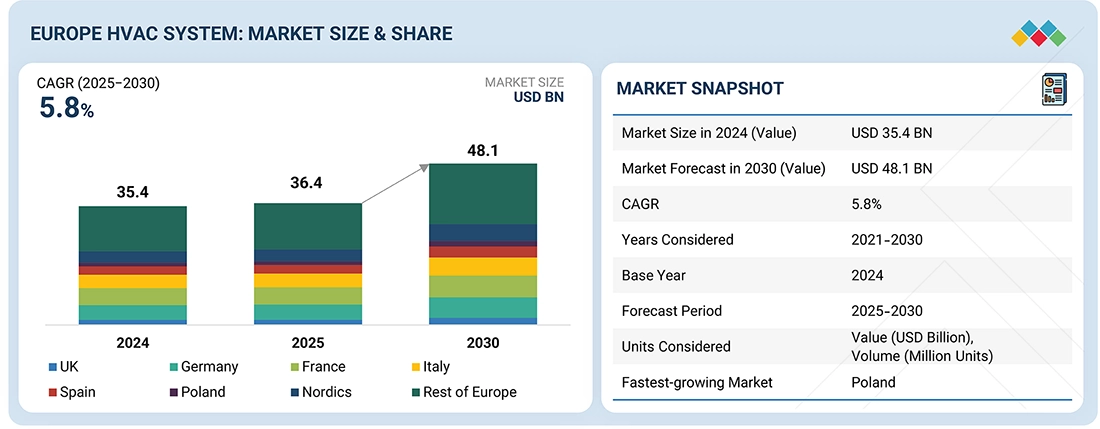
Source: Secondary Research, Interviews with Experts, MarketsandMarkets Analysis
The Europe HVAC system market is expected to reach USD 48.1 billion by 2030, up from USD 36.4 billion in 2025, with a CAGR of 5.8% from 2025 to 2030. Increasing construction investments, growing residential development, higher disposable incomes, and more government funding are driving market growth. The move toward energy-efficient HVAC systems is also supported by regulations encouraging eco-friendly refrigerants and sustainable climate control technologies.
Market Size & Forecast
KEY TAKEAWAYS
-
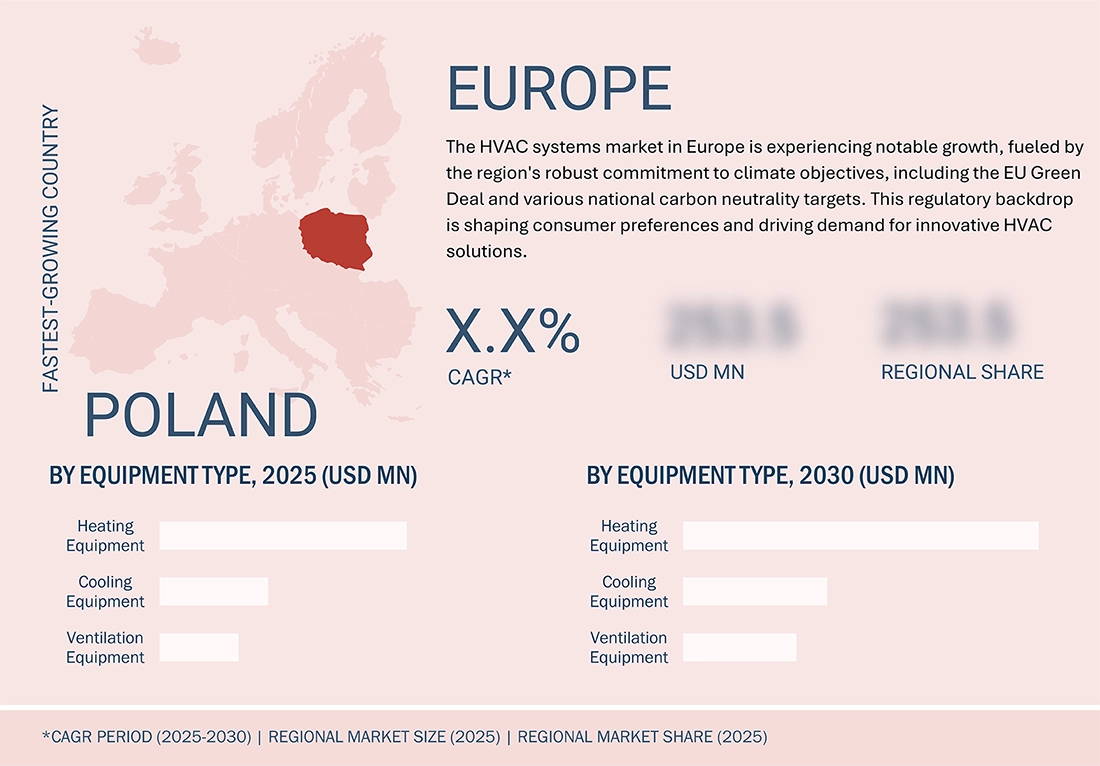
BY COUNTRYBy country, Poland is expected to dominate the market, growing at a CAGR of 7.9% during the forecast period.
-
BY HEATING EQUIPMENTBy heating equipment, the heat pump segment is expected to register the fastest growth during the forecast period.
-
BY COOLING EQUIPMENTBy cooling equipment, the unitary air conditioner segment is expected to dominate in terms of market share.
-
BY VENTILATION EQUIPMENTBy ventilation equipment, the air handling unit segment is expected to register the highest CAGR.
-
BY TECHNOLOGYBy technology, smart HVAC systems are expected to dominate the market during the forecast period.
-
BY IMPLEMENTATION TYPEBy implementation type, the new construction building segment is expected to grow at the highest CAGR of ~6.5-7% during the forecast period.
-
BY SERVICE TYPEBy service type, the upgradation/replacement services segment is expected to grow at the highest CAGR.
-
BY END USERBy end user, the commercial segment will grow the fastest during the forecast period.
-
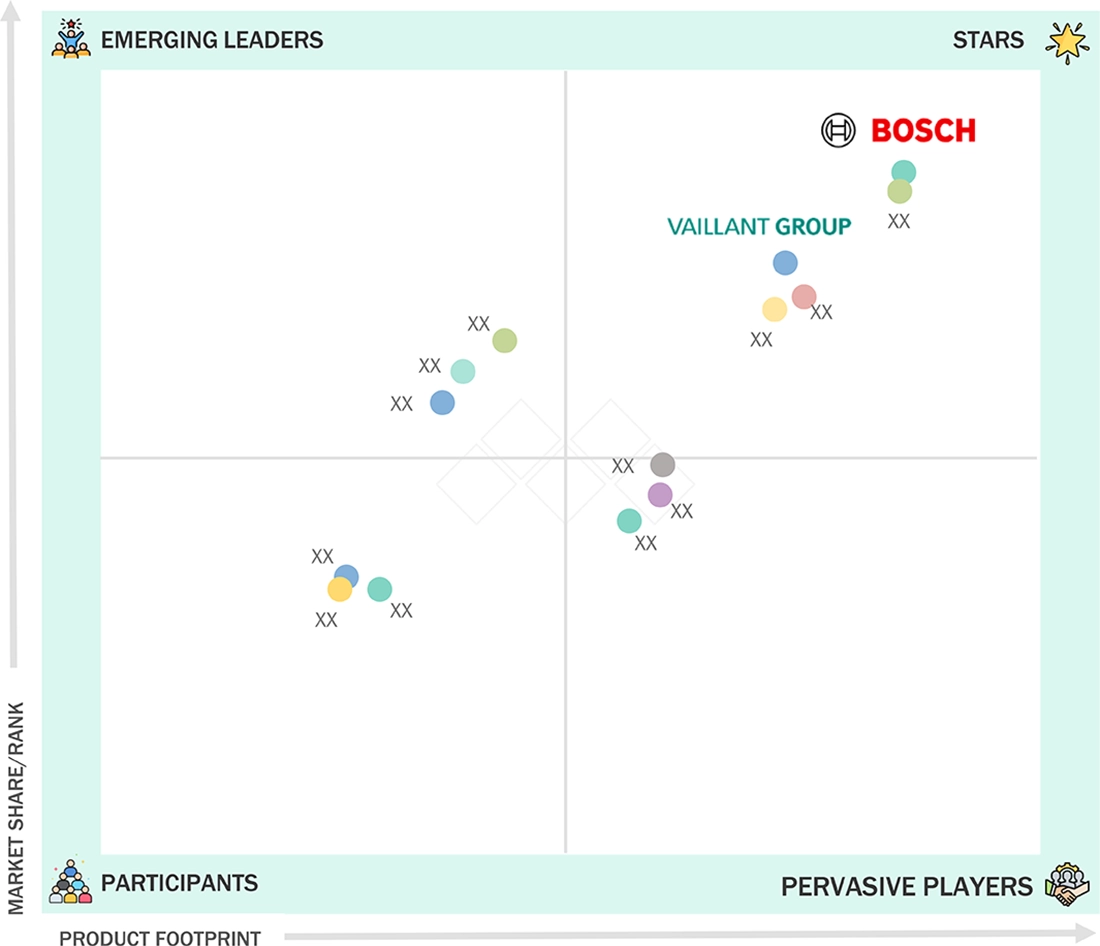
COMPETITIVE LANDSCAPE - KEY PLAYERSBosch Thermotechnik, Valliant Group, and Daikin were identified as some of the star players in the Europe HVAC system market, given their strong market share and product footprint.
-
COMPETITIVE LANDSCAPE - STARTUPS/SMESSystemair AB, AERMEC S.P.A., among others, have distinguished themselves among SMEs by securing strong footholds in specialized niche areas, underscoring their potential as emerging market leaders.
Countries such as Germany, the UK, and France are key contributors to the Europe market growth. The large population of technology enthusiasts in these nations and increased awareness about energy conservation drive the HVAC system market. European governments strongly focus on implementing energy efficiency policies and measures across industrial, commercial, and residential sectors.
TRENDS & DISRUPTIONS IMPACTING CUSTOMERS' CUSTOMERS
Customer trends or disruptions affect consumers' businesses. The IoT has transformed many industries, including HVAC. IoT is the future of HVAC, enabling cloud connectivity, quick and easy commissioning, and remote monitoring. Technicians and operators can make more confident diagnoses by monitoring, operating, and collecting data in real time. Less time is needed for maintenance, and real-time monitoring is achieved.
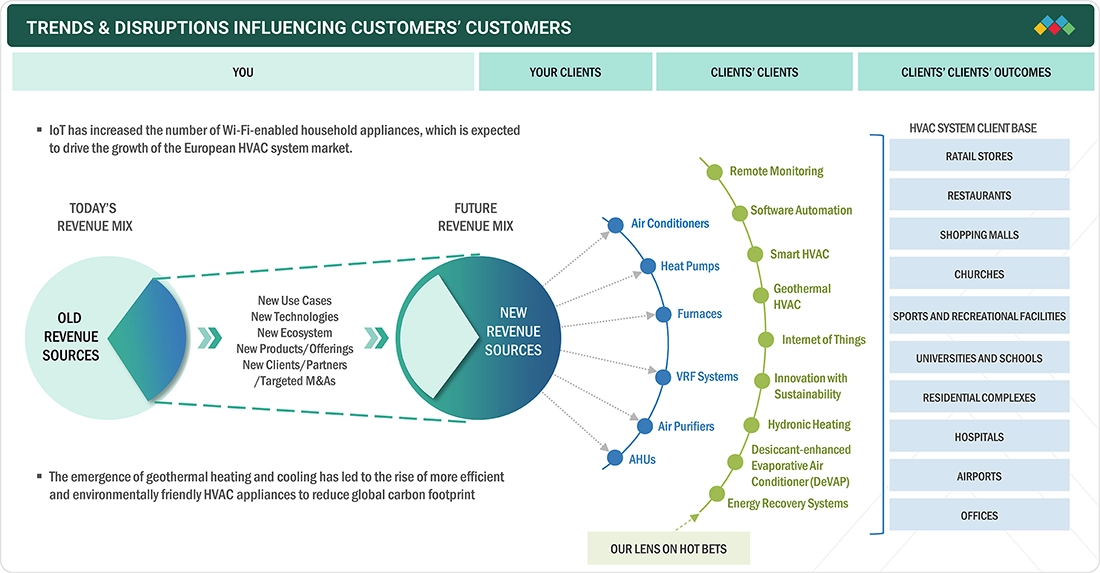
Source: Secondary Research, Interviews with Experts, MarketsandMarkets Analysis
MARKET DYNAMICS

Level
-
Energy-efficient HVAC Adoption Accelerating Across Europe

-
Construction Growth Boosting HVAC Demand in Germany and France


Level
-
High HVAC Upgrade Costs Slowing Adoption in Europe

-
Limited HVAC Installation Space in UK and Urban Europe


Level
-
Smart and IoT HVAC Expanding Rapidly across Europe

-
Heat Pumps Gaining Major Traction in Nordic Countries


Level
-
Low Awareness Slowing HVAC Adoption in Eastern Europe

-
Aging Infrastructure Challenging Retrofits across European Buildings

Source: Secondary Research, Interviews with Experts, MarketsandMarkets Analysis
Driver: Energy-efficient HVAC Adoption Accelerating Across Europe
The Europe HVAC market continues to expand as stricter regional energy regulations and emission reduction commitments speed up the adoption of energy-efficient systems. Heat pumps, hybrid HVAC solutions, and VRF systems are experiencing high demand as governments promote building decarbonization and carbon neutrality goals. Consumers and businesses are focusing on systems that lower energy bills, meet performance standards, and align with green building certifications such as BREEAM and LEED.
Restraint: High HVAC Upgrade Costs Slowing Adoption in Europe
Despite strong adoption trends, high upfront installation costs and ongoing maintenance expenses continue to be a major barrier for many European customers. Advanced systems such as VRF networks, smart HVAC controls, and heat pumps often require skilled labor and specialized commissioning, which increases service costs. Smaller commercial users and residential buyers may delay upgrades or replacement cycles due to financial constraints, especially in markets where subsidy programs are limited or inconsistent.
Opportunity: Smart and IoT HVAC Expanding Rapidly Across Europe
IoT integration is driving significant growth opportunities in the Europe HVAC sector as real-time monitoring, predictive maintenance, and intelligent energy management become crucial for building automation strategies. Smart thermostats, connected HVAC controls, and digital twin-based energy optimization platforms are gaining popularity across commercial buildings and industrial facilities. The rise of cloud-connected HVAC ecosystems supports energy savings, regulatory compliance, and long-term lifecycle efficiency, making IoT a strategic advantage for manufacturers and integrators.
Challenge: Low Awareness Slowing HVAC Adoption in Eastern Europe
Although the adoption of HVAC systems is well-established in Western and Northern Europe, certain regions in Eastern and Southern Europe continue to lack awareness of the long-term benefits associated with modern HVAC technologies. Insufficient knowledge regarding energy savings, enhancements in indoor air quality, and the feasibility of heat pumps impedes replacement cycles and diminishes the rate of modernization.
EUROPE HVAC SYSTEM MARKET: COMMERCIAL USE CASES ACROSS INDUSTRIES
| COMPANY | USE CASE DESCRIPTION | BENEFITS |
|---|---|---|
 |
A Smart VRV heat pump system, along with heat recovery ventilation units, was installed at the Van der Valk Hotel in Antwerp, Belgium, to support heating, cooling, and mechanical ventilation needs for guest rooms and conference spaces. | The system achieved improved year-round comfort higher indoor air quality and energy savings due to heat recovery and inverter technology and helped the building comply with European energy efficiency standards. |
 |
CITY MULTI VRF units along with Lossnay heat recovery ventilation and hybrid VRF were deployed in the Iconic Elbphilharmonie building in Hamburg Germany to manage highly variable temperature conditions across public assembly spaces. | The solution reduced energy consumption increased system zoning flexibility and ensured acoustic comfort which was required due to the sensitive concert hall design. |
 |
Carrier AquaForce Vision 30KAV chillers using low GWP refrigerant were installed for a district energy network in Geneva Switzerland to supply efficient chilled water to multiple mixed use buildings including offices and residential towers. | The project achieved reduced carbon emissions lower operating cost and compliance with F Gas regulation and delivered stable chilled water supply with high seasonal efficiency. |
 |
Vaillant aroTHERM plus heat pumps were installed for a residential community modernization project in Oberhausen, Germany, replacing legacy fossil fuel-based boilers. | The system delivered a significant reduction in CO2 emissions, lower energy bills for occupants, and increased reliability while enabling the transition to renewable heating under EU Green Deal targets. |
 |
Vitocal 300 G geothermal heat pump combined with Viessmann ventilation and buffer storage was installed in a school campus in Krakow Poland to provide space heating cooling and hygienic ventilation for classrooms. | The project resulted in reduced heating energy consumption improved fresh air supply for students and reduced operational expenditure through renewable HVAC operation. |
Logos and trademarks shown above are the property of their respective owners. Their use here is for informational and illustrative purposes only.
MARKET ECOSYSTEM
The Europe HVAC system ecosystem encompasses equipment manufacturers, control providers, system integrators, and distributors. End users of HVAC systems include residential, commercial, and industrial sectors. Within the commercial segment, HVAC systems are employed in offices, government agencies, airports, healthcare facilities, educational institutions, and retail establishments.
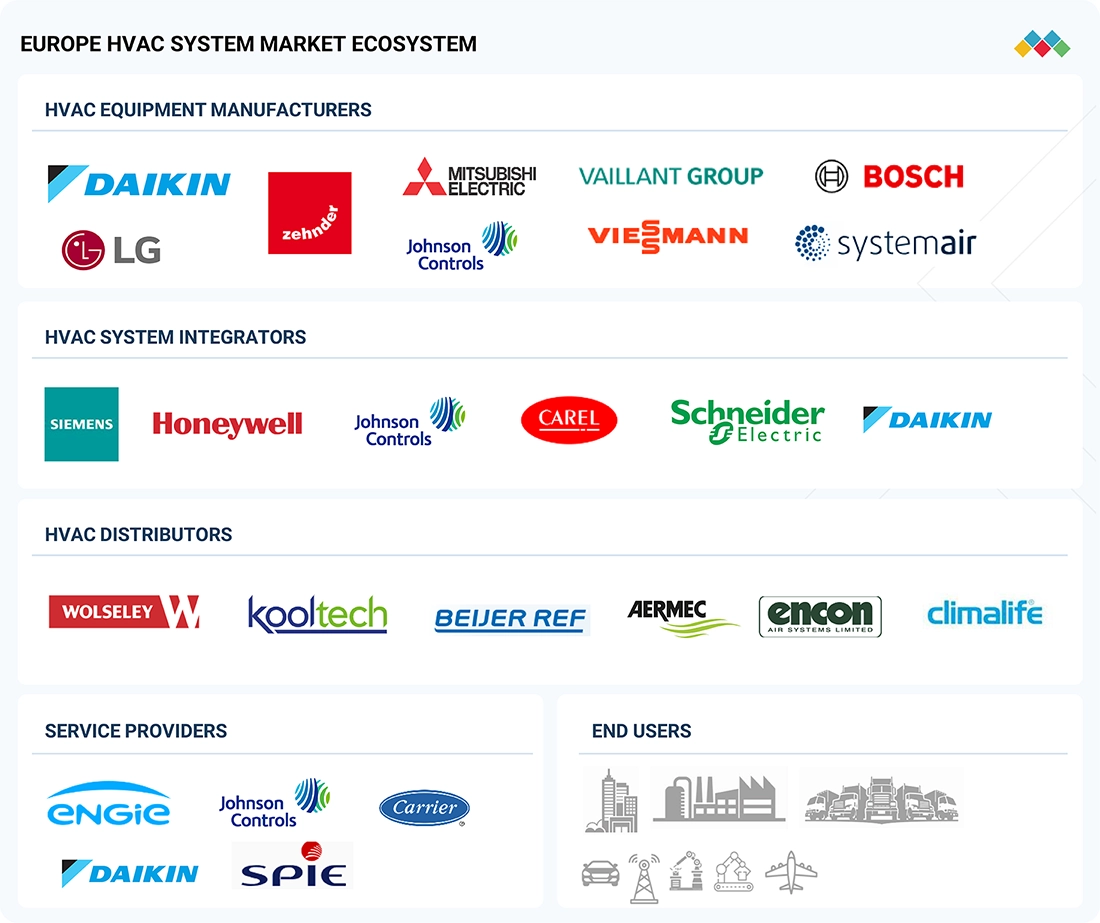
Logos and trademarks shown above are the property of their respective owners. Their use here is for informational and illustrative purposes only.
MARKET SEGMENTS

Source: Secondary Research, Interviews with Experts, MarketsandMarkets Analysis
Europe HVAC System Market, By Technology
Traditional HVAC systems continue to hold a significant share of the European market due to a large installed base across residential and small commercial buildings. However, momentum is shifting toward advanced and low-carbon technologies such as heat pumps and VRF systems driven by EU energy efficiency policies, carbon neutrality targets, and incentives supporting sustainable system replacements.
Europe HVAC System Market, By Implementation Type
The new construction sector shows strong growth potential in Europe as governments invest in smart infrastructure, sustainable buildings, and strict regulatory frameworks under directives such as EPBD. Energy-efficient HVAC systems, including heat pumps, mechanical ventilation with heat recovery, and integrated control systems, are increasingly required for commercial real estate, hospitality, public buildings, and modern residential projects across the region.
Europe HVAC System Market, By Service Type
Installation services constitute a significant proportion of the market in Europe due to the necessity for trained professionals to commission advanced systems such as heat pumps, VRF networks, and smart HVAC controls. The ongoing emphasis on energy retrofits in aging buildings, coupled with obligatory inspection and maintenance regulations, sustains the demand for installation and technical services. Additionally, growth is bolstered by government-funded renovation initiatives aimed at high-efficiency upgrades.
Europe HVAC System Market, By End User
The commercial sector makes up a significant portion of Europe HVAC demand, driven by the modernization of offices, hospitals, data centers, and hospitality infrastructure. Businesses are emphasizing systems that meet environmental standards and promote better indoor air quality. Corporate sustainability commitments, performance-based building codes, and energy-saving goals continue to speed up HVAC upgrades and the adoption of connected, high-efficiency solutions across commercial settings.
REGION
Poland is expected to be the fastest-growing country across the Europe HVAC system market during the forecast period
The HVAC systems market in Europe is experiencing significant growth driven by the region's strong dedication to climate goals, such as the EU Green Deal and national carbon neutrality targets. There is rising demand for heat pumps, ventilation systems with heat recovery, and hydronic systems, especially in colder areas with aging housing infrastructure.
EUROPE HVAC SYSTEM MARKET: COMPANY EVALUATION MATRIX
In the Europe HVAC system market matrix, Bosch Thermotechnik and Vaillant Group (Star) lead with a strong market presence and a wide product portfolio, driving large-scale adoption across various industries, including commercial and industrial.
Source: Secondary Research, Interviews with Experts, MarketsandMarkets Analysis
KEY MARKET PLAYERS
- DAIKIN INDUSTRIES, Ltd. (Japan)
- Bosch Thermotechnik GmbH (Germany)
- Vaillant Group (Germany)
- Viessmann (Germany)
- Systemair AB (Sweden)
- AERMEC S.P.A. (Italy)
- Mitsubishi Electric Corporation (Japan)
- Johnson Controls (Ireland)
- LG Electronics (South Kora)
- Zehnder Group AG (Switzerland)
MARKET SCOPE
| REPORT METRIC | DETAILS |
|---|---|
| Market Size in 2024 (Value) | USD 35.4 Billion |
| Market Forecast in 2030 (Value) | USD 48.1 Billion |
| Growth Rate | CAGR of 5.8% from 2025–2030 |
| Years Considered | 2021–2030 |
| Base Year | 2024 |
| Forecast Period | 2025–2030 |
| Units Considered | Value (USD Million/Billion) and Volume (Million Units) |
| Report Coverage | Revenue forecast, company ranking, competitive landscape, growth factors, and trends |
| Segments Covered |
|
| Regional Scope | Europe (UK, Germany, France, Spain, Italy, Poland, Nordic Countries) |
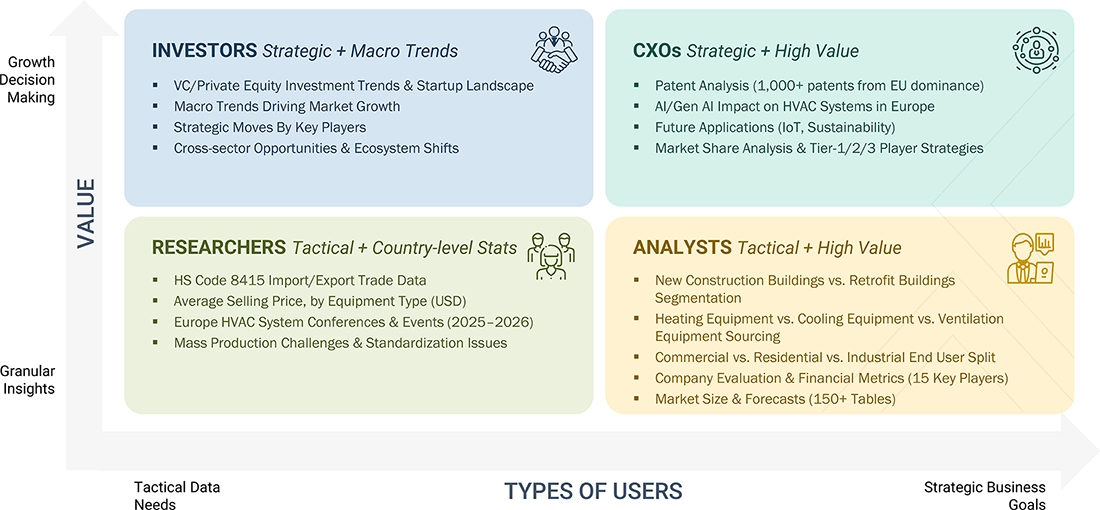
WHAT IS IN IT FOR YOU: EUROPE HVAC SYSTEM MARKET REPORT CONTENT GUIDE
DELIVERED CUSTOMIZATIONS
We have successfully delivered the following deep-dive customizations:
| CLIENT REQUEST | CUSTOMIZATION DELIVERED | VALUE ADDS |
|---|---|---|
| US-based HVAC Manufacturer |
|
|
| Europe-Based Air Purifier & Ventilation Company |
|
|
| Smart Building Technology Startup |
|
|
| US-based HVAC Raw Material Supplier |
|
|
| Commercial HVAC Customer |
|
|
RECENT DEVELOPMENTS
- August 2025 : Daikin Europe launched a new residential brand campaign across 16 European markets to showcase how its heat pumps, air purifiers, and air-to-air and air-to-water systems enhance comfort, indoor air quality, and sustainability. The campaign highlights clean air and climate comfort, reinforcing Daikin’s position as a trusted leader in energy-efficient HVAC solutions for homes.
- March 2025 : At the 2025 ISH trade fair, Vaillant launched a next-generation heat pump lineup designed for both modernization and new construction, offering quiet operation, simple installation, and high efficiency. The company also introduced a range of digital services aimed at installers and end users to support the shift to low-carbon heating across Europe.
- July 2024 : Bosch acquired Johnson Controls-Hitachi’s residential and light-commercial HVAC division to broaden its heating, ventilation, and cooling offerings. The purchase includes manufacturing facilities and product lines for boilers, heat pumps, and climate control systems. This move greatly enhanced Bosch’s presence in the Europe HVAC equipment market.
Table of Contents
 Exclusive indicates content/data unique to MarketsandMarkets and not available with any competitors.
Methodology
The research process for this study included systematic gathering, recording, and analysis of data about customers and companies operating in the Europe HVAC System Market . This process involved the extensive use of secondary sources, directories, and databases (Factiva and Oanda) to identify and collect valuable information for the comprehensive, technical, market-oriented, and commercial study of the Europe HVAC System Market . In-depth interviews were conducted with primary respondents, including experts from core and related industries and preferred manufacturers, to obtain and verify critical qualitative and quantitative information and assess growth prospects. Key players in the Europe HVAC System Market were identified through secondary research, and their market rankings were determined through primary and secondary research. This research included studying annual reports of top players and interviewing key industry experts such as CEOs, directors, and marketing executives.
Secondary Research
Various sources were used in the secondary research process to identify and collect information important for this study. These include company annual reports, press releases, investor presentations, white papers, technology journals, certified publications, articles by recognized authors, directories, and databases.
Secondary research was mainly used to obtain key information about the industry’s value chain, the total pool of market players, the market classification according to industry trends to the bottom-most level, regional markets, and key developments from market and technology-oriented perspectives.
Primary Research
Primary research was also conducted to identify the segmentation types, key players, competitive landscape, and key market dynamics, such as drivers, restraints, opportunities, challenges, and industry trends, along with key strategies adopted by players operating in the Europe HVAC System Market . Extensive qualitative and quantitative analyses were performed on the complete market engineering process to list key information and insights throughout the report.
Extensive primary research has been conducted after acquiring knowledge about the Europe HVAC System Market scenarios through secondary research. Several primary interviews have been conducted with experts from the demand (end user and region) and supply side (heating equipment, cooling equipment, ventilation equipment, implementation type, system type, technology) across Europe. Approximately 60% and 40% of the primary interviews were conducted from the supply and demand sides, respectively. These primary data have been collected through questionnaires, emails, and telephonic interviews.
Market Size Estimation
In the complete market engineering process, top-down and bottom-up approaches and several data triangulation methods were implemented to estimate and validate the size of the Europe HVAC System Market and various other dependent submarkets. Key players in the market were identified through secondary research, and their market share in the respective regions was determined through primary and secondary research. This entire research methodology included the study of annual and financial reports of the top players, as well as interviews with experts (such as CEOs, VPs, directors, and marketing executives) for key insights (quantitative and qualitative).
All percentage shares, splits, and breakdowns were determined using secondary sources and verified through primary sources. All the possible parameters that affect the markets covered in this research study were accounted for, viewed in detail, verified through primary research, and analyzed to obtain the final quantitative and qualitative data. This data was consolidated and supplemented with detailed inputs and analysis from MarketsandMarkets and presented in this report.
Data Triangulation
After arriving at the overall market size from the estimation process explained above, the total market has been split into several segments and subsegments. To complete the overall market engineering process and arrive at the exact statistics for all segments and subsegments, market breakdown and data triangulation procedures have been employed, wherever applicable. The data have been triangulated by studying various factors and trends from the demand and supply sides. Along with this, the market has been validated using the top-down and bottom-up approaches.
Market Definition
HVAC system (Heating, ventilation, and air conditioning) is a set of technologies designed to regulate indoor temperature, humidity, and air quality for homes, businesses, or industrial spaces. It includes equipment that controls air circulation, adjusts temperatures via heating and cooling, and ensures adequate ventilation.
It includes various components such as air conditioners, heat pumps, furnaces, ventilation systems, and associated controls and technologies. These components work together to maintain comfortable and healthy indoor environments. Factors like energy efficiency, regulatory standards, climate considerations, and the demand for improved indoor air quality drive the HVAC System Market.
Key Stakeholders
- Component Manufacturers
- Government and Research Organizations
- HVAC System Providers
- HVAC Software and Service Providers
- Maintenance and Service Providers
- Original Equipment Manufacturers (OEMs)
- Professional Services/Solution Providers
- Research Institutions and Organizations
- System Integrators
Report Objectives
- To estimate and forecast the size of the Europe HVAC System Market , in terms of value, based on cooling equipment, heating equipment, ventilation equipment, technology, implementation type, service type, end user, and region
- To describe and forecast the market size, in terms of volume, based on cooling equipment, heating equipment, ventilation equipment, and region
- To provide detailed information regarding major factors such as drivers, restraints, opportunities, and challenges influencing the market growth
- To provide a detailed overview of the value chain of the Europe HVAC System Market
- To strategically analyze micromarkets with regard to individual market trends, growth prospects, and contributions to the total market
- To strategically profile key players and comprehensively analyze their market position in terms of ranking and core competencies, along with a detailed competitive landscape for the market leaders
- To analyze major growth strategies such as product launches, expansions, joint ventures, agreements, and acquisitions adopted by the key market players to enhance their position in the market
- To analyze the AI impact on the Europe HVAC System Market
- To analyze the US tariff impact on the Europe HVAC System Market
Customization Options
With the given market data, MarketsandMarkets offers customizations according to the company’s specific needs. The following customization options are available for the report::
Key Questions Addressed by the Report
What is the projected market size of the Europe HVAC system market?
The Europe HVAC system market is projected to grow from USD 36.4 billion in 2025 to USD 48.1 billion by 2030, at a CAGR of 5.8%.
Which region or country is expected to drive growth in the Europe HVAC system market?
Countries such as Germany, France, and United Kingdom contribute significantly, while Poland is expected to register the highest growth rate.
Which segment by cooling equipment dominates the market?
The unitary air conditioner segment dominates the market due to its widespread adoption across residential and commercial applications.
Which technology and end-user segments are leading the market?
Smart HVAC systems lead by technology, while the commercial segment is expected to grow the fastest due to increasing demand for energy-efficient building solutions.
Who are the key players in the Europe HVAC system market?
Key players include Daikin Industries, Bosch Thermotechnik, Vaillant Group, Mitsubishi Electric Corporation, and Johnson Controls.


Personalize This Research
- Triangulate with your Own Data
- Get Data as per your Format and Definition
- Gain a Deeper Dive on a Specific Application, Geography, Customer or Competitor
- Any level of Personalization
Let Us Help You
- What are the Known and Unknown Adjacencies Impacting the Europe HVAC System Market
- What will your New Revenue Sources be?
- Who will be your Top Customer; what will make them switch?
- Defend your Market Share or Win Competitors
- Get a Scorecard for Target Partners

Custom Market Research Services
We Will Customise The Research For You, In Case The Report Listed Above Does Not Meet With Your Requirements
Get 10% Free CustomisationTESTIMONIALS

Tetsuya Ohhira
Business Development Manager-Technology Business
Nikon Corporation,
Leading Japanese MNC specializing in optics and imaging productswww.nikon.com
MarketsandMarkets™ response
is quick. Their attitude is flexible and positive. Analyst Insights are globally considered and
significant. Client Services quickly respond to our inquiry and demand. Their wide range of global
surveys help us make our strategic plan.
We hope Knowledge Store will be easier to search
for a report.
VP - Marketing & Business Development
Leading Provider of Process Control Solutions
We engaged with MarketsandMarkets on a study to perform an analysis and recommend a Go-To-Market strategy for metrology and process control in the semiconductor market. The study was tailored to our targets and needs with well-defined milestones. Our overall experience with the MarketsandMarkets team was very good throughout the project in all aspects including the analysis methodologies used, the quality and depth of primary and secondary data sets, the professionalism and flexibility of the team and the ability to meet the target schedule and milestones. We want to thank MarketsandMarkets team for a job well done.






Growth opportunities and latent adjacency in Europe HVAC System Market