Europe Identity Verification Market Size, Share, Opportunities & Latest Trends

Europe Identity Verification Market by Application (Access Control & User Monitoring, KYC, KYB, & Onboarding, Identity Fraud Compliance & Forensics), Type (Biometrics, Non-biometrics), Vertical (BFSI, Healthcare, Education) - Forecast to 2030




OVERVIEW
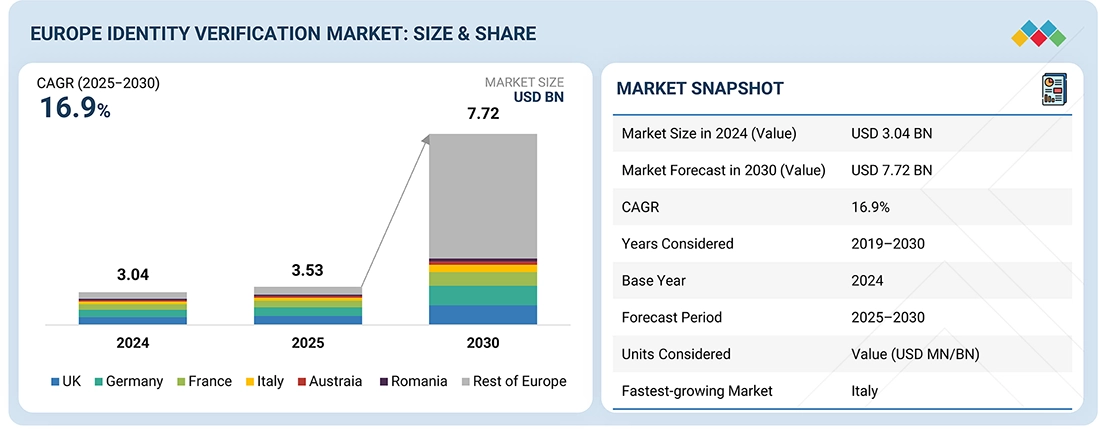
Source: Secondary Research, Interviews with Experts, MarketsandMarkets Analysis
The identity verification market in Europe is projected to reach USD 7.72 billion by 2030, rising from USD 3.53 billion in 2025, at a CAGR of 16.9% from 2025 to 2030. Market growth is fueled by stringent regulatory frameworks, such as the GDPR, AMLD, and eIDAS, as well as the rapid expansion of digital banking and e-commerce, the increasing reliance on remote onboarding, and the escalating cases of identity fraud. Additionally, the region is witnessing strong adoption of biometric authentication, advanced document verification, cloud-based identity platforms, and liveness-detection technologies across fintech, government, and broader digital services, reinforcing security, compliance, and user trust.
KEY TAKEAWAYS
-
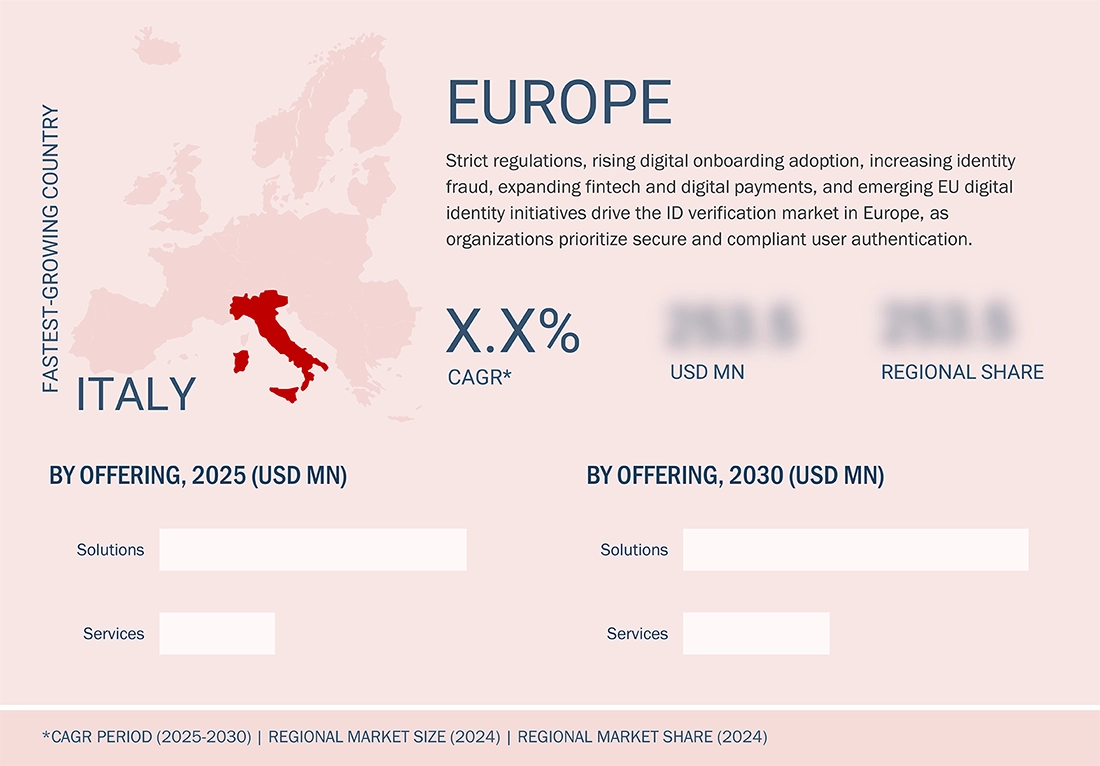
BY COUNTRYBy country, the market in Italy is projected to grow at the fastest rate during the forecast period.
-
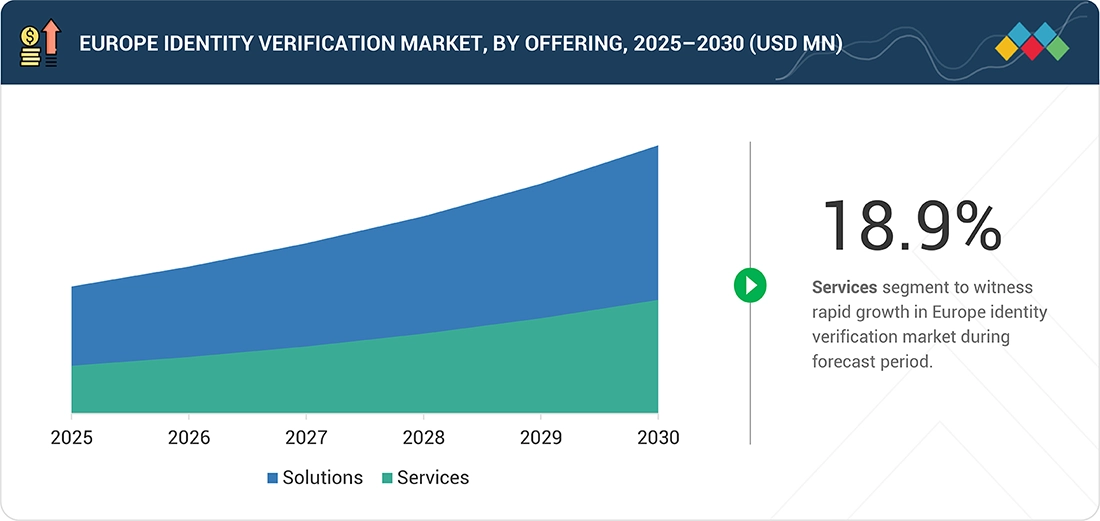
BY OFFERINGBy offering, the services segment is projected to witness a higher CAGR than the solutions segment during the forecast period.
-
BY TYPEBy type, the non-biometrics segment is expected to exhibit a significant CAGR of 18.0%.
-
BY ORGANIZATION SIZEBy organization size, the large enterprises segment is estimated to hold the largest market size.
-
BY DEPLOYMENT MODEBy deployment mode, the cloud segment is projected to register a significant CAGR of 18.3%.
-
BY APPLICATIONBy application, the access control & user monitoring segment is projected to register the highest CAGR of 18.5% during the forecast period.
-
BY VERTICALBy vertical, the BFSI segment is expected to lead the market during the forecast period.
-
COMPETITIVE LANDSCAPE - KEY PLAYERSExperian, Thales, and GBG were recognized as Star players in the Europe identity verification market due to their strong regulatory alignment, extensive data intelligence, and advanced fraud-prevention capabilities.
-
COMPETITIVE LANDSCAPE - STARTUPS & SMESShufti Pro, IDenfy, and Sumsub have emerged as top choices among startups and SMEs, offering agile, AI-powered verification platforms that deliver flexible workflows, high fraud detection accuracy, and fast, low-friction onboarding.
The identity verification market in Europe is growing rapidly, driven by stringent regulatory mandates such as GDPR, AMLD, PSD2, and eIDAS, which require strong customer authentication and compliant onboarding. Rising cross-border fraud, expansion of open banking, and the rollout of the EU Digital Identity Wallet are accelerating the adoption of biometrics, automated document checks, and liveness detection. European banks, fintechs, telecom providers, and governments increasingly rely on high-assurance IDV to secure digital services and reduce financial crime.
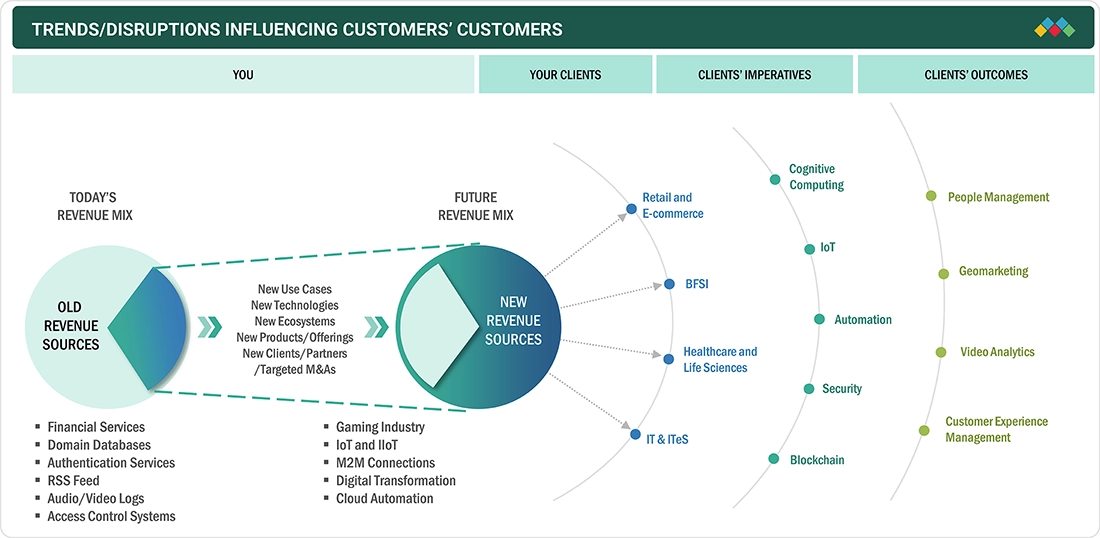
TRENDS & DISRUPTIONS IMPACTING CUSTOMERS' CUSTOMERS
The figure illustrates the changing revenue dynamics and evolving client priorities in the Europe identity verification market. Currently, traditional verification methods account for a significant portion of revenue, while emerging solutions like AI-driven authentication, biometrics, and digital onboarding are rapidly gaining traction. Over the next five years, growth is expected to shift toward intelligent, integrated verification platforms. Key industries, including retail & e-commerce, BFSI, healthcare & life sciences, and IT & ITeS, are focusing on identity assurance, fraud mitigation, and seamless digital experiences, resulting in measurable benefits such as improved workforce management, accurate geomarketing, advanced video analytics, and enhanced customer experience.
Source: Secondary Research, Interviews with Experts, MarketsandMarkets Analysis
MARKET DYNAMICS

Level
-
Growing incidents of identity fraud and theft

-
Stringent government regulations and mandates concerning privacy


Level
-
Shortage of skilled professionals and need for enhanced security training and awareness

-
Significant costs associated with deploying and maintaining systems


Level
-
Rising use of biometric devices within identity authentication systems

-
Expansion of cutting-edge technologies used in identity verification


Level
-
Concerns related to data privacy and risks of security breaches

-
Variability in pricing for identity verification solutions

Source: Secondary Research, Interviews with Experts, MarketsandMarkets Analysis
Driver: Growing incidents of identity fraud and theft
The European identity verification market is driven by the rising incidents of identity fraud, synthetic identities, and cross-border financial crime. The increasing prevalence of cybercrime and online fraud across banking, fintech, e-commerce, and government services is compelling organizations to adopt advanced identity verification solutions, including biometric authentication, automated document checks, and AI-powered risk scoring, to protect users, prevent financial loss, and ensure secure digital interactions.
Restraint: Shortage of skilled professionals and need for enhanced security training and awareness
Market growth is restrained by a shortage of skilled professionals with expertise in cybersecurity, biometrics, and identity verification technologies. Organizations also face the challenge of ensuring employees and customers are adequately trained in security best practices. The need for ongoing awareness programs, technical skill development, and comprehensive training initiatives increases operational complexity and costs, potentially slowing the widespread adoption of advanced identity verification solutions across various industries.
Opportunity: Rising use of biometric devices within identity authentication systems
The rising adoption of biometric devices presents significant growth opportunities for the identity verification market. Technologies such as facial recognition, fingerprint scanning, and iris recognition are increasingly integrated into authentication systems to improve accuracy and reduce fraud. As European banks, fintechs, and government agencies seek more secure and seamless verification methods, the deployment of biometric solutions offers enhanced user experience, stronger security, and the potential for cross-industry standardization.
Challenge: Concerns related to data privacy and risks of security breaches
Data privacy concerns and the risk of security breaches remain major challenges for the identity verification market. Organizations must navigate stringent regulations such as GDPR and eIDAS while managing sensitive user information. Potential breaches, misuse of personal data, or cyber-attacks can erode trust, attract penalties, and hinder adoption. Ensuring robust encryption, secure storage, and compliance with privacy laws is essential to maintain user confidence and safeguard digital identity systems.
EUROPE IDENTITY VERIFICATION MARKET: COMMERCIAL USE CASES ACROSS INDUSTRIES
| COMPANY | USE CASE DESCRIPTION | BENEFITS |
|---|---|---|
 |
Implementation of Experian’s Knowledge IQ and Precise ID platform to modernize PMCU’s member identity verification process. | Replaced cumbersome fax-based verification, saved 500 labor hours per month, improved security and accuracy, streamlined onboarding, and enhanced member satisfaction. |
 |
Implementation of Thales’ advanced ID verification to enhance Orange’s customer onboarding and fraud prevention. | Reduced onboarding time from weeks to an hour, minimized fraud (up to 100% in some cases), improved customer experience, and streamlined operations. |
 |
Integration of IDnow’s identity verification suite to enable Solarisbank’s fully digital onboarding for its B2B2X banking platform so partners can open accounts and purchase services without branches. | Delivered legally compliant remote onboarding, removed the need for physical branches/call centers during onboarding, supported Solarisbank’s digital-first model, and improved the speed and security of customer onboarding. |
 |
AU10TIX built-to-suit identity verification for enterprise clients such as FXCM and Fiverr customer stories where AU10TIX replaced existing onboarding flows with automated ID verification. | Measurable improvements in conversion and onboarding success: FXCM saw a 29% increase in conversion, Fiverr’s customer conversion rose to over 90% in AU10TIX deployments, and PayU saw major improvements through automation. |
 |
Use of iProov’s biometric face to deliver large-scale government digital identity projects, for example, enabling millions of residents to access government digital services. | Verified millions of users reliably on consumer devices, resisted presentation and deepfake attacks, enabled secure remote onboarding and authentication for public services. |
Logos and trademarks shown above are the property of their respective owners. Their use here is for informational and illustrative purposes only.
MARKET ECOSYSTEM
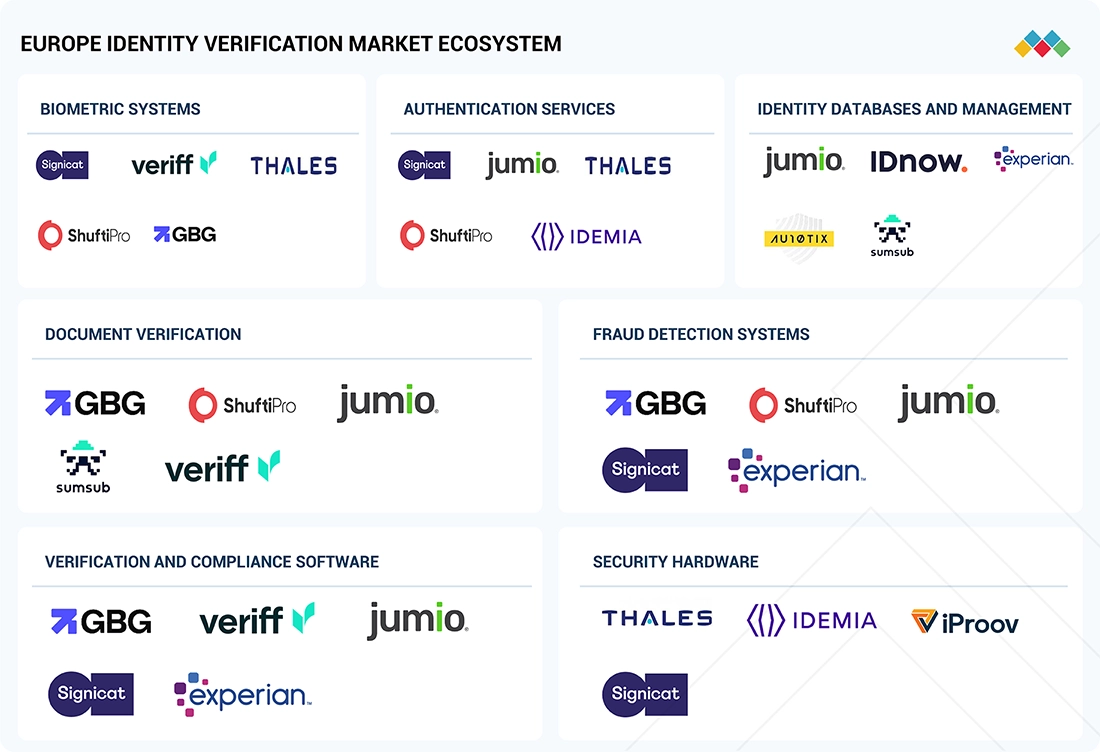
The identity verification ecosystem comprises interconnected components, including biometric solutions, authentication services, identity management and databases, document verification tools, fraud detection systems, compliance software, and security hardware. Biometric and authentication providers facilitate secure identity validation, while databases and verification platforms ensure accurate onboarding and regulatory adherence. Security hardware reinforces data protection. Key end users span BFSI, retail & e-commerce, healthcare, government & defense, and gaming sectors, leveraging identity verification to prevent fraud, safeguard transactions, and protect sensitive data.
Logos and trademarks shown above are the property of their respective owners. Their use here is for informational and illustrative purposes only.
MARKET SEGMENTS
Source: Secondary Research, Interviews with Experts, MarketsandMarkets Analysis
Europe Identity Verification Market, By Offering
The solutions segment is estimated to capture a larger market share than the services segment in 2025. The increasing demand for secure, real-time, and seamless identity verification is driving growth, as organizations adopt advanced solutions like biometrics, AI-powered document verification, and multi-factor authentication to enhance fraud prevention, regulatory compliance, and overall user trust across various industries, including banking, e-commerce, and government services.
Europe Identity Verification Market, By Type
The biometric segment is estimated to dominate the Europe identity verification market in 2025, fueled by growing demand for secure, convenient, and real-time authentication. Technologies such as fingerprint scanning, facial recognition, iris recognition, and voice verification enable accurate identity validation, reduce fraud, and enhance the user experience, making them especially valuable for sectors like banking, fintech, healthcare, and government services.
Europe Identity Verification Market, By Organization Size
The large enterprises segment is estimated to hold the largest market share in 2025. Their complex operations, high user volumes, and need for robust security drive adoption of advanced verification solutions. These systems offer stringent access controls, real-time fraud detection, and comprehensive audit trails, making them ideal for banking, insurance, healthcare, and multinational organizations that require scalable and integrated identity management.
Europe Identity Verification Market, By Deployment Mode
In 2025, the on-premises deployment mode is estimated to hold the largest share of the Europe identity verification market. Organizations prefer on-premises solutions for greater control over sensitive data, enhanced security, and compliance with stringent regional regulations, such as the GDPR and eIDAS. This deployment approach allows seamless integration with existing IT infrastructure, supports real-time identity verification, and is particularly favored by banking, government, and large enterprise sectors..
Europe Identity Verification Market, By Application
The KYC, KYB, and onboarding segment is estimated to hold the largest market share in 2025. Growing regulatory requirements, including GDPR, AMLD, and eIDAS, are driving organizations to implement robust identity verification processes. By leveraging advanced solutions such as biometric authentication, document verification, and AI-driven risk assessment, businesses can ensure compliance, prevent fraud, and provide seamless onboarding experiences for both individuals and corporate clients.
Europe Identity Verification Market, By Vertical
The BFSI segment is estimated to hold the largest market share in 2025. Growing digital banking adoption, the need to prevent financial crimes, and an increasing demand for secure and seamless customer onboarding are driving market growth. Identity verification solutions, including biometrics, document authentication, and AI-driven risk assessment, enable financial institutions to enhance security, reduce fraud, and enhance the overall user experience.
REGION
Italy to be fastest-growing country in Europe identity verification market during forecast period
Italy is emerging as a significant and rapidly growing market for identity verification in Europe, driven by increasing digital adoption, rising cases of identity fraud, and strong demand for secure, compliant onboarding solutions across banking, fintech, and government sectors. For solution providers, Italy represents a key opportunity, while for organizations, implementing advanced IDV systems is becoming essential to ensure fraud prevention, regulatory compliance, and seamless digital interactions.
EUROPE IDENTITY VERIFICATION MARKET: COMPANY EVALUATION MATRIX
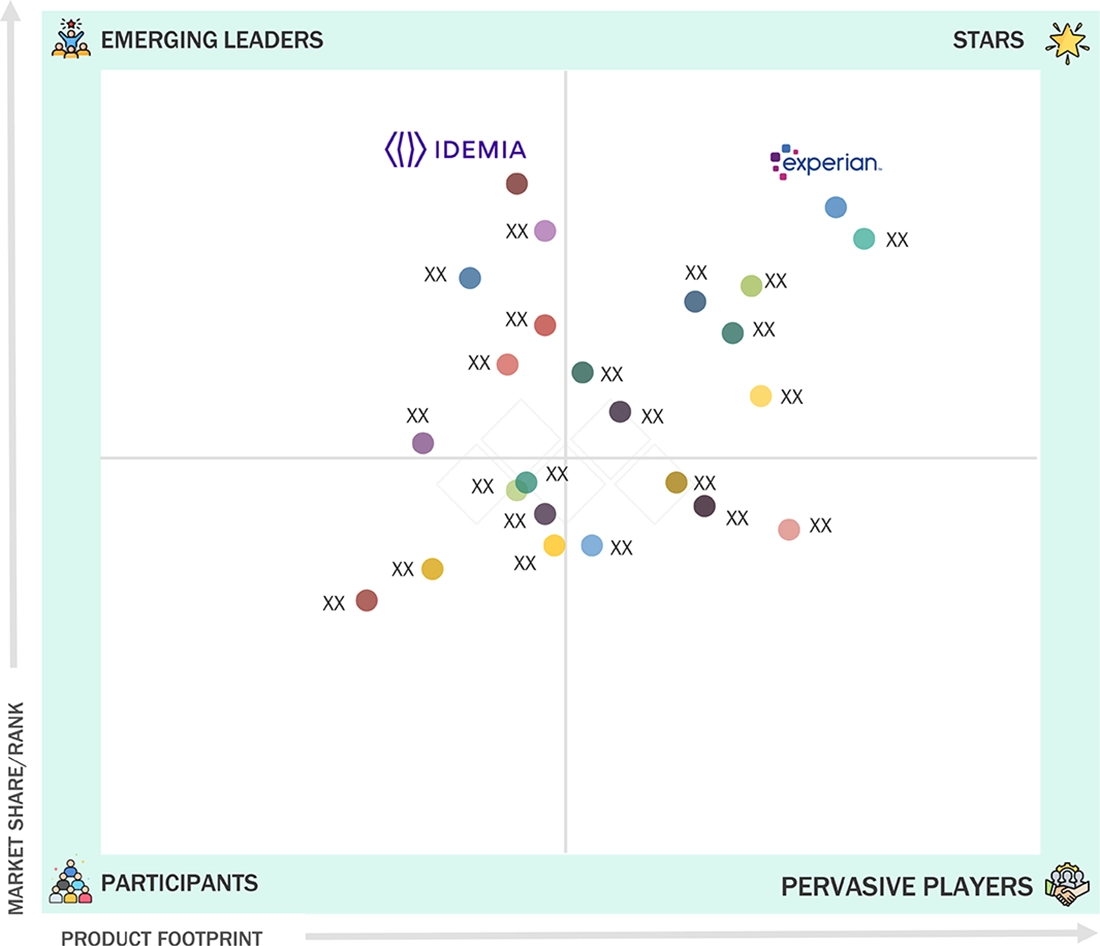
In Europe’s identity verification market, Experian (Star) leads with AI-driven verification, fraud detection, and compliance solutions across the BFSI, government, and e-commerce sectors. IDEMIA (Emerging Leader) strengthens its position with biometric authentication and document verification, poised to enter the leaders’ quadrant.
Source: Secondary Research, Interviews with Experts, MarketsandMarkets Analysis
KEY MARKET PLAYERS
- Experian (Ireland)
- Thales (France)
- GBG (UK)
- IDEMIA (France)
- Jumio (US)
- IDnow (Germany)
- iProov (UK)
- AU10TIX (Israel)
- LexisNexis Risk Solutions (US)
- Trulioo (Canada)
- Innovatrics (Slovakia)
- Signicat (Norway)
MARKET SCOPE
| REPORT METRIC | DETAILS |
|---|---|
| Market Size in 2024 (Value) | USD 3.04 Billion |
| Market Forecast in 2030 (value) | USD 7.72 Billion |
| Growth Rate | CAGR of 16.9% from 2025-2030 |
| Years Considered | 2019-2030 |
| Base Year | 2024 |
| Forecast Period | 2025-2030 |
| Units Considered | Value (USD Million/Billion) |
| Report Coverage | Revenue forecast, company ranking, competitive landscape, growth factors, and trends. |
| Segments Covered |
|
| Regions Covered | Europe (UK, Germany, France, Italy, Austria, Romania, Rest of Europe) |
WHAT IS IN IT FOR YOU: EUROPE IDENTITY VERIFICATION MARKET REPORT CONTENT GUIDE
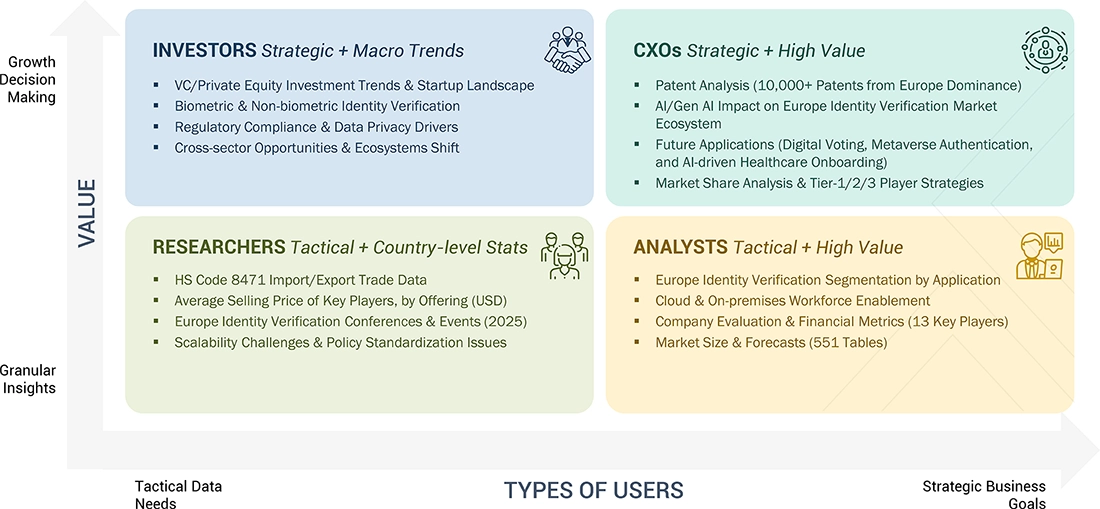
DELIVERED CUSTOMIZATIONS
We have successfully delivered the following deep-dive customizations:
| CLIENT REQUEST | CUSTOMIZATION DELIVERED | VALUE ADDS |
|---|---|---|
| Leading Solution Provider (EU) | Product Analysis: Europe identity verification product landscape providing an in-depth comparison of each vendor’s offerings, including biometric authentication, AI-powered identity matching, document verification, and fraud prevention solutions. | Enhanced insights into market positioning, solution differentiation, and innovation approaches to support well-informed business strategies. |
| Leading Service Provider (EU) | Company Information: Comprehensive profiling and assessment of additional market participants (up to 5), highlighting their solution capabilities, technology expertise, product portfolios, and strategic developments. | Comprehensive perspective on the identity verification ecosystem, emphasizing growth prospects, emerging trends, and opportunities for partnerships or strategic alliances. |
RECENT DEVELOPMENTS
- March 2025: Experian launched Experian Assistant, an AI-powered virtual assistant in Ascend, streamlining identity verification and real-time fraud analytics for financial institutions.
- February 2025: Thales introduced the OneWelcome FIDO Key Lifecycle Management solution, enabling scalable management of FIDO passkeys and enhancing passwordless authentication for enterprises.
- December 2024: LexisNexis Risk Solutions launched Enhanced Identity Data Feed, integrating biometric, device, and other data to improve identity verification accuracy and reduce fraud in real-time.
- November 2024: IDEMIA partnered with Kudelski IoT to integrate its ID&V technology into automotive dealerships, enhancing customer identity proofing, preventing fraud, and streamlining secure onboarding for vehicle purchases.
- June 2024: Trulioo integrated its Person Match identity verification solution to streamline onboarding in Latin America and Asia, boosting client onboarding by 80% and 28%, while improving verification accuracy and reducing fraud risk.
Table of Contents
 Exclusive indicates content/data unique to MarketsandMarkets and not available with any competitors.
Methodology
This study involved estimating the current Europe Identity Verification Market size. Exhaustive secondary research was carried out to collect information on the identity verification industry. The next step was to validate these findings, assumptions, and sizing with industry experts across the value chain using primary research. Different approaches, such as top-down and bottom-up, were employed to estimate the total market size. After that, the market breakup and data triangulation procedures were used to estimate the market size of the segments and subsegments of the Europe Identity Verification Market.
Secondary Research
The market for companies offering identity verification solutions and services was arrived at by using secondary data available through paid and unpaid sources, analyzing the product portfolios of the major companies in the ecosystem, and rating the companies by their performance and quality. Various sources were referred to in the secondary research process to identify and collect information for this study. The secondary sources included annual reports, press releases, investor presentations of companies, white papers, journals, certified publications, and articles from recognized authors, directories, and databases.
In the secondary research process, various secondary sources were referred to to identify and collect information related to the study. Secondary sources included annual reports, press releases, and investor presentations of identity verification vendors, forums, certified publications, and whitepapers. Secondary research was used to obtain essential information on the industry’s value chain, the total pool of key players, market classification, and segmentation from the market and technology-oriented perspectives.
Primary Research
In the primary research process, various supply and demand sources were interviewed to obtain qualitative and quantitative information for this report. The primary sources from the supply side included industry experts, such as Chief Executive Officers (CEOs), Vice Presidents (VPs), marketing directors, technology and innovation directors, and related key executives from various key companies and organizations operating in the Europe Identity Verification Market.
After the complete market engineering (calculations for market statistics, market breakdown, market size estimations, market forecasting, and data triangulation), extensive primary research was conducted to gather information and verify and validate the critical numbers arrived at. Primary research was also undertaken to identify the segmentation types, industry trends, competitive landscape of identity verification hardware, software, and services offered by various market players, and fundamental market dynamics, such as drivers, restraints, opportunities, challenges, industry trends, and key player strategies.
In the complete market engineering process, the top-down and bottom-up approaches and several data triangulation methods were extensively used to perform the market estimation and market forecasting for the overall market segments and subsegments listed in this report. Extensive qualitative and quantitative analysis was performed on the complete market engineering process to list the key information/insights throughout the report.
Market Size Estimation
Top-down and bottom-up approaches were used to estimate and validate the size of the Europe Identity Verification Market and the size of various other dependent sub-segments. The research methodology used to estimate the market size included the following details: key players in the market were identified through secondary research, and their market shares in the respective regions were determined through primary and secondary research. This entire procedure included the study of the annual and financial reports of the top market players, as well as extensive interviews for key insights with industry leaders, such as CEOs, VPs, directors, and marketing executives.
All percentage splits and breakdowns were determined using secondary sources and verified through primary sources. All possible parameters that affect the market covered in this research study were accounted for, viewed in extensive detail, verified through primary research, and analyzed to get the final quantitative and qualitative data. This data was consolidated and added to detailed inputs and analysis from MarketsandMarkets.
Data Triangulation
After arriving at the overall market size using the market size estimation processes explained above, the market was split into several segments and subsegments. The data triangulation and market breakup procedures were employed, wherever applicable, to complete the overall market engineering process and arrive at the exact statistics of each market segment and subsegment. The data was triangulated by studying various factors and trends from both the demand and supply sides.
Market Definition
According to MarketsandMarkets, identity verification is a process of verifying an individual’s identity by using publicly or privately available databases. The solutions offered in the Europe Identity Verification Market help organizations verify an individual's identity quickly and easily, thereby actively improving customer experience and complying with privacy laws, anti-money laundering (AML) legislation, and know-your-customer (KYC) requirements.
Stakeholders
- Government agencies
- Consulting firms
- Information technology (IT) security agencies
- Raw material/component suppliers
- Research organizations and consulting companies
- Government bodies, such as regulating authorities and policymakers
- Venture capitalists and private equity firms
- Chief technology and data officers
- Identity verification service professionals
- Business analysts
- Information technology (IT) professionals
- Consultants/consultancies/advisory firms
Report Objectives
- To define, describe, and forecast the Europe Identity Verification Market based on offering, type, deployment mode, organization size, application, vertical, and region
- To forecast the market size of five main regions: North America, Europe, Asia Pacific (APAC), Middle East & Africa (MEA), and Latin America
- To analyze the subsegments of the market concerning individual growth trends, prospects, and contributions to the overall market
- To provide detailed information related to the primary factors (drivers, restraints, opportunities, and challenges) influencing the growth of the market
- To analyze opportunities in the market for stakeholders by identifying high-growth segments of the market
- To profile the key players of the market and comprehensively analyze their market size and core competencies
- To track and analyze competitive developments, such as product launches, mergers and acquisitions, partnerships, agreements, and collaborations in the Europe Identity Verification Market
Available Customizations
With the given market data, MarketsandMarkets offers customizations based on company-specific needs. The following customization options are available for the report:
Geographic Analysis as per Feasibility
- Further breakup of the Asia Pacific market into countries contributing 75% to the regional market size
- Further breakup of the North American market into countries contributing 75% to the regional market size
- Further breakup of the Latin American market into countries contributing 75% to the regional market size
- Further breakup of the Middle Eastern and African market into countries contributing 75% to the regional market size
- Further breakup of the European market into countries contributing 75% to the regional market size
Company Information
- Detailed analysis and profiling of additional market players (up to 5)
Key Questions Addressed by the Report
What is driving the growth of the Europe Identity Verification Market?
The Europe Identity Verification Market is driven by increasing digital transformation, stringent regulatory requirements, rising identity fraud, expanding digital banking services, and growing adoption of secure online onboarding across financial services, government, healthcare, retail, and telecommunications sectors.
Why are organizations investing in identity verification solutions across Europe?
Organizations are investing in identity verification solutions to strengthen fraud prevention, improve customer onboarding, comply with Know Your Customer (KYC) and Anti-Money Laundering (AML) regulations, enhance digital trust, and deliver secure, seamless customer experiences.
Which technologies are shaping the Europe Identity Verification Market?
Key technologies include artificial intelligence (AI), machine learning (ML), facial recognition, biometric authentication, optical character recognition (OCR), Near Field Communication (NFC), passive liveness detection, digital identity wallets, and cloud-based identity verification platforms.
What are the latest trends in the Europe Identity Verification Market?
Major trends include passwordless authentication, AI-powered identity verification, biometric-based remote onboarding, decentralized digital identity, eID integration, reusable digital credentials, mobile-first verification, and increased adoption of cloud-native identity verification solutions.
What is the outlook for the Europe Identity Verification Market?
The market outlook remains positive as enterprises continue investing in digital identity infrastructure to support secure online transactions, regulatory compliance, fraud mitigation, and digital transformation initiatives across both public and private sectors.
Which European countries present significant growth opportunities in the Identity Verification Market?
Major opportunities exist across countries such as Germany, the UK, France, Italy, Spain, and the Nordic region, where digital banking, fintech innovation, e-government initiatives, and regulatory compliance requirements continue to drive adoption of identity verification technologies.
What should buyers evaluate before selecting an identity verification solution?
Buyers should evaluate biometric accuracy, AI capabilities, liveness detection, compliance with GDPR and regional regulations, cloud deployment flexibility, integration with existing identity management systems, scalability, user experience, and vendor expertise across regulated industries.
How does identity verification improve business performance?
Identity verification solutions enable organizations to accelerate customer onboarding, reduce identity fraud, automate verification workflows, improve regulatory compliance, strengthen customer trust, lower operational costs, and enhance digital service delivery.
What challenges are influencing the Europe Identity Verification Market?
Key challenges include evolving privacy regulations, increasing sophistication of identity fraud, integration with legacy systems, cross-border compliance requirements, balancing security with customer experience, and addressing the growing complexity of digital identity management.
Why is the Europe Identity Verification Market attracting long-term investment?
The Europe Identity Verification Market continues to attract long-term investment because organizations increasingly require trusted digital identity solutions to support secure digital transactions, regulatory compliance, fraud prevention, and digital transformation. Ongoing innovation in AI-powered verification, biometrics, and digital identity ecosystems is expected to create sustained market opportunities.


Personalize This Research
- Triangulate with your Own Data
- Get Data as per your Format and Definition
- Gain a Deeper Dive on a Specific Application, Geography, Customer or Competitor
- Any level of Personalization
Let Us Help You
- What are the Known and Unknown Adjacencies Impacting the Europe Identity Verification Market
- What will your New Revenue Sources be?
- Who will be your Top Customer; what will make them switch?
- Defend your Market Share or Win Competitors
- Get a Scorecard for Target Partners

Custom Market Research Services
We Will Customise The Research For You, In Case The Report Listed Above Does Not Meet With Your Requirements
Get 10% Free CustomisationTESTIMONIALS






Growth opportunities and latent adjacency in Europe Identity Verification Market