Europe Lithium-ion Battery Recycling Market

Europe Lithium-ion Battery Recycling Market by Source (Automotive, Non-Automotive), Battery Chemistry (LFP, NMC, LMO, NCA, LTO), Battery Component, Recycling Process (Hydrometallurgical, Pyrometallurgy, Physical/Mechanical), and Country - Forecast to 2032




OVERVIEW
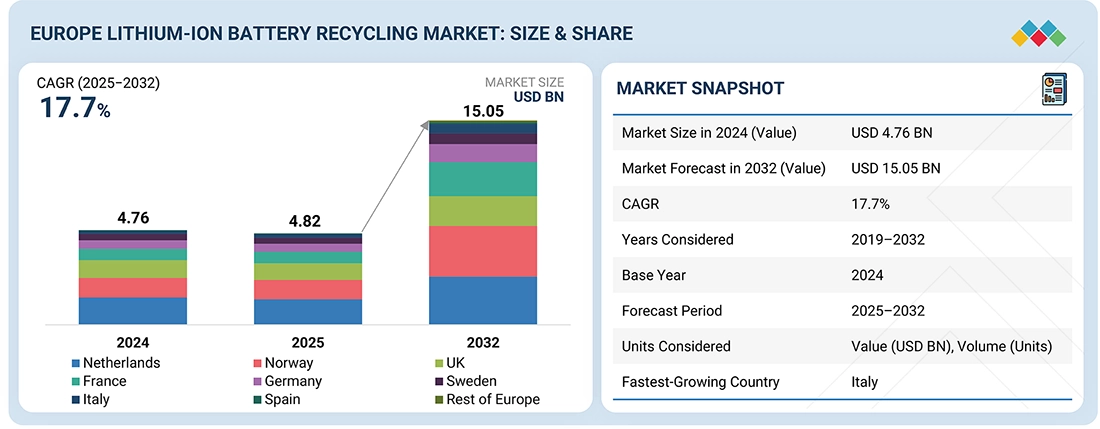
Source: Secondary Research, Interviews with Experts, MarketsandMarkets Analysis
The Europe lithium-ion battery recycling market is projected to grow from USD 4.82 billion in 2025 to USD 15.05 billion by 2032, at a CAGR of 17.7% during the forecast period. The growth of the market in the region is attributed to the increasing adoption of electric vehicles and the installation of battery energy storage systems. This trend is leading to an increase in the number of batteries being recycled from both automotive and non-automotive applications. Europe has a very strict regulatory framework that focuses on producer responsibility, high collection rates, and efficient material recovery, which is consequently speeding up the establishment of recycling infrastructure. At the same time, concerns about the security of supply for essential raw materials, such as lithium, nickel, and cobalt, are making local recycling and closed-loop supply chains more attractive.
KEY TAKEAWAYS
-
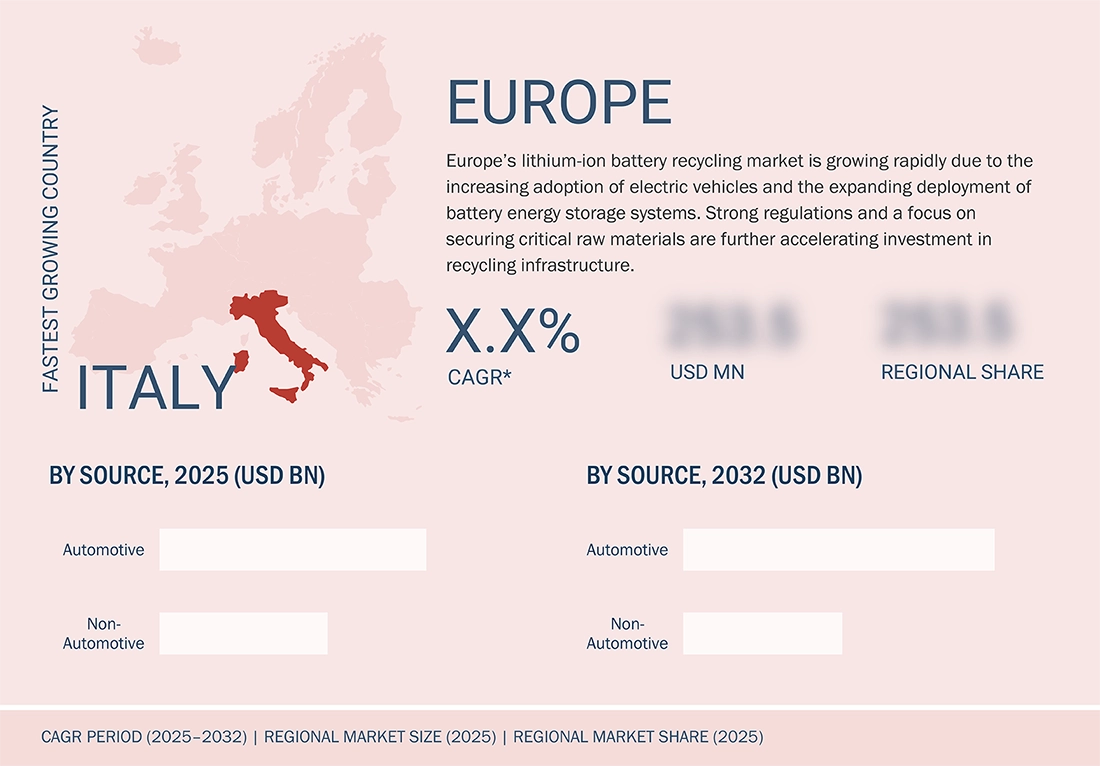
BY COUNTRYItaly is projected to register the highest CAGR of 15.7% in the Europe lithium-ion battery recycling market during the forecast period.
-
BY CHEMISTRYBy chemistry, the lithium nickel manganese cobalt segment accounted for a 56.8% share of the overall market in Europe in 2024.
-
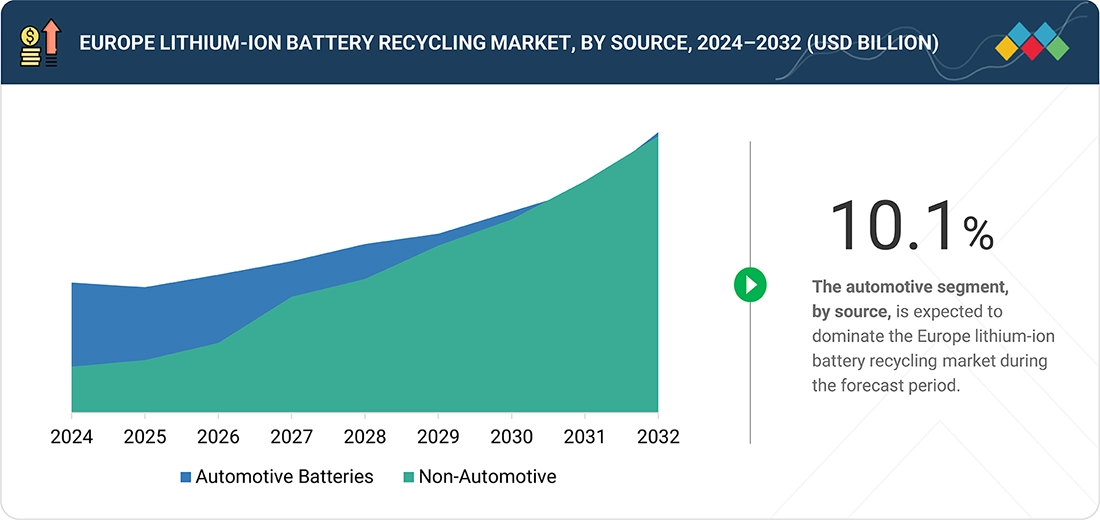
BY SOURCEBy source, the non-automotive segment is expected to register the highest CAGR of 25.1% during the forecast period.
-
BY RECYCLING PROCESSBy recycling process, the hydrometallurgical recycling process is expected to dominate the overall market during the forecast period.
-
BY BATTERY COMPONENTBy battery component, the active material segment is expected to dominate the market.
-
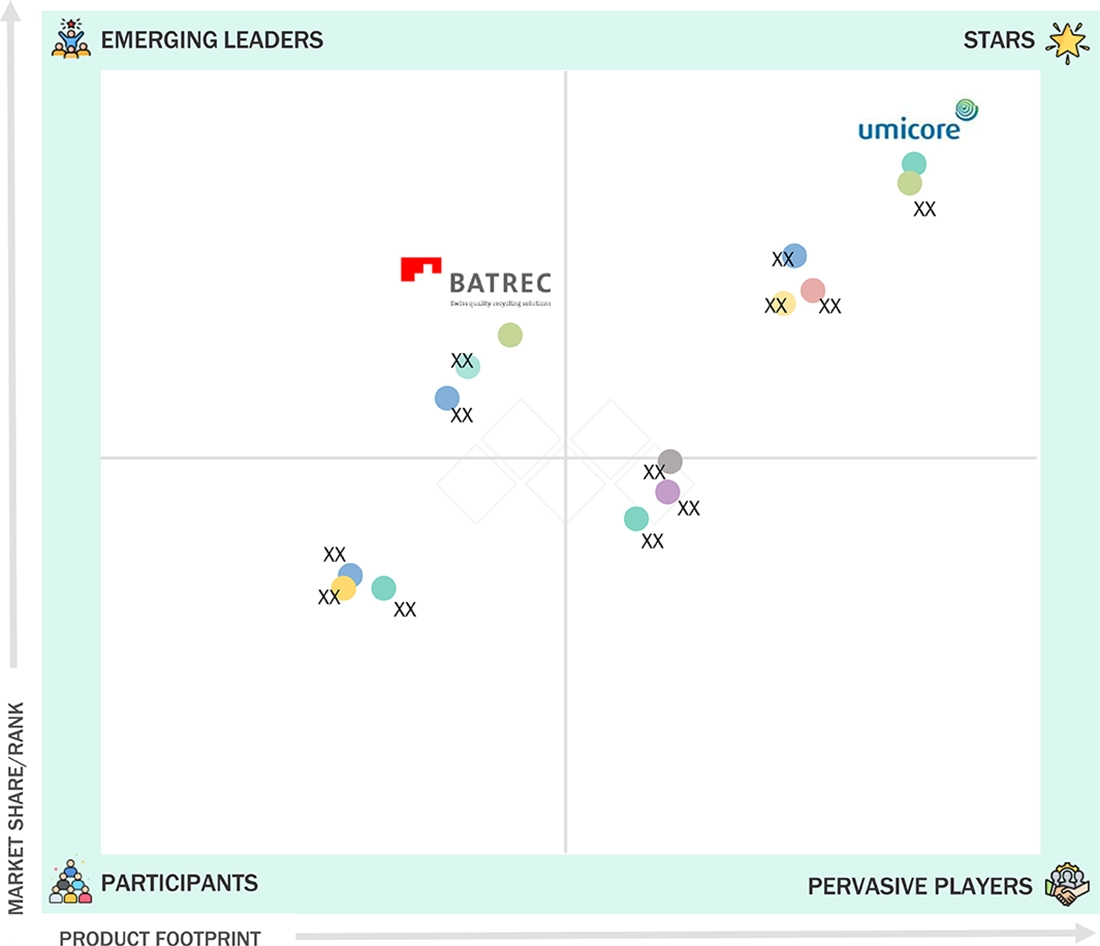
Competitive Landscape - Key PlayersUmicore (Belgium), Fortum (Finland), and Stena Recycling (Sweden) were identified as some of the star players in the Europe lithium-ion battery recycling market, given their strong market share and product footprint.
-
Competitive Landscape - StartupsBatrec Industries, Duesenfeld Gmbh, Euro Dieuze Industrie, and others have distinguished themselves among startups and SMEs by securing strong footholds in specialized niche areas, underscoring their potential as emerging market leaders.
The lithium-ion battery recycling market in Europe is experiencing a rapid growth trend due to the increasing adoption of electric vehicles and the surge in energy storage installations. The increasing volume of spent batteries from various sources is boosting the demand for recycling. The implementation of stringent regulations on battery collection and material recovery is having a significant impact on investments in recycling infrastructure. Moreover, the necessity of obtaining critical raw materials further supports the creation of local and circular supply chains.
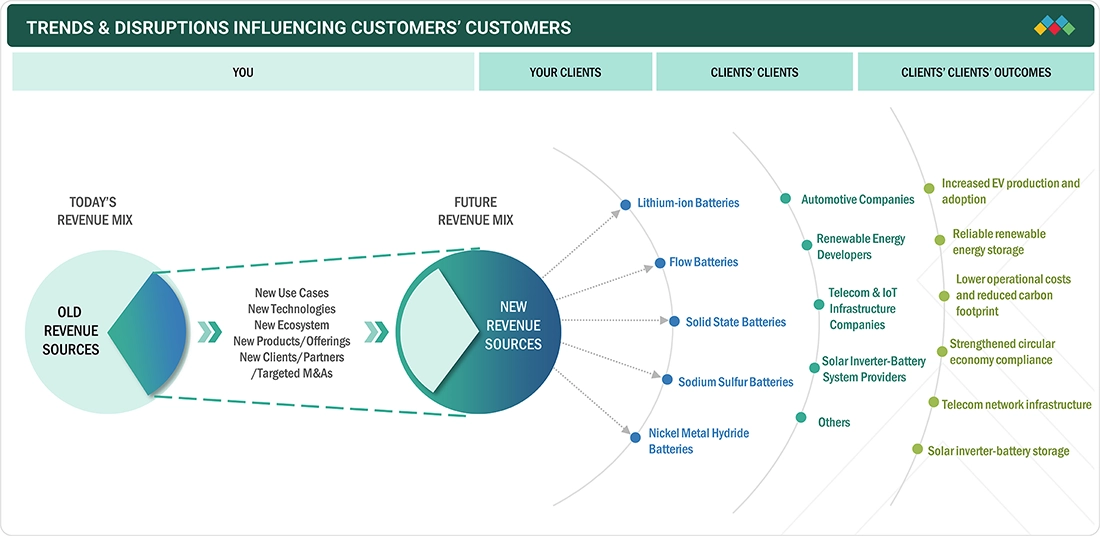
TRENDS & DISRUPTIONS IMPACTING CUSTOMERS' CUSTOMERS
The impact on consumers' businesses arises from evolving customer trends or market disruptions. The growth of end-use industries, such as automotive batteries, industrial batteries, consumer & electronics batteries, energy storage system (ESS) batteries, is fueling the market growth. These megatrends are expected to drive growth and increase the market's revenue.
Source: Secondary Research, Interviews with Experts, MarketsandMarkets Analysis
MARKET DYNAMICS

Level
-
Rapid electric vehicle penetration

-
Growing installation of battery energy storage systems


Level
-
High capital investment requirements for advanced recycling facilities


Level
-
Technological advancements in hydrometallurgical and direct recycling processes


Level
-
Safety and logistics challenges

Source: Secondary Research, Interviews with Experts, MarketsandMarkets Analysis
Driver: Rapid electric vehicle penetration
The rapid adoption of electric vehicles is the primary factor driving the lithium-ion battery recycling market in Europe. The increasing number of EVs sold is directly proportional to the amount of lithium-ion batteries supplied to the market. Additionally, the batteries of first-generation electric vehicles are gradually becoming unserviceable, making the recycling feedstock increasingly significant and dependable. Moreover, the production of electric vehicles is accompanied by large amounts of battery scrap, which also contributes to the demand for recycling. The strict EU laws governing battery collection, recycling efficiency, and producer responsibility are closely linked to the growing EV population. Besides, the gradual shift towards green mobility and the aspiration to have zero carbon emissions in Europe is making it compulsory for manufacturers to consider recycling in their EV value chains.
Restraint: High capital investment requirements for advanced recycling facilities
The requirement for high capital investments in advanced recycling facilities is a major restraint to the growth of the lithium-ion battery recycling market in Europe. The construction of modern recycling plants requires significant initial investment in specialized machinery, safety measures, and compliance with stringent environmental standards. High-end methods, such as hydrometallurgical and direct recycling, also incur significant expenses in the form of operating and technology development costs. Financial difficulties like these can act as a barrier for smaller companies to enter the market and may delay their capacity expansion. Besides, the lack of clarity regarding the availability of short-term battery feedstock can lead to investors' inability to realize quick returns, which in turn becomes another reason that restrains the growth of the market.
Opportunity: Technological advancements in hydrometallurgical and direct recycling processes
Compared to conventional methods, modern hydrometallurgical and direct recycling technologies present the Europe lithium-ion battery recycling market with a remarkable opportunity. These advanced techniques enable the recovery of the highest rates of lithium, nickel, cobalt, and manganese, which are the primary critical materials, while doing so with less energy and a reduced environmental impact, thereby aligning with Europe's sustainability goals. As recycling technology advances, the economics of recycling are expected to improve, making recycling more feasible. Additionally, these breakthroughs offer closed-loop recycling models with high-purity materials that are good for reuse in new batteries and help in establishing Europe’s circular battery value chain.
Challenge: Safety and logistics challenges
The primary obstacle that the lithium-ion battery recycling market in Europe faces is safety and logistics issues. During collection, storage, and transportation processes, used lithium-ion batteries pose risks such as fire, thermal runaway, and leakage. Moreover, there are rigorous rules concerning the disposal and recycling of battery waste, which not only increase the prices but also make the whole process very complicated. Furthermore, the disorganized manner of battery collection in various countries makes it hard to have a transport that is both regular and effective. One of the major challenges that recyclers face in Europe is ensuring that all personnel, packing, and infrastructure are safe, well-trained, and compliant throughout the entire value chain.
EUROPE LITHIUM-ION BATTERY RECYCLING MARKET: COMMERCIAL USE CASES ACROSS INDUSTRIES
| COMPANY | USE CASE DESCRIPTION | BENEFITS |
|---|---|---|
 |
Provides advanced lithium-ion battery recycling using proprietary hydrometallurgical processes to recover cobalt, nickel, lithium, and other critical metals from end-of-life batteries and production scrap, primarily from EV and industrial applications | Enables high recovery rates of critical materials, supports closed-loop battery supply chains, reduces dependence on primary mining, and aligns with EU circular economy and sustainability objectives |
 |
Operates battery recycling solutions focused on safe dismantling, mechanical processing, and hydrometallurgical recovery of valuable materials from electric vehicle and energy storage batteries across Europe | Improves material circularity, ensures safe handling of high-voltage batteries, lowers environmental impact, and strengthens Europe’s domestic supply of critical battery materials |
 |
Offers comprehensive battery recycling services, including collection, sorting, pre-treatment, and material recovery for lithium-ion batteries from automotive, industrial, and consumer electronics sectors | Enhances efficient battery waste management, increases recovery of metals and secondary raw materials, reduces landfill disposal, and supports compliance with EU battery and waste regulations |
 |
Specializes in thermal and mechanical treatment of lithium-ion batteries and battery scrap, followed by material separation and recovery for reuse in industrial supply chains | Ensures safe and compliant recycling, recovers valuable metals, reduces hazardous waste risks, and supports sustainable material reuse within Europe’s battery ecosystem |
 |
Provides recycling and refined-material recovery solutions for lithium-ion and lead-acid batteries used in automotive, energy storage, and industrial applications by utilizing advanced metallurgical processes | Strengthens closed-loop recycling, improves raw-material recovery efficiency, reduces reliance on imported critical minerals, and supports sustainable battery manufacturing across Europe |
Logos and trademarks shown above are the property of their respective owners. Their use here is for informational and illustrative purposes only.
MARKET ECOSYSTEM
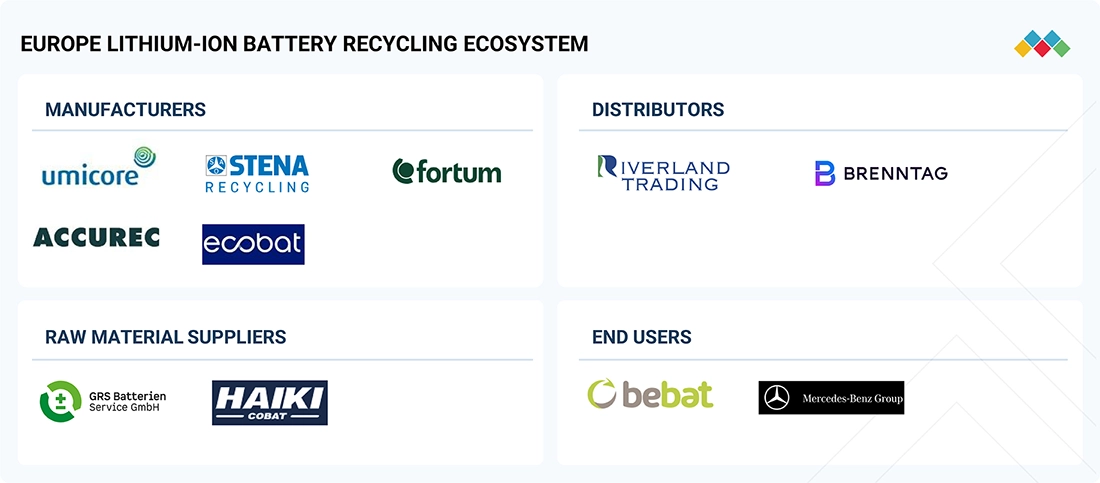
The Europe lithium-ion battery recycling ecosystem consists of raw material suppliers (e.g., GRS Batterien, Haiki Cobalt, and others), producers (e.g., Umicore, Fortum, Stena Recycling, and others), distributors (e.g., Brenntag N.V., Riverland Trading), and end users (e.g., Bebat, Mercedes-Benz Group, and others).
Logos and trademarks shown above are the property of their respective owners. Their use here is for informational and illustrative purposes only.
MARKET SEGMENTS
Source: Secondary Research, Interviews with Experts, MarketsandMarkets Analysis
Europe Lithium-ion Battery Recycling Market, By Chemistry
The lithium nickel cobalt aluminum oxide (NCA) battery segment is projected to register the highest growth in the lithium-ion battery recycling market, primarily due to its extensive application in electric vehicles. The significant presence of valuable metals, nickel and cobalt renders NCA batteries an economically attractive option to recyclers. The growth in electric vehicle sales in Europe is accompanied by a corresponding increase in the amount of NCA battery waste from the production process and from the disposal of old vehicles. At the same time, government programs focused on the retrieval of vital raw materials and the curtailment of the mining of new supplies are helping to create a stronger demand for NCA recycling. In addition, advancements in hydrometallurgical recycling technology are leading to more efficient recovery, thereby making a positive contribution to the segment's growth.
Europe Lithium-ion Battery Recycling Market, By Source
The non-automotive source, driven by the increasing adoption of batteries in different sectors, is projected to be the fastest-growing segment in the lithium-ion battery recycling market. Industrial devices, power systems, electrification, and electronic gadgets are among the sectors where lithium-ion batteries are increasingly used, resulting in a larger number of end-of-life units. In the power sector, the growing installation of energy storage systems for grid balancing, solar and wind power integration, and backup power is also contributing to a larger future recycling stream. More frequent battery replacements in industrial and marine applications are speeding up the release of used batteries. Thus, the rising demand for the extraction of crucial materials like lithium, nickel, and cobalt is fueling the expansion of the market in the non-automotive segment.
REGION
Italy to be fastest-growing country in Europe lithium-ion battery recycling market during forecast period
The Italian lithium-ion battery recycling market in Europe is anticipated to witness the highest growth rate due to the rapid adoption of electric vehicles and the growing demand for energy storage systems throughout the country. Italy will see a larger volume of consumed lithium-ion batteries due to the increased sales of EVs and the higher number of battery energy storage projects installed. Moreover, Italy's high adherence to EU battery regulations and sustainability goals is providing a strong indication of the need for building recycling infrastructures and collection systems required for such investments. Italy is also determined to strengthen its circular economy and reduce the use of imported critical raw materials, which are key factors driving the recycling industry. Overall, the power plants, industries, and consumer electronics sectors are all utilizing more batteries, which in turn means that more spent batteries are available for recycling, thereby supporting market growth.
EUROPE LITHIUM-ION BATTERY RECYCLING MARKET: COMPANY EVALUATION MATRIX
In the Europe lithium-ion battery recycling market matrix, Umicore (Star) leads with its integrated supply chain to maximize market reach and product diversification. Players under the Stars category primarily focus on new service & technology launches, as well as acquiring leading market positions through the provision of broad portfolios, catering to the different requirements of customers. They are also focused on innovations and are geographically diversified. They also have broad industry coverage. Apart from that, they possess strong operational and financial strength, endeavoring to grow both organically and inorganically in the market. Batrec Industries AG (Emerging Leader) has strong potential to develop effective strategies for business expansion and stay competitive with the star players. However, emerging leaders have not adopted effective growth strategies for their overall business.
Source: Secondary Research, Interviews with Experts, MarketsandMarkets Analysis
KEY MARKET PLAYERS
- Umicore (Belgium)
- Fortum (Finland)
- Stena Recycling (Sweden)
- ACCUREC Recycling GmbH (Germany)
- Ecobat (UK)
- GEM Co., Ltd. (China)
- Glencore (Switzerland)
- Sk Tes (Singapore)
- Contemporary Amperex Technology Co., Limited (CATL) (China)
- Batrec Industrie (Switzerland)
- Duesenfeld Gmbh (Germany)
- Euro Dieuze Industrie (E.D.I.) (France)
MARKET SCOPE
| REPORT METRIC | DETAILS |
|---|---|
| Market Size in 2024 (Value) | USD 4.76 BN |
| Market Forecast in 2032 (Value) | USD 15.05 BN |
| CAGR (2025–2030) | 17.7% |
| Years Considered | 2019–2032 |
| Base Year | 2024 |
| Forecast Period | 2025–2032 |
| Units Considered | Value (USD Billion) |
| Report Coverage | Revenue forecast, competitive landscape, growth factors, and trends |
| Segments Covered |
|
| Countries Covered | US, Canada, and Mexico |
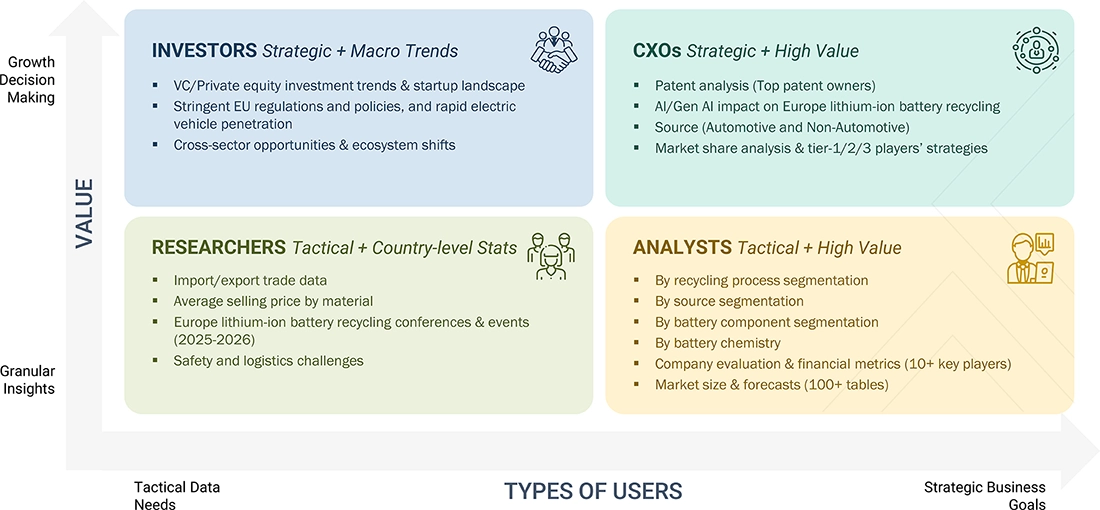
WHAT IS IN IT FOR YOU: EUROPE LITHIUM-ION BATTERY RECYCLING MARKET REPORT CONTENT GUIDE
DELIVERED CUSTOMIZATIONS
We have successfully delivered the following deep-dive customizations:
| CLIENT REQUEST | CUSTOMIZATION DELIVERED | VALUE ADDS |
|---|---|---|
| Support in planning end-of-life EV battery recovery and compliance with EU Battery Regulation | We analyzed EV retirement timelines across major European markets, assessed chemistry-wise recycling economics, and designed optimized reverse-logistics networks aligned with cross-border transport rules. We mapped EU Battery Regulation, WEEE, and national compliance requirements, and benchmarked hydrometallurgical and direct recycling technologies to support OEM take-back strategies. | This enabled OEMs and battery manufacturers to secure critical raw materials through closed-loop systems, reduce supply-chain dependency, and meet EU compliance and sustainability targets while lowering long-term material costs. |
| Optimize recycling of gigafactory production scrap and assess in-house vs. third-party recycling | We assessed production scrap generation from European gigafactories, modeled black-mass volumes by chemistry, and compared the economics of on-site preprocessing versus outsourcing to certified EU recyclers. We also evaluated eligibility for EU-level and national funding programs supporting domestic battery material recovery. | Clients reduced waste-handling expenses, improved recovery yields, and strengthened eligibility for EU and national incentives, supporting resilient and sustainable battery manufacturing in Europe. |
| Improve safe collection, handling, and recycling of small-format lithium-ion batteries | We evaluated pan-European collection networks, safe disassembly and transport procedures, and revenue potential from cobalt- and nickel-rich battery chemistries. We conducted regulatory compliance assessments covering ADR transport, waste shipment, and export regulations. | Clients enhanced recycling margins, minimized safety and transport risks, and improved compliance with EU battery, waste, and hazardous-material regulations. |
| Evaluate end-of-life pathways and second-life potential for battery energy storage systems (ESS) | We modeled ESS retirement cycles across utility, commercial, and residential applications, compared second-life reuse with direct recycling pathways, and evaluated compliance with European safety and performance standards. We provided market insights to support long-term planning for future ESS recycling volumes. | Clients identified cost-effective second-life opportunities, extended asset value, and ensured regulatory compliance while preparing for the upcoming surge in EV and ESS battery retirements. |
RECENT DEVELOPMENTS
- January 2024 : Stena Recycling and BASF partnered to enhance the services for European OEM customers. Stena Recycling will handle the collection, assessment, and pretreatment of end-of-life batteries and battery production scrap to produce black mass in Halmstad, Sweden.
- February 2023 : Ecobat signed a strategic partnership with Tevva, a British electric vehicle manufacturer, for the repair, repurpose, and recycling of lithium-ion batteries. The partnership started with a 12-month pilot for battery handling and repair, with an opportunity to expand into repurposing and recycling.
- April 2022 : Umicore signed a long-term strategic supply agreement with Automotive Cells Company (ACC) for battery recycling services. At the end of the Umicore recycling process, the recovered metals are delivered to the ACC pilot plant in Nersac, France, in battery-grade quality, allowing them to be recirculated to produce new Li-ion batteries.
Table of Contents
 Exclusive indicates content/data unique to MarketsandMarkets and not available with any competitors.
Methodology
The study involved four major activities in estimating the current size of the Asia Pacific lithium-ion battery recycling market. Exhaustive secondary research was done to collect information on the market, peer markets, and parent market. The next step was to validate these findings, assumptions, and sizing with the industry experts across the Asia Pacific lithium-ion battery recycling value chain through primary research. Both top-down and bottom-up approaches were employed to estimate the complete market size. Thereafter, market breakdown and data triangulation were used to estimate the market size of segments and subsegments.
Secondary Research
Secondary sources for this research study include annual reports, press releases, and investor presentations of companies; white papers; certified publications; and articles by recognized authors; gold- and silver-standard websites; Asia Pacific lithium-ion battery recycling manufacturing companies, regulatory bodies, trade directories, and databases. The secondary research was mainly used to obtain key information about the industry’s supply chain, the total pool of key players, market classification, and segmentation according to industry trends to the bottom-most level and regional markets. It has also been used to obtain information about key developments from a market-oriented perspective.
Primary Research
The Asia Pacific lithium-ion battery recycling market comprises several stakeholders, such as such as raw material suppliers, technology support providers, lithium-ion battery recyclers, and regulatory organizations in the supply chain. Various primary sources from both the supply and demand sides of the market were interviewed to obtain qualitative and quantitative information. Primary sources from the supply side included industry experts such as Chief Executive Officers (CEOs), vice presidents, marketing directors, technology and innovation directors, and related key executives from various key companies and organizations operating in the Asia Pacific lithium-ion battery recycling market. Primary sources from the demand side included directors, marketing heads, and purchase managers from various sourcing industries. Following is the breakdown of the primary respondents:
Market Size Estimation
Both the top-down and bottom-up approaches have been used to estimate and validate the total size of the Asia Pacific lithium-ion battery recycling market. These approaches have also been used extensively to estimate the size of various dependent subsegments of the market. The research methodology used to estimate the market size included the following:
The following segments provide details about the overall market size estimation process employed in this study
- The key players in the market were identified through secondary research.
- The market shares in the respective regions were identified through primary and secondary research.
- The value chain and market size of the Asia Pacific lithium-ion battery recycling market, in terms of value, were determined through primary and secondary research.
- All percentage shares, splits, and breakdowns were determined using secondary sources and verified through primary sources.
- All possible parameters that affect the market covered in this research study were accounted for, viewed in extensive detail, verified through primary research, and analyzed to obtain the final quantitative and qualitative data.
- The research included the study of annual and financial reports of the top market players and interviews with industry experts, such as CEOs, VPs, directors, sales managers, and marketing executives, for key insights, both quantitative and qualitative.
Data Triangulation
After arriving at the overall market size using the market size estimation processes as explained above, the market was split into several segments and sub-segments. To complete the overall market engineering process and arrive at the exact statistics of each market segment and subsegment, the data triangulation and market breakdown procedures were employed, wherever applicable. The data was triangulated by studying various factors and trends from both the demand and supply sides in the oil & gas sector.
Market Definition
Lithium-ion battery recycling refers to the reuse and reprocessing of spent lithium-ion batteries to reduce their disposal as municipal solid waste or material waste. Lithium-ion batteries contain several toxic chemicals & heavy metals and disposing of them as trash has raised environmental and health concerns due to water pollution and soil contamination. Lithium-ion battery recycling is important not only for the recovery of valuable materials and metals but also for efficient waste management. Various types of lithium-ion batteries are available in the market, including lithium-titanate oxide (LTO), lithium-manganese oxide (LMO), lithium-iron phosphate (LFP), lithium-nickel cobalt aluminum oxide (NCA), and lithium-nickel manganese cobalt (Li-NMC). These batteries are majorly used in the automotive and non-automotive industries such as marine, power, industrial, and others. Li-ion batteries provide the required amount of power at a low cost and help reduce the weight and size of products, which are the major factors leading to the market growth. The rising demand for Li-ion batteries in electric vehicles is expected to lead to the growth of the asia pacific lithium-ion battery recycling market during the forecast period.
Key Stakeholders
- Raw material manufacturers
- Technology support providers
- Recyclers of Lithium-ion battery
- Traders, distributors, and suppliers
- Regulatory Bodies and Government Agencies
- Research & Development (R&D) Institutions
- End-use Industries
- Consulting Firms, Trade Associations, and Industry Bodies
- Investment Banks and Private Equity Firms
Report Objectives
- To analyze and forecast the market size of Asia Pacific lithium-ion battery recycling market in terms of value
- To provide detailed information regarding the major factors (drivers, restraints, challenges, and opportunities) influencing the regional market
- To analyze and forecast the Asia Pacific lithium-ion battery recycling market on the basis of battery chemistry, source, recycling process, battery component, and region
- To analyze the opportunities in the market for stakeholders and provide details of a competitive landscape for market leaders
- To track and analyze the competitive developments, such as acquisitions, partnerships, collaborations, agreements and expansions in the market
- To strategically profile the key players and comprehensively analyze their market shares and core competencies
Available Customizations
With the given market data, MarketsandMarkets offers customizations according to the client-specific needs.
The following customization options are available for the report:
- Additional country-level analysis of the Asia Pacific lithium-ion battery recycling market
- Profiling of additional market players (up to 5)
Product Analysis
- Product matrix, which gives a detailed comparison of the product portfolio of each company.


Personalize This Research
- Triangulate with your Own Data
- Get Data as per your Format and Definition
- Gain a Deeper Dive on a Specific Application, Geography, Customer or Competitor
- Any level of Personalization
Let Us Help You
- What are the Known and Unknown Adjacencies Impacting the Europe Lithium-ion Battery Recycling Market
- What will your New Revenue Sources be?
- Who will be your Top Customer; what will make them switch?
- Defend your Market Share or Win Competitors
- Get a Scorecard for Target Partners

Custom Market Research Services
We Will Customise The Research For You, In Case The Report Listed Above Does Not Meet With Your Requirements
Get 10% Free CustomisationTESTIMONIALS
We at Nissan Chemicals Corporation have been clients of MarketsandMarkets for more than a year now. We recently consulted MarketsandMarkets for a study, the team at MarketsandMarkets was extremely professional and organized. The business insights were very detailed and aligned well with our expectations that really helped us formulate the Business Plans and device new strategies for development themes. MarketsandMarkets offers a unique combination of expertise and dedicated engagement model. Their research findings have helped us in designing our Pricing Strategy which will make it easier for us to predict the future sales and profits for the next ten years. We look forward to working with MarketsandMarkets in the future.
VP of Strategy & New Business Development
Leading Specialty Chemical Company
The MarketsandMarkets Engagement Model, composed of both the Knowledge Store and advisory custom research, has greatly helped us in understanding our markets and making strategic decisions. The Knowledge Store is a fast way to allow everyone in our organization to understand more about most any market they are interested in. The ability to then get custom research done and get answers to specific strategic questions and market insight has been spectacular. The Markets and Markets team feel more like colleagues than vendors and their services have helped us change our culture where statements of things like growth opportunities and competitive position are always backed by industry research.

Rich Gibson,
Director, Corporate Strategy
Milliken & Company,
Leading Industrial Manufacturer of specialty chemical, floor covering, performance and protective textile materials, and healthcaremilliken.com
MarketsandMarkets is a trusted resource that helps us to better understand markets that are near-adjacencies-whether its technology, value chain or geography. Their Knowledge Store platform provides a dashboard of markets and their characteristics which is easy to use and saves us time.
Adam Shaw,
Market Development and Strategy Manager
AdvanSix Inc. USA,
An American Leader in Chemicalswww.advansix.com
The Knowledge Store from MarketsandMarkets is a valuable tool which has helped my team acquire greater insight in to the end markets that our business serves. This has enabled us to help our company build stronger strategies throughout our planning process.
TOSHIO KINOSHITA
Senior Chif Consultion Research & Consulting Division
Mitsubishi Chemical Research Corporation,
Leading Manufacturer of Chemical Productswww.mitsubishichem-res.co.jp/en/

We recently engaged with MarketsandMarkets for a study, the team not only clearly understood our business objectives but was also extremely professional in the way they handled the entire project. The study was efficiently conducted in a phase-wise manner, and the engagement model furnished us with high-quality business insights that far exceeded our expectations at each phase. We were especially happy that MarketsandMarkets could provide us with both, an English as well as a Japanese version of the study. A special thanks to the Analyst Team and Client Services Team, whose fluency in Japanese enhanced our comfort level, as we could converse with them in our preferred language.
Independent entrepreneurs
Arrow Precision
We approached MarketsandMarkets for study on Proppants Market, and their work exceeded our expectations. The study conducted was comprehensive and enabled us to view the market through the various dimensions. In addition, the team was extraordinarily responsive throughout the process and resolved our queries on time. I strongly recommend MarketsandMarkets and will certainly consider them for additional market assessments we will need in the future.
Global engineering company, Japan
Deputy Manager,
Strategic Planning OfficeThe high-quality insights shared by the MarketsandMarkets team helped us understand the pharmaceutical plant designers in a specific geography. It also captured the risks that we may likely face in communicating with our potential partners. The study would enable us identify partners, which would impact our future growth.






Growth opportunities and latent adjacency in Europe Lithium-ion Battery Recycling Market