Europe Peritoneal Dialysis Market Size, Growth, Share & Trends Analysis

Europe Peritoneal Dialysis Market by Offering (Peritoneal Dialysis Solution Bags, Machines), Modality (Continuous Ambulatory Peritoneal Dialysis (CAPD)), Disease Indication (End-Stage Renal Disease), End User (Hospitals): Forecast to 2031




OVERVIEW
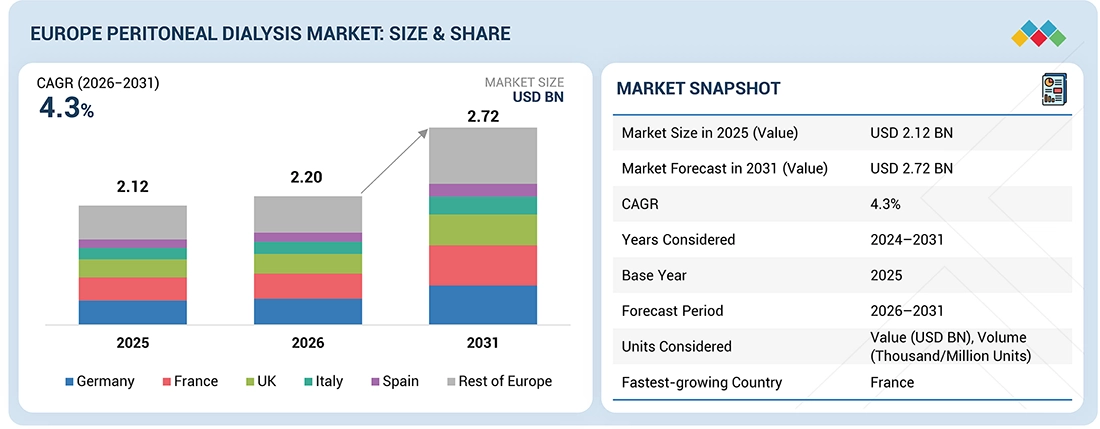
Source: Secondary Research, Interviews with Experts, MarketsandMarkets Analysis
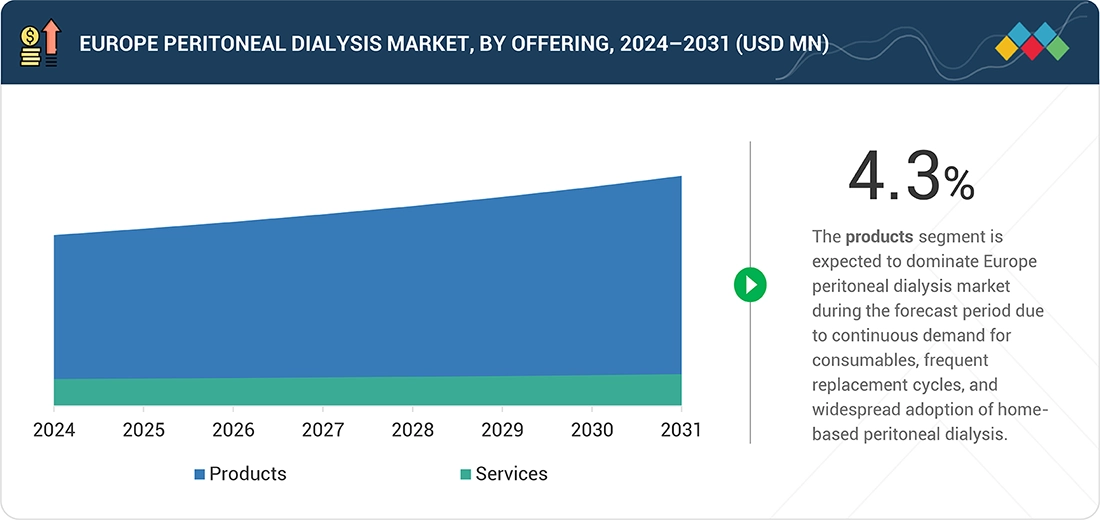
The Europe peritoneal dialysis market, valued at USD 2.12 billion in 2025, stood at USD 2.20 billion in 2026 and is projected to advance at a resilient CAGR of 4.3% from 2026 to 2031, culminating in a forecasted valuation of USD 2.72 billion by the end of the period. The market is driven by several factors, such as increasing prevalence of chronic kidney-related diseases, strong demand for home-based dialysis, favorable reimbursement policies, and advancements in automated peritoneal dialysis (PD) systems and remote monitoring technologies. However, market growth is hindered by varying degrees of acceptance across different countries, limited awareness of PD among patients and clinicians, risks associated with peritonitis, and training issues related to catheter placement and home-care support. On the other hand, opportunities arise through the growth of telehealth-enabled PD management, governmental campaigns supporting home therapies, increased funding for projects promoting digital health integration, and technological advancements enhancing safety, adherence, and personalization in treatment. All these factors collectively contribute to the sustainable growth of the Europe eritoneal dialysis market.
KEY TAKEAWAYS
-
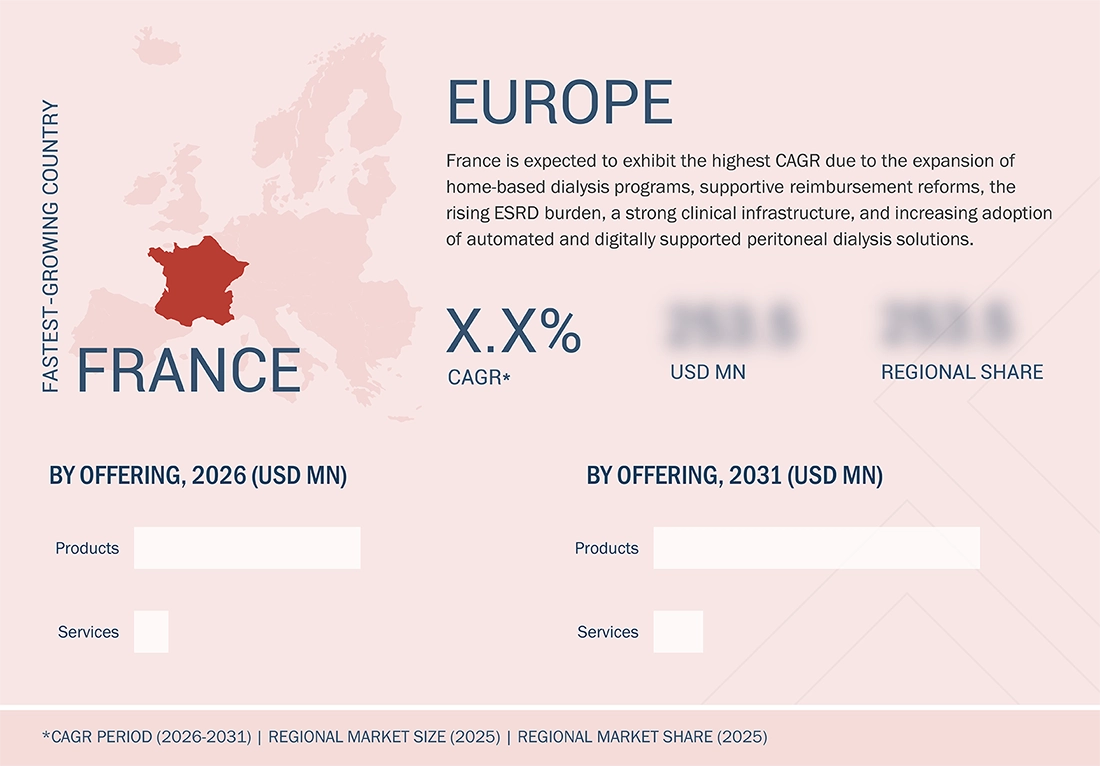
BY REGIONFrance is expected to register the highest CAGR of 5.2% from 2026 to 2031.
-
BY OFFERINGBy offerings, the products segment dominated the market in 2025, accounting for a share of 86.6%.
-
BY PRODUCTBy poduct, the peritoneal dialysis solution bags segment dominated the market, with a share of 48.1% in 2025.
-
BY MODALITYBy modality, automated peritoneal dialysis is expected to be the fastest-growing segment during the forecast period.
-
BY DISEASE INDICATIONBy disease indication, the end-stage renal disease segment dominated the market, with a share of 53.9% in 2025.
-
BY END USERBy end user, the home care segment is expected to register the highest CAGR of 4.6% during the forecast period.
-
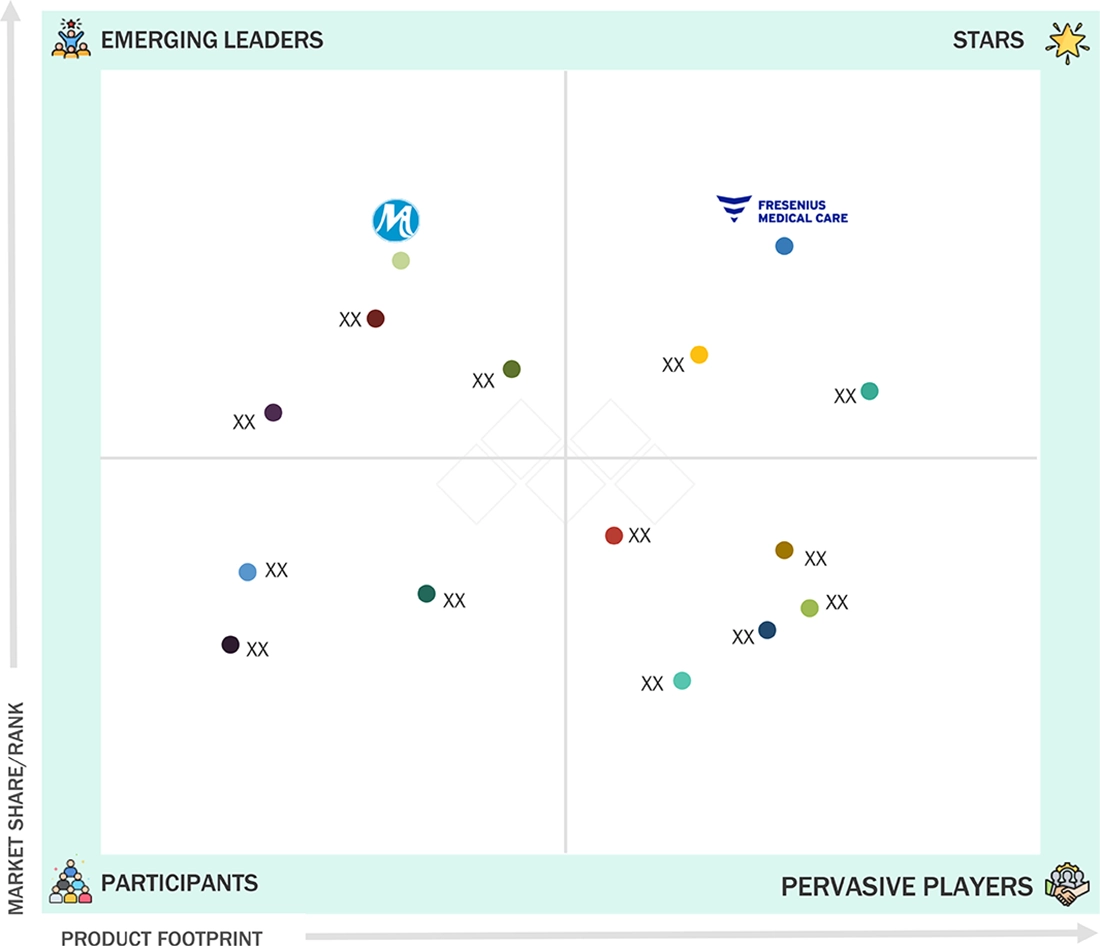
COMPETITIVE LANDSCAPE - KEY PLAYERSFresenius Medical Care AG, Vantiva Health LLC, and Davita Inc. were identified as Star players in the Europe peritoneal dialysis market, as they have focused on innovation, have broad industry coverage, and have strong operational and financial strength.
-
COMPETITIVE LANDSCAPE - STARTUPSSeisa Media, MCRA llc, Veranex distinguished themselves among startups and SMEs due to their strong product portfolio and business strategy.
Growth of the Europe peritoneal dialysis market is expected to be driven by the rising prevalence of chronic kidney disease, increasing preference for home-based dialysis, broader reimbursement coverage, and the adoption of automated PD systems with remote monitoring capabilities. However, market expansion is constrained by uneven adoption rates, limited awareness of PD therapy, infection-related risks, and the need for trained healthcare professionals to support patients. At the same time, opportunities are emerging through stronger telehealth infrastructure, government support for home-based therapies, and product innovations that enhance patient safety and treatment adherence, collectively supporting sustained market growth across the region.
TRENDS & DISRUPTIONS IMPACTING CUSTOMERS' CUSTOMERS
The gradual development took place in the Europe peritoneal dialysis market as a consequence of the rising instances of chronic kidney diseases and end-stage renal disease. It is primarily caused by the increasing need for home treatment, and thus requires flexible, patient-centered forms of dialysis. More progressive healthcare providers recommend PD as the quality of life improves, infection control is enhanced, and nephrology practices are aligned with EU standards for patient safety. Automated peritoneal dialysis systems, digital monitoring, and catheter technologies, further popularized by expansive home care programs and telemedicine, improve access and convenience. Emerging clinician expertise and patient training initiatives also promote the use of PD. Ultimately, these manufacturers will need to develop advanced, reliable, straightforward, and user-friendly PD solutions that ensure comfort, safety, and long-term adherence.
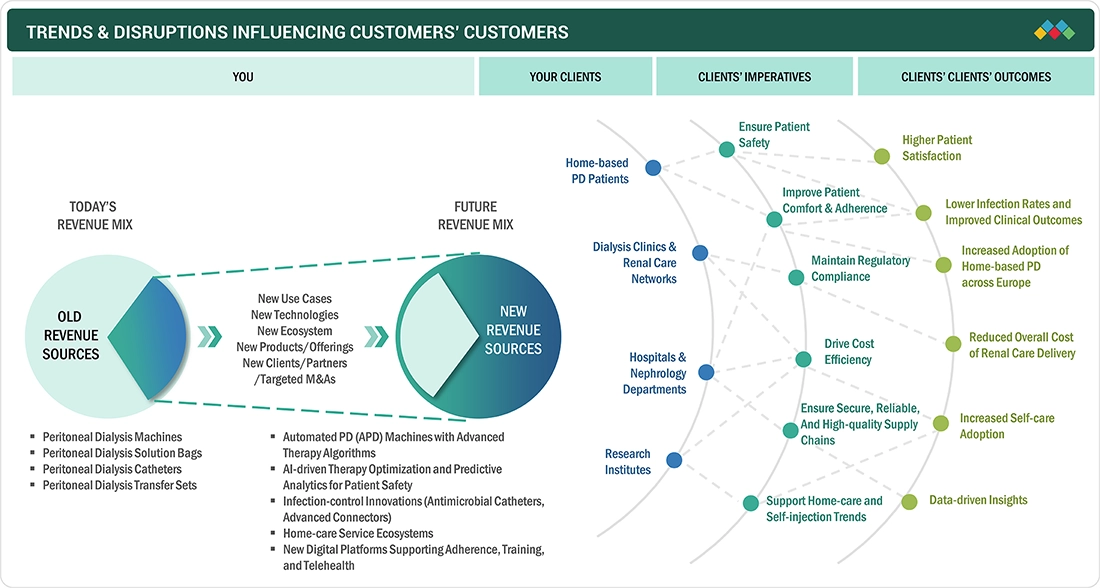
Source: Secondary Research, Interviews with Experts, MarketsandMarkets Analysis
MARKET DYNAMICS

Level
-
Rising prevalence of CKD and ESRD across Europe

-
Strong push toward home-based dialysis to reduce hospital burden


Level
-
Limited awareness among patients and clinicians regarding dialysis compared to hemodialysis

-
Higher risk of peritonitis and complications


Level
-
Expansion of telehealth-enabled PD monitoring

-
Growth potential in Eastern Europe


Level
-
Regulatory variability across EU markets

-
Workforce shortages in nephrology impacting training quality

Source: Secondary Research, Interviews with Experts, MarketsandMarkets Analysis
Driver: Strong push toward home-based dialysis to reduce hospital burden
Policy and operational shifts toward home dialysis are accelerating growth in the Europe peritoneal dialysis market. Healthcare systems are encouraging home-based treatment to reduce hospital burden, lower the risk of infection, and minimize transportation costs. At the same time, changes in funding structures and greater integration of telehealth are supporting wider acceptance of peritoneal dialysis among healthcare professionals. In addition, payers focus on cost-effective long-term management of chronic diseases, further driving the adoption of home-based PD across the region.
Restraint: Higher risk of peritonitis and complications
Peritonitis and its complications pose risks for the peritoneal dialysis (PD) market in Europe. Although these issues are becoming less severe, they continue to impact treatment safety, patient trust, and clinical outcomes. Peritonitis often results in hospitalizations and can lead to the discontinuation of PD, pushing patients toward hemodialysis. As a result, clinicians may be hesitant to recommend PD, particularly for older or high-risk patients. Additionally, managing infections increases healthcare costs and requires strict hygiene practices that can be hard for patients to follow. These factors contribute to the limited use of PD, despite the potential for future improvements in home care technology.
Opportunity: Expansion of telehealth-enabled PD monitoring
The introduction of telehealth for PD monitoring is a huge opportunity for an improved Europe peritoneal dialysis market with respect to treatment oversight, safety of patients, and adherence to therapy. Remote patient monitoring systems enable clinicians to track daily fluid volumes and the pre-symptomatic development of complications directly from the clinic, providing timely detection of complications and avoidance of unnecessary hospital visits. This also favors the transition to home dialysis and reduces the burden on dialysis centers. Applying telehealth systems boosts patients' confidence, especially those over 60 years old or those newly trained, with continued virtual support. The increased adoption of telehealth by European health systems realigns the paradigm through which PD implementation takes place, promoting the acceptance of telehealth formats and strengthening its long-term effects.
Challenge: Regulatory variability across EU markets
The hurdles for peritoneal dialysis products in the Europe market derived from international regulatory discrepancies are enormous: Manufacturers have to deal with different approvals, safety considerations, and compliance standards for each individual country. Such discrepancies result in longer product development lead times, higher operational costs, or problems with standardization. The existence of differing reimbursement frameworks further contributes to the decrease in adoption rates and creates barriers for manufacturers concerning pricing strategies, thereby causing uneven market access. This different regulatory environment may impede smaller firms from complying with these requirements and thereby slow down innovation and limit their competitive edge. Changes in policy issues, especially with respect to medical device regulation, digital health integration, and data protection, require adaptations throughout the process and make it increasingly difficult to provide a harmonized PD solution across the region.
EUROPE PERITONEAL DIALYSIS MARKET: COMMERCIAL USE CASES ACROSS INDUSTRIES
| COMPANY | USE CASE DESCRIPTION | BENEFITS |
|---|---|---|
 |
A leading provider of APD machines, PD solutions, and integrated care programs. FMC’s Stay Safe and Sleep Safe systems are widely used across Europe, supported by strong clinical training and extensive renal care networks | Delivers reliable therapy outcomes, reduces infection risk through advanced connectors, and ensures high treatment consistency | Strong digital capabilities enhance monitoring, patient safety, and adherence |
 |
Offers a comprehensive PD portfolio including APD machines (e.g., HomeChoice Claria), CAPD solutions, and patient support services. Long-established partnerships with European dialysis centers enable wide adoption | Provides user-friendly devices, consistent solution quality, and strong service support, improving continuity of care | Enhances home-dialysis accessibility and patient comfort |
 |
Specializes in PD catheters, tubing sets, and consumables engineered to reduce complications while improving access reliability | Supports safe catheter insertion and long-term functionality |Reduces peritonitis risk | Improves therapy outcomes in both hospitals and home settings |
 |
A major supplier of peritoneal access devices and catheter technologies designed for minimally invasive insertion and reduced patient discomfort | Ensures smoother access procedures | Minimizes complications | Supports broader PD adoption by improving clinician efficiency and patient tolerance |
 |
Provide cost-effective PD disposables, fluid bags, connectors, and OEM sets tailored to local procurement and healthcare system needs | Enhances supply reliability | Supports budget-conscious hospitals | Expands PD therapy availability, especially in cost-sensitive markets |
Logos and trademarks shown above are the property of their respective owners. Their use here is for informational and illustrative purposes only.
MARKET ECOSYSTEM
Before PD solutions and devices reach European patients, they will have crossed a long ecosystem of manufacturers, distributors, renal clinics, and tech innovators. Manufacturers are concerned with developing PD machines, catheters, and consumables that meet stringent EU regulations on safety, reliability, and infection control. The increasing application of digital health platforms aids remote monitoring and therapy management. Hospitals, dialysis networks, and home care providers assume important roles in procurement and delivery. Research and development efforts in PD access devices, automated systems, and antimicrobial technologies are led by laboratory personnel and clinical collaborators. The final approval will be made by regulatory authorities and reimbursement systems, which will ultimately determine how pricing, access, and adoption occur; thus, these factors will define the overall dynamics of the European market for PD.
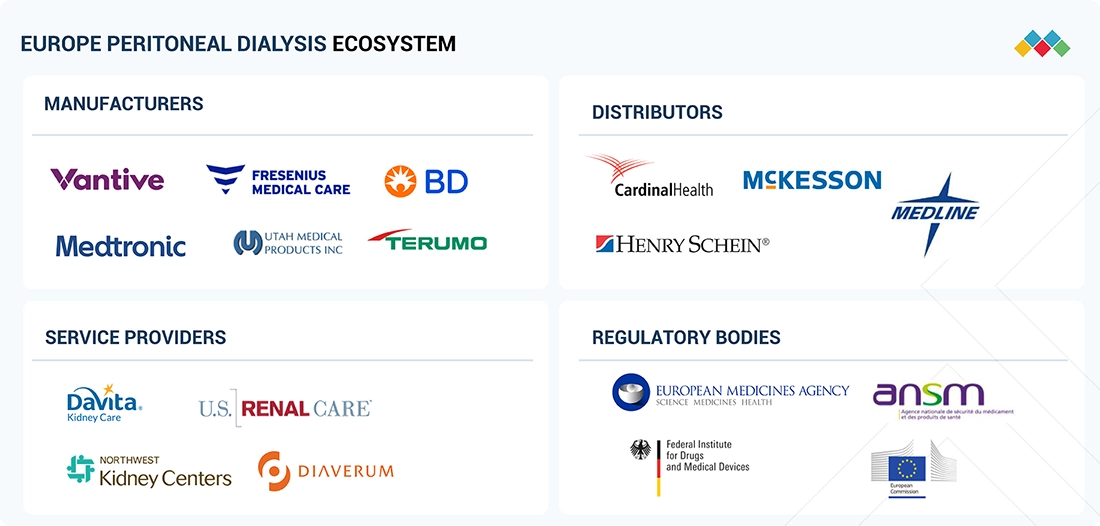
Logos and trademarks shown above are the property of their respective owners. Their use here is for informational and illustrative purposes only.
MARKET SEGMENTS
Source: Secondary Research, Interviews with Experts, MarketsandMarkets Analysis
Europe Peritoneal Dialysis Market, By Product
Peritoneal dialysis (PD) solution bags hold a significant share of the market because they are essential for every exchange in a peritoneal dialysis cycle, creating a continuous high-demand consumption cycle. Among the various product segments, both Continuous Ambulatory Peritoneal Dialysis (CAPD) and Automated Peritoneal Dialysis (APD) solutions are the most frequently purchased. The recurring use of these solution bags leads to demand that is considerably higher each year compared to devices or accessories. Furthermore, due to the strict quality requirements for these solution bags, along with the rising statistics on End-Stage Renal Disease (ESRD) and the increasing adoption of home-based PD, it is likely that these products will continue to be the primary revenue-generating segments in the market.
Europe Peritoneal Dialysis Market, By Modality
CAPD holds the largest share of the Europe peritoneal dialysis market, as it is a simple, cost-effective, and accessible peritoneal dialysis modality that requires no automated machine. It is easy to learn and to self-administer, thus inviting use in a larger target population, which includes elderly or unregistered individuals without access to modern devices. Lower capital costs, upfront acquisition, and minimal infrastructure entry barriers favor more widespread dissemination, especially in areas with limited budgets. Strong reimbursement support and clinician familiarity consolidate further CAPD as the more popular method across Europe.
Europe Peritoneal Dialysis Market, By Disease Indication
The ESRD condition captures the largest share of the Europe peritoneal dialysis market because this condition is the main focus of any long-term dialysis treatment. With ever-increasing CKD progression, aging population, and rising rates of diabetes and hypertension, more patients are getting pushed toward ESRD and requiring continuous renal replacement therapy. PD best meets the needs of ESRD patients for its home-based convenience, better quality-of-life outcomes, and sufficient reimbursement support. As ESRD increases across Europe, the market has been primarily driven by demand for uninterrupted long-term PD treatments.
Europe Peritoneal Dialysis Market, By End User
The significant share of the homecare market is largely attributed to peritoneal dialysis being provided at home, which offers patients greater independence, comfort, and flexibility compared to in-center treatments. The growing preference for home-based care is strongly supported by reimbursement policies and national strategies aimed at reducing hospital burdens. Additionally, advancements in automated peritoneal dialysis systems and remote monitoring have made home therapy safer and easier to implement. This not only lowers healthcare costs but also improves patients' quality of life, encouraging clinicians and healthcare systems across Europe to adopt this approach.
REGION
France to be fastest-growing region in Europe peritoneal dialysis market during forecast period
The market in France is expanding the quickest among European countries because the need to improve access to healthcare has driven the adoption of peritoneal dialysis, a home care treatment modality that reduces dependence on hospitals for dialysis treatment. Initiatives by the French government to modernize dialysis facilities and encourage the use of peritoneal dialysis are major determinants influencing growth because they increase support, including support through reimbursement, to use peritoneal dialysis, especially among patients with ESRD, who are required to seek treatment weekly through dialysis, necessitating a flexible treatment option such as peritoneal dialysis.
EUROPE PERITONEAL DIALYSIS MARKET: COMPANY EVALUATION MATRIX
In the Europe peritoneal dialysis market, Fresenius Medical Care AG (Star) has a strong and established product portfolio and a vast geographic presence. Medionics (Emerging Leader) has substantial product innovations compared to its competitors. While it has broad product portfolios, the company lacks a strong growth strategy for business development.
Source: Secondary Research, Interviews with Experts, MarketsandMarkets Analysis
KEY MARKET PLAYERS
- Vantive Health LLC (US)
- Fresenius Medical Care AG (Germany)
- Medtronic plc (Ireland)
- Davita Inc. (US)
- Becton, Dickinson and Company (US)
- Utah Medical Products, Inc. (US)
- Terumo Corporation (Japan)
- Diaverum AB (Sweden)
- Medionics (Canada)
- Newsol Technologies (Canada)
- U.S. Renal Care, Inc. (US)
- Northwest Kidney Centers (US)
- Relavo (US)
- JMS Co., Ltd. (Japan)
- Renax Biomedical Technology Co., Ltd (China)
MARKET SCOPE
| REPORT METRIC | DETAILS |
|---|---|
| Market Size Value in 2025 (Value) | USD 2.12 Billion |
| Marketet Forecast in 2031 (Value) | USD 2.72 Billion |
| Growth Rate | 4.3% |
| Years Considered | 2024–2031 |
| Base Year | 2025 |
| Forecast Period | 2026–2031 |
| Units Considered | Value (USD Billion), Volume (Thousand/Million Units) |
| Report Coverage | Revenue Forecast, Company Ranking, Competitive Landscape, Growth Factors, and Trends |
| Segments Covered |
|
| Country Covered | Germany, France, UK, Spain, Italy, and Rest of Europe |
| Parent & Related Segment Reports | Peritoneal Dialysis Market |
WHAT IS IN IT FOR YOU: EUROPE PERITONEAL DIALYSIS MARKET REPORT CONTENT GUIDE
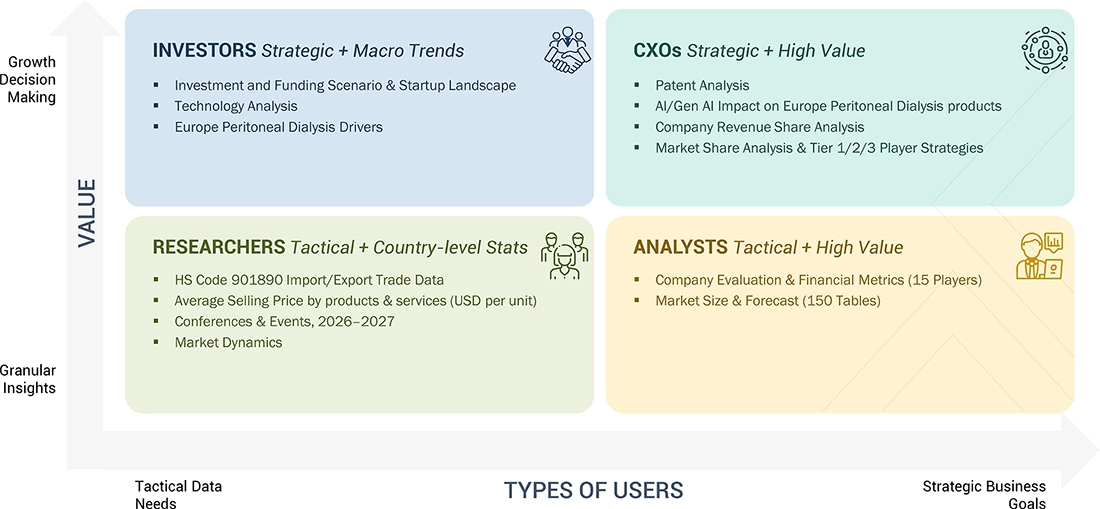
DELIVERED CUSTOMIZATIONS
We have successfully delivered the following deep-dive customizations:
| CLIENT REQUEST | CUSTOMIZATION DELIVERED | VALUE ADDS |
|---|---|---|
| Product Analysis | Comparative assessment of PD modalities (CAPD vs. APD), PD solution bags, APD machines, catheters, connectors, and digital remote-monitoring tools. Evaluation of safety features, infection-control technologies, and usability in home settings | Insights into innovations such as automated therapy algorithms, antimicrobial catheters, advanced connector systems, and telehealth integration that enhance patient safety, adherence, and treatment efficiency |
| Company Information | Detailed profiles of major PD players, including Fresenius Medical Care (Germany), Vantive Health (US), Terumo (Japan), Nipro (Japan), and regional European suppliers, along with their portfolios, strategies, partnerships, and distribution networks | Competitive benchmarking, market share comparisons, and analysis of technology leadership, clinical relationships, and home-care expansion across European markets |
| Geographic Analysis | Regional assessment of key markets in Europe: Germany, France, UK, Italy, Spain, Nordics, and Eastern Europe. Includes ESRD population trends, reimbursement systems, PD adoption levels, and healthcare readiness | Country-level sizing, CAGR forecasts, reimbursement insights, and adoption dynamics, helping identify high-growth markets and strategic opportunities for scaling PD therapies across Europe |
RECENT DEVELOPMENTS
- August 2024 : Baxter International Inc (US) and Carlyle (US) signed a definitive agreement under which Carlyle will acquire Baxter's Kidney Care segment. The segment will be named Vantive, with the aim of creating a standalone kidney care company.
- April 2023 : Medtronic plc (Ireland) and DaVita Inc (US) joined their hands to form Mozarc Medical—an independent new company that aims to reshape kidney health and drive patient-centered technology solutions.
- August 2022 : Fresenius Medical Care AG (Germany) acquired InterWell Health (US), a physician organization that drives innovation in the kidney care space in the US, and Cricket Health. Inc (US), provider of value-based kidney care with patient engagement and data platform.
- February 2021 : Terumo Corporation (Japan) finalized an agreement to acquire Health Outcomes Sciences, Inc. This acquisition will position Terumo as a leader in clinical decision support and predictive analytics, enabling healthcare organizations to receive customized insights at the point of care. These insights aim to improve clinical, patient, and financial outcomes.
- December 2021 : Baxter International Inc (US) acquired all outstanding equity interests of Hill-Rom Holdings, Inc., (US), a global medical technology leader.
Table of Contents
 Exclusive indicates content/data unique to MarketsandMarkets and not available with any competitors.
Methodology
This research study involved the extensive use of both primary and secondary sources. It involved the study of various factors affecting the industry to identify the segmentation types, industry trends, key players, the competitive landscape of market players, and key market dynamics such as drivers, opportunities, challenges, restraints, and key player strategies.
Secondary Research
This research study involved the wide use of secondary sources, directories, databases such as Dun & Bradstreet, Bloomberg Businessweek, and Factiva, white papers, and companies’ house documents. Secondary research was undertaken to identify and collect information for this extensive, technical, market-oriented, and commercial study of the peritoneal dialysismarket. It was also used to obtain important information about the top players, market classification, and segmentation according to industry trends to the bottom-most level, geographic markets, and key developments related to the market. A database of the key industry leaders was also prepared using secondary research.
Primary Research
In the primary research process, various supply side and demand side sources were interviewed to obtain qualitative and quantitative information for this report. Primary sources from the supply side included industry experts such as CEOs, vice presidents, marketing and sales directors, technology & innovation directors, engineers, and related key executives from various companies and organizations operating in the Europe Peritoneal Dialysis Market . Primary sources from the demand side included hospitals, clinics, researchers, lab technicians, purchase managers etc, and stakeholders in corporate & government bodies.
Market Size Estimation
The market size for Europe Peritoneal Dialysis Market was calculated using data from four different sources, as will be discussed below. Each technique concluded and a weighted average of the four ways was calculated based on the number of assumptions each approach made. The market size for Europe Peritoneal Dialysis Market was calculated using data from three distinct sources, as will be discussed below:
Data Triangulation
The entire market was split up into four segments when the market size was determined. Data triangulation and market breakdown processes were used where necessary to complete the entire market engineering process and arrive at the precise statistics for all segments.
Approach to derive the market size and estimate market growth.
Using secondary data from both paid and unpaid sources, the market rankings for the major players were determined following a thorough analysis of their sales of peritoneal dialysis products and services. Due to data restrictions, the revenue share in certain cases was determined after a thorough analysis of the product portfolio of big corporations and their individual sales performance. This information was verified at each stage by in-depth interviews with professionals in the field.
Market Definition
Dialysis is the process through which the body eliminates wastes and extra fluids. In this case, the kidneys do not filter blood efficiently. There are two major forms of dialysis, which include hemodialysis and peritoneal dialysis. In hemodialysis, a dialyzer is used with a machine to provide assistance in removing waste and fluid from the blood alongside electrolytes. Peritoneal dialysis takes the process of cleansing blood from a patient's body into the patient's body; it does not require machines outside the body. The method requires instillation of a special solution within the abdominal cavity for absorption of wastes and excess fluids by the peritoneum membrane. It is, therefore, offered as a home alternative of hemodialysis to the patient, and one would be able to control the treatment course at a more comfortable and convenient place.
Stakeholders
- Peritoneal dialysis product manufacturers
- Distributors, channel partners, and third-party suppliers
- Peritoneal dialysis service providers
- Dialysis research laboratories
- Dialysis associations and organizations
- Healthcare service providers (including hospitals and dialysis centers)
- Dialysis nurses and nephrologists
- Academic medical centers and universities
- Business research and consulting service providers
- Venture capitalists and other government funding organizations
Report Objectives
- To define, describe, and forecast the Europe Peritoneal Dialysis Market based on by offering, modality, disease indication, end user and region
- To provide detailed information about the major factors influencing the market growth (such as drivers, restraints, challenges, and opportunities)
- To strategically analyze micromarkets with respect to individual growth trends, prospects, and contributions to the overall Europe Peritoneal Dialysis Market
- To analyze market opportunities for stakeholders and provide details of the competitive landscape for key players
- To profile the key players and comprehensively analyze their market shares and core competencies in the Europe Peritoneal Dialysis Market
- To track and analyze competitive developments such as partnerships, expansions, acquisitions, collaborations, product launches, agreements, and other developments in the Europe Peritoneal Dialysis Market
- To benchmark players within the Europe Peritoneal Dialysis Market using the Company Evaluation Quadrant framework, which analyzes market players on various parameters within the broad categories of business strategy, market share, and product offerings


Personalize This Research
- Triangulate with your Own Data
- Get Data as per your Format and Definition
- Gain a Deeper Dive on a Specific Application, Geography, Customer or Competitor
- Any level of Personalization
Let Us Help You
- What are the Known and Unknown Adjacencies Impacting the Europe Peritoneal Dialysis Market
- What will your New Revenue Sources be?
- Who will be your Top Customer; what will make them switch?
- Defend your Market Share or Win Competitors
- Get a Scorecard for Target Partners

Custom Market Research Services
We Will Customise The Research For You, In Case The Report Listed Above Does Not Meet With Your Requirements
Get 10% Free CustomisationTESTIMONIALS

JAYANT RAJPUROHIT
Director of Market Insights, Data and Analytics
SFI Health,
Leading Pharmaceutical Companywww.sfihealth.com/
We at SFI Health approached MarketsandMarkets for an Opportunity Assessment on "Incidence and Prevalence of Focus Indications" as we wanted to know the most attractive HCPs like Physician, Functional MD, Naturopath and Pharmacist. The project was critical for us to ensure our focus on the right target which would enable sustainable growth and profitability for SFI Health. The business insights provided exceeded our expectations and we were extremely impressed. The team at MarketsandMarkets is highly professional and detail oriented and very well understood our business needs. MarketsandMarkets offers a unique combination of expertise and dedicated engagement model. We identified 2 new products to be launched in coming months, based on the research findings provided by MarketsandMarkets. We are happy with the services and would strongly recommend MarketsandMarkets to my peers in the industry.

BEATRIZ DE LA CALLE
Head of Commercial Analytics
Qualicaps,
Leading Pharmaceutical Companywww.qualicaps.com/

We partnered with MarketsandMarkets for an assessment study on hard empty capsules. The team was extremely professional in understanding our business requirements and we received timely responses to all our queries. The market intelligence and the recommendations has met our business requirements. We were extremely impressed to see the final study results; it really exceeded our expectations. The market intelligence offered by MarketsandMarkets, and clarity on next steps will help us achieve our business objective for the Year 2021. We are happy with the services and would strongly recommend MarketsandMarkets to my peers in the industry.

Bob Williams,
Senior Director Business Development & Innovation
Bracco Diagnostics Inc.,
Italian Multinational in life sciences sector and a World Leader in imaging diagnosticsimaging.bracco.com/us-en
We were pleased with targeted insights that MarketsandMarkets identified from a custom study on the 'Radiation Dose Management Solutions Market'. Your team identified and characterized the market participants as well as underlying trends accurately. This study was useful to Bracco in formulating business strategies for our dose monitoring product lines and we thank MarketsandMarkets for the job well done.
Cody Coonradt,
Market Development and Strategy Manager
3M Health Information Systems,
Leader in Health care Coding, Payment & Analytics Solutions.www.3m.com/3M/en_US/health-information-systems-us
The value for our organization comes from three things: depth of research, specificity of segments and being easy to work with. As important as the first two are, the third can't be underestimated. MarketsandMarkets, maybe more than any other research vendor, wants to know what is top of mind for our team and what big questions we are grappling to answer.
Their customer first approach and high value engagement model, have given us great analysis and excellent value for money






Growth opportunities and latent adjacency in Europe Peritoneal Dialysis Market