Europe Variable Frequency Drive Market

Europe Variable Frequency Drive Market by Type (AC Drive, DC Drive, Servo Drive), Application (Pumps, Fans, Compressors, Conveyors), Power Rating (Micro, Low, Medium, High), Voltage (Low, Medium), and End User – Forecast to 2030




OVERVIEW
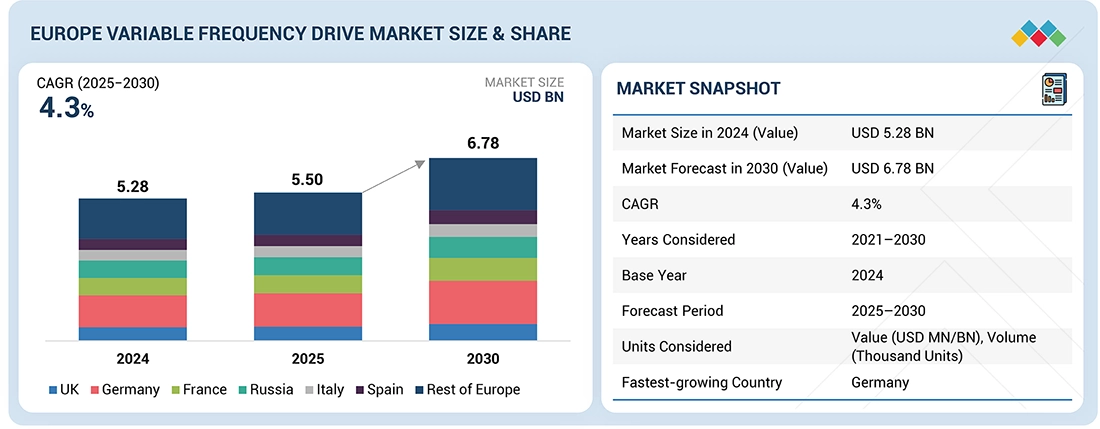
Source: Secondary Research, Interviews with Experts, MarketsandMarkets Analysis
The Europe variable frequency drive market is likely to reach USD 6.78 billion by 2030 from USD 5.50 billion in 2025, recording a CAGR of 4.3% during the forecast period. A variable frequency drive (VFD) can be described as a motor controller that acts as a device for controlling or regulating the speed of an electric motor. The control and regulation are achieved via manipulation or adjustment of the frequency and voltage fed to an electric motor. Key advantages of VFDs include energy savings, improved control during operation, an extension of equipment life, and facilitation of maintenance. The uses and applications of VFDs include oil and gas operations, water and wastewater.
KEY TAKEAWAYS
-
BY TYPEBy type, the AC drives segment is projected to grow at the fastest rate from 2025 to 2030.
-
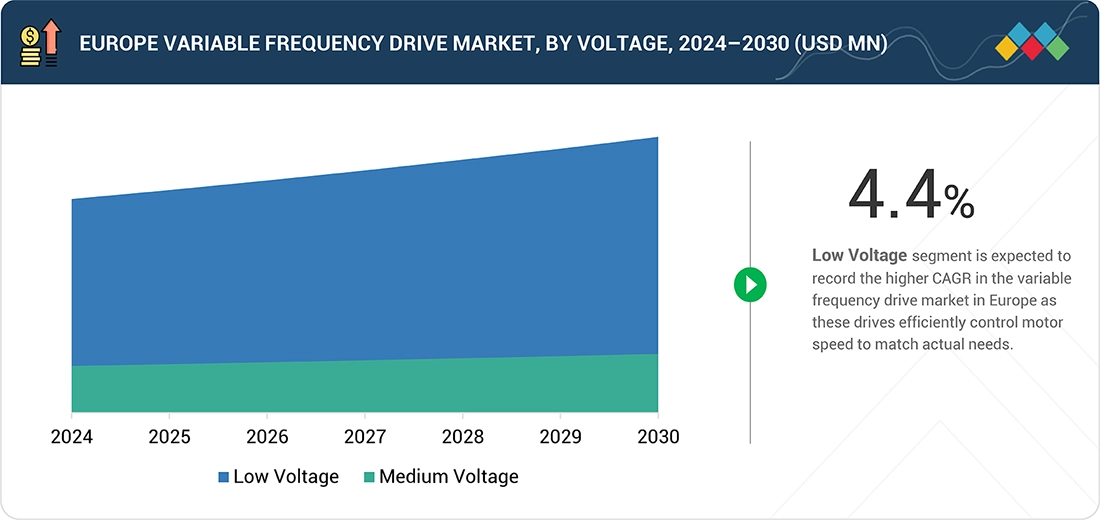
BY VOLTAGEBy voltage, the low-voltage segment is estimated to register a CAGR of 4.4% between 2025 and 2030.
-
BY APPLICATIONBy application, the pumps segment is expected to dominate the variable frequency drive market in Europe.
-
BY POWER RATINGBy power rating, the high power segment is likely to register a CAGR of 4.9% during the forecast period.
-
BY END USERBy end user, the power segment is estimated to record a growth rate of 5.1% from 2025 to 2030.
-
BY REGIONGermany is projected to capture a 22.7% share of the variable frequency drive market in Europe in 2025.
-
COMPETITIVE LANDSCAPEMajor market players in the Europe variable frequency drive market are adopting both organic and inorganic growth strategies, including partnerships, acquisitions, and strategic investments, to strengthen their market presence and expand service offerings. Companies such as Siemens (Germany), ABB (Switzerland), Schneider Electric (France), Eaton (Ireland), and Danfoss (Denmark) are integrating advanced features including digital monitoring, predictive maintenance, smart communication protocols, and cloud-based analytics.
Advancements in industrial automation, IoT integration, energy-efficient motor control systems, and real-time monitoring enable more efficient energy management. Variable frequency drive platforms leverage these technologies to provide enhanced services, contributing to the growth of the Europe variable frequency drive market.
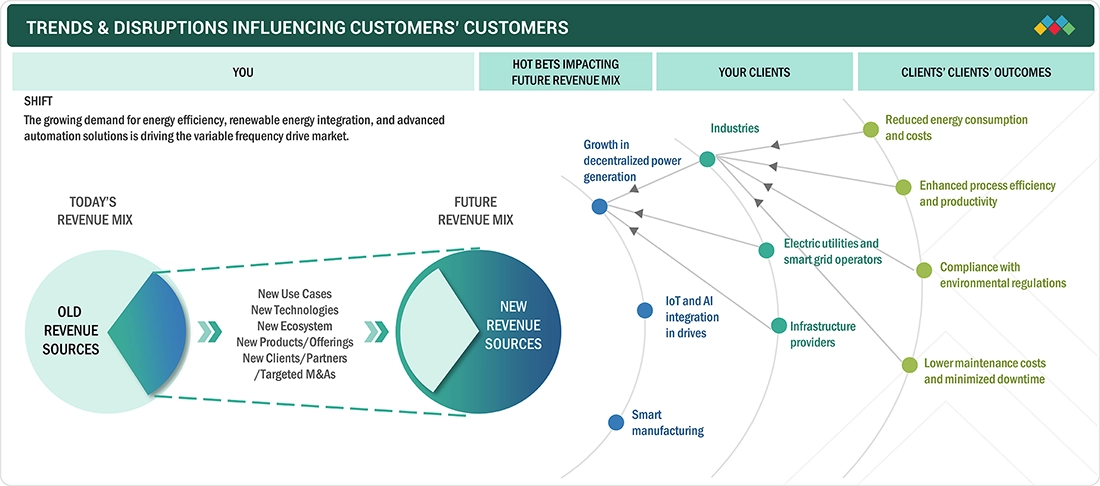
TRENDS & DISRUPTIONS IMPACTING CUSTOMERS' CUSTOMERS
The mounting adoption of digital technologies, such as IoT, AI, cloud analytics, and machine learning, is transforming the Europe variable frequency drive market by enabling advanced motor control, real-time performance monitoring, predictive maintenance, and optimization of energy usage across industrial and commercial environments. The global push toward energy efficiency, decarbonization, and operational sustainability is further accelerating the deployment of VFDs, as they help reduce electricity consumption, improve process reliability, and extend equipment lifespan. Increasing integration of VFDs with connected systems has heightened concerns around cybersecurity, prompting industries to strengthen digital protection for motor control and automation networks. Leading VFD manufacturers, such as ABB, Siemens, Danfoss, Schneider Electric, Eaton are expanding their technology portfolios by incorporating smart diagnostics, digital twins, and cloud-based condition monitoring into their drive solutions to enhance value creation and reduce downtime.
Source: Secondary Research, Interviews with Experts, MarketsandMarkets Analysis
MARKET DYNAMICS

Level
-
Rising need for enhancing energy efficiency and decreasing energy consumption

-
Increasing need for motion control systems in automated production plants


Level
-
High installation and maintenance costs

-
Sluggish growth of oil & gas industry


Level
-
Government regulations for sustainability

-
Rising deployment of Industrial Internet of Things and robotics technologies


Level
-
Lack of skilled workforce for installation, programming, and maintenance of variable frequency drives

Source: Secondary Research, Interviews with Experts, MarketsandMarkets Analysis
Driver: Rising need for enhancing energy efficiency and decreasing
The rise in electricity demand, particularly in emerging economies, such as China, underscores the urgent need to enhance energy efficiency and reduce overall energy consumption. According to the International Energy Agency (IEA) 2024, 85% of additional electricity demand through 2026 will come from emerging economies, with China alone adding approximately 1,400 TWh—more than half of the European Union’s (EU) annual electricity consumption. Despite structural shifts in its economy, the electricity demand is expected to grow by 4.9% in 2025 and 4.7% in 2026, driven by industrial and service sectors. This rising demand necessitates energy-efficient solutions to manage consumption without overburdening power infrastructure.
Restraint: High installation and maintenance costs
The cost of integrating VFDs into electric motor systems ranges from USD 150 to 500 per kW of power, making the initial investment significantly higher than that of other energy-saving alternatives. While VFDs offer long-term energy efficiency benefits, their upfront installation cost can be a deterrent for many companies. The total installation cost is further influenced by factors such as the type of drive, necessary wiring, cooling requirements, and foundational modifications. The need for skilled technicians to install and configure VFD systems adds to the overall expense, making companies cautious about large-scale adoption. Beyond installation, the long-term maintenance and replacement costs of VFDs contribute to higher operational expenses. Components such as controllers and solid-state electronics typically need replacement every four to five years due to rapid technological advancements, leading to additional costs. The average lifespan of a VFD ranges between 7 and 10 years, depending on the application and environmental conditions, necessitating periodic replacements. This creates a recurring financial burden, especially for industries relying on multiple VFDs across their operations.
Opportunities: Government regulations for sustainability
The global push toward sustainability and energy efficiency boosts the adoption of VFDs across industries. Many countries have set ambitious carbon reduction targets, with net-zero emission commitments by 2050 or sooner. Governments worldwide are implementing stringent energy efficiency regulations to reduce industrial energy consumption and carbon footprints. The introduction of Minimum Energy Performance Standards (MEPS) for electric motors in EU, the US, and China, and other markets has mandated higher efficiency levels, accelerating the adoption of VFDs. By enabling precise motor speed control, VFDs optimize energy usage, making them essential for industries looking to meet regulatory compliance while reducing operational costs. Energy efficiency policies in the industrial and building sectors are further promoting VFD deployment. The EU’s Ecodesign Directive and the US Department of Energy’s energy efficiency standards require motor-driven systems to improve energy performance, indirectly driving VFD adoption. China’s Dual Control policy on energy intensity and total consumption compels industries to implement energy-saving technologies, according to the Centre for Research on Energy and Clean Air (CREA) in 2024. These policies, alongside growing carbon pricing mechanisms and incentives for energy-efficient solutions, are pushing industries worldwide to integrate VFDs into their operations to enhance energy conservation and meet sustainability goals.
Challenge: Lack of skilled workforce for installation, programming, and maintenance of variable frequency drives
The installation, programming, and maintenance of VFDs require expertise. VFDs play a crucial role in optimizing motor control and improving energy efficiency in industries, but their complexity necessitates trained professionals who can configure drive parameters, troubleshoot faults, and integrate them with broader industrial automation systems. However, the growing demand for automation in manufacturing, HVAC, and other industries has outpaced the availability of skilled technicians and engineers proficient in VFD operation and diagnostics. This gap often leads to improper installation, inefficient system performance, and increased downtime, reducing the overall effectiveness of VFD adoption in industrial applications.
EUROPE VARIABLE FREQUENCY DRIVE MARKET: COMMERCIAL USE CASES ACROSS INDUSTRIES
| COMPANY | USE CASE DESCRIPTION | BENEFITS |
|---|---|---|
 |
A Fortune 500 food & beverage company operating multiple production facilities faced rising energy costs and inconsistent production efficiency due to the use of fixed-speed motors in conveyors, mixers, process pumps, and air-handling systems. To address these challenges, the company partnered with a leading drive and automation provider to deploy VFD solutions across its manufacturing lines. | Achieved 15–40% energy savings across key production processes | Reduced product waste from smoother motor control | Improved line throughput by minimizing mechanical stress and unplanned downtime | Predictive maintenance, increasing equipment uptime and reducing repair costs | Measurable OPEX savings | Improved product consistency | Long-term sustainability and operational resilience |
 |
A city-level water and wastewater authority partnered with a major electrical solutions provider to modernize its pumping stations using high-efficiency VFDs. The utility previously relied on outdated fixed-speed pumps that consumed large amounts of electricity and required frequent maintenance. The modernization included installing VFDs on high-capacity pumps, integrating pressure control automation, and enabling remote monitoring to optimize pump speed based on demand. The goal was to improve energy efficiency, reduce water hammer effects, and enhance reliability across critical pumping assets. | Resulted in 30–50% energy savings across pumping systems | Reduced pump vibration and mechanical stress | Extended pump life by several year | Reduced water losses | Improved service reliability for residents | Lowered annual maintenance costs | Reduced greenhouse gas emissions |
Logos and trademarks shown above are the property of their respective owners. Their use here is for informational and illustrative purposes only.
MARKET ECOSYSTEM
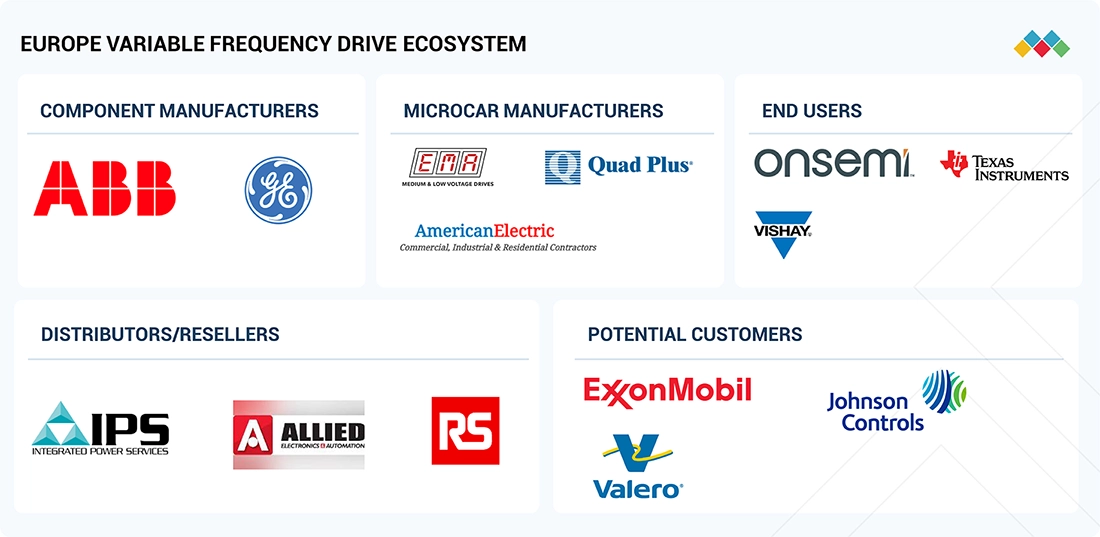
Europe variable frequency drive market ecosystem comprises manufacturers, distributors, customers, service providers and component providers. End users in the market primarily include oil & gas, mining & metal, chemicals & petrochemicals, power generation, food & beverage, water & wastewater treatment, automotive, and construction/infrastructure. This list is not exhaustive and is meant to explain the key players involved in the market.
Logos and trademarks shown above are the property of their respective owners. Their use here is for informational and illustrative purposes only.
MARKET SEGMENTS
Source: Secondary Research, Interviews with Experts, MarketsandMarkets Analysis
EUROPE VARIABLE FREQUENCY DRIVE MARKET, BY TYPE
The type segment has AC drives and DC drives segments. The demand for AC drives in VFDs is higher as AC drives can control speed and torque more efficiently. The frequency of the motor is changed by AC drives according to the operational need. Therefore, they save a lot of energy and give better efficiency. Actually, these are more adaptable and energy-efficient for applications with pumps, fans, or conveyors. Due to strict requirements of industries in terms of energy efficiency and cost reduction, the AC drives have gained traction to save energy without compromising the desired output. Moreover, their capacity to integrate with advanced automation and Internet of Things (IoT) technologies enhances operational efficiency and corresponds with the increasing emphasis on energy efficiency and sustainability across various sectors.
EUROPE VARIABLE FREQUENCY DRIVE MARKET, BY VOLTAGE
By voltage, the market has been segmented as low voltage and medium voltage. The largest market of the Europe variable frequency drive market is the low-power drive segment. Low power VFDs, typically with a power rating under 6 kW, are widely used in small-scale industrial applications and residential settings for HVAC systems, pumps, fans, etc. as these applications use less energy but require precise speed control. Cost effectiveness and high energy efficiency have made these drives very attractive. Industries focused on low operation cost are found to be highly interested in them. Additionally, the trend of automation with energy-saving technology in manufacturing, water treatment, and agriculture industries is now greatly raising the demand for low-power VFDs. Inasmuch as there is an increasing demand for energy-efficient solutions in all sectors, the low-power VFD segment will definitely sustain its fast growth, especially in emerging markets where industrialization is picking up.
EUROPE VARIABLE FREQUENCY DRIVE MARKET, BY APPLICATION
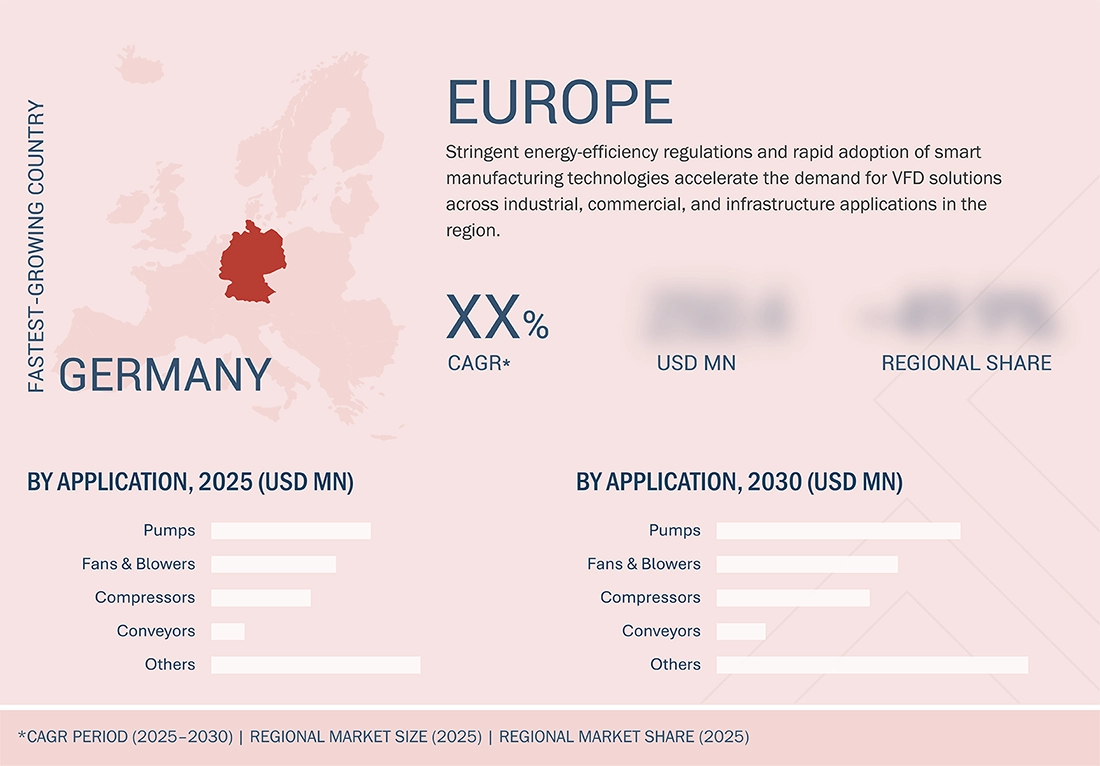
The application segment includes pumps, fans & blowers, compressors, conveyors, and other applications. Pumps is the largest market for VFDs as pumps are critical to numerous industrial operations, including oil & gas, water & wastewater, mining, chemicals, petrochemicals, cement, and pulp & paper. VFDs enable precise adjustment of pump motor speed to match process requirements, significantly improving efficiency and energy savings.
EUROPE VARIABLE FREQUENCY DRIVE MARKET, BY POWER RATING
The power rating segment includes micro power drive, low power drive, medium power drive, and high power drive. The low power drive segment is the largest market for variable frequency drive in Europe due to their extensive use across manufacturing, HVAC, water & wastewater treatment, food & beverage, and automotive industries. In manufacturing, low-power drives efficiently control motors for conveyors, pumps, compressors, and fans, ensuring precise operations. HVAC systems utilize these drives in air handling units, chillers, and cooling towers to optimize energy use, while water & wastewater industries benefit from improved pump control and reduced energy consumption. In food & beverage and automotive sectors, low-power drives support automation for processing, mixing, packaging, assembly line automation, and robotic systems. The demand for energy efficiency, compliance with stringent regulations, and seamless integration with smart manufacturing and IoT-enabled automation further drive this segment.
EUROPE VARIABLE FREQUENCY DRIVE MARKET, BY END USER
The end user segment includes oil & gas, mining & metal, chemicals & petrochemicals, power, food & beverage, water & wastewater treatment, automotive, construction/infrastructure, and other end users. The power end user segment is the largest market for variable frequency drives as the power industry places a major emphasis on energy efficiency, which drives extensive adoption of VFDs in conventional and nuclear power generation. VFDs are widely used in draft fans, cooling tower pumps, compressors, and auxiliary systems, such as feedwater pumps, optimizing internal power consumption and improving operational efficiency in power plants. Significant investments in capacity expansion, including fossil fuels, nuclear, and renewables, further accelerate VFD deployment. The ability of VFDs to provide precise control of motor speeds leads to substantial energy savings and operational cost reductions, making them crucial for utilities and power generators worldwide.
REGION
Germany to be fastest-growing country in Europe variable frequency drive market during forecast period
Germany is experiencing strong growth due to the advanced industrial base, strict energy-efficiency policies, and accelerated transition toward electrification and digitalized manufacturing. As Europe’s largest manufacturing economy—with major strengths in automotive, chemicals, food & beverage, metals, and machinery—the country has one of the highest concentrations of motor-driven systems, making VFD adoption essential for reducing electricity consumption and improving process efficiency. National regulations aligned with the EU Ecodesign Directive, the Energy Efficiency Act (EnEfG), and Germany’s long-term climate strategy mandate the deployment of high-efficiency motor control technologies, directly boosting the demand for VFDs in industrial and commercial applications.
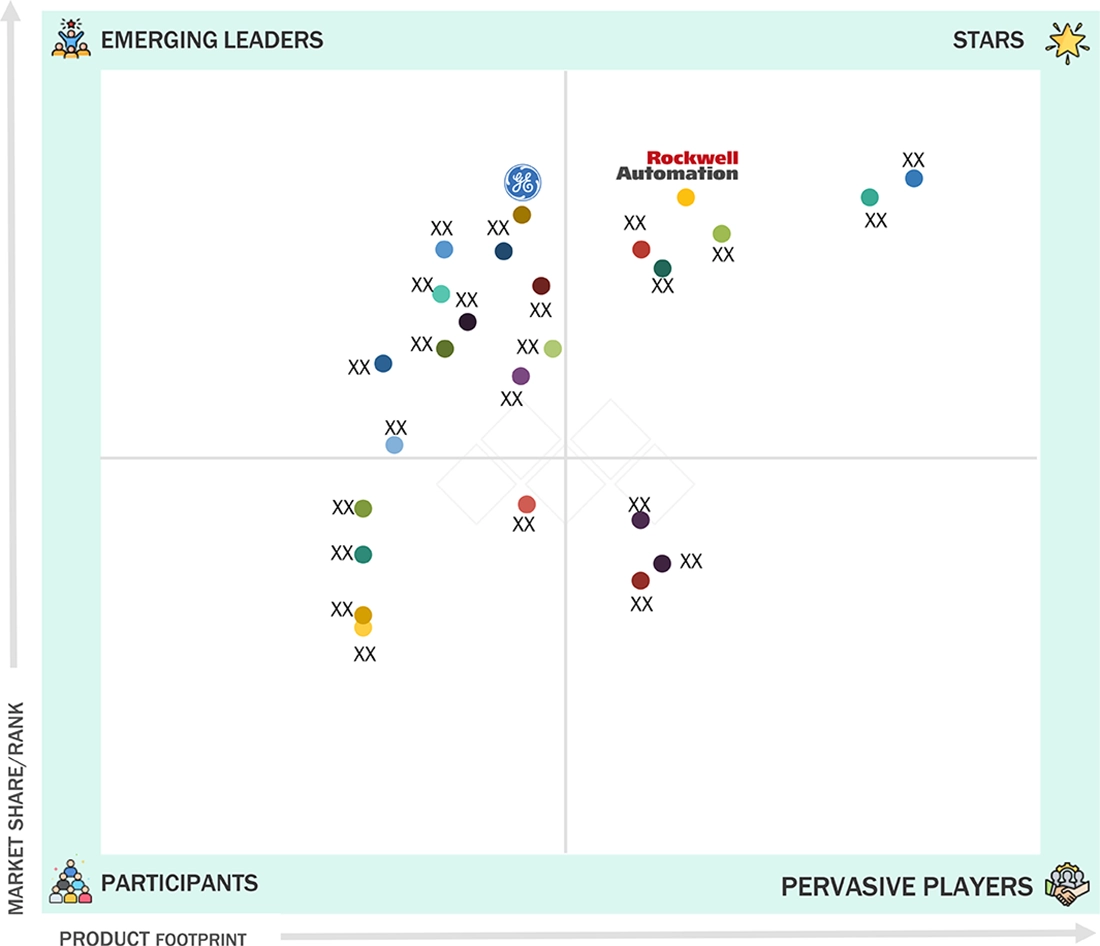
EUROPE VARIABLE FREQUENCY DRIVE MARKET: COMPANY EVALUATION MATRIX
Rockwell Automation is positioned as a star in the Europe variable frequency drive market matrix, reflecting clear leadership in both market share and product breadth. The company differentiates itself through an extensive VFD portfolio, integrated digital and automation platforms, and strong reach across industries such as manufacturing, oil and gas, and utilities. General Electric is viewed as an emerging leader, leveraging its broad industrial portfolio and installed base to drive growing VFD adoption across critical infrastructure and energy applications.
Source: Secondary Research, Interviews with Experts, MarketsandMarkets Analysis
KEY MARKET PLAYERS
- Rockwell Automation (US)
- ABB (Switzerland)
- Siemens (Germany)
- Danfoss (Denmark)
- Eaton (Ireland)
- Schneider Electric (France)
- NIDEC Corporation (Japan)
- General Electric (US)
- WEG (Brazil)
- Yaskawa Electric Corporation (Japan)
MARKET SCOPE
| REPORT METRIC | DETAILS |
|---|---|
| Market Size in 2024 (Value) | USD 5.28 Billion |
| Market Forecast in 2030 (value) | USD 6.78 Billion |
| Growth Rate | CAGR of 4.3% from 2025-2030 |
| Years Considered | 2021-2030 |
| Base Year | 2024 |
| Forecast Period | 2025-2030 |
| Units Considered | Value (USD Million/Billion), Volume (Thousand Units) |
| Report Coverage | Revenue forecast, company ranking, competitive landscape, growth factors, and trends |
| Segments Covered | By Type: AC Drive and DC Drive By Voltage: Low Voltage and Medium Voltage By Application: Pumps, Fans & Blowers, Compressors, Conveyors, and Other Applications By Power Rating: Micro Power Drive, Low Power Drive, Medium Power Drive, and High Power Drive By End User: Oil & gas, Mining & Metal, Chemicals & Petrochemicals, Power, Food & Beverage, Water & Wastewater Treatment, Automotive, Construction/Infrastructure, and Other End Users |
| Countries Covered | Germany, the UK, France, Russia, Italy, Spain, and Rest of Europe |
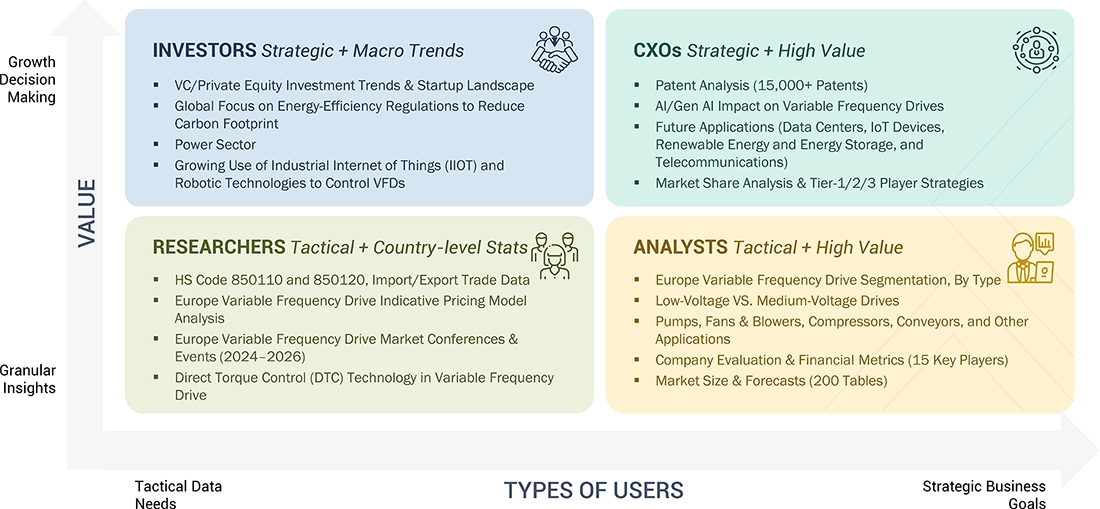
WHAT IS IN IT FOR YOU: EUROPE VARIABLE FREQUENCY DRIVE MARKET REPORT CONTENT GUIDE
RECENT DEVELOPMENTS
- September 2024 : Rockwell Automation introduced PowerFlex 755TS frame 7A drives with TotalFORCE technology. This technology expands the power range to 355 kW and provides a new panel-mount solution for high horsepower applications.
- March 2024 : Siemens signed an agreement to acquire the industrial drive technology (IDT) business of ebm-papst. This business includes intelligent, integrated mechatronic systems in the protective extra-low voltage range and innovative motion control systems. This acquisition will complement the Siemens Xcelerator portfolio and strengthen Siemens’ position as a leading solutions provider for flexible production automation.
- January 2024 : Siemens introduced its SINAMICS S210 servo drive system with a new hardware architecture and V6 software generation that expanded the system's range of applications.
- October 2022 : Rockwell Automation enhanced its PowerFlex 6000T medium voltage VFDs with TotalFORCE technology, offering real-time system data for improved efficiency. The expanded output frequency range of up to 120 Hz supports high-speed applications.
Table of Contents
 Exclusive indicates content/data unique to MarketsandMarkets and not available with any competitors.
Methodology
This research study involves the use of extensive secondary sources, directories, and databases, such as Hoovers, Bloomberg L.P., Factiva, ICIS, and OneSource, to identify and collect information useful for this technical, market-oriented, and commercial study of the Europe Variable Frequency Drive Market. Primary sources are mainly industry experts from core and related industries, preferred suppliers, manufacturers, distributors, service providers, and organizations related to all segments of the value chain of this industry. In-depth interviews were conducted with various primary respondents, including key industry participants, subject matter experts, C-level executives of key market players, and industry consultants, among other experts, to obtain and verify critical qualitative and quantitative information as well as assess growth prospects of the market.
Secondary Research
Secondary sources include annual reports, press releases, and investor presentations of companies; directories and databases, which include D&B, Bloomberg, and Factiva; white papers and articles from recognized authors, and publications and databases from associations, such as International Energy Agency (IEA), US Energy Information Administration (EIA), International Renewable Energy Agency (IRENA), National Electrical Manufacturers Association (NEMA). Secondary research has been used to obtain important information about the key players and market classification & segmentation according to industry trends to the bottom-most level and key developments related to market and technology perspectives. A database of the key industry leaders has also been prepared using secondary research.
Primary Research
In the primary research process, various sources from both the supply and demand sides have been interviewed to obtain and verify qualitative and quantitative information for this report and analyze prospects. Primary sources from the supply side include industry experts such as CEOs, vice presidents, marketing directors, technology and innovation directors, and related executives from various leading companies and organizations operating in the Europe Variable Frequency Drive Market. Primary sources from the demand side include experts and key persons.
After the complete market engineering process (which includes calculations of market statistics, market breakdown, market size estimations, market forecasts, and data triangulation), extensive primary research has been conducted to gather information and verify and validate the critical numbers arrived at. Primary research has also been conducted to identify the segmentation, applications, Porter’s Five Forces, key players, competitive landscape, and key market dynamics such as drivers, opportunities, challenges, industry trends, and strategies adopted by key players.
Market Size Estimation
In the complete market engineering process, both top-down and bottom-up approaches have been extensively used along with several data triangulation methods to estimate and forecast the overall market segments listed in this report.
Top-down and bottom-up approaches have been used to estimate and validate the market size of variable frequency drives for various end user in each region. The key players in the market have been identified through secondary research, and their market share in respective regions has been determined through primary and secondary research. This entire procedure includes the study of annual and financial reports of the key market players and extensive interviews for insights from industry leaders such as CEOs, vice presidents, directors, and marketing executives. All percentage shares, splits, and breakdowns have been determined using secondary sources and verified through primary sources.
Data Triangulation
After arriving at the overall market size from the estimation process explained above, the total market has been split into several segments and sub-segments. Data triangulation and market breakdown procedures have been used wherever applicable to complete the overall market engineering process and to arrive at the exact statistics for all segments and sub-segments. The data has been triangulated by studying various factors and trends from both the demand and supply sides. The market has been validated using both the top-down and bottom-up approaches. Then, it was verified through primary interviews. Hence, for every data segment, there are three sources—the top-down approach, the bottom-up approach, and expert interviews. When the values arrived at from the three points matched, the data was assumed to be correct.
Market Definition
A variable frequency drive (VFD) is an electronic motor control device that drives an electric motor by changing the voltage and frequency supplied in the electric motor circuit. VFD works by converting fixed frequency and fixed voltage sine wave power to a variable frequency or variable output voltage, which is used to control the speed of a motor. It is also referred to as variable speed drive, adjustable speed drive, adjustable frequency drive, AC drive, micro drive, and inverter. The primary advantages associated with the use of VFD include less energy consumption and energy cost, controlled performance, extended equipment life, and low maintenance cost. It is mainly used for variable torque applications in various industries, such as oil & gas, water & wastewater treatment, power, paper & pulp, textile, and mining. The market for variable frequency drives is defined as the sum of revenues generated by companies through the sale of variable frequency drives.
Stakeholders
- Government organizations and regulatory agencies
- VFD manufacturing companies
- Automotive, aerospace, marine, and industrial equipment manufacturers
- Research and development institutes
- Environmental and sustainability organizations
- Trade associations and industry forums related to VFD technologies
- Original Equipment Manufacturers (OEMs)
- Component and parts suppliers for VFD
- Consulting companies in energy, automotive, and manufacturing sectors
- Transportation and logistics companies
- Maintenance and repair service providers
Report Objectives
- To describe and forecast the Europe Variable Frequency Drive Market in terms of value based on type, voltage, power rating, application, end user, region
- To describe and forecast the Europe Variable Frequency Drive Market in terms of volume based on region and power rating segment
- To provide detailed information about the key factors such as drivers, restraints, opportunities, and challenges influencing the growth of the Europe Variable Frequency Drive Market
- To strategically analyze the subsegments with respect to individual growth trends, prospects, and contributions of each segment to the overall market size
- To strategically analyze micromarkets1 with respect to individual growth trends, prospects, and contributions to the total market
- To study the complete supply chain and allied industry segments and perform a supply chain analysis of the Europe Variable Frequency Drive Market’ landscape
- To study market trends, patent analysis, trade analysis, tariff and regulatory landscape, Porter’s five forces analysis, ecosystem mapping, technologies, investment and funding scenario, key stakeholders & buying criteria, case studies pertaining to off Europe Variable Frequency Drive Market
- To analyze the opportunities for various stakeholders by identifying the high-growth segments of the variable frequency drivemarket
- To profile the key players and comprehensively analyze their market positions in terms of ranking and core competencies, along with detailing the competitive landscape for the market leaders
- To analyze competitive developments, such as contracts, collaborations, expansions, product launches, investments, and acquisitions, in the variable frequency drivemarket
Available Customizations
MarketsandMarkets offers customizations according to the specific needs of the companies with the given market data.
The following customization options are available for the report:
Product Analysis
- Product matrix, which gives a detailed comparison of the product portfolio of each company
Regional Analysis
- Further breakdown of the VFD market, by country
Company Information
- Detailed analysis and profiling of additional market players (up to five)


Personalize This Research
- Triangulate with your Own Data
- Get Data as per your Format and Definition
- Gain a Deeper Dive on a Specific Application, Geography, Customer or Competitor
- Any level of Personalization
Let Us Help You
- What are the Known and Unknown Adjacencies Impacting the Europe Variable Frequency Drive Market
- What will your New Revenue Sources be?
- Who will be your Top Customer; what will make them switch?
- Defend your Market Share or Win Competitors
- Get a Scorecard for Target Partners

Custom Market Research Services
We Will Customise The Research For You, In Case The Report Listed Above Does Not Meet With Your Requirements
Get 10% Free CustomisationTESTIMONIALS

Kimberly Murphy
GLOBAL MARKETING DIRECTOR
Bently Nevada,
Leading Condition Monitoring & Asset Protectionwww.bakerhughesds.com/bently-nevada

MarketsandMarkets™ showed consistent rigor for success and relentlessly worked with Bently Nevada stakeholders to positively impact go-to-market strategy. Their proactiveness and flexibility has been instrumental in achieving the objectives to grow our sales pipeline in key industrial markets.

DARRICK HUEBER
Business Development Leader
Nexus Controls LLC,
Leading Manufacturer of Automation System & Electrical Panelswww.bakerhughesds.com/nexus-controls

We partnered with MarketsandMarkets to expand our business further by tapping into new industrial segments. It was critical for us to gather crucial business insights about specific markets to achieve this goal. MarketsandMarkets engagement model and client services helped us provide those insights, it was really impressive and valuable for my business. The team was extremely flexible and helpful.

Mike Schoff
Global Industrial Commercial Strategy Leader
Nexus Controls LLC
Leading Manufacturer of Automation System & Electrical Panelswww.bakerhughesds.com/nexus-controls
We consulted MarketsandMarkets for potential Partner Identification. Overall, it was a good experience. The insights provided through interviews conducted by the team helped us put together the questionnaire required for discussion with the selected partners. Their ability to provide insights through interviews with customers in a timely manner was quite impressive.






Growth opportunities and latent adjacency in Europe Variable Frequency Drive Market