Food Nanoencapsulation Market

Food Nanoencapsulation Market by Encapsulation Technique (Nanoemulsification, Nanoliposomes, Nanoprecipitation, Inclusion Complexes, Nanoparticles), Core Material, Application, and Region – Global Forecast to 2030




OVERVIEW
Source: Secondary Research, Interviews with Experts, MarketsandMarkets Analysis
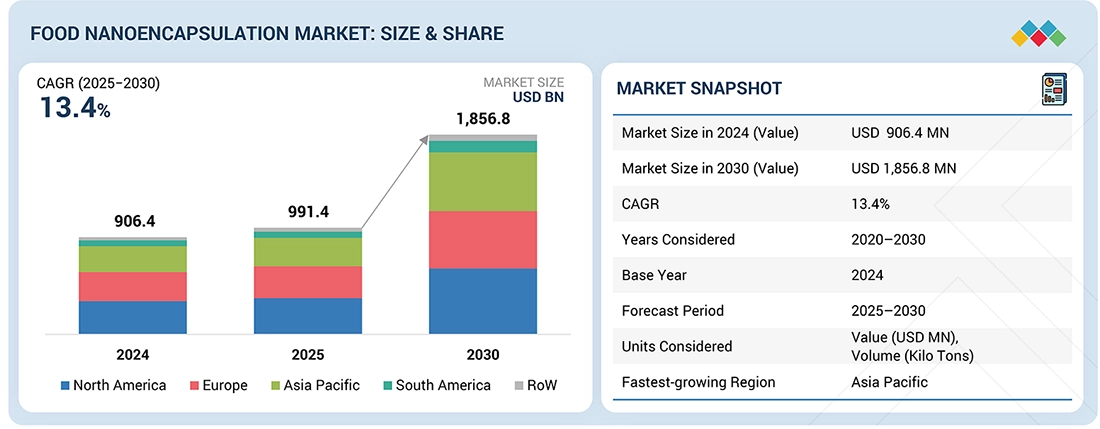
The global food nanoencapsulation market is estimated to be valued at USD 991.4 million in 2025 and is projected to reach USD 1,856.8 million by 2030, growing at a CAGR of 13.4% from 2025 to 2030. The global market for Food Nanoencapsulation is growing at a steady pace. A significant driver of this growth is that companies in the food and nutrition sector have moved to advanced encapsulation techniques to enhance the functionality, stability, and efficacy of ingredients. Through nanoencapsulation, heat, water, oxidation, and processing stresses can be mitigated to protect delicate bioactive ingredients such as vitamins, minerals, omega-3 fatty acids, probiotics, flavors, and antioxidants. This built-in protection, complemented by nanoencapsulation techniques, is now helping the technique gain swift acceptance in functional foods, fortified beverages, dietary supplements, infant nutritional items, and clinical nutrition products.
KEY TAKEAWAYS
-
By RegionNorth America accounted for 34.1% of the market in 2024.
-
By Encapsulation TechniqueThe nanoliposomes segment is expected to register the highest CAGR of 14.7% during the forecast period.
-
By Core MaterialThe nutraceuticals (Omega-3, carotenoids, polyphenols) segment will grow the fastest during the forecast period.
-
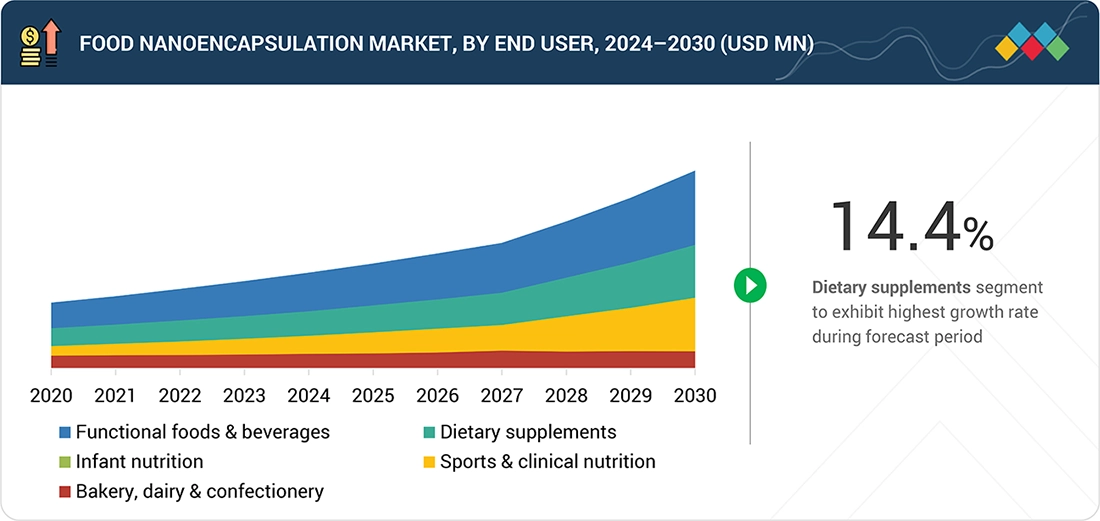
By ApplicationFunctional foods accounted for 42.0% of the market in 2024.
-
Competitive Landscape – Key PlayersKey players in the food nanoencapsulation market include DSM-Firmenich, International Flavors & Fragrances (IFF), Kerry Group, Archer Daniels Midland (ADM), BASF, Cargill, Ingredion, Givaudan, Tate & Lyle, and Sensient Technologies.
-
Competitive Landscape – StartupsEmerging players in the food nanoencapsulation market include NanoBio Corp, Blue California, Lipofoods, Aquanova, Nutraveris, and Microcaps.
The global food nanoencapsulation market is estimated to be valued at USD 991.4 million in 2025 and is projected to reach USD 1,856.8 million by 2030, growing at a CAGR of 13.4% from 2025 to 2030. Growth is expected in the food nanoencapsulation market, with increasingly less-processed food and nutrition industries adopting advanced encapsulation technologies to improve ingredient performance and enhance product stability and shelf life. In the nanoencapsulation area, sensitive bioactives, such as vitamins, minerals, omega-3 fatty acids, probiotics, flavors, carotenoids, and polyphenols, would be shielded from heat, humidity, oxygen, and processing stress. With controlled release, taste masking, and enhanced bioavailability, nanoencapsulation ensures broad food and sensory performance, enabling products to keep pace with the developed and packaging industry sector, which includes functional food, fortified beverage, dietary supplement, infant nutrition, and sports nutrition products.
TRENDS & DISRUPTIONS IMPACTING CUSTOMERS' CUSTOMERS
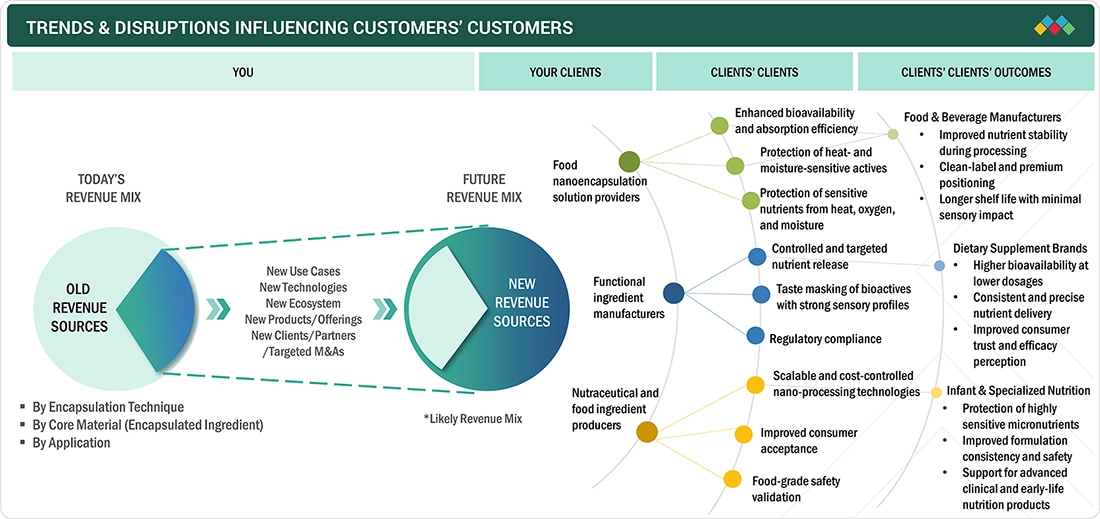
Within food applications, nanoencapsulation is making a difference in marketing for food and beverage, with high nutrient efficacy enabling strong product performance and improved health credentials. The key trend is focused on improving bioavailability; nanodelivery systems are increasing the absorption of vitamins, minerals, omega-3 fatty acids, and plant bioactives, earning consumer support for effectivity-driven functional foods. There is evidence, particularly for clean labeling and sensory acceptability, that supports taste masking and the protection of fragile ingredients without using overly obtrusive additives. From a processing perspective, nanoemulsions and lipid-based nanocarriers provide high stability under heat, light, and oxygen, reducing nutrient loss during processing and storage. The evolving regulatory landscape is a new barrier, prompting suppliers and manufacturers to focus on the use of food-grade, compliant nanomaterials and on unambiguous proof of safety. Altogether, these trends enable food brands to launch niche energy-enriched products that offer precise nutrient delivery, batch consistency, and much-enhanced consumer acceptance, all while keeping pace with regulatory and beyond-the-label issues facing them in different markets.
Source: Secondary Research, Interviews with Experts, MarketsandMarkets Analysis
MARKET DYNAMICS

Level
-
•Rising demand for high-bioavailability functional and fortified food products

-
•Need to protect sensitive nutrients during processing and shelf life


Level
-
§Regulatory complexity and approval requirements for nano-enabled food ingredients

-
§Consumer concerns around safety and perception of nanotechnology


Level
-
§Expansion of personalized nutrition and targeted nutrient delivery solutions

-
§Adoption in infant nutrition and clinical food formulations


Level
-
§High initial R&D and scale-up costs

-
§Limited standardization in nanoencapsulation methods and testing protocols

Source: Secondary Research, Interviews with Experts, MarketsandMarkets Analysis
Driver: Rising demand for high-bioavailability functional and fortified food products
Food nanoencapsulation improves the absorption and targeted delivery of bioactive compounds, including vitamins, omega fatty acids, antioxidants, and probiotics. By reducing particle size to the nanoscale, ingredients gain greater surface area and enhanced interactions with biological systems, improving solubility and stability. This is particularly important for fat-soluble and degradation-prone nutrients that lose efficacy during processing or digestion. Food manufacturers increasingly adopt nanoencapsulation to differentiate products by enhancing nutritional efficiency without increasing dosage levels. The trend aligns with growing consumer demand for functional foods that deliver measurable health benefits, making it a primary driver of market adoption.
Restraint: Regulatory complexity and approval requirements for nano-enabled food ingredients
The food nanoencapsulation market faces constraints from evolving regulatory frameworks governing nanomaterials in food. Many regions require extensive safety evaluations, toxicity studies, and disclosure before approving nano-enabled ingredients. The lack of harmonized global regulations increases compliance complexity for multinational food manufacturers. Additionally, regulatory approvals can be time-consuming, delaying commercialization timelines. This uncertainty discourages smaller players from investing in nanoencapsulation technologies, limiting broader market penetration despite technical advantages.
Opportunity: Expansion of personalized nutrition and targeted nutrient delivery solutions
Nanoencapsulation offers significant opportunities in clean-label and premium food categories by reducing reliance on synthetic stabilizers, masking agents, and preservatives. Controlled-release mechanisms help maintain ingredient efficacy while supporting simpler ingredient lists. This is particularly relevant for functional beverages, nutrition bars, and fortified dairy alternatives. As consumers increasingly associate product value with performance and transparency, food brands can leverage nanoencapsulation to justify premium pricing and strengthen health-focused positioning.
Challenge: High initial R&D and scale-up costs
Scaling food nanoencapsulation from the laboratory to commercial production presents technical challenges, including maintaining uniform particle size, stability, and release behavior. Variability in raw materials and processing conditions can affect final product performance. Additionally, specialized equipment and process-control expertise are required, increasing operational complexity. Ensuring batch-to-batch consistency while meeting food safety standards remains a key challenge for widespread industrial adoption.
FOOD NANOENCAPSULATION MARKET: COMMERCIAL USE CASES ACROSS INDUSTRIES
| COMPANY | USE CASE DESCRIPTION | BENEFITS |
|---|---|---|
 |
Nanoencapsulation of vitamins, omega-3 fatty acids, and bioactive micronutrients for functional foods and beverages, designed to enhance solubility and protect heat- and oxygen-sensitive compounds during processing | Improves bioavailability and nutrient absorption, enhances stability under thermal and mechanical stress, and enables transparent and clean-label fortification in beverages and dairy products |
 |
Nano-delivery systems for probiotics, enzymes, and nutraceutical actives in functional foods and dietary supplements, enabling targeted release and improved survivability through digestion | Enables controlled nutrient release, improves gastrointestinal delivery efficiency, and maintains functional efficacy throughout product shelf life |
 |
Nanoencapsulation of flavors, aromas, and taste-modifying compounds for bakery, dairy, and confectionery applications to reduce volatility and flavor degradation | Ensures consistent sensory performance, enhances flavor retention at lower dosages, and reduces processing and storage losses |
 |
Lipid- and polymer-based nanoencapsulation of organic acids, antimicrobials, and natural preservatives for processed and ready-to-eat foods | Enhances antimicrobial effectiveness, enables controlled release, reduces off-taste impact, and extends shelf life while supporting clean-label food safety solutions |
Logos and trademarks shown above are the property of their respective owners. Their use here is for informational and illustrative purposes only.
MARKET ECOSYSTEM
The food nanoencapsulation market ecosystem comprises interconnected stakeholders that collectively enable the development, scale-up, and commercialization of nano-enabled food ingredients. At the upstream level, core ingredient and technology developers focus on nano-carriers, lipid-based systems, polymeric nanoparticles, and process know-how to enhance bioavailability, stability, and controlled nutrient release. The midstream ecosystem includes food and nutrition manufacturers that integrate nanoencapsulated vitamins, minerals, flavors, and bioactives into functional foods, beverages, dietary supplements, and infant nutrition products, while ensuring sensory integrity and processing compatibility. Regulatory and standards authorities play a critical role by defining safety assessments, labeling requirements, and permissible use levels for nanomaterials in food applications, directly influencing commercialization timelines. On the downstream side, distribution and demand-side channels—including retail, e-commerce, and institutional buyers—drive adoption by prioritizing clean-label positioning, efficacy claims, and consumer trust. The ecosystem is shaped by collaboration among technology providers, formulators, regulators, and channels to balance innovation, safety, and market acceptance.
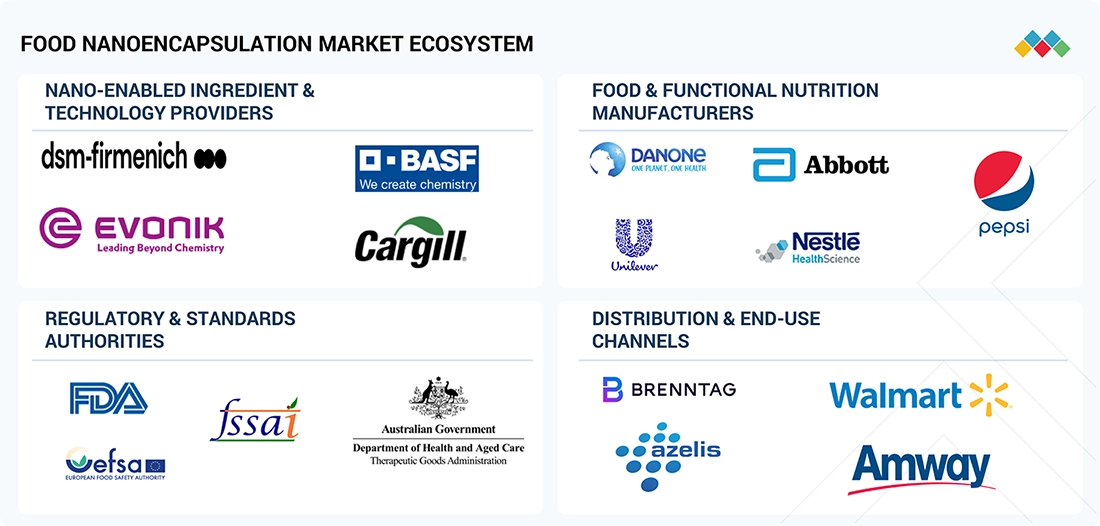
Logos and trademarks shown above are the property of their respective owners. Their use here is for informational and illustrative purposes only.
MARKET SEGMENTS
Source: Secondary Research, Interviews with Experts, MarketsandMarkets Analysis
Food Nanoencapsulation Market, By Application
The application segment demonstrates the commercial adoption of food nanoencapsulation technologies across diverse uses. This activity relates to the promotion of stability, bioavailability, sensory properties, and shelf life of processed and fortified foodstuffs. Functional foods and dietary products remain strong drivers, mainly because of growing consumer interest in preventive health, immune boosting, and personalized nutrition. By enabling precise release of functional ingredients within complex food matrices, nanoencapsulation ensures processability and storage quality. In infant and clinical nutrition, the technology is highly valued for its ability to preserve heat- and moisture-sensitive micronutrients while providing safety and formulation uniformity. In the bakery, dairy, and confectionery, the development of nanoencapsulation controls flavor changes, limits oxidative changes, and provides controlled release of imparted active compounds upon consumption. The application segment reflects the intimate linkage between the acceptance of nanoencapsulation and the expansion of health-promoting, fortified, and convenient food ingestibles across global regions.
Food Nanoencapsulation Market, By Core Material (Encapsulated Ingredient)
The central material segment comprises the ingredients for food products where nanoencapsulation systems are employed, ideally positioned within ready-made fortified and functional food products. Growth in this segment is driven by a growing demand for enriched functional foods and products. Within the core-material food category, vitamins, minerals, nutraceuticals, probiotics, flavorings, and preservatives are especially vulnerable to oxidation, light, heat, and moisture after processing, making them ideal candidates for nano-scale delivery systems. The main attribute of nanoencapsulation is the dispersion of ingredients, thereby improving availability and reducing secondary interactions, while also prolonging the release of entrapped ingredients, which is highly desirable in fortified foods and beverages. Improved bioavailability for nutraceutical ingredients allows food manufacturers to exercise health claims at much lower dosages. Extended retention of flavor compounds also helps maintain sensory consistency, which is another notable benefit of encapsulation. Organic acids and preservatives act as targeted antimicrobial agents while masking bitter taste. In doing so, the main material segment demonstrates increased concentration and improved bioavailability and functional properties across a wide range of food products, making this technology an essential part of a way forward for modern food-formulation strategy.
Food Nanoencapsulation Market, By Encapsulation Technique
Segmentation of encapsulation technologies identifies technical gaps emerging with the development of nano-delivery systems for food ingredients, and these gaps must be addressed with attention to scalability, cost-benefit ratio, regulatory acceptance, and compatibility with food processing conditions. Factors such as the sensitivity of the ingredient, the required release profile, and the end-product format determine the choice of nanotechnology encapsulation method. These advanced nano-scale techniques provide precise control over particle size, surface charge dynamics, and release characteristics, ultimately improving the performance of the food ingredient across a wide range of food applications. They help mitigate challenges such as poor solubility, instability during processing, and uneven distribution of nutrients. The most promising technologies are those that can be incorporated into existing manufacturing lines without a major increase in cost. Continuous innovation in encapsulation techniques will help increase shelf stability and tolerance during processing, as well as clean-label compatibility. As manufacturers prioritize efficiency and performance, the encapsulation technique segment remains a significant area of technological focus and differentiation.
REGION
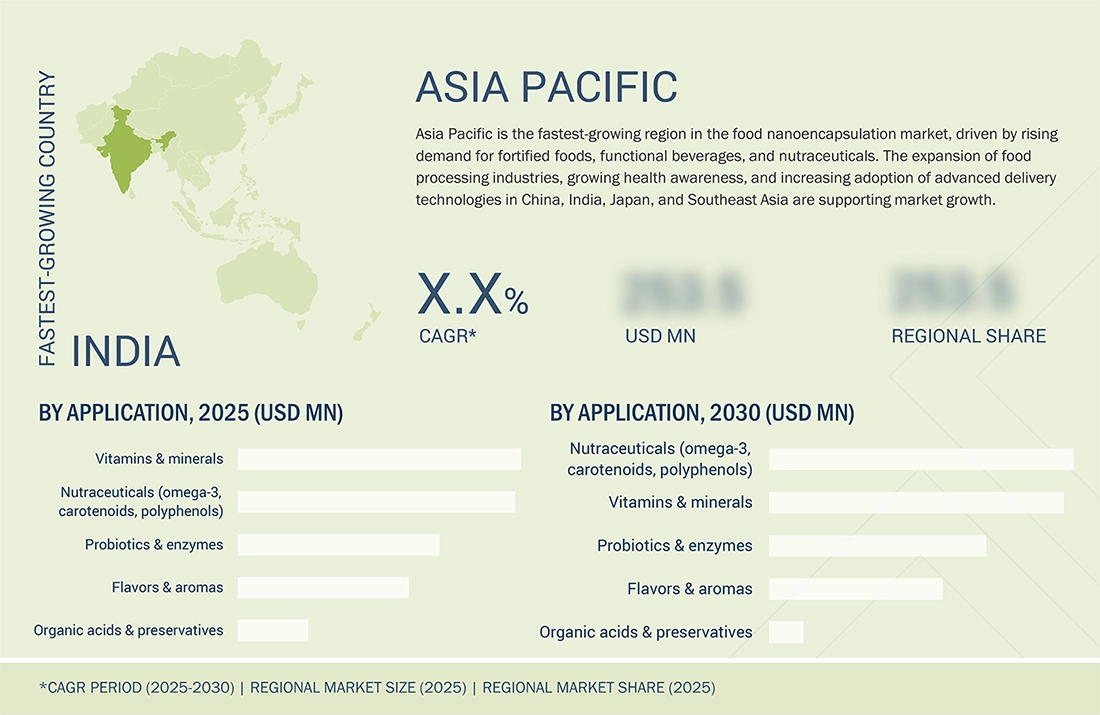
Asia Pacific to be fastest-growing region in food nanoencapsulation market.
Food nanoencapsulation in the Asia Pacific region is growing at the highest rate among all regional markets. The major drivers are rapid urbanization, rising disposable income, and increased public awareness of nutrition and preventive healthcare. The region is expanding its share of fortified beverages, functional foods, dietary supplements, and infant nutrition products, with an increasing number of profiles for infant and young-toddler nutrition products. In China, India, Indonesia, and Vietnam, the rapidly expanding middle class is demanding more food products with added health benefits. Simultaneously, regional food producers are investing in modern processing technology to enhance physical stability, extend shelf life, and improve nutrient delivery. Government assistance for food fortification, nutrition security, and the enhancement of domestic food processing capacity also stimulate market growth. This is capped by the Asia Pacific region acting as a prime production center, supported by highly skilled labor and cost advantages in production.
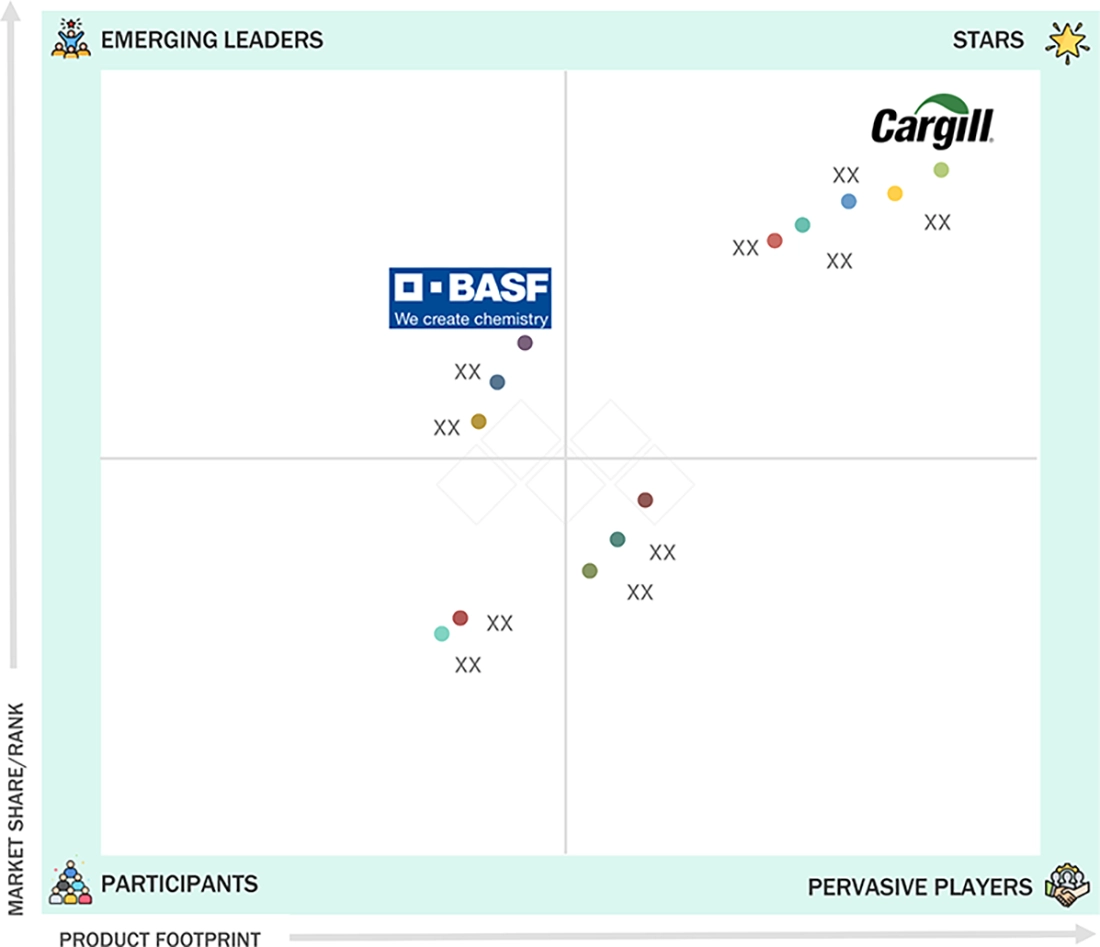
FOOD NANOENCAPSULATION MARKET: COMPANY EVALUATION MATRIX
The food nanoencapsulation market quadrant reflects a semi-consolidated competitive structure, in which a cluster of competent global food-ingredient and food-technology development firms has entrenched their positions across product footprint and market coverage. Players in the star category, with upper-keyboard-quadrant positioning, exhibit a broad nanoencapsulation portfolio and a high level of market penetration, ably supported by large-scale production, deep relationships with multinational food brands, and a commitment to continuous investment in formulation science. The emergence of other frontrunners with progressive capabilities in technology and innovation, with slightly lesser shares, is generally the outcome of select investments in establishing lipid-based and polymeric nanodelivery systems for functional foods and nutraceuticals. Permeating players have access to significant distribution networks and a wealth of food-ingredient portfolios; however, their distinctive offerings in nanoencapsulation may be less specialized or differentiated. Such actors are often regional or specialized participants with limited product ranges, targeting niche applications or personalized solutions. Overall, this quadrant underscores that competitive edge in the food nanoencapsulation field more than ever hinges on the readiness of technology platforms to scale, regulatory oversight, and the ability to cater to functional food, dietary supplement, and clinical nutrition applications across the world's most populous markets.
Source: Secondary Research, Interviews with Experts, MarketsandMarkets Analysis
KEY MARKET PLAYERS
- DSM-Firmenich (Switzerland)
- International Flavors & Fragrances (IFF) (US)
- Givaudan (Switzerland)
- Kerry Group (Ireland)
- BASF SE (Germany)
- Cargill, Incorporated (US)
- Ingredion Incorporated (US)
- Tate & Lyle PLC (UK)
- Sensient Technologies (US)
- Balchem Corporation (US)
- Lonza Group (Switzerland)
- Aveka Group (US)
- TasteTech (UK)
- Microcaps (US/Global)
- Encapsys (US)
MARKET SCOPE
| REPORT METRIC | DETAILS |
|---|---|
| Market Size in 2024 (Value) | USD 906.4 MN |
| Market Size in 2030 (Value) | USD 1,856.8 MN |
| Growth Rate | CAGR of 13.4% from 2025–2030 |
| Years Considered | 2020–2030 |
| Base Year | 2024 |
| Forecast Period | 2025–2030 |
| Units Considered | Value (USD Million), Volume (Kilo Tons) |
| Report Coverage | Revenue forecast, company ranking, competitive landscape, growth factors, and trends |
| Segments Covered |
|
| Region Covered | North America, Europe, Asia Pacific, South America, RoW |
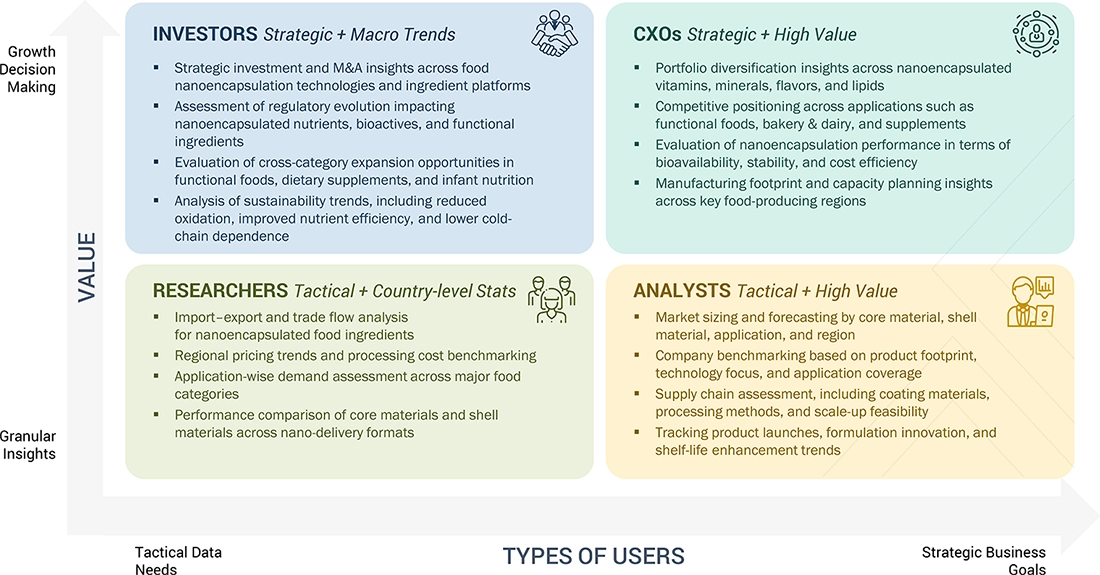
WHAT IS IN IT FOR YOU: FOOD NANOENCAPSULATION MARKET REPORT CONTENT GUIDE
DELIVERED CUSTOMIZATIONS
We have successfully delivered the following deep-dive customizations:
| CLIENT REQUEST | CUSTOMIZATION DELIVERED | VALUE ADDS |
|---|---|---|
| Food Encapsulation Ingredients Market |
|
|
| Functional & Fortified Foods Market |
|
|
| Processed & Shelf-stable Foods |
|
|
RECENT DEVELOPMENTS
- June 2025: DSM-Firmenich (Switzerland) announced a new state-of-the-art production facility for flavors and functional blends, which improve encapsulation capability and production efficiency, expanding global supply capacity.
- May 2025: OOO Component Lactis, a company specializing in biotechnological research, began producing brand-new probiotic strains in May 2025. The primary goal of these new products is to enhance the immune system and support better digestive and gut-healing systems.
- November 2024: MilkyMist introduced a probiotic functional dairy product using encapsulation technology to enhance probiotic viability and extended shelf life.
Table of Contents
 Exclusive indicates content/data unique to MarketsandMarkets and not available with any competitors.
Methodology
This research study involved the extensive use of secondary sources—directories and databases such as the Food and Agriculture Organization and World Health Organization—to identify and collect information useful for a technical, market-oriented, and commercial study of the food encapsulation market. In-depth interviews were conducted with various primary respondents—such as key industry participants, subject matter experts (SMEs), C-level executives of key market players, and industry consultants—to obtain and verify critical qualitative and quantitative information and assess prospects. The following figure depicts the research design applied in drafting this report on the food encapsulation market.
Secondary Research
In the secondary research process, various sources such as website information, press releases & investor presentations of companies, white papers, food journals, certified publications, articles from recognized authors, gold & silver standard websites, directories, and databases, were referred to identify and collect information.
Secondary research was used to obtain key information about the industry’s supply chain, the total pool of key players, and market classification and segmentation as per the industry trends to the bottom-most level, regional markets, and key developments from both market- and technology-oriented perspectives.
Primary Research
In the primary research process, various sources from the supply and demand sides were interviewed to obtain qualitative and quantitative information. The primary sources from the supply side included industry experts such as CEOs, marketing directors, technology and innovation directors, and related key executives from various key companies and organizations operating in the food encapsulation market.
Food Nanoencapsulation Market Size Estimation
- Both the top-down and bottom-up approaches were used to estimate and validate the total size of the food encapsulation market. These methods were also used extensively to estimate the size of the various subsegments in the market. The research methodology used to estimate the market size includes the following:
- The key players in the industry and market have been identified through extensive secondary research.
- All macroeconomic and microeconomic factors affecting the growth of the food encapsulation market were considered while estimating the market size.
- All possible parameters that affect the market covered in this research study were accounted for, viewed in extensive detail, verified through primary research, and analyzed to obtain final quantitative and qualitative data.
Data Triangulation
After arriving at the overall market size from the estimation process explained above, the total market was split into several segments and subsegments. To complete the overall market engineering process and arrive at the exact statistics for all segments and subsegments, the data triangulation and market breakdown procedures were employed wherever applicable. The data was triangulated by studying various factors and trends from the demand and supply sides. Along with this, the market size was validated using the top-down and bottom-up approaches.
Report Objectives
- To define, segment, and project the global market for food encapsulation on the basis of core phase, application, shell material, method, technology and region
- To provide detailed information regarding the key factors influencing the growth of the market (drivers, restraints, opportunities, and industry-specific challenges)
- To strategically analyse the micro markets with respect to individual growth trends, future prospects, and their contribution to the total market
- To analyse the opportunities in the market for stakeholders and provide a competitive landscape of the market leaders
- To project the size of the market and its submarkets, in terms of value, with respect to the regions (along with the key countries)
- To strategically profile the key players and comprehensively analyse their market position and core competencies.
- To analyse the competitive developments such as joint ventures, mergers & acquisitions, new product developments, and research & developments in the food encapsulation market
Available Customizations:
With the given market data, MarketsandMarkets offers customizations according to company-specific scientific needs.
The following customization options are available for the report:
Product Analysis
- Product Matrix, which gives a detailed comparison of the product portfolio of each company.
Geographic Analysis
With the given market data, MarketsandMarkets offers customizations according to the company-specific scientific needs.
- Further breakdown of the Rest of Europe for food encapsulation market includes the Sweden, Belgium, Greece, Switzerland, and other EU & Non-EU Countries
- Further breakdown of the Rest of South America for food encapsulation market includes Peru, Uruguay, and Venezuela.
- Further breakdown of the Rest of Asia Pacific for food encapsulation market includes Thailand, Indonesia, South Korea, Malaysia, Singapore, the Philippines, and Vietnam.
Company Information
- Detailed analyses and profiling of additional market players (up to five)


Personalize This Research
- Triangulate with your Own Data
- Get Data as per your Format and Definition
- Gain a Deeper Dive on a Specific Application, Geography, Customer or Competitor
- Any level of Personalization
Let Us Help You
- What are the Known and Unknown Adjacencies Impacting the Food Nanoencapsulation Market
- What will your New Revenue Sources be?
- Who will be your Top Customer; what will make them switch?
- Defend your Market Share or Win Competitors
- Get a Scorecard for Target Partners

Custom Market Research Services
We Will Customise The Research For You, In Case The Report Listed Above Does Not Meet With Your Requirements
Get 10% Free CustomisationTESTIMONIALS

Business Innovation Director
US Based Leading Agribusiness,
Food and Ingredients ManufacturerI highly appreciate the team's efficiency for a well conducted study that helped us clarify some blind spots in food and agricultural niche markets. Although compiling information for B2B markets is very difficult, the MnM team pulled out the task successfully. The quality of research, level of insights, and responsiveness of team were commendable.






Growth opportunities and latent adjacency in Food Nanoencapsulation Market