Gas Discharge Tubes Market Size, Share & Trends

Gas Discharge Tubes Market Size, Share & Trends by Product Type (Through-Hole, Surface Mounted, Hybrid), Electrodes (Two, Three), Voltage (High, Low-Medium), Application (Power Distribution, Telecommunication, Consumer Electronics, Industrial) - Global Forecast to 2030




GAS DISCHARGE TUBES MARKET OVERVIEW
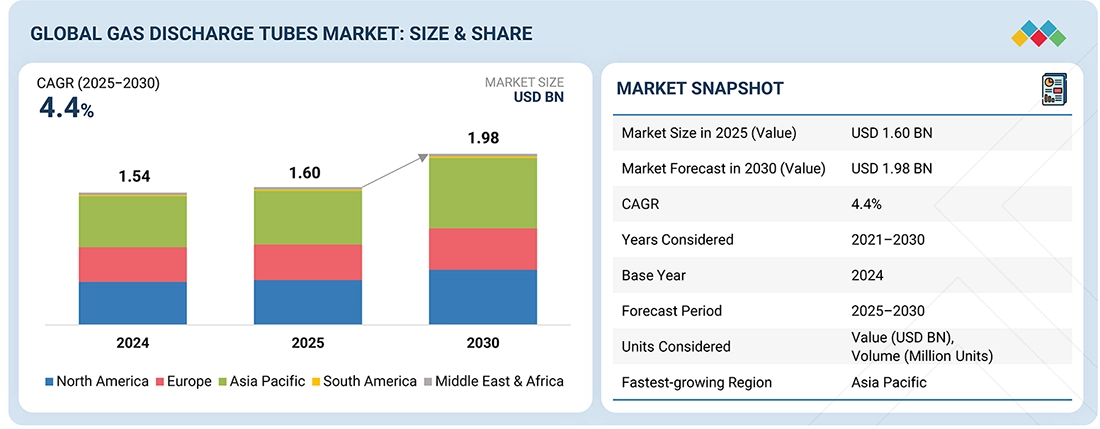
According to Marketsandmarkets, the global Gas Discharge Tubes Market Size was valued at USD 1.60 billion in 2025 and is projected to reach USD 1.98 billion by 2030, growing at a CAGR of 4.4% from 2025 to 2030. Demand for gas discharge tubes is driven by the rapid expansion of telecommunications infrastructure, particularly 5G networks, increasing adoption of industrial automation systems, and growing deployment of renewable energy and EV charging infrastructure. Rising emphasis on equipment protection, network reliability, and compliance with international safety standards further supports market growth.
REPORT SCOPE
| REPORT METRIC | DETAILS |
|---|---|
| Market Size in 2025 (Value) | USD 1.60 Billion |
| Market Forecast in 2030 (Value) | USD 1.98 Billion |
| Growth Rate | CAGR of 4.4% from 2025–2030 |
| Years Considered | 2021–2030 |
| Base Year | 2024 |
| Forecast Period | 2025–2030 |
| Units Considered | Value (USD Billion), Volume (Million Units) |
| Report Coverage | Revenue Forecast, Company Ranking, Competitive Landscape, Growth Factors, and Trends |
| Top Companies |
|
| Growth Driver |
|
| Segments Covered |
|
| Regional Scope | North America, Europe, Asia Pacific, and RoW |
GAS DISCHARGE TUBES MARKET KEY TAKEAWAYS
-
By RegionBy region, Asia Pacific is expected to dominate the gas discharge tubes market share, growing at a CAGR of 5.5% during the forecast period.
-
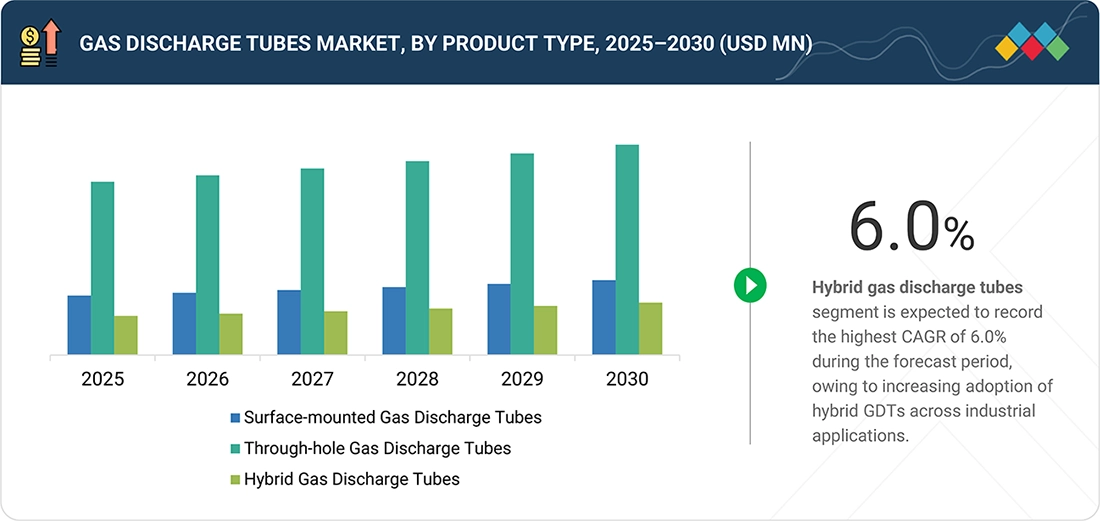
By Product TypeBy prodyct type, the through-hole gas discharge tubes segment is expected to dominate the market in 2025.
-
By Number of ElectrodeBy number of electrode, three-electrodes gas discharge tubes are expected to record the highest CAGR during the forecast period.
-
By VoltageBy voltage, the high-voltage surge segment is expected to record the highest growth rate of 4.7% from 2025 to 2030.
-
By MaterialBy material, ceramic segment is expected to account for larger market share in 2025 (~93%).
-
By ApplicationBy application, power distribution systems is expected to record the highest CAGR during the forecast period.
-
Competitive Landscape - Key PlayersLittelfuse, Inc. (US), Eaton (Ireland), Weidmüller Interface GmbH & Co. KG (Germany), HUBER+SUHNER (Switzerland), TDK Corporation (Japan) were identified as some of the star players in the global gas discharge tubes market, given their strong market share and product footprint.
-
Competitive Landscape - Startups/SMEsCITEL-2CP SAS (France), PolyPhaser Corporation (US), Xiamen SET Electronics Co., Ltd. (China), Shanghai Yint Electronic Co., Ltd. (China), and UN Semiconductor (South Korea), among others, have established themselves as specialized providers in the gas discharge tubes (GDT) market by building strong capabilities in surge protection for telecom, RF systems, and industrial applications. These companies are strengthening their market presence by offering application-specific GDTs designed for high surge handling, low capacitance, and reliable overvoltage protection across critical infrastructure. Through continuous product innovation, development of high-frequency and compact GDT designs, and expansion across Asia Pacific and telecom-driven markets, they are scaling their commercial footprint in the global gas discharge tubes market.
Gas discharge tubes (GDTs) are increasingly driven by the rising need for robust surge protection in telecom, power, and data infrastructure. The expansion of 5G networks, data centers, and smart grid systems is exposing equipment to higher lightning and transient voltage risks, where GDTs offer high surge handling capability and long lifespan. Their ability to handle extreme energy surges at low cost makes them essential in primary protection stages. Additionally, growing deployment of sensitive electronics in industrial and IoT applications is driving demand for reliable front-end protection. The shift toward hybrid protection architectures further reinforces GDT adoption as a key component in coordinated surge protection designs.
Source: Secondary Research, Interviews with Experts, MarketsandMarkets Analysis
TRENDS & DISRUPTIONS IMPACTING CUSTOMERS' CUSTOMERS
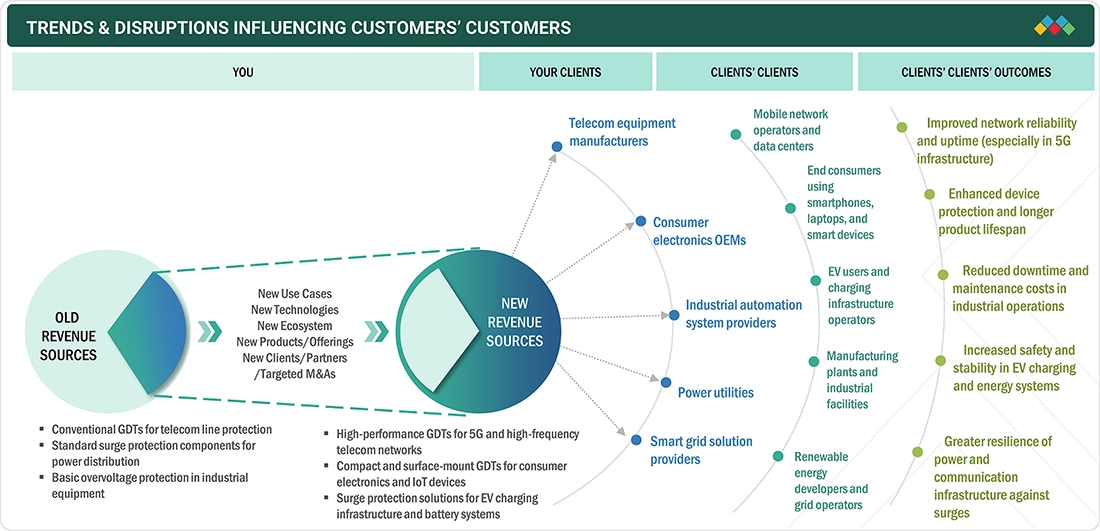
The gas discharge tubes industry is shifting from conventional telecom line protection and basic surge protection components to advanced solutions such as high-performance GDTs for 5G networks, compact surface-mount devices for consumer electronics, and integrated protection systems for EV charging and renewable energy infrastructure. Demand from telecom equipment manufacturers, consumer electronics OEMs, industrial automation providers, and power utilities is creating new growth opportunities for GDT suppliers. Companies are focusing on miniaturization, high-frequency performance, and integration with hybrid protection technologies to enhance reliability and reduce system downtime. These trends are supporting improved network resilience, enhanced device protection, and more efficient operation of energy and communication infrastructure.
Source: Secondary Research, Interviews with Experts, MarketsandMarkets Analysis
GAS DISCHARGE TUBES MARKET DYNAMICS

Level
-
Rising demand for surge protection in telecommunications infrastructure

-
Growth in industrial automation and control systems


Level
-
High capital investment and manufacturing complexity associated with precision GDT production

-
Performance limitations in high-speed and miniaturized electronic applications


Level
-
Surge protection in EV charging stations and smart mobility infrastructure

-
Increasing deployment in renewable energy systems such as solar inverters and wind power installations


Level
-
Availability of alternative surge protection technologies

-
Continuous need for product innovation to meet evolving high-frequency and compact design requirements

Source: Secondary Research, Interviews with Experts, MarketsandMarkets Analysis
Driver: Rising demand for surge protection in telecommunications infrastructure
Rising demand for surge protection in telecommunications infrastructure is a key growth driver for the gas discharge tubes market. The rapid deployment of 5G networks and expansion of data centers are increasing the need for reliable overvoltage protection. GDTs play a critical role in safeguarding sensitive communication equipment from lightning and transient surges. This drives consistent adoption across telecom and networking applications.
Restraint: High capital investment and manufacturing complexity associated with precision GDT production
High capital investment and manufacturing complexity associated with precision GDT production act as key restraints. The requirement for high-quality materials, controlled gas environments, and stringent performance standards increases production costs. This can limit entry for new players and impact pricing competitiveness. Additionally, maintaining consistency in performance across high-volume production remains a challenge.
Opportunity: Surge protection in EV charging stations and smart mobility infrastructure
Surge protection in EV charging stations and smart mobility infrastructure presents significant growth opportunities. Increasing adoption of electric vehicles is driving the need for reliable protection of charging equipment and battery systems. GDTs are well-suited for handling high-energy surges in these applications. This expands their role beyond traditional telecom into emerging energy ecosystems.
Challenge: Availability of alternative surge protection technologies
The availability of alternative surge protection technologies such as MOVs and TVS diodes poses a major challenge to GDT adoption. These alternatives often offer faster response times and easier integration in compact electronic designs. As a result, GDT manufacturers face pressure to innovate and differentiate their offerings. Balancing performance, size, and cost remains critical to sustaining competitiveness.
GAS DISCHARGE TUBES MARKET: COMMERCIAL USE CASES ACROSS INDUSTRIES
| COMPANY | USE CASE DESCRIPTION | BENEFITS |
|---|---|---|
 |
Supplies GDTs for telecom, industrial, consumer electronics, and EV applications, including high-surge and surface-mount solutions | Enables high surge protection | Reduces equipment damage risk | Supports compact designs | Ensures compliance |
 |
Provides GDT-based surge protection for power distribution, industrial systems, and critical infrastructure | Improves system reliability | Minimizes downtime | Enhances asset protection | Spports grid stability |
 |
Offers GDT-integrated surge protection devices for industrial automation, control systems, and energy infrastructure | Ensures operational continuity |Stabilizes signal transmission | Reduces maintenance costs | Supports compliance |
 |
Develops RF/coaxial GDT-based protection for telecom networks, base stations, and high-frequency systems | Delivers low signal loss | Protects against lightning/EMI | Supports 5G performance | Enhances reliability |
 |
Manufactures GDT-based surge arresters for telecom, automotive, power, and consumer electronics | Provides low capacitance protection | Minimizes interference | Ensures reliability | Enhances component safety |
Logos and trademarks shown above are the property of their respective owners. Their use here is for informational and illustrative purposes only.
GAS DISCHARGE TUBES MARKET ECOSYSTEM
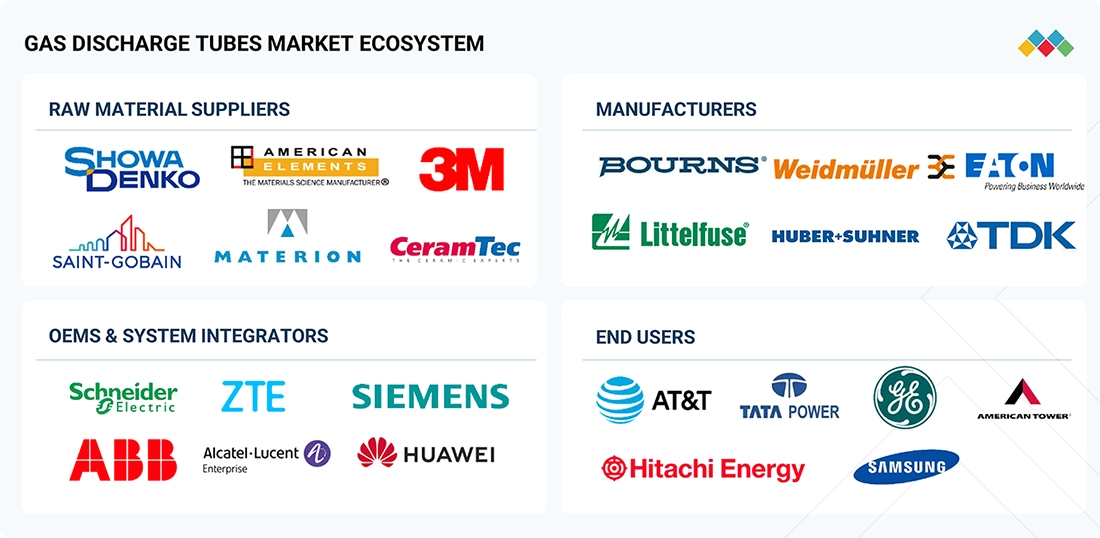
The gas discharge tubes market growth ecosystem comprises raw material suppliers, core component manufacturers, OEMs and system integrators, and end users that collectively support surge protection across communication, energy, and industrial systems. Raw material suppliers provide specialized ceramics, metals, and gases that are essential for reliable GDT performance. Manufacturers develop and supply GDTs that are integrated by OEMs and system integrators into telecom equipment, industrial automation systems, and power infrastructure. End users, including telecom operators, utilities, electronics manufacturers, and energy providers, drive demand through requirements for network reliability, equipment protection, and compliance with safety standards, supporting continuous innovation and deployment of advanced surge protection solutions.
Logos and trademarks shown above are the property of their respective owners. Their use here is for informational and illustrative purposes only.
GAS DISCHARGE TUBES MARKET SEGMENTS
Source: Secondary Research, Interviews with Experts, MarketsandMarkets Analysis
Gas Discharge Tubes Market, By Product Type
The through-hole gas discharge tubes segment is expected to dominate the market during the forecast period due to its high-surge-handling capability and widespread use in telecom and power infrastructure. Increasing deployment in robust protection applications continues to support segment demand.
Gas Discharge Tubes Market, By Number of Electrode
The three-electrode gas discharge tubes segment is anticipated to witness the highest growth during the forecast period as it offers improved protection performance and enhanced stability in complex circuit environments. Growing demand from telecom and industrial applications is driving adoption.
Gas Discharge Tubes Market, By Voltage
The high-voltage gas discharge tubes segment is expected to experience strong growth during the forecast period, driven by rising demand in power distribution systems, renewable energy infrastructure, and EV charging applications requiring high surge protection capability.
Gas Discharge Tubes Market, By Material
The ceramic gas discharge tubes segment is expected to dominate the market during the forecast period due to its superior durability, thermal stability, and reliability in high-energy surge conditions across telecom and industrial applications.
Gas Discharge Tubes Market, By Application
The power distribution systems segment is expected to witness significant growth during the forecast period, driven by increasing investments in grid infrastructure, smart grids, and renewable energy integration requiring reliable surge protection solutions.
GAS DISCHARGE TUBES MARKET BY REGION
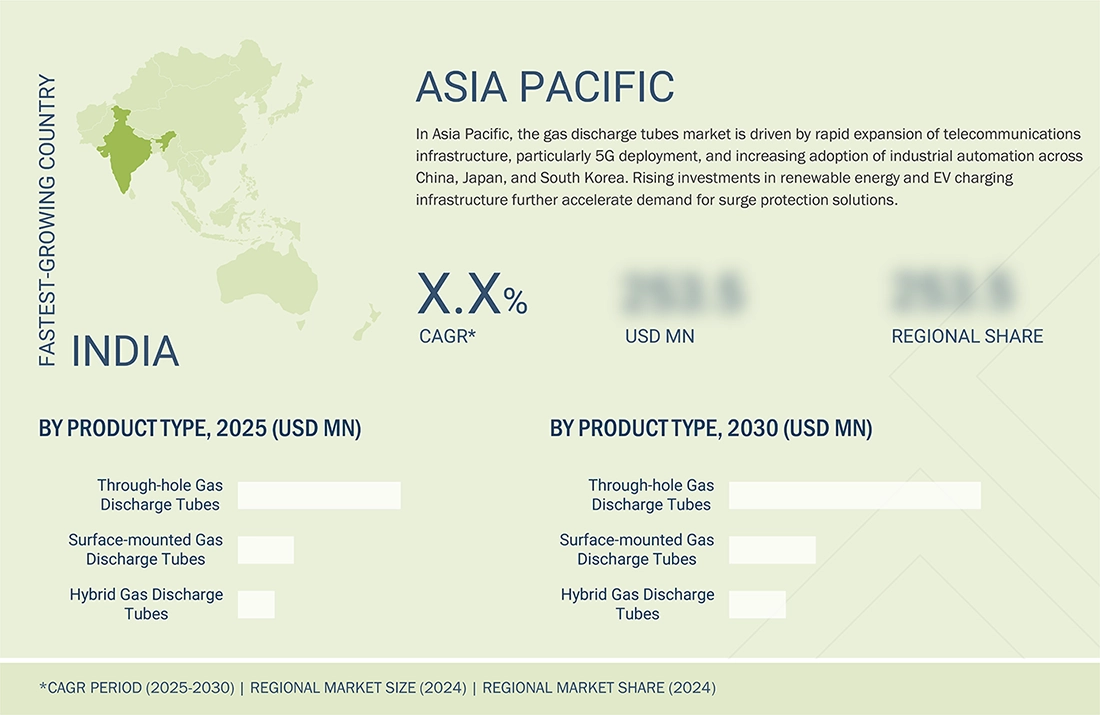
Asia Pacific to be fastest-growing region across global pharmaceutical manufacturing equipment market during forecast period
Asia Pacific is expected to grow at the fastest rate in the gas discharge tubes market during the forecast period, driven by rapid expansion of telecommunications infrastructure, particularly 5G networks, across China, India, Japan, and South Korea. Increasing investments in industrial automation, renewable energy systems, and EV charging infrastructure are supporting regional demand for surge protection solutions. The presence of strong electronics manufacturing hubs and local component suppliers is strengthening supply capabilities and enabling wider adoption of advanced GDT technologies across the region.
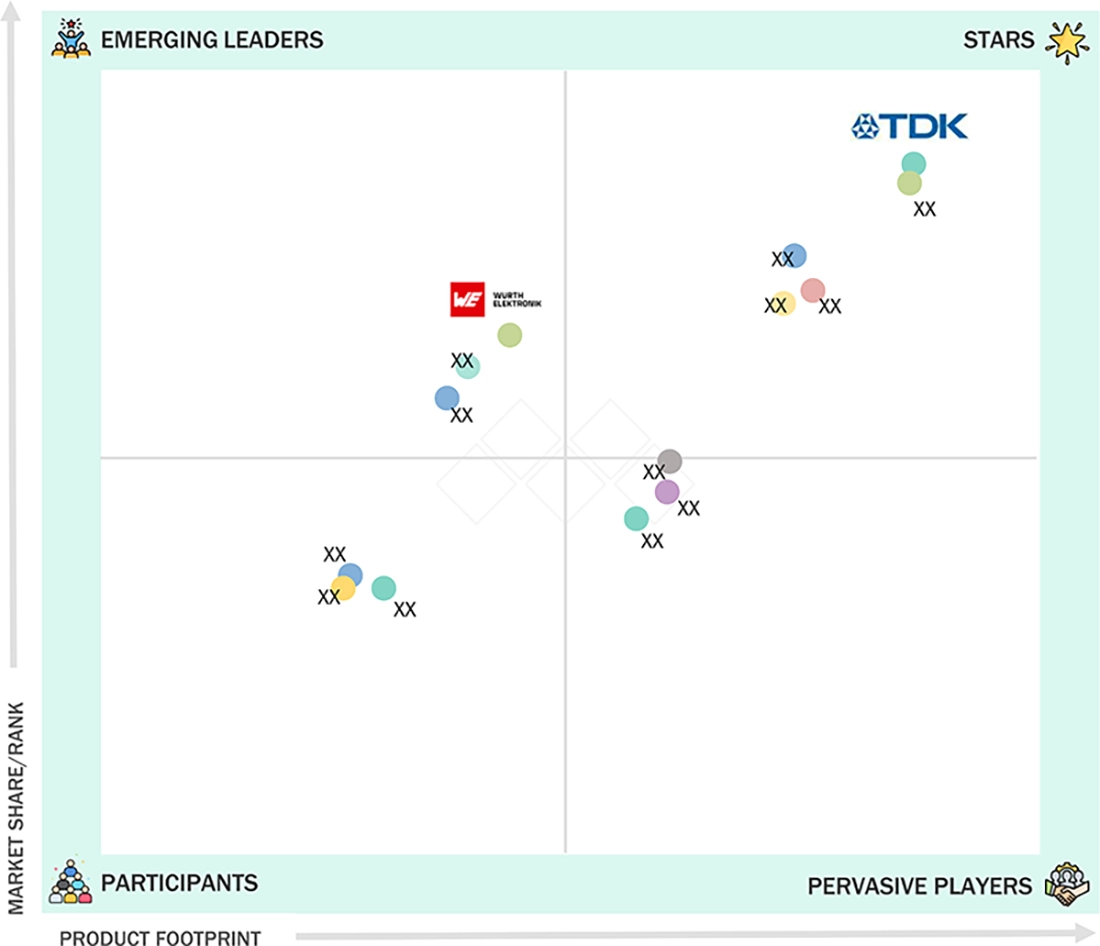
GAS DISCHARGE TUBES MARKET: COMPANY EVALUATION MATRIX
In the global gas discharge tubes market matrix, Eaton (Ireland) and TDK Corporation (Japan) are positioned as STAR players with strong market presence and broad portfolios across telecom, industrial, and power protection applications. Their advanced product offerings, global distribution networks, and focus on high-performance and miniaturized surge protection solutions support large-scale deployment across critical infrastructure. Würth Elektronik eiSos GmbH & Co. KG (Germany) is positioned as an Emerging Leader, strengthening its presence through expanding GDT and circuit protection portfolios, focus on compact and application-specific designs, and strategic alignment with growing demand from industrial electronics and automotive applications.
Source: Secondary Research, Interviews with Experts, MarketsandMarkets Analysis
KEY MARKET PLAYERS
- Littelfuse, Inc. (US)
- TDK Corporation (Japan)
- Bourns, Inc. (US)
- Eaton (Ireland)
- Weidmüller Interface GmbH & Co. KG (Germany)
- HUBER+SUHNER (Switzerland)
- Phoenix Contact (Germany)
- YAGEO Group (Taiwan)
- DEHN SE (Germany)
- Sankosha U.S.A., Inc. (US)
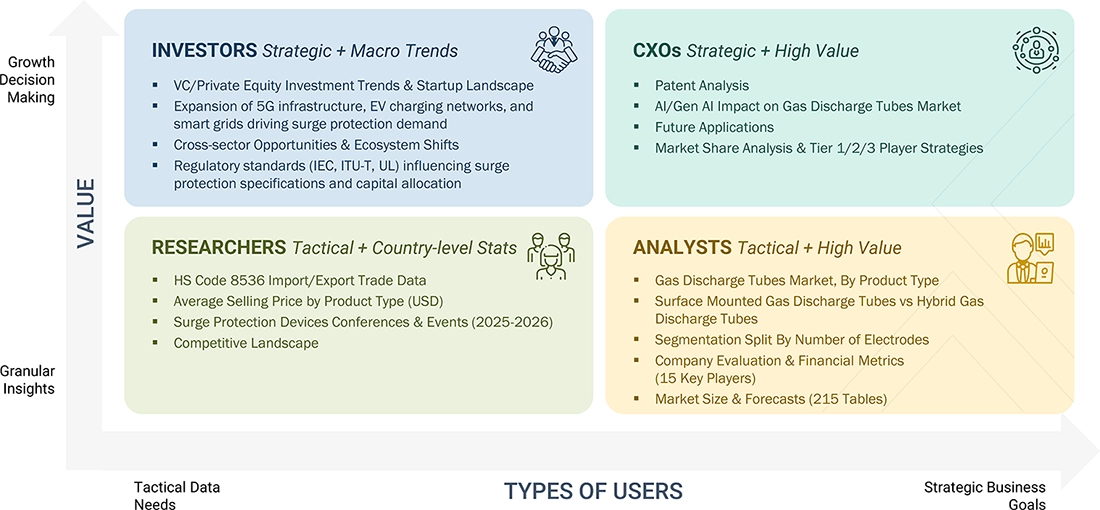
WHAT IS IN IT FOR YOU: GAS DISCHARGE TUBES MARKET REPORT CONTENT GUIDE
DELIVERED CUSTOMIZATIONS
We have successfully delivered the following deep-dive customizations:
| CLIENT REQUEST | CUSTOMIZATION DELIVERED | VALUE ADDS |
|---|---|---|
| GDT Component Manufacturer |
|
|
| Telecom Surge Protection Equipment Provider |
|
|
| Industrial Power Electronics & Protection Module Maker |
|
|
| Railway & Transportation Electronics Supplier |
|
|
| Consumer Electronics & Smart Home Device OEM |
|
|
RECENT DEVELOPMENTS
- February 2026: Bourns, Inc. introduced the GDT225HE Series, a high-voltage, high-energy gas discharge tube arrester designed for demanding surge-protection applications. The new series is optimized for high-energy AC-DC power systems, including EV charging infrastructure, battery energy storage systems and industrial power-conversion equipment, and provides high surge-current capability in a compact package. The development expands Bourns' GDT portfolio for higher-voltage and higher-energy power applications.
- February 2026: YAGEO Group introduced new B32-HT Series gas discharge tubes for telephone-interface protection. The GDTs provide high insulation resistance, capacitance of up to 0.5 pF, and surge-handling capability of up to 500 A at 8/20 μs and 4 kV at 10/700 μs. The product development expands YAGEO's circuit-protection portfolio with GDTs designed to protect telecommunications interfaces against transient overvoltage events.
- February 2026: Phoenix Contact expanded its surge-protection portfolio with new VAL-US-SPP surge-protection devices for NEMA electrical-system configurations. The devices are designed to protect electrical installations against transient overvoltages, complementing Phoenix Contact's broader portfolio of protection products incorporating gas-discharge technology. The development strengthens the company's surge-protection offering for industrial and electrical infrastructure applications.
- February 2026: Eaton continued to expand its Bussmann series MOVGT hybrid overvoltage-protection portfolio, which combines a metal-oxide varistor (MOV) with a gas discharge tube (GDT) connected in series. The architecture is designed to prevent MOV aging and damage while providing enhanced surge protection and longer service life compared with conventional MOV-only protection. The development directly applies GDT technology to circuit protection for electrical and electronic equipment.
- February 2026: HUBER+SUHNER expanded its range of GDT-based surge-protection components, including coaxial surge-protection devices using GDT technology for RF applications up to 1.0 GHz and 2.5 GHz. Its portfolio includes versions with different GDT voltage ratings and configurations for protecting coaxial systems while maintaining RF, data and DC transmission. The development reinforces HUBER+SUHNER's GDT-based protection offering for telecommunications, antenna and other high-frequency applications.
Table of Contents
 Exclusive indicates content/data unique to MarketsandMarkets and not available with any competitors.
Methodology
The research process for this study involved systematic gathering, recording, and analysis of data on customers and companies operating in the gas discharge tubes market. This process involved the extensive use of secondary sources, directories, and databases (Factiva and Oanda) to identify and collect valuable information for the comprehensive, technical, market-oriented, and commercial study of the gas discharge tubes market. In-depth interviews were conducted with primary respondents, including experts from core and related industries, as well as preferred manufacturers, to obtain and verify critical qualitative and quantitative information and assess growth prospects. Key players in the gas discharge tubes market were identified through secondary research, and their market rankings were determined through a combination of primary and secondary research. This research involved studying the annual reports of top players and conducting interviews with key industry experts, including CEOs, directors, and marketing executives.
Secondary Research
Various sources were utilized in the secondary research process to identify and collect information relevant to this study. These include company annual reports, press releases, investor presentations, white papers, technology journals, certified publications, articles by recognized authors, directories, and databases. Secondary research was primarily used to gather key information about the industry’s value chain, the total pool of market players, market classification according to industry trends at the most detailed level, regional markets, and key developments from both market and technology-oriented perspectives.
Primary Research
Primary research was conducted to identify segmentation types, key players, competitive landscape, and key market dynamics, including drivers, restraints, opportunities, challenges, and industry trends, as well as key strategies adopted by players operating in the gas discharge tubes market. Extensive qualitative and quantitative analyses were performed on the complete market engineering process to list key information and insights throughout the report.
Extensive primary research has been conducted after gaining insights into the gas discharge tubes market scenarios through secondary research. Several primary interviews were conducted with experts from the demand (region) and supply sides (product type number of electrodes, voltage material, and application) across four major geographic regions: North America, Europe, Asia Pacific, and RoW. Approximately 60% and 40% of the primary interviews were conducted from the supply and demand sides, respectively. These primary data have been collected through questionnaires, emails, and telephonic interviews.
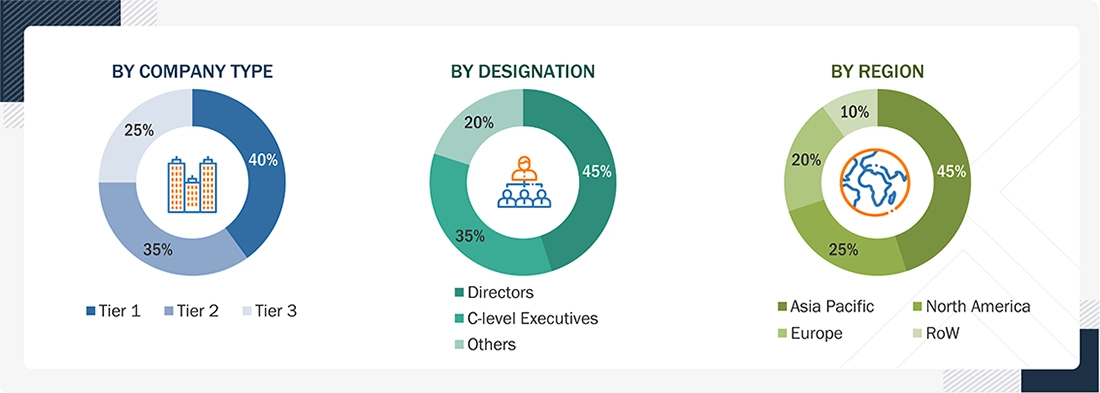
Notes: The three tiers of companies have been defined based on their total/segmental revenue as of 2024: Tier 1 = >USD 1 billion, Tier 2 = USD 500 million–USD 1 billion, and Tier 3 = <USD 500 million.
Other designations include sales, marketing, and product managers.
To know about the assumptions considered for the study, download the pdf brochure
Market Size Estimation
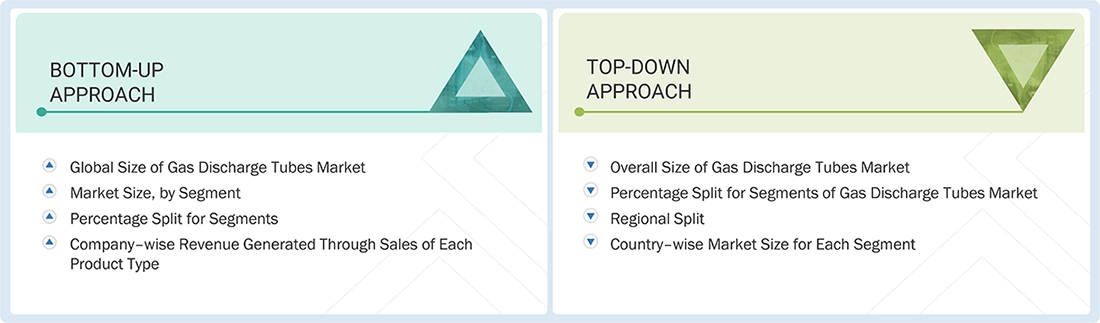
In the complete market engineering process, top-down and bottom-up approaches and several data triangulation methods were implemented to estimate and validate the size of the gas discharge tubes market and various other dependent submarkets. Key players were identified through secondary research, and their market share in the respective regions was determined through a combination of primary and secondary research. This entire research methodology involved studying the annual and financial reports of the top players, as well as conducting interviews with experts (CEOs, VPs, directors, and marketing executives) to gather key insights (both quantitative and qualitative).
All percentage shares, splits, and breakdowns were determined using secondary sources and verified through primary sources. All the possible parameters that affect the markets covered in this research study were accounted for, viewed in detail, verified through primary research, and analyzed to obtain the final quantitative and qualitative data. This data was consolidated and supplemented with detailed inputs and analysis from MarketsandMarkets and presented in this report.
Data Triangulation
After determining the overall market size through the estimation process, as explained above, the total market was divided into several segments and subsegments. To complete the overall market engineering process and obtain precise statistics for all segments and subsegments, market breakdown and data triangulation procedures were employed, as applicable. The data was triangulated by studying various factors and trends from the demand and supply sides. Additionally, the market has been validated using both top-down and bottom-up approaches.
Market Definition
The gas discharge tubes market covers the global ecosystem involved in the design, development, and production of surge protection components used to protect electronic and electrical systems from sudden voltage spikes. Gas discharge tubes are widely used to safeguard equipment from lightning strikes, switching surges, and electrical disturbances across telecommunications networks, power systems, industrial equipment, and consumer electronics. These components help maintain system reliability, ensure operational safety, and support compliance with industry standards. Manufacturers integrate gas discharge tubes into circuit protection solutions to reduce equipment damage, improve performance, and extend the life of electronic systems in demanding environments.
The gas discharge tubes market is segmented by product type, including through-hole gas discharge tubes, surface-mounted gas discharge tubes, and hybrid gas discharge tubes. By number of electrodes, the market includes two-electrode and three-electrode gas discharge tubes. By voltage, it is categorized into high-voltage surge and low-to-medium-voltage surge segments. By material, the market includes ceramics and other materials such as glass and quartz. By application, the market covers power distribution systems, telecommunication networks, consumer electronics, and industrial applications. The market is growing due to increasing demand for reliable surge protection in telecommunications and energy infrastructure. Expansion of renewable energy systems and rising use of connected electronic devices are further supporting market growth.
Key Stakeholders
- Gas discharge tube manufacturers
- Raw material suppliers (ceramics, metals, gas)
- Distributors and channel partners
- Original equipment manufacturers across telecommunications, industrial, and consumer electronics
- Power utilities and energy infrastructure providers
- Electric vehicle charging infrastructure providers
- Industrial automation system integrators
- Telecommunications service providers and network operators
- Technology standards organizations, forums, and industry associations
- Research institutions and testing laboratories
Report Objectives
- To describe and forecast the gas discharge tubes market, by product type, number of electrode, voltage, material, and application, in terms of value
- To forecast the market size for four key regions, namely North America, Europe, Asia Pacific, and the Rest of the World (RoW), along with their country-level analyses, in terms of value
- To estimate the market size, by product type, in terms of volume
- To provide detailed information regarding the major factors influencing the growth of the market, namely, drivers, restraints, opportunities, and challenges
- To strategically analyze micromarkets with respect to individual growth trends, prospects, and contributions to the total market
- To study the complete value chain of the gas discharge tubes ecosystem, along with market trends and use cases
- To analyze opportunities for stakeholders in the market by identifying high-growth segments of the market
- To strategically profile key players and comprehensively analyze their core competencies, along with detailing the competitive landscape for market leaders
- To analyze competitive developments, such as product launches, mergers, acquisitions, partnerships, collaborations, and expansions, in the gas discharge tubes market
- To benchmark market players using the company evaluation matrix, which analyzes players based on various parameters within broad business categories and product strategies
- To provide information on Porter’s five forces analysis, pricing analysis, trade analysis, regulatory landscape, ecosystem analysis, case study analysis, patent analysis, technology analysis, unmet needs of various applications, interconnected markets and cross-sector opportunities, macroeconomic outlook, impact of artificial intelligence, and impact of 2025 United States tariff
- To benchmark market players using the company evaluation quadrant, which analyzes players based on various parameters within broad business categories and product strategies
- To provide a macroeconomic outlook for all regions covered in this report
- To provide information on ecosystem analysis, case study analysis, patent analysis, technology analysis, unmet needs from various applications, interconnected markets, and cross-sector opportunities, the impact of artificial intelligence and its use cases, and the impact of 2025 United States tariff.
Key Questions Addressed by the Report
What is the projected market size of the gas discharge tubes market?
The gas discharge tubes market is projected to reach USD 1.98 billion by 2030, growing from USD 1.60 billion in 2025.
What is the CAGR of the gas discharge tubes market?
The market is expected to grow at a CAGR of 4.4% during 2025–2030, indicating steady growth driven by infrastructure expansion.
What are the key growth drivers of the market?
Growth is driven by expansion of 5G telecom networks, renewable energy deployment, EV charging infrastructure, and increasing need for surge protection in electronic systems.
What are the major market trends in the industry?
Key trends include rising adoption of hybrid protection solutions, increased use in IoT and data centers, and demand for high-reliability surge protection devices.
Which region dominates the gas discharge tubes market?
Asia Pacific dominates the market and is expected to grow fastest, driven by telecom expansion, electrification, and grid modernization.
What are the major applications of gas discharge tubes?
Applications include telecommunications, power distribution systems, consumer electronics, and industrial equipment protection.
Which product segment holds the largest market share?
The through-hole gas discharge tubes segment holds the largest share due to widespread usage in surge protection systems.
Which segment is expected to grow the fastest?
The three-electrode and hybrid GDT segments are expected to grow fastest, due to improved protection performance and integration capabilities.
Who are the key companies in the gas discharge tubes market?
Major players include Littelfuse, TDK Corporation, Bourns, Eaton, Phoenix Contact, HUBER+SUHNER, TE Connectivity, YAGEO Group, and DEHN SE.
How is the market analyzed in the report?
The report uses top-down and bottom-up approaches, segmentation analysis, and evaluation of industry trends, investments, and regional demand patterns.


Personalize This Research
- Triangulate with your Own Data
- Get Data as per your Format and Definition
- Gain a Deeper Dive on a Specific Application, Geography, Customer or Competitor
- Any level of Personalization
Let Us Help You
- What are the Known and Unknown Adjacencies Impacting the Gas Discharge Tubes Market
- What will your New Revenue Sources be?
- Who will be your Top Customer; what will make them switch?
- Defend your Market Share or Win Competitors
- Get a Scorecard for Target Partners

Custom Market Research Services
We Will Customise The Research For You, In Case The Report Listed Above Does Not Meet With Your Requirements
Get 10% Free CustomisationTESTIMONIALS

Tetsuya Ohhira
Business Development Manager-Technology Business
Nikon Corporation,
Leading Japanese MNC specializing in optics and imaging productswww.nikon.com
MarketsandMarkets™ response
is quick. Their attitude is flexible and positive. Analyst Insights are globally considered and
significant. Client Services quickly respond to our inquiry and demand. Their wide range of global
surveys help us make our strategic plan.
We hope Knowledge Store will be easier to search
for a report.
VP - Marketing & Business Development
Leading Provider of Process Control Solutions
We engaged with MarketsandMarkets on a study to perform an analysis and recommend a Go-To-Market strategy for metrology and process control in the semiconductor market. The study was tailored to our targets and needs with well-defined milestones. Our overall experience with the MarketsandMarkets team was very good throughout the project in all aspects including the analysis methodologies used, the quality and depth of primary and secondary data sets, the professionalism and flexibility of the team and the ability to meet the target schedule and milestones. We want to thank MarketsandMarkets team for a job well done.
- US Gas Discharge Tubes Market
- Canada Gas Discharge Tubes Market
- Mexico Gas Discharge Tubes Market
- Germany Gas Discharge Tubes Market
- UK Gas Discharge Tubes Market
- France Gas Discharge Tubes Market
- Italy Gas Discharge Tubes Market
- Rest Of Europe Gas Discharge Tubes Market
- China Gas Discharge Tubes Market
- Japan Gas Discharge Tubes Market
- India Gas Discharge Tubes Market
- South Korea Gas Discharge Tubes Market
- Rest Of Asia Pacific Gas Discharge Tubes Market
- GCC Gas Discharge Tubes Market
- Rest Of Middle East Gas Discharge Tubes Market






Growth opportunities and latent adjacency in Gas Discharge Tubes Market