
Rest Of Latin America Antibody Discovery Services Market (2025-2030)

The Rest Of Latin America Antibody Discovery Services Market was valued at $2.6 Million in 2025 and projected to reach to $4.2 Million by 2030, representing a compound annual growth rate of 9.8%. Rest Of Latin America's antibody discovery services market is poised for steady expansion as regional biopharmaceutical companies increase R&D investments and international firms establish outsourcing partnerships.


| Market Size in | USD 26.32 MN |
| Market Forecast in | |
| CAGR | |
| Forecast Period | |
| Units Considered | Value (USD MN) |
Rest Of Latin America Antibody Discovery Services Market Trends and Insights
- This 9.8% compound annual growth rate reflects increasing investment in biopharmaceutical research and development across the region.
- Rest Of Latin America is emerging as a secondary hub for antibody discovery outsourcing, driven by cost-effective research capabilities and growing pharmaceutical sector maturation. The market in Rest Of Latin America is characterized by rising demand for monoclonal antibody development and therapeutic antibody discovery services.
- Rest Of Latin America's research institutions and contract research organizations are enhancing their capabilities to support global pharmaceutical companies seeking alternative development locations.
- Between 2025 and 2030, Rest Of Latin America is expected to capture greater market share as regional players invest in advanced discovery platforms and regulatory compliance infrastructure. Rest Of Latin America's growth trajectory is supported by increasing collaboration between local biotech firms and multinational pharmaceutical companies.
- The region's competitive labor costs and expanding scientific expertise position Rest Of Latin America as an attractive destination for antibody discovery outsourcing, complementing the broader Latin America market expansion..
Key Market Statistics
- CAGR (2025-2030) 9.8% CAGR
- Market Size, 2025 ~USD 2.6 Million
- Forecast, 2030 ~USD 4.2 Million
- Country Rest Of Latin America
Rest Of Latin America Antibody Discovery Services Market Overview
Market Valuation Growth :
Rest Of Latin America's antibody discovery services market is valued at $2.6 million in 2025, with projections reaching $4.2 million by 2030, representing a robust 9.8% CAGR over the forecast period.
Secondary Outsourcing Hub :
The region is emerging as a secondary hub for antibody discovery outsourcing, attracting biopharmaceutical companies seeking cost-effective alternatives to North American and European service providers.
R&D Investment Acceleration :
Increasing investment in biopharmaceutical research and development across Rest Of Latin America is driving demand for specialized antibody discovery services and supporting infrastructure development.
Regional Competitive Advantage :
Rest Of Latin America offers competitive pricing, skilled scientific talent, and growing regulatory frameworks that position the region favorably for antibody discovery service expansion and partnerships.
Rest Of Latin America Antibody Discovery Services Market Dynamics
- The 9.8% CAGR reflects growing recognition of the region's scientific capabilities and cost advantages compared to developed markets.
- Emerging research institutions and contract research organizations are strengthening the service ecosystem. Looking ahead, the market will benefit from increased collaboration between academic institutions and commercial entities, improved regulatory harmonization, and rising demand for monoclonal antibody therapeutics.
- While growing slower than the global 13.3% CAGR, Rest Of Latin America's market trajectory demonstrates sustainable growth potential driven by regional talent development, infrastructure investments, and strategic positioning within the broader Latin American biotech landscape..
Market Ecosystem
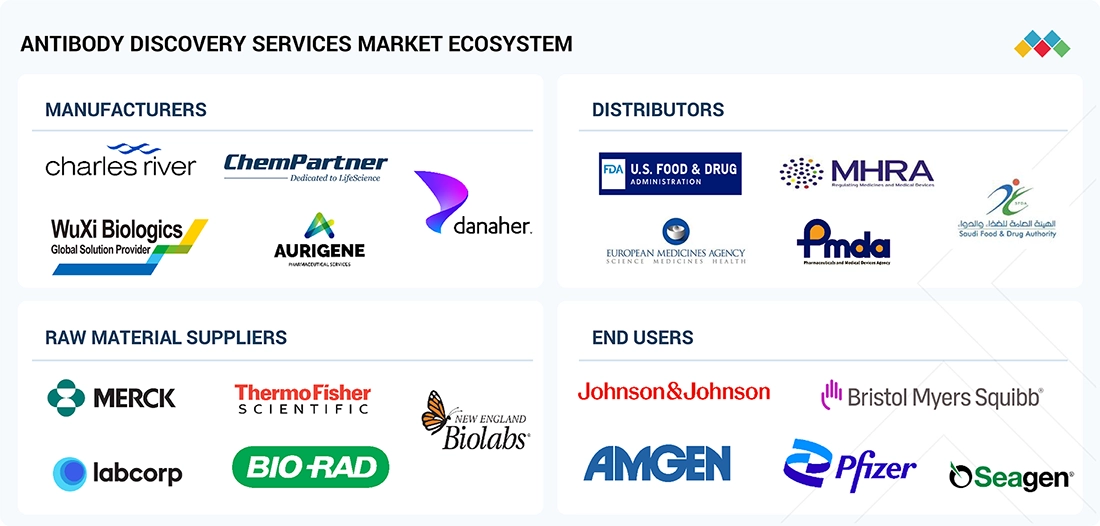
antibody-discovery-market: COMMERCIAL USE CASES ACROSS INDUSTRIES
| COMPANY | USE CASE DESCRIPTION | BENEFITS |
|---|---|---|
 |
Rapid discovery of SARS-CoV-2 neutralizing antibodies from convalescent patient samples using AbCellera’s single-cell platform; program advanced to bamlanivimab (LY-CoV555) with Lilly. | Speed to clinic via high-throughput single-cell mining and on-platform characterization; therapeutic-grade leads ready for transfer; ability to stand up large discovery campaigns quickly in response to emerging pathogens. |
 |
Multi-target collaboration with Biocytogen using RenMab fully human-Ig mice for in-vivo immunization, discovery, and characterization, with options for development/licensing. | Human-sequence antibodies (reduced re-engineering) with strong developability; higher probability of translation from in-vivo selection; scalable platform across multiple targets under a single master framework. |
Logos and trademarks shown above are the property of their respective owners. Their use here is for informational and illustrative purposes only.
Related Ecosystem
Pharmaceuticals
- Bioreactors
- Analytical Testing
- Bioanalytical Testing Services
- Cell Counters
- Data Management Services
- Thermo Fisher Scientific Inc.
- Merck KGaA
- SANOFI
- Pfizer Inc.
- NOVARTIS
Key Takeaways
- Rest Of Latin America's antibody discovery services market is valued at $2.6 million in 2025 and is forecast to reach $4.2 million by 2030, representing a 9.8% CAGR.
- Rest Of Latin America is positioning itself as a cost-effective alternative for antibody discovery outsourcing, attracting multinational pharmaceutical partnerships.
- Rest Of Latin America's market growth is driven by enhanced research infrastructure, regulatory improvements, and increasing local biotech sector maturation.
- Rest Of Latin America's competitive labor costs and scientific expertise are key differentiators supporting market expansion through 2030.
Antibody Discovery Services Market Report Scope
| Report Metric | Details |
|---|---|
| Base Year | 2025 |
| Fastest Growing Segment | SINGLE-CELL TECHNOLOGIES (Technology) |
| Forecast Period | 2025-2030 |
| Growth Rate | CAGR of 13.3% from 2025 to 2030 |
| Largest Segment | MONOCLONAL ANTIBODIES (Molecule) |
| Market Size Base Year (Billions) | ~USD 1.9 (2025) |
| Revenue Forecast (Billions) | ~USD 3.54 (2030) |
| Segments Covered | Type, Technology, Host, Molecule, End User |
Rest Of Latin America Antibody Discovery Services Market Report Segmentation
5 segment dimensions are covered across the global market.
By Type
- Antibody Engineering & Optimization
- Antigen Design & Production
- Immunization & Host Management
- Other Antibody Discovery Services
- Target Identification & Validation
By Technology
- Hybridoma Technology
- Other Antibody Engineering & Optimization Technologies
- Phage Display Technology
- Single-Cell Technologies
- Single-Cell Technology
By Host
- Camelids
- Chicken
- Mouse & Rat
- Other Hosts
- Rabbit
By Molecule
- Monoclonal Antibodies
- Other Molecules
- Polyclonal Antibodies
By End User
- Academic & Research Institutes
- Other End Users
- Pharmaceutical & Biotechnology Companies
Target Audience
- Biopharmaceutical Companies : Biopharmaceutical firms seeking cost-effective antibody discovery outsourcing partners in Rest Of Latin America need market data to identify service providers, assess regional capabilities, and plan R&D collaborations.
- Contract Research Organizations (CROs) : CROs operating in or expanding into Rest Of Latin America require market intelligence to benchmark service offerings, understand competitive positioning, and capitalize on growing regional demand for antibody discovery services.
- Investment & Private Equity Firms : Investors evaluating opportunities in Rest Of Latin America's biotech sector need detailed market analysis to assess growth potential, identify acquisition targets, and make informed funding decisions in antibody discovery services.
- Academic & Research Institutions : Universities and research centers in Rest Of Latin America need market insights to guide commercialization strategies, establish industry partnerships, and develop antibody discovery capabilities aligned with regional demand.
- Healthcare & Regulatory Consultants : Consultants advising clients on Rest Of Latin America market entry require comprehensive regional data to provide strategic guidance on regulatory pathways, competitive landscapes, and service provider selection.
Reasons to Buy this Report
- Regional Market Sizing & Forecasts : Obtain precise valuation data for Rest Of Latin America's antibody discovery services market with detailed 2025-2030 projections, enabling accurate budget allocation and investment planning specific to this emerging region.
- Competitive Positioning Intelligence : Understand Rest Of Latin America's market dynamics relative to global trends (13.3% CAGR vs. 9.8% regional CAGR), identifying growth opportunities and competitive advantages in this secondary outsourcing hub.
- Investment & Partnership Opportunities : Identify high-potential markets within Rest Of Latin America for establishing service centers, partnerships, or acquisitions based on regional R&D investment trends and emerging biopharmaceutical ecosystems.
- Talent & Resource Assessment : Evaluate scientific talent availability, infrastructure capabilities, and regulatory frameworks across Rest Of Latin America to support antibody discovery service expansion and operational planning.
- Strategic Market Entry Planning : Develop informed go-to-market strategies for Rest Of Latin America with comprehensive insights into regional demand drivers, customer segments, and growth catalysts for antibody discovery services.
Frequently asked questions
What is the current market size of antibody discovery services in Rest Of Latin America?
Rest Of Latin America's antibody discovery services market is valued at $2.6 million in 2025, with expectations to grow to $4.2 million by 2030.
What is the projected growth rate for Rest Of Latin America's antibody discovery services market?
Rest Of Latin America's antibody discovery services market is expected to grow at a compound annual growth rate (CAGR) of 9.8% from 2025 to 2030.
Why is Rest Of Latin America becoming attractive for antibody discovery outsourcing?
Rest Of Latin America offers competitive labor costs, expanding scientific expertise, improved research infrastructure, and regulatory compliance capabilities that appeal to global pharmaceutical companies.
Which services are driving growth in Rest Of Latin America's antibody discovery market?
Monoclonal antibody development, therapeutic antibody discovery, and custom antibody development services are primary growth drivers in Rest Of Latin America's market.
How does Rest Of Latin America's market compare to the broader Latin America region?
Rest Of Latin America represents a secondary but growing segment within Latin America, with a 9.8% CAGR reflecting steady regional development and increasing pharmaceutical investment.
RESEARCH METHODOLOGY
This research study extensively used secondary sources, directories, and databases to identify and collect valuable information to analyze the global antibody discovery services market. In-depth interviews were conducted with various primary respondents, including key industry participants, subject-matter experts (SMEs), C-level executives of key market players, and industry consultants, to obtain and verify critical qualitative & quantitative information and assess the growth prospects of the market. The global market size estimated through secondary research was then triangulated with inputs from primary research to arrive at the final market size.
Secondary Research
Secondary research was used primarily to identify & collect information for the extensive, technical, market-oriented, and commercial study. The secondary sources used for this study include World Health Organization (WHO), Centers for Disease Control and Prevention (CDC), Organisation for Economic Co-operation and Development (OECD), National Institutes of Health (NIH), Food and Drug Administration (FDA), ClinicalTrials.gov, Annual Reports, SEC Filings, Investor Presentations, Research Journals, Press Releases, and financial statements. These sources also obtained key information about major players, market classification, and segmentation according to industry trends, regional/country-level markets, market developments, and technology perspectives.
Primary Research
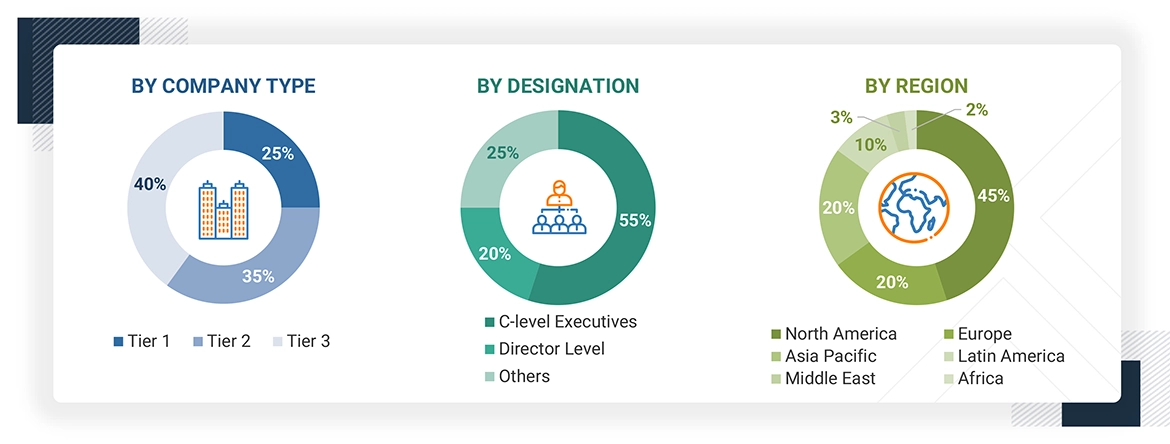
In-depth interviews were conducted with various primary respondents, including key industry participants, subject-matter experts (SMEs), C-level executives of key market players, and industry consultants, to obtain and verify the critical qualitative & quantitative information and assess the prospects of the market. Various primary sources from both the supply & demand sides of the market were interviewed to obtain qualitative and quantitative information. The following is a breakdown of the primary respondents:
The following is a breakdown of the primary respondents:
To know about the assumptions considered for the study, download the pdf brochure
Market Size Estimation
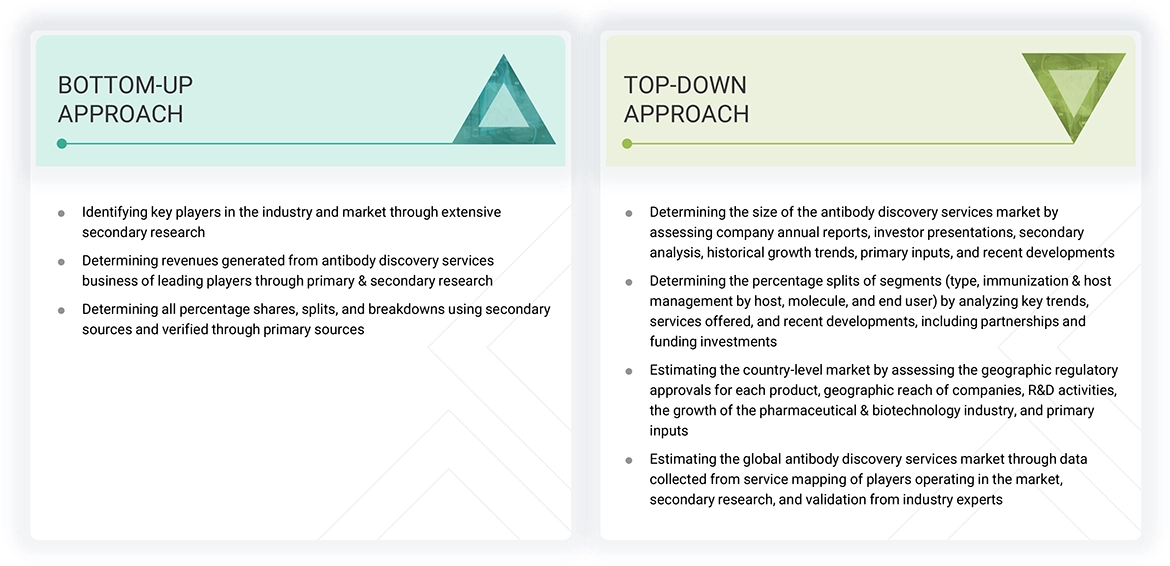
Both top-down and bottom-up approaches were used to estimate and validate the total size of the antibody discovery services market. These methods were also used extensively to estimate the size of various subsegments in the market. The research methodology used to estimate the market size includes the following:
Data Triangulation
The total market was split into several segments and subsegments after arriving at the overall market size from the estimation process. Where applicable, data triangulation and market breakdown procedures were employed to complete the overall market engineering process and arrive at the exact statistics for all segments and subsegments. The data was triangulated by studying various factors and trends from both the demand and supply sides.
Market Definition
The antibody discovery services involves the use of specialized technologies and platforms to identify, engineer, validate, and optimize antibodies for therapeutic and diagnostic applications. These services support the development of antibody-based solutions targeting a wide range of conditions, including cancer, infectious diseases, autoimmune disorders, and metabolic diseases. Antibody discovery services are classified into different types, including target identification & validation, antibody engineering & optimization (such as phage/yeast display, hybridoma, single-cell technologies, and other technologies), antigen design & production, immunization & host management, and antibody characterization & specificity analysis. Host systems used in antibody generation include mice, rats, rabbits, chickens, camelids, and others (human ex vivo cells, bovine, and more), each providing unique immune repertoires for antibody development. By molecule type, services cover monoclonal antibodies, polyclonal antibodies, and other formats such as bispecific antibodies and nanobodies. These offerings enable efficient antibody generation, high-throughput screening, and optimization to accelerate preclinical and clinical research. Key end users of antibody discovery services include pharmaceutical & biotechnology companies, academic & research institutes, hospitals, and diagnostic laboratories, which rely on outsourcing for enhanced efficiency, reduced development timelines, and access to advanced discovery platforms.
The study provides an in-depth analysis of the antibody discovery services market based on contemporary market trends and developments, as well as its potential growth from 2025 to 2030. It includes detailed market trends, the competitive landscape, market size, forecasts, and the analysis of the key antibody discovery services providers.
Stakeholders
- Manufacturers and Distributors of Antibody Discovery Service Products
- Third-party Suppliers of antibody discovery services Products
- Contract Research Organizations
- Market Research and Consulting Firms
- R&D Centers and Institutes
- Hospitals and Clinics
- Academic Institutions
- Diagnostic Laboratories
Report Objectives
- To define, describe, and forecast the antibody discovery services market based on type, host, molecule, end user, and region
- To provide detailed information regarding the major factors influencing the market growth (such as drivers, restraints, opportunities, and challenges)
- To strategically analyze micromarkets with respect to individual growth trends, prospects, and contributions to the overall antibody discovery services market
- To analyze the opportunities in the market for stakeholders and provide details of the competitive landscape for market leaders
- To forecast the size of the market segments with respect to six main regions, namely, North America, Europe, the Asia Pacific, Latin America, the Middle East, and Africa
- To strategically profile the key players in the antibody discovery services market and comprehensively analyze their core competencies and market rankings
- To track and analyze competitive developments such as service launches, acquisitions, expansions, agreements, partnerships, and collaborations in the antibody discovery services market
- To benchmark players within the antibody discovery services market using the ‘Company Evaluation Matrix' framework, which analyzes market players based on various parameters within the broad categories of business and product strategy
Get the Full Antibody Discovery Services Market Report
Full forecast, segment splits, and company analysis for all Antibody Discovery Services Market.
- US Antibody Discovery Services Market
- Canada Antibody Discovery Services Market
- Germany Antibody Discovery Services Market
- UK Antibody Discovery Services Market
- France Antibody Discovery Services Market
- Italy Antibody Discovery Services Market
- Spain Antibody Discovery Services Market
- China Antibody Discovery Services Market
- Japan Antibody Discovery Services Market
- India Antibody Discovery Services Market
- South Korea Antibody Discovery Services Market
- Australia Antibody Discovery Services Market
- Brazil Antibody Discovery Services Market
- Mexico Antibody Discovery Services Market
- UAE Antibody Discovery Services Market
- Rest Of Europe Antibody Discovery Services Market
- Rest Of Asia Pacific Antibody Discovery Services Market
- Kingdom Of Saudi Arabia Antibody Discovery Services Market
- Rest Of GCC Countries Antibody Discovery Services Market
- GCC Countries Antibody Discovery Services Market
- Rest Of Middle East Antibody Discovery Services Market
Need a Tailored Report?
Customize this report to your needs
Get 10% FREE Customization
Customize This Report
