
Japan Bioceramics Market (2023-2028)

The Japan Bioceramics Market was valued at $400.5 Million in 2023 and projected to reach to $576.2 Million by 2028, representing a compound annual growth rate of 7.5%. Japan's bioceramics market is poised for robust growth, driven by the nation's aging population requiring advanced orthopedic and dental solutions.


| Market Size in | USD 26.32 MN |
| Market Forecast in | |
| CAGR | |
| Forecast Period | |
| Units Considered | Value (USD MN) |
Japan Bioceramics Market Trends and Insights
- Japan's advanced healthcare infrastructure and aging population are driving demand for bioceramics in orthopedic and dental applications.
- The country's strong manufacturing capabilities and investment in regenerative medicine position Japan as a key player in the Asia Pacific bioceramics sector. Japan's bioceramics market benefits from robust research and development activities and collaborations between academic institutions and industry players.
- Japan's regulatory environment supports innovation in medical device materials, enabling faster commercialization of bioceramics-based solutions.
- The forecast period through 2028 indicates sustained growth in Japan, driven by increasing adoption in clinical applications and expanding geriatric patient populations requiring bone and dental implants..
Key Market Statistics
- CAGR (2023-2028) 7.5% CAGR
- Market Size, 2023 ~USD 400.5 Million
- Forecast, 2028 ~USD 576.2 Million
- Country Japan
Japan Bioceramics Market Overview
Aging Population Driving Demand :
Japan's rapidly aging demographic is significantly increasing demand for bioceramics in orthopedic implants and joint replacement procedures, positioning the country as a key growth market in Asia.
Advanced Healthcare Infrastructure :
Japan's world-class healthcare system and high adoption rates of advanced medical technologies create favorable conditions for bioceramics integration in clinical applications and surgical procedures.
Strong Manufacturing Capabilities :
Japan's established ceramic and materials manufacturing expertise enables efficient production of high-quality bioceramics, supporting both domestic demand and regional export opportunities.
Regenerative Medicine Investment :
Significant government and private sector investment in regenerative medicine and tissue engineering is accelerating bioceramics innovation and clinical adoption across Japan's medical device sector.
Japan Bioceramics Market Dynamics
- With a CAGR of 7.5% through 2028, the market will expand from USD 400.5 million to USD 576.2 million, outpacing the global growth rate of 6.7%.
- Japan's commitment to regenerative medicine research and development, combined with stringent quality standards and advanced manufacturing infrastructure, positions the country as a regional innovation hub.
- Increasing healthcare expenditure and rising patient awareness of bioceramics benefits will further accelerate market penetration across orthopedic, dental, and emerging applications..
Market Ecosystem
Related Ecosystem
Ceramics And Glass
- Zirconia
- Alumina Ceramics
- Silicon Carbide
- Silicon Nitride
- Titanate Ceramics
- Saint-gobain
- 3M COMPANY
- Kyocera Corporation
- CERAMTEC GMBH
- COORSTEK INCORPORATED
Speciality Chemicals
- Corrosion Inhibitors
- Polyetheretherketone (PEEK)
- Acrylonitrile Butadiene Styrene (ABS)
- Epoxy Resin
- Polycarbonate
- Basf se
- DOW CHEMICAL COMPANY
- Evonik industries ag
- Clariant ag.
- Solvay sa
Automotive Materials
- Light Commercial Vehicles (LCVs)
- Battery Electric Vehicle (BEV)
- Hybrid Electric Vehicle (HEV)
- Fuel Cell Electric Vehicle (FCEV)
- Agricultural Tractors
- AISIN CORPORATION
- GORKOVSKY AVTOMOBILNY ZAVOD
- Continental ag
- Basf se
- BOSCH LIMITED
Key Takeaways
- Japan's bioceramics market is valued at USD 400.5 million in 2023 and will reach USD 576.2 million by 2028 at a 7.5% CAGR.
- Japan's aging demographic and advanced healthcare system drive strong demand for bioceramics in orthopedic and dental implants.
- Japan's leadership in R&D and regenerative medicine innovation supports competitive advantage in bioceramics development.
- Japan's supportive regulatory framework accelerates commercialization of bioceramics-based medical devices through 2028.
Bioceramics Market Report Scope
| Report Metric | Details |
|---|---|
| Base Year | 2023 |
| Fastest Growing Segment | BIO-ACTIVE (Type) |
| Forecast Period | 2023-2028 |
| Growth Rate | CAGR of 6.7% from 2023 to 2028 |
| Largest Segment | POWDER (Form) |
| Market Size Base Year (Billions) | ~USD 7.38 (2023) |
| Revenue Forecast (Billions) | ~USD 10.2 (2028) |
| Segments Covered | Form, Type, Material Type, Application |
Japan Bioceramics Market Report Segmentation
4 segment dimensions are covered across the global market.
By Form
- Liquid
- Powder
By Type
- Bio-Active
- Bio-Inert
- Bio-Resorbable
By Material Type
- Aluminum Oxide
- Bio-Active Glass
- Calcium Phosphate
- Calcium Sulfate
- Calcium Sulphate
- Other Material Types
- Zirconia
By Application
- Bio-Medical
- Biomedical
- Dental
- Orthopedic
- Orthopedics
JAPAN: BIOCERAMICS MARKET, BY APPLICATION, 2021–2028
| Segment | 2021 | 2022 | 2023 | 2024 | 2025 | 2026 | 2027 | 2028 | CAGR (%) |
|---|---|---|---|---|---|---|---|---|---|
| BIOMEDICAL | 43.6 | 45.1 | 46.8 | 49.6 | 52.6 | 55.8 | 59.2 | 62.8 | 6 |
| DENTAL | 162.7 | 172 | 182.3 | 196.5 | 211.7 | 228.2 | 246 | 265.1 | 7.8 |
| ORTHOPEDICS | 154.5 | 162.5 | 171.4 | 184.6 | 198.8 | 214.1 | 230.6 | 248.3 | 7.7 |
| TOTAL | 360.7 | 379.7 | 400.5 | 430.7 | 463.2 | 498.1 | 535.7 | 576.2 | 7.5 |
Target Audience
- Medical Device Manufacturers : Manufacturers seeking to enter or expand in Japan's bioceramics market need country-specific sizing, competitive positioning, and regulatory pathway intelligence to optimize product launches and market share strategies.
- Healthcare Investors & PE Firms : Investment professionals evaluating bioceramics opportunities in Japan require detailed market forecasts, growth drivers, and competitive analysis to assess portfolio companies and identify acquisition targets in this high-growth segment.
- Orthopedic & Dental Companies : Specialists in orthopedic and dental solutions need Japan-focused market data to understand aging population demand, reimbursement trends, and clinical adoption rates for bioceramics-based implants and devices.
- Research & Development Teams : R&D leaders in bioceramics and regenerative medicine require Japan market intelligence to align innovation pipelines with local clinical needs, regulatory requirements, and emerging application opportunities.
- Strategic Consultants & Analysts : Business consultants advising healthcare clients on Japan expansion strategies need comprehensive market cutout data to develop evidence-based recommendations and competitive positioning frameworks for bioceramics investments.
Reasons to Buy this Report
- Japan-Specific Market Sizing : Access precise valuation data for Japan's bioceramics market with verified 2023 baseline (USD 400.5M) and 2028 forecasts, enabling accurate business planning and investment decisions tailored to the Japanese market.
- Competitive Landscape Intelligence : Understand Japan's unique competitive dynamics, local manufacturer capabilities, and market consolidation trends specific to the country's bioceramics sector and regulatory environment.
- Demographic-Driven Growth Insights : Leverage detailed analysis of Japan's aging population impact on bioceramics demand, including segment-specific growth drivers for orthopedic and dental applications within the Japanese healthcare system.
- Regulatory & Reimbursement Framework : Gain comprehensive understanding of Japan's PMDA approval processes, reimbursement policies, and healthcare regulations specific to bioceramics, reducing market entry risks and accelerating commercialization strategies.
- Regional Expansion Strategy : Use Japan market insights as a foundation for broader Asia-Pacific expansion, leveraging the country's manufacturing expertise and healthcare standards to inform regional growth and partnership strategies.
Frequently asked questions
What is the current size of Japan's bioceramics market?
Japan's bioceramics market was valued at USD 400.5 million in 2023 and is expected to grow to USD 576.2 million by 2028.
What is the projected growth rate for Japan's bioceramics market?
Japan's bioceramics market is projected to grow at a CAGR of 7.5% from 2023 to 2028.
What are the primary applications driving Japan's bioceramics market?
Japan's bioceramics market is primarily driven by orthopedic implants, dental applications, and regenerative medicine solutions for an aging population.
Why is Japan a significant bioceramics market in Asia Pacific?
Japan's advanced healthcare infrastructure, strong R&D capabilities, aging demographic, and supportive regulatory environment make it a leading bioceramics market in Asia Pacific.
What factors will support Japan's bioceramics market growth through 2028?
Japan's bioceramics market growth through 2028 will be supported by increasing geriatric populations, clinical adoption expansion, and continued innovation in regenerative medicine.
RESEARCH METHODOLOGY
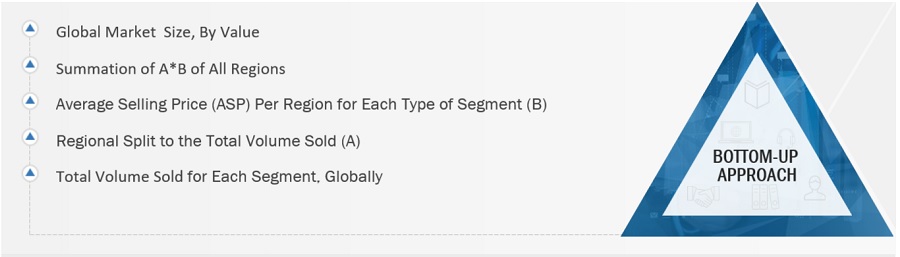
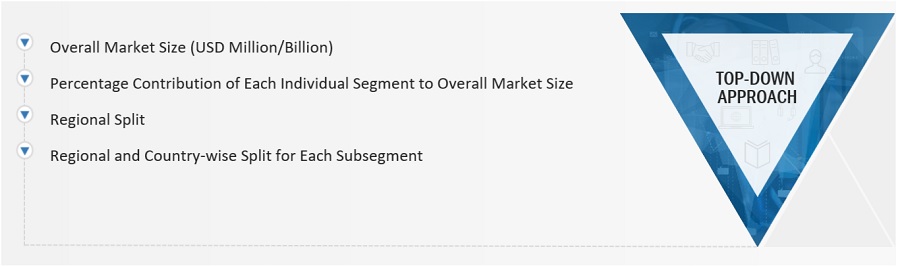
The study involves two major activities in estimating the current market size for the bioceramics market. Exhaustive secondary research was done to collect information on the market, peer market, and parent market. The next step was to validate these findings, assumptions, and sizing with industry experts across the value chain through primary research. Both top-down and bottom-up approaches were employed to estimate the complete market size. After that, market breakdown and data triangulation were used to estimate the market size of segments and subsegments.
Secondary Research
Secondary sources referred to for this research study include financial statements of companies offering bioceramic products and information from various trade, business, and professional associations. Secondary research has been used to obtain critical information about the industry’s value chain, the total pool of key players, market classification, and segmentation according to industry trends to the bottom-most level and regional markets. The secondary data was collected and analyzed to arrive at the overall size of the bioceramic market, which was validated by primary respondents.
Primary Research
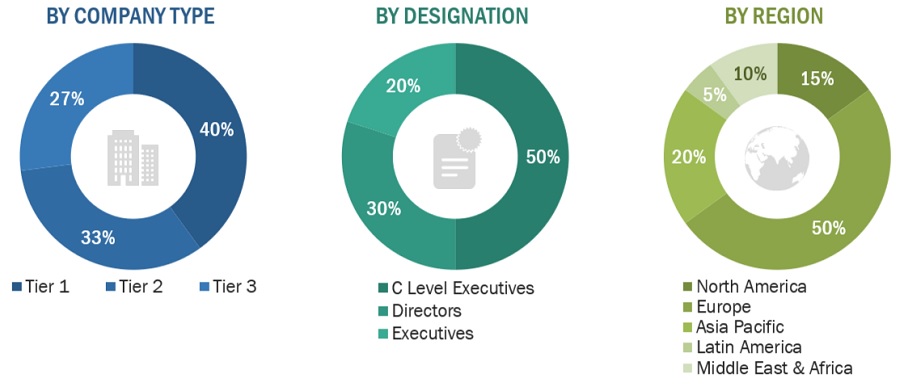
Extensive primary research was conducted after obtaining information regarding the bioceramics market scenario through secondary research. Several primary interviews were conducted with market experts from both the demand and supply sides across major countries of North America, Europe, Asia Pacific, the Middle East & Africa, and Latin America. Primary data was collected through questionnaires, emails, and telephonic interviews. The primary sources from the supply side included various industry experts, such as Chief X Officers (CXOs), Vice Presidents (VPs), Directors from business development, marketing, product development/innovation teams, and related key executives from bioceramic industry vendors; system integrators; component providers; distributors; and key opinion leaders. Primary interviews were conducted to gather insights such as market statistics, data on revenue collected from the products and services, market breakdowns, market size estimations, market forecasting, and data triangulation. Primary research also helped in understanding the various trends related to type, application, and region. Stakeholders from the demand side, such as CIOs, CTOs, CSOs, and installation teams of the customer/end users who are using bioceramic products were interviewed to understand the buyer’s perspective on the suppliers, products, component providers, and their current usage of bioceramic and outlook of their business which will affect the overall market.
The Breakup of Primary Research:
To know about the assumptions considered for the study, download the pdf brochure
Market Size Estimation
The research methodology used to estimate the size of the bioceramics market includes the following details. The market sizing of the market was undertaken from the demand side. The market was upsized based on procurements and modernizations in bioceramic products in different applications at a regional level. Such procurements provide information on the demand aspects of the bioceramic industry for each application. For each application, all possible segments of the bioceramics market were integrated and mapped.
Bioceramics Market Size: Botton Up Approach
To know about the assumptions considered for the study, Request for Free Sample Report
Bioceramics Market Size: Top-Down Approach
Data Triangulation
After arriving at the overall size from the market size estimation process explained above, the total market was split into several segments and subsegments. The data triangulation and market breakdown procedures explained below were implemented, wherever applicable, to complete the overall market engineering process and arrive at the exact statistics for various market segments and subsegments. The data was triangulated by studying various factors and trends from the demand and supply sides. Along with this, the market size was validated using both the top-down and bottom-up approaches.
Market Definition
The bioceramics are biocompatible materials and used for repairing or replacing damaged bone tissues, as well as other medical applications such as dental implants, joint replacements, pacemakers, kidney dialysis machines, and respirators. Bioceramics can be composed of various materials and dopants to achieve specific properties, such as zirconia, alumina, hydroxyapatite, and bioactive glasses. The market is driven by factors such as increasing demand in medical applications, rising healthcare expenditure, growing geriatric population, increasing research and development activities, and geographical factors. The bioceramics market is segmented by material type, form, type, application, and geography, with major players including CoorsTek Inc., DSM, KYOCERA Corporation, and CeramTec GmbH. The market is expected to continue expanding in the coming years, driven by technological advancements, changing consumer behaviors, regulatory shifts, and global trends.
Key Stakeholders
- Bioceramic Manufacturers
- Raw Materials Suppliers
- Distributors and Suppliers
- End-use Industries
- Industry Associations
- R&D Institutions
- Environment Support Agencies
Report Objectives
- To define, describe, and forecast the bioceramic market size in terms of volume and value.
- To provide detailed information regarding the key factors, such as drivers, restraints, opportunities, and challenges influencing market growth
- To analyze and project the global bioceramics market by type, form, material type, application, and region.
- To forecast the market size concerning five main regions (along with country-level data), namely, North America, Europe, Asia Pacific, Latin America, and the Middle East & Africa, and analyze the significant region-specific trends.
- To strategically analyze micro markets with respect to individual growth trends, prospects, and contributions of the submarkets to the overall market
- To analyze the market opportunities and the competitive landscape for stakeholders and market leaders
- To assess recent market developments and competitive strategies, such as agreements, contracts, acquisitions, and new product developments/new product launches, to draw the competitive landscape.
- To strategically profile the key market players and comprehensively analyze their core competencies.
Available Customizations
MarketsandMarkets offers following customizations for this market report:
- Additional country-level analysis of the bioceramic market
Product Analysis
- Product matrix, which provides a detailed comparison of the product portfolio of each company's market.
Get the Full Bioceramics Market Report
Full forecast, segment splits, and company analysis for all Bioceramics Market.
- US Bioceramics Market
- Canada Bioceramics Market
- Germany Bioceramics Market
- UK Bioceramics Market
- France Bioceramics Market
- Italy Bioceramics Market
- Spain Bioceramics Market
- China Bioceramics Market
- India Bioceramics Market
- South Korea Bioceramics Market
- Brazil Bioceramics Market
- Mexico Bioceramics Market
- South Africa Bioceramics Market
- Rest Of Europe Bioceramics Market
- Australia-New Zealand Bioceramics Market
- Rest Of Asia Pacific Bioceramics Market
- Rest Of Latin America Bioceramics Market
- GCC Countries Bioceramics Market
- -Rest Of GCC Bioceramics Market
Need a Tailored Report?
Customize this report to your needs
Get 10% FREE Customization
Customize This Report
