
North America Cannabis Market (2025-2030)

The North America Cannabis Market was valued at $67988.6 Million in 2025 and projected to reach to $110493.6 Million by 2030, representing a compound annual growth rate of 10.2%. North America's cannabis market is positioned for sustained expansion through 2030, supported by ongoing regulatory liberalization and shifting consumer perceptions.


| Market Size in | USD 26.32 MN |
| Market Forecast in | |
| CAGR | |
| Forecast Period | |
| Units Considered | Value (USD MN) |
North America Cannabis Market Trends and Insights
- This growth trajectory reflects North America's position as a leading global cannabis market, driven by progressive regulatory frameworks, increasing consumer acceptance, and expanding legalization across multiple jurisdictions.
- North America's 10.2% compound annual growth rate outpaces many traditional beverage segments, positioning the region as a critical hub for cannabis-infused food and beverage innovation. The North America cannabis market benefits from established distribution networks, sophisticated retail infrastructure, and significant capital investment in product development.
- North America's diverse consumer base spans wellness-focused demographics, recreational users, and medical patients, creating multiple revenue streams across edibles, beverages, and infused products.
- Between 2025 and 2030, North America is expected to consolidate its market leadership through brand maturation, premiumization trends, and cross-border harmonization of regulatory standards. North America's competitive landscape features both established cannabis operators and emerging beverage companies entering the space.
- The region's growth is underpinned by increasing consumer preference for cannabis-infused alternatives to traditional alcohol and pharmaceuticals, alongside expanding retail accessibility and product innovation in the food and beverage sector..
Key Market Statistics
- CAGR (2025-2030) 10.2% CAGR
- Market Size, 2025 ~USD 67988.6 Million
- Forecast, 2030 ~USD 110493.6 Million
- Geography North America
North America Cannabis Market Overview
Market Valuation & Growth :
North America's cannabis market is valued at $67,988.6 million in 2025, with a projected CAGR of 10.2% through 2030, reaching $110,493.6 million. This represents the world's largest regional cannabis market, significantly outpacing global growth rates.
US Market Dominance :
The United States commands 87.4% of North America's cannabis market at $94,032.3 million, driven by widespread state-level legalization, mature retail infrastructure, and established consumer demand across medical and recreational segments.
Regulatory Expansion :
Progressive legalization frameworks across North American jurisdictions continue to unlock new market opportunities. Multiple US states, Canadian provinces, and Mexican regions are implementing cannabis regulations, expanding addressable markets and consumer accessibility.
Consumer Acceptance & Diversification :
Increasing consumer acceptance in North America is driving product diversification beyond traditional flower into edibles, beverages, concentrates, and wellness products. This expansion attracts mainstream retailers and CPG companies into the cannabis ecosystem.
North America Cannabis Market Dynamics
- The region benefits from established distribution networks, sophisticated retail environments, and significant capital investment.
- The US market will continue driving regional growth, while Canada and Mexico present emerging opportunities as their regulatory frameworks mature and consumer bases expand. Key growth drivers include the normalization of cannabis consumption, increasing product innovation in edibles and beverages, and potential federal-level policy changes in the United States.
- Market consolidation among major players and entry of established CPG companies will further professionalize the industry.
- However, regulatory complexity across jurisdictions and banking restrictions remain challenges that will shape competitive dynamics through the forecast period..
Market Ecosystem
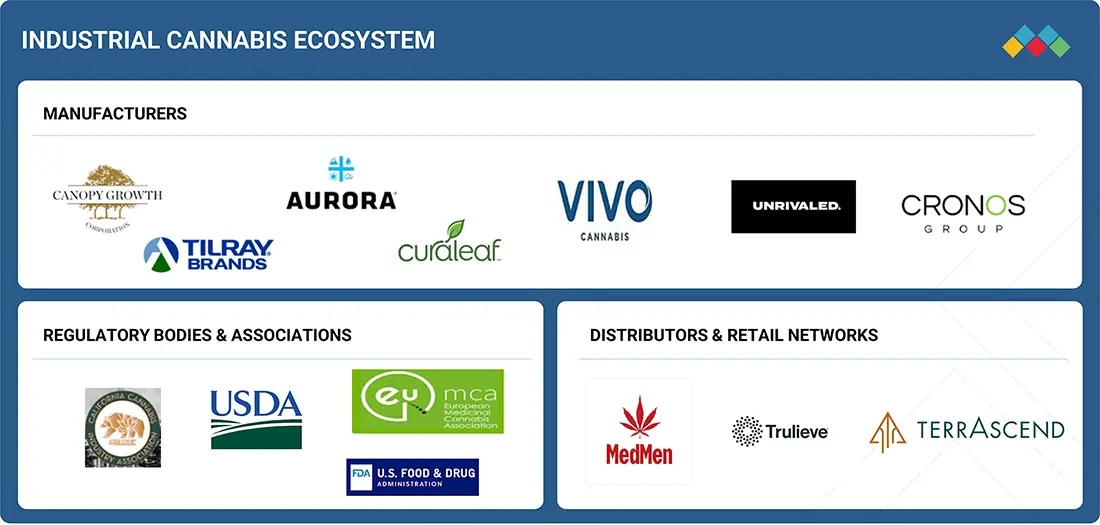
cannabis market: COMMERCIAL USE CASES ACROSS INDUSTRIES
| COMPANY | USE CASE DESCRIPTION | BENEFITS |
|---|---|---|
 |
Launch of infused pre-rolls with THCA diamonds, premium flower, and high-potency formats | Expanded portfolio in adult-use market; meets demand for potent, quality products |
 |
Multi-state dispensary and branded products (edibles, oils, vapes, wellness lines) | National reach; wide consumer base; strong compliance and regulatory expertise |
 |
Pharmaceuticals, concentrates, and global research partnerships | High product consistency; medical market leadership; innovation in formulations |
 |
Low-dose edibles, specialty vapes, infused cannabis beverages | Attracts casual and social users; compliance with evolving regulations; consumer convenience |
 |
Strategic partnership in vape and wellness products (Altria investment) | Access to tobacco distribution channels; scalable innovation capacity |
Logos and trademarks shown above are the property of their respective owners. Their use here is for informational and illustrative purposes only.
Related Ecosystem
Key Takeaways
- North America's cannabis market will grow from $67.99B (2025) to $110.49B (2030) at a 10.2% CAGR, establishing the region as the dominant global cannabis market.
- North America's regulatory maturity and consumer acceptance create competitive advantages in product innovation, brand development, and retail distribution compared to emerging markets.
- North America's cannabis-infused food and beverage segment is experiencing premiumization, with consumers shifting toward high-quality, wellness-oriented products and functional beverages.
- North America's market expansion is driven by cross-jurisdictional legalization, increasing medical applications, and growing mainstream acceptance among diverse demographic segments.
Cannabis Market Report Scope
| Report Metric | Details |
|---|---|
| Base Year | 2025 |
| Fastest Growing Segment | CBD HEMP OIL (Type) |
| Forecast Period | 2025–2030 |
| Growth Rate | CAGR of 11.5% from 2025 to 2030 |
| Largest Segment | MARIJUANA (Source) |
| Market Size Base Year (Billions) | ~USD 72.97 (2025) |
| Revenue Forecast (Billions) | ~USD 125.76 (2030) |
| Segments Covered | Compound Type, Product Type, Application, Source, Type, Product & Software |
North America Cannabis Market Report Segmentation
6 segment dimensions are covered across the global market.
By Compound Type
- Balanced Thc & Cbd
- Cbd-Dominant
- Thc-Dominant
By Product Type
- Edibles
- Flowers/Buds
- Oils/Tinctures
- Other Product Types
- Topicals
By Application
- Cosmetic & Personal Care Use
- Industrial Use
- Medicinal Use
- Nutraceutical & Wellness Use
- Recreational Use
By Source
- Hemp
- Marijuana
By Type
- Cbd Hemp Oil
- Hemp Bast
- Hemp Hurd
- Hemp Seed
- Hemp Seed Oil
By Product & Software
- Products
- Software
Target Audience
- Cannabis Producers & Cultivators : Evaluate North American production capacity requirements, regional demand forecasts, and market entry opportunities across US, Canadian, and Mexican jurisdictions to optimize cultivation and supply chain strategies.
- Retail & Distribution Companies : Understand regional market sizes, consumer preferences, and retail channel dynamics across North America to identify expansion opportunities and optimize inventory management for cannabis products.
- CPG & Beverage Manufacturers : Assess North American cannabis-infused product opportunities, consumer acceptance trends, and regulatory pathways for entering the edibles and beverages segment with data-driven market entry strategies.
- Investment & Private Equity Firms : Leverage comprehensive North American market valuations, growth forecasts, and competitive analysis to identify high-potential acquisition targets, portfolio companies, and investment opportunities in cannabis.
- Policy Makers & Regulatory Bodies : Access market data and trend analysis across North American jurisdictions to inform evidence-based cannabis policy development, regulatory frameworks, and public health initiatives.
Key Companies in the North America Cannabis Market
| Company | HQ | Ownership | Strongest segments |
|---|---|---|---|
| CANNABIS SCIENCE INC. | United States | Private Company | Oil/Tinctures & Extracts (incl. water-soluble CBDA/CBD),Nutraceutical & Wellness Products,Cosmeceuticals / Topicals, |
| CANOPY GROWTH CORPORATION | Canada | Public Company | Flowers/Buds & Pre-rolls (THC-dominant and Balanced),Oil/Tinctures & Extracts (Medical and Adult-use),Edibles & Beverages, |
| CURALEAF, INC. | United States | Public Company | Flowers/Buds,Oil/Tinctures,Edibles, |
| GREEN THUMB INDUSTRIES | United States | Public Company | Flowers/Buds,Oil/Tinctures & Concentrates/Vapes,Edibles, |
| TILRAY BRANDS, INC. | Canada | Public Company | THC-dominant Flowers/Buds,THC-dominant Oils/Tinctures & Extracts,Edibles & Beverages (THC/CBD), |
| TRULIEVE | United States | Public Company | Flowers/Buds,Oil/Tinctures,Edibles, |
| CRESCO LABS | United States | Public Company | Flowers/Buds,Oil/Tinctures,Edibles, |
| AURORA CANNABIS INC. | Canada | Public Company | Flowers/Buds,Oil/Tinctures,Edibles, |
| ORGANIGRAM GLOBAL | Canada | Public Company | Flowers/Buds (including pre-rolls and infused pre-rolls),Oil/Tinctures, Vapes, Concentrates,Edibles & Beverages (including gummies), |
| TERRASCEND | Canada | Public Company | Flowers/Buds,Oil/Tinctures,Edibles, |
| BLüM HOLDINGS INC. | United States | Public Company | Flowers/Buds (THC-dominant, marijuana source),Edibles & Concentrates (Korova, THC-dominant),Oil/Tinctures (medical and wellness-leaning), |
| VILLAGE FARMS INTERNATIONAL INC. | United States | Public Company | Flowers/Buds,Oil/Tinctures,Edibles, |
| THE CRONOS GROUP | Canada | Public Company | Flowers/Buds,Oil/Tinctures,Edibles, |
| MEDICAL MARIJUANA, INC. | United States | Public Company | CBD-dominant Oil/Tinctures,CBD-dominant Edibles & Ingestibles,Topicals (CBD-focused), |
| MEDIPHARM LABS | Canada | Public Company | Oil/Tinctures & Concentrates (THC-dominant, CBD-dominant, Balanced),Dried Flower & Pre-rolls,Nutraceutical & Wellness Derivatives, |
CANNABIS SCIENCE INC.
Cannabis Science Inc. is a private cannabis company founded in 1996 and based in the United States.
CANOPY GROWTH CORPORATION
Canopy Growth Corporation is a Canadian public company with 1,128 employees operating in the cannabis industry.
CURALEAF, INC.
Curaleaf, Inc. is a publicly traded cannabis company based in the United States with 5,554 employees.
GREEN THUMB INDUSTRIES
Green Thumb Industries is a U.S.-based public cannabis company founded in 2014 with 4,900 employees.
TILRAY BRANDS, INC.
Tilray Brands, Inc. is a Canadian public cannabis company with 3,595 employees.
TRULIEVE
Trulieve is a publicly traded cannabis retailer founded in 1940 in the United States with 5,000 employees.
CRESCO LABS
Cresco Labs is a U.S.-based public cannabis company with 2,900 employees.
AURORA CANNABIS INC.
Aurora Cannabis Inc. is a Canadian public cannabis company founded in 2013 with 1,028 employees.
ORGANIGRAM GLOBAL
Organigram Global is a Canadian public cannabis company with 1,120 employees.
TERRASCEND
TerrAscend is a Canadian public cannabis company founded in 2017 with 933 employees.
BLüM HOLDINGS INC.
Blüm Holdings Inc. is a U.S.-based public cannabis company founded in 2010 with 133 employees.
VILLAGE FARMS INTERNATIONAL INC.
Village Farms International Inc. is a U.S.-based public company founded in 1989 with 1,128 employees.
THE CRONOS GROUP
The Cronos Group is a Canadian public cannabis company with 610 employees.
MEDICAL MARIJUANA, INC.
Medical Marijuana, Inc. is a U.S.-based public cannabis company founded in 2005 with 91 employees.
MEDIPHARM LABS
Medipharm Labs is a Canadian public cannabis company founded in 2015 with 127 employees.
Countries within North America - compare and drill down
| Country | 2025 size (native) |
|---|---|
| US | USD 94032.3 Million |
| Canada | USD 12119.4 Million |
| Mexico | USD 4341.9 Million |
Country market size visualization
Reasons to Buy this Report
- Regional Market Segmentation : Gain detailed insights into North America's three largest cannabis markets—US, Canada, and Mexico—with country-specific valuations, growth rates, and regulatory environments to inform localized business strategies.
- Competitive Landscape Intelligence : Understand market dynamics across North America's diverse regulatory jurisdictions, identifying competitive advantages, market consolidation trends, and opportunities for market entry or expansion in high-growth segments.
- Investment & Growth Forecasting : Access comprehensive 2025-2030 forecasts with 10.2% CAGR projections to support capital allocation decisions, M&A strategies, and long-term business planning in North America's rapidly evolving cannabis sector.
- Consumer & Product Trends : Identify emerging consumer preferences, product category growth drivers, and distribution channel opportunities specific to North American markets, enabling product development and go-to-market strategies.
- Regulatory & Policy Insights : Stay informed on progressive legalization trends, regulatory frameworks, and policy developments across North American jurisdictions that directly impact market accessibility, compliance requirements, and business viability.
Frequently asked questions
What is the projected size of North America's cannabis market by 2030?
North America's cannabis market is projected to reach $110,493.6 million by 2030, growing from $67,988.6 million in 2025 at a 10.2% CAGR.
What factors are driving growth in North America's cannabis market?
North America's cannabis market growth is driven by progressive legalization, increasing consumer acceptance, expanding retail infrastructure, product innovation in food and beverages, and growing medical applications across multiple jurisdictions.
How does North America's cannabis market compare to global trends?
North America's 10.2% CAGR slightly trails the global average of 11.5%, but North America maintains the largest absolute market size and most mature regulatory environment, positioning it as the dominant regional market.
What product categories are growing fastest in North America's cannabis market?
North America's fastest-growing segments include cannabis-infused beverages, premium edibles, wellness-focused products, and functional food items targeting health-conscious consumers seeking alternatives to traditional pharmaceuticals and alcohol.
Which North American jurisdictions are leading cannabis market expansion?
North America's market leadership is concentrated in Canada, California, Colorado, and other states with established legal frameworks, though emerging markets in additional U.S. states and Canadian provinces continue expanding regulatory access.
RESEARCH METHODOLOGY
The study employed two main methods to estimate the current size of the cannabis market. Comprehensive secondary research was conducted to gather information on the market, peer markets, and parent markets. The next stage involved validating these findings, assumptions, and estimates with industry experts across the value chain through primary research. Both top-down and bottom-up approaches were used to determine the overall market size. Subsequently, market segmentation and data triangulation were applied to estimate the sizes of segments and subsegments.
Secondary Research
This research involved extensively using secondary sources such as directories and databases (Bloomberg Businessweek, Factiva, etc.) to gather information for a technical, market-focused, and commercial market study. In the secondary research process, various sources such as company annual reports, press releases, and investor presentations, white papers, food journals, certified publications, articles from recognized authors, directories, and databases were used to identify and gather information.
Secondary research was primarily used to gather key information about the industry’s supply chain, the overall pool of major players, and market classification and segmentation based on industry trends. It also covered regional markets and key developments from market and technology perspectives.
Primary Research
Extensive primary research was conducted after gathering information on the cannabis market scenario through secondary research. Several interviews with market experts from both demand and supply sides were conducted across major countries in North America, Europe, Asia Pacific, South America, and the Rest of the World. Data was collected through questionnaires, emails, and phone calls. On the supply side, primary sources included industry experts such as Chief X Officers (CXOs), Vice Presidents (VPs), Directors from business development, marketing, research, and development teams, along with key opinion leaders. These interviews provided insights on market statistics, revenue data from products and services, market breakdowns, market size estimates, forecasts, and data triangulation. They also helped understand trends related to cannabis product types, compounds, applications, sources, and regions. Stakeholders from the demand side, such as research institutions, universities, and third-party vendors, were interviewed to gain perspectives on the buyer’s view of the service, current cannabis usage, and future business outlook, all of which influence the overall market.
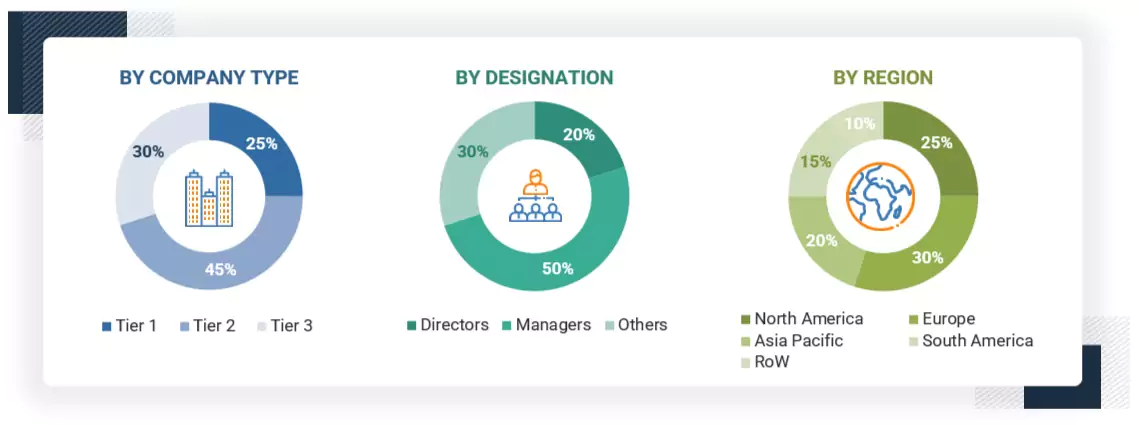
Note: The three tiers of the companies are defined based on their total revenues in 2023 or 2024, as per
the availability of financial data: Tier 1: Revenue > USD 1 billion; Tier 2: USD 100 million = Revenue = USD 1 billion;
Tier 3: Revenue < USD 100 million.
To know about the assumptions considered for the study, download the pdf brochure
|
COMPANY |
DESIGNATION |
|
Canopy Growth Corporation (Canada) |
R&D Expert |
|
Curaleaf (US) |
Sales Manager |
|
Cresco Labs (US) |
Manager |
|
Green Thumb Industries (GTI) (US) |
Sales Manager |
|
Tilray Brands (US) |
Marketing Manager |
Cannabis Market Size Estimation
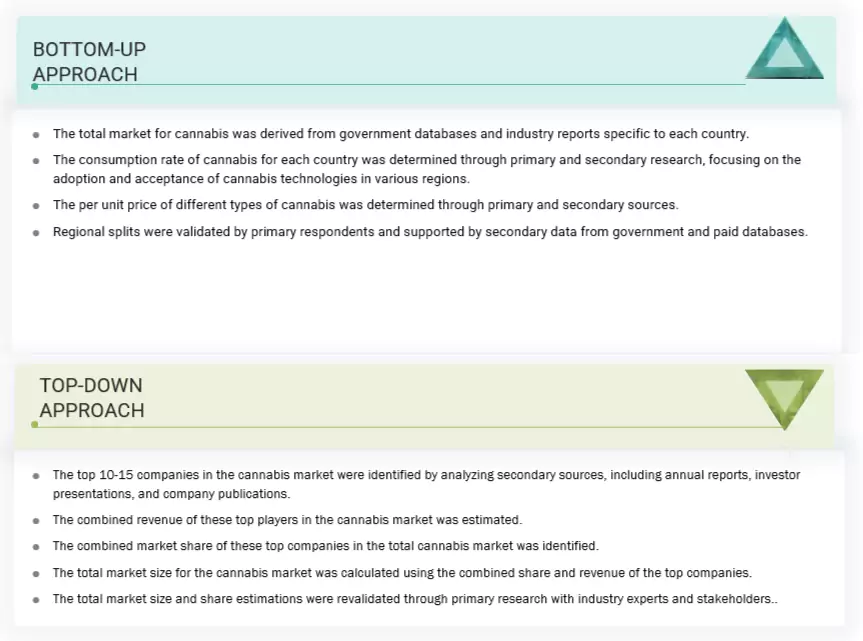
Both the top-down and bottom-up approaches were employed to estimate and verify the overall size of the cannabis market. These methods were also used extensively to determine the size of various market subsegments. The research methodology for estimating the market size includes the following details:
- The key players in the industry and the overall markets were identified through extensive secondary research.
- All shares, splits, and breakdowns were determined using secondary sources and verified through primary sources.
- All possible parameters that affect the market covered in this research study were accounted for, viewed in extensive detail, verified through primary research, and analyzed to obtain final quantitative and qualitative data.
- The research included the study of reports, reviews, and newsletters of top market players, along with extensive interviews for opinions from leaders, such as CEOs, directors, and marketing executives.
Cannabis Market : Top-Down and Bottom-Up Approach
Data Triangulation
After arriving at the overall market size from the estimation process explained above, the total market was split into several segments and subsegments. The data triangulation and market breakdown procedures were employed, wherever applicable, to estimate the overall cannabis market and arrive at the exact statistics for all segments and subsegments. The data was triangulated by studying various factors and trends from the demand and supply sides. The market size was also validated using both the top-down and bottom-up approaches.
Market Definition
According to the National Institute on Drug Abuse, cannabis refers to the dried leaves, flowers, stems, and seeds of the cannabis plant, which contain various chemical compounds, including tetrahydrocannabinol (THC), the primary psychoactive ingredient responsible for its mind-altering effects. The cannabis market involves the cultivation, processing, distribution, and sale of cannabis and its derivatives for a wide range of applications, including medical, recreational, wellness, and industrial uses. It covers diverse product categories such as dried flower, oils, edibles, topicals, and infused beverages. It is governed by region-specific legal frameworks to ensure product safety, quality standards, and responsible consumer access.
Stakeholders
- Cannabis growers
- Cannabis product manufacturers
- Cannabis importers and exporters
- Cannabis traders, distributors, and suppliers
- Government and research organizations
-
Associations, regulatory bodies, and other industry-related bodies:
- Food and Drug Administration (FDA)
- United States Department of Agriculture (USDA)
- Federal Institute for Drugs and Medical Devices or Bundesinstitut für Arzneimittel und Medizinprodukte (BfArM)
- Bureau for Medicinal Cannabis (BMC)
- Health Canada
- Federal Commission for the Protection against Sanitary Risks (COFEPRIS)
- National Cannabis Industry Association (NCIA)
- The European Medicinal Cannabis Association (EUMCA)
- The National Association of Cannabis Businesses (NACB)
- California Cannabis Industry Association
- Australian Medical Cannabis Association
- Israel Cannabis Association (ICA).
Report Objectives
- To determine and project the size of the cannabis market by product type, compound type, application, source, and region in terms of value and volume from 2025 to 2030
- To identify attractive opportunities in the market by determining the largest and fastest-growing segments across regions
- To provide detailed information about the key factors influencing market growth (drivers, restraints, opportunities, and challenges)
- To analyze the opportunities in the market for stakeholders and provide details of the competitive landscape for market leaders
- To analyze micromarkets with respect to individual growth trends, prospects, and their contribution to the total market
- To identify and profile the key players in the cannabis market
- To understand the competitive landscape and identify the major growth strategies adopted by players across the key regions
Available Customizations
With the given market data, MarketsandMarkets offers customizations according to company-specific scientific needs.
The following customization options are available for the report:
Service Analysis
- Service Matrix, which gives a detailed comparison of the service portfolio of each company.
Geographic Analysis as per Feasibility
With the given market data, MarketsandMarkets offers customizations according to company-specific scientific needs.
- Further breakdown of the Rest of Europe cannabis market into key countries.
- Further breakdown of the Rest of Asia Pacific cannabis market into key countries.
- Further breakdown of the Rest of South America cannabis market into key countries.
Company Information
- Detailed analyses and profiling of additional market players (up to five)
Get the Full Cannabis Market Report
Full forecast, segment splits, and company analysis for all Cannabis Market.
- US Cannabis Market
- Canada Cannabis Market
- Mexico Cannabis Market
- Germany Cannabis Market
- UK Cannabis Market
- France Cannabis Market
- Spain Cannabis Market
- Italy Cannabis Market
- China Cannabis Market
- India Cannabis Market
- Japan Cannabis Market
- Thailand Cannabis Market
- Brazil Cannabis Market
- Argentina Cannabis Market
- Rest Of Europe Cannabis Market
- Rest Of Asia Pacific Cannabis Market
- Rest Of South America Cannabis Market
Need a Tailored Report?
Customize this report to your needs
Get 10% FREE Customization
Customize This Report
