
UK Cardiac Tissue Engineering Market (2024-2029)

The UK Cardiac Tissue Engineering Market was valued at $38.1 Million in 2024 and projected to reach to $77.4 Million by 2029, representing a compound annual growth rate of 15.2%. The UK cardiac tissue engineering market is poised for sustained expansion, driven by increasing prevalence of cardiovascular diseases, ageing demographics, and growing demand for regenerative alternatives to traditional transplantation.


| Market Size in | USD 26.32 MN |
| Market Forecast in | |
| CAGR | |
| Forecast Period | |
| Units Considered | Value (USD MN) |
UK Cardiac Tissue Engineering Market Trends and Insights
- The UK's advanced healthcare infrastructure, strong research institutions, and regulatory support are driving adoption of innovative cardiac regenerative therapies.
- The UK market benefits from significant investment in stem cell research and bioengineering capabilities, positioning the country as a leader in cardiac tissue engineering innovation within Europe. Driving the UK market's 15.2% compound annual growth rate are increasing prevalence of cardiovascular diseases, growing NHS funding for regenerative medicine, and collaborative partnerships between UK academic centers and biotech firms.
- The UK's regulatory framework, including MHRA oversight, provides a clear pathway for cardiac tissue engineering products to reach clinical application.
- By 2029, the UK is expected to capture substantial market share as clinical trials advance and commercialization accelerates across the region..
Key Market Statistics
- CAGR (2024-2029) 15.2% CAGR
- Market Size, 2024 ~USD 38.1 Million
- Forecast, 2029 ~USD 77.4 Million
- Country UK
UK Cardiac Tissue Engineering Market Overview
Market Valuation Growth :
The UK cardiac tissue engineering market is valued at $38.1 million in 2024, with projections to reach $77.4 million by 2029, representing a robust 15.2% CAGR over the forecast period.
Advanced Healthcare Infrastructure :
The UK's world-class NHS infrastructure, coupled with leading academic medical centres and research hospitals, provides an ideal ecosystem for cardiac tissue engineering innovation and clinical adoption.
Stem Cell Research Leadership :
The UK is a global hub for stem cell research with significant government and private investment, positioning British institutions at the forefront of regenerative cardiac therapies and bioengineering breakthroughs.
Regulatory Support Framework :
The UK's streamlined regulatory pathways through the MHRA and NICE, combined with post-Brexit innovation incentives, accelerate the approval and commercialisation of cardiac tissue engineering solutions.
UK Cardiac Tissue Engineering Market Dynamics
- Investment from the UK government's Life Sciences Vision and private venture capital is fuelling research commercialisation and clinical trial advancement.
- The market will benefit from collaborations between NHS trusts, academic institutions, and biotech companies developing innovative scaffold-based and cell-based therapies.
- Regulatory clarity and reimbursement pathways are expected to improve, facilitating faster market entry for novel cardiac regenerative solutions and expanding patient access across the UK healthcare system..
Market Ecosystem
Related Ecosystem
Cardiovascular Devices
- External Defibrillators
- Implantable Cardioverter Defibrillators
- Pulse Oximeters
- Robotic Systems
- 3-Lead ECG Leadwires
- Medtronic plc
- Boston Scientific Corporation
- Abbott Laboratories
- Siemens healthineers
- CONMED Corporation
Medical Devices
- Polymerase Chain Reaction (PCR)
- Magnetic Resonance Imaging (MRI)
- Disposable Autoinjectors
- Pulse Oximeters
- Blood Pressure Monitors
- Medtronic plc
- Abbott Laboratories
- Stryker Corporation
- Becton, Dickinson and Company
- CONMED Corporation
Key Takeaways
- The UK cardiac tissue engineering market is valued at $38.1 million in 2024 and is projected to double to $77.4 million by 2029, representing a 15.2% CAGR.
- The UK's advanced research infrastructure and NHS support for regenerative medicine are key drivers of market expansion and clinical adoption.
- Strong regulatory frameworks and collaborative academic-industry partnerships position the UK as a European leader in cardiac tissue engineering innovation.
- Growing cardiovascular disease prevalence and increased investment in stem cell research are accelerating product development and commercialization timelines in the UK market.
Cardiac Tissue Engineering Market Report Scope
| Report Metric | Details |
|---|---|
| Base Year | 2024 |
| Fastest Growing Segment | ACADEMIC & RESEARCH INSTITUTES (End User) |
| Forecast Period | 2024-2029 |
| Growth Rate | CAGR of 16.5% from 2024 to 2029 |
| Largest Segment | HOSPITALS & CLINICS (End User) |
| Market Size Base Year (Billions) | ~USD 0.62 (2024) |
| Revenue Forecast (Billions) | ~USD 1.33 (2029) |
| Segments Covered | Material, Type, Product, Application, End User, Scaffold Type, Biological Scaffold Type, Biological Type |
UK Cardiac Tissue Engineering Market Report Segmentation
8 segment dimensions are covered across the global market.
By Material
- Scaffolds
- Stem Cells
By Type
- Biological
- Collagen-Based
- Hydrogel-Based
- Synthetic
By Product
- Cardiac Patches
- Heart Valve
- Heart Valves
- Vascular Graft
- Vascular Grafts
By Application
- Congenital Heart Disease
- Heart Valve Repair/Replacement
- Myocardial Infarction
By End User
- Academic & Research Institutes
- Hospitals & Clinics
By Scaffold Type
- Biological
- Synthetic
By Biological Scaffold Type
- Collagen-Based
- Hydrogel-Based
By Biological Type
- Collagen-Based
- Hydrogel-Based
UK: CARDIAC TISSUE ENGINEERING MARKET, BY END USER, 2024–2029
| Segment | 2024 | 2025 | 2026 | 2027 | 2028 | 2029 | CAGR (%) |
|---|---|---|---|---|---|---|---|
| ACADEMIC & RESEARCH INSTITUTES | 9.5 | 10.8 | 12.5 | 14.6 | 17.2 | 20.4 | 16.7 |
| HOSPITALS & CLINICS | 24.4 | 27.6 | 31.4 | 36.1 | 41.8 | 48.9 | 15 |
| OTHERS | 4.3 | 4.8 | 5.4 | 6.1 | 7 | 8.1 | 13.5 |
| TOTAL | 38.1 | 43.2 | 49.3 | 56.8 | 66.1 | 77.4 | 15.2 |
Target Audience
- Biotech & Medical Device Companies : UK and international firms developing cardiac tissue engineering solutions need market sizing, competitive positioning, and regulatory intelligence to guide UK market entry, licensing, and partnership strategies.
- NHS Trusts & Healthcare Providers : Hospital procurement teams and cardiac centres require market data on available technologies, clinical efficacy, cost-effectiveness, and reimbursement models to evaluate adoption of regenerative cardiac therapies.
- Investment & Venture Capital Firms : UK and international investors targeting the cardiac regenerative medicine space need market forecasts, funding landscape analysis, and growth drivers to identify promising portfolio companies and investment opportunities.
- Academic & Research Institutions : UK universities and research hospitals conducting cardiac tissue engineering research require market intelligence on commercialisation pathways, funding availability, and industry collaboration opportunities.
- Regulatory & Policy Bodies : MHRA, NICE, and UK government health agencies need market insights to inform regulatory frameworks, reimbursement policies, and innovation incentives supporting cardiac tissue engineering advancement.
Reasons to Buy this Report
- UK-Specific Market Sizing : Access precise valuation data for the UK market ($38.1M in 2024) with granular forecasts through 2029, enabling accurate budget allocation and investment decisions tailored to the British healthcare landscape.
- Regulatory & Reimbursement Insights : Understand UK-specific regulatory pathways through MHRA and NICE approval processes, plus NHS reimbursement strategies essential for commercialising cardiac tissue engineering products in the British market.
- Competitive Landscape Analysis : Identify key UK-based and international players operating in the cardiac tissue engineering space, including academic spin-outs, biotech companies, and NHS partnerships driving market dynamics.
- Investment & Funding Trends : Track government funding initiatives, venture capital activity, and Life Sciences Vision investments specific to UK cardiac regenerative medicine, revealing growth opportunities and partnership potential.
- Clinical Adoption Pathways : Gain insights into NHS trust adoption rates, clinical trial pipelines, and healthcare provider readiness for cardiac tissue engineering solutions across UK hospitals and research centres.
Frequently asked questions
What is the current size of the UK cardiac tissue engineering market?
The UK cardiac tissue engineering market was valued at $38.1 million in 2024 and is expected to grow to $77.4 million by 2029.
What is the growth rate of the UK cardiac tissue engineering market?
The UK cardiac tissue engineering market is growing at a compound annual growth rate (CAGR) of 15.2% from 2024 to 2029.
What factors are driving growth in the UK cardiac tissue engineering market?
Key drivers include increasing cardiovascular disease prevalence, NHS funding for regenerative medicine, strong research institutions, and collaborative partnerships between academic centers and biotech companies in the UK.
How does the UK regulatory environment support cardiac tissue engineering development?
The UK's MHRA provides a clear regulatory pathway for cardiac tissue engineering products, facilitating clinical trials and commercialization of innovative therapies.
What is the forecast market size for UK cardiac tissue engineering by 2029?
The UK cardiac tissue engineering market is projected to reach $77.4 million by 2029, representing approximately a doubling of the 2024 market value.
RESEARCH METHODOLOGY
The study involved four major activities to estimate the current size of the cardaic tissue engineering market. Exhaustive secondary research was done to collect information on the market and its different subsegments. The next step was to validate these findings, assumptions, and sizing with industry experts across the value chain through primary research. Both top-down and bottom-up approaches were employed to estimate the complete market size. Thereafter, market breakdown and data triangulation procedures were used to estimate the market size of the segments and subsegments.
Secondary Research
In the secondary research process, various secondary sources such as annual reports, press releases & investor presentations of companies, white papers, certified publications, articles by recognized authors, gold-standard & silver-standard websites, regulatory bodies, and databases (such as D&B Hoovers, Bloomberg Business, and Factiva) were referred to identify and collect information for the study of Cardiac Tissue Engineering Market. It was also used to obtain important information about the top players, market classification, and segmentation according to industry trends to the bottom-most level, geographic markets, and key developments related to the market. A database of the key industry leaders was also prepared using secondary research.
Primary Research
Extensive primary research was conducted after obtaining information regarding the cardiac tissue engineering market scenario through secondary research. Several primary interviews were conducted with market experts from both the demand and supply sides across major countries of North America, Europe, Asia Pacific, Latin America, and the Middle East & Africa. Primary data was collected through questionnaires, emails, and telephonic interviews. The primary sources from the supply side included various industry experts, such as Chief X Officers (CXOs), Vice Presidents (VPs), Directors from business development, marketing, product development/innovation teams, and related key executives from manufacturers; distributors operating in the Cardiac Tissue Engineering market.; and key opinion leaders.
Primary interviews were conducted to gather insights such as market statistics, data on revenue collected from the products and services, market breakdowns, market size estimations, market forecasting, and data triangulation. Primary research also helped in understanding the various trends related to technology, application, vertical, and region. Stakeholders from the demand side customers/end users who are using infection control products were interviewed to understand the buyer’s perspective on the suppliers, products, and their current usage and the future outlook of their business, which will affect the overall market.
The following is a breakdown of the primary respondents:
Breakdown of Primary Participants:
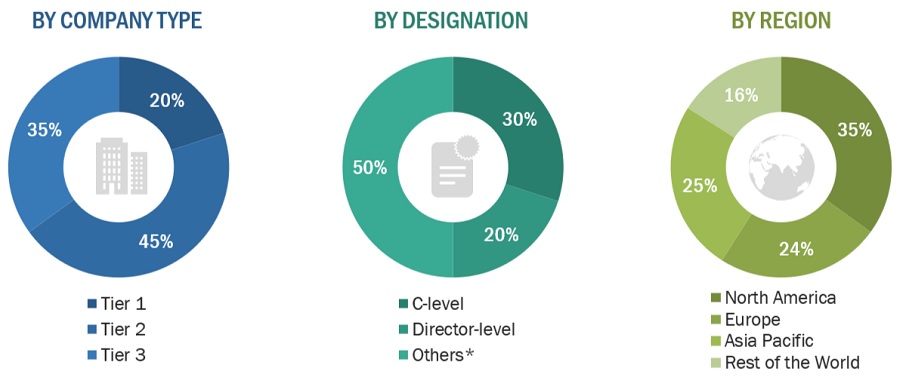
Note 1: C-level primaries include CEOs, COOs, CTOs, and VPs.
Note 2: Other primaries include sales managers, marketing managers, and product managers.
Note 3: Companies are classified into tiers based on their total revenue.
As of 2023: Tier 1=>USD 1 billion, Tier 2 = USD 500 million to USD 1 billion, Tier 3=<USD 500 million.
To know about the assumptions considered for the study, download the pdf brochure
Market Size Estimation
The research methodology used to estimate the size of the cardiac tissue engineering market includes the following details.
The market sizing of the market was undertaken from the global side.
Country-level Analysis: The size of the Cardiac Tissue Engineering market was obtained from the annual presentations of leading players and secondary data available in the public domain. The share of products in the overall cardiac tissue engineering market was obtained from secondary data and validated by primary participants to arrive at the total cardiac tissue engineering market. Primary participants further validated the numbers.
Geographic market assessment (by region & country): The geographic assessment was done using the following approaches:
Approach 1: Geographic revenue contributions/splits of leading players in the market (wherever available) and respective growth trends
Approach 2: Geographic adoption trends for individual product segments by end users and growth prospects for each of the segments (assumptions and indicative estimates validated from primary interviews)
At each point, the assumptions and approaches were validated through industry experts contacted during primary research. Considering the limitations of data available from secondary research, revenue estimates for individual companies (for the overall Cardiac Tissue Engineering market and geographic market assessment) were ascertained based on a detailed analysis of their respective product offerings, geographic reach/strength (direct or through distributors or suppliers), and the shares of the leading players in a particular region or country.
Global Cardiac Tissue Engineering Market Size: Top-Down Approach
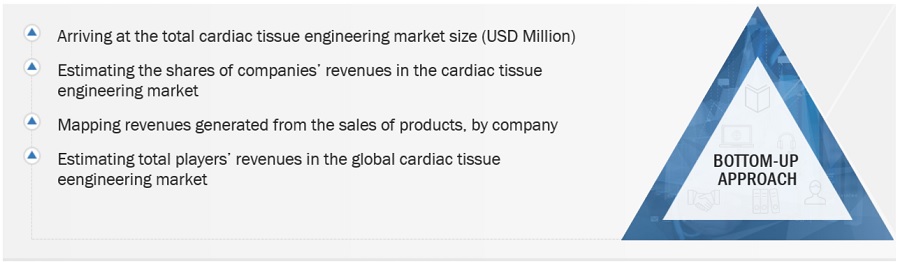
To know about the assumptions considered for the study, Request for Free Sample Report
Global Cardiac Tissue Engineering Market Size: Bottom-Up Approach
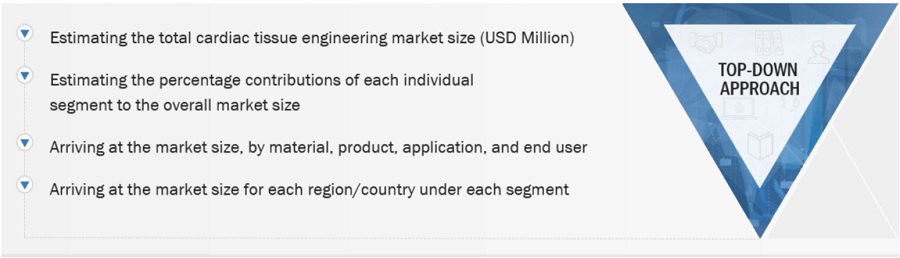
Data Triangulation
After arriving at the overall market size—using the market size estimation processes—the market was split into several segments and subsegments. To complete the overall market engineering process and arrive at the exact statistics of each market segment and sub-segment, the data triangulation and market breakdown procedures were employed, wherever applicable. The data was triangulated by studying various factors and trends from both the demand and supply sides in the Cardiac Tissue Engineering industry.
Market Definition:
Cardiac tissue engineering is an interdisciplinary field focused on developing functional heart tissues to repair or regenerate damaged cardiac tissue. It combines biological, engineering, and medical principles to create scaffolds seeded with stem cells or primary cardiac cells, forming tissues that mimic the heart's structure and function. Key elements include designing biocompatible scaffolds, utilizing bioreactors for tissue culture, ensuring vascularization, and achieving integration with the host's heart tissue. This innovative approach aims to overcome the limitations of current heart disease treatments, offering potential for improved heart function and new therapeutic options for patients with cardiac conditions.
Key Stakeholders
- Healthcare service providers (including hospitals, clinics)
- Pharmaceutical and biotechnological centers
- Research institutes and universities
Report Objectives
- To define, describe, segment, and forecast the global Cardiac Tissue Engineering market by material type, product type, application, end-user, and region.
- To strategically analyze the industry trends, technology trends, pricing analysis, regulatory scenario, supply/value chain, ecosystem mapping, Porter’s Five Forces, patent analysis, key stakeholders and buying criteria, and conferences and events
- To provide detailed information regarding the major factors influencing the growth of this market (such as drivers, restraints, opportunities, and challenges)
- To analyze the micromarkets with respect to individual growth trends, prospects, and contributions to the overall cardiac Tissue engineering market
- To analyze the opportunities for stakeholders and provide details of the competitive landscape for market leaders.
- To forecast the market size based on six key regions: North America, Europe, Asia Pacific, Latin America, and Middle East & Africa
- To strategically profile key players in the cardiac Tissue engineering market and comprehensively analyze their core competencies.
- To track and analyze competitive developments such as product/service launches & approvals, partnerships, agreements, collaborations, joint ventures, expansions, and acquisitions in the overall cardiac Tissue engineering market.
- To benchmark players within the market using the proprietary “Competitive Leadership Mapping” framework, which analyzes market players on various parameters within the broad categories of business and product/service strategy.
- To analyze the impact of the recession on the cardiac Tissue engineering market.
Available Customizations:
With the given market data, MarketsandMarkets offers customizations as per the company’s specific needs. The following customization options are available for the report:
- Product Analysis: Product matrix, which gives a detailed comparison of the product portfolios of each company
- Geographic Analysis: Further breakdown of the Latin American Cardiac Tissue Engineering into specific countries and, the Middle East, and Africa Cardiac Tissue Engineering into specific countries and further breakdown of the European Cardiac Tissue Engineering into specific countries,
Get the Full Cardiac Tissue Engineering Market Report
Full forecast, segment splits, and company analysis for all Cardiac Tissue Engineering Market.
- Canada Cardiac Tissue Engineering Market
- US Cardiac Tissue Engineering Market
- Germany Cardiac Tissue Engineering Market
- France Cardiac Tissue Engineering Market
- Italy Cardiac Tissue Engineering Market
- Spain Cardiac Tissue Engineering Market
- Japan Cardiac Tissue Engineering Market
- China Cardiac Tissue Engineering Market
- India Cardiac Tissue Engineering Market
- Australia Cardiac Tissue Engineering Market
- South Korea Cardiac Tissue Engineering Market
- Brazil Cardiac Tissue Engineering Market
- Mexico Cardiac Tissue Engineering Market
- Rest Of Europe Cardiac Tissue Engineering Market
- Rest Of Asia Pacific Cardiac Tissue Engineering Market
- GCC Countries Cardiac Tissue Engineering Market
- Rest Of Latin America Cardiac Tissue Engineering Market
Need a Tailored Report?
Customize this report to your needs
Get 10% FREE Customization
Customize This Report
