
Europe Continuous Insulation Market (2026-2031)

The Europe Continuous Insulation Market was valued at $43019.9 Million in 2026 and projected to reach to $49935.7 Million by 2031, representing a compound annual growth rate of CAGR 3.0%. Europe's continuous insulation market is positioned for steady growth through 2031, supported by increasingly stringent EU energy efficiency directives and the continent's commitment to net-zero emissions targets.


| Market Size in | USD 26.32 MN |
| Market Forecast in | |
| CAGR | |
| Forecast Period | |
| Units Considered | Value (USD MN) |
Europe Continuous Insulation Market Trends and Insights
- This steady expansion reflects Europe's strong demand across packaging, construction, mining, and gases sectors, driven by stringent energy efficiency regulations and sustainability mandates.
- Europe's mature construction industry and emphasis on building performance standards continue to support market adoption of advanced insulation solutions. The European continuous insulation market benefits from robust industrial infrastructure and increasing retrofitting activities in both residential and commercial segments.
- Between 2026 and 2031, Europe is expected to maintain consistent growth momentum as manufacturers invest in innovative insulation technologies to meet evolving environmental standards.
- Europe's commitment to carbon neutrality and circular economy principles further accelerates the adoption of high-performance continuous insulation materials across all key end-use industries..
Key Market Statistics
- CAGR (2026-2031) CAGR 3.0%
- Market Size, 2026 ~USD 43019.9 Million
- Forecast, 2031 ~USD 49935.7 Million
- Geography Europe
Europe Continuous Insulation Market Overview
Market Valuation & Growth :
Europe's continuous insulation market is valued at $43.02 billion in 2026 and projected to reach $49.94 billion by 2031, with a steady 3.0% CAGR, reflecting robust demand across packaging, construction, mining, and gases sectors.
Regulatory Drivers :
Stringent EU energy efficiency regulations and sustainability mandates are primary growth catalysts, compelling industries to adopt advanced continuous insulation solutions to meet compliance requirements and reduce carbon footprints.
Market Leadership :
Germany leads Europe with $6.64 billion in market size, followed by Poland ($5.09 billion) and Italy ($3.55 billion), demonstrating strong industrial and construction activity across Western and Central European economies.
Sector Diversification :
Europe's mature market benefits from balanced demand across packaging, construction, mining, and industrial gases applications, with construction and energy-efficient building standards driving sustained market expansion.
Europe Continuous Insulation Market Dynamics
- The construction sector remains a primary growth engine, with renovation and new-build projects demanding high-performance insulation materials.
- Regulatory frameworks such as the Energy Performance of Buildings Directive (EPBD) continue to incentivize adoption of continuous insulation solutions across residential and commercial properties. The market's maturity is balanced by innovation in sustainable materials and manufacturing processes.
- Central and Eastern European markets, particularly Poland, are experiencing accelerated growth due to infrastructure development and industrial expansion.
- Western European markets maintain stability through retrofit activities and stringent building codes, while the overall 3.0% CAGR reflects a well-established market with consistent demand fundamentals across all key application sectors..
Market Ecosystem

CONTINUOUS INSULATION MARKET: COMMERCIAL USE CASES ACROSS INDUSTRIES
| COMPANY | USE CASE DESCRIPTION | BENEFITS |
|---|---|---|
 |
Supplies rigid stone wool insulation boards, including ROCKWOOL Comfortboard and Cavityrock, for continuous exterior wall insulation, rainscreen facades, and selected foundation applications. These products are used in residential and commercial buildings requiring thermal performance and fire-resistant exterior wall assemblies. | Reduces thermal bridging and heat loss | Provides non-combustible insulation for suitable assemblies | Enhances acoustic performance and supports moisture management |
 |
Offers high-performance rigid insulation boards, including Kooltherm and Therma, for exterior walls, facades, cavity walls, and roofs. These products enable building designers to achieve required thermal performance while accommodating different wall constructions and space constraints. | Delivers high thermal resistance with relatively thin insulation layers for applicable products | Improves building-envelope energy efficiency | Supports space-efficient wall and facade designs |
 |
Provides FOAMULAR NGX extruded polystyrene (XPS) insulation for residential and commercial wall assemblies, foundation walls, and other suitable building-envelope applications. The boards can be incorporated into compatible continuous insulation systems to improve envelope thermal performance. | Provides moisture-resistant rigid insulation | Helps reduce thermal bridging and heat loss | Supports energy-efficient exterior wall and foundation assemblies |
 |
Through its ISOVER and CertainTeed brands, offers glass wool, mineral wool, and rigid foam insulation products, depending on the market. These products serve exterior walls, facades, and other building-envelope applications requiring specified thermal, acoustic, and fire performance. | Offers insulation options across multiple material categories | Supports thermal and acoustic comfort | Provides product choices for diverse building designs and energy-efficiency requirements |
 |
Through Knauf Insulation, supplies glass mineral wool and rock mineral wool products for exterior wall insulation, external thermal insulation composite systems (ETICS), ventilated facades, and other building-envelope applications. Product selection depends on the wall system, thermal requirements, and applicable fire classifications. | Improves thermal and acoustic insulation | Offers non-combustible rock mineral wool options for suitable assemblies | Supports energy-efficient new construction and building renovation |
Logos and trademarks shown above are the property of their respective owners. Their use here is for informational and illustrative purposes only.
Related Ecosystem
Key Takeaways
- Europe's continuous insulation market reaches $43.02 billion in 2026 with projected growth to $49.94 billion by 2031 at a 3.0% CAGR.
- Europe's stringent energy efficiency regulations and EU sustainability mandates drive consistent demand across construction, packaging, mining, and gases sectors.
- Europe's mature construction industry and retrofitting initiatives support steady market expansion through 2031.
- Europe's carbon neutrality commitments and circular economy focus accelerate adoption of high-performance insulation technologies.
Continuous Insulation Market Report Scope
| Report Metric | Details |
|---|---|
| Base Year | 2026 |
| Fastest Growing Segment | MINERAL WOOL (Insulation Type) |
| Forecast Period | 2026-2031 |
| Growth Rate | CAGR of 3.5% from 2026 to 2031 |
| Largest Segment | RESIDENTIAL (End Use) |
| Market Size Base Year (Billions) | ~USD 57.04 (2026) |
| Revenue Forecast (Billions) | ~USD 67.74 (2031) |
| Segments Covered | Insulation Type, End Use, Application |
Europe Continuous Insulation Market Report Segmentation
3 segment dimensions are covered across the global market.
By Insulation Type
- Eps & Xps
- Mineral Wool
- Other Insulation Types
- Polyisocyanurate
- Polyisocyanurate (Polyiso)
By End Use
- Non-Residential
- Residential
By Application
- Basement
- Exterior Wall
- Roof
Target Audience
- Construction & Building Material Manufacturers : Need market sizing and regulatory insights to develop compliant continuous insulation products for European construction projects and retrofit applications driven by energy efficiency mandates.
- Packaging Industry Stakeholders : Require data on continuous insulation demand in European packaging applications to optimize material sourcing, production capacity, and sustainability positioning in a regulated market.
- Mining & Industrial Gas Operators : Seek market intelligence on continuous insulation adoption in mining and gases sectors across Europe to enhance operational efficiency and meet environmental compliance requirements.
- Strategic Investors & Private Equity : Need comprehensive market analysis and growth forecasts for Europe's continuous insulation sector to identify acquisition targets, investment opportunities, and portfolio optimization strategies.
- Policy Makers & Regulatory Bodies : Require market data and trend analysis to inform EU energy efficiency policies, sustainability initiatives, and building standards that drive continuous insulation market adoption across member states.
Countries within Europe - compare and drill down
| Country | 2025 size (native) |
|---|---|
| Germany | USD 6641.4 Million |
| UK | USD 1048.6 Million |
| France | USD 2247.1 Million |
| Poland | USD 5093.4 Million |
| Italy | USD 3545.4 Million |
| Spain | USD 3295.8 Million |
| Turkey | USD 2905.9 Million |
| Rest Of Europe | USD 28063.9 Million |
Country market size visualization
Reasons to Buy this Report
- Regulatory Compliance Intelligence : Gain detailed insights into how EU energy efficiency regulations and sustainability mandates shape market dynamics, enabling strategic compliance planning and product development aligned with European standards.
- Country-Level Market Segmentation : Access granular market data for key European economies including Germany, Poland, Italy, Spain, and France, allowing targeted market entry strategies and competitive positioning in high-growth regions.
- Sector-Specific Demand Analysis : Understand continuous insulation demand patterns across packaging, construction, mining, and gases industries in Europe, identifying growth opportunities and application-specific market trends.
- Competitive Landscape Mapping : Benchmark your position against regional competitors and identify market gaps in Europe's mature but expanding continuous insulation sector through comprehensive competitive analysis.
- Long-Term Forecast Planning : Leverage 5-year projections (2026-2031) to inform capital investment decisions, supply chain optimization, and market expansion strategies with confidence in Europe's 3.0% CAGR trajectory.
Frequently asked questions
What is the market size of continuous insulation in Europe?
Europe's continuous insulation market is valued at $43.02 billion in 2026 and is forecast to reach $49.94 billion by 2031.
What is the growth rate for continuous insulation in Europe?
Europe's continuous insulation market is expected to grow at a compound annual growth rate (CAGR) of 3.0% from 2026 to 2031.
Which industries drive continuous insulation demand in Europe?
Europe's continuous insulation market is driven by packaging, construction, mining, and gases industries, with construction being the largest segment.
What factors support Europe's continuous insulation market growth?
Europe's market growth is supported by stringent energy efficiency regulations, EU sustainability mandates, building retrofitting activities, and carbon neutrality commitments.
How does Europe's market compare to global continuous insulation trends?
Europe's 3.0% CAGR is slightly below the global average of 3.5%, reflecting Europe's mature market status and established regulatory framework.
RESEARCH METHODOLOGY
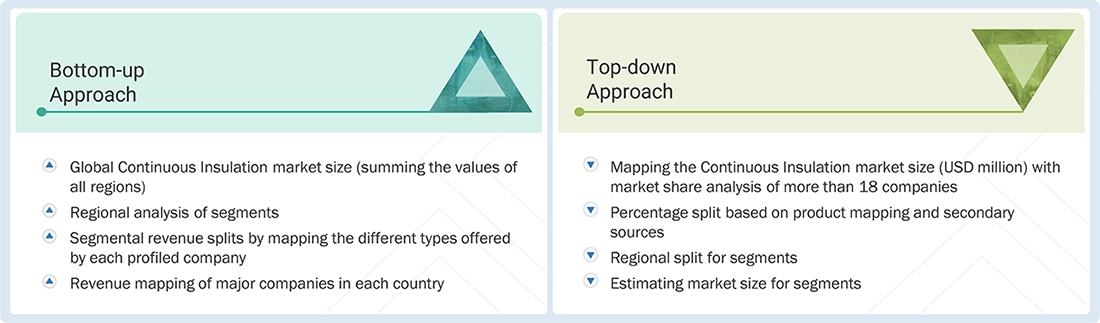
The study involved four major activities in estimating the current size of the continuous insulation market. Exhaustive secondary research was done to collect information on the market, peer markets, and parent markets. The next step was to validate these findings, assumptions, and sizing with industry experts across the continuous insulation value chain through primary research. Both top-down and bottom-up approaches were employed to estimate the complete market size. Thereafter, market breakdown and data triangulation were used to estimate the market size of segments and subsegments.
Secondary Research
Secondary sources for this research study include annual reports, press releases, and investor presentations of companies; white papers; certified publications; articles by recognized authors; gold- and silver-standard websites; continuous insulation manufacturing companies, regulatory bodies, trade directories, and databases. Secondary research was mainly used to obtain key information about the industry’s supply chain, the total pool of key players, market classification, and segmentation by industry trends down to the most granular level and by region. It has also been used to obtain information about key developments from a market-oriented perspective.
Primary Research
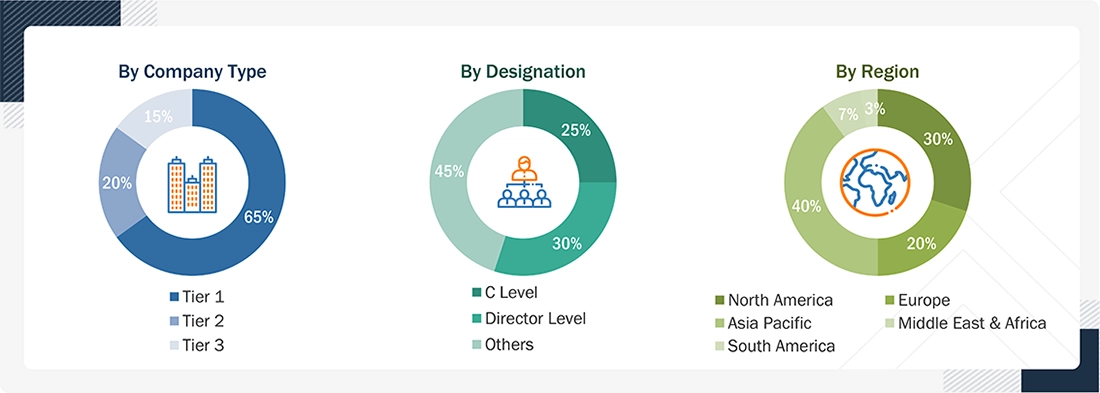
The continuous insulation market includes several supply-chain stakeholders, such as raw material suppliers, technology support providers, and regulatory organizations. Various primary sources from both the supply and demand sides of the market were interviewed to obtain qualitative and quantitative information. Supply-side primary sources included industry experts such as Chief Executive Officers (CEOs), vice presidents, marketing directors, technology and innovation directors, and other key executives from companies and organizations operating in the continuous insulation market. Primary demand-side sources included directors, marketing heads, and purchase managers from various sourcing industries. The following is the breakdown of the primary respondents:
Following is the breakdown of primary respondents:
To know about the assumptions considered for the study, download the pdf brochure
Market Size Estimation
The top-down and bottom-up approaches were used to estimate and validate the total size of the continuous insulation market. These approaches have also been used extensively to estimate the size of various dependent market subsegments. The research methodology used to estimate the market size included the following:
The following segments provide details about the overall market size estimation process employed in this study:
- Extensive primary and secondary research was done to identify the key players.
- The value chain and market size of the continuous insulation market, in terms of value, were determined through primary and secondary research.
- All percentage shares, splits, and breakdowns were collected through secondary sources and verified through primary sources.
- All possible parameters that affect the market were covered in this research study and are viewed in extensive detail, verified through primary research, and analyzed to obtain the final quantitative and qualitative data.
- The study of reports, reviews, and newsletters of top market players, along with extensive interviews for opinions from key leaders, such as CEOs, directors, and marketing executives, is included in this research.
Data Triangulation
After arriving at the overall market size using the market size estimation processes as explained above, the market was split into several segments and subsegments. To complete the overall market engineering process and arrive at the exact statistics of each market segment and subsegment, the data triangulation and market breakdown procedures were employed, wherever applicable. The data were triangulated by analyzing factors and trends from both the demand and supply sides.
Market Definition
The continuous insulation market comprises insulation materials and systems designed to provide an uninterrupted thermal barrier across a building’s exterior envelope, including walls, roofs, and foundations, to minimize heat transfer and improve overall energy efficiency. These systems are installed to reduce thermal bridges through structural components, maintain consistent indoor temperatures, and support lower heating and cooling requirements. The market includes various insulation materials, such as expanded polystyrene (EPS), extruded polystyrene (XPS), mineral wool, polyisocyanurate (Polyiso), graphite polystyrene (GPS), vacuum insulation panels, aerogels, and bio-based insulation products. Continuous insulation is widely used in residential and non-residential buildings, including houses, apartments, offices, commercial facilities, and institutional structures. Its application is influenced by the growing need for energy-efficient construction, improved building envelope performance, moisture management, and long-term structural durability. The growing emphasis on sustainable building practices, green construction standards, and reducing building-related energy consumption has further established continuous insulation as an important component of modern construction and building renovation projects.
Key Stakeholders
- Continuous insulation manufacturers, processors, and recycling technology providers
- Research institutions, standards organizations, and regulatory agencies such as ASTM, ISO, and others
- NGOs, governments, investment banks, venture capitalists, and private equity firms
Report Objectives
- To define, describe, and forecast the market size of continuous insulation in terms of value
- To provide detailed information regarding the key factors, such as drivers, restraints, opportunities, and industry-specific challenges, influencing the growth of the continuous insulation market
- To analyze and forecast the global continuous insulation market based on insulation type, application, end use, and region
- To analyze the opportunities in the market for stakeholders and provide details of a competitive landscape for market leaders
- To forecast the size of various market segments based on five major regions: North America, Asia Pacific, Europe, Middle East & Africa, and South America, along with their respective key countries
- To track and analyze the competitive developments, such as product launches, expansions, and others, in the market
- To strategically profile the key players and comprehensively analyze their market shares and core competencies
Customization Options
Based on the market data, MarketsandMarkets offers customizations to meet client-specific needs.
The following customization options are available for the report:
- Additional country-level analysis of the continuous insulation market
- Profiling of additional market players (up to 5)
Product Analysis
- Product matrix, which provides a detailed comparison of each company's product portfolio.
Get the Full Continuous Insulation Market Report
Full forecast, segment splits, and company analysis for all Continuous Insulation Market.
- China Continuous Insulation Market
- Australia Continuous Insulation Market
- Japan Continuous Insulation Market
- India Continuous Insulation Market
- South Korea Continuous Insulation Market
- Germany Continuous Insulation Market
- UK Continuous Insulation Market
- France Continuous Insulation Market
- Poland Continuous Insulation Market
- Italy Continuous Insulation Market
- Spain Continuous Insulation Market
- Canada Continuous Insulation Market
- Mexico Continuous Insulation Market
- US Continuous Insulation Market
- Turkey Continuous Insulation Market
- South Africa Continuous Insulation Market
- Brazil Continuous Insulation Market
- Argentina Continuous Insulation Market
- Rest Of Europe Continuous Insulation Market
- Rest Of Asia Pacific Continuous Insulation Market
- GCC Countries Continuous Insulation Market
- -Rest Of GCC Countries Continuous Insulation Market
- Rest Of South America Continuous Insulation Market
Need a Tailored Report?
Customize this report to your needs
Get 10% FREE Customization
Customize This Report