
Asia Pacific Corporate Lending Platform Market (2024-2029)

The Asia Pacific Corporate Lending Platform Market was valued at $837 Million in 2024 and projected to reach to $3641 Million by 2029, representing a compound annual growth rate of CAGR 27.8%. Asia Pacific's corporate lending platform market is positioned as the fastest-growing region globally, driven by rapid digitalization of financial services and increasing demand for alternative lending solutions.


| Market Size in | USD 26.32 MN |
| Market Forecast in | |
| CAGR | |
| Forecast Period | |
| Units Considered | Value (USD MN) |
Asia Pacific Corporate Lending Platform Market Trends and Insights
- Asia Pacific's 27.8% compound annual growth rate significantly outpaces global trends, driven by digital transformation initiatives across the region's financial services sector.
- Asia Pacific's growth is fueled by increasing adoption of fintech solutions, regulatory support for alternative lending, and rising demand from SMEs seeking faster, more accessible credit solutions. Asia Pacific's corporate lending platforms are reshaping traditional banking relationships, with Asia Pacific institutions increasingly leveraging cloud-based infrastructure and AI-driven credit assessment tools.
- The forecast period through 2029 reflects Asia Pacific's emergence as a critical hub for lending innovation, supported by strong venture capital investment and government initiatives promoting financial inclusion.
- Asia Pacific's market dynamics are characterized by intense competition among both established financial institutions and agile fintech startups, positioning the region as a key growth engine for the global corporate lending platform market..
Key Market Statistics
- CAGR (2024-2029) CAGR 27.8%
- Market Size, 2024 ~USD 837 Million
- Forecast, 2029 ~USD 3641 Million
- Geography Asia Pacific
Asia Pacific Corporate Lending Platform Market Overview
Exceptional Growth Trajectory :
Asia Pacific's corporate lending platform market is expanding at 27.8% CAGR, significantly outpacing the global rate of 24.5%, reflecting the region's accelerated digital transformation in financial services.
Market Valuation Surge :
The market is projected to grow from $837.0 million in 2024 to $3,641.0 million by 2029, representing a 335% increase over five years and establishing Asia Pacific as a critical growth engine.
China's Market Dominance :
China leads the Asia Pacific region with $1,582.7 million in market size, followed by Japan ($578.9 million) and South Korea ($524.3 million), collectively driving over 70% of regional growth.
Digital Transformation Catalyst :
Increasing adoption of fintech solutions, regulatory modernization, and SME financing demands across Asia Pacific are propelling corporate lending platforms as essential infrastructure for regional financial ecosystems.
Asia Pacific Corporate Lending Platform Market Dynamics
- The region's diverse economies—from mature markets like Japan and Australia to high-growth markets like India and Southeast Asia—are collectively embracing digital lending infrastructure to address SME financing gaps and streamline corporate credit processes. Key growth drivers include regulatory support for fintech innovation, rising venture capital investment in lending platforms, and traditional banks' digital transformation initiatives.
- By 2029, Asia Pacific is expected to capture a substantial share of global market value, with emerging markets contributing significantly to the 27.8% CAGR.
- Strategic partnerships between local financial institutions and platform providers will further accelerate market penetration across the region..
Market Ecosystem
Related Ecosystem
Software And Services
- Natural Language Processing (NLP)
- Machine Learning
- Supply Chain Management
- Predictive Analytics
- Image Sensors
- International Business Machines Corporation
- MICROSOFT CORPORATION
- Oracle Corporation
- SAP SE
- Amazon.com, Inc.
Cloud Computing
- Software as A Service (SaaS)
- Natural Language Processing (NLP)
- Platform as A Service (PaaS)
- Machine Learning
- Supply Chain Management
- International Business Machines Corporation
- MICROSOFT CORPORATION
- Oracle Corporation
- Amazon.com, Inc.
Digitalization And Iot
- Sensors
- Remote Monitoring
- Supply Chain Management
- Passenger Information System (PIS)
- Platform as A Service (PaaS)
- International Business Machines Corporation
- Cisco Systems, Inc.
- MICROSOFT CORPORATION
- Oracle Corporation
- HUAWEI TECHNOLOGIES CO LTD
Key Takeaways
- Asia Pacific's corporate lending platform market will grow from $837.0M (2024) to $3,641.0M (2029), representing a 27.8% CAGR.
- Asia Pacific's growth rate substantially exceeds the global average, reflecting the region's accelerated digital financial transformation.
- Asia Pacific's SME segment drives demand for faster, more accessible corporate lending solutions through fintech platforms.
- Asia Pacific's competitive landscape combines established banks with innovative fintech startups, creating a dynamic market environment.
Corporate Lending Platform Market Report Scope
| Report Metric | Details |
|---|---|
| Base Year | 2024 |
| Fastest Growing Segment | NON-BANKING FINANCIAL CORPORATION (NBFC) (End User) |
| Forecast Period | 2024-2029 |
| Growth Rate | CAGR of 24.5% from 2024 to 2029 |
| Largest Segment | PLATFORMS (Component) |
| Market Size Base Year (Billions) | ~USD 2.95 (2024) |
| Revenue Forecast (Billions) | ~USD 8.84 (2029) |
| Segments Covered | Offering, Solution, Service, Professional Service, Deployment Mode, Organization Size, Lending Type, End User, End User Type, Point Solution, Point Solutions, Component, Banking Type, Banking Mode, Deployment Type |
Asia Pacific Corporate Lending Platform Market Report Segmentation
15 segment dimensions are covered across the global market.
By Offering
- Services
- Solutions
By Solution
- Collateral Management
- Compliance & Regulatory Management
- Digital Lending Platforms
- Loan Monitoring & Management
- Loan Origination
- Loan Structuring
- Other Solutions
- Point Solutions
- Underwriting
By Service
- Consulting
- Implementation
- Managed Services
- Professional Services
- Support & Maintenance
By Professional Service
- Consulting
- Deployment & Integration
- System & Maintenance
By Deployment Mode
- Cloud
- On-Premises
By Organization Size
- Large Enterprises
- Smes
- Startups
By Lending Type
- Agriculture Lending
- Asset-Based
- Asset-Based Lending
- Cash Flow
- Cash Flow Financing
- Commercial Lending
- Commodities Training
- Microcredit
- Microfinance Lending
- Microinsurance
- Microsaving
- Other Lending Types
- Secured Loans
- SME Lending
- Supply Chain Financing
- Unsecured Loans
- Working Capital Loans
By End User
- Banks
- Credit Unions
- Nbfcs
- Non-Banking Financial Corporation (Nbfc)
- Other End Users
By End User Type
- Commercial
- Commercial Banks
- Investment
- Investment Banks
- Retail
- Retail Banks
By Point Solution
- Limits And Collateral Management
- Loan Origination
- Loan Servicing
- Loan/Debt Collection
- Other Point Solutions
- P2P Lending Software
By Point Solutions
- Limits And Collateral Management
- Loan Origination
- Loan Servicing
- Loan/Debt Collection
- Other Point Solutions
- P2P Lending Software
By Component
- Platforms
- Services
By Banking Type
- Corporate Banking
- Investment Banking
- Retail Banking
By Banking Mode
- Mobile Banking
- Online Banking
By Deployment Type
- Cloud
- On-Premises
Target Audience
- Fintech & Lending Platform Providers : Evaluate market expansion opportunities across Asia Pacific, benchmark competitive positioning, and identify high-growth country markets for platform deployment and localization strategies.
- Financial Institutions & Banks : Understand digital lending platform adoption trends, competitive threats from fintech disruptors, and partnership opportunities to enhance corporate lending capabilities across the region.
- Private Equity & Venture Capital Firms : Identify investment opportunities in Asia Pacific's high-growth corporate lending sector, assess market valuations, and evaluate exit potential across key country markets.
- Technology & Software Companies : Explore B2B opportunities in providing infrastructure, AI/ML solutions, and integration services to corporate lending platforms experiencing rapid scaling across Asia Pacific.
- Management Consultants & Strategy Advisors : Support client advisory on market entry, competitive positioning, and digital transformation strategies within Asia Pacific's corporate lending platform ecosystem.
Countries within Asia Pacific - compare and drill down
| Country | 2025 size (native) |
|---|---|
| China | USD 1582.7 Million |
| India | USD 447.8 Million |
| Japan | USD 578.9 Million |
| South Korea | USD 524.3 Million |
| Australia & New Zealand | USD 398 Million |
| Rest Of Asia Pacific | USD 109.2 Million |
Country market size visualization
Reasons to Buy this Report
- Regional Growth Opportunity : Capture insights into the fastest-growing corporate lending market globally, with 27.8% CAGR offering unparalleled investment and expansion opportunities across Asia Pacific's diverse financial landscapes.
- Country-Level Market Intelligence : Access detailed market sizing for key Asia Pacific economies including China ($1.58B), Japan ($579M), and India ($448M), enabling targeted market entry and competitive positioning strategies.
- Competitive Landscape Analysis : Understand market dynamics, key players, and competitive positioning specific to Asia Pacific's unique regulatory environment and fintech adoption patterns across different country markets.
- Strategic Investment Guidance : Identify high-potential markets and segments within Asia Pacific for venture capital, M&A, and partnership opportunities based on comprehensive market forecasts through 2029.
- Digital Transformation Insights : Leverage region-specific data on fintech adoption, regulatory trends, and technology integration to inform product development and go-to-market strategies for Asia Pacific operations.
Frequently asked questions
What is the projected market size for Asia Pacific's corporate lending platform market in 2029?
Asia Pacific's corporate lending platform market is projected to reach $3,641.0 million by 2029, up from $837.0 million in 2024.
What is the CAGR for Asia Pacific's corporate lending platform market?
Asia Pacific's corporate lending platform market is expected to grow at a compound annual growth rate of 27.8% between 2024 and 2029.
What factors are driving growth in Asia Pacific's corporate lending platform market?
Asia Pacific's market growth is driven by digital transformation, regulatory support for alternative lending, SME credit demand, and fintech innovation adoption.
How does Asia Pacific's growth compare to the global corporate lending platform market?
Asia Pacific's 27.8% CAGR significantly outpaces the global market's 24.5% CAGR, making the region a key growth driver.
Who are the main participants in Asia Pacific's corporate lending platform market?
Asia Pacific's market includes established financial institutions, agile fintech startups, and technology-enabled lending platforms competing for market share.
RESEARCH METHODOLOGY
The research study for the corporate lending platform market involved extensive secondary sources, directories, and several journals. Primary sources were mainly industry experts from the core and related industries, preferred corporate lending platform solution providers, third-party service providers, consulting service providers, end users, and other commercial enterprises. In-depth interviews were conducted with various primary respondents, including key industry participants and subject matter experts, to obtain and verify critical qualitative and quantitative information, and assess the market’s prospects.
Secondary Research
The market size of companies offering corporate lending platform solutions and services was arrived at based on secondary data available through paid and unpaid sources. It was also arrived at by analyzing the product portfolios of major companies and rating the companies based on their performance and quality.
In the secondary research process, various sources were referred to for identifying and collecting information for this study. Secondary sources included annual reports, press releases, and investor presentations of companies; white papers, journals, and certified publications; and articles from recognized authors, directories, and databases. The data was also collected from other secondary sources, such as journals, government websites, blogs, and vendor websites. Additionally, corporate lending platform spending of various countries was extracted from the respective sources. Secondary research was mainly used to obtain key information related to the industry’s value chain and supply chain to identify key players based on solution, services, market classification, and segmentation according to offerings of major players, industry trends related to hardware, software, services, technology, verticals, and regions, and key developments from both market- and technology-oriented perspectives.
Primary Research
In the primary research process, various primary sources from both the supply and demand sides were interviewed to obtain qualitative and quantitative information on the market. The primary sources from the supply side included various industry experts, including Chief Experience Officers (CXOs); Vice Presidents (VPs); directors from business development, marketing, and corporate lending platform expertise; related key executives from corporate lending platform solution vendors, SIs, professional service providers, and industry associations; and key opinion leaders.
Primary interviews were conducted to gather insights, such as market statistics, revenue data collected from solutions and services, market breakups, market size estimations, market forecasts, and data triangulation. Primary research also helped understand various trends related to technologies, applications, deployments, and regions. Stakeholders from the demand side, such as Chief Information Officers (CIOs), Chief Technology Officers (CTOs), Chief Strategy Officers (CSOs), and end users using corporate lending platform, were interviewed to understand the buyer’s perspective on suppliers, products, service providers, and their current usage of corporate lending platform solution and services which would impact the overall corporate lending platform market.
The following is the breakup of primary profiles:
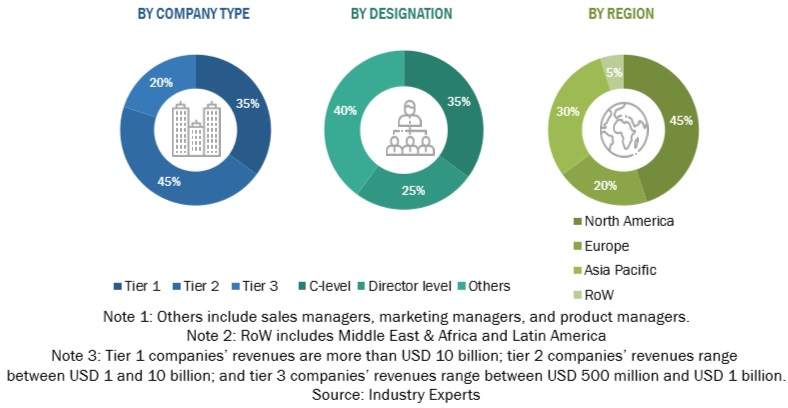
To know about the assumptions considered for the study, download the pdf brochure
Corporate Lending Platform Market Size Estimation
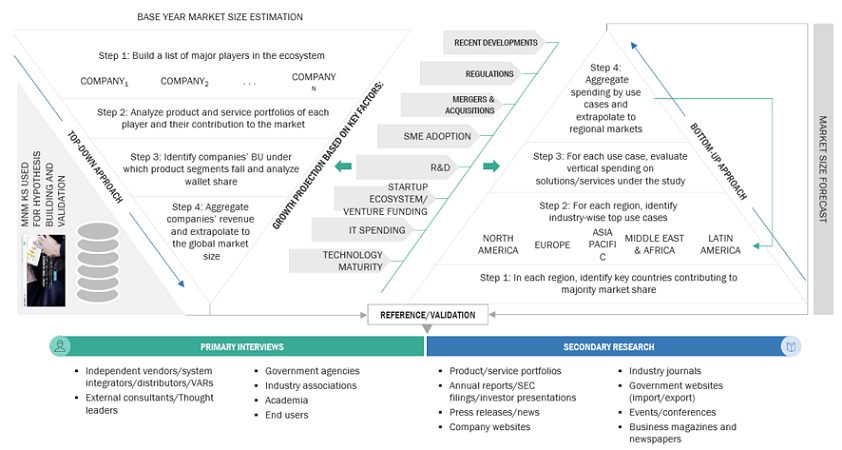
Multiple approaches were adopted for estimating and forecasting the corporate lending platform market. The first approach involves estimating the market size by summation of companies’ revenue generated through the sale of solutions and services.
Market Size Estimation Methodology-Top-down approach
In the top-down approach, an exhaustive list of all the vendors offering solutions and services in the corporate lending platform market was prepared. The revenue contribution of the market vendors was estimated through annual reports, press releases, funding, investor presentations, paid databases, and primary interviews. Each vendor’s offerings were evaluated based on the breadth of solutions and services, deployment mode, organization size lending type, end user and regions. The aggregate of all the companies’ revenue was extrapolated to reach the overall market size. Each subsegment was studied and analyzed for its global market size and regional penetration. The markets were triangulated through both primary and secondary research. The primary procedure included extensive interviews for key insights from industry leaders, such as CIOs, CEOs, VPs, directors, and marketing executives. The market numbers were further triangulated with the existing MarketsandMarkets repository for validation.
Market Size Estimation Methodology-Bottom-up approach
In the bottom-up approach, the adoption rate of corporate lending platform solutions and services among different end users in key countries with respect to their regions contributing the most to the market share was identified. For cross-validation, the adoption of corporate lending platform solutions and services among industries, along with different use cases with respect to their regions, was identified and extrapolated. Weightage was given to use cases identified in different regions for the market size calculation.
Based on the market numbers, the regional split was determined by primary and secondary sources. The procedure included the analysis of the corporate lending platform market’s regional penetration. Based on secondary research, the regional spending on Information and Communications Technology (ICT), socio-economic analysis of each country, strategic vendor analysis of major corporate lending platform solution providers, and organic and inorganic business development activities of regional and global players were estimated. With the data triangulation procedure and data validation through primaries, the exact values of the overall corporate lending platform market size and segments’ size were determined and confirmed using the study.
Top-down and Bottom-up approaches
To know about the assumptions considered for the study, Request for Free Sample Report
Data Triangulation
After arriving at the overall market size using the market size estimation processes as explained above, the market was split into several segments and subsegments. To complete the overall market engineering process and arrive at the exact statistics of each market segment and subsegment, data triangulation and market breakup procedures were employed, wherever applicable. The overall market size was then used in the top-down procedure to estimate the size of other individual markets via percentage splits of the market segmentation.
Market Definition
According to Finastra, a corporate lending platform is a solution that streamlines and automates the lending process for corporate borrowers. It covers the full loan lifecycle, from loan origination to servicing and distribution, and provides a consistent, seamless digital borrower experience.
Stakeholders
- Corporate Lending Platforms Providers
- Corporate Lending Solutions Providers
- FinTech Companies
- Financial Institutions (FIs)
- Banks and non-banking FIs
- Investors and Venture Capitalists
- Professional and Managed Service Providers
- System Integrators
- Government Associations
- Technology Consultants
- Independent Software Vendors (ISVs)
- Consulting Firms
- Value-Added Resellers (VARs)
- IT Agencies
- Credit Organizations
Report Objectives
- To describe and forecast the corporate lending platform market, in terms of value,
- by offering, deployment mode, organization size, lending type, and end user
- To describe and forecast the market, in terms of value,
- by region—North America, Europe, Asia Pacific, Middle East & Africa and Latin America
- To provide detailed information regarding major factors influencing the market growth (drivers, restraints, opportunities, and challenges)
- To strategically analyze micromarkets1 with respect to individual growth trends, prospects, and contribution to the overall market
- To profile key players and comprehensively analyze their market positions in terms of ranking and core competencies2, along with detailing the competitive landscape for market leaders
- To analyze competitive developments such as joint ventures, mergers and acquisitions, product developments, and ongoing research and development (R&D) in the market
- To provide the illustrative segmentation, analysis, and projection of the main regional markets.
Available Customizations
With the given market data, MarketsandMarkets offers customizations as per the company’s specific needs. The following customization options are available for the report:
Product Analysis
- The product matrix provides a detailed comparison of the product portfolio of each company.
Geographic Analysis as per Feasibility
- Further breakup of the North American corporate lending platform Market
- Further breakup of the European Market
- Further breakup of the Asia Pacific Market
- Further breakup of the Middle East & Africa Market
- Further breakup of the Latin American Market
Company Information
- Detailed analysis and profiling of additional market players (up to five)
Get the Full Corporate Lending Platform Market Report
Full forecast, segment splits, and company analysis for all Corporate Lending Platform Market.
- US Corporate Lending Platform Market
- Canada Corporate Lending Platform Market
- UK Corporate Lending Platform Market
- Germany Corporate Lending Platform Market
- France Corporate Lending Platform Market
- Spain Corporate Lending Platform Market
- Italy Corporate Lending Platform Market
- Rest Of Europe Corporate Lending Platform Market
- China Corporate Lending Platform Market
- India Corporate Lending Platform Market
- Japan Corporate Lending Platform Market
- South Korea Corporate Lending Platform Market
- Rest Of Asia Pacific Corporate Lending Platform Market
- Brazil Corporate Lending Platform Market
- Mexico Corporate Lending Platform Market
- Argentina Corporate Lending Platform Market
- Rest Of Latin America Corporate Lending Platform Market
- UAE Corporate Lending Platform Market
- KSA Corporate Lending Platform Market
- Qatar Corporate Lending Platform Market
- Turkey Corporate Lending Platform Market
- South Africa Corporate Lending Platform Market
Need a Tailored Report?
Customize this report to your needs
Get 10% FREE Customization
Customize This Report
