
Mexico Neonatal Care Equipment Market (2025-2030)

The Mexico Neonatal Care Equipment Market was valued at $12.24 Million in 2025 and projected to reach to $15.95 Million by 2030, representing a compound annual growth rate of 5.4%. Mexico's neonatal care equipment market is positioned for steady growth as healthcare providers prioritize modernization and improved maternal-child health outcomes.


| Market Size in | USD 26.32 MN |
| Market Forecast in | |
| CAGR | |
| Forecast Period | |
| Units Considered | Value (USD MN) |
Mexico Neonatal Care Equipment Market Trends and Insights
- Mexico's healthcare infrastructure continues to modernize, driving demand for advanced neonatal care solutions across public and private medical facilities.
- The market growth in Mexico is supported by increasing birth rates, rising healthcare expenditure, and greater awareness of neonatal health outcomes among healthcare providers and families. The neonatal care equipment sector in Mexico benefits from improving access to specialized pediatric care and government initiatives to enhance maternal and child health services.
- Mexico's growing middle class and expanding private healthcare sector are creating opportunities for premium neonatal equipment adoption.
- Between 2025 and 2030, Mexico is expected to see steady investment in hospital infrastructure and neonatal intensive care units (NICUs), positioning the country as a key market within Latin America for neonatal care technologies..
Key Market Statistics
- CAGR (2025-2030) 5.4% CAGR
- Market Size, 2025 ~USD 12.24 Million
- Forecast, 2030 ~USD 15.95 Million
- Country Mexico
Mexico Neonatal Care Equipment Market Overview
Market Valuation Growth :
Mexico's neonatal care equipment market is valued at USD 12.24 million in 2025 and is projected to reach USD 15.95 million by 2030, representing a steady CAGR of 5.4% over the forecast period.
Healthcare Infrastructure Modernization :
Mexico's ongoing healthcare infrastructure upgrades are driving adoption of advanced neonatal care equipment across both public IMSS facilities and private hospital networks, particularly in major urban centers like Mexico City, Guadalajara, and Monterrey.
Public and Private Sector Demand :
Growth is fueled by increased investment from both government healthcare institutions and private medical facilities seeking to improve neonatal outcomes and comply with international clinical standards for maternal and child health.
Rising Birth Complications Awareness :
Increased awareness of neonatal complications and improved access to specialized care in secondary and tertiary hospitals is expanding the addressable market for incubators, phototherapy units, and respiratory support equipment.
Mexico Neonatal Care Equipment Market Dynamics
- Government initiatives and private sector investments are expanding access to advanced neonatal technologies in urban and semi-urban regions.
- The market benefits from rising birth rates in certain demographics and increasing recognition of the importance of specialized neonatal care.
- However, budget constraints in public healthcare systems and competition from imported equipment may moderate growth rates.
- By 2030, Mexico's market is expected to mature with greater penetration of incubators, monitoring systems, and respiratory devices across hospital networks..
Market Ecosystem
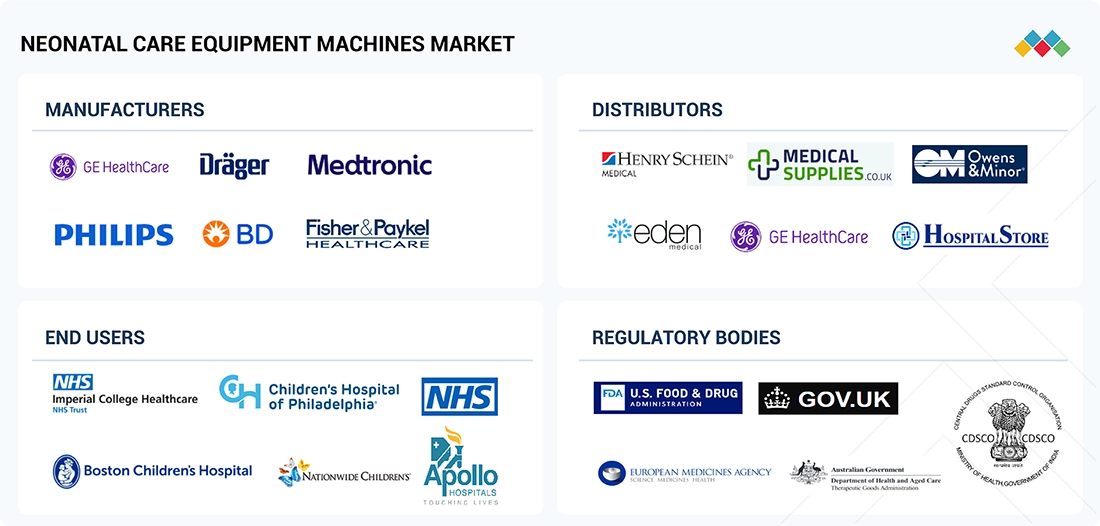
Neonatal Care Equipment Market: COMMERCIAL USE CASES ACROSS INDUSTRIES
| COMPANY | USE CASE DESCRIPTION | BENEFITS |
|---|---|---|
 |
Provides neonatal incubators, warmers, and monitoring systems designed to stabilize and monitor premature infants in NICUs. | Offers advanced temperature control, continuous vital sign monitoring, and promotes better survival outcomes in critical neonatal care. |
 |
Manufactures neonatal incubators, ventilators, and phototherapy units with integrated data connectivity for NICU environments. | Ensures precise thermoregulation and respiratory support, reduces infection risk, and improves workflow efficiency for caregivers. |
 |
Offers neonatal monitoring systems and infant warmers with integrated patient data management solutions. | Enhances clinical decision-making, ensures patient safety, and enables seamless integration within hospital information systems. |
 |
Develops neonatal hearing screening, brain monitoring, and jaundice management devices. | Supports early detection of developmental and neurological disorders, improving long-term infant outcomes. |
 |
Produces neonatal respiratory support systems, including CPAP and humidification technologies. | Improves breathing support and patient comfort, reduces lung injury risk, and supports non-invasive respiratory management. |
Logos and trademarks shown above are the property of their respective owners. Their use here is for informational and illustrative purposes only.
Related Ecosystem
Medical Devices
- Polymerase Chain Reaction (PCR)
- Magnetic Resonance Imaging (MRI)
- Disposable Autoinjectors
- Pulse Oximeters
- Blood Pressure Monitors
- Medtronic plc
- Abbott Laboratories
- Stryker Corporation
- Becton, Dickinson and Company
- JOHNSON & JOHNSON
Key Takeaways
- Mexico's neonatal care equipment market is valued at USD 12.24 million in 2025 and will grow to USD 15.95 million by 2030 at a 5.4% CAGR.
- Mexico's healthcare modernization and rising healthcare expenditure are primary drivers of neonatal equipment demand.
- Mexico's expanding private healthcare sector and growing middle class create opportunities for advanced neonatal care technology adoption.
- Government initiatives focused on maternal and child health in Mexico are expected to accelerate NICU infrastructure investment through 2030.
Neonatal Care Equipment Market Report Scope
| Report Metric | Details |
|---|---|
| Base Year | 2025 |
| Fastest Growing Segment | CONTINUOUS POSITIVE AIRWAY PRESSURE DEVICES (Type) |
| Forecast Period | 2025–2030 |
| Growth Rate | CAGR of 5.6% from 2025 to 2030 |
| Largest Segment | GENERAL HOSPITALS (End User) |
| Market Size Base Year (Billions) | ~USD 2.13 (2025) |
| Revenue Forecast (Billions) | ~USD 2.8 (2030) |
| Segments Covered | Product, Type, End User |
Mexico Neonatal Care Equipment Market Report Segmentation
3 segment dimensions are covered across the global market.
By Product
- Convertible Warmers & Incubators
- Infant Warmers
- Neonatal Diagnostic Imaging Components
- Neonatal Incubators
- Neonatal Monitoring Devices
- Neonatal Phototherapy Equipment
- Neonatal Respiratory Care Devices
- Other Neonatal Products
By Type
- Blood Pressure Monitors
- Capnographs
- Cardiac Monitors
- Continuous Positive Airway Pressure Devices
- Conventional Neonatal Phototherapy Equipment
- Electric Warmers
- Extracorporeal Membrane Oxygenation Systems
- Fibre-Optic Neonatal Phototherapy Equipment
- Integrated Monitoring Devices
- Neonatal Ventilators
- Non-Electric Warmers
- Other Neonatal Respiratory Care Devices
- Other Respiratory Care Devices
- Pulse Oximeters
- Resuscitators
- Ultrasound Transducers
- X-Ray Detectors
By End User
- General Hospitals
- Maternity & Birthing Centers
- Other End Users
- Pediatric Hospitals
MEXICO: NEONATAL CARE EQUIPMENT MARKET, BY END USER, 2023–2030
| Segment | 2023 | 2024 | 2025 | 2026 | 2027 | 2028 | 2029 | 2030 | CAGR (%) |
|---|---|---|---|---|---|---|---|---|---|
| GENERAL HOSPITALS | 23.17 | 24.23 | 25.42 | 26.62 | 28.02 | 29.57 | 31.3 | 33.24 | 5.5 |
| MATERNITY & BIRTHING CENTERS | 10.29 | 10.9 | 11.59 | 12.3 | 13.12 | 14.03 | 15.05 | 16.19 | 6.9 |
| OTHER END USERS | 6.89 | 7.12 | 7.38 | 7.63 | 7.94 | 8.28 | 8.66 | 9.08 | 4.3 |
| PEDIATRIC HOSPITALS | 12.68 | 13.37 | 14.15 | 14.95 | 15.87 | 16.89 | 18.03 | 19.32 | 6.4 |
| TOTAL | 53.03 | 55.62 | 58.53 | 61.49 | 64.95 | 68.77 | 73.04 | 77.83 | 5.9 |
Target Audience
- Medical Device Manufacturers : Neonatal equipment manufacturers need Mexico-specific market data to assess market size, growth potential, and competitive landscape for incubators, phototherapy units, and monitoring systems.
- Healthcare Distributors & Suppliers : Equipment distributors require detailed market insights to identify procurement opportunities, hospital networks, and demand patterns across Mexico's public and private healthcare sectors.
- Hospital & Healthcare Administrators : Mexican hospital decision-makers need market intelligence to benchmark equipment investments, understand technology trends, and plan capital expenditures for neonatal care units.
- Private Equity & Investment Firms : Investors evaluating healthcare opportunities in Mexico require market sizing, growth forecasts, and competitive analysis to assess investment viability in neonatal care equipment companies.
- Government & Healthcare Policy Makers : Mexican health ministry officials and policy makers need market data to inform healthcare modernization initiatives, procurement strategies, and resource allocation for neonatal care infrastructure.
Key Companies in the Mexico Neonatal Care Equipment Market
| Company | HQ | Ownership | Strongest segments |
|---|---|---|---|
| ANALOGIC CORPORATION | United States | Private Company | Medical CT systems and X-ray detectors,Ultrasound systems,Security imaging and detection systems, |
| CAS MEDICAL SYSTEMS INC | United States | Private Company | FORE-SIGHT and FORE-SIGHT ELITE monitors,Oximetry sensors and accessories,Service and repairs, |
| HENRY SCHEIN | United States | Public Company | Global Distribution & Value-Added Services,Global Specialty Products,Global Technology, |
| ROSSMAX INTERNATIONAL LTD | Taiwan | Public Company | Blood pressure monitors and sphygmomanometers,Thermometers (including non-contact telephoto),Respiratory care (nebulizers, aero spacers, peak flow meters), |
| DANAHER CORPORATION | United States | Public Company | Biotechnology,Life Sciences,Diagnostics, |
| GE HEALTHCARE | United States | Public Company | Imaging,Advanced Visualization Solutions (AVS),Patient Care Solutions (PCS), |
| DRäGERWERK AG & CO. KGAA | Germany | Public Company | Acute care systems (ventilation, anaesthesia, monitoring, OR infrastructure),Neonatal and perinatal care,Medical infrastructure, gases, consumables, and services, |
| KONINKLIJKE PHILIPS N.V. | Netherlands | Public Company | Diagnostic Imaging (MRI, CT, Ultrasound, Diagnostic X-ray),Image Guided Therapy (Systems and Devices),Monitoring & Enterprise Informatics, |
| MASIMO | United States | Private Company | SET and rainbow SET pulse oximetry (including OEM),Brain function and hemodynamic monitoring,Hospital Automation platform (Patient SafetyNet, Iris, iSirona, Replica, UniView), |
| FISHER & PAYKEL HEALTHCARE LIMITED | New Zealand | Public Company | Hospital respiratory & humidification (adult),Infant respiratory & neonatal care,Homecare OSA (CPAP devices, masks, humidifiers), |
| INSPIRATION HEALTHCARE GROUP PLC | United Kingdom | Public Company | Neonatal, developmental and intensive care (incl. thermo-regulatory and transport),Infusion therapies and ambulatory pumps,Pneumatic ventilators and respiratory care, |
| MEDTRONIC | Ireland | Public Company | Cardiovascular Portfolio,Neuroscience Portfolio,Medical Surgical Portfolio (incl. Diabetes and Monitoring), |
| CARDINAL HEALTH | United States | Public Company | Branded and generic pharmaceutical distribution,Specialty pharmaceutical services and manufacturer solutions,Medical, surgical, and laboratory products (Cardinal-branded and national brands), |
| ICU MEDICAL, INC. | United States | Public Company | Infusion pumps and medication safety software,Vascular access and needlefree connectors,IV solutions and diluents, |
| UTAH MEDICAL PRODUCTS, INC. | United States | Public Company | Obstetrics and neonatal care (fetal monitoring, vacuum delivery, DISPOSA-HOOD, umbilical and NICU catheters),Gynecology and women’s health (LETZ, Filshie Clip, gynecologic tools, LIBERTY, ENDOCURETTE, uterine manipulators),Pressure monitoring and BioPharm components (DELTRAN, BioPharm HP-PRT, accessories and molded parts), |
| AMBU A/S | Denmark | Public Company | Endoscopy (single-use scopes and visualization units),Neurology (EEG/EMG electrodes and IOM),Cardiology (ECG electrodes), |
ANALOGIC CORPORATION
Analogic Corporation is a private company founded in 1967 in the United States with 1,510 employees.
CAS MEDICAL SYSTEMS INC
CAS Medical Systems Inc is a private company founded in 1984 in the United States with 73 employees.
HENRY SCHEIN
Henry Schein is a public company founded in 1932 in the United States with 25,000 employees.
ROSSMAX INTERNATIONAL LTD
Rossmax International Ltd is a public company founded in 1988 in Taiwan.
DANAHER CORPORATION
Danaher Corporation is a public company founded in 1969 in the United States with 59,000 employees.
GE HEALTHCARE
GE Healthcare is a public company founded in 2022 in the United States with 54,000 employees.
DRäGERWERK AG & CO. KGAA
Drägerwerk AG & Co. KGaA is a public company founded in 1889 in Germany with 16,033 employees.
KONINKLIJKE PHILIPS N.V.
Koninklijke Philips N.V. is a public company founded in 1891 in the Netherlands with 64,317 employees.
MASIMO
Masimo is a private company founded in 1989 in the United States with 2,200 employees.
FISHER & PAYKEL HEALTHCARE LIMITED
Fisher & Paykel Healthcare Limited is a public company founded in 1934 in New Zealand with 7,396 employees.
INSPIRATION HEALTHCARE GROUP PLC
Inspiration Healthcare Group PLC is a public company founded in 1998 in the United Kingdom with 214 employees.
MEDTRONIC
Medtronic is a public company founded in 1949 in Ireland with 95,000 employees.
CARDINAL HEALTH
Cardinal Health is a public company founded in 1979 in the United States with 55,392 employees.
ICU MEDICAL, INC.
ICU Medical, Inc. is a public company founded in 1984 in the United States with 13,000 employees.
UTAH MEDICAL PRODUCTS, INC.
Utah Medical Products, Inc. is a public company founded in 1978 in the United States with 146 employees.
AMBU A/S
Ambu A/S is a public company founded in 1937 in Denmark with 5,200 employees.
Reasons to Buy this Report
- Market Size & Growth Trajectory : Access precise valuation data for Mexico's neonatal care equipment market (USD 12.24M in 2025) with detailed 5-year forecasts to 2030, enabling accurate revenue projections and market entry strategies.
- Regional Competitive Intelligence : Understand Mexico-specific market dynamics, key hospital networks, public vs. private sector distribution, and competitive positioning of equipment suppliers operating in the Mexican healthcare system.
- Investment & Expansion Planning : Identify growth opportunities across Mexico's major metropolitan areas and secondary cities, with insights into healthcare infrastructure investments and procurement patterns for neonatal equipment.
- Regulatory & Market Access Insights : Gain clarity on Mexico's medical device regulations, COFEPRIS approval requirements, and market entry barriers specific to neonatal care equipment manufacturers and distributors.
- Demand Driver Analysis : Understand key growth catalysts including government healthcare modernization programs, private hospital expansion, and rising demand for advanced neonatal care solutions in Mexico.
Frequently asked questions
What is the current size of Mexico's neonatal care equipment market?
Mexico's neonatal care equipment market is valued at USD 12.24 million in 2025.
What is the projected market size for neonatal care equipment in Mexico by 2030?
Mexico's neonatal care equipment market is projected to reach USD 15.95 million by 2030.
What is the growth rate of Mexico's neonatal care equipment market?
Mexico's neonatal care equipment market is expected to grow at a CAGR of 5.4% from 2025 to 2030.
What factors are driving growth in Mexico's neonatal care equipment market?
Key drivers include healthcare infrastructure modernization, rising healthcare expenditure, government maternal and child health initiatives, and expansion of private healthcare facilities in Mexico.
Which segments of Mexico's healthcare system are adopting neonatal care equipment?
Both public hospital systems and private healthcare facilities in Mexico are investing in neonatal care equipment, with particular growth in NICU infrastructure development.
RESEARCH METHODOLOGY
The study involved major activities in estimating the current market size for the neonatal care equipment market. Exhaustive secondary research was done to collect information on the neonatal care equipment market. The next step was to validate these findings, assumptions, and sizing with industry experts across the value chain using primary research. Different approaches, such as top-down and bottom-up, were employed to estimate the total market size. After that, the market breakup and data triangulation procedures were used to estimate the market size of the segments and subsegments of the neonatal care equipment market.
Secondary Research
This research study involved the wide use of secondary sources, directories, databases such as Dun & Bradstreet, Bloomberg Businessweek, Factiva, whitepapers, and companies’ house documents. Secondary research was undertaken to identify and collect information for this extensive, technical, market-oriented, and commercial study of the neonatal care equipment (NCE) market. It was also used to obtain important information about the top players, market classification, and segmentation according to industry trends, to the bottom-most level, geographic markets, and key developments related to the market. A database of the key industry leaders was also prepared using secondary research.
Primary Research
In the primary research process, various supply- and demand-side sources were interviewed to obtain qualitative and quantitative information for this report. Primary sources from the supply side included industry experts such as CEOs, vice presidents, marketing and sales directors, technology & innovation directors, engineers, and related key executives from various companies and organizations operating in the neonatal care equipment market. Primary sources from the demand side included pediatric hospitals, maternity & birthing centers, clinics, researchers, lab technicians, purchase managers, and stakeholders in corporate & government bodies.
Breakdown of Primary Interviews
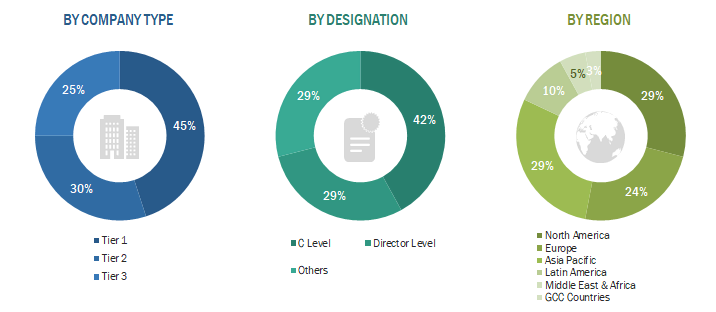
Note 1: C-level primaries include CEOs, COOs, and CTOs.
Note 2: Other designations include sales managers, marketing managers, and product managers.
Note 3: Companies are classified into tiers based on their total revenue. As of 2024: Tier 1=>USD 1 billion, Tier 2 = USD 500 million to USD 1 billion, Tier 3=< USD 500 million
To know about the assumptions considered for the study, download the pdf brochure
Market Size Estimation
Both top-down and bottom-up approaches were used to estimate and validate the total size of the neonatal care equipment market. These methods were also used extensively to estimate the size of various subsegments in the market. The research methodology used to estimate the market size includes the following:
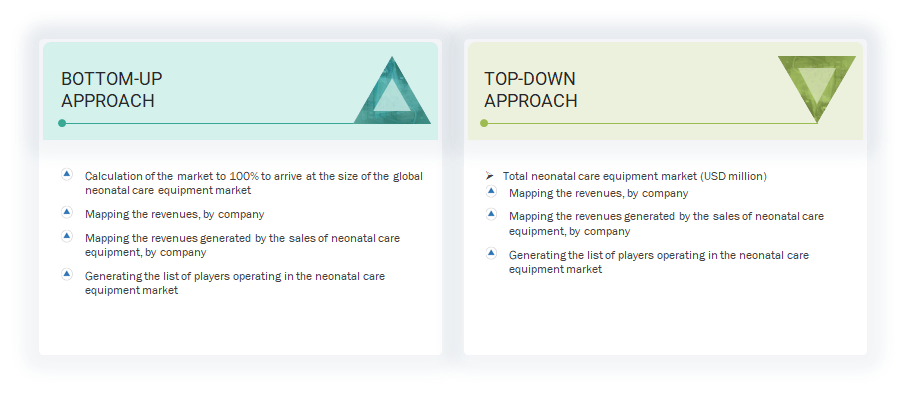
Data Triangulation
The entire market was split into three segments when the market size was determined. Data triangulation and market breakdown processes were used where necessary to complete the entire market engineering process and arrive at precise statistics for all segments.
Approach to derive the market size and estimate market growth.
Using secondary data from paid and unpaid sources, the market rankings for the major players were determined following a thorough analysis of their sales of neonatal care equipment. Due to data restrictions, the revenue share in certain cases was determined after a thorough analysis of the product portfolio of big corporations and their individual sales performance. This information was verified at each stage by in-depth interviews with professionals in the field.
Market Definition
Neonatal care equipment includes medical devices designed to support and treat newborns, especially premature or ill infants. These devices help regulate temperature, provide respiratory support, monitor vital signs, and treat conditions like jaundice. Key equipment includes incubators, warmers, ventilators, and phototherapy units.
Stakeholders
- Manufacturers of Neonatal Care and Related Devices
- Suppliers and Distributors of Neonatal Care Devices
- Hospitals, Neonatal Intensive Care Units (NICUs), Diagnostic Centers, and Medical Colleges
- Maternity & Birthing Centers
- Pediatric Clinics
- Medical Device Procurement Agencies
- Government Bodies/Municipal Corporations
- Business Research and Consulting Service Providers
- Venture Capitalists
- US Food and Drug Administration (US FDA)
- European Union (EU)
Report Objectives
- To define, describe, and forecast the neonatal care equipment market based on product, indication, end user, and region
- To provide detailed information regarding the major factors influencing the market growth (drivers, restraints, opportunities, and challenges)
- To analyze the micromarkets with respect to individual growth trends, prospects, and contributions to the overall neonatal care equipment market
- To analyze market opportunities for stakeholders and provide details of the competitive landscape for key players
- To forecast the size of the neonatal care equipment market in six regions, namely, North America (US and Canada), Europe (Germany, UK, France, Spain, Italy, and Rest of Europe), the Asia Pacific (Japan, China, India, Australia, South Korea, and Rest of Asia Pacific), Latin America (Brazil, Mexico, and Rest of Latin America), Middle East & Africa, and GCC Countries
- To strategically profile the key players in the global market and comprehensively analyze their core competencies
- To track and analyze competitive developments, such as product launches, expansions, agreements, and acquisitions, of the leading players in the market
Get the Full Neonatal Care Equipment Market Report
Full forecast, segment splits, and company analysis for all Neonatal Care Equipment Market.
- Canada Neonatal Care Equipment Market
- US Neonatal Care Equipment Market
- Germany Neonatal Care Equipment Market
- France Neonatal Care Equipment Market
- UK Neonatal Care Equipment Market
- Italy Neonatal Care Equipment Market
- Spain Neonatal Care Equipment Market
- Japan Neonatal Care Equipment Market
- China Neonatal Care Equipment Market
- India Neonatal Care Equipment Market
- South Korea Neonatal Care Equipment Market
- Australia Neonatal Care Equipment Market
- New Zealand Neonatal Care Equipment Market
- Brazil Neonatal Care Equipment Market
Need a Tailored Report?
Customize this report to your needs
Get 10% FREE Customization
Customize This Report
