
South Africa Float Glass Market (2025-2030)

The South Africa Float Glass Market was valued at $1078.2 Million in 2025 and projected to reach to $1751.7 Million by 2030, representing a compound annual growth rate of 10.2%. South Africa's float glass market demonstrates strong growth potential, driven by accelerating urbanization and infrastructure development across the country.


| Market Size in | USD 26.32 MN |
| Market Forecast in | |
| CAGR | |
| Forecast Period | |
| Units Considered | Value (USD MN) |
South Africa Float Glass Market Trends and Insights
- The market in South Africa is expected to expand significantly, reaching USD 1,751.7 million by 2030, driven by rising demand from construction, automotive, and packaging sectors.
- South Africa's strategic location and manufacturing capabilities support the region's float glass production and distribution networks. The float glass industry in South Africa benefits from increasing urbanization and infrastructure development across the country.
- South Africa's market growth trajectory reflects broader trends in emerging markets, with a compound annual growth rate (CAGR) of 10.2% between 2025 and 2030.
- South Africa's participation in regional trade and investment in glass manufacturing facilities position the country as a critical hub for float glass supply in the Middle East Africa region..
Key Market Statistics
- CAGR (2025-2030) 10.2% CAGR
- Market Size, 2025 ~USD 1078.2 Million
- Forecast, 2030 ~USD 1751.7 Million
- Country South Africa
South Africa Float Glass Market Overview
Market Valuation Growth :
South Africa's float glass market is valued at USD 1,078.2 million in 2025 and is projected to reach USD 1,751.7 million by 2030, representing a robust 10.2% CAGR over the forecast period.
Regional Significance :
South Africa serves as a key growth segment within the Middle East Africa region, leveraging its strategic geographic location and established manufacturing infrastructure to drive market expansion.
Sector Drivers :
Rising demand from construction, automotive, and packaging sectors is propelling market growth in South Africa, with these industries increasingly requiring high-quality float glass for diverse applications.
Manufacturing Advantage :
South Africa's advanced manufacturing capabilities and industrial base position it as a competitive hub for float glass production, supporting both domestic consumption and regional export opportunities.
South Africa Float Glass Market Dynamics
- The construction sector's expansion, coupled with rising automotive production and packaging innovations, creates sustained demand for float glass products.
- Manufacturing investments and technological advancements in production processes are enhancing competitiveness. The market is expected to benefit from increased foreign direct investment and regional trade integration within Africa.
- South Africa's established supply chain networks and skilled workforce provide competitive advantages.
- However, market players must navigate economic volatility and energy costs.
- Strategic partnerships and sustainability initiatives will be critical for capturing growth opportunities through 2030..
Market Ecosystem
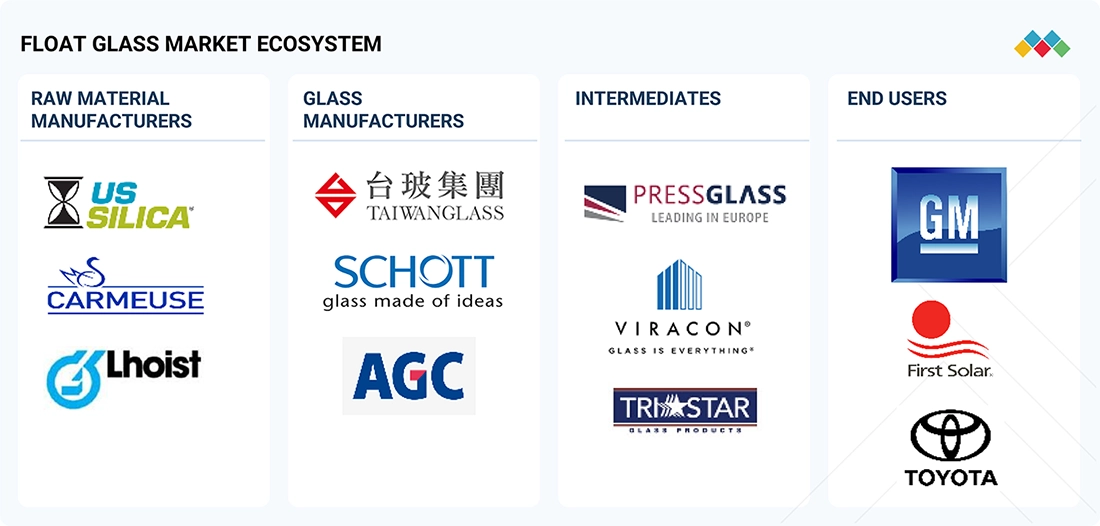
FLOAT GLASS MARKET: COMMERCIAL USE CASES ACROSS INDUSTRIES
| COMPANY | USE CASE DESCRIPTION | BENEFITS |
|---|---|---|
 |
Supplies float glass as the base material for architectural glazing used in residential, commercial, and infrastructure projects, including facades, windows, curtain walls, and interior partitions. The company further processes float glass into tempered, laminated, and coated products to meet energy efficiency and safety requirements. | Increased optical transparency, better thermal and solar capability, better safety standards, less energy usage in structures, and extended service life in a wide range of climatic conditions. |
 |
Offers automotive and transportation glass, such as windshields, sidelights, rear windows and panoramic roof systems. There is float glass that is used in laminated and tempered passenger vehicle automotive glazing, electric vehicle automotive glazing, and commercial transportation system automotive glazing. | Increased passenger safety, acoustic and thermal insulation, decreased weight of the vehicle, improved view, and integration with the latest driver assistance and visualization technologies. |
 |
Uses high quality float glass in solar energy and industrial applications, supplying solar grade glass for photovoltaic modules and specialty flat glass for electronics, appliances, and industrial equipment. | Good light transmission, environmental stress durability, high solar module efficiency, uniform surface quality, and high precision driven industrial performance. |
Logos and trademarks shown above are the property of their respective owners. Their use here is for informational and illustrative purposes only.
Related Ecosystem
Ceramics And Glass
- Zirconia
- Alumina Ceramics
- Silicon Carbide
- Silicon Nitride
- Titanate Ceramics
- Saint-gobain
- 3M COMPANY
- CERAMTEC GMBH
- Kyocera Corporation
- COORSTEK INCORPORATED
Key Takeaways
- South Africa's float glass market is valued at USD 1,078.2 million in 2025 and is projected to grow to USD 1,751.7 million by 2030.
- South Africa demonstrates a robust CAGR of 10.2%, reflecting strong demand from construction and automotive sectors.
- South Africa's manufacturing infrastructure and regional trade position support sustained market expansion through 2030.
- South Africa's urbanization and infrastructure development drive increased float glass consumption across multiple end-use industries.
Float Glass Market Report Scope
| Report Metric | Details |
|---|---|
| Base Year | 2025 |
| Fastest Growing Segment | SOLAR ENERGY (End-Use Industry) |
| Forecast Period | 2025–2030 |
| Growth Rate | CAGR of 11.7% from 2025 to 2030 |
| Largest Segment | CONSTRUCTION & INFRASTRUCTURE (End-Use Industry) |
| Market Size Base Year (Billions) | ~USD 171.75 (2025) |
| Revenue Forecast (Billions) | ~USD 298.65 (2030) |
| Segments Covered | Thickness, Product, End-Use Industry |
South Africa Float Glass Market Report Segmentation
3 segment dimensions are covered across the global market.
By Thickness
- 5-10 Mm
- 5Mm – 10Mm
- <5 Mm
- >10 Mm
By Product
- Clear Float Glass
- Laminated Glass
- Other Products
- Tempered Float Glass
- Tinted Float Glass
By End-Use Industry
- Automotive & Transportation
- Construction & Infrastructure
- Other End-Use Industries
- Solar Energy
Target Audience
- Float Glass Manufacturers : Manufacturers need South Africa-specific market data to assess production capacity requirements, identify local demand patterns, and develop competitive strategies for this high-growth regional market.
- Construction & Real Estate Developers : Developers require detailed market insights on float glass availability, pricing trends, and supply chain reliability in South Africa to optimize project planning and material procurement strategies.
- Automotive Industry Players : Automotive manufacturers and suppliers need South Africa market intelligence to understand local glass demand, supplier capabilities, and cost structures for vehicle production and assembly operations.
- Investment & Private Equity Firms : Investors seeking growth opportunities in South Africa's manufacturing sector require comprehensive market data, growth forecasts, and competitive analysis to evaluate investment viability and returns.
- Packaging & Consumer Goods Companies : Packaging manufacturers need South Africa float glass market insights to secure reliable supply sources, understand pricing dynamics, and plan product development aligned with regional demand trends.
Key Companies in the South Africa Float Glass Market
| Company | HQ | Ownership | Strongest segments |
|---|---|---|---|
| TAIWAN GLASS IND. CORP. | Taiwan | Public Company | Flat-panel (float, processed, auto, ultra-thin, photovoltaic),Glass Fibers (fabric and fiber glass),Glassware (containers, tableware, kitchenware), |
| CSG HOLDING CO. LTD. | China | Public Company | Float and Architectural Glass,Photovoltaic and Solar Glass,Electronic Glass and Display Components, |
| FUYAO GROUP | China | Public Company | Automotive OEM glazing (windshields, sidelites, backlites),Panoramic and smart skylight glass,Functional glass (HUD, coated heatable, dimmable, flush laminated), |
| NIPPON SHEET GLASS CO., LTD. | Japan | Public Company | Architectural glass (flat, interior/exterior, solar),Automotive glass (OEM and replacement),Technical glass and MICROGLAS functional products, |
| SAINT-GOBAIN | France | Public Company | Plasterboard, ceilings, and interior systems,Insulation solutions (building and technical),Mortars and construction chemicals, |
| SISECAM | Turkey | Public Company | Architectural Glass,Industrial & Automotive Glass,Glass Packaging, |
| CENTRAL GLASS CO., LTD. | Japan | Public Company | Architectural and Automotive Flat Glass,Fluorine-based Products and Electronic Materials,Agrochemicals, Fertilizers, and Pharma Intermediates, |
| AGC INC. | United States | Public Company | High-horsepower and row-crop tractors,Utility and compact tractors,Combines and harvesting equipment, |
| SCHOTT | Germany | Public Company | Prefillable glass syringes (syriQ portfolio),Pharmaceutical glass vials (adaptiQ, EVERIC family),Cartridges (cartriQ and related lines), |
| VITRO | Sweden | Public Company | IVF media and oil,Labware and disposables (dishes, pipettes, tubes, VitroTemp),Time-lapse, laser, and imaging systems, |
| FLAT GLASS GROUP CO., LTD. | China | Public Company | PV Glass,Architectural Glass,Float Glass, |
| XINYI GLASS HOLDINGS LIMITED | Hong Kong | Public Company | Float Glass,Automobile Glass and Components,Architectural and Low-E Glass, |
TAIWAN GLASS IND. CORP.
Taiwan Glass Industrial Corporation is a publicly traded Taiwanese glass manufacturer founded in 1964, employing 13,864 people. The company operates as a major player in the glass industry across Asia.
CSG HOLDING CO. LTD.
CSG Holding Co. Ltd. is a Chinese public company established in 1984 with 14,054 employees. The company is a significant glass manufacturer and supplier in China.
FUYAO GROUP
Fuyao Group is a Chinese publicly traded glass manufacturer founded in 1987, operating with 42,541 employees. The company is one of the largest glass producers in the world.
NIPPON SHEET GLASS CO., LTD.
Nippon Sheet Glass Co., Ltd. is a Japanese public company founded in 1918 with 25,406 employees. The company is a major global glass manufacturer and supplier.
SAINT-GOBAIN
Saint-Gobain is a French multinational public company founded in 1665, employing 158,616 people worldwide. The company is one of the world's largest building materials and glass manufacturers.
SISECAM
Sisecam is a Turkish public company established in 1935 with 22,318 employees. The company is a major glass and ceramics manufacturer operating across multiple markets.
CENTRAL GLASS CO., LTD.
Central Glass Co., Ltd. is a Japanese publicly traded glass manufacturer founded in 1936 with 3,194 employees. The company specializes in glass production for various industrial applications.
AGC INC.
AGC Inc. is a publicly traded American glass company founded in 1990 with 22,000 employees. The company operates as a major supplier of glass products and solutions.
SCHOTT
Schott is a German public company founded in 1884 with 4,839 employees. The company specializes in specialty glass and glass-ceramics for industrial and scientific applications.
VITRO
Vitro is a Swedish publicly traded company founded in 1989 with 1,103 employees. The company operates in the glass and related materials sector.
FLAT GLASS GROUP CO., LTD.
Flat Glass Group Co., Ltd. is a Chinese public company established in 1998 with 7,366 employees. The company manufactures flat glass products for various industrial applications.
XINYI GLASS HOLDINGS LIMITED
Xinyi Glass Holdings Limited is a Hong Kong-listed company founded in 1988 with 16,057 employees. The company is a major manufacturer of automotive and architectural glass.
Reasons to Buy this Report
- Market Size & Growth Trajectory : Access precise valuation data for South Africa's float glass market (USD 1,078.2M in 2025) with detailed 5-year forecasts to 2030, enabling accurate business planning and investment decisions specific to this high-growth market.
- Sector-Specific Demand Analysis : Understand construction, automotive, and packaging sector dynamics driving float glass demand in South Africa, allowing targeted market entry strategies and product positioning for maximum revenue capture.
- Competitive Landscape Intelligence : Gain insights into South Africa's manufacturing capabilities, supply chain structure, and competitive positioning within the Middle East Africa region to identify partnership and expansion opportunities.
- Regional Trade & Investment Insights : Leverage data on South Africa's strategic location, export potential, and regional integration to develop cross-border strategies and capitalize on intra-African trade opportunities in float glass.
- Risk & Opportunity Assessment : Evaluate market-specific challenges including economic factors and energy costs alongside growth catalysts to develop resilient business strategies and identify emerging opportunities in South Africa's float glass sector.
Frequently asked questions
What is the current size of South Africa's float glass market?
South Africa's float glass market is estimated at USD 1,078.2 million in 2025, with expectations to reach USD 1,751.7 million by 2030.
What is the projected growth rate for float glass in South Africa?
South Africa's float glass market is projected to grow at a CAGR of 10.2% from 2025 to 2030.
Which sectors drive demand for float glass in South Africa?
South Africa's float glass demand is primarily driven by construction, automotive, and packaging industries, supported by urbanization and infrastructure development.
Why is South Africa important for the float glass market in Middle East Africa?
South Africa's strategic location, manufacturing capabilities, and regional trade networks position it as a critical hub for float glass supply and distribution in the Middle East Africa region.
What factors support market growth in South Africa through 2030?
South Africa's market growth is supported by increasing urbanization, infrastructure investment, rising construction activity, and expanding automotive and packaging sectors.
RESEARCH METHODOLOGY
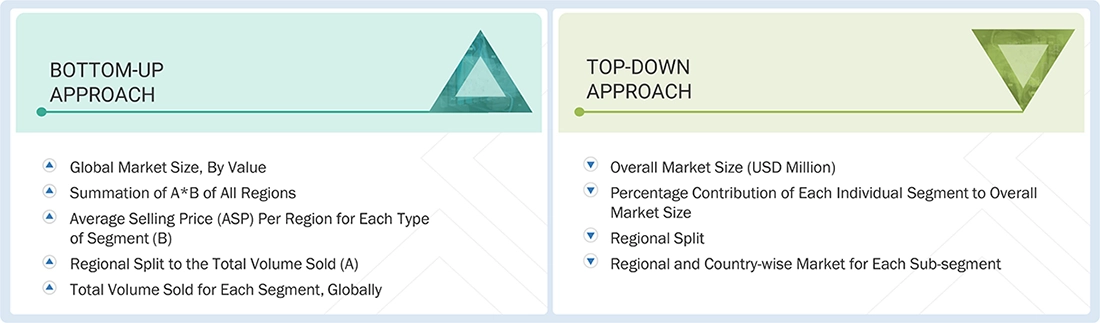
The study involves two major activities in estimating the current market size for the float glass market. Exhaustive secondary research was done to collect information on the market, peer market, and parent market. The next step was to validate these findings, assumptions, and sizing with industry experts across the value chain through primary research. Both top-down and bottom-up approaches were employed to estimate the complete market size. After that, market breakdown and data triangulation were used to estimate the market size of segments and subsegments.
Secondary Research
Secondary sources referred to for this research study include financial statements of companies offering float glass and information from various trade, business, and professional associations. Secondary research has been used to obtain critical information about the industry’s value chain, the total pool of key players, market classification, and segmentation according to industry trends to the bottom-most level and regional markets. The secondary data was collected and analyzed to arrive at the overall size of the float glass market, which was validated by primary respondents.
Primary Research
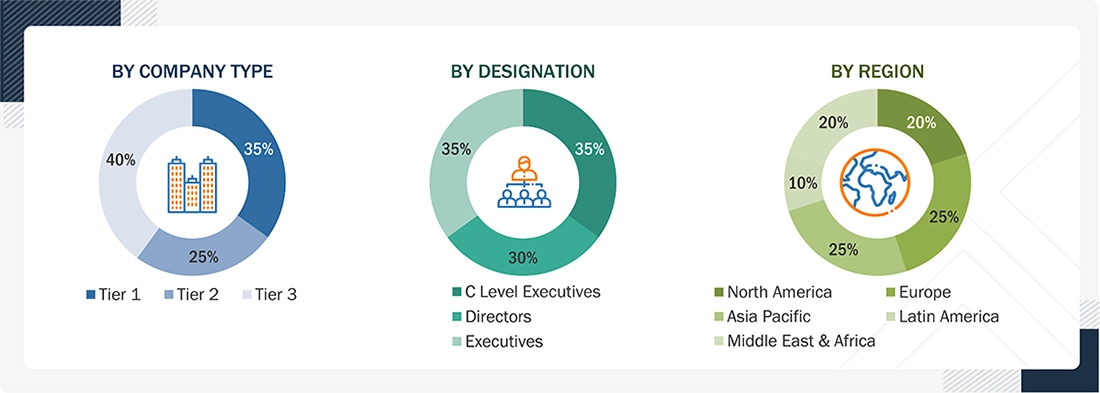
Extensive primary research was conducted after obtaining information regarding the float glass market scenario through secondary research. Several primary interviews were conducted with market experts from both the demand and supply sides across major countries of North America, Europe, Asia Pacific, the Middle East & Africa, and Latin America. Primary data was collected through questionnaires, emails, and telephonic interviews. The primary sources from the supply side included various industry experts, such as Chief X Officers (CXOs), Vice Presidents (VPs), Directors from business development, marketing, product development/innovation teams, and related key executives from float glass industry vendors; system integrators; component providers; distributors; and key opinion leaders. Primary interviews were conducted to gather insights such as market statistics, data on revenue collected from the products and services, market breakdowns, market size estimations, market forecasting, and data triangulation. Primary research also helped in understanding the various trends related to type, form type, application, end-use industry, and region. Stakeholders from the demand side, such as CIOs, CTOs, CSOs, and installation teams of the customer/end users who are using float glass were interviewed to understand the buyer’s perspective on the suppliers, products, component providers, and their current usage of float glass products and future outlook of their business which will affect the overall market.
To know about the assumptions considered for the study, download the pdf brochure
Market Size Estimation
The research methodology used to estimate the size of the float glass market includes the following details. The market sizing of the market was undertaken from the demand side. The market was upsized based on procurements and modernizations in float glass products in different applications at a regional level. Such procurements provide information on the demand aspects of the float glass industry for each application. For each end use industry, all possible segments of the float glass market were integrated and mapped.
Float Glass Market : Top-Down and Bottom-Up Approach
Data Triangulation
After arriving at the overall size from the market size estimation process explained above, the total market was split into several segments and subsegments. The data triangulation and market breakdown procedures explained below were implemented, wherever applicable, to complete the overall market engineering process and arrive at the exact statistics for various market segments and subsegments. The data was triangulated by studying various factors and trends from the demand and supply sides. Along with this, the market size was validated using both the top-down and bottom-up approaches.
Market Definition
Float glass is a flat glass product created by spreading molten glass into a controlled, continuous layer so that it naturally levels and solidifies into a smooth, uniform sheet. The process ensures consistent thickness and surface quality without the need for mechanical polishing. Float glass functions as the fundamental glass form from which performance-enhanced products such as safety, coated, and insulated glass are developed for use in buildings, vehicles, energy systems, and specialized industrial applications.
Key Stakeholders
- Float Glass manufacturers
- Senior Management
- End User
- Float Glass associations and industrial bodies
- Research and consulting firms.
- R&D Departmen
Report Objectives
- To define, describe, and forecast the float glass market size in terms of volume and value
- To provide detailed information regarding the key factors, such as drivers, restraints, opportunities, and challenges influencing market growth
- To analyze and project the global float glass market by product, thickness, end-use industry, and region
- To forecast the market size concerning five main regions (along with country-level data), namely, North America, Europe, Asia Pacific, Latin America, and the Middle East & Africa, and analyze the significant region-specific trends
- To strategically analyze micromarkets with respect to individual growth trends, prospects, and contributions of the submarkets to the overall market
- To analyze the market opportunities and the competitive landscape for stakeholders and market leaders
- To assess recent market developments and competitive strategies, such as agreements, contracts, acquisitions, and new product developments/new product launches, to draw the competitive landscape
- To strategically profile the key market players and comprehensively analyze their core competencies
Available customizations:
MarketsandMarkets offers following customizations for this market report:
- Additional country-level analysis of the Float glass market
Product Analysis
- Product matrix, which provides a detailed comparison of the product portfolio of each company's market
Get the Full Float Glass Market Report
Full forecast, segment splits, and company analysis for all Float Glass Market.
- Canada Float Glass Market
- US Float Glass Market
- Germany Float Glass Market
- UK Float Glass Market
- France Float Glass Market
- Italy Float Glass Market
- China Float Glass Market
- Japan Float Glass Market
- India Float Glass Market
- South Korea Float Glass Market
- Brazil Float Glass Market
- Mexico Float Glass Market
- Rest Of Europe Float Glass Market
- Rest Of Asia Pacific Float Glass Market
- GCC Countries Float Glass Market
- –Rest Of GCC Countries Float Glass Market
Need a Tailored Report?
Customize this report to your needs
Get 10% FREE Customization
Customize This Report
