
Asia Pacific Fraud Detection and Prevention (FDP) in BFSI Market (2026-2031)

The Asia Pacific Fraud Detection and Prevention (FDP) in BFSI Market was valued at $166.9 Million in 2026 and projected to reach to $425 Million by 2031, representing a compound annual growth rate of 20.6%. Asia Pacific's Fraud Detection and Prevention market is positioned for exceptional growth, driven by the region's digital financial transformation and evolving regulatory landscape.


| Market Size in | USD 26.32 MN |
| Market Forecast in | |
| CAGR | |
| Forecast Period | |
| Units Considered | Value (USD MN) |
Asia Pacific Fraud Detection and Prevention (FDP) in BFSI Market Trends and Insights
- The Asia Pacific market was valued at USD 166.9 million in 2026 and is projected to grow to USD 425.0 million by 2031, representing a compound annual growth rate (CAGR) of 20.6%.
- This accelerated growth in Asia Pacific reflects heightened investment in advanced fraud prevention technologies by banks, financial institutions, and fintech companies operating across emerging and developed economies in the region. Asia Pacific's FDP market expansion is fueled by rising cybersecurity threats, stringent regulatory frameworks, and the rapid adoption of artificial intelligence and machine learning solutions.
- Financial institutions in Asia Pacific are prioritizing real-time fraud detection capabilities to protect customer assets and maintain trust in digital banking ecosystems.
- The region's growing middle class and increasing smartphone penetration are driving higher transaction volumes, which in turn necessitate more sophisticated fraud prevention infrastructure.
- By 2031, Asia Pacific is expected to represent a significant portion of global FDP spending, with enterprises across the region allocating substantial budgets to combat evolving fraud schemes and comply with regional data protection standards..
Key Market Statistics
- CAGR (2026-2031) 20.6% CAGR
- Market Size, 2026 ~USD 166.9 Million
- Forecast, 2031 ~USD 425 Million
- Geography Asia Pacific
Asia Pacific Fraud Detection and Prevention (FDP) in BFSI Market Overview
Rapid Digital Transaction Growth :
Asia Pacific is witnessing explosive growth in digital financial transactions, with mobile banking and e-commerce adoption accelerating fraud risks. This surge is driving urgent demand for advanced FDP solutions across banks, fintech platforms, and payment processors throughout the region.
Regulatory Compliance Acceleration :
Stringent regulatory frameworks in Asia Pacific, including PSD2-equivalent regulations and local data protection laws, are mandating robust fraud detection systems. Compliance requirements are compelling financial institutions to invest heavily in sophisticated FDP technologies to meet regional standards.
Market Valuation & Growth Trajectory :
The Asia Pacific FDP market reached USD 166.9 million in 2026 and is projected to expand to USD 425.0 million by 2031, demonstrating a robust 20.6% CAGR—significantly outpacing the global average of 14.1%, indicating exceptional regional opportunity.
Emerging Market Penetration :
Countries like India, China, and Southeast Asian nations are rapidly modernizing their financial infrastructure, creating substantial untapped markets for FDP solutions. Rising cybercrime incidents and increasing consumer awareness are accelerating adoption across emerging economies in the region.
Asia Pacific Fraud Detection and Prevention (FDP) in BFSI Market Dynamics
- The 20.6% CAGR significantly exceeds global growth rates, reflecting the urgency of fraud mitigation across rapidly expanding digital banking ecosystems.
- Major economies including China, India, and Japan are investing substantially in advanced fraud prevention technologies to protect their growing fintech sectors and consumer bases. The market expansion is further catalyzed by increasing cross-border transaction volumes, rising cybercrime sophistication, and mandatory compliance with regional data protection regulations.
- Financial institutions across Asia Pacific are prioritizing AI-driven and machine learning-based FDP solutions to combat evolving fraud tactics.
- This regional momentum presents significant opportunities for solution providers targeting the BFSI sector, with particular growth potential in emerging markets where digital financial adoption is accelerating rapidly..
Market Ecosystem

FRAUD DETECTION AND PREVENTION IN BFSI MARKET: COMMERCIAL USE CASES ACROSS INDUSTRIES
| COMPANY | USE CASE DESCRIPTION | BENEFITS |
|---|---|---|
 |
Centennial Bank modernized its Bank Secrecy Act (BSA)/AML compliance using FIS Compliance solutions, replacing manual compliance processes with automated customer onboarding, risk rating, suspicious activity monitoring, and regulatory reporting to strengthen fraud and financial crime detection. | Automated AML and fraud monitoring Faster customer onboarding and risk assessment Improved suspicious activity detection and regulatory reporting Scalable compliance framework supporting business growth |
 |
UMassFive Credit Union deployed Fiserv's fraud management capabilities to optimize payment fraud detection, reduce false declines, and improve cardholder protection through an analytics-driven fraud management strategy. | Automated AML and fraud monitoring Faster customer onboarding and risk assessment Improved suspicious activity detection and regulatory reporting Scalable compliance framework supporting business growth |
 |
Ikano Bank UK implemented TruValidate Device Intelligence to combat impersonation fraud during digital loan applications by identifying trusted and high-risk devices in real time without increasing customer friction. | 72% reduction in impersonation fraud losses within one quarter Nearly eliminated impersonation fraud within six months 850% ROI achieved Faster, friction-right digital onboarding |
Logos and trademarks shown above are the property of their respective owners. Their use here is for informational and illustrative purposes only.
Related Ecosystem
Key Takeaways
- Asia Pacific FDP market valued at USD 166.9 million in 2026, expanding to USD 425.0 million by 2031 at 20.6% CAGR
- Asia Pacific's growth outpaces global average, driven by digital transformation and regulatory compliance mandates across the region
- AI and machine learning adoption in Asia Pacific is accelerating real-time fraud detection capabilities for BFSI institutions
- Asia Pacific financial institutions are increasing FDP investments to address rising cybersecurity threats and protect digital banking ecosystems
Fraud Detection and Prevention (FDP) in BFSI Market Report Scope
| Report Metric | Details |
|---|---|
| Base Year | 2026 |
| Fastest Growing Segment | CRYPTO & DIGITAL ASSET EXCHANGE (Financial Services) |
| Forecast Period | 2026-2031 |
| Growth Rate | CAGR of 14.1% from 2026 to 2031 |
| Largest Segment | SOLUTIONS (Offering) |
| Market Size Base Year (Billions) | ~USD 7.79 (2026) |
| Revenue Forecast (Billions) | ~USD 15.06 (2031) |
| Segments Covered | Offering, Solution, Service, Fraud Type, Organization Size, Use Case, Banking, Financial Services, Insurance |
Asia Pacific Fraud Detection and Prevention (FDP) in BFSI Market Report Segmentation
9 segment dimensions are covered across the global market.
By Offering
- Services
- Solutions
By Solution
- Authentication
- Fraud Analytics
- Governance, Risk, And Compliance (Grc)
By Service
- Managed Services
- Professional Services
By Fraud Type
- Check Fraud
- Friendly Fraud
- Identity Fraud
- Insider Fraud
- Insurance Fraud
- Investment Fraud
- Other Fraud Types
- Payment Fraud
By Organization Size
- Large Enterprises
- Smes
By Use Case
- Banking
- Financial Services
- Insurance
By Banking
- Account Access And Re-Authentication
- Account Opening
- Account Takeover Detection And Prevention
- Customer, Employee, And Agent Identity Verification
- High-Value Transaction Authorization
By Financial Services
- Crypto & Digital Asset Exchange
- Investment, Wealth Management & Brokerage
- Lending & Credit Management
- Payment & Remittance
By Insurance
- Claims Management
- Customer Onboarding & Ekyc
- Policy Issuance
- Reinsurance
Target Audience
- BFSI Solution Providers : FDP software vendors and cybersecurity firms need Asia Pacific market data to identify growth opportunities, tailor solutions for regional compliance requirements, and develop go-to-market strategies for high-growth emerging markets.
- Financial Institution Executives : Banks, fintech companies, and payment processors require market intelligence to benchmark fraud prevention investments, understand competitive positioning, and justify budget allocation for advanced FDP technologies across Asia Pacific operations.
- Investment & Private Equity Firms : Investors evaluating BFSI technology opportunities need regional market sizing, growth projections, and competitive dynamics to assess investment viability and identify acquisition targets in Asia Pacific's high-growth FDP sector.
- Regulatory & Compliance Officers : Compliance professionals and regulators need comprehensive market data to understand FDP adoption trends, benchmark regional standards, and develop effective regulatory frameworks aligned with Asia Pacific's digital financial evolution.
- Technology Consultants & Integrators : System integrators and consulting firms require detailed Asia Pacific market insights to advise clients on FDP solution selection, implementation strategies, and technology roadmaps aligned with regional growth opportunities and compliance mandates.
Countries within Asia Pacific - compare and drill down
| Country | 2025 size (native) |
|---|---|
| China | USD 1266 Million |
| Japan | USD 458.1 Million |
| India | USD 479.9 Million |
| Rest Of Asia Pacific | USD 1457.1 Million |
Country market size visualization
Reasons to Buy this Report
- Superior Regional Growth Insights : Gain detailed understanding of Asia Pacific's 20.6% CAGR—46% higher than global average—enabling strategic market entry and expansion planning specific to this high-growth region with distinct dynamics.
- Country-Level Market Intelligence : Access granular market data for China, India, Japan, and Rest of Asia Pacific, allowing targeted investment decisions and competitive positioning within individual high-opportunity markets across the region.
- Regulatory Compliance Roadmap : Understand Asia Pacific's unique regulatory requirements and compliance mandates driving FDP adoption, enabling solution providers to tailor offerings and accelerate market penetration across diverse regulatory environments.
- Competitive Landscape Analysis : Identify emerging competitors, market leaders, and white-space opportunities specific to Asia Pacific's BFSI sector, supporting strategic positioning and partnership development in this rapidly evolving market.
- Investment & Growth Forecasting : Leverage 2026-2031 projections (USD 166.9M to USD 425M) for accurate financial modeling, resource allocation, and ROI forecasting for Asia Pacific market initiatives and product development strategies.
Frequently asked questions
What is the current market size of FDP in BFSI across Asia Pacific?
Asia Pacific's Fraud Detection and Prevention market in BFSI was valued at USD 166.9 million in 2026 and is projected to reach USD 425.0 million by 2031.
What is the expected growth rate for Asia Pacific FDP in BFSI market?
Asia Pacific is expected to grow at a compound annual growth rate (CAGR) of 20.6% from 2026 to 2031, significantly outpacing global market growth.
Which technologies are driving FDP adoption in Asia Pacific BFSI?
Artificial intelligence, machine learning, and real-time analytics are the primary technologies driving FDP adoption across Asia Pacific financial institutions.
Why is Asia Pacific experiencing faster FDP market growth than other regions?
Asia Pacific's rapid digital transformation, increasing transaction volumes, stringent regulatory requirements, and rising cybersecurity threats are driving accelerated FDP market expansion in the region.
What regulatory factors are influencing FDP investments in Asia Pacific?
Regional data protection standards, anti-money laundering (AML) regulations, and Know Your Customer (KYC) compliance requirements are compelling Asia Pacific BFSI institutions to increase FDP spending.
RESEARCH METHODOLOGY
Secondary research was conducted to collect information useful for this technical, market-oriented, and commercial study of the fraud detection and prevention in BFSI market. The next step involved validating these findings, assumptions, and sizing with industry experts across the value chain using primary research. Different approaches, including top-down and bottom-up methods, were employed to estimate the total market size. After that, the market breakup and data triangulation procedures were used to estimate the market size of the segments and subsegments of the fraud detection and prevention in BFSI market.
Secondary Research
During the secondary research process, various secondary sources were consulted to identify and collect information relevant to the study. These sources included annual reports, press releases, investor presentations of technology vendors, financial institutions, payment service providers, and other stakeholders across the fraud detection and prevention in BFSI market, along with forums, certified publications, and whitepapers. The secondary research was primarily used to obtain key information on the industry's value chain, the pool of key players, market classification and segmentation to the bottom-most level, regional market trends, and key market and technology developments, all of which were subsequently validated through primary research.
Primary Research
In the primary research process, various primary sources from both the supply and demand sides were interviewed to obtain qualitative and quantitative information for this report. The primary sources from the supply side included industry experts, including chief executive officers (CEOs), vice presidents (VPs), marketing directors, technology and innovation directors, and other key executives from various companies and organizations operating in the fraud detection and prevention in BFSI market.
In the market engineering process, top-down and bottom-up approaches were extensively used, along with several data triangulation methods, to perform market estimation and forecasting for the overall market segments and subsegments listed in this report. Extensive qualitative and quantitative analysis was performed on the complete market engineering process to list key information/insights throughout the report.
After the complete market engineering process (including calculations for market statistics, market breakups, market size estimations, market forecasts, and data triangulation), extensive primary research was conducted to gather information and verify & validate the critical numbers arrived at. The primary research was also conducted to identify segmentation types, industry trends, the competitive landscape of fraud detection and prevention market players, and key market dynamics, such as drivers, restraints, opportunities, challenges, and key strategies.
Following is the breakup of the primary study:
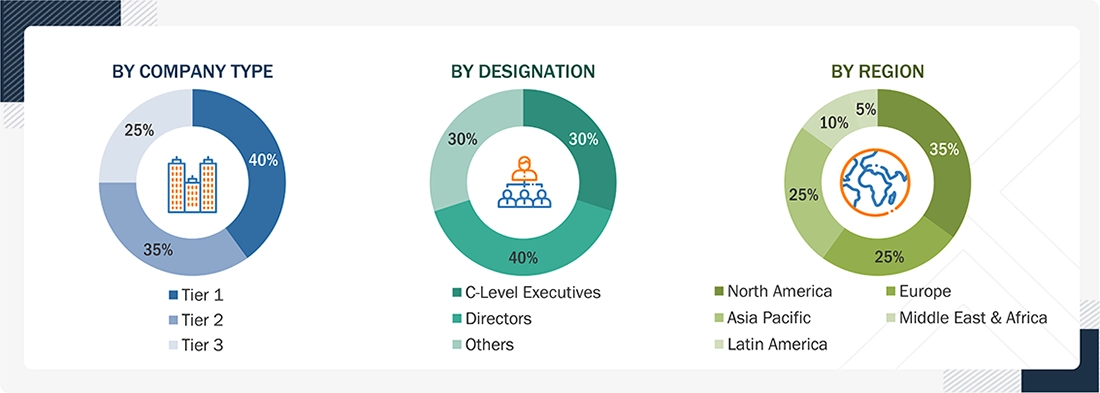
Note: Tier 1 companies receive revenues higher than USD 10 billion; Tier 2 companies' revenues range between USD 1 and 10 billion; and Tier 3 companies' revenues range between USD 500 million and USD 1 billion. Other designations include sales, marketing, and product managers.
To know about the assumptions considered for the study, download the pdf brochure
Market Size Estimation
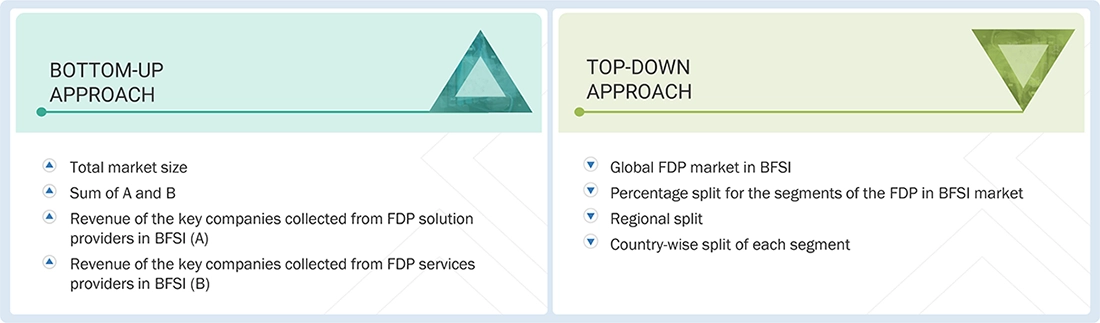
Top-down and bottom-up approaches were employed to estimate and validate the size of the fraud detection and prevention in BFSI market, as well as the size of its various segments and subsegments. The research methodology used to estimate the market size included the following: key market players were identified through secondary research, and their respective market shares across regions were validated through primary and secondary research. The overall process also involved analyzing the annual reports and financial statements of leading market participants, along with conducting extensive interviews with key industry experts, including CEOs, VPs, directors, and marketing executives, to gather valuable insights.
All percentage splits and breakdowns were determined using secondary sources and verified through primary sources. All possible parameters that affect the market covered in this research study were accounted for, viewed in extensive detail, verified through primary research, and analyzed to get the final quantitative and qualitative data. This data was consolidated and added to detailed inputs and analysis from MarketsandMarkets.
Fraud Detection and Prevention in BFSI Market : Top-Down and Bottom-Up Approach
Data Triangulation
The market was split into several segments and subsegments after arriving at the overall market size using the market size estimation processes explained above. The data triangulation and market breakup procedures were employed, wherever applicable, to complete the overall market engineering process and arrive at the exact statistics of each market segment and subsegment. The data was triangulated by studying various factors and trends from both the demand and supply sides.
Market Definition
According to MarketsandMarkets, “The fraud detection and prevention in BFSI market refers to the ecosystem of solutions and services designed to identify, assess, prevent, and respond to fraudulent activities across banking, financial services, and insurance organizations. The market encompasses fraud analytics, authentication, and governance, risk, and compliance (GRC) solutions, supported by professional and managed services, to safeguard digital transactions, customer identities, accounts, and financial assets. It addresses a broad spectrum of fraud types, including payment fraud, identity fraud, insider fraud, investment fraud, insurance fraud, check fraud, and friendly fraud, while enabling secure operations across organizations of all sizes. The market supports critical BFSI use cases spanning banking, financial services, and insurance, including digital customer onboarding, transaction authorization, account takeover prevention, lending and credit management, digital asset exchanges, claims management, policy issuance, and related fraud risk management processes.”
Key Stakeholders
- Fraud Detection & Prevention Solution Providers
- Authentication & Identity Verification Providers
- Fraud Analytics & Risk Intelligence Providers
- Financial Institutions (Banks, NBFCs, and Credit Unions)
- Insurance Companies
- Payment Service Providers (PSPs) & Payment Networks
- FinTech Companies
- System Integrators & Managed Service Providers (MSPs)
- Regulatory Authorities & Financial Supervisory Bodies
- Anti-Money Laundering (AML) & Compliance Teams
- Risk Management & Fraud Operations Teams
- Technology Consultants & Industry Associations
Report Objectives
- To define, describe, and forecast the fraud detection and prevention in BFSI market based on offering, fraud type, organization size, use case, and region from 2026 to 2031, and analyze the various macroeconomic and microeconomic factors that affect market growth.
- To forecast the market size of five major regions: North America, Europe, Asia Pacific, the Middle East & Africa, and Latin America.
- To analyze the subsegments of the market concerning individual growth trends, prospects, and contributions to the overall market.
- To provide detailed information related to the primary factors (drivers, restraints, opportunities, and challenges) influencing the growth of the fraud detection and prevention in BFSI market.
- To analyze opportunities in the market for stakeholders by identifying high-growth segments of the fraud detection and prevention in BFSI market.
- To profile the key players of the fraud detection and prevention in BFSI market and comprehensively analyze their market size and core competencies.
- To track and analyze competitive developments, such as new product launches, mergers and acquisitions, partnerships, agreements, and collaborations in the global fraud detection and prevention in BFSI market.
Available customizations:
With the given market data, MarketsandMarkets offers customizations based on company-specific needs. The following customization options are available for the report:
Geographical Analysis
- Further breakup of the Asia Pacific market into countries contributes to the rest of the regional market size.
- Further breakup of the North American market into countries contributes to the rest of the regional market size.
- Further breakup of the Latin American market into countries contributing to the rest of the regional market size
- Further breakup of the Middle East & African market into countries contributing to the rest of the regional market size
- Further breakup of the European market into countries contributes to the rest of the regional market size
Company Information
- Detailed analysis and profiling of additional market players (up to 5)
Get the Full Fraud Detection and Prevention (FDP) in BFSI Market Report
Full forecast, segment splits, and company analysis for all Fraud Detection and Prevention (FDP) in BFSI Market.
- Canada Fraud Detection and Prevention (FDP) in BFSI Market
- US Fraud Detection and Prevention (FDP) in BFSI Market
- UK Fraud Detection and Prevention (FDP) in BFSI Market
- Germany Fraud Detection and Prevention (FDP) in BFSI Market
- France Fraud Detection and Prevention (FDP) in BFSI Market
- Italy Fraud Detection and Prevention (FDP) in BFSI Market
- China Fraud Detection and Prevention (FDP) in BFSI Market
- Japan Fraud Detection and Prevention (FDP) in BFSI Market
- India Fraud Detection and Prevention (FDP) in BFSI Market
- Brazil Fraud Detection and Prevention (FDP) in BFSI Market
- Mexico Fraud Detection and Prevention (FDP) in BFSI Market
- Rest Of Europe Fraud Detection and Prevention (FDP) in BFSI Market
- Rest Of Asia Pacific Fraud Detection and Prevention (FDP) in BFSI Market
- Rest Of Latin America Fraud Detection and Prevention (FDP) in BFSI Market
Need a Tailored Report?
Customize this report to your needs
Get 10% FREE Customization
Customize This Report
