
GCC Countries Gas Mixtures Market (2025-2030)

The GCC Countries Gas Mixtures Market was valued at $924.9 Million in 2025 and projected to reach to $1109.2 Million by 2030, representing a compound annual growth rate of 3.7%. The GCC Countries gas mixtures market is poised for steady expansion through 2030, driven by continued investment in infrastructure projects, petrochemical facilities, and industrial manufacturing.


| Market Size in | USD 26.32 MN |
| Market Forecast in | |
| CAGR | |
| Forecast Period | |
| Units Considered | Value (USD MN) |
GCC Countries Gas Mixtures Market Trends and Insights
- GCC Countries' gas mixtures sector is driven by robust demand from the packaging, construction, mining, and industrial gases sectors, supported by regional infrastructure development and hydrocarbon-linked industrial activity.
- The market in GCC Countries reflects steady expansion as end-use industries increasingly adopt specialized gas mixtures for welding, cutting, medical applications, and food preservation.
- GCC Countries' strategic position as a global energy hub and growing manufacturing base continue to underpin market resilience through the forecast period..
Key Market Statistics
- CAGR (2025-2030) 3.7% CAGR
- Market Size, 2025 ~USD 924.9 Million
- Forecast, 2030 ~USD 1109.2 Million
- Country GCC Countries
GCC Countries Gas Mixtures Market Overview
Market Valuation :
GCC Countries gas mixtures market valued at USD 924.9 million in 2025, with steady growth trajectory driven by regional industrial expansion and infrastructure projects.
Growth Trajectory :
Market projected to reach USD 1,109.2 million by 2030, representing a CAGR of 3.7%, outpacing global average growth in select applications and sectors.
Key Demand Drivers :
Robust demand from packaging, construction, mining, and industrial gases sectors, supported by GCC's hydrocarbon-linked economy and ongoing regional infrastructure development initiatives.
Regional Industrial Base :
GCC Countries' diversified industrial ecosystem, including oil & gas, petrochemicals, and construction sectors, creates sustained demand for specialized gas mixture applications.
GCC Countries Gas Mixtures Market Dynamics
- The region's strategic focus on economic diversification beyond hydrocarbon sectors is creating new opportunities for gas mixture applications in construction, food packaging, and advanced manufacturing.
- Regional players are increasingly adopting specialized gas blends for enhanced operational efficiency and product quality. Key growth catalysts include ongoing mega-projects across UAE, Saudi Arabia, and Qatar, coupled with rising demand from the food and beverage packaging sector.
- The market benefits from established supply chains, regional production capabilities, and strong industrial demand.
- However, market growth remains moderate compared to global rates, reflecting mature market dynamics and price-sensitive industrial customers seeking cost-effective solutions..
Market Ecosystem
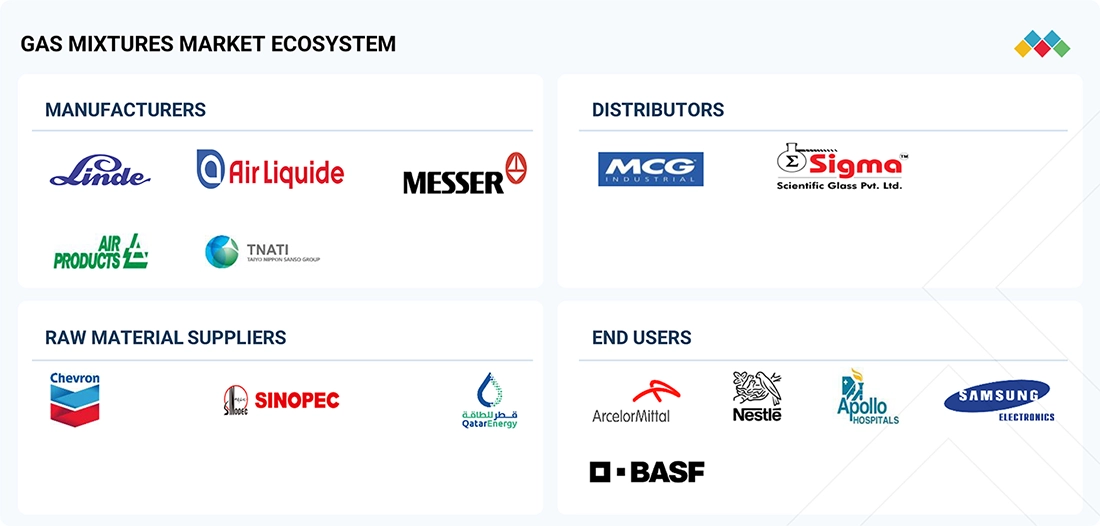
GAS MIXTURES MARKET: COMMERCIAL USE CASES ACROSS INDUSTRIES
| COMPANY | USE CASE DESCRIPTION | BENEFITS |
|---|---|---|
 |
Heat-treating facility needed precise furnace atmosphere control | Endogas variations caused inconsistent carbon potential | Ensured stable carburizing | Optimized ratios | Improved efficiency |
 |
Industrial operator required accurate emissions monitoring | Traceable calibration gas mixtures were essential for compliance | Ensured documented accuracy | Improved regulatory compliance and monitoring confidence |
 |
Powder metallurgy producer needed consistent nitrogen-hydrogen atmospheres during sintering | Gas fluctuations affected quality | Improved nitrogen-hydrogen control boosted product consistency | Reduced scrap rates, and enhanced operational stability |
Logos and trademarks shown above are the property of their respective owners. Their use here is for informational and illustrative purposes only.
Related Ecosystem
Industrial Gases
- Dry Cooling Tower
- HVAC System
- Heat Exchanger
- Hybrid Cooling Tower
- Industrial Refrigeration
- Linde plc
- Air Products and Chemicals, Inc.
- MESSER GROUP GMBH
- AIR LIQUIDE
- Iwatani Corporation
Mining Minerals And Metals
- Wastewater Treatment
- Fiberglass
- Light Commercial Vehicles (LCVs)
- Nitrogen
- Acetic Acid
- LHOIST S.A
- SEVERSTAL JSC
- ArcelorMittal S.A.
- TW METALS, INC.
- Linde plc
Key Takeaways
- GCC Countries gas mixtures market valued at USD 924.9M in 2025, forecast to reach USD 1,109.2M by 2030.
- GCC Countries market expanding at 3.7% CAGR, driven by construction, mining, and industrial applications.
- GCC Countries benefits from regional energy infrastructure and growing manufacturing diversification initiatives.
- GCC Countries demand supported by welding, food preservation, medical, and specialty industrial gas applications.
Gas Mixtures Market Report Scope
| Report Metric | Details |
|---|---|
| Base Year | 2025 |
| Fastest Growing Segment | OXYGEN MIXTURES (Type) |
| Forecast Period | 2025–2030 |
| Growth Rate | CAGR of 4.1% from 2025 to 2030 |
| Largest Segment | AIR SEPARATION TECHNOLOGIES (Manufacturing Process) |
| Market Size Base Year (Billions) | ~USD 28.66 (2025) |
| Revenue Forecast (Billions) | ~USD 35.04 (2030) |
| Segments Covered | Type, End-Use Industry, Manufacturing Process |
GCC Countries Gas Mixtures Market Report Segmentation
3 segment dimensions are covered across the global market.
By Type
- Argon Mixtures
- Carbon Dioxide Mixtures
- Hydrogen Mixtures
- Nitrogen Mixtures
- Other Mixtures
- Oxygen Mixtures
- Specialty Gas Mixtures
By End-Use Industry
- Chemical
- Chemicals
- Electronics
- Food & Beverages
- Healthcare
- Medical & Healthcare
- Metal Manufacturing & Fabrication
- Other End-Use Industries
By Manufacturing Process
- Air Separation Technologies
- Hydrogen Production Technologies
- Other Manufacturing Processes
Target Audience
- Industrial Gas Suppliers : Regional and international gas mixture producers need GCC-specific market data to optimize production capacity, distribution networks, and pricing strategies for competitive positioning.
- Construction & Engineering Firms : Major construction companies operating in GCC require insights on welding gas availability, specifications, and market trends to support mega-project execution and cost management.
- Packaging Manufacturers : Food and beverage packaging companies in GCC need market intelligence on modified atmosphere gas mixtures, supply reliability, and pricing to ensure product quality and operational efficiency.
- Mining & Petrochemical Operators : Mining and petrochemical companies require GCC market analysis to understand gas mixture demand, supplier capabilities, and regional supply chain dynamics for operational planning.
- Investment & Strategy Teams : Private equity, venture capital, and corporate strategy teams evaluating GCC market entry or expansion need comprehensive market sizing and growth forecasts to support investment decisions.
Key Companies in the GCC Countries Gas Mixtures Market
| Company | HQ | Ownership | Strongest segments |
|---|---|---|---|
| AHLSTROM-MUNKSJO | Finland | Private Company | Filtration and Life Sciences,Food and Consumer Packaging,Protective Materials and Medical Fabrics, |
| FLUOR CORPORATION | United States | Public Company | Energy Solutions (oil, gas, chemicals, LNG, power, energy transition),Urban Solutions (advanced technologies, manufacturing, life sciences, mining, infrastructure, staffing, maintenance),Mission Solutions (government, nuclear remediation, security, logistics, mission-critical facilities), |
| LINDE PLC | United Kingdom | Public Company | Atmospheric gases (oxygen, nitrogen, argon, rare gases),Process gases (hydrogen, CO2, CO, helium, specialty and electronic gases),Engineering and turnkey process plants, |
| AIR LIQUIDE | France | Public Company | Large Industries (oxygen, nitrogen, argon, hydrogen, CO, energy solutions),Industrial Merchant (cylinders, bulk, hardgoods, services),Healthcare (medical gases, homecare, equipment, specialty ingredients), |
| AIR PRODUCTS AND CHEMICALS, INC. | United States | Public Company | Atmospheric gases (oxygen, nitrogen, argon),Hydrogen and syngas,Other process gases (helium, CO2, CO), |
| MESSER SE & CO. KGAA | Germany | Private Company | Bulk & on-site industrial gases (O2, N2, Ar),Cylinder and packaged gases (incl. acetylene, shielding, cutting gases),Medical gases, |
| IWATANI CORPORATION | Japan | Public Company | Integrated Energy (LPG, LNG, energy solutions, consumer gas appliances),Industrial Gases & Machinery (air gases, hydrogen, helium, welding, FA and semiconductor equipment),Materials (PET resins, biomass fuels, battery and semiconductor materials, metals), |
| TAIYO NIPPON SANSO CORPORATION | Japan | Public Company | Industrial gases (bulk, onsite, cylinders),Electronic material gases,Medical gases, |
| ELLENBARRIE INDUSTRIAL GASES LTD | India | Public Company | Bulk industrial gases (oxygen, nitrogen, argon, CO2),Medical gases and healthcare supply,Project engineering and tonnage systems, |
AHLSTROM-MUNKSJO
Ahlstrom-Munksjo is a Finnish private company founded in 1851 with 6,883 employees, operating in the materials and specialty paper industry.
FLUOR CORPORATION
Fluor Corporation is a publicly traded U.S. engineering and construction company founded in 1912 with 22,995 employees.
LINDE PLC
Linde PLC is a British public company established in 1879 with 65,034 employees, operating as a global leader in industrial gases and engineering.
AIR LIQUIDE
Air Liquide is a French public company founded in 1902 with 63,126 employees, specializing in industrial gases and related services.
AIR PRODUCTS AND CHEMICALS, INC.
Air Products and Chemicals, Inc. is a U.S. public company founded in 1940 with 21,194 employees, providing industrial gases and chemicals.
MESSER SE & CO. KGAA
Messer SE & Co. KGAA is a German private company established in 1898 with 11,701 employees, operating in the industrial gases sector.
IWATANI CORPORATION
Iwatani Corporation is a Japanese public company founded in 1930 with 12,113 employees, engaged in gas and energy-related businesses.
TAIYO NIPPON SANSO CORPORATION
Taiyo Nippon Sanso Corporation is a Japanese public company established in 1910 with 20,411 employees, specializing in industrial gases and related products.
ELLENBARRIE INDUSTRIAL GASES LTD
Ellenbarrie Industrial Gases Ltd is an Indian public company established in 1973 with 281 employees.
Reasons to Buy this Report
- Regional Market Sizing : Accurate valuation and forecasting specific to GCC Countries, enabling precise budget allocation and market entry strategies tailored to regional economic conditions and industrial demand patterns.
- Sector-Specific Insights : Detailed analysis of gas mixture demand across packaging, construction, mining, and industrial sectors within GCC, identifying high-growth applications and customer segments unique to the region.
- Competitive Landscape : Comprehensive understanding of regional suppliers, market consolidation trends, and competitive positioning specific to GCC Countries, supporting strategic partnership and acquisition decisions.
- Growth Opportunity Mapping : Identification of emerging opportunities driven by GCC infrastructure projects, economic diversification initiatives, and industrial expansion, enabling first-mover advantages in high-potential segments.
- Investment Decision Support : Data-driven insights for capital allocation, facility expansion, and market development strategies in GCC Countries, reducing investment risk and maximizing ROI in the regional gas mixtures sector.
Frequently asked questions
What is the current market size of gas mixtures in GCC Countries?
The gas mixtures market in GCC Countries is valued at USD 924.9 million in 2025.
What is the projected market size for gas mixtures in GCC Countries by 2030?
GCC Countries gas mixtures market is forecast to reach USD 1,109.2 million by 2030.
What is the CAGR for the gas mixtures market in GCC Countries?
The gas mixtures market in GCC Countries is expanding at a CAGR of 3.7% from 2025 to 2030.
Which industries drive demand for gas mixtures in GCC Countries?
GCC Countries gas mixtures demand is driven by packaging, construction, mining, welding, medical, and food preservation industries.
What factors support growth in the GCC Countries gas mixtures market?
GCC Countries market growth is supported by infrastructure development, industrial diversification, energy sector linkages, and expanding manufacturing capabilities.
RESEARCH METHODOLOGY
The study involved four major activities to estimate the current size of the global gas mixtures market. Exhaustive secondary research was carried out to collect information on the market, the peer product market, and the parent product group market. The next step was to validate these findings, assumptions, and sizes with the industry experts across the value chain of gas mixtures through primary research. The top-down and bottom-up approaches were employed to estimate the overall size of the gas mixtures market. After that, market breakdown and data triangulation procedures were used to determine the size of different segments of the market.
Secondary Research
The market for companies offering gas mixtures was arrived at by studying the secondary data available through paid and unpaid sources, analyzing the product portfolios of the major companies in the ecosystem, and rating the companies by their performance and quality. Various secondary sources, such as Business Standard, Bloomberg, World Bank, and Factiva, were referred to identify and collect information for this study on the gas mixtures market. In the secondary research process, various secondary sources were referred to identify and collect information related to the study. Secondary sources included annual reports, press releases, investor presentations, gas mixture vendors, forums, certified publications, and white papers. The secondary research was used to obtain critical information on the industry’s value chain, the total pool of key players, market classification, and segmentation from the market and technology-oriented perspectives.
Primary Research
In the primary research process, various primary sources from the supply and demand sides were interviewed to obtain qualitative and quantitative information for this report. The primary sources from the supply side included industry experts, such as Chief Executive Officers (CEOs), Vice Presidents (VPs), marketing directors, technology and innovation directors, and related key executives from several key companies and organizations operating in the gas mixtures market. After the complete market engineering (calculations for market statistics, market breakdown, market size estimations, market forecasting, and data triangulation), extensive primary research was conducted to gather information and verify and validate the critical numbers arrived at. Primary research was also conducted to identify the segmentation types, industry trends, competitive landscape of gas mixtures offered by various market players, and key market dynamics, such as drivers, restraints, opportunities, challenges, industry trends, and key player strategies. In the complete market engineering process, the top-down and bottom-up approaches and several data triangulation methods were extensively used to perform the market estimation and market forecasting for the overall market segments and subsegments listed in this report. Extensive qualitative and quantitative analysis was performed on the complete market engineering process to list the key information/insights throughout the report.
The following is the breakdown of primary respondents:
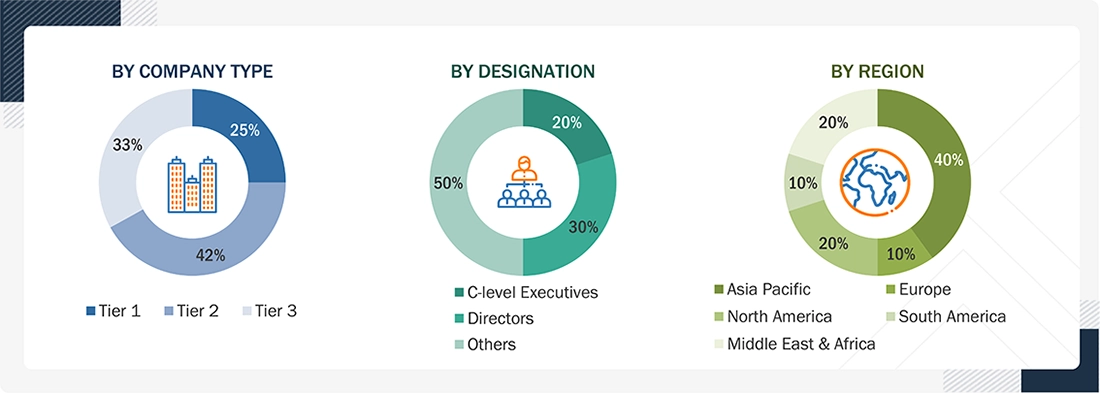
Others include Sales, Marketing, and Product Managers.
Tier 1: > USD 1 Billion; Tier 2: USD 500 million–1 Billion; and Tier 3: < USD 500 million
To know about the assumptions considered for the study, download the pdf brochure
Market Size Estimation
The top-down and bottom-up approaches were used to estimate and validate the size of the global gas mixtures market. These approaches were also used extensively to estimate the size of various dependent market segments.
The research methodology used to estimate the market size included the following approaches:
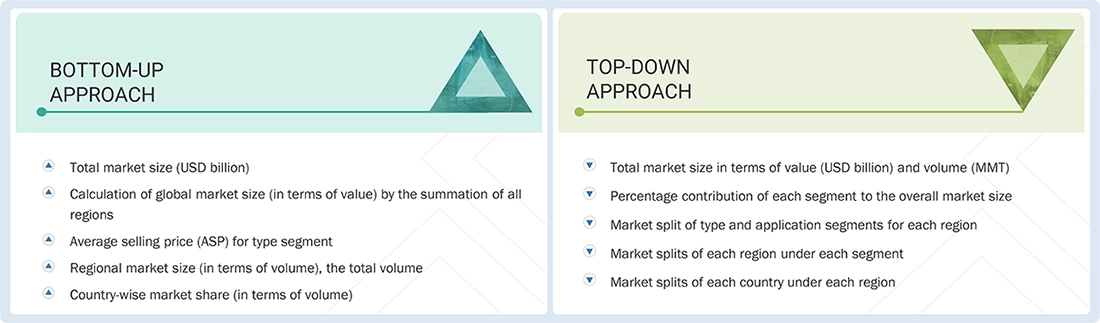
Data Triangulation
After arriving at the overall market size using the market size estimation processes, the market was split into several segments and subsegments. The data triangulation and market breakup procedures were employed, wherever applicable, to complete the overall market engineering process and arrive at the exact statistics of each market segment and subsegment. The data was triangulated by studying various factors and trends from both the demand and supply sides.
Market Definition
Gas mixtures are controlled blends of multiple gases combined in specific ratios to achieve defined chemical or physical properties for targeted applications. They are manufactured under strict quality standards to ensure uniformity, stability, and accuracy in composition. These mixtures are essential in processes requiring controlled atmospheres, analytical precision, or performance enhancement across industries, such as electronics, healthcare, energy, environmental testing, and advanced manufacturing.
Stakeholders
- To define, describe, and forecast the size of the global gas mixtures market based on type, end-use industry, storage, distribution, & transportation, manufacturing process, and region in terms of value and volume
- To provide detailed information on the significant drivers, restraints, opportunities, and challenges influencing the market
- To analyze and forecast the market based on type; end-use industry; storage, distribution, and transportation; and manufacturing process
- To strategically analyze micromarkets concerning individual growth trends, prospects, and their contribution to the market
- To assess the growth opportunities in the market for stakeholders and provide details on the competitive landscape for market leaders
- To forecast the market size of segments for North America, Europe, Asia Pacific, South America, and the Middle East & Africa
- To strategically profile key players and comprehensively analyze their market shares and core competencies
- To analyze competitive developments, such as product launches, expansions, partnerships, and acquisitions in the gas mixtures market
- To provide the impact of AI on the gas mixtures market
Report Objectives
- Raw Material Suppliers
- Regulatory Bodies
- Government and Consulting Firms
- End Users
- Research and Development Organizations
- Gas Mixture Manufacturers, Dealers, Traders, and Suppliers
Get the Full Gas Mixtures Market Report
Full forecast, segment splits, and company analysis for all Gas Mixtures Market.
- US Gas Mixtures Market
- Canada Gas Mixtures Market
- Mexico Gas Mixtures Market
- Germany Gas Mixtures Market
- France Gas Mixtures Market
- UK Gas Mixtures Market
- Belgium Gas Mixtures Market
- China Gas Mixtures Market
- India Gas Mixtures Market
- Japan Gas Mixtures Market
- South Korea Gas Mixtures Market
- South Africa Gas Mixtures Market
- Brazil Gas Mixtures Market
- Argentina Gas Mixtures Market
- Rest Of Europe Gas Mixtures Market
- Rest Of Asia Pacific Gas Mixtures Market
- –Rest Of The GCC Gas Mixtures Market
Need a Tailored Report?
Customize this report to your needs
Get 10% FREE Customization
Customize This Report
