
Australia Hemostats Market (2025-2030)

The Australia Hemostats Market was valued at $16.1 Million in 2025 and projected to reach to $24 Million by 2030, representing a compound annual growth rate of 8.3%. Australia's hemostats market is positioned for sustained expansion through 2030, driven by an aging population requiring more surgical interventions and healthcare providers' investment in advanced surgical technologies.


| Market Size in | USD 26.32 MN |
| Market Forecast in | |
| CAGR | |
| Forecast Period | |
| Units Considered | Value (USD MN) |
Australia Hemostats Market Trends and Insights
- This 8.3% compound annual growth rate significantly outpaces the global average of 6.4%, reflecting Australia's advanced healthcare infrastructure and rising surgical volumes.
- Australia's market expansion is driven by increasing adoption of advanced hemostatic agents in operating theaters and trauma centers across the country. The hemostats sector in Australia benefits from strong healthcare spending, an aging population requiring more surgical interventions, and growing awareness of blood management protocols.
- Australia's regulatory environment and emphasis on patient safety standards support the uptake of innovative hemostatic solutions.
- Between 2025 and 2030, Australia is positioned as a key growth market within the Asia Pacific region, with hospitals and surgical facilities increasingly investing in modern hemostasis technologies..
Key Market Statistics
- CAGR (2025-2030) 8.3% CAGR
- Market Size, 2025 ~USD 16.1 Million
- Forecast, 2030 ~USD 24 Million
- Country Australia
Australia Hemostats Market Overview
Strong Market Growth :
Australia's hemostats market is projected to grow from $16.1 million in 2025 to $24.0 million by 2030, representing an 8.3% CAGR that significantly exceeds the global average of 6.4%.
Advanced Healthcare Infrastructure :
Australia's well-developed healthcare system and high surgical volumes drive demand for innovative hemostatic solutions across hospitals, surgical centers, and trauma facilities.
Rising Surgical Adoption :
Increasing adoption of advanced hemostatic agents and devices in Australian operating rooms reflects growing surgeon preference for improved patient outcomes and reduced operative bleeding complications.
Regulatory Environment :
Australia's TGA approval pathway and alignment with international standards facilitate faster market entry for innovative hemostatic products, supporting competitive market dynamics.
Australia Hemostats Market Dynamics
- The market's outperformance relative to global growth reflects Australia's premium healthcare spending and adoption of cutting-edge hemostatic solutions.
- Increasing awareness among surgeons regarding the clinical and economic benefits of advanced hemostats, combined with rising elective surgery volumes, will continue to propel market growth.
- Additionally, growing private healthcare sector expansion and enhanced reimbursement pathways for innovative hemostatic products will further accelerate market penetration across Australian healthcare facilities..
Market Ecosystem
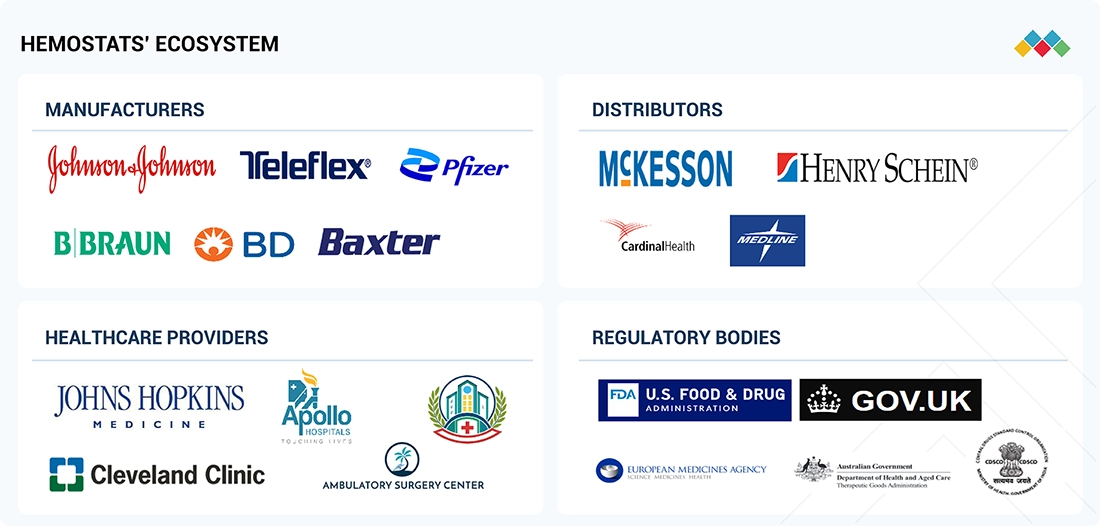
Hemostats Market: COMMERCIAL USE CASES ACROSS INDUSTRIES
| COMPANY | USE CASE DESCRIPTION | BENEFITS |
|---|---|---|
 |
Surgicel Absorbable Hemostats designed for adjunctive use in surgical procedures to control capillary, venous, and small arterial bleeding. | Provides effective bleeding control, fully absorbable, reduces intraoperative blood loss, lowers infection risk, and improves procedural efficiency. |
 |
Floseal Hemostatic Matrix composed of gelatin granules and thrombin for controlling bleeding during surgery. | Rapid hemostasis even in challenging surgical fields, conforms to irregular wound surfaces, reduces transfusion need, and shortens surgical time. |
 |
Gel-Flow Hemostat absorbable gelatin-based material used in surgical procedures for temporary control of bleeding | Provides safe and effective hemostasis, easy handling and application, fully resorbable, minimizes post-operative complications |
 |
Sangustop absorbable cellulose-based hemostat used to control bleeding during surgical interventions. | Biocompatible and absorbable, promotes clot formation, reduces surgical complications, and improves wound healing outcomes. |
 |
Arista AH Hemostat plant-based absorbable hemostatic powder for surgical procedures | Provides immediate and effective bleeding control, ready-to-use without preparation, resorbable, reduces operative risks, and enhances patient safety |
Logos and trademarks shown above are the property of their respective owners. Their use here is for informational and illustrative purposes only.
Related Ecosystem
Medical Devices
- Polymerase Chain Reaction (PCR)
- Magnetic Resonance Imaging (MRI)
- Disposable Autoinjectors
- Pulse Oximeters
- Blood Pressure Monitors
- Medtronic plc
- Abbott Laboratories
- Stryker Corporation
- Becton, Dickinson and Company
- JOHNSON & JOHNSON
Key Takeaways
- Australia's hemostats market is valued at $16.1 million in 2025 and projected to reach $24.0 million by 2030, representing an 8.3% CAGR.
- Australia's growth rate of 8.3% exceeds the global CAGR of 6.4%, positioning the country as a high-growth market within Asia Pacific.
- Advanced healthcare infrastructure and rising surgical volumes in Australia are driving increased adoption of hemostatic agents.
- Australia's emphasis on patient safety standards and blood management protocols supports sustained market expansion through 2030.
Hemostats Market Report Scope
| Report Metric | Details |
|---|---|
| Base Year | 2025 |
| Fastest Growing Segment | RECONSTRUCTIVE SURGERY (Application) |
| Forecast Period | 2025–2030 |
| Growth Rate | CAGR of 6.4% from 2025 to 2030 |
| Largest Segment | HOSPITALS (End User) |
| Market Size Base Year (Billions) | ~USD 2.93 (2025) |
| Revenue Forecast (Billions) | ~USD 4 (2030) |
| Segments Covered | Type, Formulation, Application, End User |
Australia Hemostats Market Report Segmentation
4 segment dimensions are covered across the global market.
By Type
- Collagen-Based Hemostats
- Combination Hemostats
- Gelatin-Based Hemostats
- Other Types
- Oxidized Regenerated Cellulose-Based Hemostats
- Thrombin-Based Hemostats
By Formulation
- Matrix & Gel Hemostats
- Powder Hemostats
- Sheet & Pad Hemostats
- Sponge Hemostats
By Application
- Cardiovascular Surgery
- General Surgery
- Gynecological Surgery
- Neurological Surgery
- Orthopedic Surgery
- Other Surgeries
- Reconstructive Surgery
By End User
- Hospitals
- Specialty Clinics
AUSTRALIA: HEMOSTATS MARKET, BY END USER, 2023–2030
| Segment | 2023 | 2024 | 2025 | 2026 | 2027 | 2028 | 2029 | 2030 | CAGR (%) |
|---|---|---|---|---|---|---|---|---|---|
| HOSPITALS | 34.8 | 37.5 | 40.5 | 43.7 | 47.3 | 51.3 | 55.7 | 60.5 | 8.4 |
| OTHERS | 5.3 | 5.6 | 5.9 | 6.2 | 6.5 | 6.9 | 7.3 | 7.7 | 5.6 |
| SPECIALTY CLINICS | 10.7 | 11.4 | 12.2 | 13 | 13.9 | 14.9 | 16 | 17.2 | 7.2 |
| TOTAL | 50.8 | 54.5 | 58.5 | 62.9 | 67.8 | 73.1 | 78.9 | 85.4 | 7.9 |
Target Audience
- Medical Device Manufacturers : Hemostatic product companies need Australia-specific market data to assess market entry feasibility, competitive positioning, and revenue forecasting for product launches and portfolio expansion.
- Healthcare Investors & PE Firms : Investment professionals require detailed Australian market insights to evaluate acquisition targets, assess growth potential, and make informed capital allocation decisions in the hemostats sector.
- Hospital & Surgical Center Procurement : Healthcare facility decision-makers need market intelligence on hemostatic product trends, supplier options, and cost-effectiveness data to optimize procurement strategies and clinical outcomes.
- Distributors & Importers : Australian medical device distributors require market forecasts and competitive analysis to identify growth opportunities, negotiate supplier agreements, and plan inventory management effectively.
- Healthcare Consultants & Analysts : Industry consultants and research professionals need comprehensive Australia market data to support client advisory work, competitive benchmarking, and strategic planning initiatives.
Key Companies in the Australia Hemostats Market
| Company | HQ | Ownership | Strongest segments |
|---|---|---|---|
| CSL LIMITED | United States | Public Company | Thrombin Hemostats,Combination Hemostats,Gelatin Hemostats, |
| BAXTER | United States | Public Company | Thrombin Hemostats,Combination Hemostats,Gelatin Hemostats, |
| PFIZER INC. | United States | Public Company | Thrombin Hemostats,Combination Hemostats,Gelatin Hemostats, |
| BECTON, DICKINSON AND COMPANY (BD) | United States | ||
| TELEFLEX INCORPORATED | United States | Public Company | Thrombin Hemostats,Combination Hemostats,Gelatin Hemostats, |
| MEDTRONIC PLC | Ireland | Public Company | Thrombin Hemostats,Combination Hemostats,Gelatin Hemostats, |
| STRYKER | United States | Public Company | Thrombin Hemostats,Combination Hemostats,Gelatin Hemostats, |
| INTEGRA LIFESCIENCES | United States | Public Company | Thrombin Hemostats,Combination Hemostats,Gelatin Hemostats, |
| ADVANCED MEDICAL SOLUTIONS GROUP PLC | United Kingdom | Public Company | Gelatin-based hemostats,Collagen-based hemostats,Combination hemostats and biosurgical adjuncts, |
| SAMYANG CORPORATION | Korea, Republic of | Public Company | Thrombin Hemostats,Combination Hemostats,Gelatin Hemostats, |
CSL LIMITED
CSL LIMITED is a public company founded in 1916 and headquartered in the United States, employing 29,904 people. The company operates in the biotechnology and pharmaceutical sectors.
BAXTER
BAXTER is a public company founded in 1931 in the United States, employing 37,500 people. The company operates in the medical devices and pharmaceutical sectors.
PFIZER INC.
PFIZER INC. is a public company founded in 1950 in the United States with 1,244 employees. The company operates in the pharmaceutical and healthcare industry.
BECTON, DICKINSON AND COMPANY (BD)
BECTON, DICKINSON AND COMPANY (BD) is a company headquartered in the United States. The company operates in the medical devices and healthcare sectors.
TELEFLEX INCORPORATED
TELEFLEX INCORPORATED is a public company founded in 1943 in the United States, employing 15,500 people. The company manufactures medical devices and specialty healthcare products.
MEDTRONIC PLC
MEDTRONIC PLC is a public company founded in 1949 and headquartered in Ireland, employing 95,000 people. The company is a global leader in medical technology and healthcare solutions.
STRYKER
STRYKER is a public company founded in 1941 in the United States, employing 56,000 people. The company is a leading manufacturer of medical devices and surgical equipment.
INTEGRA LIFESCIENCES
INTEGRA LIFESCIENCES is a public company founded in 1989 in the United States, employing 4,427 people. The company develops and manufactures medical devices and regenerative medicine products.
ADVANCED MEDICAL SOLUTIONS GROUP PLC
ADVANCED MEDICAL SOLUTIONS GROUP PLC is a public company founded in 1991 in the United Kingdom, employing 1,800 people. The company specializes in advanced wound care and medical device solutions.
SAMYANG CORPORATION
SAMYANG CORPORATION is a public company founded in 1961 in the Republic of Korea, employing 1,994 people. The company operates in the chemical and pharmaceutical manufacturing sectors.
Reasons to Buy this Report
- Market Size & Growth Data : Access precise valuation of Australia's hemostats market with verified 2025-2030 forecasts, enabling accurate financial planning and investment decisions for market participants.
- Competitive Landscape Intelligence : Understand Australia-specific market dynamics, key players, and competitive positioning to identify opportunities and develop targeted go-to-market strategies for hemostatic products.
- Regulatory & Reimbursement Insights : Gain clarity on Australia's TGA approval processes, PBS reimbursement pathways, and healthcare funding mechanisms specific to hemostatic devices and agents.
- End-User Demand Analysis : Identify hospital procurement patterns, surgeon preferences, and clinical adoption drivers across Australian surgical centers to optimize product positioning and sales strategies.
- Strategic Growth Opportunities : Discover high-potential segments, emerging applications, and geographic hotspots within Australia to prioritize expansion efforts and maximize market penetration.
Frequently asked questions
What is the current size of Australia's hemostats market?
Australia's hemostats market is valued at $16.1 million in 2025 and is expected to grow to $24.0 million by 2030.
What is the projected growth rate for hemostats in Australia?
Australia's hemostats market is projected to grow at a compound annual growth rate (CAGR) of 8.3% from 2025 to 2030.
How does Australia's hemostats market compare to global trends?
Australia's 8.3% CAGR significantly outpaces the global hemostats market CAGR of 6.4%, indicating stronger regional growth momentum.
What factors are driving growth in Australia's hemostats market?
Key drivers include advanced healthcare infrastructure, rising surgical volumes, an aging population, and increased adoption of blood management protocols in Australia.
Which segments are expected to grow fastest in Australia's hemostats market?
Advanced hemostatic agents used in operating theaters and trauma centers are experiencing the fastest adoption rates across Australia's healthcare facilities.
RESEARCH METHODOLOGY
The study analyzes key market dynamics, such as drivers, opportunities, restraints, challenges, and key player strategies. To track company developments such as acquisitions, product launches, expansions, agreements, and partnerships of the leading players, as well as the competitive landscape of the hemostats market, to analyze market players on various parameters within the broad categories of business and product strategy. Top-down approach was used to estimate the market size. The market breakdown and data triangulation were used to estimate the market size of segments and subsegments.
Secondary Research
The secondary research process involved extensive use of various secondary sources, including directory databases like Bloomberg Business, Factiva, and D&B Hoovers, white papers, annual reports, company house documents, investor presentations, and SEC filings. This research was conducted to gather information valuable for a comprehensive, technical, market-oriented, and commercial study of the hemostats market. It also helped obtain critical insights about key players in the industry, market classification, and segmentation based on current industry trends down to the finest details. Additionally, a database of leading industry players was created through this secondary research.
Primary Research
In the primary research process, various sources from both the supply and demand sides were interviewed to obtain qualitative and quantitative information for this report. Primary sources were mainly industry experts from the core and related industries and preferred suppliers, manufacturers, distributors, service providers, technology developers, researchers, and organizations related to all segments of this industry’s value chain. In-depth interviews were conducted with primary respondents, including key industry participants, subject-matter experts, C-level executives of key market players, and industry consultants, to obtain and verify critical qualitative and quantitative information and assess prospects.
A breakdown of the primary respondents for the hemostats market is provided below:
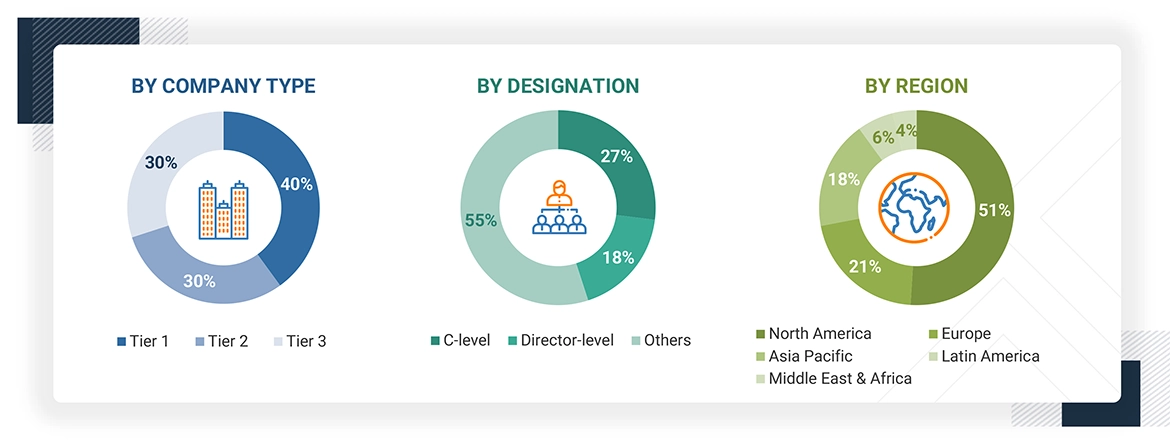
Note 1: C-level executives include CEOs, COOs, CTOs, and VPs.
Note 2: Others include sales, marketing, and product managers.
Note 3: Companies are classified into tiers based on their total revenue. As of 2024: Tier 1=>USD 1 billion, Tier 2 = USD 500 million to USD 1 billion, and Tier 3 = < USD 500 million.
To know about the assumptions considered for the study, download the pdf brochure
Market Size Estimation
The research methodology used to estimate the size of the hemostats market includes the following details.
The market sizing was undertaken from the global side.
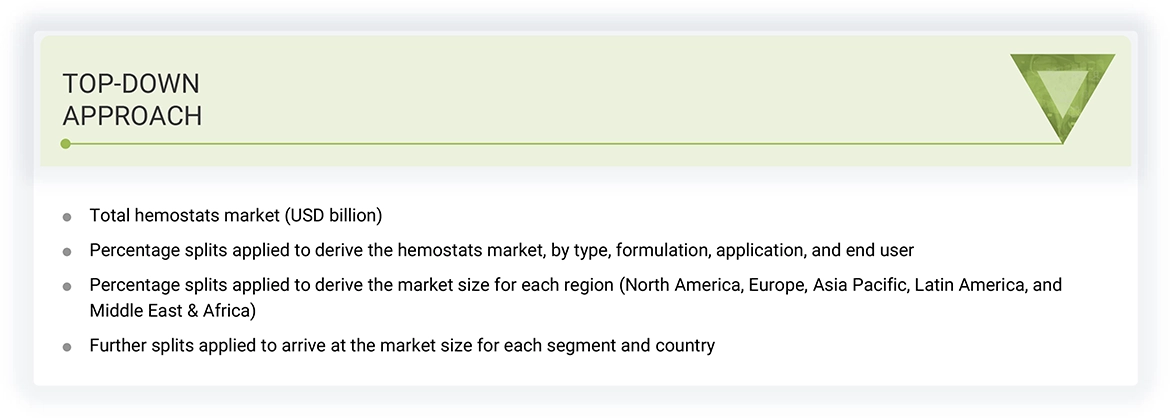
Top-down was used to estimate and validate the hemostats market's total size. These methods were also used extensively to estimate the size of various subsegments in the market. The research methodology used to estimate the market size includes the following:
- The key players in the industry have been identified through extensive secondary research
- Primary and secondary research has determined the revenues generated by leading players operating in the hemostats market.
- All percentage shares, splits, and breakdowns have been determined using secondary sources and verified through primary sources.
Hemostats Market Size: Top-down Approach
Data Triangulation
After arriving at the overall market size by applying the abovementioned process, the total market was split into several segments and subsegments. To complete the overall market engineering process and arrive at the exact statistics for all segments and subsegments, data triangulation and market breakdown procedures were employed, wherever applicable. The data was triangulated by studying various factors and trends from both the demand and supply sides.
Market Definition
During surgical procedures, damage to blood vessels necessitates immediate intervention to mitigate hemorrhage—this process is referred to as hemostasis. Hemostatic agents work by facilitating the formation of fibrin clots, providing an interim solution to manage bleeding at the site. The application of hemostatic measures must be executed rapidly, precisely localized, and meticulously regulated, particularly in scenarios involving significant blood loss or in patients with congenital coagulopathies or trauma-induced vascular compromise.
Stakeholders
- Senior Management
- Finance Department
- Procurement Department
- Hospitals
- Specialty Clinics
- Trade Associations and Industry Bodies
- Regulatory Bodies and Government Agencies
- Business Research & Consulting Service Providers
- Market Research & Consulting Firms
- Venture Capitalists and Investors
Report Objectives
- To define, describe, segment, analyze, and forecast the hemostats market by type, formulation, application, end user, and region
- To provide detailed information about the factors influencing market growth (drivers, restraints, opportunities, and challenges)
- To analyze micromarkets concerning individual growth trends, prospects, and contributions to the overall market
- To analyze market opportunities for stakeholders and provide details of the competitive landscape for key players
- To forecast the size of the hemostats market in North America, Europe, the Asia Pacific, Latin America, and the Middle East & Africa
- To profile the key players in the hemostats market and comprehensively analyze their core competencies
- To track and analyze competitive developments such as agreements, collaborations, and partnerships; expansions; acquisitions; and product launches & approvals in the hemostats market
Get the Full Hemostats Market Report
Full forecast, segment splits, and company analysis for all Hemostats Market.
- Germany Hemostats Market
- UK Hemostats Market
- France Hemostats Market
- Italy Hemostats Market
- Spain Hemostats Market
- China Hemostats Market
- Japan Hemostats Market
- India Hemostats Market
- South Korea Hemostats Market
- Brazil Hemostats Market
- Mexico Hemostats Market
- Rest Of Europe Hemostats Market
- Canada Hemostats Market
- US Hemostats Market
Need a Tailored Report?
Customize this report to your needs
Get 10% FREE Customization
Customize This Report
