
Europe Humanized Mouse and Rat Model Market (2025-2030)

The Europe Humanized Mouse and Rat Model Market was valued at $66.9 Million in 2025 and projected to reach to $101.4 Million by 2030, representing a compound annual growth rate of 8.7%. Europe's humanized mouse and rat model market is positioned for sustained expansion through 2030, driven by increasing R&D investments from pharmaceutical and biotechnology companies seeking advanced preclinical testing solutions.


| Market Size in | USD 26.32 MN |
| Market Forecast in | |
| CAGR | |
| Forecast Period | |
| Units Considered | Value (USD MN) |
Europe Humanized Mouse and Rat Model Market Trends and Insights
- This expansion reflects Europe's strong commitment to advancing preclinical research infrastructure and regulatory frameworks that support in vivo disease modeling.
- Europe's pharmaceutical and biotechnology sectors are increasingly adopting humanized animal models to accelerate drug development pipelines and reduce time-to-market for novel therapeutics. The 8.7% compound annual growth rate in Europe outpaces the global average, driven by substantial investments in research institutions, contract research organizations (CROs), and academic centers across the region.
- Europe's emphasis on translational medicine and personalized healthcare is propelling demand for sophisticated animal models that better predict human drug responses.
- Between 2025 and 2030, Europe is expected to consolidate its position as a leading hub for humanized model development, supported by collaborative research networks and favorable funding mechanisms..
Key Market Statistics
- CAGR (2025-2030) 8.7% CAGR
- Market Size, 2025 ~USD 66.9 Million
- Forecast, 2030 ~USD 101.4 Million
- Geography Europe
Europe Humanized Mouse and Rat Model Market Overview
Market Valuation & Growth :
Europe's humanized mouse and rat model market is valued at $66.9 million in 2025, with a robust CAGR of 8.7%, significantly outpacing the global growth rate of 8.2% and reaching $101.4 million by 2030.
Germany's Market Leadership :
Germany dominates Europe's market with $43 million in market size, reflecting its position as a leading hub for pharmaceutical research and development with world-class preclinical research infrastructure.
Regulatory & Infrastructure Advantages :
Europe's stringent regulatory frameworks and advanced research infrastructure create a favorable environment for humanized model adoption, supporting the transition from traditional to advanced in vivo disease modeling approaches.
Pharmaceutical & Biotech Investment :
Europe's robust pharmaceutical and biotechnology sectors are increasingly investing in humanized mouse and rat models to accelerate drug discovery, reduce development timelines, and improve clinical trial success rates.
Europe Humanized Mouse and Rat Model Market Dynamics
- The region's commitment to regulatory compliance and ethical research standards continues to elevate demand for sophisticated in vivo disease models that better predict human responses to therapeutic interventions. Key growth drivers include rising adoption of personalized medicine approaches, expansion of contract research organizations (CROs) offering specialized model services, and collaborative research initiatives across European institutions.
- Germany, the UK, and France collectively represent the largest market opportunities, with emerging markets in Southern and Eastern Europe presenting additional growth potential as research capabilities expand..
Market Ecosystem
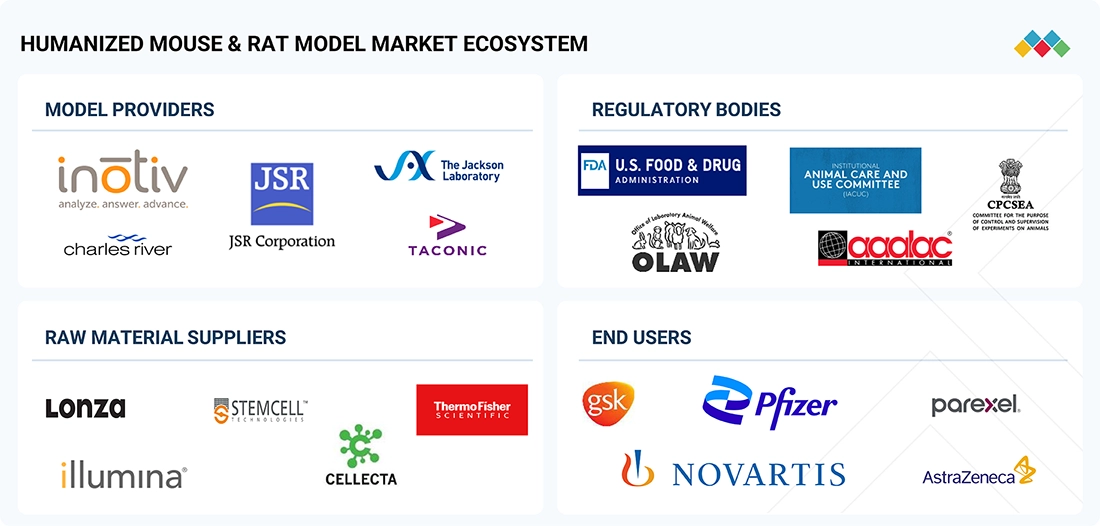
humanized-mouse-model-market: COMMERCIAL USE CASES ACROSS INDUSTRIES
| COMPANY | USE CASE DESCRIPTION | BENEFITS |
|---|---|---|
 |
Humanized-liver PXB-mice used to evaluate hepatic safety of RNAi therapeutics VIR-2218 and ALN-HBV prior to clinical development in hepatitis B. | Human-relevant DMPK/safety readouts for oligos; earlier detection of hepatotoxicity risk and higher translational confidence versus conventional mouse strains, helping de-risk IND decisions. |
 |
Collaboration with JAX to compare CD34+ HSC–engrafted NSG/NSG-SGM3 strain variants and characterize human immune-cell reconstitution for immuno-oncology studies (humanized NSG platform selection). | Sponsor gets data-driven model selection for bispecifics/IO work (better human immune repertoire, survival window), reducing false negatives/positives and shortening time to a fit-for-purpose humanized model. |
Logos and trademarks shown above are the property of their respective owners. Their use here is for informational and illustrative purposes only.
Related Ecosystem
Biotechnology
- Reagents
- Polymerase Chain Reaction (PCR)
- Stem Cells
- Assay Kits
- Flow Cytometers
- Thermo Fisher Scientific Inc.
- Merck KGaA
- Danaher Corporation
- Agilent Technologies, Inc.
- Bio-Rad Laboratories, Inc.
Key Takeaways
- Europe's humanized mouse and rat model market will grow from $66.9M (2025) to $101.4M (2030) at an 8.7% CAGR, outpacing global growth rates.
- Europe's robust pharmaceutical R&D ecosystem and regulatory support are primary drivers of market expansion through 2030.
- Increased adoption of humanized models in Europe is reducing preclinical development timelines and improving drug efficacy prediction.
- Europe's collaborative research networks and funding mechanisms position the region as a global leader in humanized model innovation by 2030.
Humanized Mouse and Rat Model Market Report Scope
| Report Metric | Details |
|---|---|
| Base Year | 2025 |
| Fastest Growing Segment | CONTRACT RESEARCH ORGANIZATIONS AND CONTRACT DEVELOPMENT AND MANUFACTURING ORGANIZATIONS (CROS AND CDMOS) (End User) |
| Forecast Period | 2025–2030 |
| Growth Rate | CAGR of 8.2% from 2025 to 2030 |
| Largest Segment | HUMANIZED MOUSE MODELS (Type) |
| Market Size Base Year (Billions) | ~USD 0.28 (2025) |
| Revenue Forecast (Billions) | ~USD 0.41 (2030) |
| Segments Covered | Type, End User, Application |
Europe Humanized Mouse and Rat Model Market Report Segmentation
3 segment dimensions are covered across the global market.
By Type
- Blt Humanized Mouse Models
- Cd34 Humanized Mouse Models
- Cell-Based Humanized Mouse Models
- Genetic Humanized Mouse Models
- Humanized Mouse Models
- Humanized Rat Models
- Pbmc Humanized Mouse Models
By End User
- Academic & Research Institutes
- Academic And Research Institutes
- Contract Research Organizations And Contract Development And Manufacturing Organizations (Cros And Cdmos)
- Cros & Cdmos
- Cros And Cdmos
- Pharmaceutical & Biotechnology Companies
- Pharmaceutical And Biotechnology Companies
By Application
- Hematopoiesis
- Immunology And Infectious Diseases
- Neuroscience
- Oncology
- Other Applications
- Toxicology
REST OF EUROPE: HUMANIZED MOUSE AND RAT MODEL MARKET, BY END USER, 2023–2030
| Segment | 2023 | 2024 | 2025 | 2026 | 2027 | 2028 | 2029 | 2030 | CAGR (%) |
|---|---|---|---|---|---|---|---|---|---|
| ACADEMIC & RESEARCH INSTITUTES | 1.7 | 1.7 | 1.8 | 1.9 | 2 | 2.1 | 2.2 | 2.3 | 5 |
| CROS AND CDMOS | 2.8 | 2.9 | 3.2 | 3.5 | 3.8 | 4.1 | 4.5 | 4.9 | 8.8 |
| PHARMACEUTICAL & BIOTECHNOLOGY COMPANIES | 6.1 | 6.4 | 6.8 | 7.4 | 7.9 | 8.5 | 9 | 9.7 | 7.2 |
| TOTAL | 10.6 | 11 | 11.8 | 12.7 | 13.7 | 14.7 | 15.7 | 16.8 | 7.3 |
EUROPE: HUMANIZED MOUSE AND RAT MODEL MARKET, BY END USER, 2023–2030
| Segment | 2023 | 2024 | 2025 | 2026 | 2027 | 2028 | 2029 | 2030 | CAGR (%) |
|---|---|---|---|---|---|---|---|---|---|
| ACADEMIC & RESEARCH INSTITUTES | 11.3 | 11.5 | 12.2 | 13 | 13.8 | 14.6 | 15.4 | 16.2 | 5.8 |
| CROS AND CDMOS | 19.2 | 20.4 | 22.4 | 24.8 | 27.2 | 29.8 | 32.6 | 35.7 | 9.8 |
| PHARMACEUTICAL & BIOTECHNOLOGY COMPANIES | 42.3 | 44.3 | 47.8 | 52 | 56.3 | 60.7 | 65.5 | 70.6 | 8.1 |
| TOTAL | 72.8 | 76.2 | 82.3 | 89.8 | 97.3 | 105.1 | 113.5 | 122.5 | 8.3 |
Target Audience
- Pharmaceutical Companies : European and global pharma firms need detailed market intelligence to optimize preclinical research strategies, allocate R&D budgets effectively, and accelerate drug development timelines using advanced humanized models.
- Biotechnology Firms : Biotech companies require market insights to identify partnership opportunities with European CROs, understand regional demand for specialized models, and plan market entry or expansion strategies.
- Contract Research Organizations (CROs) : European and international CROs need competitive market data to assess growth opportunities, benchmark service offerings, and develop targeted business development strategies for humanized model services.
- Research Institutions & Universities : Academic and research centers require market analysis to secure funding, justify infrastructure investments in humanized model capabilities, and identify collaboration opportunities with industry partners.
- Investors & Venture Capital : Investment firms evaluating opportunities in European life sciences need comprehensive market data to assess growth potential, identify promising companies, and make informed funding decisions in the preclinical research sector.
Key Companies in the Europe Humanized Mouse and Rat Model Market
| Company | HQ | Ownership | Strongest segments |
|---|---|---|---|
| CHARLES RIVER LABORATORIES | United States | Public Company | Research Models and Services,Discovery and Safety Assessment,Manufacturing Solutions, |
| THE JACKSON LABORATORY | United States | Foundation/Charitable Institution | Mouse breeding and colony management,Phenotyping, efficacy testing, and genetic research services,Genetic resources, software, and data, |
| INOTIV | United States | Public Company | Research Models and Services (RMS),Discovery and Safety Assessment (DSA) Services,BASi Scientific Instruments and Software, |
| GENOWAY | France | Public Company | Custom mouse models (KO/KI and humanized),Custom rat models,Engineered cell lines, |
| JSR CORPORATION | Japan | Private Company | Digital Solutions (lithography, photoresists, CMP, display and packaging materials),Plastics / Synthetic Resins (ABS, AES, AS, ASA and related resins),Life Sciences (diagnostic and research reagents, bioprocess materials, drug discovery support), |
| CHAMPIONS ONCOLOGY, INC. | United States | Public Company | Tumorgraft / PDX-based translational oncology services,Personalized cancer care services,Lumin Bioinformatics and data-driven software, |
| ONCODESIGN SERVICES | France | Public Company | Precision oncology and immuno-oncology (OPM-101, OPM-102),Neurodegeneration (OPM-201, Parkinson’s),Radiotheranostic portfolio for digestive and pancreatic cancers, |
CHARLES RIVER LABORATORIES
Charles River Laboratories is a public company founded in 1947 in the United States with 19,000 employees.
THE JACKSON LABORATORY
The Jackson Laboratory is a foundation-based charitable institution founded in 1929 in the United States with 2,100 employees.
INOTIV
Inotiv is a public company founded in 1974 in the United States with 1,996 employees.
GENOWAY
Genoway is a public company founded in 1999 in France with 157 employees.
JSR CORPORATION
JSR Corporation is a private company founded in 1948 in Japan with 7,997 employees.
CHAMPIONS ONCOLOGY, INC.
Champions Oncology, Inc. is a public company founded in 1985 in the United States with 214 employees.
ONCODESIGN SERVICES
Oncodesign Services is a public company founded in 1995 in France.
Countries within Europe - compare and drill down
| Country | 2025 size (native) |
|---|---|
| Germany | USD 43 Million |
| UK | USD 27.3 Million |
| France | USD 18.6 Million |
| Italy | USD 5.9 Million |
| Spain | USD 4.9 Million |
| Rest Of Europe | USD 13.9 Million |
Country market size visualization
Reasons to Buy this Report
- Regional Market Segmentation : Gain detailed insights into Europe's humanized model market broken down by key countries including Germany ($43M), UK ($27.3M), and France ($18.6M), enabling targeted business strategy development.
- Growth Trajectory Analysis : Understand Europe's 8.7% CAGR outperformance versus global 8.2%, identifying emerging opportunities and competitive advantages specific to the European market landscape through 2030.
- Regulatory & Compliance Insights : Access comprehensive analysis of Europe's regulatory frameworks and ethical research standards that drive humanized model adoption, critical for companies navigating European market entry and expansion.
- Competitive Landscape Intelligence : Benchmark your organization against European market leaders and identify partnership opportunities with CROs, pharmaceutical companies, and research institutions across major European markets.
- Investment & Expansion Planning : Leverage market forecasts and country-level data to make informed decisions on R&D investments, facility expansion, and resource allocation across Europe's most promising research hubs.
Frequently asked questions
What is the current market size of humanized mouse and rat models in Europe?
Europe's humanized mouse and rat model market was valued at $66.9 million in 2025 and is expected to reach $101.4 million by 2030.
What is the projected growth rate for Europe's humanized model market?
Europe's market is projected to grow at a compound annual growth rate (CAGR) of 8.7% from 2025 to 2030, exceeding the global average.
Why is Europe's humanized model market growing faster than the global average?
Europe's growth is driven by strong pharmaceutical R&D investments, advanced regulatory frameworks, collaborative research networks, and emphasis on translational medicine and personalized healthcare.
Which sectors in Europe are driving demand for humanized animal models?
Europe's pharmaceutical companies, biotechnology firms, contract research organizations (CROs), and academic research institutions are the primary drivers of humanized model adoption.
How are humanized models impacting drug development in Europe?
Humanized mouse and rat models in Europe are accelerating drug development timelines, improving human drug response prediction, and reducing preclinical development costs for pharmaceutical companies.
RESEARCH METHODOLOGY
The research study used secondary sources, directories, and databases to identify and collect valuable information to analyze the global humanized mouse and rat model market. Widespread interviews were conducted with various primary participants, including key industry members, subject-matter experts (SMEs), C-level managers of leading market players, and industry consultants, to obtain and verify qualitative and quantitative information and evaluate the growth scenarios of the market. The global market size was estimated through secondary research (top-down and bottom-up), followed by data triangulation with inputs from industry experts to determine the final market size.
Secondary Research
Secondary research was used to identify and collect information for the technical, market-oriented, and commercial study of the humanized mouse and rat model market. The secondary sources used for this study include the American Association for Cancer Research (AACR), American Association for Laboratory Animal Science (AALAS), European Society for Medical Oncology (ESMO), European Association for Cancer Research (EACR), Humanized Mouse Resource (HMR), National Center for Biotechnology Information (NCBI), and Association for Assessment and Accreditation of Laboratory Animal Care International (AAALAC).
Academic Journals and Company Websites; corporate & regulatory filings, such as annual reports, SEC filings, investor presentations, and financial statements; business magazines & research journals; press releases; and trade, business, and professional associations were also used to obtain major information about key market players and market segmentation corresponding to industry trends, regional/country-level markets, market developments, and technology prospects. Secondary data was collected and analyzed to determine the market size of the global humanized mouse and rat model market, which was further validated through primary research.
Primary Research
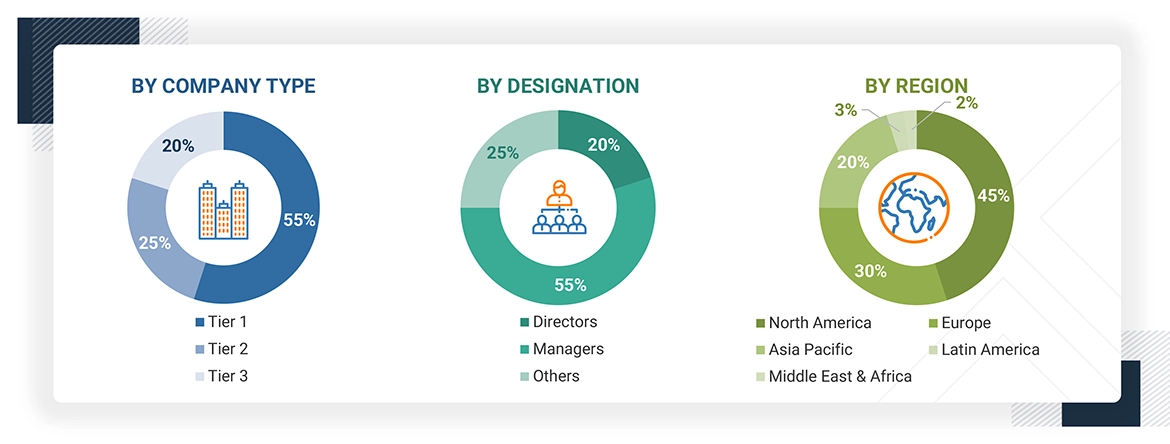
Primary research was conducted after acquiring basic knowledge about the global humanized mouse and rat model market through secondary research. A series of primary interviews were conducted with market experts from the demand side, including professionals from the pharmaceutical and biopharmaceutical industries and academic institutions. Additionally, interviews were held with individuals from the supply side, such as C-level and D-level executives, product managers, and marketing and sales managers from key manufacturers, distributors, and channel partners. The primary interviews were conducted across North America, Europe, Asia Pacific, Latin America, the Middle East, and Africa. Approximately 80% and 20% of the primary interviews were conducted with supply-side and demand-side participants. This data was collected through questionnaires, e-mails, online surveys, personal interviews, and telephonic interviews.
The breakdown of the primary respondents is given below.
To know about the assumptions considered for the study, download the pdf brochure
Market Size Estimation
Top-down and bottom-up approaches were used to estimate and validate the total size of the humanized mouse and rat model market. These methods were also used extensively to estimate the size of various subsegments in the market.
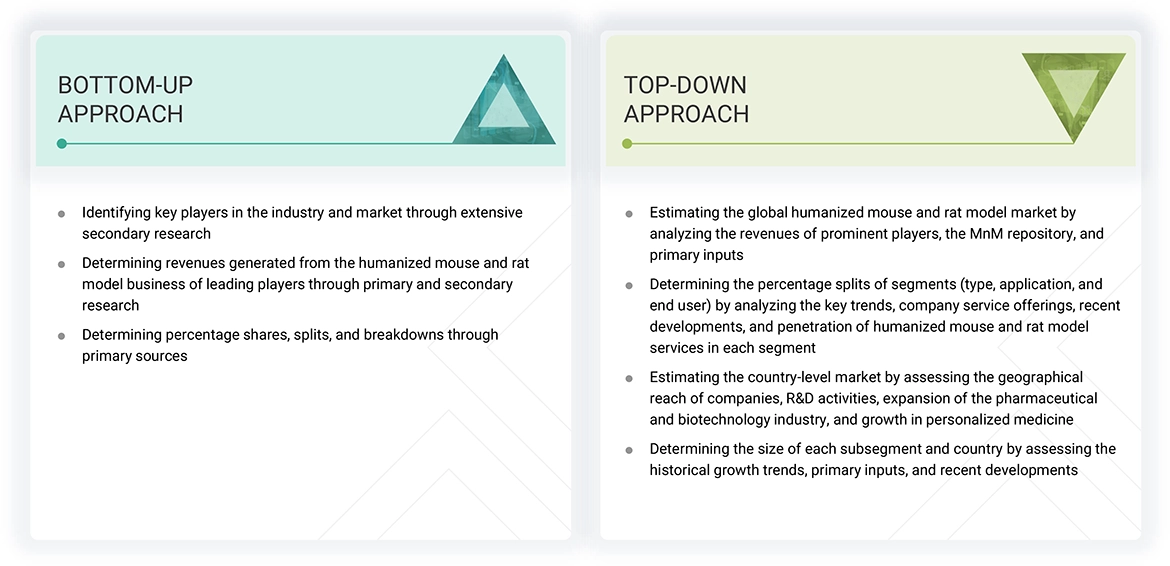
Data Triangulation
After determining the market size from the above estimation process, the total market was divided into several segments and subsegments. Where applicable, data triangulation and market breakdown procedures were employed to complete the overall market engineering process and determine the exact statistics for all segments and subsegments. The data was triangulated by studying various factors and trends from the demand and supply sides.
Market Definition
A humanized mouse and rat model is an immunodeficient organism genetically engineered to study immune responses to drugs or identify potential disease targets. These models are widely used to study human diseases and genes. Researchers in both academia and industry, along with clinicians, extensively use humanized mouse and rat models in their research applications. Humanized mouse and rat models are beneficial tools for immuno-oncology and infectious disease research. They have improved the ability to predict human responses to new therapeutics in clinical development.
Stakeholders
- Research and consulting firms
- Biopharmaceutical manufacturers
- Pharmaceutical manufacturers
- Mouse model and service companies
- Government and private research institutes
- Manufacturers and suppliers of animal care products
- Clinical research organizations (CROs)
- Academic and research institutes
- Venture capitalists
- Laboratory animal care associations
- Public and private animal health agencies
Report Objectives
To define, describe, and forecast the humanized mouse and rat model market by type, application, end user, and region
To provide detailed information regarding the major factors influencing the market growth (such as drivers, restraints, opportunities, and challenges)
- To analyze the micromarkets1 concerning individual growth trends, prospects, and contributions to the overall humanized mouse and rat model market
- To assess the opportunities for stakeholders and provide details of the competitive landscape for market leaders
- To forecast the size of the market segments for North America, Europe, the Asia Pacific, Latin America, Middle East, and Africa
- To profile the key players and analyze their market shares and core competencies2
- To track and analyze competitive developments, such as product/service launches, partnerships, agreements, collaborations, and expansions
- To benchmark players within the market using the proprietary “Company Evaluation Matrix” framework, which analyzes market players on various parameters within the broad categories of business and product excellence strategy
Get the Full Humanized Mouse and Rat Model Market Report
Full forecast, segment splits, and company analysis for all Humanized Mouse and Rat Model Market.
- Canada Humanized Mouse and Rat Model Market
- US Humanized Mouse and Rat Model Market
- Germany Humanized Mouse and Rat Model Market
- UK Humanized Mouse and Rat Model Market
- France Humanized Mouse and Rat Model Market
- Italy Humanized Mouse and Rat Model Market
- Spain Humanized Mouse and Rat Model Market
- China Humanized Mouse and Rat Model Market
- Japan Humanized Mouse and Rat Model Market
- India Humanized Mouse and Rat Model Market
- South Korea Humanized Mouse and Rat Model Market
- Australia Humanized Mouse and Rat Model Market
- Rest Of Europe Humanized Mouse and Rat Model Market
- Rest Of Asia Pacific Humanized Mouse and Rat Model Market
Need a Tailored Report?
Customize this report to your needs
Get 10% FREE Customization
Customize This Report
