
Asia Pacific Hydrogen Valve Market (2024-2029)

The Asia Pacific Hydrogen Valve Market was valued at $115.7 Million in 2024 and projected to reach to $183.6 Million by 2029, representing a compound annual growth rate of 8.0%. The Asia Pacific hydrogen valve market is poised for accelerated expansion through 2029, with the region's 8.0% CAGR outpacing the global 7.4% growth rate.


| Market Size in | USD 26.32 MN |
| Market Forecast in | |
| CAGR | |
| Forecast Period | |
| Units Considered | Value (USD MN) |
Asia Pacific Hydrogen Valve Market Trends and Insights
- Asia Pacific's hydrogen valve sector is driven by accelerating hydrogen infrastructure development, increasing fuel cell adoption, and government incentives across major economies including China, Japan, and South Korea.
- The region's 8.0% compound annual growth rate outpaces the global average, reflecting Asia Pacific's strategic positioning in the clean energy transition and semiconductor manufacturing expansion. Asia Pacific's hydrogen valve market benefits from rising industrial applications, particularly in refining, chemical production, and emerging hydrogen mobility sectors.
- The region's strong manufacturing base and technological innovation ecosystem support rapid commercialization of hydrogen technologies.
- Between 2024 and 2029, Asia Pacific is expected to capture significant market share as regional players invest in hydrogen infrastructure and governments implement supportive policies to meet decarbonization targets..
Key Market Statistics
- CAGR (2024-2029) 8.0% CAGR
- Market Size, 2024 ~USD 115.7 Million
- Forecast, 2029 ~USD 183.6 Million
- Geography Asia Pacific
Asia Pacific Hydrogen Valve Market Overview
China Dominates Regional Market :
China leads Asia Pacific hydrogen valve market with USD 85.8 million in 2024, driven by aggressive hydrogen infrastructure investments and government support for fuel cell vehicle adoption across major industrial hubs.
Japan's Advanced Technology Leadership :
Japan contributes USD 33.8 million to the regional market, leveraging its expertise in precision valve manufacturing and hydrogen fuel cell technology for automotive and stationary power applications.
India's Emerging Growth Potential :
India represents a high-growth opportunity with USD 26.9 million market size, supported by government hydrogen mission initiatives and increasing industrial adoption of hydrogen-based energy solutions.
South Korea's Innovation Hub :
South Korea contributes USD 16.3 million, positioning itself as a key player through advanced hydrogen valve R&D and integration with its thriving fuel cell and semiconductor industries.
Asia Pacific Hydrogen Valve Market Dynamics
- China's dominance in hydrogen infrastructure development, coupled with Japan's technological expertise and India's emerging demand, creates a dynamic competitive landscape.
- Government policies promoting hydrogen economy transition, particularly in China, Japan, and South Korea, are catalyzing significant capital investments in hydrogen production, storage, and distribution infrastructure. Key growth drivers include rising fuel cell vehicle adoption, industrial hydrogen applications in refining and chemical sectors, and renewable hydrogen production initiatives across the region.
- The market's expansion to USD 183.6 million by 2029 reflects Asia Pacific's strategic positioning as a global hydrogen hub.
- Manufacturers and suppliers targeting this region must address diverse regulatory frameworks, technological standards, and customer requirements across multiple economies to capitalize on this high-growth opportunity..
Market Ecosystem
Related Ecosystem
Industrial Automation
- Sensors
- Image Sensors
- Manufacturing Execution System (MES)
- Actuators
- Flow Sensors
- Siemens ag
- ABB India Limited
- Emerson Electric Co.
- HONEYWELL INTERNATIONAL INC.
- SCHNEIDER ELECTRIC SE
Automotive Electronics And Electrical Equipment
- Battery Electric Vehicle (BEV)
- Light Commercial Vehicles (LCVs)
- Fuel Cell Electric Vehicle (FCEV)
- Sensors
- Hybrid Electric Vehicle (HEV)
- BOSCH LIMITED
- DENSO Corporation
- Continental ag
- Panasonic Holdings Corporation
- Texas Instruments Incorporated
Semiconductor Materials And Components
- Sensors
- Gallium Nitride (GaN)
- Digital Signal Processor (DSP)
- Natural Language Processing (NLP)
- Silicon Carbide
- Texas Instruments Incorporated
- Samsung
- APPLIED MATERIALS, INC.
- Stmicroelectronics
- Lenovo
Key Takeaways
- Asia Pacific hydrogen valve market grows from $115.7M (2024) to $183.6M (2029) at 8.0% CAGR, outpacing global growth.
- China, Japan, and South Korea lead Asia Pacific demand through hydrogen infrastructure investments and fuel cell technology adoption.
- Industrial applications in refining and chemicals, combined with emerging hydrogen mobility, drive Asia Pacific market expansion.
- Asia Pacific's manufacturing expertise and government decarbonization policies position the region as a critical growth engine through 2029.
Hydrogen Valve Market Report Scope
| Report Metric | Details |
|---|---|
| Base Year | 2024 |
| Fastest Growing Segment | RETROFIT (Implementation) |
| Forecast Period | 2024-2029 |
| Growth Rate | CAGR of 7.4% from 2024 to 2029 |
| Largest Segment | NEW INSTALLATION (Implementation) |
| Market Size Base Year (Billions) | ~USD 0.33 (2024) |
| Revenue Forecast (Billions) | ~USD 0.47 (2029) |
| Segments Covered | Type, End-Use Industry, Material, Pressure Range, Application, Size, Implementation, Valve Type |
Asia Pacific Hydrogen Valve Market Report Segmentation
8 segment dimensions are covered across the global market.
By Type
- Ball Valves
- Check Valves
- Floating
- Flow Control Valves
- Globe Valves
- Needle Valves
- Pressure Relief Valves
- Rising Stem
- Trunnion-Mounted
By End-Use Industry
- Automotive
- Chemical
- Energy & Power
- Food & Beverages
- Metals & Mining
- Oil & Gas
- Pharmaceutical
By Material
- Aluminum
- Stainless Steel
By Pressure Range
- <50 Bar
- >1,000 Bar
- >350-700 Bar
- >350-700 Bar
- >50-350 Bar
- >50-350 Bar
- >700-1,000 Bar
- >700-1,000 Bar
By Application
- Hydrogen Fuel Cells
- Hydrogen Fueling Stations
- Hydrogen Fuelling Station
- Hydrogen Production
- Hydrogen Storage
- Hydrogen Transportation
By Size
- 1"-6"
- <1"
- <1"
- >1-6"
- >12-20"
- >12" -20"
- >1"-6"
- >20"
- >20"
- >6-12"
- >6"-12"
By Implementation
- New Installation
- Retrofit
By Valve Type
- Ball Valves
- Check Valves
- Flow Control Valves
- Globe Valves
- Needle Valves
- Pressure Relief Valves
Target Audience
- Valve Manufacturers & Suppliers : Need regional market data to optimize product portfolios, identify distribution partnerships, and develop localized solutions meeting Asia Pacific's diverse hydrogen infrastructure requirements.
- Fuel Cell & Hydrogen Equipment Producers : Require market intelligence on valve demand trends and regional growth drivers to integrate appropriate valve technologies into fuel cell systems and hydrogen production equipment.
- Energy & Infrastructure Investors : Seek comprehensive market analysis to evaluate investment opportunities in Asia Pacific's hydrogen infrastructure projects and identify high-growth segments within the valve supply chain.
- Government & Policy Makers : Need market data to inform hydrogen economy policies, infrastructure development strategies, and industrial support programs aligned with regional growth projections and economic priorities.
- Strategic Consultants & Business Analysts : Require detailed regional market insights to advise clients on market entry strategies, competitive positioning, and growth opportunities in Asia Pacific's expanding hydrogen valve sector.
Countries within Asia Pacific - compare and drill down
| Country | 2025 size (native) |
|---|---|
| China | USD 85.8 Million |
| Japan | USD 33.8 Million |
| India | USD 26.9 Million |
| South Korea | USD 16.3 Million |
| Rest Of Asia Pacific | USD 20.8 Million |
Country market size visualization
Reasons to Buy this Report
- Regional Market Segmentation : Gain detailed insights into country-specific market sizes and growth trajectories across China, Japan, India, and South Korea to identify high-potential investment and expansion opportunities.
- Competitive Landscape Analysis : Understand competitive dynamics and market positioning strategies specific to Asia Pacific, where regional players compete alongside global manufacturers in a rapidly evolving hydrogen sector.
- Government Policy Intelligence : Access comprehensive analysis of hydrogen economy policies, subsidies, and regulatory frameworks driving market growth across major Asia Pacific economies and their impact on valve demand.
- Technology & Application Trends : Identify emerging applications in fuel cell vehicles, industrial hydrogen production, and renewable energy integration specific to Asia Pacific's industrial and automotive sectors.
- Strategic Growth Forecasting : Leverage 2024-2029 market projections and 8% CAGR data to develop informed business strategies, supply chain planning, and market entry decisions for Asia Pacific expansion.
Frequently asked questions
What is the current size of the Asia Pacific hydrogen valve market?
The Asia Pacific hydrogen valve market was valued at USD 115.7 million in 2024 and is projected to reach USD 183.6 million by 2029.
What is the growth rate for hydrogen valves in Asia Pacific?
Asia Pacific's hydrogen valve market is growing at a compound annual growth rate (CAGR) of 8.0% from 2024 to 2029.
Which countries drive the Asia Pacific hydrogen valve market?
China, Japan, and South Korea are the primary drivers of Asia Pacific's hydrogen valve market, supported by government hydrogen initiatives and industrial demand.
What applications dominate the Asia Pacific hydrogen valve market?
Industrial applications in refining and chemical production, along with emerging hydrogen fuel cell mobility, are the dominant segments in Asia Pacific.
How does Asia Pacific's growth compare to the global hydrogen valve market?
Asia Pacific's 8.0% CAGR exceeds the global market CAGR of 7.4%, reflecting the region's accelerated hydrogen infrastructure development and clean energy transition.
RESEARCH METHODOLOGY
The study involved four major activities in estimating the size of the hydrogen valve market. Exhaustive secondary research has been carried out to collect information on the market, the peer markets, and the parent market. Both top-down and bottom-up approaches have been employed to estimate the total market size. Market breakdown and data triangulation methods have also been used to estimate the market for segments and subsegments.
Secondary Research
Revenues of companies offering hydrogen valve have been obtained from the secondary data available through paid and unpaid sources. The revenues have also been derived by analyzing the product portfolio of key companies, and these companies have been rated according to the performance and quality of their products.
In the secondary research process, various sources have been referred to for identifying and collecting information for this study on the hydrogen valve market. Secondary sources considered for this research study include government sources, corporate filings, and trade, business, and professional associations. Secondary data has been collected and analyzed to arrive at the overall market size, which has been further validated through primary research.
Secondary research has been mainly used to obtain key information about the supply chain of data center accelerator systems to identify key players based on their products and prevailing industry trends in the hydrogen market by processor, type, application, end-user, and region. Secondary research also helped obtain market information- and technology-oriented key developments undertaken by market players to expand their presence and increase their market share.
Primary Research
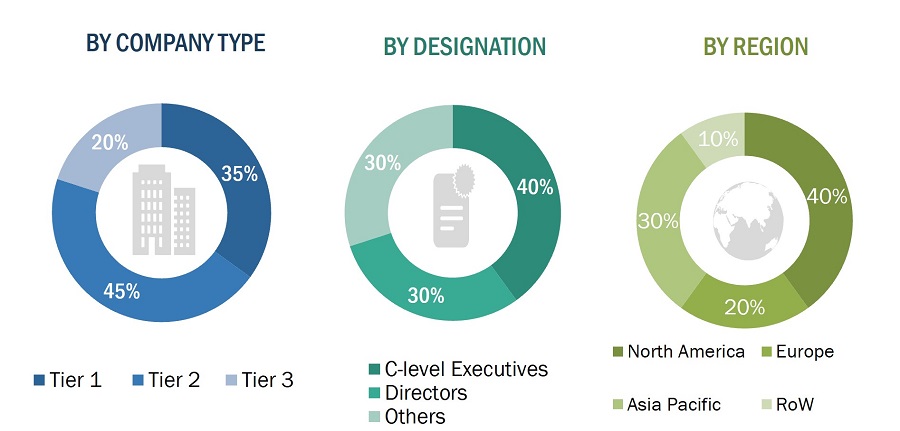
Extensive primary research has been conducted after understanding and analyzing the current scenario of the hydrogen valve market through secondary research. Several primary interviews have been conducted with the key opinion leaders from the demand and supply sides across four main regions—North America, Europe, Asia Pacific, and the Rest of Europe. Approximately 25% of the primary interviews were conducted with the demand-side respondents, while approximately 75% were conducted with the supply-side respondents. The primary data has been collected through questionnaires, emails, and telephone interviews.
After interacting with industry experts, brief sessions were conducted with highly experienced independent consultants to reinforce the findings from our primary. This, along with the in-house subject matter experts’ opinions, has led us to the findings as described in the remainder of this report. The breakdown of primary respondents is as follows:
To know about the assumptions considered for the study, download the pdf brochure
Market Size Estimation
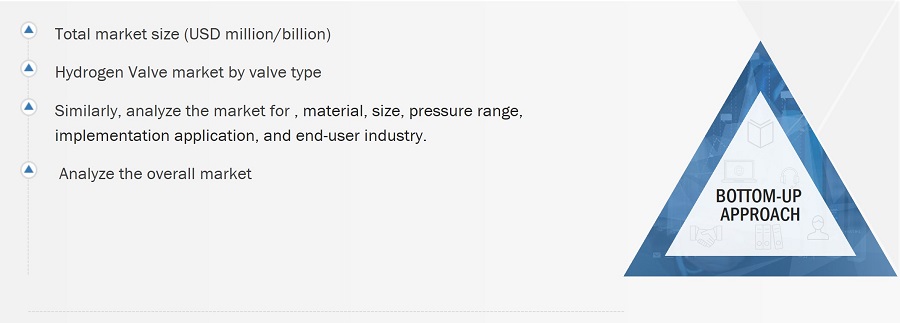
The bottom-up procedure has been employed to arrive at the overall size of the hydrogen valve market.
- Initially, more than 35 companies offering hydrogen valves were identified. Their offerings were mapped based on valve type, material, application, size, pressure range, implementation, and end user application.
- After understanding the different types of hydrogen valve offered by various manufacturers, based on the data gathered through primary and secondary sources, the market was categorized into different segments.
- To derive the global hydrogen valve market, global valve shipments of top players for each valve type that were considered in the scope of the report were tracked.
- A suitable penetration rate was assigned for the shipment of each of these device types to derive the shipments of hydrogen valves.
- Using the average selling price (ASP) at which a particular company offers its devices, we derived the hydrogen valve market based on different device types. The ASP of each device was identified based on secondary sources and validated from primaries.
- For the projected market values of each of the device types, the Y-o-Y projections showed a steep growth initially until 2023. The market is expected to witness a sharp ascent, considering the demand for hydrogen market valve for different applications.
- For the CAGR, the market trend analysis was carried out by understanding the industry penetration rate and the demand and supply of hydrogen valve in different applications.
- We also tracked the hydrogen valve market through the data sanity method. The revenues of more than 25 key providers were analyzed through annual reports and press releases and summed to derive the overall market.
- For each company, a percentage is assigned to its overall revenue or, in a few cases, segmental revenue, to derive its revenue for the data center accelerator. This percentage for each company is assigned based on the company’s product portfolio and its range of data center accelerator offerings.
- Verifying and crosschecking the estimates at every level by discussing with key opinion leaders, including CXOs, directors, and operation managers, and then finally with the domain experts at MarketsandMarkets
- Studying various paid and unpaid sources of information, such as annual reports, press releases, white papers, and databases
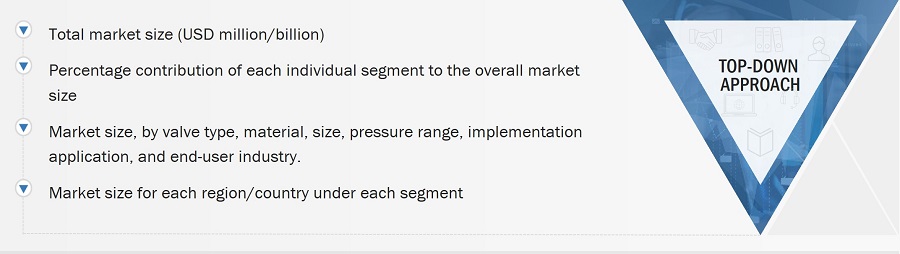
The top-down approach has been used to estimate and validate the total size of hydrogen valve market.
- The global market size of hydrogen valves was estimated through the data sanity of 35 major companies.
- The growth of the hydrogen valve market witnessed an upward slope trend during the studied period, as it is currently in the initial stage of the product cycle, with major players beginning to expand their business into various application areas of the market.
- Types of hydrogen valves, their features and properties, geographical presence, and key applications served by all players in the hydrogen valve market were studied to estimate and arrive at the percentage split of the segments.
- Different types of hydrogen valves and their penetration for the end-use applications were also studied.
- The market split for hydrogen valve by valve type, implementation, application, size, pressure range, end user industry, and application based on secondary research was estimated.
- The demand generated by companies operating in different application segments of the end-use application was analyzed.
- Multiple discussions with key opinion leaders across major companies involved in the development of hydrogen valve and related components were conducted to validate the market split of type, product, and application.
- The regional splits were estimated using secondary sources, based on factors such as the number of players in a specific country and region and the adoption and use cases of each implementation type with respect to applications in the region
Data Triangulation
After arriving at the overall market size-using the market size estimation processes as explained above—the market has been split into several segments and subsegments. To complete the entire market engineering process and arrive at the exact statistics of each market segment and subsegment, data triangulation and market breakdown procedures have been employed, wherever applicable. The data has been triangulated by studying various factors and trends from the demand and supply sides in the hydrogen valve market.
Market Definition
A hydrogen valve is a specialized device designed to control the flow and pressure of hydrogen gas within a system. These valves are critical components in various applications, particularly within the hydrogen economy, including hydrogen production, storage, transportation, and utilization in fuel cells and refineries. Due to hydrogen's small molecular size and high diffusivity, hydrogen valves must be constructed from materials that prevent leakage and ensure safety under high-pressure conditions. Hydrogen valves are essential for the safe and efficient handling of hydrogen in various industrial and energy applications. Their design, material selection, and adherence to safety standards are critical factors that ensure the effective control of hydrogen flow and pressure, minimizing risks associated with hydrogen's highly flammable nature.
Key Stakeholders
- NGOs, Governments, Investment Banks, Venture Capitalists, and Private Equity Firms
- Telecom Services Providers
- Original Equipment Manufacturers
- Value-added Service Providers
- Data Center Operators
- Software Developers
- Data Center Colocation Service Providers
- System Integrators
- Cloud Service Providers
- Colocation Service Providers
Report Objectives
- To define, describe, segment, and forecast the hydrogen valve market, by valve type, size, pressure range, material, implementation, application, and end-user industry, in terms of value
- To describe and forecast the market for various segments, with respect to four main regions, namely, North America, Europe, Asia Pacific, and the Rest of the World (RoW), in terms of value
- To forecast and compare the market size of pre-recession with that of the post-recession at the regional level
- To provide detailed information regarding drivers, restraints, opportunities, and challenges influencing the growth of the hydrogen valve market
- To provide a detailed overview of the hydrogen valve market market’s supply chain, along with the ecosystem, technology trends, use cases, regulatory environment, and Porter’s five forces analysis for the market
- To analyze industry trends, pricing data, patents and innovations, and trade data (export and import data) related to the hydrogen valves.
- To strategically analyze the micromarkets1 with respect to individual growth trends, prospects, and contributions to the total market
- To strategically profile the key players and comprehensively analyze their market share and core competencies2
- To analyze opportunities for stakeholders and provide a detailed competitive landscape of the market
- To analyze competitive developments, such as product launches/developments, collaborations, partnerships, acquisitions, and research & development (R&D) activities, carried out by players in the hydrogen valve market
- To profile key players in the hydrogen valve market and comprehensively analyze their market ranking based on their revenue, market share, and core competencies2
Available customizations:
With the given market data, MarketsandMarkets offers customizations according to the specific requirements of companies. The following customization options are available for the report:
- Detailed analysis and profiling of additional market players based on various blocks of the supply chain
Get the Full Hydrogen Valve Market Report
Full forecast, segment splits, and company analysis for all Hydrogen Valve Market.
- Canada Hydrogen Valve Market
- Mexico Hydrogen Valve Market
- US Hydrogen Valve Market
- France Hydrogen Valve Market
- Germany Hydrogen Valve Market
- Rest Of Europe Hydrogen Valve Market
- UK Hydrogen Valve Market
- China Hydrogen Valve Market
- India Hydrogen Valve Market
- Japan Hydrogen Valve Market
- Rest Of Asia Pacific Hydrogen Valve Market
- South Korea Hydrogen Valve Market
Need a Tailored Report?
Customize this report to your needs
Get 10% FREE Customization
Customize This Report
