
Australia Immune Repertoire Sequencing Market (2025-2030)

The Australia Immune Repertoire Sequencing Market was valued at $3 Million in 2025 and projected to reach to $4.5 Million by 2030, representing a compound annual growth rate of 8.5%. Australia's immune repertoire sequencing market is positioned for steady growth, driven by increasing recognition of personalized medicine's clinical value and expanding research funding from government and institutional sources.


| Market Size in | USD 26.32 MN |
| Market Forecast in | |
| CAGR | |
| Forecast Period | |
| Units Considered | Value (USD MN) |
Australia Immune Repertoire Sequencing Market Trends and Insights
- Australia is experiencing increased adoption of advanced sequencing technologies driven by rising investments in immunology research and personalized medicine initiatives across academic and clinical institutions.
- The market in Australia benefits from strong healthcare infrastructure, government support for biotechnology innovation, and growing demand for precision diagnostics in immunological disorders. The expansion of Australia's immune repertoire sequencing market reflects broader trends in genomic medicine and the country's commitment to advancing diagnostic capabilities.
- Australia's research institutions and hospitals are increasingly integrating immune repertoire sequencing into clinical workflows for cancer immunotherapy monitoring, infectious disease assessment, and immune deficiency diagnosis.
- Between 2025 and 2030, Australia is expected to see accelerated market growth as healthcare providers recognize the clinical value of comprehensive immune profiling and as sequencing costs continue to decline..
Key Market Statistics
- CAGR (2025-2030) 8.5% CAGR
- Market Size, 2025 ~USD 3 Million
- Forecast, 2030 ~USD 4.5 Million
- Country Australia
Australia Immune Repertoire Sequencing Market Overview
Market Valuation :
Australia's immune repertoire sequencing market is valued at $3.0 million in 2025, with projected growth to $4.5 million by 2030, reflecting steady expansion in the region's genomic research capabilities.
Research Investment Growth :
Australian academic institutions and clinical centers are significantly increasing investments in immunology research, driving adoption of advanced sequencing technologies for immune profiling and personalized medicine applications.
Personalized Medicine Initiatives :
Australia is witnessing growing implementation of personalized medicine programs that leverage immune repertoire sequencing for tailored therapeutic approaches in oncology, immunotherapy, and infectious disease management.
Technology Adoption Trends :
Australian healthcare providers are increasingly adopting next-generation sequencing platforms for comprehensive immune cell analysis, supporting clinical decision-making and research advancement across major medical centers.
Australia Immune Repertoire Sequencing Market Dynamics
- The 8.5% CAGR reflects growing adoption among Australian research institutions and clinical laboratories seeking to enhance diagnostic and therapeutic capabilities.
- Key growth drivers include rising immunotherapy applications, increased collaboration between academic and commercial entities, and government support for genomic medicine infrastructure development.
- By 2030, the market is expected to reach $4.5 million as more Australian healthcare providers integrate immune repertoire sequencing into routine clinical practice and research protocols..
Market Ecosystem
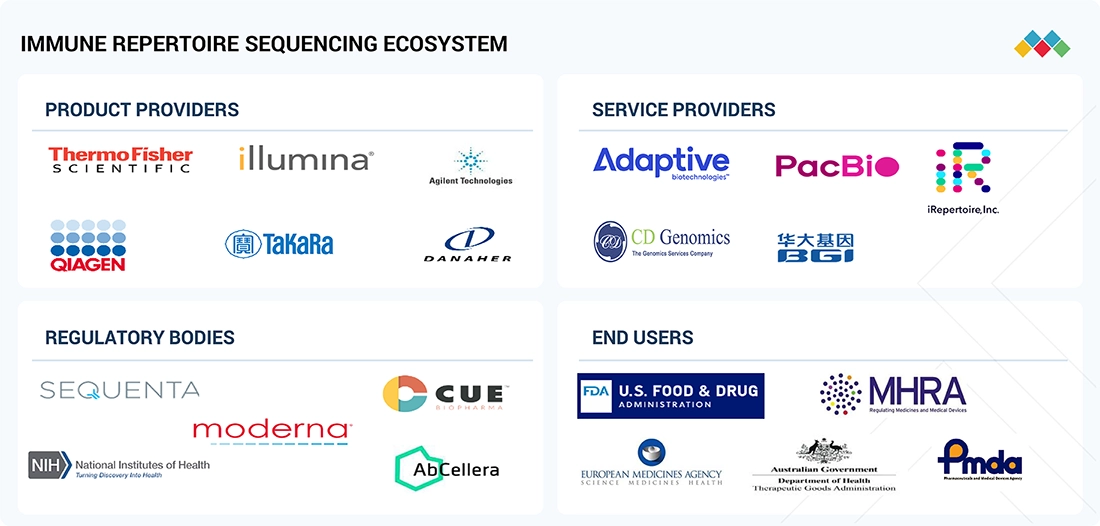
Immune Repertoire Sequencing Market: COMMERCIAL USE CASES ACROSS INDUSTRIES
| COMPANY | USE CASE DESCRIPTION | BENEFITS |
|---|---|---|
 |
Short-read sequencing was a bottleneck for the university, which was overcome with PacBio's HiFi long-read workflow | Project timelines reduced from months to a single sequencing run | Annual publications more than doubled |
 |
Oxford Nanopore Technology (ONT) platform was used for full-length immune repertoire reconstruction and profiling at the transcriptome-level using long-read sequencing | Design quantitatively robust full-length IR sequencing (FLIRseq) method at the transcriptome level by integrating linear rolling circle amplification (RCA) with ONT techniques |
Logos and trademarks shown above are the property of their respective owners. Their use here is for informational and illustrative purposes only.
Related Ecosystem
Biotechnology
- Reagents
- Polymerase Chain Reaction (PCR)
- Stem Cells
- Assay Kits
- Flow Cytometers
- Thermo Fisher Scientific Inc.
- Merck KGaA
- Danaher Corporation
- Agilent Technologies, Inc.
- Bio-Rad Laboratories, Inc.
Key Takeaways
- Australia's immune repertoire sequencing market is valued at $3.0 million in 2025 and is forecast to reach $4.5 million by 2030, growing at 8.5% CAGR.
- Australia's strong healthcare infrastructure and government support for biotechnology innovation are driving adoption of immune repertoire sequencing technologies.
- Clinical applications in cancer immunotherapy, infectious disease, and immune deficiency diagnosis are expanding the addressable market in Australia.
- Declining sequencing costs and increased awareness of personalized medicine benefits are expected to accelerate market growth in Australia through 2030.
Immune Repertoire Sequencing Market Report Scope
| Report Metric | Details |
|---|---|
| Base Year | 2025 |
| Fastest Growing Segment | TCR KITS (Type) |
| Forecast Period | 2025–2030 |
| Growth Rate | CAGR of 9.6% from 2025 to 2030 |
| Largest Segment | ASSAY KITS & REAGENTS (Product) |
| Market Size Base Year (Billions) | ~USD 0.35 (2025) |
| Revenue Forecast (Billions) | ~USD 0.56 (2030) |
| Segments Covered | Product, Type |
Australia Immune Repertoire Sequencing Market Report Segmentation
2 segment dimensions are covered across the global market.
By Product
- Assay Kits & Reagents
- Instruments & Software
By Type
- Bcr Kits
- Other Assay Kits & Reagents
- Tcr Kits
AUSTRALIA: IMMUNE REPERTOIRE SEQUENCING SERVICES MARKET, BY END USER, 2023–2030
| Segment | 2023 | 2024 | 2025 | 2026 | 2027 | 2028 | 2029 | 2030 | CAGR (%) |
|---|---|---|---|---|---|---|---|---|---|
| ACADEMIC & RESEARCH INSTITUTES | 0.5 | 0.3 | 0.3 | 0.3 | 0.3 | 0.3 | 0.3 | 0.4 | 9.3 |
| OTHER END USERS | 0.3 | 0.2 | 0.2 | 0.2 | 0.2 | 0.2 | 0.2 | 0.3 | 8.1 |
| PHARMACEUTICAL & BIOTECHNOLOGY COMPANIES | 0.7 | 0.5 | 0.4 | 0.4 | 0.4 | 0.4 | 0.5 | 0.7 | 9.5 |
| TOTAL | 1.5 | 1.1 | 0.9 | 0.8 | 0.8 | 0.9 | 1.1 | 1.4 | 9.2 |
AUSTRALIA: IMMUNE REPERTOIRE SEQUENCING PRODUCTS MARKET, BY END USER, 2023–2030
| Segment | 2023 | 2024 | 2025 | 2026 | 2027 | 2028 | 2029 | 2030 | CAGR (%) |
|---|---|---|---|---|---|---|---|---|---|
| ACADEMIC & RESEARCH INSTITUTES | 1.4 | 1.4 | 1.5 | 1.6 | 1.8 | 1.9 | 2.1 | 2.3 | 8.5 |
| OTHER END USERS | 0.9 | 0.9 | 1 | 1 | 1.1 | 1.2 | 1.3 | 1.4 | 7.7 |
| PHARMACEUTICAL & BIOTECHNOLOGY COMPANIES | 1.3 | 1.3 | 1.4 | 1.5 | 1.6 | 1.8 | 1.9 | 2.1 | 8.7 |
| TOTAL | 3.6 | 3.6 | 3.8 | 4.1 | 4.5 | 4.9 | 5.3 | 5.7 | 8.4 |
Target Audience
- Genomic Sequencing Companies : Sequencing technology providers need Australia-specific market data to identify growth opportunities, assess competitive positioning, and develop localized product strategies for academic and clinical customers.
- Healthcare Investment Firms : Private equity and venture capital investors require detailed Australia market analysis to evaluate investment opportunities in immunology research, personalized medicine platforms, and genomic diagnostics companies.
- Research Institution Leaders : Directors of Australian academic medical centers and research institutes need market insights to justify funding requests, benchmark their capabilities, and identify collaboration opportunities in immune sequencing research.
- Clinical Laboratory Managers : Laboratory directors and pathology leaders in Australian hospitals require market data to support technology adoption decisions, budget planning, and service expansion in immune profiling and personalized diagnostics.
- Healthcare Consultants & Analysts : Management consultants and market analysts serving Australian healthcare clients need comprehensive market intelligence to support strategic planning, competitive analysis, and market entry recommendations.
Key Companies in the Australia Immune Repertoire Sequencing Market
| Company | HQ | Ownership | Strongest segments |
|---|---|---|---|
| ILLUMINA, INC. | United States | Public Company | Sequencing instruments,Sequencing consumables (reagents, flow cells, library prep, WGS and targeted kits),Array-based instruments and consumables, |
| THERMO FISHER SCIENTIFIC INC. | United States | Public Company | Life Sciences Solutions,Analytical Instruments,Specialty Diagnostics, |
| PACBIO | United States | Public Company | Long-read sequencing instruments (Revio, Sequel, Vega),Long-read consumables (SMRT cells, library prep, binding and sequencing kits),Short-read sequencing (Onso and related consumables), |
| OXFORD NANOPORE TECHNOLOGIES PLC | United Kingdom | Public Company | PromethION (2/24/48) instruments and consumables,MinION Mk 1D and related consumables,GridION / GridION Q systems and consumables, |
| 10X GENOMICS | United States | Public Company | Chromium single-cell instruments and consumables,Visium spatial instruments and consumables,Xenium in situ instruments and consumables, |
| QIAGEN | Netherlands | Public Company | Sample technology consumables and instruments,Immune response and infectious-disease diagnostics,Oncology and sexual & reproductive health assays, |
| AGILENT TECHNOLOGIES | United States | Public Company | Life Sciences and Diagnostics (instruments, reagents, genomics, pathology, CDMO, biomolecular analysis),Agilent CrossLab (services, consumables, software, asset management),Applied Markets (GC, MS, spectroscopy, vacuum, remarketed instruments), |
| DANAHER CORPORATION | United States | Public Company | Biotechnology (bioprocessing and related solutions),Life Sciences (research and genomic tools),Diagnostics (clinical instruments and consumables), |
| TAKARA BIO INC. | Japan | Private Company | Genetic and cellular research reagents,Instruments (PCR and cellular analysis devices),In vitro diagnostics (including COVID-19 testing), |
| ADAPTIVE BIOTECHNOLOGIES | United States | Public Company | clonoSEQ MRD diagnostics,Life sciences research immunosequencing,Pharma and biotech drug discovery partnerships, |
| PERSONALIS, INC. | United States | Public Company | Pharma and biotech translational research / clinical trial services (ImmunoID NeXT and exome-based services),MRD and therapy monitoring (NeXT Personal, NeXT Personal Dx),Clinical tumor profiling and Dx (NeXT Dx and related tests), |
ILLUMINA, INC.
Illumina, Inc. is a United States-based public company founded in 1998 that employs 8,625 people. The company operates in the life sciences and genomics sector.
THERMO FISHER SCIENTIFIC INC.
Thermo Fisher Scientific Inc. is a United States-based public company founded in 1956 with 125,000 employees. It is a major provider of analytical instruments, reagents, and laboratory services.
PACBIO
PacBio is a United States-based public company founded in 2000 with 485 employees. The company specializes in DNA sequencing technology and solutions.
OXFORD NANOPORE TECHNOLOGIES PLC
Oxford Nanopore Technologies PLC is a United Kingdom-based public company founded in 2005 with 1,316 employees. It develops nanopore-based DNA and RNA sequencing technologies.
10X GENOMICS
10X Genomics is a United States-based public company founded in 2012 with 1,178 employees. The company provides solutions for single-cell and spatial genomics analysis.
QIAGEN
QIAGEN is a Netherlands-based public company founded in 1984 with 5,500 employees. It develops and manufactures molecular diagnostics and life sciences products.
AGILENT TECHNOLOGIES
Agilent Technologies is a United States-based public company founded in 1999 with 18,000 employees. The company provides analytical instruments, software, and services for life sciences and diagnostics.
DANAHER CORPORATION
Danaher Corporation is a United States-based public company founded in 1969 with 59,000 employees. It operates across multiple sectors including life sciences, diagnostics, and environmental solutions.
TAKARA BIO INC.
Takara Bio Inc. is a Japan-based private company founded in 2002 with 1,779 employees. The company develops and manufactures molecular biology reagents and biotechnology products.
ADAPTIVE BIOTECHNOLOGIES
Adaptive Biotechnologies is a United States-based public company founded in 2009 with 624 employees. The company develops immune-driven diagnostics and therapeutics using T-cell and B-cell receptor sequencing.
PERSONALIS, INC.
Personalis, Inc. is a United States-based public company founded in 2011 with 260 employees. The company offers precision medicine and genomic analysis services.
Reasons to Buy this Report
- Australia-Specific Market Sizing : Obtain precise valuation data for Australia's immune repertoire sequencing market with detailed 2025-2030 forecasts, enabling accurate budget allocation and investment planning for regional expansion strategies.
- Competitive Landscape Intelligence : Understand the competitive dynamics specific to Australia's market, including key players, technology adoption rates, and institutional partnerships driving growth in the region's genomic research sector.
- Growth Driver Analysis : Identify Australia-specific factors fueling market expansion, including research funding trends, personalized medicine adoption, and clinical implementation patterns across Australian healthcare institutions.
- Strategic Market Entry Planning : Develop targeted go-to-market strategies for Australia with insights into regional regulatory environment, reimbursement landscape, and key decision-makers in academic and clinical institutions.
- Investment Decision Support : Make informed investment and partnership decisions with comprehensive Australia market data, including growth projections, emerging opportunities, and institutional adoption trends through 2030.
Frequently asked questions
What is the current size of Australia's immune repertoire sequencing market?
Australia's immune repertoire sequencing market is valued at $3.0 million in 2025.
What is the projected market size for immune repertoire sequencing in Australia by 2030?
Australia's immune repertoire sequencing market is forecast to reach $4.5 million by 2030.
What is the growth rate of Australia's immune repertoire sequencing market?
Australia's immune repertoire sequencing market is expected to grow at a compound annual growth rate of 8.5% from 2025 to 2030.
What are the primary drivers of growth in Australia's immune repertoire sequencing market?
Key drivers include rising investments in immunology research, government support for biotechnology innovation, increasing adoption of personalized medicine, and expanding clinical applications in cancer immunotherapy and infectious disease diagnosis.
Which clinical applications are driving demand for immune repertoire sequencing in Australia?
Primary applications in Australia include cancer immunotherapy monitoring, infectious disease assessment, immune deficiency diagnosis, and precision medicine initiatives across research and clinical institutions.
RESEARCH METHODOLOGY
This research study extensively used secondary sources, directories, and databases to identify and collect valuable information to analyze the global IRS market. In-depth interviews were conducted with various primary respondents, including key industry participants, subject-matter experts (SMEs), C-level executives of key market players, and industry consultants, to obtain and verify critical qualitative and quantitative information and assess the market's growth prospects. The global market size estimated through secondary research was then triangulated with inputs from primary research to arrive at the final market size.
Secondary Research
The market for the companies offering IRS is arrived at by secondary data available through paid and unpaid sources, analyzing the product and service portfolios of the major companies in the ecosystem, and rating the companies by their performance and quality. Various sources were referred to in the secondary research process to identify and collect information for this study. The secondary sources include annual reports, press releases, investor presentations of companies, white papers, journals, certified publications, and articles from recognized authors, directories, and databases. The secondary research was used to obtain critical information on the industry’s value chain, the total pool of key players, market classification, and segmentation from the market and technology-oriented perspectives. Secondary data was analyzed to arrive at the overall size of the global IRS market, which was validated through primary research.
Primary Research
Extensive primary research was conducted after acquiring basic knowledge about the global IRS market scenario through secondary research. Several primary interviews were conducted with market experts from the demand side, such as pharmaceutical & biotechnology companies, and experts from the supply side, such as C-level and D-level executives and managers. These interviews were conducted across major regions: North America, Europe, the Asia Pacific, and the Rest of the World (including Latin America, the Middle East, and Africa). This primary data was collected through questionnaires, e-mails, online surveys, personal interviews, and telephonic interviews.
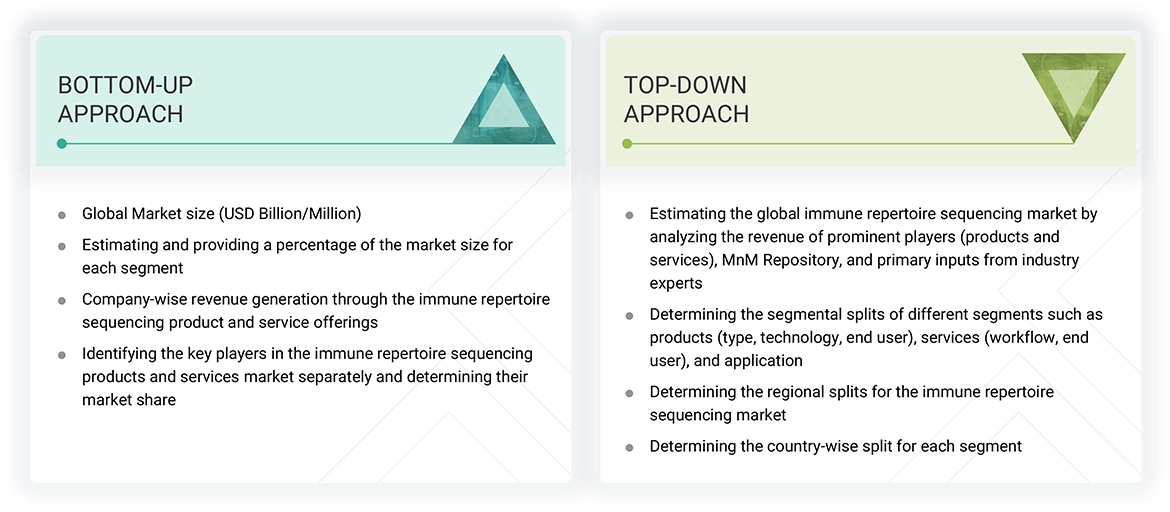
In the complete market engineering process, the top-down and bottom-up approaches and several data triangulation methods were extensively used to perform the market estimation and market forecasting for the overall market segments and subsegments listed in this report. Extensive qualitative and quantitative analysis was performed on the complete market engineering process to list the key information/insights throughout the report.
The following is a breakdown of the primary respondents:
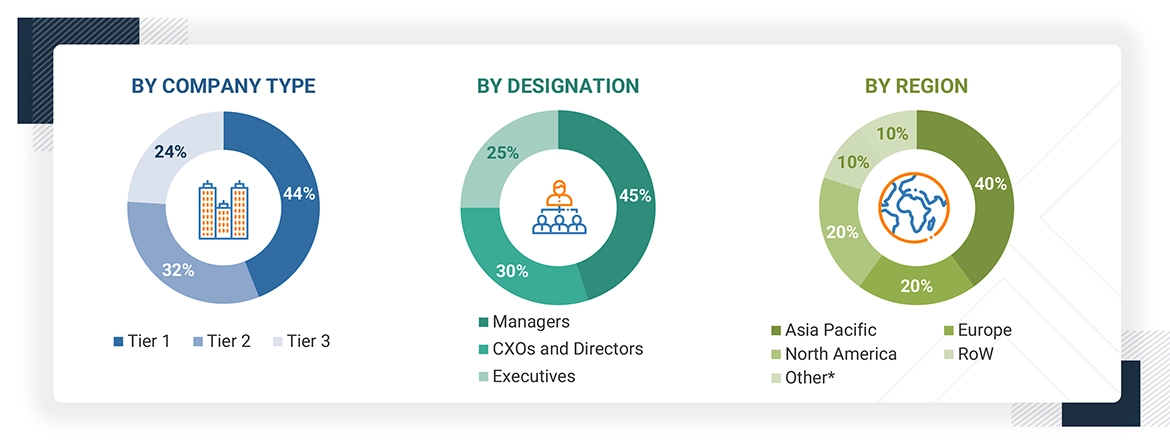
To know about the assumptions considered for the study, download the pdf brochure
Market Size Estimation
The global size of the IRS market was estimated and validated through multiple approaches, such as the top-down and bottom-up approaches. These methods were also used extensively to estimate the size of various market subsegments.
- The research methodology used to estimate the market size includes the following:
- The key players in the immune repertoire sequencing market have been identified through extensive primary and secondary research.
- The revenues generated from the immune repertoire sequencing businesses of leading players in product and service offerings were determined separately through primary and secondary research.
- The sum of the product and service market was used to arrive at the total IRS global market size, which was further segmented into various segments.
- All percentage shares, splits, and breakdowns for respective market segments were determined using secondary sources and verified through primary sources.
Data Triangulation
After arriving at the market size from the estimation process explained above, the total market was divided into several segments and subsegments. To complete the overall market engineering process and arrive at the exact statistics for all segments and subsegments, data triangulation and market breakdown procedures were employed, wherever applicable.
Market Definition
Immune repertoire refers to the diverse collection of T-cell and B-cell receptors within the adaptive immune system, which enables pathogen recognition and targeted immune responses. The IRS market encompasses technologies, products, and services that analyze the diversity and functional dynamics of T-cell and B-cell receptor repertoires within the adaptive immune system.
This market includes instruments, software, assays, kits, and reagents for immune receptor profiling, alongside presequencing, sequencing, and data analysis services that support research applications, drug discovery & development, and clinical diagnostics utilizing advanced methods such as NGS and PCR by various end users.
Stakeholders
- CDMOs & CROs
- Pharmaceutical & Biopharmaceutical Companies
- Academic & Research Institutes
- Diagnostic Companies
- Venture Capitalists & Investors
- Market Research & Consulting Firms
- Government & Regulatory Associations
Report Objectives
- To define, describe, and forecast the IRS market based on product, products technology, service workflow, application, product end user, service end user, and region.
- To provide detailed information regarding the major factors influencing market growth (drivers, opportunities, and industry-specific challenges) along with the current trends
- To strategically analyze micromarkets concerning their growth trends, prospects, and contributions to the total IRS market
- To analyze opportunities in the market for stakeholders and provide details of the competitive landscape for market leaders
- To forecast the revenue of market segments with respect to six major regions: North America, Europe, Asia Pacific, Latin America, Middle East, and Africa
- To profile key players and comprehensively analyze their market shares and core competencies
- To track and analyze competitive developments in the IRS market, such as service launches, agreements, partnerships, collaborations, mergers & acquisitions, and R&D activities
- To track and analyze the impact of AI/Gen AI on the IRS market
- To benchmark players within the market using the proprietary “Company Evaluation Matrix” framework, which analyzes market players on various parameters within the broad categories of business and service excellence strategy
Get the Full Immune Repertoire Sequencing Market Report
Full forecast, segment splits, and company analysis for all Immune Repertoire Sequencing Market.
- Canada Immune Repertoire Sequencing Market
- US Immune Repertoire Sequencing Market
- Germany Immune Repertoire Sequencing Market
- UK Immune Repertoire Sequencing Market
- France Immune Repertoire Sequencing Market
- Italy Immune Repertoire Sequencing Market
- Spain Immune Repertoire Sequencing Market
- China Immune Repertoire Sequencing Market
- Japan Immune Repertoire Sequencing Market
- India Immune Repertoire Sequencing Market
- South Korea Immune Repertoire Sequencing Market
- Brazil Immune Repertoire Sequencing Market
- Mexico Immune Repertoire Sequencing Market
Need a Tailored Report?
Customize this report to your needs
Get 10% FREE Customization
Customize This Report
